

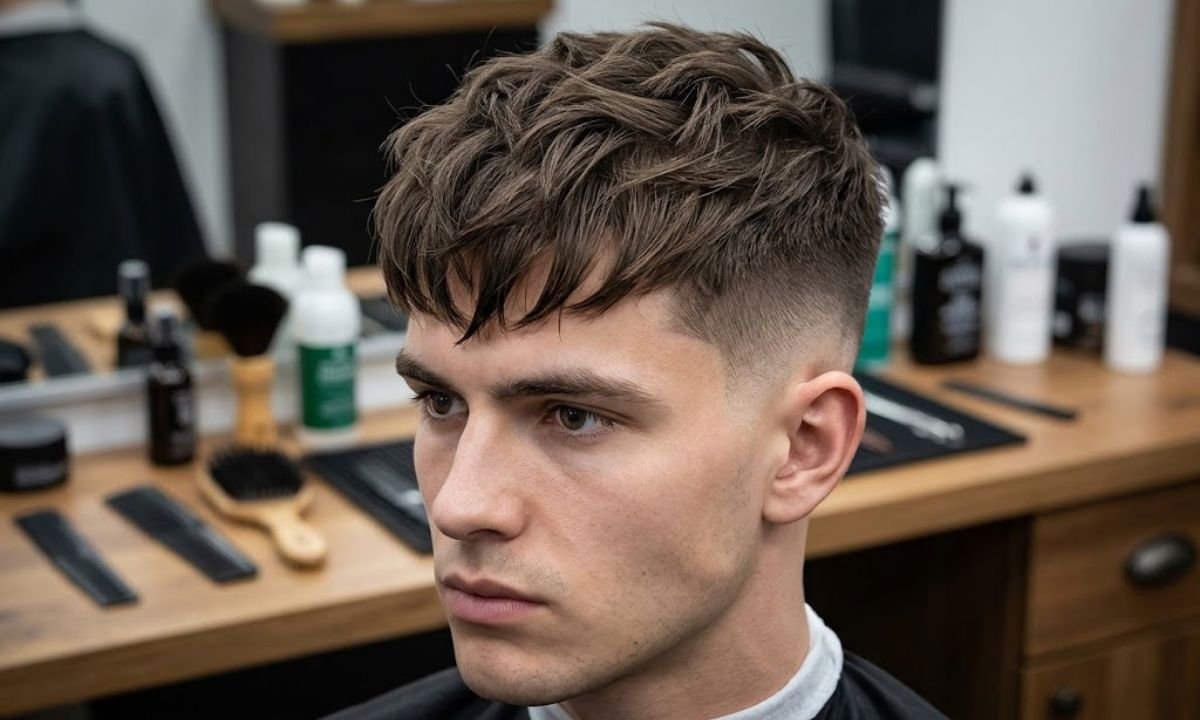
Quick Answer
Wondering if a mid taper fade textured fringe works for you? Yes, it suits most men with straight, wavy, or curly hair and at least 2 to 3 inches of length on top.
You get tight, clean sides that start fading around the temple. You also keep a messy, broken-up front that falls across the forehead.
Here’s how you get it. Tell your barber you want a mid taper, a skin or shadow finish, and a point-cut fringe about 2 to 4 inches long.
Style it with a matte cream or texture spray on slightly damp hair. Book a refresh every 3 to 4 weeks, and the cut stays sharp.
What is a mid taper fade with a textured fringe?

Think of it as two haircuts sharing one head. The sides and back go short and neat, while the top stays longer and loose.
Barbers call this short sides and long top, and it’s one of the most popular modern men’s haircuts right now. The mid taper fade textured fringe just adds a specific height for the fade and a specific finish for the front.
You’ve probably seen it on guys at your gym, office, or college campus. Maybe you didn’t know the name, but you knew it looked put together without trying too hard.
That’s the whole appeal. It looks effortless, but it’s built on precise clipper work and smart scissor cuts.
What makes the taper “mid”?
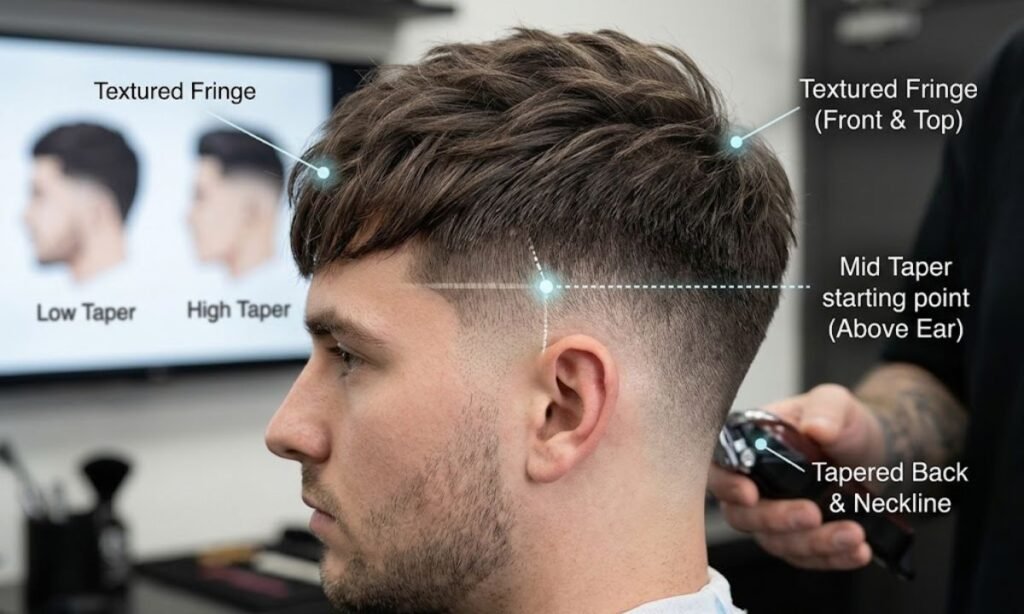
The word “mid” refers to taper height. A mid taper haircut starts its fade around the temple, roughly level with the middle of your ear.
Hair above that line stays long, and hair below it gets shorter in smooth steps. The shortest section sits at the neckline and around the ears.
Don’t confuse height with closeness. Taper height tells you where the fade begins, while closeness tells you how short it gets at the bottom.
That’s where skin taper and shadow taper come in. A skin taper goes down to bare skin, and a shadow taper stops at a faint stubble so the edge looks softer.
If you want a taper fade haircut that doesn’t scream “fresh cut” on day one, shadow is the safer choice. If you love a crisp, bold contrast, skin delivers it.
What makes the fringe “textured”?

A plain fringe is just hair hanging over your forehead in one flat sheet. A textured fringe haircut breaks that sheet into separate pieces so it moves and catches light.
Barbers do this with a technique called point cutting. They snip into the ends at an angle instead of cutting a blunt line.
The result is a choppy fringe haircut with natural gaps and uneven lengths. It looks lived in, even right after the barber’s chair.
Think of textured bangs for men. They sit forward, but they’re never heavy or stiff.
Hair layering techniques also play a role. Short layers inside the fringe remove bulk, and they give you the hair volume and movement that makes styling easy.
Who does a mid taper fade textured fringe suit?

Here’s the honest answer: most people, with a few tweaks. The cut is flexible, which explains why you see it everywhere.
Your hair type, face shape, length, and density all matter. Your lifestyle matters too, since this haircut asks for a little daily effort.
Let’s go through each factor so you can judge for yourself. You’ll also learn when to adjust the cut or skip it.
Which hair types work best?
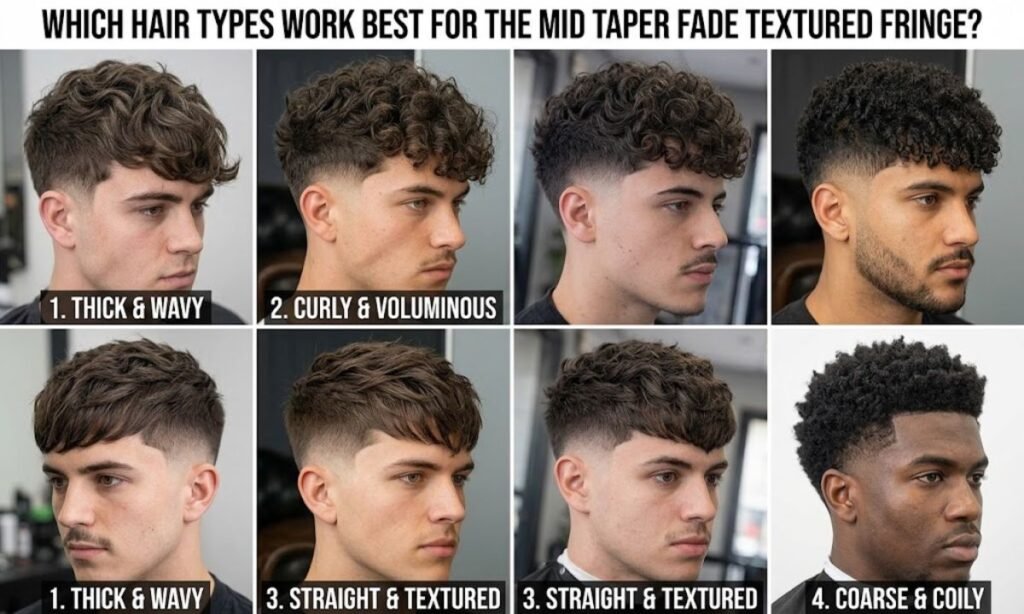
Straight hair takes this cut well, and the answer to “does a mid taper fade textured fringe work for straight hair” is a clear yes. The only catch is that very fine straight hair can fall flat, so it needs a little help from product.
Wavy hair is arguably the sweet spot. The natural bend gives you built-in texture, which means the wavy fringe haircut practically styles itself.
Curly hair works beautifully too. A curly fringe haircut with a tight mid taper fade curly hair blend looks sharp because the curls on top contrast with the clean sides.
Coily hair fringe styles also work, and many barbers love them. Twist sponges, defined curls, or a soft shape on top all look great against a crisp taper.
Hair texture also affects how you talk to your barber. Mid taper fade for Asian hair often means thick, straight strands that stand up or fall heavily, so the barber removes weight inside the fringe. For mid taper fade for white guys with fine or medium hair, the focus shifts to adding body and lift.
Which face and head shapes suit it?

Oval faces get the easiest ride. Almost any fringe length looks balanced on them.
Round faces benefit from some height at the front. A forward-swept, slightly lifted fringe adds length and stops the face from looking wider.
Square and long faces need a bit of care. Keep the fringe a little shorter and softer on a long face, and avoid piling height on top.
Head shape matters as much as face shape. A flat back of the head looks better with a bit of length left at the crown, while a very round head handles tight sides well.
Treat this as a guide, not a rule. Your barber can look at your skull and tell you in ten seconds what works.
If you want more on haircut for different face shapes, bring that question to your consultation. A good barber likes being asked.
How much length and density do you need?
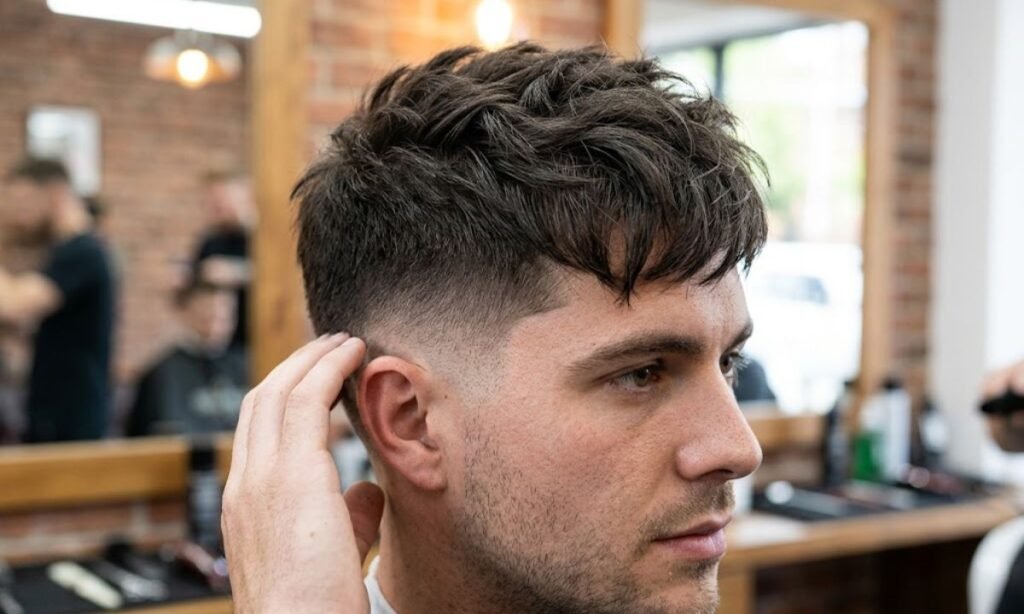
Let’s tackle “how long does hair need to be for a textured fringe.” You want at least 2 to 3 inches on top, though 3 to 4 inches gives you more styling choices.
Anything shorter turns into a crop. You can still style it, but you won’t get the swoop or the separated pieces.
Now think about hair length and density. Density means how many strands grow per square inch of scalp.
Medium to thick density gives you the fullest result. Thin density works too, but you’ll want a slightly shorter fringe and lighter product.
Here’s a rough guide:
| Hair density | Ideal fringe length | Product weight |
|---|---|---|
| Thin | 2 to 3 inches | Light (texture spray) |
| Medium | 3 to 4 inches | Medium (matte cream) |
| Thick | 3 to 5 inches | Medium to strong (paste) |
For most guys, a month of haircut grow-out gets them from a short crop to a workable fringe. Hair grows about half an inch a month, so patience pays off.
Who should modify or skip this cut?
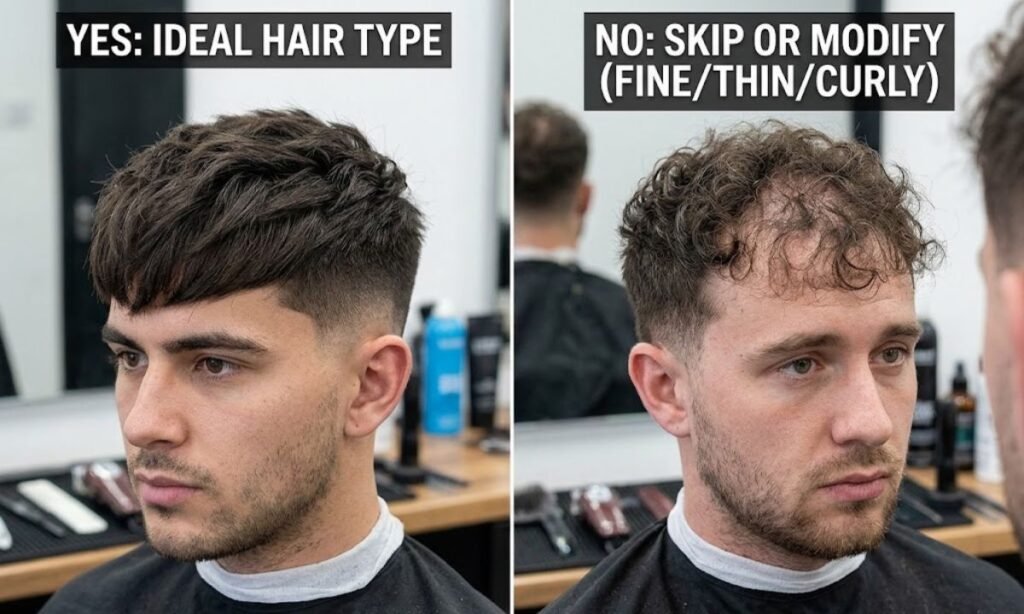
Some people shouldn’t force this haircut. If you hate styling and want to wash and go, a basic short cut is a better match.
Very thin hair across the whole scalp can make a fringe look sparse. In that case, a shorter, more forward crop hides thin areas better.
Strong cowlicks at the front hairline can fight the fringe all day. We’ll cover that below, but sometimes a side-swept cut works better.
If your job has a strict grooming code, check it first. Most offices accept this look, but a few traditional workplaces prefer a conservative cut.
Skip it too if you can’t visit a barber regularly. A taper loses its shape fast, and a messy grow-out looks worse than no taper at all.
How Should You Adapt a Textured Fringe for Different Hair Textures?
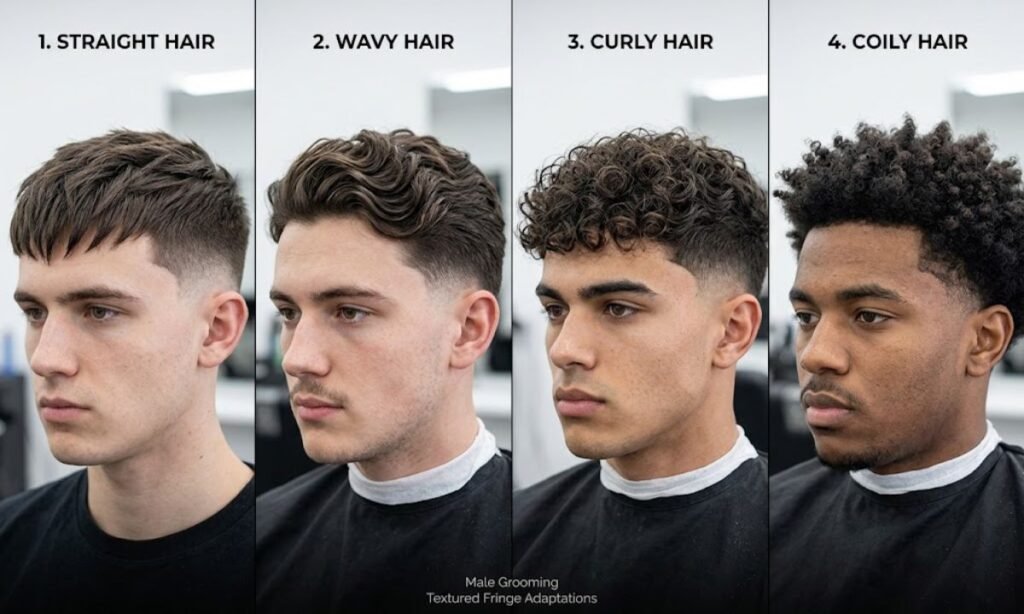
Every head of hair behaves differently. One guy’s easy fringe is another guy’s daily battle.
The trick is adjusting the cut instead of fighting your hair. Let’s look at three common situations.
Mid Taper Fade Textured Fringe for Thick Hair
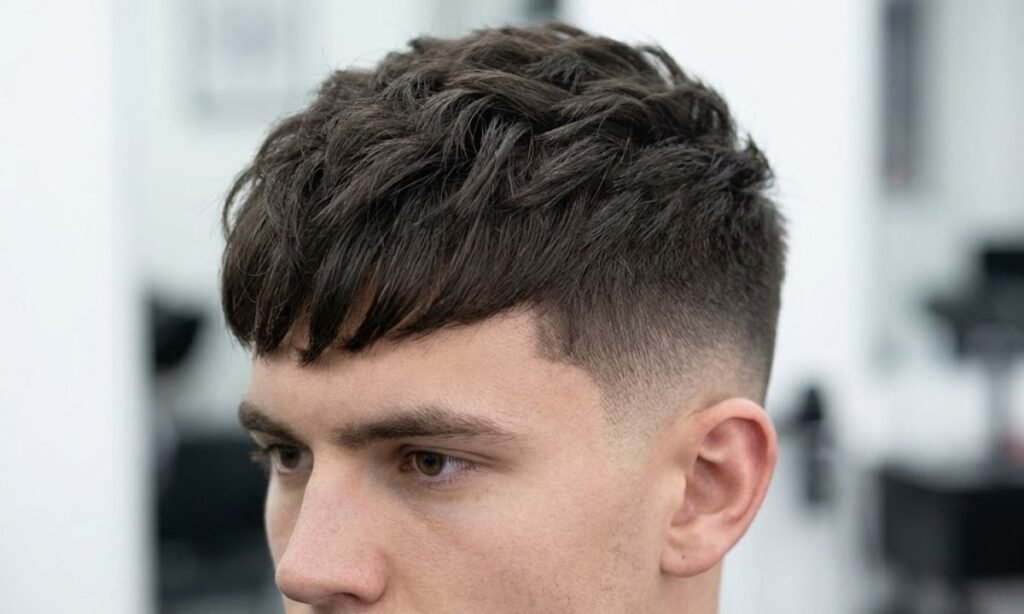
Thick hair is a gift, but it comes with weight. Left alone, a fringe can sit like a helmet and refuse to move.
Ask your barber to thin out the inside of the fringe using point cutting and light layers. This removes bulk without making the ends look wispy.
Thick hair hairstyles also need stronger hold. A hair styling paste or clay gives the grip you need, and a blast of cool air from the dryer helps set it.
Say you’ve got a friend named Hamza with dense, dark hair. His old fringe puffed out sideways until his barber removed weight in the middle layers, and it finally lay flat and natural.
One small tip. Don’t fight thickness with heavy gel, because it just clumps the pieces together.
Mid Taper Fade Textured Fringe for Receding Hairlines
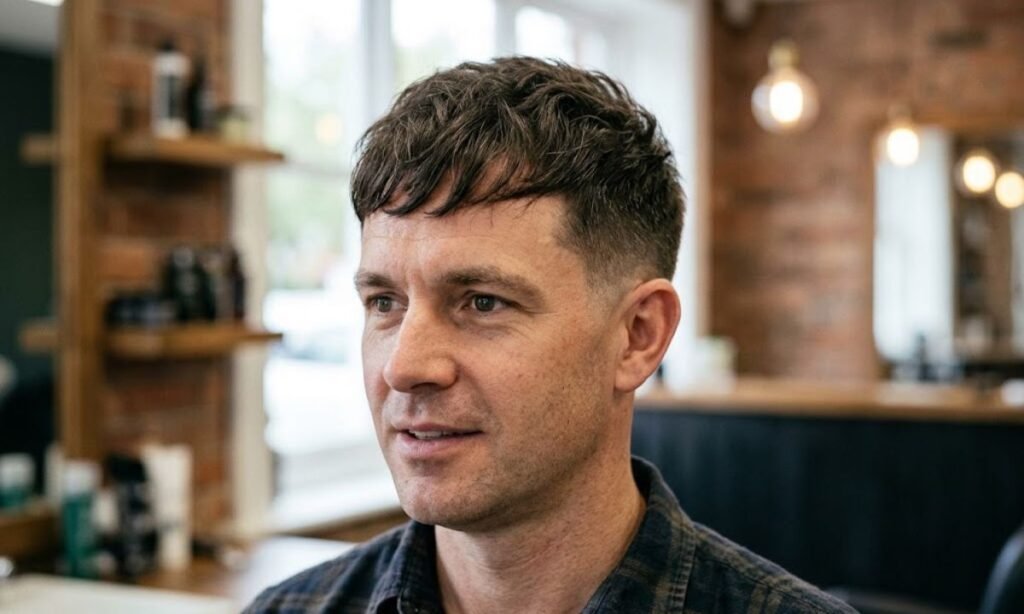
A haircut for receding hairline concerns doesn’t mean you must give up the fringe. A forward-swept, textured front actually covers the temples well.
Keep the fringe slightly shorter than usual, around 2 to 3 inches. Longer pieces can look like a comb-over if the hairline has pulled back a lot.
A mid taper helps here because it keeps the sides clean and draws the eye downward. Avoid a very high fade, since it can exaggerate the receding temples.
Choose a matte cream over shiny pomade. Shine highlights thin areas, while a matte finish blends them in.
If the recession is advanced, talk honestly with your barber. A tighter crop with a hint of texture often looks best.
Mid Taper Fade Textured Fringe for Cowlicks and Uneven Growth

Learning how to handle a strong hairline cowlick saves a lot of frustration. A cowlick is just hair that grows in a swirl, and you can’t remove it, only work with it.
Ask your barber to point the fringe in the direction your cowlick wants to go. If it pushes right, cut the fringe so it sweeps right.
Wet the area and dry it while pulling the hair opposite to its stubborn direction. Then set it with a little paste.
Uneven growth, like one temple filling in faster, also shows up in a temple taper. A skilled barber blends that side differently to even things out.
Try this at home:
- Dampen the cowlick area first.
- Blow-dry while brushing against the swirl.
- Finish with a cool shot to lock it.
How does it compare with similar haircuts?

The barbershop menu is full of names that sound alike. That makes ordering confusing, especially if you’re new to fades.
Let’s sort out the differences so you pick the right one. You’ll walk in knowing exactly what to ask.
Mid taper vs low taper with a textured fringe

A low taper fade starts just above the ear and at the neckline. It leaves more length on the sides, so it looks softer and more classic.
A mid taper starts higher, near the temple. It reveals more skin and gives a sharper, more modern look.
Here’s a quick comparison for mid taper vs low taper:
| Feature | Low taper | Mid taper |
|---|---|---|
| Starting point | Above the ear | Around the temple |
| Look | Soft, subtle | Sharper, defined |
| Best for | Conservative settings | Everyday modern style |
| Grow-out | Slower to look messy | Shows growth sooner |
A textured fringe low taper fade works great for guys who want a cleaner look at work. A high taper fade textured fringe goes the opposite way and gives the boldest contrast.
If you can’t decide, go mid. It’s the middle path, and it fits almost everyone.
Mid taper textured fringe vs mid fade, French crop, blowout taper, and Edgar

People mix up mid taper vs mid fade constantly. A taper only shortens the hair around the edges, like the neckline and sideburns. A mid fade haircut is more dramatic and takes the sides down to skin in a larger area.
The French crop has a short, blunt fringe. A French crop low taper fade looks tidy and minimal, while a textured fringe is longer and messier.
The blowout taper uses a large, voluminous top blown out with a dryer. A low taper fade blowout looks puffy and full, while our cut stays more controlled.
The Edgar haircut has a very short, straight-across fringe and sharp sides. A textured fringe Edgar blends the two ideas, and a burst fade Edgar curves the fade around the ear.
You may also hear about burst fade textured fringe and mid drop fade styles. A burst fade arcs around the ear, and a drop fade dips behind it.
What Are the Best Mid Taper Fade Textured Fringe Variations?
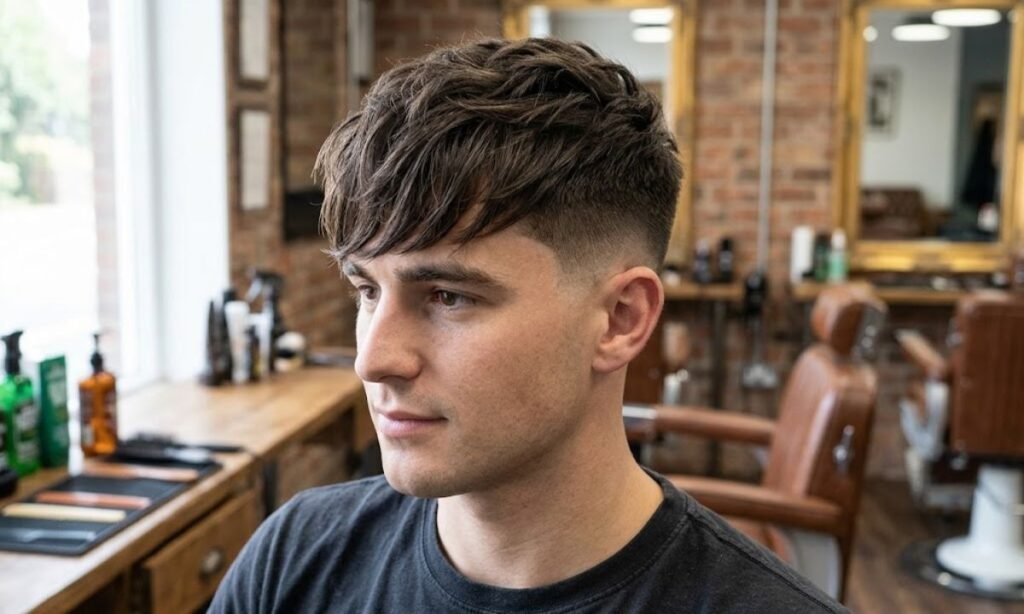
One haircut, a lot of looks. Small tweaks to length, direction, and edges change the whole vibe.
Don’t treat this as one fixed style. Treat it as a template you can bend.
Short, Medium, and Long Textured Fringe Variations

A short fringe sits around 2 inches. It’s easy and low-effort, but it gives you the least movement.
A medium fringe, around 3 to 4 inches, is the crowd favorite. It styles forward, up, or sideways without much trouble.
A long fringe, 4 inches or more, gives dramatic movement. It needs more product and more patience, but it looks striking on wavy hair.
Which one fits you? Go short if you want speed, medium if you want flexibility, and long if you love a statement.
Messy, Forward-Swept, and Piecey Fringe Styles
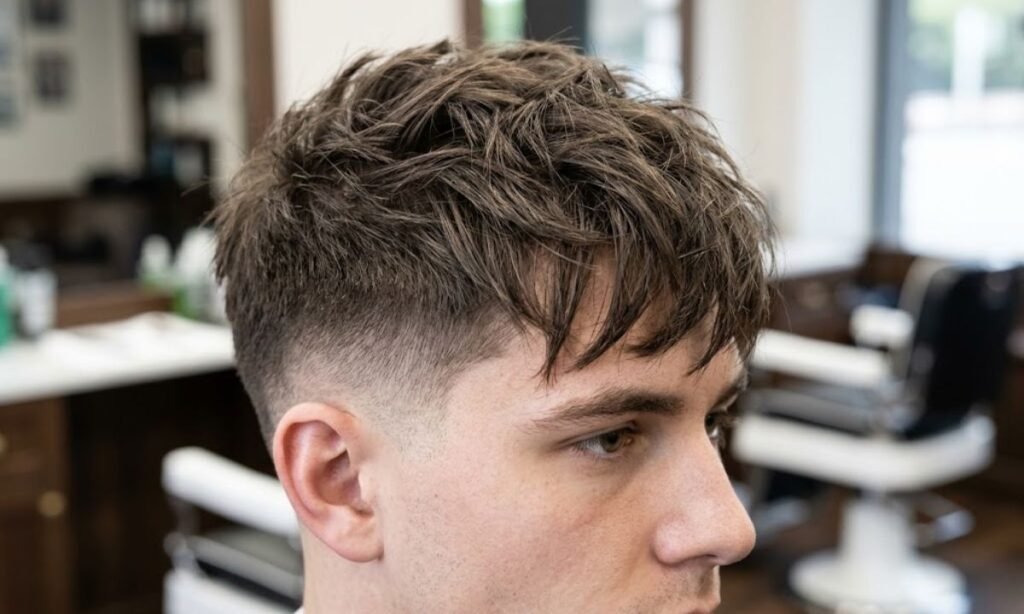
The messy fringe haircut looks like you just rolled out of bed. It’s actually planned chaos, with disconnected ends and a bit of hair going every direction.
The forward fringe hairstyle pushes everything toward the forehead. It’s neat and flattering, and it hides a high forehead nicely.
The piece-y fringe uses wax or paste to separate small sections. Each piece stands apart, so the top looks full and dimensional.
You can switch between these styles using the same cut. Just change how you dry and what product you use.
Mid Taper Fade Textured Fringe with a Line-Up
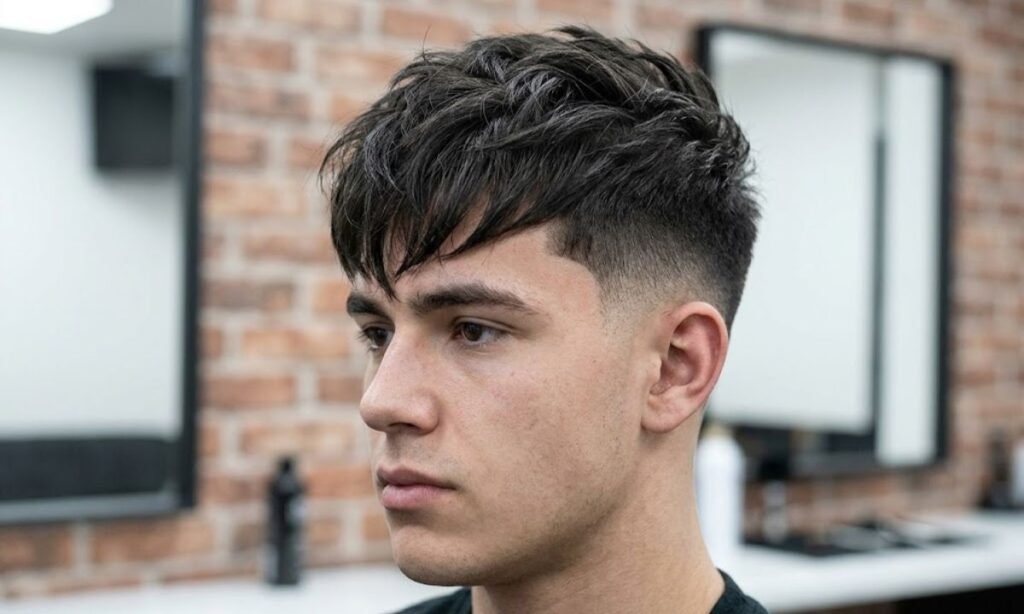
Adding a line-up means the barber sharpens the hairline with a trimmer or razor. It creates a crisp frame around the forehead and temples.
A line-up looks fantastic on day one. But it also grows out fast, so expect to refresh it more often.
A sideburn taper and a clean mid-temple blend make the line-up look natural. Ask for a soft edge if you don’t want a harsh, drawn-on look.
If you’re not sure, start without it. You can always add one next visit.
How is the haircut created?

Knowing what your barber does helps you ask better questions. It also helps you spot a rushed job.
The process has two main parts. First the sides, then the top.
How is the mid taper blended?

Barbers use clippers with different guard sizes. A clipper guard sizes chart usually runs from a #0 to a #4, where #1 is about 1/8 inch and #2 is about 1/4 inch.
They start at the neckline with the shortest setting. Then they move up in small steps, using the clipper taper lever to blend each zone.
The taper fade guard steps matter a lot. A barber might go from skin to a #1, then to a #2, then a #3 at the temple.
Skilled blending leaves no visible lines. If you see stripes, the barber skipped a step.
The taper fade neckline gets its own shape too. It can be rounded, squared, or tapered, and each one changes the look from behind.
How is the fringe layered and texturized?
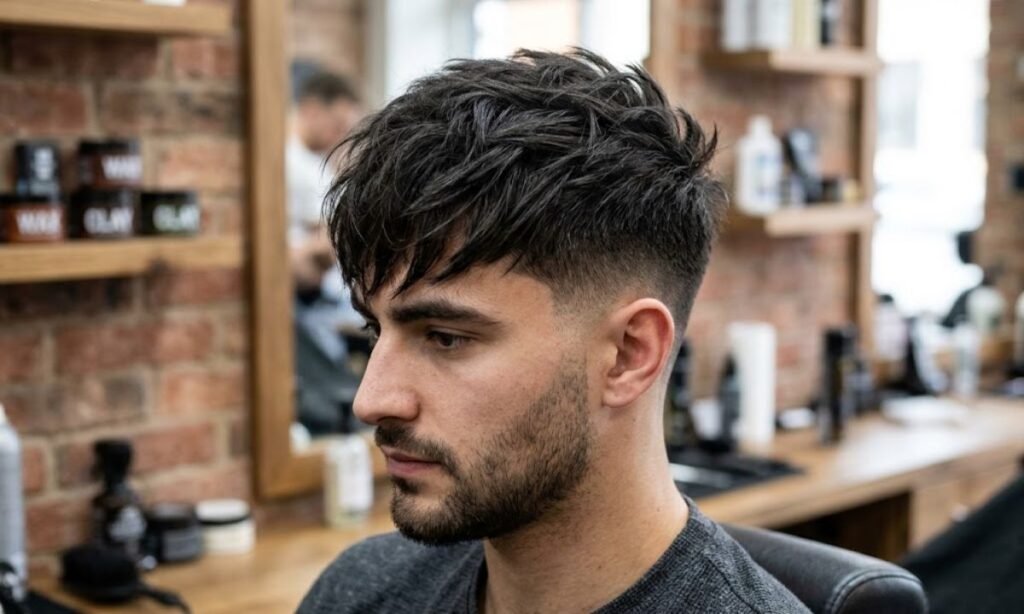
Barbers cut the top with scissors, not clippers. They lift sections and trim the ends at an angle to create point-cut fringe pieces.
Then comes layering. Short layers hidden inside the fringe remove weight and add lift.
Some barbers use thinning shears or a razor to soften the edges. This works well on thick hair, though fine hair can look stringy if overdone.
To make separated fringe pieces, the barber cuts uneven lengths on purpose. That’s what gives the fringe its raw, movement-rich shape.
To keep the sides tight while retaining top length, the barber sections the hair carefully. They clip the upper hair away so they don’t accidentally take too much.
How do you ask a barber for a mid taper fade textured fringe?
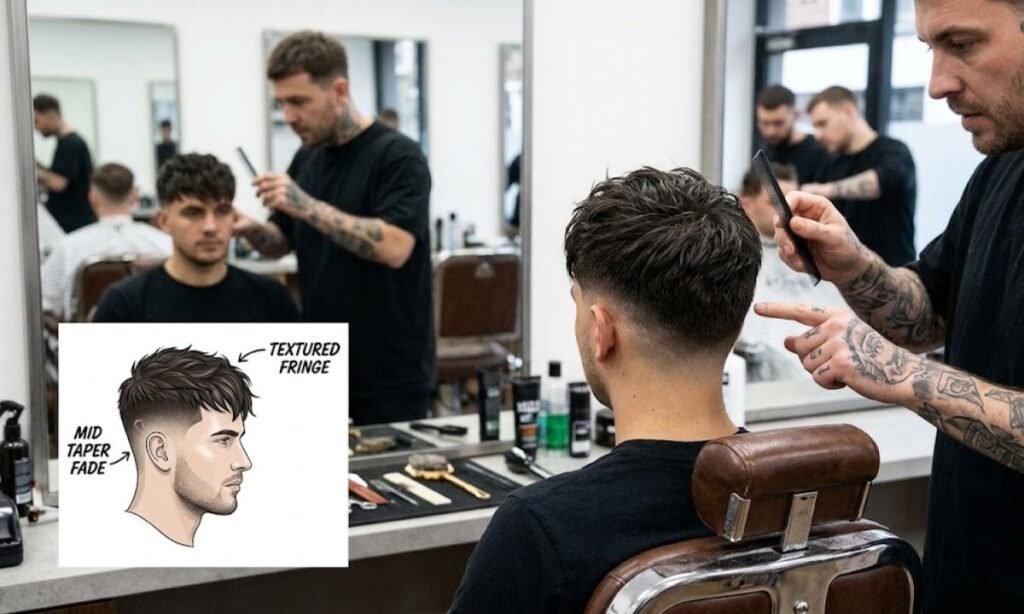
Many bad haircuts come from bad communication. The barber isn’t a mind reader, and you shouldn’t expect them to be.
A clear, simple request saves you a week of regret. Here’s how to do it.
What exactly should you tell your barber?

Start with the big picture. Say, “I want a mid taper with a textured fringe, longer on top.”
Then add details about the taper height. Say whether you want a skin or shadow taper, and mention your preferred neckline and sideburn shape.
Next, describe the fringe. Give a length in inches or show it against your forehead, like “just above my eyebrows.”
Explain the direction too. Say “swept forward” or “slightly to the right,” so the barber cuts with that in mind.
A short script you can use:
- Sides: “Mid taper, shadow finish, around a #1 at the bottom.”
- Neckline: “Tapered, not squared.”
- Top: “Three inches, point-cut with texture.”
- Direction: “Forward and a little to the left.”
A good barber consultation takes two minutes. It’s the cheapest insurance you can buy.
What should your reference photos show?
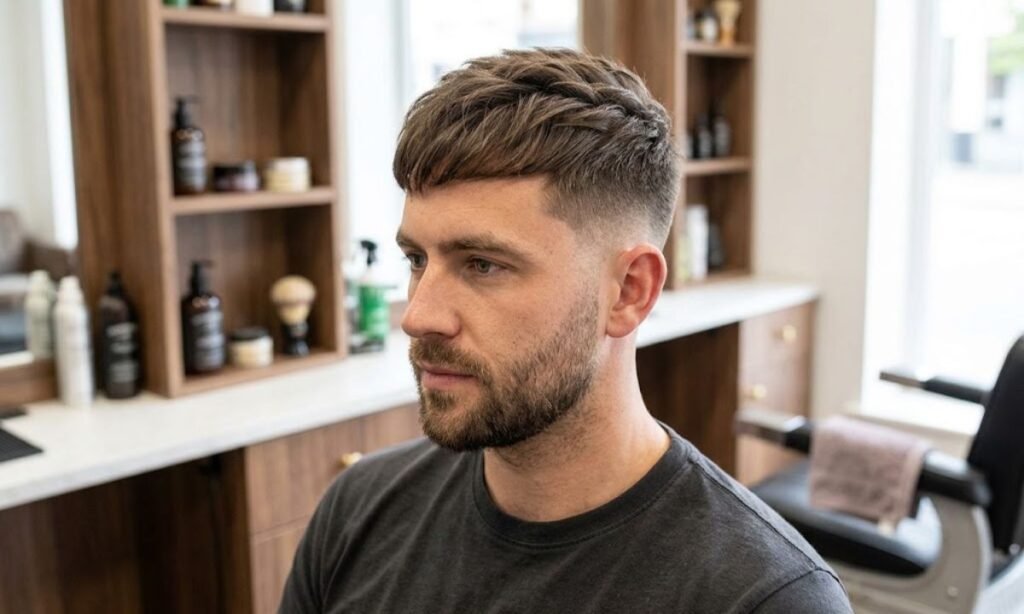
Photos beat words every time. Bring two or three clear images of the exact look you want.
Show the front, side, and back if possible. Haircut reference photos from different angles help the barber see the fade and the fringe together.
Pick photos of people with hair similar to yours. A photo of thick, dark hair won’t help if you have fine, light hair.
Also show what you don’t want. A “not this” picture removes guesswork and builds trust.
How do you style a mid taper fade textured fringe at home?
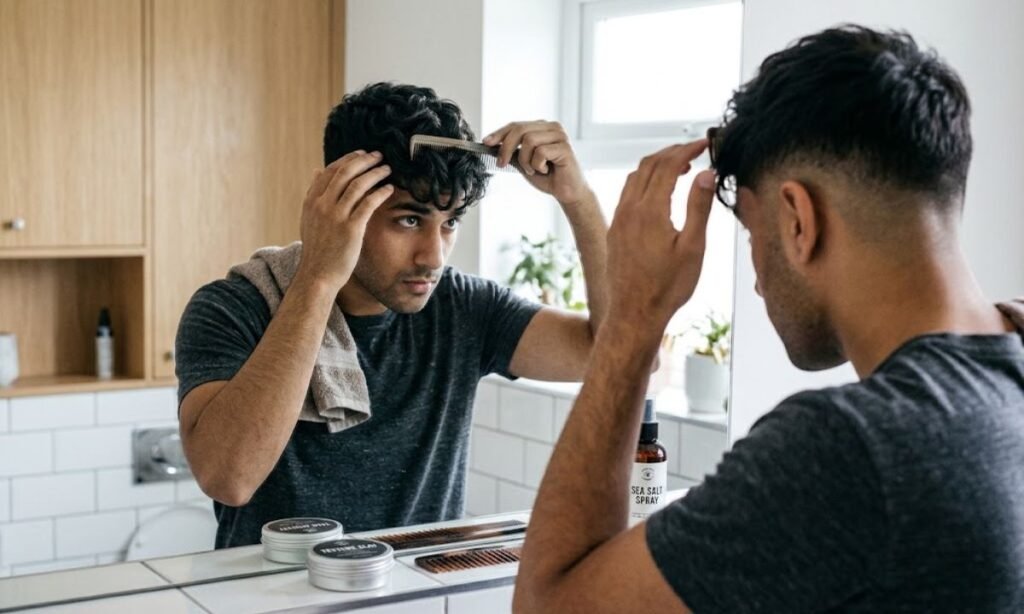
Your barber gets you 70 percent of the way there. The rest depends on what you do every morning.
The good news is that it takes under five minutes. You just need the right steps and the right product.
The step-by-step styling routine
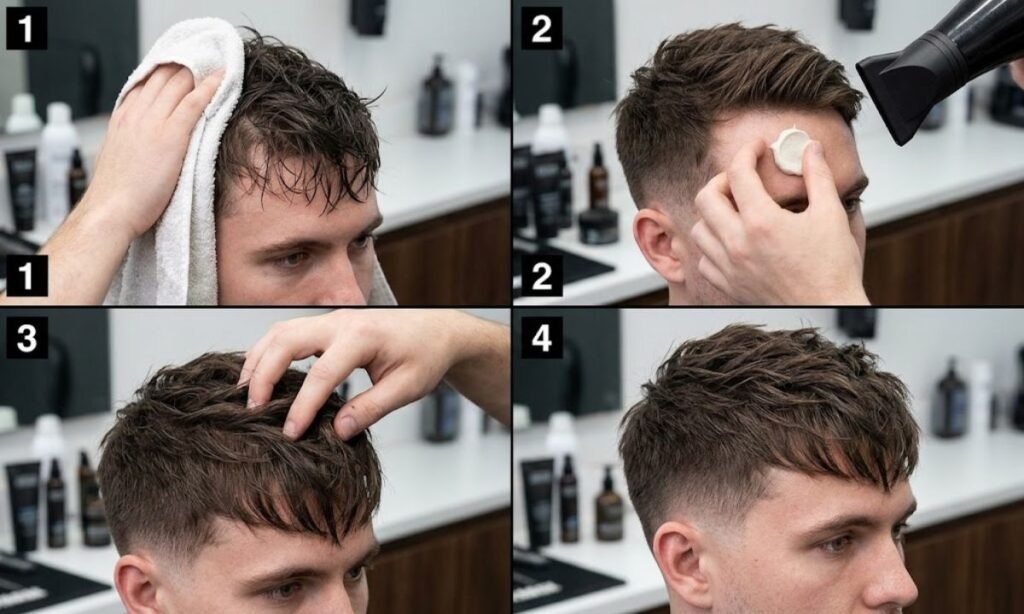
Here’s the routine, start to finish:
- Wash and towel-dry your hair until it’s damp, not dripping.
- Apply a heat protectant or light leave-in if you’ll use a dryer.
- Blow-dry the fringe forward first, then lift the roots with your fingers.
- Add a pea-sized amount of styling product to your palms.
- Rub it in and work it through the fringe, mostly at the ends.
- Pinch and twist small sections to build separation.
Learning how to style a fringe while damp matters. Damp hair takes shape more easily, so you get better results with less product.
When you dry a textured fringe without damage, keep the dryer moving. Hold it about six inches away on medium heat, and finish with a cool setting.
Learn how to reduce heat damage when styling hair by using a protectant and lowering the heat. Over time, damaged ends look frizzy and break off.
Which products work for straight, wavy, curly, and fine hair?
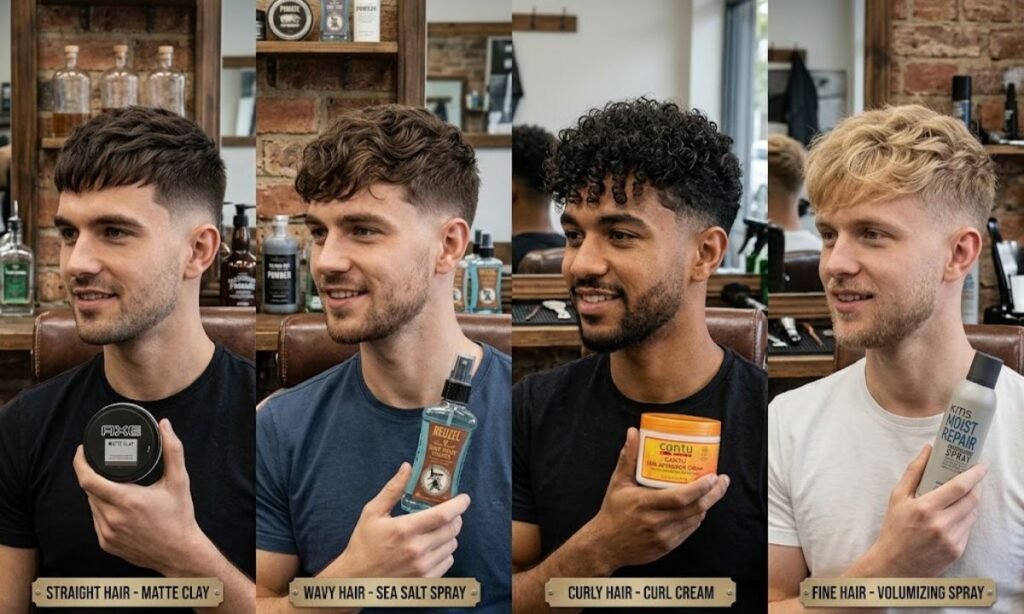
Different hair types need different tools. Here’s a quick guide:
| Hair type | Best product | Why it works |
|---|---|---|
| Straight and fine | Texture spray or sea salt spray | Adds grip and body |
| Thick and wavy | Matte paste or clay | Holds weight in place |
| Curly | Curl-defining cream | Keeps curls soft and defined |
| Coily | Cream with moisture | Prevents dryness and frizz |
Men’s hair styling products come in many forms. A matte cream for hair gives a natural look, while hair styling pomade adds shine and strong hold.
Hair styling gel can work for a sleeker finish. But it often feels stiff on a textured fringe, so use it sparingly.
How much should you use? Start with a dime-sized amount, since you can always add more but can’t take it off.
How do you fix a flat, puffy, or stringy fringe?
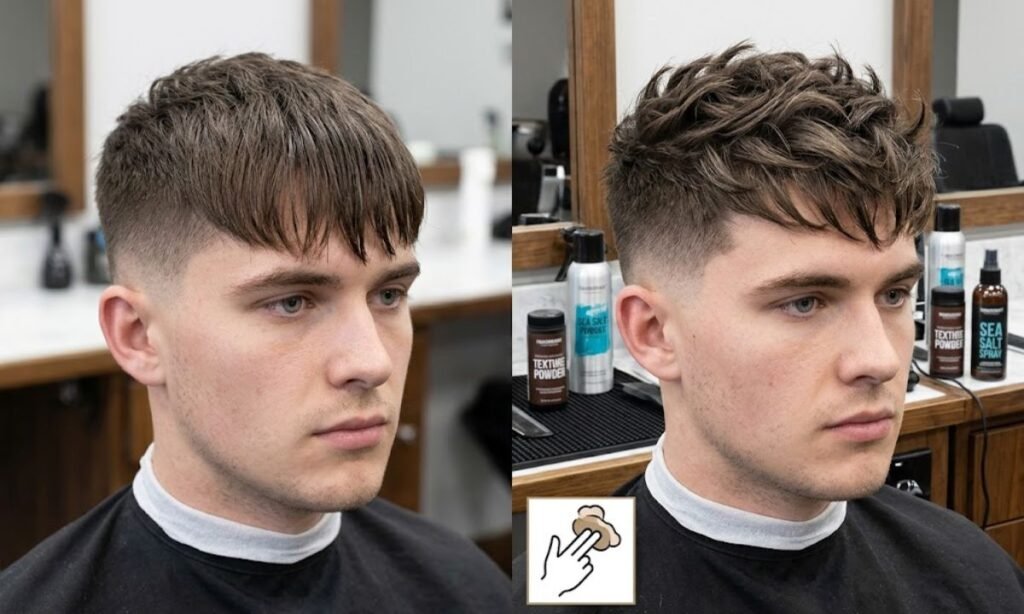
A flat fringe usually needs lift. Blow-dry the roots upward, then add a light texture spray at the base.
To prevent a flat fringe over the day, avoid heavy oils and creams. They weigh down fine hair quickly.
A puffy fringe has the opposite problem. Too much volume or humidity makes it expand, so a little paste on the ends calms it down.
A stringy fringe looks greasy and thin. Wash the product out, then restyle with less, and ask your barber to remove less weight next time.
For a mid-day refresh, wet your hands slightly. Run your fingers through the fringe, and rework it with a tiny bit of product.
How do you maintain it and let it grow out cleanly?
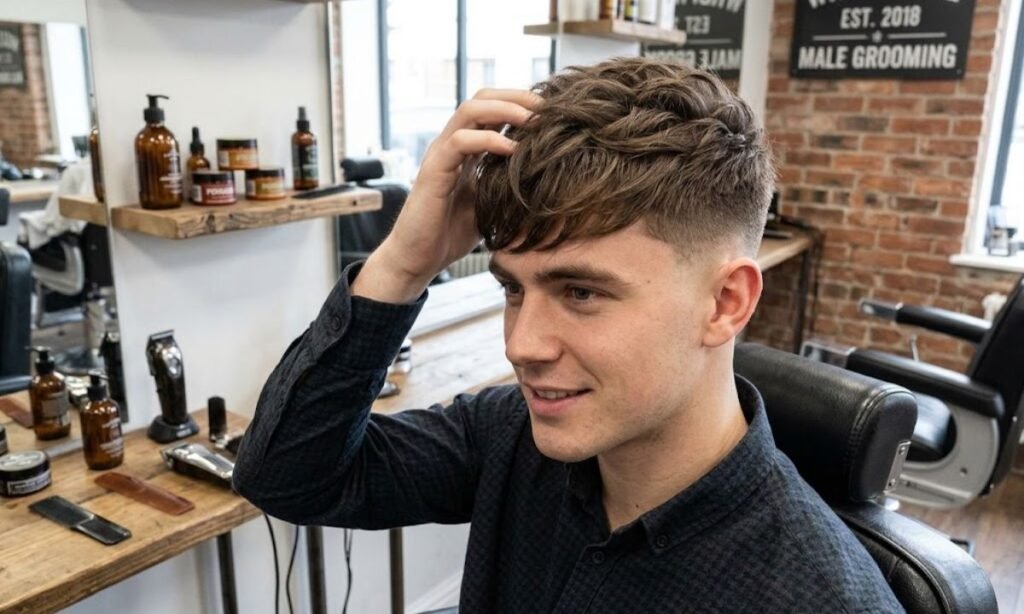
A haircut is only as good as its upkeep. Maintenance keeps the cut looking fresh, and it saves you money in the long run.
This part is boring but important. Let’s keep it simple.
How fast does a taper actually grow out?
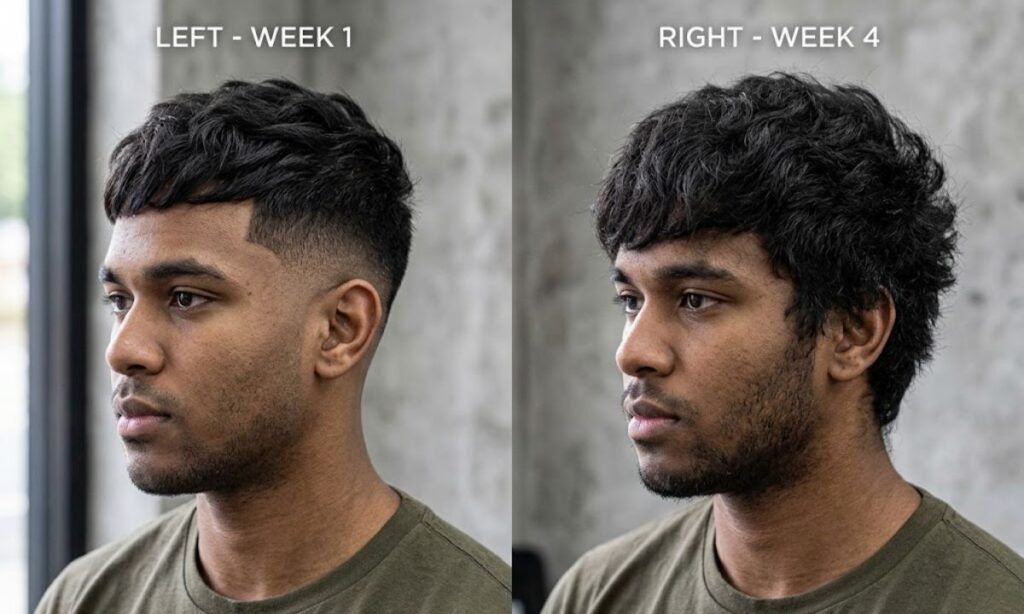
The average scalp grows about half an inch per month. That means a fade changes noticeably within two weeks.
A taper fade grow-out timeline looks like this:
- Week 1 to 2: Sharp and clean, the fade looks its best.
- Week 3 to 4: Lines soften, and the neckline starts to fuzz.
- Week 5 to 6: The fade blurs, and the shape drifts.
- Week 7 and beyond: The cut looks overgrown.
So, how often to refresh a mid taper fade? Every 3 to 4 weeks works for most men, and every 2 to 3 weeks suits anyone who loves a skin finish.
A shadow taper tends to last longer than a skin taper. Because the contrast is softer, growth shows up more slowly.
For a clean grow-out, ask your barber to leave the sides slightly longer on your last cut. Then let it blend gradually into a taper at the next visit.
How do you keep the fringe healthy between cuts?
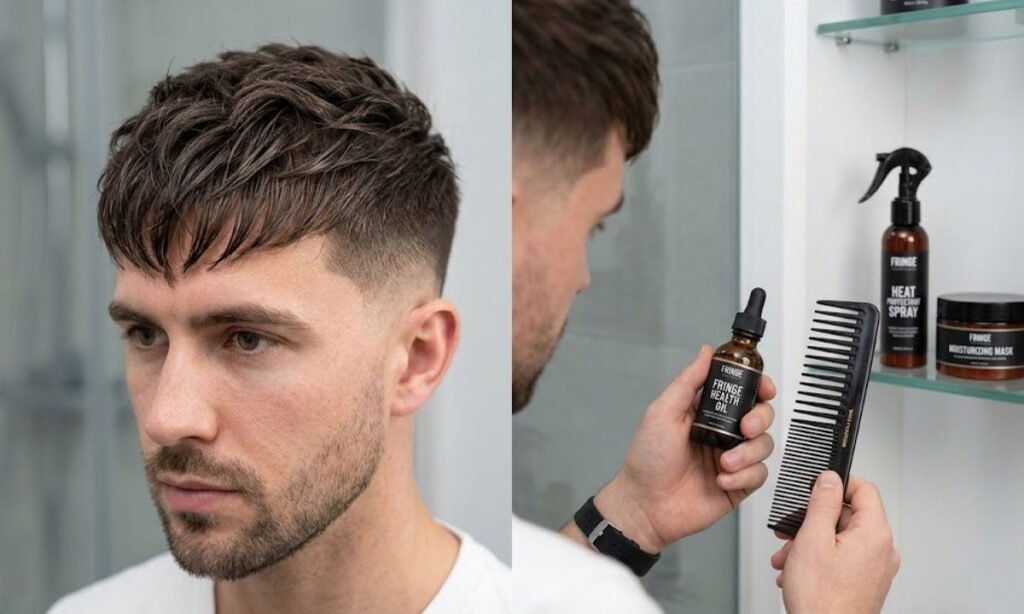
Your fringe maintenance is simple. Wash with a gentle shampoo and don’t overdo it.
Trim the fringe every 6 to 8 weeks. You can drop by between full haircuts for a quick tidy-up.
Use a conditioner or leave-in on the ends. Dry ends split and look rough, which ruins the texture you paid for.
Keep heat tools to a minimum. Letting your hair air-dry two or three days a week gives it a break.
A solid haircut maintenance routine also includes a clean brush or comb. Product buildup makes the fringe look dull.
What if close cutting causes razor bumps or irritation?
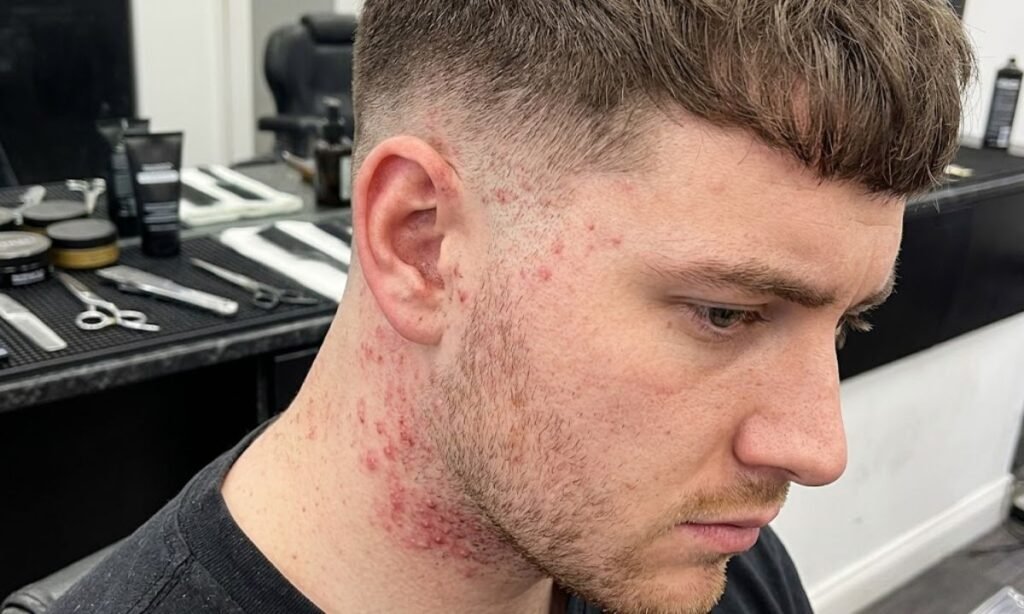
Razor bumps on neckline areas are common after close cuts. They happen when a short hair curls back into the skin and causes an ingrown hair.
Neckline irritation shows up as redness, itching, or small bumps. It’s more common with skin tapers and with curly hair.
To prevent razor bumps after a close taper, try these steps:
- Choose a shadow taper instead of skin.
- Apply a warm towel before the trim to soften the skin.
- Skip harsh aftershave and use a soothing, alcohol-free balm.
- Avoid scratching or picking at the area.
A haircut for sensitive skin usually means a longer guard at the neckline. It’s a small trade for a lot of comfort.
When should you see a dermatologist for recurring neckline bumps? If the bumps keep coming back, hurt, or leave scars, get them checked.
What Else Should You Know Before You Book?

Here’s something most guides skip. A great haircut depends on prep as much as on the barber.
Know what to do before your barber appointment. Show up with clean, product-free hair, and wear a collar that won’t get in the way.
Also, pick a barber who knows textured work. Check their portfolio and look for clear examples of fringes and tapers.
Plan your timing, too. Don’t book the haircut the morning of a big event, since it looks best after a day or two.
If you want a low-maintenance alternative to a textured fringe, ask for a short textured crop. It keeps the taper and drops the daily styling.
Common Mistakes People Make With This Haircut

The first mistake is going too short on top. Once the hair is cut, you can’t glue it back.
The second is using too much product. A big glob of paste creates a stiff, shiny mess.
Here are a few more to avoid:
- Skipping the barber consultation.
- Ignoring your hair texture when choosing the style.
- Waiting too long between trims.
- Washing every day with harsh shampoo.
You can avoid almost all of these with a bit of planning. That’s the whole point of this guide.
You can also checkout this article as well: High Taper Fade Haircut: What It Is, Who It Suits, and What to Ask For
Frequently Asked Questions

Is a Mid Taper Fade Textured Fringe Professional Enough for Work or School?
Yes, in most cases. A mid taper keeps the sides tidy, and a shadow finish looks even more polished.
Style the fringe with a matte product and keep it off your eyes. That version fits an office, a classroom, or a job interview.
If your workplace is very conservative, ask for a low taper fade. It looks softer and still keeps the modern edge.
Does a Mid Taper Fade Textured Fringe Work Without Styling Products?
It can, but results vary. Wavy and curly hair often looks good with just a towel-dry and a little air.
Straight and fine hair usually needs some help. Even a light texture spray makes a visible difference.
If you want zero product, tell your barber. They can cut the fringe with more layers so it falls naturally.
Can You Get This Haircut with a High Forehead?
Yes, and it often helps. A haircut for large forehead concerns benefits from a forward-swept fringe that covers part of the space.
Keep the fringe at medium length. Too short, and it exposes the forehead, and too long can look heavy.
Avoid a very high taper. A mid or low taper keeps the proportions balanced.
Can You Turn a Textured Fringe into Another Hairstyle as It Grows Out?
Absolutely. As the top grows, you can shift into a quiff, a side part, or a longer modern men’s haircut with layers.
Keep the sides tidy while the top grows. That way the transition looks deliberate, not forgotten.
Talk to your barber about a plan. They’ll help you move from fringe to a longer cut without awkward in-between weeks.
Final Thoughts
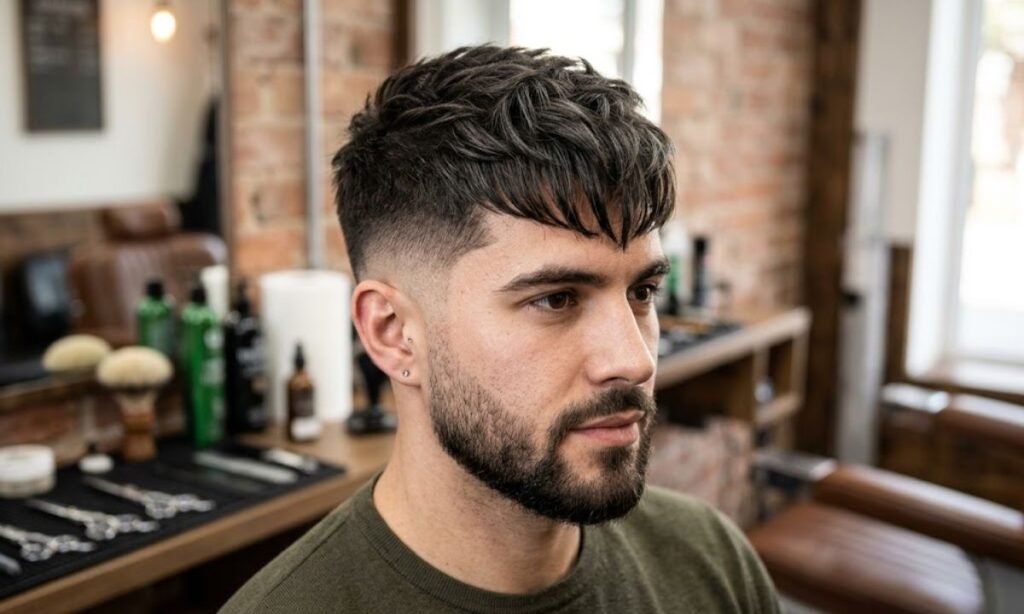
The mid taper fade textured fringe earns its popularity. It’s clean, flexible, and easy to adjust for almost any hair type.
Get a clear plan with your barber, pick the right product, and stay on a 3 to 4 week schedule. Do that, and you’ll look sharp without spending an hour in front of the mirror.
Now it’s your turn. Which version are you trying first: short, medium, or long?
Drop your questions in the comments, and share this guide with a friend who’s due for a haircut. We’d love to hear how yours turns out.

I’m Michael Charles, the creator of MegaCrazes—your source for fresh hairstyles, sharp haircuts, and simple hair-care inspiration. Find your style. Own your look.