


Last updated: October 2026
Will a high taper fade look good on you? Will your barber give you the cut in your head? Or will you leave with something way shorter than you wanted?
Those worries are normal. Most people point at a photo and hope for the best.
This guide fixes that. You’ll learn what the cut is, who it fits, and how to explain it in plain words.
You’ll also get a barber-ready haircut description you can copy. Let’s get into it.
Quick Answer
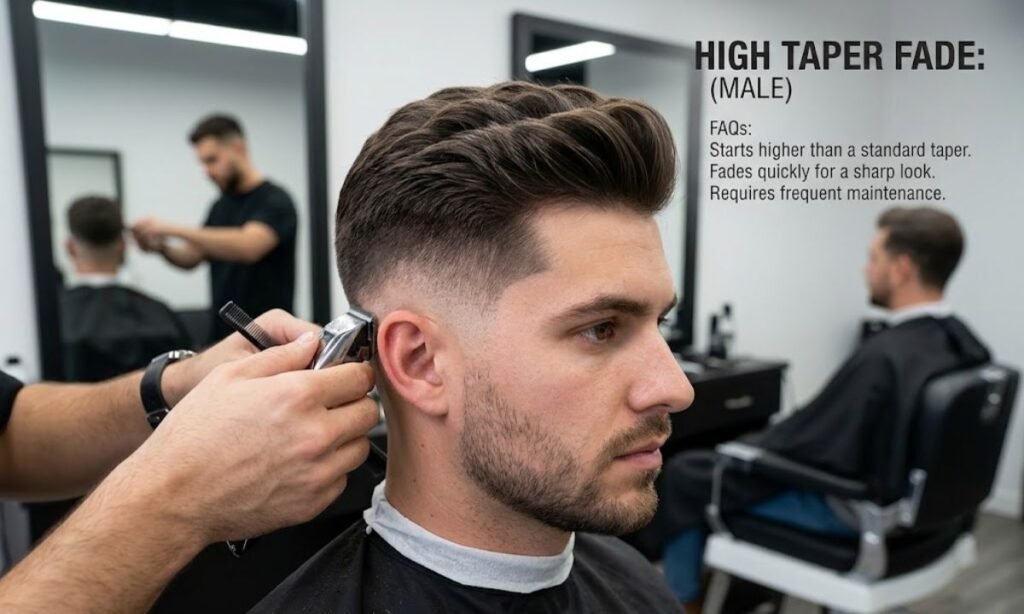
A high taper fade haircut keeps the sides short and blends them upward. The fade zone starts high, near the temple area and above the ear. The hair gets gradually shorter toward the nape and sideburns.
It suits most men with most hair types. Straight hair, wavy hair, curly hair, and coily hair all work. It’s a sharp, clean look with real contrast.
To get it, tell your barber four things:
- Fade height: high, starting around the temple
- Shortest clipper length: for example, a guard length of #1 or skin finish
- Top length: how much you want to keep
- Neckline finish: tapered or defined
Expect a touch-up every 2 to 4 weeks. Less if you like it crisp.
What Is a High Taper Fade?
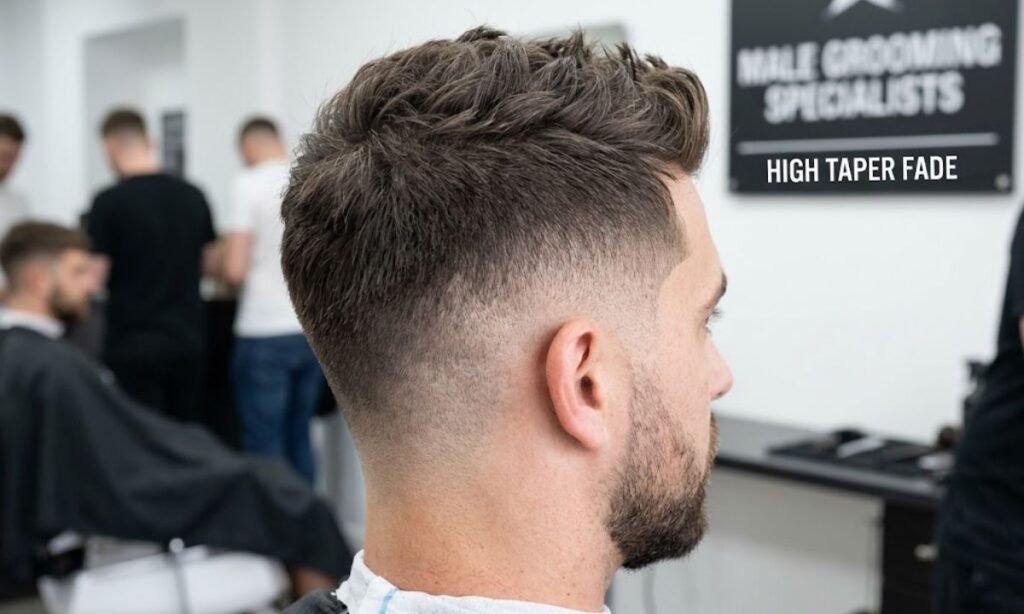
Think of a high taper fade as a hill that rises fast. The hair is shortest at the bottom. It climbs to your retained side weight near the top of the head.
The word “taper” means the length changes gradually. The word “fade” means it can drop very short. This cut mixes both ideas.
You’ll often see it called a taper fade haircut online. Same family, different labels.
It leaves your upper sides and top with more length. That gives you a strong haircut contrast between short and long.
Cut Anatomy: Fade Zone, Blend, and Retained Length
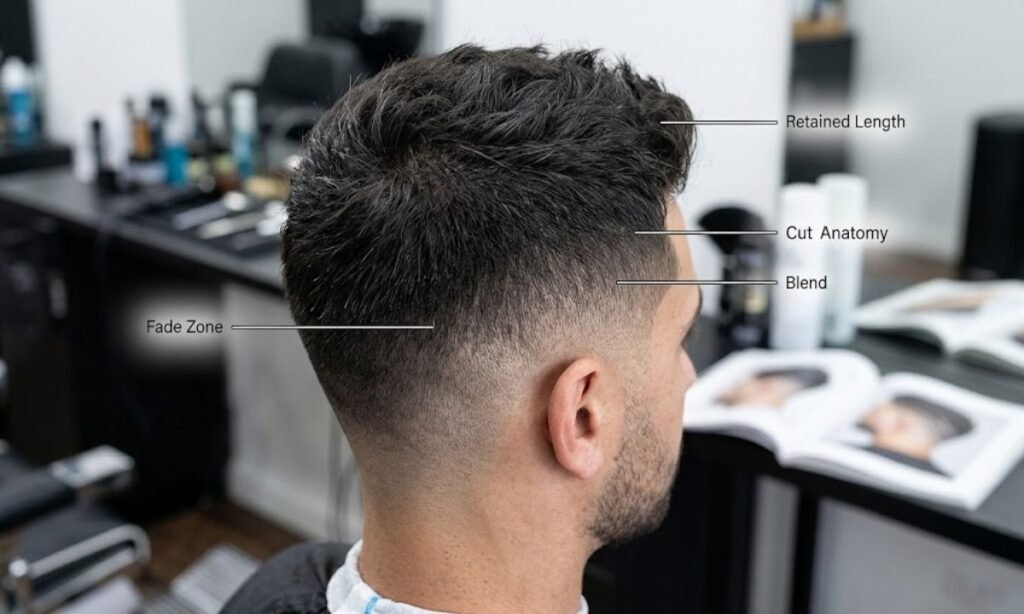
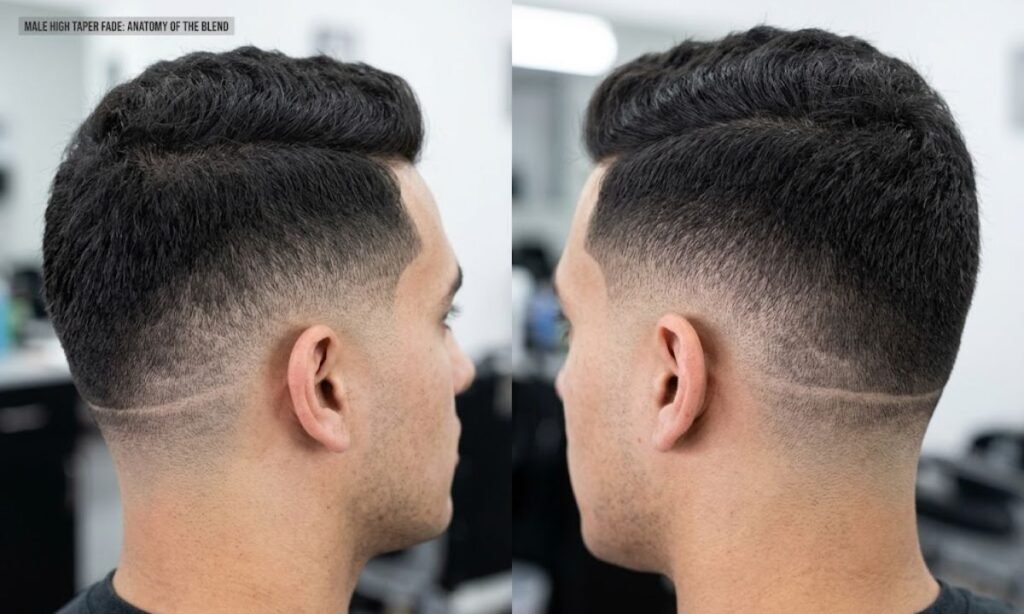
Picture your head in three bands. The bottom band is the fade zone. The middle band is the graduated blend. The top band is your retained hair length.
In a high version, the fade zone sits high. It often starts near the parietal ridge, where your head curves.
The barber uses clipper guards and the clipper lever to step the length up. Each step is tiny. That’s why the blend looks smooth instead of striped.
Here’s a simple map of the parts:
| Part | What it does |
|---|---|
| Fade zone | The shortest area, usually at the nape and sideburns |
| Transition height | Where short hair starts turning into longer hair |
| Retained side weight | The longer hair left on the upper sides |
| Top length | The hair you style on top |
Terminology: Why the Name Varies Between Barbers
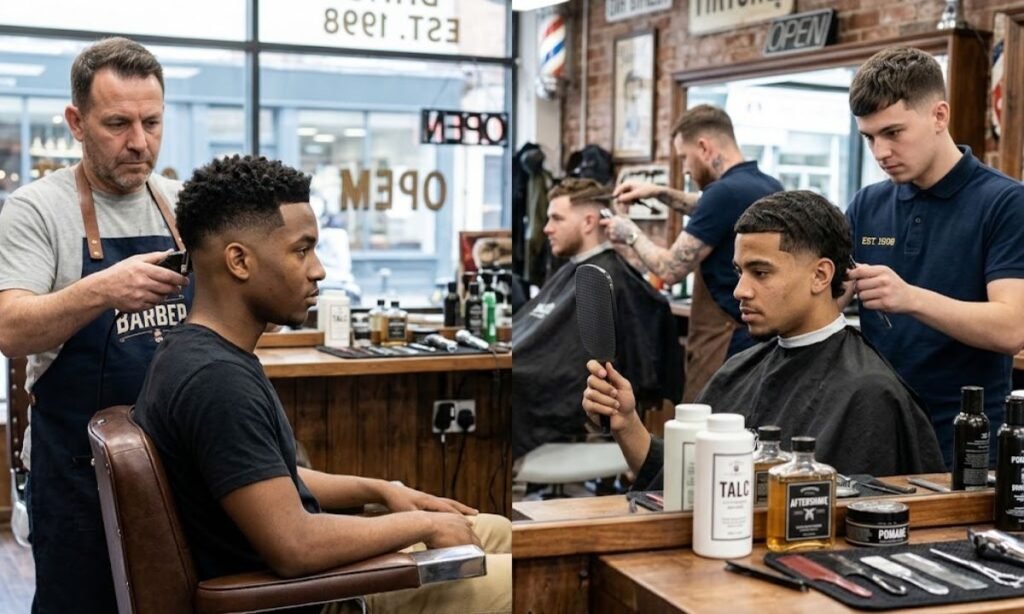
Here’s a headache. One barber says “high taper.” Another says “high fade.” A third says “high skin fade.”
They’re not always talking about the same thing. A classic taper usually leaves more length. A skin fade drops to bare skin.
That’s why photos matter so much. A name can mean three different haircuts.
Don’t just say “high taper fade.” Add the shortest clipper length and show a picture. You’ll avoid a bad surprise.
High Taper Fade vs High Fade, Low Taper, and Mid Taper
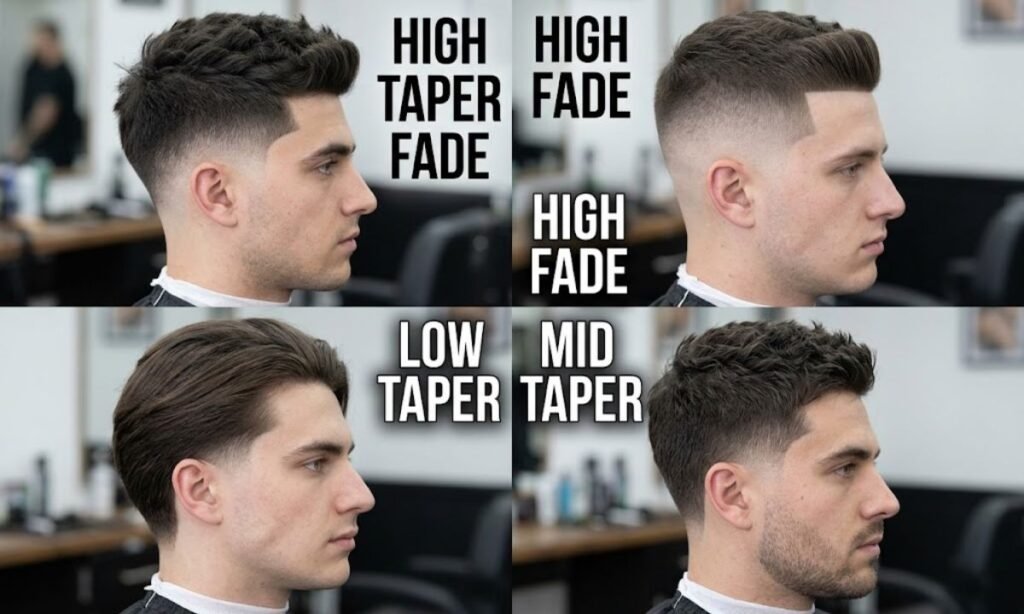
The big question is fade height. It decides how much of your head gets short.
A high taper fade starts the blend high. A mid taper fade starts around the middle of the sides. A low taper fade stays near the ear and neckline.
A high fade haircut is usually bolder. It often goes shorter, sometimes to skin. A high taper fade vs high fade comparison comes down to scalp exposure. The taper tends to feel softer. The full high fade feels sharper.
Here’s a quick view:
| Cut | Where the blend starts | Contrast | Scalp exposure |
|---|---|---|---|
| Low taper fade | Near the ear | Low | Small |
| Mid taper fade | Mid-sides | Medium | Moderate |
| High taper fade | Temple height | High | Larger |
| Full high fade | Very high, often to skin | Very high | Largest |
Some other names show up too. A drop fade curves down behind the ear. A burst fade curves around the ear. You can mix them, like a low drop fade, mid drop fade, or high drop fade.
Not sure which to pick? Choose a mid taper fade if you want less drama. Choose the high version if you want a clear, confident shape.
What Are the Main Benefits of a High Taper Fade?

First, it looks clean fast. The short sides frame your face and keep things tidy. Even messy hair on top looks intentional.
Second, it works with lots of styles. You can pair it with a buzz cut, a quiff, or a full afro. Your top decides the mood.
Third, it’s cooler in summer. Less hair on the sides means less heat. You’ll feel it on the first warm day.
Here’s what people like most:
- Sharp contrast between sides and top
- Easy styling on a short textured top
- Works with a beard blend
- Grows out in a fairly forgiving way
There’s one catch. Clean looks need clean upkeep. We’ll cover that later.
Who Does a High Taper Fade Suit?

Short answer: most people. The longer answer depends on your hair, your head, and your habits.
Think of this as a fit test. You’re not asking “is it trendy?” You’re asking “does it work on my head?”
Check three things below: your hair, your head shape, and how much time you’ll spend on it.
Hair Texture, Density, and Growth Pattern
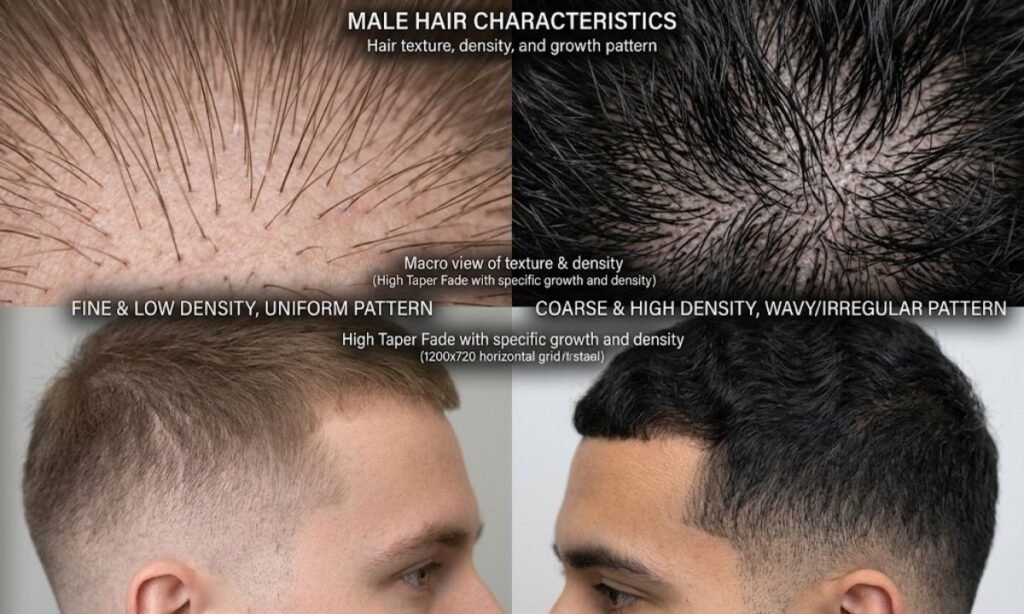
Your hair texture changes the finish. Straight hair shows every clipper line. Curly hair hides small flaws but can spring up after a cut.
Hair density matters too. Thick hair and dense hair give you great side fullness on top. Fine hair can look thin if the sides go too short.
Now look at your hair growth pattern. Do you have cowlicks or odd crown growth? A good barber reads those swirls before cutting.
A quick tip. Show your barber the stubborn spots. Say “this piece always sticks up.” It helps more than you’d think.
Face, Head Shape, Hairline, and Scalp Visibility
A round face shape can gain length from a high fade with volume on top. A square face shape gets softer edges with a slightly longer taper. An oval face shape can wear almost anything.
What about a long face shape? A high fade can stretch it. Keep the top shorter or add width at the sides.
Your head contour counts too. Bumps, flat spots, and scalp scars show more when the sides go short. Run your hand over your head first. You’ll know what’s there.
Then check your hairline shape. A strong, even line looks great. An uneven hairline needs a careful plan.
Lifestyle and Upkeep Tolerance

Be honest about your daily styling time. Two minutes? Ten? A short textured top needs almost nothing. A pompadour needs a mirror and patience.
Think about your workplace grooming rules and school dress codes too. Many offices and schools are fine with this cut. Some have rules on fade height or extreme contrast.
Last, count your hair maintenance preferences. If you hate barber trips, ask for a softer blend. It hides regrowth better.
Which High Taper Fade Style Fits Your Hair?
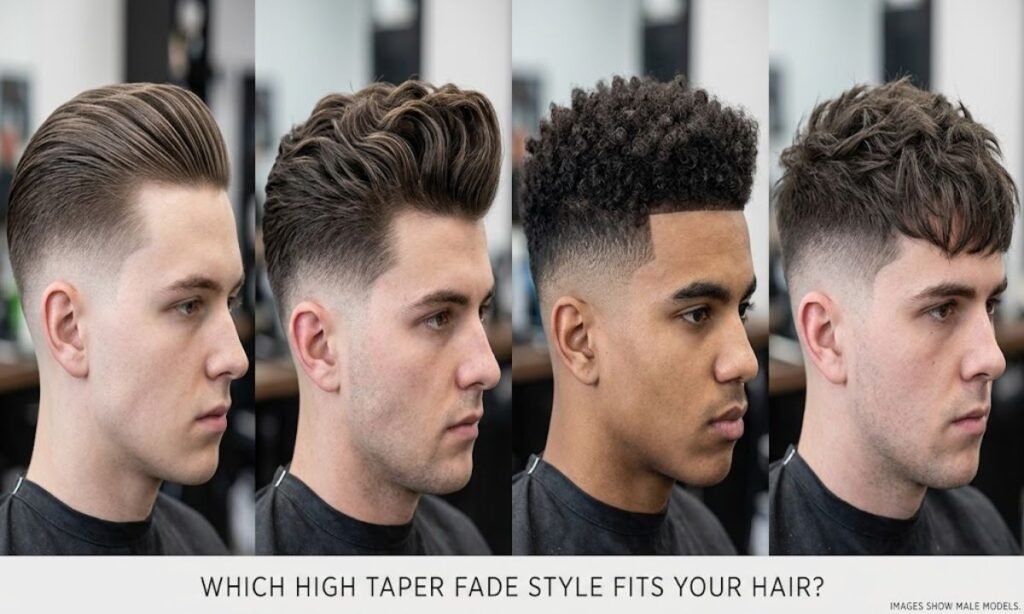
Here’s the fun part. The fade is the base. The top is where you get to play.
Pick based on your hair texture, not just a photo. A style that looks perfect on straight hair may fight your curls.
Let’s go type by type.
High Taper Fade Styles for Curly and Coily Hair
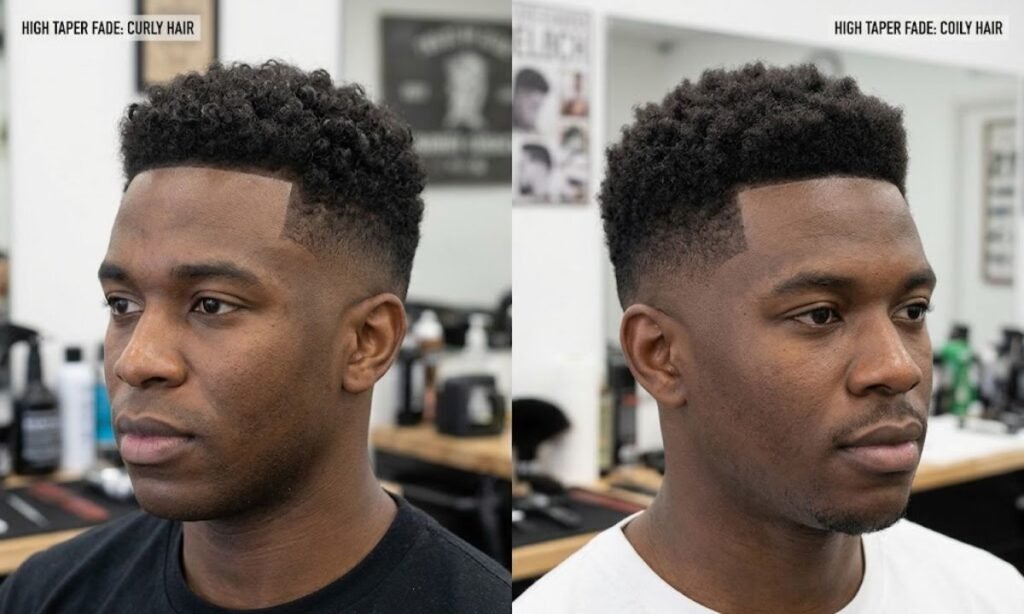
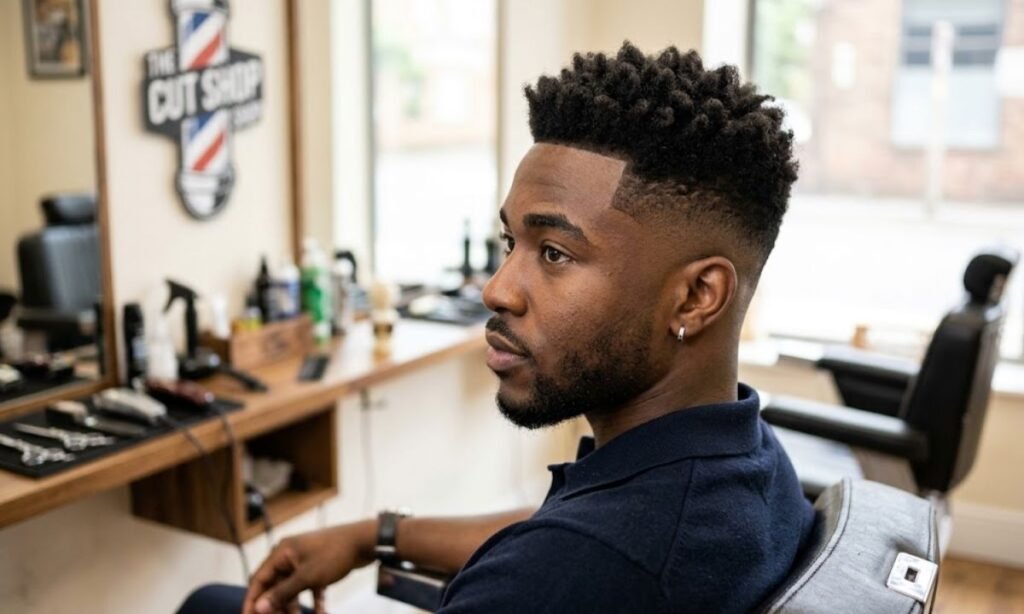
Curls and coils love a high taper fade. The clean sides make the natural curls pop. It also keeps weight off your head in summer.
One warning: hair shrinkage. Coily hair can look half as long when dry. Plan your top length with that in mind.
Ask your barber to cut with your hair stretched, or tell them your wet length. It saves you from a “that’s way shorter” moment.
Rounded Afro or Defined Curly Top

A rounded afro with a high taper looks sharp and balanced. The sides stay tight while the top keeps its shape. A full afro can also work if you want more size.
For defined curls, use a curl cream or leave-in conditioner. Scrunch it in while the hair is damp. Let it dry without touching it.
A curly top and a coily top both need moisture. Dry curls frizz and break. Wet curls clump and shine.
You’ll also see this called a high taper fade for Black men in search results. The idea is the same: cut to the curl pattern, not against it.
Twists, Locs, or Braids with a High Taper

Twists, locs, and braids pair well with a fade. The tight sides make the long top stand out. Think of it as a frame around a picture.
Cornrows work well too. A neat fade next to clean rows looks sharp. Keep your natural edge soft or define it with a sharp line-up.
Check your scalp sensitivity if your braids are tight. Pulling plus clipper irritation can sting. Give your scalp a break.
High Taper Fade Styles for Straight and Wavy Hair
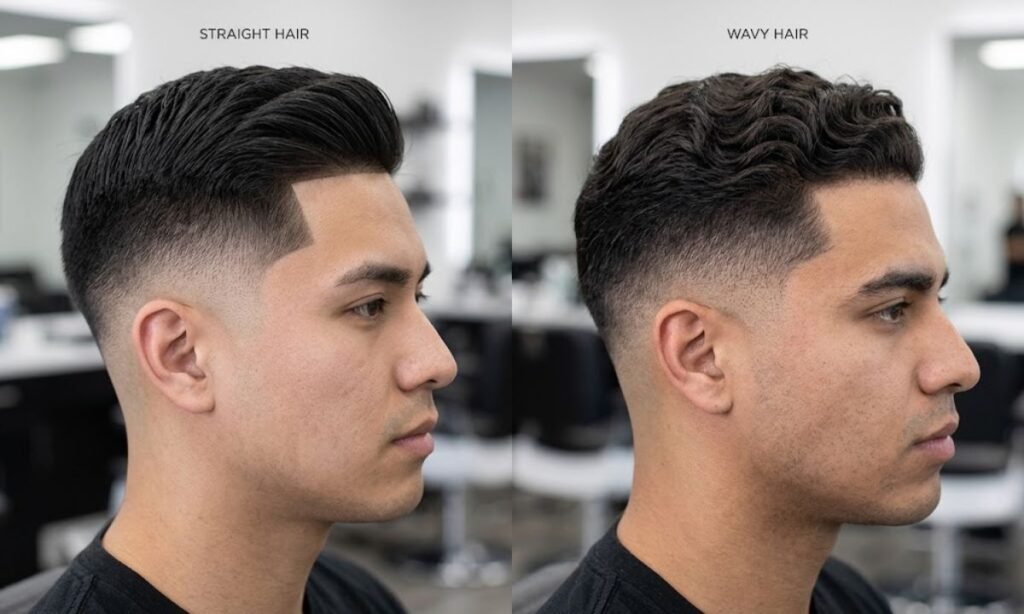
Straight hair gives you a smooth, graphic look. The fade lines show clearly, so the blend must be clean. Wavy hair adds movement and hides tiny mistakes.
Use less product than you think. A pea-sized amount of matte paste often beats a big glob. You can always add more.
Waves also work. A high taper with natural waves looks relaxed but sharp.
Textured Crop or Forward Fringe

A textured crop is short, choppy, and easy. Combine it with a forward fringe and you get a modern, low-effort look. Great for busy mornings.
Use a little styling cream or matte paste. Push the hair forward, then break it up with your fingers.
You’ll see this as high taper fade textured fringe in photo searches. It’s one of the most popular combos for good reason.
Side Part, Quiff, or Pompadour
A side part is classic. Pair it with a high taper and you get a neat, office-ready look. A bit of hair pomade gives it polish.
A quiff adds lift at the front. Use root lift spray and a blow dryer. Style it up and back.
A pompadour is bolder. It needs a longer long top and more time. Worth it if you love the shape.
Short High Taper Fade Options with Less Daily Styling
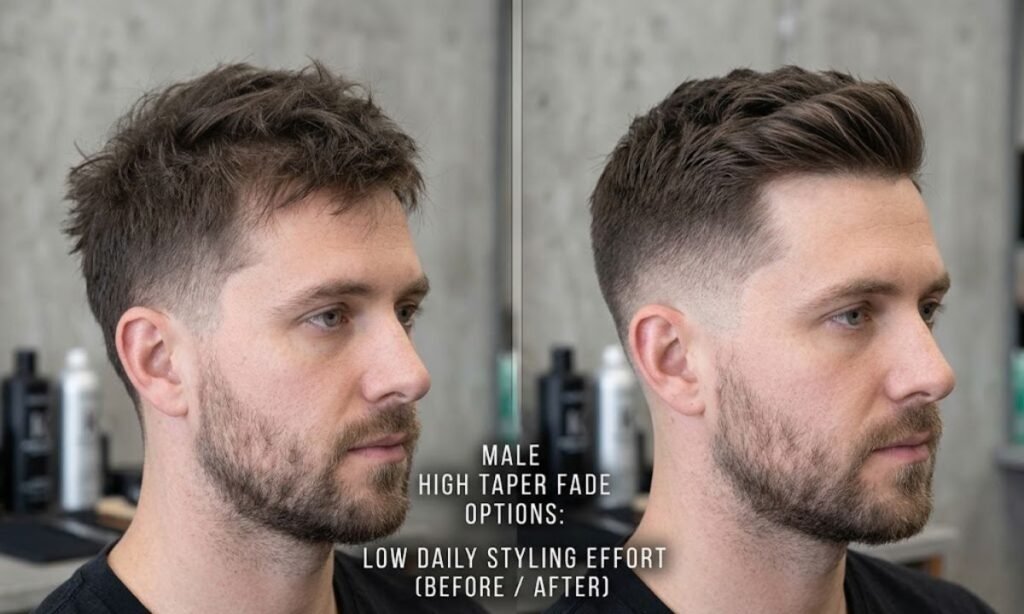
Short on time? You’ve got options. These cuts need almost no routine.
The trade-off is that mistakes show faster. A short cut has nowhere to hide. Book a barber you trust.
Buzz Cut or Crew Cut

A buzz cut with a high taper is simple and tough. Pick one guard length for the top and a shorter one for the sides. Done.
A crew cut keeps a little length at the front. It looks tidy and a bit athletic. Sometimes you’ll see it listed as high taper fade with crew cut.
Both work well for sports, school, and work. Zero styling products needed.
Short Textured Top
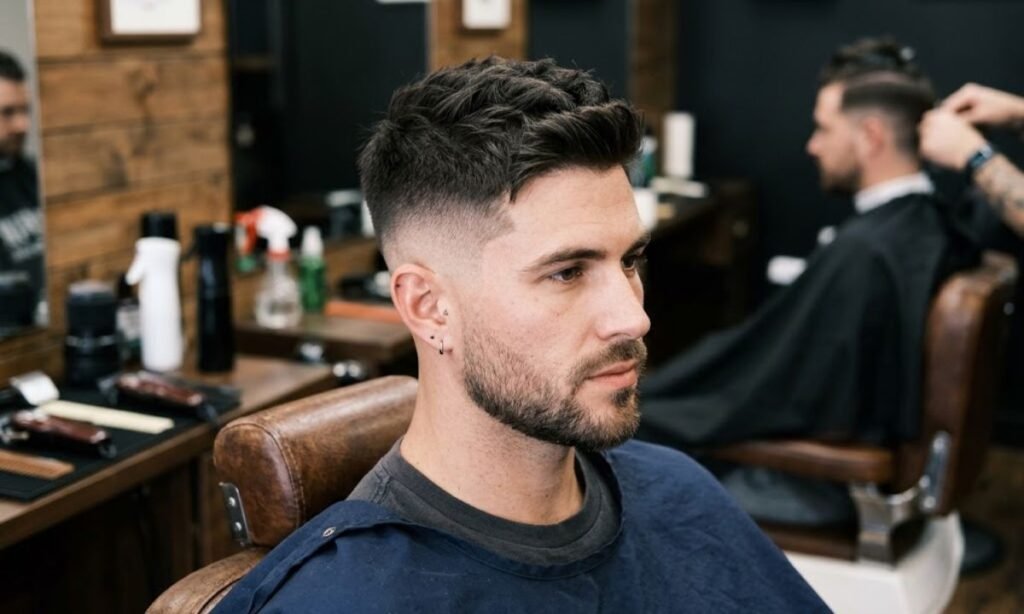
A short textured top gives you a bit of shape without effort. Your barber cuts it with scissors or a clipper over comb. Then you tousle it with a little paste.
This is the sweet spot for many guys. It’s not boring, but it’s not demanding.
It also grows out gracefully. You won’t panic at week four.
Beard and Neckline Pairings
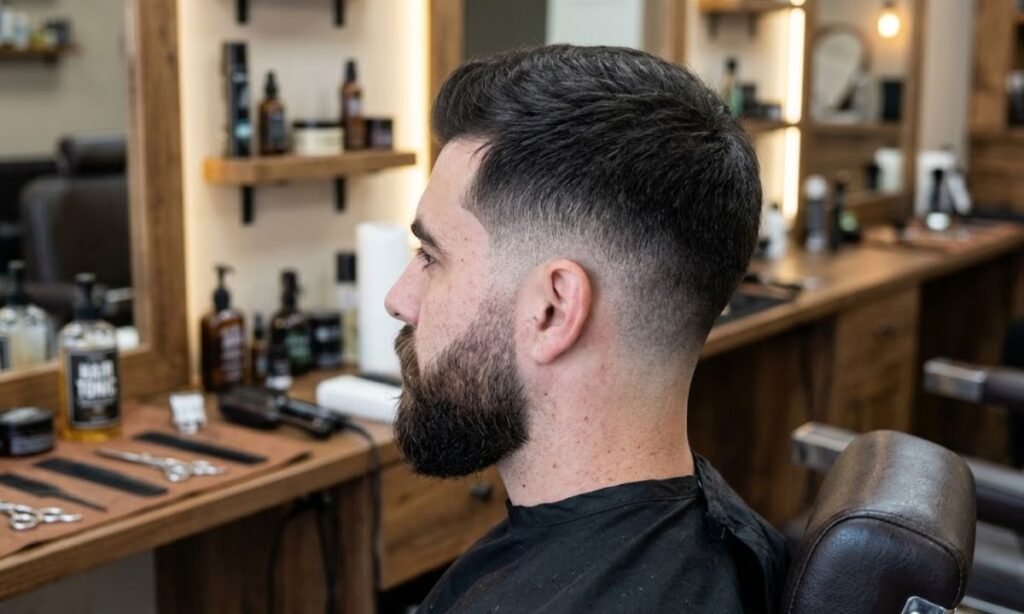
A high taper and a beard make a great pair. The key is the beard integration. The sideburn should flow into the beard without a hard stop.
Keep your short beard or tapered beard trimmed. A messy beard fights a clean fade.
Ask for the beard blend to start where your fade ends. It makes the whole look feel like one design.
Temple-to-Beard Blend
The temple-to-beard blend connects the temple area to the beard through the sideburns. The hair shortens as it moves down. There’s no gap, no step.
This is where most bad cuts go wrong. If the barber stops the fade early, you’ll see an awkward line near the ear.
Say it plainly: “Blend my sideburn into my beard, no break.” Simple, clear, effective. Some people call this a high taper fade with beard.
Tapered Nape Versus Defined Neckline

You have two choices at the back. A tapered nape fades naturally into the skin. It grows out softly.
A defined neckline is squared or rounded with a hard edge. It looks crisp on day one. It also looks messy faster.
If you want low upkeep, pick the taper. If you love sharp edges and book often, pick the line. Either way, ask for a tapered neckline or a clean finish, not a surprise.
High Taper Fade Haircut Examples by Length and Finish
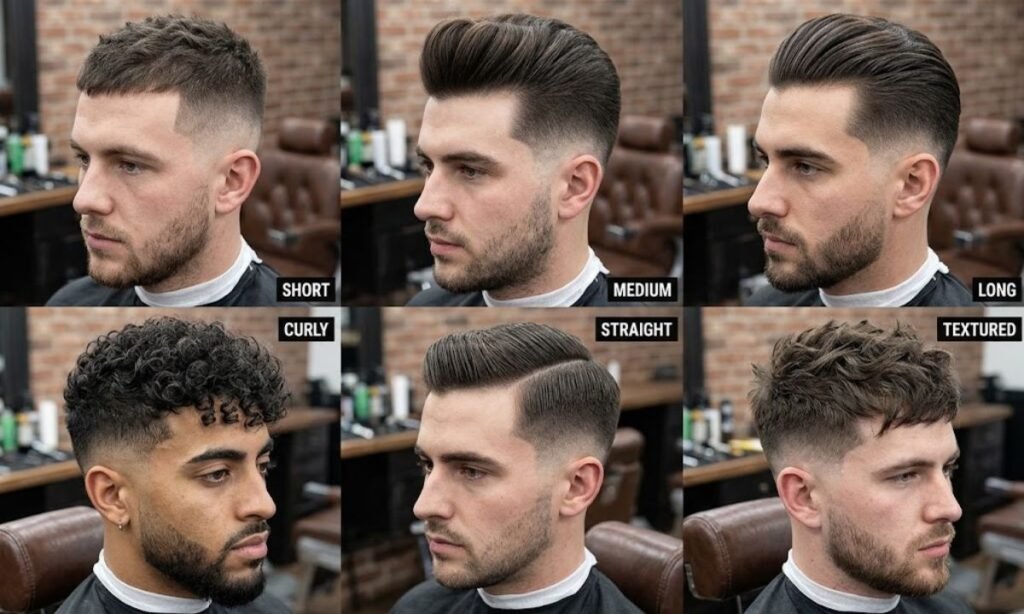
The same fade can look totally different. It depends on your top length and how short the sides go.
Here are four finishes worth knowing. Show a photo of the one you like.
High Taper Fade with a Long Top
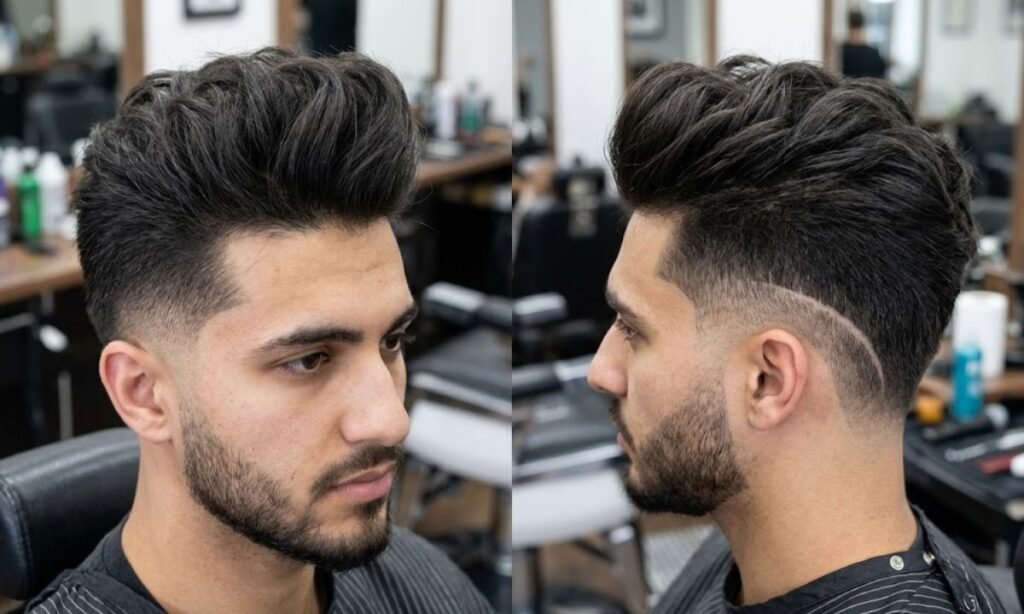
A long top gives you the strongest haircut contrast. Short sides, long top. It’s bold and works for slicked-back, curly, or swept styles.
Keep the length healthy. Split ends look worse on top of a sharp fade.
You can try a mullet shape too. A high taper fade mullet keeps the sides tight and leaves length at the back. Not for everyone, but fun.
High Taper Fade with a Skin or Bald Finish
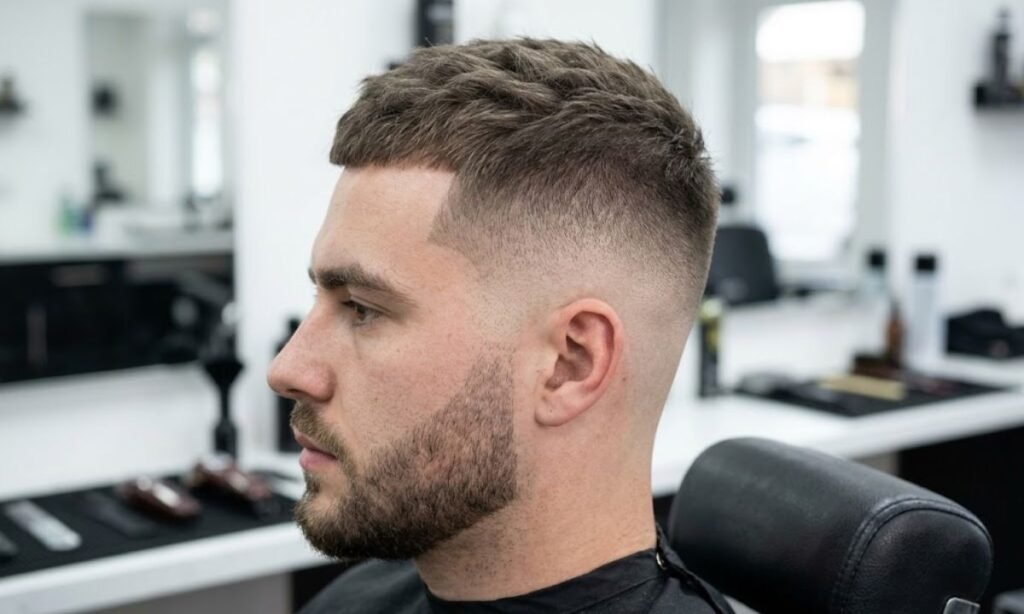
A skin finish goes down to bare skin. People also call it a zero finish or a skin fade haircut. The cut looks crisp and bright.
It shows everything, though. Scalp visibility, bumps, and scars all show. It also needs frequent barber appointments.
If you want this look, ask for the skin to start low in the fade zone and blend up. That keeps it from looking harsh.
High Taper Fade with a Shadow Fade Finish

A shadow finish stops just short of bare skin. It looks like a soft shadow on the sides. Many barbers use a #0.5 or a #1 guard.
It’s a good middle ground. You get a clean look without full scalp exposure.
It also hides regrowth better than skin. You’ll look fresh for longer.
High Taper Fade with a Messy or Natural Finish

Not everyone wants sharp. A messy or natural finish keeps the blend soft. The natural hairline stays mostly as it is.
This works great with a textured crop or loose waves. It looks lived-in, not styled.
Ask your barber for a soft gradual hair transition and a light edge. The result looks easy, even if the cut wasn’t.
Can You Get a High Taper Fade with a Receding Hairline or Uneven Temples?

Yes, you can. A good barber can use the cut to flatter you.
Here’s the logic. A strong contrast draws the eye to the top. It can make thinning at the front less obvious.
Still, it depends on your hair. Let’s look at both cases.
High Taper Fade for Maturing Hairlines

A receding hairline doesn’t ban you from fades. Many men with thinning temples wear a high taper well. The trick is to avoid going too short at the sides.
Leave a bit more retained side weight and a longer top length. Then brush the hair forward or sideways. A textured crop works nicely here.
Skip a super-sharp line-up. A harsh edge can highlight the recession. A softer, natural edge looks more flattering.
Working with Uneven Temples and Cowlicks

Most hairlines aren’t symmetrical. One temple sits higher. One side swirls. That’s normal.
A barber can balance this by adjusting the fade height on each side. They’ll check the hair growth pattern before cutting. Don’t be shy about pointing out your odd spots.
For stubborn cowlicks, keep the top a bit longer. Weight helps hair lie flat. A cowlick on a buzz cut sticks up fast.
How Much Does a High Taper Fade Cost?

Prices vary a lot. They depend on your city, the shop, and the barber’s skill. In many US shops, a fade often falls somewhere around $25 to $50. Premium shops charge more, and other countries differ.
So I won’t give you a magic number. Call two local shops and ask. It takes two minutes.
Here’s what usually moves the price.
Factors That Affect the Price of a High Taper Fade

Several things change what you pay:
- Location: big-city shops cost more
- Barber experience: senior barbers charge extra
- Add-ons: beard work, a sharp line-up, or hot towels
- Hair type and length: a long curly top takes more time
- Walk-in versus booked slots
A full beard blend often adds to the bill. So does a complex design.
Don’t pick only on price. A bad fade costs more in the end, because you’ll pay to fix it.
How Often You Need to Pay for Touch-Ups

Most people refresh a fade every 2 to 4 weeks. Crisp skin finish looks need the shorter end. Softer cuts stretch longer.
Some shops offer cheaper temple touch-up or neckline cleanup visits. Ask if yours does. It can cut your yearly cost.
Add it up. A visit every three weeks means about 17 visits a year. Budget for that before you commit.
How Do You Ask a Barber for a High Taper Fade?

Here’s the secret: barbers want clear details. Vague words cause most bad cuts.
A good haircut consultation takes one minute. It saves you weeks of regret.
Use the steps below. You’ll walk in confident.
Seven Haircut Specifications to Agree On
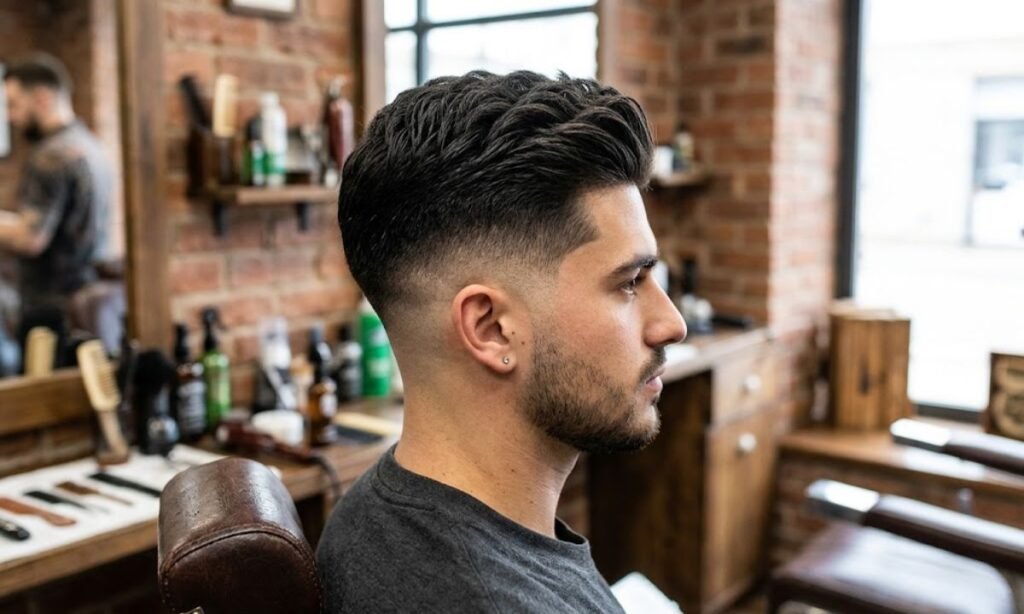
Cover these seven points before the clippers start:
- Fade height: where the blend begins (high, near the temple)
- Shortest clipper length: your guard length or skin
- Fade coverage: how far around the head it goes
- Top length: how much to leave, with a measure if possible
- Top shape: textured, rounded, swept, or squared
- Hairline treatment: natural, soft, or a sharp line-up
- Neckline finish and sideburn finish: tapered or defined
Say “guard #1 at the bottom, blend up to the temple.” That’s much clearer than “short on the sides.” A quick guard length chart helps. A #1 leaves about 1/8 inch, a #2 about 1/4 inch, and a #3 about 3/8 inch. Check your barber’s guides, since brands differ slightly.
Also mention transition placement. Tell them where the blend should stop. This keeps the upper sides from going too bare.
Reference-Photo Checklist
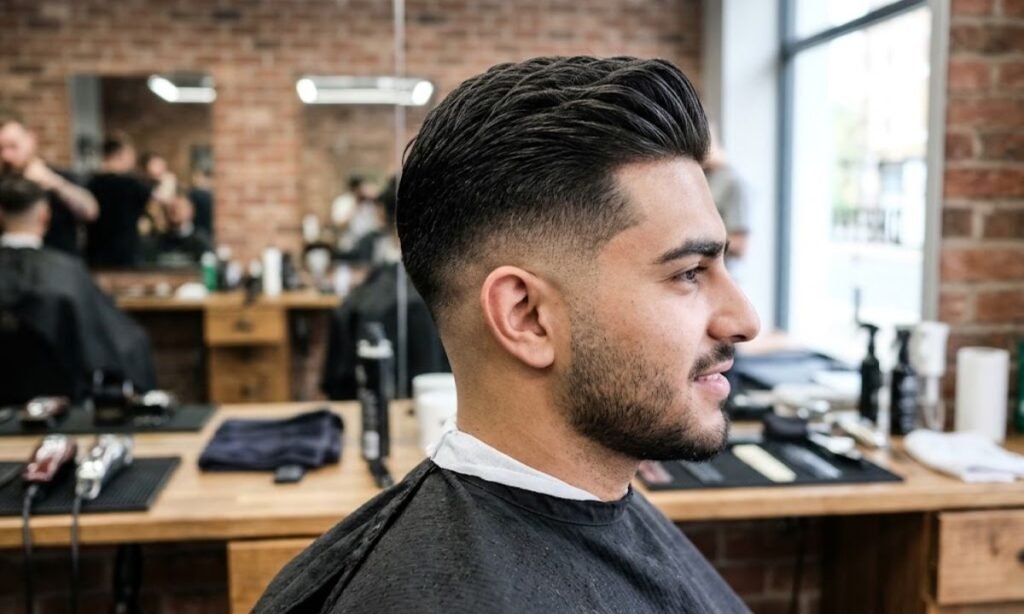
Photos beat words. Bring three if you can:
- A front view reference
- A side view reference
- A back view reference
Pick photos with hair like yours. A photo of straight hair won’t help if you have coils. Match your hair texture and hair density.
Tell your barber what you like and what you don’t. “I like the blend, but not this much skin.” That one sentence helps a lot.
Copyable Barber Script

Here’s a barber-ready haircut description you can use. Change the numbers to fit you.
“I’d like a high taper fade. Start the fade at the temple height. Take the shortest part down to a #1 at the nape and sideburns. Keep the sides blended up smoothly, no harsh lines. Leave the top about [two inches], textured, and don’t cut my hairline too tight. Taper the neckline. Here are my photos.”
Short, clear, and polite. A barber hears this and knows exactly what to do.
If you have a beard, add: “Blend the sideburn into my beard, no gap.”
Your Pre-Appointment Checklist

Run through this before you sit down:
- Pick your fade height and finish (skin, shadow, or natural)
- Save three haircut reference photos
- Decide your top length and how you’ll style it
- Note your cowlicks or odd hairline spots
- Tell the barber about scalp sensitivity or past irritation
- Ask how often you should return
Wash your hair beforehand if you can. Clean hair cuts more evenly. And relax, because a nervous face makes a barber nervous too.
How Do You Maintain and Style a High Taper Fade?
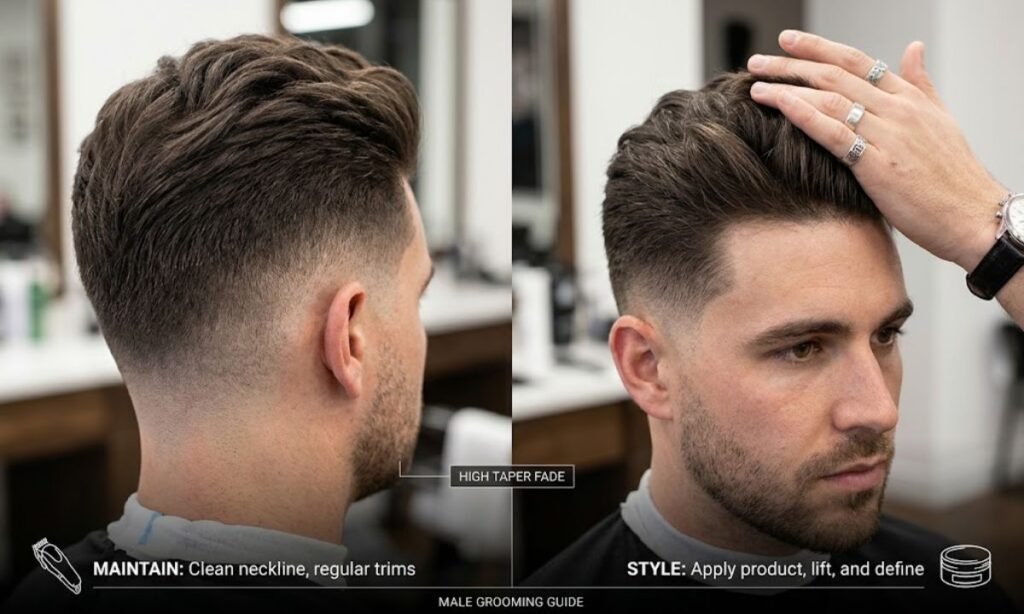
A high taper fade looks best fresh. Then regrowth sneaks in. Good haircut maintenance keeps it sharp longer.
You don’t need a big routine. You need a small, steady one.
Here’s what to do and when.
Refresh Schedule and Grow-Out
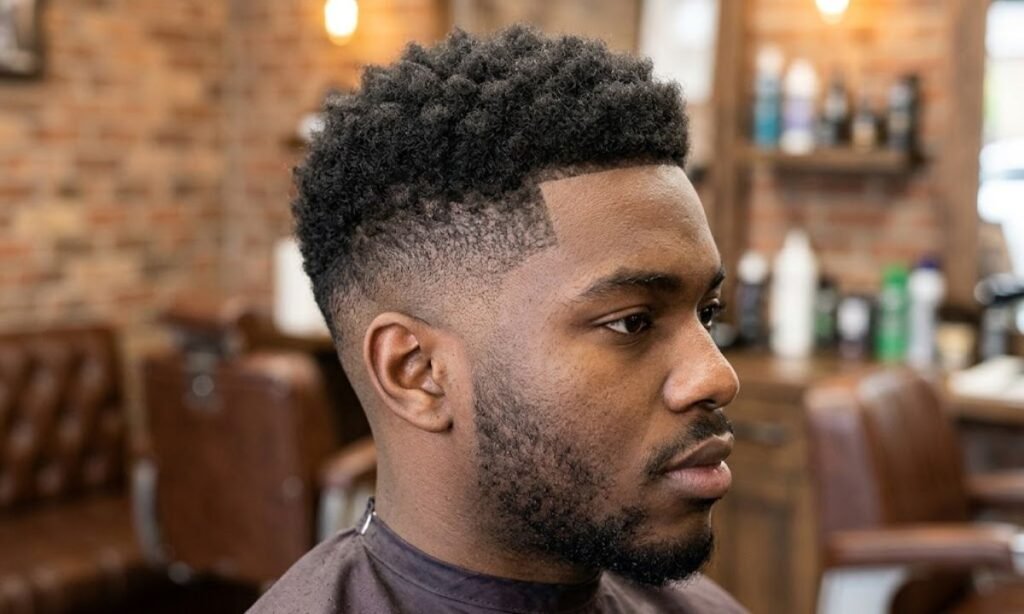
Hair grows about half an inch a month on average. That means a fade softens in two to three weeks. By week five, the shape is fuzzy.
Follow a fade refresh schedule. Every 2 to 3 weeks keeps it crisp. Every 4 weeks keeps it decent.
Hair regrowth shows most at the temples and neckline. That’s why a temple touch-up and neckline cleanup help so much.
Want to grow it out instead? Ask for a gradual shape. Understand that grow-out visibility peaks around the awkward middle weeks. Stick with it. It passes.
Daily Styling by Hair Texture
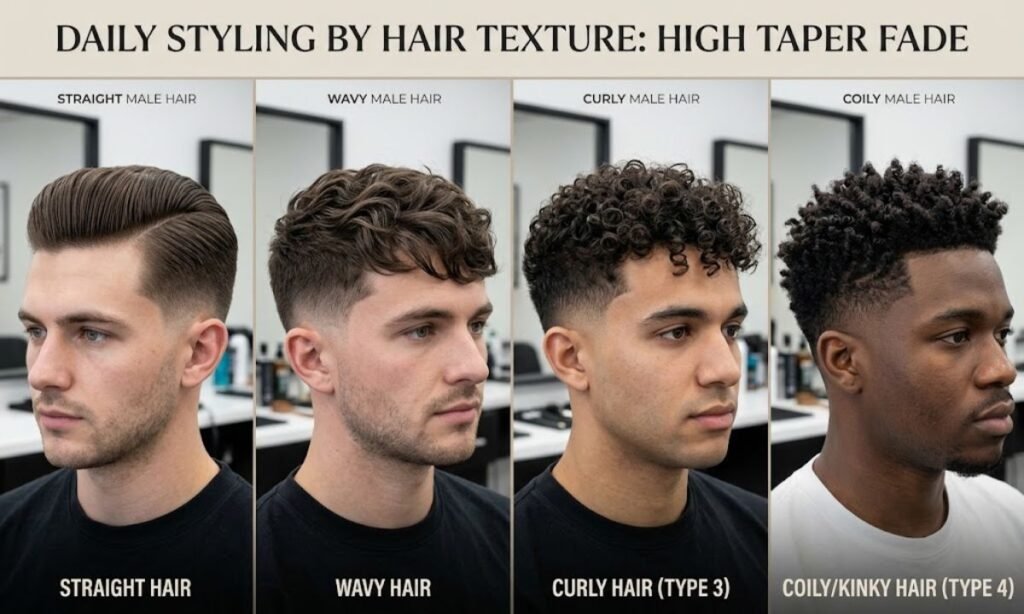
Your routine depends on your hair:
- Curly and coily: Use curl cream and leave-in conditioner. Define the curl while damp. Try a soft pick for volume.
- Wavy: Use a light styling cream. Scrunch and air-dry, or diffuse.
- Straight: Use matte paste or hair pomade. Blow dry with root lift for volume.
- Short and textured: Rub a tiny amount of paste in your hands. Tousle and go.
Don’t overdo it. Too much hair product buildup weighs hair down and clogs your scalp. Wash it out regularly.
Safe Between-Visit Cleanup
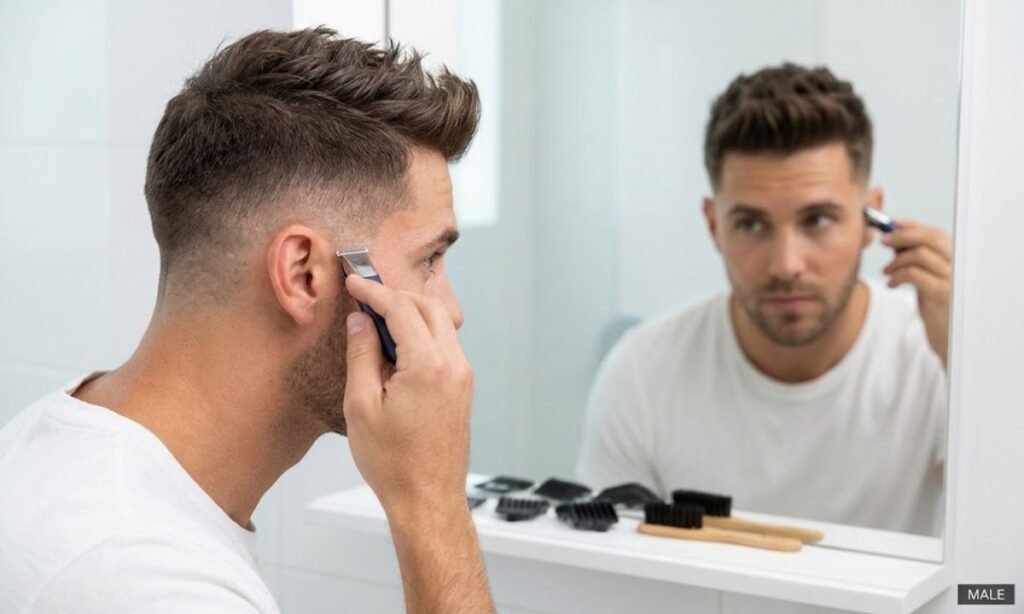
You might want to tidy things up at home. It’s okay, but be careful.
Safe ideas:
- Use a small trimmer on the neckline only, not the fade itself
- Go slowly and never cut upward into the blend
- Keep clipper maintenance simple: oil blades, brush off hair, and clean them after use
- Skip the sideburn finish unless you’re confident
Don’t touch your fade zone. One slip makes a hole you can’t hide. Leave the blend to your barber.
What Are the Drawbacks and Safety Considerations?

No haircut is perfect. This one has a few real catches. Knowing them early saves stress.
Most issues are small. A few need extra care.
Let’s go through them honestly.
Practical Drawbacks and Edge Cases
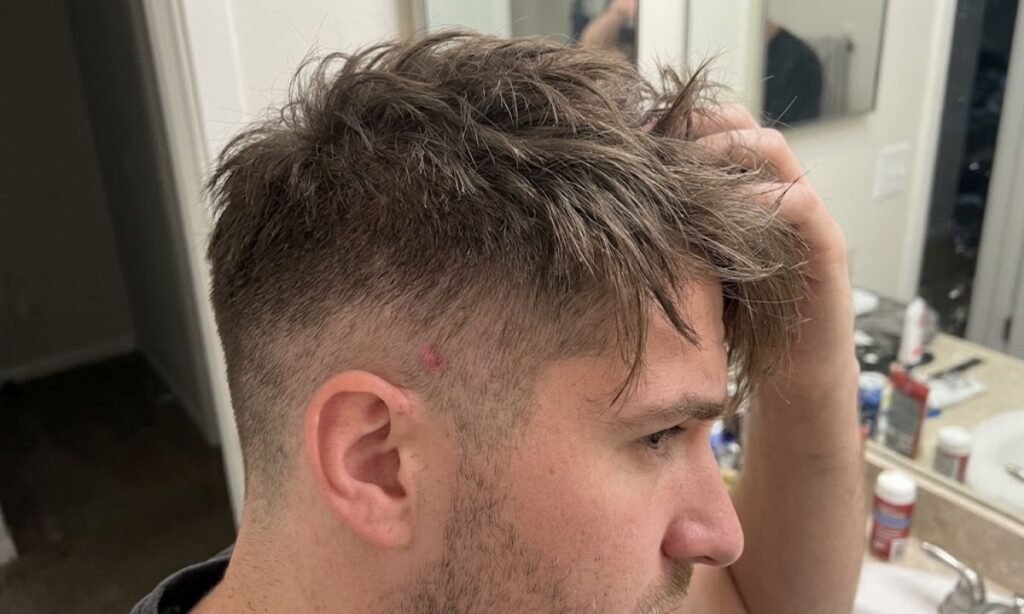
First, upkeep. A sharp fade fades fast. You’ll visit your barber often.
Second, scalp visibility. If you have scalp scars, birthmarks, or patchy areas, a high fade may show them. Test with a mid taper first.
Third, fine hair can look thin when sides go short. And a long face shape can feel stretched. Adjust the fade height or top length to balance it.
Also, workplace grooming or school dress codes might limit contrast. Check the rules if you’re unsure.
Irritation, Razor Bumps, and Barber-Tool Hygiene
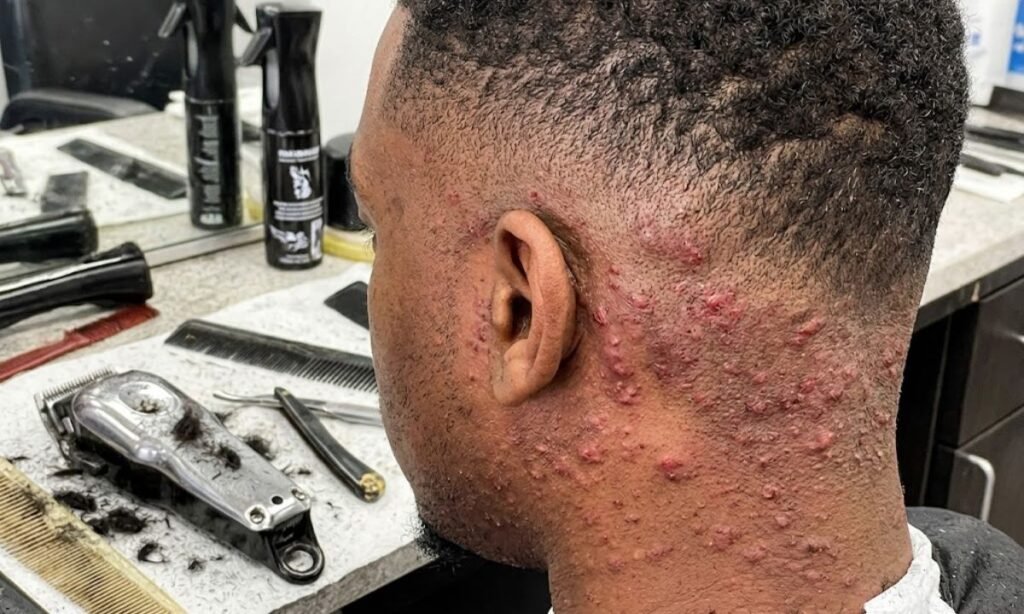
Short hair near the skin can cause razor bumps, ingrown hairs, and scalp irritation. It’s more common with curly hair shaving and tight curl patterns. The hair can curl back into the skin.
Good habits help:
- Ask your barber to use clean barber tools
- Make sure they follow clipper disinfection between clients
- Don’t shave against the grain
- Moisturize your scalp and keep it clean
- Avoid picking at neckline bumps
Persistent bumps on the back of the head can be a sign of acne keloidalis nuchae. It’s a condition that causes firm bumps and sometimes scarring. If you notice scalp inflammation, pain, or bumps that won’t clear up, see a doctor. A dermatologist consultation can sort it out safely.
Common Mistakes People Make with a High Taper Fade

Even smart people slip up. Here are the common ones I’d flag.
Going too high. The fade creeps up to the crown, and suddenly it’s a bald-looking fade. Say “temple height” and point to the spot.
Skipping the photo. Words are slippery. Pictures aren’t.
Ignoring hair type. A cut that works on straight hair may fail on tight coils. Always match your photo to your hair texture.
Forgetting upkeep. Booking a crisp skin fade, then waiting six weeks. The look dies fast.
Overstyling. Too much product ruins a clean cut. Less is more.
What Are the Best Alternatives to a High Taper Fade?
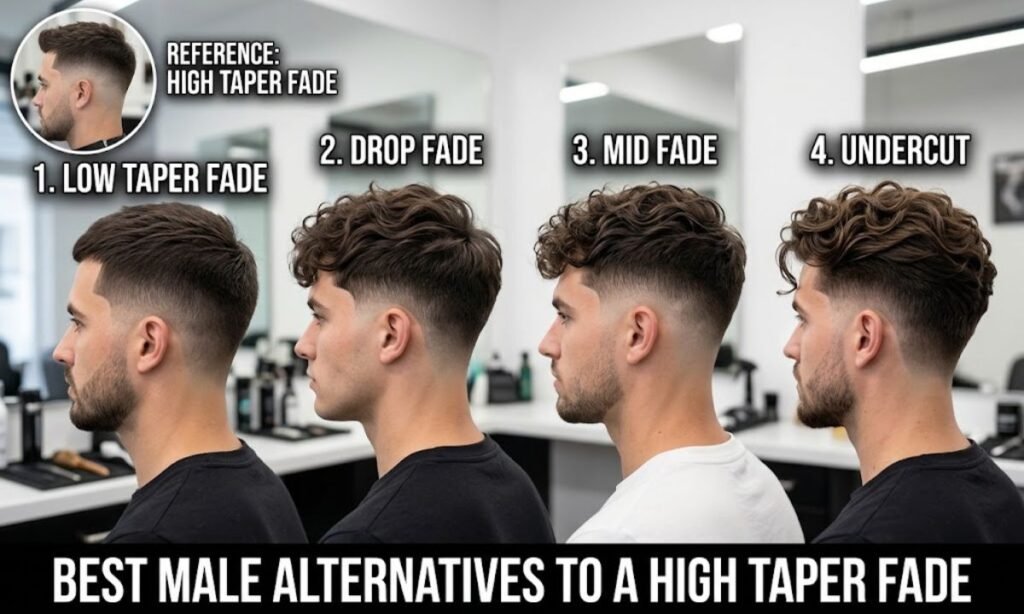
Not sure about this cut? You have plenty of options. Each one trades contrast for ease.
Start with a low taper fade. It’s softer and works in strict settings. A mid taper fade sits in the middle and flatters almost everyone.
A classic taper keeps more length and looks traditional. A drop fade adds a curve behind the ear, which adds style without much more upkeep. A burst fade circles the ear for a bold look.
Want something sharper? Try a skin fade or a full high fade. Want something easier? Try a shadow finish or a longer scissor cut.
Here’s a quick way to choose:
| If you want… | Try this |
|---|---|
| Less contrast | Low taper fade |
| Balanced look | Mid taper fade |
| Curved shape | Drop fade |
| Bold look | Burst fade or skin fade |
| Very low upkeep | Classic taper |
You can also checkout this article as well: Mid Taper Fade: Styles, Barber Instructions, and Maintenance
High Taper Fade Frequently Asked Questions
These are the questions people ask most. Short answers, no fuss.
Is a High Taper Fade Suitable for School or Professional Settings?
Often yes. A neat high taper with a conservative top looks professional. Pair it with a side part for an office look.
Check the rules first. Some schools limit skin fades or extreme haircut contrast.
If in doubt, pick a softer shadow finish or a mid taper.
Does a High Taper Fade Make Your Face Look Longer?
It can, mainly on a long face shape. The short sides make the head look narrower, so the face can look taller.
You can balance this. Keep the top shorter, or leave more side fullness. A lower taper also helps.
On round or square faces, it often adds helpful length and definition.
Can You Get a High Taper Fade Without Exposing the Skin?
Yes. Ask for a shadow finish or a longer guard length like a #2 at the bottom. You’ll keep a clean look with less scalp exposure.
Tell your barber “no skin.” Say it twice if needed.
It’s a smart pick if you have a sensitive scalp or visible scars.
How Long Does a High Taper Fade Take to Grow Out?
Because hair grows about half an inch a month, the sharp look fades in two to four weeks. A full grow-out to a normal length can take several months.
The awkward phase hits around the middle. Use a pomade or cap to get through it.
Book a mid taper as a bridge. It softens the change.
Is a High Taper Fade Suitable for Thick or Fine Hair?
Thick hair loves it. The cut removes bulk at the sides and keeps volume on top. Dense hair gets a cleaner shape.
Fine hair can work too. Keep the sides a little longer and the retained side weight higher. Avoid a skin finish.
Use a light styling cream on fine hair. Heavy product flattens it.
Can You Transition from a High Taper Fade to a Low Taper?
Absolutely. Ask your barber to lower the transition height a little at each visit. The sides grow, and the blend moves down gently.
It’s a smooth way to change looks. No awkward gap.
Tell your barber you’re heading toward a low taper so they plan it right.
Final Thoughts
A high taper fade is sharp, flexible, and friendly to many hair types. The key is clear barber instructions. Give the height, the shortest clipper length, and the top style.
Use photos. Be honest about upkeep. Protect your scalp.
Now it’s your turn. Which style are you thinking about: a curly top, a textured crop, or a beard blend? Drop it in the comments. Share this with a friend who’s stuck on what to ask for. And if you’ve had a great (or terrible) fade story, tell us. Your tip might save someone from a bad cut.

I’m Michael Charles, the creator of MegaCrazes—your source for fresh hairstyles, sharp haircuts, and simple hair-care inspiration. Find your style. Own your look.