


Last updated: October 2026
Will a mid taper fade look good on your straight hair? Or will it fall flat by lunchtime?
Those are the two worries most guys carry into the barber chair. Straight hair shows every uneven line, so a bad blend has nowhere to hide.
Here’s the good news. This cut works, and it works for almost every top length you can imagine.
Below you’ll find 15 styles, a word-for-word barber script, and a home routine that takes about five minutes. Grab a coffee and read on.
Quick Answer
A mid taper fade trims the sides and back in a smooth hair gradient. The shortening starts around the middle of the sideburn curve, near the temples.
On straight hair, you keep retained weight on top and let the blend line run clean above the ears. Ask for a #1 or #2 clipper guard at the shortest point and a natural neckline.
Here’s the fast version:
- Best for: fine, medium, and dense straight hair
- Taper height: mid, roughly level with the temples
- Top length: anything from a crew cut to a long hair flow
- Upkeep: a haircut refresh every 3 to 5 weeks
- Daily styling time: 3 to 7 minutes
What is a mid taper fade on straight hair?

A taper shortens hair gradually from the top down to the nape and sideburns. A fade goes a step further and often drops to skin.
The mid taper fade sits between those two ideas. It’s a localized taper that stays tidy around the ears and neck, while the rest of the cut keeps its hair bulk.
Straight hair makes the shape easy to read. Each strand falls in the same direction, so you see the blend placement clearly from every angle.
What makes it a “mid” taper rather than a mid fade?

It comes down to the shortest point. In a mid taper vs. mid fade debate, the taper usually ends at a shadow finish or a short guard length. The fade often dives into a skin finish or zero finish.
So a taper feels softer and more conservative. A mid fade shows more skin and creates more contrast and blend height.
Think of it like a sunset. A taper dims slowly, while a fade drops off the horizon. Neither is wrong, but the taper vs. fade choice changes how bold the sides look.
How does straight hair change the finished look?
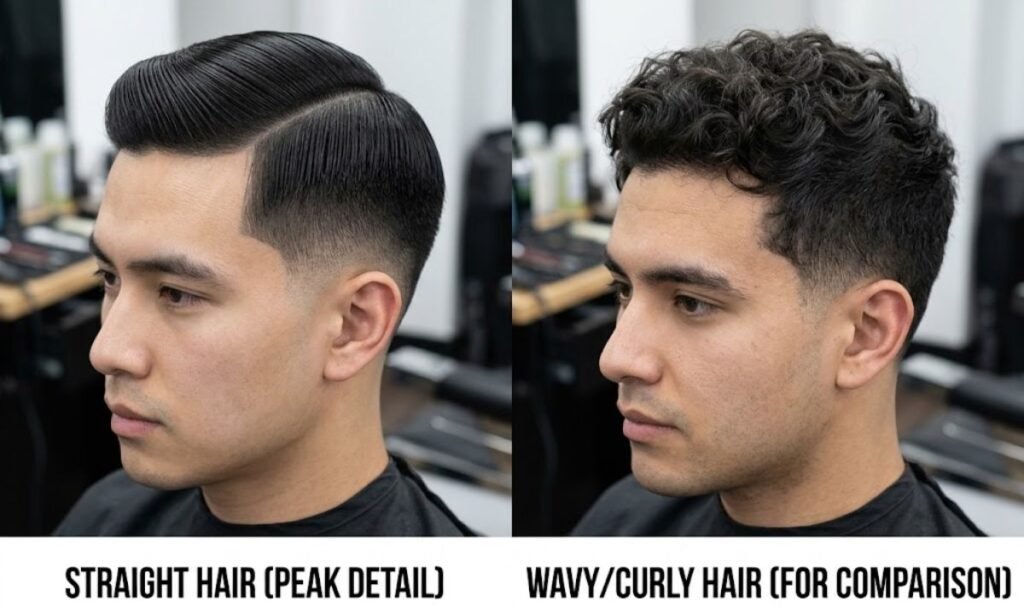
Straight hair lies flat against the head. That means the side and back coverage looks smooth, but any gap in the blend line shows right away.
It also means hair density matters a lot. Fine hair can look thin around the temple taper, while coarse hair can poke out and make the sides look wider than you planned.
Curly and wavy hair hide small mistakes in texture. Straight hair doesn’t, so a soft blend vs. sharp blend choice really shows. Your barber’s clipper control is the whole game here.
15 Mid Taper Fade Hairstyles for Straight Hair

Every style below pairs with the same mid-height taper. Only the top changes. Pick one based on how much time you want to spend each morning.
Mid Taper Fade with a Textured Fringe
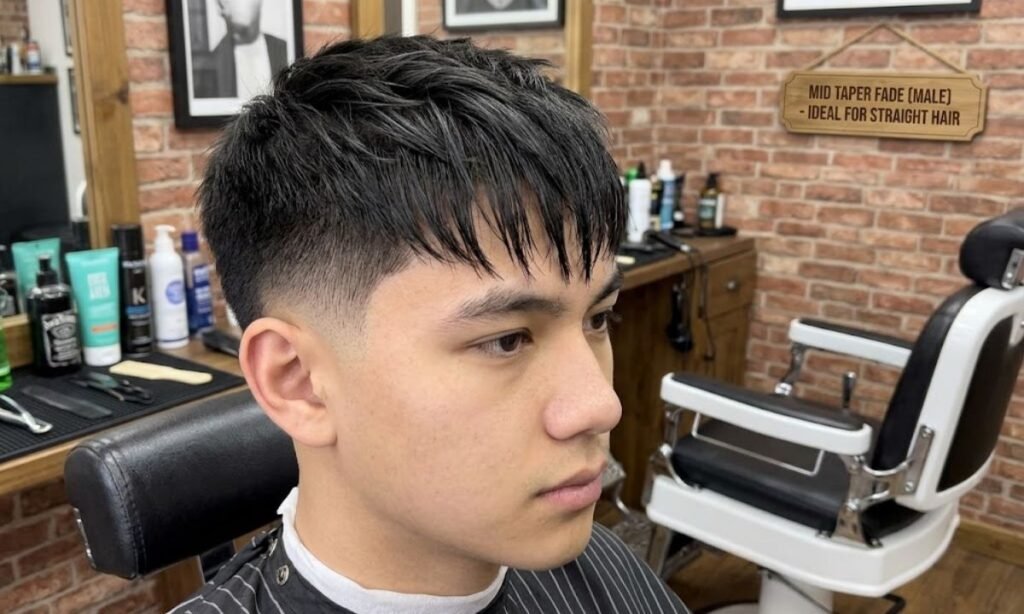
This one is a favorite for fine hair and sparse hair. The textured fringe sits just above the brows, with ends point-cut so they separate instead of clumping.
Use a matte paste and push the hair forward. The taper keeps the sides slim, so the fringe takes center stage.
Got a long forehead? A forward fringe softens it. Tell your barber to keep the front length around 2 to 3 inches.
Mid Taper Fade with a Side Part
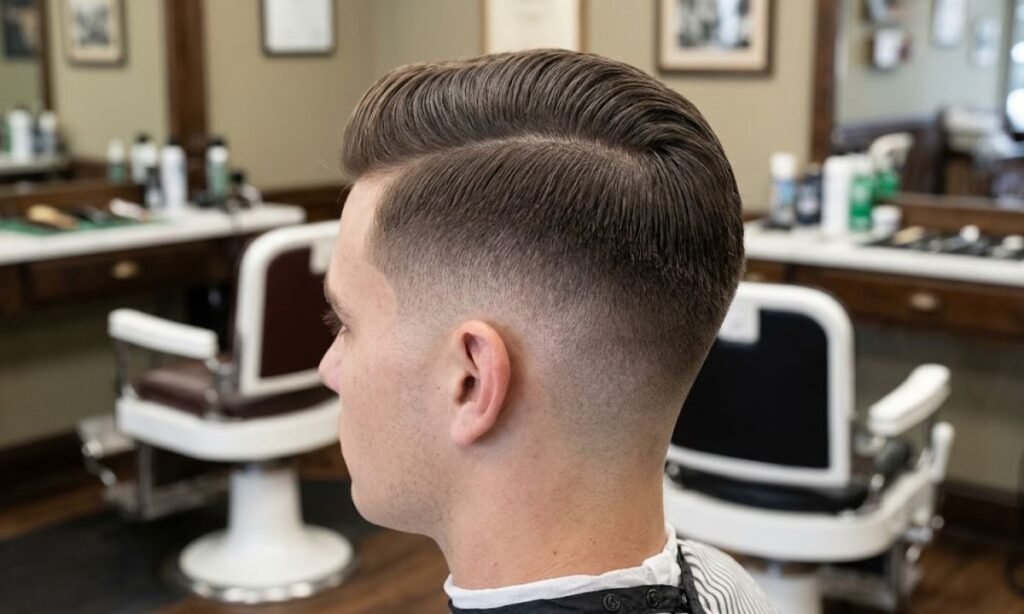
The side part haircut is the classic office-ready look. It pairs with a mid taper better than almost anything else.
Find your natural part first. Comb the hair across the part while it’s damp, then lock it with a little pomade.
A strong part gives you a crisp line. If your hair resists, ask the barber to cut a faint guide line so it stays put.
Mid Taper Fade with a Slick Back
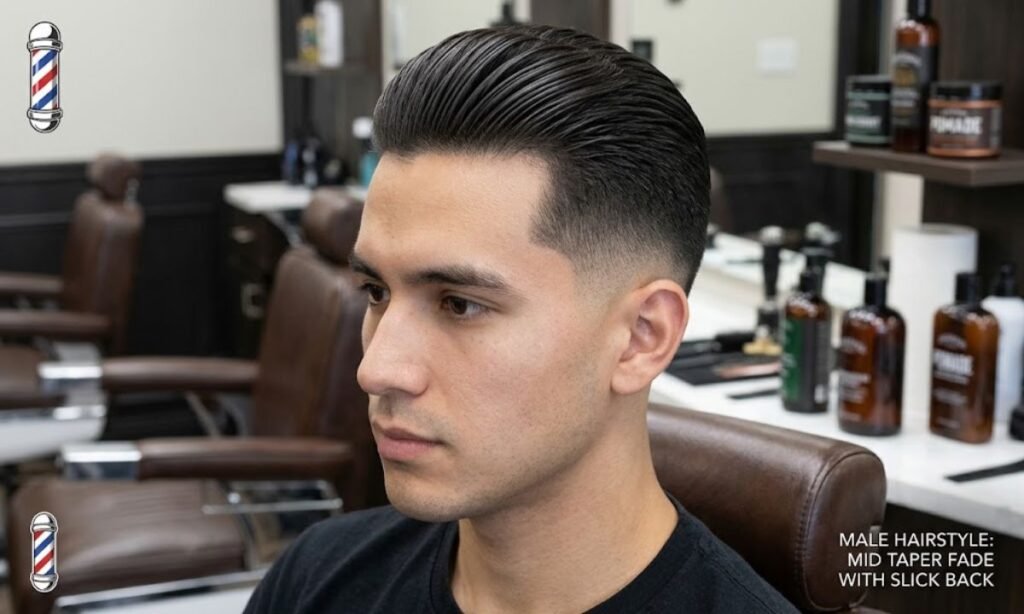
A slick back hairstyle needs length on top, usually 3 to 4 inches. The taper keeps the sides sharp so the style looks intentional.
Blow-dry the hair backward first. Then comb through a bit of pomade for shine.
Straight hair loves this look because it lies down without a fight. Just watch the crown growth pattern, since a cowlick can pop up near the back.
Mid Taper Fade with a Quiff
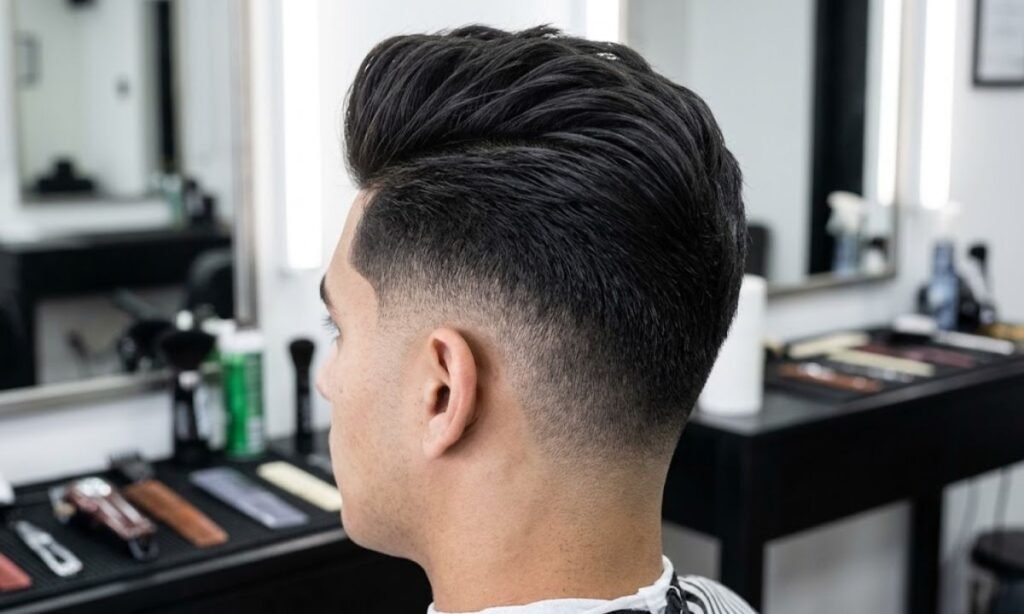
The quiff hairstyle adds height at the front and brings real attitude. A mid taper frames it without stealing the spotlight.
Start with a pre-styler and low-heat blow-drying. Direct the airflow upward and backward to build the lift.
Finish with hair clay for hold. Straight hair tends to collapse, so don’t skip that step.
Mid Taper Fade with a Comb Over
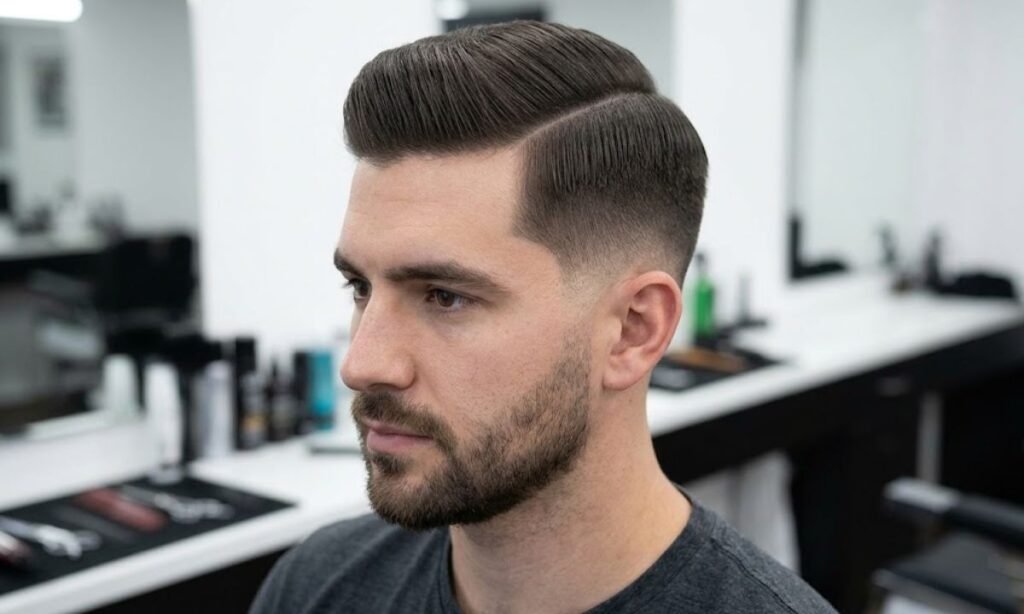
The comb-over hairstyle is back, and it looks much sharper now than it did in the old days. The mid taper gives it a modern edge.
Ask for a clean part line and moderate length on top. Brush the hair side-swept with a medium-hold pomade.
This cut suits thinning straight hair well. The side contrast pulls attention away from the crown.
Mid Taper Fade with a Textured Crop
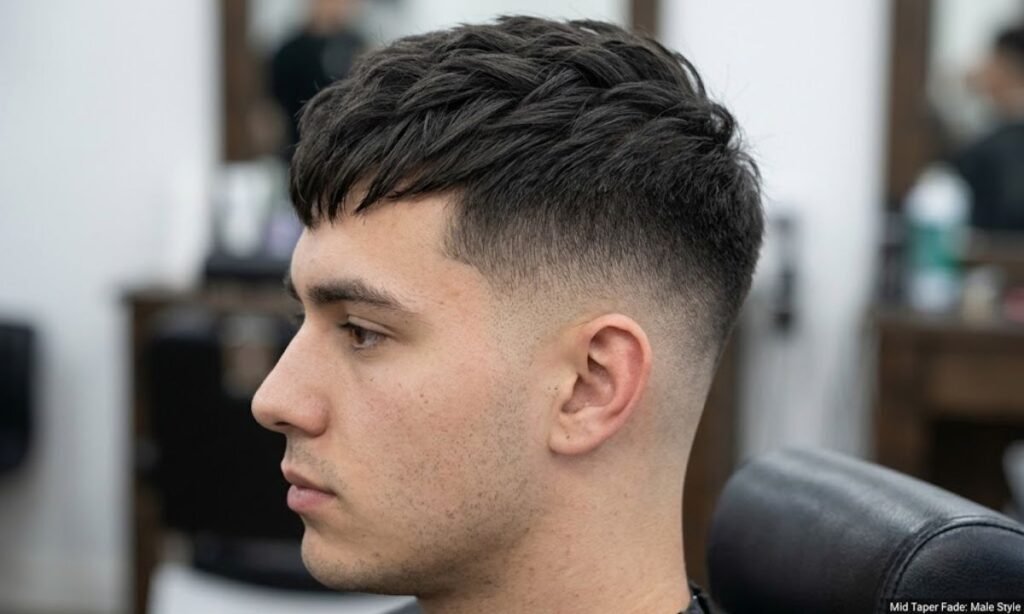
A textured crop is short, messy in a smart way, and quick to style. It’s one of the best low-maintenance men’s haircuts around.
Your barber cuts blunt layers on top, then adds internal texture with a razor or thinning shears. Work in a little texture spray and you’re done.
This style works on dense hair and coarse hair since the layers remove bulk. You’ll save time every morning.
Mid Taper Fade with a Pompadour
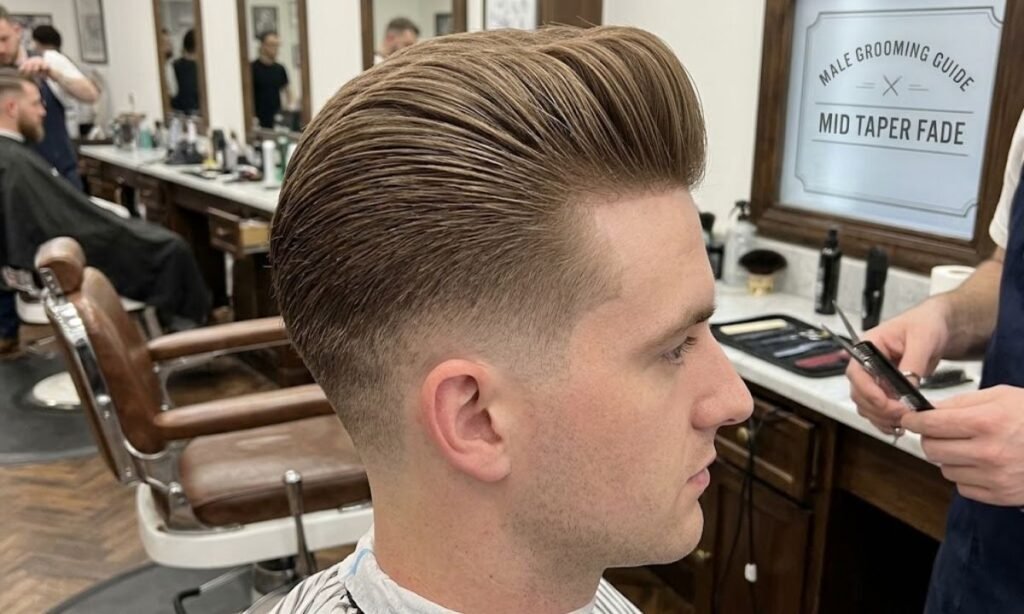
The pompadour demands length and confidence. Aim for 4 to 5 inches on top, with the front lifted high.
Use medium-heat blow-drying with a round brush for volume. Set it with hair clay or pomade, then check the profile in a mirror.
A mid taper keeps the sides from looking heavy. Without it, a big top can make your head look top-heavy.
Mid Taper Fade with a Longer Flow
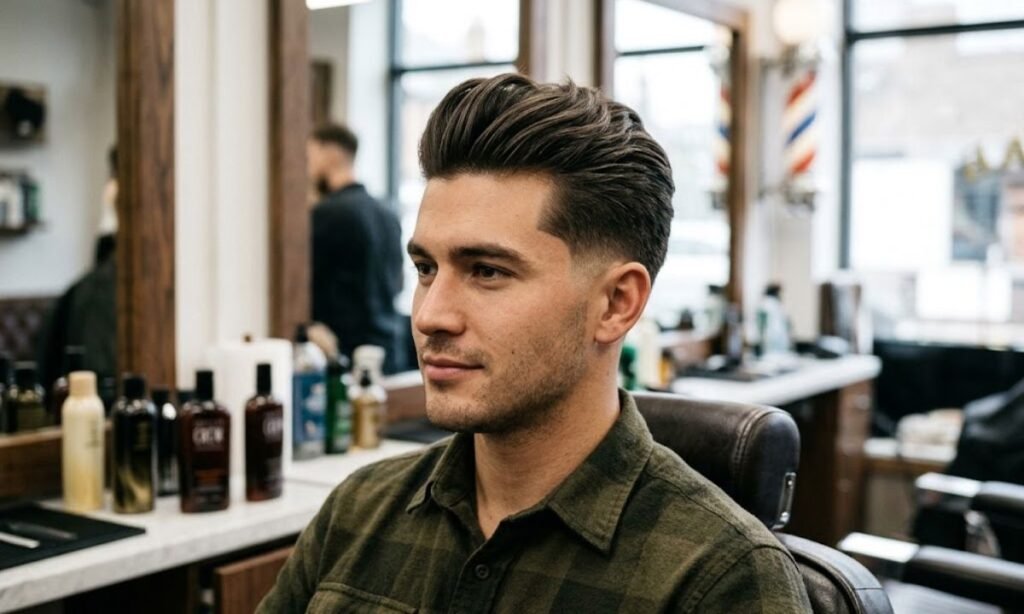
Want length without looking shaggy? This is your answer. The natural flow hairstyle keeps the top long while the taper cleans up the edges.
This is how you wear long straight hairstyles for men in a polished way. Let the hair move, tuck it behind the ears, and keep the ends healthy.
Trim every 6 to 8 weeks to avoid split ends. A lightweight cream adds softness without weighing the hair down.
Mid Taper Fade with a Middle Part
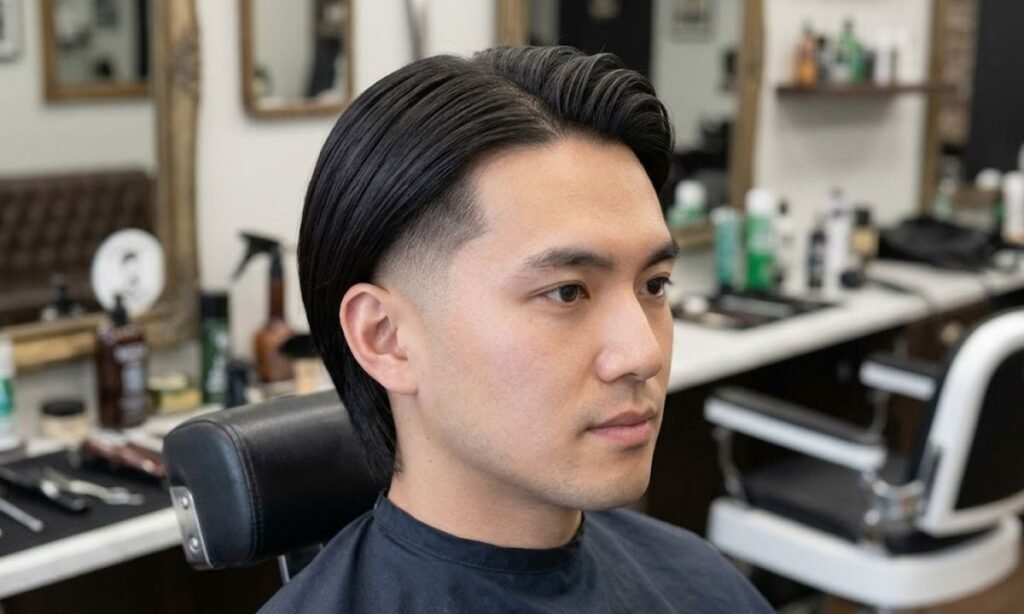
The middle part haircut is a 90s comeback. Curtains frame the face and the taper keeps the sides crisp.
Straight hair splits naturally at the center, so this style almost styles itself. Towel-drying and a pinch of cream is often enough.
It works best on oval and long faces. If you’ve got a rounder face, ask for slightly more height at the crown.
Mid Taper Fade with a Faux Hawk
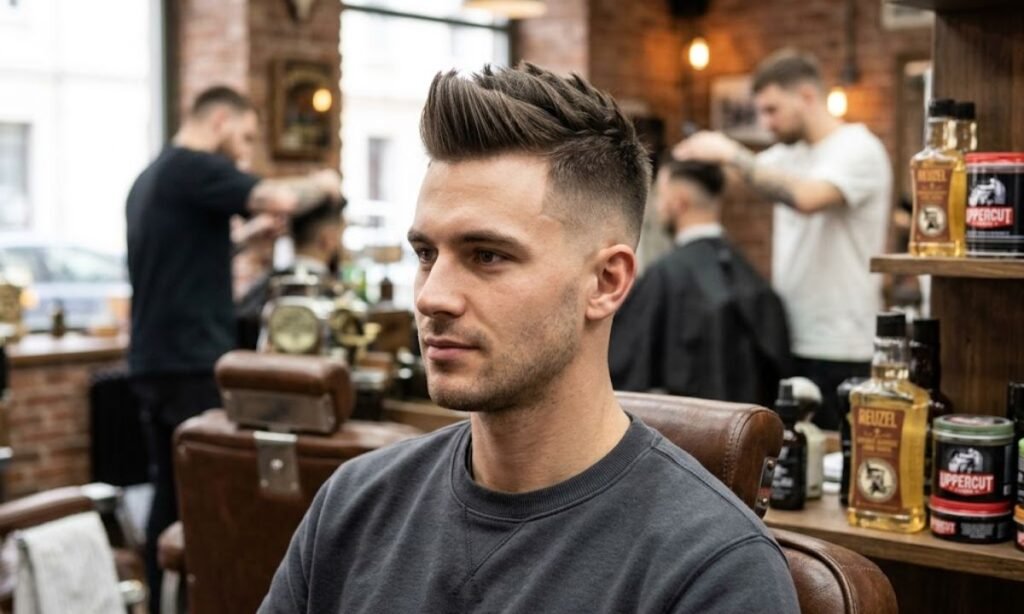
A faux hawk pushes the middle of the top upward into a soft ridge. It’s playful, and the mid taper keeps it from looking extreme.
Build the ridge with hair clay and your fingers. Pull hair toward the center line and hold for a few seconds.
Pin-straight hair needs strong products here. A texture spray adds grit so the shape lasts all day.
Mid Taper Fade with Spiky Hair

Spiky hair works best when it’s short and a bit messy. Think 1 to 2 inches, styled with matte paste.
Rub the product between your palms first. Then pinch small sections and twist them upward.
Keep the spikes loose instead of stiff. That way the look feels current instead of stuck in 2003.
Mid Taper Fade with a Modern Mullet

The modern mullet has shorter sides and a longer back. A mid taper actually helps it, since the sides stay clean and the back adds contrast.
Straight hair gives the back a smooth, silky drop. Ask the barber to blend the nape gently so the length doesn’t look chopped.
If you’re nervous, start with a subtle version. You can always add more length later.
Mid Taper Fade with a French Crop

The textured French crop has a short, blunt fringe and short sides. It’s low effort and looks good in every season.
On straight hair, a blunt fringe can look severe. Ask for softened ends so it reads relaxed.
A tiny bit of matte paste is all you need. This is a great pick if you want a haircut that behaves.
Mid Taper Fade with a Brush Up

The short brush-up is tidy, upright, and easy. It’s like a crew cut with a bit more personality.
Dry the hair upward and brush it toward the front. A bit of texture spray helps it stand without feeling crunchy.
This suits dense straight hair that wants to stay short. It’s also a solid pick for gym-goers.
Mid Taper Fade with a Caesar Cut
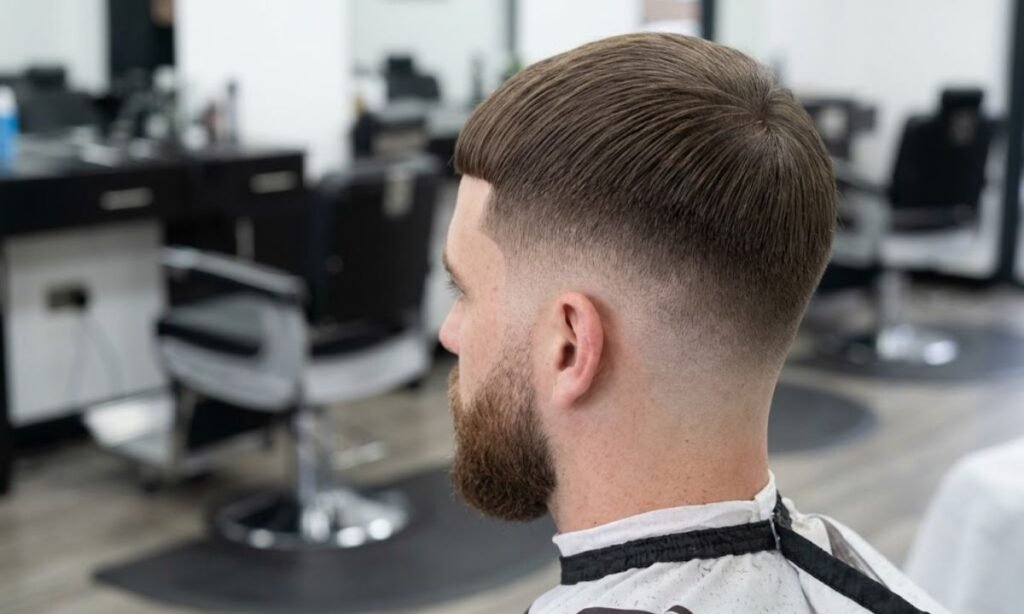
The Caesar cut has a short, horizontal fringe and almost no styling. The mid taper sharpens the sides.
Straight hair is ideal for it, since the fringe sits flat without effort. Comb it forward and you’re finished.
If your hairline is receding at the temples, this cut hides it well. Ask for a slightly irregular fringe line for a natural look.
Is a mid taper fade a good choice for straight hair?

Yes, for most guys. The cut pairs a clean shape with a forgiving grow-out, and straight hair shows off that shape beautifully.
It also keeps your options open. You can wear it short, medium, or long on top, and change styles without changing the taper.
There are a few cases where you need to be careful. Pin-straight hair and flat hair can look stringy if you cut the top too thin, so keep some retained weight for body.
If you’ve got thinning hair, a mid taper is often kinder than a high fade. It keeps some density at the sides, which makes the top look fuller by contrast.
What about other hair types? A mid taper fade for Asian hair works very well, since thick, straight strands hold the shape. A mid taper fade for curly hair is a different job, so don’t use this guide as a curly map.
How it compares with a low taper, mid fade, and high taper

Height is the main variable. A low taper starts near the ears and the nape, so it looks subtle. A mid taper starts at the temples. A high taper climbs above the temples and shows the most contrast.
Here’s how they stack up side by side:
| Cut | Starting height | Look | Best for |
|---|---|---|---|
| Low taper fade | Just above ears and nape | Subtle, classic | Conservative offices, longer tops |
| Mid taper fade | At temples | Balanced, versatile | Most guys, most styles |
| High taper fade | Above temples | Bold, sharp | Short tops, strong jawlines |
| Mid drop fade | Curves lower behind ear | Rounded, modern | Round heads, textured tops |
| Burst fade | Around the ear only | Edgy, localized | Mullets, longer backs |
The skin fade vs. taper question matters too. A skin fade or bald fade goes to bare skin, while a taper stops short of it.
A zero fade vs. skin fade comparison is smaller. Both drop very short, but a zero fade leaves a hint of stubble from a #0 guard.
Which one fits you? If you’re not sure, the mid height is the safest start. You can always go higher next time.
What to decide before booking the haircut

A good haircut starts at home, not in the chair. Spend five minutes on a few decisions and you’ll avoid most of the disappointment.
Save a few reference photos too. A front-view, side-view, and back-view haircut photo tells your barber more than any description.
What top length and style do you want?
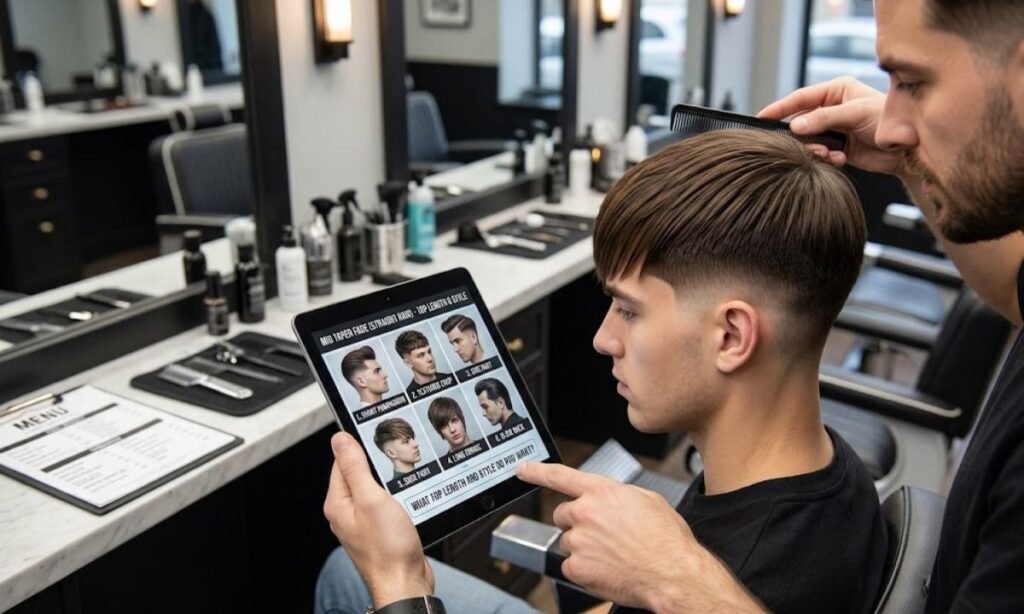
Start with the top. Do you want a short crew cut, a medium textured fringe, or a long, flowing top?
Be honest about your routine. If you get out the door in ten minutes, pick something simple like a crop or a brush up.
Also think about work and style. A slick back feels polished, while a mullet says something different. Pick what you’d actually wear every day.
How short and how high should the taper go?

This is the taper depth and taper height question. Depth is how short the sides get at the bottom. Height is how far up the blend starts.
For a classic mid taper, choose a #1 or #2 guard at the bottom, and start the blend near the temples. Want it softer? Ask for a #3.
A tapered neckline looks natural, while a squared one looks sharp but grows out faster. Decide that ahead of time, too.
Which mid taper fade styles work best with straight hair?

The right style depends on how much work you want to do. Group them by top length and you’ll narrow it fast.
Straight hair is forgiving at every length. It just needs the right product and a bit of structure.
Short tops that need the least daily work

The textured crop, French crop, crew cut, and short brush-up are your low-effort picks. You’ll style them in under three minutes.
These cuts suit dense hair and coarse hair. The short length controls hair bulk, so the sides don’t flare.
Use a small dab of matte paste or texture spray. That’s the whole routine.
Medium-length styles that add texture or structure
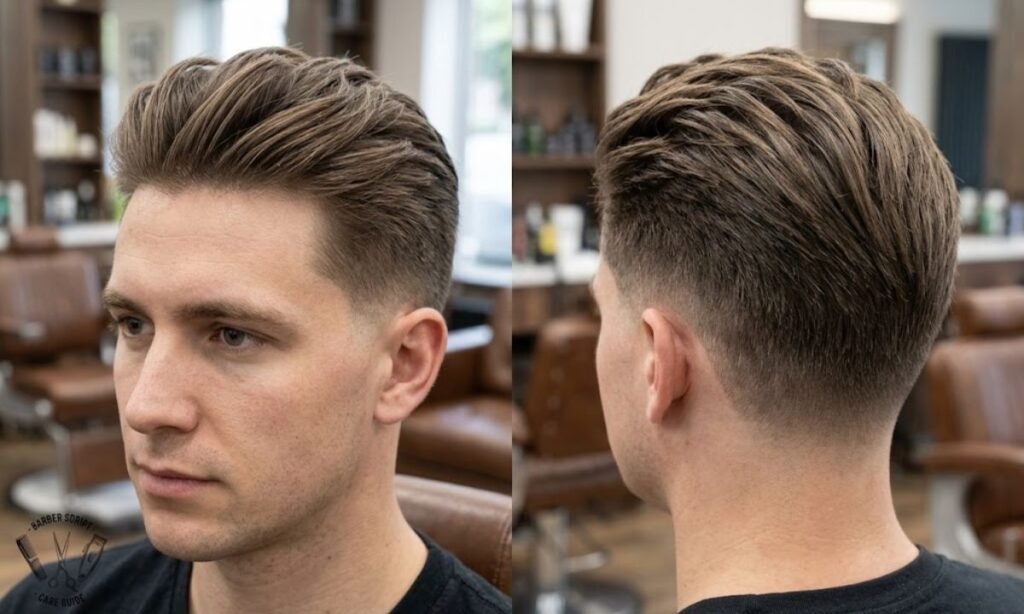
The textured fringe, side part, quiff, and comb over live here. They give you room to play with shape.
This length benefits from top layering and point-cutting technique. Layers add movement, and they stop straight hair from looking like a helmet.
Expect 5 to 7 minutes of styling. Hair clay and a quick blow-dry do most of the work.
Longer styles that preserve flow and movement
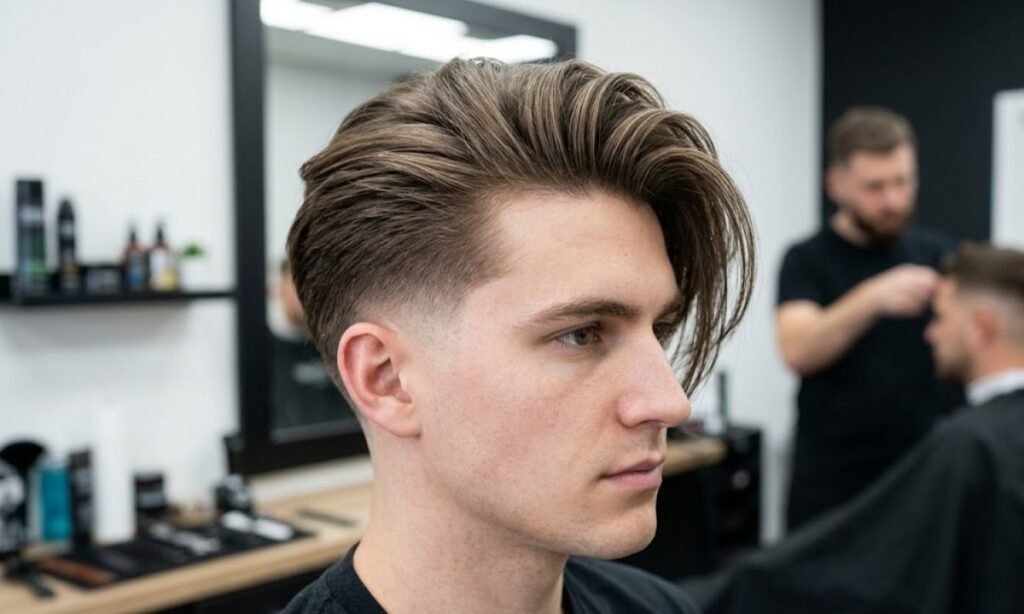
The longer flow, middle part, slick back, and pompadour need more patience. You’ll rely on heat styling and a few good products.
Keep the ends healthy. Use a heat-protection product before every blow-dry, and trim every 6 to 8 weeks.
A lightweight cream adds shine and softness. Heavy products drag long straight hair down.
Choosing the right version for your hair and face
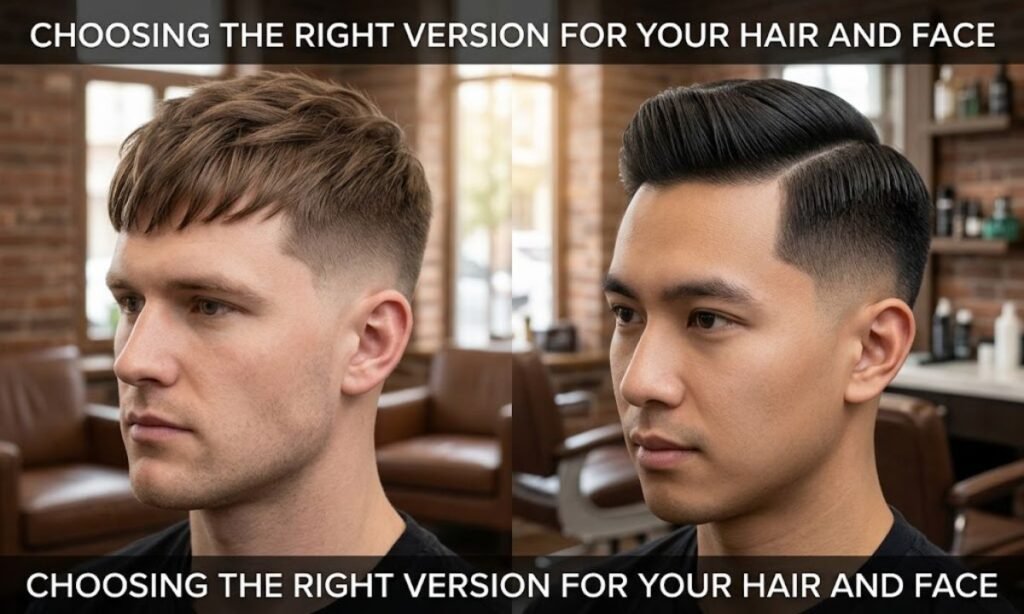
Two guys can ask for the same haircut and walk out with different results. Your hair type and head shape do that.
Use the next three sections as a quick checklist. They’ll help you ask for the right variation.
How density and strand thickness change the cut
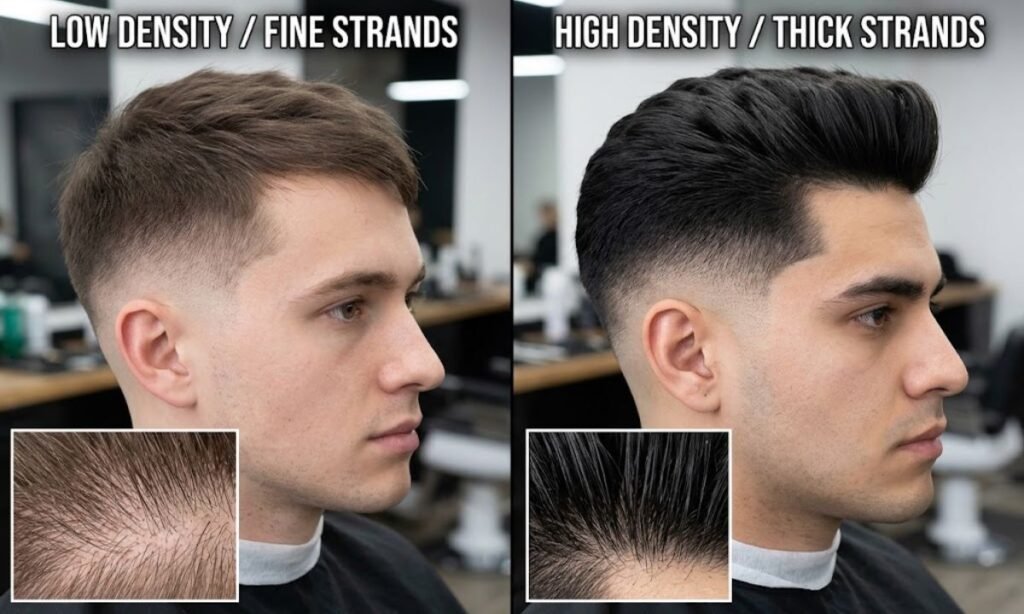
Fine hair and sparse hair show the scalp easily. Keep the sides slightly longer, around a #2 or #3, and avoid dropping to skin.
Medium-density hair is the easiest. Almost any taper height works, and you can choose style first.
Dense hair and coarse hair push outward. Ask the barber to remove internal weight and reduce side bulk, or the sides project outward as the hair grows.
How face and head shape influence the silhouette
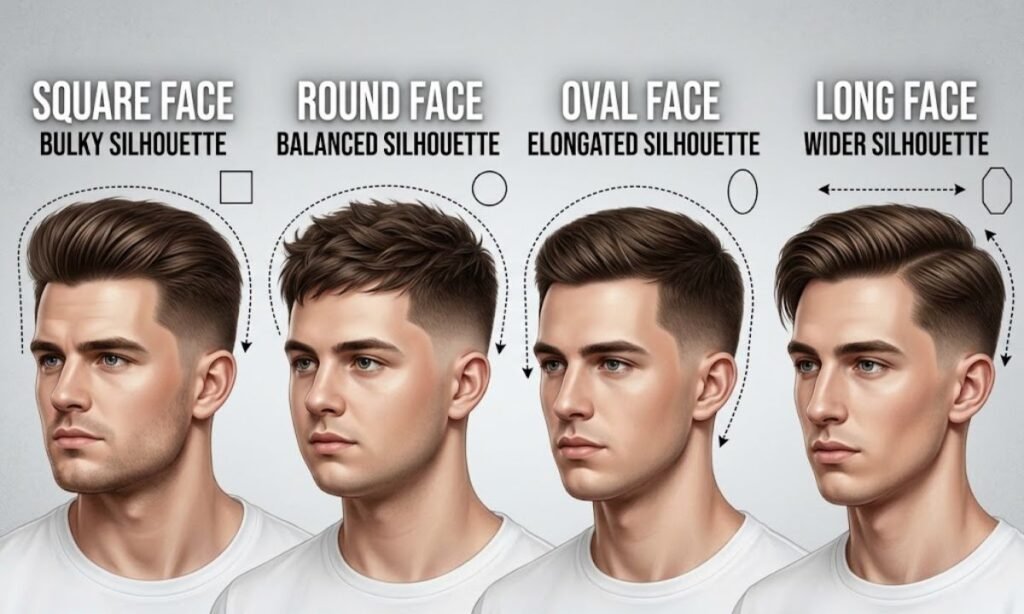
Your face shape and head shape decide the cut’s outline. A round face looks better with height on top and tight sides.
A long face needs less height. Try a side part, fringe, or middle part with a softer taper.
Check the occipital bone too. A flat back of the head looks better with some length at the nape, while a rounded one handles tighter finishes.
How much styling and upkeep can you commit to?
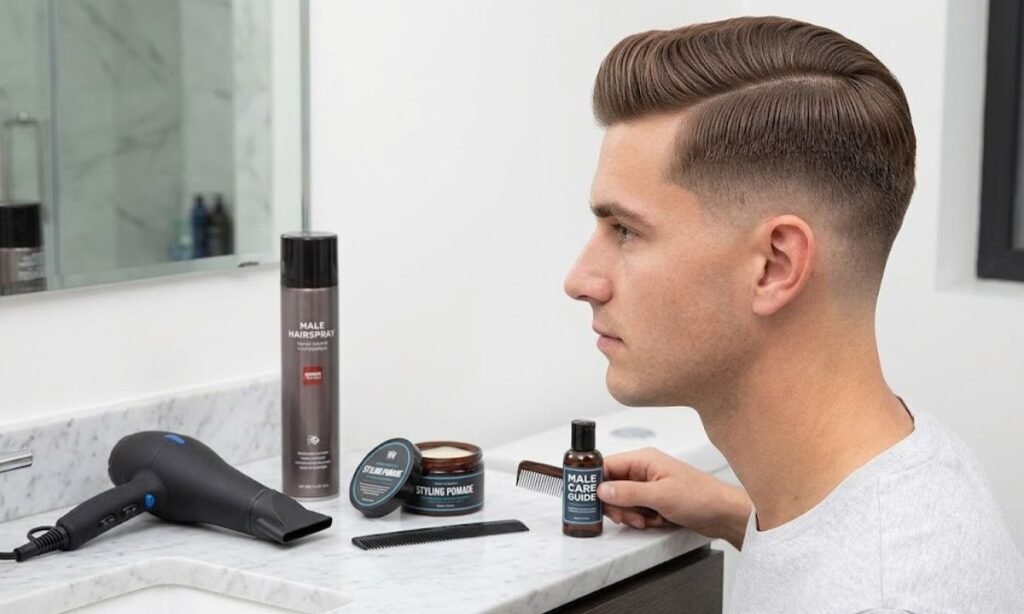
Be real with yourself here. A pompadour looks great, but it demands a blow dryer every morning.
A textured crop forgives lazy mornings. It also grows out more gracefully between visits.
Try this quick test. If you’d skip styling on a rushed Tuesday, pick a shorter top. Your future self will thank you.
Tell us in the comments: which style are you leaning toward, and what’s your biggest worry? We reply to every question.
What to ask your barber for

Walking in with vague words like “short on the sides” is how bad haircuts happen. A clear barber script takes 30 seconds and saves you six weeks of regret.
Have your reference photos ready. Then use plain language and numbers, since barber terminology can differ from shop to shop.
Here’s a script you can copy and tweak:
- “I’d like a mid taper. Start the blend placement at my temples.”
- “Take the shortest point down to a shadow finish or a #1 guard.”
- “Keep weight through the sides so they don’t look flat.”
- “Leave length on top, about three inches, and I’ll comb across the part.”
- “Keep a natural neckline, and no lineup on the front.”
Then finish the haircut consultation with one question. Ask, “Can you show the blend height in the mirror before you finish?” Barbers like clients who speak up early.
One more tip. Mark the intended blend with your finger on a photo, and discuss the hairline and neckline before the clippers touch your head. That small habit prevents the most common surprises.
How to style a mid taper fade on straight hair at home

Good styling starts with drying damp hair the right way. Pat it with a towel, or try T-shirt hair drying to cut frizz and keep the strands smooth.
If you’ve got time, go for partial air-drying until the hair is about 70 percent dry. Then finish with low-heat blow-drying to set the direction.
Straight hair remembers where you point it. So use directional airflow and shape the top while it’s still a little damp.
Here’s the routine, step by step:
- Prep: Apply a pre-styler or heat-protection product if you’ll use a dryer.
- Dry: Use a medium-heat blow-dry for longer tops, or low heat for short ones.
- Direct: Style hair forward for fringes, or upward and backward for quiffs and slick backs.
- Product: Rub a pea-sized amount between your palms and work it through from roots to ends.
- Finish: Add texture spray at the roots to maintain volume and prevent flat hair.
Picking the right product matters just as much as the technique. Here’s a quick guide:
| Product | Hold | Finish | Best with |
|---|---|---|---|
| Lightweight cream | Light | Natural | Longer flow, middle part |
| Matte paste | Medium | Dry, textured | Fringe, crop, spiky |
| Hair clay | Strong | Matte | Quiff, pompadour, faux hawk |
| Pomade | Medium to strong | Shiny | Side part, slick back, comb over |
| Texture spray | Light | Gritty | Any style needing lift |
A quick story to make it stick. A friend of mine, a desk worker with fine, pin-straight hair, kept using heavy pomade on a short crop. His hair looked greasy by noon.
He switched to a matte paste and a few sprays of texture spray. Same cut, same guy, totally different result.
Want to add texture to straight hair without product buildup? Ask your barber for top layering and point-cutting technique. The cut itself does half the styling.
How often does a mid taper fade need maintenance?
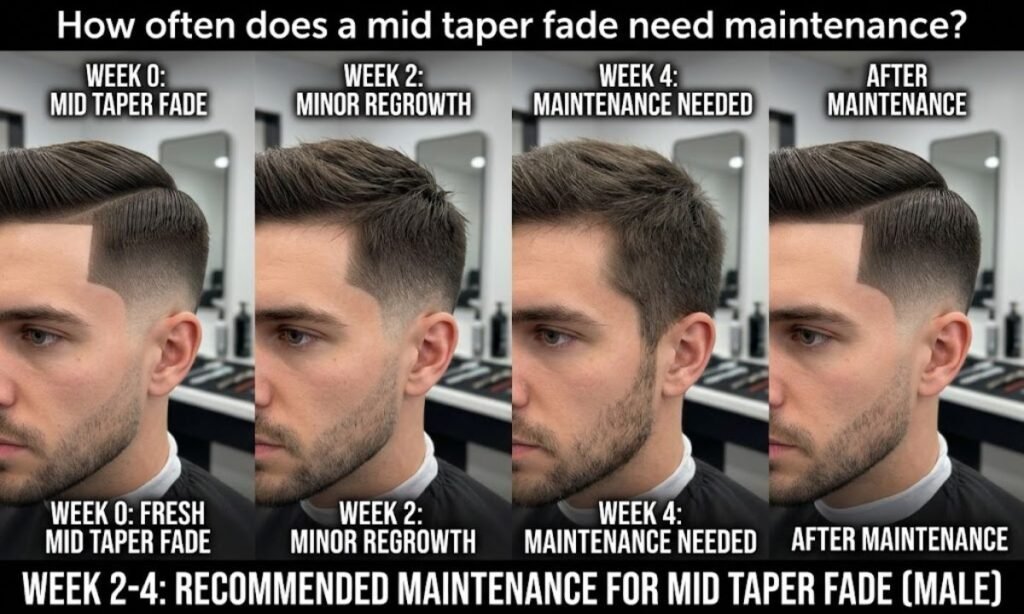
Most guys need a haircut refresh every 3 to 5 weeks. Hair grows about half an inch per month, and the sides show that growth first.
At two weeks, the cut still looks sharp, but the neckline starts to fuzz. At the four-to-five-week maintenance interval, the blend begins to close up and the sides project outward.
By six weeks, the taper grow-out is obvious. You’ll see hair growing outward around the ears, and the shape loses its crisp edge.
Here’s a simple schedule:
- Every 2 to 3 weeks: for a skin finish or a sharp neckline and clean edges
- Every 3 to 4 weeks: for a classic shadow finish mid taper
- Every 4 to 6 weeks: for a soft taper with a longer top
You can stretch the gap with a quick sideburn maintenance trim between visits. Even a barber stop for a five-minute edge-up can extend the life of your cut.
What about regrowth before correction? If you’re growing out the top, keep the sides tidy and let the length build. A good taper buys you months of patience.
Common mistakes to avoid with a mid taper fade
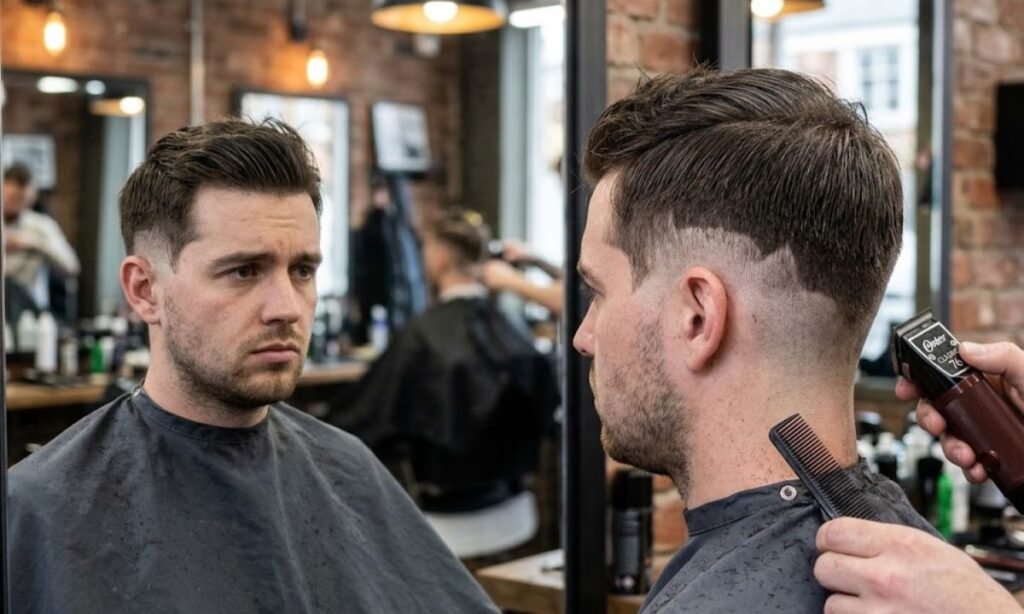
The biggest mistake is picking the wrong taper height for your head shape. A high taper on a narrow head can look severe, so don’t copy a photo without checking the fit.
Another one is ignoring your hair growth direction. A strong cowlick or hair whorl at the crown can make a slick back misbehave, so mention it to your barber before you sit down.
Guys also overload the top with product. Straight hair gets heavy fast, and flat hair is the usual result. Less is more, and you can always add a second dab.
Finally, skipping the blend line check. Look at your weight corners and the blend line from the side before you leave. If it looks patchy, say so politely and ask for a touch-up.
Fresh trends and updates for straight-haired guys in 2026

Tapers are getting softer. More guys are choosing a mid taper with a soft blend over a hard skin fade, since it looks natural for longer.
Longer tops are also back, especially curtains and natural flow cuts. Barbers say clients want hair they can tuck, push back, or style up, depending on the day.
Another trend is texture-first cutting. Instead of relying on heavy product, barbers add internal texture and point-cut ends so the hair moves on its own.
Have you tried one of these trends? Share your before-and-after in the comments, and tell us how it held up after three weeks.
You can also checkout this article as well: Mid Taper Fade Textured Fringe: Who It Suits and How to Get It
Frequently asked questions
What is a mid taper fade?
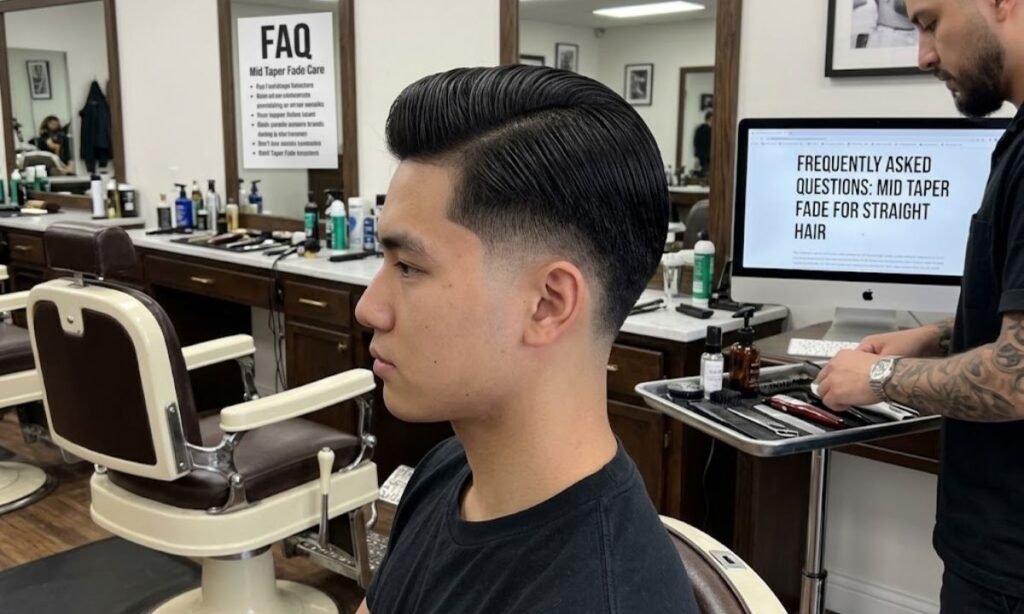
A mid taper fade is a haircut where the sides and back gradually shorten, starting around the temples. It keeps clean lines without exposing much skin.
Does a mid taper fade suit straight hair?
Yes. Straight hair shows the blend clearly and keeps its shape well. It works for fine, medium, dense, and coarse textures with small tweaks.
How short should a mid taper fade be?
For most guys, a #1 or #2 guard at the shortest point feels right. Choose a #3 for a softer look, or a shadow finish for more contrast.
What’s the difference between a taper and a fade?
A taper shortens hair gradually and usually stops at a short guard length. A fade goes lower, often down to skin, and creates stronger contrast.
How often should I get a taper fade?
Plan on every 3 to 5 weeks. If you want a skin finish and crisp clean edges, book every 2 to 3 weeks.
What’s the best mid taper fade for fine or thinning hair?
A textured fringe, side part, or comb over works well. Keep the sides at a #2 or #3 so the top looks denser by contrast.
What’s the best low-maintenance taper haircut?
The textured crop or French crop wins here. You’ll spend under three minutes with a bit of matte paste.
How do I ask a barber for a mid taper fade?
Bring front-view, side-view, and back-view photos. Then say where the blend should start, how short the shortest point should be, and how much length on top you want.
Can I get a mid taper fade with long hair?
Absolutely. A mid taper fade for long hair works well with a longer flow, middle part, or slick back. The taper keeps the edges neat while the top stays long.
Is the best haircut for straight hair always a taper?
Not always, but a taper is one of the most flexible options. It suits nearly every top length and daily routine.
Final thoughts
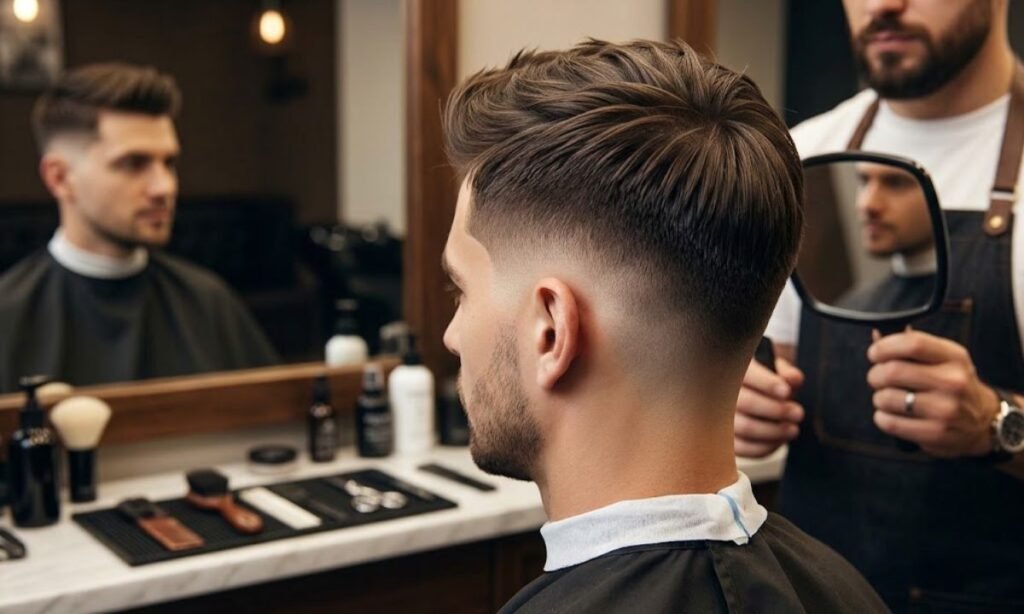
A mid taper fade gives straight hair a clean frame and a lot of freedom on top. You can go short and quick, or long and polished, without changing the sides.
Bring photos, use the barber script, and match the style to the time you’ll actually spend each morning. That’s the real secret.
So, which of the 15 styles are you booking first? Drop it in the comments, share this guide with a friend who’s stuck on his next cut, and check back for updates as trends shift.

I’m Michael Charles, the creator of MegaCrazes—your source for fresh hairstyles, sharp haircuts, and simple hair-care inspiration. Find your style. Own your look.