


You’ve seen the haircut on your feed. Big, airy hair on top, clean and short on the sides. Now you’re wondering if you can pull it off, what to tell your barber, and whether you’ll look like a dandelion by lunchtime.
Those are fair worries. Most guys walk out of the shop with a cut they half understood, then fight it every morning. This guide fixes that. You’ll learn what the cut is, who it suits, how to ask for it, and how to style it without drama.
Quick Answer
A mid taper fade blowout haircut has short, blended sides and back that start shortening around temple height. The top stays long enough to blow-dry upward and outward into a rounded and airy shape. The taper is the cut. The blowout is the styling that finishes it.
To get it, tell your barber you want a mid taper, a natural neckline, and two-and-a-half to four inches on top. Bring photos. At home, dry your hair to about 60 to 70 percent, then lift the roots away from the scalp and push air outward with a round brush or your fingers. It takes five to ten minutes once you get the rhythm.
What Is a Mid Taper Fade Blowout?

Think of it as a frame and a picture. The haircut frame is a clean, progressively shorter perimeter that melts into the skin or a shadow of stubble. The picture is the voluminous top section, dried so it stands tall and soft instead of lying flat.
That contrast is why the style looks so sharp on so many men. The sides stay tidy, so the top can look big without looking messy. It’s a modern men’s haircut trend that works for office jobs, weddings, and weekend plans alike.
You’ll hear a lot of names for it. Mid taper blowout, blowout taper, and men’s blowout haircut all point to roughly the same idea. The words change from shop to shop, so what matters is the placement and the shape, which we’ll break down next.
What “Mid Taper Fade” Means at the Barbershop

Start with the mid taper fade meaning. A taper shortens your hair gradually from top to bottom around the perimeter. “Mid” is the taper placement. The blend around temple height begins roughly level with the top of your ear and temple, not down by your sideburn and not up near the crown.
Barbers use temple and ear landmarks to find that spot. Many also look for the parietal ridge, which is where your head starts to curve from the top to the sides. The fade height sits just below it. Fix that line and everything else follows.
The shortest point decides how bold the cut looks. A clipper guard number like a 1 or 1.5 leaves a shadow of stubble and moderate side coverage. Going down to the skin gives a skin finish with visible scalp. Ask for the gradual blend you want, since a guard number alone doesn’t tell the whole story.
What Makes It a Blowout Instead of Just a Textured Top
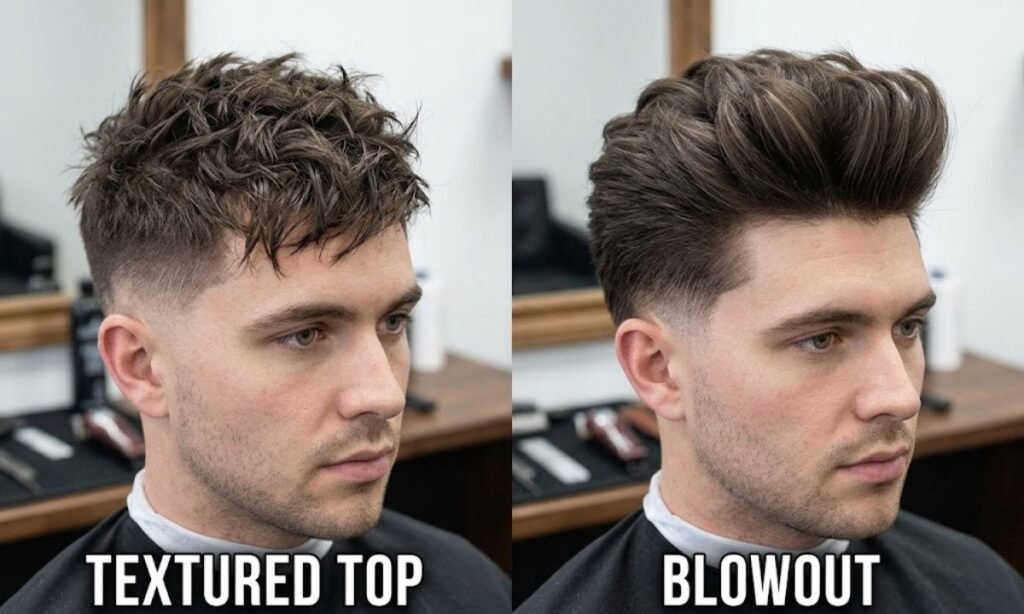
Here’s the key difference. A textured top gets its look from the cut and a bit of product. A blowout gets its look from heat and airflow. The blow-dry supplies the blowout, and without it the same haircut often sits close to the head.
When you dry hair upward and outward, it stands away from the head. That adds hair volume and height and gives the rounded and airy shape people love. You can see the gap in the textured top versus blowout debate right there in the mirror.
Think of it like baking bread. Two loaves can start with the same dough. One goes in the oven and rises. The other stays flat. Your blow dryer is the oven, and the hair styling technique decides how high it climbs.
Is a Mid Taper Fade Blowout Right for Your Hair?

Mostly yes, but not for everyone in the same way. You need enough length on top to dry upward, usually two-and-a-half to four inches. Shorter than that, and you won’t get much lift. A buzz on top won’t blow out.
Hair density and styling matter too. Fine hair can look wonderful with this cut, but it needs a light pre-styler for grip. Thick hair can feel heavy, so ask your barber for hair weight removal to keep the shape from spreading wide.
Be honest about your daily blow-drying commitment. If you want a low-maintenance hairstyle that you shake out and forget, a plain textured crop is easier. If you can spare five to ten minutes most mornings, this cut rewards you. Picture a guy with a cowlick at the crown who hates mornings. He can still wear it, but he’ll want a barber who cuts with his natural hair growth direction.
Mid Taper Fade Blowout: Before and After Results
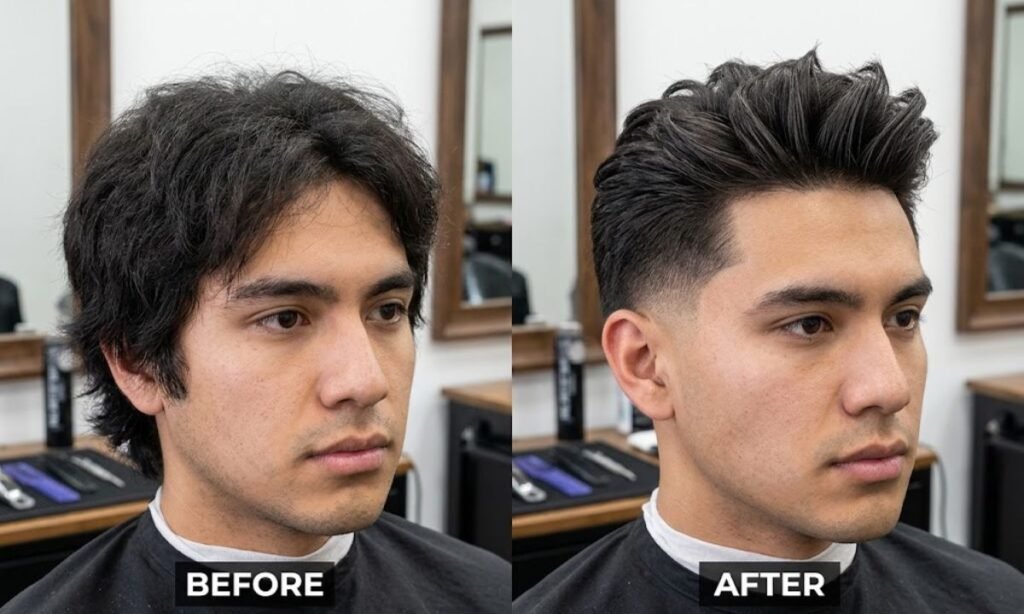
Before the cut, many men carry hair that’s even all over, a little shaggy at the ears and heavy at the neck. It looks fine but forgettable. After the cut, the head has structure. The sides shrink, the top lifts, and your face reads sharper.
The change is more about balanced contrast than length. You aren’t losing much on top. You’re just removing excess bulk from the sides so the top gets room to shine. That’s why a good before and after often looks bigger than the actual inches cut.
How the Haircut Looks From the Front, Sides, and Back

From the front, you see a lifted front hair section, often swept up or slightly forward. The hairline stays clean. A forward fringe can soften the forehead if you like that look.
From the side, the sides of the top curve gently into a blended perimeter. You’ll notice the taper starting at the temple and shrinking toward the ear. The crown hair section sits round and full, never pointy.
From the back, you get a tapered neckline or a natural neckline, depending on your taste. A blocked neckline gives a hard edge but grows out fast. For most guys, a tapered or natural finish ages better between appointments.
How the Cut Changes for Straight, Wavy, Curly, and Coily Hair
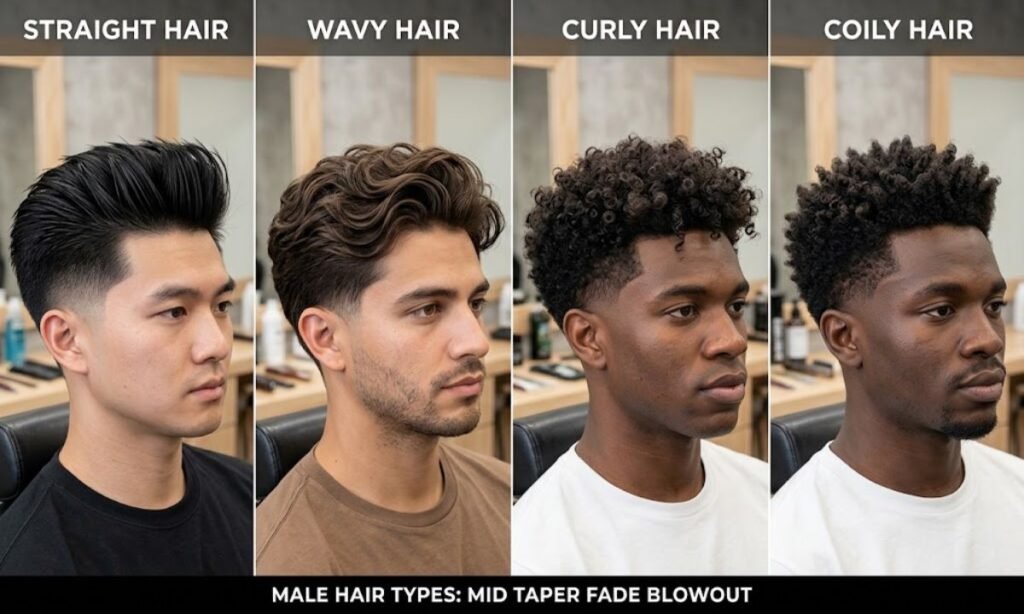
Your hair texture shapes everything. The same instructions give four different results. Your barber should read your hair pattern before picking up clippers. A good one adjusts the top length and the product advice to match.
The goal stays the same across all types: an outward and rounded finish that feels controlled. What changes is how much help you need from heat, tools, and product. Here’s how each type behaves.
Straight Hair

Straight hair drops fast, so volume fades quickly. You’ll rely on straight hair root lift from the dryer and a volumizing mousse at the roots. Ask for light layering on top to keep it from collapsing.
A round brush helps a lot here. Lift each section, aim the airflow, then cool it with a quick blast. The straight hair blowout holds its shape best when you finish with a light hold spray.
Wavy Hair
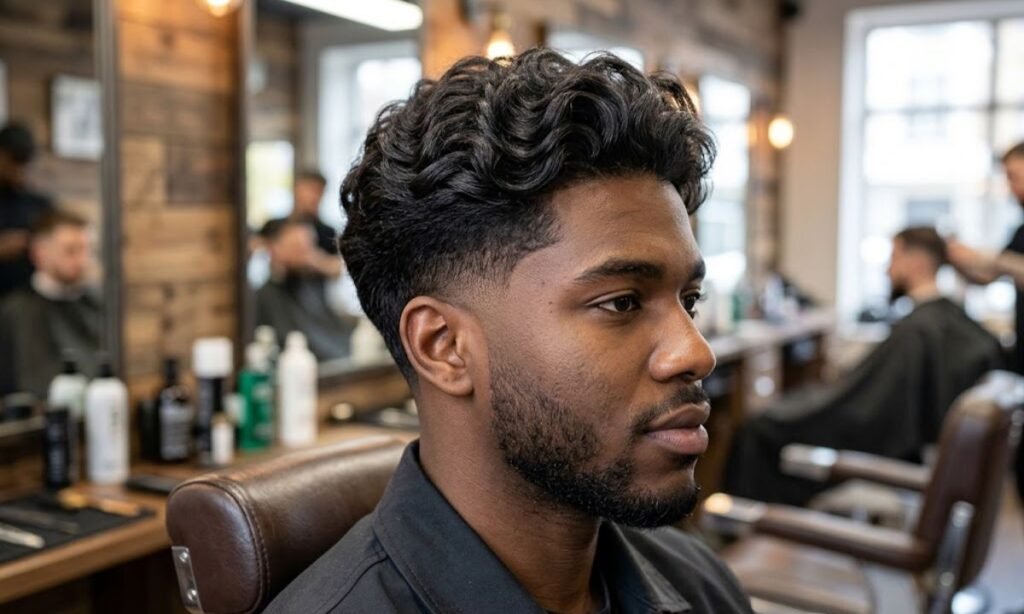
Wavy hair is the easy mode. The wavy hair pattern gives natural bend, so your blowout looks full without much effort. Your barber can leave a bit more length and let the waves create hair movement.
You can use a thin styling cream to calm frizz, then dry with your fingers. A wavy hair blowout looks best a little loose. Don’t chase a perfect finish, because the waves will bring in texture on their own.
Curly Hair
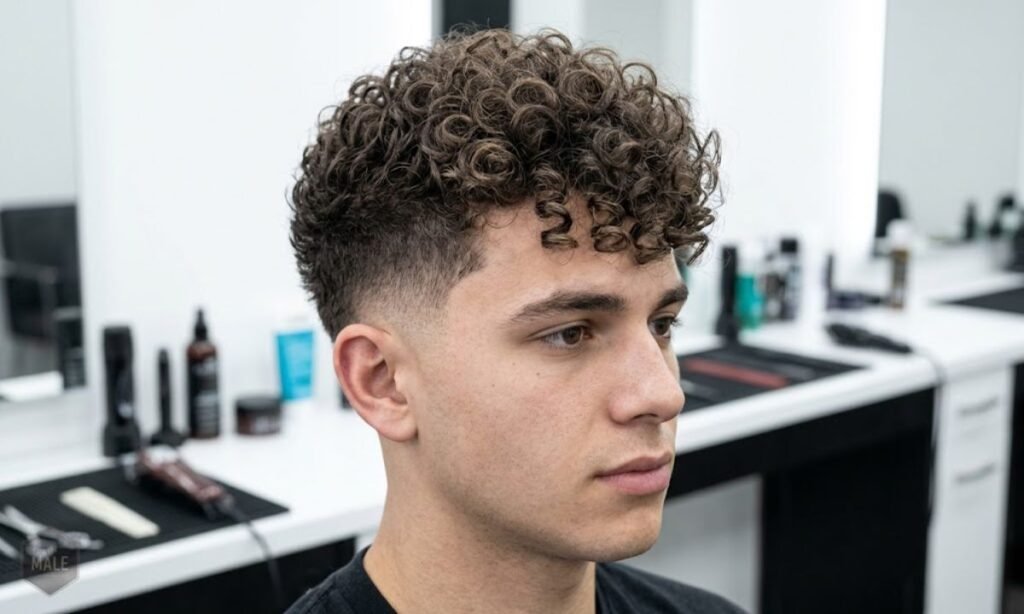
Curly hair needs a different plan. The curly hair pattern shrinks as it dries, so cut it a bit longer than you want it to end up. A curly blowout taper uses a diffuser for curly hair to keep curls defined while still adding lift.
The mid taper fade on curly hair looks great because the sides stay tidy while the curls stack on top. Avoid heavy gels that weigh curls down. A lightweight styling cream usually does the job.
Coily Hair
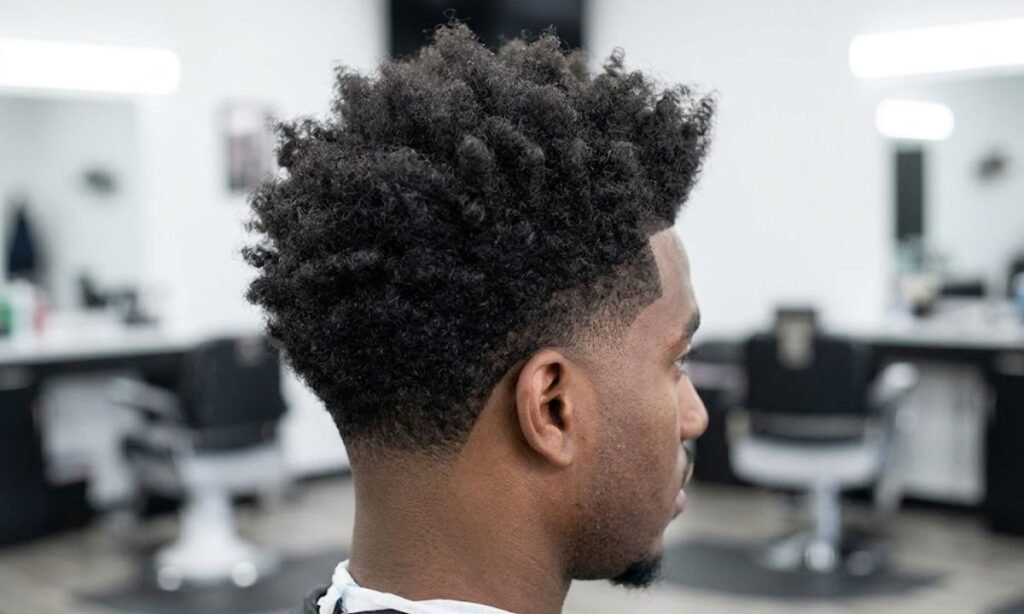
Coily hair texture, often called type 4 hair, shows serious hair shrinkage. Hair that looks four inches stretched can dry at two. Ask your barber to size the top with that in mind.
A mid taper fade for Black men is a classic for good reason. A coily hair blowout can use a concentrator nozzle on low heat for a stretched, fluffy top. Always start with moisturized hair, because dry coils snap under heat.
How to Choose the Right Mid Taper Fade Blowout for Your Face Shape
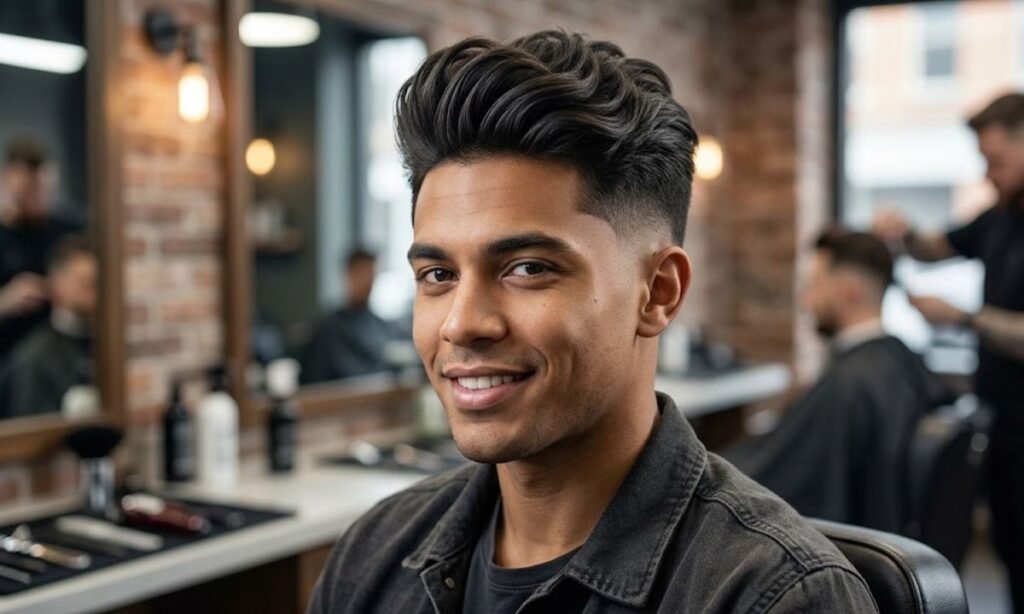
Face shape isn’t a strict rule, but it helps. Oval faces carry nearly everything, so you can choose by taste. Round faces look sharper with extra hair volume and height on top and tight sides, which stretches the face visually.
Square faces suit a softer rounded blowout hairstyle, which balances a strong jaw. Long faces do better with less height and more forward fringe styling, so the head doesn’t look taller. Heart-shaped faces can use a fuller fringe to balance the chin.
If you can’t tell your shape, try a face shape detector app as a rough guide, then ask your barber. They see heads all day and usually spot it fast. Treat the advice as a starting point, not a verdict.
What Is the Difference Between a Mid Taper and a Mid Fade?

People mix these up constantly. A taper is gentle. It shortens the hair slowly and often leaves the shortest length around the ears and neckline. A fade goes shorter, often to the skin, and creates stronger contrast.
So the taper vs fade question comes down to contrast. A mid taper is a soft perimeter with moderate side coverage. A mid fade is a high-contrast haircut with more visible scalp. The skin fade height comparison often shows the fade climbing much higher on the head.
That’s the real mid taper blowout versus mid fade blowout call. Taper if you want polished and quiet. Fade if you want sharp and bold. Neither is wrong, and your barber can place the shortest point anywhere in between.
Do Density, Cowlicks, and Styling Time Matter?
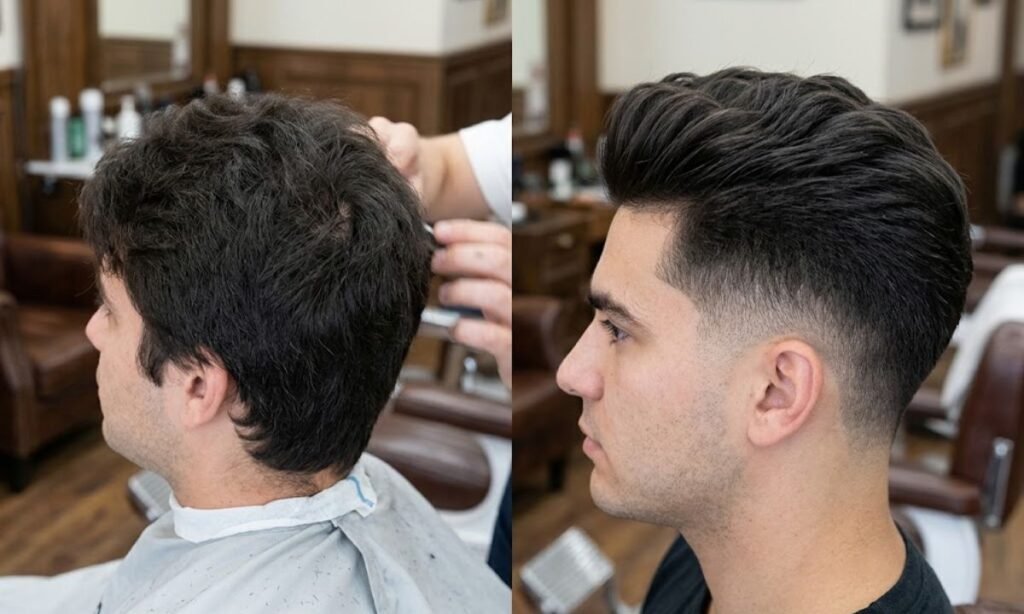
They matter a lot. Hair density changes how much hair sits at the sides. Dense hair needs more thinning so the sides don’t flare out. Thin hair needs a lighter touch so the scalp coverage doesn’t look sparse.
Cowlicks fight your plan. A front hairline cowlick can flip your fringe the wrong way, and a hair growth swirl at the crown can stick up. Your barber should be cutting with the growth pattern, not against it.
Styling time also counts. Styling against the growth pattern takes more dryer work. If you only have three minutes, choose a cut that works with your swirl. A smart barber will tell you that before the first snip.
Mid, Low, or High: Which Blowout Taper Should You Choose?

This is the taper height selection question. A low taper blowout starts the blend near the ear and sideburn. It’s subtle and safe. A high taper blowout starts higher up the head and gives a bold, clean look.
The mid sits in the middle, and that’s why it’s popular. In a low taper vs mid taper matchup, mid shows more contrast without going extreme. In low vs high taper, the high one demands more upkeep because the lines grow out sooner.
Here’s a quick comparison to help you decide.
| Taper type | Blend starts | Contrast | Upkeep |
|---|---|---|---|
| Low taper | Near sideburn and ear | Soft | Lowest |
| Mid taper | Around temple height | Balanced | Medium |
| High taper | Above the temple | Strong | Highest |
Pick low if your workplace is conservative. Pick mid if you want the all-rounder. Pick high if you love sharp edges and don’t mind frequent visits. You can always go higher next time, but you can’t add hair back.
How Do You Ask Your Barber for a Mid Taper Fade Blowout?

Asking well saves you from a haircut you didn’t want. Most bad cuts come from vague words like “short on the sides.” That phrase means a different thing to every barber, so give details instead.
Think of it as a barber-ready haircut description. You name the taper height, the shortest length, the neckline, and what you want on top. Four details, one clear picture. Your barber will thank you for it.
What to Tell Your Barber Before the Clippers Start

Start the barber consultation before cutting. Say the full phrase: “I’d like a mid taper with a blowout on top.” Then add the specifics. Mention the clipper guard number you want at the shortest point, like a 1.5 for a soft shadow of stubble.
Next, talk about the top. Ask your barber to keep protecting top length while removing excess bulk from the sides and inside the top. Say how much you want left, such as three inches. This is where barber instructions pay off most.
Finally, confirm the taper height before the first pass. Ask them to point to the spot on your head. It takes five seconds and heads off most haircut expectations gaps. Here’s a short script you can copy:
- “Mid taper, blend starting at my temple.”
- “Natural neckline, please.”
- “Keep about three inches on top.”
- “Take weight out so it dries rounded, not wide.”
- “I blow-dry every morning, so cut for that.”
What Reference Photos Should You Bring?

Bring three reference photos if you can: front, side, and back photos. One shot rarely shows the full blended perimeter. Three angles show the taper height, the neckline, and the top shape together.
Try to match hair texture and density too. A photo of thick, straight hair won’t translate to fine, curly hair. Look for someone whose hair behaves like yours, then point out what you like about the cut.
One more tip. Show a photo of what you don’t want as well. A single image of a too-high fade can save the whole appointment. Some guys even use a barber brief generator online to build a quick summary they can show on their phone.
How Do You Style a Mid Taper Fade Blowout at Home?

Good news: you don’t need a salon setup. You need a dryer, a bit of product, and some patience for the first week. After that, your hands learn the moves and the routine gets quick.
The secret is root lift and airflow. Hair stands tall when you dry the roots first and aim the airflow direction correctly. Get that right and the rest feels easy. Here’s the full process.
The Step-by-Step Blowout Routine

Begin with damp hair, not dripping. Rub it with a towel so it becomes towel-dried hair. Then work in a light pre-styler, like volumizing mousse, from root to tip. A golf-ball amount is enough for most heads.
Now dry. Set your hair dryer technique to medium heat and use a concentrator nozzle. Start with the front hair section, then the crown hair section, then the sides of the top. This section-by-section styling keeps you from missing spots.
As you dry, lift roots away from the scalp with a round brush or your fingers. Push air outward and keep the dryer moving. Avoid pointing the dryer downward, because that flattens the hair and kills your height.
Here’s the routine in order:
- Towel dry until the hair is damp.
- Apply volumizing mousse at the roots.
- Dry until the hair is 60 to 70 percent dry.
- Lift and aim the airflow upward and outward.
- Cool the hair before touching it with a short cool blast.
- Finish with matte paste or hair clay, then a light hold spray.
How Styling Changes by Hair Texture

Straight hair needs more help to hold shape, so use a stronger mousse and finish with spray. Wavy hair needs less, and thin styling cream is usually enough. Both do well with a round brush technique on the front.
Curly and coily hair want gentler handling. A diffuser attachment on a lower airflow setting protects the curly hair pattern. For coils, stretch each section with a wide comb before drying so the hair volume setting looks full instead of shrunken.
Product matters as much as heat. Fine hair product grip needs light formulas. Heavy pomade drags thin hair down. For thick hair, a bit of hair clay gives control without shine. When in doubt, use less than you think you need.
What Goes Wrong With a Blowout Taper, and How to Avoid It

Every guy hits a bad morning with this cut. Hair goes flat, puffs out like a cloud, or feels heavy no matter what you do. Usually it comes down to a few fixable habits, not bad hair.
Let’s walk through the common problems. Each one has a simple cause, and most take one small change to solve.
Why a Blowout Looks Flat, Puffy, or Too Heavy

A flat blowout usually means you dried too long on the same spot, or you skipped root lift. It can also come from excess styling product. Too much cream or heavy pomade weighs hair down fast.
A puffy blowout often spreads wide rather than tall. That’s a hair volume spreading sideways issue. Ask your barber to remove more weight and shape the top upward. Also check your incorrect product choice, since a gel on frizzy hair can make it worse.
Heaviness comes from hair weight and volume in thick hair. Humidity adds to it. Humidity affecting hairstyle is real, because damp air makes the natural hair pattern return. A light hold spray helps. So does asking for more thick hair weight removal at your next visit.
Can Regular Blow-Drying Damage Your Hair?

It can, if you overdo the heat. Repeated high heat can cause heat damage and hair surface damage, leaving hair dry and brittle. The American Academy of Dermatology advises using the lowest heat setting that works and keeping the dryer moving.
The simplest fix is to partially air-dry hair first. Less time under heat means less stress. Hold the dryer a few inches away and avoid parking it in one spot. Those habits follow standard hair dryer heat guidance and cost you nothing.
Watch your blow-drying frequency too. You don’t need to blow out your hair every single day. Many guys do it three or four times a week and let the hair rest in between. A heat protectant is a smart add-on for dry or coily hair.
How Often Does a Mid Taper Fade Blowout Need a Refresh?

how-often-does-a-mid-taper-fade-blowout-need-a-refresh
Plan on every three to four weeks. The haircut growing out shows first at the sides, where the taper losing definition makes the blend look fuzzy. Waiting six weeks makes the shape lose its edge.
Here’s the quirk. Uneven hair growth means the taper and top growing at different rates. The sides look scruffy while the top still feels fine. That’s why a quick taper refresh appointment works so well.
Ask about a taper-only tidy or shorter perimeter tidy between full cuts. It’s cheaper and takes about ten minutes. Many barbers offer it. Your mid taper fade blowout maintenance stays easy that way, and the top keeps growing for your next full cut.
Mid Taper Fade Blowout Variations Worth Considering

One cut, many looks. The taper stays put while the top changes. Pick the version that fits your hair type, your job, and how much time you want to spend each morning.
Here are six that work well, with a quick note on who each suits.
Classic Mid Taper Blowout
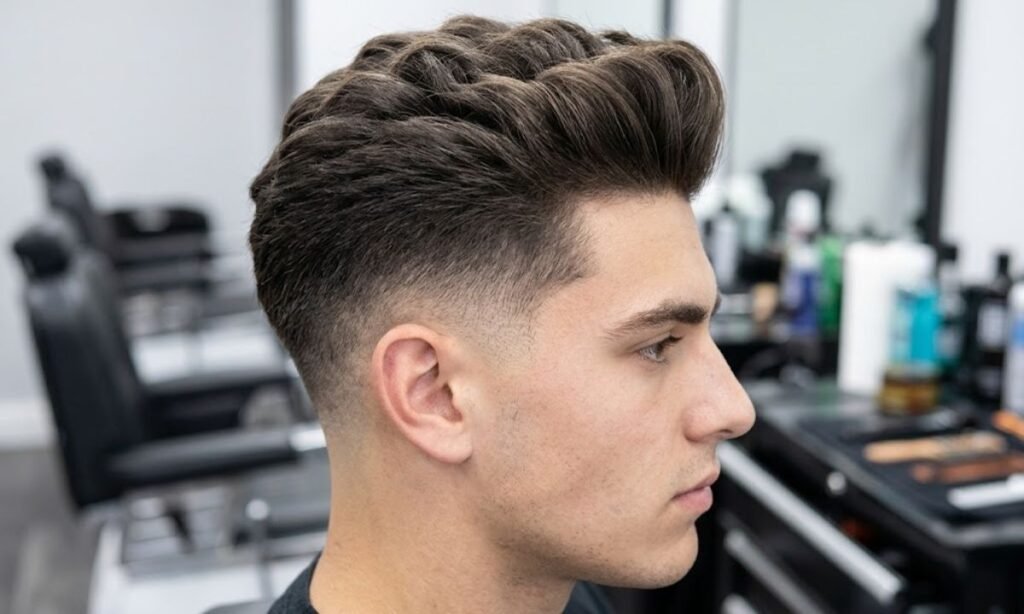
The classic mid taper blowout is the clean default. Short blended sides, a voluminous top, and a neat part or sweep. Think quiff hairstyle energy without the hard hold. It looks sharp and works almost anywhere.
It suits straight and wavy hair best. Ask for about three inches on top. A mid taper fade with quiff is a close cousin if you want a touch more height at the front.
Mid Taper Blowout With a Textured Fringe
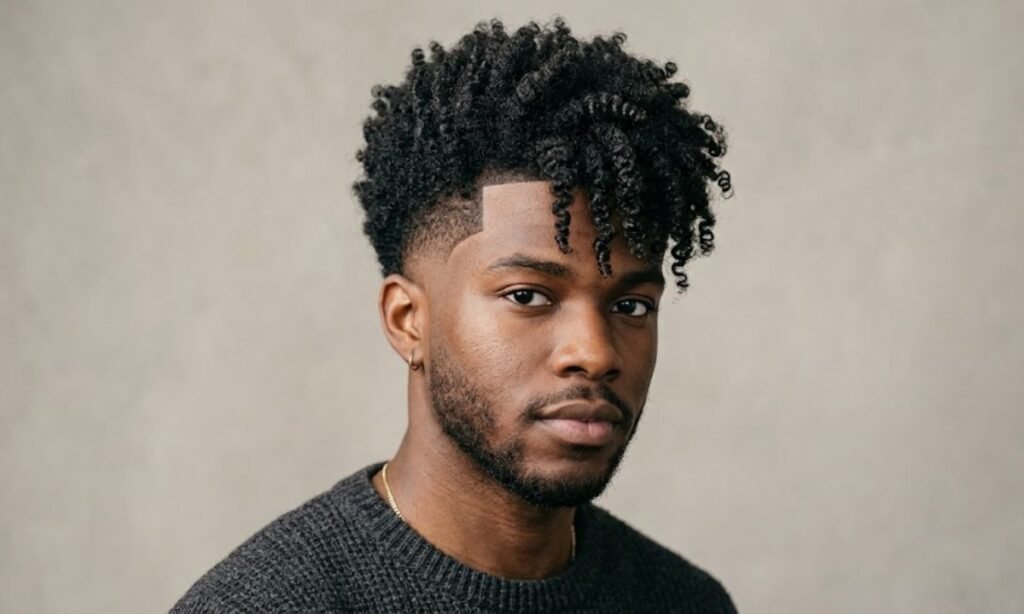
This is a mid taper fade with textured fringe. The front falls forward in broken, choppy pieces. It softens the forehead and gives a relaxed, modern feel. A textured fringe taper also hides a receding corner well.
Use matte paste and a bit of hair clay to separate the pieces. It’s a great pick for guys who like a fringe haircut but don’t want a boyish look.
Mid Taper Blowout for Wavy Hair
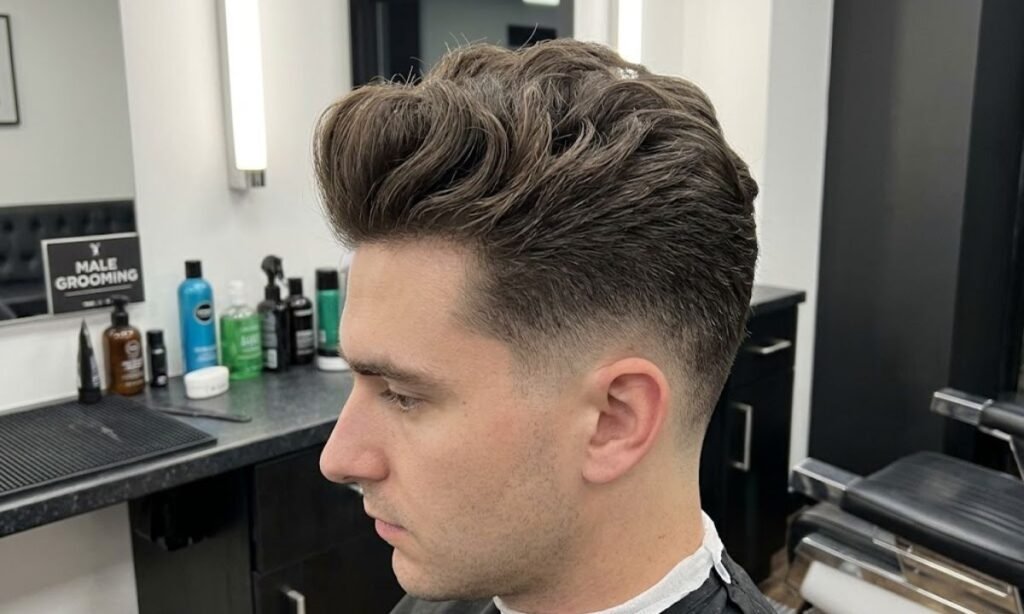
Wavy hair gives you the best head start. The mid taper blowout for wavy hair relies on natural bend for movement, so styling takes less time. Keep the top a little longer to show off the wavy hair pattern.
Dry with your fingers and a diffuser. Add thin styling cream for softness. It’s the easiest version on this list, and it works well as a first blowout.
Mid Taper Blowout for Curly and Coily Hair
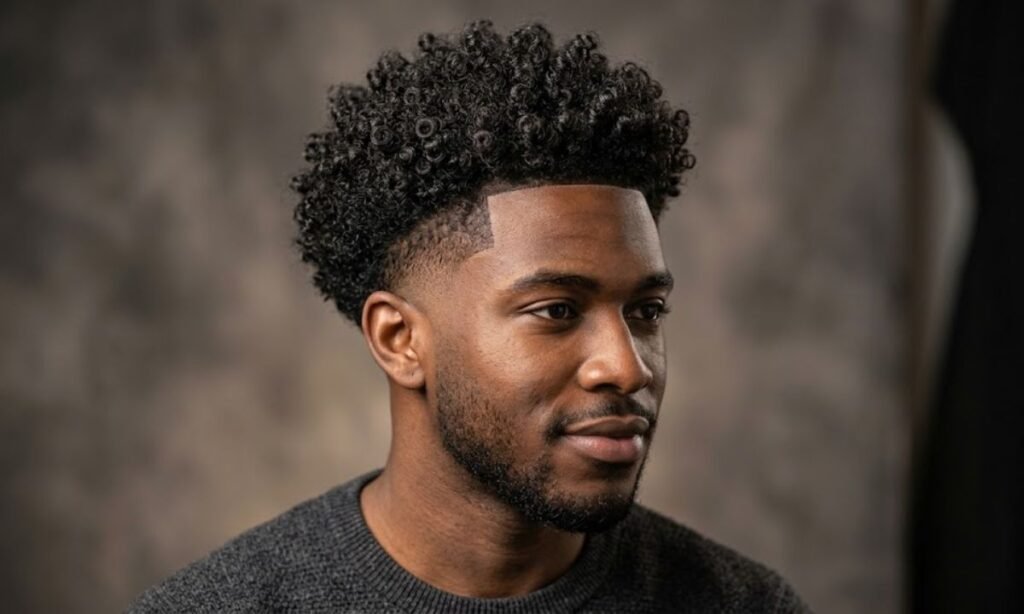
The mid taper blowout for curly and coily hair shows off texture beautifully. A mid taper fade on curly hair keeps the sides neat while curls stack high. For coily hair, a mid taper fade for Black men often pairs with a rounded, stretched top.
Moisture comes first. Use a leave-in and a diffuser for curly hair on low heat. Expect hair shrinkage, and ask for extra length on top to account for it.
Mid Taper Blowout for Straight Hair
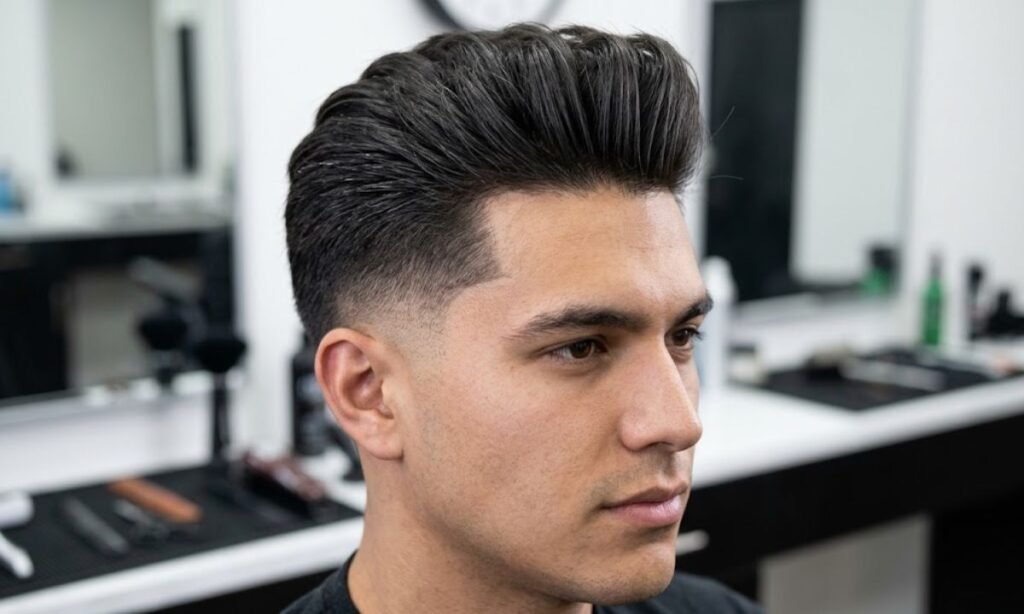
The mid taper blowout for straight hair needs the most dryer skill. Straight strands fall flat easily, so root drying and mousse are your best friends. A light layered cut helps the top hold its rounded and airy shape.
Finish with a light hold spray for staying power. If you want height without effort, a pompadour style at the front gives straight hair a natural lift.
Fluffy or Messy Mid Taper Blowout

The fluffy mid taper blowout is soft and separated, with a lived-in feel. The messy mid taper blowout takes it further, with intentional chaos on top. Both give a fluffy and separated finish that looks effortless.
Skip heavy product here. Use a bit of thin styling cream and a quick dry. A mid taper fade for fluffy hair works best when the top is cut with plenty of internal texture.
Mid Taper Fade Blowout vs Similar Haircuts

Several cuts look close at first glance. The difference is in two things: the sides and the finish. Knowing the gap helps you ask for exactly what you want.
A low taper blowout versus mid taper blowout comes down to placement. Low is quieter, and mid is a bit bolder. A burst taper versus textured fringe taper is a different question. A burst fade curves around the ear and leaves length at the back, while a textured fringe taper sticks to the front shape.
Here’s a quick table to compare.
| Haircut | Sides | Top | Best for |
|---|---|---|---|
| Mid taper fade blowout | Blended around temple height | Lifted, rounded | All-rounder |
| Low taper blowout | Short near ear only | Lifted, rounded | Conservative offices |
| Mid fade blowout | Short, to the skin | Lifted, rounded | Bold look |
| Burst taper | Curved around ear | Varies | Longer neck hair |
| Textured crop | Short | Flat, choppy | Low effort |
The taper low burst fade is another popular choice. It keeps length at the back while the sides drop short. If you like the mullet-adjacent feel without the mullet, it’s worth a look.
Best Products for a Mid Taper Fade Blowout

You don’t need a shelf of products. You need three types at most. Match each to your hair density and styling needs, and skip anything that leaves a crusty feel.
Start with a volumizing mousse or light pre-styler for lift. Add matte paste or hair clay for hold. Finish with a light hold spray if humidity is high. That’s the whole kit.
Watch out for hair product buildup. Heavy products pile up and dull your hair, so wash with a clarifying shampoo once a week or so. Your men’s haircut styling guide gets easier when your hair starts clean.
What to Do Before Your Barber Appointment

A bit of prep sets up a better cut. Wash your hair the night before, or come in with clean, dry hair. Don’t pile on product, because the barber needs to see your natural hair pattern and growth swirls.
Build a quick haircut preparation checklist. It takes two minutes and keeps you from forgetting key points. Here’s a good one:
- Save three reference photos (front, side, back).
- Decide your choosing the right taper height: low, mid, or high.
- Pick your shortest guard length, such as a 1 or 1.5.
- Decide your top shape and how much length to keep.
- Say how much hair weight to remove.
- Be honest about your daily styling time.
Finally, ask your barber questions. Ask how to style the cut and what product they’d use. Good barbers love sharing tips. You’ll leave with a cut and a plan, not just a cut.
You can also checkout this article as well: Mid Taper Fade with Beard: Styles, Barber Guide, and Maintenance
Frequently Asked Questions About the Mid Taper Fade Blowout

What is a mid taper fade blowout?
It’s a haircut with short, blended sides that begin shortening at temple height, paired with a longer top that you blow-dry upward and outward. The taper is the cut, and the blowout is the styling.
How long should my hair be on top?
Aim for two-and-a-half to four inches. That’s long enough to lift and shape. Curly and coily types should add a bit more to allow for shrinkage.
Is a mid taper the same as a mid fade?
No. A taper is softer and often keeps some length. A fade goes shorter, often to the skin, with stronger contrast. Both can be paired with a blowout.
How long does a blowout last?
Most blowout holding one to two days. Humidity, sleep, and product choice all change that. A light hold spray stretches it.
Can I get this cut with fine or thin hair?
Yes. Use lightweight products and a volumizing mousse. Avoid heavy pomade, and ask your barber to keep the top layered so it doesn’t look sparse.
Does it work for thick hair?
Yes, with weight removal. Ask your barber to thin out bulk so the top dries round rather than wide.
How often should I get a refresh?
Every three to four weeks. A quick taper-only tidy in between keeps the sides sharp.
Will blow-drying damage my hair?
Not if you use moderate heat, keep the dryer moving, and let hair partially air-dry first. Follow standard dermatology advice and you’ll be fine.
Final Thoughts
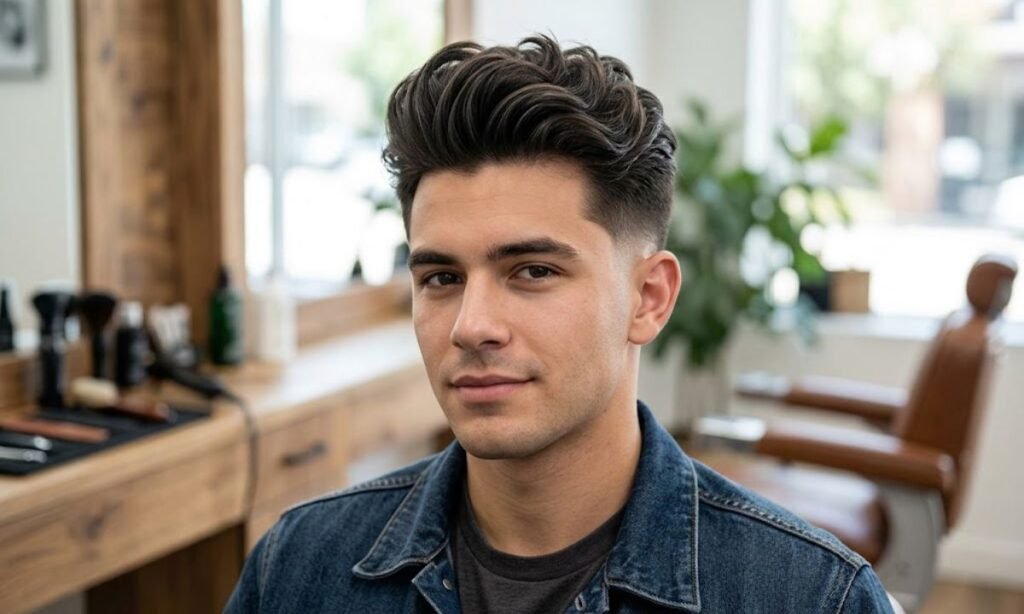
The mid taper fade blowout works because it balances two things guys want: a clean frame and a full top. Place the taper at temple height, keep two-and-a-half to four inches on top, and dry upward and outward. That’s the whole recipe.
Start with a clear barber brief, bring photos, and build a quick morning routine. Expect the first few tries to feel clumsy. By week two, you’ll hit the rhythm and finish in under ten minutes.
Now it’s your turn. Have you tried this cut, or are you thinking about it? Drop your questions or your best styling tip in the comments, and share this guide with a friend who’s staring at the barber’s chair. Check back too, since we refresh this article as trends and techniques evolve.

I’m Michael Charles, the creator of MegaCrazes—your source for fresh hairstyles, sharp haircuts, and simple hair-care inspiration. Find your style. Own your look.