


Will the barber cut my afro too short?
Will the sides look harsh next to all that volume?
Most guys ask these two questions before the clippers even switch on.
This guide answers both and gives you the exact words to use in the chair.
Quick Answer
A mid taper fade afro keeps your natural afro on top and shortens the sides and back in a gradual blend.
The blend starts around temple level, so the cut sits between a low and a high option.
Your top stays compact, full and rounded, or tall and structured, depending on the length you keep.
The sides shrink toward a guarded finish, a shadow finish, or a skin finish at the edges.
To order it, say three things: where the blend starts, how short the finish gets, and how big the afro stays.
Show a front-view photo, a profile photo, and a rear-view photo, and your barber will know what you mean.
What is a mid taper fade afro?
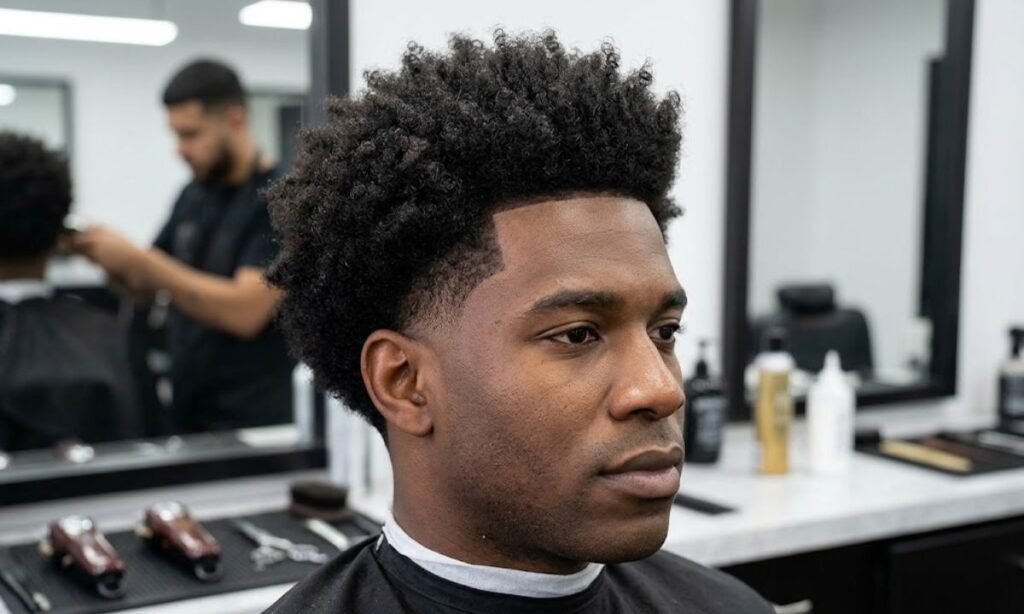
A mid taper fade afro pairs a full afro hairstyle with sides that shorten gradually.
The taper begins near the temple and moves down toward the ears and neckline.
Barbers call this movement the fade transition.
It happens inside a small fade zone, so your top and sides stay clearly separated.
Think of a dimmer switch instead of a light switch.
Hair gets shorter in smooth steps, not in one sudden drop.
“Mid” describes the blend height, not the top length

People hear the word mid and assume it means medium hair on top.
It doesn’t. It only describes the blend height.
Your afro can be short, medium, or long and still carry a mid taper.
The blend point sits around the temple, roughly halfway up the side of your head.
Tell your barber the top length as a separate detail.
That one habit prevents the classic mix-up where the whole head gets clipped short.
Mid Taper Fade Afro Haircut Ideas for Different Lengths

The same mid taper fade haircut looks very different at three inches than it does at six.
Length changes the haircut proportions, the upkeep, and how much contrast you get.
Pick a length first, then ask for the taper.
That order keeps the conversation simple and the result predictable.
Short Mid Taper Fade Afro: A Clean, Low-Maintenance Look
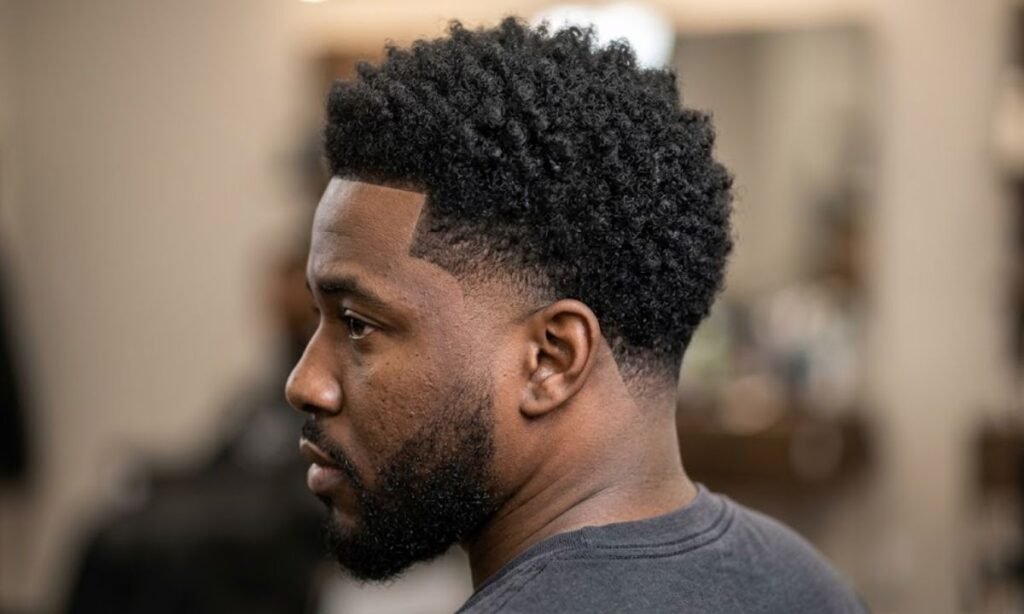
short-mid-taper-fade-afro-a-clean-low-maintenance-look
A short compact afro sits close to the scalp and shows off your curl pattern.
With a mid taper on the sides, the whole head looks tidy and sharp.
This version suits busy mornings.
You can wash, moisturize, and shape it in about five minutes with an afro pick.
A mid taper fade low maintenance routine still needs a refresh every two to three weeks.
Short sides show regrowth fast, so the barber touch-up matters more here.
Medium Mid Taper Fade Afro: Balancing Volume and Definition
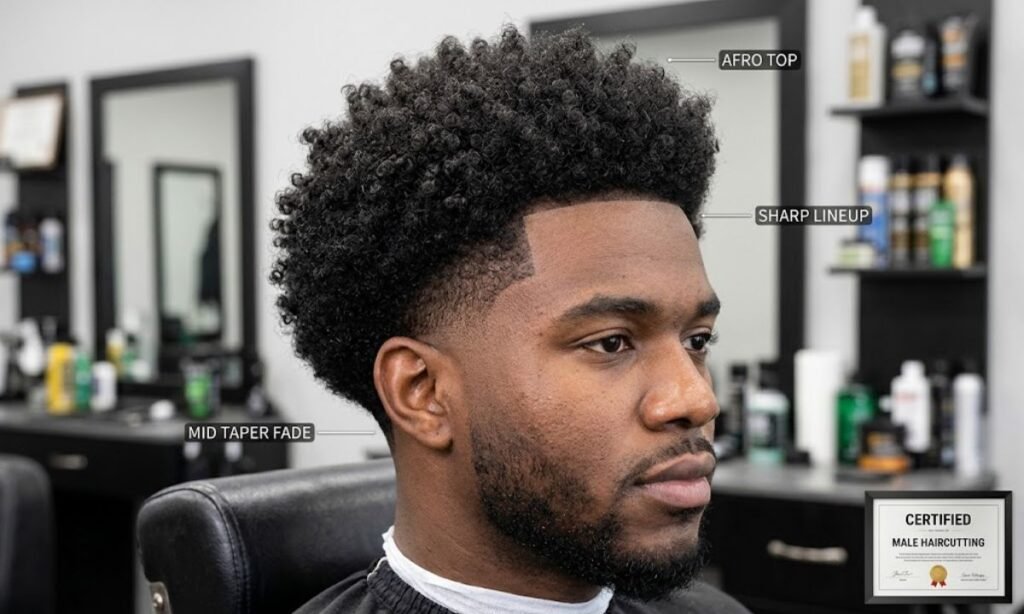
Medium length gives you a full rounded afro with enough weight to hold its outline.
It also leaves room for defined coils if you like a textured surface.
The taper keeps this size from looking heavy.
Without it, a medium afro can swallow the face, especially around the ears.
Try sectioning your side bulk at the tapered edge and letting the top breathe.
That gentle side-to-top separation gives the shape a clear frame.
Long Mid Taper Fade Afro: Keeping Height Without Losing Shape
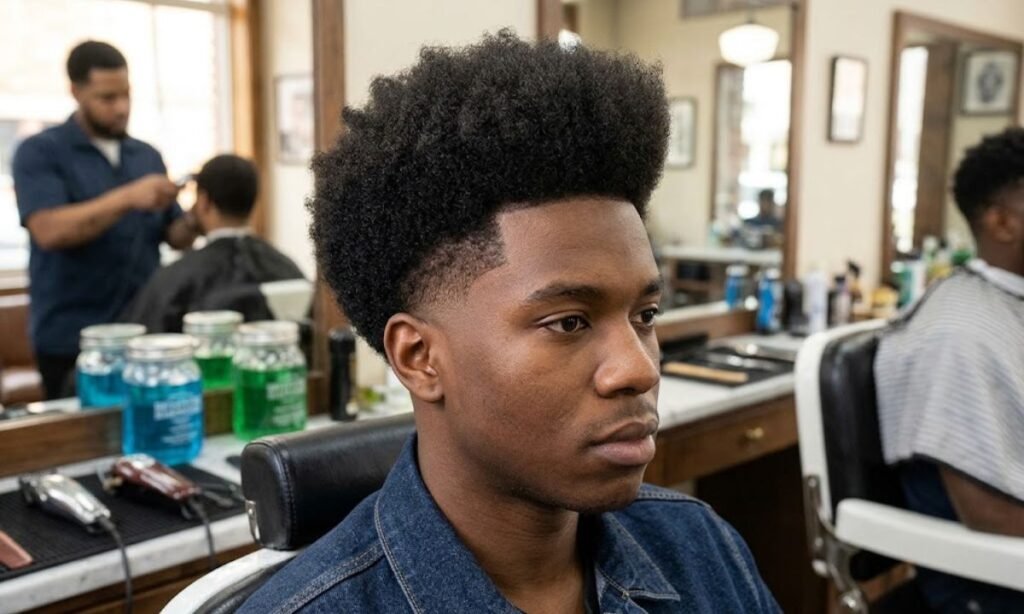
A taller structured afro looks bold, but it needs a plan.
The mid taper stops the sides from pushing outward and ruining the structured outline.
Longer hair also means more hair weight and more tangles.
Detangle with a wide-tooth comb and add leave-in conditioner before every pick-out.
Your barber should trim the top lightly instead of chopping it.
A small shaping pass every month keeps the natural Afro volume balanced.
How a Mid Taper Fade Afro Looks from the Front, Side, and Back

A haircut is a 360 degree object, but photos usually show one angle.
Check all three views before you commit to a reference picture.
Each angle tells you something different about the blend.
Together they show the real head contour the barber will cut.
Front View: Afro Shape, Forehead, and Hairline
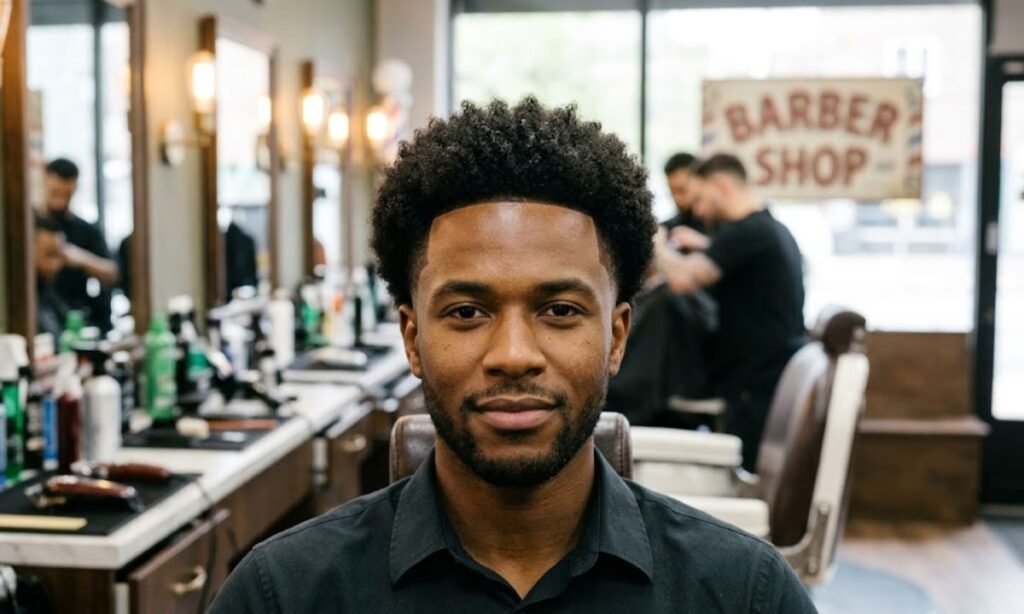
From the front, you see the top silhouette and the natural hairline.
The afro frames your forehead like a soft arch.
The tapered sides stay slim, so your face looks longer and more defined.
That vertical balance is why many men choose this cut for work and weekends alike.
Watch the temple treatment.
A softened temple looks natural, while a harsh cut-in can make the hairline look pulled back.
Side View: Temple Blend and Ear Area

The side view shows the temple-level blend best.
You should see hair shortening gradually from above the ear up toward the afro.
Around the ear, the perimeter taper hugs the shape without cutting a deep notch.
A clean curve here makes the whole cut look planned.
Check the sideburn transition too.
It should melt into the taper, not stop in a sharp block.
Back View: Nape Taper and Natural Hairline
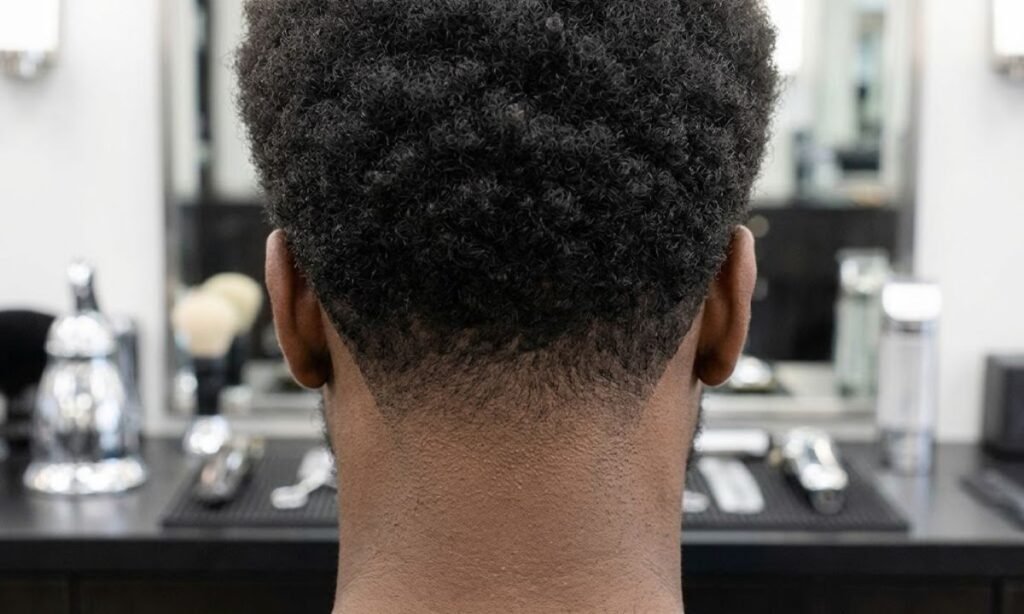
The back view reveals the tapered nape.
Hair shortens toward the neckline finish, leaving a neat base for the afro.
You can choose a squared, rounded, or natural neckline.
A natural one grows out the most gracefully, which saves you chair visits.
Rear photos matter because most people never see their own nape.
Ask a friend to snap one, then bring it to your barber consultation.
Taper, fade, and “taper fade”: the terminology problem

Here is the mess: taper, fade, and taper fade get used as if they mean the same thing.
They don’t, and that gap causes plenty of bad haircuts.
A taper shortens hair gently and usually stops at a guarded finish or a short length.
A fade goes shorter, often down to a bare-skin finish.
A taper fade blends both ideas, so the result depends on your barber’s habits.
Say what finish you want, not just the word, and you’ll avoid surprises.
Who a mid taper fade afro suits
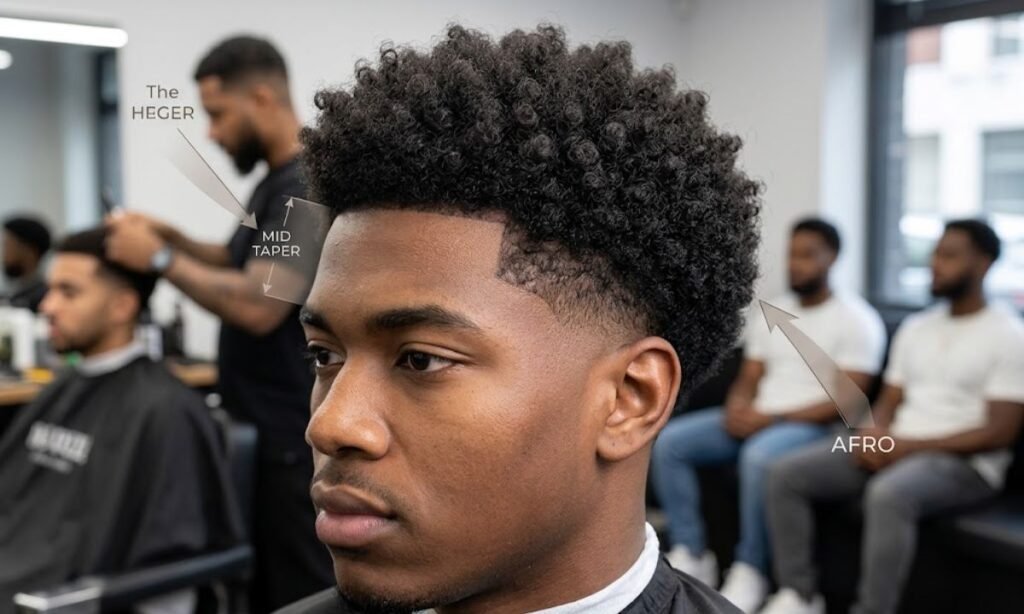
This cut works for a wide range of men, but it isn’t automatic.
Your hair, head, and daily routine all shape how well it fits.
Use the next three checks as a quick filter.
If two of them match, you’re probably in good shape.
Hair texture, length, and density

The mid taper fade afro shines on afro-textured hair, coily hair, and tight curly hair.
Those textures hold the top shape while the sides stay crisp.
Check your hair density, too.
Thick hair gives a bold contrast, while sparse temple areas may show more skin than you expect.
Look at your crown density and hair growth pattern before you decide.
A swirl at the crown can change how the top sits, so mention it to your barber.
Face and head shape: customize height and width, not rigid rules
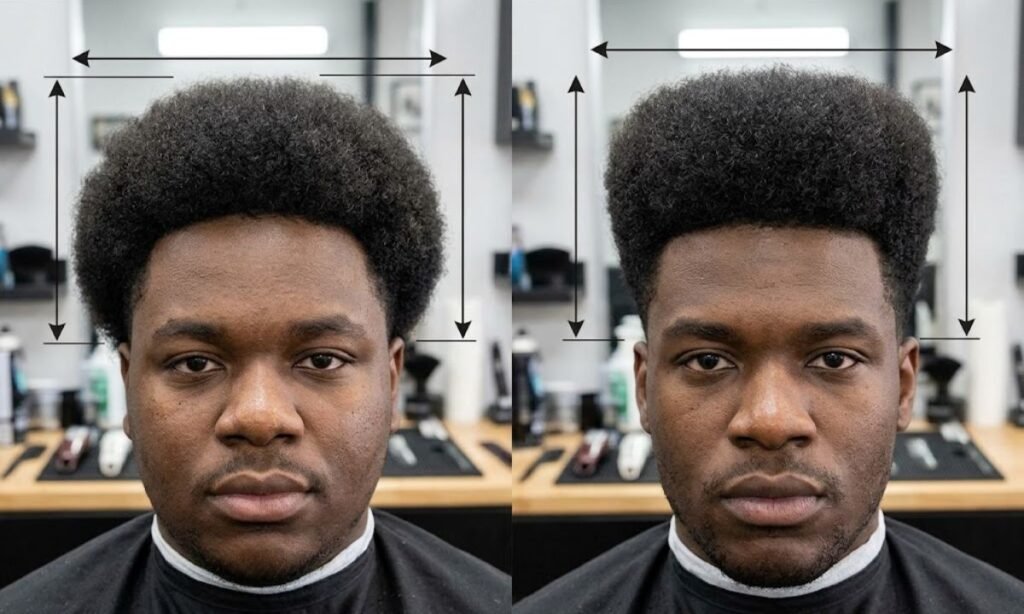
You’ll find charts that match haircuts to face shape.
They help a little, but your individual head shape matters more.
If your face is long, keep the afro wider and slightly lower.
If it’s round, add a bit of visual height on top and keep the sides slim.
Blend width also changes the look.
A tighter blend width feels sharp, and a wider one feels softer and easier to wear.
When another cut may be a better fit
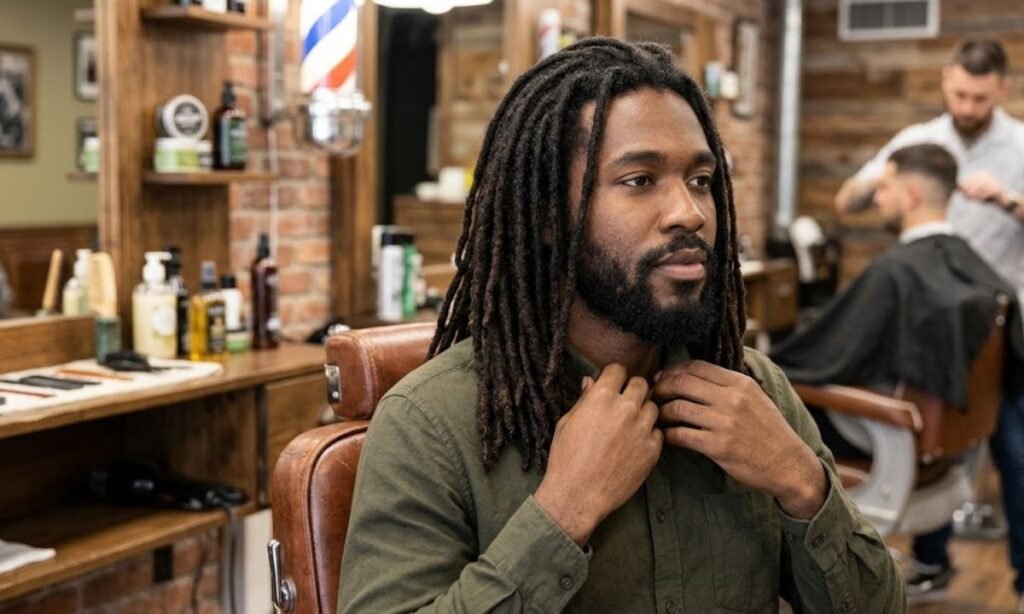
Sometimes this isn’t the right haircut.
Very fine, fragile hair may do better with a longer, softer shape.
If you hate frequent barber visits, try a low taper instead.
If you want a bold skin look, a full mid fade may fit better.
Health counts as well.
If close cutting leaves your skin sore, pick a guarded haircut finish and read the razor bumps section below.
Mid taper fade afro vs low taper, high taper, and mid fade

The choice usually comes down to blend placement.
Move it higher and you get more contrast, move it lower and you keep more hair.
A low taper afro starts near the ear and keeps the most side bulk.
A high taper afro starts closer to the top of the head and shows more scalp.
The mid version sits in the middle on purpose.
It gives clear shape without making your afro look perched on a bare head.
Side-by-side comparison
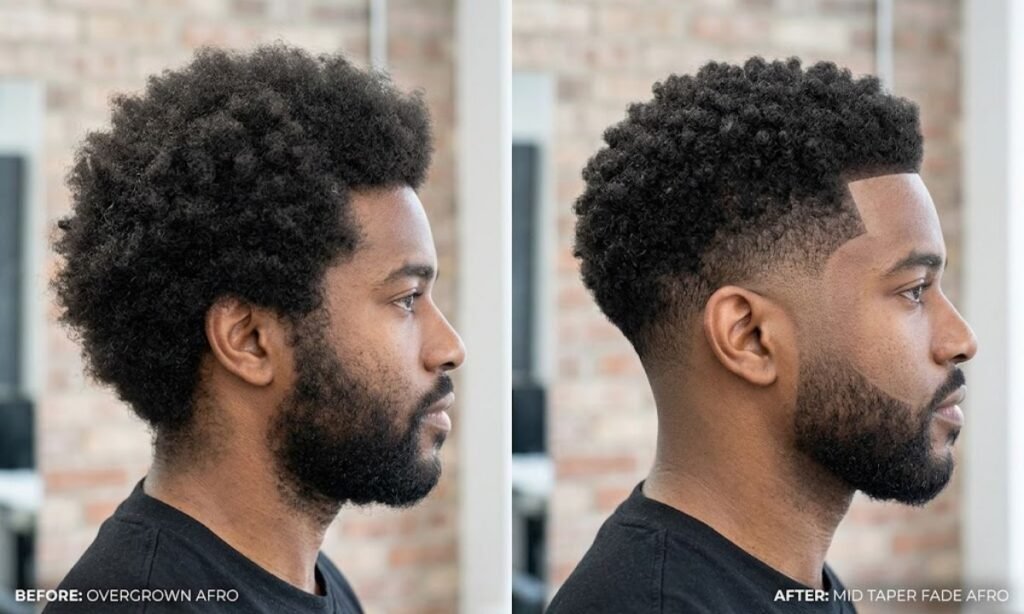
Use this table when you can’t decide.
It compares the four cuts on the points most guys care about.
| Cut | Blend starts | Side bulk | Contrast with top | Skin exposure | Upkeep |
|---|---|---|---|---|---|
| Low taper fade | Near the ear | High | Soft | Low | Every 3 to 4 weeks |
| Mid taper fade afro | Around the temple | Medium | Clear | Medium | Every 2 to 3 weeks |
| High taper fade | Upper side of head | Low | Strong | Higher | Every 2 weeks |
| Mid fade | Around the temple, down to skin | Low to medium | Strong | High | Every 2 weeks |
The big difference between a mid taper and a mid fade is the finish.
A taper stays softer and guarded, while a fade usually drops closer to skin.
Neither choice is better in general.
Pick the one that matches your hair, your skin, and how often you’ll visit the shop.
Mid Taper Fade Afro for Different Hair Types
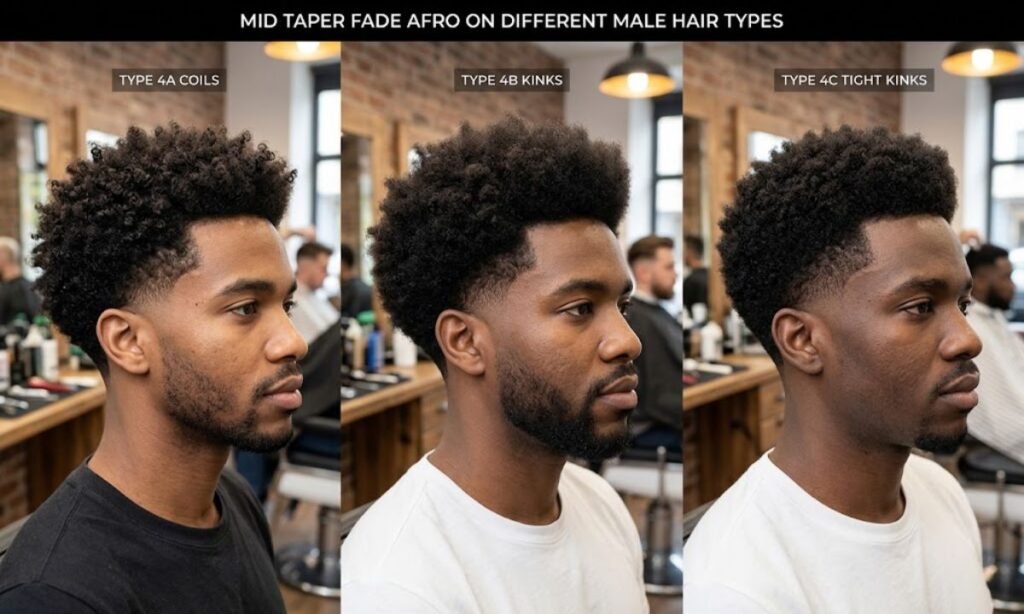
Two guys can ask for the same mid taper fade afro and walk out with different results.
The reason is simple: hair texture and curl pattern change how hair stacks and holds.
Know your type before you book.
It helps you pick the right length and the right products.
Mid Taper Fade Afro on Type 4A, 4B, and 4C Hair
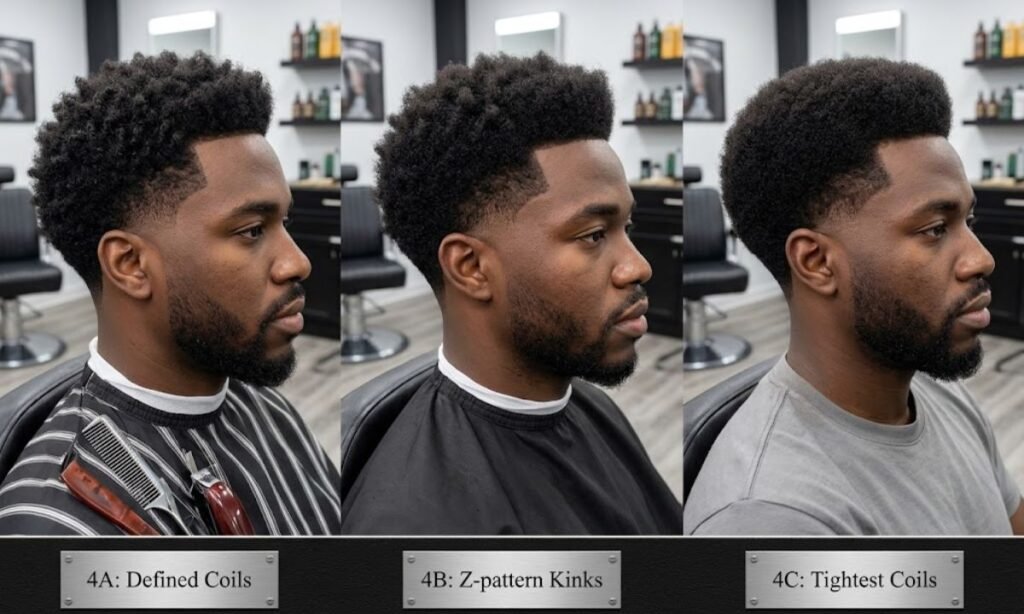
Type 4 hair covers a wide range of coils.
4A shows clear, springy curls, 4B bends in sharp zigzags, and 4C hair packs tight with very little visible pattern.
So, does a mid taper fade 4C hair cut work? Yes, and often beautifully.
4C holds shape well, which gives the afro a crisp edge against the tapered sides.
Expect more hair shrinkage with 4B and 4C.
A two-inch stretched curl may sit at one inch once it dries, so plan the length with that in mind.
Mid Taper Fade Afro on Short Coils and Tight Curls

Short coils give you a soft, textured top with almost no styling work.
The mid taper keeps the sides neat while the coils stay natural.
If you like definition, try sponge coils or a curl sponge twist on top.
A quick pass with styling cream gives you coil definition without a heavy feel.
Tight curls can look flat when the sides are too short.
Ask for a slightly higher guard around the temple so the top keeps its lift.
Managing Shrinkage When Choosing Afro Length

Shrinkage is the biggest source of haircut regret.
Hair looks long when it’s wet or stretched, then pulls up as it dries.
Here is a simple test.
Let your hair dry fully, pick it out gently, and measure the visible height at the crown.
Show that number to your barber.
Then say how much of it you want to keep, so both of you picture the same top length.
Mid taper fade afro styles and variations
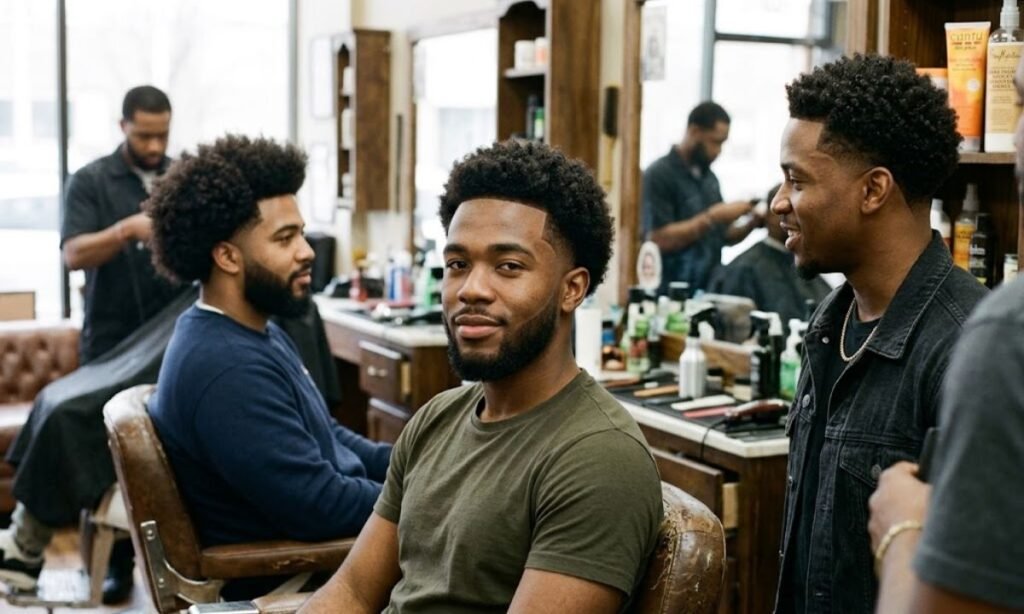
Once the taper is set, the top gives you room to play.
Small changes in texture can make the same cut feel brand new.
Here are three directions to consider.
Each one works with the mid taper, but each asks for different upkeep.
Classic afro silhouettes

The full rounded afro is the original crowd favorite.
It’s even on all sides, with a clear circle shape from the front.
A compact top keeps things closer, tidy, and easy to manage.
A fuller top adds drama, while a taller top stretches the visual height.
Use an afro pick at the roots and lift gently upward.
Shape the edge with your fingers, not the pick, to avoid a puffy outline.
Texture-led variations
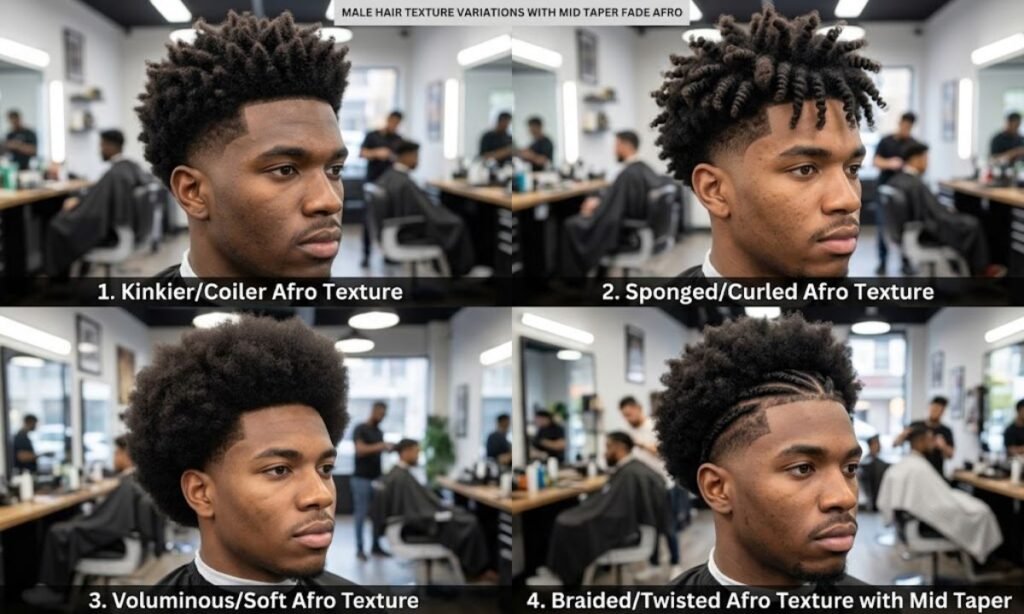
If you want a bit of personality, play with the pattern.
Defined coils, freeform coils, and mini twists each give a distinct look.
Mini twists work best on medium-length hair and last several days with care.
Twist size changes the feel: smaller twists look neat, larger ones look relaxed.
Some men pair this cut with locs or dreads on top.
The mid taper fade with dreads gives structure to a style that can look wild without it.
Hairline, beard, and detail options
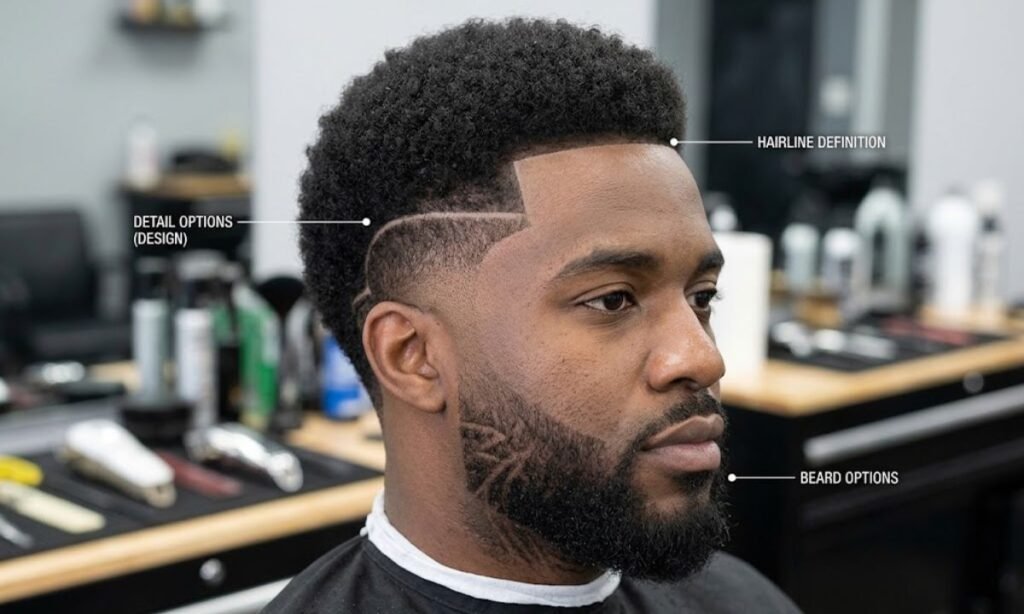
A sharp line-up makes the front look crisp and clean.
A softened hairline looks more natural and grows out better.
You can also add a temple design or a small shaved part.
Keep it modest, because heavy lines may irritate skin and need constant fixes.
Planning to keep facial hair?
An afro with beard pairs well with this taper, which the next section covers in more detail.
How to ask your barber for a mid taper fade afro
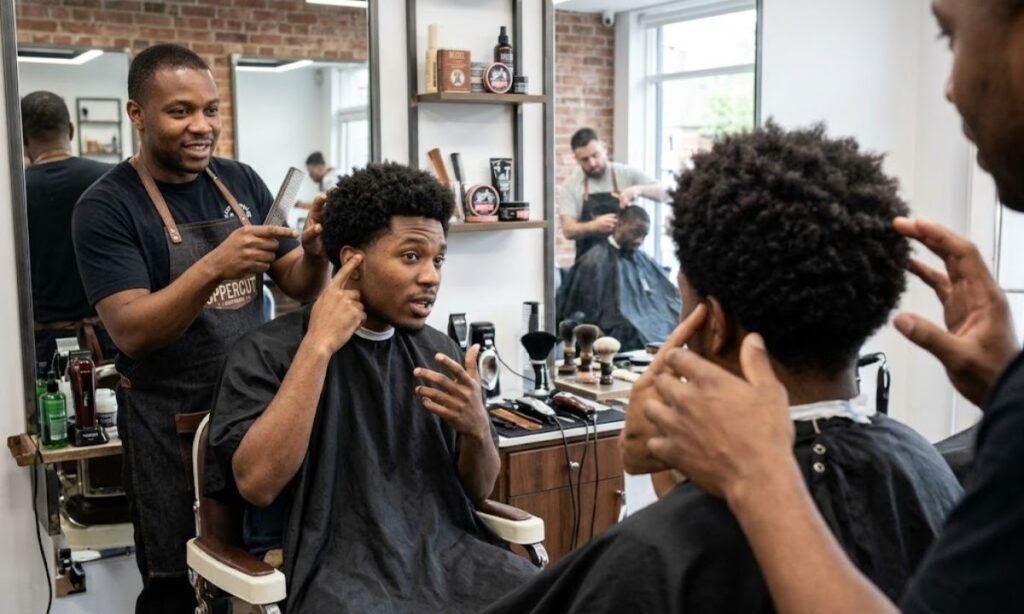
A good haircut starts before the clippers turn on.
Clear barber instructions save you from wasted time and awkward grins in the mirror.
The four steps below keep it simple.
Think of them as a short script you can read from your phone.
Step 1: Bring a useful reference photo

A reference photo beats a hundred words.
Bring one from the front, one from the side, and one from the back.
Pick photos that match your hair type.
A picture of loose curls won’t help much if you have tight 4C hair.
Tell the barber what you like and what to skip.
For example: love the blend height, don’t want the sharp edge at the temples.
Step 2: Specify height and shortest finish separately

This is the step most people miss.
Height and finish are two different decisions.
Say where the blend starts: “mid, around my temple.”
Then say how short it ends: “shadow finish,” “guarded finish,” or “skin finish.”
The shortest clipper length and the clipper guard matter here.
A guarded base keeps hair soft, while a bare-skin finish shows the most contrast.
Step 3: Define the afro shape and how much bulk stays
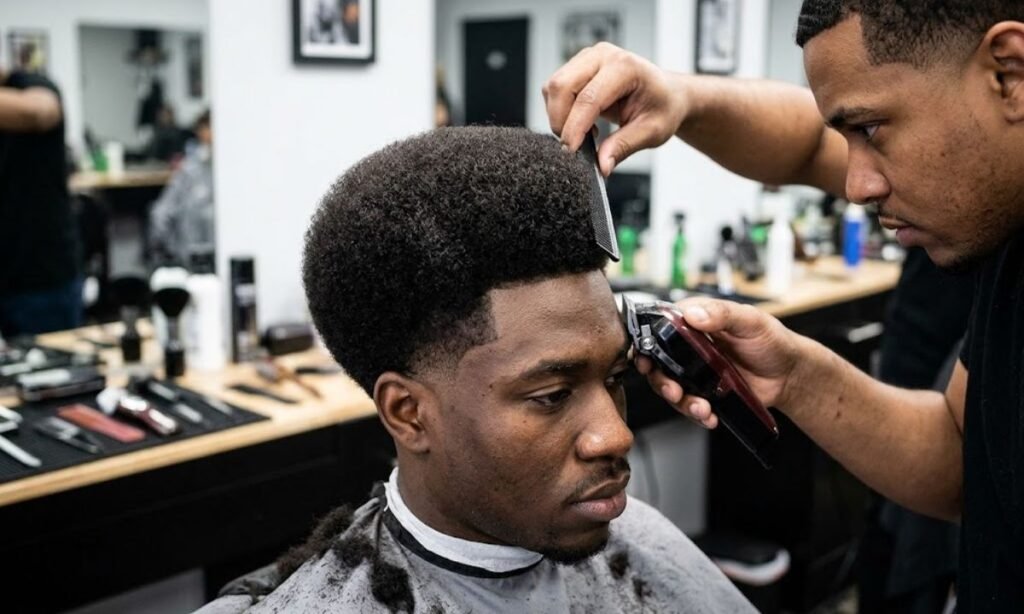
Next, describe the top.
Use plain words: round, compact, tall, or structured outline.
Say how much length you want to keep.
You can show it with your fingers, or by pointing at the top silhouette in a photo.
Ask for side bulk retention if you worry about flat sides.
That tells the barber to keep some weight around the ears instead of stripping it.
Step 4: Confirm the hairline, nape, sideburns, and beard

Before the cut starts, confirm the details.
Cover the natural hairline, the tapered nape, the sideburns, and the beard connection.
Ask if the barber will use a blade razor or an electric shaver on the edges.
If your skin reacts to close shaving, choose clippers with a guard.
Try a simple summary line.
“Mid taper, shadow finish, keep my afro rounded and medium, soft hairline, natural neckline.”
Mid Taper Fade Afro Mistakes to Avoid
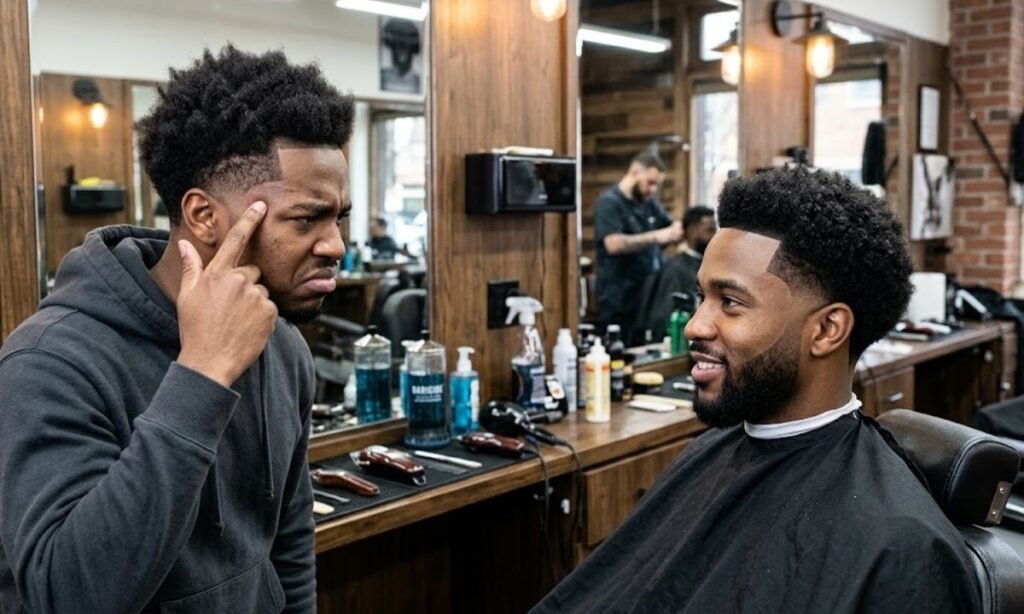
Most bad haircuts come from small misunderstandings.
A few quick fixes in your language can prevent them.
Here are the three problems we see most often.
You can avoid each one with a single sentence.
Choosing a Taper Height That Removes Too Much Side Volume
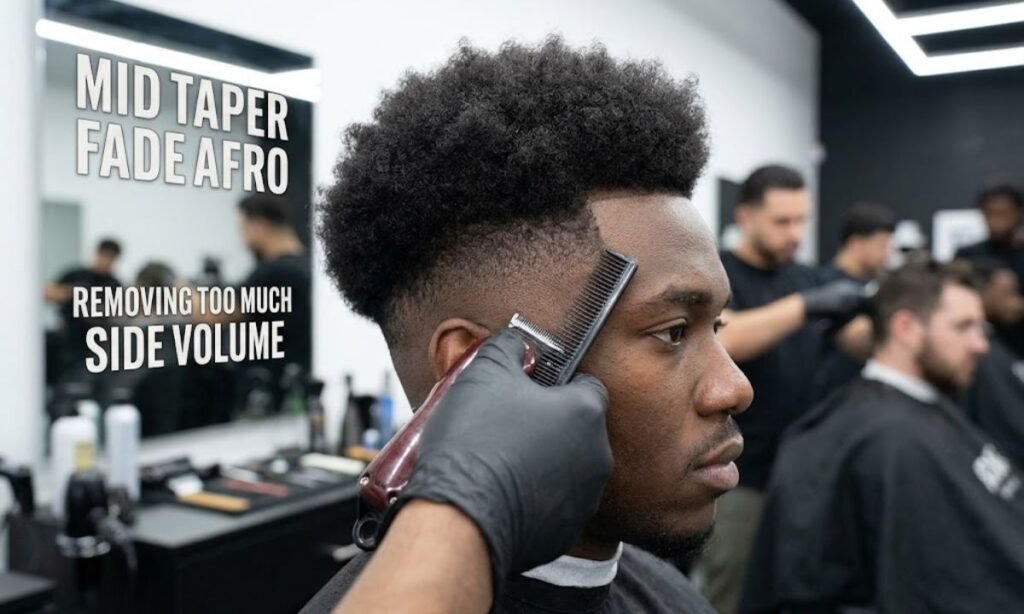
Asking for a high taper when you meant mid is easy to do.
The barber then clips away the retained side volume you wanted to keep.
The afro ends up sitting on a thin base.
That looks top-heavy, and it takes months to fix.
Point to your temple and say, “Start the blend here.”
A physical spot is clearer than any label.
Over-Edging the Hairline and Temples

A fresh line-up feels great, but too much edging backfires.
It can push your hairline back and leave the temples looking thin.
Over-edging also causes hairline irritation and skin irritation.
The more you shave, the more bumps you may get.
Ask for softened temples and a light edge treatment.
You can always cut more at your next visit.
Cutting the Afro Too Short to Achieve the Desired Shape

Hair shrinks and the barber trims, so you can lose length twice.
Then the desired shape never appears.
Tell your barber that you want to keep the top length for now.
Say, “Only shape it, don’t shorten it.”
If you’re unsure, start longer.
Hair is easy to cut and impossible to glue back.
How to style and maintain a mid taper fade afro
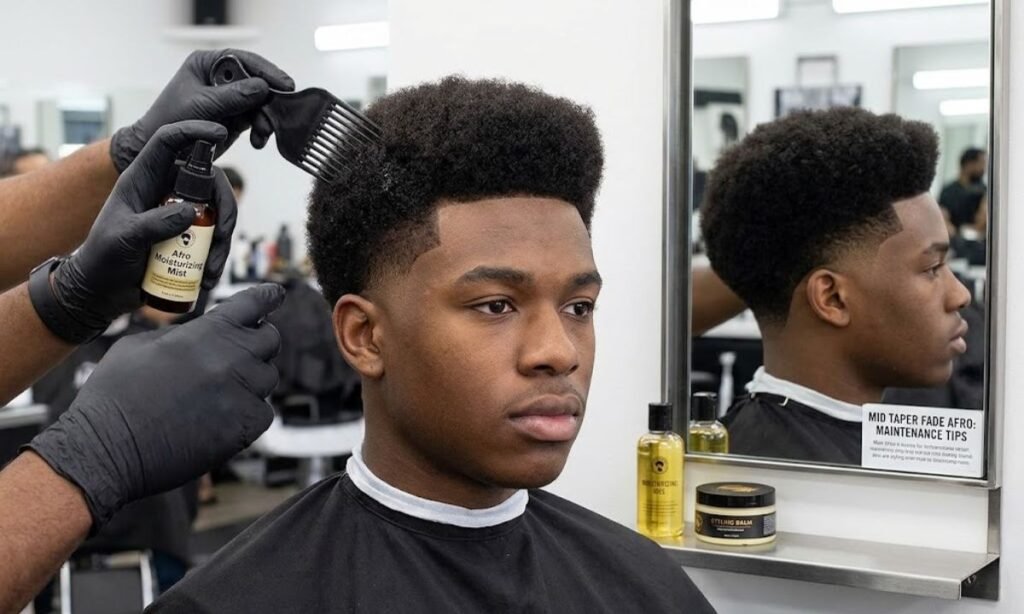
A great cut still needs a little care.
Good habits keep the natural afro volume looking soft and healthy.
The routine takes minutes, not hours.
You just need to repeat it regularly.
Daily and weekly afro care

Start each day with a light mist of water and a bit of leave-in conditioner.
Work it through gently with your fingers, then lift with an afro pick.
Once a week, wash with a gentle shampoo and follow with hair conditioner.
This clears product buildup and helps with hair moisture retention.
Avoid rough handling.
Use gentle hair manipulation and a wide-tooth comb when you detangle, since fragile hair ends break easily.
Touch-up timing and grow-out
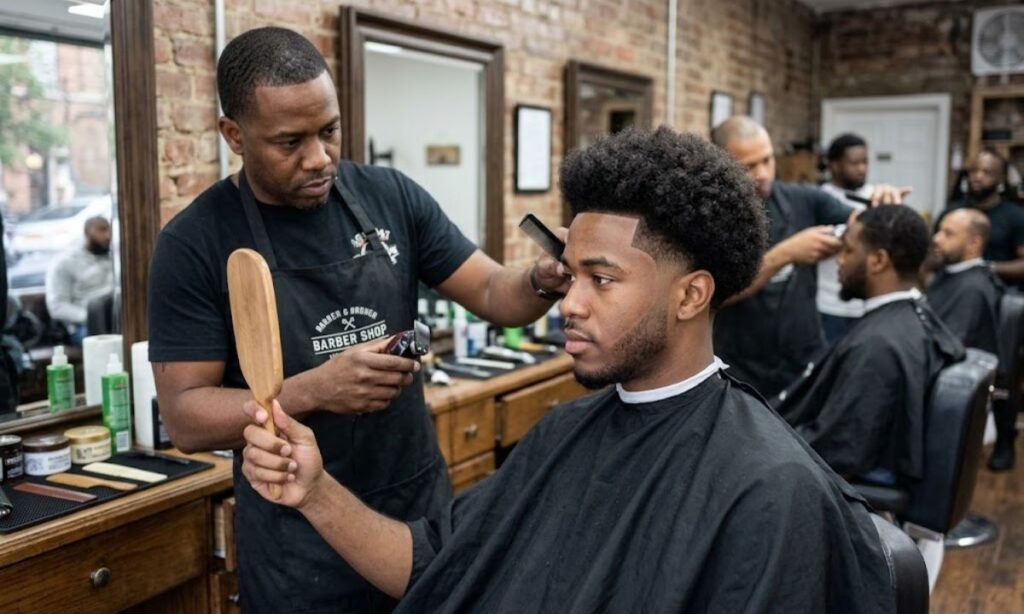
Most men refresh a mid taper fade every two to three weeks.
That keeps the fade transition neat and the neckline clean.
A four-week schedule works if you like a softer, more grown-in look.
Taper fade grow-out is gentle because the blend softens over time.
Book a quick line-up refresh between full cuts if you want.
It costs less time and keeps the edges tidy.
Useful tools and product categories

Keep your kit small.
You need an afro pick, a wide-tooth comb, a leave-in conditioner, and a light styling cream.
Sleep on a satin bonnet or silk wrap, or use a satin pillowcase.
That gives you overnight hair protection and fewer frizzy mornings.
Go easy on heat.
If you use heat styling, apply a heat protectant first and avoid thermal straightening too often.
Mid Taper Fade Afro with a Beard

Pairing a mid taper fade with beard growth is one of the most popular looks.
The taper flows into the sideburns and then into the beard line.
There are two choices.
A connected beard blends smoothly, while a disconnected beard leaves a deliberate gap.
Tell your barber which you prefer.
And ask them to keep the beard line soft if your skin gets irritated easily.
What to Expect in the Chair: Time, Cost, and Etiquette

A taper with an afro on top often takes longer than a plain clipper cut.
Plan for around 30 to 60 minutes, and ask when you book.
Prices vary by city and shop.
Call ahead or check a shop’s menu, so you aren’t surprised at checkout.
Be kind, be clear, and speak up early.
If something feels off, say so before the barber moves on to the next section.
Razor bumps, scalp comfort, and when to modify the cut
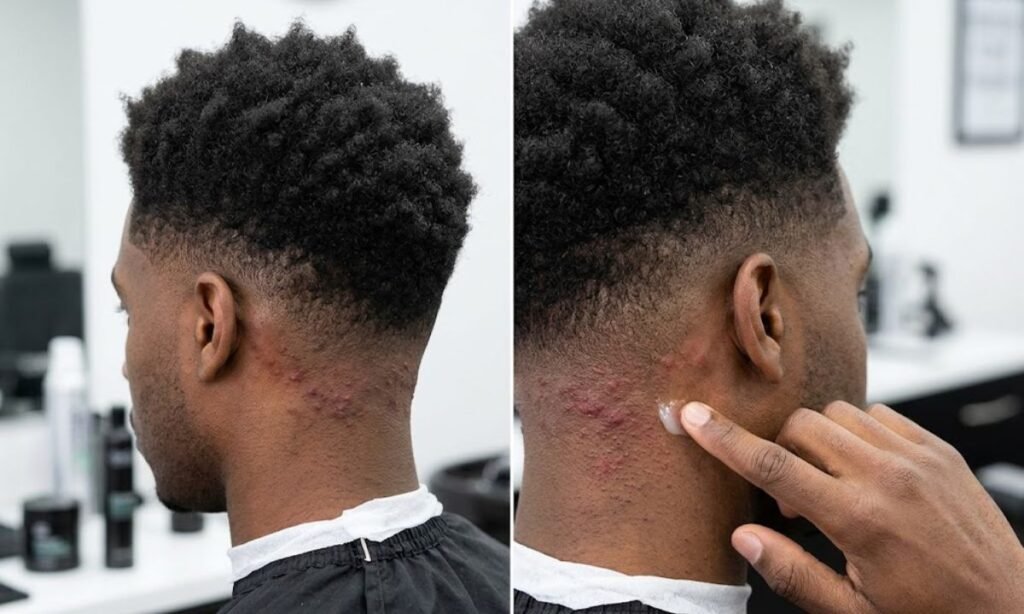
Close cuts look sharp, but they can bother your skin.
This part matters, because scalp health affects how you feel and how the cut looks.
The tips below are general and don’t replace medical care.
If you have pain or lasting skin changes, talk with a professional.
Pseudofolliculitis barbae and very close edging
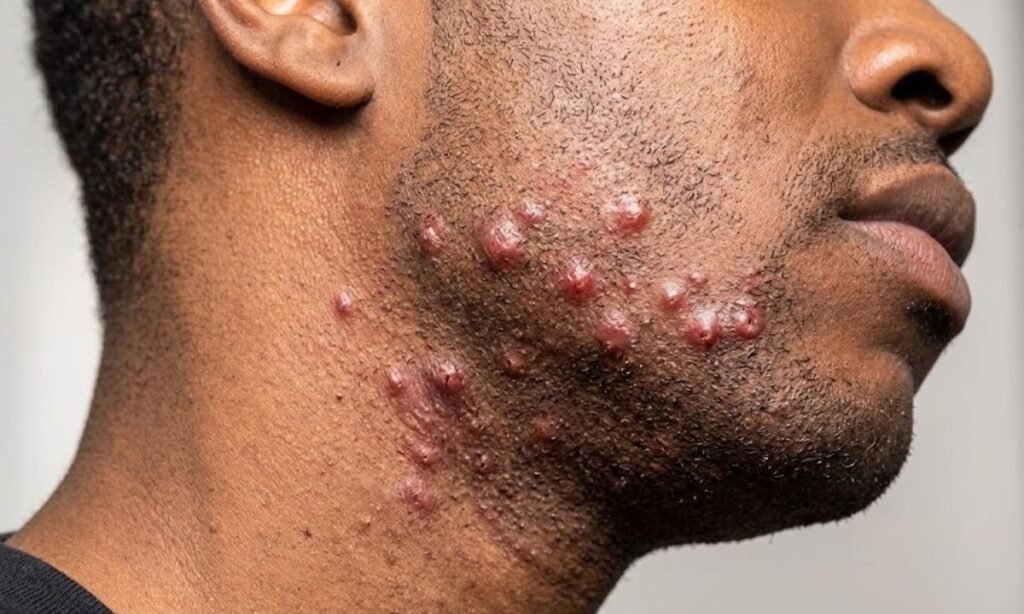
Pseudofolliculitis barbae is the medical name for razor bumps.
Short, coarse curly hair can curl back into the skin and trigger ingrown hairs.
The result is small, red, sometimes sore bumps.
They show up most often after close shaving or very close clipper work.
To reduce the risk, choose a guarded haircut finish or a shadow haircut finish.
Ask for clippers over a blade razor, and skip aggressive edging if your skin is sensitive skin.
Bumps at the nape: acne keloidalis nuchae
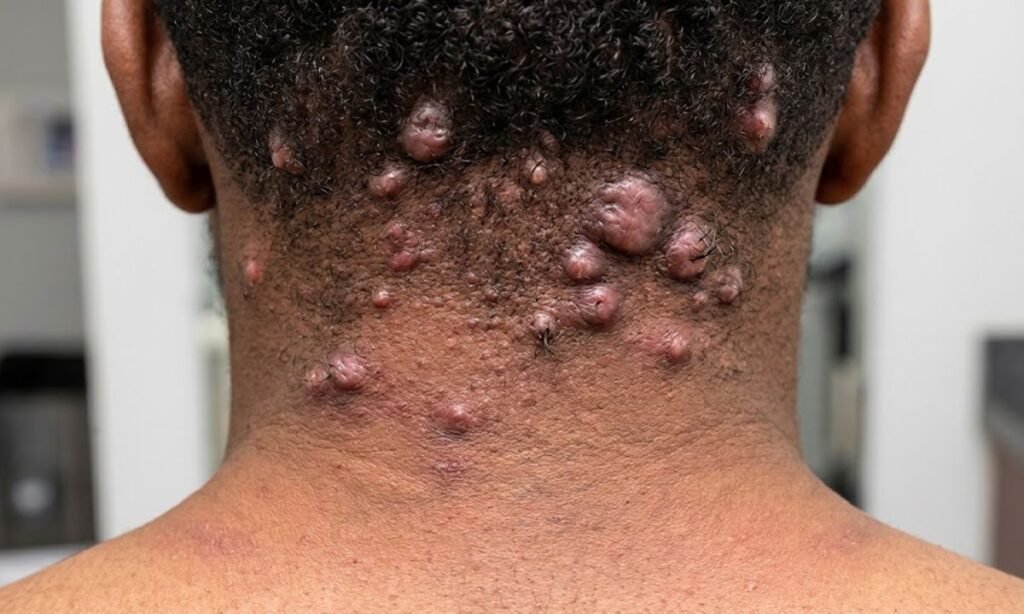
Acne keloidalis nuchae is a different problem.
It affects the back of the head and neck and can bring firm, persistent bumps.
Over time, these can form raised scars and, in some cases, permanent hair loss.
Tight, close cuts at the nape and friction from collars can make it worse.
If you notice bumps at your neckline, loosen the cut there.
A natural neckline finish and a guard over the clipper can help.
When to change the cut or see a dermatologist

Change the cut if bumps keep coming back after every visit.
Try a low taper, a higher guard length, or a longer neckline.
See a dermatologist if you notice pus, pain, scarring, dark marks, or bumps that don’t fade.
They can diagnose the cause and suggest treatment.
This is the section where many guys wait too long.
Early care protects both your skin and your hair for the long run.
You can also checkout this article as well Mid Taper Fade Afro: What It Is, How It Looks, and What to Ask Your Barber
Frequently asked questions about the mid taper fade afro

What is a mid taper fade afro?
It’s an afro on top with sides that shorten in a gradual blend starting near the temple.
The finish can be guarded, shadowed, or skin.
Who does a mid taper fade afro suit?
It suits most men with afro-textured hair, especially medium to thick hair.
It works across many face shapes when you adjust height and width.
How do I ask a barber for a mid taper fade afro?
Name the blend height, the finish, and the afro shape separately.
Bring front, side, and back photos.
Does a mid taper fade afro work with 4C hair?
Yes. 4C hair holds shape well and shows the contrast clearly.
Just plan for shrinkage when you pick the length.
How long should an afro be for a mid taper?
There’s no single number, but medium length keeps a balanced shape.
Most men keep two to four inches of visible height.
Can you get a mid taper without a skin fade?
Absolutely. Ask for a guarded finish or shadow finish instead.
This keeps the sides softer and kinder to your skin.
Can you keep a natural hairline with a mid taper?
Yes. Tell your barber to skip the sharp line-up and just clean the edges lightly.
That keeps the hairline looking real.
What is the difference between a mid taper and a mid fade?
Both start at the same height, but a taper keeps more length at the end.
A fade usually drops closer to skin.
How often should you refresh a mid taper fade?
Every two to three weeks suits most people.
Stretch to four weeks if you like a softer look.
How do I prevent razor bumps after a haircut?
Choose a guarded finish, avoid close shaving, and keep the scalp clean and moisturized.
If bumps persist, see a dermatologist.
You can also checkout this article as well Mid Taper Fade Blowout: What It Is, How to Ask for It, and How to Style It
Final Thoughts
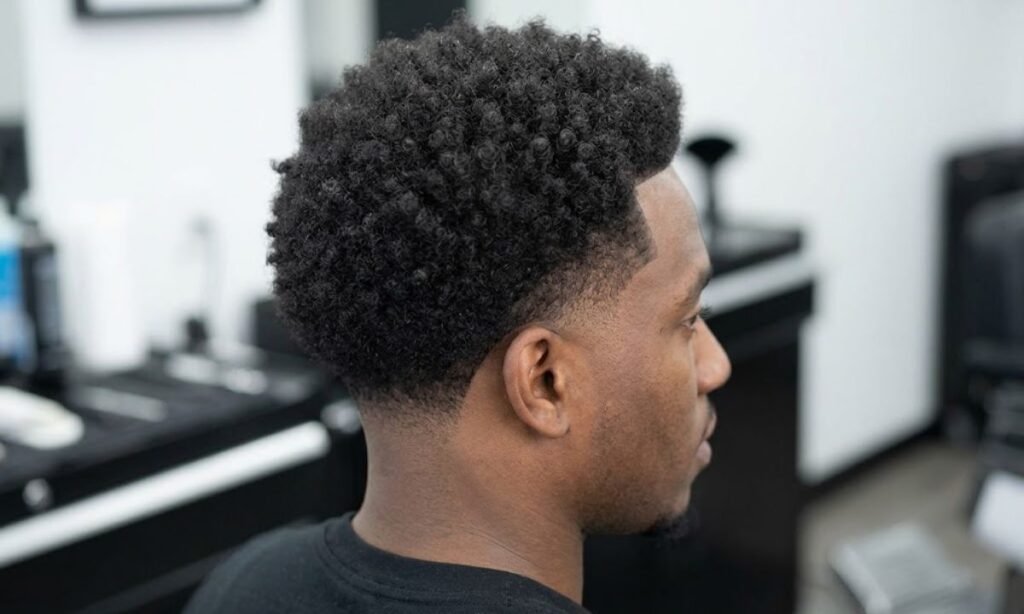
A mid taper fade afro gives you shape, balance, and a clean look without losing your natural volume.
When you explain blend height, finish, and afro size separately, the result usually lands right.
Start with a reference photo, plan for shrinkage, and protect your skin.
Then build a simple routine with a pick, a leave-in, and a satin wrap.
Have you tried this cut? What did you ask your barber, and what would you change?
Drop your story in the comments, share this guide with a friend who’s about to book, and check back for updates as styles shift.

I’m Michael Charles, the creator of MegaCrazes—your source for fresh hairstyles, sharp haircuts, and simple hair-care inspiration. Find your style. Own your look.
1 thought on “Mid Taper Fade Afro: What It Is, How It Looks, and What to Ask Your Barber”