

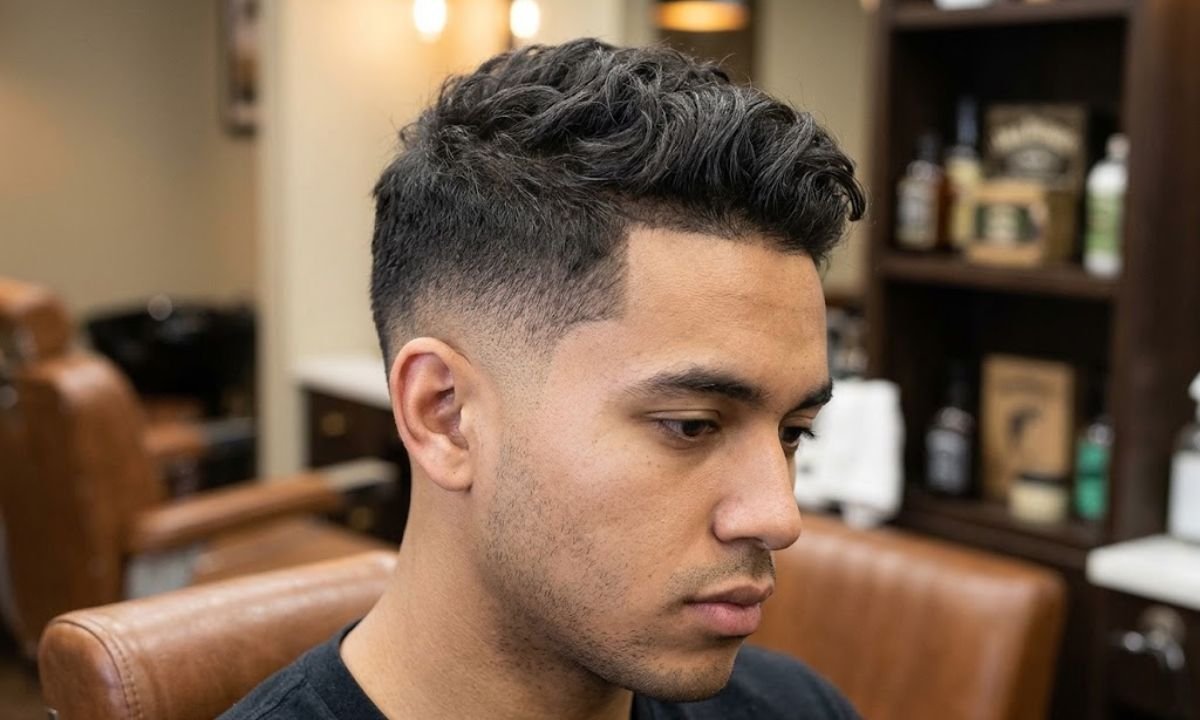
Ever sat in the barber’s chair, asked for a mid fade, and walked out with a curve that sits weirdly high behind your ear? Or maybe you showed a front-facing photo and got a back you never expected.
You’re not alone. Most people only realize what a mid drop fade is after a haircut goes sideways. This guide fixes that, with plain words, real examples, and a script you can read straight to your barber.
Grab a coffee. By the end, you’ll know exactly what to ask for, what to avoid, and how to keep it sharp. If you’ve got a question along the way, drop it in the comments. We read every one.
Quick Answer
A mid drop fade starts at mid height on the side of the head, around the temple, then curves down behind the ear area toward the nape. That downward drop curve is what separates it from a straight, flat mid fade.
The result is a curved outline that follows your head contour instead of cutting across it. It works on straight hair, wavy hair, curly hair and coily hair, with almost any top length.
To order it, say: “Mid drop fade, starting around the temple, curving behind the ear, skin finish or #1 guard, leave the top at about three inches.” We’ll break down every piece of that sentence below.
What is a mid drop fade?

Think of a normal fade as a horizontal line wrapped around your head. Now imagine the back half of that line sliding downward, like a semicircle fade hugging the ear. That’s the mid drop fade haircut.
The fade begins around the middle of your upper sides, roughly level with the top of your ears or a touch higher. Then it dips behind the ear and travels toward the neckline. The shorter hair sits low, the longer hair sits high, and the fade transition runs smoothly between them.
Barbers like it because it looks modern without looking extreme. You get contrast, a clean hair silhouette, and a haircut that still looks fine at work or at a wedding. That’s why the mid drop fade for men keeps showing up in barbershop photo feeds.
What does “mid” mean and what does “drop” mean?
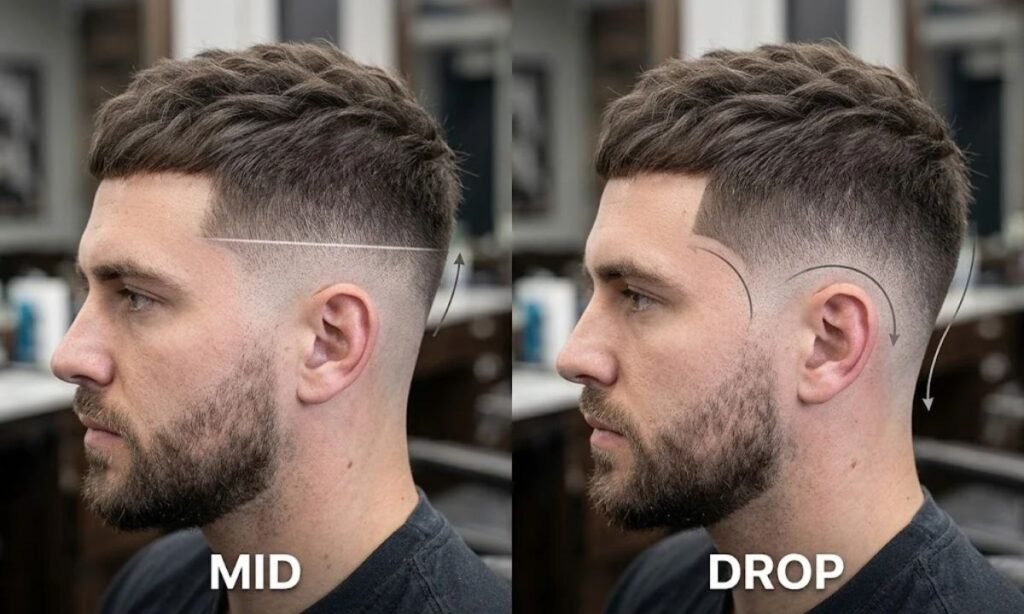
“Mid” describes where the fade starts. A low fade begins near the ear, a high fade starts up around the temple or higher, and a mid fade sits between them, roughly at the mid-side of your head. It’s the safest height for most people.
“Drop” describes the shape. Instead of staying level, the fade line drops behind the ear and curves toward the nape, following the skull shape you already have. Picture a sandwich with one corner bitten off.
So “mid drop” simply means a mid height start with a downward curve. Once you hear it that way, barber talk gets much less confusing. You’ll also see it called a mid-height drop fade or a mid fade with a drop.
Mid drop fade vs mid fade, low and high drop, taper and burst fade

Fade names overlap, and barbers don’t always use them the same way. One shop’s “taper” is another shop’s “low fade.” That’s why comparing them side by side saves you from surprises.
Below, we’ll compare the mid drop against its closest cousins. Use this section like a cheat sheet when you pick a photo for your next appointment. The different types of fade haircuts all share one idea: shorter hair at the bottom, longer on top.
Mid drop fade vs regular mid fade

A regular mid fade keeps its fade guideline level all the way around. The line runs straight from one ear, across the back, to the other ear. It looks clean and geometric.
The mid drop fade bends that line down behind the ear. That small change makes the back look rounder and softens the look from the rear profile. If your head has a sharp corner at the back, the drop smooths it out.
Here’s a quick way to remember it. Mid fade is a belt. Mid drop fade is a headband that sags at the back.
Mid drop vs low drop and high drop

A low drop fade begins close to the ear and drops to the nape. It’s subtle, great for offices and for anyone nervous about big contrast. The sides stay mostly full.
A high drop fade starts up near the temple or even the crown edge. It shows more skin, reads bolder, and suits a stronger top style like a high quiff. It also grows out faster, which means more barber visits.
The mid drop lands between the two. You get visible fade without looking like you shaved half your head. For first-timers, it’s the friendly starting point.
| Fade type | Starts at | Contrast | Best for |
|---|---|---|---|
| Low drop fade | Near the ear | Subtle | Office, conservative looks |
| Mid drop fade | Mid-side, around the temple | Balanced | Most people, most tops |
| High drop fade | High on the upper sides | Bold | Strong styles, short tops |
Mid drop fade vs mid burst fade
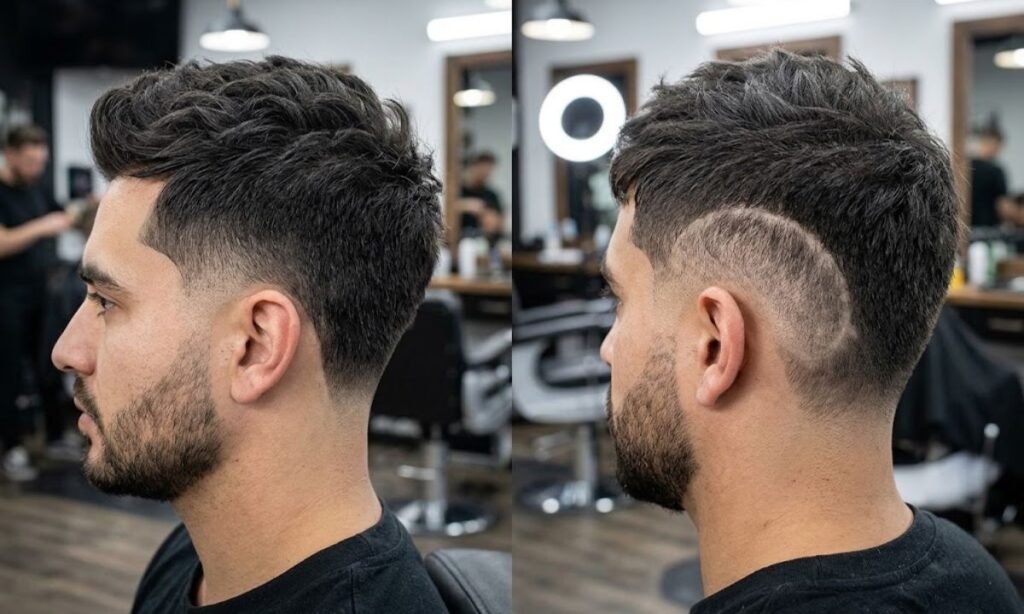
A mid burst fade works differently. It fades in a semicircle around the ear only, leaving the back of the head longer. It’s the style you see paired with a mullet or a longer back.
The mid drop fade runs the full way around to the nape. The burst fade stops and bursts outward from the ear. That’s why people say “drop fade vs burst fade” like they’re picking a flavor.
If you want a cleaner, tidier back, pick the drop. If you want length at the back and a statement look, pick the burst. When in doubt, bring a photo.
Is a mid drop fade right for you?
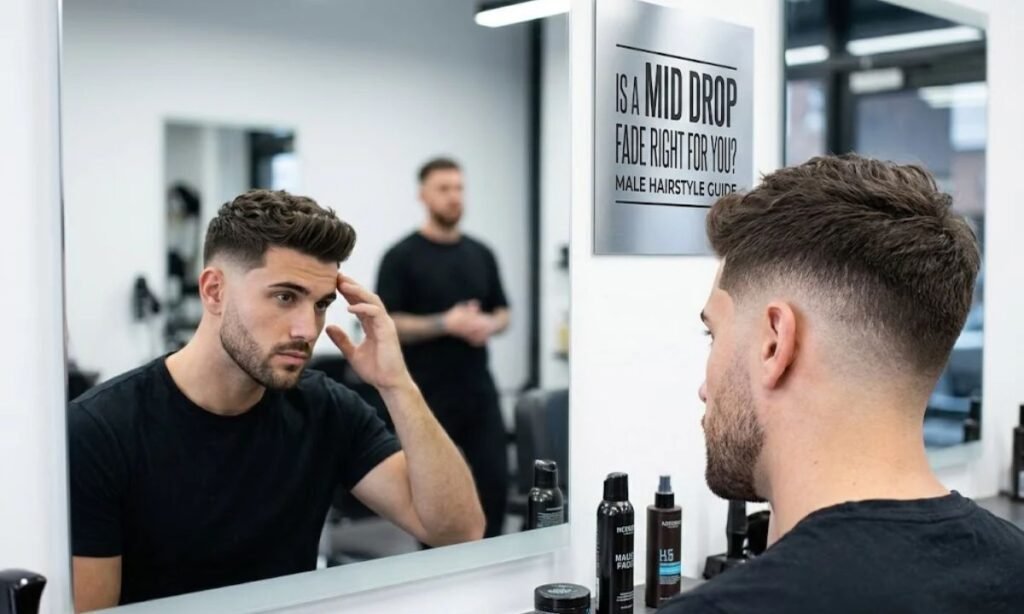
Short answer: probably yes. The mid drop fade is one of the most flexible cuts in the barbershop. It flatters more heads than any other fade height, which is exactly why barbers recommend it.
Still, “probably” isn’t “definitely.” A few things decide whether it will look great or just okay on you. Those things are less about your face and more about your hair and skull.
Hair texture, density and head shape matter more than a generic face-shape rule

You’ve probably read that round faces need X and square faces need Y. Honestly, that advice is too vague to trust. Your hair texture, hair density and skull shape change the result far more.
Take two friends, Sam and Dev. Sam has thick hair and a long, narrow head. Dev has fine hair and a wide, round one.
Sam can handle a higher fade because his thick top covers the contrast. Dev needs the mid height so his scalp visibility doesn’t look patchy. Same haircut name, different execution.
So ask yourself three things. Is my hair thick, fine or thinning hair? Is my head wide, narrow or lumpy at the back?
How can a mid drop fade balance different head proportions?
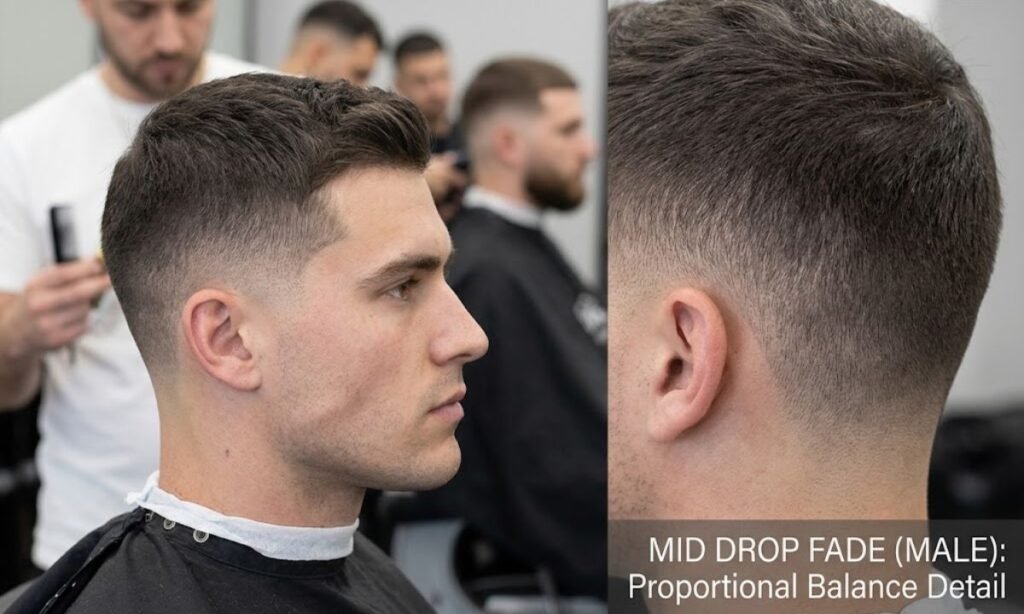
A good barber doesn’t copy a photo. They read your head and adjust the fade placement so everything looks even. That’s the real skill behind fade balance.
Here are the four common situations you might run into. If one sounds like you, show this section to your barber. It turns a vague request into a clear plan.
What adjustments help a wider head look more balanced?
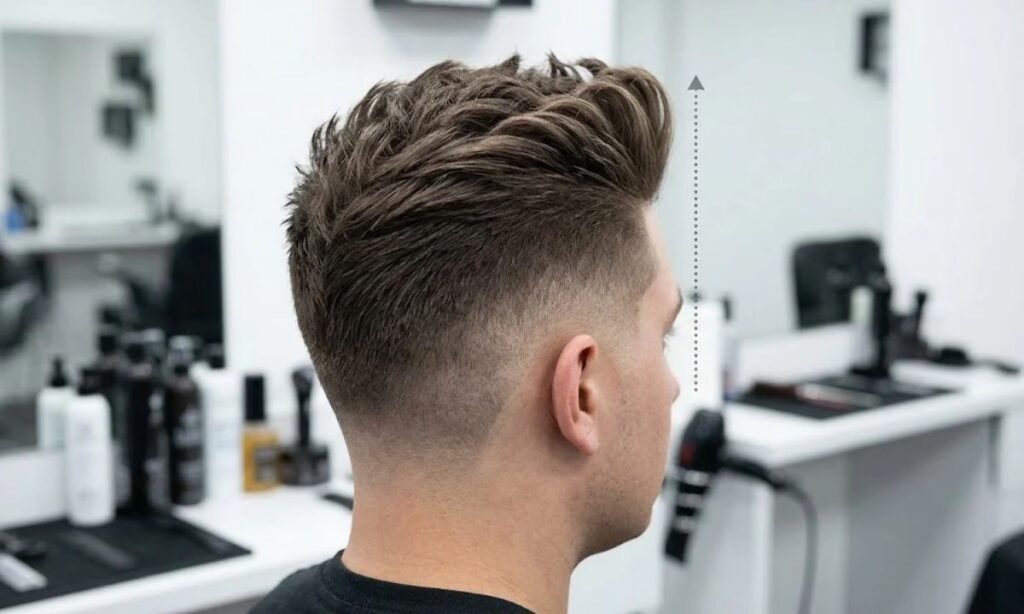
If your head is wide, a high-contrast fade can make the sides look even wider. The fix is a softer blend and a slightly lower fade perimeter. Keep a bit of side weight so the sides don’t look scooped out.
Leave extra length on top to add height. A textured crop or quiff pulls the eye upward and slims the overall shape. Think of it like stretching a rectangle.
How can extra crown weight change the back profile?
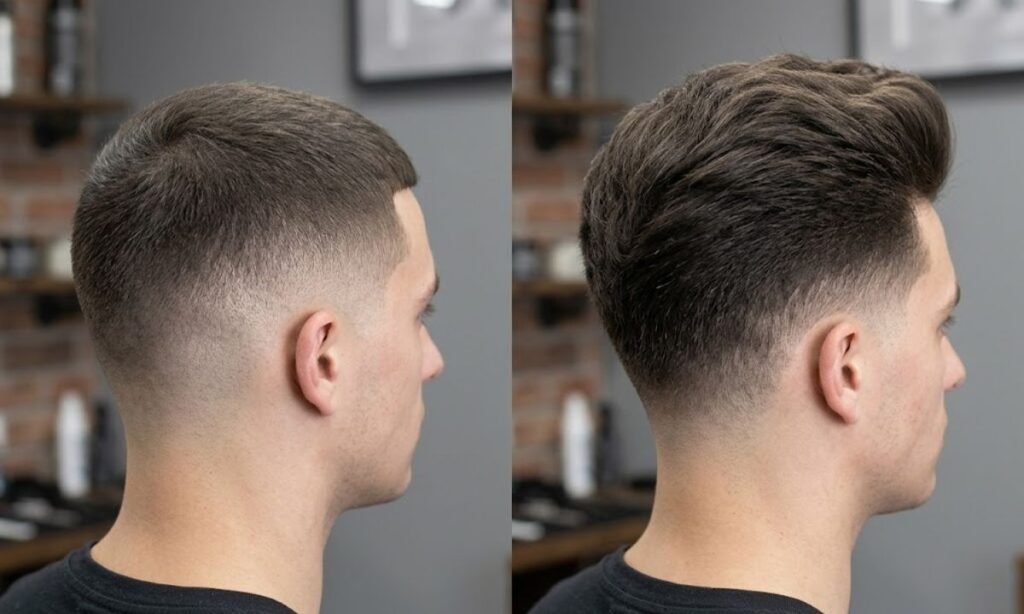
Some people carry a lot of hair at the crown. If the fade drops too low there, the back can look top-heavy, like a mushroom. A slightly higher drop curve helps keep the rear profile even.
Ask your barber to check the crown cowlick too. A swirl that grows upward can pop out of a short blend. A little extra length around it keeps things calm.
What proportions prevent the sides from looking too narrow?

On a narrow head, an aggressive fade can leave you looking pinched. Keep the upper hair weight a bit fuller and avoid a bald finish. A #1.5 guard or #2 guard at the base adds just enough width.
You want the rounded silhouette to stay intact. If the sides disappear, the top starts to look too big. Small tweaks to fade height comparison make a huge difference here.
How should the fade adapt to a flat or prominent occipital area?
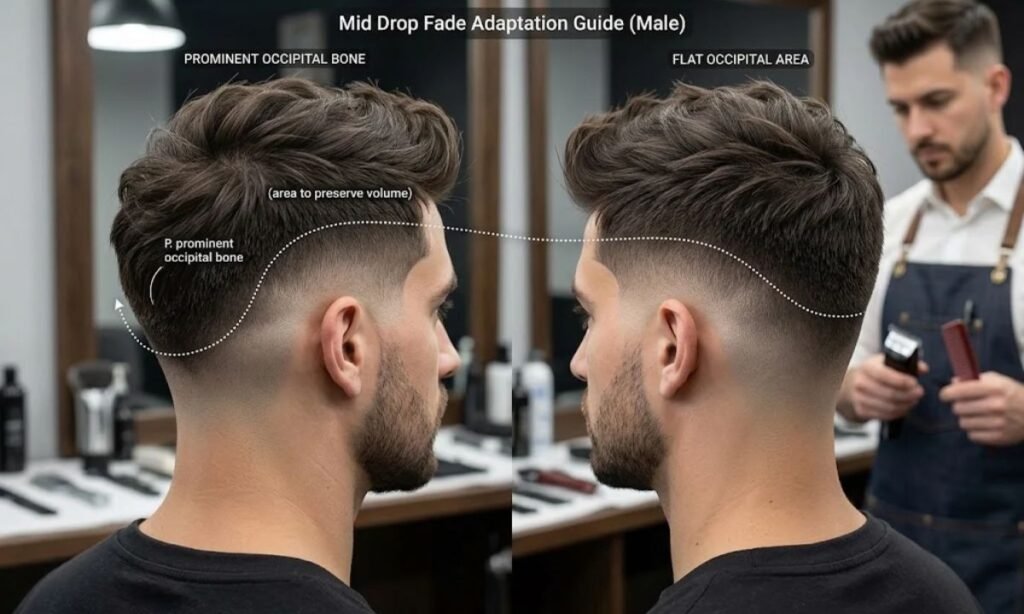
The occipital bone is that bump at the back of your head. Some people have a flat back, others a pronounced bump. The drop curve should respect whichever you have.
With a flat back, the fade can drop slightly lower to create the illusion of roundness. With a prominent bump, keep the blend just above it so the hair doesn’t expose every ridge. Feel the back of your head and tell your barber what you find.
What determines the shape and blending of a mid drop fade?

A fade is really a gradient of hair length progression. The smoother that gradient, the better the result. Four details decide whether your blend looks pro or patchy.
This part gets a little technical, but we’ll keep it simple. You don’t need to learn clipper terms, only to recognize good work. Think of it as knowing what to look for in a freshly baked loaf.
How should the fade curve follow the natural head contour?
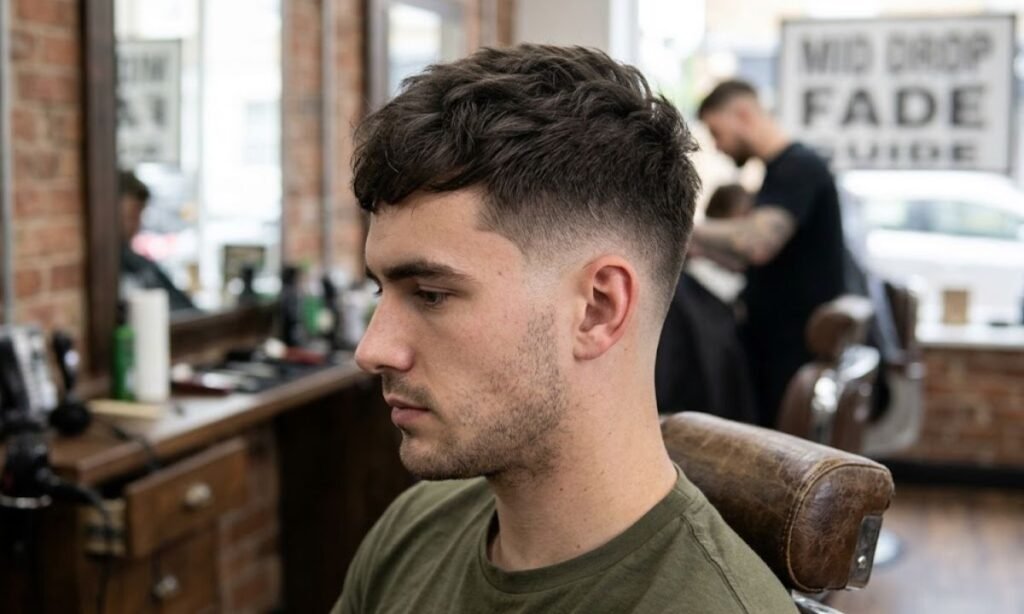
The curved outline should mirror the shape of your skull. From the side, it rises slightly at the temple, dips behind the ear, then sweeps toward the nape. If it looks like a ruler line, the drop is missing.
Your barber traces this with a guide comb and a light hand. They set a conservative guideline first, then adjust. Starting cautious is smart because hair removal is permanent until it grows back.
Where should the blend begin around the temples?

The blend usually begins around the temple, a finger or two above the ear’s top edge. From there, it slopes back and down. If it starts too high, you’ll feel like a high fade got slipped in.
If you have a receding hairline, start slightly lower. That keeps attention away from the corners. A good barber will mention this before touching the clippers.
How much weight should remain above the occipital bone?
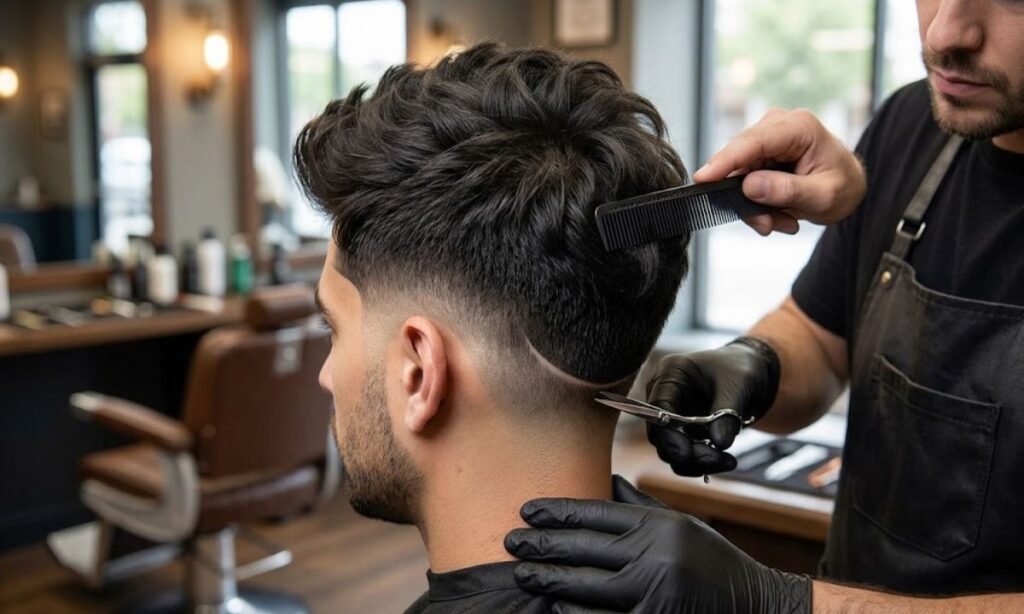
You want enough hair above the occipital bone so the head shape looks rounded. Take too much off and the skull looks flat or angular. Leave too much and the fade looks heavy.
A safe rule is to keep the weight line roughly even with the top of the ear. Then blend down from there. That gives you balance without drama.
How can a barber prevent dark patches in the blend?
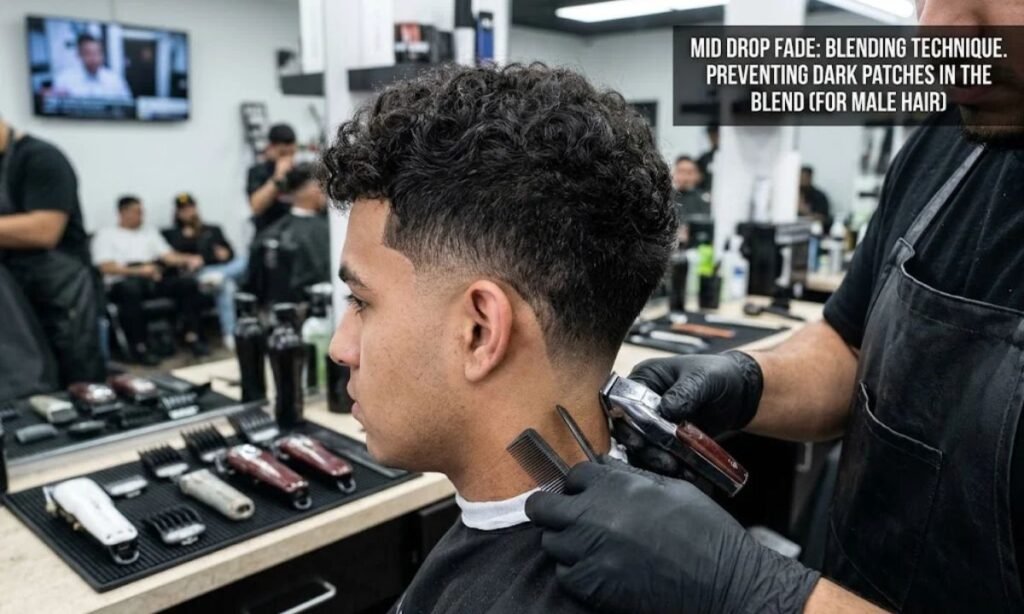
Dark patches show up when hair length jumps too quickly between guards. They also appear when clipper strokes stop at the same height every time. The fix is a blending pass with a lever adjustment, then a gentle clipper-over-comb finish.
Good barbers move through guards in small steps, such as a #0.5 guard, #1 guard, #1.5 guard, and #2 guard. They check the blend under bright light and with a three-way mirror. If you spot visible bands or hard lines, ask politely for another pass.
How much contrast should a mid drop fade have?
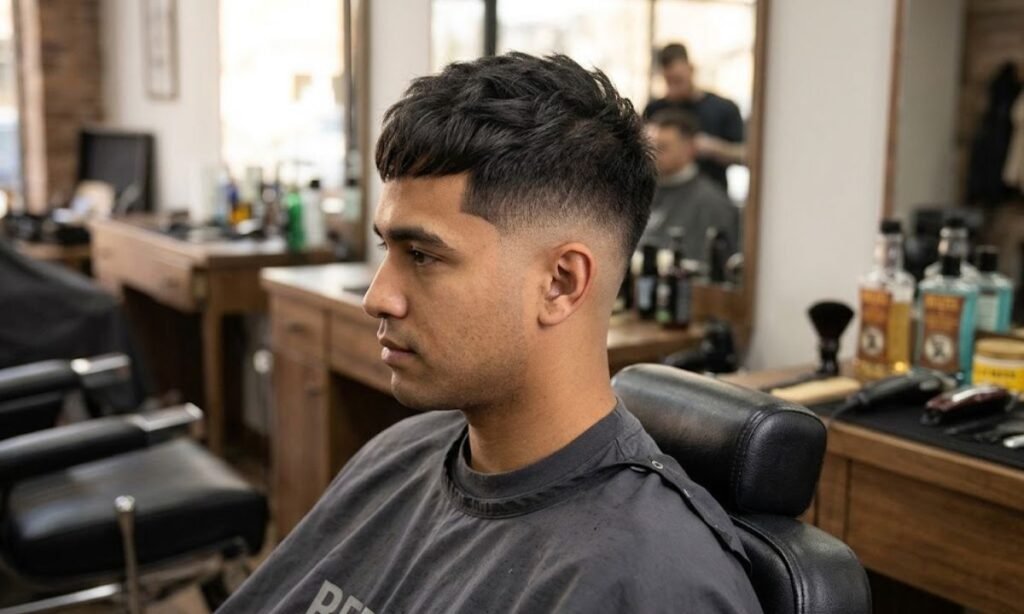
Contrast is the gap between your faded sides and your top. More gap means a bolder look, less gap means a softer one. There’s no right answer, only the one that suits your hair and your day job.
Before you pick, picture your life for the next month. Do you wear a suit on Mondays, or a hoodie every day? Your answer decides how brave the fade transition can be.
What makes a soft blend look different from a high-contrast finish?
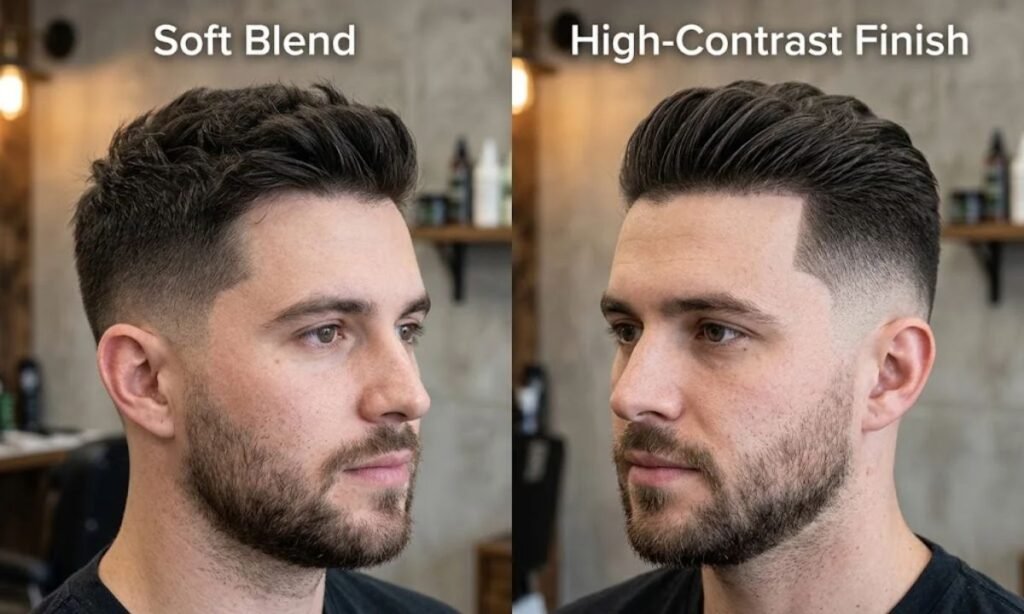
A soft blend uses small steps between guards and a longer shadow base. The skin never fully shows, so the sides look hazy and gentle. It grows out gracefully, which makes it perfect if you hate frequent visits.
A high-contrast finish drops to bare skin fast. The fade line is crisp, the top pops, and every clipper stroke shows. It looks sharp for about ten days, then starts to fuzz.
Say you’re choosing between the two. If you want people to notice the haircut, go high contrast. If you want them to notice you and just think “nice hair,” go soft.
How does natural dark hair affect the appearance of the fade?
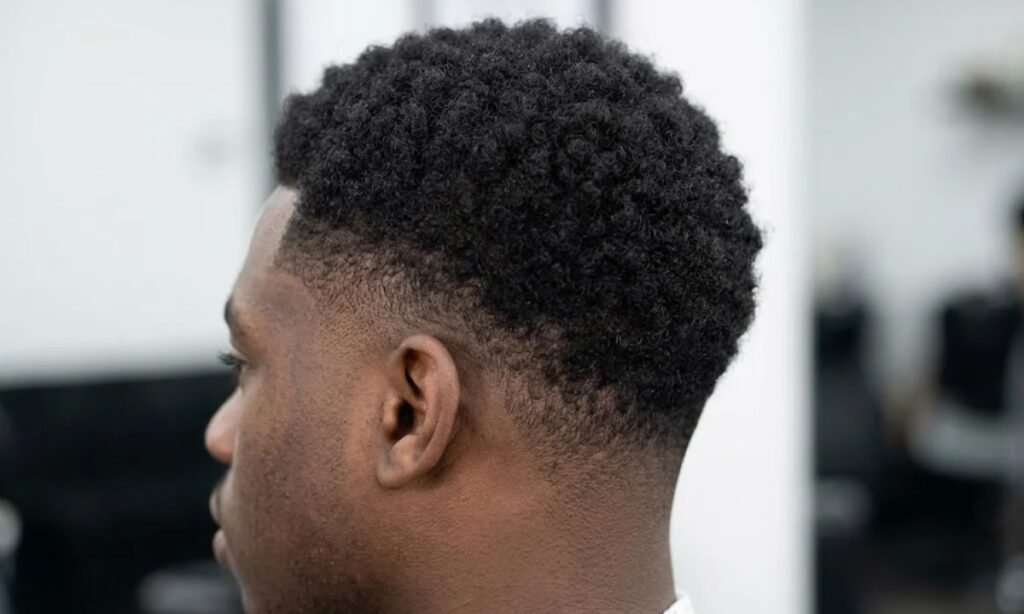
Dark hair makes everything look more dramatic. Even a gentle #1 guard can read like a shadow on dark hair, while light brown hair looks softer at the same length. That’s why two guys can ask for the same cut and see different results.
If your hair is very dark, ask for a slightly longer shadow fade base. A #1.5 guard often looks right where a #0.5 guard would look harsh. It prevents that painted-on look.
On the flip side, dark hair loves a skin fade if you want a punchy style. Just know it will show every flaw in the blend consistency. A careful barber matters even more here.
When does a bald finish create too much contrast with the top?

A bald or zero-gap finish looks great with a bold, textured top. It can look awkward with a very short buzz cut, because there’s nothing to balance. The head ends up looking like two separate haircuts.
It also clashes with very fine hair and thinning hair. The skin shows through the top, and the sides suddenly look too stark. A shadow fade keeps things unified.
A quick test works well. If your top is shorter than an inch, skip the bald finish. If it’s three inches or more, you can go as bare as you like.
Which hairline and edge details complete a mid drop fade?
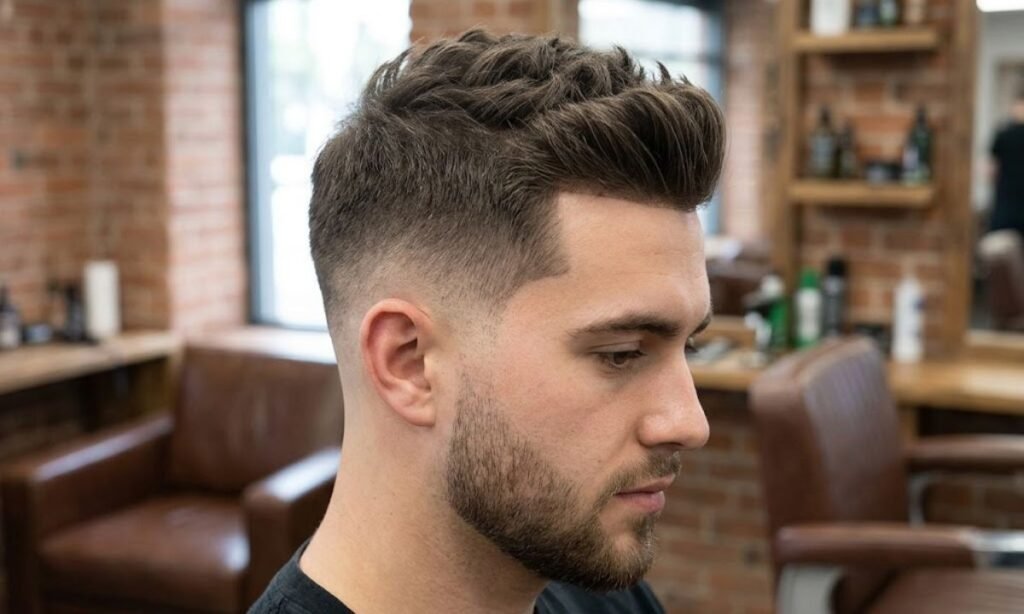
The fade gets the attention, but the edges finish the job. A great blend with a sloppy hairline looks like a half-painted wall. Four small details tie everything together.
These are the parts people forget to mention at the shop. They’re also the parts that make a haircut look expensive. Let’s walk through them one by one.
Should the temple area have a natural or sharp lineup?

A sharp lineup uses a T-blade trimmer to carve a crisp edge at the temples and forehead. It looks polished and works well with a skin finish. The downside is that it needs a fresh edge every week or two.
A natural hairline leaves the edge soft and slightly irregular. It looks relaxed, grows out well, and suits thinning hair or a receding hairline. It also keeps your face from looking too sharp or severe.
Pick based on lifestyle. If you like looking fresh at all times, go sharp. If you’d rather forget about it for a month, go natural.
How should the sideburns transition into the faded sides?
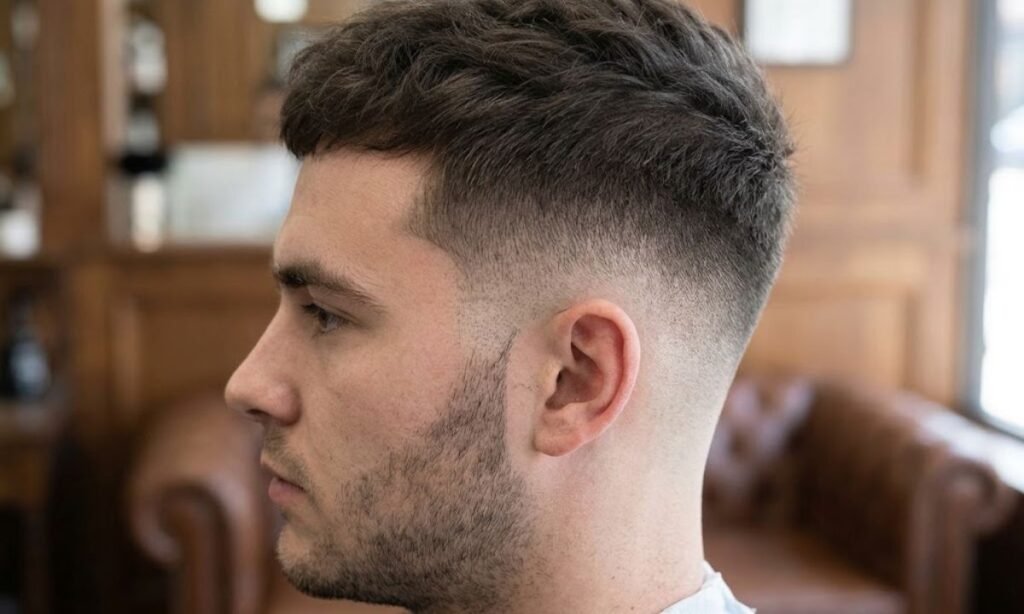
The sideburn blend should melt straight into the fade without a visible step. A disconnected sideburn, where the burn sits apart from the fade, can look intentional, but only if you ask for it. Otherwise it reads like a mistake.
Tell your barber how long you want the burns. Mid-ear length is the most common and the safest. Short burns suit a clean-cut look, while longer ones pair nicely with a beard fade.
What neckline finish complements the curved back?
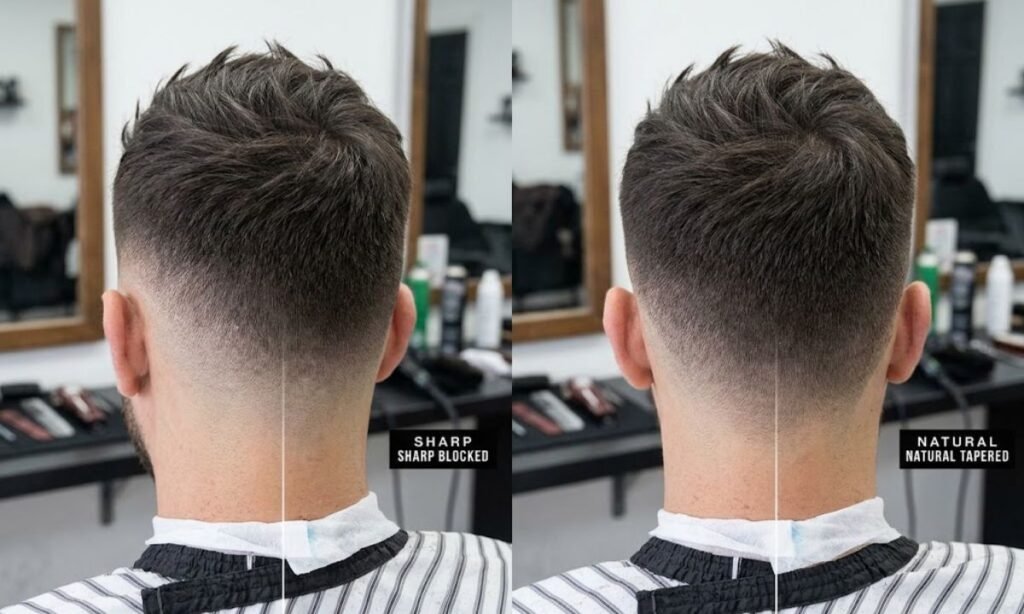
You have three main choices: rounded neckline, squared neckline, or a natural one. A rounded finish echoes the drop curve and looks balanced. A squared finish feels blunt and geometric.
A natural neckline fades into the nape without any hard cutoff. It looks best if your nape growth is even and tidy. It also hides regrowth much better after a few weeks.
For the mid drop fade, rounded or natural usually wins. The curve of the fade already flows toward the neck. A squared edge would fight it.
When should you keep the natural hairline instead of pushing it back?
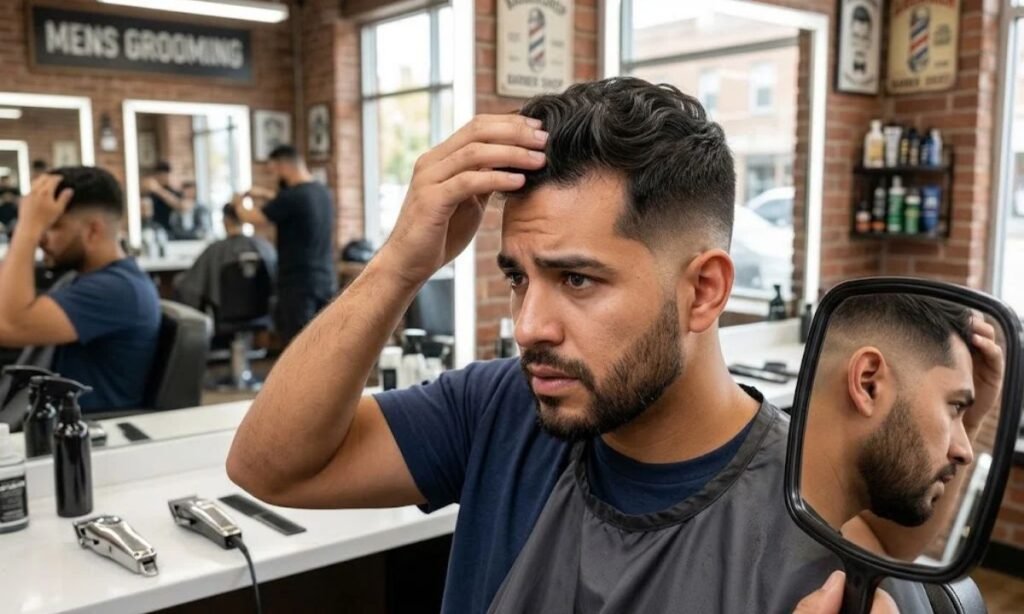
Pushing the hairline back makes the forehead look taller and the lineup sharper. That’s fine for some people, but not everyone. If your hair growth pattern is uneven, or you see early thinning, keep it natural.
A natural hairline also saves you from awkward regrowth. Straight lineups look sloppy within days when the hair grows irregularly. A soft edge simply fades into the next week.
When unsure, ask your barber to leave it natural this time. You can always sharpen it at the next visit. You can’t put hair back.
Guard numbers, skin finishes and top length

This is where most people feel lost. Guard numbers sound like a secret code, but they’re really just lengths. Here’s the cheat sheet.
The common clipper guard sizes from brands like Wahl USA and Andis follow the same pattern, though exact lengths can vary slightly by brand. A guide comb or clipper guard chart from your barber’s toolkit will confirm it. Use this table as a starting point, not a rule.
| Guard | Approx. length (mm) | Approx. length (inches) | Typical use in a mid drop fade |
|---|---|---|---|
| #0 or zero-gap | 0 to 0.5 | 0 | Skin finish at the base |
| #0.5 | 1.5 | 1/16 | Tight shadow base |
| #1 | 3 | 1/8 | Classic shadow fade base |
| #1.5 | 4.5 | 3/16 | Softer base for dark or thick hair |
| #2 | 6 | 1/4 | Mid transition |
| #3 | 10 | 3/8 | Upper sides blend |
| #4 | 13 | 1/2 | Top of the fade, very soft look |
For the skin finish, barbers use zero-gap blades, or a foil shaver for the last touch. The shadow base sits just above bare skin, usually with a #0.5 guard or #1 guard. The top cutting length is a separate choice, usually between half an inch and four inches.
Here’s a simple recipe many barbers use. Start bare or with a #0.5 at the nape. Blend upward through #1, #2, and #3, then connect to the top with a lever adjustment and a clipper-over-comb pass. That gives a smooth hair graduation without obvious steps.
Best mid drop fade styles by hair type and top style
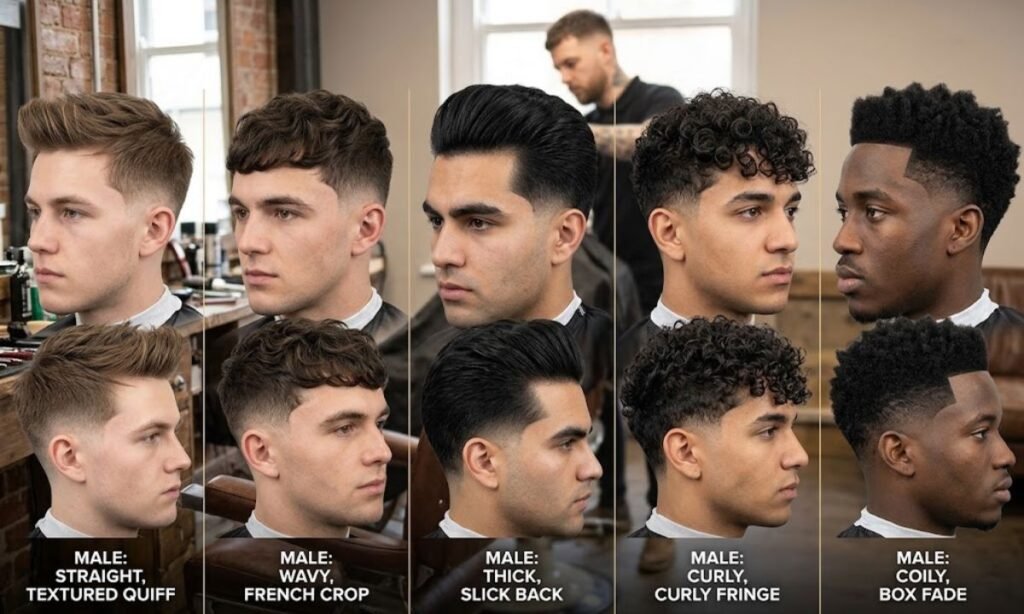
The fade is only half the haircut. The top decides the personality. Here’s how to match them for your hair.
Every combination below works because the mid drop fade styles keep the sides tidy and let the top breathe. Pick the one that matches your hair texture, hair density, and morning patience. You’ll find a few quick styling hints along the way.
Straight and wavy hair

Straight and wavy hair respond well to the mid drop fade for different hair types because the blend is easy to see. The key is giving the top enough natural volume to avoid looking flat. A little texture goes a long way.
Textured crop
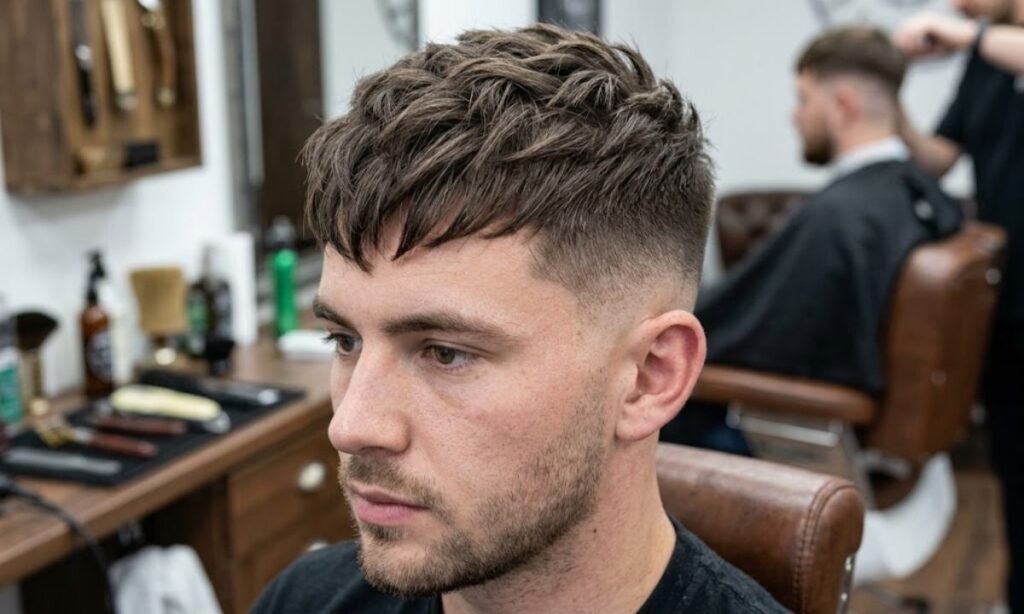
The textured crop is short, choppy, and forgiving. Cut the top to about one to two inches and add a piecey fringe in front. It looks effortless and suits fine hair, thick hair, and everything in between.
A pinch of matte paste or matte clay finishes it. Work it through dry hair with your fingertips and leave it a little messy. That’s the whole routine.
Quiff or side-swept top
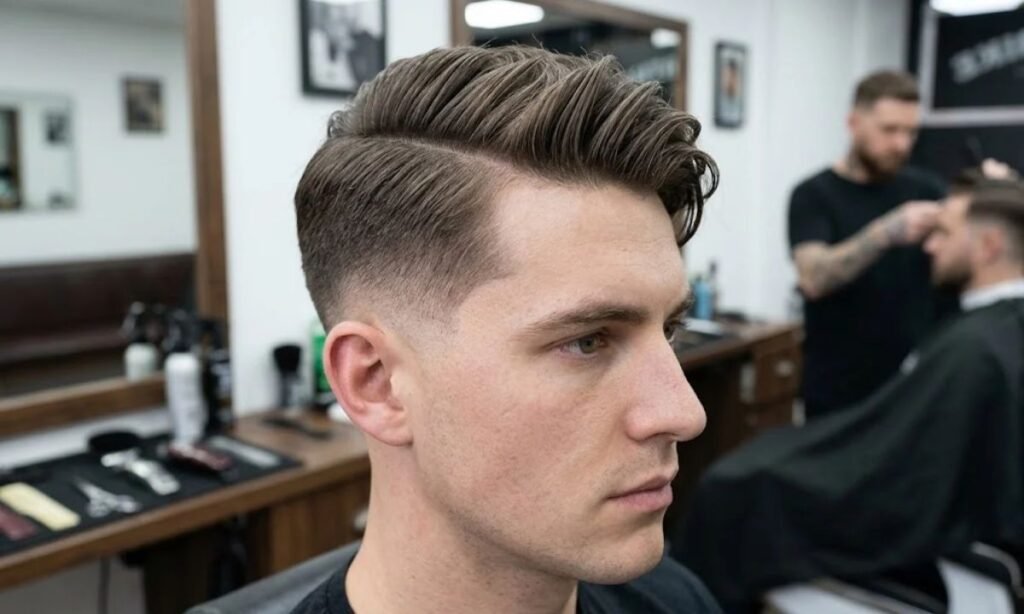
The quiff pushes length up and back from the front. The side-swept top combs across with a clean part. Both look sharp against the curved fade.
Use a blow dryer to lift the roots, then set the shape with volumizing powder or thickening spray. A high-shine pomade gives a classic finish, but go light. Too much looks greasy fast.
Curly and coily hair
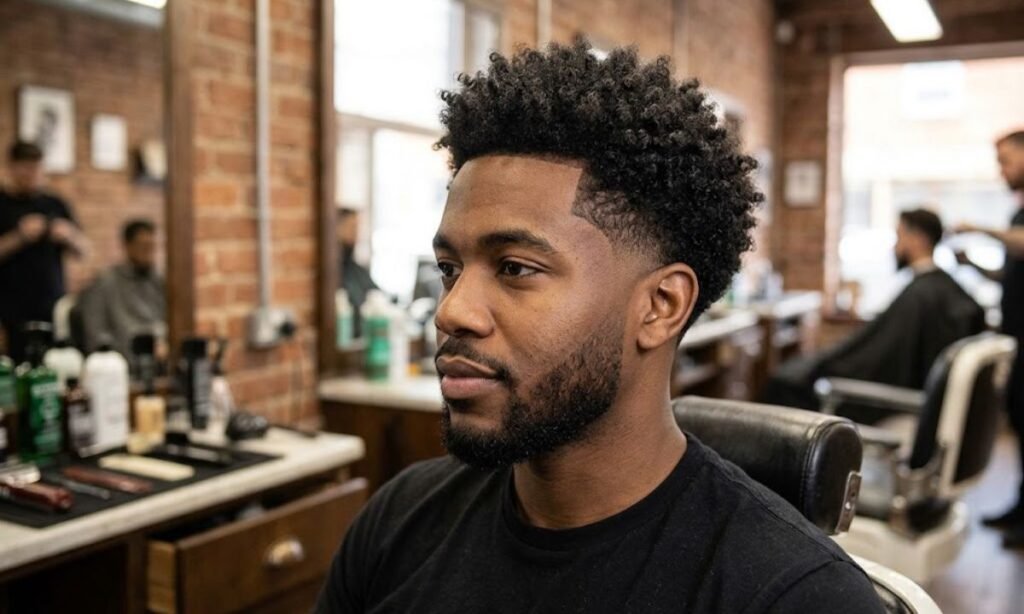
The mid drop fade curly hair combo is a favorite for good reason. Tight sides frame the curls, while the drop curve keeps the back neat. It works on loose curls, tight curls, and Afro-textured hair.
Defined curls
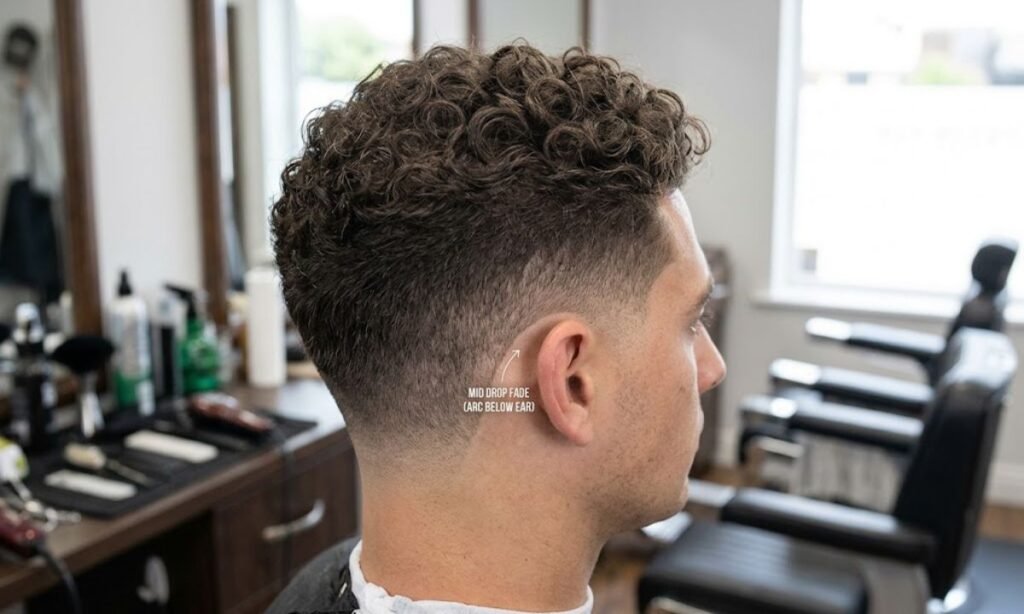
Let the curls do the talking. Keep the top two to four inches and use curl cream to control frizz and boost natural curls. A diffuser on low heat sets the shape.
Keep in mind that curl shrinkage can cut length by half or more once hair dries. Ask your barber to cut with the curls stretched slightly, so the finished top matches what you expect. Otherwise the cut will look shorter than planned.
Waves or sponge texture
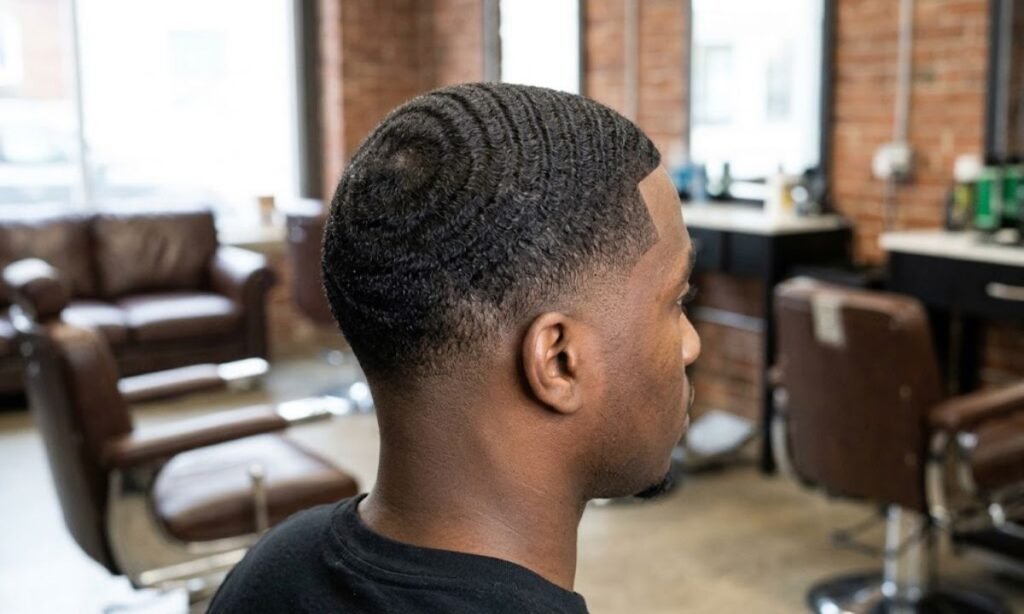
For 360 waves, the fade acts like a frame. A mid drop fade with waves keeps the growth direction clean and lets your brush work stand out. The fade just needs to stay sharp.
For sponge texture, a barber twists the top into tight coils with a sponge or fingers. It gives lots of volume, and the mid drop keeps the shape balanced. It’s a great option for Black men who want a modern, clean silhouette.
Very short tops
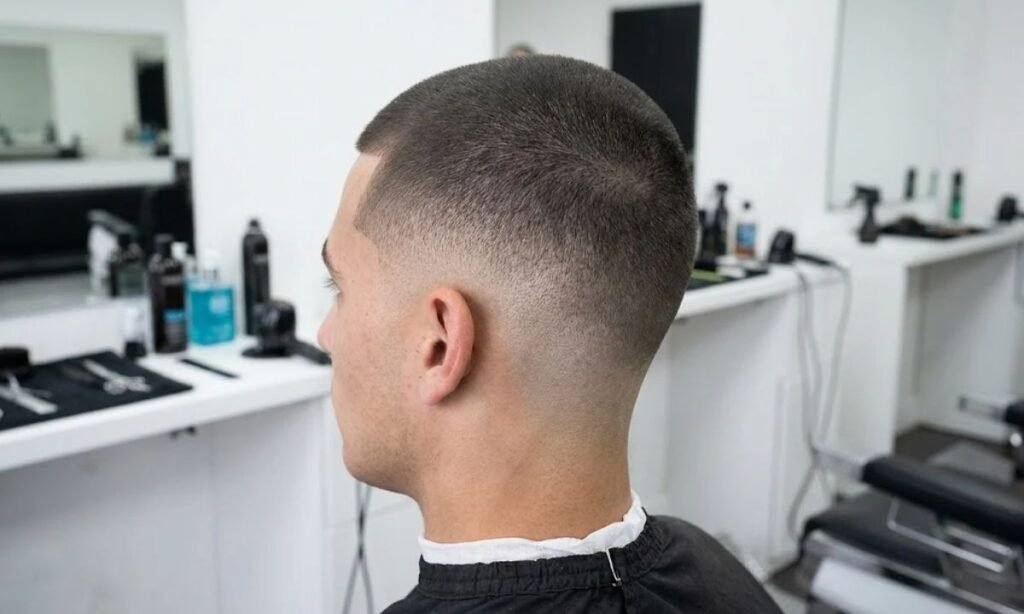
Short tops pair with a mid drop fade when you want something low effort. The fade does the work, and the top stays neat. Maintenance is easy, but the blend has to be smooth.
Buzz cut
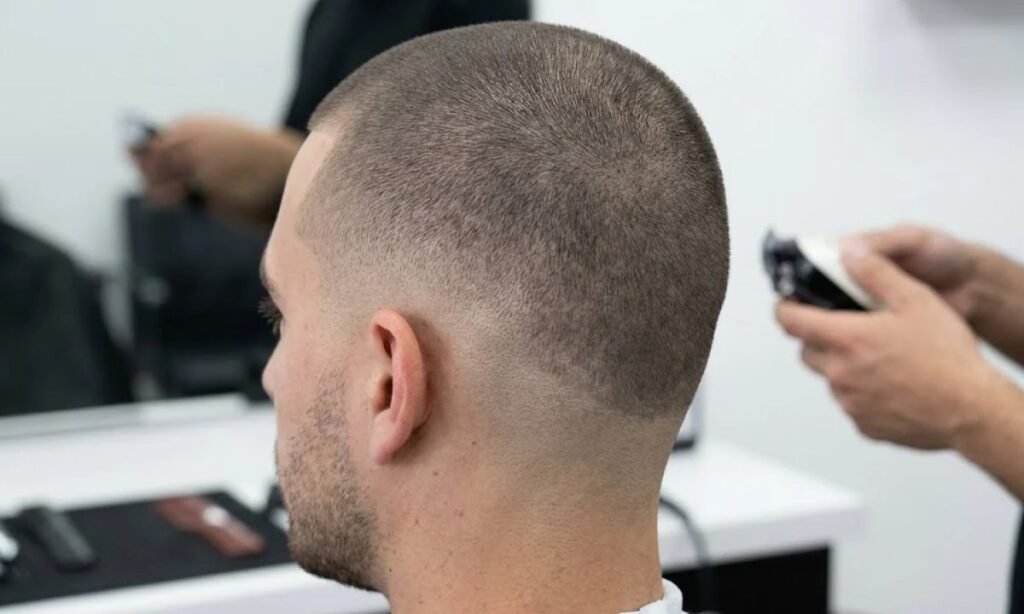
A buzz cut with a mid drop keeps everything uniform. Try a #3 or #4 on top and a #0.5 to #1 at the base. It looks athletic, clean, and quick to maintain.
It works well for thinning hair because it hides density gaps. Just avoid the bald finish, which can make the contrast too harsh. A soft shadow keeps the head looking even.
Short textured crop
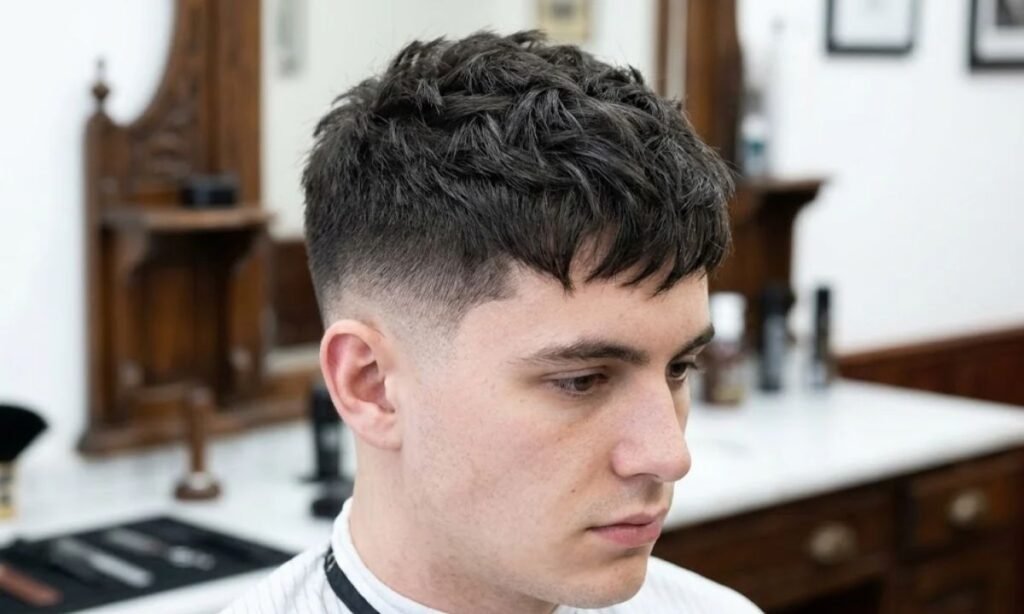
The short textured crop sits somewhere between a buzz and a full crop. Keep it around three-quarters of an inch to an inch and a half. It adds personality without any styling product.
A light sea salt spray gives grip. That’s usually all it needs. Think of it as a cut that gets out of the way.
Longer tops and facial hair
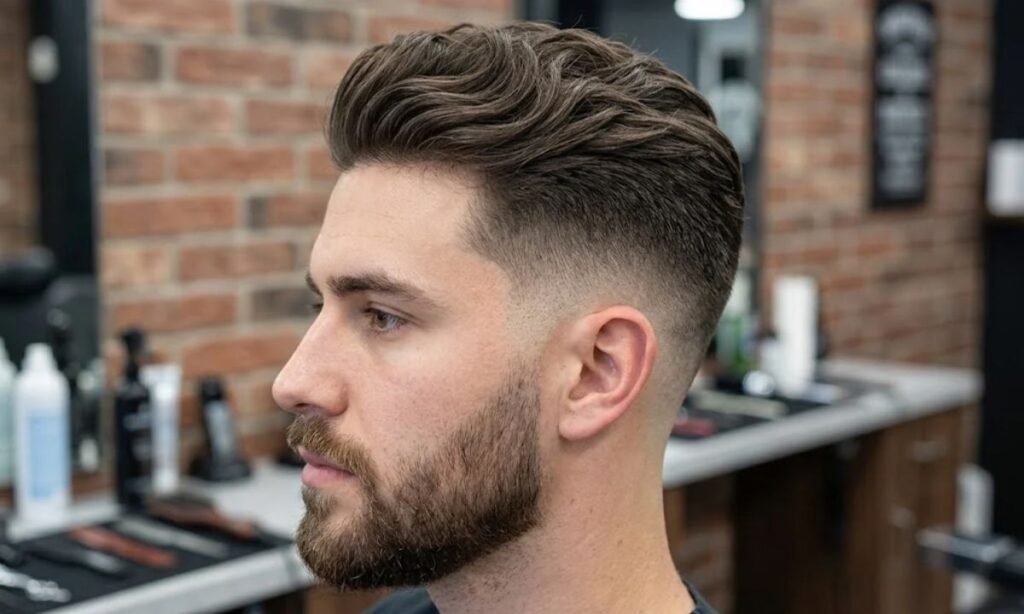
Longer tops give you more styling choices. The tight sides keep the volume from looking messy. That contrast is what makes this pairing so popular.
Middle part or longer textured top
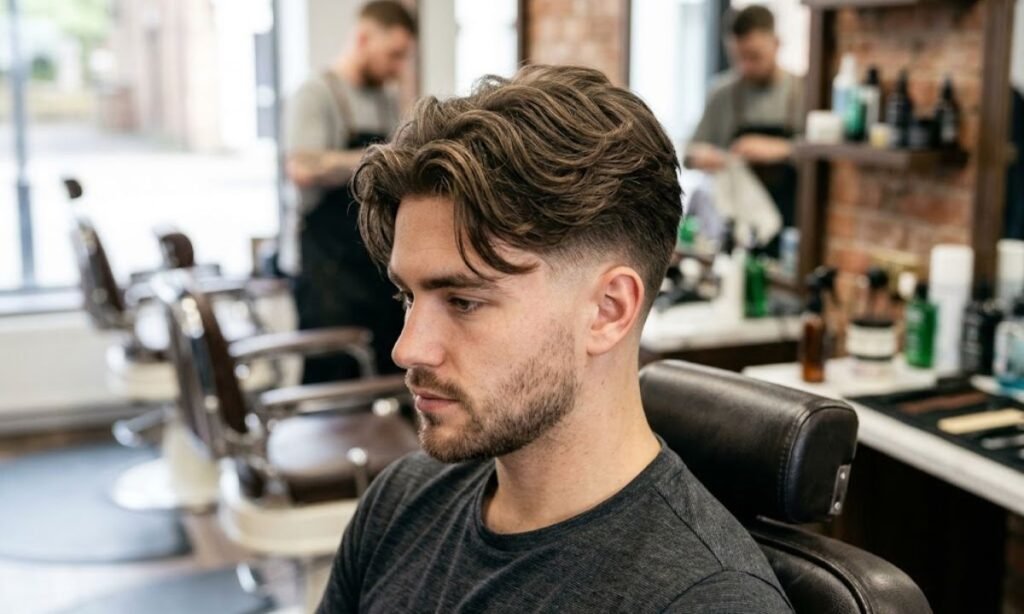
A middle part with a long textured top gives a relaxed, retro feel. A slick back gives something more polished. Both look great against a mid drop, as long as the top has enough weight.
You can also try the mid drop fade mullet if you like something bolder. Keep the back longer and the sides tight. Just remember it’s a statement, not a subtle look.
Mid drop fade with beard
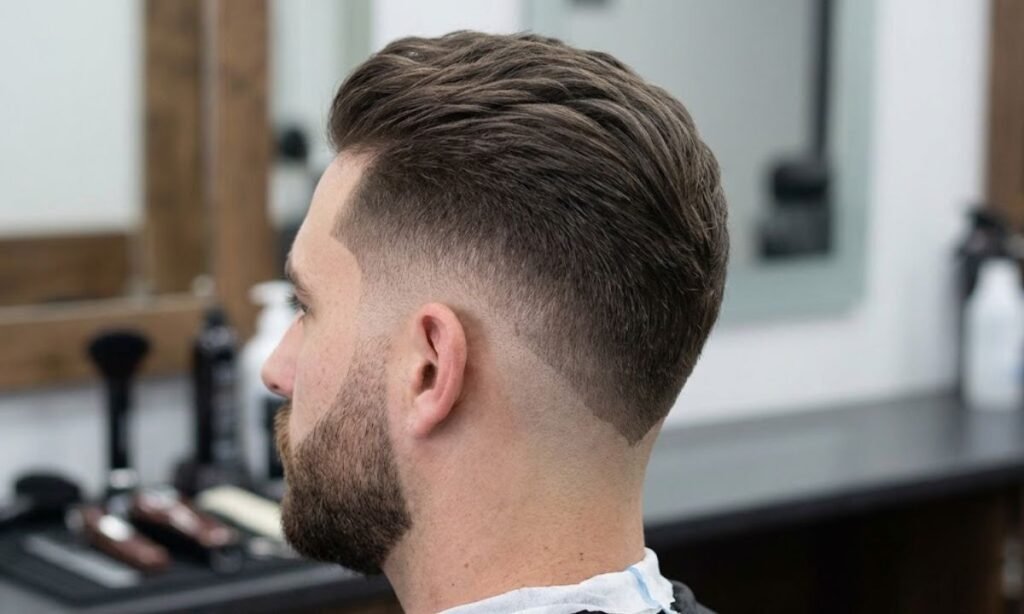
A mid drop fade with beard works best when the beard connects to the fade. The barber blends the sideburn into the beard, so there’s no hard break. That’s the classic beard fade.
A short boxed beard keeps things tidy, and a clean beard line-up sharpens the cheeks. Trim the neckline of the beard a finger above the Adam’s apple. It prevents that unfinished look.
What should a good mid drop fade look like from the side and back?
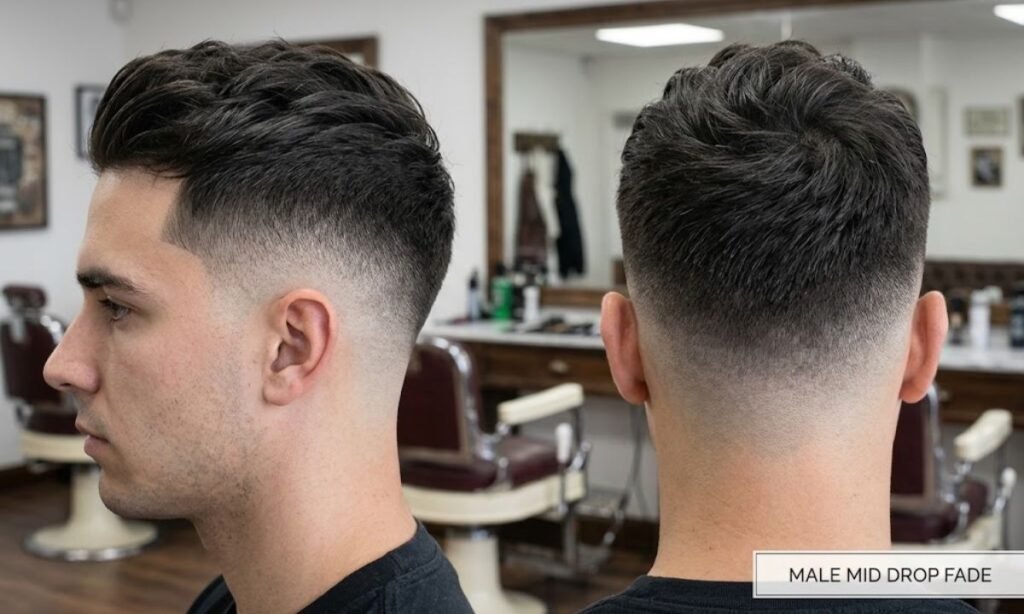
Most people check the front in the mirror and call it done. But the side profile and rear profile are where the haircut earns its reputation. That’s where flaws hide.
From the side, the fade line should curve gently from the temple, dip behind the ear, and flow toward the nape. The weight line should look soft, not stepped. The sideburn should melt into the sides without a gap.
From behind, check for symmetrical fade placement, but don’t panic over small differences. Heads have natural asymmetry, and good barbers adjust to it. You’re looking for even blend consistency, no visible bands, no choppy transition, and no sudden hard lines.
A hand mirror helps. Hold it behind you and compare it with the three-way mirror. If anything feels off, say so before you leave the chair.
How to ask your barber for a mid drop fade
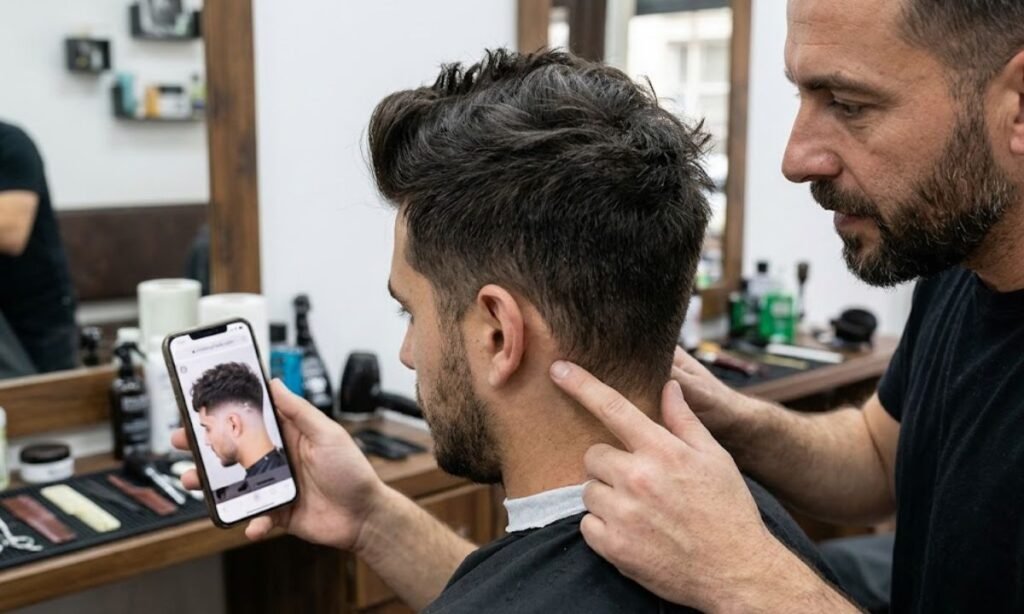
Let’s make this painless. Most haircut disasters happen because of a vague request. A clear barber brief removes guesswork.
Nobody wants to be “that customer,” but good barbers actually like specific barber instructions. It saves them time and helps them deliver what you want. Here’s a simple structure.
Use this five-part barber brief
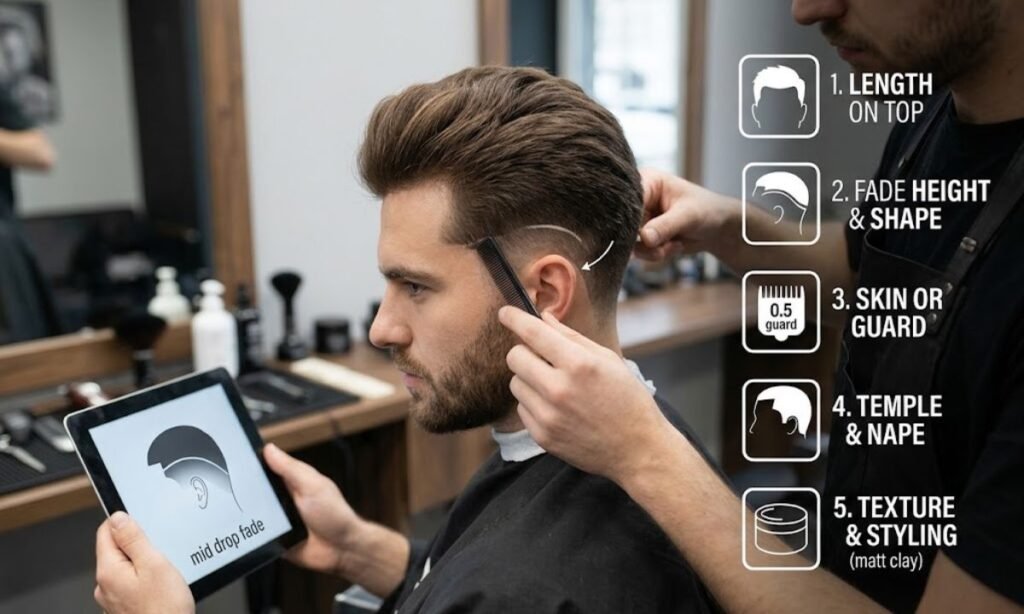
The five parts cover everything a barber needs. Read them off your phone if it helps. There’s no shame in a cheat sheet.
- Fade type and height: “Mid drop fade, starting around the temple.”
- Finish: “Skin fade” or “shadow fade with a #1 guard at the base.”
- Top length and style: “About three inches, textured, with a side part.”
- Hairline and edges: “Natural neckline, soft temples, sideburns blended.”
- Beard or extras: “Blend into my beard” or “leave the beard as is.”
Sample request
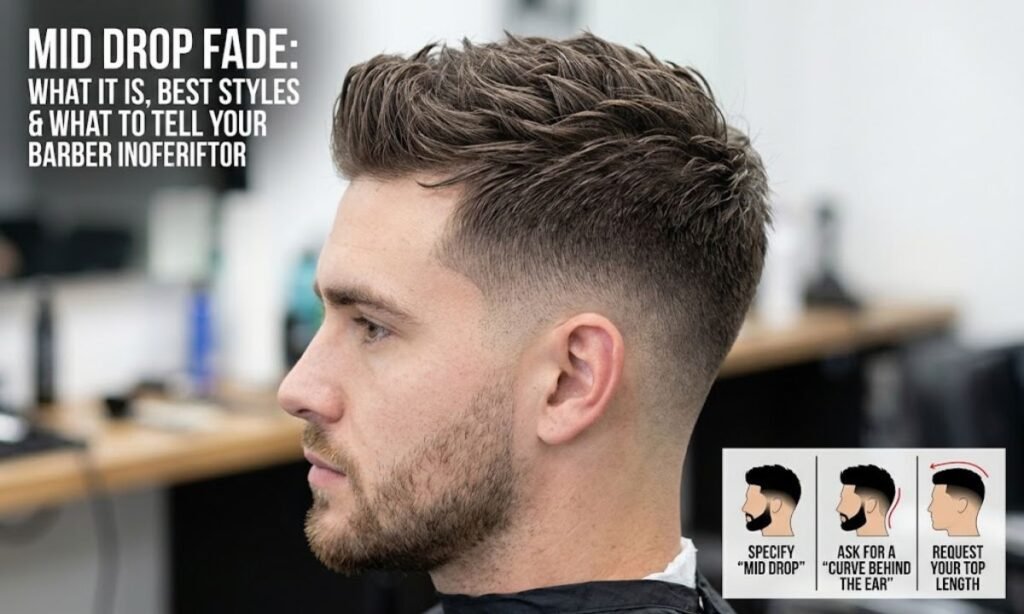
Here’s a ready-to-use script. “I’d like a mid drop fade. Start the fade at my temple and curve it behind my ear toward the nape. Use a skin finish at the bottom, blend up through a #1 and #2. Leave about three inches on top, textured, with a side sweep. Keep a natural neckline, and blend my sideburns into the fade.”
That’s about thirty seconds of talking. It saves you thirty days of regret. Adjust the numbers to fit your hair.
Bring a side and back photo, not just a front view

Front photos hide the most important part. A reference photograph from the side view and rear view shows exactly where the curve sits. That’s the detail that gets lost in translation.
Save two or three barber reference images, ideally of hair like yours. A photo of straight hair won’t help much if you have tight curls. Also tell your barber what you like and dislike about each picture.
If you can’t find a good one, take a photo of your current cut from the sides and back. Circle what you’d change. It makes barber consultation much faster.
How to style a mid drop fade day to day
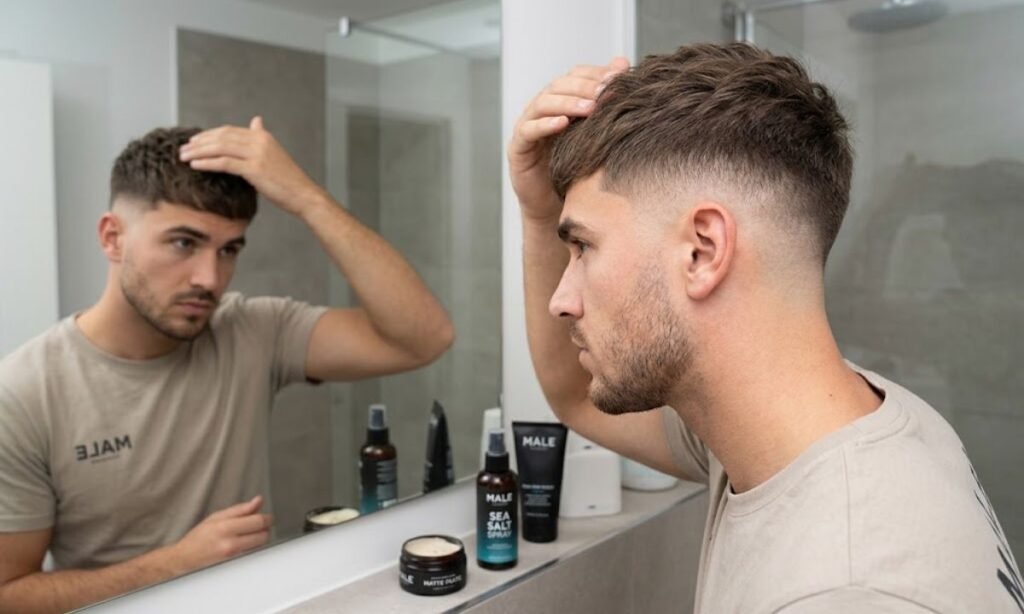
Styling shouldn’t take longer than a cup of coffee. The fade handles the sides, so you only need to manage the top. Follow this simple routine.
- Towel-dry and apply a lightweight styling product.
- Blow-dry with your fingers or a brush, lifting at the roots.
- Finish with matte paste, matte clay, or a pinch of styling powder.
- Add texture with a spritz of sea salt spray if the hair feels flat.
- Curly types: use curl cream, scrunch, and let it air-dry or diffuse.
Match the product to your goal. Matte products give a natural, dry look, while high-shine pomade suits slick backs and clean parts. When in doubt, use less than you think you need.
Hair moisture matters too. Dry hair looks frizzy and lifeless, while well-conditioned hair holds shape. A basic daily hair styling routine with a gentle shampoo and conditioner keeps everything in check.
How often does a mid drop fade need maintenance?
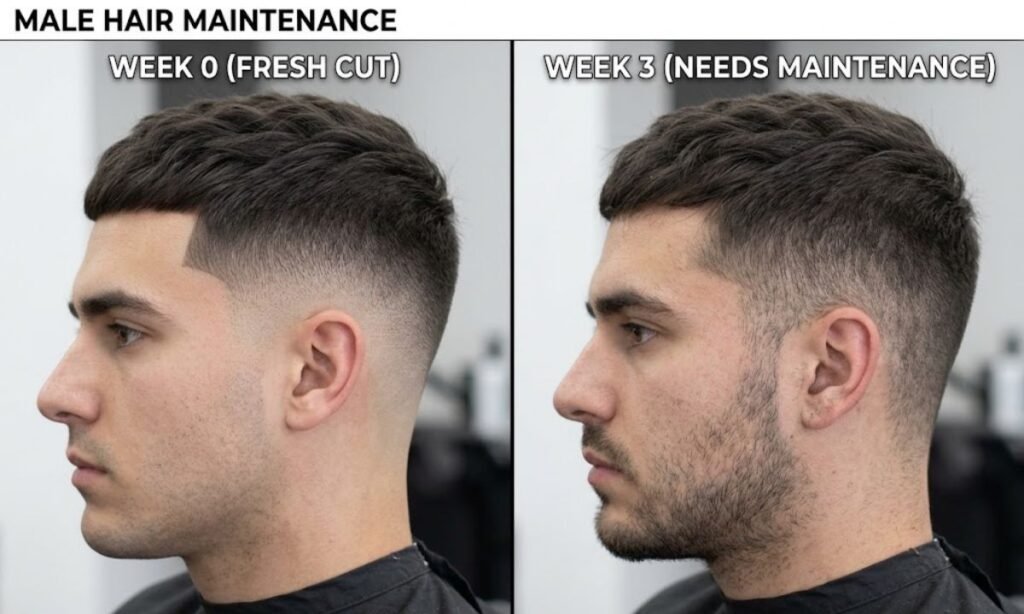
Hair grows about half an inch a month, according to the American Academy of Dermatology (AAD). That works out to roughly 0.35 millimeters per day, or about 1.25 centimeters per month. Small numbers, big impact on a fade.
Because a fade depends on tight lengths, even a few millimeters of regrowth are visible. That’s why fade sharpness fades fast. Most people notice it at around the second week.
Here’s a simple schedule.
- Two-week refresh: best for a skin fade with a sharp lineup.
- Three-week refresh: works for most people with a shadow fade.
- Four-week refresh: fine for a soft blend or a natural hairline.
Pick your window based on how fussy you are. A tighter schedule keeps the haircut longevity high, while a longer one saves money. Some barbers offer quick skin fade touch-up visits that cost less than a full cut.
Skin fade vs shadow fade grow-out
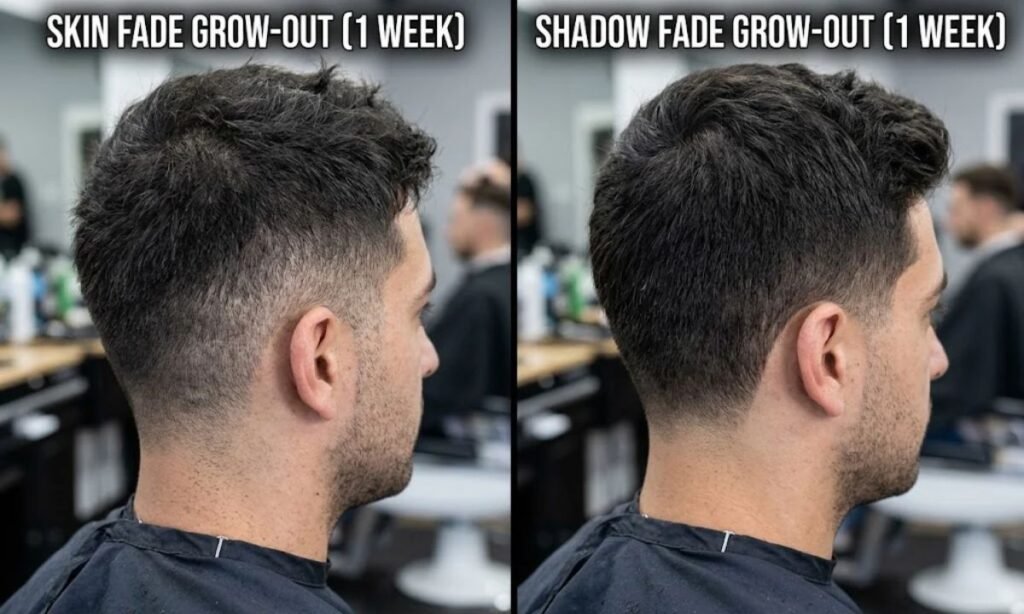
A skin fade grows out fast, and you’ll see the fuzz at the base within about ten days. The lines blur, and the bare skin disappears. It’s the highest maintenance option.
A shadow fade grows out much more gently. Because the base already has a little length, the fade grow-out looks like a natural progression. That’s why people who dislike frequent visits prefer it.
If you’re in the growing-out phase, ask your barber for a clean-up without cutting the top. They can tighten the neckline and sideburns while you let the length build. It keeps things neat while you wait.
Common mid drop fade mistakes and what can be fixed
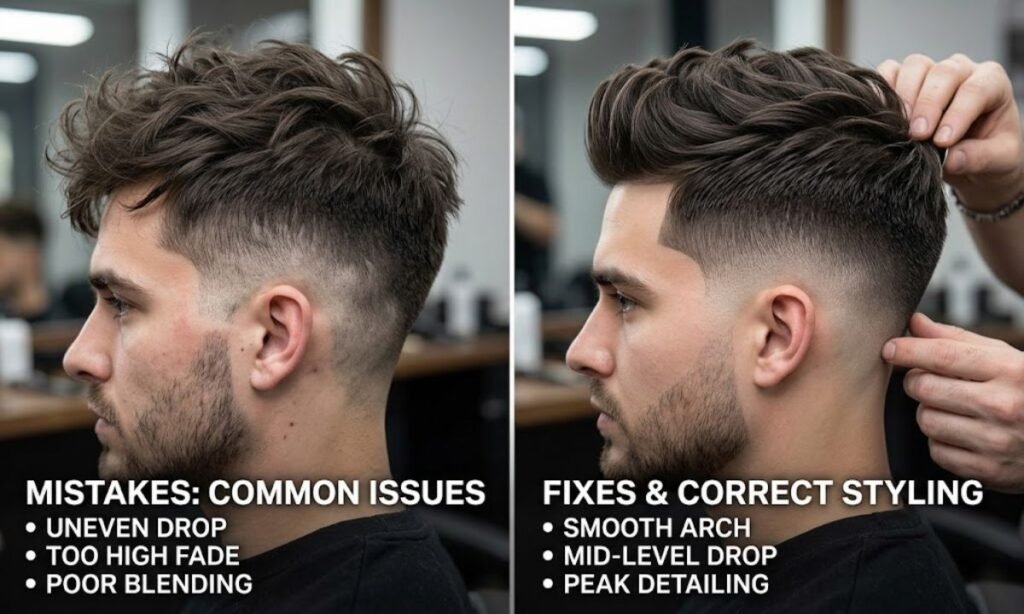
Even great barbers have off days. Sometimes the issue is miscommunication, sometimes it’s a rushed blend. Here are the usual suspects and what you can do.
- The fade starts too high. Ask the barber to blend it back down with a longer guard. Or just wait two weeks.
- Dark patches in the blend. A quick blending pass with a clipper-over-comb often fixes it.
- Visible bands or hard lines. The barber can soften them using a lever adjustment.
- Uneven sides. Small differences are normal, but major ones need a haircut correction.
- Too much contrast. Switch to a shadow base next time and keep the top slightly longer.
- The neckline looks squared and blunt. Ask for a rounded or natural finish.
Some mistakes aren’t fixable on the spot. If too much hair is gone, the only cure is time. That’s why a conservative guideline on your first visit is smart.
If you’re not happy, speak up politely and early. Barbers would rather fix it before you leave than hear about it online. And if something truly isn’t right, try a second shop for a professional clipper work fix.
You can also checkout this article as well: Low Drop Fade: Styles, Hair Types, Barber Guide & Upkeep
Mid drop fade frequently asked question
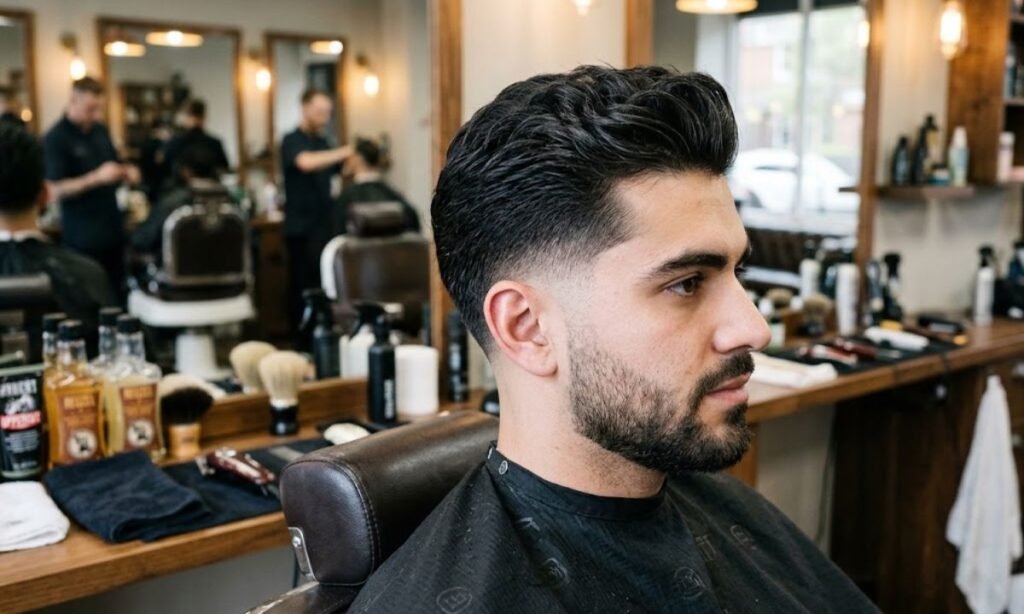
Here are the questions people ask most. We’ve kept the answers short and direct. If you have another one, drop it below.
What is a mid drop fade?
A mid drop fade starts at mid height on the sides and curves down behind the ear toward the nape. The drop gives it a rounded, contoured look. It’s more flowing than a straight mid fade.
Is a mid drop fade good for thin or fine hair?
Yes, usually. Choose a shadow finish instead of bare skin, and keep the top slightly longer. That hides scalp visibility and keeps the cut balanced.
Can I get a mid drop fade with curly or coily hair?
Absolutely. It looks great on defined curls, sponge texture, and waves. Just ask your barber to account for curl shrinkage on the top.
What guard number should I ask for?
Most people start with a #1 at the base, then blend up through #2 and #3. For a skin finish, ask for a zero-gap or foil shaver finish. Your barber can tweak this based on your hair.
How long does a mid drop fade last?
A skin version looks sharp for about ten days to two weeks. A shadow version holds up closer to three or four weeks. It depends on your hair growth rate and how picky you are.
Is a mid drop fade the same as a taper?
Not quite. A taper fade haircut shortens hair gradually, usually around the edges and neckline only. A fade moves all the way down to skin or very short hair, and the drop version curves behind the ear.
Can I wear it to work?
Yes. Choose a soft blend, a natural neckline, and a clean, side-swept top. It looks sharp in almost any office.
Final Thoughts
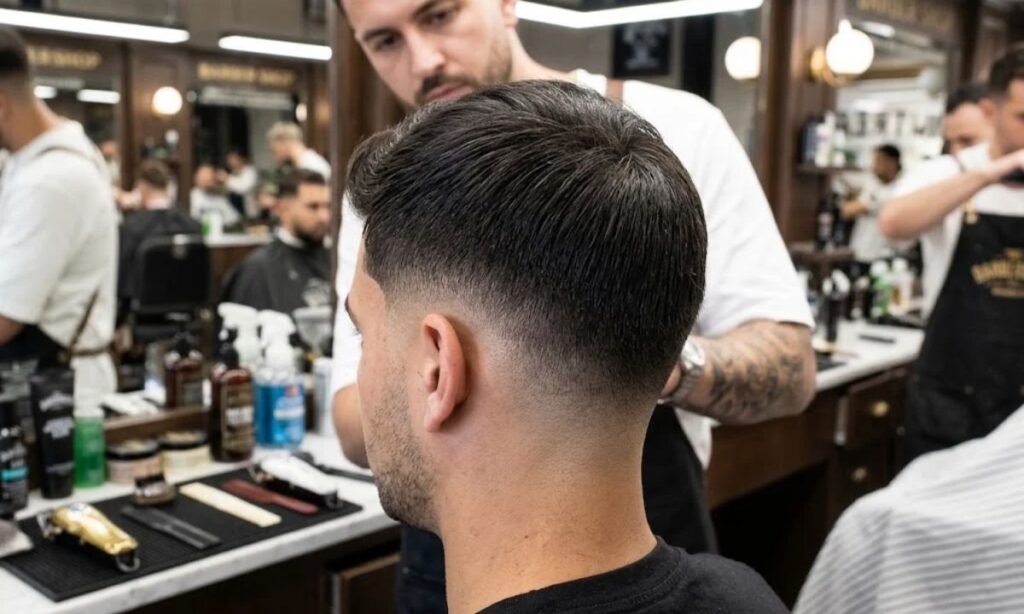
A mid drop fade isn’t complicated once you break it down. It’s a mid height fade with a curve, built around your head shape and hair type. The magic is in the details, like the blend, the finish, and the hairline.
Next time you sit down, bring side and back photos. Use the five-part brief and ask for a conservative start. That alone puts you ahead of most clients.
Now it’s your turn. Which version are you trying first, skin or shadow? Share your thoughts in the comments, send this guide to a friend who needs it, and tell us how the cut turned out.

I’m Michael Charles, the creator of MegaCrazes—your source for fresh hairstyles, sharp haircuts, and simple hair-care inspiration. Find your style. Own your look.