

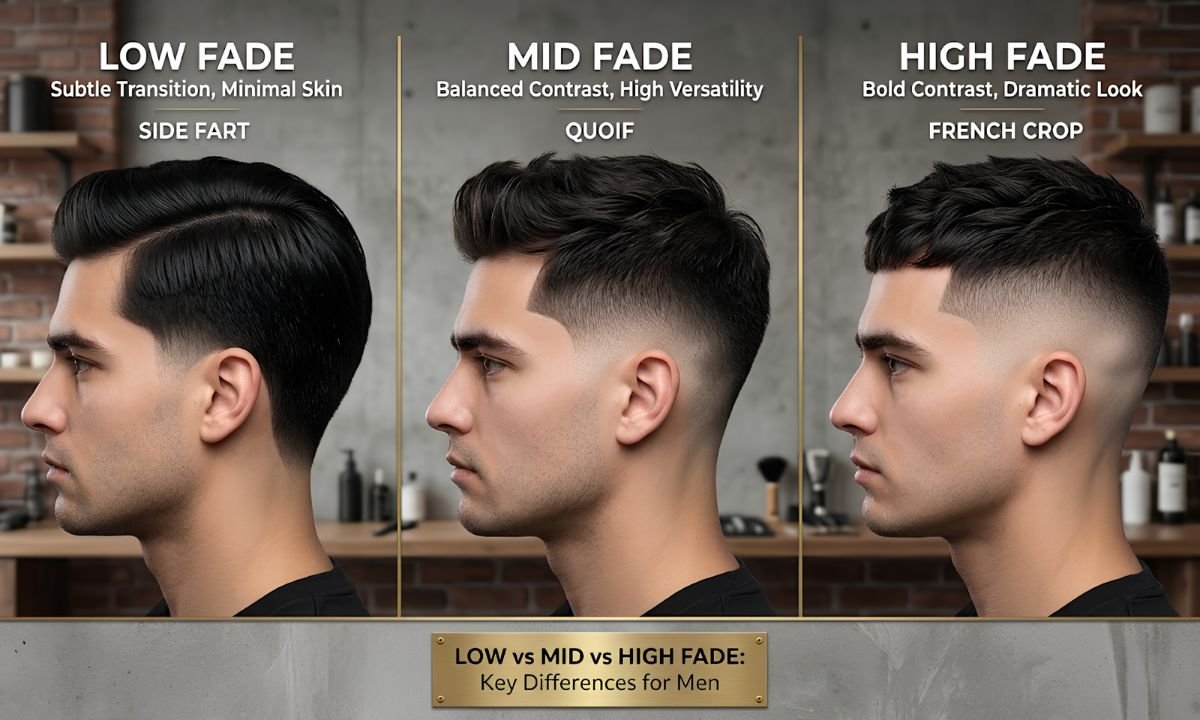
A low fade starts just above the ear and keeps most of your side hair. A mid fade starts around the temple and removes more length. A high fade starts near the top of the head and gives the sharpest fade contrast.
So the real difference is fade placement, meaning where the blend begins. Everything else follows from that one choice.
You’re probably here because a barber asked, ‘Low, mid, or high?’ and you froze. Maybe you walked out once with a cut that looked nothing like your phone photo. This guide helps you avoid that.
Quick Answer
Pick a low fade if you want a soft, safe look that grows out gracefully. Pick a mid fade if you want a balanced cut that suits almost every face shape. Pick a high fade if you want a bold, clean, high contrast finish.
If you can’t decide, go mid. It’s the most forgiving option and the easiest one to adjust next visit.
Here’s the short version by situation:
- Office or conservative workplace: low fade
- Not sure what you want: mid fade
- Strong statement, sharp lines: high fade
- Round face that needs length on top: mid or high fade
- Long face that needs more width on the sides: low fade
- Thinning hair on top: low or mid fade with a short textured crop
What is the difference between a low, mid, and high fade?
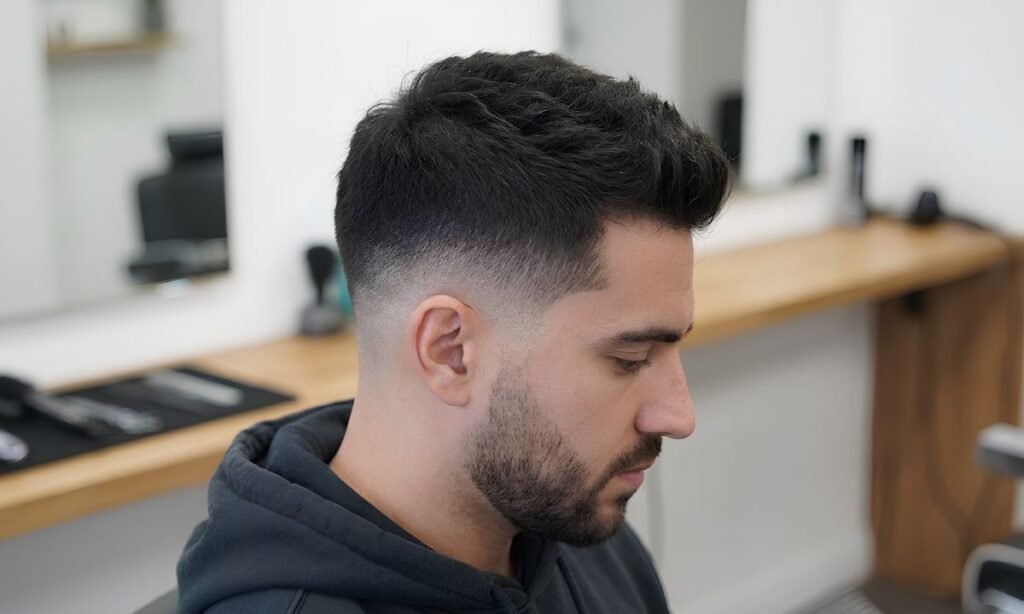
All three are fade haircuts. The hair gets shorter as it moves down toward the neck and ears, and the blend looks smooth instead of stepped. What changes is the height where that fade transition begins.
Think of it like a dimmer switch on a wall light. A low fade dims the light only near the floor. A high fade dims it almost up to the ceiling.
That height controls how much side coverage you keep and how much of your scalp shows. It also controls how dramatic the whole cut looks from across the room.
Where does each fade start?
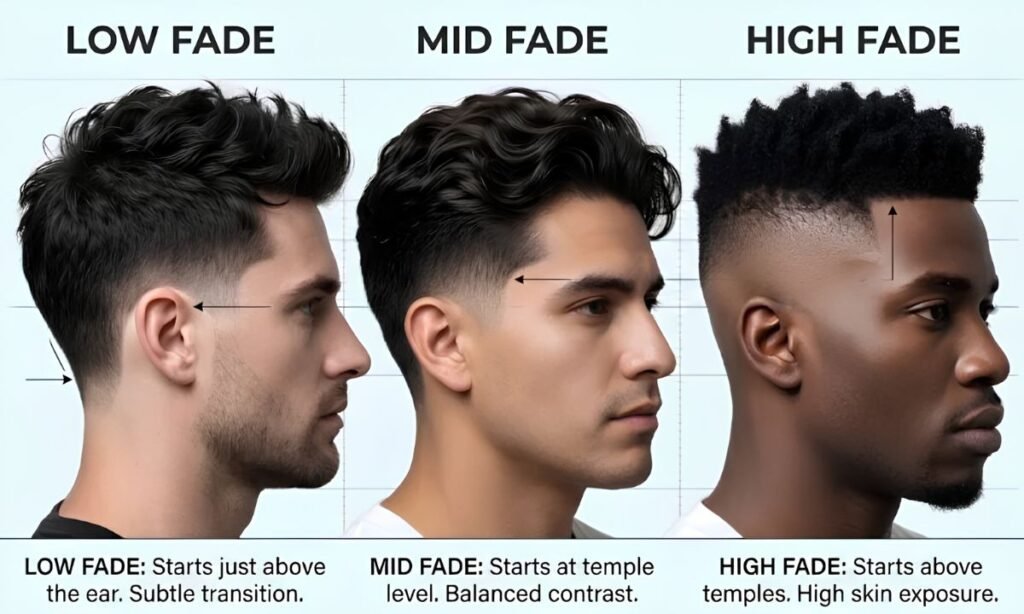
The low fade starting point sits roughly an inch or so above the ear, tracing the natural curve around the ear and down to the neckline. The mid fade starting point sits around temple level, usually in line with the outer corner of your eyebrow. The high fade starting point sits higher, near the parietal ridge, which is the spot where your head starts curving inward toward the top.
If you want to find your own, run your fingers up the side of your head. You’ll feel the head turn from vertical to rounded. That bend is your parietal ridge, and it’s where high fades tend to begin.
Barbers don’t measure with a ruler, so expect a little variation. Two good barbers might place a mid fade half an inch apart and both be right.
Does fade height determine how short it gets?
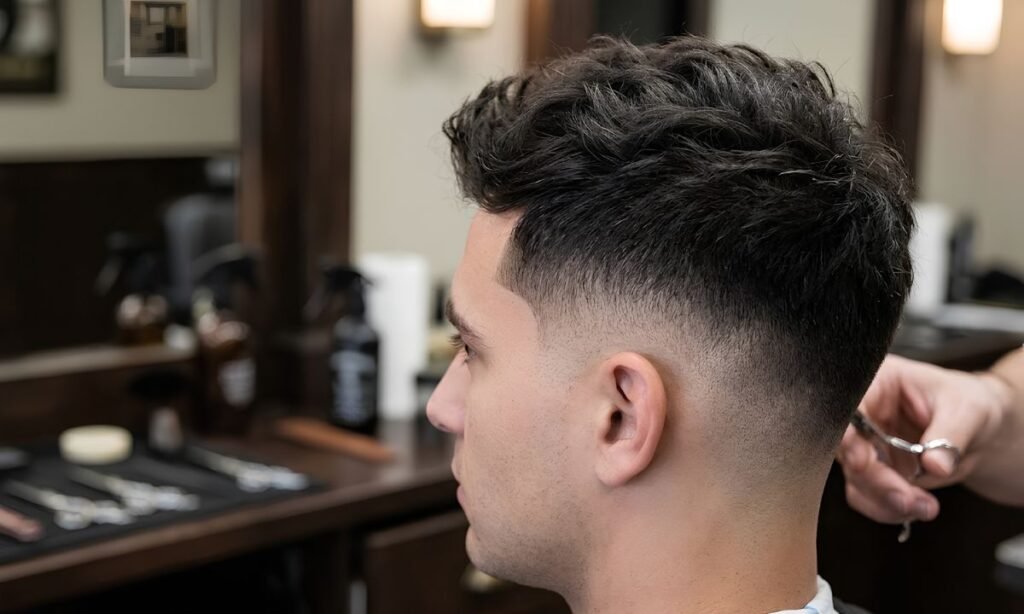
No, and this trips up a lot of people. Fade height tells you where the blend starts, while hair length at the shortest point depends on the clipper guard or finish your barber chooses. That’s the difference between fade height and fade length.
You could get a high fade that ends at a soft shadow, or a low fade that goes all the way to bare skin. The two choices are separate.
So when you describe your cut, give two details. Say the height first, then say how close to the skin you want the bottom to go.
What is a low fade?

A low fade begins low on the sides and back, close to the ear and the nape. The fade line hugs the natural shape of your head and leaves plenty of hair above it. Most of your side fullness stays intact.
This is the gentlest of the three. It looks tidy without shouting, which is why it’s a favorite for people who want a clean cut that still looks like a normal haircut.
It also grows out well. After four weeks, a low fade just looks like a slightly longer haircut, not an overgrown mess. If you’re new to fades, a low skin fade or a low shadow fade is a smart way to test the waters.
What is a mid fade?
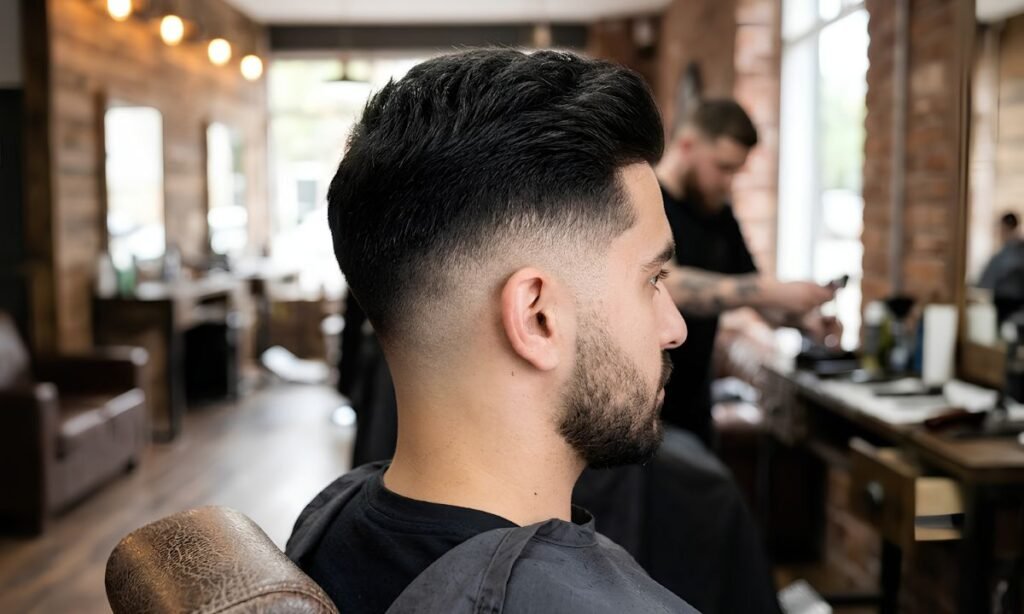
A mid fade starts around the temple and wraps back at a steady level. It removes more length than a low fade, but it leaves enough on the upper sides to keep your head shape natural. You get clean sides and a clear shape without going extreme.
The mid fade works like the middle seat on a long flight. It isn’t flashy, but nobody’s ever unhappy with it. It pairs with a side part, a quiff, a textured fringe, and almost any haircut style you can name.
If your barber says ‘I’ll just do a mid,’ you’ll probably be fine. Just check the finish. A mid skin fade looks very different from a mid fade that stops at a number 2.
What is a high fade?
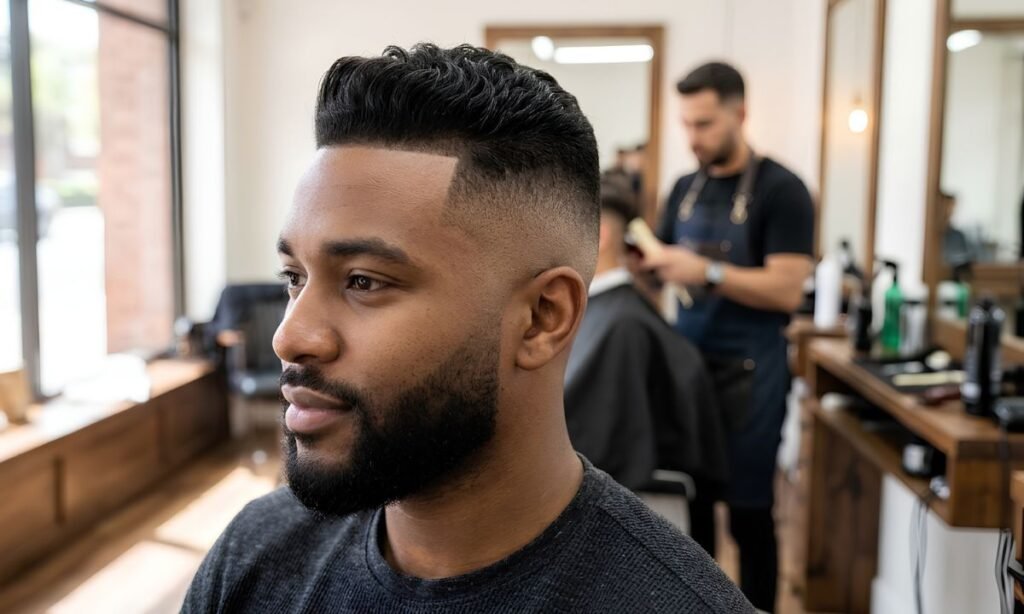
A high fade starts up high, near the parietal ridge or just above the temple. The sides and back get very short very fast, and the hair on top looks longer by comparison. This creates the strongest fade contrast of the three.
It’s a sharp, athletic look. You’ll see it on military style cuts, on high and tight variations, and on modern looks where a pompadour or curly top sits on top of nearly bare sides.
The trade-off is upkeep. Because the sides are so short, even a little hair growth shows quickly, so you’ll need touch-ups more often than with a low or mid fade.
Low vs mid vs high fade: side-by-side comparison
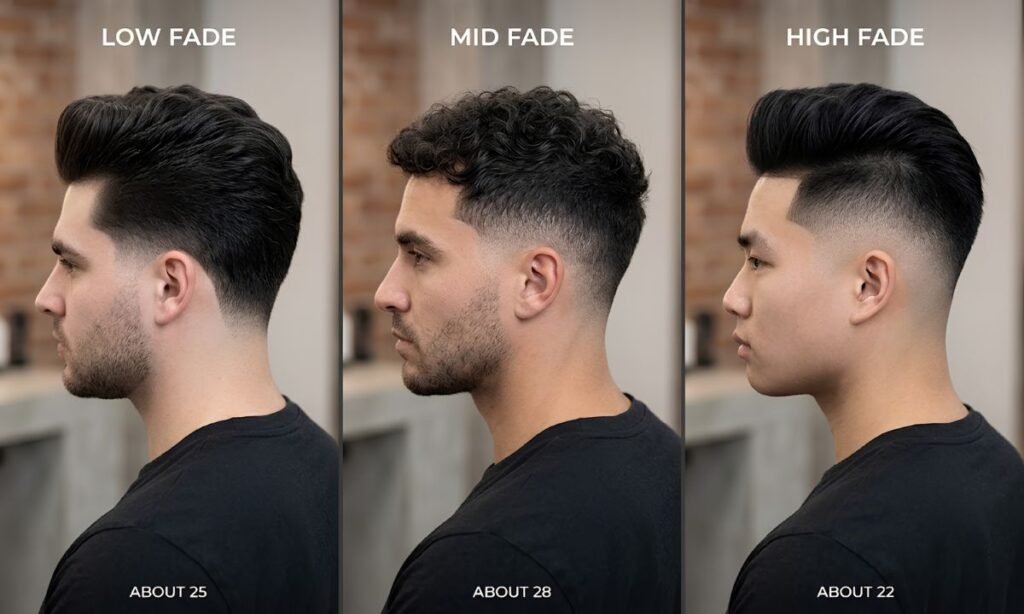
Seeing the details in one place helps. Here’s how the three heights stack up against each other.
| Feature | Low fade | Mid fade | High fade |
|---|---|---|---|
| Starting point | Just above the ear | Around the temple | Near the parietal ridge |
| Side fullness kept | Most | Moderate | Least |
| Contrast | Soft | Medium | Strong |
| Best for | Beginners, office looks | Almost everyone | Bold, sharp styles |
| Grow-out | Slow and gentle | Moderate | Quick and noticeable |
| Touch-up time | 3 to 4 weeks | 2 to 3 weeks | 2 weeks |
The low fade vs mid fade question mostly comes down to how much contrast you want. The mid fade vs high fade question is about how much scalp you’re ready to show.
And low fade vs high fade? That’s basically subtle versus statement. Neither is better, so choose the one that fits your face, your hair, and your day to day life.
What are the different fade finishes and blending techniques?
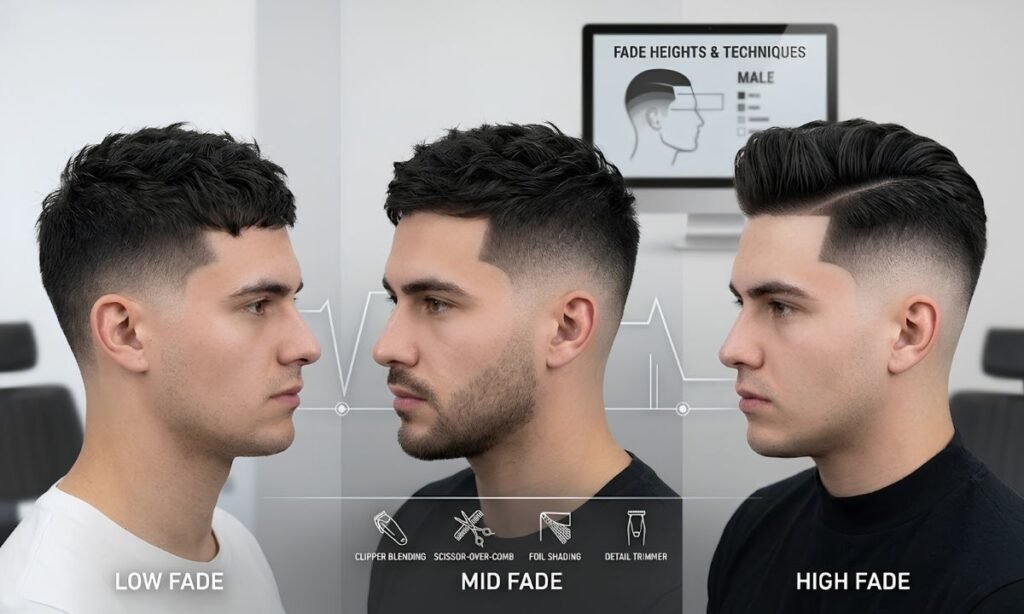
Height is only half the story. The fade finish decides how the bottom of your cut looks, and the fade blend decides how smoothly the length climbs from short to long.
Two people can both ask for a mid fade and end up with totally different results. One gets bare skin at the bottom, the other gets a soft shadow. That’s why finishes matter.
Let’s break down the three terms barbers use most.
What is the difference between a skin fade and a shadow fade?

A skin fade takes the hair down to bare skin at the bottom, often with a foil shaver or a zero-gapped trimmer. It gives a crisp, high definition look with a strong contrast. You’ll hear it called a low skin fade, mid skin fade, or high skin fade depending on height.
A shadow fade stops at a faint layer of visible stubble, so the skin looks shaded instead of bare. The shadow finish feels softer and hides regrowth better. It’s a good pick if you don’t love the shiny scalp look.
Here’s a quick way to remember it. Skin fade equals sharp and clean. Shadow fade equals soft and lived in.
How does a taper blend differ from a full fade?

A taper fade shortens the hair only around the sideburns and the neckline. The rest of the sides stay at a classic length. It’s the most conservative way to get a clean edge.
A full fade climbs much higher and shows far more skin or stubble. So the taper vs fade debate is really about how far up the head you want the shortening to go.
If you wear a suit most days, a taper is easy to live with. If you want people to notice your haircut, a full fade does the talking.
What is the difference between a bald fade and a regular fade?
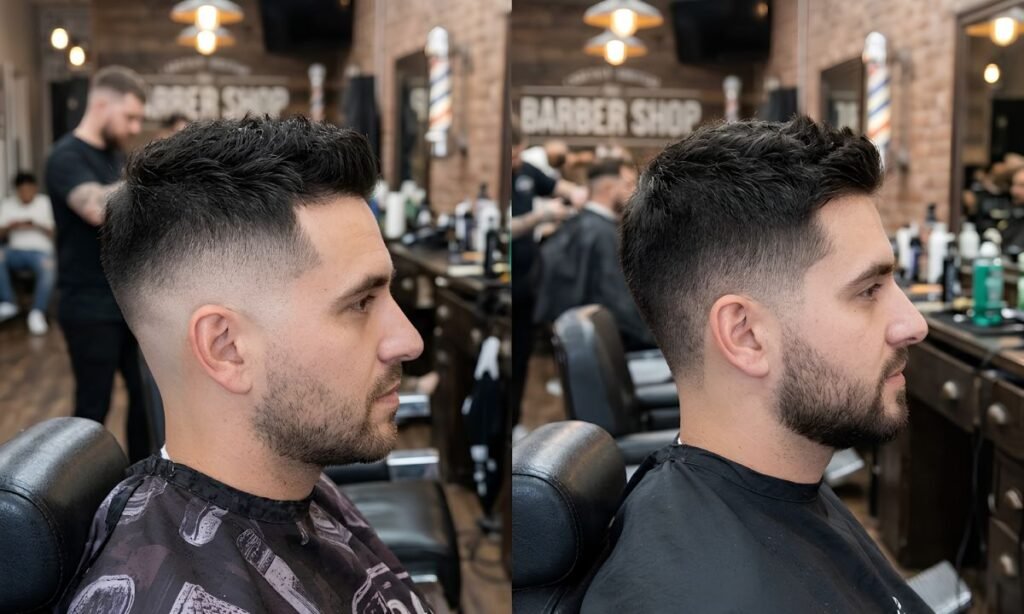
A bald fade goes all the way to bare skin at the bottom, so it’s essentially a skin fade with a very clean base. A regular fade usually ends at a short guard length, like a number 1, so a hint of hair remains.
The bald version looks sharper in photos and on camera. The trade-off is that regrowth appears fast, and you’ll see a shadow come back within a few days.
If you like the idea but fear the commitment, ask for a bald fade with a slightly higher stopping point at the bottom. That keeps some base length and softens the edge.
What clipper guards and lengths are used for each fade?
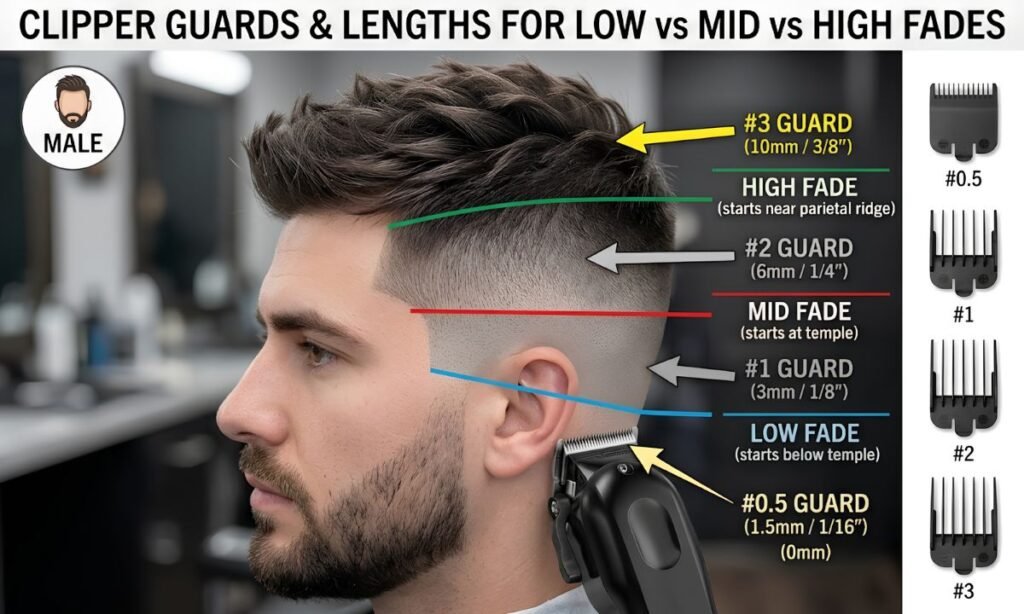
Barbers build fades with clipper guards, a numbered set of plastic combs that slide over the blade. The guard number tells you how much hair gets left behind. Smaller numbers cut closer.
Here’s a rough guide to clipper guard sizes. A number 0.5 leaves about an eighth of an inch or less, a number 1 leaves about an eighth of an inch, and a number 2 leaves about a quarter inch. A number 3 leaves around three eighths of an inch, and a number 4 leaves about half an inch.
These haircut numbers vary slightly between brands, so treat them as a guide, not a law.
Which guard numbers create a low, mid, or high fade?
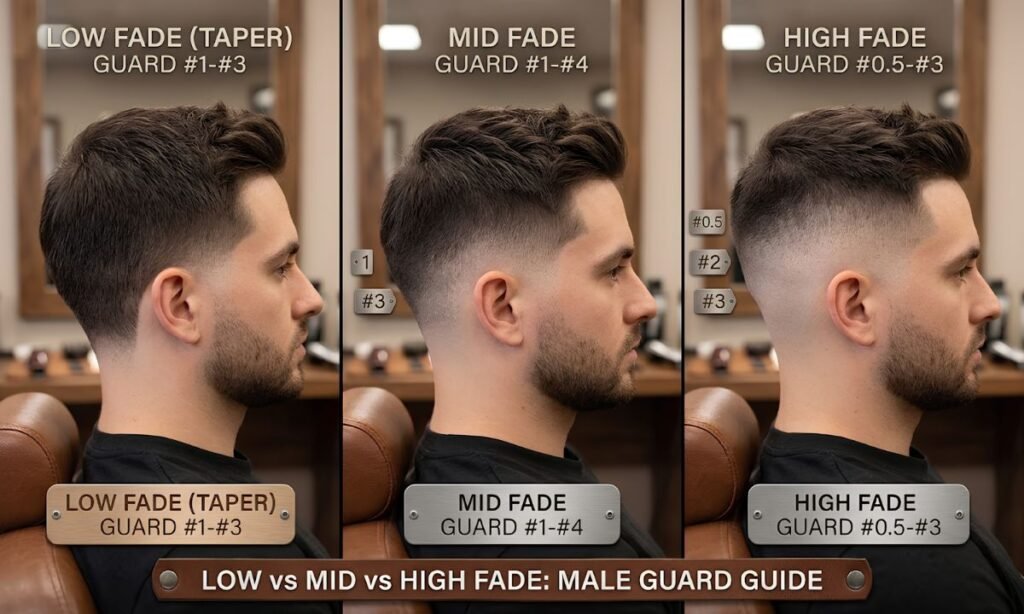
Guards don’t create the fade height by themselves. The barber’s fade placement does that. But guards shape the blend along the way. A typical sequence goes from a bare blade or number 0 guard at the bottom, up through the number 1 guard, then the number 2 guard, and on to a 3 or 4 at the top of the fade.
A low fade might only use the first two or three steps. A high fade often stretches across four or five steps because it has more height to cover.
The shortest hair length sits at the bottom, and every step above it gets a little longer. That’s how the gradual blending happens.
How does a zero fade compare with a number one fade?

A zero fade ends with the blade by itself, which leaves almost no hair. It’s close to a skin fade and gives you clean sides with a polished look. A number 1 fade ends at a short but visible length.
The number 1 is more forgiving. It hides small mistakes, it looks natural in daylight, and it grows out more evenly. The zero looks sharper but shows every flaw.
If you’re a beginner, start with the number 1 and move closer once you know you like the look.
How do barbers use clipper lever positions for smoother transitions?
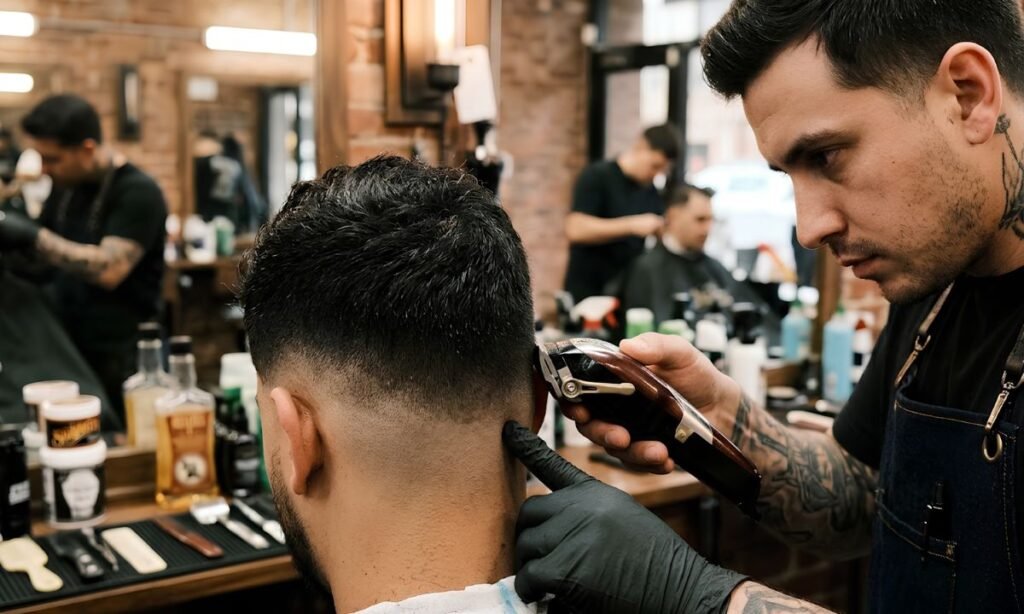
Most clippers have an adjustable lever on the side. When the lever sits closed, the blade cuts closer. When it sits open, the blade leaves a bit more hair.
Barbers flick the lever as they move up the head to blur the line between guard steps. It’s a bit like using a soft brush on a painting instead of a hard edge. This is how they get a smooth soft blend without visible stripes.
You can’t see the lever from the chair, but you can feel the difference. A good fade should look seamless even when you lean in close to the mirror.
How does fade height change your overall haircut appearance?

Fade height changes your whole silhouette, not just your sides. It shifts how long your head looks, how wide your face reads, and how much attention your eyes get. A small change in height can alter your facial proportions more than you’d expect.
Try this the next time you’re in the chair. Look at the mirror, then ask your barber to hold the clippers at a low position and then a high one. You’ll see the difference before any hair falls.
That quick test saves you from a haircut you’ll regret.
Does a higher fade make your head look longer?
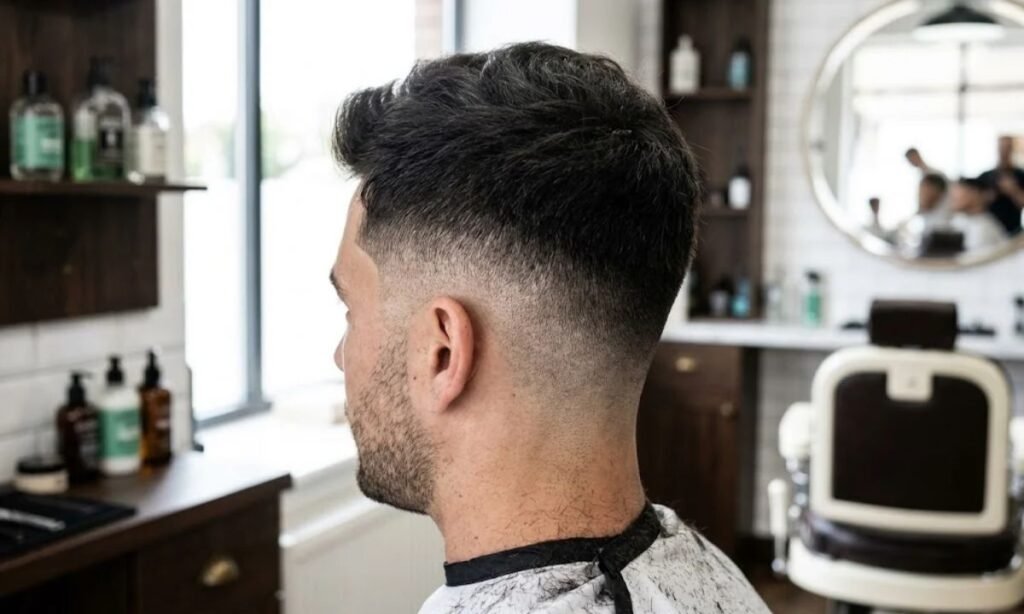
It can. A high fade removes width from the sides, so the head reads as taller and narrower. If you already have a long head or an oblong face, that effect might feel like too much.
But if your head looks wide or round, a high fade adds welcome length. The hair on top looks like it’s lifting upward, which pulls the eye toward the crown.
So a high fade isn’t good or bad. It just exaggerates whatever your head shape already does.
Does a lower fade create a fuller appearance around the sides?
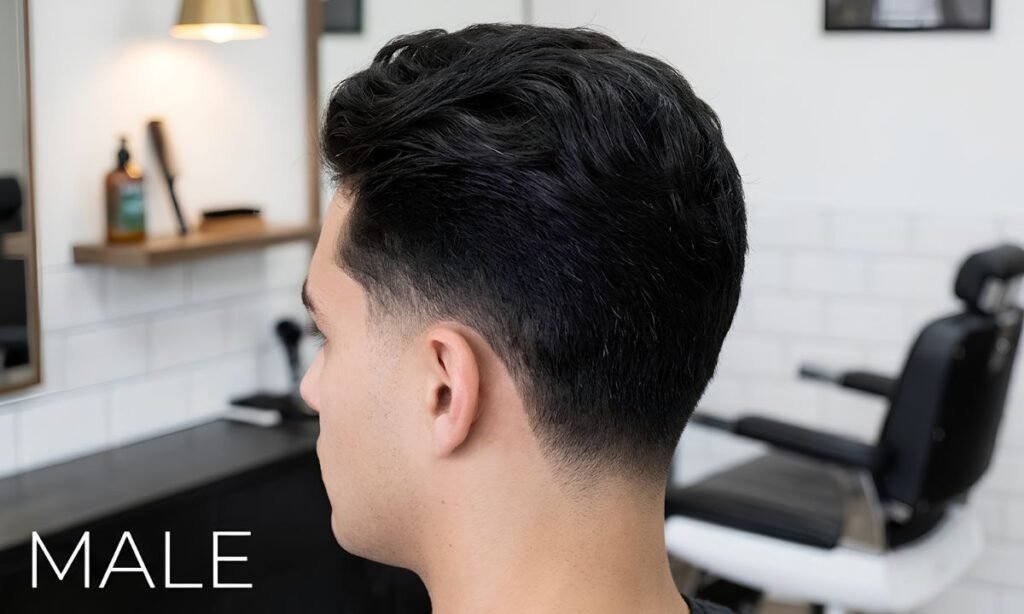
Yes. A low fade keeps more hair near the temples and above the ears, and that gives your sides more side volume. It makes the head look broader and softer.
This is helpful if you have a narrow face or a long facial structure. The extra width balances the proportions and keeps the cut from looking severe.
It also adds a touch of hair bulk around the ears, which helps if your ears stick out and you’d rather not highlight them.
How much contrast does each fade height create?

A low fade creates soft contrast because the short section is small. A mid fade gives you medium contrast, a visible change without drama. A high fade delivers strong contrast because most of the sides look nearly bare against longer top hair.
Contrast also depends on your hair texture and color. Dark hair against light skin shows contrast fast, while fair hair on fair skin looks gentler no matter the height.
If you want contrast but not shock, choose a mid fade with a shadow finish.
Which fade suits your face shape?

Your face shape is the best starting clue. A fade changes how wide or long the sides look, so it can balance your facial proportions or throw them off. You don’t need to be an expert to figure yours out.
Stand in front of a mirror and pull your hair back. Check whether your face is longer than it is wide, or whether your jaw and forehead match in width. That quick look tells you most of what you need.
Here’s how the three heights usually play out across common shapes.
Which fade works for round or square faces?

A round face has soft curves and similar width and length. A mid fade or high fade works well here because it trims the width on the sides and makes the face look longer. Pair it with a bit of height on top, like a quiff or pompadour, and the effect gets stronger.
A square face already has a strong jawline and defined angles. A low fade or mid fade keeps the look balanced, while a very high fade can make the head look boxy. A soft shadow fade takes the edge off if your jaw is already doing plenty of talking.
The quick rule is simple. Round faces want narrower sides, and square faces want softer ones.
Which fade works for oval, long, or heart-shaped faces?
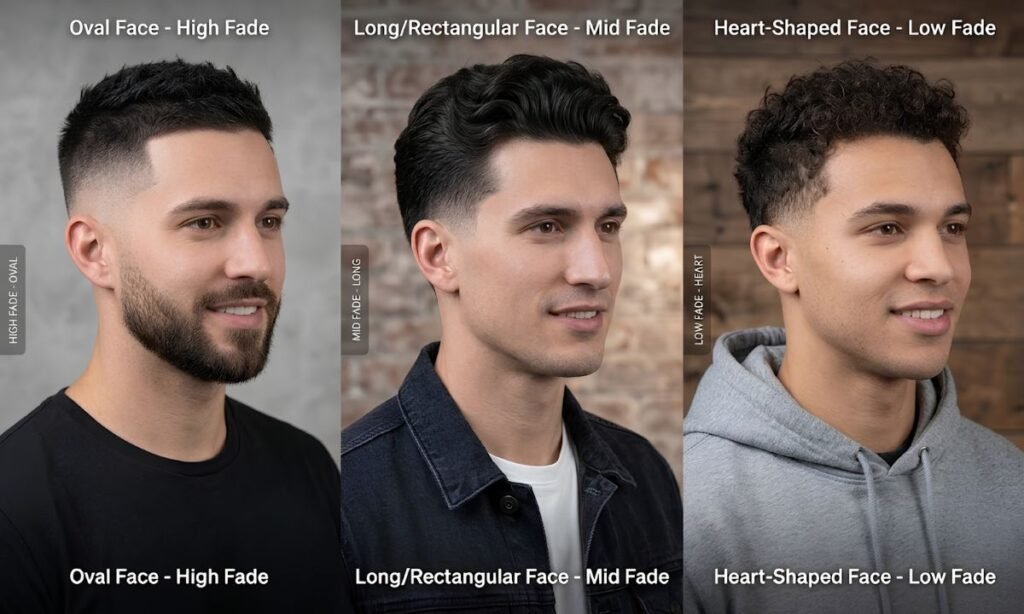
An oval face is the lucky one. Almost every fade height works, so you can pick based on style instead of structure. A mid fade is the safe bet, and a high fade shows off the shape nicely.
A long face or oblong face needs width, not more height. Go with a low fade and keep some side fullness, then avoid very tall styles on top. That keeps the head from stretching further.
A heart-shaped face has a wide forehead and a narrow chin. A low or mid fade keeps the sides balanced, and a textured fringe softens the forehead. If you also have a receding hairline, a short textured crop works well.
Which fade is best for different head shapes and hairlines?
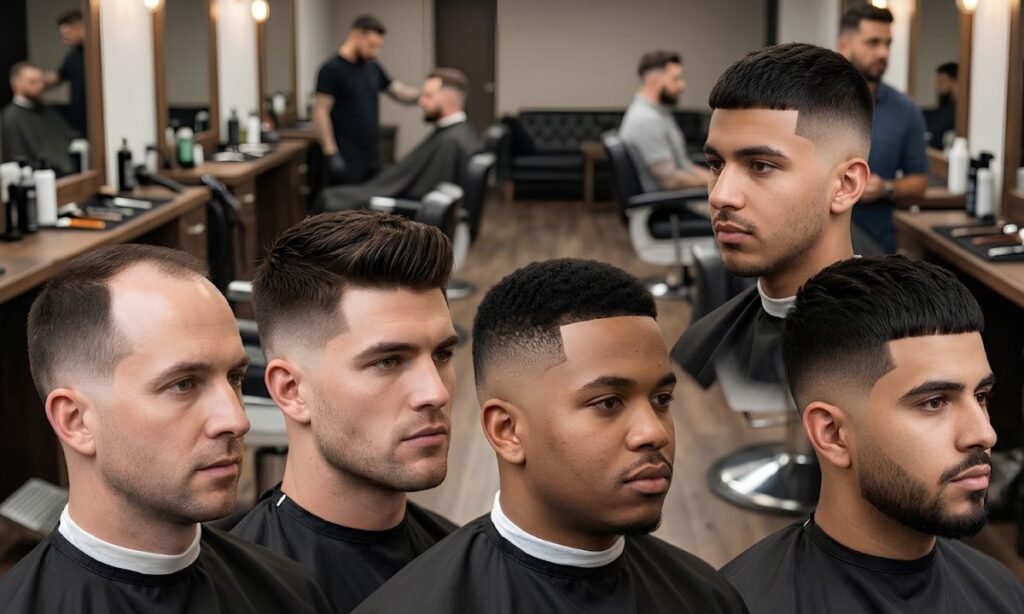
Face shape gets all the attention, but head shape matters just as much. The back and sides of your skull decide how a fade sits, and a barber who ignores that can leave you with a weird bump or a flat patch. Hairlines also change where a fade looks natural.
Run your hand along the back of your head. You might feel a ridge, a flat spot, or a sharp curve near the neck. Those details help your barber choose the right fade line for you.
Which fade helps balance a narrow or wide head?

A narrow head benefits from a low fade, because it keeps hair on the upper sides and adds visual width. Add some side volume with a longer top section, and the whole shape looks fuller. A high fade would make it look even narrower.
A wide head works better with a mid fade or high fade. Taking length off the sides slims the outline and draws attention to the top. Keep the top length a little taller to finish the effect.
If your temple width is wide, ask your barber to follow your natural curve. A straight line across the temple can make it look wider.
Which fade works best with a flat or prominent back of the head?
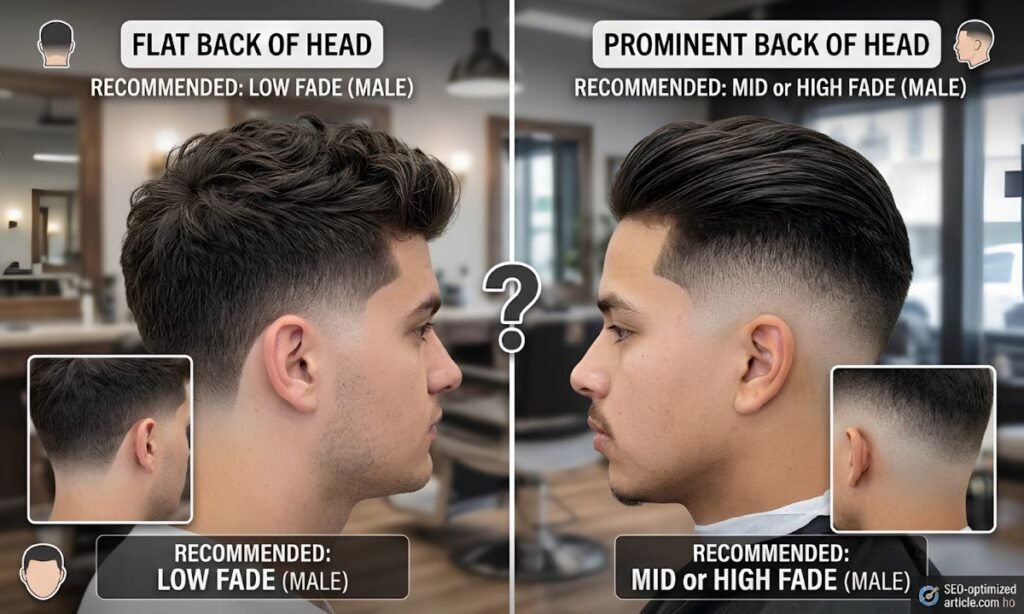
A flat back of the head looks smoother with a low fade, since the extra hair hides the flatness. A high fade shows every contour, so it can make a flat spot look obvious. Keep a bit of length around the occipital bone to create shape.
A prominent occipital bone sits right at the base of your skull, and it’s the bump you can feel above your neck. A mid fade or high fade works well here because it follows the curve cleanly. Skip a very blunt squared neckline, which can exaggerate the bump.
A rounded neckline usually looks more natural on most heads, and a tapered neckline blends even better.
Can a fade complement a receding or uneven hairline?

Yes, and it often helps. A receding hairline looks less noticeable when the sides are short and clean, because the eye focuses on the overall shape instead of the gap. A mid fade or high fade with a short, textured top works best.
With receding temples, avoid a very low fade that leaves lots of side hair. That contrast between thin temples and thick sides can highlight the recession. Go shorter at the sides to bring everything into balance.
If your hairline is uneven, a bald fade might expose it. A shadow fade with a slightly softer line hides small differences and keeps things natural.
Which fade works with your hair type and density?
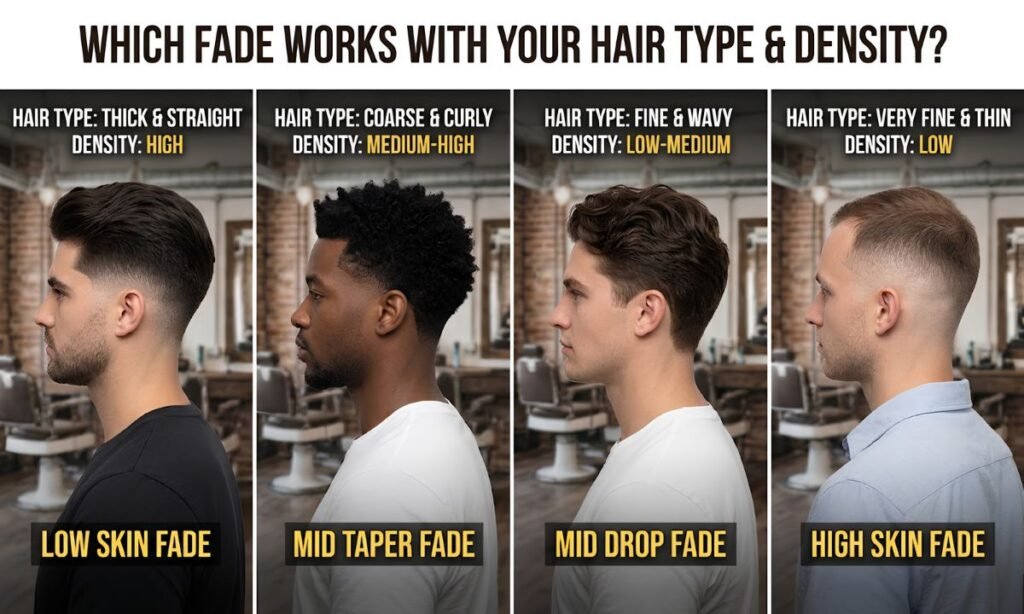
Two people can sit in the same chair with the same request and get different results. Hair texture, curl pattern, and hair density all change how a fade looks and behaves. Straight hair shows lines clearly, while curly hair hides them.
Knowing your hair type helps you ask for the right finish. It also helps you set expectations, because not every fade looks the same on every head.
Let’s go through the main types.
Which fade works for straight or wavy hair?

Straight hair shows every detail of a fade, so the gradual blending has to be clean. A low fade or mid fade looks sharp, and a side part or comb over sits nicely on top. Straight hair also grows out in a flat way, which makes a poorly blended fade stand out.
Wavy hair gives you more room to play. A mid fade or high fade with a textured fringe shows off the waves on top. The movement in the hair softens the transition, so a small blending flaw is less obvious.
Styling helps either way. A little matte paste or cream keeps the top defined against the clean sides.
Which fade works for curly or coily hair?
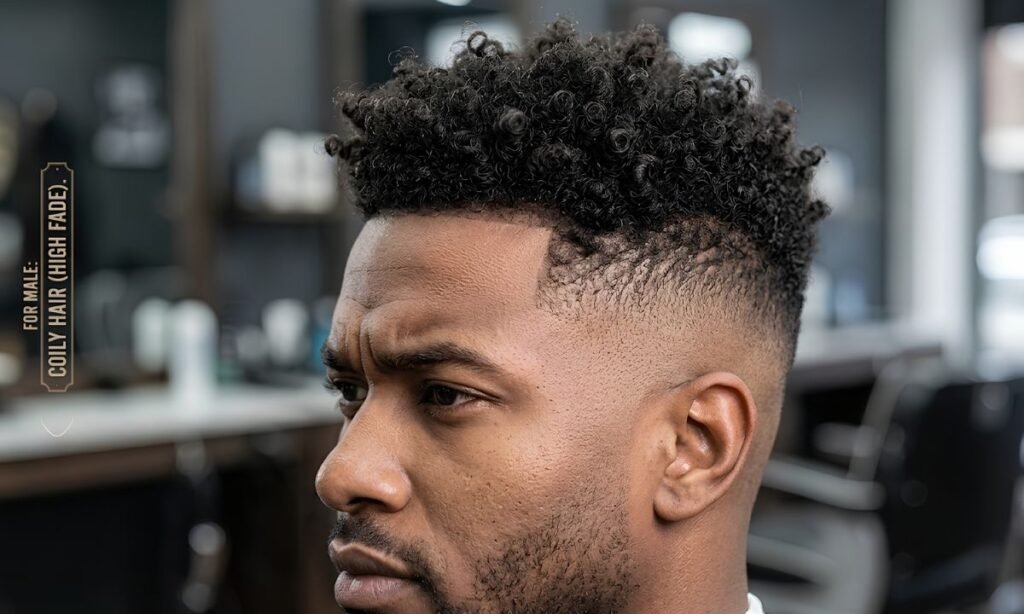
Curly hair and coily hair respond beautifully to fades. A mid fade or high fade gives a bold contrast against a curly top, and the curl pattern stands out clearly. A low fade works too if you want to keep more side volume.
Be specific about hair growth direction. Curly and coily hair often grows in different patterns around the crown and temples, and a barber needs to follow them to avoid patchy blends. A skin fade on coily hair looks especially sharp, though regrowth appears fast.
Moisture matters as much as the cut. Keep the top hydrated so the curls look healthy against the short sides.
Which fade works for fine, thinning, or thick hair?
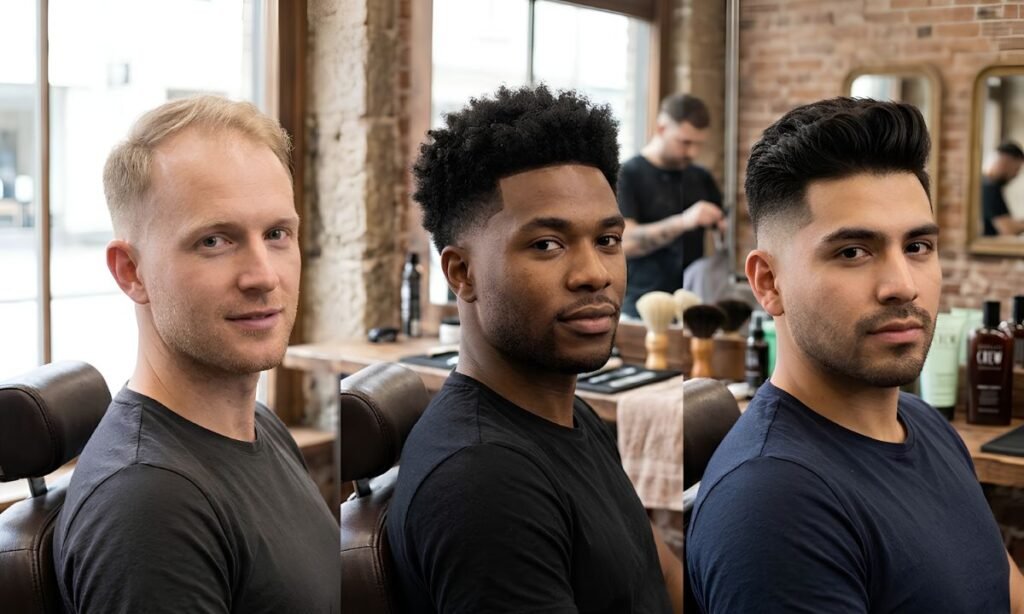
Fine hair can look flat on top, so a mid fade with a short textured crop adds the illusion of body. Avoid very long top hair, which can make fine strands look stringy. A shadow fade keeps things soft.
Thinning hair loves short, clean sides. A mid fade or high fade draws attention away from thin areas, and a buzz cut or short crop on top keeps the look tidy. A low fade can work too, but the contrast between thin top and thick sides may stand out.
Thick hair and dense hair give a fade plenty to work with. A high fade helps control hair bulk on the sides, which can otherwise puff out. Ask your barber to thin the top lightly so the style doesn’t look heavy.
Which fade height works best with different haircut styles?
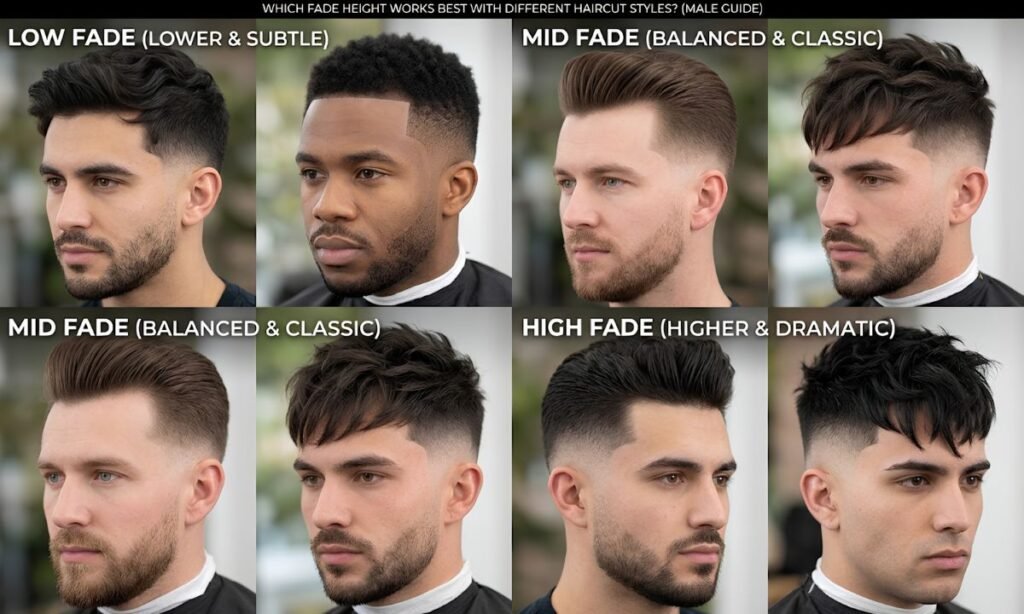
Your fade is only half the haircut. The top style decides which height looks right, and some pairings just work better. Think of it like picking shoes for an outfit.
Here are the combinations barbers recommend most often.
Which fade pairs best with a buzz cut or crew cut?

A buzz cut pairs well with a high fade, because the top and sides are both short and the fade adds clear shape. A mid fade also works if you want a gentler look. The high fade with buzz cut combo looks athletic and clean.
A crew cut works with a low fade or mid fade for a classic feel. The top stays a little longer, and the sides fade down neatly. It’s the haircut your grandfather wore, just sharper.
If you’re deciding between the two, go high for a modern edge and low for a timeless one.
Which fade complements a textured crop or French crop?
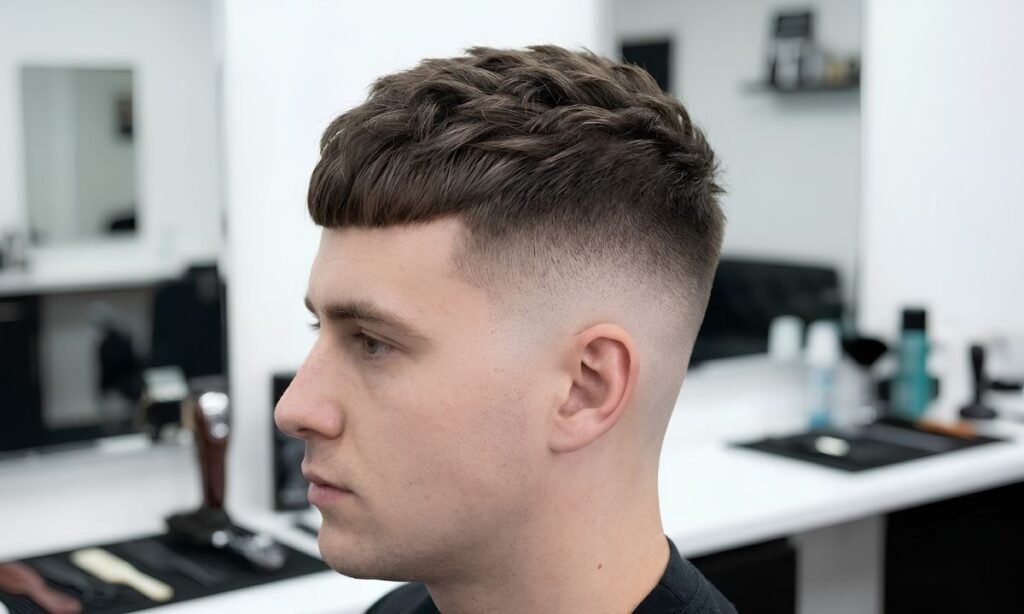
A textured crop works with almost any height. A low fade with textured crop feels relaxed and wearable, while a mid fade gives it more definition. A high fade makes the whole style look bold.
A French crop has a short fringe cut straight across the forehead. A mid fade or high fade keeps the sides sharp, so the fringe stands out. It’s a great pick for thin hair or thinning hair since the short top hides density issues.
Ask for point cutting on the top, and the texture will look natural instead of choppy.
Which fade works with a quiff, pompadour, or slick back?
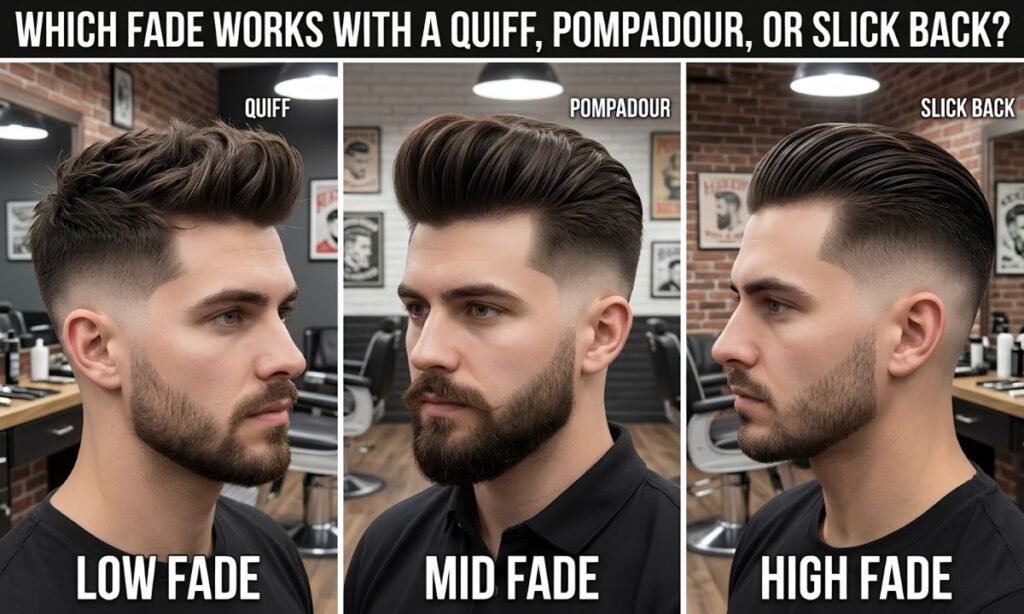
A quiff needs height on top, so a mid fade or high fade helps the shape stand out. The contrast makes the volume look bigger. A low fade also works if you want a softer, vintage vibe.
A pompadour is the classic partner for a mid fade with pompadour. The sides stay tight and the top gets dramatic, so the style looks deliberate. A high fade pushes the contrast even further.
A slick back looks best with a low fade or mid fade, since the sides need enough hair to blend with the combed top. Too high, and the whole thing looks disconnected.
Which fade works with your top hairstyle?

If your top length is long, a high fade gives balance by making the sides look cleaner. If the top is short, a lower fade keeps proportions natural. The goal is to avoid a big gap between the top length and the base length that looks awkward.
Here’s a simple pairing guide you can screenshot.
| Top style | Best fade height | Why it works |
|---|---|---|
| Buzz cut | High or mid | Clean, athletic shape |
| Crew cut | Low or mid | Classic and tidy |
| Textured crop | Any | Flexible and modern |
| Side part | Low or mid | Keeps a neat, professional look |
| Quiff | Mid or high | Makes volume pop |
| Pompadour | Mid or high | Strong contrast |
| Curly top | Mid or high | Highlights curl pattern |
| Slick back | Low or mid | Blends with longer hair |
One more tip. If your top hair is thin, avoid a high fade with very long top hair, because it can highlight the thin patches.
How do you ask your barber for the right fade?
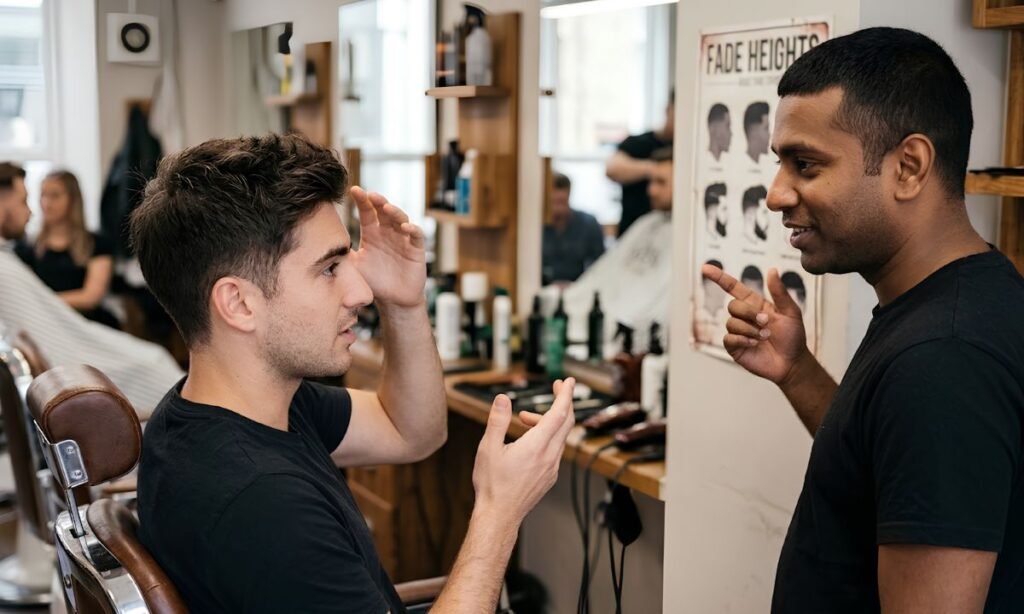
Most bad haircuts come from bad communication, not bad barbers. ‘Just a fade’ can mean ten different things. A little preparation fixes that.
A good haircut consultation takes two minutes and saves weeks of regret. It also builds trust, and your barber will usually return the favor with better work.
Here’s how to make it easy.
What should you specify before the cut?
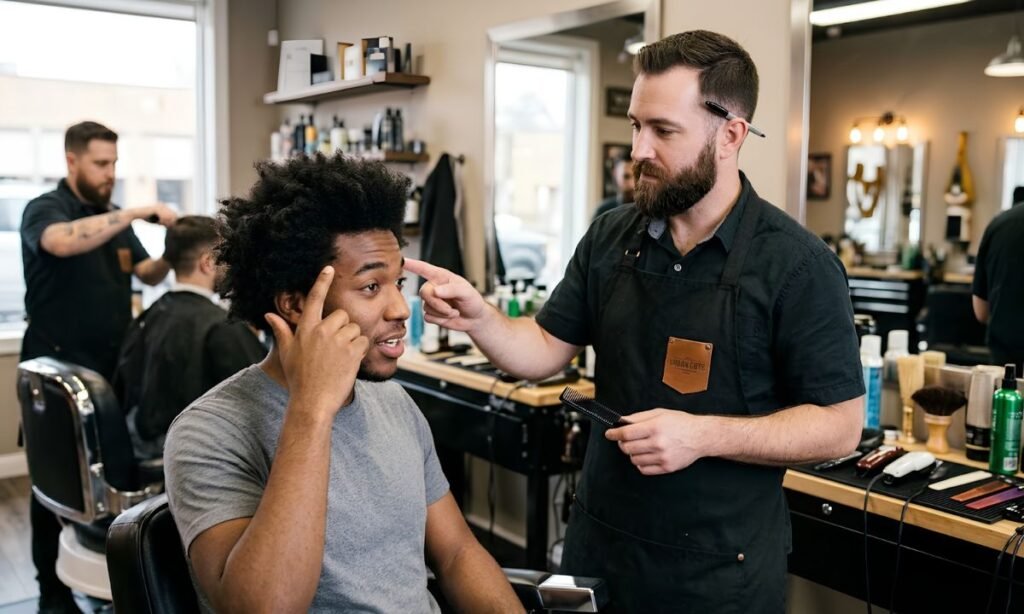
Tell your barber three things: the fade height, the finish, and the top length. For example, ‘mid skin fade, three inches on top, rounded neckline.’ That’s a clear barber brief that leaves little room for guessing.
Bring barber reference photos. Show a front view, a side view, and a back view if you can. Photos beat words every time, but check that the person in the photo has similar hair to yours.
Mention your sideburn shape and neckline shape too. Those small details change the whole look.
What can you say for a low, mid, or high fade?

Here are some simple phrases that work, using real barber terminology.
- Low fade: ‘Low skin fade, starting just above the ear, keep the top long.’
- Mid fade: ‘Mid shadow fade, blend at the temple, short textured top.’
- High fade: ‘High fade, start near the parietal ridge, number 1 at the bottom.’
Add the guard number if you know it. And ask the barber to show you the line in the mirror before they finish.
If something looks off, speak up early. It’s much easier to adjust a fade at the start than to fix it at the end.
How often do low, mid, and high fades need maintenance?
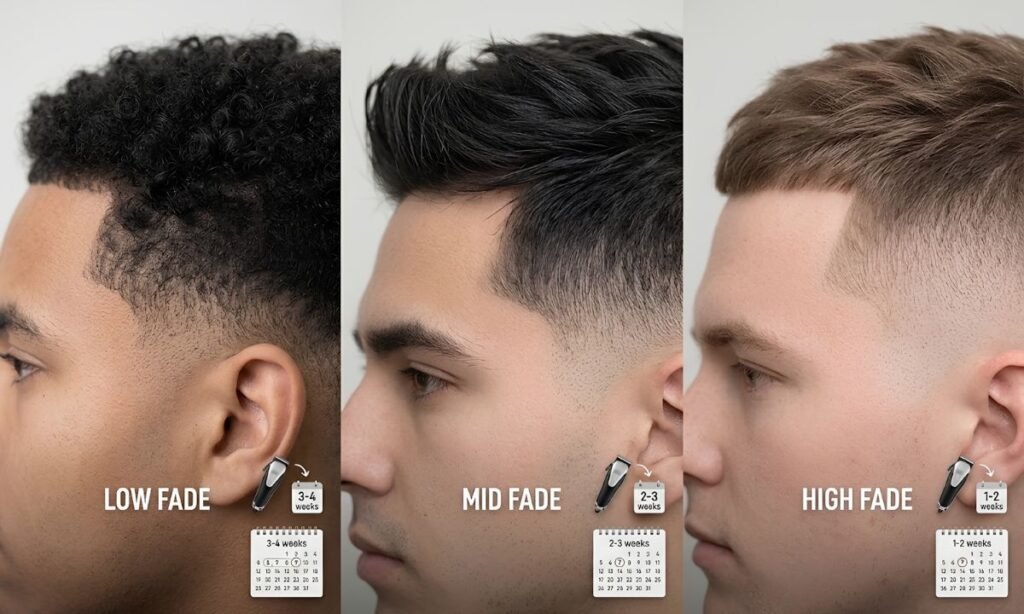
Fade maintenance depends on height and finish. A high skin fade shows regrowth in about a week, while a low shadow fade can last three to four weeks before it looks tired. Haircut frequency matters more than most people think.
Here’s a rough guide to touch-up frequency.
- Low fade: every 3 to 4 weeks
- Mid fade: every 2 to 3 weeks
- High fade: every 1 to 2 weeks
- Skin or bald finish: add about a week of urgency
- Shadow finish: gives you a bit more time
A fade that grows out looks blurry because the lines disappear. The fade grow-out phase is when most people book a trim. If you want fade upkeep to be easier, choose a lower height and a shadow finish.
A few habits make haircut maintenance simpler. Use a soft brush on the sides, keep the neckline clean between visits, and use a light moisturizer on the skin. You’ll get more life out of each cut.
What mistakes should you avoid when choosing a fade?
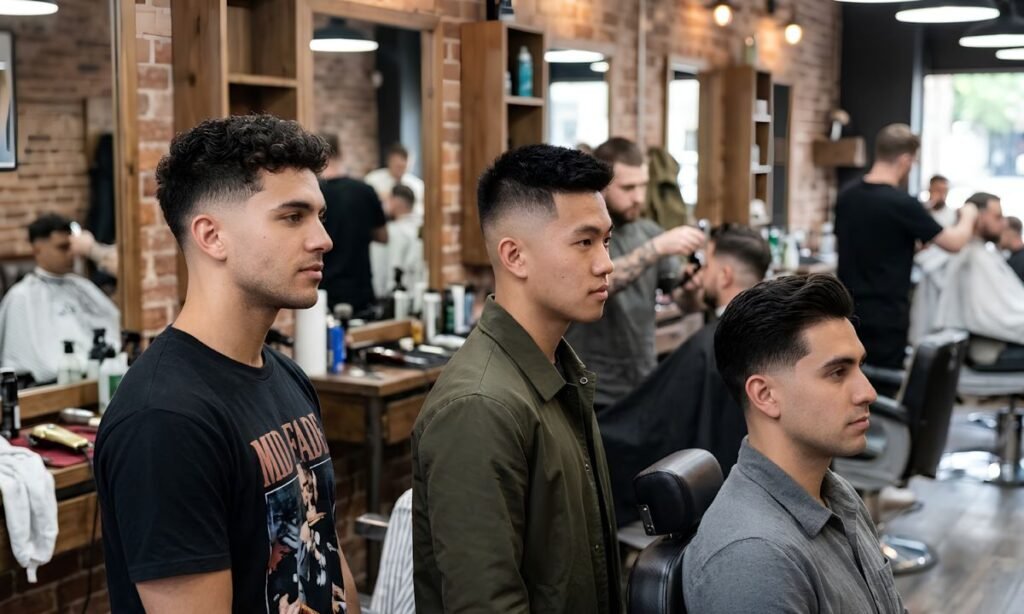
People usually pick a fade from a photo and skip the thinking. That’s where things go wrong. A few common mistakes show up again and again.
- Choosing based on trends, not your head shape. A high fade that looks great on someone else can look odd on you.
- Ignoring your hair texture. Fine hair and coily hair behave differently.
- Forgetting about maintenance. A bald fade needs constant touch-ups.
- Not mentioning the finish. Skin and shadow are very different.
- Going too high with a receding hairline. It can look severe.
- Skipping the consultation. Silence leads to surprises.
Here’s the fix for most of these. Take a few minutes, check your face shape and hair type, and tell your barber exactly what you want.
And don’t panic if the first one isn’t perfect. Fades are easy to adjust, and you’ll learn what works for you after one or two tries.
How do fades work with beards and facial hair?
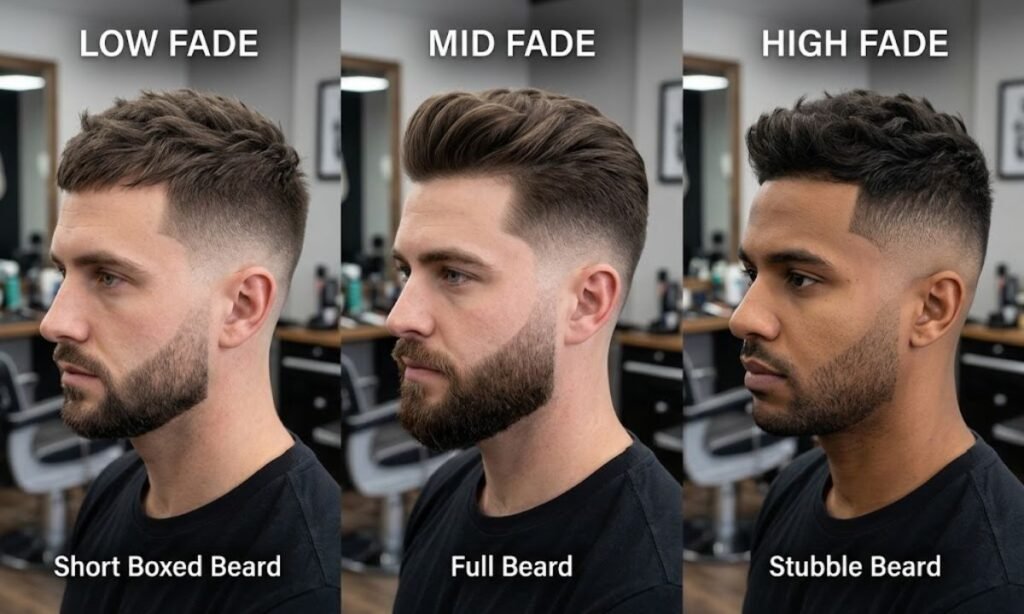
A fade doesn’t stop at the sideburns. Beard blending connects the hair on your head to your facial hair, so the cut looks like one continuous design. A good blend makes a beard look intentional instead of stuck on.
For a low fade, the beard usually fades into the sideburn at the ear. For a mid fade or high fade, the blend can rise higher along the jaw. Ask your barber to match the beard fade height to your head fade.
If you have a patchy beard, a skin fade at the cheek line hides gaps. A thick beard works best with a longer, softer blend.
Can you do a fade at home?
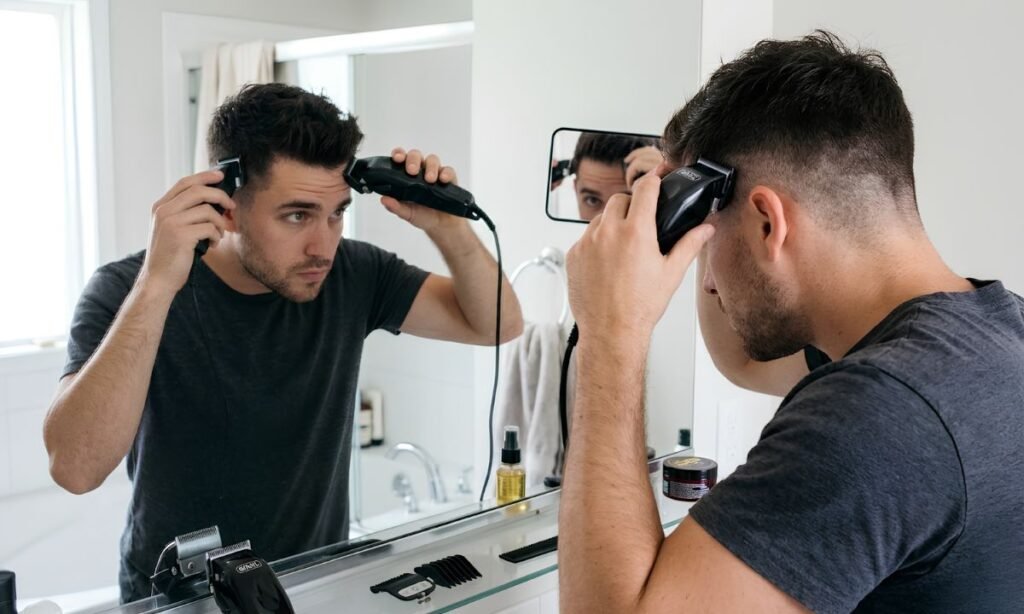
You can, but it takes practice. A fade needs smooth hand movement, a good set of clipper guards, and patience. Most first attempts end with a visible line.
If you want to try, start with a low fade and use a longer guard. Work upward in small steps, and use the lever to blur the lines. Take your time, and stop when it looks close, not perfect.
For your first few fades, though, a barber is worth it. Watch how they work, and you’ll learn a lot just by sitting there.
You can also checkout this article as well Mid Drop Fade: What It Is, Best Styles & What to Tell Your Barber
Low vs mid vs high fade frequently asked question

Which is better, a low fade or a high fade?
Neither is better. A low fade is softer and easier to maintain, while a high fade is bolder and needs more upkeep.
Is a mid fade the safest choice?
Usually, yes. A mid fade suits most face shapes, hair types, and top styles.
What is the difference between a taper and a fade?
A taper only shortens the hair near the neckline and sideburns. A fade climbs higher and blends more skin or stubble into the cut.
Does fade height affect how short the hair gets?
No. Height decides where the blend starts. The finish, like a skin or shadow fade, decides how short the bottom gets.
Which fade is best for thin or thinning hair?
A mid fade or high fade with a short textured top usually works best, because it draws attention away from thin areas.
How often should I get a fade?
Every 2 to 3 weeks for a mid fade. Go sooner for a high or skin fade, and later for a low or shadow fade.
Can I get a fade with curly or coily hair?
Yes. Fades look great on curly and coily hair, and the contrast shows off the curl pattern.
What should I say to my barber?
Give the height, the finish, and the top length. Bring photos too.
Final Thoughts
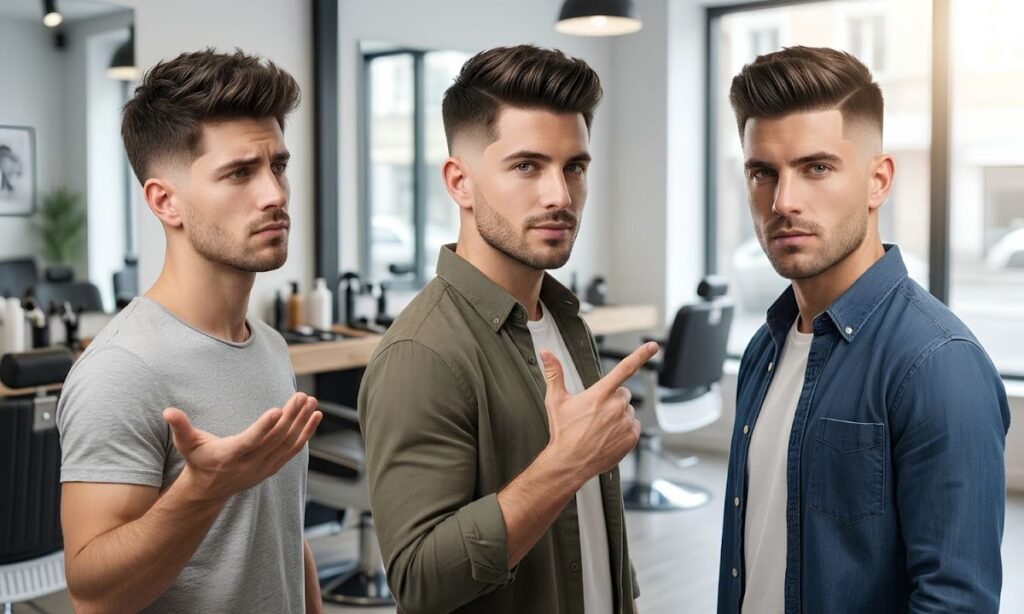
Choosing between a low fade, a mid fade, and a high fade comes down to three things. Think about your face shape, your hair type, and how much upkeep you want. Once you know those, the choice gets easier.
Start with the mid fade if you’re unsure, then move higher or lower next time. A fade is one of the few haircuts where small changes make a big difference.
Now it’s your turn. Which fade are you leaning toward, and what’s your barber’s best advice so far? Drop a comment, share this with a friend who keeps saying ‘just a fade,’ and come back when you want to try something new.

I’m Michael Charles, the creator of MegaCrazes—your source for fresh hairstyles, sharp haircuts, and simple hair-care inspiration. Find your style. Own your look.