


Updated November 2026
You sit down in the chair and the barber asks, “So, what are we doing today?” Your mind goes blank. You want something sharp but not severe, and you’ve seen the low drop fade all over your feed.
Will it suit your hair? Will it look odd behind your ears? How often will you need to come back? This guide answers every one of those worries in plain talk, with exact guard sizes and a script you can hand your barber.
Quick Answer
A low drop fade is a low fade with a curved fade line that dips down behind the ear. It starts low near the sideburn, arcs toward the nape, and blends into the longer hair above. Think of it as a drop fade placed at a low fade height.
It works on nearly every hair type, from straight hair to tight coils. It looks tidy at the office, at the gym, and at a wedding. It also keeps more upper-side weight than a mid or high fade, so it feels safer if you’re nervous.
Most men rebook every two to four weeks for a skin finish, and every three to five weeks for a guarded base. Tell your barber the base length, the drop depth, and the top length. That one sentence prevents most bad haircuts.
What is a low drop fade?
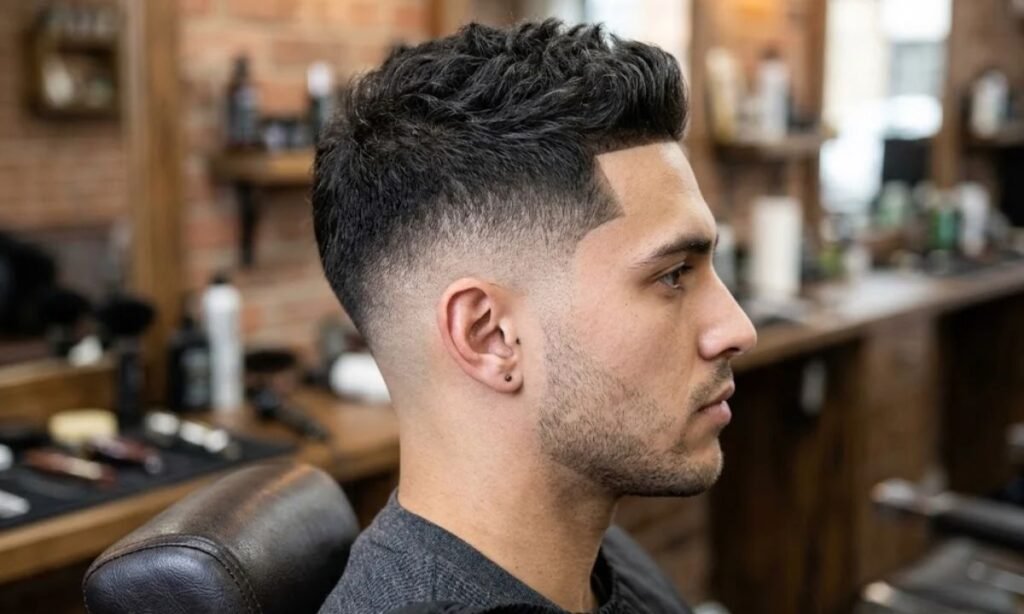
A low drop fade haircut is a fade that stays near the bottom of the head and curves down behind the ear. The curve is the whole point. A standard low fade runs flat around the head, while this one follows the skull.
Barbers like it because it frames the head shape instead of boxing it in. You get a clean edge without the aggressive look of a high skin fade. It’s the haircut equivalent of a well-tailored jacket.
Search terms vary, so you’ll see low drop fade hairstyle, low curved fade, and low fade with a drop. They all point to the same idea. If a barber nods at any of them, you’re on the same page.
What does “low” mean in a low drop fade?

“Low” describes fade height, meaning where the shortest hair stops and the blend begins. On a low fade, that spot sits just above the ear and the natural hairline at the nape. Roughly speaking, think a finger’s width or two above the ear.
A lower start leaves more hair on the sides. That’s why a low fade feels conservative. You can wear it to a job interview without a second thought.
If you’re new to haircut terminology, here’s the quick map. Low fade sits near the ear, mid fade sits around the temple, and high fade climbs toward the top of the head. Each step up adds contrast.
What does “drop” mean?
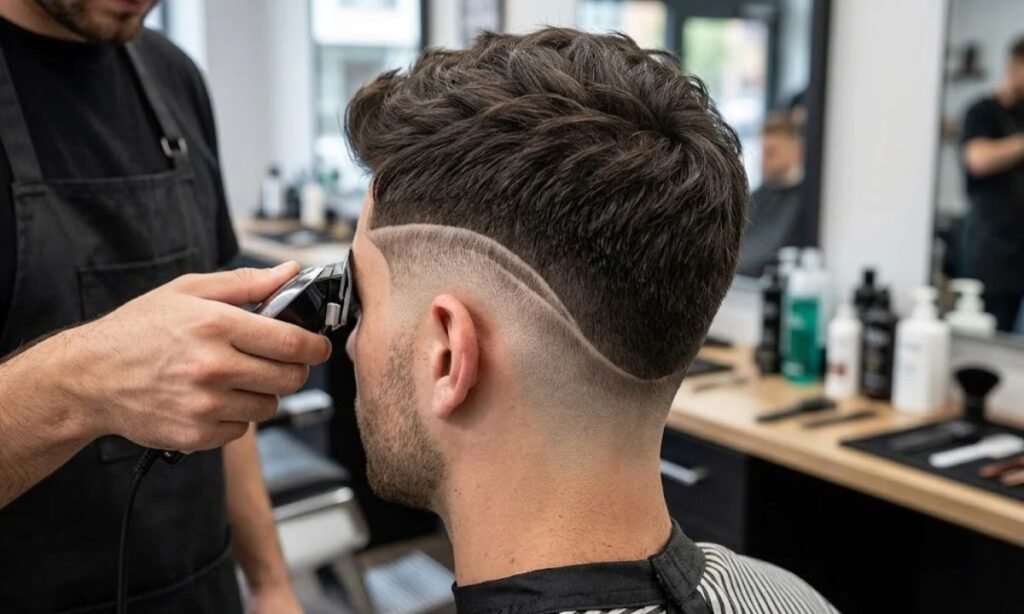
“Drop” describes the fade shape. Instead of staying level, the fade perimeter drops behind the ear and travels down toward the neck. Barbers sometimes call that arc the drop curve.
Imagine the line a headphone band makes when it sits behind your ear. The fade follows a similar arc. It rises over the ear, then falls toward the nape fade area.
The drop depth tells you how steep that fall is. A gentle drop looks subtle, and a deep drop looks dramatic. Your barber can dial it in to match your head shape.
Skin, zero or shadow: how short can it finish?

A low drop skin fade finishes at bare scalp. Barbers get there with a zero-gap blade or a foil shaver during the detailing pass. It’s the sharpest option, and it grows out the fastest.
A shadow fade, sometimes called a zero fade on the shortest end, leaves a whisper of short stubble. A low shadow fade often uses a #½ guard (1/16 inch, about 1.6 mm) or a #1 guard (1/8 inch, about 3.2 mm). It looks softer and hides regrowth better.
Here’s a rule that saves arguments. If you’ve never worn a fade, start with a guarded base. You can always go shorter next visit, but you can’t glue hair back on.
Low drop fade vs similar haircuts
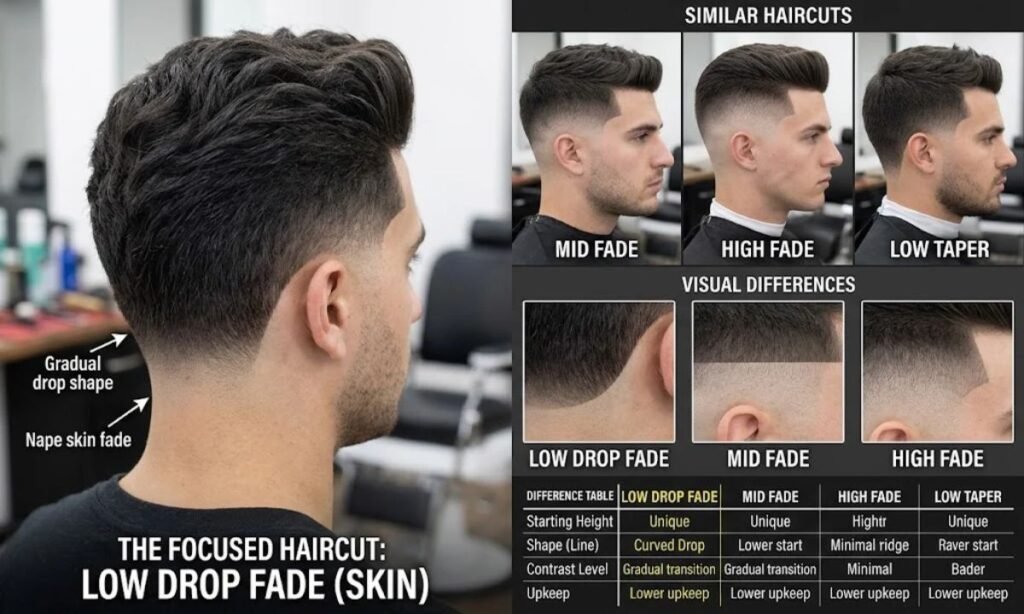
Half of the confusion online comes from names that sound alike. Barbers in different cities also use different labels for the same cut. Bring a photo, and you’ll skip most of that mess.
Below, we’ll compare the low drop fade with its four closest cousins. Each section tells you what changes and who should care. Skim the one that matches your current haircut.
Low drop fade vs low fade
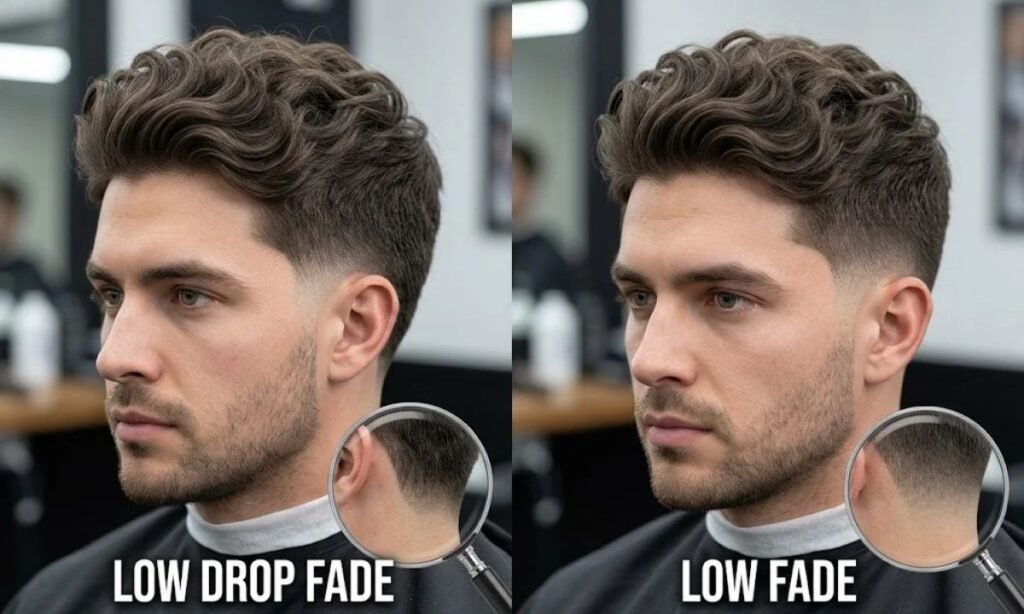
The low drop fade vs low fade question comes down to line shape. A low fade wraps the head in a nearly level fade line. The drop version curves down behind the ear.
That curve adds movement. It makes the neckline look cleaner on rounder heads and gives the back a more natural finish.
If you want the simplest, most forgiving option, pick the plain low fade. If you want a little personality without going bold, pick the drop. It’s a small change with a visible payoff.
Low drop fade vs low taper

A low taper shortens hair gradually along the sideburns and nape only. The rest of the sides stay longer. A low drop taper fade adds the curved line, but still keeps most of the sides intact.
A true taper fade is gentler than a skin fade. It reads as classic and professional. A fade reads as more modern and graphic.
Pick the taper if your workplace is strict or you grow out hair often. Pick the drop fade if you like crisp contrast. Either one works with a beard.
Low drop fade vs mid drop fade
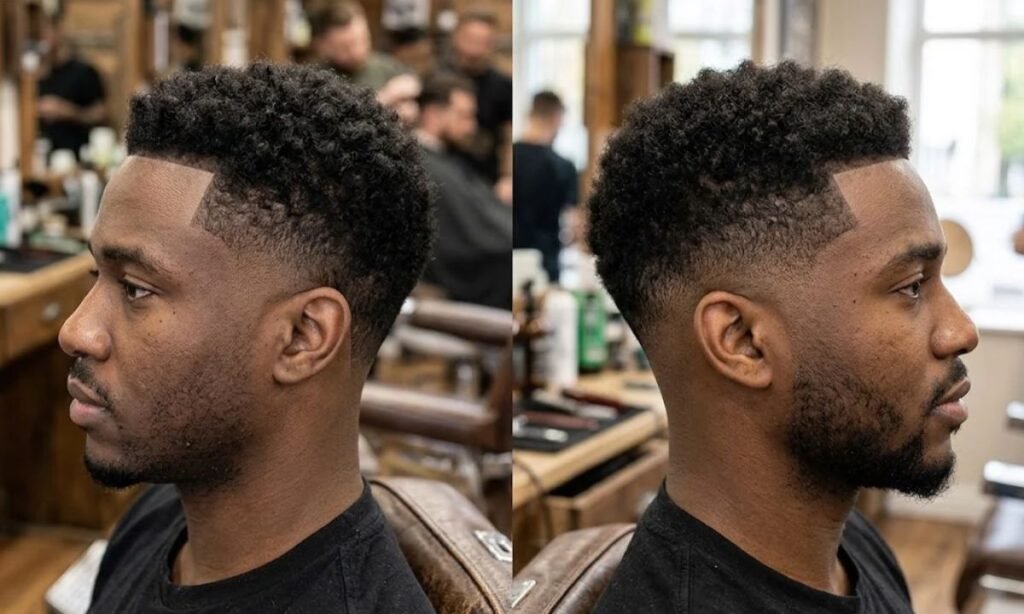
A mid drop fade starts higher, around the temple, so more of the sides disappear. The curve is still there. It just takes more real estate on your head.
The result looks bolder and more contrasting. It also shows off the shape of your skull, for better or worse. If you have bumps or scars, you may prefer the lower version.
Try the low drop first. If you love it and want more edge, move up one level next time. A high drop fade exists too, but it’s a commitment.
Low drop fade vs low burst fade

The low burst fade curves around the ear only. It leaves a long, untouched section at the back, which is why people pair it with a mullet. A drop fade mullet keeps the back long and trims the sides short.
The drop fade, by contrast, sweeps down to the nape and cleans the whole back. That makes the drop fade vs burst fade choice simple. Do you want a tidy back or a statement back?
Choose the burst if you’re growing length behind. Choose the drop if you want a fully finished silhouette. Neither one is wrong.
Who does a low drop fade work for?

Short answer: most people. Long answer: it depends on a few details your mirror can show you in two minutes. We’ll walk through them, so you can decide before you book.
The cut isn’t age specific. Teenagers wear it, and so do fifty-year-old dads. What matters is how your hair grows and how you plan to maintain it.
Hair texture, density and growth pattern
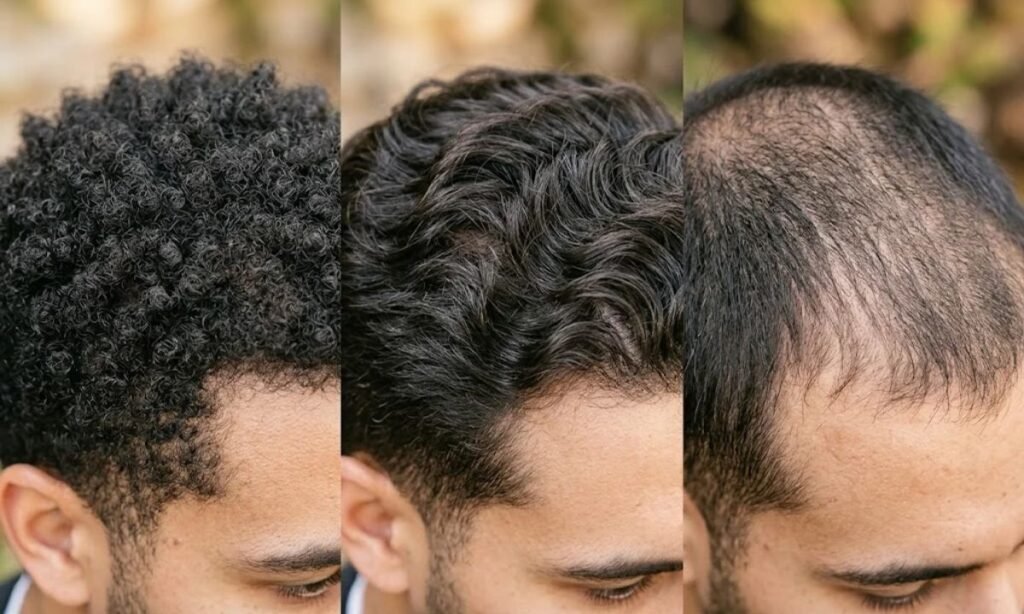
Straight hair shows every mistake, so a clean blend matters more. Wavy hair hides small gaps. Curly hair and coily hair give the fade a strong contrast with the top, which many guys love. A low drop fade for Afro hair also pairs well with waves, twists, or a rounded curly top.
Hair density changes the game too. Thick hair holds a shape and needs more blending time. Fine hair and thin hair look cleaner with a slightly shorter top. If you’re dealing with thinning hair, keep the fade low to avoid highlighting scalp.
Check your hair growth pattern before the visit. A cowlick at the crown can fight a short top. Strong nape growth can make the back grow out messy within two weeks, so tell your barber if that’s you.
Head shape, neck shape and upkeep
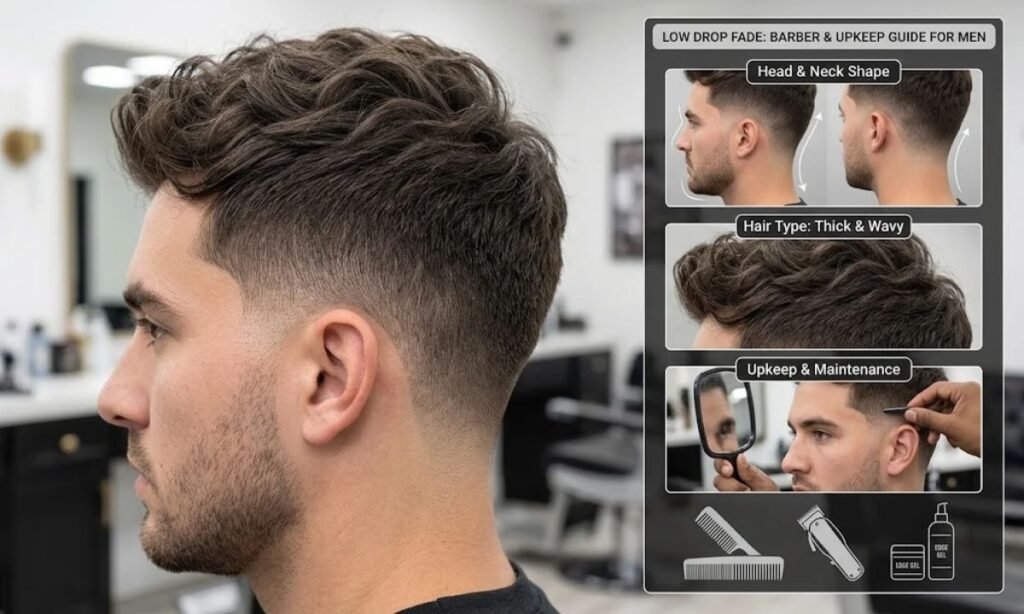
A rounder head often looks great with a deeper drop, because the curve adds length visually. A narrow head benefits from a shallower drop and more weight on the sides. Flat spots in the back need a barber who can see them in the mirror.
Neck shape matters as well. A short neck looks longer with a clean neckline detailing pass. A long neck usually suits a slightly rounded finish.
Upkeep is the honest question. If you can book every three weeks, the fade will stay sharp. If you can’t, ask for a soft transition and a guarded base, which forgives longer gaps.
Guard sizes and fade lengths cheat sheet
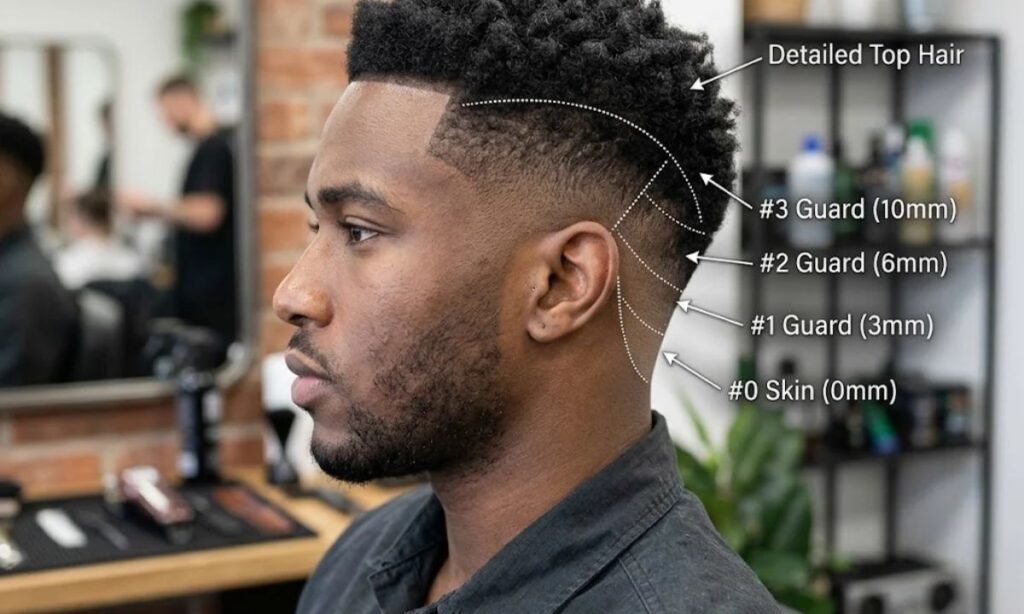
Before you talk to your barber, learn the numbers. They make your request clear and your results repeatable. Different clipper brands such as Wahl, Andis, and BaBylissPRO all follow similar sizing.
Here’s the quick reference you can screenshot.
| Finish | Guard or blade | Length | Look |
|---|---|---|---|
| Bare scalp | Zero-gap blade or foil shaver | 0 mm | Sharpest, grows out fastest |
| Zero fade | Zero-gap clipper | Near 0 mm | Barely there shadow |
| Shadow fade | #½ guard | 1/16 inch, 1.6 mm | Soft, subtle |
| Guarded base | #1 guard | 1/8 inch, 3.2 mm | Most forgiving |
| Soft base | #1½ guard | About 3/16 inch, 4.8 mm | Safe for first timers |
The chart is a starting point, not a law. A good barber adjusts for your skin tone, hair texture, and hair density. Always ask what base they’re planning before the clippers come out.
What details determine the final shape of a low drop fade?

Three choices shape the final result: how far the curve travels, where the lowest point sits, and how much weight stays on top. Change any one of them, and the haircut feels different. Let’s break them down.
Think of it like adjusting a camera. Fade depth, fade length, and fade graduation all change the picture. A skilled barber balances them without making it look forced.
How far should the fade curve extend behind the ears?

The curve should travel just far enough to follow the skull. For most heads, that’s from the front of the ear, over the top, and down about one to two inches behind it. Going beyond that turns the cut into a high drop fade in effect.
Set the fade guideline with a hand on the head. Your barber should feel where the skull curves, not just eyeball it. That’s how you get a symmetrical fade on both sides.
If your ears stick out, a longer curve can make them look more prominent. Ask for a shorter arc. It keeps the eye on the hairline instead of the ear.
Where should the lowest point of the drop sit?
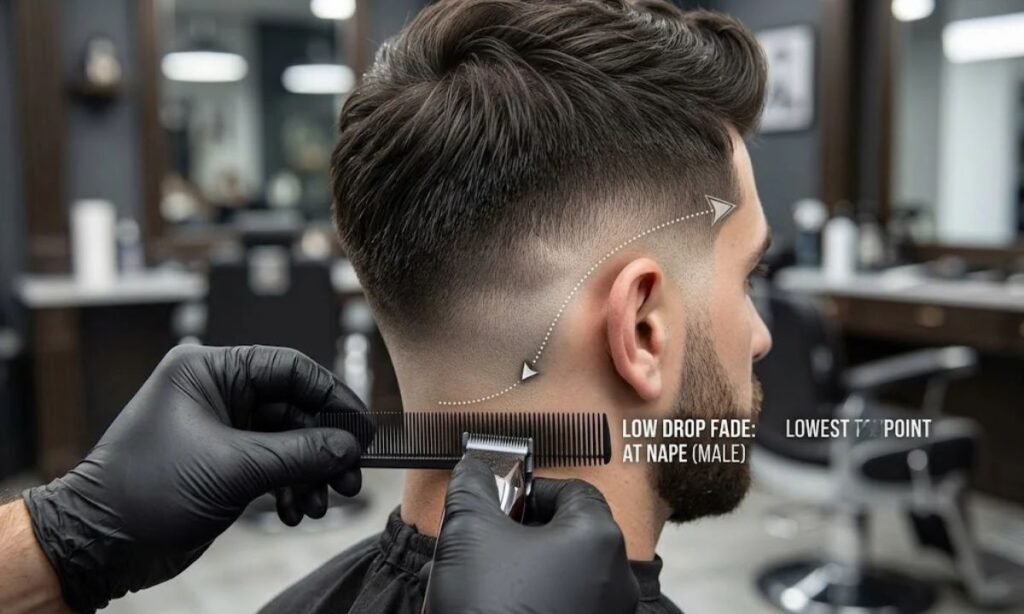
The lowest point usually lands near the base of the skull, just above the nape. If it dips too far, it looks like a neck shave. If it stays too high, you lose the “drop” altogether.
A good drop sits where the natural hairline begins to taper at the back. Barbers call it the point where the head turns into the neck. It’s easy to find when you feel for the bone.
Here’s a simple test. In the hand mirror, the drop should look like a smooth hook behind each ear. If you see a sharp corner, ask for a rounder finish.
How much weight should remain above the fade?

Upper-side weight is the hair left between the fade and the top. More weight makes a softer, fuller silhouette. Less weight makes the haircut cleaner but riskier on a thin or round head.
A useful ratio is about one inch of blended length above a low fade. That gives you room to style and keeps the transition smooth. Your barber might use scissor-over-comb to hold that weight evenly.
If your hair is fine hair, trim the weight a touch more. If it’s thick hair, keep it so the fade doesn’t look hollow. When in doubt, leave extra and cut later.
What top lengths pair best with a low drop fade?

The fade gets the attention, but the top decides the personality. Short tops look sharp. Medium tops look easygoing. Long tops look dramatic.
Use top length in inches when you talk to your barber. “Short” means different things to different people. Numbers don’t.
What short top lengths create a balanced silhouette?
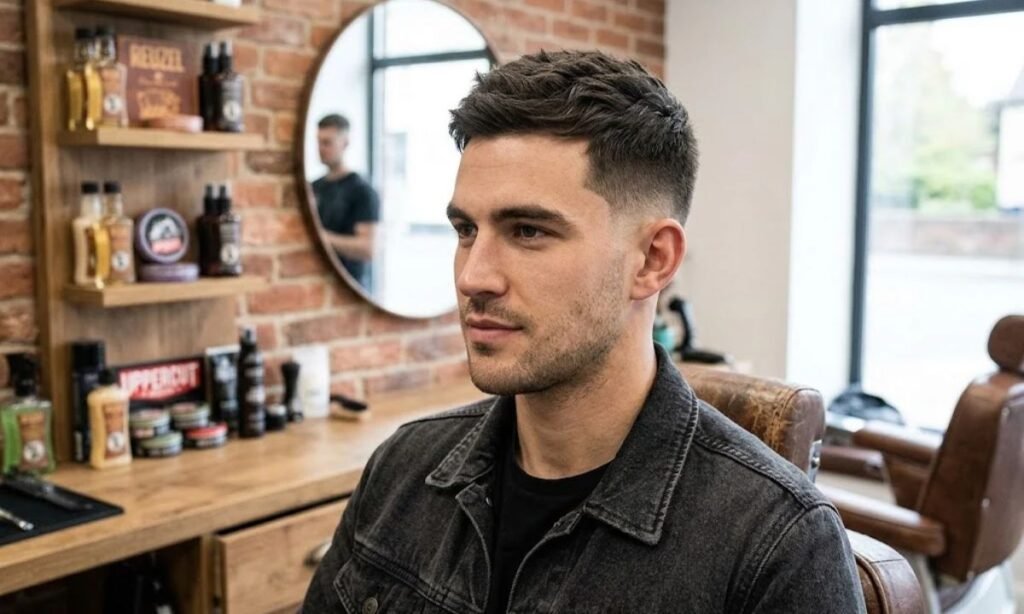
A short crop at half an inch to one inch pairs beautifully with a low drop. It makes the fade look intentional and keeps the haircut easy. This is the safest choice for busy mornings.
A buzz cut or crew cut also fits here. They need almost no styling, and a guarded base blends them into the sides. If you’re after a no-fuss look, start here.
One warning, though. Very short tops show head shape clearly. Run your hands over your scalp before you commit.
How does medium top length change the haircut’s proportions?
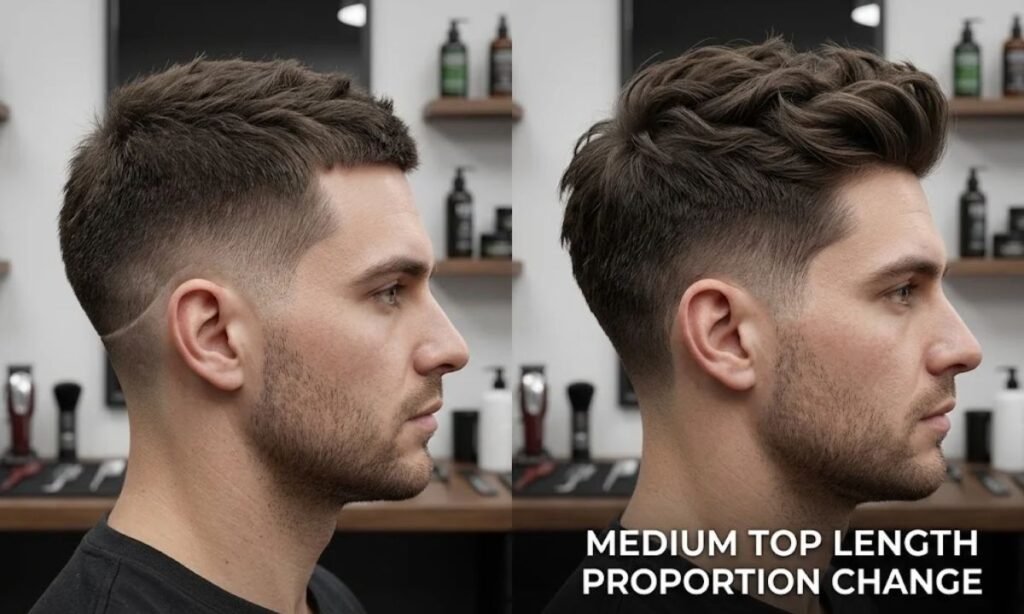
At two to three inches, the top gains movement. You can push it forward, sweep it sideways, or let it fall naturally. It also creates a stronger contrast with the fade, which makes the cut look polished.
A textured crop, French crop, or quiff thrives at this range. These styles use hair clay or hair paste to hold shape. You’ll style them in about three minutes.
Medium tops also hide a slightly rounded face. The extra volume adds height. That’s a nice bonus if you want to look a little longer.
When does longer top hair overpower the low fade?
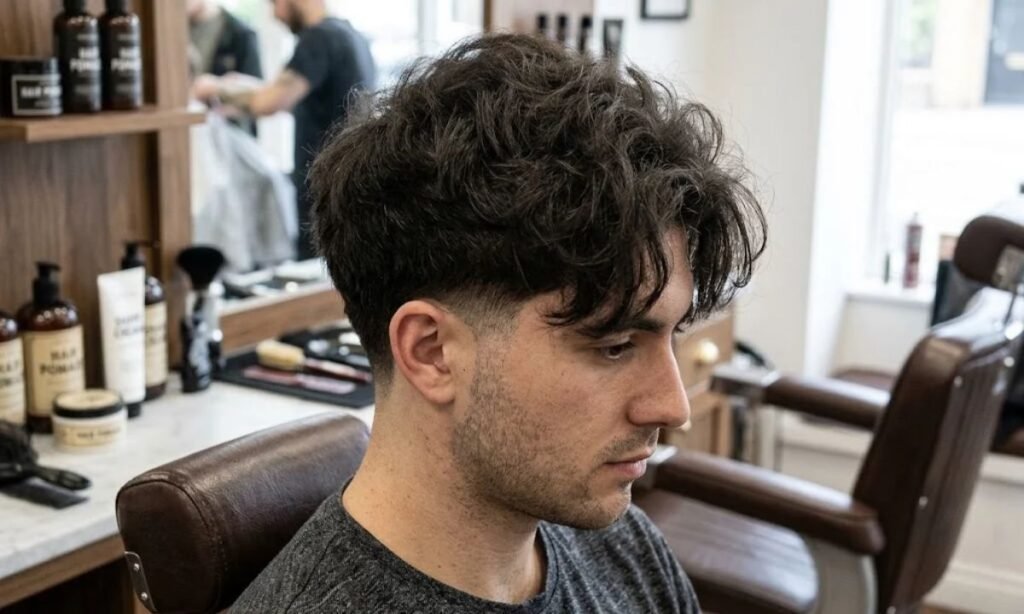
Once the top passes four inches, the fade starts to look like an afterthought. The heavy top pulls attention upward. The low drop becomes a quiet base instead of the star.
That isn’t always bad. A long top with a low drop can look refined, especially with a side part or slick back. You just need a little pomade and patience.
If you want the fade to stay visible, choose a mid drop fade instead. It gives the sides room to show off. Longer tops usually deserve a little more contrast.
Low drop fade styles by hair type and top shape

The fade stays the same, but the top changes everything. Your hair texture decides which styles look natural and which ones fight you every morning. Pick from the list below based on what your hair already wants to do.
Each section lists the best low drop fade styles for that group. Use them as a menu, then bring photos to your barber. A picture beats a paragraph of explanation.
Low drop fade for straight and wavy hair

A low drop fade for straight hair looks best with a textured fringe or a side part. Straight strands lie flat, so a little lightweight clay adds grip. Without it, the top can look limp by lunch.
A low drop fade for wavy hair is even easier. The natural bend gives you volume with almost no effort. Blow dry the top with a hair dryer while it’s damp hair, then finish with a light paste.
Here’s a quick example. Say your hair falls forward and splits in the middle. Ask for a French crop length with a #1 guard base. Push it forward, and you’re out the door in four minutes.
Low drop fade for curly, coily hair and waves

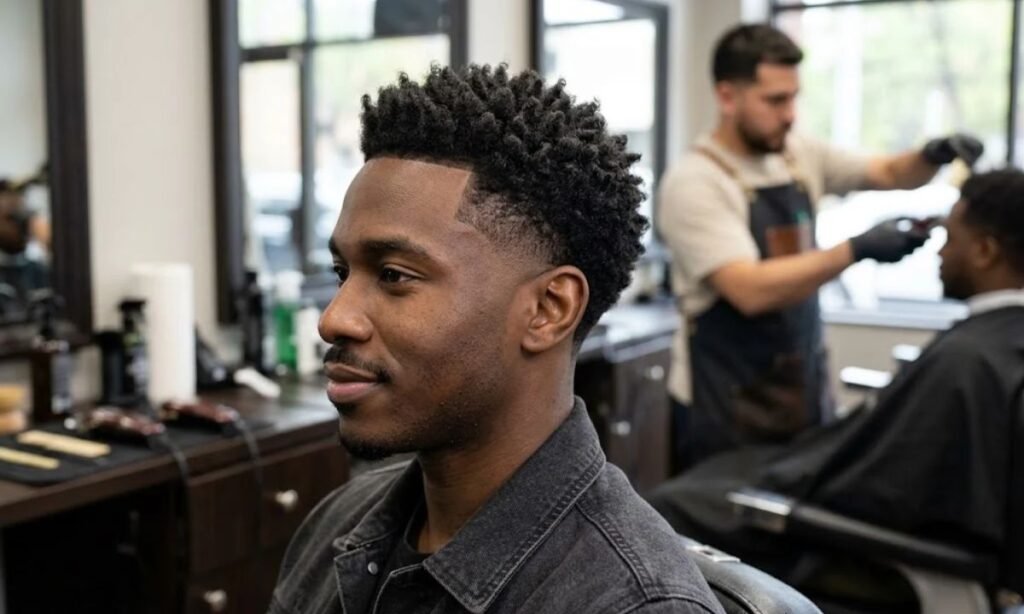
A low drop fade for curly hair gives you a sharp base with soft, bouncy tops. Natural curls pop against the clean sides. Add a curl cream to damp hair, and let it air dry for definition.
With coily hair and tight coils, plan for hair shrinkage. A top that looks three inches wet may sit at one inch dry. Tell your barber the length you want after it shrinks, not before.
A low drop fade with waves works beautifully for brushed waves and Afro-textured hair. It also pairs with twists, locs, and a full afro. Many Black men choose this cut because the curve flatters a round or oval head.
Textured crop, French crop and fringe

A low drop fade textured crop keeps the top short, choppy, and full of movement. The fade stays tidy while the top looks slightly messy on purpose. It’s a favorite for fine hair because the texture adds fake thickness.
A low drop fade French crop cuts the fringe short and straight across the forehead. It suits receding corners well, since the short fringe hides them. A low drop fade textured fringe leaves a little more length, which softens the face.
Style all three with a dab of hair clay or hair paste. Rub it between your palms until it warms up. Then work it through from back to front.
Buzz cut and crew cut

A low drop fade buzz cut is the lowest maintenance option you’ll find. The top is clipped to one length, and the fade melts into it. You’ll never need a styling product.
A low drop fade crew cut keeps the front a bit longer, usually half an inch to an inch. It looks athletic and clean. It also suits guys who hate fussing with their hair.
Be honest about your head shape before choosing either one. These cuts show everything. If you’re unsure, ask your barber to test the top length with a longer guard first.
Quiff, side part and slick back
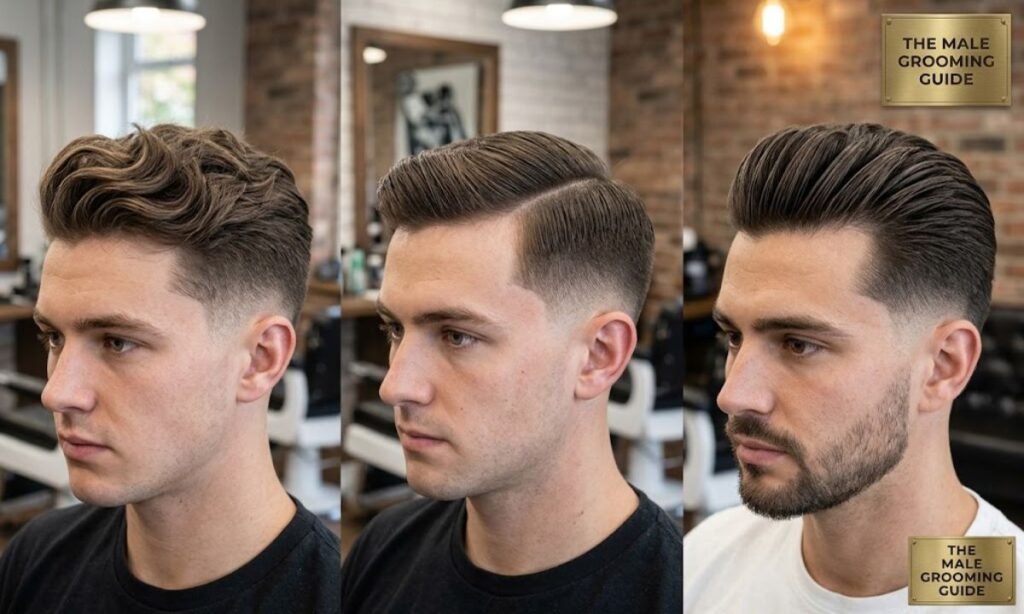
A low drop fade quiff lifts the front and tapers the sides. Blow dry the hair upward, then set it with a lightweight clay or pomade. It adds height, which balances a wider face.
A low drop fade side part feels classic. Part the hair on the natural side of your head, and comb it across. A low shine paste keeps it modern rather than retro.
A low drop fade slick back needs length, usually three to four inches. Use a high hold pomade on damp hair and comb it back. The low drop fade with long hair on top is a dressy look that still feels relaxed.
Beard blend and line-up
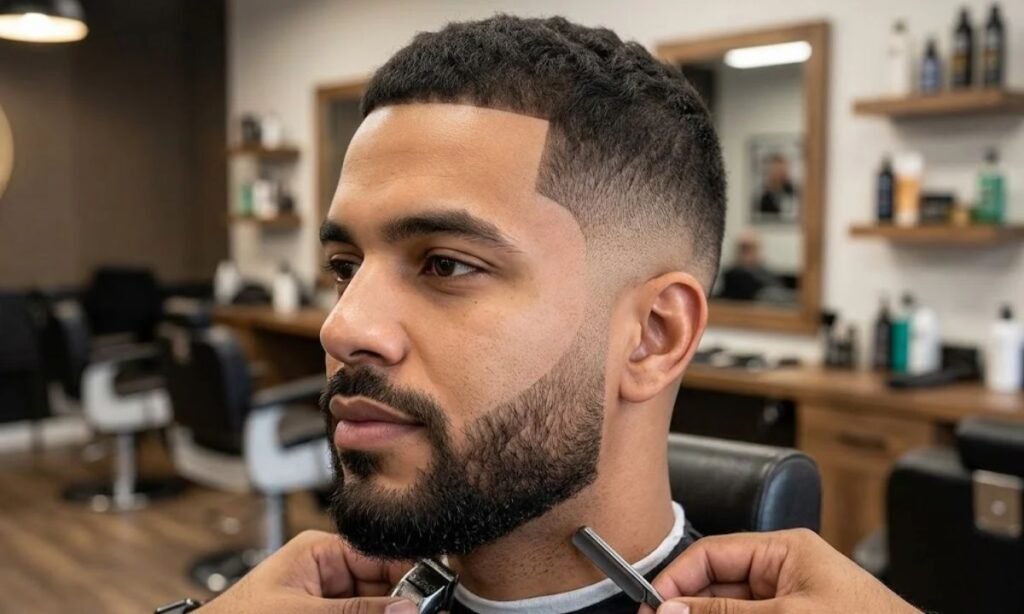
A low drop fade with beard works best when the fade flows into the sideburn and connects to the beard. That’s the beard blend. A clean connection makes the face look sharper and the beard look intentional.
A low drop fade with line-up adds crisp edges along the forehead and temples. You may hear it called an edge-up or shape-up. It makes the whole cut look fresh for about a week.
Ask your barber to match the beard length to the fade height. A very short beard suits a skin fade. A fuller beard suits a soft transition with a guarded base.
Which low drop fade variations create different finishes?
Once you know the basic cut, you can customize it. Three variations change the finish more than any others. Each one gives the same fade a very different mood.
Think of them like paint finishes on a car. The shape stays put, while the sheen and contrast change. Let’s go through each one.
What defines a low drop fade with a hard part?

A hard part is a shaved line cut into the hair, usually on the side. It creates a crisp divider between the top and the fade. The result looks sharp and a bit retro.
A low drop fade with a hard part pairs well with a side part or slick back. It works best on straight hair that holds a clean line. On very curly hair, the line can blur within a few days.
Expect to refresh the part more often than the fade. Many guys get the line touched up every two weeks. If that’s too much, skip it.
How does a disconnected top change the overall finish?

A disconnected hairstyle leaves a clear gap between the top and the sides. There’s no blended graduation in between. The low drop fade with disconnected top looks bold and graphic.
It’s popular with curly top styles and textured crop cuts. The contrast makes the top look larger and the fade look cleaner. It’s also easier for a barber to execute accurately.
The tradeoff is grow-out. Gaps get obvious fast, so you’ll want visits every three weeks. If you can’t commit, choose a smoother blend.
How does a soft transition differ from a high-contrast finish?

A soft transition uses a longer base, like a #1½ guard, with gentle fade graduation. The haircut looks natural and forgiving. It’s the best choice for office dress codes.
A high-contrast finish drops to bare scalp or zero fade at the bottom. The jump between skin and hair is dramatic. It photographs well, and it needs frequent maintenance.
Here’s a good rule. Pick soft if you rebook every five weeks. Pick high-contrast if you can sit in the chair every two or three.
How do hairline and neckline details affect a low drop fade?
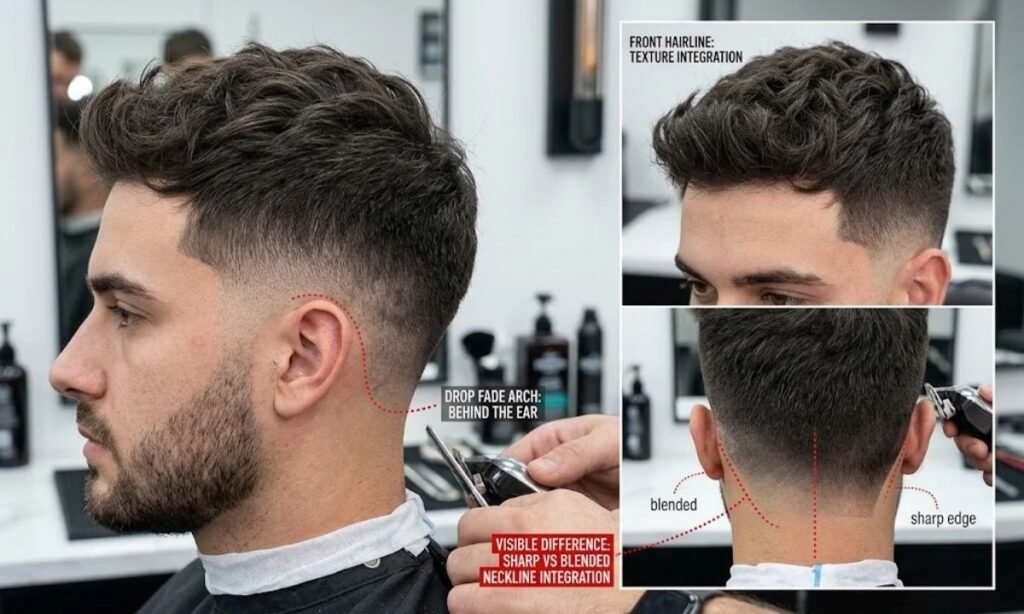
The small edges frame the whole haircut. A great fade with a messy neckline still looks unfinished. These details separate a quick trim from a barber who cares.
Talk through them before the clippers start. A thirty-second chat about your natural hairline saves you from weeks of regret.
What neckline finish works best with a low drop fade?

Three finishes dominate: rounded neckline, squared neckline, and a natural or curved neckline. A rounded finish suits most men. It grows out cleanly and doesn’t highlight uneven nape growth.
A squared neckline looks bold, but it shows regrowth quickly. It’s best for guys who visit every two weeks. A natural neckline leaves the edge soft and works well with a beard blend.
The low fade with curved neckline matches the drop beautifully. The curve above and the curve below echo each other. It’s a small detail that makes the cut feel designed.
How can a barber preserve a receding or uneven hairline?
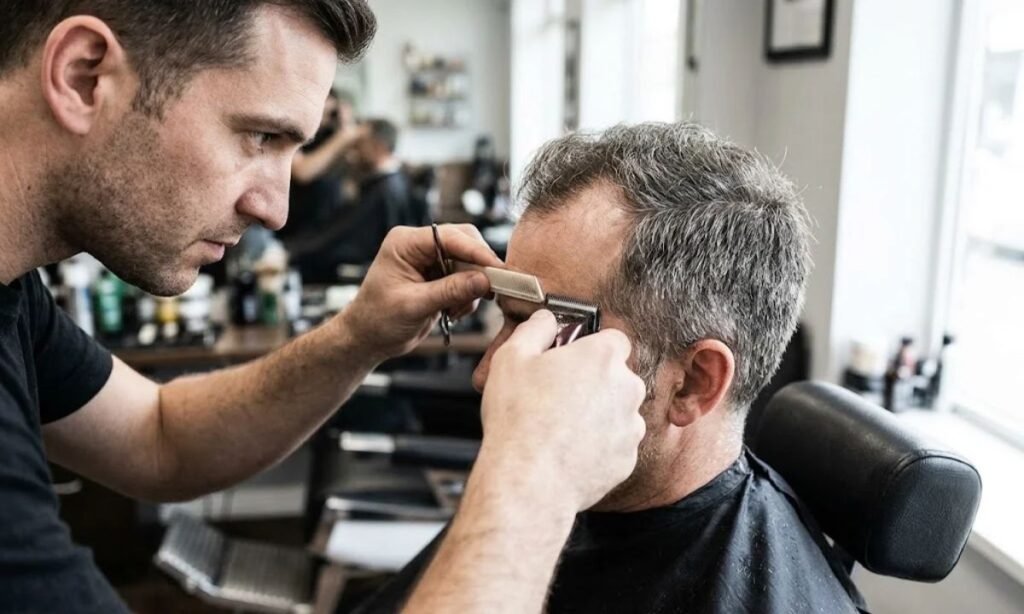
A receding hairline needs a lighter hand. The barber should avoid cutting the temples too short, since that exaggerates the recession. A longer guarded base around the front keeps things balanced.
Uneven hairlines call for careful line-up work. Instead of forcing a perfectly straight edge, the barber follows the natural shape. That keeps the haircut believable.
If you have thinning hair, ask for a short crop and keep the fade low. It draws attention to the top rather than the temples. A barber with a strong haircut portfolio will show you before-and-after examples.
When should the natural sideburn shape be retained?
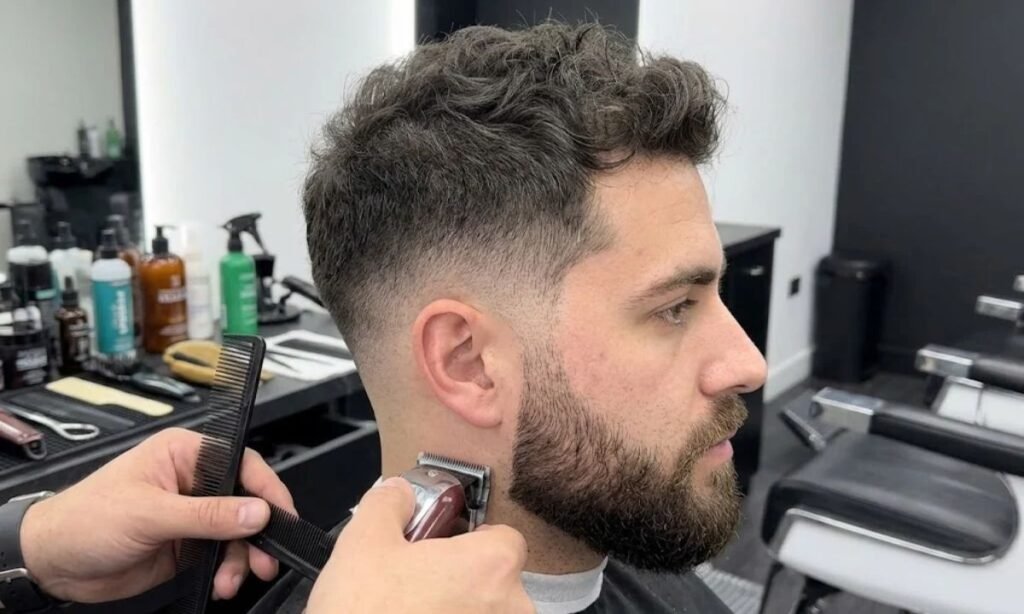
Keep the natural sideburn when it frames your face well. Many men have a slight angle or taper that looks great as-is. Over-sharpening can flatten the shape.
Retain it too if you wear glasses. A clean, natural sideburn rests under the frame without looking crowded. A sideburn transition into the fade should be smooth, not boxy.
Ask your barber to follow the existing hairline shape. If they want to square it off, ask why. A good barber has a reason, and will explain it.
How to ask your barber for a low drop fade
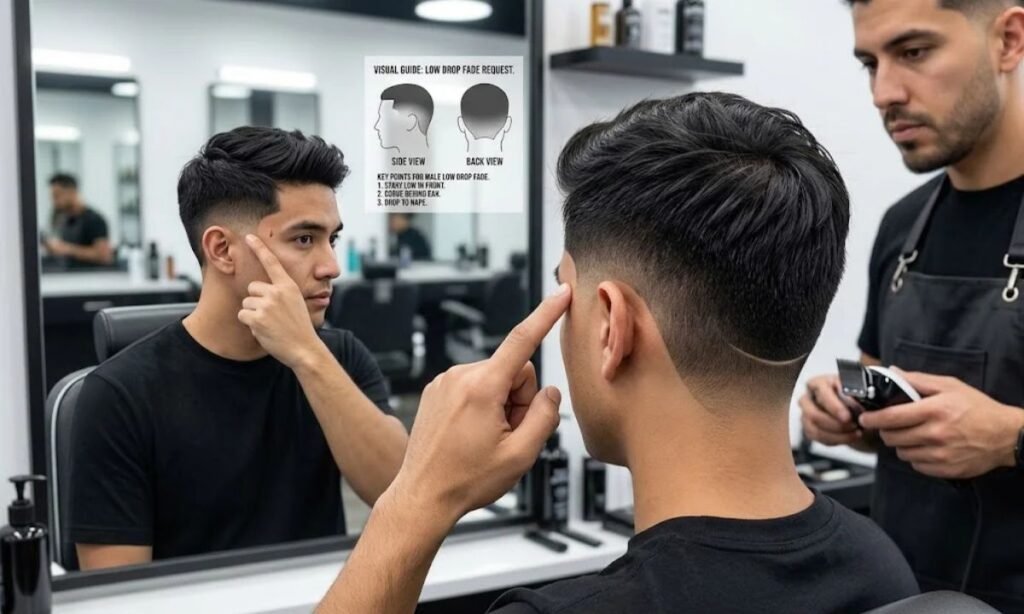
Most haircut disasters start with vague directions. “A little off the sides” means something different to every barber. A clear barber consultation fixes that.
Here’s a simple system. Decide five specs, bring photos, and deliver one sentence. That’s it.
Choose these five specs before the cut

Write these down on your phone before you book. They give your barber a full map of what you want.
- Fade height: low, with the start just above the ear.
- Drop depth: shallow, medium, or deep.
- Finish: skin finish, shadow fade, or guarded base.
- Top length: give it in inches, such as “about two inches.”
- Neckline: rounded neckline, squared neckline, or natural.
These haircut specifications keep both of you aligned. They also make future visits faster. Save them in your notes for next time.
Bring the right reference photos

Bring three reference photos. One should show the front, one the side, and one the back. Photos from only one angle hide the drop curve.
Choose images with a similar hair texture and head shape. A photo of a man with straight hair won’t help if your hair is coily. Search for low drop fade barber instructions along with your hair type to find closer matches.
Browse barbershop portfolios online for ideas. Shops such as Sacred Barbers, Stylish Barber Shop, and Galindo’s Barbershop share their work publicly. Editorial sites like FashionBeans also collect cut inspiration. Treat all of them as visual references, not as shopping lists.
Use a one-sentence barber brief

A barber brief is one sentence that packs everything in. It tells the pro the height, finish, top length, and neckline. It also keeps you from rambling.
The formula looks like this: “Low drop fade, [finish] base, [top length] on top, [neckline].” Short, clear, and repeatable. Say it with the photos on your screen.
Below are three ready-made versions. Pick the one that fits your hair and tweak the numbers.
Guarded base
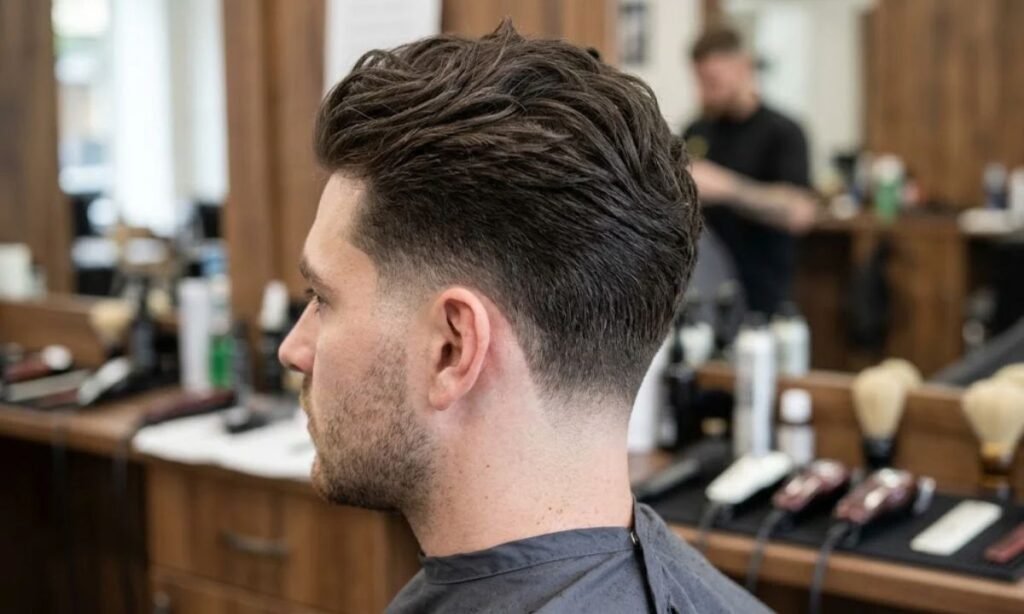
“Low drop fade with a #1 guard base, two inches on top, rounded neckline, soft blend into the sideburns.” This brief suits first timers and office jobs. It grows out gracefully.
Skin base

“Low drop skin fade down to bare skin, one inch textured on top, squared neckline, clean line-up.” Use this one if you want maximum contrast. Expect to rebook in two to three weeks.
Curly or coily top

“Low drop fade, #½ guard base, three inches of natural curls on top, rounded neckline, keep the shrinkage in mind.” That last phrase reminds your barber that wet length lies. It saves you from an unexpectedly short top.
How a barber builds a low drop fade

Understanding the process helps you spot good technique. You don’t need to be an expert. You only need to know what a careful barber does.
Watch for steady hands, frequent mirror checks, and a methodical order. Those signs usually mean the haircut is in safe hands.
Set the curved guideline and check symmetry

The barber first draws the fade guideline with a clipper or a trimmer. It starts above the ear, follows the skull, and curves down to the nape. Experienced barbers check it from the front, side, and back.
They compare both sides with their fingers and eyes. A symmetrical fade doesn’t happen by accident. If the line looks off, they fix it before blending.
A good barber also uses a hand mirror so you can see the back. Say something if the curve looks uneven. A confident barber will welcome the feedback.
Blend the zones without pushing the fade too high

Next comes the blend. The barber works up from the base using a clipper guard sequence, such as a #½ guard, #1 guard, then #1½ guard. Scissor-over-comb work softens the top section.
The real skill lies in restraint. Pushing the blend too high turns a low fade into a mid fade. The fade transition should stay smooth and low.
Finally, the detailing pass cleans the edges with a foil shaver or trimmer. Then comes the neckline detailing. Take a final look in the mirror before you stand up.
Tools and training behind a clean fade

Tools matter, but skill matters more. Even the best clipper can’t fix a rushed haircut. Still, the right gear makes a barber’s life easier.
Most pros use clippers from brands like Wahl, Andis, and BaBylissPRO. They pair them with a zero-gap blade, a foil shaver, and a trimmer. A good clipper blade stays sharp and runs cool.
Training counts too. Barber training at schools such as CADMEN Barber Academy or Invictus Career College teaches fade theory and safety. Ask your barber about their background, and check their haircut portfolio before booking.
How to style and maintain a low drop fade

A great haircut falls apart without a simple routine. The good news is that this one takes about five minutes. You only need to match the product to your hair.
Below, we’ll cover styling, timing, and skin care. Keep it simple, and your cut will stay fresh longer.
Style the top by hair type

For straight hair and fine hair, use a lightweight clay or light paste. Apply it to dry hair for a matte, low shine finish. Too much product makes thin hair look greasy.
For wavy hair and thick hair, try hair paste or pomade on damp hair. Blow dry it into place first. It helps the hair volume sit right.
For curly hair and coily hair, use curl cream on damp strands. Skip heavy gels that flake. Consistent products give you a reliable hair styling routine.
How often should you refresh the fade?
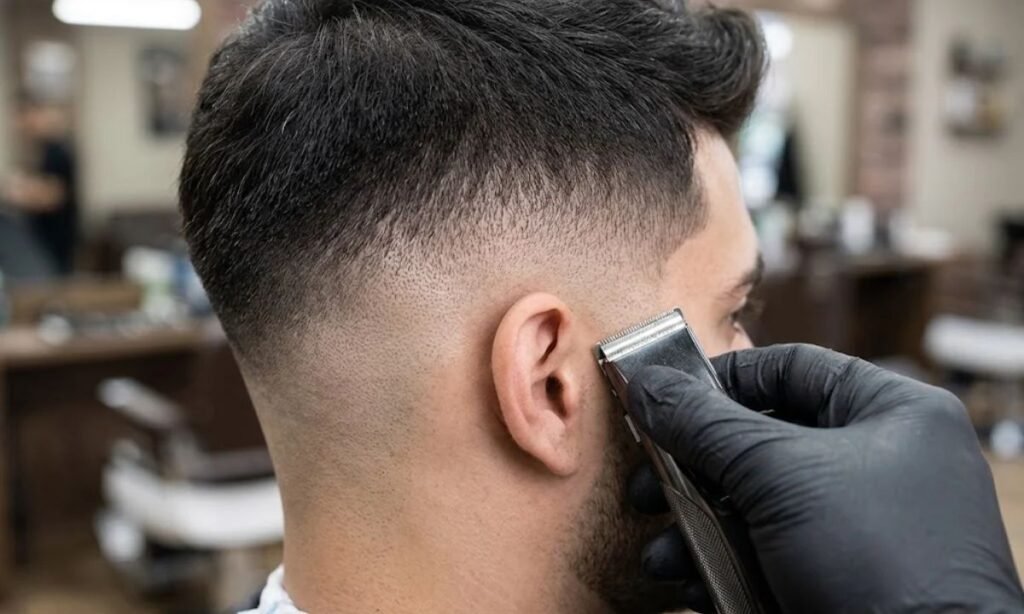
A low drop skin fade needs a refresh every two to three weeks. Bare scalp shows hair regrowth fast. By week three, the fade starts to look fuzzy.
A guarded base lasts three to five weeks. The fade grow-out is slower and kinder. Shadow fades land in the middle, around three to four weeks.
This is your rebooking interval, and it’s worth planning ahead. Book your next appointment before you leave the chair. A low drop fade touch-up between visits can also keep edges neat.
Skin comfort with very close fades
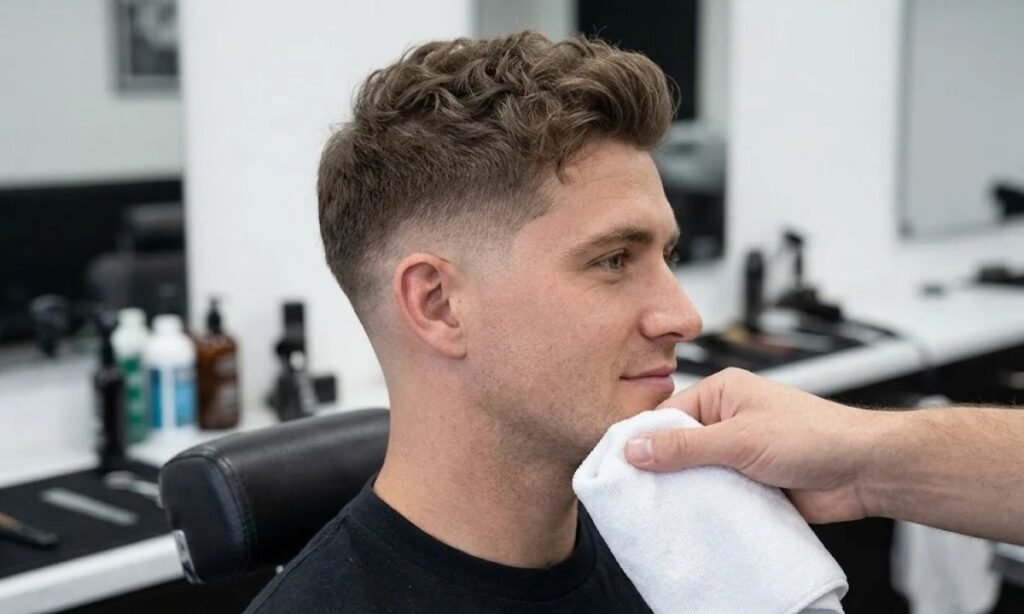
Very short fades can irritate the skin, especially on the neck. Razor bumps, ingrown hairs, and scalp irritation show up most in coarse curly hair. Close shaving against the grain raises the odds.
If you notice bumps, switch to a guarded base and skip foil shaving on the nape. Use a clean cloth and a gentle cleanser. Don’t pick at the spots.
Persistent bumps need a professional look. The American Academy of Dermatology notes that razor bumps and related conditions can scar if ignored. Conditions like acne keloidalis nuchae, which affects the back of the neck, deserve a visit to a dermatologist.
Common low drop fade mistakes and how to avoid them

Most mistakes come from skipping the consultation. A few small decisions make or break the final look. Here are the ones barbers see most.
- Starting too high. A drop that begins at the temple becomes a mid fade. Say “low” and point to the spot above the ear.
- Going skin on the first try. If you’re new to fades, a guarded base is the safer start.
- Ignoring hair shrinkage. Curly and coily tops look longer wet. Describe the dry length instead.
- Forgetting the neckline. A rounded neckline hides messy growth better than a hard square.
- Skipping the mirror check. Ask for the hand mirror before you stand up.
- Overstyling. Too much styling product weighs the top down.
- Delaying rebooking. Fades fall apart fast past the three-week mark.
Fix these, and your results improve right away. Most of them cost nothing. They just take a little planning and honest talk.
You can also checkout this article as well: Drop Fade Black Male: 55+ Styles, Barber Guide & Upkeep
Low drop fade frequently asked questions

What is a low drop fade?
It’s a low fade with a curve that drops behind the ear toward the nape. The fade line follows the head shape instead of running level.
Is a low drop fade good for thin or thinning hair?
Yes. Keep the base slightly longer and the top short. A low placement avoids exposing the scalp.
How often should I get a low drop fade?
Every two to three weeks for a skin fade. Every three to five weeks for a guarded base.
Can I get a low drop fade with curly or coily hair?
Absolutely. Plan for hair shrinkage, and use curl cream on the top. Many barbers specialize in this combination.
What’s the difference between a drop fade and a burst fade?
A drop fade sweeps down to the nape. A burst fade curves around the ear only and leaves length behind.
Will a low drop fade give me razor bumps?
It can, especially with close shaving on coarse curly hair. A longer base and a clean technique reduce the risk.
Final Thoughts
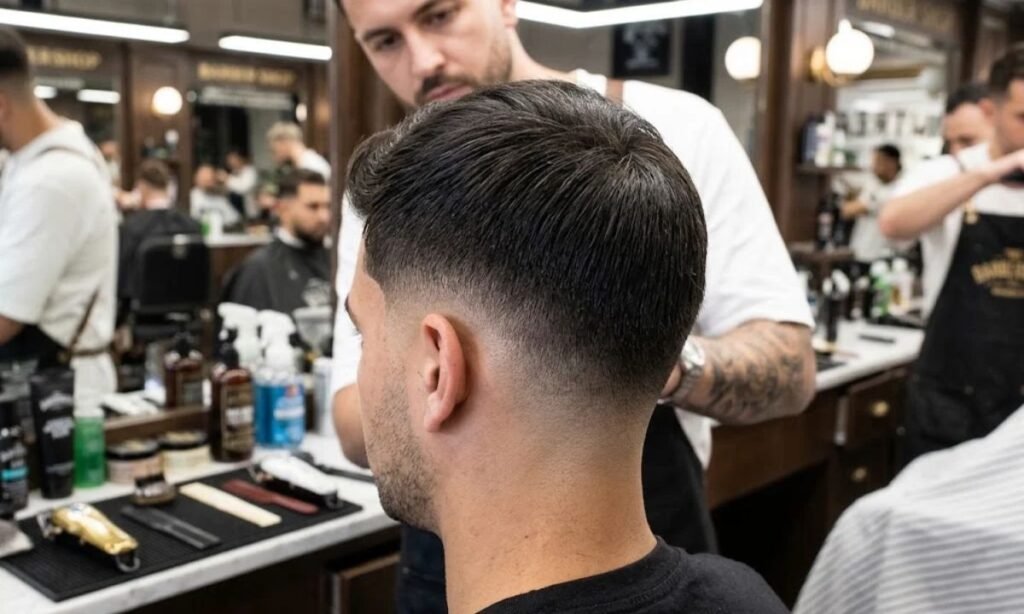
The low drop fade earns its popularity. It’s neat, flexible, and kind to most head shapes. With the right specs, a clear brief, and a barber you trust, it’s hard to get wrong.
Start with a guarded base if you’re unsure. Move to a skin fade when you’re ready for more edge. Keep a note of your specs for next time.
Have you tried a low drop fade yet? Drop a comment with your hair type and your favorite top length. If this guide helped, share it with the friend who still asks for “a little off the sides.” We’ll refresh this guide as barbers and trends evolve, so check back.

I’m Michael Charles, the creator of MegaCrazes—your source for fresh hairstyles, sharp haircuts, and simple hair-care inspiration. Find your style. Own your look.