


Updated November 2026
Quick Answer
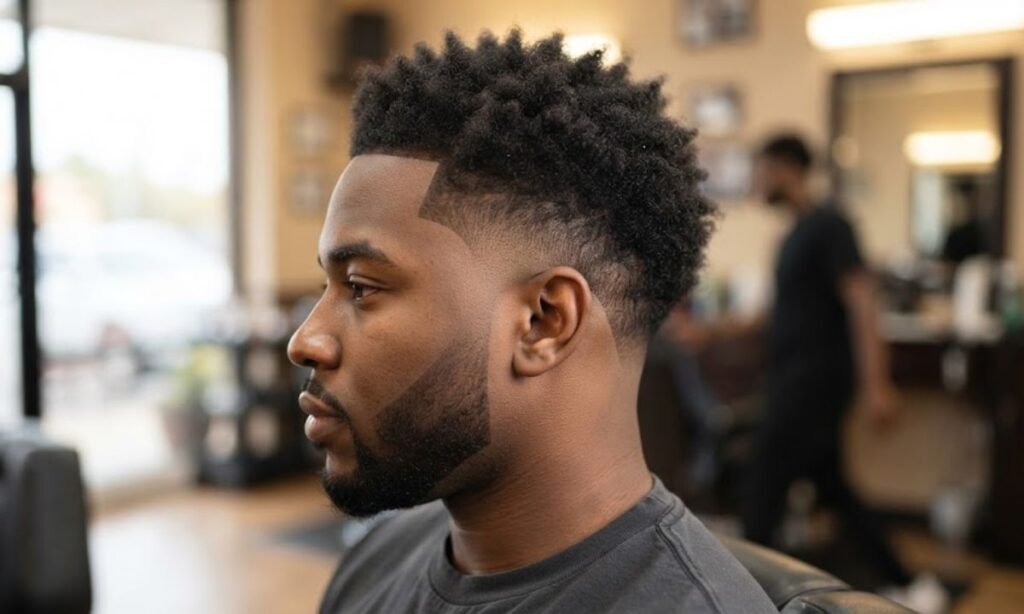
A drop fade is a fade that curves down behind the ear instead of running flat around the head. The fade line sits higher at the temple and drops toward the nape.
For Black men, it frames 360 waves, short curls, an Afro or twists with a clean, rounded shape. It also fits the natural curve of the skull, which is why it looks so sharp from the side.
Pick a fade height (low, mid or high), then choose a skin finish or a shadow finish. Tell your barber your top length and how deep you want the curve.
Expect to rebook every two to three weeks if you want it crisp. Skin versions fade faster, while shadow versions grow out gently.
What is a drop fade for Black men?
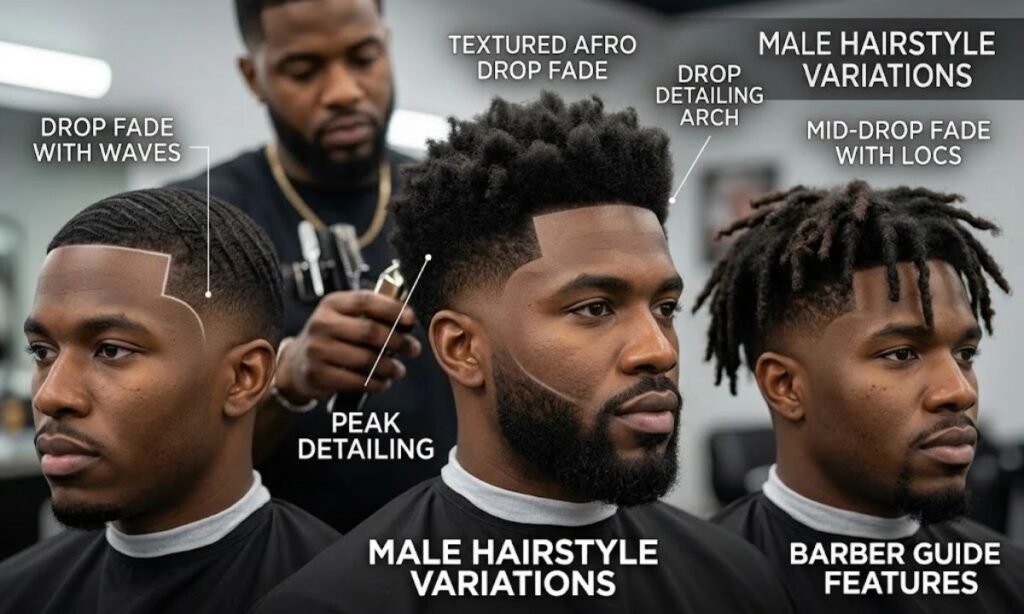
Picture a regular fade as a straight horizon line around your head. Now tilt that line so it slides down behind each ear. That’s the drop.
The blend area follows your skull instead of fighting it. On Afro-textured hair, this matters, because dense curls show every uneven spot in the hair transition.
A good drop fade also respects your hair perimeter, meaning the outline around your ears, temples and neck. When the fade contour hugs that outline, the cut looks planned, not rushed.
The four choices inside every drop fade

Every drop fade comes down to four decisions. First is the fade base, which is how short the bottom gets.
Second is the fade placement, meaning how high the line starts. Third is the fade contrast, which describes how fast hair goes from short to long.
Fourth is the downward arc, or how steeply the line drops behind the ear. Change any one of these and the whole cut reads differently.
Here’s a quick way to remember them:
- Base: skin, shadow or guarded
- Height: low, mid or high
- Contrast: soft or sharp
- Arc: shallow or deep
Low, mid, high, skin or shadow: choosing the fade base
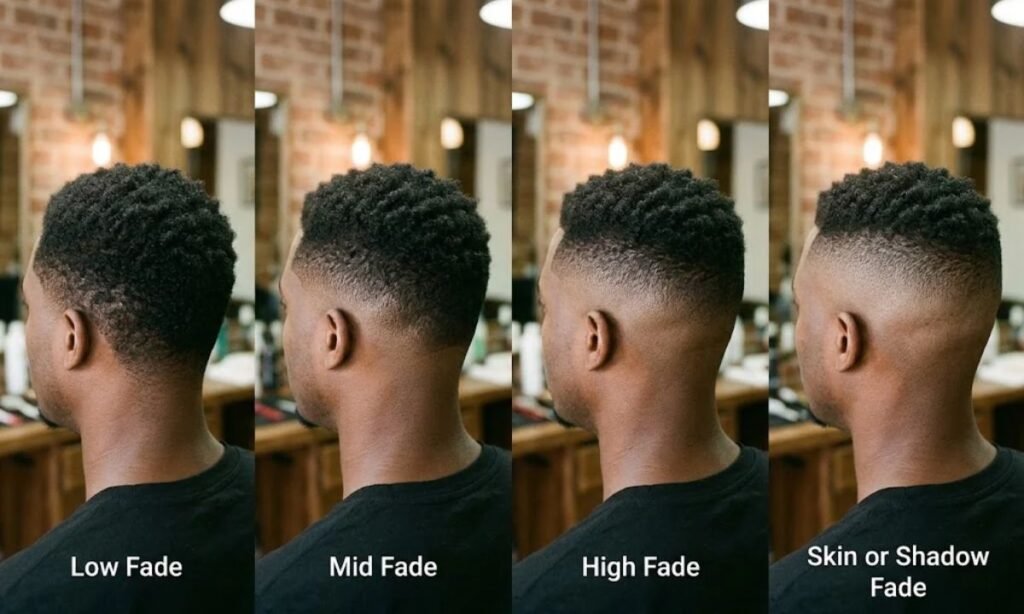
Most guys freeze here because the menu sounds like a foreign language. The good news is you only need two answers: how high and how short.
Height controls where the fade line starts. The fade base controls what the bottom looks like.
Think of it like a volume dial and a tone dial. One sets how loud, the other sets how warm.
1. Low drop fade
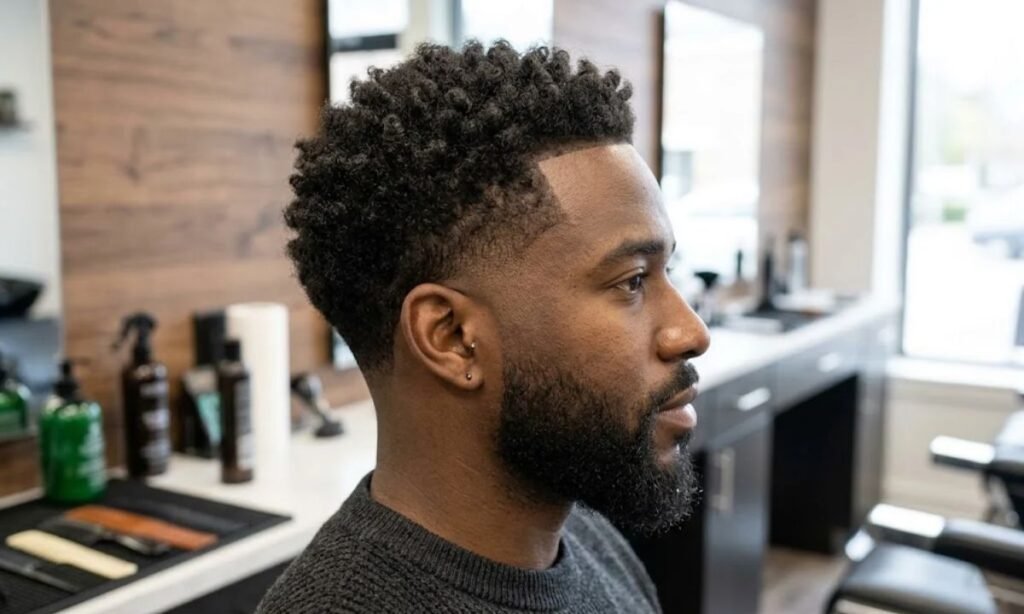
A low drop fade starts just above the ear and curves down toward the nape. It keeps most of your side hair coverage, so it feels safe and office friendly.
It’s a smart pick if you’ve never had a fade. You get a clean low fade edge without much scalp exposure.
2. Mid drop fade

A mid drop fade begins around the temple level and drops behind the ear. It gives clear contrast without going full barbershop bold.
Most men with a textured top land here. It balances the top length with a tidy mid fade on the sides.
3. High drop fade
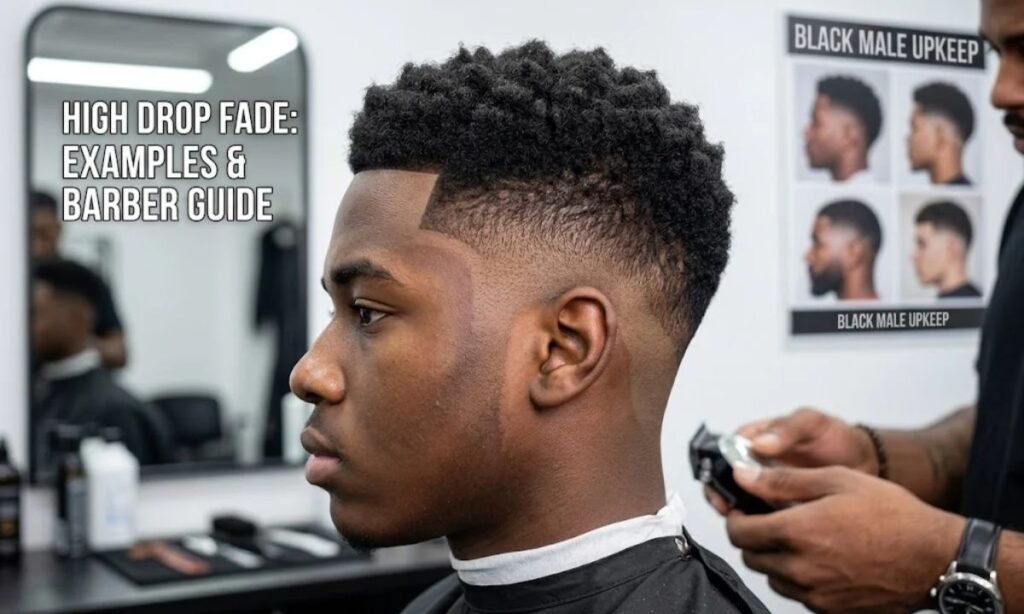
A high drop fade starts near the top of the head and arcs down the back. It shows the most scalp, so the contrast is loud.
This one suits short Afro tops and sharp, squared crops. It needs a regular visit, because regrowth shows up fast.
4. Skin or bald drop fade

A skin fade, also called a bald fade, takes the base down to bare skin with a foil shaver or zero-gap blade. The look is crisp and clean.
It also shows every bump and every uneven patch. If your skin is sensitive, ask your barber to leave a hint of stubble instead.
5. Shadow or guarded drop fade
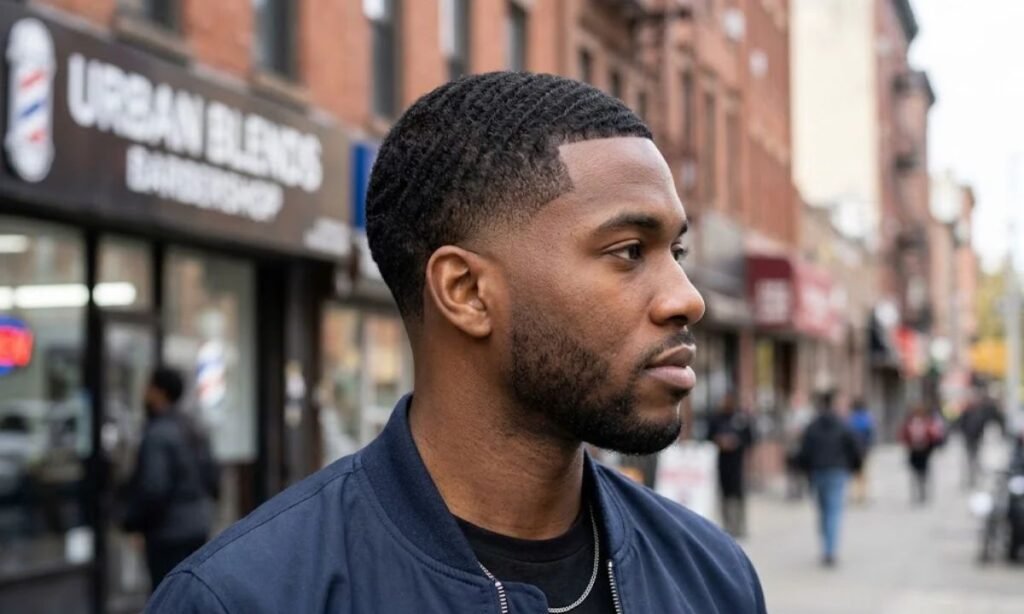
A shadow fade keeps a whisper of hair at the bottom, often a #½ guard or #1 guard. It looks soft and lasts longer between visits.
This is the friendliest base for men who fight razor bumps. It’s also called a guarded base, and it hides small blending flaws well.
7 drop fade styles for Black men by top hairstyle

The base gets you the sides. Now let’s talk about what’s sitting on top.
Your hair type and texture decide which top works with the drop. Below you’ll find the headline styles first, then a deeper catalog of variations.
6. Drop fade with 360 waves
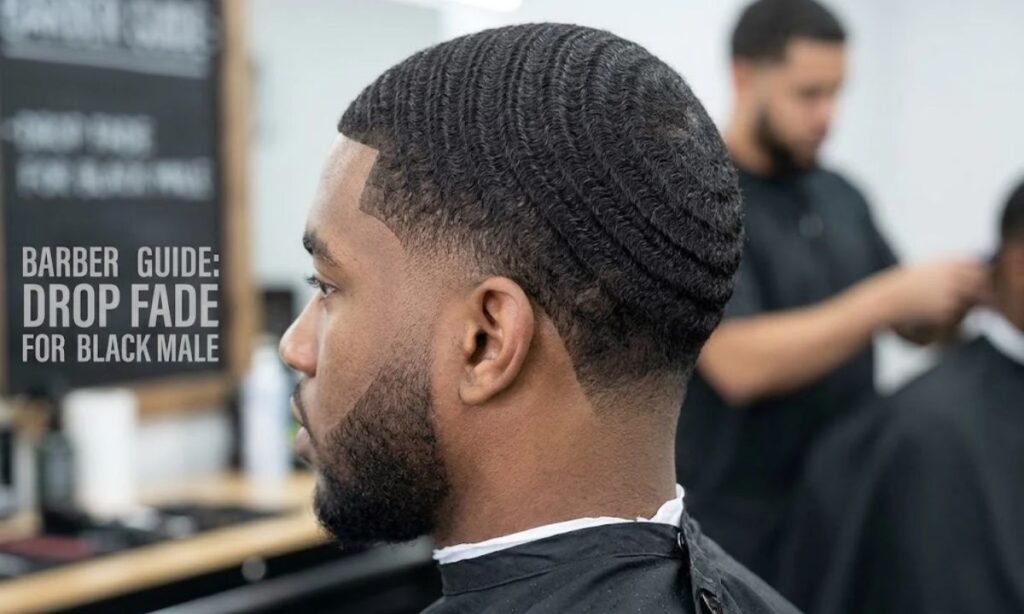
A drop fade with 360 waves is the classic pairing. The low, curved sides frame the wave brushing pattern without cutting into it.
Sleep in a durag and brush daily. Waves train best when the hair moisture stays balanced.
7. Drop fade with short curls or coils

Short natural coils look polished with a drop fade. The curve softens the jump between tight curls and short sides.
Keep the top around one to two inches. Use a light leave-in conditioner so the curls look defined, not dusty.
8. Afro drop fade

An Afro drop fade pairs a rounded full Afro or mini Afro with tight, curved sides. The contrast makes the Afro look taller and cleaner.
Pick a pick-comb and shape the top before you leave the chair. Plan for hair shrinkage, because a three-inch Afro can look much shorter once it dries.
9. Drop fade with sponge twists

Sponge twists sit best on a mid drop fade. The sharp sides make the twist sponge pattern pop.
Your barber can twist the top, then fade the sides, or you can do it at home. Either way, keep the top short enough to hold the coils.
10. Drop fade with twists, locs or braids
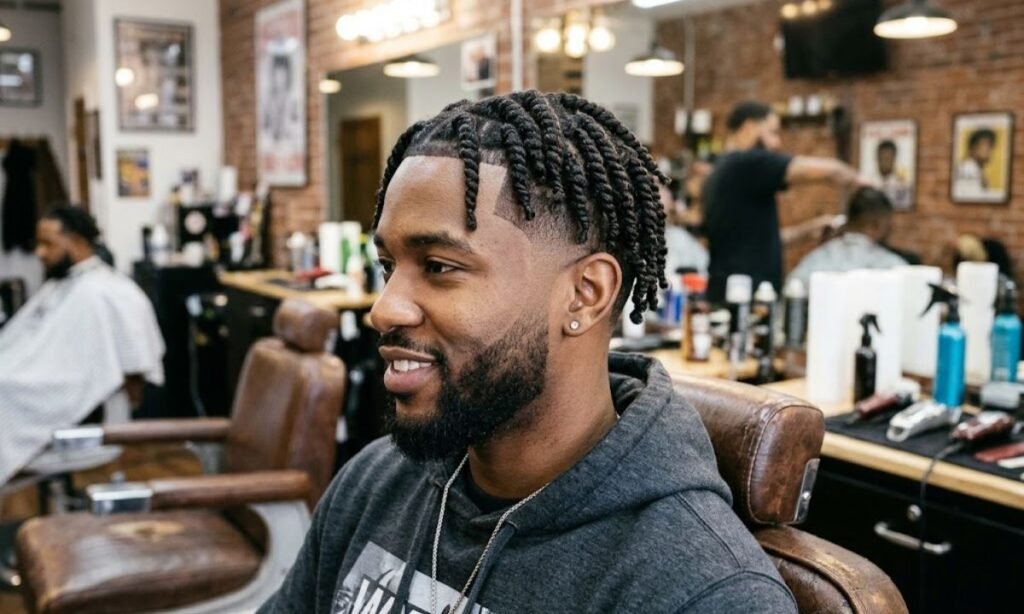
Longer styles love a clean frame. A drop fade tightens the sides while twists, locs, braids or cornrows run on top.
Gentle detangling and regular scalp care keep the top healthy. Ask your barber to protect the hairline when they trim around the edges.
11. Short hair or buzz cut drop fade

A buzz cut with a drop fade looks like a clean short crop with extra shape. The curve adds interest when the top is only a #2 guard.
This is the lowest effort option on the list. A quick wipe-down and a moisturizer is all it needs.
12. Drop fade with beard

A beard blend connects the fade to your facial hair. It works best when the sideburn connection flows into the beard connection without a harsh gap.
Ask for a smooth transition at the cheek. A patchy beard looks better with a tighter blend.
13. Low-to-mid drop fade transition
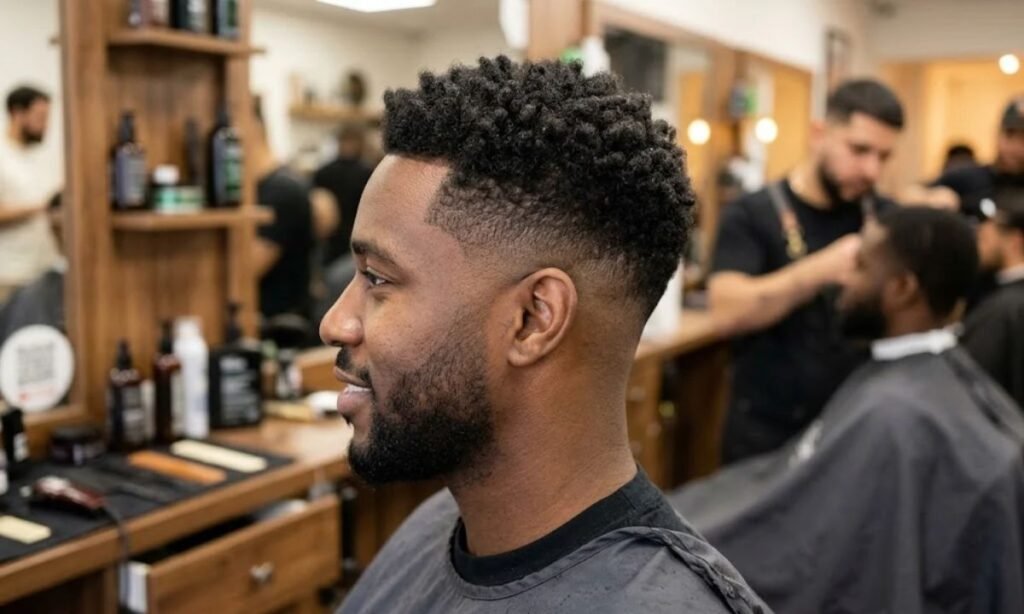
This style starts low at the back and rises slightly toward the temples. It gives you the safety of a low fade with a bit more shape.
It’s good for men who can’t decide. Everyone can see the contrast, but nobody feels exposed.
14. Mid-to-high drop fade transition

Here the line climbs from the middle of the head up toward the crown. The effect is a bolder, taller silhouette.
Try it with a flat top or a squared short Afro. It reads sharp from the side and the back.
15. Gradual drop fade blend

A gradual blend stretches the hair transition over a longer span. It looks soft and natural.
Choose it if you want something polished, but not showy. It also grows out gracefully.
16. Sharp drop fade transition
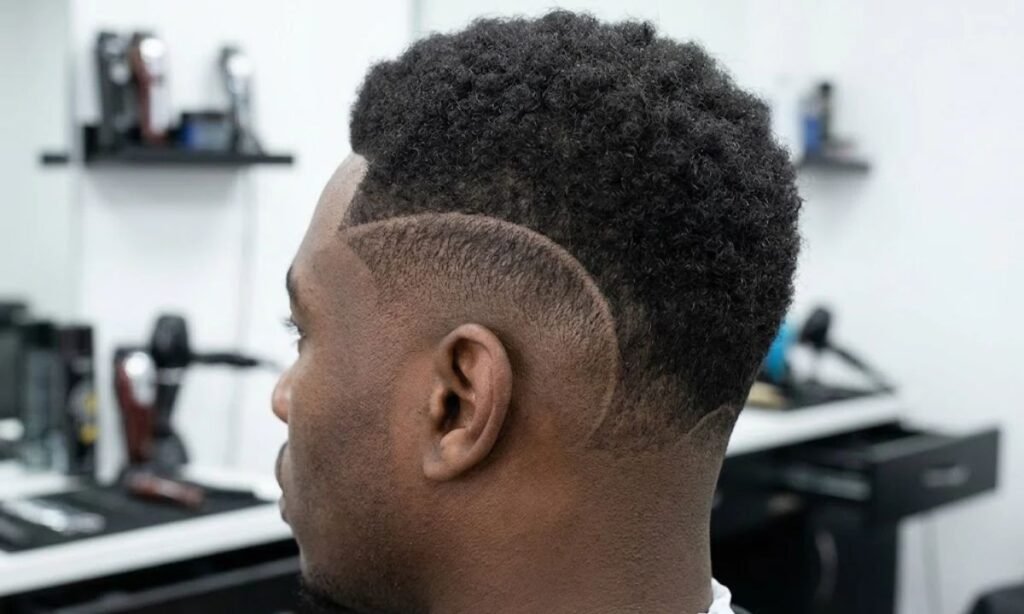
A sharp transition squeezes the blend into a smaller zone. The fade contrast jumps fast, so the line looks crisp.
It needs regular cleanups. When it grows out, the sharp line blurs and looks messy.
17. Curved drop fade placement

A curved placement follows the ear and wraps toward the nape. The curve depth decides how dramatic the drop looks.
Show your barber a side-profile photo. Depth is hard to explain with words alone.
18. Compressed drop fade

A compressed fade packs the whole gradient into a small area. It looks tight and deliberate.
This works on narrower heads, since it adds visual definition without taking too much hair. Go easy on the contrast if your hairline is thin.
19. Extended drop fade

An extended fade stretches the blend higher on the head. The result is a lot of gradient and a softer look.
It’s great on dense hair, where a short blend can look chunky. It does take more skill, so choose a barber who blends well.
20. Drop fade below the crown

Keeping the fade below the crown leaves the upper head full. It’s a conservative placement that looks professional.
Try this if you want length on top for twists or a mini Afro. The sides stay tidy while the top does the talking.
21. Drop fade above the occipital bone

Starting the fade line above the occipital bone, that bump at the back of your skull, creates a shapely rear. It makes the back of the head look rounded and balanced.
This detail separates a good cut from a great one. Ask your barber to follow your rear silhouette closely.
22. Drop fade around the temples

Working the fade around the temple points gives you a sharp frame. It keeps natural edges intact for those who like a soft finish.
If your hairline is receding, avoid cutting deep into the corners. A gentle blend hides thinning better than a sharp one.
23. Drop fade with natural side fullness
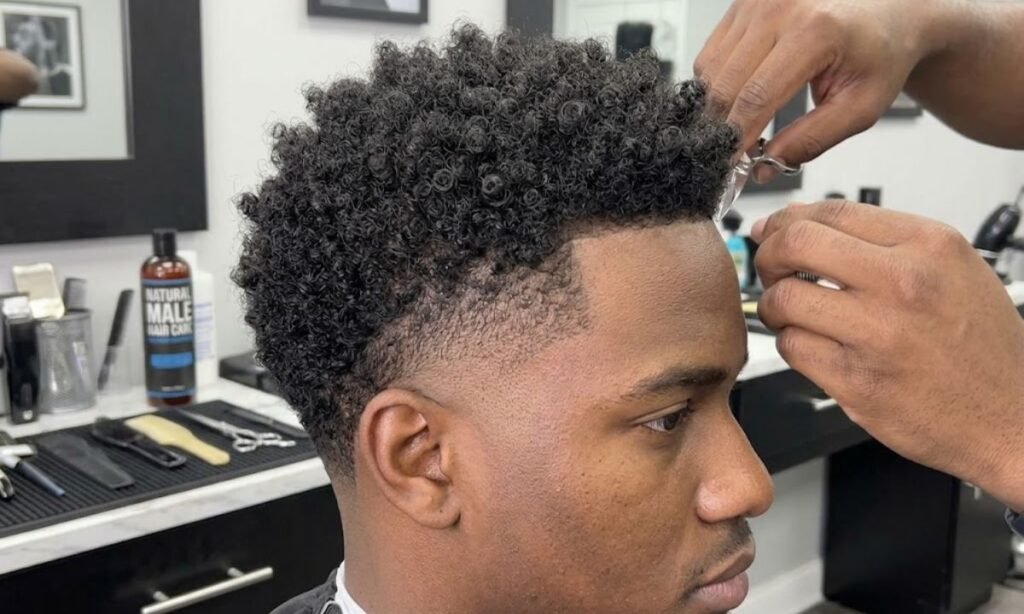
Some men like the sides to keep a bit of body. A higher guard number, like a #2, leaves hair volume while still showing a curve.
It’s less stark than a skin fade. That softness suits casual style and long days.
24. Drop fade for wider head shapes

Wider heads can look broader with too much fullness at the sides. A mid fade pulls the eye inward and tightens the side silhouette.
Keep the top upright instead of flat. Height draws the eye up and balances the width.
25. Drop fade for narrow head shapes

Narrow heads benefit from a lower fade that leaves a little more hair at the sides. That extra fullness adds balance.
Avoid a very high skin fade here. It can make the head profile look thinner than it is.
26. Drop fade for round face shapes

A round face looks sharper with a taller top and a clean line at the sides. A mid drop fade with some height on top is a safe call.
Don’t obsess over face shape rules. Your side silhouette and hairline matter more.
27. Drop fade for longer face shapes

Longer faces do well with a lower drop and a flatter top. That combo keeps the cut from adding extra height.
A light beard can help too. It shortens the look of the jaw and adds balance.
28. Drop fade with a rounded neckline

A rounded neckline curves softly at the bottom. It looks friendly and natural.
It also grows out gracefully. That’s handy if you can’t visit the barber every two weeks.
29. Drop fade with a natural neckline

A natural neckline leaves the back untouched by a blade. The hair just fades into your neck in its own way.
This helps with neck irritation. It’s also forgiving when you wait extra days for your next visit.
30. Drop fade with a tapered neckline

A tapered neckline narrows toward the center. It looks smooth, and the shape stays clean.
The nape needs regular attention with this one. Stray hairs show quickly against skin.
31. Drop fade with a clean temple transition
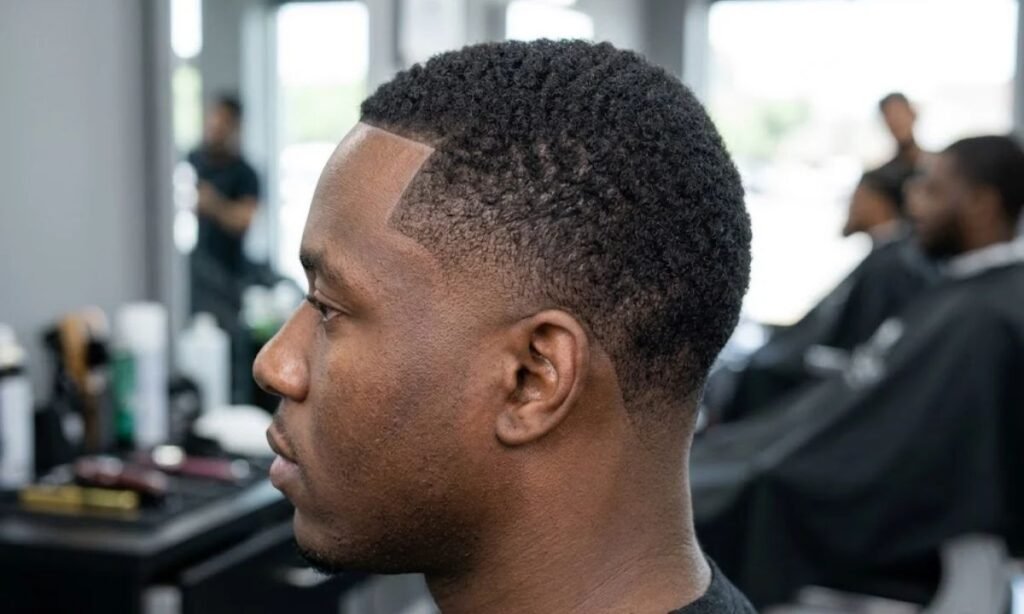
A clean temple transition blends the sideburn smoothly into the hairline. There are no harsh steps or patchy spots.
Ask for C-cups around the ears if you want a precise frame. They add definition without making the cut look severe.
32. Drop fade with a soft hairline blend

A soft hairline blend avoids a razor-sharp line-up. The front looks natural and the cut ages better.
It’s the best option for anyone with a receding hairline. A natural line-up hides thin spots much better than a hard edge.
33. Drop fade with a zero-guard starting point

A zero-guard start means the barber begins the blend with the clipper open and no guard. It gives a smooth, even base.
From there, the barber works upward with longer guards. It creates the clean gradient you see in modern shops.
34. Drop fade with a foil-shaver finish
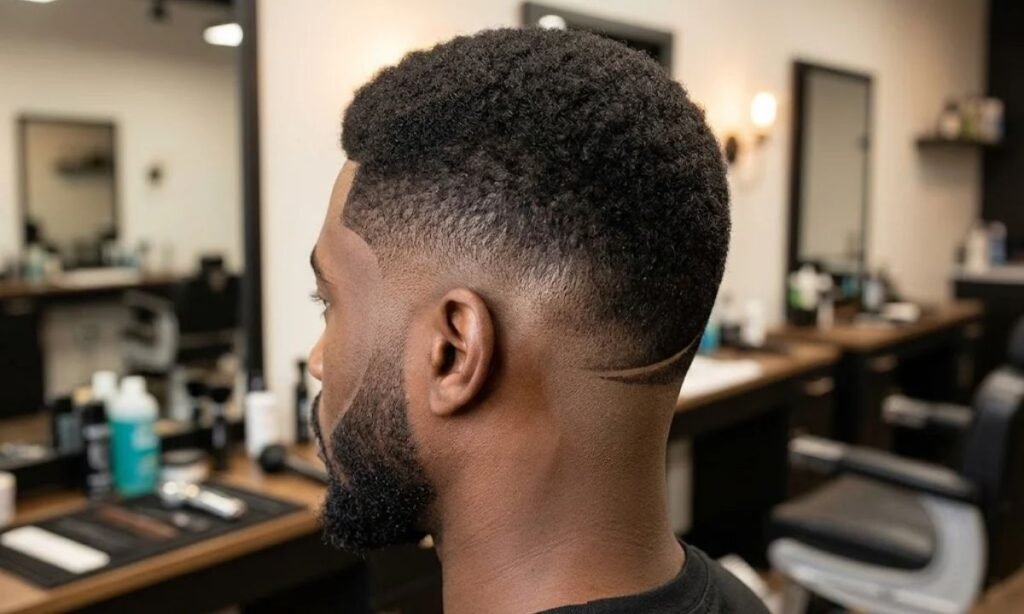
A foil shaver cleans up the very bottom of the fade. It leaves a smooth, bright edge.
It’s quick, but it can irritate sensitive skin. Tell your barber if bumps are a concern.
35. Drop fade with a half-guard blend

A #½ guard keeps a thin layer of hair at the base. It looks sharper than a #1 but softer than bare skin.
It’s perfect for men who want clean, but not shiny. The shadow also hides tiny blending flaws.
36. Drop fade with a longer guard finish

A longer guard finish uses a #2 or #3 at the bottom. The fade looks softer and the cut feels more casual.
This works well for those who want a conservative look. It also keeps the cut fresh for longer.
37. Drop fade with a clipper-over-comb blend

Clipper over comb is a classic blending method. The barber lifts the hair with a comb and cuts along it.
It works well on short curls. It gives fine control in tricky spots.
38. Drop fade with a smooth weight-line transition

The weight line is where the longer top meets the shorter sides. Smoothing it prevents a visible step.
A good barber softens this line with a small blade or scissors. Ask to see it in the mirror before you leave.
39. Drop fade with balanced side-to-back blending
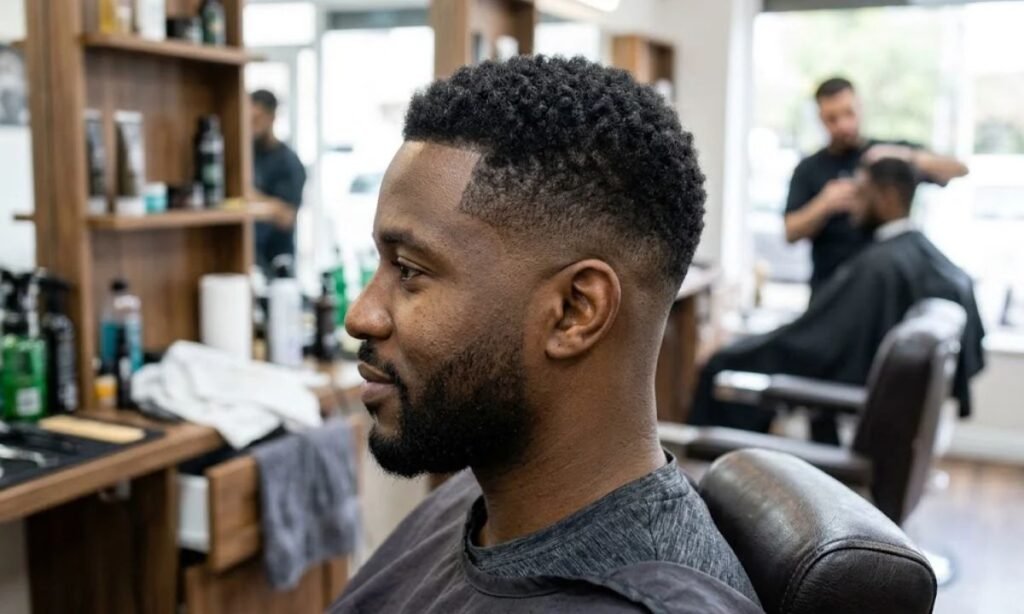
Balance means both sides match, and the back flows evenly. That gives you solid fade symmetry.
Check from the back with a hand mirror. It’s easy to miss small differences from the front.
40. Drop fade with a dark lower section
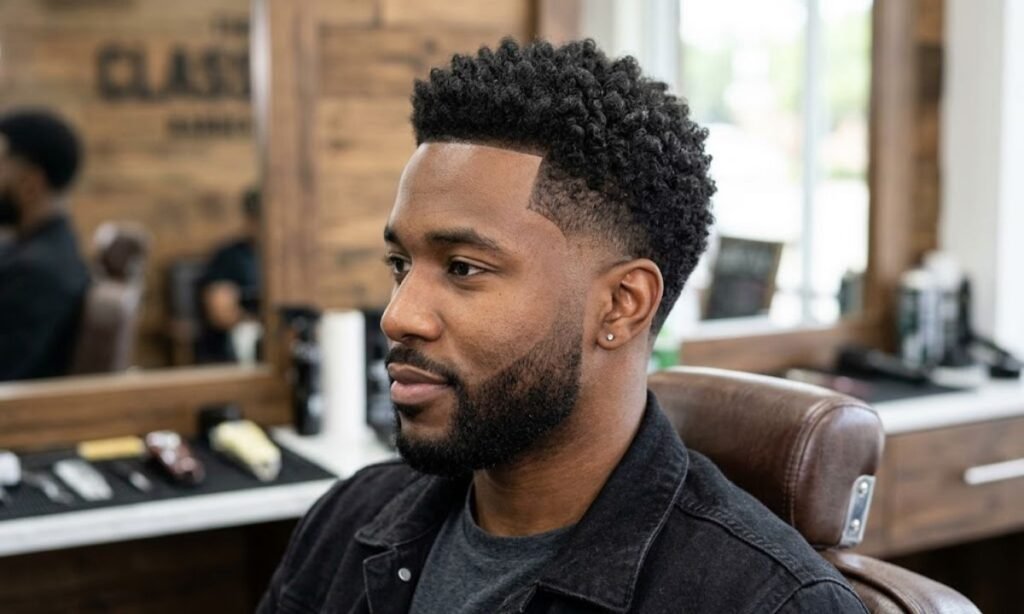
A dark lower section keeps a bit of hair so the base looks shaded. It creates depth and makes the contrast richer.
It shows best on dark, dense hair. Try a shadow base with a #1 guard.
41. Drop fade with a light lower section

A light lower section goes closer to the skin. The base looks bright and clean.
It makes dark top hair stand out strongly. It also needs more frequent trims.
42. Drop fade with a high-contrast finish

High fade contrast pairs a skin base with a thick top. The look is bold and graphic.
It suits men who like making a statement. Plan to rebook every ten to fourteen days.
43. Drop fade with a low-contrast finish

Low contrast keeps the gap between top and sides smaller. The result is subtle and refined.
It’s easy to wear to work or a wedding. It also looks fine even when it’s a week overdue.
44. Drop fade with a disconnected transition

A disconnected transition leaves a visible gap between the top and the sides. It looks modern and a bit daring.
It’s less forgiving of regrowth. Book your next visit before you leave.
45. Drop fade with a blended transition

A blended transition has no visible gap. The sides melt into the top.
It’s the classic choice and the most versatile. If you’re unsure, start here.
46. Drop fade with a burst-shaped curve

This hybrid borrows the burst fade curve around the ear. It gives a rounded shape while keeping the downward arc.
It’s a nice option when you want something between the two cuts. Show your barber a photo to be safe.
47. Drop fade with symmetrical rear blending

Rear blending is where many fades go wrong. Symmetry here means the left and right curves drop to the same point.
Ask your barber to check the back with a mirror. A rear-view reference photo helps a lot.
48. Drop fade with uneven crown growth

Many men have a crown that grows differently from the sides. A drop fade can balance this by leaving the area slightly longer.
Tell your barber about stubborn spots. They can adjust the blend to hide them.
49. Drop fade for dense natural hair
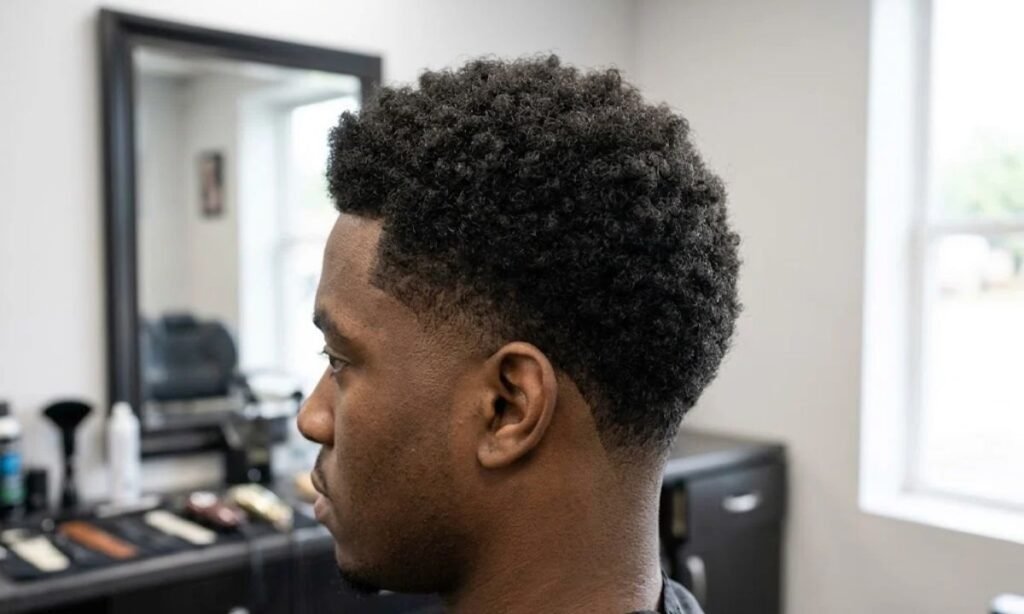
Dense hair needs a longer blend zone. It prevents chunky steps and gives a soft gradient.
Ask for a gradual drop and plenty of time in the chair. Rushed cuts on thick hair rarely look clean.
50. Drop fade for tightly coiled hair
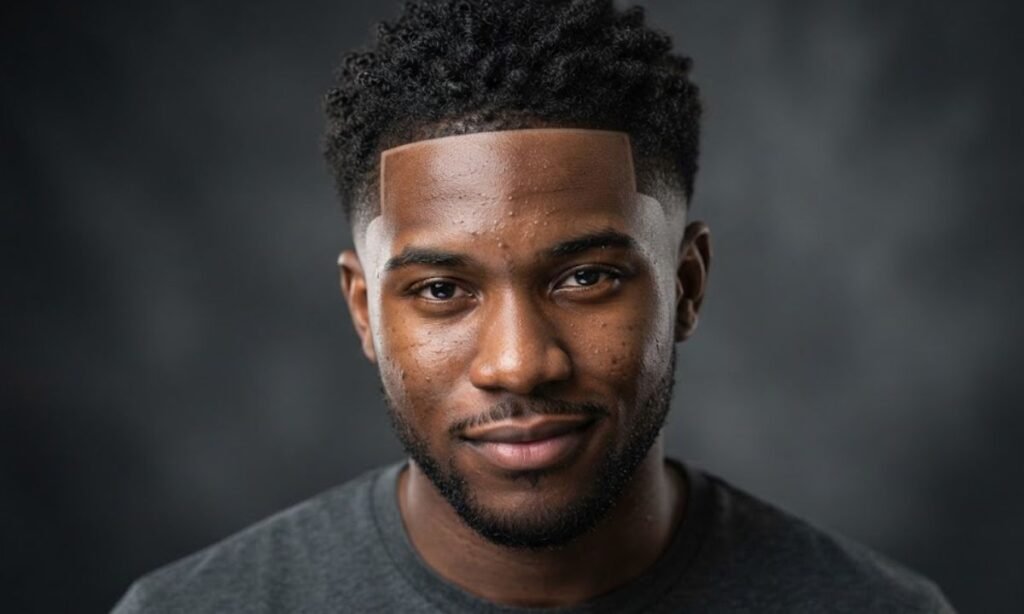
Does a drop fade work on 4C hair? Yes, and it often looks fantastic. Tight coils hold the shape well and show crisp lines.
Just remember hair shrinkage. Your barber should cut with that in mind.
51. Drop fade for coarse hair texture

Coarse curly hair is strong and holds a fade pattern nicely. It can feel stiff, though, so use a light conditioner.
Moisture helps the clipper glide. It also lowers the risk of pulling and irritation.
52. Drop fade for uneven hair density
If your sides grow in patchy, a skin fade will expose that. A shadow base is more forgiving.
A slightly longer guard can hide thin spots. Your barber can also adjust the curve to work around them.
53. Drop fade with a shadowed lower section

A shadowed lower section creates a smoky look at the base. It feels soft, not harsh.
It’s an easy route if you want less upkeep. It also makes your hair length transition look natural.
54. Drop fade with a soft lower blend

A soft lower blend gently blurs the bottom of the fade. There’s no sudden jump to skin.
It works well for men who get bumps from tight shaves. It’s a gentle cut that still looks sharp.
55. Drop fade with a clean scalp finish

A clean scalp finish means the very bottom is smooth with no stubble. It pairs well with a sharp line-up.
Moisturize afterward. Bare skin needs more care than shaded skin.
56. Drop fade with longer-lasting side blending
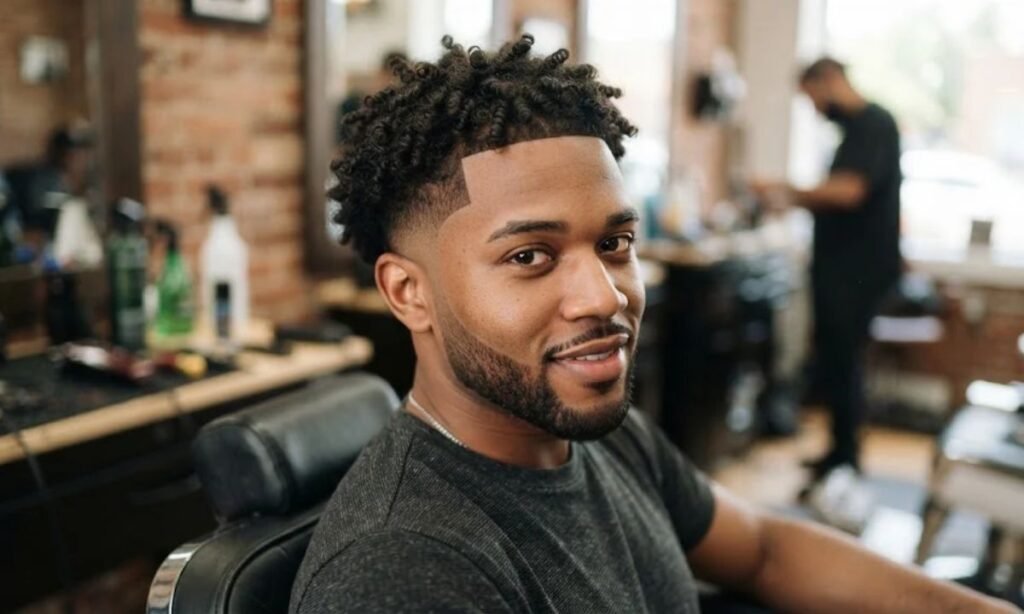
Longer-lasting blending uses a gradual transition with a low contrast base. The cut grows out slowly and stays neat.
This is ideal for busy men. You can stretch visits to three or four weeks.
57. Drop fade with a customized fade base

A customized base mixes elements, like a shadow around the ears and skin at the nape. It’s tailored to your head and your goals.
Bring haircut reference photos and explain what you like. A good barber will map out a plan before they start.
Which drop fade should you choose?
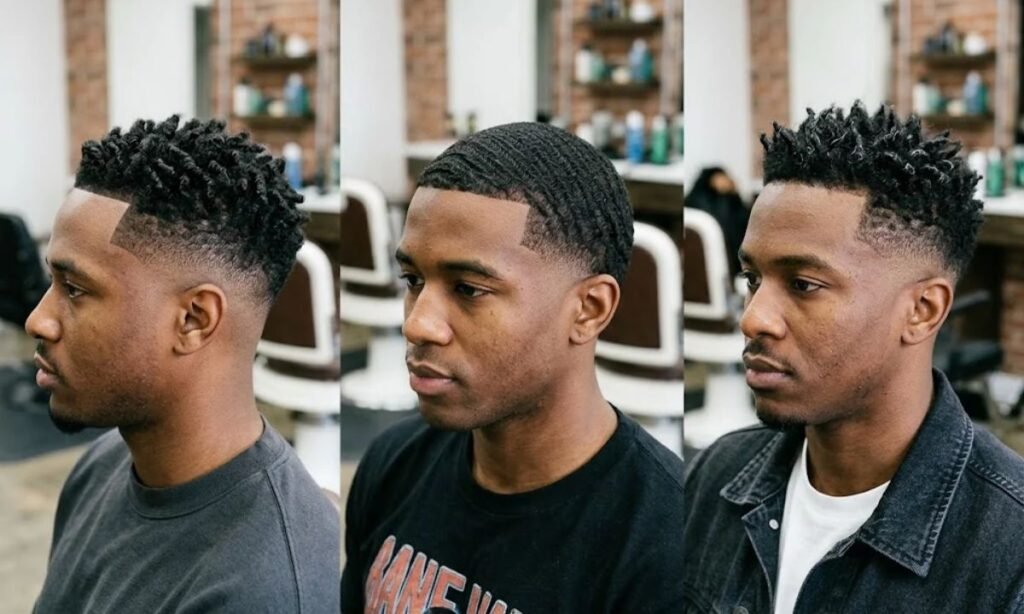
Fifty-plus options can feel like a buffet with no menu. Let’s shrink it down to four simple filters.
You don’t need a perfect answer on the first try. A good barber can adjust the cut at your next visit.
Start with how much hair you want to keep
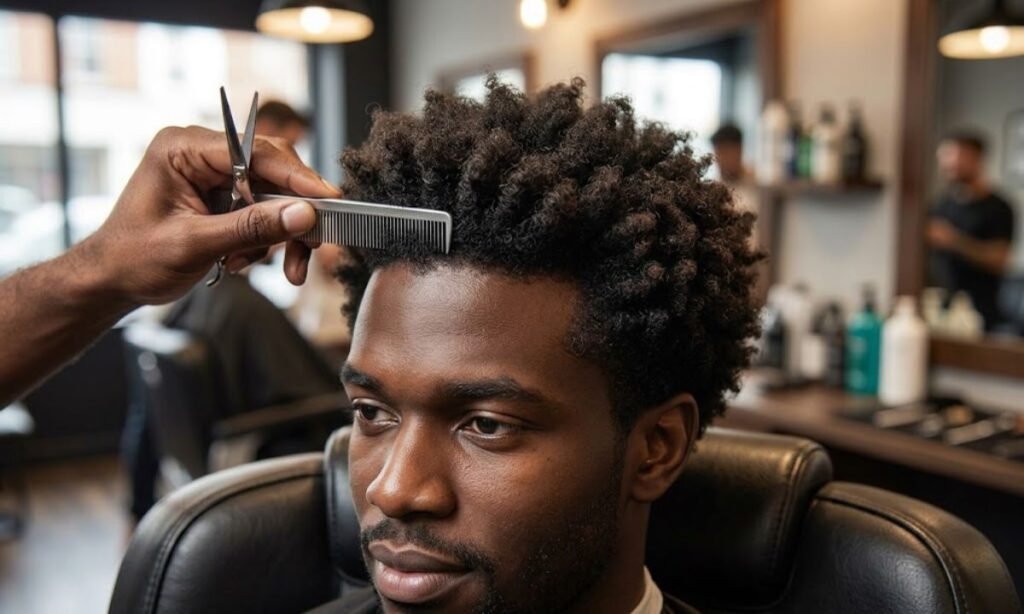
Be honest about scalp exposure. If you like feeling covered, go low and use a shadow fade or guarded base. If you love the clean look and don’t mind frequent visits, try a mid or high skin fade.
Think about your hair growth goals too. Growing a full Afro? Keep the sides longer, so the top and sides grow out together.
Match the cut to your top length and density

Your top length and hair density set the rules. Dense hair needs a longer blend, while fine hair looks better with a softer contrast. A textured top with plenty of volume can handle a bolder fade.
Here’s a quick cheat sheet:
| Your top | Best drop fade | Why it works |
|---|---|---|
| 360 waves | Low or mid, shadow base | Protects the wave pattern |
| Short curls or coils | Mid, gradual blend | Keeps curls neat |
| Afro | Mid or high, skin or shadow | Adds shape and height |
| Twists, locs or braids | Low or mid, longer guard | Frames the length |
| Buzz cut | Any height, low contrast | Easy upkeep |
Judge silhouette, not face-shape rules

Face shape charts are fun, but your head shape and rear silhouette tell the real story. A drop fade should follow the skull, so check the side and back in a mirror.
Snap a side-profile photo and a back view of your current cut. It shows where the bulk sits and where the curve should land.
Plan around your hairline and growth goals
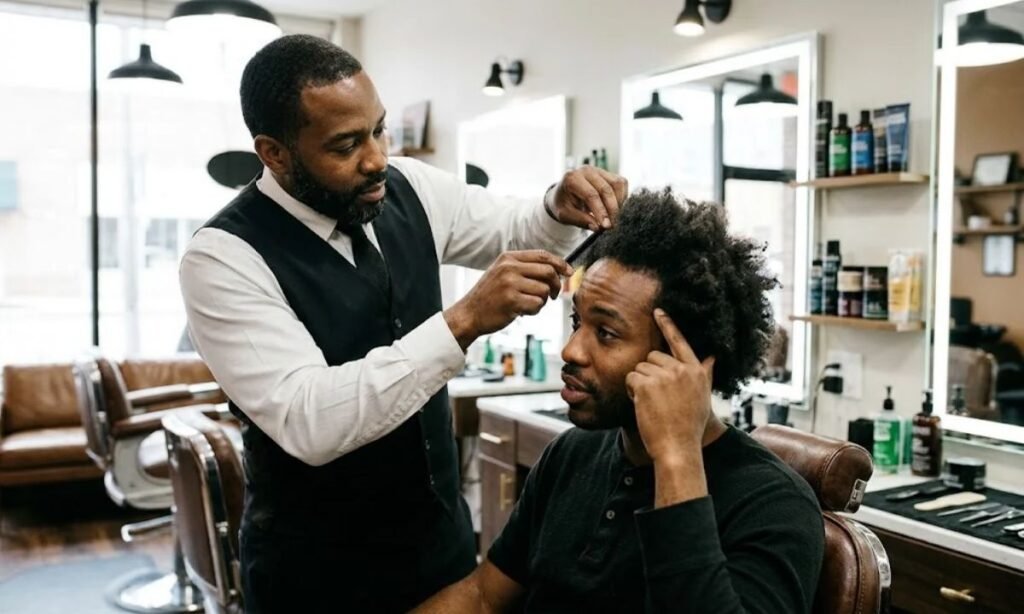
A receding hairline changes the game. Skip the razor-sharp line-up and use a natural line-up with a soft blend. It hides thin spots and keeps the cut looking fuller.
If you’re growing hair out, pick a low, shadowed fade. It grows out gracefully and avoids that awkward in-between stage.
What should you ask your barber for?

Most bad fades start with bad communication. You say ‘drop fade,’ the barber hears something else, and you both end up disappointed.
Good barber instructions are specific and visual. A few clear details beat ten vague ones.
Give these five details before the clippers start

Tell your barber these five things, and the chair stays stress free:
- Fade height: low, mid or high
- Fade base: skin, shadow or guarded, and which guard number you want
- Top length: in inches or with a clipper guard size
- Curve depth: shallow or deep behind the ear
- Finish: sharp line-up or natural line-up, and how you want the neckline
If you’re not sure about the guard number, remember this scale. A #½ guard leaves about 1.5 millimeters, a #1 guard leaves 3 millimeters, and a #2 guard leaves 6 millimeters. Your barber may use a clipper attachment or a zero-gap blade for the shortest part.
Bring a side and rear reference photo

Photos remove all doubt. Save a side-profile photo and a rear-view reference that show the exact fade line and curve depth. Better yet, bring haircut reference photos of men with a similar hair type and texture.
A photo of someone with straight hair won’t translate to 4C hair. Pick references that match your texture and head shape.
Barber script examples
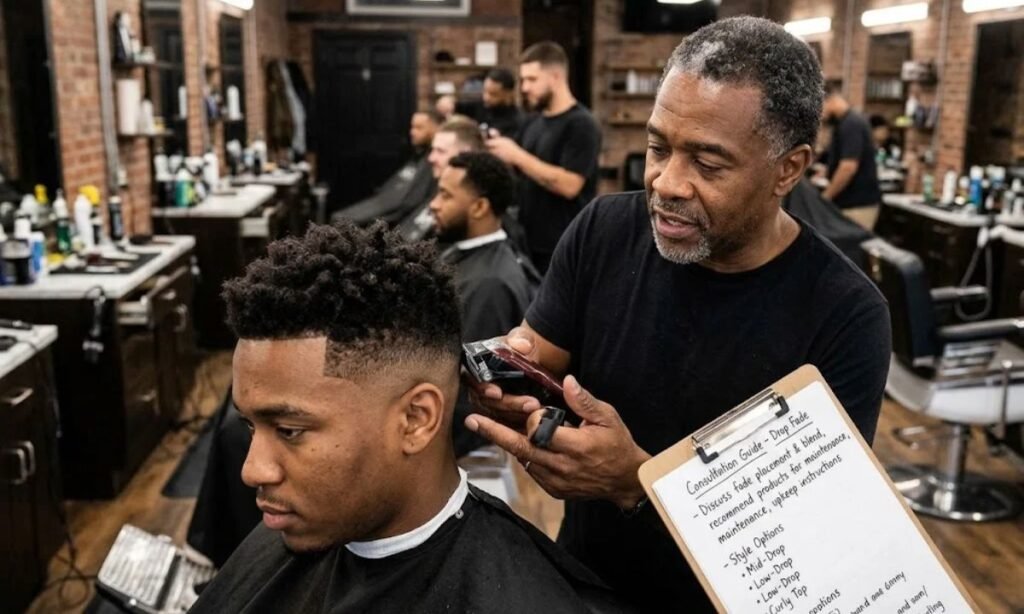
Can’t find the words? Steal one of these and tweak it. They keep the chat short and the result clear.
Script for waves
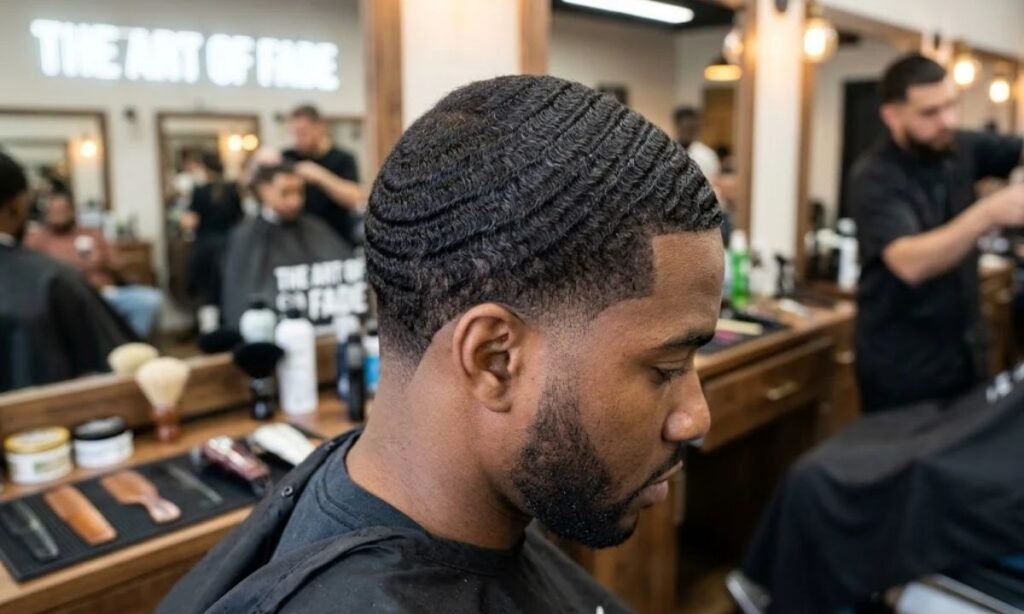
‘I’d like a mid drop fade with a shadow base, around a #1 guard at the bottom. Keep the top short enough to brush into 360 waves, and leave my natural hairline alone.’
Add a note about your durag routine. It tells your barber you care about the wave pattern.
Script for an Afro or coils

‘I want an Afro drop fade. Start the fade at the temples, blend to a skin finish at the nape, and shape the top into a round Afro. Please cut with hair shrinkage in mind, so it still looks full after it dries.’
Mention if you’d rather keep the top two inches long. It helps the barber pick the right blend.
Script for twists or locs

‘I wear my twists long on top and want a low drop fade on the sides. Keep the hairline protected, and blend the sideburn connection into my beard blend.’
If your locs are fresh, say so. Your barber will avoid pulling or cutting new growth.
Drop fade vs taper, burst, regular fade and skin fade
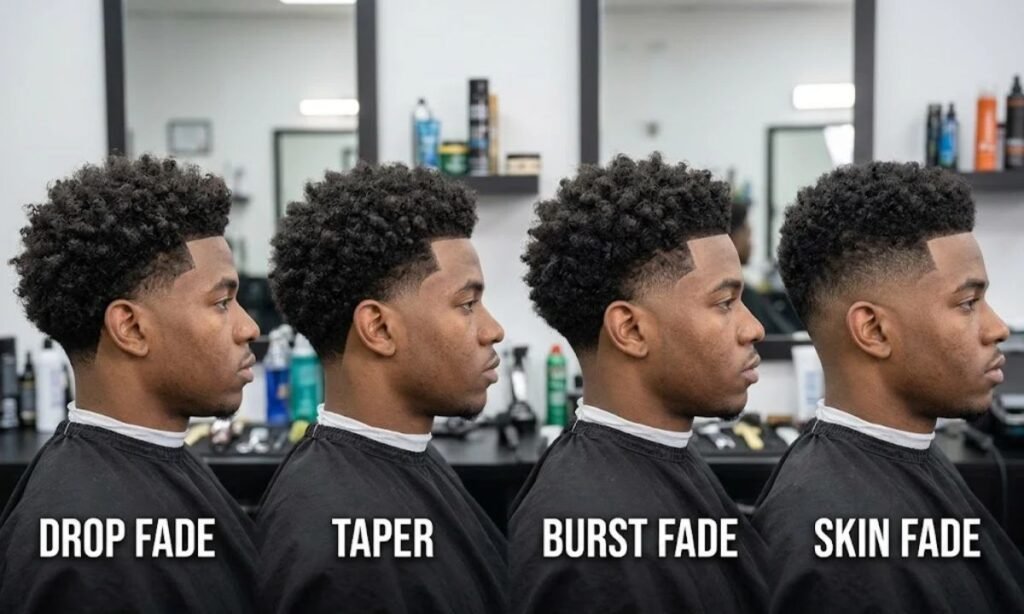
These names get mixed up all the time. It’s easy to see why, since they all look similar from the front.
The real differences show up behind the ear and at the neck. Let’s compare them one by one.
Drop fade vs taper fade

A taper fade trims only the sideburns and the neckline. The rest of the hair stays longer and fuller.
A drop fade blends much more of the sides and back. Choose a taper if you want subtle and conservative, and a drop fade if you want visible shape.
Drop fade vs burst fade

A burst fade forms a semicircle around the ear and leaves length at the back. It looks great with a mohawk or a longer back.
A drop fade keeps the line moving down and wraps around the head. If you want a rounded, ear-focused shape, ask for a burst.
Drop fade vs regular low, mid or high fade

A regular fade keeps the line fairly level around the head. It looks clean, but it doesn’t follow the skull’s curve.
The drop adds the downward fade contour behind the ear. That small change gives a more custom, modern feel.
A skin fade is a finish, not the opposite of a drop fade

People love to say ‘drop fade vs skin fade,’ but that’s apples versus oranges. Skin describes the base, while drop describes the path of the fade line.
You can have a skin drop fade, a shadow drop fade or a guarded drop fade. The base and the shape are two separate choices.
How to maintain a drop fade and protect your scalp
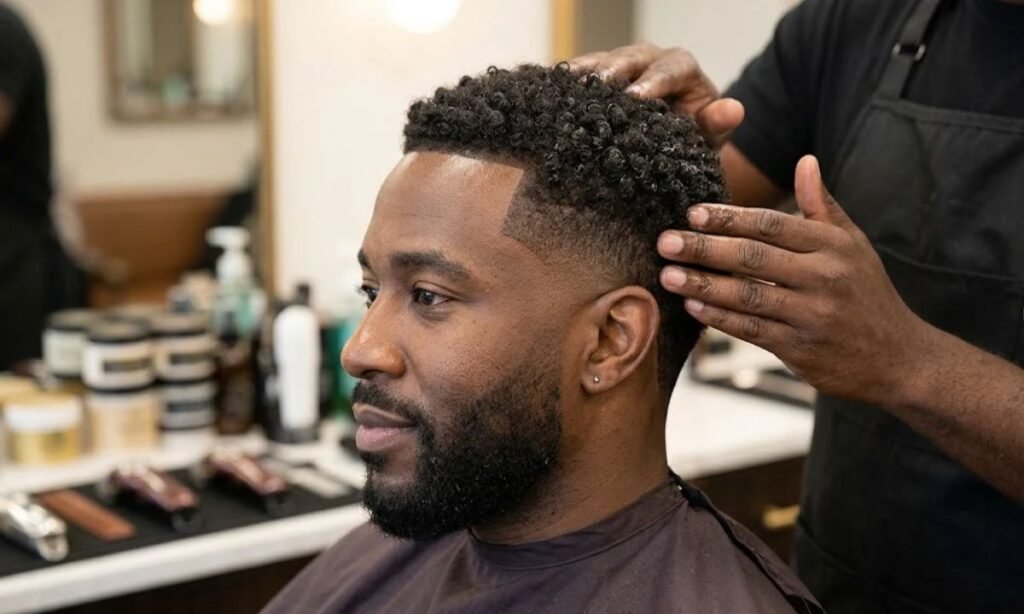
A great cut fades fast if you don’t look after it. Good fade upkeep takes small habits, not fancy gadgets.
Think of it like keeping sneakers clean. A quick wipe each day beats a deep scrub once a month.
Rebook based on how sharp you like it

How often should you get a drop fade? It depends on the finish. Use this guide for haircut maintenance:
| Finish | Rebook every | Notes |
|---|---|---|
| Skin or bald | 1 to 2 weeks | Regrowth shows fast |
| Shadow or guarded | 2 to 3 weeks | Softer grow out |
| Low contrast with longer guard | 3 to 4 weeks | Easiest to stretch |
If you can’t visit that often, book regular cleanups for the neckline and temple points. A ten minute touch up keeps the shape crisp.
Planning a grow out? Ask your barber for a gradual blend and a natural neckline. That way, your regrowth looks intentional rather than messy.
Conditioning matters more than ‘fade products’
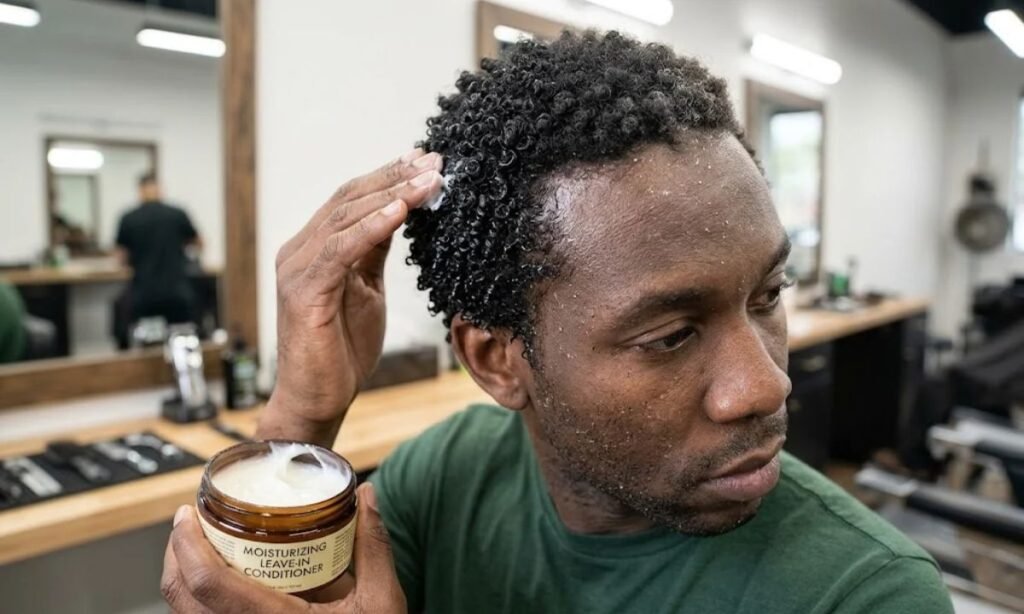
A clean fade starts with healthy hair and skin. A solid hair conditioner and a leave-in conditioner do more than any pomade.
Use gentle detangling with a wide tooth comb or your fingers. Keep up hair moisture, especially if you brush waves or wear a durag at night.
Wash your durag weekly. A dirty one can irritate your scalp care routine. Choose light hair styling products so the hairline protection stays intact.
If close cuts cause razor or neck bumps

Razor bumps, neck bumps and scalp bumps are common on tight curls. When curly hair gets cut very short, it can curl back into the skin and cause ingrown hairs.
Here’s how to cut down on the trouble:
- Ask for a shadow fade instead of bare skin.
- Request a natural or tapered neckline.
- Use a warm towel before the cut to soften the skin.
- Moisturize afterward and avoid scratching.
- Skip tight collars right after a fresh cut.
If you notice firm bumps at the back of the head that keep coming back, don’t ignore them. They might be acne keloidalis nuchae, a skin condition that is more common in Black men. See a dermatologist, and let your barber know so they can avoid close shaving in that area.
Barbershop etiquette that makes your drop fade better

Fades go better when you treat the chair like a team effort. Show up with clean, dry hair and a clear plan.
Tip well, book ahead and talk about your hair growth goals. Barbers remember clients who communicate, and they often do their best work for them.
If something looks off, say it politely before you leave. A quick fix takes thirty seconds, but a bad cut lasts two weeks.
Common drop fade mistakes to avoid

Mistake one is going too high without thinking about upkeep. A high skin fade looks sharp on day one and rough by day ten.
Mistake two is skipping the back view. A cut that looks great in front can be uneven behind. Always check with a hand mirror.
Mistake three is ignoring your skin. If you get bumps, a shadow base is kinder than bare skin. Pick the finish that fits your skin and schedule.
You can also checkout this article as well Drop Fade Haircut: Types, Styles, and What to Ask Your Barber
Drop fade for Black men Frequently asked question

Does a drop fade work on 4C hair?
Yes. Tight coils hold a clean blend well, and the curve makes the cut look intentional. Just ask your barber to account for hair shrinkage and use a gradual blend.
What guard number should you use for a drop fade?
For a shadow fade, start with a #½ guard or #1 guard. For a softer look, finish with a #2 guard. For bare skin, your barber will use a foil shaver or zero-gap blade after the guards.
How do you explain a drop fade to a barber?
Give five details: height, base, top length, curve depth and finish. Then show a side-profile photo and a rear-view reference.
How often should you get a drop fade?
Every one to two weeks for skin, two to three weeks for shadow and three to four weeks for low contrast cuts. Book regular cleanups if you can’t make a full visit.
How do you prevent razor bumps after a fade?
Choose a shadow base, keep the neckline natural and moisturize after every cut. If bumps keep returning, check with a dermatologist.
Can you get a drop fade with a receding hairline?
Yes. Use a soft hairline blend and a natural line-up, and avoid cutting deep into the corners. A mid or low fade with a longer guard hides thinning well.
How do you grow out a drop fade?
Ask for a low, gradual blend before you start. Skip the skin base and keep the neckline tidy. Schedule quick cleanups, so the shape stays neat while the top grows.
How do you keep a drop fade symmetrical?
Check both sides and the back with a mirror before you leave. Bring a rear-view reference photo, and mention fade symmetry at the start.
Final Thoughts on drop fade black male

A drop fade is simple once you break it down. Pick a base, choose the height, decide on the curve and match it with your hair type and texture.
Your barber can handle the rest, as long as you give clear directions and a few photos. Keep up with conditioning, rebook on schedule and listen to your skin.
Now it’s your turn. Which drop fade are you eyeing next: waves, an Afro, twists or something custom? Drop a comment, share this guide with a friend who needs a fresh cut, and come back for updates as new trends roll in.

I’m Michael Charles, the creator of MegaCrazes—your source for fresh hairstyles, sharp haircuts, and simple hair-care inspiration. Find your style. Own your look.