


You’ve seen the photo on your feed. The sides curve around the ear like a tiny half moon, and the back stays full. Now you’re wondering if your barber will get it right.
That worry is fair. Ask for a “burst fade” and one barber gives you a clean arc, while another hands you a bad drop fade. This guide fixes that gap.
Quick Answer
A burst fade haircut is a fade that curves in a semicircular pattern around the ear. The hair gets shortest right at the ear and the natural hairline, then grows longer as it moves outward. The back of the head keeps its length instead of getting buzzed.
You can get it low, mid or high, and it works on straight, wavy, curly and coily hair. It pairs well with a mullet, mohawk, faux hawk, textured crop or textured fringe. Expect a touch up every two to three weeks if you like it sharp.
Fast facts:
- Shape: a curved arc around the ear, not a straight horizontal line
- Shortest point: right behind and around the ear
- Best for: guys who want contrast without losing length at the back
- Upkeep: three week touch up for a crisp look, longer for a softer one
- Ask for: burst fade, plus your fade level, guard numbers and top length
What Is a Burst Fade?
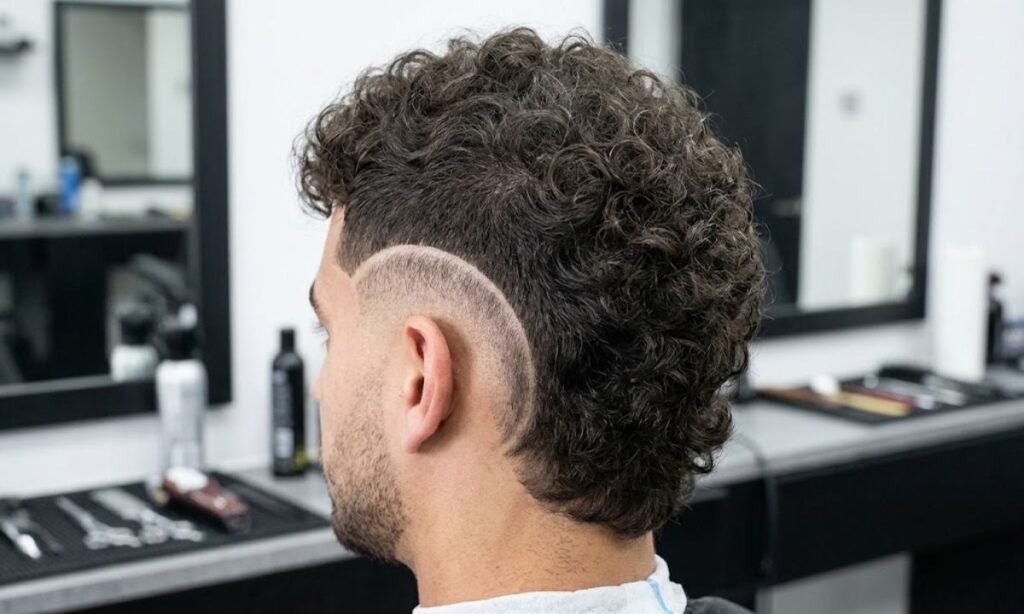
Think of a burst fade as a small explosion of short hair centered on your ear. The fade shape spreads outward in a curve, like a ripple in a pond. That’s where the name comes from.
It isn’t a brand new idea. Barbers have blended hair around the ear for decades. Over the last few years the curved version picked up its own name, and clients started asking for it by name.
The cut sits somewhere between a classic fade and a mullet friendly shape. You keep volume at the back, and you still get that crisp, clean sides look. Honestly, that mix is why it spread so fast.
How Does the Burst Shape Work Around the Ear?
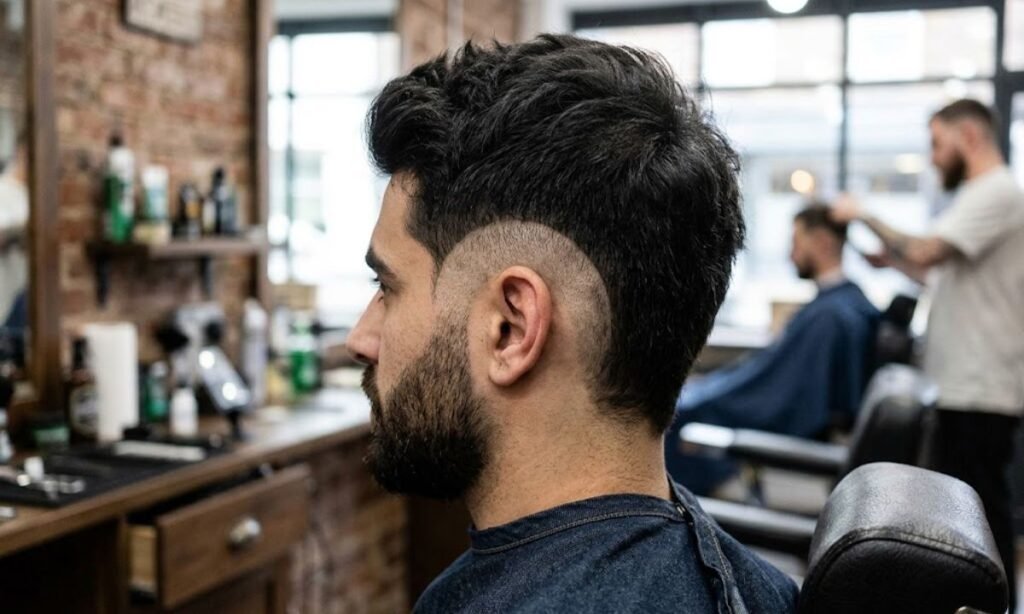
The barber picks an anchor point, usually just above or behind the ear. From there, they cut a curved guide line that wraps around it. Everything inside that curve gets taken down short.
Next comes the fade graduation. The hair moves from bare skin or short stubble at the ear to longer hair at the edge of the arc. A good barber blends it so you can’t spot where one length stops and the next starts.
You can picture a clock face. The ear sits in the middle, and the fade fans out between roughly eight and four o’clock behind it. That’s not a strict rule, but it helps you describe it.
What Hair Stays Longer in a Burst Fade?

The hair length around the nape and the back of the crown stays longer. Your barber leaves that area alone, or only tapers it lightly at the neckline. That’s the big difference from a full fade.
The top length also stays. You can keep it long enough for a side part or a middle part, or cut it into a textured crop. The burst only affects the area around the ears.
This matters if you’re growing out a mullet or a longer back. You don’t have to sacrifice it. The burst gives you contrast on the sides while the back keeps its weight.
What Makes a Burst Fade Different From Other Haircut Designs?

Most fades run in a flat line around the head. A burst fade breaks that rule on purpose. It bends with the ear, and that one change shifts the whole look of the cut.
It’s also a more three dimensional cutting job. The barber has to think about the curve, the depth and the back profile at once. That’s why results vary so much between shops.
How Does the Curved Fade Blend Differ From a Traditional Side Fade?

A traditional side fade sweeps in a horizontal fade line from the temple to the back. It wraps the whole head at one level. The finish looks sleek but uniform.
A curved fade stops short of the back. It forms a curved arc around the ear, then the hair returns to its full length. So the line goes around the ear instead of across the head.
Here’s a simple way to see it. A side fade is a belt around your head. A burst fade is a horseshoe tucked behind your ear. Same blending skill, very different outline.
Why Does a Burst Fade Leave More Hair Behind the Head?

The burst only needs the ear zone to be short. So the back of the head isn’t part of the fade at all. That gives you a fuller back profile and a thicker nape.
This is great if you have a rounder or flatter back of the head. The extra length fills the shape out. It can also help with hair volume when the hair is dense.
One warning, though. Longer hair behind the head means you need good hair separation where the fade ends. Otherwise the line can look like a ledge instead of a smooth curve.
How Does the Neckline Affect the Finished Burst Fade?

Your neckline cleanup sets the tone. A natural neckline looks soft and grown in. A squared or rounded one looks sharper but grows out faster.
If you want a mullet vibe, most barbers leave the nape natural and just remove stray hairs. If you prefer a tidy look, they might use an outliner to clean the edge. Tell them which you want.
Also check how the neckline meets the burst. The two shouldn’t fight each other. When they do, you get a choppy look from the back profile.
Who Does a Burst Fade Suit?

Short answer: more people than you’d think. The burst isn’t tied to one age, one hair type or one style. It works because the curve flatters the shape of the ear and jaw.
That said, a few details decide whether it looks amazing or just okay. Hair texture, hair density, and your daily routine all matter. Let’s go through them.
Which Hair Textures Work With a Burst Fade?

Straight hair holds the shape cleanly. You’ll see every line, so the blend needs to be tidy. Wavy hair gives a relaxed, tousled top that contrasts well with the sharp sides.
Curly hair and coily hair look especially good here. The tight curl pattern makes the contrast between the sides and the top really pop. A curly burst fade also shows off your curl definition nicely.
Fine hair works too, but go easier on the contrast. Fine hair can look thin if you cut it very short on top. Thinning hair can benefit from the burst because the shorter sides make the top look fuller.
How Do Head Shape, Density and Lifestyle Affect the Choice?
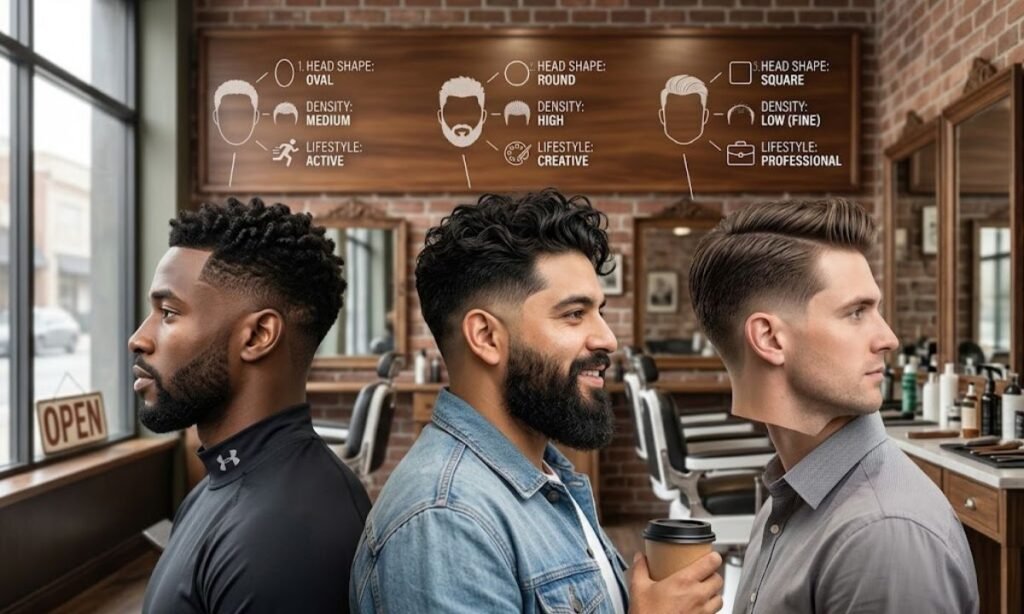
A rounder head often looks great with a mid burst, because the curve adds some angle. A narrower head may prefer a low burst so the sides don’t look too hollow. Your barber can eyeball this in a minute.
Hair density matters too. Thick hair holds the fade well but grows out fuzzy. Thinner hair shows scalp faster, so a low or mid placement keeps things subtle.
Then there’s lifestyle. If you work in an office, a softer guard finish may feel safer. If you’re an athlete or you hate fussy hair, you may want the sharpest cut and a quick three week touch up habit.
Low vs Mid vs High Burst Fade: Which Should You Choose?
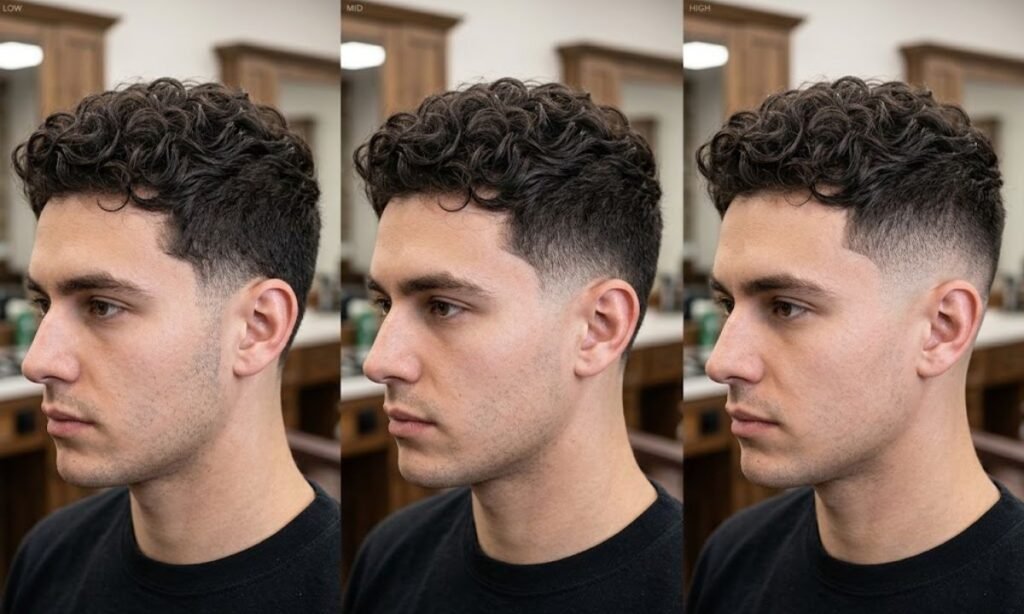
The fade level is how high the short zone climbs on your head. It changes how bold the haircut looks. You can think of it as the volume knob.
A quick rule of thumb: low is subtle, mid is balanced, and high is loud. But your head shape and top style can override that, so don’t just copy what a friend picked.
| Placement | Look | Best for | Upkeep |
|---|---|---|---|
| Low burst fade | Subtle, close to the ear | Office jobs, first timers | Easiest |
| Mid burst fade | Balanced contrast | Most guys | Moderate |
| High burst fade | Bold and dramatic | Short tops, mohawks | Highest |
What Is a Low Burst Fade?

A low burst fade starts just above the ear and curves down toward the nape. The fade depth stays shallow, so it reads as a tidy outline instead of a statement. Most people can wear it.
It’s the safest choice when you’re new to this cut. You keep more hair on the sides, and the grow in looks forgiving. It also works well with a beard blend, since the hairline stays low.
My pick for a first try is the low version with a guard finish instead of bare skin. If you like it, go higher next time.
What Is a Mid Burst Fade?

A mid burst fade starts around the temple height and curves around the ear. It’s the all rounder. You get clear contrast, but it doesn’t scream.
This is the one most barbers recommend for burst fade for men who aren’t sure. It works with a short crop, a textured fringe and even a longer mullet. You get a clean look without looking overdone.
If you wear glasses or a cap a lot, mid is also easier. The fade doesn’t clash with the frame, and the shape reads well from the side profile.
What Is a High Burst Fade?

A high burst fade climbs near the top of the temple. The fade height exposes more scalp, so the contrast with your top length jumps. It’s a statement cut.
That extra drama pairs well with a burst fade mohawk, a tall faux hawk or a bold curly top. It also needs the most attention. Regrowth shows faster, so plan on trims every two weeks.
High bursts are less forgiving if you have scalp marks, scars or very thin hair. If that’s you, ask your barber to test with a longer guard first.
Best Burst Fade Styles to Show Your Barber

Pictures beat words in a barber chair. Before you book, pick a style from this list and save two or three reference photos. That alone will save you a lot of stress.
Each option below matches a different top length and hair type. Treat them as starting points, then tweak them with your barber.
1. Burst Fade Mullet

The burst fade mullet is the poster child of this cut. The burst cleans up the sides, and the back stays long and loose. You get business on the sides and party in the back.
It works best on wavy hair and straight hair with some natural movement. Ask for texture through the back so it doesn’t look like a flat curtain. A little matte paste helps keep it tidy.
With curly hair, the mullet gets even better. The curls add shape and bounce. Just let it grow in layers and avoid thinning the ends too much.
2. Burst Fade Mohawk or Faux Hawk
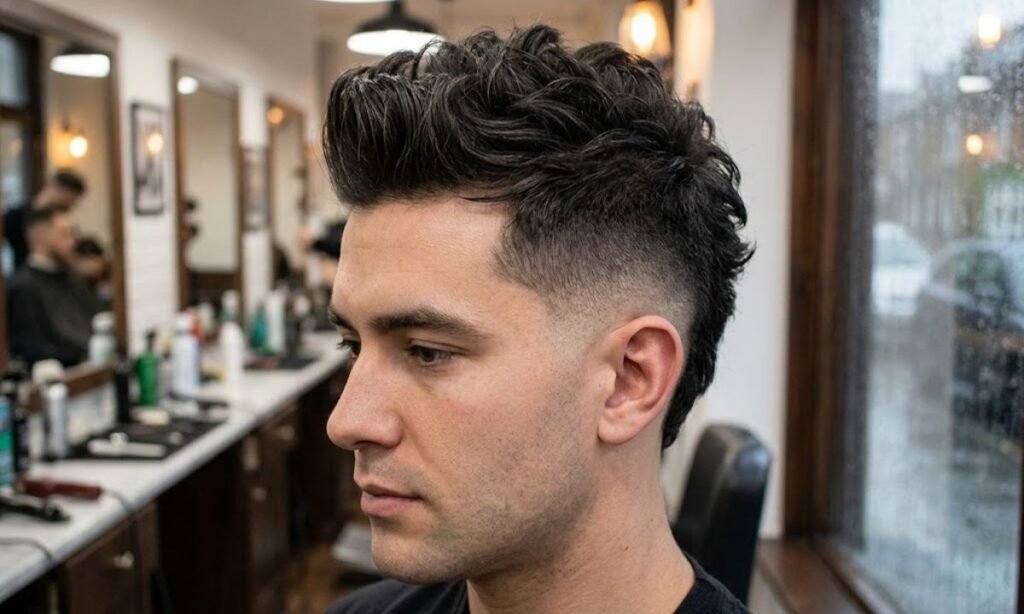
A burst fade mohawk keeps a strip of length down the center and cuts the sides short. The burst gives that strip a curved frame. It looks sharp without being punk.
The burst fade faux hawk is the softer cousin. The top is lifted and textured, but it isn’t a full strip. It’s easier to wear to work and easy to restyle with a bit of clay or paste.
Both styles benefit from a mid or high placement. The contrast makes the top stand out. Just remember the extra maintenance that comes with it.
3. Curly or Coily Burst Fade

The curly burst fade is a favorite for good reason. The curve frames the curl pattern, and the tight sides make the curls look intentional. You get curl definition and structure at once.
For coily hair, a skin burst fade or a low guard finish gives a crisp edge. The top can be a twist out, a sponge twist or a high top. Talk to your barber about curl shrinkage so they leave enough length.
Use curl cream on the top and keep the sides clean. Wet hair stretches, so your cut will look longer when it’s soaked than when it’s dry.
4. Short or Textured-Top Burst Fade

A short burst fade with a textured crop is the low effort option. The top is cut with choppy layers, and the sides get the burst. You can style it in two minutes.
This suits busy mornings. A little matte paste or sea salt spray adds grip. If you want something softer, a textured fringe falls forward and still shows off the curve.
It also works for burst fade for boys. Keep the guard longer for school settings, and let the barber know what the school allows.
5. Straight or Wavy Burst Fade

With straight hair, the burst looks very clean. You can add a side part or a middle part and get a classic feel with a modern edge. The blend is easy to see, so it needs to be good.
Wavy hair adds a casual, lived in look. Let the waves fall naturally, and use light cream to keep frizz control in check. Air drying works fine for most people.
If your waves puff up, keep a bit more weight on the sides near the crown. It helps the cut keep its shape as the day goes on.
Burst Fade vs Drop Fade, Taper Fade and Skin Fade
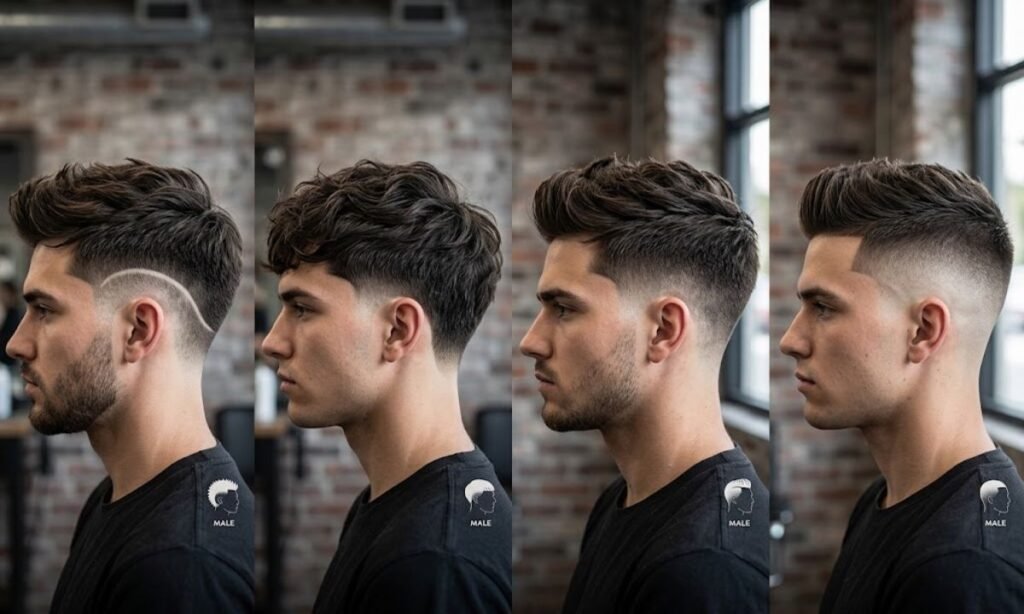
These four get mixed up constantly. Clients bring a photo of one and ask for another. The names sound close, but the shapes differ.
Here’s the plain version. Each cut handles the fade line, the fade level and the back of the head differently. Once you see that, you can’t unsee it.
| Haircut | Line shape | Back of head | Skin showing |
|---|---|---|---|
| Burst fade | Curved arc around the ear | Stays long | Optional |
| Drop fade | Dips lower behind the ear | Fades down the nape | Optional |
| Taper fade | Subtle, short taper | Tapered lightly | Rarely |
| Skin fade | Goes to bare skin | Depends on the style | Always |
Burst Fade vs Drop Fade

A drop fade follows the curve of your skull and dips behind the ear. It keeps dropping toward the neck, so the whole back gets faded. A burst fade circles the ear and stops.
That’s the big split. The drop fade changes the entire back profile. The burst leaves the nape full, which is why it pairs so well with a mullet.
If you want a sleek, tidy back, go drop. If you want volume and a curved frame around the ear, go burst. Some barbers blend the two, so say which one you picture.
Burst Fade vs Taper Fade
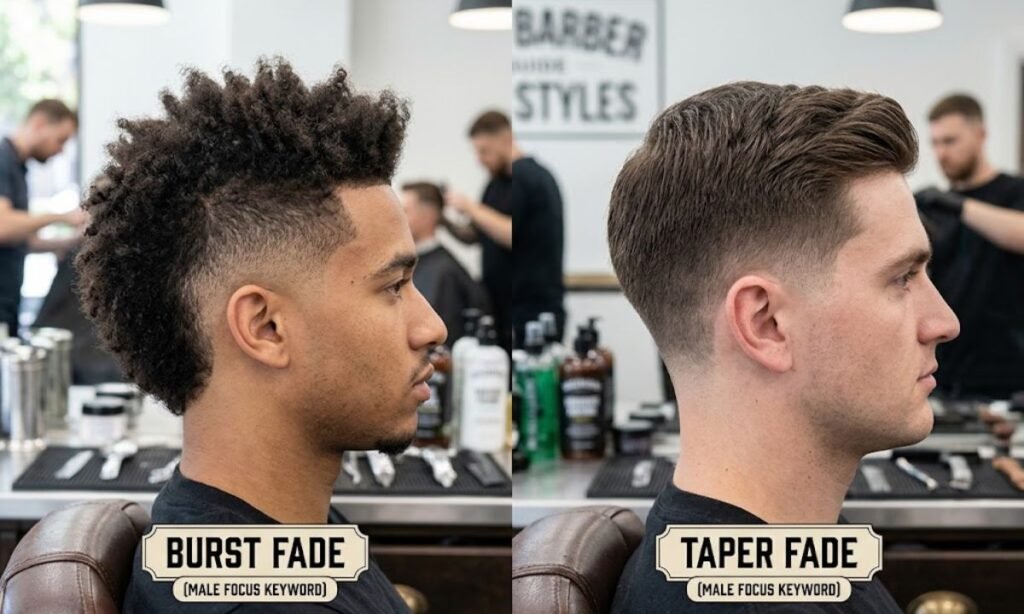
A taper fade is the quiet one. It trims the sideburns and neckline gradually and leaves most of the hair intact. You barely notice it, and that’s the point.
The burst is louder. It has a clear curved fade with real fade depth and visible contrast against the top. You’d spot it from across a room.
If you want something safe for a job interview, a low taper fade is a solid pick. If you want a look people comment on, choose the burst.
Burst Fade vs Skin Fade

Here’s a common mix up. A skin fade describes how short the hair gets, which is down to bare skin. A burst fade describes the shape. You can combine them into a skin burst fade.
So it’s not either or. Think of it like ordering a coffee. The shape is the size, and the skin finish is the roast. You pick both.
A guard finish with a number #1 or #2 gives a softer result than a skin finish. It also hides regrowth better. That’s worth knowing if you hate frequent appointments.
What Clipper Guard Sizes Are Used for a Burst Fade?

Guard numbers confuse everyone at first. The bigger the number, the longer the hair left behind. A #1 leaves roughly 1/8 inch. A #2 leaves roughly 1/4 inch. A #3 leaves roughly 3/8 inch.
Barbers don’t always follow a strict recipe, though. They adjust by hand and by eye. Still, knowing the basics helps you talk to them.
Which Guard Numbers Create a Gradual Burst Fade Blend?

Most barbers start with a #0.5 or #1 at the ear, then step up through #1.5, #2 and #3. The blending technique matters more than the guard itself. They flick the clippers out as they move up.
For a softer blend, they may start at a #2 and skip the bare zone. For a bolder look, they begin at skin and climb slowly. Either way, you want smooth fade graduation with no stripes.
A useful tip: ask which guards your barber plans to use. It shows you care, and it gives you a chance to adjust. Most barbers appreciate the question.
When Should a Barber Use a Zero or Foil Shaver?
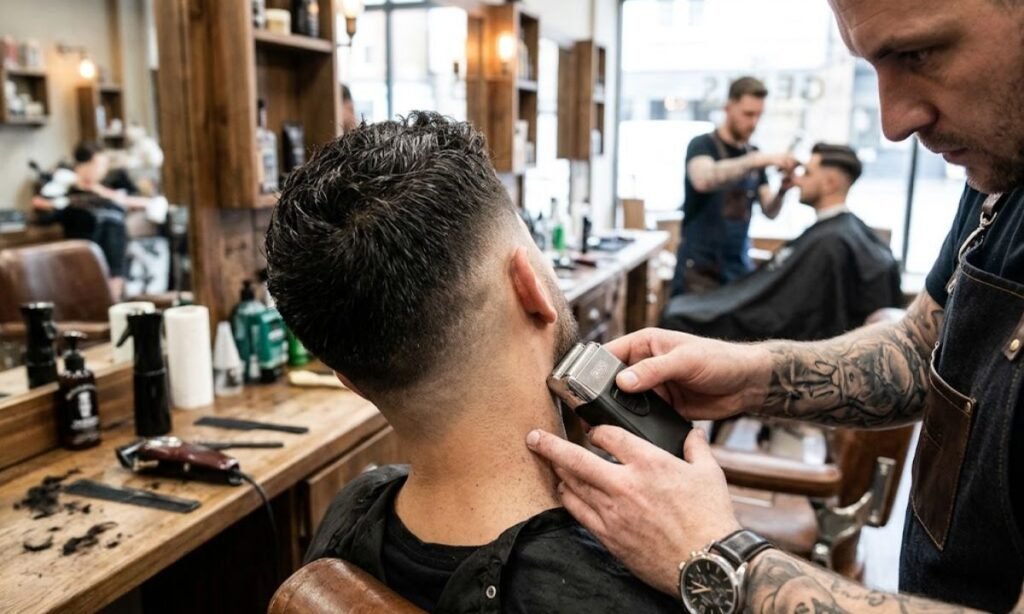
A zero blade or a foil shaver gives you the skin finish. It takes the hair down to bare skin around the ear. The Panasonic Arc5 is one example of a foil style tool that some people use at home.
Barbers typically use a T-blade or an outliner such as the Andis T-Outliner for cleanup. Popular clippers include the Wahl 5 Star Magic Clip, the Wahl 5 Star Vapor and the Wahl Color Pro Lithium-Ion. You don’t need to know the brand, but it helps to see why tools matter.
Use skin only when you’re comfortable with the upkeep. It shows regrowth within days. If your skin is sensitive, a #0.5 or #1 is kinder.
How Much Length Should Remain Around the Back and Sides?

Outside the burst, the sides often stay at a #3 to #5, or scissor cut. The back can stay at full length or taper lightly. That depends on the style you want.
A burst fade with longer back typically leaves two to four inches. A neater version leaves less and shapes the nape. Tell your barber how long you want it to grow.
If you’re not sure, ask them to leave extra. They can always cut more. Nobody can glue it back.
How Should a Burst Fade Be Customized for Different Hairlines?

Your hairline decides how the finished cut looks. Some people have a strong, even edge. Others have a cowlick or a receding temple. A good barber works with it.
So don’t just show a photo and hope. Talk about your hairline first. It will change the plan.
Does a Natural Hairline or Sharp Lineup Work Better?

A natural hairline looks relaxed and grows out gracefully. It suits wavy, curly and coily textures. It also suits you if you hate going to the barber every week.
A sharp hairline lineup looks crisp and clean, and it frames the face. It does need frequent touch ups, though. By week two you’ll see it softening.
My take? Pick the natural option for a mullet or a longer top. Pick the sharp lineup for a short crop or a mohawk. Both work, and neither is wrong.
How Can Temple Detailing Improve the Overall Haircut?

A temple fade or a tiny blend at the temple connects the burst to the front. It makes the whole cut feel planned. Without it, the burst can look like a patch.
The barber can also clean up sideburn finishing so it flows into the curve. If you have a beard, a good beard blending step ties everything together. A burst fade with beard looks best when both are blended smoothly.
Ask to see the temple in a mirror. A small tweak here goes a long way.
Should the Front Hairline Be Squared, Rounded or Left Natural?

A squared front hairline looks sharp and works with a clean, short crop. A rounded edge feels softer and suits curly tops. A natural front keeps things casual.
Watch your own hairline shape. A strong widow’s peak or a receding corner changes what looks good. A barber can tweak the shape without making it fake.
If you’re unsure, start with a natural front. You can always sharpen later.
How to Ask Your Barber for a Burst Fade

Most bad haircuts come from bad communication. Words like “short” or “a bit off the sides” mean different things to different people. You need a better script.
Here’s a simple approach. Bring a photo, name the cut, and describe each part. A good barber consultation takes two minutes and saves two weeks of regret.
Use a Five-Point Barber Brief

Say these five things before the cut starts.
- Fade name: “I’d like a burst fade.”
- Fade level: low, mid or high placement
- Finish: skin, or a guard number like #1 or #2
- Top length: how long and how it should be styled
- Back and neckline: keep it long, tapered or squared
That’s it. Five lines. Barbers love clear instructions because it makes the job easier.
Add a quick note about your hairline and beard if they matter. Then let the barber do their work.
What Should Your Reference Photo Show?
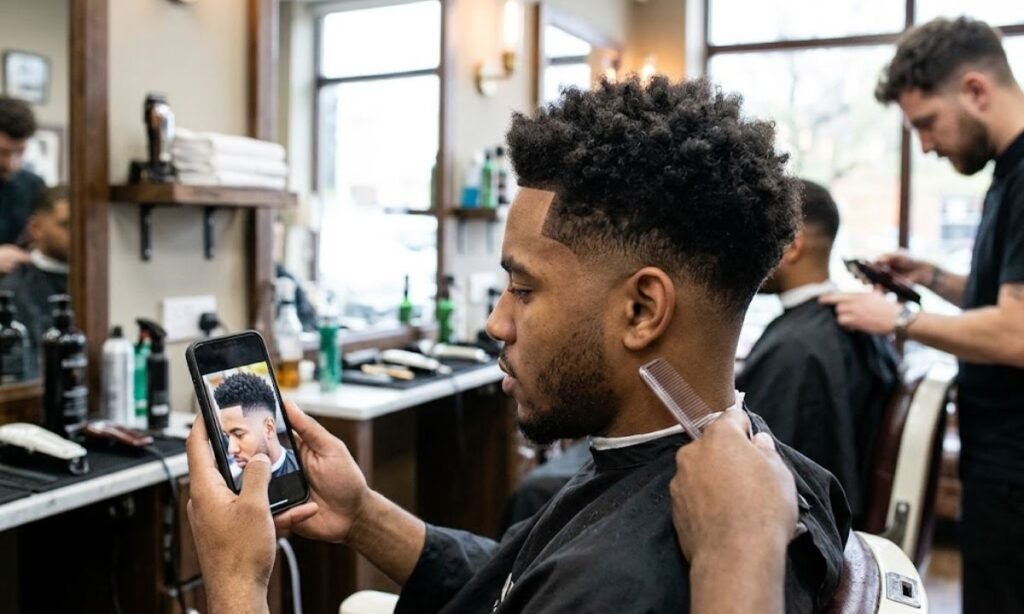
Choose a photo that shows the side profile, the back profile and the front. Ideally, it matches your hair texture too. A straight hair photo won’t help if you have coily hair.
Avoid heavily filtered pictures. The fade line can look different with lighting. If you have two photos, pick one you love and one you’d accept.
Also point out what you don’t want. Saying “not too high” is as useful as saying “I want it mid.”
What Are the Most Common Miscommunications?

The top mix up is the fade name. A burst fade becomes a drop fade or a taper. The second is the back length. People expect it to stay long, and the barber fades it down.
The third is the finish. You wanted a soft guard finish, and you got skin. Or the reverse. Always say it out loud.
If something feels off mid cut, speak up early. A polite “Can we keep the back a bit longer?” works better than a sad face at the end.
How Does a Burst Fade Look From Different Angles?
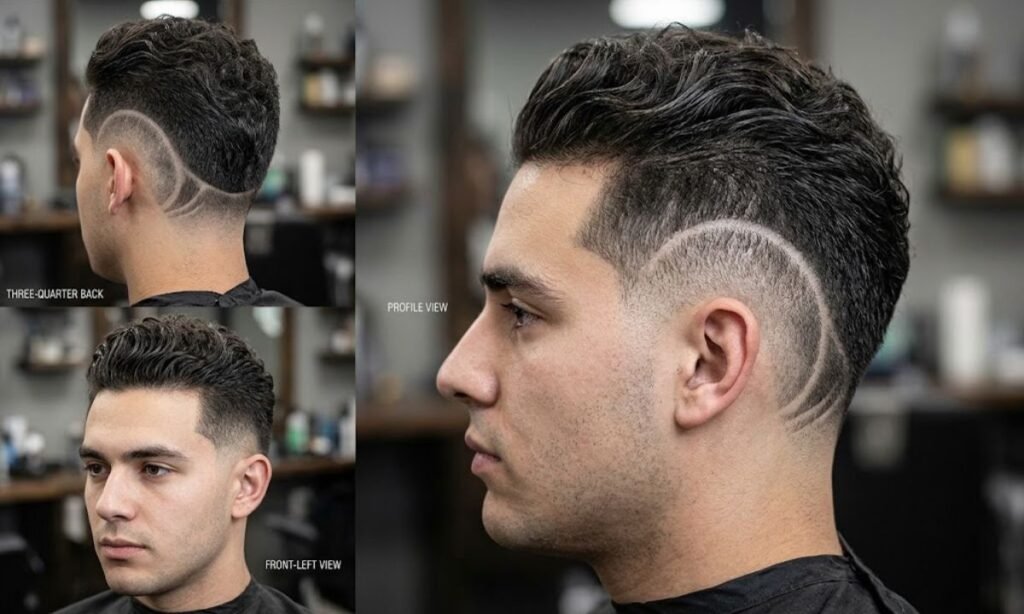
Haircuts live in three dimensions. A cut that looks great from the front can look odd from behind. So check it from every side before you pay.
Ask your barber for the hand mirror. That small step is a good habit.
What Should the Haircut Look Like From the Front and Sides?

From the front, you should see clean sides and a balanced top. The curve should hug the ear without creeping too far forward. Both sides should match.
From the side, the fade shape should read as a smooth arc. You shouldn’t see a harsh line. The shortest point sits right behind the ear.
If the left and right don’t match, say so. Even a small asymmetry is easy to fix on the spot.
How Should the Curved Blend Appear From the Back?

From the back, the curved arc should look like a soft horseshoe. The hair around the nape should look full and tidy. There shouldn’t be any steps or gaps.
The neckline cleanup should feel intentional. Whether natural or squared, it must look clean. Also check that the curve on one side matches the other.
A quick way to check is to ask for a second mirror. It shows the full picture.
Which Details Should You Inspect Before Leaving the Barber Shop?

Run through a quick checklist.
- Symmetry on both ears
- Smooth blend with no stripes
- Clean neckline and sideburns
- Matching height on each side
- Beard blend if you have one
Touch the sides with your hand. You should feel a gradual change, not a bump. If something’s off, ask for a tweak before you leave.
Good barbers want to fix it. Bad ones don’t care. You’ll find out which you have.
What Mistakes Can Ruin the Appearance of a Burst Fade?
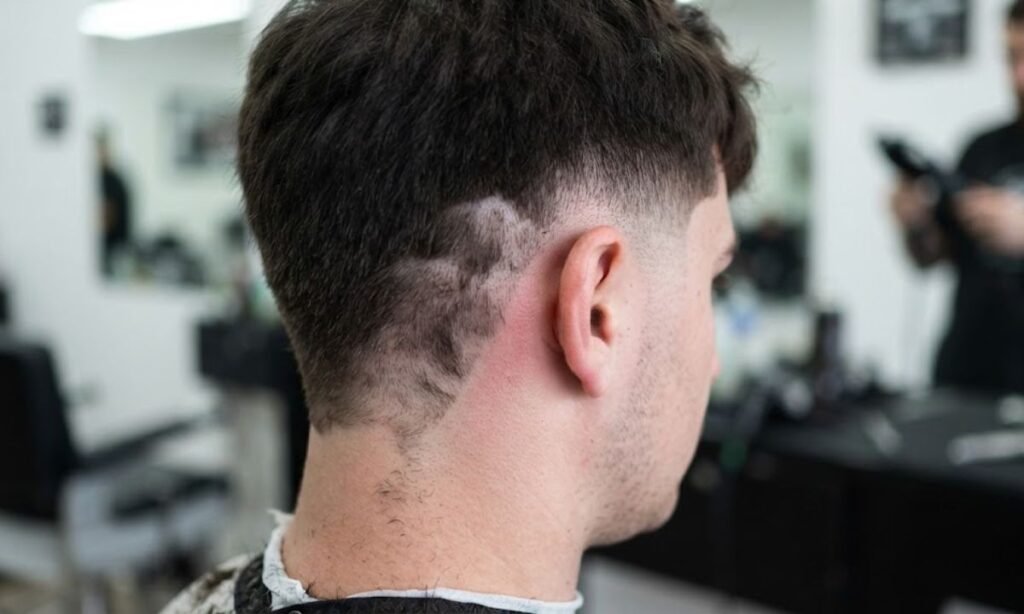
Even good barbers slip. Most errors come from rushing or from poor planning. Knowing them helps you catch problems early.
Below are the three biggest ones. Each has a simple fix.
Why Can an Uneven Curve Make the Fade Look Unbalanced?

The curve has to match on both sides. If one side sits higher or wider, the face looks off. It’s subtle, but people notice.
The fix is simple. The barber should work both sides in alternating passes and check in the mirror. You can also ask them to compare the two sides from behind.
If you spot it later at home, don’t try to fix it yourself. Book a quick correction instead.
How Does an Overly High Blend Affect the Back Profile?

If the blend climbs too high, the back looks hollow. The burst starts to feel like a full fade, and you lose the volume you wanted. It also grows out faster.
Say “keep the back full” before the cut begins. Also ask to start lower and go up if needed. That’s safer than starting high.
This mistake is common with first timers. A low start is the cheapest insurance.
Why Should the Transition Avoid Visible Weight Lines?

A weight line is a hard edge where the hair length jumps. It makes the cut look blocky. On a burst fade, it appears where the curve meets the longer hair.
Good hair separation and slow fade graduation avoid it. The barber should use a curved guide line and soften the edge with scissors or a comb.
If you see a line, ask for more blending. It usually takes only a minute.
How Do You Style a Burst Fade?

A good burst fade needs little styling. The cut does most of the work. Still, a few habits make it look sharper and last longer.
The right product depends on your hair texture and your top style. Here’s how to approach it.
Styling by Hair Texture and Top Style
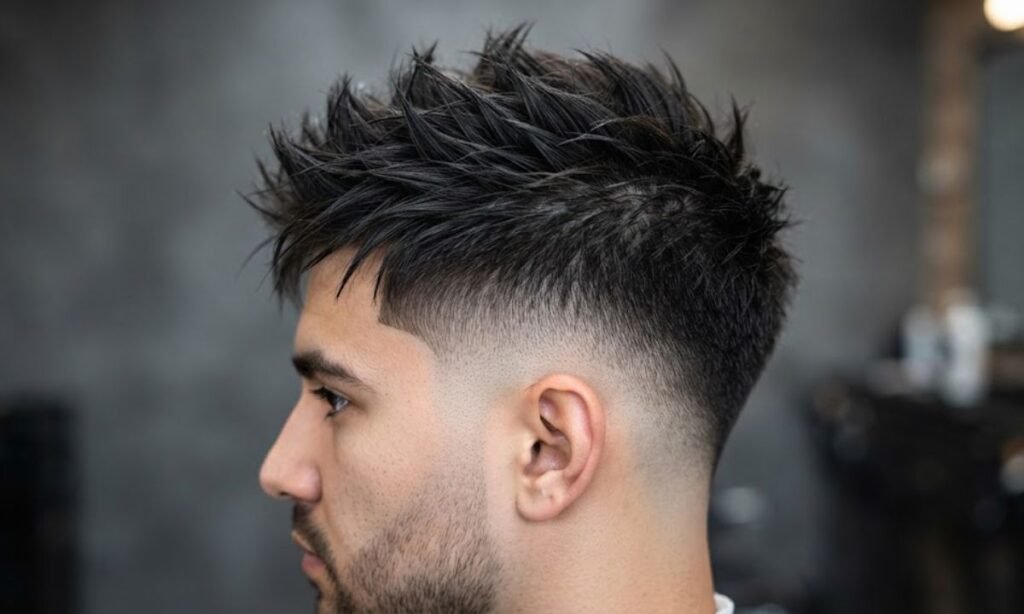
For straight hair, use a small amount of matte paste and comb it through. Air dry first, then style. For wavy hair, a light cream adds shape and cuts frizz.
For curly hair and coily hair, use a curl cream on damp hair. Scrunch it, and let it dry naturally or use a diffuser. Diffusing on low heat protects your curls and gives volume.
For a textured crop or textured fringe, rough dry with a blow dryer, then add paste. For a mullet, a bit of hair oil at the ends keeps them smooth. Use less than you think.
| Hair type | Product | Method |
|---|---|---|
| Straight | Matte paste | Blow dry, then comb |
| Wavy | Light cream | Air dry or diffuse |
| Curly | Curl cream | Scrunch and diffuse |
| Coily | Curl cream or oil | Twist or fluff |
How Long Does a Burst Fade Last, and How Do You Maintain It?

The cut looks its best for about two weeks. After that, the regrowth softens the line. By week three or four, the shape starts to blur.
How fast that happens depends on your hair. Thick, fast growing hair needs more frequent visits. Fine or slow growing hair can stretch it.
Touch-Up Timing and Grow-Out

For a crisp look, aim for a two week regrowth cycle. For a softer look, a three week touch up works fine. The fade maintenance routine is simple.
If you’re growing it out, book a trim every four to six weeks. Ask the barber to clean the burst and keep the back. That way the grow out period stays neat.
A tip from the chair: book your next appointment before you leave. You’ll never wonder when it’s time.
Scalp and Skin Care for Very Close or Skin Bursts

Close cuts can irritate the skin. Razor bumps and ingrown hairs show up when hairs curl back into the skin. That’s especially common with tightly curled hair.
The condition behind it has a medical name, pseudofolliculitis barbae. DermNet has a clear overview for anyone who wants the details. If bumps keep coming back, talk to a dermatologist.
Simple scalp care helps. Use a gentle cleanser, moisturize, and avoid scratching. Choose a longer guard if your skin is sensitive.
Is a Burst Fade Right for You?

A burst fade isn’t for everyone. It looks great on many people, but it comes with a few trade offs. Let’s lay them out plainly.
Use the lists below to decide. Be honest about your routine and your hair.
Main Benefits

- Stylish contrast between sides and top
- Keeps length at the back for mullet lovers
- Works with many textures from straight to coily
- Flexible placement from low to high
- Easy to style with a little product
You get a modern look without losing your hair length. That’s rare. Most fades force you to pick one or the other.
And it frames the face well. The curve draws attention to the jaw and cheekbones.
Trade-Offs and Edge Cases

- Regular upkeep if you want it crisp
- Barber skill matters more than usual
- Not ideal if you hate any scalp showing
- Skin sensitivity with bare finishes
Edge cases include very thin hair, scars near the ear, and strict dress codes. In those cases, go lower and softer, or pick another cut. A good barber will tell you honestly.
If you want a low fuss haircut, this may not be your first pick. But if you like a bit of style, it’s hard to beat.
What Are the Best Alternatives to a Burst Fade?

If the burst isn’t for you, you’ve got options. Each one gives a different mix of length, shape and upkeep.
- Low taper fade: subtle and easy to maintain
- Drop fade: a sleek back with a curved dip
- Standard low fade or standard mid fade: classic and versatile
- Skin fade: crisp and bold, with more upkeep
- Classic scissor cut: no fade, and the softest look
Pick based on how much contrast and maintenance you want. If you’re torn, show your barber photos of two or three and ask which suits your head. They’ll usually have an honest opinion.
Brands such as Taper Trends and publications like GQ often show fresh versions of these cuts. Use them as inspiration, not as strict rules.
How Much Does a Burst Fade Cost, and How Long Does It Take?
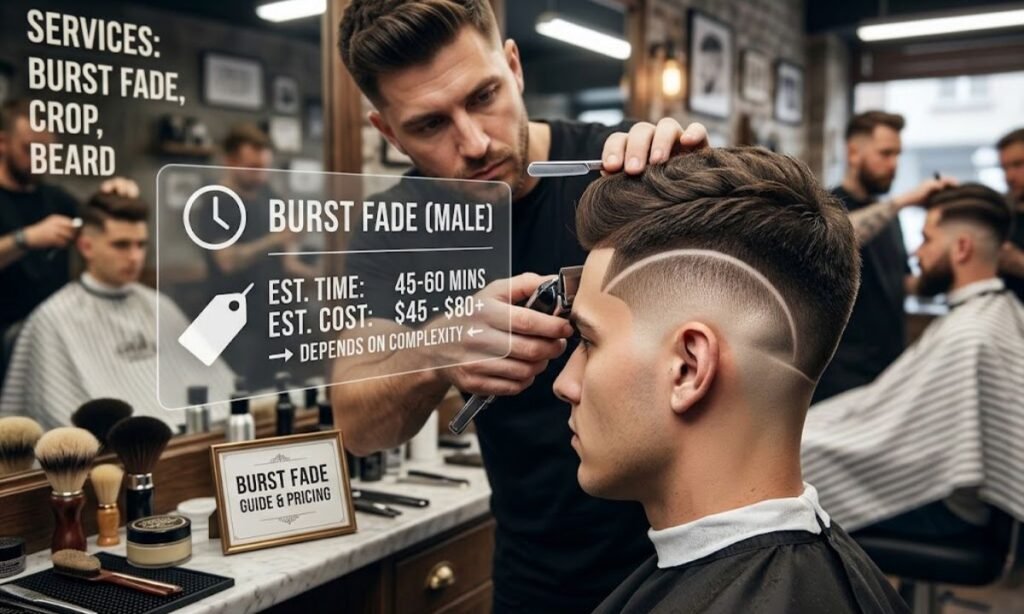
Prices vary by city and shop. A fade usually costs a bit more than a basic trim because it takes more time. Expect about 30 to 60 minutes in the chair.
A skilled barber may charge more, and it’s worth it. A fade done well lasts longer and looks better. A cheap one can cost you a second visit.
If you’re on a budget, ask whether the shop offers a regular rate for a repeat client. Many do. It’s a fair way to save.
Can You Do a Burst Fade at Home?

You can, but it’s tricky. The curve and the blend need practice. One slip can leave a mark that takes weeks to hide.
If you try it, use a good set of clippers, a mirror setup and a longer guard first. Go slowly and check often. Don’t start with skin.
For most people, a barber is the safer bet. You can still do small tidy ups at home between visits. That keeps costs down and the cut fresh.
You can also checkout this article as well How to Grow Out a Fade Without the Awkward Stage
Burst Fade Frequently Asked Questions

What is a burst fade haircut?
It’s a fade that curves around the ear in a semicircular pattern. The hair is shortest at the ear and gets longer outward. The back stays full.
Is a burst fade the same as a drop fade?
No. A drop fade dips and fades the whole back. A burst fade circles the ear and leaves the nape longer.
Does a burst fade work on curly hair?
Yes. A curly burst fade is very popular. The tight sides show off the curls, and the contrast looks great.
How often should I get a touch up?
Every two to three weeks for a crisp look. Every four to six weeks if you prefer a softer grow out.
Can I get a burst fade with a beard?
Yes. Ask the barber to blend the sideburn and beard into the fade. It looks clean and connected.
Is a burst fade good for boys?
Yes. Use a longer guard and a softer finish. Check school rules first.
What should I say to my barber?
Use the five-point brief. Name the fade, level, finish, top length and back. Bring a photo.
Does it work on thinning hair?
Often, yes. Short sides make the top look fuller. Go low and avoid very high placement.
Final Thoughts
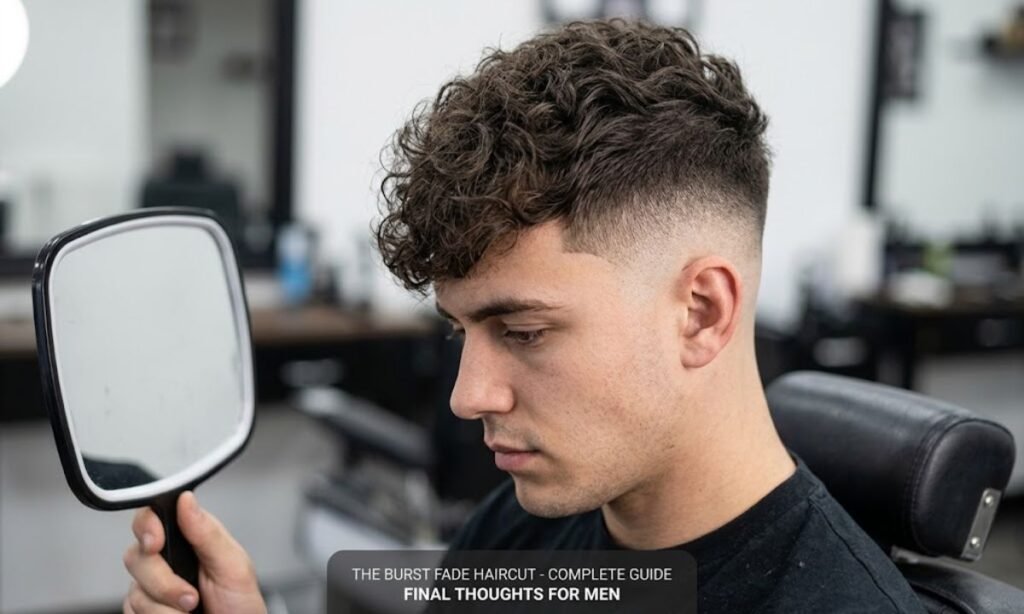
A burst fade gives you contrast, shape and length in one cut. It’s a smart pick if you want something fresh without losing your style. Get the details right, and it looks great from every angle.
Start with a clear brief and a good reference photo. Choose a placement that fits your head and your routine. Then keep up with regular touch ups.
Have you tried a burst fade yet? Tell us in the comments how it went, or share this guide with a friend who’s thinking about it. And if you’ve got a barber tip we missed, drop it below. We’ll keep this guide updated as styles change.

I’m Michael Charles, the creator of MegaCrazes—your source for fresh hairstyles, sharp haircuts, and simple hair-care inspiration. Find your style. Own your look.