

You’re in the barber chair and the question hits. Should you go with scissors or let the clippers buzz?
Here’s the short answer. Pick scissors for softness, length, and natural movement. Pick clippers for speed, short sides, and crisp fades.
This guide shows how each tool works and what it does to your hair texture. You’ll also get clear scripts to use with your barber.
Quick Answer
Choose a scissor cut if you want a soft shape that moves with your hair. Choose a clipper cut if you want short sides, uniform length, and clean lines. Want both? Ask for a mixed-tool haircut.
Here’s a fast rule of thumb. Hair longer than two inches usually does better with shears. Hair cut short on the sides usually belongs under an electric clipper.
Neither tool wins every time. They solve different problems. A professional barber often uses both in a single appointment.
Scissor cut vs clipper cut: what are the main differences?

The biggest difference is control versus consistency. Scissors cut one small section at a time, so the barber sets every length by hand. Clippers cut with a moving blade or a guard, so the length stays even across a wide area.
That changes the finish. A scissor haircut leaves textured ends and a soft finish. A clipper haircut leaves crisp edges and a defined outline.
Speed and skill matter too. Clippers move fast and forgive small slips. Scissors take patience, and a rushed scissor cut shows right away.
| What you compare | Scissor cut | Clipper cut |
|---|---|---|
| Best for | Medium and long hair | Very short hair and fades |
| Finish | Soft, natural, textured | Sharp, even, defined |
| Speed | Slower | Faster |
| Price | Often higher | Often lower |
| Grow-out | Gradual and forgiving | Fades soften quickly |
How do scissors and clippers affect hair length and texture differently?

Both tools change hair length. Only one really shapes hair texture. Scissors work with your natural pattern, while clippers press everything to one level.
Think of scissors as a pencil and clippers as a paint roller. One draws detail. The other covers ground fast.
Why do scissors allow more precise length adjustments?
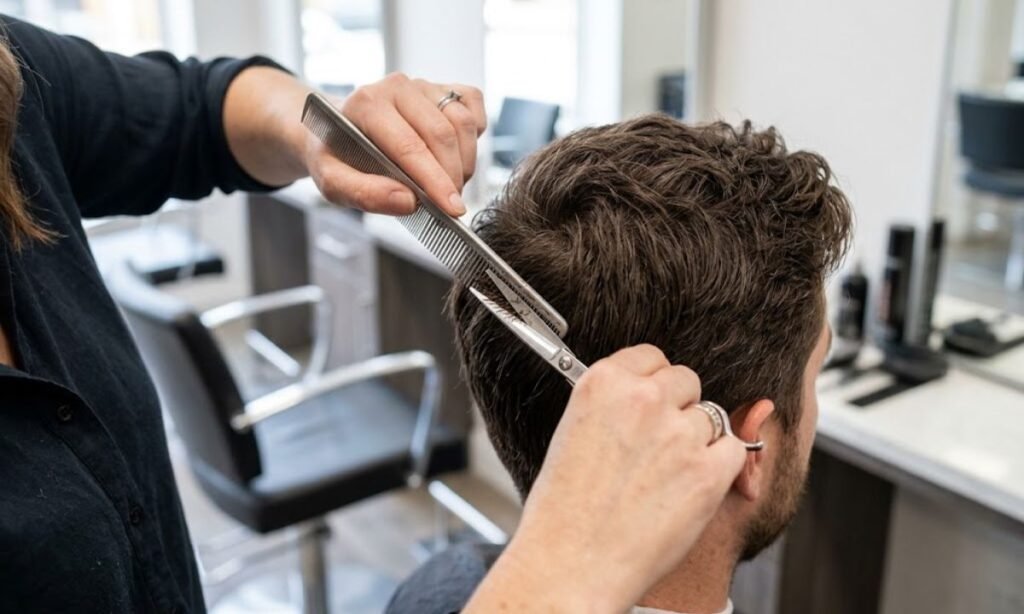
A barber can lift one strand group, check it, and trim exactly where needed. That means the front can sit longer than the back, and the crown can stay fuller. You get a customized shape instead of one flat setting.
Precision also helps with tricky spots. Think of a stubborn cowlick or a fringe that sits heavy on one side. Shears let the barber fix that without touching the rest.
How does clipper cutting create consistent hair lengths?

Clippers rely on attachment guards or a set clipper blade position. Slide a number 2 guard across your head and every strand lands near the same height. That’s how buzz cuts and crew cuts look so even.
Consistency saves time and cuts down on guesswork. It also gives you a clean base for a taper fade. The tradeoff is less room for personal shape.
Can either technique make hair appear thicker or thinner?

Yes, and it comes down to weight removal and hair density. Blunt scissor cuts keep the ends full, which can make fine hair look thicker. Clippers cut sides close, which can make a thick top look fuller by contrast.
Here’s a myth worth killing. Using clippers does not make hair grow in thicker. Your hair thickness is set by your follicles, and no tool changes that.
How does a scissor cut work?

A scissor cut starts with clean, damp hair and a good hair comb. The barber uses a spray bottle to keep strands manageable. Then comes sectioning, which splits hair into zones so nothing gets missed.
From there, the barber lifts each section and trims it. The tools are simple: barber scissors, a comb, and sometimes thinning shears. The skill is in the angles.
Want a quick mental picture? Picture a tailor with fabric. Every cut is measured, checked, and adjusted by hand.
Scissor-over-comb cutting explained

Scissor-over-comb is the move that surprises most people. The barber rests a comb against your head and cuts the hair that pokes through. It’s how scissors can mimic a taper on the sides and neck.
So yes, you can get a fade with scissors. It’s slower than a clipper fade and takes real skill. The payoff is a natural taper with no harsh guard lines.
Layers, point cutting, and shape control

Layering builds movement into the hair. The barber uses elevation and over-direction to control how each layer falls. Cross-checking at the end catches any uneven spots.
Point cutting is the secret behind wispy finishes. Instead of cutting straight across, the barber snips into the ends at an angle. It softens blunt lines and gives you texture refinement without much bulk loss.
How does a clipper cut work?
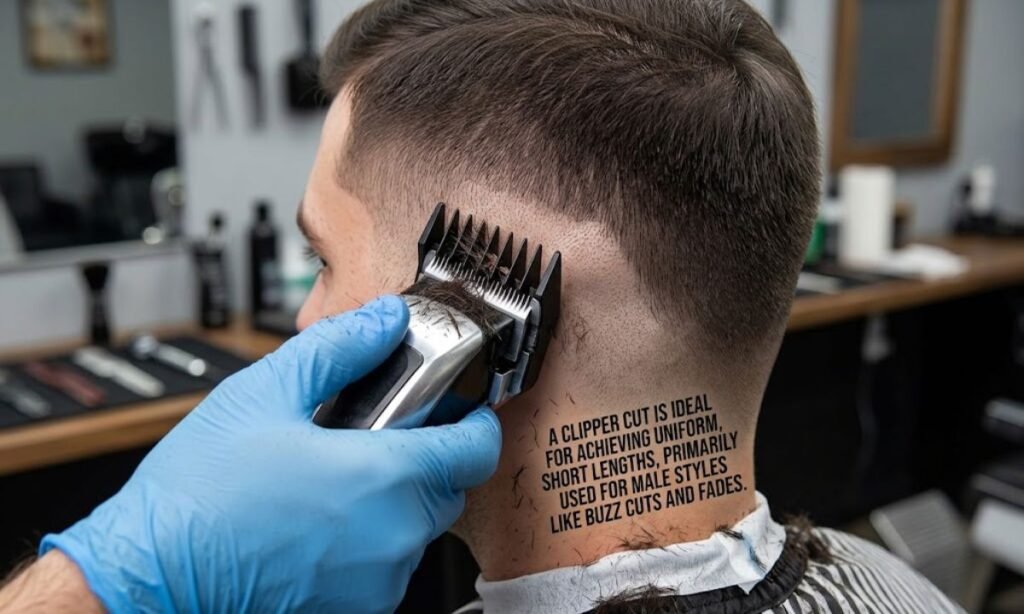
A clipper cut starts with choosing a guard or blade setting. Many barbers begin with the longest guard and work shorter. That prevents any “oops” moments.
The barber moves the electric clipper in a smooth rocking motion against your head shape. Short, steady passes beat fast, jerky ones. Done right, it feels almost quick enough to blink through.
Clipper guards, haircut numbers, and taper levers

If you’ve ever wondered how clipper guard numbers work, here’s the plain version. Each number sets a length. A number 1 leaves about 1/8 inch, a number 2 leaves about 1/4 inch, and a number 4 leaves about 1/2 inch.
A haircut guard chart is a handy reference to bring along. The taper lever on the clipper adjusts the blade gap on the fly. That lets a barber blend between lengths without swapping guard attachments every thirty seconds.
Fades, tapers, and clipper-over-comb blending

A low fade starts just above the ear. A mid fade starts around the temple. A high fade climbs higher, and a skin fade takes the sides down to bare skin.
Clipper-over-comb blending smooths the gaps between those steps. Barbers use guard stepping and graduated blending to build a clean fade gradient. A good fade transition looks like a smooth shadow, not a set of stairs.
What do scissor and clipper cuts look and feel like?

A scissor cut looks relaxed and a little lived-in. Your hair movement stays natural, and the hair weight feels balanced. It also feels soft to the touch, since the ends aren’t sliced flat.
A clipper cut looks tight and tidy. The hair outline is crisp, and the neckline and sideburns sit sharp. It feels light and cool, especially in summer.
Here’s a small example. Picture two friends with the same job and same hair color. One has a scissor-cut side part that sways in the wind. The other has a buzz cut fade that stays put in any weather.
Which cutting technique gives a more natural-looking finish?
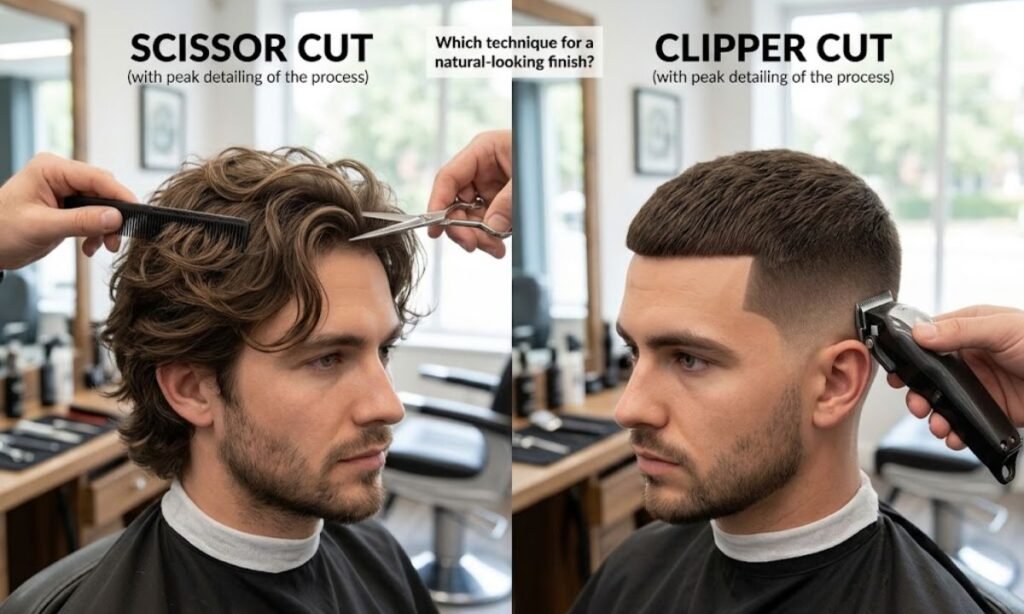
Scissors usually win the natural finish contest. They follow your natural silhouette and hair growth direction instead of overriding them. Clippers can look natural too, but only with careful blending.
Your goal matters here. Some people want an effortless look. Others want a sharp, intentional one, and both are valid.
How do scissor-cut edges differ from clipper-cut edges?
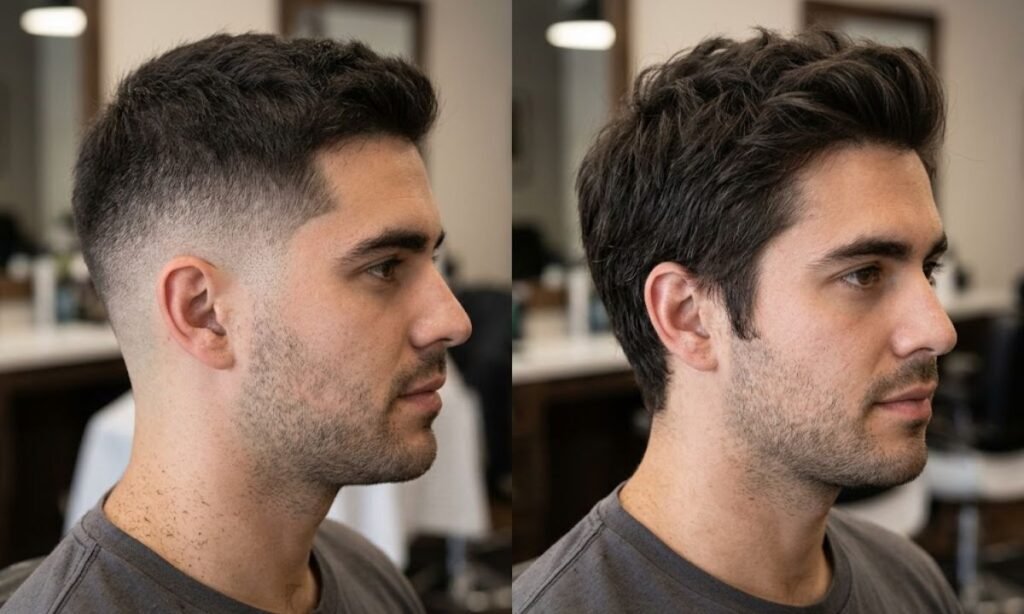
Scissor edges are slightly irregular. Each strand ends at a different point, so the hair perimeter looks feathered. Clipper edges are cut flat and clean, which creates a clear line.
Check a neckline in the mirror. A scissor-cut nape melts into the skin. A clipper-cut nape stops at a defined outline that a barber razor can sharpen even further.
Why do scissor-cut transitions often look softer?

Scissors cut at varied angles and lengths. No fixed guard step leaves a visible band. The graduated appearance builds slowly, strand by strand.
That softness hides regrowth. Day twelve looks a lot like day one. It’s a big reason people with long meeting days love scissor work.
When does a sharper, more defined finish work better?

Sharp finishes shine on short hair, bold styles, and busy lifestyles. Athletes, uniformed workers, and anyone after a no-fuss look benefit most. A skin-close fade with a hard part is the classic example.
Sharp also works when you want contrast. Fade contrast between bare sides and a longer top draws the eye to your shape. It reads as confident from across the room.
Which technique suits your hair type?

Your hair type changes the answer more than your style does. Hair density, curl pattern, and growth direction all play a part. A great cut on one person can flop on another.
Here’s the quick view. Fine hair likes soft control. Thick hair likes clipper efficiency. Curly hair likes a careful mix.
Fine or thinning hair
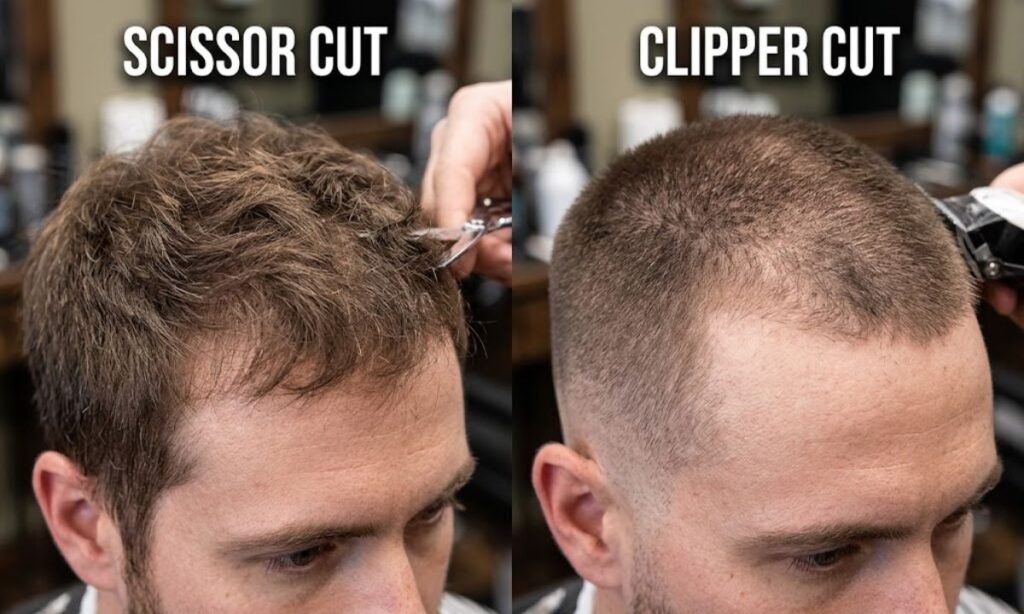
Fine hair shows scalp visibility fast, so you need smart hair balance. Scissors let the barber keep length where it hides gaps. Heavy clipper work on top can expose a receding hairline.
Many people with thin hair do well with tidy sides and a scissor-cut top. A gentle natural taper keeps things neat. Skip the skin fade if the contrast feels too stark.
Thick or coarse hair

Thick hair and coarse hair build hair volume and heat fast. Clippers and thinning shears remove bulk without a marathon session. That’s why the answer to which haircut technique is best for thick hair is often “both.”
Scissors still matter on top. They let the barber cut in interior weight removal so the hair lies flat. Skip that step and thick hair puffs out like a mushroom.
Wavy, curly, or coily hair

Wavy hair, curly hair, and coily hair, including afro-textured hair, shrink as they dry. A cut that looks long when wet can jump up by several inches. That hair shrinkage catches plenty of people off guard.
So should curly hair be cut with scissors or clippers? Usually both. Clippers handle the sides and a curly taper fade, while scissors shape the top for curl definition. Tell your barber your curl pattern upfront.
Cowlicks, crowns, and growth patterns

A cowlick is a patch where hair grows against the grain. Clippers can flatten it when the hair is very short. Scissors handle it at medium length by leaving extra weight in the right spot.
The crown pattern and nape growth matter too. Uneven hair growth is normal, and a good barber cuts with it, not against it. Ask them to point out your pattern. It’s a great sign if they already see it.
Which cutting technique works better for different haircut lengths?
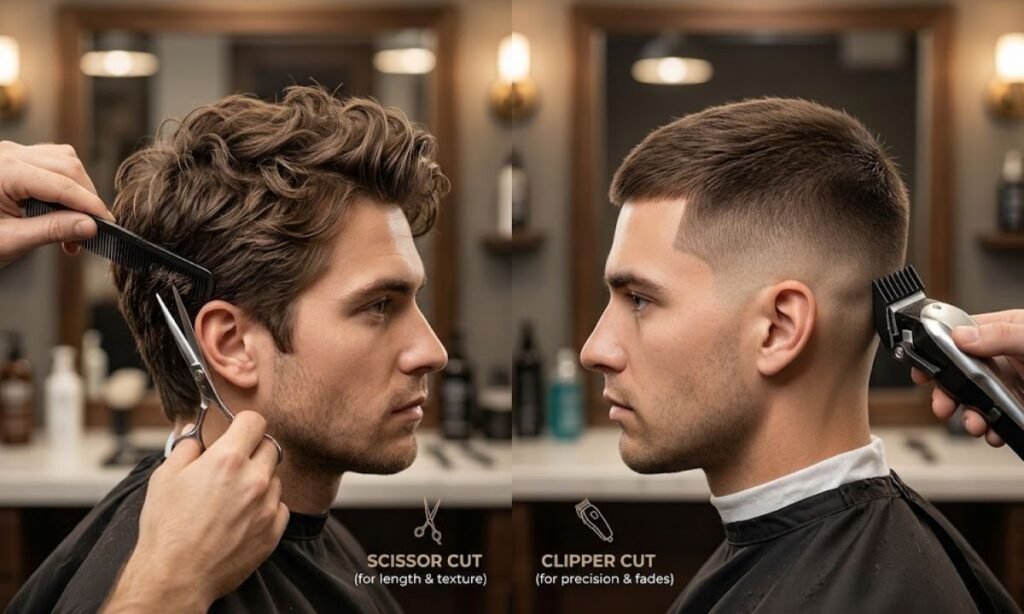
Length decides a lot. Short hair loves clippers. Long hair loves scissors. The middle is where things get interesting.
A simple guide helps. Under one inch, go with clippers. From one to four inches, use both. Past four inches, lean on shears.
What works best for very short hairstyles?
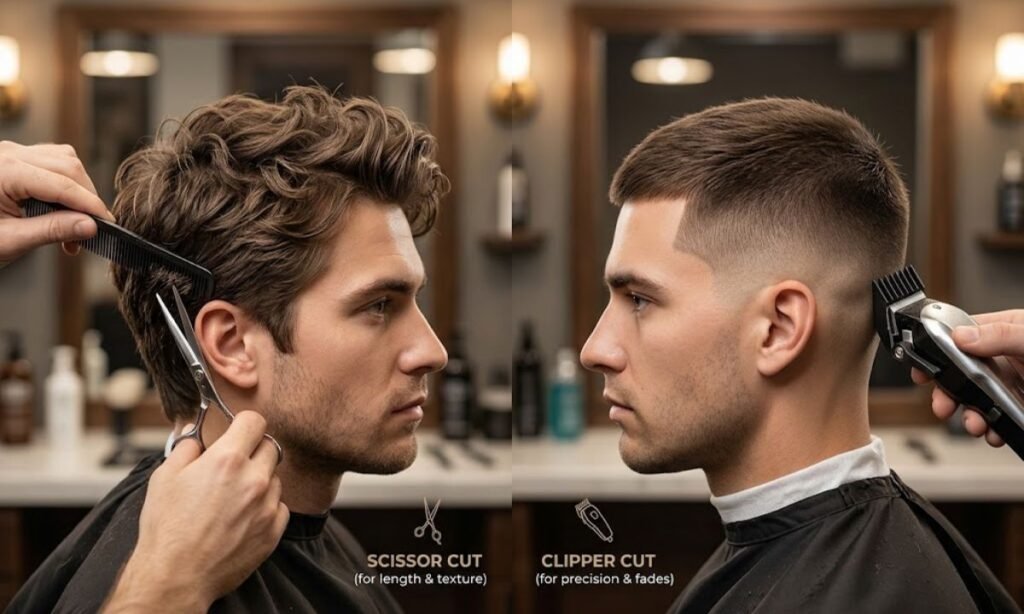
Are clippers better for short hair? Mostly, yes. A buzz cut, crew cut, or high-and-tight haircut needs the evenness that guards deliver. Scissors would take ages and still look uneven.
Want a short haircut with a touch of softness? Ask for clippers on the sides and a quick scissor finish on top. You get a clean base with a little life in it.
Which technique is better for medium-length hair?

Medium length is the mixed zone. Think short sides and long top or a textured fringe. Clippers build the sides, and scissors shape everything above them.
The French crop proves the point. The sides are tapered, and the fringe is point cut for texture. One tool alone couldn’t pull it off.
Why do longer hairstyles often benefit from scissor work?
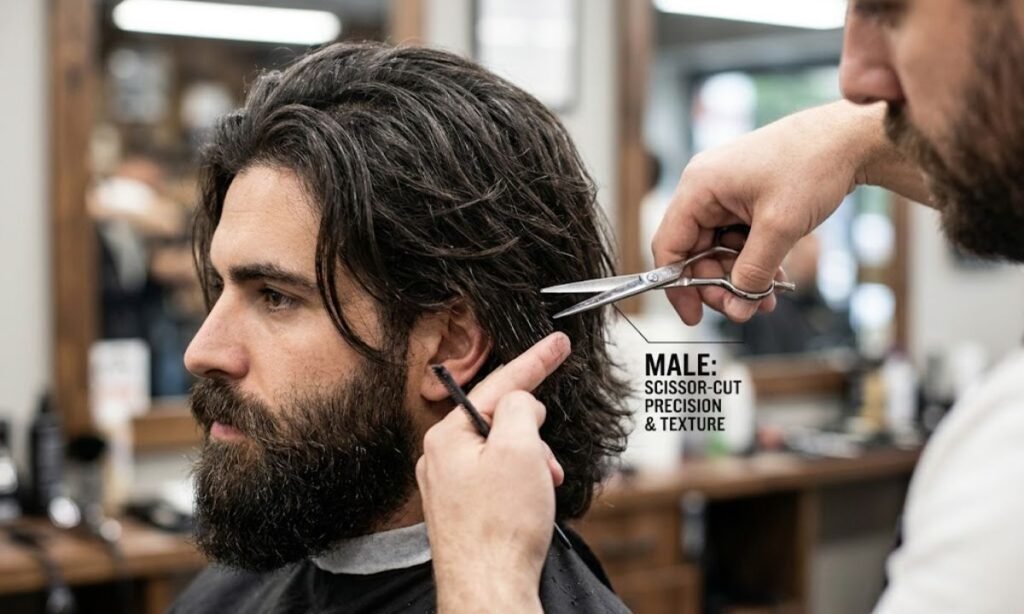
Can clippers cut long hair? Technically, yes. In practice, they remove too much too fast and rarely build flattering shape. Long hair needs layering, blunt cutting, and careful elevation.
Are scissors better for long hair? Yes, because they respect hair movement. They keep the perimeter soft and build volume exactly where you want it. For anything past the ears, shears are the safe bet.
Which haircuts use scissors, clippers, or both?

Most popular cuts fall into three groups. Knowing the group helps you ask for the right thing. It also helps you follow what your barber is doing in the mirror.
Scissor-led hairstyles

Scissor-led styles include the side part, middle part, slick back, and comb over. These need longer lengths and smooth lines. The scissor-cut top is the star of the show.
They depend on shape and flow. Scissors give them a polished look without harsh edges. They suit offices, weddings, and anyone who likes a timeless vibe.
Clipper-led hairstyles

Clipper-led cuts include the buzz cut, crew cut, skin fade, and shadow fade. They’re quick and consistent. The look comes out bold and clean.
You can read the fade height at a glance. A low taper fade feels subtle, a mid taper fade feels balanced, and a high taper fade feels dramatic. Pick the one that matches your comfort level.
Mixed-tool hairstyles
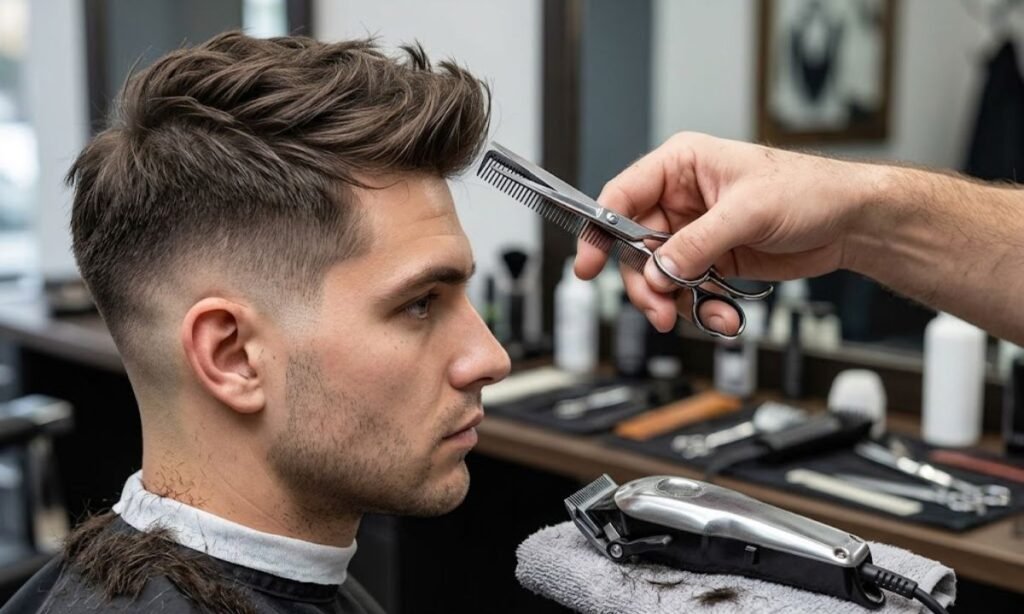
Mixed-tool cuts are the most common today. The classic taper haircut, the textured fringe, and faded sides with a longer top all use both tools. Clippers handle the sides, and scissors handle the top.
Can barbers use scissors and clippers together? Absolutely. That’s the norm in most shops. It’s also why every good barber station holds both.
Which cut grows out better and needs less maintenance?
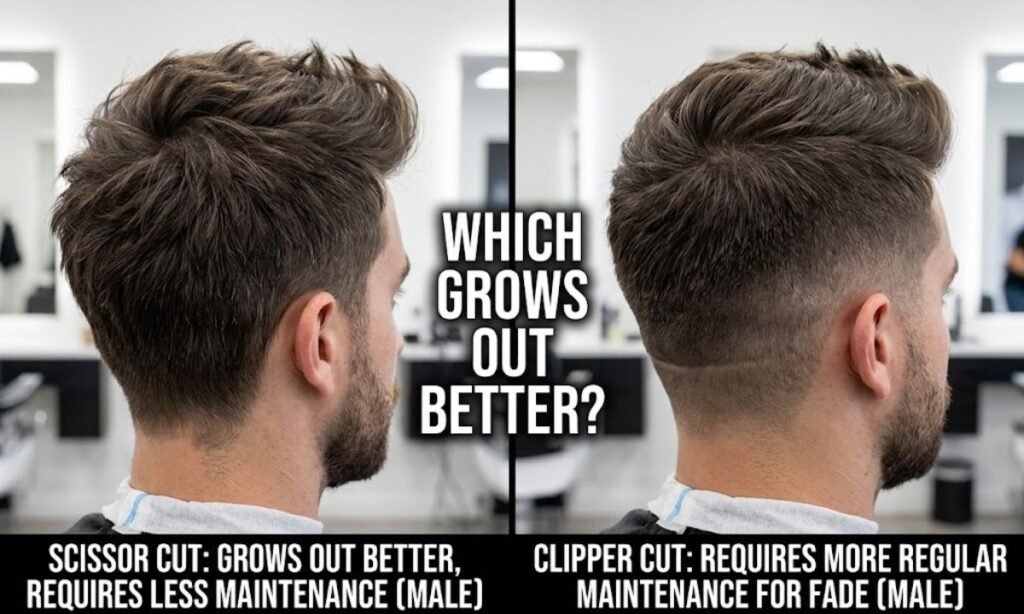
Scissor cuts usually grow out better. With no hard line, there’s no obvious “grown out” moment. Clipper fades, in contrast, lose their shape fast.
So, does a scissor cut grow out better? For most people, yes. A scissor haircut can look fine for six to eight weeks.
Why haircut shape changes as hair grows

Hair grows about half an inch each month. That’s the average hair growth rate. On a clipper fade, half an inch is the whole fade zone.
A scissor cut spreads the same change across more length. The hair weight shifts slowly. You notice visible regrowth much later.
Planning touch-ups and daily styling

How often should you maintain a clipper fade? Every two to three weeks for a skin fade. Every four to six weeks for a softer taper. A steady touch-up schedule keeps the contrast crisp.
Scissor cuts ask for more styling time each morning. A blow dryer and a pea-sized dab of hair products make the shape behave. Clipper cuts need almost nothing. Pick the maintenance routine you’ll actually follow.
Can you switch from a clipper haircut to a scissor haircut?
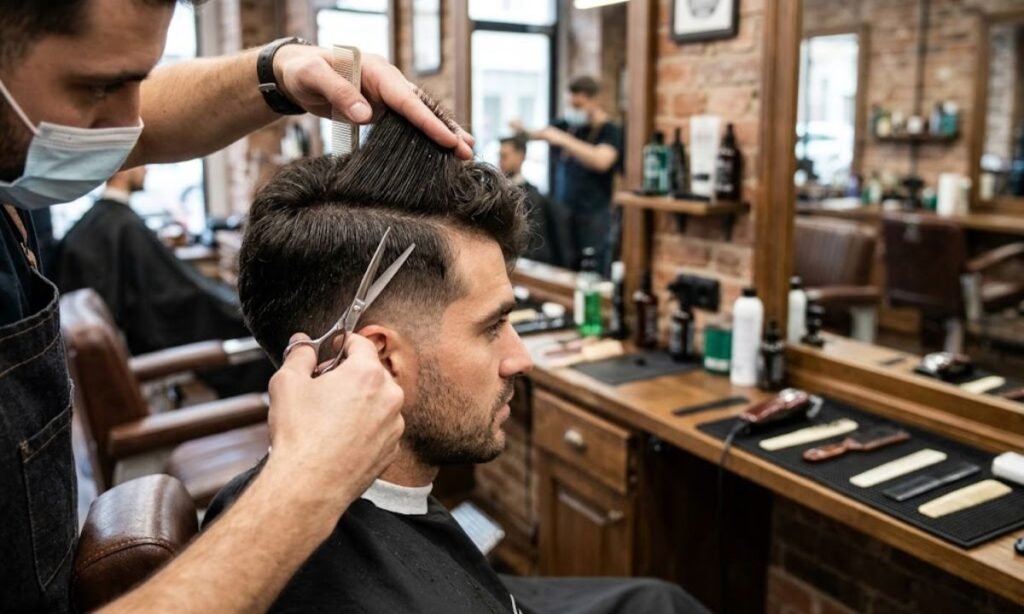
Yes, and plenty of people do. It takes patience and a plan. You can’t jump from a number 1 to a long top overnight.
Think of it like growing a lawn. You wait, you trim the edges, and you protect the shape.
How much length do you need to transition to scissors?
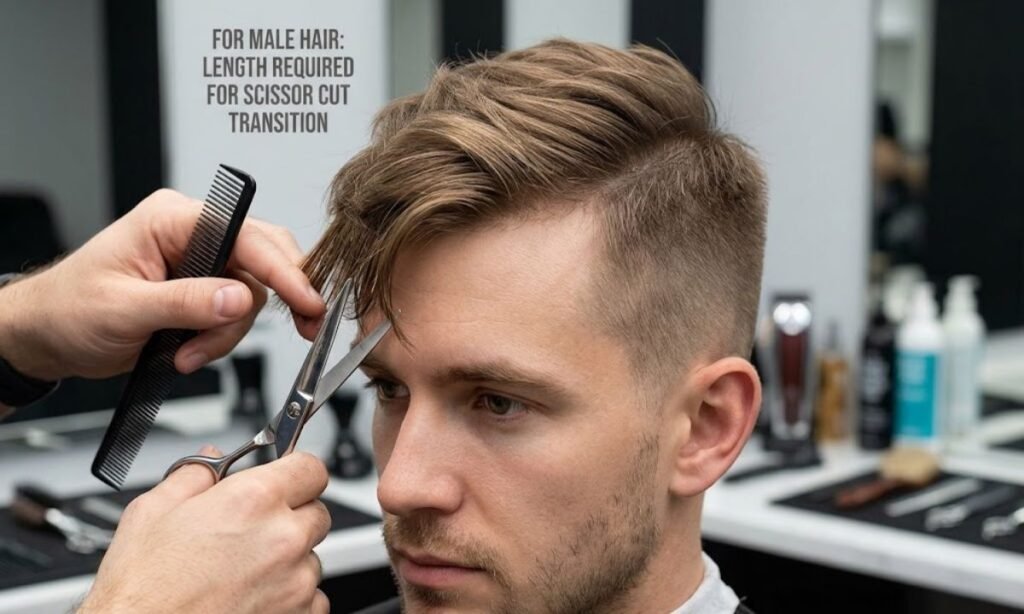
Scissors need enough hair to hold between two fingers. That’s usually about one and a half to two inches. Below that, the barber is mostly shaping with a comb and clippers anyway.
At half an inch a month, expect three to four months. Ask your barber for a check-in at the two-month mark. They’ll adjust the plan as you go.
Can a barber correct uneven clipper-cut sections with scissors?

Often, yes. If one patch got cut too short, scissor-over-comb can blend the neighboring areas. It can’t add length back, but it can hide the line.
Severe slips take more time. The barber may need to shorten everything a little to even it out. Be honest about how much length you can live without.
What should you expect during the transition period?

Expect an awkward stage. The sides grow out before the top catches up. Some people call it the in-between.
Use that time wisely. Switch to a softer taper instead of a skin fade. Try light products to control puffiness. Book short visits for neckline cleanups.
Do scissor cuts cost more or take longer?

Often yes, on both counts. Do scissor cuts take longer than clipper cuts? Usually. Why do scissor cuts cost more? The barber spends more time and focus on each section.
That said, not every shop charges extra. Some price both the same. Check the barber service menu before you sit down.
Haircut time and service pricing

A clipper cut often takes 20 to 30 minutes. A scissor cut can take 30 to 50. A mixed cut lands in between, and haircut duration also depends on haircut complexity.
Scissor cut cost and clipper cut cost both change with location and experience. Senior barbers charge more. Ask about barber service pricing when you book your haircut appointment.
Choosing the correct booking category
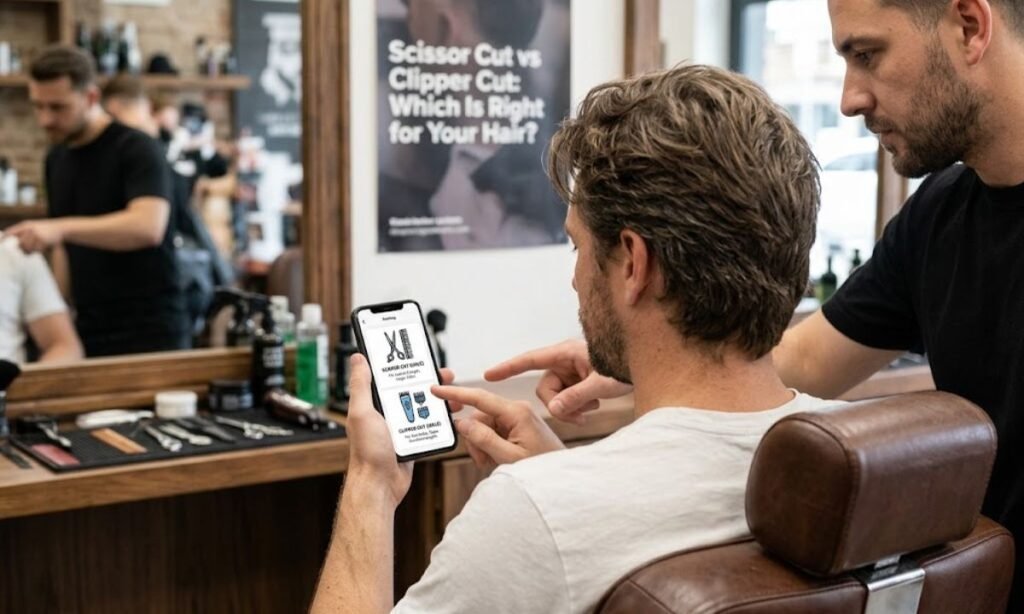
Many shops list “Men’s haircut,” “Fade,” and “Scissor cut” as separate services. Book the wrong one and your barber may run short on time. Pick the category that matches your plan.
Still unsure? Add a note when you book. Something like “mixed-tool, scissors on top” works well. It helps the barber prepare and avoids price surprises.
What are the limitations and risks of each technique?

Every tool has trade-offs. Scissors are slow and depend heavily on skill. Clippers are rigid and can overshoot in seconds.
Know both sides before you decide. A little awareness prevents a lot of regret.
Common cutting mistakes, comfort issues, and hygiene

Common slips include cutting too short, bumpy fade transitions, and heavy neckline lines. Clippers can cause scalp irritation when blades run dull or hot. Scissors can leave choppy ends and uneven layers.
Barbering hygiene matters just as much. Ask about clipper disinfection and shear sanitation. Clean tools protect your scalp and signal a professional shop. Barbering standards differ by region, so a quick look at local rules helps.
Common myths about scissor cuts and clipper cuts

A few myths keep floating around barbershops. Clearing them up saves you from bad decisions. Here are the big ones.
- Myth: Clippers make hair grow back thicker. Fact: Does using clippers make hair grow thicker? No. Your follicles control growth, not your tools.
- Myth: Only clippers can do a fade. Fact: Skilled barbers use scissor-over-comb for a soft taper.
- Myth: Scissor cuts always look better. Fact: On very short hair, clippers look cleaner.
- Myth: Pricey means better. Fact: Fit and skill matter more than the price tag.
Can you cut your own hair at home with scissors or clippers?
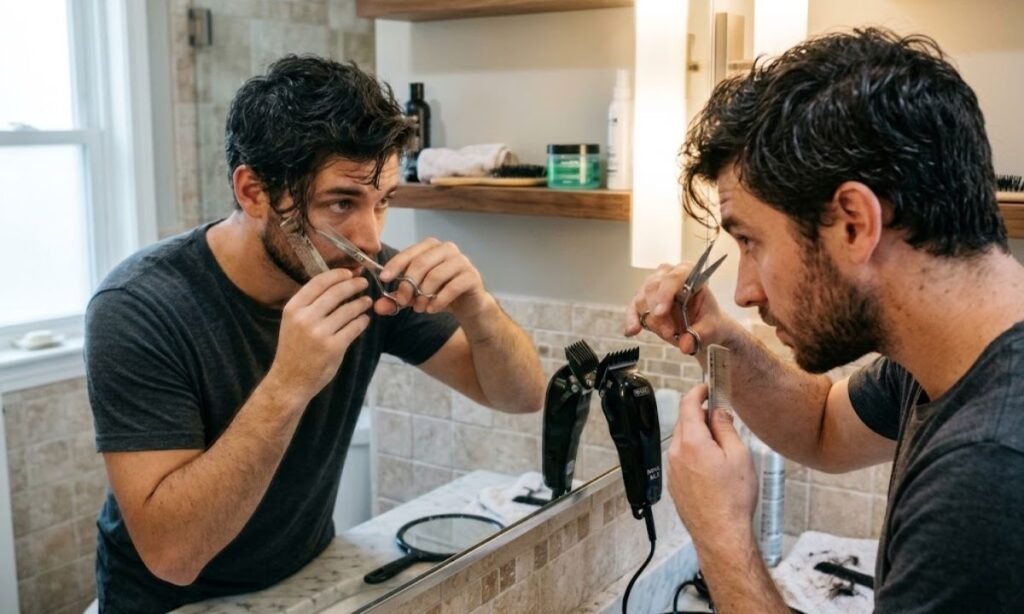
You can, but clippers are far more forgiving. A basic electric clipper with guard attachments works for a simple even cut. Start with a longer guard and go slow. You can always take more off.
Scissors at home are harder. You can’t see the back of your head, so mistakes pile up quietly. Save scissor work for a trained pair of hands, and keep your clipper maintenance simple with a drop of oil and a quick brush.
How do lifestyle and season change the best choice?

Your daily routine counts as much as your hair. A gym-heavy week favors a short clipper cut that dries in minutes. A client-facing job might favor a soft scissor shape that looks polished with little effort.
Season plays in too. Summer heat pushes many people toward a low fade or crew cut. Winter often brings back length, since a scissor-cut top keeps your head warmer and your natural hair shape easier to style.
How should you choose between scissors and clippers?

Start with your goal. Then check your hair, lifestyle, and budget. A clear plan beats a vague “just a trim.”
If you’re stuck between the two, the mixed approach almost always works. It keeps the sides neat and the top flexible. You can adjust later as your taste changes.
A five-step haircut decision checklist

- Pick your length. Under one inch points to clippers, and over two inches points to scissors.
- Check your hair type. Fine, thick, curly, or cowlicky hair each changes the plan.
- Think about upkeep. Decide how often you’ll visit and how long you’ll style.
- Match your lifestyle. Gym, office, or outdoors all change what feels easy.
- Set your budget and time. Scissor work costs more and takes longer, so plan for it.
What should you tell your barber?

Clear instructions beat long explanations. Bring a haircut reference photo and name your preferred length. Say what bugs you about your current cut.
Also share your haircut preferences on maintenance. Mention how much time you’ll spend styling. A good barber will adjust the plan to match your real life.
Three ready-to-use barber consultation examples
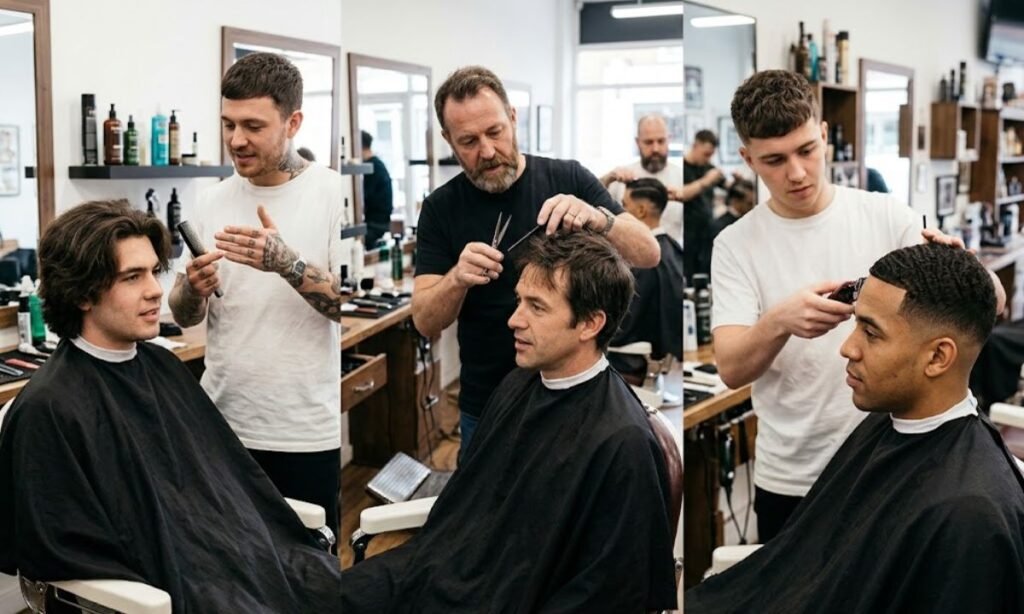
- For a clean, low-maintenance look: “I want a mid taper with a number 2 on the sides. Keep the top about two inches, and blend it with scissors.”
- For a soft, natural finish: “I’d like scissor-over-comb on the sides, no skin fade. Leave the top textured and easy to style with a blow dryer.”
- For growing out a fade: “I’m switching to scissors. Please keep my neckline tidy and blend the sides gradually over the next few visits.”
You can also checkout this article as well: Burst Fade Haircut: What It Is, Types, Styles and Barber Guide
Scissor cut vs clipper cut Frequently Asked Question

Which is better, scissors or clippers for hair?
Neither wins across the board. Scissors suit longer, softer styles, and clippers suit short, sharp ones.
Is a scissor cut better than a clipper cut?
It depends on your length and goal. For natural movement, scissors win. For speed and evenness, clippers win.
Can you get a fade with scissors?
Yes. A barber can use scissor-over-comb to build a soft taper. It takes longer than a clipper fade.
What is scissor-over-comb?
The barber lifts hair with a comb and cuts what sticks out with scissors. It blends lengths without guard lines.
What is clipper-over-comb?
It’s the same idea using clippers. It smooths transitions between fade levels.
How long does a scissor haircut last?
Usually six to eight weeks before the shape drifts. Longer hair hides growth better.
Do scissor cuts take longer than clipper cuts?
Yes, often by 10 to 20 minutes. The extra time goes into precision.
Should curly hair be cut with scissors or clippers?
Often both. Clippers handle the sides, and scissors shape the top and curls.
What should you tell your barber about haircut length?
Use inches or guard numbers, plus a photo. Say how short is too short.
How do you choose between a scissor cut and clipper cut?
Match the tool to your length, hair type, and upkeep. When in doubt, ask for a mixed-tool cut.
Final Thoughts
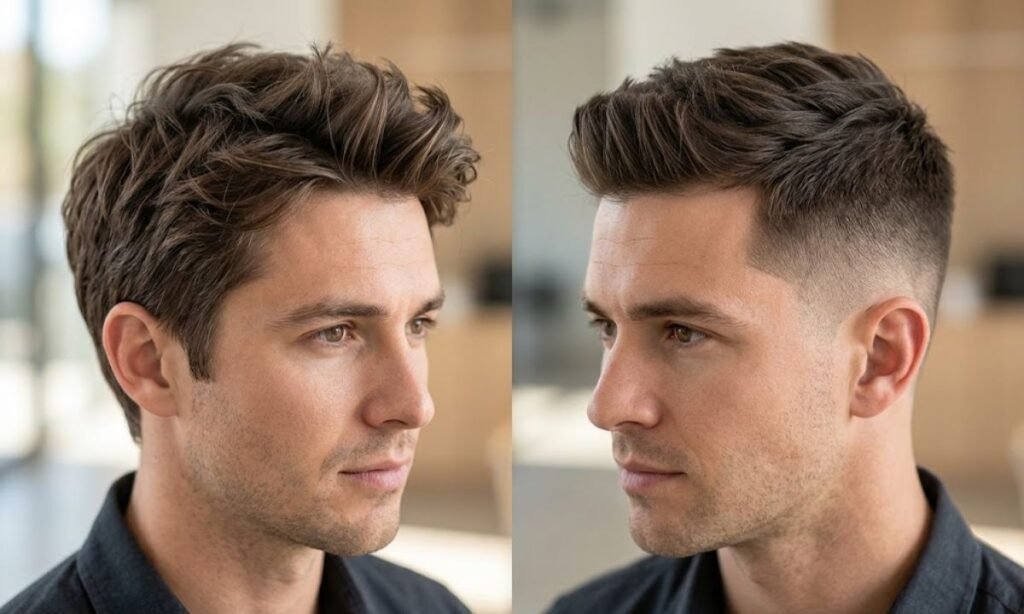
Scissor cut vs clipper cut isn’t a fight. It’s a toolbox. Scissors bring softness, length, and personal shape, while clippers bring speed, evenness, and crisp edges.
The smartest move is to know your goal before you sit down. Share your hair type, your routine, and a reference photo. Your barber can take it from there.
So what’s your pick, scissors, clippers, or both? Drop your thoughts in the comments. And if this helped, share it with a friend who’s still stuck in the “just a trim” loop.
Fresh tip: revisit your haircut plan every few months. Hair, seasons, and tastes all change, and your cut should keep up.

I’m Michael Charles, the creator of MegaCrazes—your source for fresh hairstyles, sharp haircuts, and simple hair-care inspiration. Find your style. Own your look.