

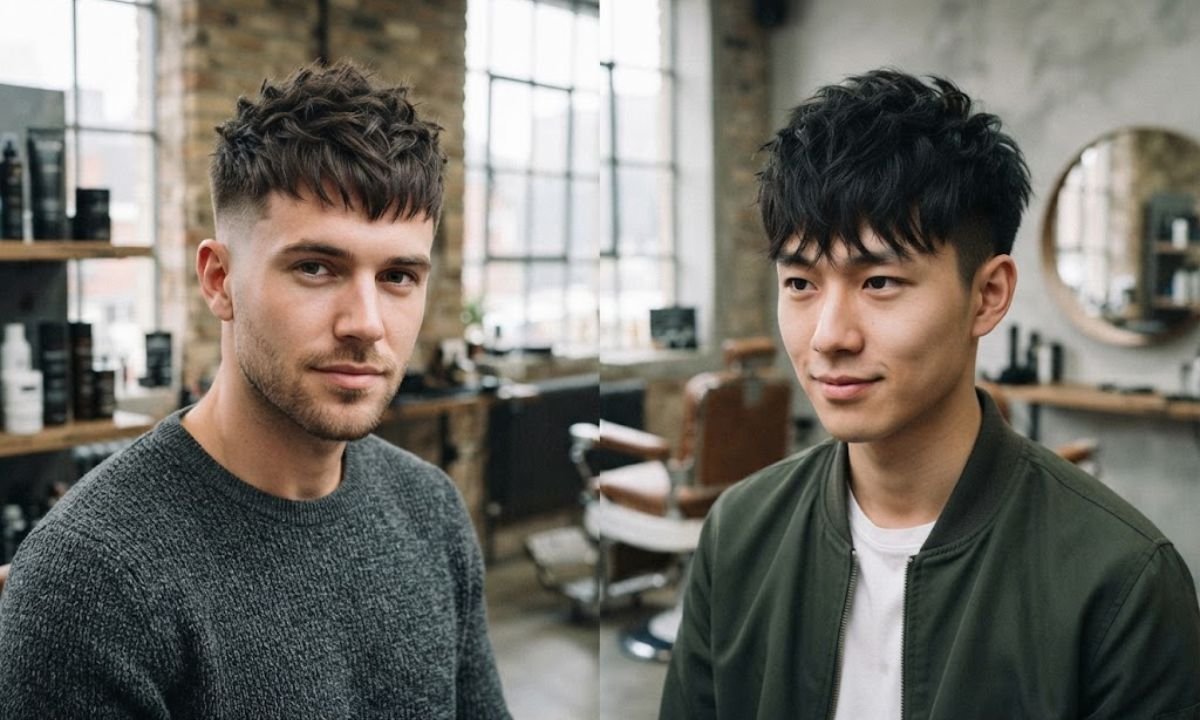
Ever sat in a barber chair and blanked on what to ask for? Or worried a short cut will look flat, boyish, or just plain wrong on you?
That’s a fair worry. The messy French crop fixes most of it, because it gives you a short, easy shape with texture on top and clean lines around it.
Quick Answer
A messy French crop is a short textured haircut with a cropped fringe, a defined textured top, and tidy clean sides. It takes about two minutes to style, and it suits most hair types when your barber adjusts the top length and fringe shape.
Ask for a low taper or low fade, a choppy front, and a clean neckline. Then use a bit of matte clay and go. That’s the whole recipe.
Messy French Crop: Effortless Texture, Clean Outline, Fast Style
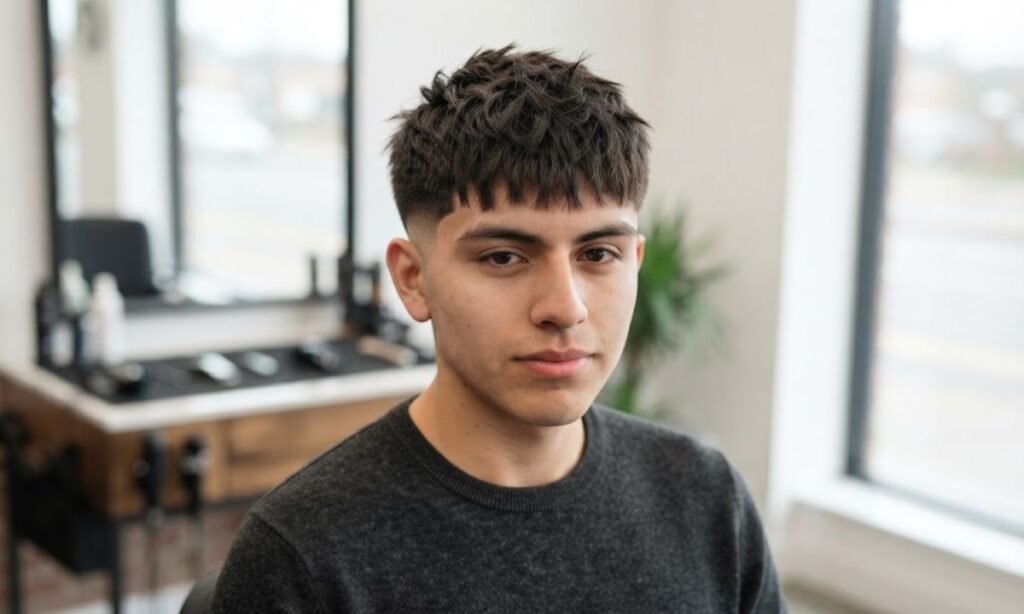
Think of this cut as a tidy fence around a wild garden. The outline stays sharp, while the top keeps its natural movement.
You get the best of both worlds: a sharp look without the fuss. Stick around, because the details below decide whether it looks intentional or accidental.
1) What Is a Messy French Crop

The French crop haircut is a cropped haircut with short sides and a top left a little longer. The front gets cut straight across or slightly choppy, which forms a short forward fringe.
The “messy” part means your barber adds texture so the top looks lived in. It’s a cousin of the Caesar crop hairstyle, only with more hair movement and less symmetry.
2) Why Choose This Cut

It’s a low maintenance cut that doesn’t ask for a 20-minute mirror session. You finish your daily styling while the kettle boils.
It also hides a receding hairline, adds hair bulk where you need it, and works with a professional haircut vibe at the office. Honestly, it’s easy to maintain for busy guys.
3) Face Shape Match

Your face shape decides how much fringe and height you should keep. A quick mirror check tells you most of the story.
- Round faces: keep more height on top and a tighter side taper to add length.
- Square faces: a softer, choppier front takes the edge off a strong jaw.
- Oval faces: you’re lucky, since almost any top length works.
- Heart-shaped faces: leave a slightly longer fringe to balance a narrow chin.
- Long faces: go shorter on top with a straighter fringe so the forehead looks shorter.
4) Hair Types & Top Textures

Your hair type changes how the crop behaves after you leave the shop. That’s why one photo can look different on two people.
Straight hair holds a sharp fringe but can fall flat. Wavy hair and curly hair give free volume, so it helps to keep the weight line slightly heavier. Thick hair needs thinning work, and fine hair or thinning hair looks best with a micro fringe and a bit of hair texture from powder.
Here’s a quick example. Picture a guy with French crop for wavy hair goals: he keeps the top about an inch and a half long, and the waves do the styling for him.
5) Messy Crop Texture

Good hair texture starts with the cut, not the product. Your barber uses point cutting and razor work to break up the bulk so the textured crop separates nicely.
Without that step, even the best clay just sits there. Ask for movement built into the shape, and you’ll need far less product.
6) Choppy French Crop
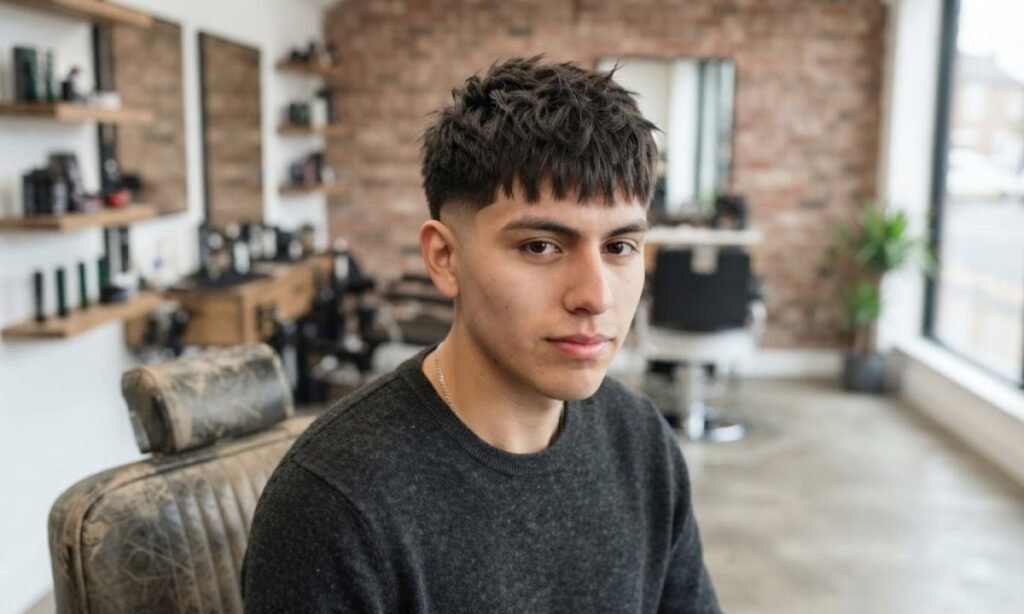
A choppy fringe looks jagged on purpose. Each piece sits at a slightly different length, which gives the front a rough, playful edge.
This version suits thick hair and short haircut for thick hair fans best. It also hides small cowlicks, which is a nice bonus if your front hair has a mind of its own.
7) Tousled French Crop
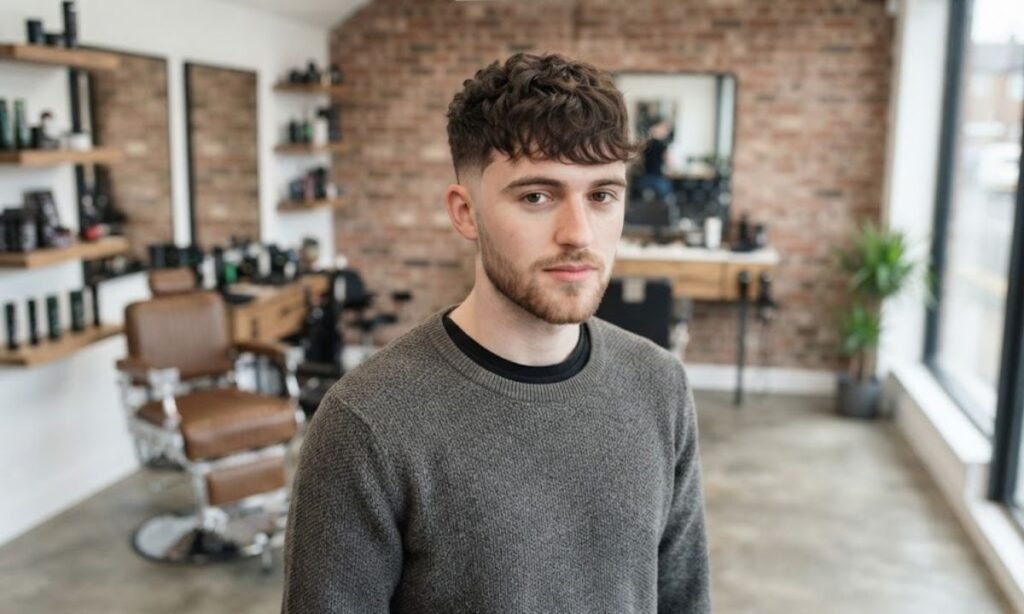
The tousled take is softer and looks like you just walked in from a windy day. The textured fringe falls forward and slightly sideways.
It’s ideal if you want a relaxed, boyish feel with natural movement. Use a light cream instead of heavy clay so the top keeps its bounce.
8) Textured Crop Fringe
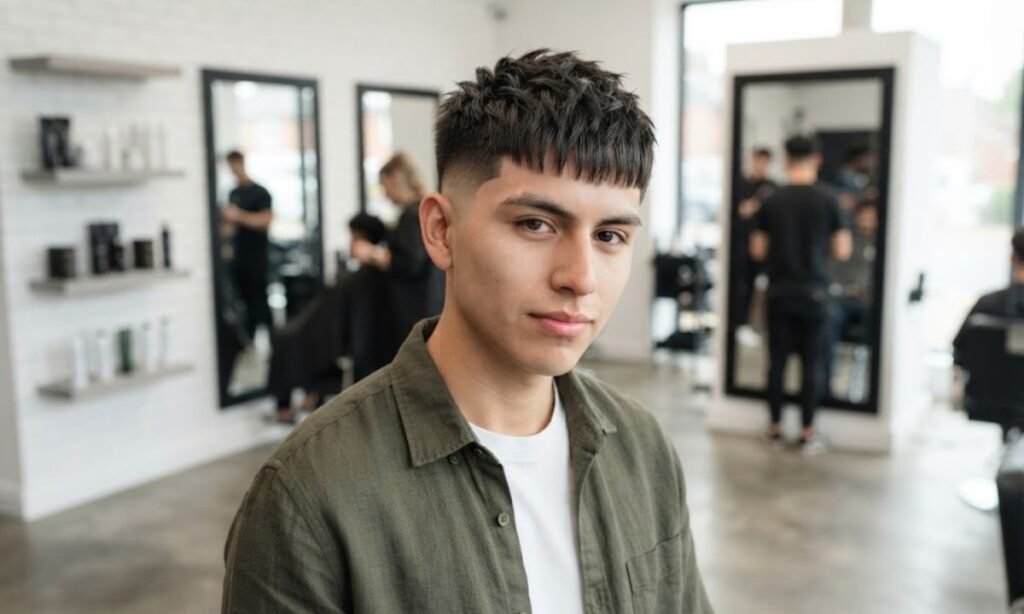
The fringe is the star of the cut, so the fringe shape matters. A straight line looks bold, a slightly rounded one looks friendly, and a ragged one looks edgy.
Most men’s fringe haircut styles work best between one and two inches long. Go shorter if your forehead is small, and a touch longer if you want more drama.
9) Messy Crop Fade
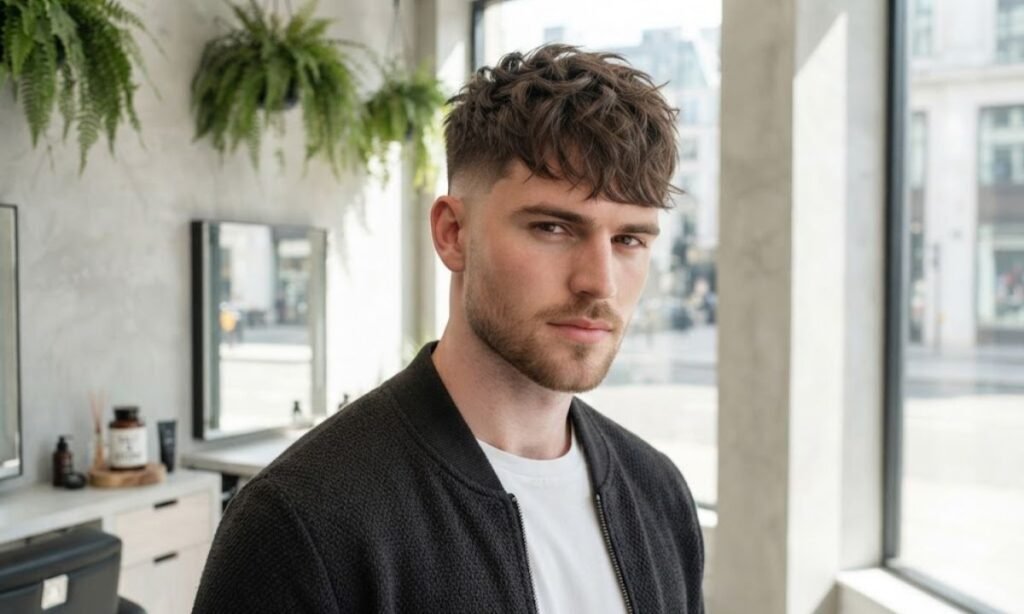
Pair the crop with a low fade crop haircut and you get crisp contrast. The skin fade blends into the top so the shape looks clean from every angle.
Pick a low bald fade for a bolder look or a low taper fade for a softer one. Your fade height changes the mood completely, so say it out loud in the chair.
10) French Crop Waves
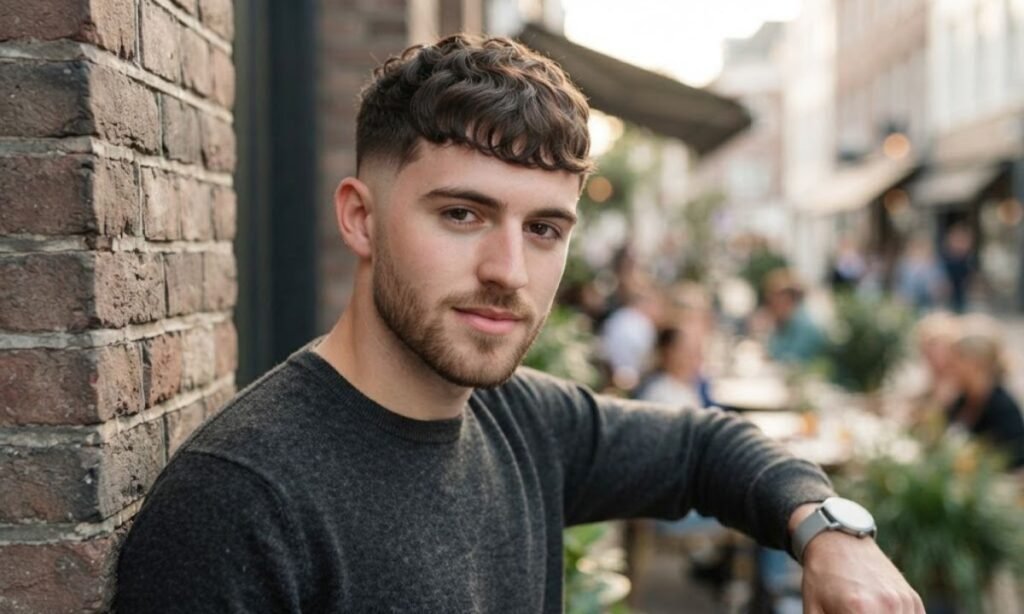
If you’ve got waves, this cut loves you. A well-cut French crop fade with wavy top gives you a soft, shaggy front and a neat outline.
Let the waves dry naturally, then scrunch in a little sea salt spray. Skip the flat iron, since your natural movement is the whole point.
11) Messy Crop Volume

Want a fuller top? Ask your barber to leave extra length near the front and crown, then use short layers for lift.
A quick blow-dry with your fingers pulling up the root direction builds instant height. Finish with a cool blast so the shape sets.
12) In the Chair: Step by Step
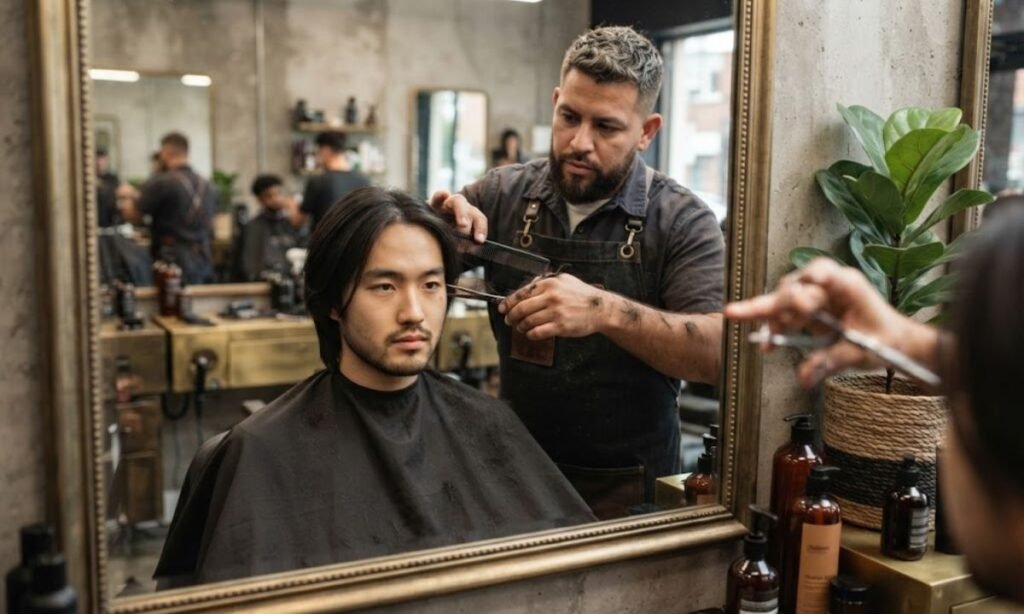
Knowing how the haircut happens helps you spot a good barber. It also helps you explain what you want without sounding lost.
A skilled barber follows a clear order every time. Here’s the flow from start to finish.
Step 1: Consult & Plan

Every good barber consultation starts with questions. Your barber checks your hair type, crown control, and hairline before touching a clipper.
Bring photos and say how much time you’ll spend styling. Honest answers lead to a cut that fits your real life.
Step 2: Prep
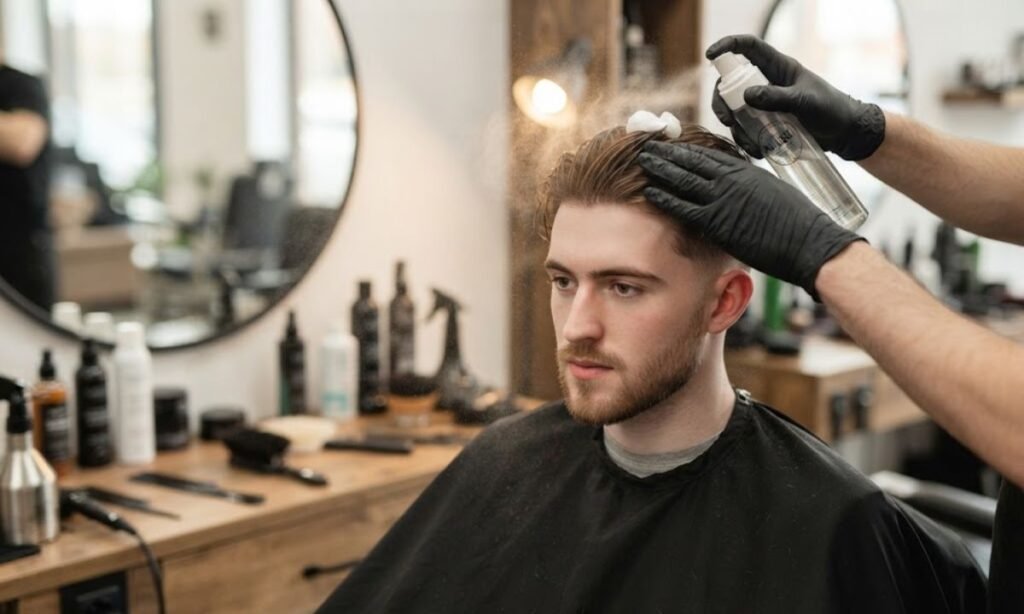
Your hair gets washed or sprayed damp so it cuts evenly. Dry hair fights the comb and hides how the strands really fall.
Some barbers also comb the top forward to see the true fringe shape. That quick look saves you from a surprise later.
Step 3: Set the First Guideline

The barber picks a clipper guard and cuts a starting line around the sides. This guideline controls everything that follows.
If it’s too high, the whole haircut looks bulky. A steady first pass keeps the taper height and fade height consistent.
Step 4: Build the Taper or Fade

Now the low taper French crop takes form. The barber uses clippers with shorter guards as they move down to the ear outline and neckline.
For a temple fade or beard fade, the blend continues into the facial hair. The goal is one smooth gradient with no visible steps.
Step 5: Blend Ridges
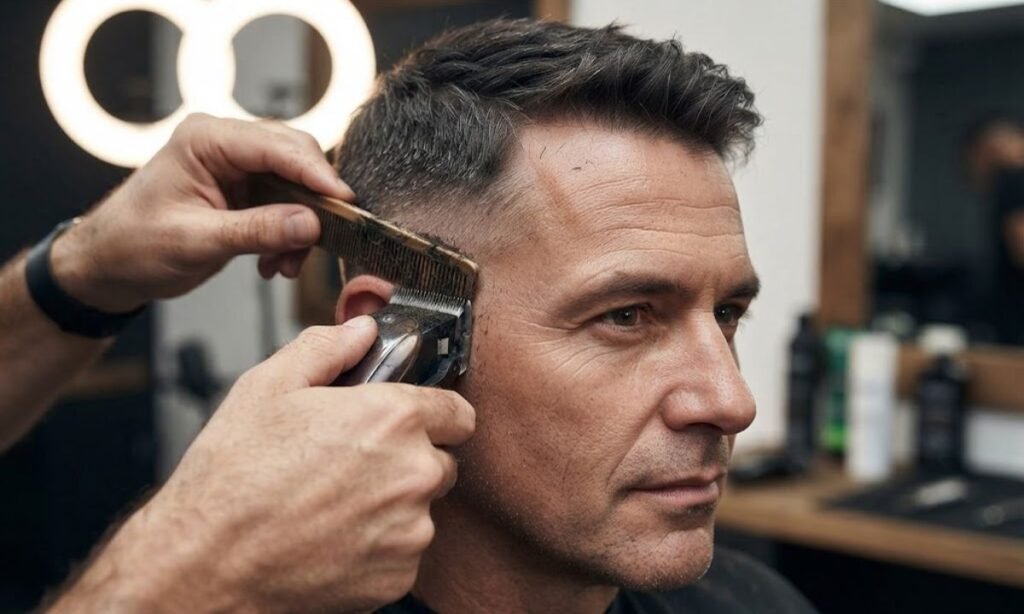
Every head has bumps, and the parietal ridge is the biggest one. This is where the sides curve into the top.
Using clipper-over-comb or scissor-over-comb, your barber softens the ridge. That prevents a harsh shelf between the fade and the textured top.
Step 6: Texture & Balance
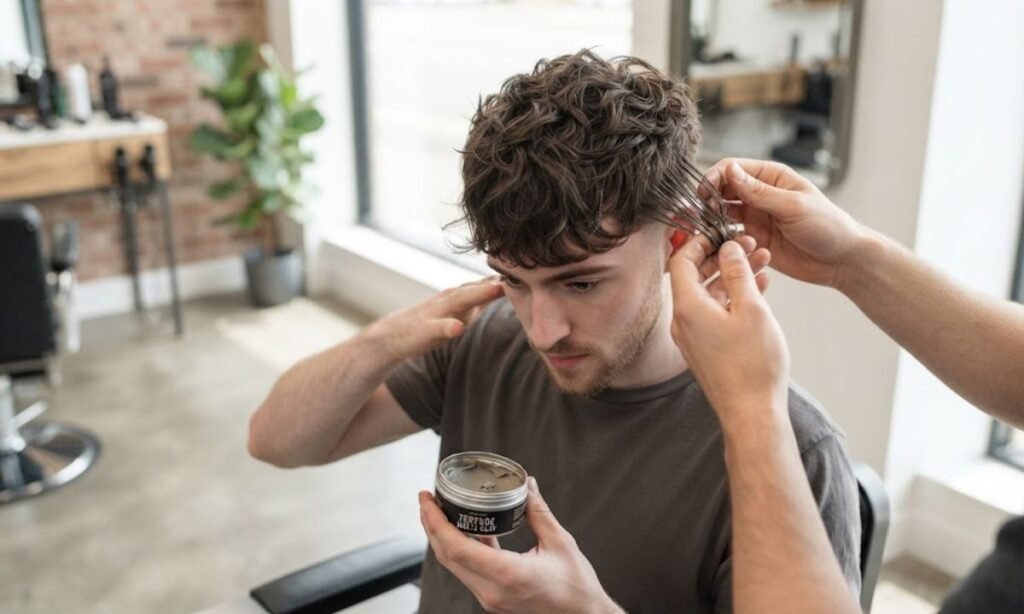
Next comes the hair texture work. The barber point cuts the top, removes heavy spots, and checks the weight line for balance.
They’ll step back often to compare both sides. Small tweaks here make the difference between decent and excellent.
Step 7: Cut the Fringe
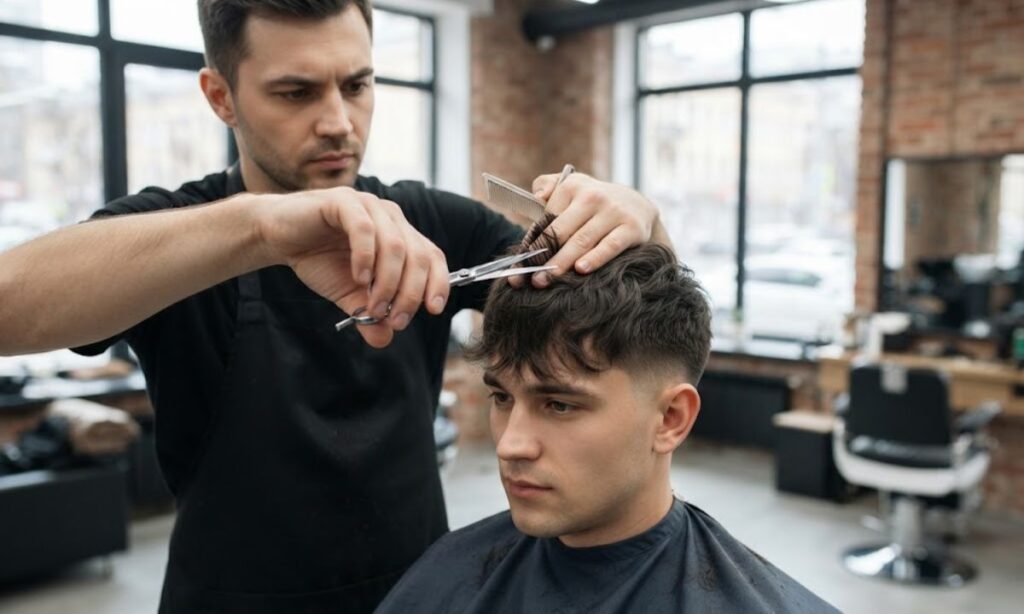
The fringe gets cut last on the top, usually with the comb pulling hair forward. Cutting it dry helps you see the final length.
Your barber can pick a straight, choppy, or micro fringe finish. Tell them if your forehead is high or low.
Step 8: Finish

A good barber cleans up the edges with a trimmer for a proper shape up and a clean neckline. They also dust off stray hairs.
Then they style it with a styling product so you can see the final result. Ask them to show you how they did it.
13) Messy Crop Texture

Let’s circle back to texture, since it’s the heart of this cut. Think of it as the difference between a crisp shirt and a wrinkled linen one.
You want controlled wrinkle. Matte clay, sea salt spray, and texture powder all add grip without shine.
14) Messy Crop Styling
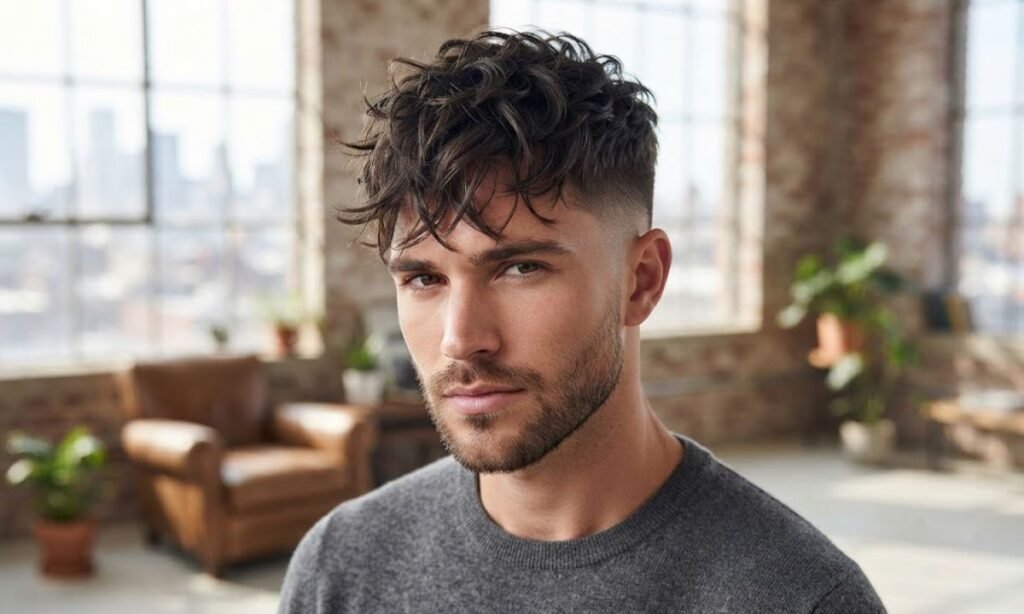
Start with towel-dried hair and rub a pea-sized amount of clay between your palms. Push it through from the back to the front.
Then twist the ends of the fringe with your fingertips. Stop when it looks good, because overworking makes it stiff.
15) Daily Routine and Fast Style
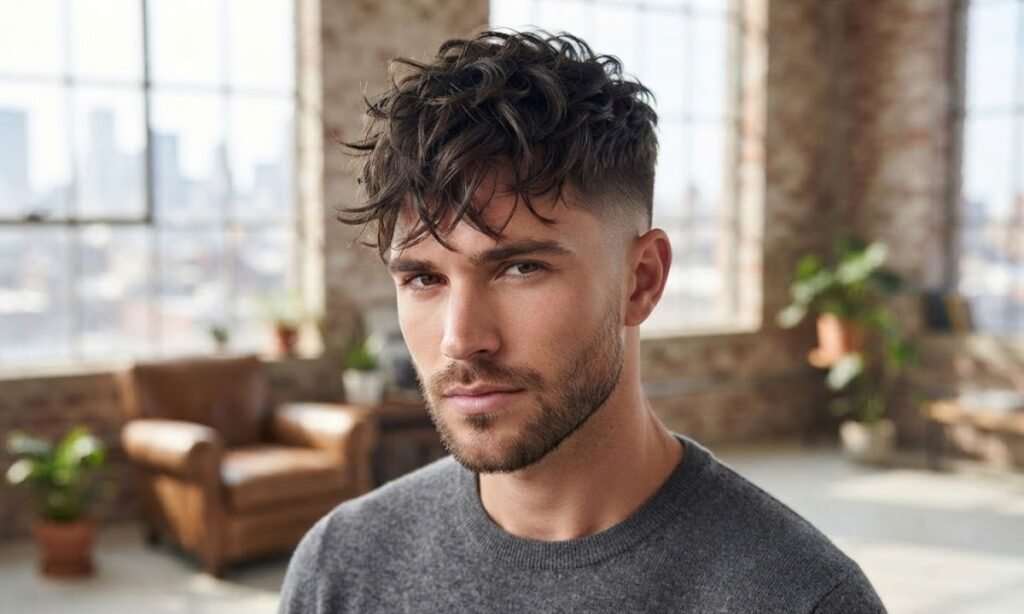
Your styling routine can take under two minutes. Wash, towel dry, apply product, shape, done.
- Morning: dampen the top, add product, and finger comb forward.
- Quick fix: a short blow-dry at the roots for lift.
- Night: rinse out product so the scalp can breathe.
16) Beard & Outline Options

A beard fade ties the whole look together. The sideburns blend straight into short stubble, and the face looks sharper.
If you’re clean shaven, keep the ear outline and neckline taper tidy. Match the beard length to your top so nothing looks unbalanced.
17) Messy Crop Finish
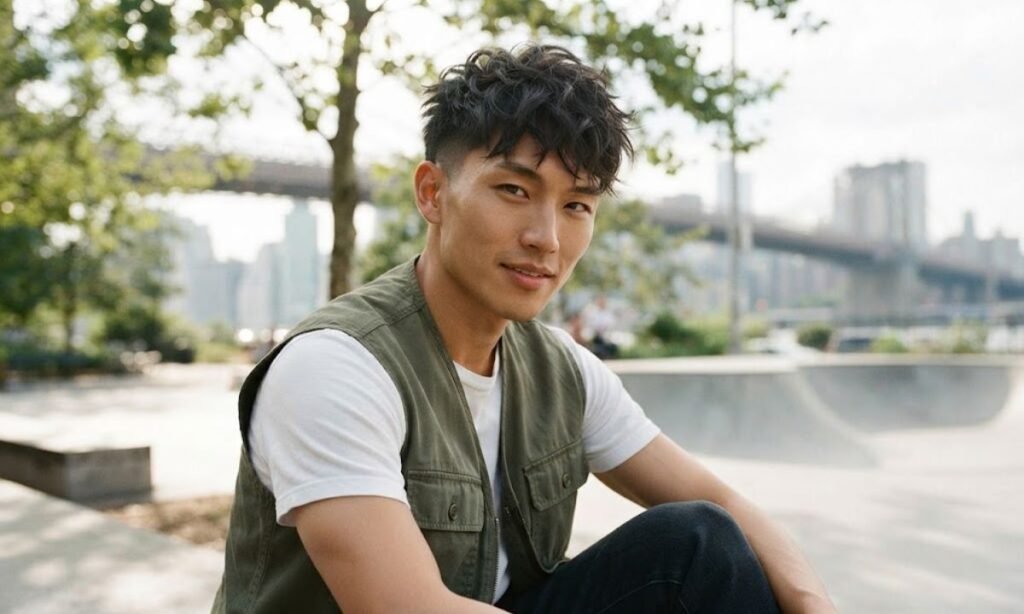
The finish decides how the cut looks in photos and in real life. A matte finish looks natural, while a shiny one looks heavier.
Set it with a light hairspray if you’re headed out. Keep the natural hairline visible so the shape stays honest.
18) Exactly What to Tell Your Barber

Here’s a script you can steal. Say: “I’d like a messy French crop with a low taper fade, a textured choppy fringe about an inch and a half, and a natural neckline.”
Add your hair type and how long you’ll spend styling. Show a photo, and ask them to check the crown control before they start.
19) Maintenance Timeline

Plan on a trim every three to four weeks for the sharpest lines. Regrowth shows fastest around the fade and neckline.
If you’re happy with a softer look, stretch it to five weeks. Just book ahead, since haircut maintenance is easier with a standing appointment.
20) Common Mistakes & Quick Fixes

Most haircut mistakes are small and fixable. Knowing them saves you from awkward weeks of regrowth.
- Too much product: the top looks greasy. Wash it out and start with half the amount.
- Fringe too short: style it forward and use texture powder while it grows.
- Fade too high: ask for a low fade next time and lengthen the sides slowly.
- Flat top: use a blow-dry and lift the root direction before styling.
These haircut fixes work at home, and your barber can tidy the rest.
Products That Actually Help

You don’t need a shelf full of bottles. A matte clay, a sea salt spray, and a light hairspray cover almost every version of this cut.
Fine hair likes powder, thick hair likes clay, and curly hair likes cream. Try one styling product at a time so you know what works.
FAQs
Can I get a messy French crop with thinning hair?
Yes, it’s one of the better short cuts for it. A micro fringe and a bit of texture powder make the top look fuller.
How long should my hair be?
Aim for one to two inches on top. Anything shorter leaves little for hair movement.
Does it work for curly hair?
Absolutely. Keep the sides tight and let the curls create the volume.
You can also checkout this article as well Low Taper Mullet Guide 2026: Best Styles & Care
Conclusion
The messy French crop proves that a great modern men’s haircut doesn’t need a long routine. With the right barber haircut, a smart taper height, and a little clay, you get a sharp look every day.
Now it’s your turn. Tell us in the comments which version you’d try first, and share this with a friend who’s stuck on his next cut.
Last updated: September 2026.

I’m Michael Charles, the creator of MegaCrazes—your source for fresh hairstyles, sharp haircuts, and simple hair-care inspiration. Find your style. Own your look.