
Quick Answer
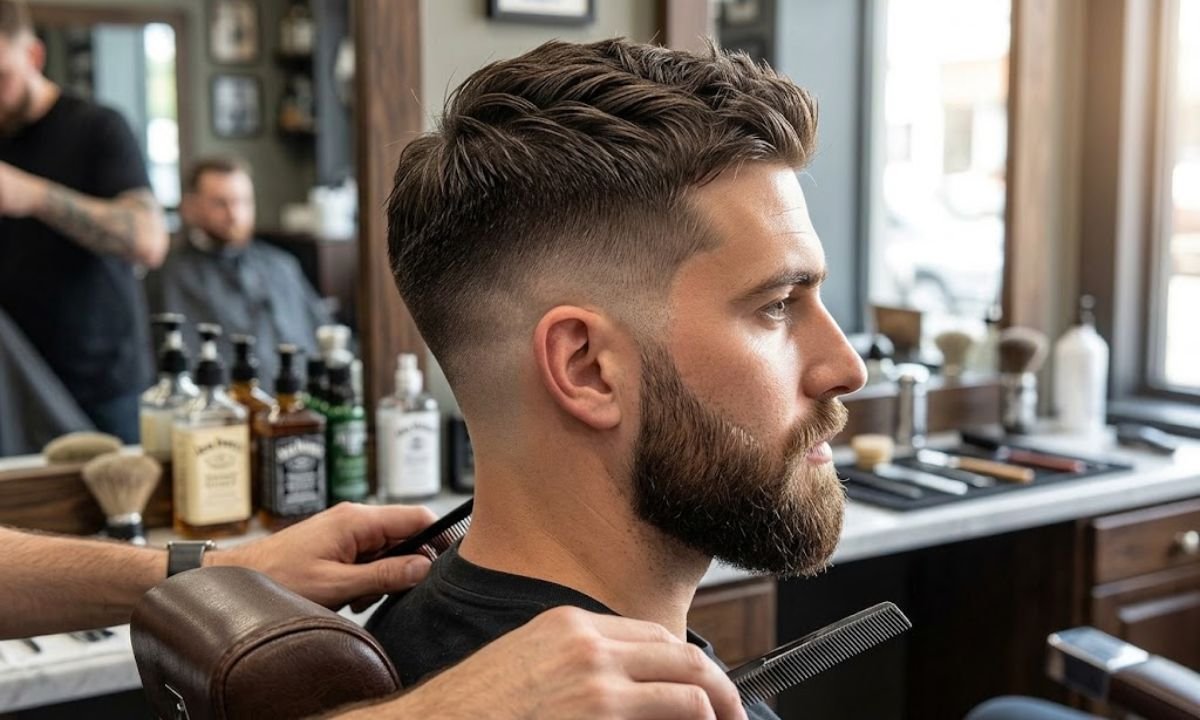
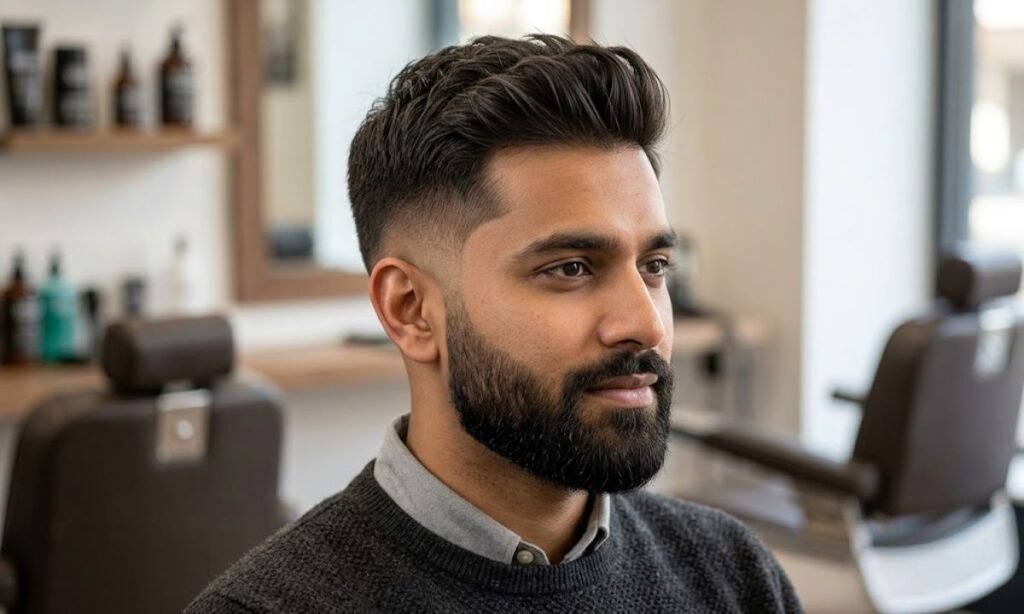
A low taper fade with beard keeps the hair short around your ears and nape, then lets it melt into your facial hair.
The taper starts low, so your hairline stays natural and the beard looks like part of the same haircut.
Want the one-line order for your barber? Ask for a low taper, a connected sideburn, and a beard shaped to your jawline.
Let your hair texture decide the top length, and you’re done.
This guide walks you through 22 hairstyle combos, a simple barber script, and a haircut maintenance plan.
Skim to the part that fits your hair pattern and beard density, then save a few reference photos.
What a low taper fade with beard is
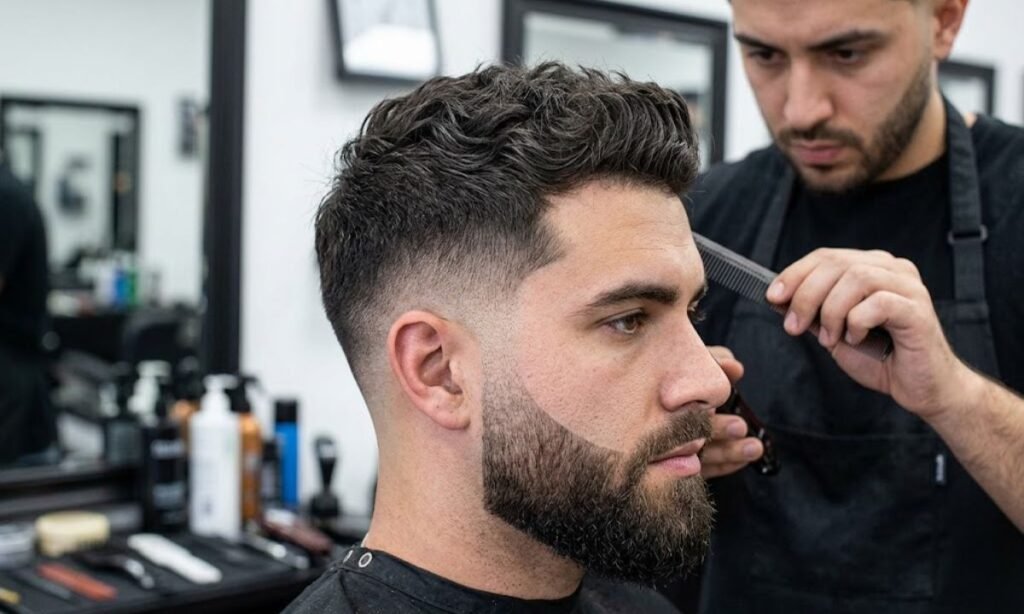
Picture a guy sitting in the barbershop chair, asking for something “clean but not too sharp.”
That’s usually a low taper fade with beard, and it’s one of the safest modern men’s hairstyles around.
The haircut shortens the perimeter only a little, then hands off to the beard without a loud line.
You get neat edges, natural bulk on top, and facial hair that still looks like yours.
Think of it as a barber-ready haircut for people who want polish without drama.
It works in an office, a classroom, or a Saturday night out.
Where the taper sits and how it meets the beard
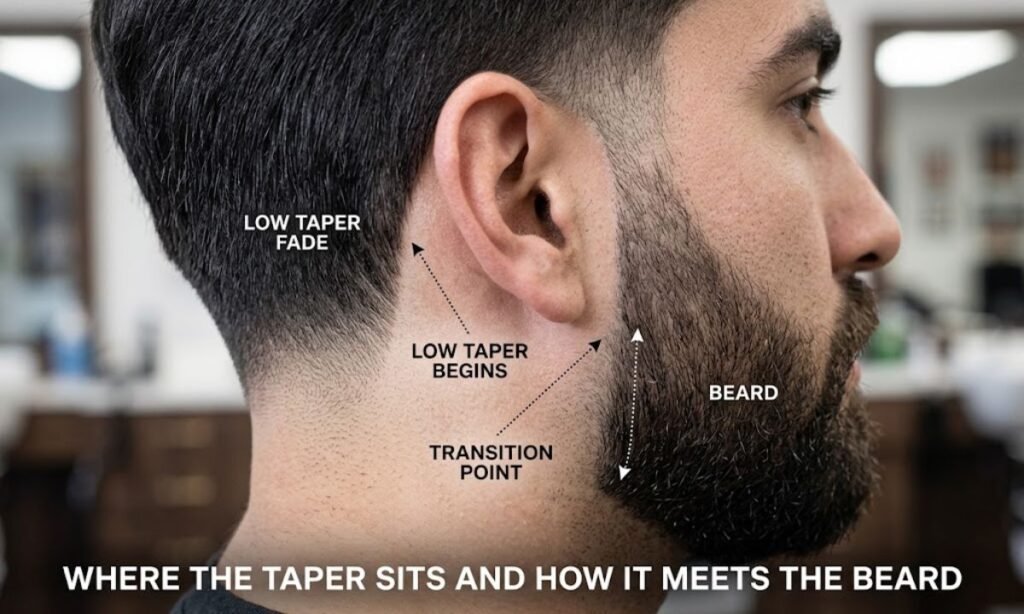
The taper sits low, hugging the sideburns, the temples, and the nape.
Only the outer edge gets short, while the crown and top keep their hair length.
The beard joins in at the sideburn transition.
If the sideburn runs straight into the cheek, you’ve got a connected sideburn, which is the classic look.
The shortest point stays tight near the ears and the neckline.
From there, a gradual blend carries the eye up into the textured top and down into the beard.
Low taper, low fade, and beard fade
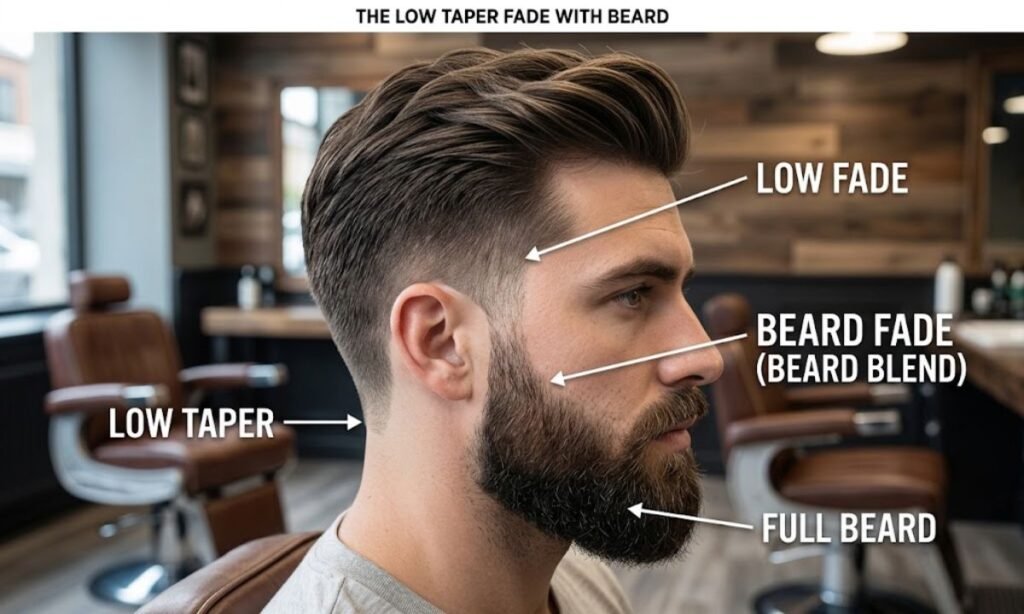
People swap these words all the time, and that’s where orders go wrong.
A low taper leaves more scalp hair and keeps a softer, subtler finish.
A low fade goes further, often down to near-bare skin in a small zone.
It gives sharp contrast, which suits a bolder look. If you’re torn on low taper vs low fade, pick the taper for a calmer vibe.
A beard fade is the piece that links your sideburns to your facial hair.
You can have a low taper with a full beard, or a skin fade with beard, and the beard fade is what ties the two together.
Why choose a low taper fade with beard
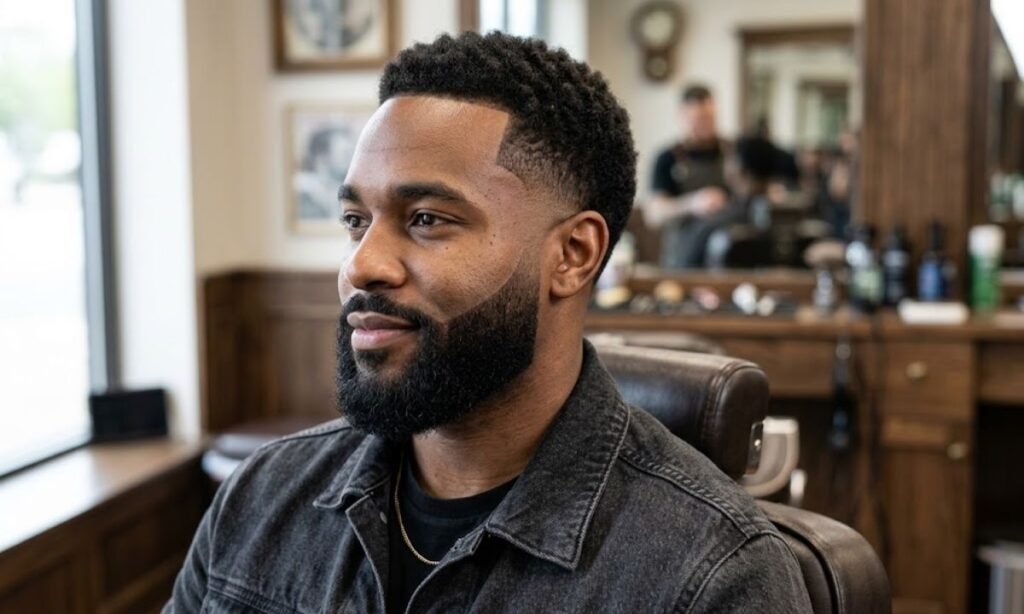
Here’s the honest pitch. It looks tidy for weeks, and it forgives a late barber appointment.
Because the sides stay a bit longer than a high taper fade, the fade grow-out looks soft instead of scruffy.
It’s also a low-maintenance haircut compared with a skin fade.
You won’t need a barber refresh every ten days to look decent.
The beard adds structure, too.
A good beard outline sharpens the jaw and balances a longer top shape, so the whole silhouette feels intentional.
It’s also a workplace hairstyle and a school hairstyle that rarely raises eyebrows.
You can look clean-cut and still show some personality.
Who a low taper fade with beard suits best

Short answer: almost everyone, with a few tweaks.
The real question is how your hair, beard, and face work together.
Below, we’ll break it down by hair texture, beard density, and head shape.
Read the part that sounds most like you.
Hair texture and top length
Straight hair shows every line, so keep the blend clean and the top length even.
A crew cut or a neat side part looks great here.
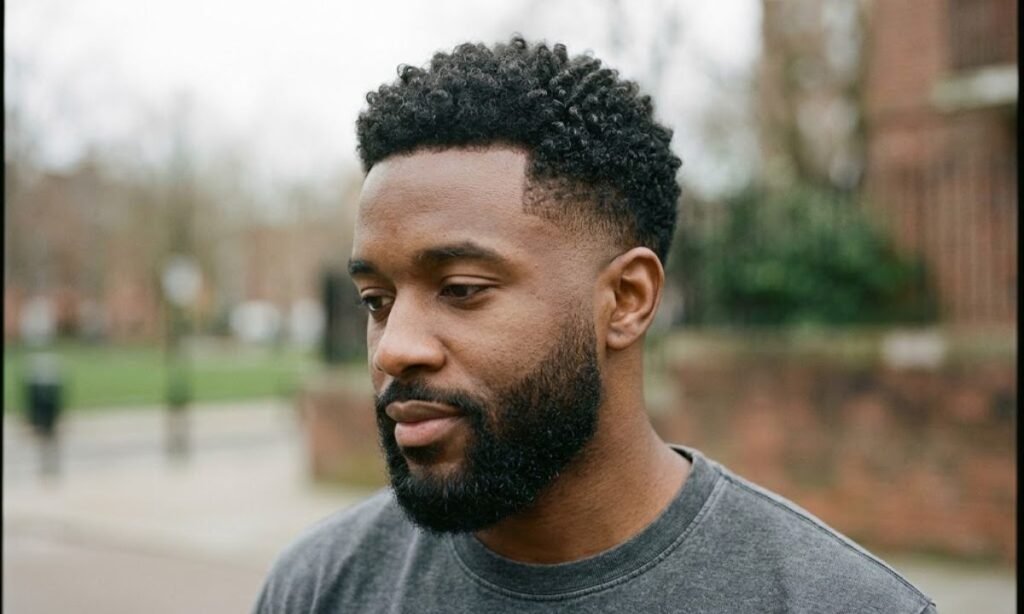
Wavy hair and curly hair love a bit of natural bulk.
Leave two to four inches on top and let the curl pattern do the talking.
Coily hair and textured hair take a low taper fade beautifully.
The taper frames an afro, loc bases, or even dreadlocks without stealing the show. That’s why a low taper fade for Black men is such a staple.
Fine hair needs a lighter hand on the top.
A textured crop adds fake hair volume and hides thin spots.
Beard density and beard length
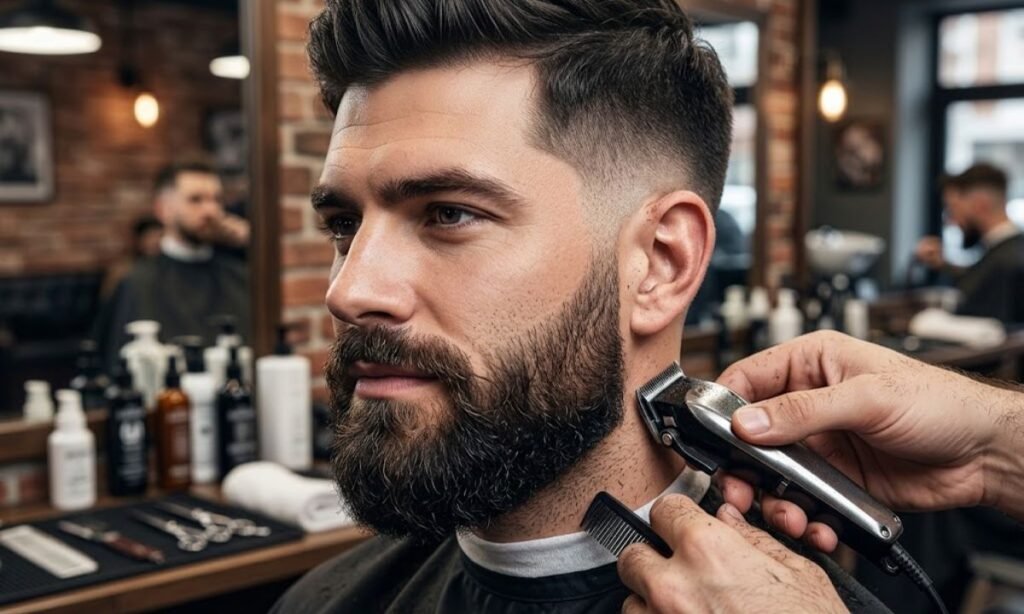
A full, even beard gives you the most options.
You can go full beard, short boxed beard, or a faded beard with equal ease.
Patchy growth isn’t a dealbreaker.
Keep the beard length short, tighten the cheek line, and let a blend hide the gaps.
If you grow stubble only, a low taper pairs well with a tight shadow finish.
It keeps the whole face looking even.
Beard weight matters, too.
A heavy beard base length on a short haircut can look top-heavy, so trim it to match.
Face shape, head shape, and the outline you want

A round face likes sharper angles.
Keep the cheek line crisp and a bit of height on top to stretch the look.
A longer face prefers fuller sides and less height.
A short beard and a flatter top stop the face from looking even longer.
A narrow chin gets help from a fuller beard.
A slightly longer chin length adds weight right where you need it.
Head shape counts, too.
If you’ve got flat spots or a prominent crown, a low taper is gentler than a high one, so the hairline symmetry still looks smooth.
Best Low Taper Fade with Beard Styles for a Clean, Modern Look
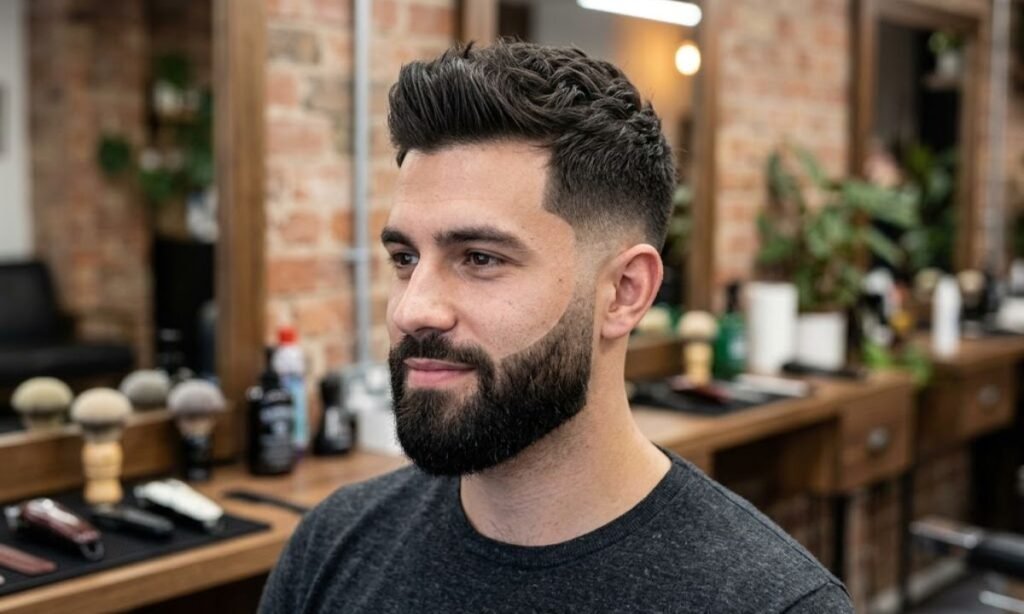
Here are the first ten haircut ideas, ordered from classic to bold.
Treat each one like a recipe you can tweak.
1. Classic Low Taper Fade with a Full Beard

This is the default for a reason.
A soft taper around the ears blends into a full beard with no hard line.
Keep the beard about an inch long and the top a little longer.
That contrast keeps your jawline readable.
It suits men who want one look for work and weekends.
Ask for a gradual blend and a natural sideburn transition.
2. Low Taper Fade with a Sharp Beard Lineup
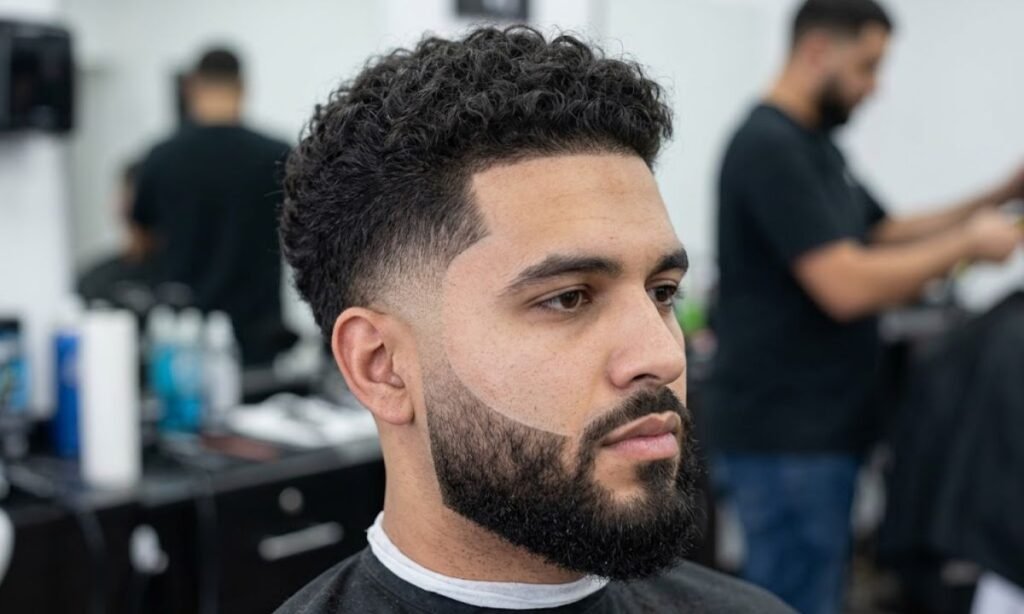
Ever notice how a crisp lineup makes everything look expensive?
The cheek line and neckline do most of that work.
Your barber uses a small clipper or trimmer for the beard outline.
The hairline gets the same treatment, so both sides match.
The tradeoff is upkeep.
Sharp lines grow out fast, so plan a barber refresh every two to three weeks.
3. Low Taper Fade with a Short Boxed Beard

A short boxed beard is tidy, square, and easy to live with.
The sides stay close, and the chin length gets a little extra.
Pair it with a low taper and a clean top shape.
You’ll look put together without trying hard.
It works well on a round face.
The boxed edges add structure where softness lives.
4. Low Taper Fade with a Textured Top and Thick Beard
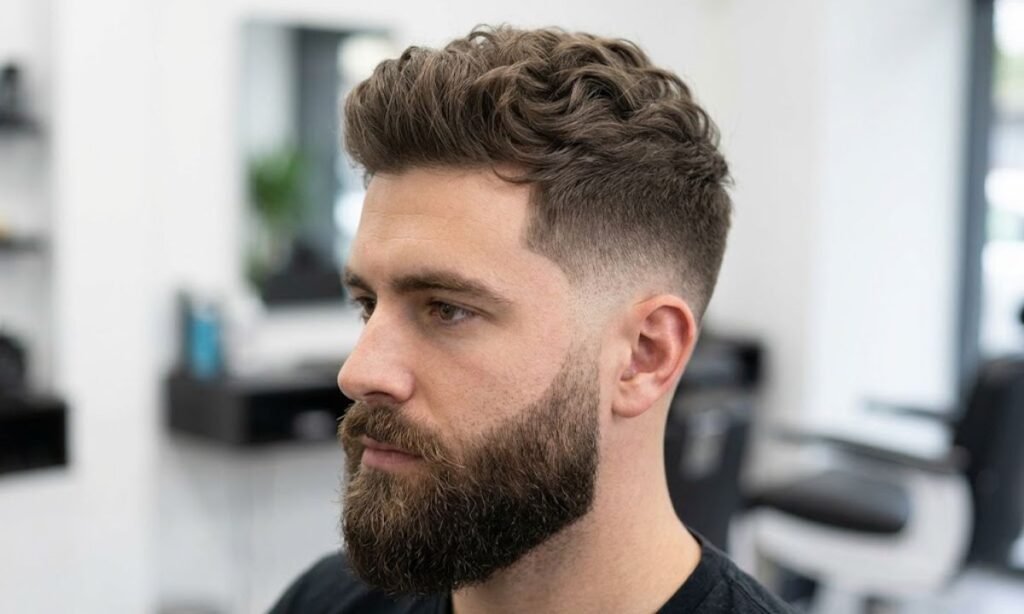
Here the textured top brings movement, and the thick beard brings weight.
Together they feel rugged but still neat.
Ask for point-cutting on top and a beard conditioner habit at home.
Thick beard bulk can get wiry without it.
Keep the taper subtle so the beard doesn’t swallow the fade.
A little subtle contrast goes a long way.
5. Low Taper Fade with a Curly Top and Trimmed Beard

A curly low taper fade is a fan favorite.
The taper tames the sides while the curls keep their natural volume.
Keep the beard trimmed to a short length.
That way the curls stay the star.
Use a leave-in on the top and beard oil on the face.
Curly hair dries out quickly, and so does a short beard.
6. Low Taper Fade with a Beard and Defined Cheek Line
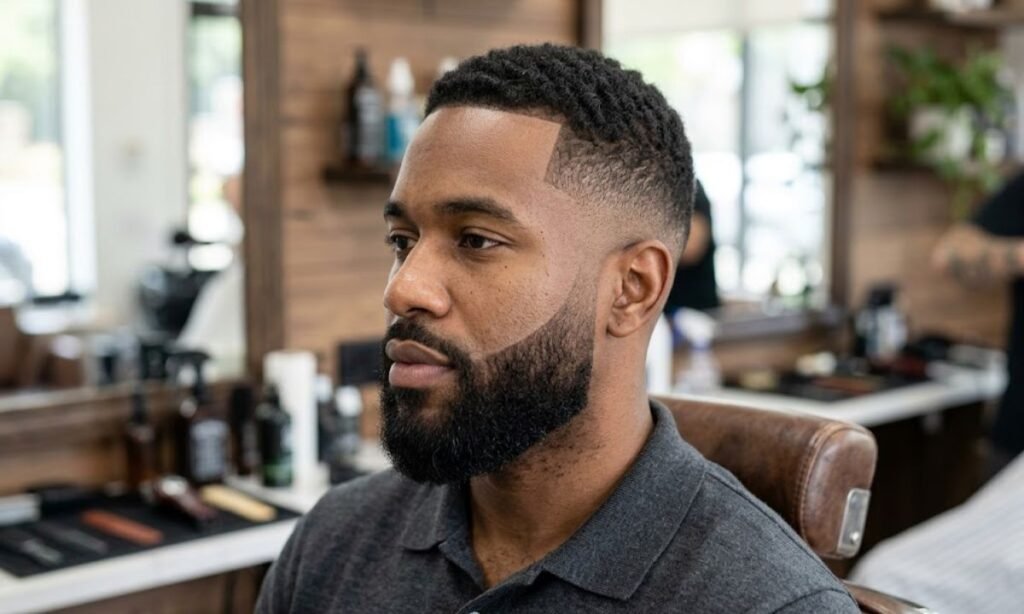
The cheek line is the quiet hero of this cut.
A clear line along the cheek lifts the whole face shape.
Your barber sets it just above the natural growth, then softens it.
A line that’s too high looks fake, so keep it believable.
Check both sides in a mirror.
Good beard symmetry is what people notice first.
7. Low Taper Fade with a Faded Beard Blend
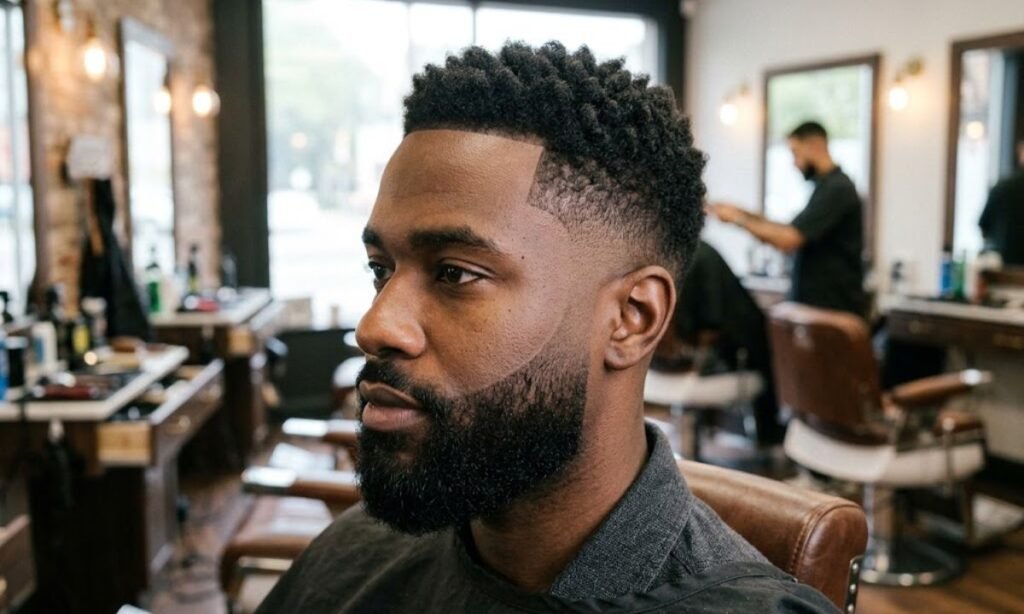
This one takes the fade gradient into the facial hair.
The beard gets shorter as it climbs toward the sideburns.
That’s a true sideburn-to-beard blend.
There’s no visible gap and no hard line between hair and beard.
It looks smooth on camera and in person.
Just remember that beard fade maintenance needs a visit every few weeks.
8. Low Taper Fade with a Side Part and Sculpted Beard

A side part says “I have my life together,” even on a Monday.
Pair it with a low taper and a sculpted beard with crisp edges.
The top length here sits around three to four inches.
Use a light pomade and a comb for the part.
Keep the beard neat and slightly rounded.
Sharp corners on both could feel stiff.
9. Low Taper Fade with a Goatee and Connected Mustache
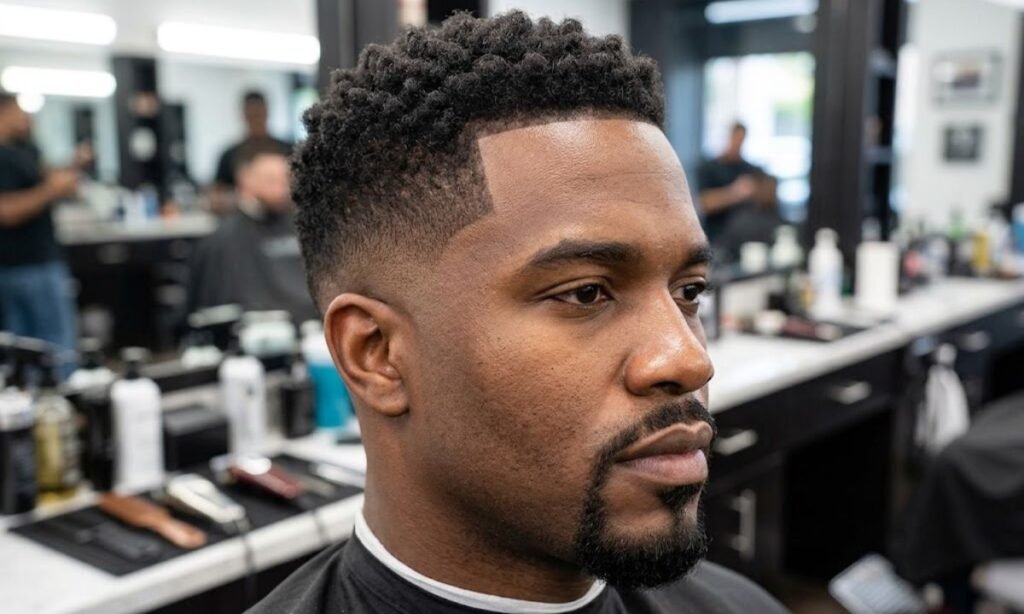
Not every look needs a full beard.
A goatee with a connected mustache keeps the face open and the chin strong.
The low taper stays quiet so the facial hair leads.
It’s a good pick if your cheek growth is thin.
Trim the moustache so it never covers the lip line.
A tidy edge makes the whole style look deliberate.
10. Low Taper Fade with a Long Beard and Clean Temples
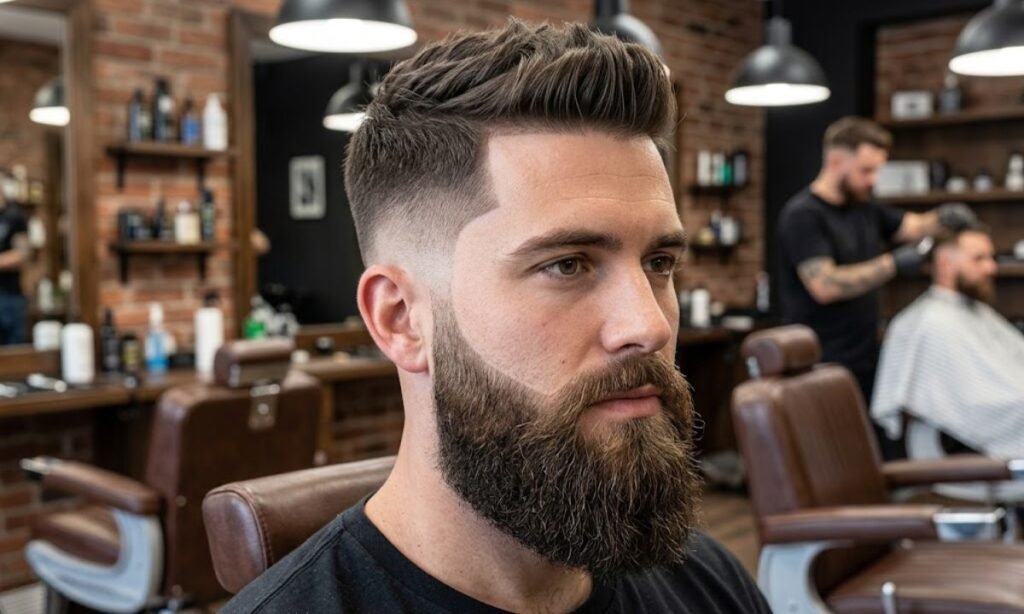
A long beard can overpower a short haircut.
Clean temples and a low temple taper rebalance the silhouette.
Keep the top length a bit fuller to match the beard weight.
Otherwise the head looks smaller than the face.
Comb it daily and use beard oil.
Long facial hair needs shape, not just length.
Short, clean-cut combinations

Sometimes you want fewer decisions.
These three combos keep the hair length low and the effort lower.
They suit the workplace, the gym, or a busy week.
You can also grow them out without panic.
11. Buzz cut with low taper and stubble

A buzz cut with a low taper is the fastest way to look sharp.
The stubble matches the top, so everything reads as one tone.
Use the same guard for the top and a slightly closer one at the edges.
That gives you a subtle contrast without extra effort.
Moisturize the scalp and the skin under the stubble.
Short hair shows dryness more than people expect.
12. Crew cut with low taper and short boxed beard

A crew cut keeps the front slightly longer than the sides.
With a low taper and a short boxed beard, it looks athletic and tidy.
This one’s popular with military-style haircuts and office dress codes.
It’s easy to style because there’s almost nothing to style.
Ask for a clipper over comb finish on top.
That keeps the top shape even and clean.
13. Textured crop with low taper and short faded beard

A textured crop gives you a forward fringe and messy-but-neat top.
Add a low taper and a short faded beard for balance.
The fringe softens a strong forehead.
The beard adds a little edge.
Use a matte clay, two fingers’ worth.
Too much product ruins the casual vibe.
Textured and longer-top combinations
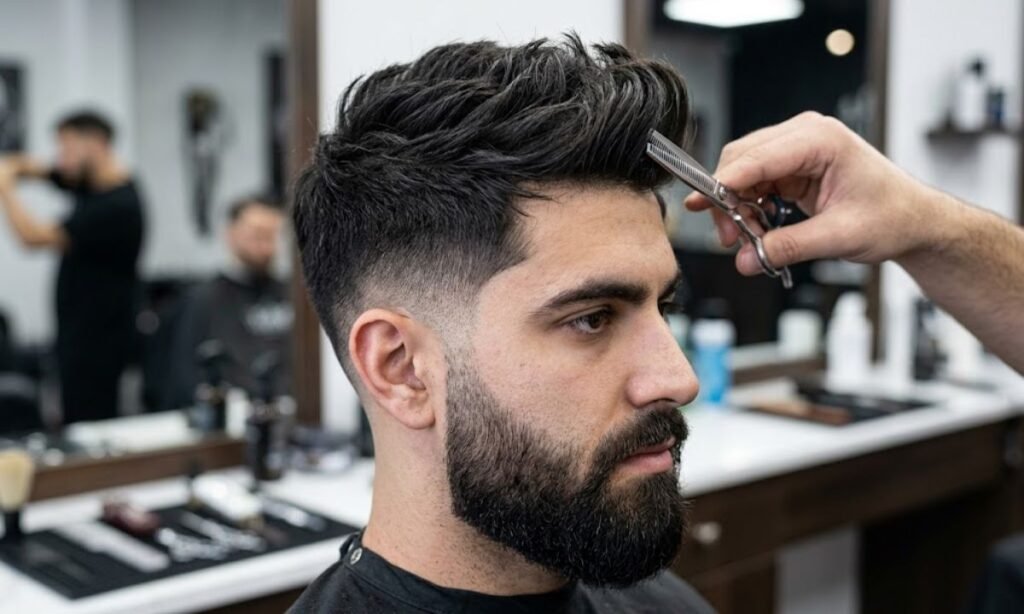
If you’ve got more hair to play with, this section is for you.
Longer tops need a bit more thought, but they reward you.
The low taper keeps the sides under control.
The beard keeps the look grounded.
14. Wavy top with low taper and short beard
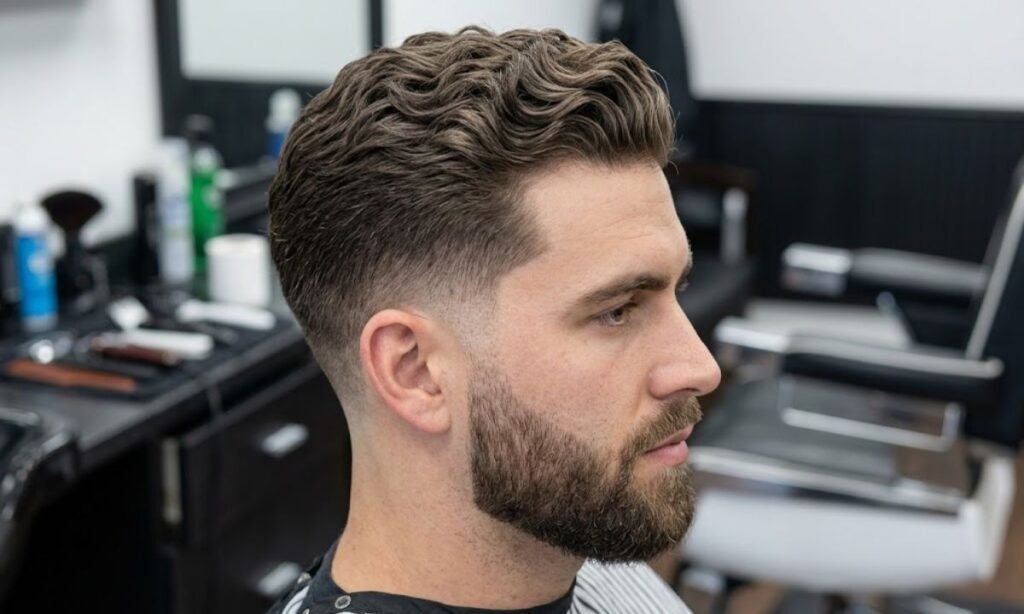
A wavy top has a lazy, easy shape.
The low taper cleans up the sides, and the short beard keeps it modern.
Let your waves dry naturally when you can.
A little sea salt spray adds texture without crunch.
Don’t cut the top too short.
Waves need some weight to hold their pattern.
15. Curly or coily top with a shaped beard

A curly or coily top gets more attention once the sides are neat.
That’s the magic of a low taper, especially on an afro.
Shape the beard to follow your jawline.
A tight cheek line makes the curl pattern pop.
Use a moisturizing cream and a soft pick.
Skip heavy gels that flake.
16. Side part with low taper and beard fade

This is a step up from the plain side part.
The beard fade gives a smooth link between the sideburn and the cheek.
The parting line stays crisp, and the sides stay soft.
It’s very clean-cut, and very photo-friendly.
If you’re heading to a wedding, this is a safe bet.
Book your barber appointment a few days early.
17. Quiff with low taper and full tapered beard
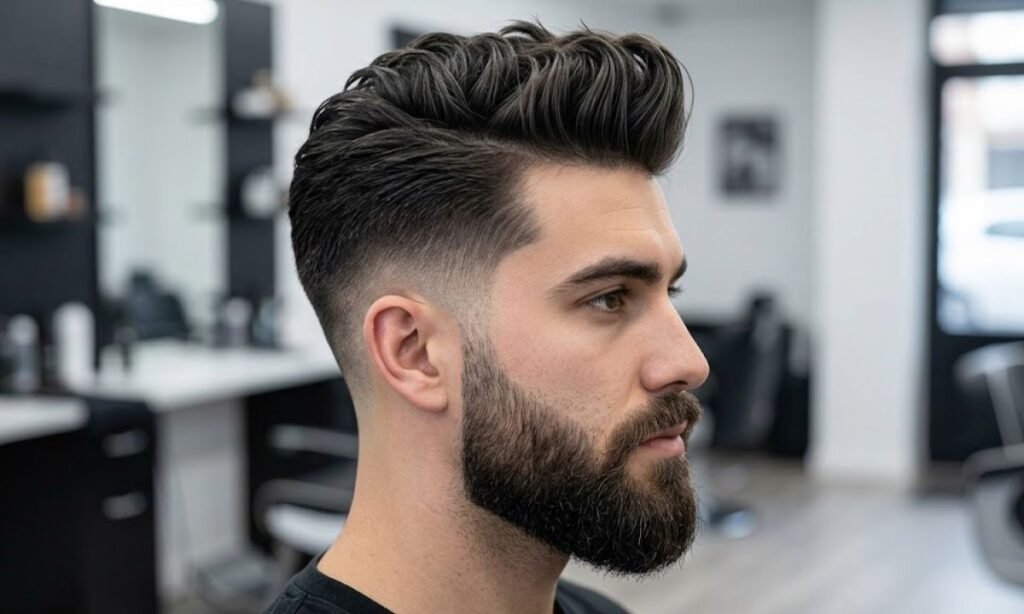
A quiff adds lift at the front.
Paired with a low taper, it makes the face shape look longer and sharper.
A full beard with a tapered shape keeps the weight at the chin.
That balances the height on top.
Blow-dry the front upward with a round brush.
Then set it with a light hold wax.
18. Blowout taper with beard
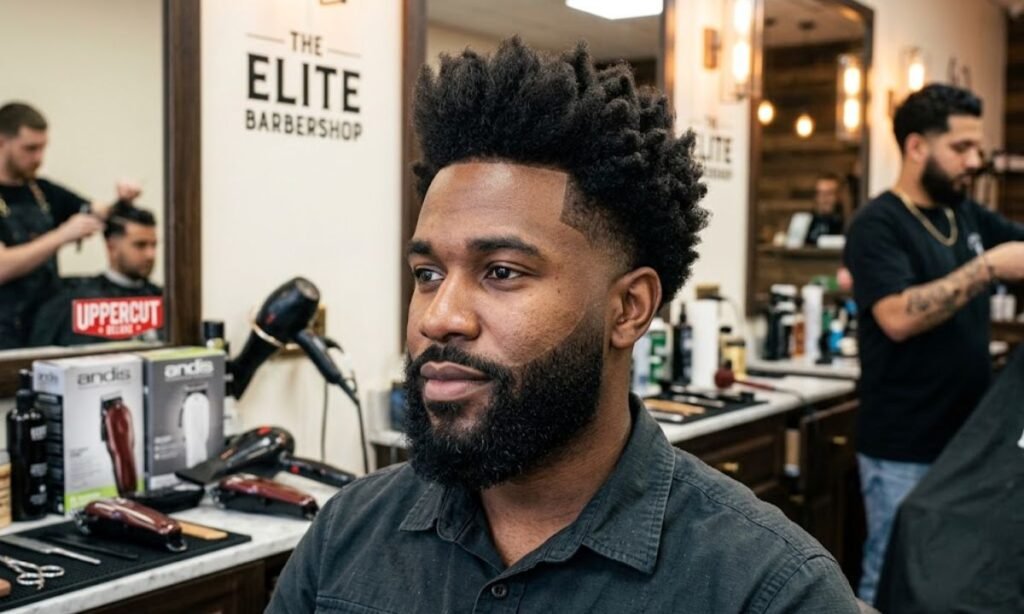
The low taper fade blowout is a bold, voluminous look.
The top is longer, fluffy, and styled with a hairdryer.
A low taper keeps the sides sleek while the top stays loose.
Add a short beard or stubble to avoid looking too soft.
It takes ten minutes each morning.
If that sounds like too much, pick another style.
Beard-led variations and edge cases

Sometimes the beard is the main event.
These last four styles put facial hair in front.
They also cover odd cases, like patchy beard growth or a disconnected beard.
No one’s face is perfectly even, and that’s fine.
19. Full beard with faded sideburns
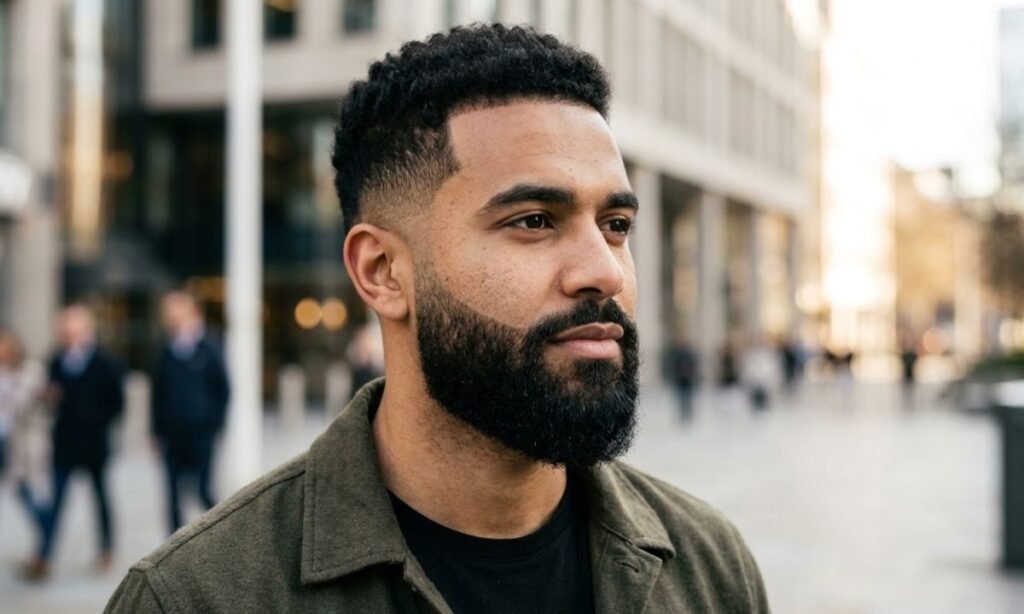
A full beard with faded sideburns is the glow-up for scruffy faces.
The fade starts at the temples and drops gently toward the cheek.
The beard keeps its length at the chin.
That shape gives you a drop fade with beard feel without the drama.
Ask your barber for a gradual blend near the ear.
That’s where most cuts either shine or fall apart.
20. Beardstache with low taper

A beardstache means a heavier moustache and a very short beard.
It’s a bold look, but the low taper keeps it civil.
Trim the moustache edges often.
Hair over the lip makes eating, well, an adventure.
This style suits strong jawlines.
If yours is soft, consider a fuller beard instead.
21. Goatee or circle beard with low taper
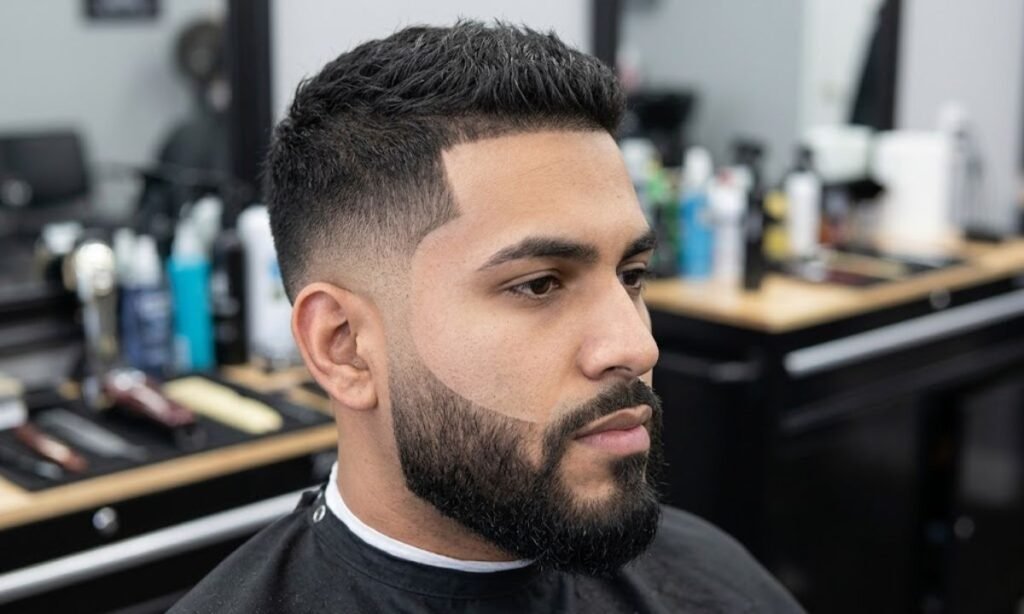
A circle beard joins the mustache and chin into one ring.
Your cheeks stay clean, and the low taper handles the rest.
It’s neat, structured, and a good fit for patchy growth on the cheeks.
A goatee is simpler and a little more relaxed.
Keep the ring even all the way around.
Small gaps look obvious on a small shape.
22. Patchy-friendly blend or intentional separation
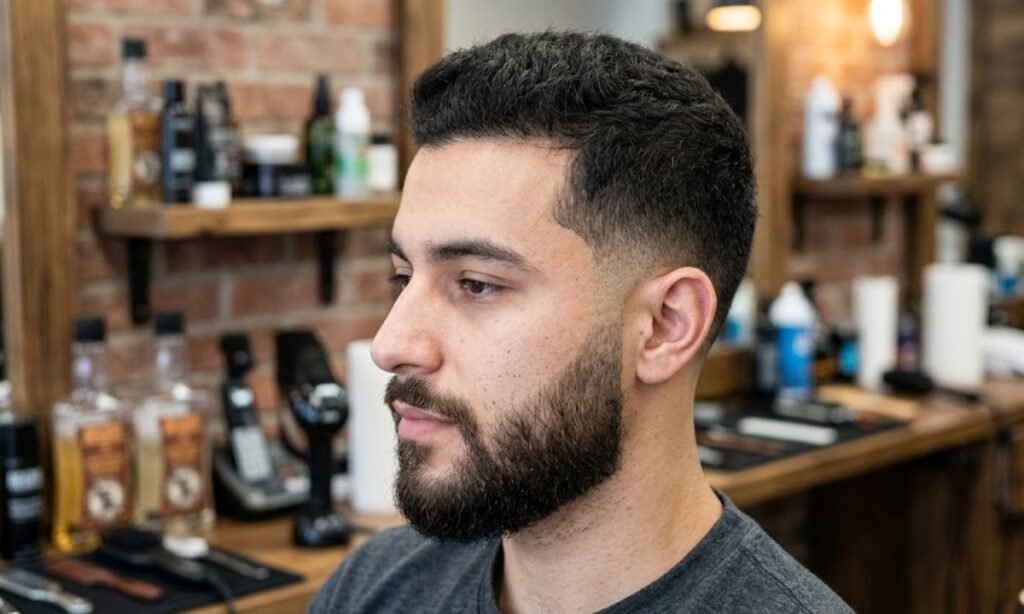
Here’s the part nobody tells you. A patchy beard doesn’t need hiding, it needs planning.
You can either blend the taper into the thin areas or cut a disconnected beard on purpose.
A short beard with a soft fade gradient helps gaps look natural.
A bolder separation, with a clear visible gap, can look like a style choice.
Give your face eight to twelve weeks of beard growth before you decide.
Some areas fill in late, and a patient regrowth period saves regret.
How to ask your barber for a low taper fade with beard
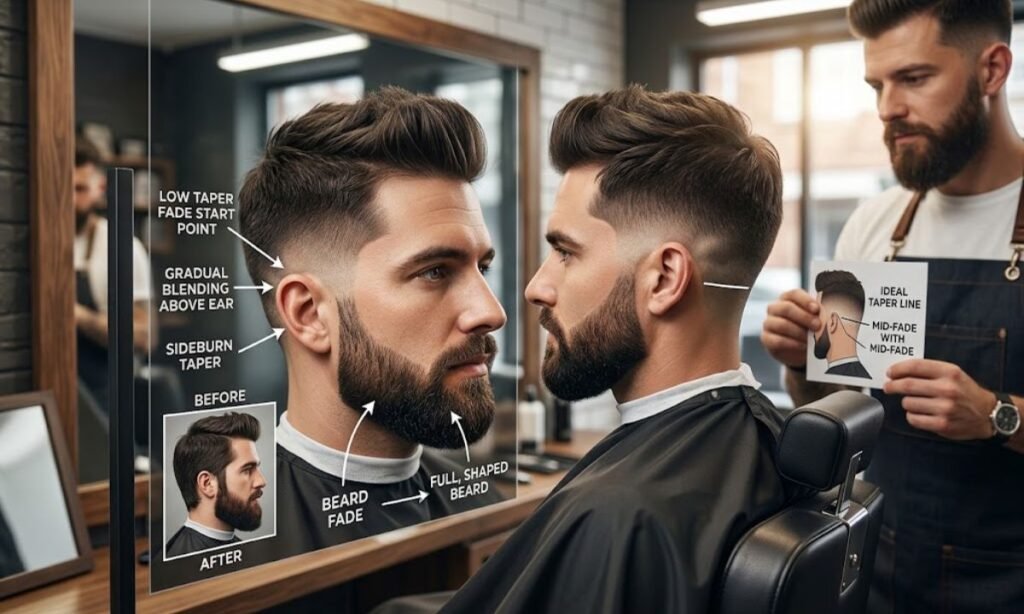
Half of all bad haircuts start with a vague request.
“Just clean it up” means ten different things to ten different people.
A short, clear barber brief fixes that in under a minute.
You’ll feel calmer in the chair, and your barber will thank you.
Think of the barber consultation as a quick team huddle.
You bring the goal, and your barber brings the skill.
The five things to specify
Start with the fade placement. Say “low taper” and point to where the taper should begin, just above the ears and around the nape.
That one detail sets the starting height for everything else.
Next, name the top shape and top length. Say whether you want a textured crop, a side part, or a natural curl pattern with an inch or two off.
Then state the beard length you want, such as stubble, short boxed beard, or a full beard trimmed to a clean shape.
Finish with the sideburn connection. Ask for a connected sideburn or a disconnected beard, and mention whether you want a gradual blend.
Mention the neckline too, since a rounded line and a squared line look very different.
Here’s the quick version you can read off your phone:
- Fade placement: low taper around the ears and nape
- Top shape and length: say it in inches or guard numbers
- Beard length: stubble, short, or full
- Sideburn link: connected, or a clear gap
- Neckline and cheek line: natural or sharp
A reference-photo checklist

Photos beat words, every time.
Bring two or three reference photos, not ten.
Try to capture a front view, a side profile, and a rear view.
The back matters because the nape baseline and neckline often get ignored.
Pick photos that match your hair texture reference and beard density reference.
A picture of straight hair won’t help if you’ve got coily hair, and a thick beard photo can mislead if your growth is thin.
Add a short note on the hairline reference too.
If your hairline is receding or uneven, tell your barber before the first pass.
What to check before you leave the chair

This is the part people skip, and they regret it later.
Ask for a hand mirror and look at the back, both sides, and the front.
Check the hairline symmetry and the beard symmetry.
The temples should match, and the cheek line should sit at the same height on both sides.
Look for guard marks near the ears.
If you see a stripe, politely ask for a small touch-up.
Also run your fingers along the sideburn transition.
It should feel smooth, not stepped. And don’t forget the barber tip calculator on your phone if you’re unsure what to leave, as most people tip a bit extra for detail work.
How barbers cut and blend it

Watching a skilled barber work feels like a small magic show.
But the steps are logical, and knowing them helps you ask smarter questions.
The real secret is the clipper system.
Every guard and lever setting is a tool, and each one has a job.
The usual sequence
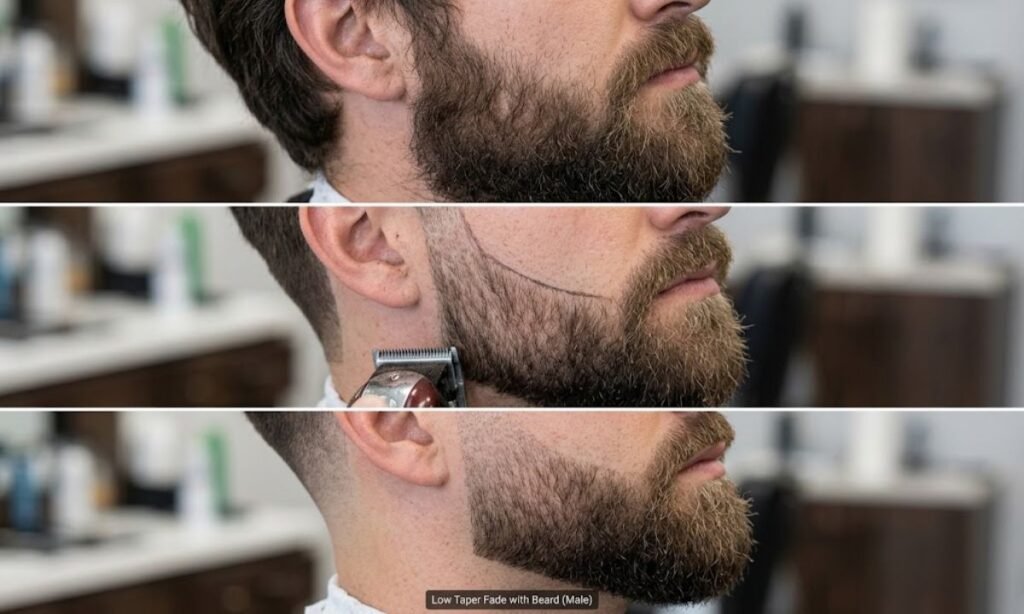
Most barbers start by washing or damp-combing your hair.
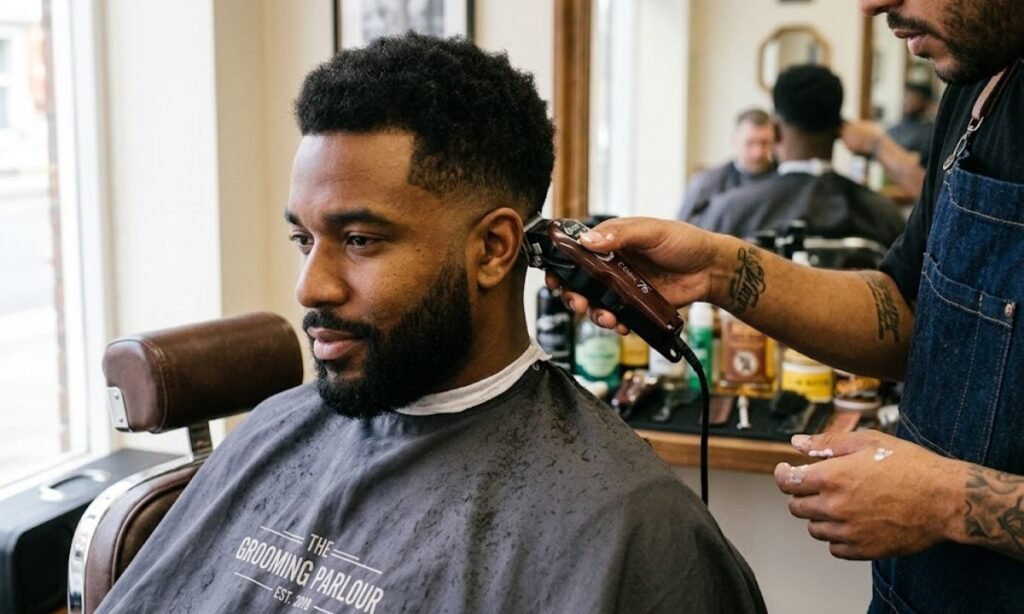
Then they set the starting height for the low taper with a longer guard, often a number 3 or 4 near the top of the taper zone.
Next comes the upward rocking motion. The clipper swings away from the skin in a gentle arc, which blends one guard length into the next.
They work with the hair growth direction, then often go against it for a cleaner finish.
After that, they step down to a number 2, 1, or even 0 near the sideburns, ears, and nape.
This step creates the fade gradient that people see and admire.
The beard comes next. They set the beard length, trim the cheek line, and clean the neckline with a trimmer or a razor.
Finally, they blend the sideburn into the beard so there’s no hard line left.
Then comes the perimeter detailing, a few small cleanups around the ears and the nape.
A light finish with a brush and some beard oil completes the job.
Here’s the clipper guard size chart you can keep handy:
| Guard | Length (inches) | Length (mm) | Typical use in a low taper |
|---|---|---|---|
| 0 | 1/16 | 1.5 | Shortest point near the ears and nape |
| 1 | 1/8 | 3 | Lower taper zone and sideburn blend |
| 2 | 1/4 | 6 | Middle of the taper |
| 3 | 3/8 | 10 | Top of the taper, or short sides |
| 4 | 1/2 | 13 | Longer taper start, or beard base |
Guard numbers can vary slightly between brands.
So ask your barber to confirm sizes before you copy them at home.
What you can safely touch up at home
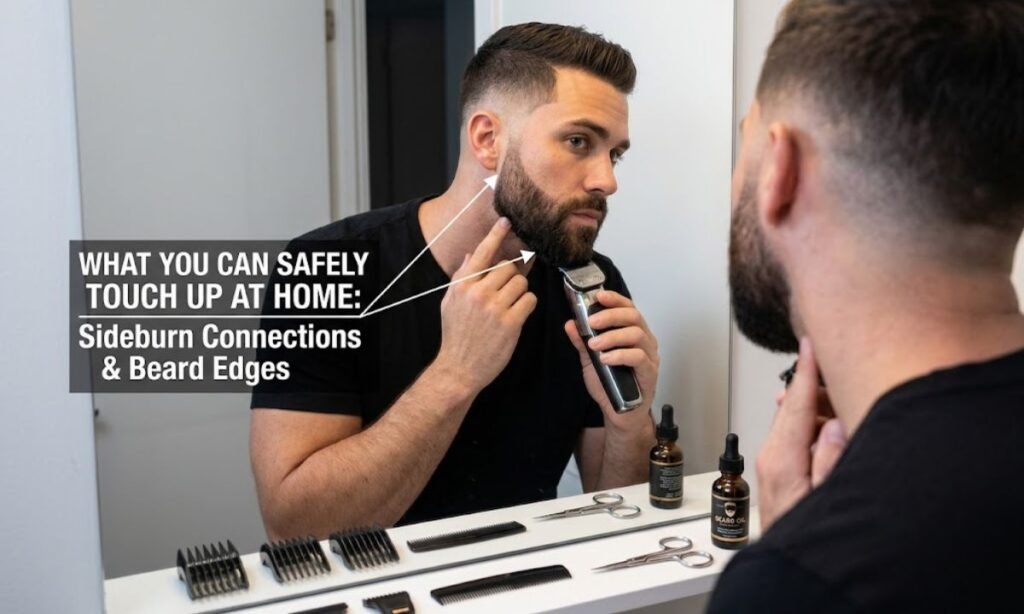
You don’t need to book a chair for every small fix.
A few safe jobs can extend the life of your haircut.
Trim stray neck hairs with a small trimmer, but only below the neckline your barber made.
Stay about a finger’s width away from the line, since a tiny slip is hard to hide.
You can also tidy the beard below the jaw and brush out the moustache.
A quick beard trimming session with a longer guard keeps the beard shape sharp.
Now the other side of it. Leave the fade, the sideburn transition, and the cheek line to your barber.
Those spots need a trained eye, and a home mistake can mean a shorter style for weeks.
Maintaining the haircut, beard, and skin
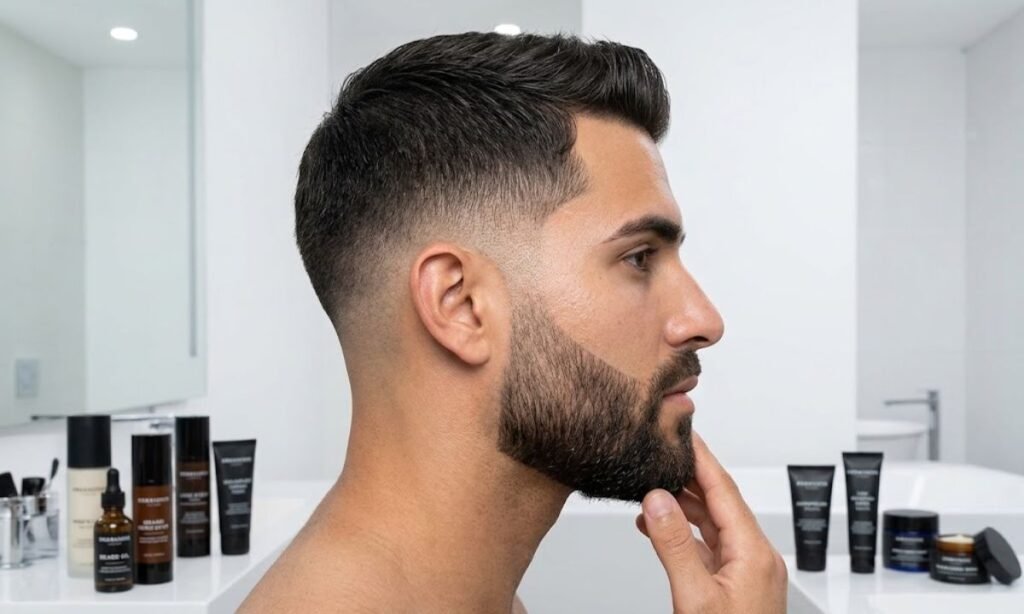
A great low taper fade with beard isn’t a one-visit wonder.
It needs small habits that quietly add up.
This section covers timing, skin care, and the common mistakes.
Stick with it, and your haircut maintenance gets easier.
How often it needs refreshing
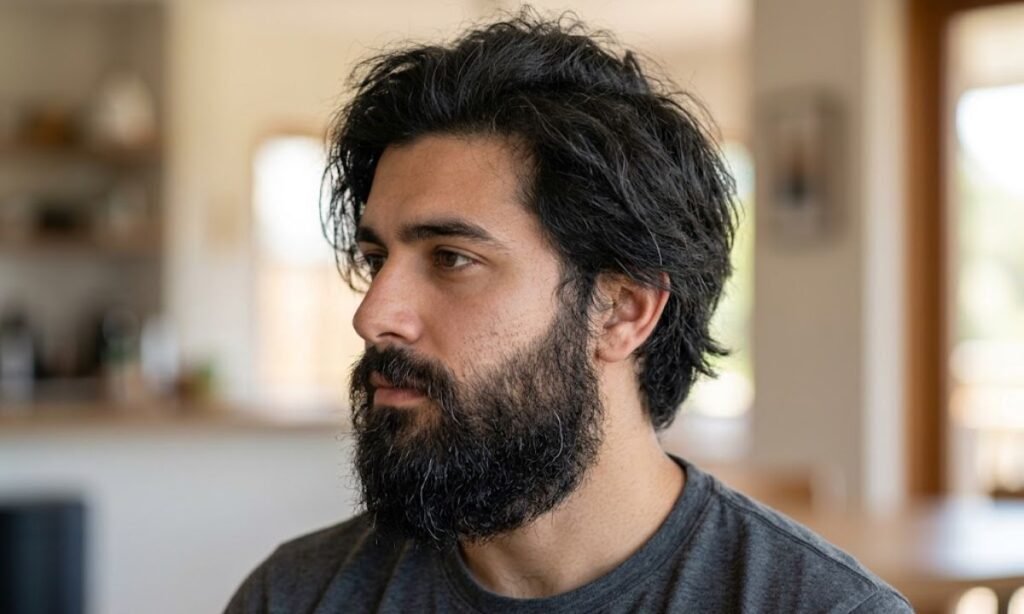
Most people need a barber refresh every two to four weeks.
The hair growth rate averages around half an inch a month, so the fade softens quickly.
A low taper is forgiving, which gives you more time than a skin fade.
Still, the neckline and cheek line show growth first, so those might need a touch-up sooner.
If your haircut refresh interval feels too short, extend it by a week.
The fade grow-out looks fine as long as the beard stays neat.
Keep a note on your phone with the date of your last cut.
That habit alone stops you from guessing.
Preventing razor bumps, irritation, and dry skin
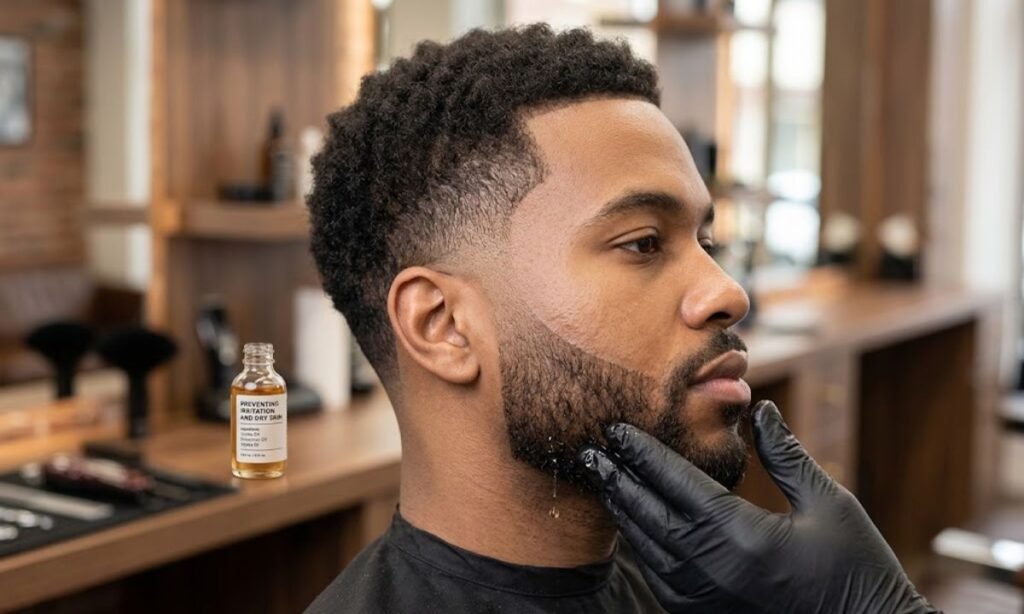
Razor bumps and ingrown hair are the biggest complaints around the neckline.
They happen when curly hair bends back into the skin after close cutting.
Start with a warm washcloth for a minute before shaving.
It softens the hair and opens the pores, so the blade glides easier.
Use a moisturizing shaving cream, shaving gel, or shaving oil instead of dry shaving.
Then shave with the grain, which cuts the risk of skin irritation.
Wash with a gentle cleanser, ideally a non-comedogenic cleanser that won’t clog pores.
A fragrance-free moisturizer and a bit of beard oil handle dry skin under the beard.
A proper daily skin care routine takes two minutes.
If you have skin sensitivity or recurring bumps, talk to a dermatologist before trying new products.
Add a beard conditioner once or twice a week.
It softens coarse hair and reduces itch during the regrowth stage.
Three mistakes that make the hair and beard look disconnected
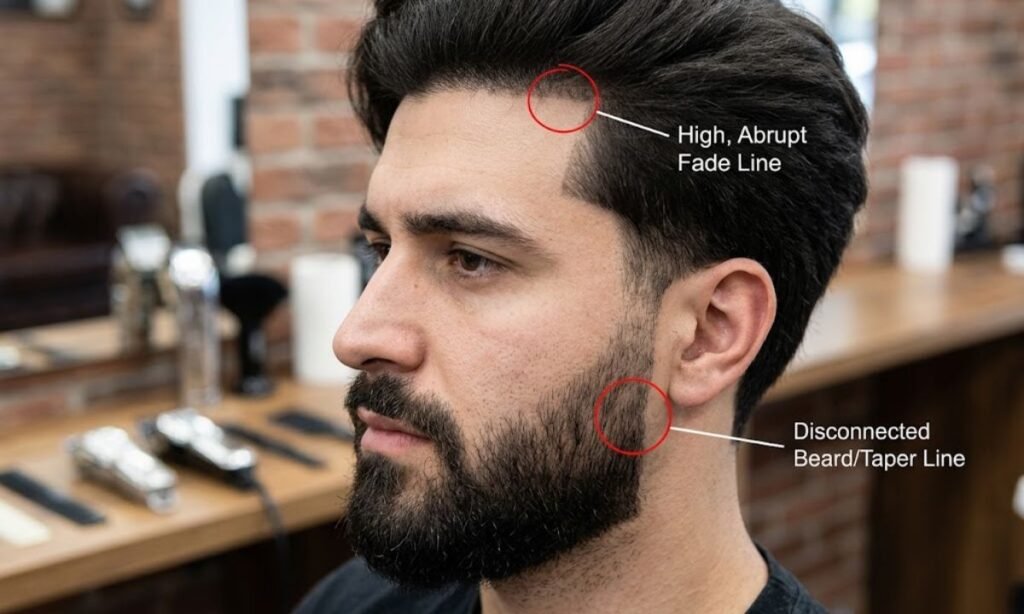
Mistake one is a hard line at the sideburn.
The fix is simple. Ask for a gradual blend so the sideburn melts into the beard.
Mistake two is a mismatched beard weight and top length.
A heavy beard with a thin top looks odd, so keep the two balanced.
Mistake three is a cheek line set too high or too low.
A high line can look unnatural, and a low line can look messy.
A fourth bonus mistake is skipping the mirror check.
Small asymmetries pop up in photos, so catch them early.
Fade grow-out: what to expect

Here’s something most guides skip.
A low taper fade ages gracefully, but you should know how.
In week one, the edges look crisp and the beard sits tight.
By week three, the nape and sideburns start to fuzz, which is normal.
By week five, the taper loses its shape, and the beard gains natural growth at the cheeks.
That’s usually a good time to book your next barber appointment.
If you’re growing everything out, keep trimming the neckline.
A clean neck makes a messy beard look planned.
How it compares with similar cuts

A low taper isn’t the only choice, and it shouldn’t be.
Let’s see how it stacks up against its cousins.
A mid taper or mid taper fade starts higher on the head.
It looks bolder and suits stronger jawlines.
A high taper or high taper fade goes up near the temples and crown.
It gives a more dramatic contrast, though it grows out faster.
A drop fade curves behind the ear, and a low drop fade does it with less height.
A burst fade curves around the ear like a half circle, so it works best on curly hair.
Want the full low vs mid vs high skin fade comparison?
In short, low is subtle, mid is balanced, and high is bold.
When a disconnected beard, natural sideburn, or clean shave makes more sense
Sometimes the best move is to skip the link.
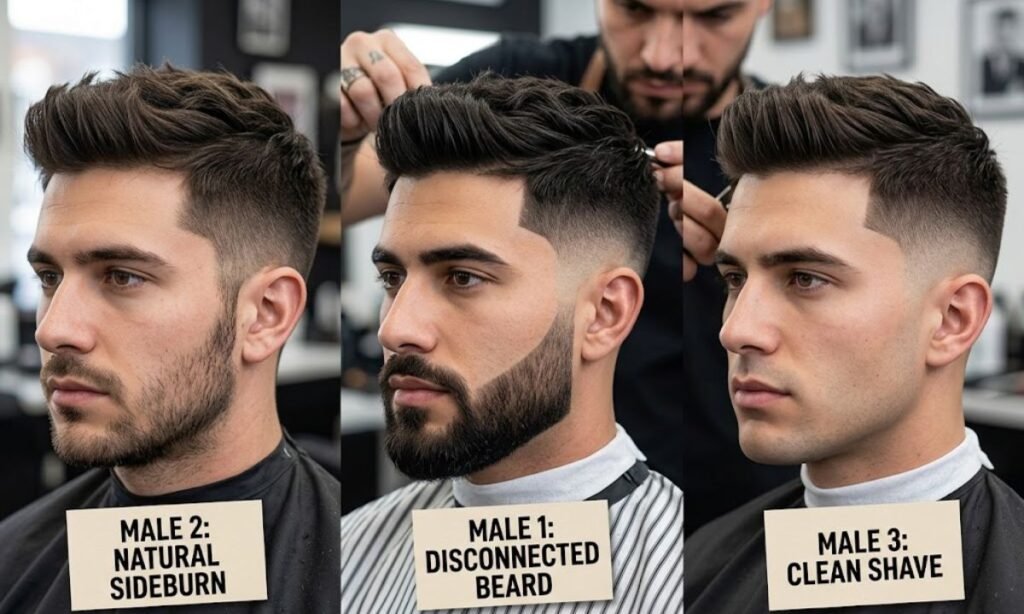
A disconnected beard works when your sideburn growth is thin, or when you want a modern, graphic look.
A natural sideburn suits anyone who likes a softer, older-school shape.
It avoids the fade altogether and looks effortless.
A clean shave makes sense if your beard is patchy and you hate the upkeep.
It pairs well with a low taper and shows off your jawline.
Here’s a simple rule of thumb.
If you want polish, go connected. If you want character, go disconnected.
You can also checkout this article as well Low Taper Fade Blonde Hair: Best Styles, Barber Guide, and Care
Frequently asked questions
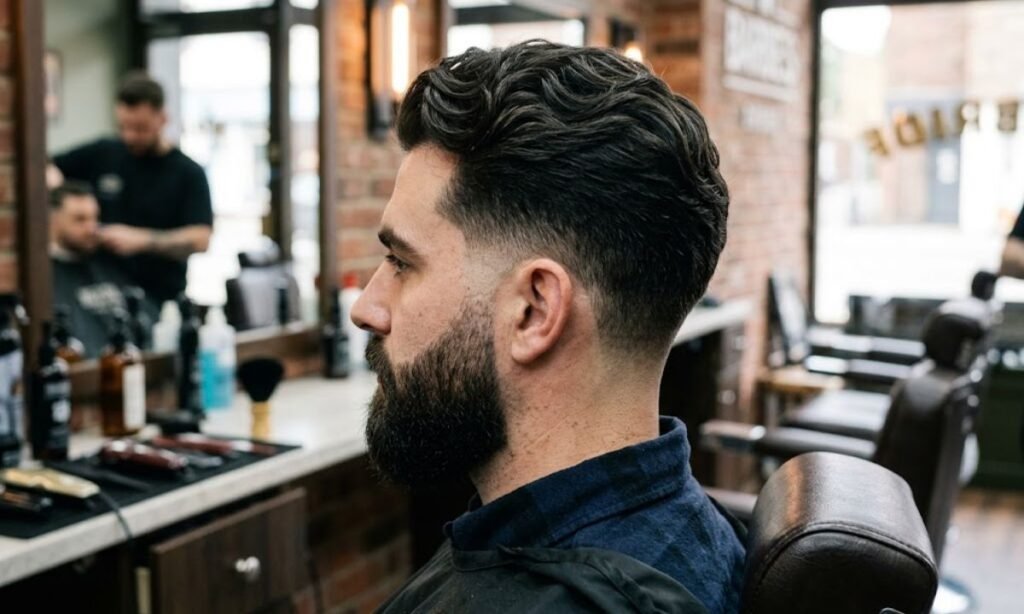
What is a low taper fade with a beard?
It’s a haircut where the hair gets gradually shorter around the ears and nape, then blends into the beard.
The taper starts low, so the hairline stays natural.
Is a low taper fade the same as a low fade?
Not quite.
A low taper keeps more length and a subtler finish, while a low fade can reach near-bare skin with sharper contrast.
How long should my beard be for this cut?
Anywhere from stubble to a full beard works.
Most people choose a beard base length of half an inch to one inch for a balanced look.
Can I get this style with curly or coily hair?
Yes, and it looks great.
A curly low taper fade or low taper fade afro keeps the curl pattern while cleaning the sides.
Does a low taper fade work with a patchy beard?
Often, yes.
A short beard, a soft fade gradient, or a disconnected beard can all make patchy growth look intentional.
How often should I get a barber refresh?
Every two to four weeks suits most people.
The neckline usually needs attention first.
How do I stop razor bumps on my neckline?
Use a warm washcloth, a moisturizing shaving cream, and a clean blade, and shave with the grain.
For ongoing skin irritation, ask a dermatologist.
What should I show my barber?
Bring two or three reference photos that show the front view, side profile, and rear view.
Add a short note about beard length and sideburn connection.
Final thoughts: your next step
A low taper fade with beard is simple, flexible, and friendly to most faces.
Pick the version that matches your hair texture, beard density, and daily routine.
Save two photos, write down your five details, and book that barber appointment.
You’ll walk out looking sharp and feeling like you actually planned it.
Now I’d love to hear from you.
Which of the 22 styles are you trying first? Drop a comment, share this guide with a friend who needs a new cut, and tell us what worked for your beard.

I’m Michael Charles, the creator of MegaCrazes—your source for fresh hairstyles, sharp haircuts, and simple hair-care inspiration. Find your style. Own your look.