

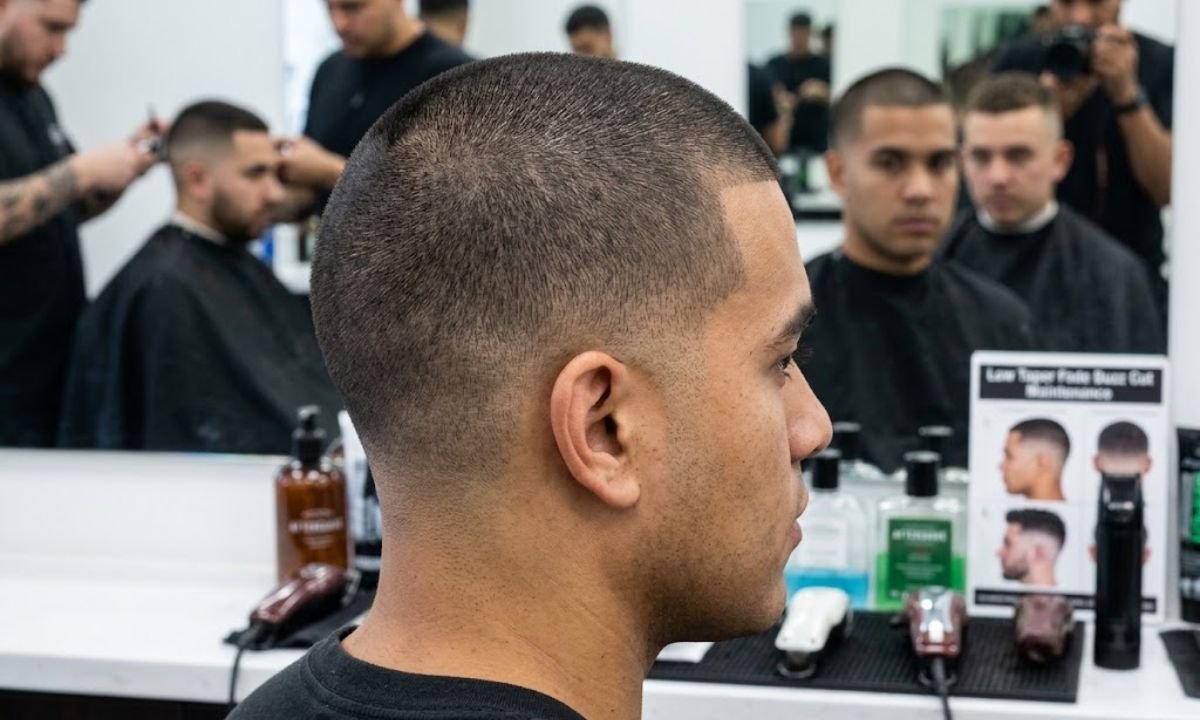
Will a low taper fade buzz cut make you look sharp, or just look like you gave up on your hair? It’s a fair worry. Plenty of guys leave the chair with sides cut too high or a neckline that looks chewed.
Here’s the short answer. A low taper fade buzz cut keeps one short, even length on top and trims the sides slightly shorter, starting just above the ear. It looks clean, it grows out gracefully, and it suits almost every head.
This guide covers styles, guard numbers, face shapes, barber talk, and home upkeep. Read it once, save the parts you need, and you’ll never mumble ‘just a short back and sides’ again.
Quick Answer
A low taper is a gentle step down in length around the ears and neckline. You keep a number 2, 3, or 4 guard on top, then let the sides shrink a little toward the bottom. The low taper that does not go to bare skin is the safest pick if you want a neat cut without a dramatic fade.
Want the exact order for your barber? Ask for a number 3 on top and a low taper on the sides. Tell them to keep the taper above the ear and not take the fade to skin. Finish with a clean neckline and you’re done.
Got thick hair, curls, or a rounder face? Hold on. The right guard and the right shape change with each of those, and the sections below walk you through every one.
What is a low taper fade buzz cut?
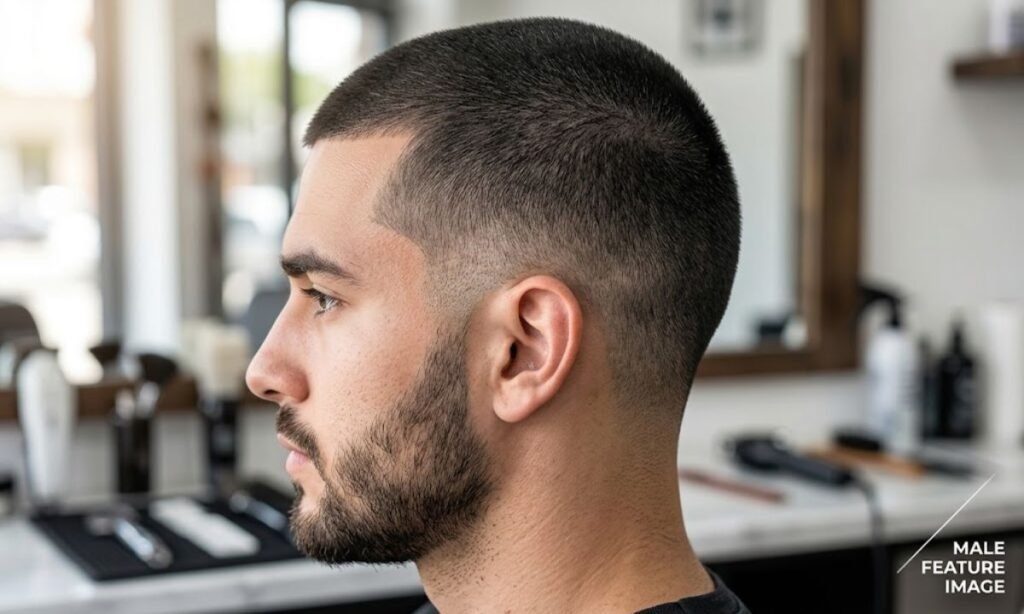
Think of it as a buzz cut with a low taper on the sides. The top stays at one uniform length, usually under half an inch. The sides and back step down gradually, but only around the taper around the ears and neckline, so the cut looks tidy rather than dramatic.
People search what is a low taper fade buzz cut because the name sounds like three haircuts mashed together. It’s really one simple idea. A classic uniform buzz cut with soft, tidy edges. Nothing more.
Picture a guy named Dan, who clips his own hair every month. His buzz looks fine until week three, when the neck fuzz makes everything look sloppy. A low taper fixes exactly that problem.
Why the starting point matters
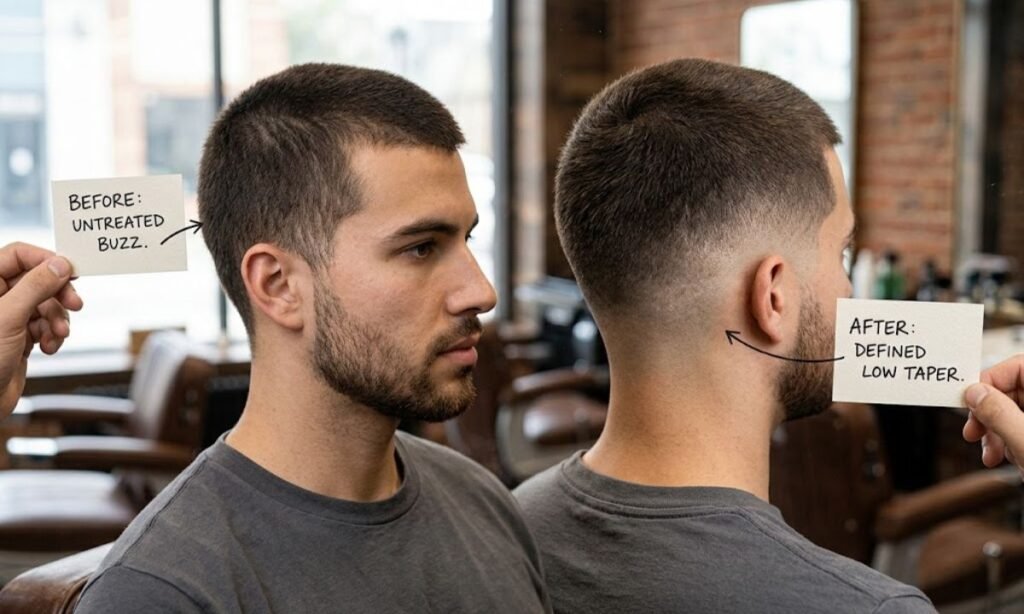
The fade placement decides everything. A low taper starting just above the ear keeps most of your sides at the same length as the top, so the cut stays subtle. Start the taper higher and the whole head looks more contrasted and more dramatic.
Here’s a quick trick. Put two fingers flat above your ear, then imagine the cut beginning right at that line. That’s the low start. Anything near your temple belongs to a mid or high taper.
A lower start also grows out more evenly. You’ll get extra days before anyone notices the shape drifting. That matters if you hate a barber’s chair as much as most of us do.
What a taper adds that a plain fade doesn’t

Here’s the difference between a taper and a fade. A taper shortens the hair gradually and usually leaves some length at the bottom. A fade usually moves down to a much shorter length, often skin. So the taper feels softer and more traditional.
That soft finish makes the low taper fade haircut perfect for work, school, and family photos. You still get shape and edge. You just skip the dramatic contrast that some offices frown on.
One more bonus. Because the taper stops before bare skin, you dodge most of the razor bumps and the sunburned scalp line you get from a harsh skin fade.
Best low taper fade buzz cut styles
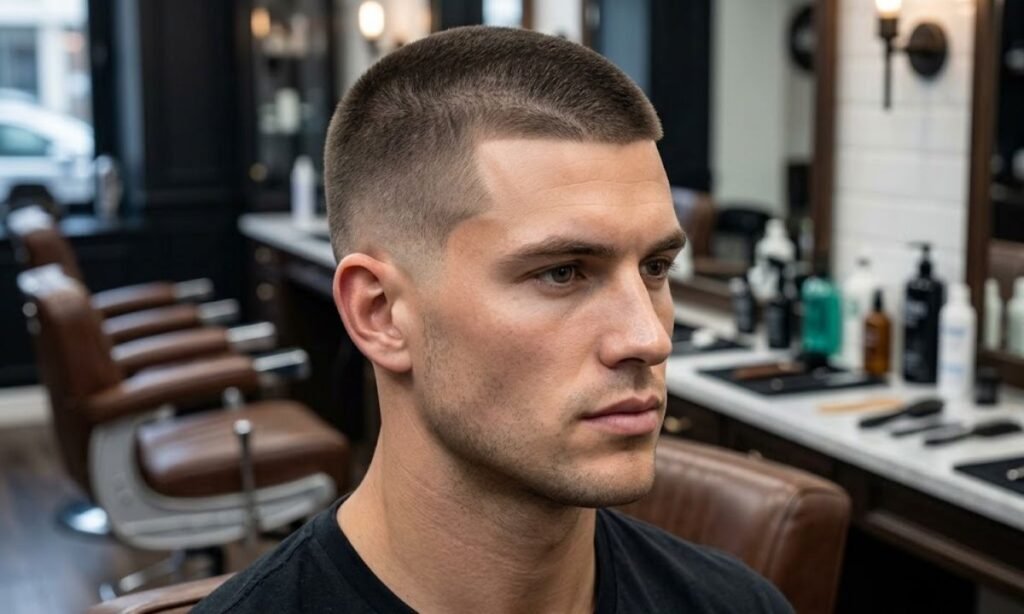
The best low taper fade buzz cut styles all start from the same base, so the personality comes from the top and the edges. A classic uniform buzz cut is the simplest. A line-up buzz cut adds a crisp hairline, and a buzz cut with shape-up gives the front a sharper frame.
Want a little more texture? Try a textured crop low taper fade with a bit of length on top, or a French crop low taper fade with a short fringe pushed forward. These work if your hair is thick enough to hold shape. They also hide a receding temple better than a bald-short cut.
Feeling brave? A low taper faux hawk keeps slightly more length down the middle. A textured fringe with low taper fade also suits guys who want a buzz that doesn’t scream buzz. Pick one idea, not three. Mixing styles usually looks confused.
Choosing your buzz length: a clipper guard guide

Guard numbers confuse everyone at first. The best guard number for a buzz cut depends on your head shape, hair density, and how bold you want to look. Here’s a clipper guard size chart that covers the common sizes:
| Guard | Length | Best for |
|---|---|---|
| Number 1 | 1/8 inch (3 mm) | Very short, bold look |
| Number 2 | 1/4 inch (6 mm) | Clean and low maintenance |
| Number 3 | 3/8 inch (10 mm) | Safe all-rounder |
| Number 4 | 1/2 inch (13 mm) | Softer, hides thin spots |
| Number 5 | 5/8 inch (16 mm) | Longest buzz, more texture |
So, how long is a number 3 buzz cut? About three eighths of an inch. And how long is a number 4 buzz cut? About half an inch. Sizes vary slightly by brand, so check your clipper’s manual before you trust the numbers.
Not sure what to pick? What guard should I use for a buzz cut if you’ve never tried one? Start with a number 3. You can always go shorter next time. You can’t un-cut hair.
Low taper fade buzz cut for straight, wavy, curly, and coily hair
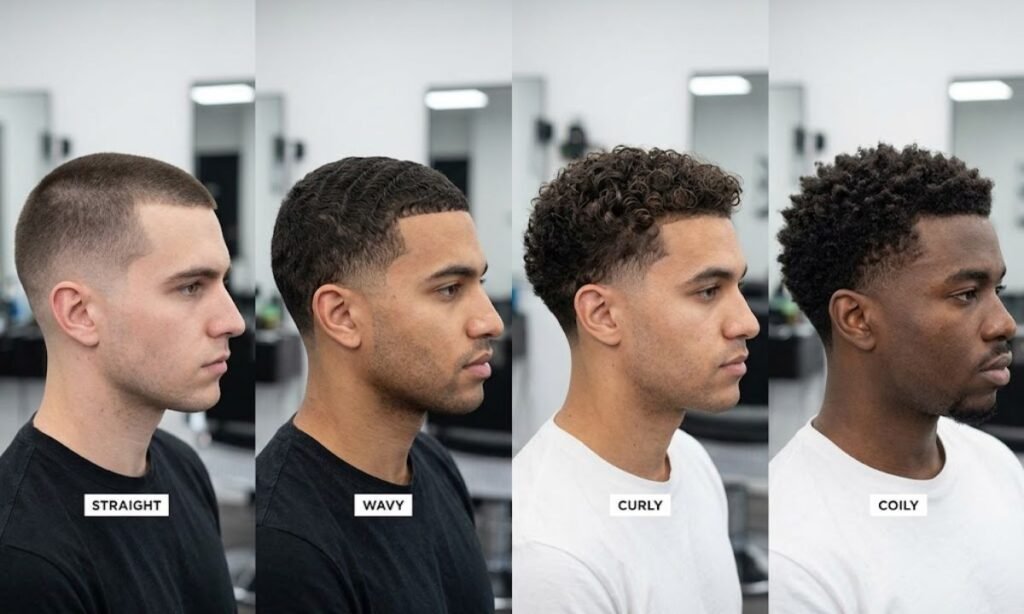
Your hair type changes how the same cut looks. Straight hair shows every line and every uneven patch, so the taper has to be clean. Wavy hair hides small mistakes but can puff up on the sides. Curly and coily hair tends to look fuller and softer once the sides shrink.
That’s why adjust the guard for hair density matters. Thick hair looks a bit shorter than it is, so you might choose a number 4 where someone with fine hair chooses a number 3. Dense hair hides scalp, while fine hair can reveal it.
For buzz cut for thinning hair or fine hair, a slightly longer guard works best. A number 3 or 4 blends the thinning areas instead of spotlighting them. Skip the number 1 unless you’re totally comfortable with a bare look.
Best low taper fade buzz cut for your face shape
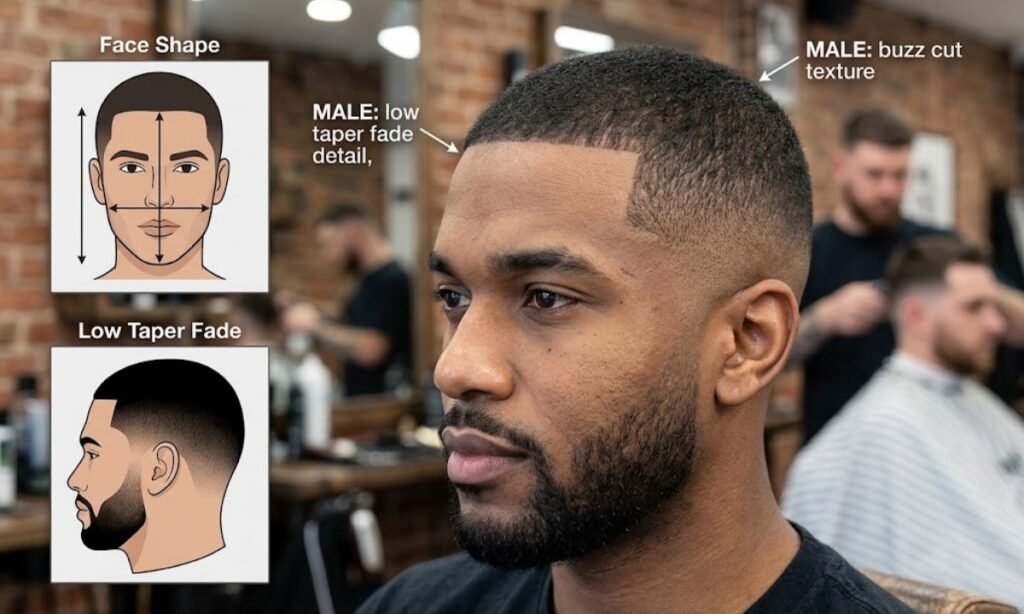
A buzz cut face shape guide helps you choose a cut that balances your features. Round faces do well with a low taper fade for round face shape and a slightly longer top, since a bit of height lengthens the look. Square faces can handle almost any buzz, because the jawline already looks strong.
Oval faces are the lucky ones. Nearly any guard works. Diamond faces pair well with a number 3 or 4, which softens wide cheekbones. A low taper fade for heart-shaped face types benefits from a little length up top so the forehead doesn’t look wide.
Got a long face? Oblong faces look better with a short buzz cut for rectangular faces that keeps the sides full. Too much shaved height makes the head look longer. When in doubt, take a selfie from the front and ask a friend to be honest.
Line-ups and shape-ups: getting the edges right
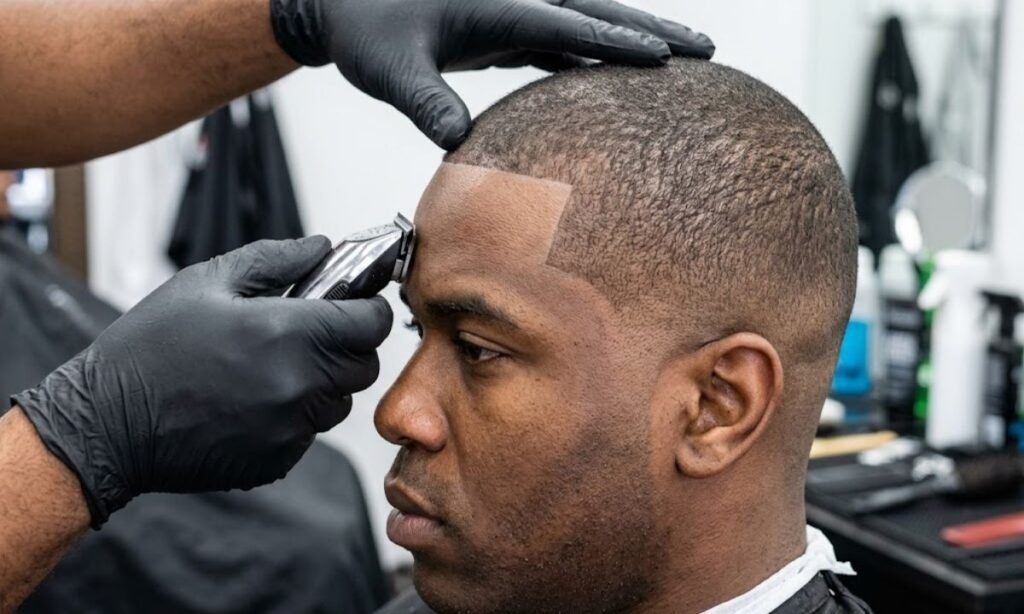
A buzz cut with a crisp line-up looks expensive, even when the buzz is cheap. The difference between line-up and shape-up is small. A line-up (or edge-up haircut) straightens the hairline, temples, and sometimes the beard line. A shape-up usually refers to the same idea with a rounder, softer finish.
For a clean hairline, your barber will use a trimmer or a razor to cut a clear line. A soft line-up versus sharp line-up is a style choice. Soft looks natural and forgiving. Sharp looks bold, but it shows regrowth quickly.
So how often to touch up a line-up? Every week or two if you want it razor sharp. Every three to four weeks if you prefer soft. And if you’re prone to razor bumps, ask for a shadow-style shape-up that leaves a whisper of hair at the edge.
Low Taper Buzz Cut Styling Options for Straight, Wavy, and Curly Hair
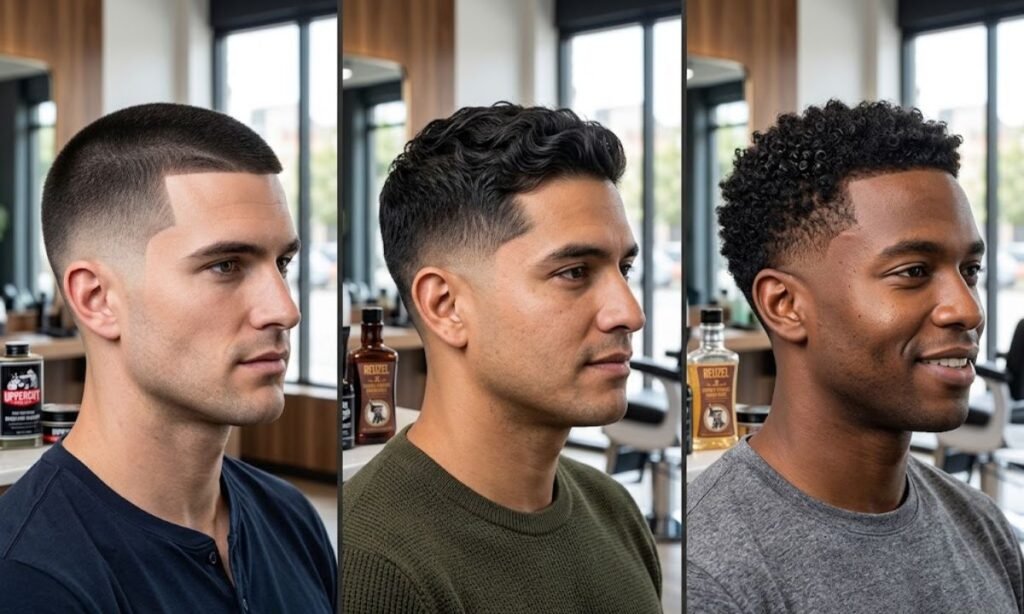
Styling a buzz sounds silly, but small choices change the finish. The right product, the right guard, and a few seconds of brushing separate a polished cut from a flat one. Each hair type needs its own tweak, so here’s how it plays out.
Keep your expectations realistic. You’re not building a quiff. You’re shaping a clean outline and a bit of texture. That’s enough to make the cut look intentional.
Low Taper Buzz Cut for Straight Hair
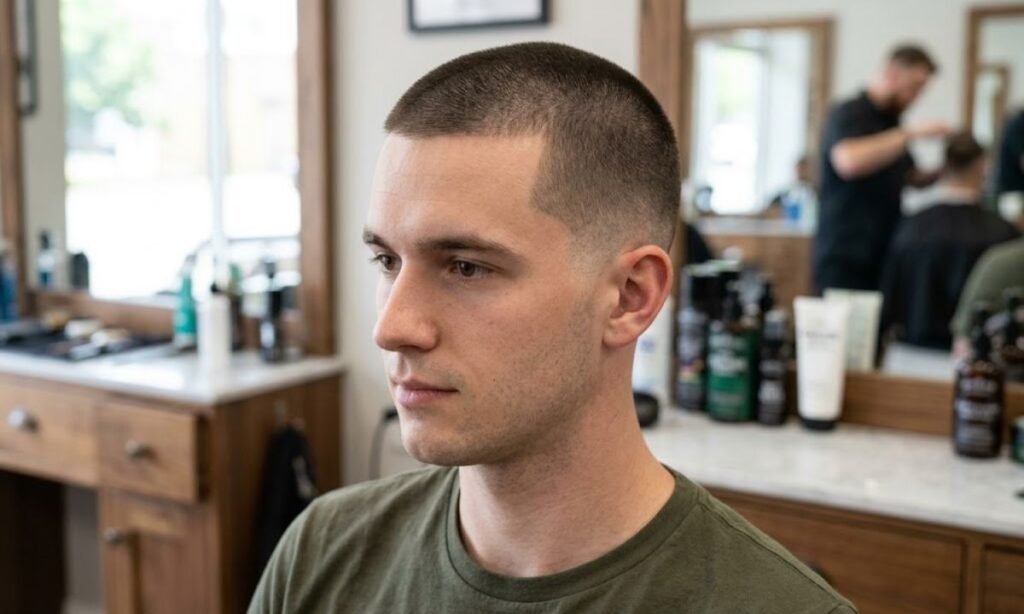
A low taper fade for straight hair looks crisp, but it shows every flaw. Uneven blending, patchy edges, and a crooked neckline stand out fast. Choose a number 3 or 4 guard so the top lies flat and even.
Straight hair can look a little stiff when it’s this short. A pinch of matte clay for short hair adds grip and breaks up the flat shine. Rub it between your palms first, then press it on lightly.
Low Taper Buzz Cut for Wavy Hair
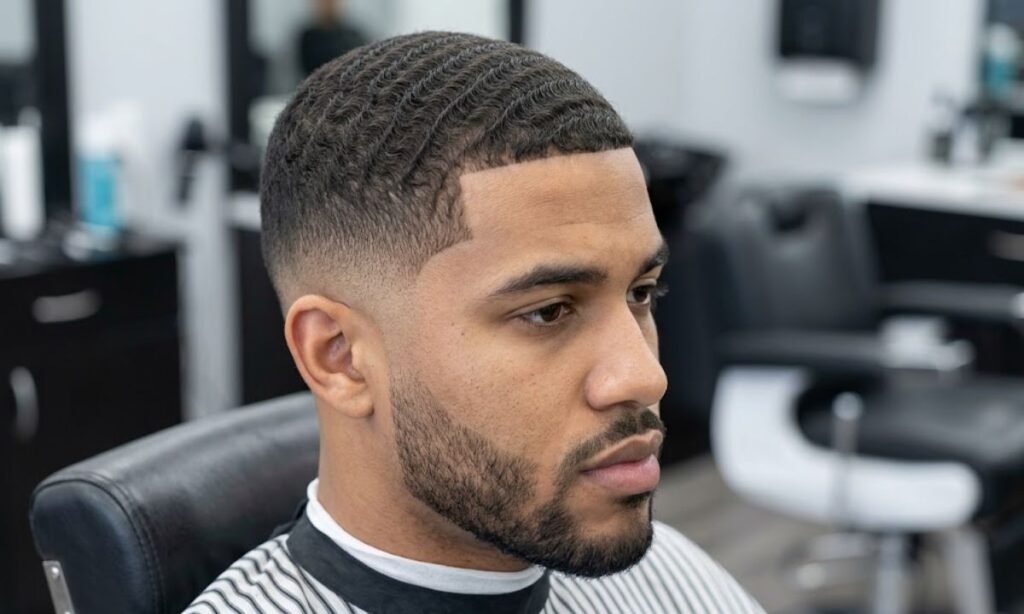
A low taper fade for wavy hair gets a nice bonus. The natural bend makes the top look fuller and softer. A number 4 guard often gives the best balance, since a number 2 can look patchy where the waves vary.
The sides need a closer eye. Wavy hair tends to flare outward above the ear. A low taper tames that puff without stripping the shape, so ask your barber to keep the sides snug.
Low Taper Buzz Cut for Curly Hair

A curly low taper fade keeps curls on top tight and defined. Keep more length on top for curly hair, since a very short cut can hide the curl pattern completely. A number 4 or 5 guard keeps just enough texture.
Curls dry out faster, so moisture matters. Use a light scalp moisturizer after washing. It keeps the top soft and stops the dull, ashy look that short curls get.
Low Taper Fade Buzz Cut Variations for Different Hair Types
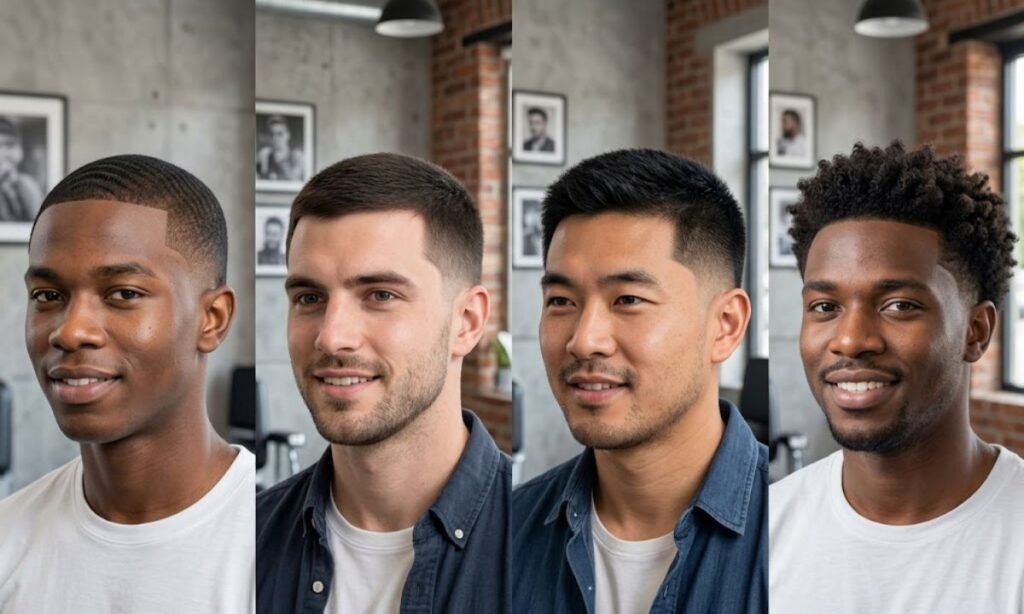
Beyond the basics, you can tweak the cut for your exact hair. A coily buzz cut looks best with a low taper fade afro shape, where the top stays slightly rounded and the sides trim in softly. Many low taper fade for Black men requests include a sharp line-up, so mention that clearly.
Low taper fade for thick hair works best with a slightly longer guard, because dense hair looks shorter than it is. Low taper fade for thin hair pairs with a number 3 or 4 and a soft hairline. A low taper fade blonde hair look hides scalp better than you’d expect, since pale hair blends with skin.
Here’s a simple habit. Ask your barber what they see in your hair before they pick a guard. A good barber will mention growth direction, cowlicks, and density. That chat alone upgrades the result.
Modern Low Taper Buzz Cut Ideas for Men Who Prefer Short Hair

Short hair doesn’t have to look plain. A low taper fade for short hair can borrow tricks from longer cuts. Try a slightly longer front with a faded back, a tiny textured crop, or a low drop fade that curves behind the ear for extra shape.
Other modern twists include a low skin fade for guys who want more contrast, and a subtle Caesar-style fringe at the front. Each one still sits on a clean buzz cut with tapered sides, so you keep the easy upkeep you wanted.
If you’re unsure, start with the classic version and add one change at a time. Save a photo from each trim. After three haircuts you’ll know exactly what suits you.
Low Taper Fade Buzz Cut vs. Traditional Buzz Cut: Key Differences

A traditional buzz cut uses one guard all over the head. It’s quick, cheap, and honest. The low taper fade buzz cut adds a small step at the sides and neckline, so the whole shape looks more refined.
The trade-offs are simple. A traditional buzz needs almost no skill and grows out evenly. A tapered version needs a skilled barber for the blend and a touch-up every two to three weeks. In return, you get a cleaner outline and a more professional look.
So which wins? If you clip at home and hate appointments, the traditional cut is fine. If you want to look polished at work or in photos, the taper earns its extra effort.
How to ask your barber for a low taper fade buzz cut
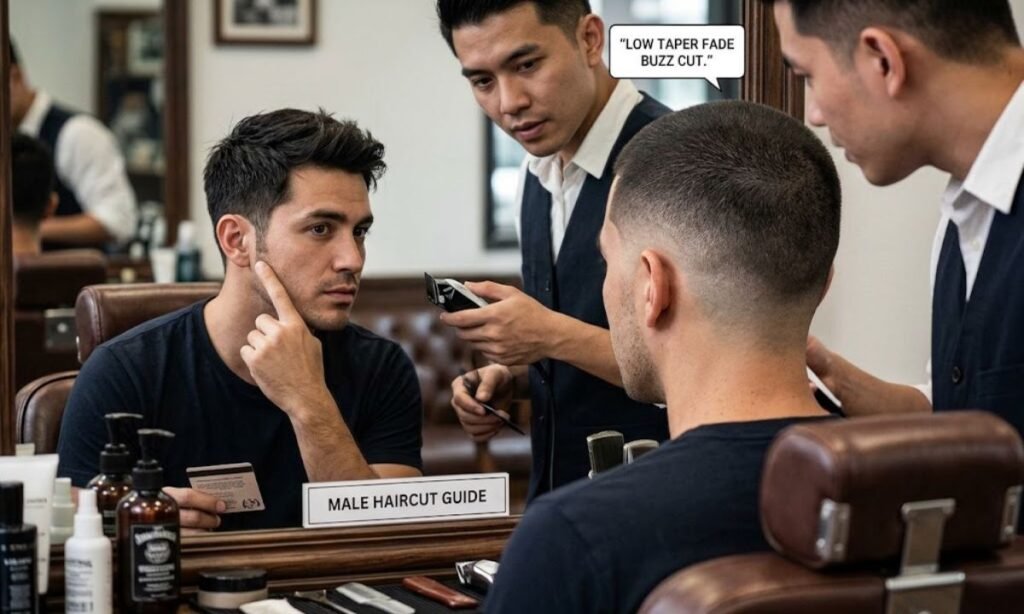
The best haircut starts with clear words. How to ask a barber for a low taper fade buzz cut is easier than it sounds. Say something like: ‘Number 3 on top, low taper on the sides, starting just above the ear. Please don’t take it down to skin.’ That’s it. Short, clear, and hard to misread.
What to tell your barber for a buzz cut also includes extras. Mention if you want a line-up, a tapered neckline, or a beard fade. Tell your barber where the fade should start, and say how short the bottom should go. Fewer surprises, fewer regrets.
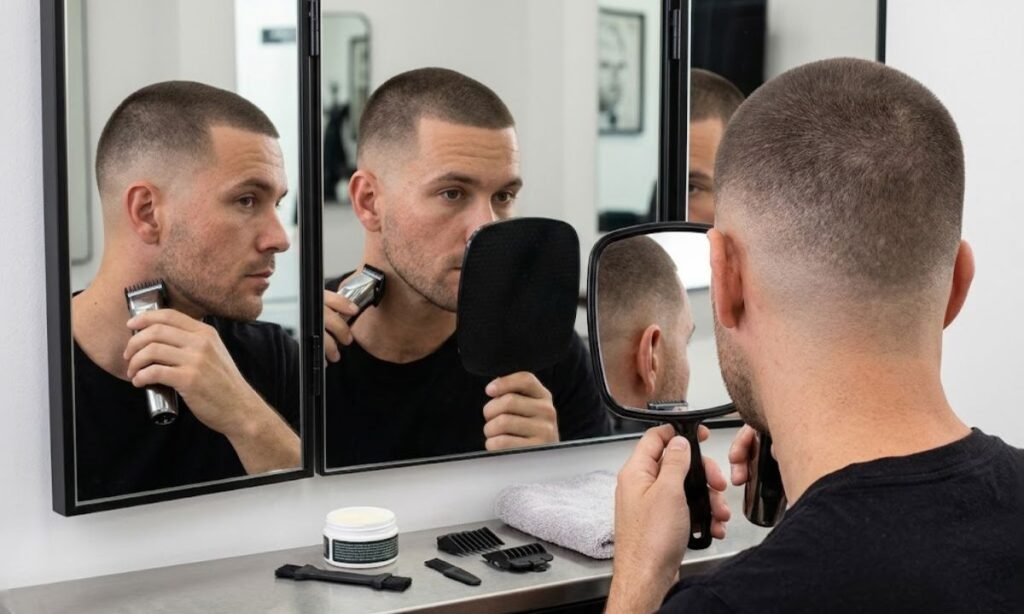
Use reference photos when getting a haircut, because words alone get blurry. Show one picture from the front and one from the side. Then check your haircut from different angles with a hand mirror before you pay. Speak up early, not after you’ve left the shop.
Low Taper Fade Buzz Cut with Beard Styles and Grooming Tips

A low taper fade with beard is a classic pairing. Ask for a beard-connected low taper fade, where the sideburn blends into the beard rather than stopping abruptly. This gives the face a smooth frame and hides uneven beard patches. Drop fade with beard and skin fade with beard versions look bolder, but they need frequent upkeep.
Keep the beard neat with a detail trimmer and a quick brush each morning. Trim the neckline about a finger width above the Adam’s apple. If the beard looks wild next to a clean buzz, the whole look gets unbalanced.
Here’s a small story. A friend kept a full beard with a sharp skin fade and called it low maintenance. Two weeks later he looked scruffy. He switched to a low taper and a trimmed beard, and the problem disappeared.
Low taper fade vs mid taper vs skin fade
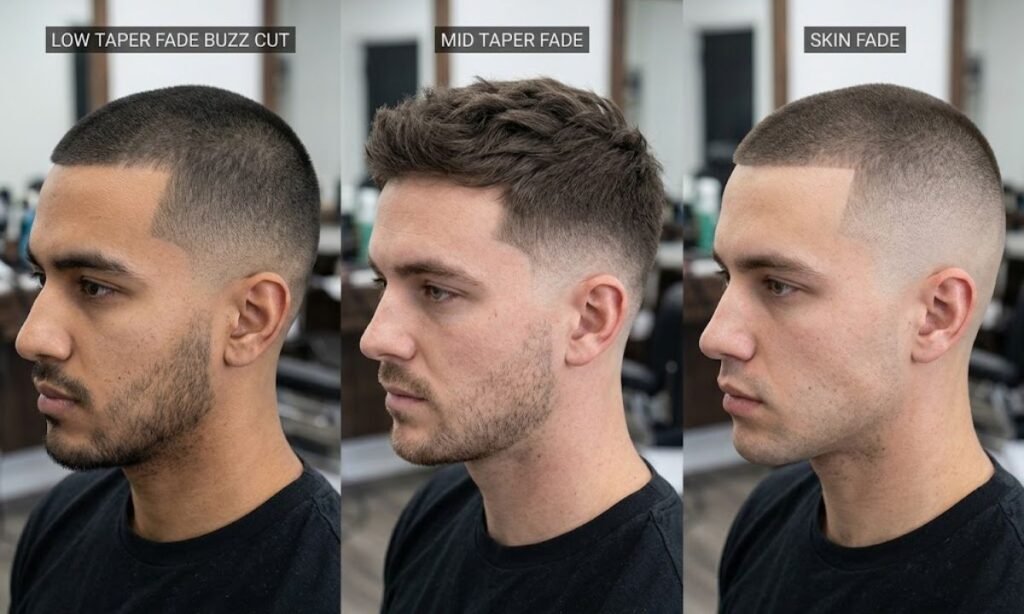
Here’s the quick compare. A low taper vs mid taper question comes down to height. A low taper starts near the ear and neckline. A mid taper fade buzz cut starts around the temple level. A high taper fade buzz cut starts higher, so more of the sides get short.
The difference between low taper and skin fade is the endpoint. A skin fade ends at bare skin, which looks sharper and grows out faster. A low taper fade vs low fade also differs in how short the bottom gets. Low fades go closer to skin, while tapers stay soft.
If you want the safest pick, choose the low taper. If you want a stronger look, pick a mid taper or a low skin fade. And if you want drama, go high, but know the regrowth shows sooner.
Low taper fade for a professional office look

An office-friendly buzz cut needs to look clean, not edgy. The low taper fade buzz cut fits that need perfectly. It’s a professional men’s haircut that works with a suit, a hoodie, or a hard hat, and it takes five minutes to style.
Choose a number 3 or 4 guard, a soft line-up, and a tapered neckline. Skip heavy contrast or dramatic fade contrast, because it draws attention away from your work. Keep the beard trimmed too.
Common mistakes to avoid with a low taper fade buzz cut

The biggest mistake is picking a guard that’s too short. Many guys ask for a number 1 and regret it when their scalp shows. Another common slip is starting the taper too high, which turns a soft cut into a harsh one.
Another error is trusting a stranger with a razor before checking reviews. Look at photos of their work first. Also skip heavy wax. It sits on short hair and makes it look greasy, which defeats the clean look.
How to maintain a low taper fade buzz cut
The haircut maintenance schedule is simple. How often should you maintain a low taper fade? Every two to three weeks. How often should you get a buzz cut touched up? About every three weeks, though sharp line-up buzz cut looks need a quick edge every week or so.
How long does a low taper fade stay fresh? About two weeks for most people. How quickly does a skin fade grow out? Faster, often within ten days. Hair growth between haircuts averages around half an inch per month, so a low taper stays neat longer than a high or skin fade.
Between visits, wash your hair and scalp regularly. Brush the top to keep it even. Use a clean towel to avoid irritation. These small habits keep the cut fresh without any extra trips to the barber.
How to cut a buzz cut at home

How to cut a buzz cut at home starts with the right tools. The best tools for maintaining a buzz cut are hair clippers with adjustable guards, a small detail trimmer, and a hand mirror. Use clippers on clean, dry hair so you can see what you’re doing.
How to trim the top with clipper guards: start at the front, move back in slow, even passes, and keep the clipper flat against the scalp. Don’t rush. Then clean up the neckline carefully.
Here’s the important rule. Why you should not blend the taper yourself: the blend needs skill, and a small slip is hard to fix. Do the top and the edges at home. Let a barber handle the taper every second or third visit.
Best products and scalp care

One product is usually enough. Matte clay for adding texture works well on short hair, and a light pomade for buzz cut styles adds a gentle sheen. Why heavy wax can make short hair look greasy: it’s too thick and weighs everything down. Use a pea-sized amount.
How to care for your scalp after a buzz cut matters because the scalp is more exposed. Use sunscreen outdoors and a scalp oil or moisturizer once a week. To prevent dry scalp and flaking, wash with a gentle shampoo and avoid scalding water.
How to prevent ingrown hairs and razor bumps: shave or trim along the direction of growth, use a clean blade, and apply a soothing aftershave. If bumps keep coming back, ask your barber to leave a little more length near the neckline. That tiny change usually fixes it. Also, how to avoid razor bumps after a haircut is mostly about keeping the skin calm and moisturized.
You can also checkout this article as well Low Taper Fade Mullet: Styles, Hair Types, Face Shapes, and Upkeep
Frequently asked questions
What is a low taper fade buzz cut? It’s a buzz cut with one even length on top and a gentle taper on the sides, starting just above the ear and ending before bare skin.
What guard should I use for a buzz cut? A number 3 works for most people. Choose a number 4 or 5 for thin or curly hair, and a number 2 if you want a bolder, shorter look.
How long is a number 3 buzz cut? About 3/8 inch (10 mm). A number 4 is roughly 1/2 inch (13 mm).
Is a low taper fade the same as a skin fade? No. A skin fade goes down to bare skin. A low taper stays soft and leaves short hair at the bottom.
How often should I touch up my low taper fade? Every two to three weeks keeps it neat. Line-ups can need a quick edge every week or two.
Can I get a low taper fade with curly or coily hair? Yes. Keep more length on top, use a number 4 or 5, and ask for a clean line-up. It looks great.
Can I maintain a buzz cut at home? Yes for the top and edges. Leave the taper blend to your barber.
Which face shape suits a low taper fade best? Oval and square faces suit almost any version. Round, diamond, and oblong faces benefit from small guard and top-length changes.
Final thoughts
A low taper fade buzz cut is simple, tidy, and forgiving. Pick a guard that suits your hair, match the cut to your face, and give your barber clear words. A little upkeep every few weeks keeps it looking fresh.
Have you tried a low taper yet? Tell us which guard you chose in the comments, share this guide with a friend who needs a haircut, and tell us what you’d like us to cover next. We’ll keep this article updated as styles and tools change.

I’m Michael Charles, the creator of MegaCrazes—your source for fresh hairstyles, sharp haircuts, and simple hair-care inspiration. Find your style. Own your look.