
Will it sit flat on my thick hair? Will the fade look sharp, or will I end up with a helmet? Will my barber even get it right?
Those worries show up in almost every barber chair. The good news is simple. A low taper fade works on nearly every type of Asian hair, as long as the cut matches your hair density, your hair growth direction, and your face.
This guide walks you through the styles, the barber talk, and the daily care. Grab a coffee and let’s get into it.
Quick answer
The best low taper fade for Asian hair keeps the sides tight near the natural hairline, neckline, and sideburns. Then it leaves enough length on top to control hair weight and hair volume. That balance is what makes the cut look clean instead of boxy.
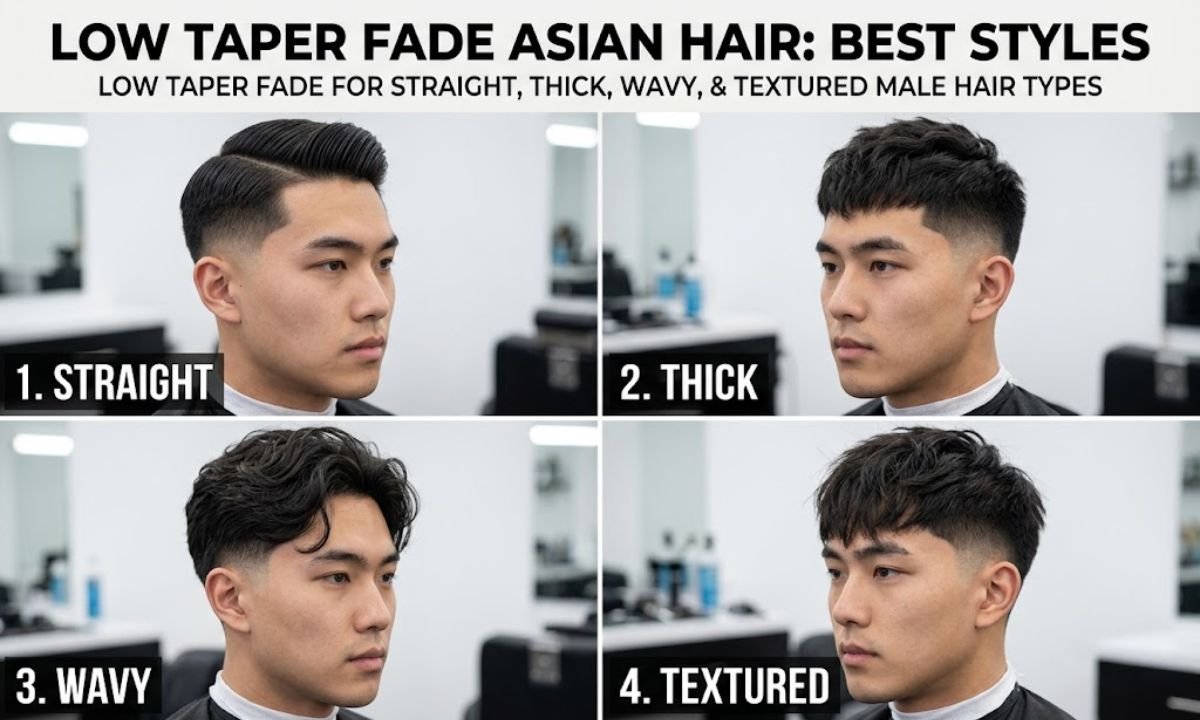
For straight Asian hair, pair it with a textured crop or a side part. For thick Asian hair, add a texturized top so the hair bulk doesn’t stack up. For wavy Asian hair, go with a textured fringe or a quiff that shows off your natural waves.
Want a softer edge that works in an office? Pick the low taper over a skin fade. Plan a full haircut every four to six weeks to keep the fade blend crisp.
What is a low taper fade for Asian hair?
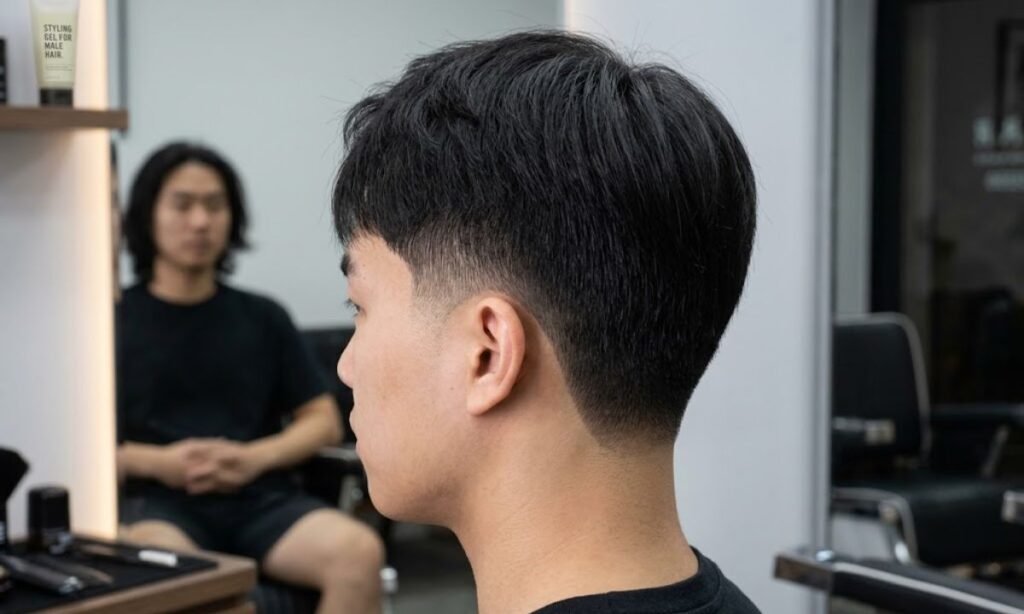
A low taper fade is a short, gradual blend that starts low on the head. It follows the natural hairline around the ear and finishes at the nape of the neck. The hair gets shorter as it moves down, but it rarely reaches bare skin.
This cut is popular as an Asian men’s haircut because it is neat without being loud. It frames the face, cleans up the neckline, and leaves the top free for whatever look you want. Think of it as a tidy frame around a picture you get to change every week.
Here’s a quick picture. Say you’re a college student with dark, dense hair that sticks out above your ears by week three. A low taper haircut pulls that sideways bulk back in, and your whole head looks lighter.
Low taper vs mid vs high fade
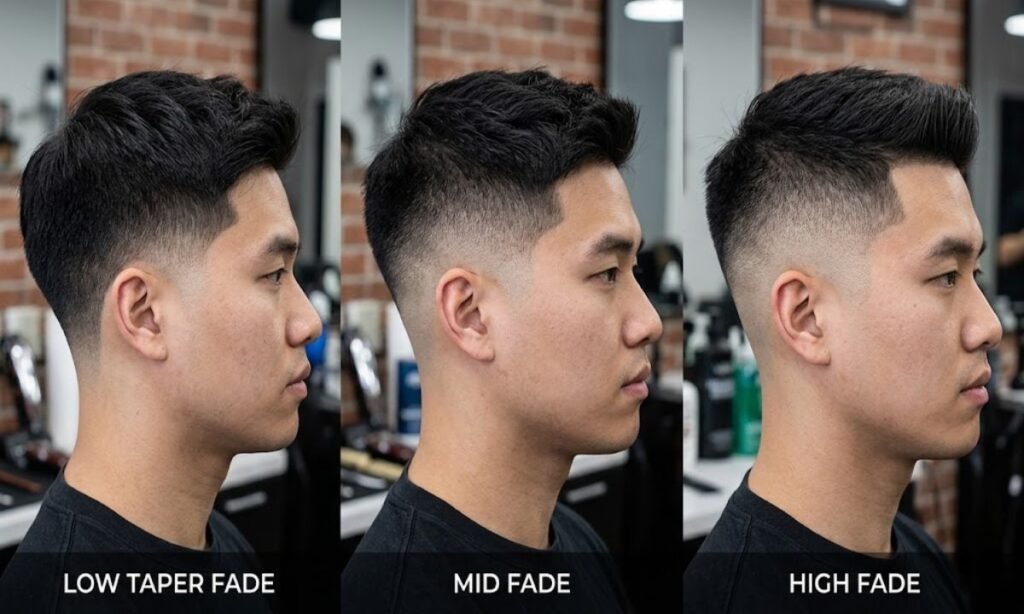
The difference comes down to fade height. A low taper begins just above the ear and hugs the temple level and sideburns. A mid taper starts around the middle of the sides, and a high fade climbs up near the crown for a sharper contrast.
A high fade makes a bold statement, but it grows out fast and shows every flaw. A mid taper fade sits in the middle and suits most people. The low taper is the quietest option, which makes it the easiest to live with.
If you’re unsure, start low. You can always ask for a mid taper fade Asian hair version next visit. Going higher is easy, and going back down takes weeks of growing.
Why the technique suits Asian hair density and texture
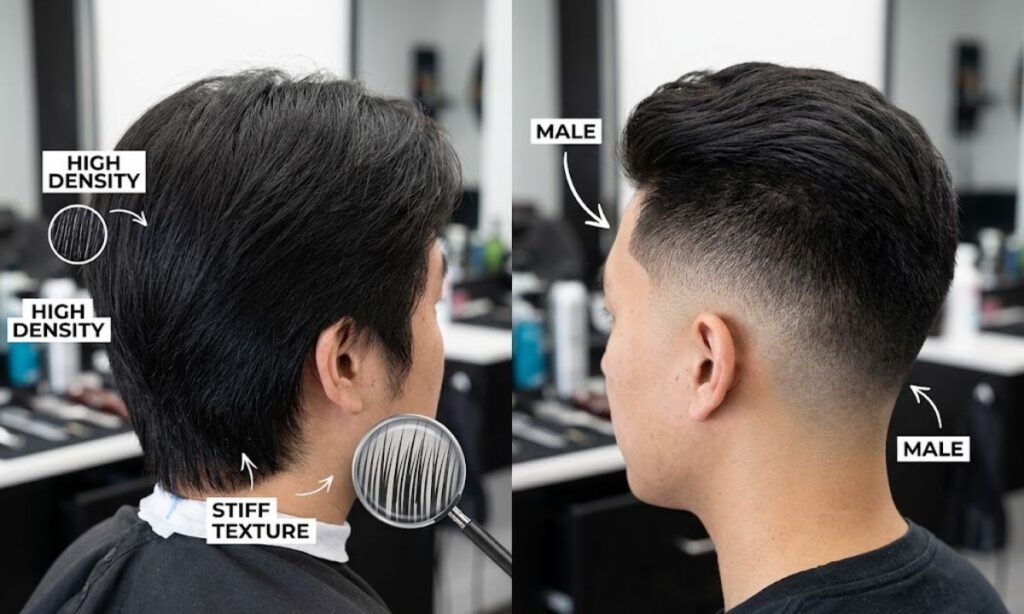
Most Asian hair texture runs straight with a wide hair strand diameter. Those dense hair strands grow outward and stay stiff, so untouched sides can flare into a helmet-like shape. Tapering the sides removes that bulk where it matters.
The low placement also respects the way hair grows. Many people with coarse Asian hair have uniform hair growth at the back, which makes the taper zone easy to blend. The cut stays soft at the edges, so it doesn’t fight your natural hair texture.
You also get flexibility. Because the sides stay short but not stripped, the top can carry the hair movement and the style. That’s why barbers reach for this cut first on thick Asian hair.
Best low taper fade styles for straight and thick hair
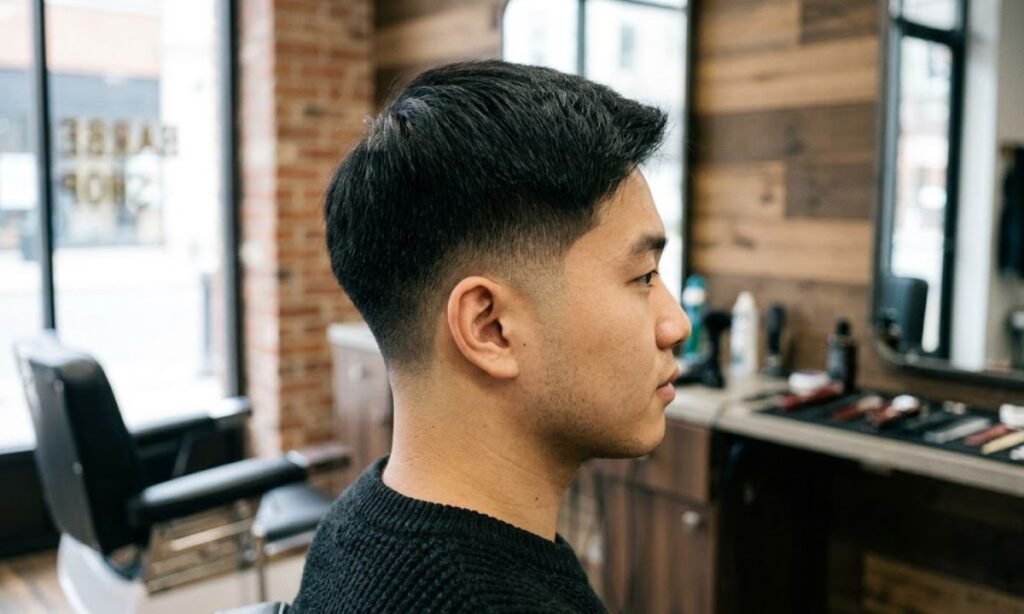
Straight, heavy hair has one big problem. It lies flat, then pushes out at the sides. A low taper fade for thick straight hair fixes both by trimming the sides and adding texturizing technique work on top.
Try these pairings:
- Textured crop low taper: short, choppy layers on top and a clean fade blend below. Great for flat crowns.
- Low taper with side part: a neat, grown up look that suits professional low taper haircut needs.
- Slick back low taper: works when you have enough length and enough shine control.
- Low taper fade with natural texture: let a barber thin the top and let it fall as it grows.
Your barber might use thinning shears or point-cutting shears to remove weight without losing length. Razor-over-comb work can also soften the ends, but it suits slightly wavy or very straight hair better than frizzy hair. Ask which tool fits your hair.
One quick example. A friend with coarse hair kept getting spiky tops that stood straight up. His barber switched to heavier clipper guards on the sides, then point-cutting shears on top. The spikes calmed down, and the style finally stayed put.
How the cut works on wavy and textured Asian hair
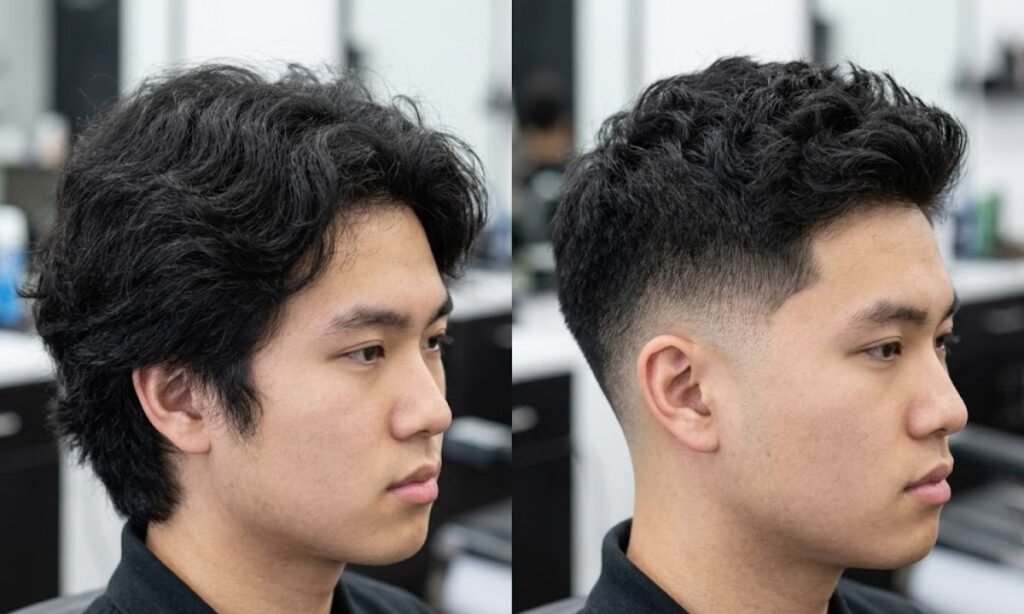
Wavy and textured hair behaves differently. It has hair separation, small bends, and a bit of frizz when the weather turns. A low taper fade for wavy hair keeps the sides tidy so the waves on top get center stage.
Here the goal is leaving enough length to let waves form. Cut it too short and you lose your hair pattern. A barber who understands natural movement will leave the top longer and shape it by hand.
For low taper fade for textured hair and even low taper fade for curly hair, ask for a slightly longer taper zone. That gives the curls room to sit without clashing with the short sides. You can also add a touch of frizz control with a light cream.
Best Low Taper Fade Asian Hair Styles to Try

Here’s a shortlist you can screenshot. Each one works with a low taper fade Asian hair base, and each one changes the mood.
- Textured fringe low taper: a soft fringe hairstyle with broken ends. Reads casual and youthful.
- Drop fade textured fringe: the fade curves down behind the ear for extra shape. Looks sharper in photos.
- Low taper fade with quiff: lifted front with plenty of height. Needs a blow-drying step.
- Low taper fade with side-swept fringe: easy, clean, and kind to heavy hair.
- Low taper fade with slick back: polished and a bit old school.
- Low taper with longer top: good for people who want to grow out slowly.
Pick the one that matches how much time you’ll spend each morning. If you only have two minutes, a textured crop wins. If you’ve got ten, the quiff is worth it.
Trendy Low Taper Fade Asian Hair Ideas for a Modern Look

Several modern Asian hairstyles for men keep showing up in the chair right now. The brushed-forward crop is big because it hides a high forehead and requires almost no effort. A medium-length textured top with a low taper has also become a favorite for office and weekend alike.
Another trend is the low taper with volume. Barbers lift the roots, use a matte textured hairstyle finish, and keep the sides clean. It looks like effortless hair, even though it takes a smart cut to get there.
You can also try a spiky top if you like an edgier shape. Just keep the spikes loose and soft, not glued. Pick one trend at a time, and don’t chase every photo on your feed.
Choosing a style for your face shape
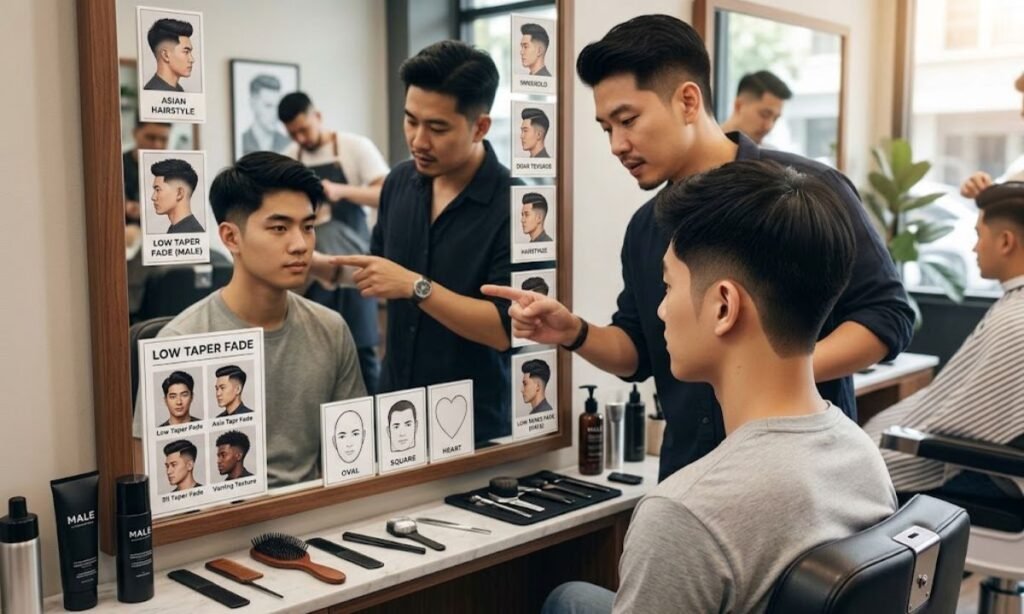
Your face shape guides where the hair should add height, width, or softness. You don’t need a measuring tape. Look in a mirror, pull your hair back, and check where your face is widest.
Here’s a simple rule. If your face is wide, add height on top. If your face is narrow, keep the top flatter and fuller at the sides. If it’s balanced, you have the freedom to play.
So think of facial proportions as your starting point. Your forehead, face width, and strong jawline all change how a hairstyle suitability test turns out. Always test a style against your own face before locking it in.
Best Low Taper Fade Asian Hairstyles for Different Face Shapes

Let’s make this practical, shape by shape.
- Low taper fade for round face: go for a quiff or a spiky top to create face elongation. Keep the sides tight and leave height up front.
- Low taper fade for oval face: almost anything works. A side part or textured crop is a safe bet.
- Low taper fade for square face: a textured fringe softens facial angularity and balances a strong jawline.
If your face is long, skip too much height and try a fringe that covers part of the forehead. That shortens the look of the face.
In short, the cut is the same, but the top does the heavy lifting. Match the style to the shape and you’ll look polished without trying hard.
Short and Medium Low Taper Fade Asian Haircut Ideas
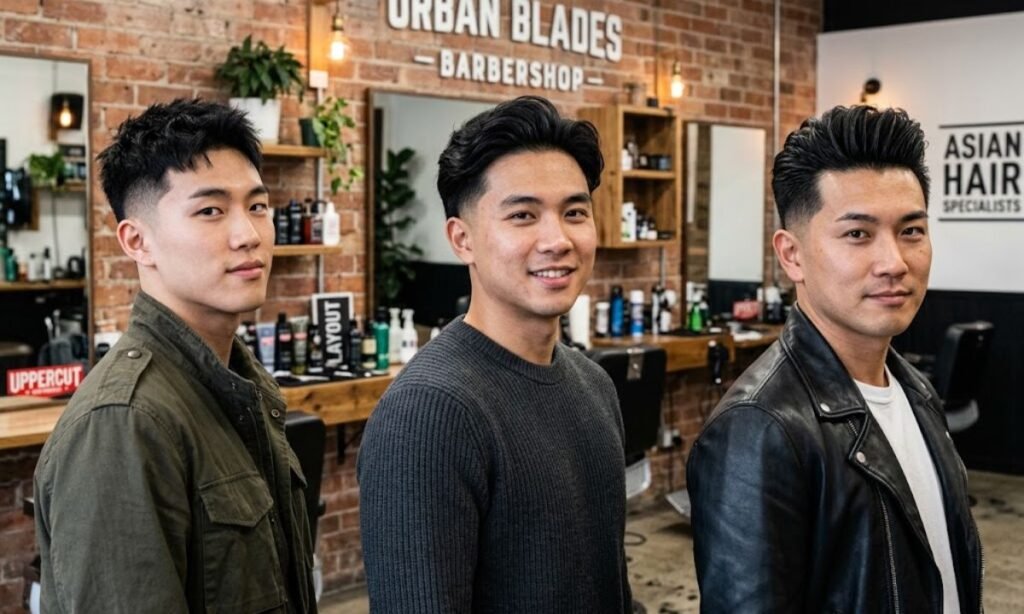
Short styles are all about speed. A low taper fade with short textured crop needs a dab of matte clay, a quick finger rake, and you’re done. It’s great for gym days and humid weather.
Medium styles bring more personality. A medium-length textured top lets you switch between a side part, a quiff, and a pushed-forward fringe. The trade-off is a bit more styling time.
Here’s how to choose:
- Short top: easiest daily routine, best for low-maintenance haircut fans.
- Medium top: more variety, but it needs regular trims.
- Longer top: best for low taper fade with longer hair on top, but expect more product and patience.
Most people land somewhere in the middle. Start there, then adjust.
Low taper vs mid taper: which should you pick?
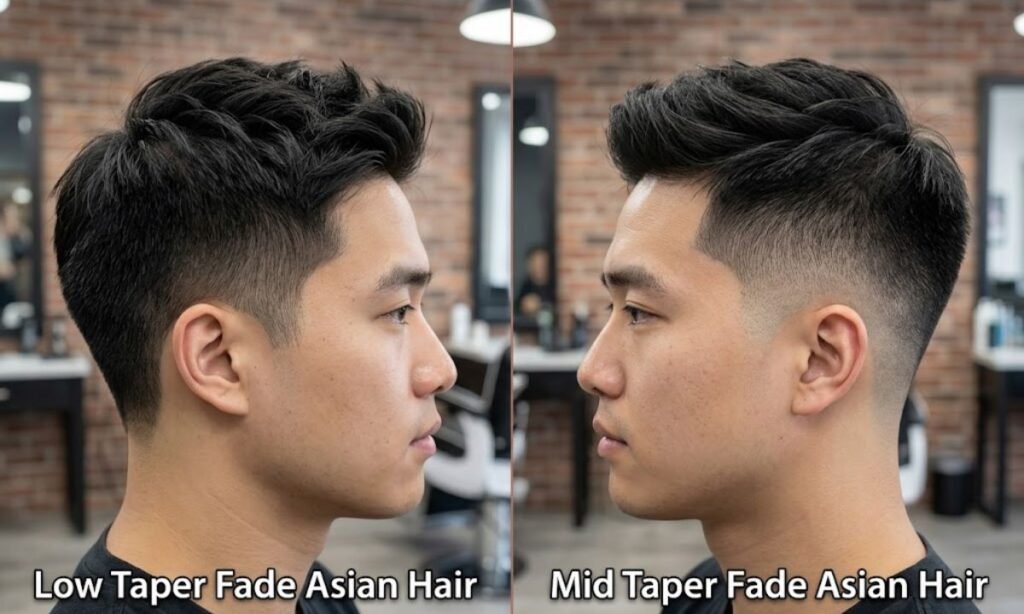
Here’s the plain answer. Choose a low taper if you want subtle, safe, and easy to grow out. Choose a mid taper if you want a little more contrast and a slightly cleaner outline.
On thick hair, a mid taper removes more side bulk. If your hair puffs out above the ears, that extra height can help. On fine hair, the low taper fade for fine hair keeps more density, which can make thin hair look fuller.
So it comes down to hair type and job. Office worker with dense hair? Try mid. Student with thinner sides? Stay low. If you’re torn, ask your barber to show a low taper vs mid taper comparison on a reference photo.
Low taper vs skin fade: what really changes

A skin fade takes the hair down to bare skin at the bottom. A low skin fade does that low on the head. A regular low taper stops short of skin and leaves a faint shadow instead.
That shadow matters. It looks softer, hides regrowth better, and grows out gracefully. A low skin fade looks crisp on day one, but it fades into fuzz within about two weeks.
If you like the sharp look, go for it. Just remember the haircut maintenance bill goes up. For most guys who want professional appearance with little fuss, the plain taper wins.
How to ask your barber for a low taper fade

A good haircut consultation takes about two minutes. Tell your barber what you want and show it. The more detail you give, the fewer surprises you’ll face.
Try this script: “I’d like a low taper fade, starting just above the ear, blending into the natural hairline at the neckline. Leave the top long enough for a textured crop.” Then pull up your barber reference photos.
Useful barber instructions to include:
- Your preferred fade height and blend starting point
- Whether you want the sideburns squared or rounded
- Which clipper guards you want on the sides
- How much you want removed from the top
- Any cowlicks or uneven growth you’ve noticed
If you’re wondering how to show a barber reference photos properly, use two angles. One from the front and one from the side. That avoids the classic mix-up where the barber copies the wrong part of the photo.
How to style the top: fringe, quiff, or textured crop
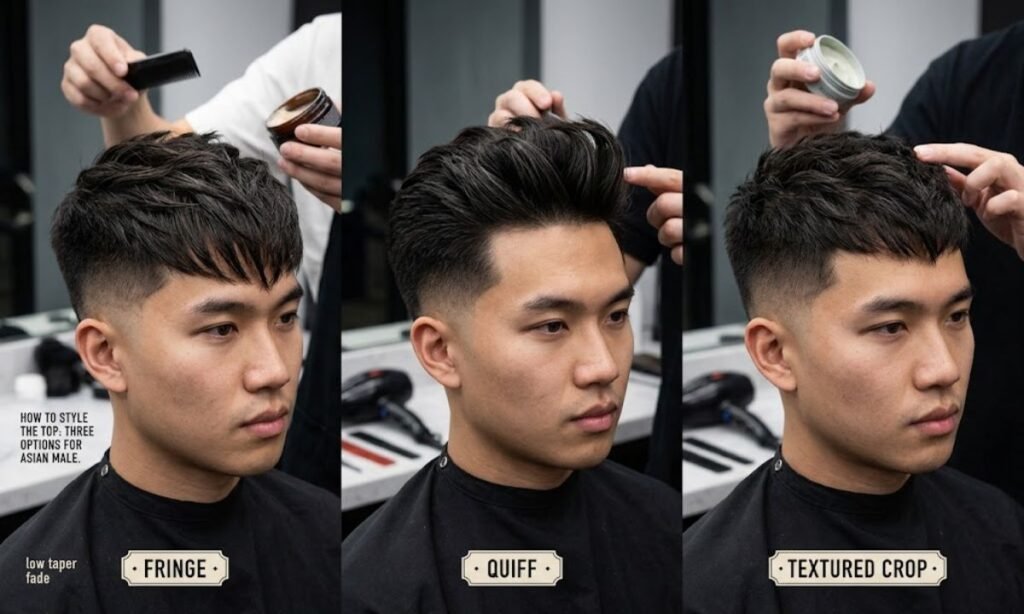
The fade gets the compliments, but the top decides the daily result. Each style needs different tools and a different mood. Here’s how to run each one.
Fringe
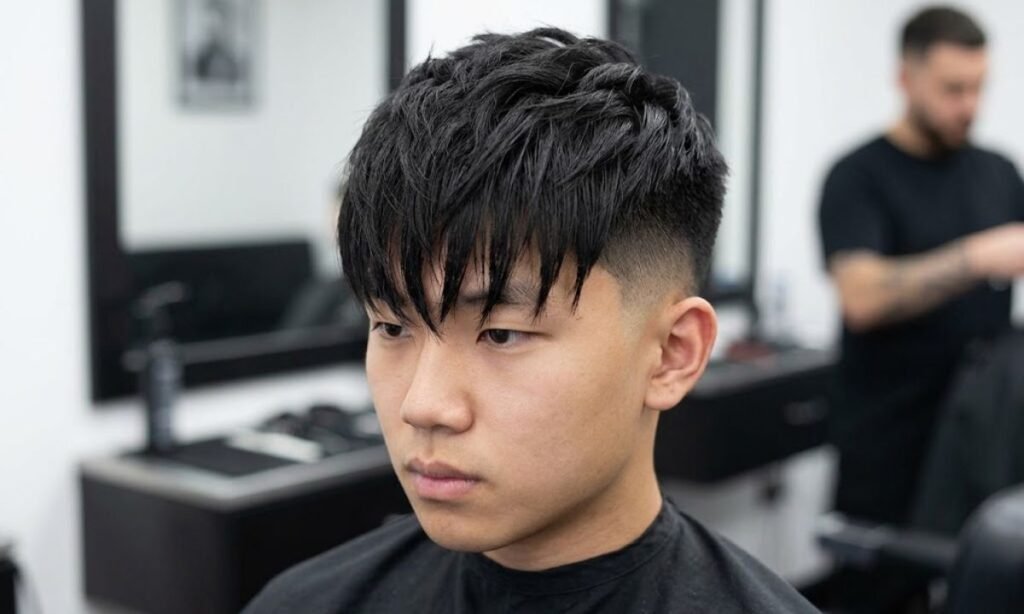
A textured fringe falls forward and softens the forehead. It’s a go to for round face and square face shapes. Rake your fingers forward through damp hair, then add a pea sized dab of matte paste.
The common complaint is how to keep a fringe from looking flat. Fix it by blow drying the roots up and forward first, then finishing with cool air from dryer to lock the shape. A touch of sea salt spray adds grit.
Quiff
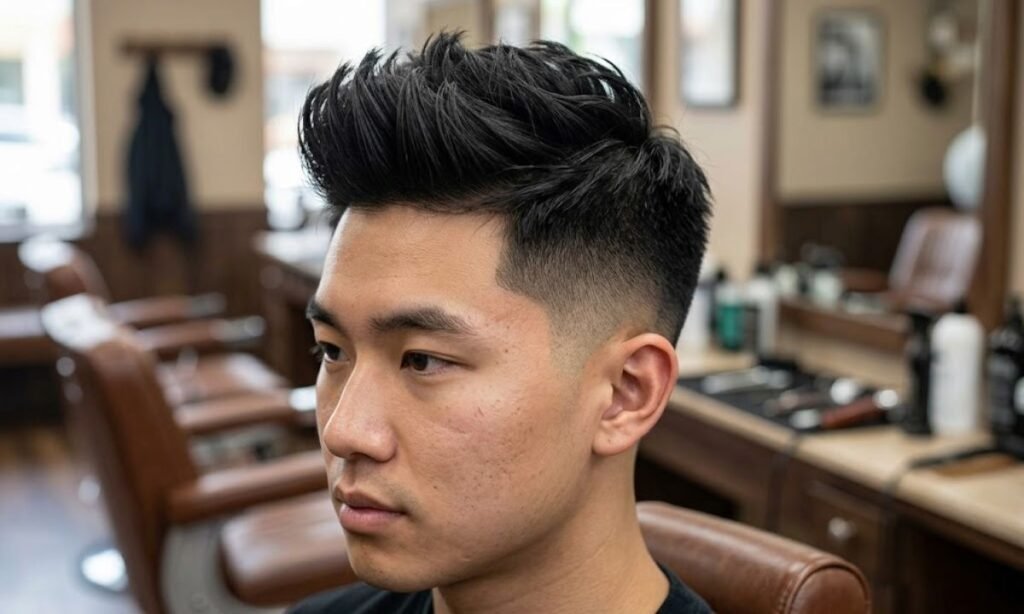
A quiff lifts the front and gives height. For how to style a quiff on thick hair, start with towel-dried hair, apply a strong-hold pomade to the roots, and use a round brush to lift. Pull the front up and back, then set it with cool air.
Thick hair can feel stubborn here. Ask your barber to thin the front section so the hair weight doesn’t pull the lift down. Without that step, the quiff droops by lunch.
Textured crop
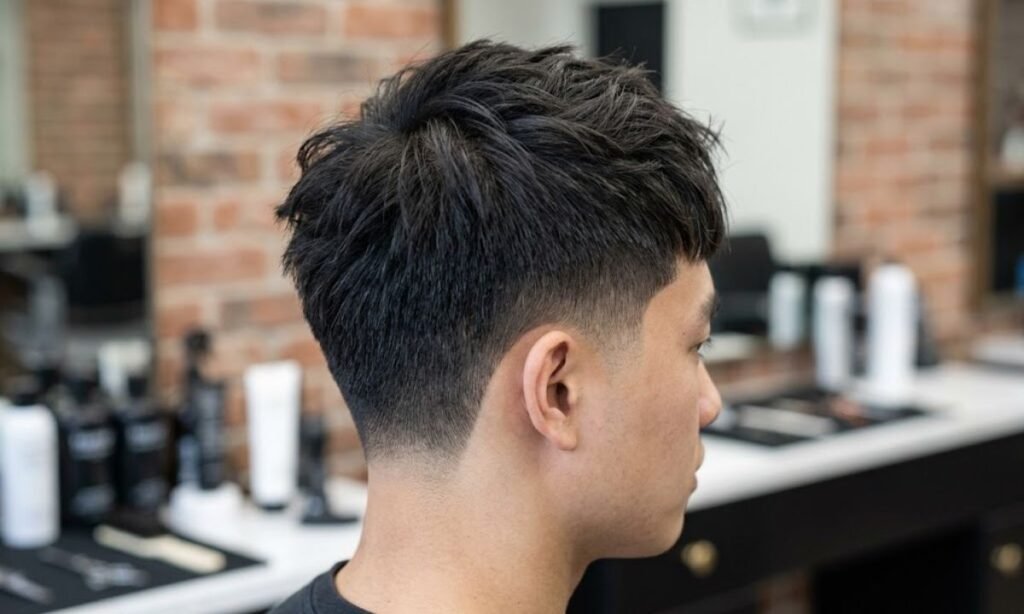
A textured crop is the easiest option. It’s short, choppy, and forgiving. For how to style a textured crop, rub a small amount of texturizing paste between your palms and push it through from back to front.
Spend thirty seconds. Don’t comb it flat. The point is natural finish, with a little mess in the ends.
How to Style Low Taper Fade Asian Hair at Home

Morning styling takes less time than you think. The sequence below works for most heads and keeps your daily styling routine to about five minutes.
Here’s how to style a low taper fade step by step:
- Start with towel-dried hair, not soaking wet.
- Use a hair dryer to build root volume, pointing the nozzle at the roots.
- Rub a small amount of matte clay or hair cream between your palms.
- Work it through with finger styling, front to back.
- Finish with cool air from dryer so the shape holds.
Less is more. Start small, because you can always add more product but can’t take it away.
Try this tip too. Style your hair in the direction it naturally falls first. Fighting your hair growth direction causes odd gaps and a flat crown.
Best products for thick Asian hair
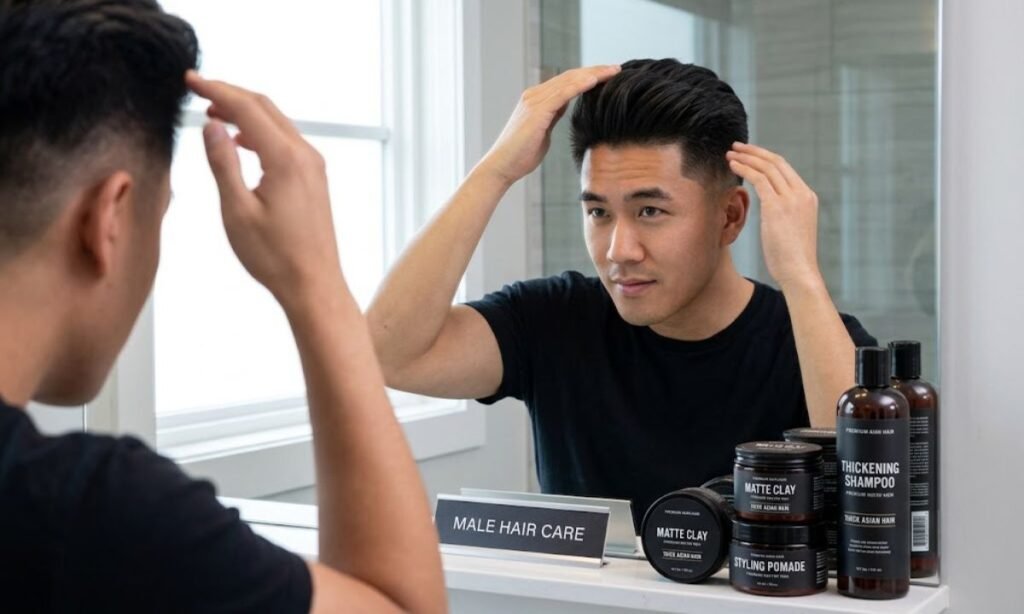
Thick hair needs hold, but heavy goo weighs it down. The best products for thick Asian hair tend to be matte and light.
- Matte clay for a dry, strong hold
- Texturizing paste for choppy tops
- Light cream for waves and frizz control
- Sea salt spray for lift and grit
- Strong-hold pomade for slick backs and quiffs
Avoid piling on wax every day. Product buildup makes hair look dull, and a clarifying shampoo once a week clears it out.
How to Maintain a Clean Low Taper Fade on Asian Hair
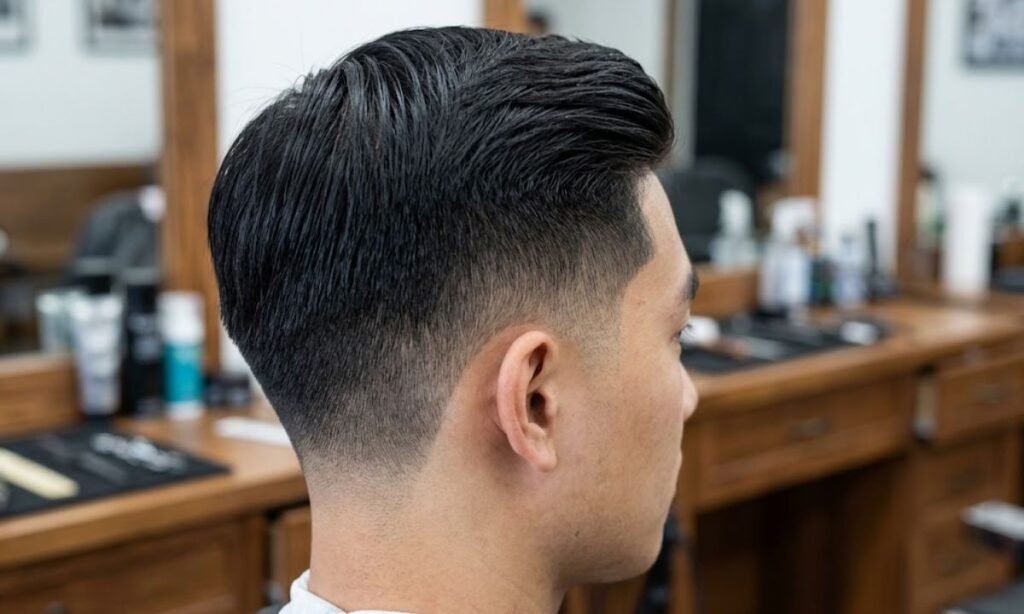
Here’s the part most guys skip. A low taper fade looks fresh for about two weeks, then hair regrowth starts to blur the lines. Asian hair grows roughly half an inch a month, so the neckline and sides soften fast.
Plan on a full haircut every four to six weeks. Between visits, a quick neckline cleanup and sideburn cleanup at the barber every two to three weeks keeps it sharp. A top trim works well if your style relies on a certain length.
Wondering how often to trim a low taper fade? Here’s a simple trim schedule:
- Every 2 to 3 weeks: neckline and sideburn tidy
- Every 4 to 6 weeks: full haircut
- Every 8 weeks: top shaping if you wear it longer
If your budget is tight, ask about regrowth blending. Some barbers can extend the life of the cut with a lighter clean up.
At-home clipper maintenance
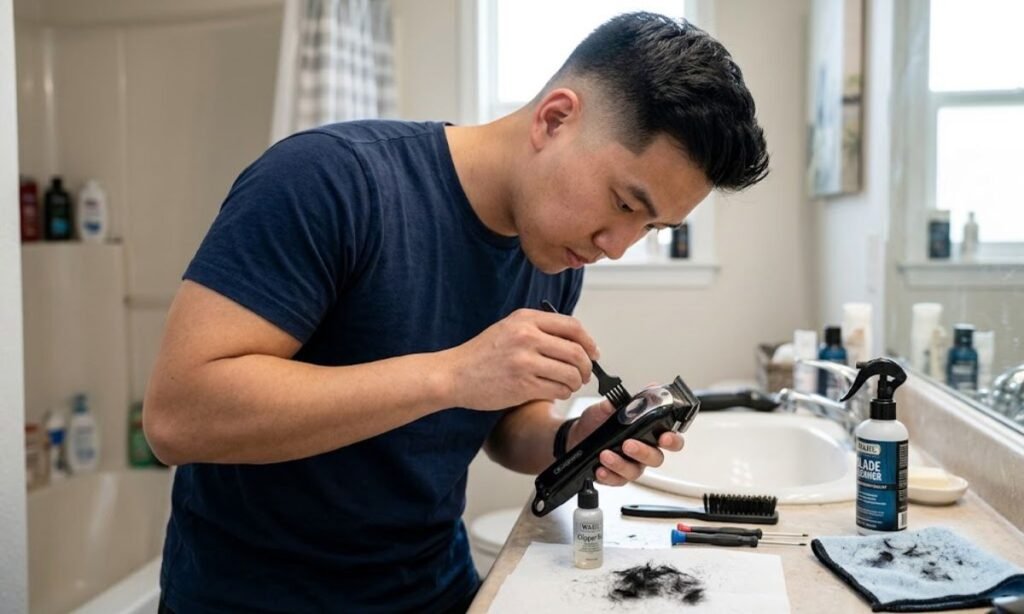
Some people handle small touch ups at home. If you do, use at-home clipper maintenance habits like oiling the blades and brushing out hair after each use. A dull blade pulls, and a pulled hair leaves rough edges.
Keep your hands off the fade itself. The blend starting point is delicate, and a slip can leave a visible line. Stick to the neckline edge, or leave it to your barber.
Low taper fade for thin, fine, and thinning hair
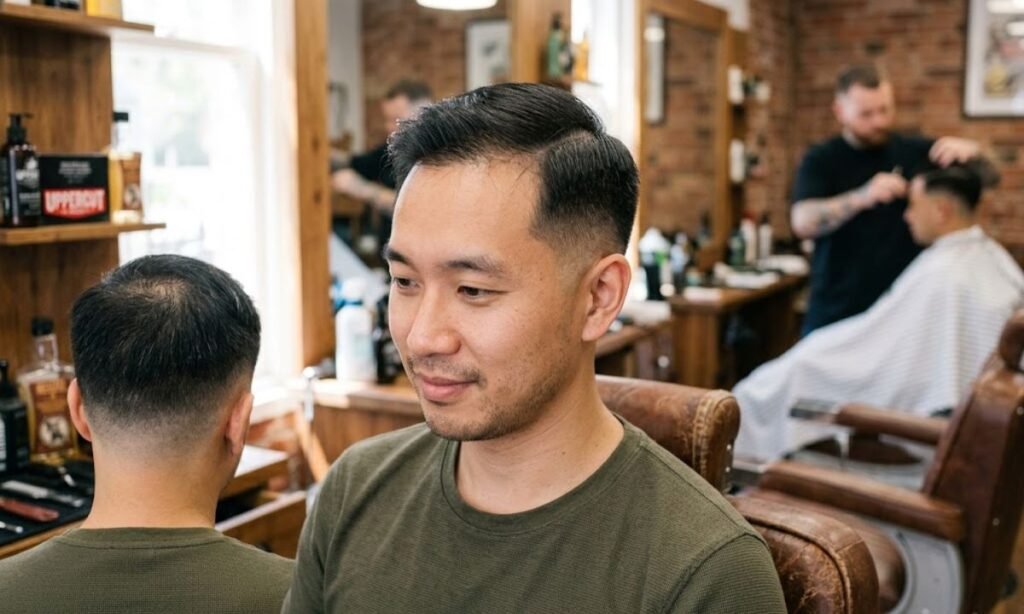
Fine hair has a different problem. It can look see through if cut too short on the sides. A low taper fade for fine hair keeps the density higher near the ears, so the head looks fuller.
If you have thinning hair, avoid very high fades and harsh contrast. A low taper fade for thinning hair keeps a soft edge, hides thin spots better, and works with a short textured top. Pair it with a light hair cream instead of heavy clay.
As always, ask your barber for honest advice. A good one will tell you what flatters your hair, even if it’s not what you walked in asking for.
Fixing cowlicks, uneven growth, and the helmet look
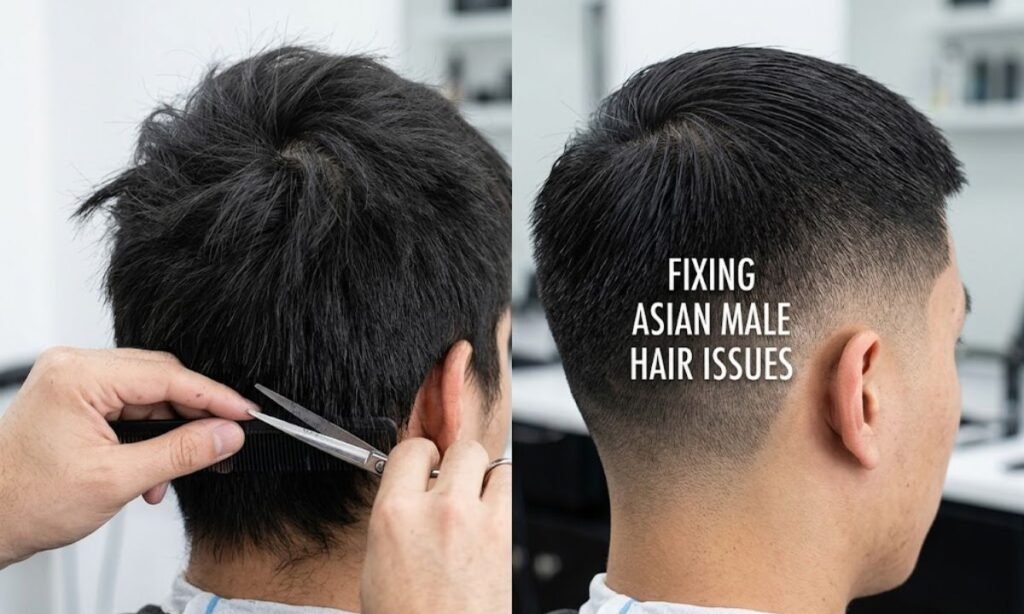
Cowlicks and uneven growth show up on almost every head. A cowlick at the crown can make the top look messy, and one at the hairline can ruin a fringe. A smart barber works with them instead of against them.
If you’ve ever ended up with a helmet-like shape, the cause is usually too much bulk on top of tight sides. The fix is how to reduce bulk in thick hair. Ask for texturizing technique work, light thinning, and a bit of length variation.
Also, try asking for a drop fade if the back of your head feels flat. The curved line adds shape where your skull doesn’t.
Low taper fade for professional settings

Worried about the boss’s reaction? A low taper fade is one of the safest picks for the office. It looks neat, it grows out gracefully, and it doesn’t scream trend.
For a low taper fade for professional settings, go with a side part or a slick back. Use a natural finish product so you avoid shine overload. That combination looks like you tried, but not too hard.
If you meet clients, keep the sides conservative and avoid sharp lines at the temple level. A professional low taper haircut reads as reliable and put together.
Mistakes to avoid with a low taper fade

Some errors pop up again and again. Most of them are easy to fix once you know them.
- Skipping the haircut consultation and hoping for the best
- Choosing a fade too high for your hair type
- Using heavy product on fine hair
- Ignoring hair growth direction while styling
- Waiting eight weeks between cuts
- Copying a reference photo that doesn’t match your hair density
One more thing. Don’t judge your barber on day one if the blend feels off. Tell them kindly, and ask for a quick touch up. Good ones appreciate honest feedback.
Final takeaways
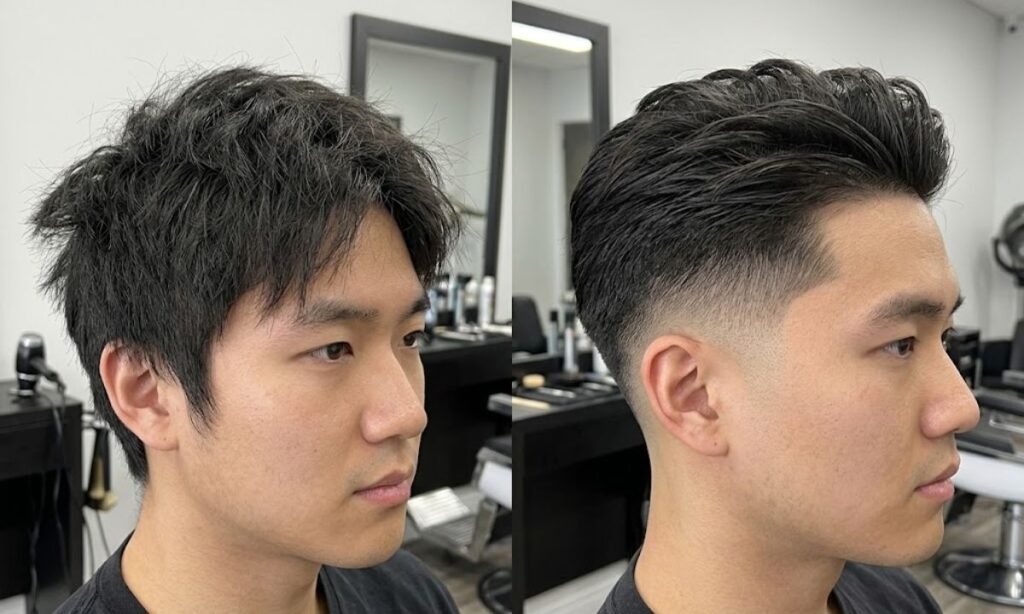
A low taper fade Asian hair cut is easy to love. It cleans up the sideburns, softens the neckline, and leaves the top open for your personal style. Pick the right fade height for your hair density and you’re most of the way there.
Match the top to your hair type and face shape. Straight Asian hair loves a textured crop, thick Asian hair likes a texturized top, and wavy Asian hair shines with a fringe or quiff. Give your barber clear words and photos.
Then keep it up. A full haircut every four to six weeks, a simple styling routine, and the right products will keep the look sharp. Now it’s your turn. Which style are you trying first? Drop a comment, share this with a friend who needs a new cut, and tell us what worked for your hair.
You can also checkout this article as well Low Taper Fade with Fluffy Hair: Best Styles, Styling Tips, and Maintenance Guide
Last updated: October 2026. We refresh this guide as new styles and barber tips come up.
Frequently asked questions

What is the best low taper fade for Asian hair?
The best low taper fade for Asian hair pairs a clean low taper with a textured top. A textured crop works for straight, thick hair, while a textured fringe or quiff works for waves.
How often should I trim a low taper fade?
Book a full haircut every four to six weeks. Add a neckline cleanup and sideburn cleanup every two to three weeks if you want it crisp.
Is a low taper fade good for thick, straight Asian hair?
Yes. It removes hair bulk from the sides and stops the helmet-like shape. Add thinning shears or point-cutting shears work on top for better movement.
What’s the difference between a low taper and a mid taper?
A low taper starts near the ear and is subtle. A mid taper starts higher and gives more contrast. Both are good, so pick based on your hair type and workplace.
Can I get a low taper fade with curly or wavy hair?
Yes. Keep the top longer so natural waves can form. Use a light cream for frizz control and ask for a longer taper zone.
Which products work best for thick Asian hair?
Matte clay, texturizing paste, and sea salt spray handle most needs. Use a strong-hold pomade for slick backs. Skip heavy wax to prevent product buildup.
What face shape suits a low taper fade best?
It works for round face, oval face, and square face shapes. Adjust the top for balance, such as height for round faces and a soft fringe for square faces.
What should I tell my barber?
Name your fade height, blend starting point, and clipper guards. Then bring barber reference photos from two angles.

I’m Michael Charles, the creator of MegaCrazes—your source for fresh hairstyles, sharp haircuts, and simple hair-care inspiration. Find your style. Own your look.