

Updated October 2026
Quick answer
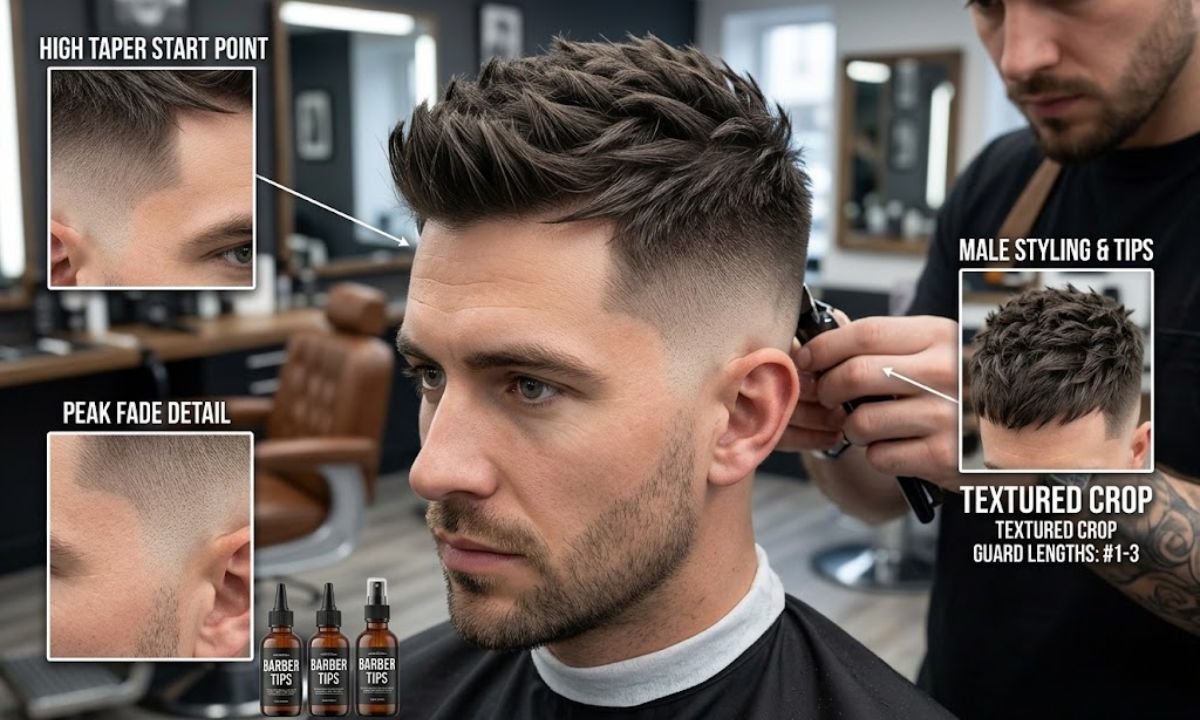
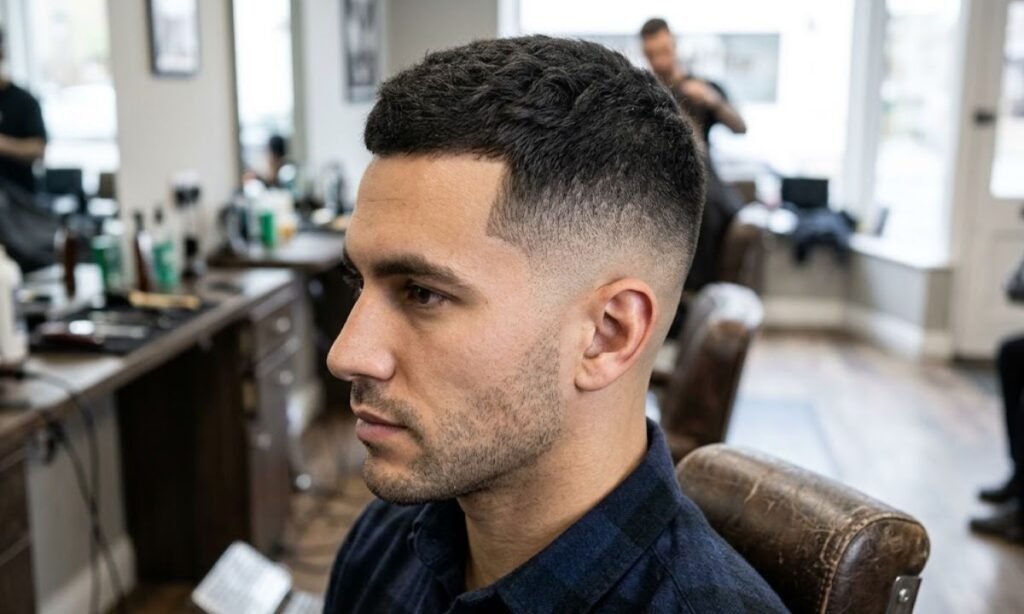
A high taper fade for short hair starts the taper zone at or above the temple.
The hair shrinks gradually from the hair length on top down to a short stubble finish or bare skin finish near the ears and neckline.
Most barbers use a #2 clipper guard or #3 clipper guard at the start of the taper and work down to a #1 clipper guard or lower.
That gives you a sharp haircut appearance without a harsh, bald look.
You need at least 1 to 2 inches on top to make it work well.
If your top is shorter, a short high taper still works, but the strong visual contrast will be softer.
What is a high taper fade on short hair?

Picture a staircase where every step is only a few millimeters tall.
That’s the idea behind a high taper haircut, because the gradual length change moves from long to short without any sudden drop.
The high taper starts at or above the temple, so the change shows up higher on the head than a low or mid version.
You keep the hair retained on the sides and back looking neat while the lower edges stay clean.
People search “taper vs fade” because the words get mixed up all the time.
A taper is usually subtler and keeps more hair, while a fade goes closer to the skin.
High taper vs high fade, mid taper, and low taper

The main difference is where the taper boundary placement sits on your head.
A low taper fade sits just above the ear and neckline, a mid taper fade sits around the middle of the sides, and a high one starts near the temple.
A high taper vs high fade comparison comes down to how close to the skin you go.
A high fade haircut often reaches a skin fade or bald fade, while a taper keeps a soft taper transition and leaves a bit of hair.
Here’s a quick way to compare them:
- High taper: Starts at the temple, gives high-contrast hairstyle energy, and stays fairly soft.
- Mid taper: A balanced pick if you want less contrast than a high cut.
- Low taper: The most low-maintenance haircut of the bunch, great for office settings.
- High fade: The boldest look, with heavy scalp exposure.
Is a high taper right for your short hair?
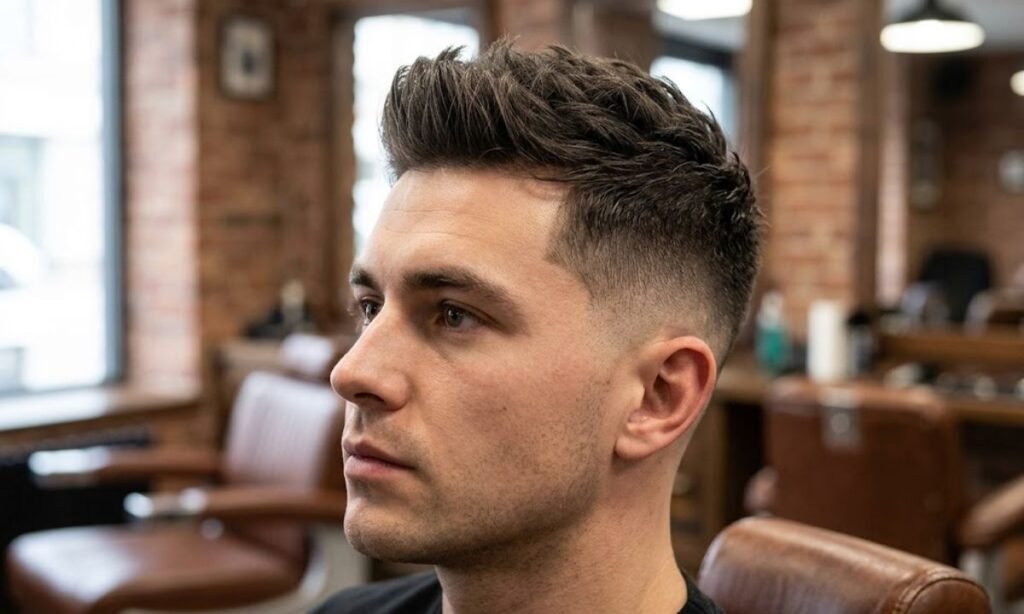
Before you book, ask yourself three things.
How much hair do you have on top, what’s your hair type, and who shouldn’t go this high?
The answers below will help you decide in about two minutes.
No guesswork needed.
How much length do you need on top?
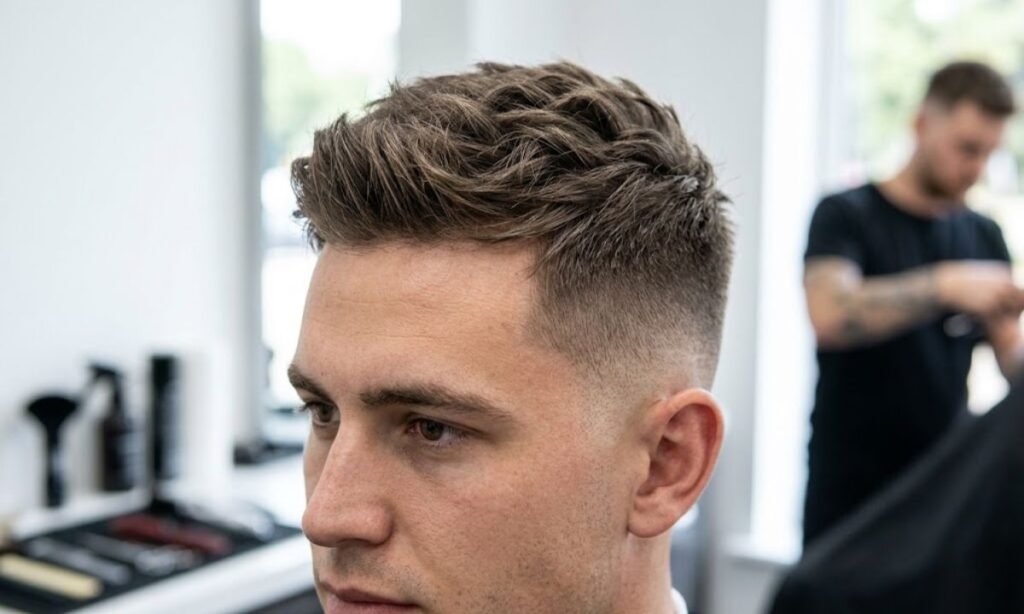
For a clean look, aim for at least an inch of dry hair length on top.
A short cropped top at that length still leaves room for textured layers and some styling.
If you’re shorter than that, the contrast between top and sides shrinks fast.
A buzz cut with high taper still works, but it’ll read as subtle.
Say you’re growing out a crew cut and sit around half an inch on top.
A high taper will look tidy, but wait another two weeks if you want a sharper shape.
How texture, density, and hair color change the result
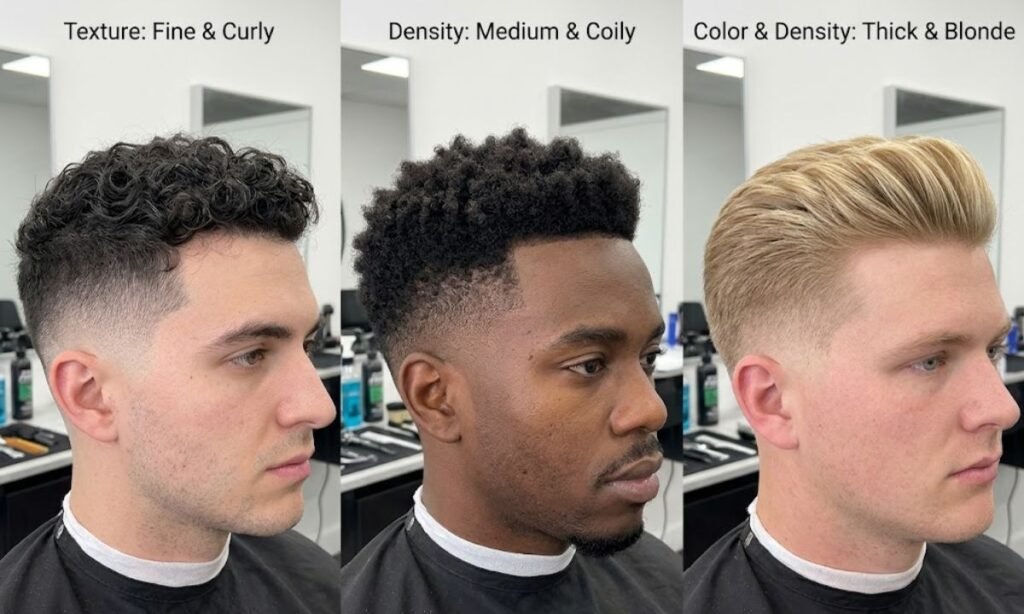
Hair texture and density shape how your taper looks once it’s cut.
Fine or coarse hair strands behave differently, and dense hair hides the blend better than thin hair does.
Hair color and skin contrast matter too.
Dark hair on light skin gives the strongest contrast, while light or blond hair makes the scalp visibility more obvious and the fade softer.
With curly and coily hair, curl pattern and shrinkage can make your top look shorter than it is.
Tell your barber about this up front, so you don’t get surprised after the cut.
Who should think twice
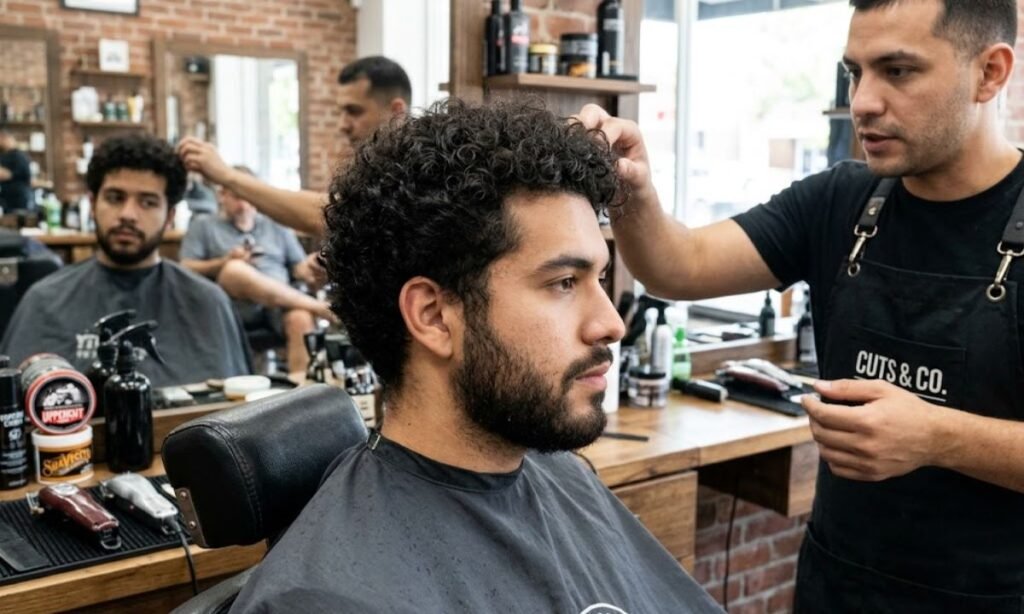
A high taper isn’t for everyone, and that’s okay.
If you have very thin hair or visible scars near the temples, a mid taper fade on short hair might look better.
People with a very receding hairline sometimes feel the high version exposes too much.
Ask your barber for a lower start point and see how it feels.
Also think about your job and your routine.
A high-contrast hairstyle needs regular visits, so if you hate trips to the barber, go lower.
High Taper Fade for Short Hair: Length and Guard Guide
Guard numbers sound confusing until you see them as simple millimeters.
Once you know the basics, you can read any clipper guard size chart and explain your cut with confidence.
What clipper guard numbers create a clean high taper?
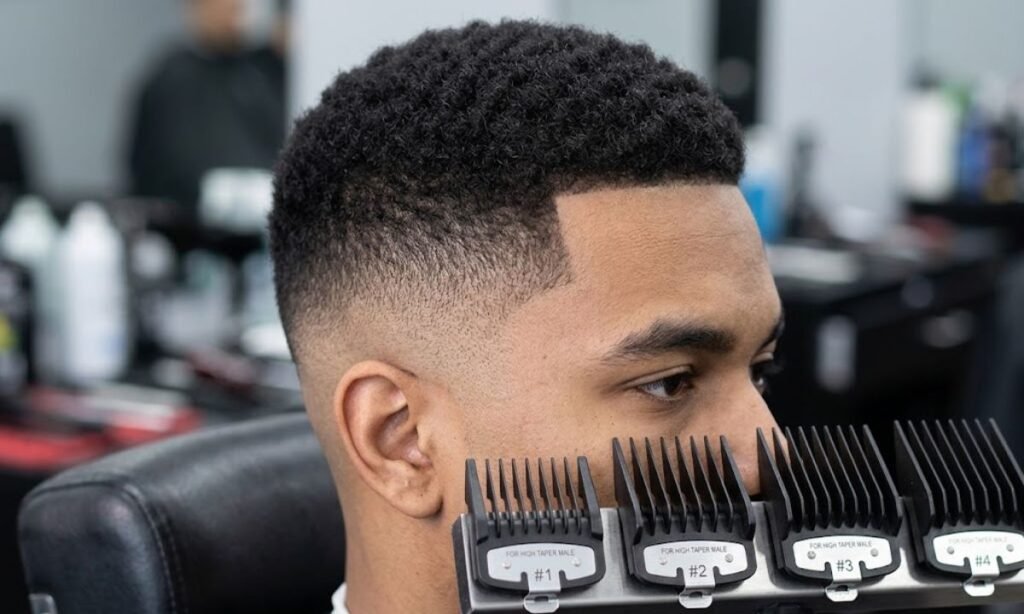
Here’s the basic cutting length in millimeters for common guards:
A #1 clipper guard is about 3 mm, a #2 clipper guard is about 6 mm, a #3 clipper guard is about 10 mm, and a #4 clipper guard is about 13 mm.
A common recipe starts with a #3 at the top of the taper and moves through #2 and #1.
Then the barber finishes with a shorter setting or the bare blade near the ear.
This stepping is called graduated clipper guards.
It’s the secret to blending without visible lines.
How to choose between a shadow taper and a skin-level finish
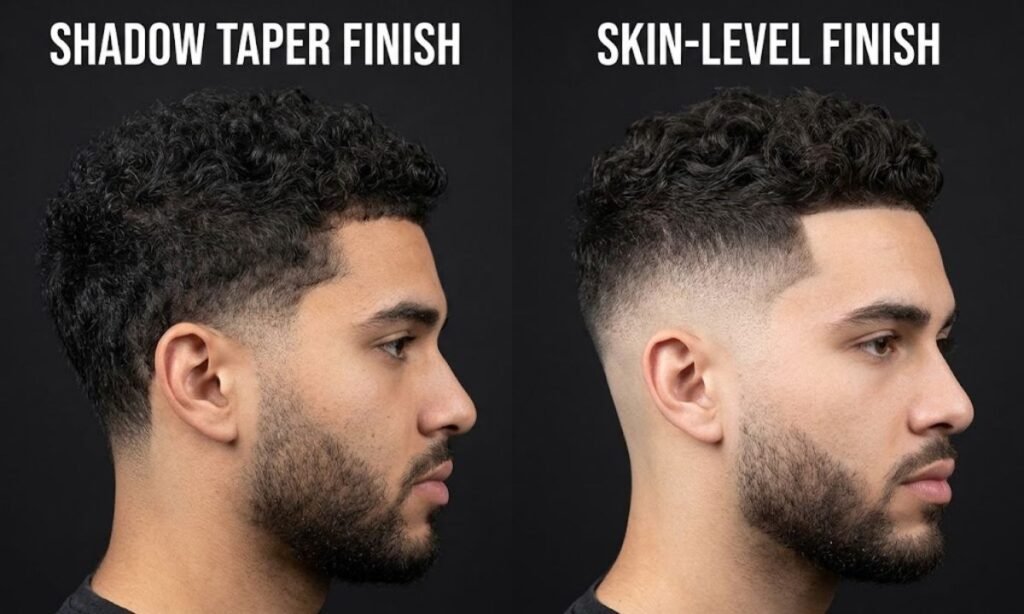
A shadow taper leaves a hint of hair at the shortest cutting length, usually around 0.5 to 1 mm.
It looks like a soft shadow on the skin and grows out gently.
A skin-level finish goes all the way down for a crisp bare skin finish.
It looks sharp on day one but shows regrowth sooner, which means more trips to the chair.
If you want something low-maintenance, go with the shadow.
If you want a sharp line-up and head-turning contrast, go skin.
Can you get a high taper without exposing the scalp?
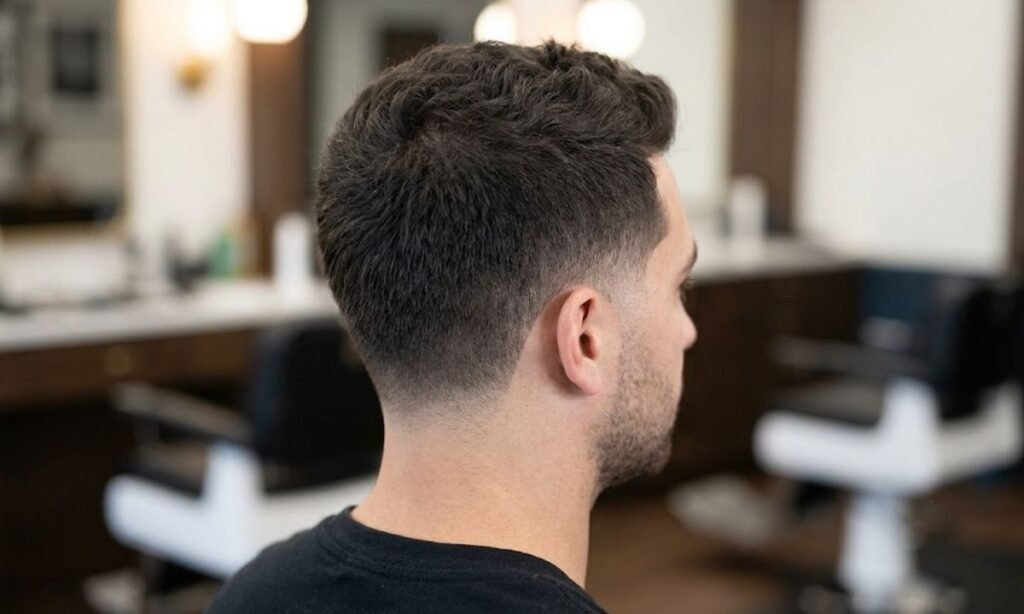
Yes, you can, and it’s more common than you think.
Ask your barber to stop at a #1 clipper guard or a #1.5, and the scalp exposure stays minimal.
A soft blend also helps.
The transition between hair lengths feels gentler, which suits people who don’t want a bold change.
This is a smart pick for office workers or anyone newer to tapers.
You still get the clean sides without the bald fade look.
High Taper Fade Ideas for Different Hairlines and Head Shapes
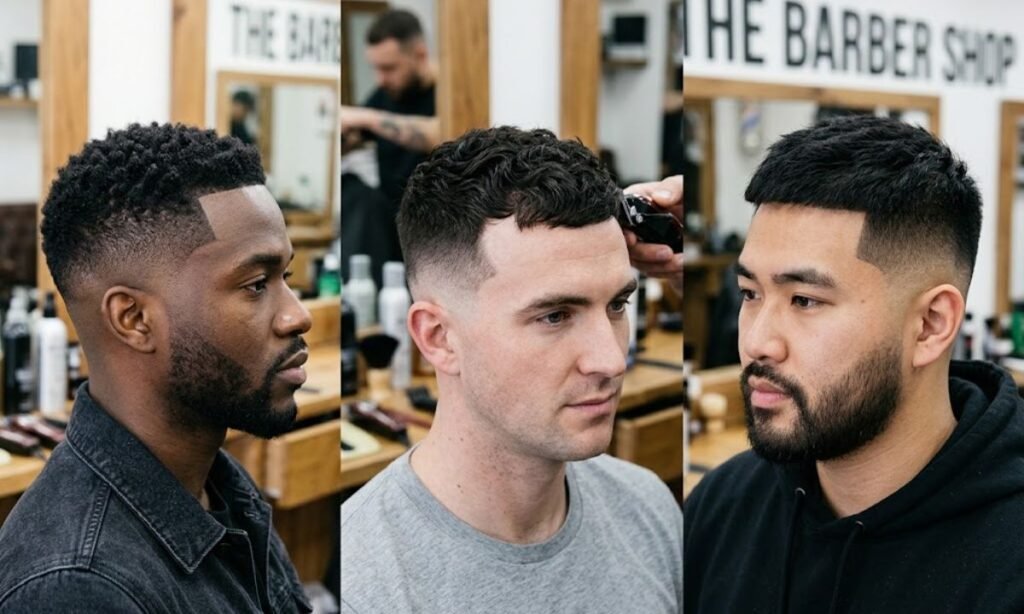
Your hairline and face shape and head shape change how a taper lands.
A good barber reads these cues before the clippers even turn on.
High taper fade for a receding hairline
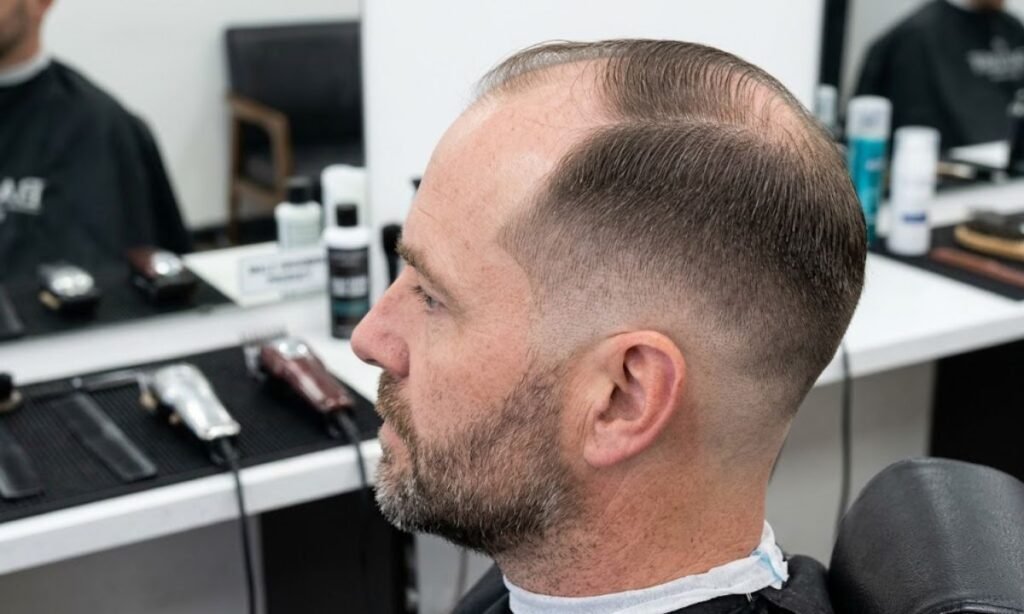
With a receding hairline, a very low start point can make the temples look even higher.
A moderate temple height with a natural hairline can balance things out.
Ask for a slightly longer short textured crop on top.
The extra length draws the eye away from the temples.
A high taper without a sharp line-up also helps here.
A soft front edge looks natural and hides the recession.
High taper fade for a wide forehead or high hairline

A big forehead can look bigger with a very high, tight fade.
Try a textured fringe or a forward-brushed top to soften the space.
Keep the taper zone a bit lower than the temple if you want to balance the face.
The drop fade textured fringe is a favorite for this very reason.
Tell your barber about your forehead before the cut starts.
It takes ten seconds and saves a lot of regret.
High taper fade for a flat crown or uneven head shape
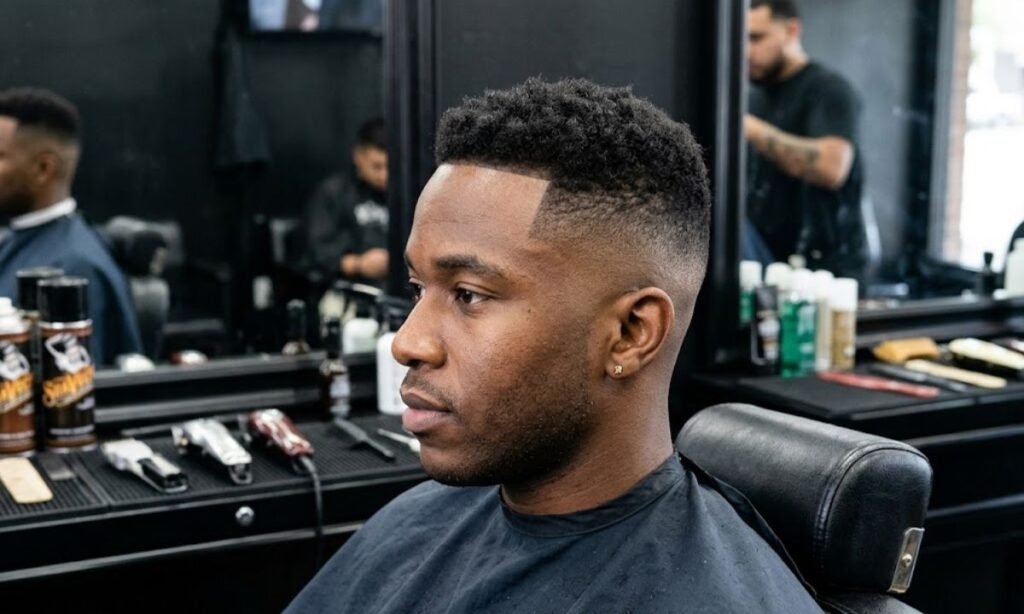
A flat crown can look more obvious with ultra-short sides.
For this, ask for a bit more hair length on top at the back to add volume.
Don’t be shy about uneven spots, such as a bump or dip.
A skilled barber will adjust the crown-to-nape blend to hide them.
A drop fade for straight hair works well here.
The curve follows the skull and adds shape where it’s missing.
Which short hairstyles work with a high taper fade?
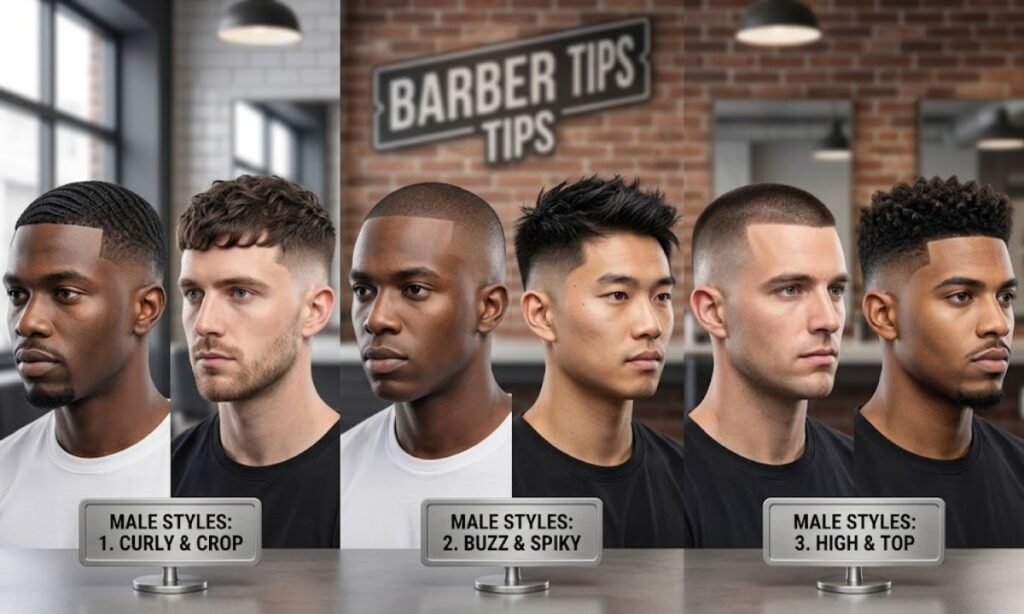
The taper is the base, and the top is where you add personality.
Here are five easy pairings that work on short men’s hairstyles.
Short textured crop with a high taper
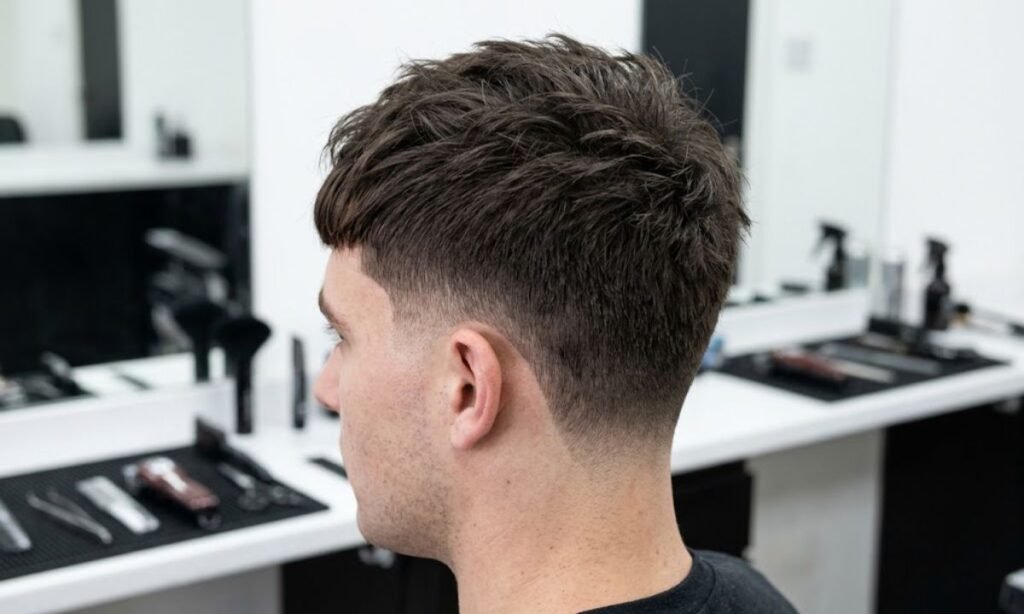
This is the go-to modern look.
Use point-cutting technique on top to create messy textured layers.
The contrast between the choppy top and the clean sides looks sharp.
It takes about two minutes to style with a matte styling product.
Great for high taper fade for straight hair and wavy types.
It hides cowlicks too.
Crew cut with a high taper

A crew cut with high taper feels classic but fresh.
The top is short, around 1 inch, and the graduated top length gets slightly longer at the front.
It works for office, gym, and weekend life alike.
No product needed on most days.
This is the easiest look if you’re new to tapers.
You just need a comb and a quick brush.
Short waves with a high taper
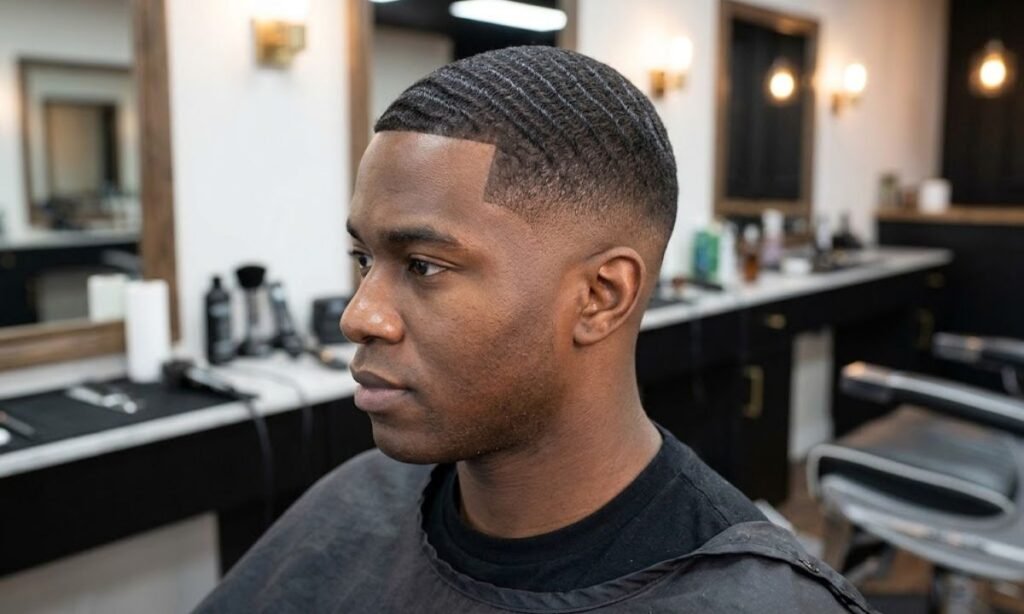
For people who love brushed wave pattern styles, this is a winner.
A taper fade with waves keeps the sides neat while the top stays smooth and glossy.
Brush daily and keep a hair moisture routine in place.
A wave cap at night keeps the pattern tight.
This fits well on a high taper fade for Black men who want a classic, sharp finish.
It’s also a smart pick for wavy hair.
Cropped curls with a high taper
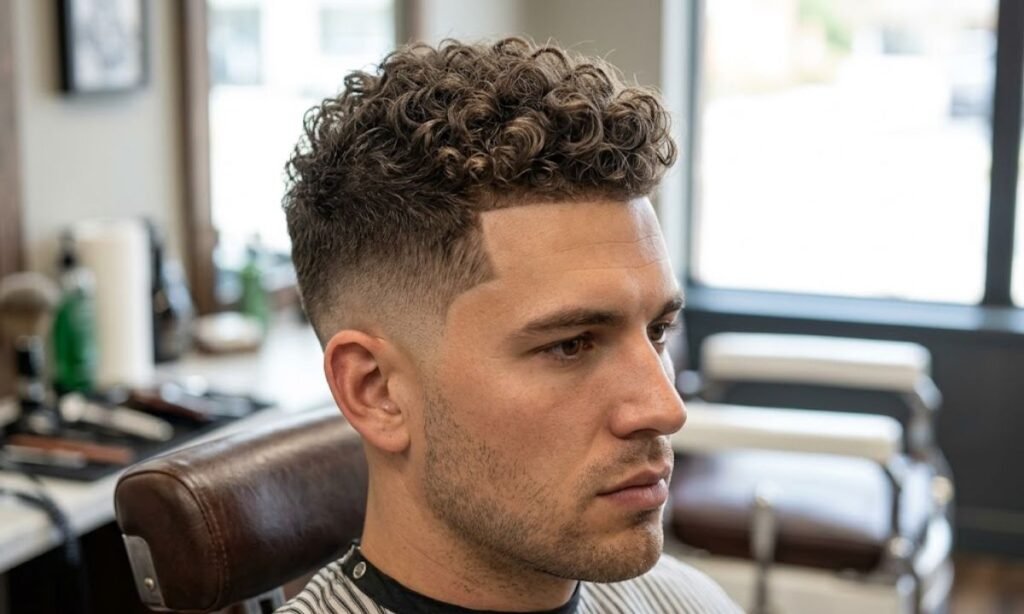
Cropped curls with high taper create a playful, textured top over sharp sides.
The natural curl definition pops when the sides are cut tight.
Use a light-hold curl enhancer on towel-dried hair for the best result.
A curl-enhancing cream also helps with frizz control.
This works great for a high taper fade for curly hair.
Finger-comb the curls for a loose, fun finish.
Short coily top with a high taper
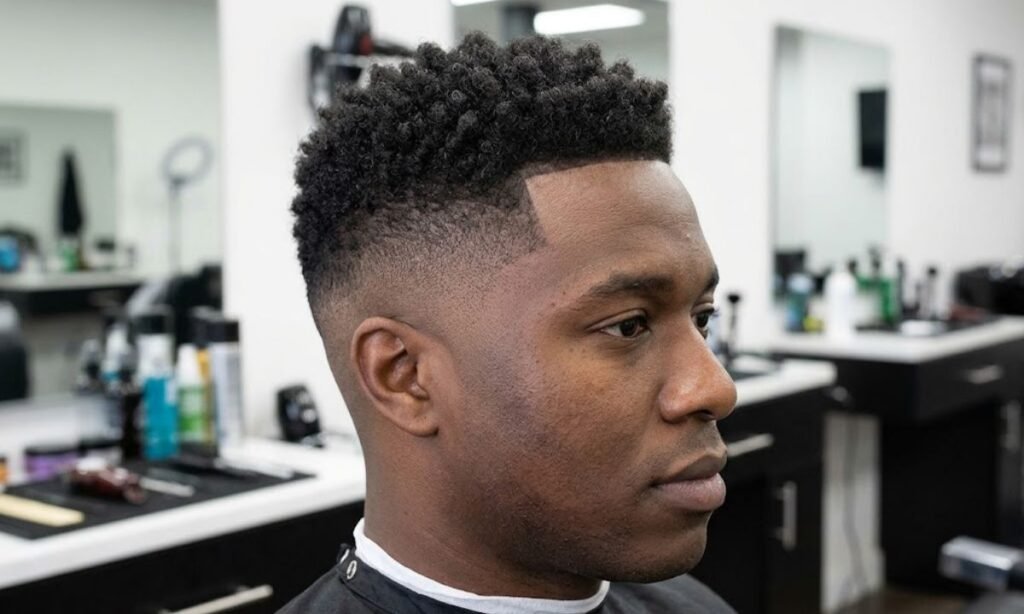
A short coily top with a high taper looks bold and clean.
The picked-out coils add volume and shape while the sides stay crisp.
A pick comb lifts the top gently.
Keep conditioning after washing to prevent dryness and breakage.
The defined curls stand out thanks to the contrast.
It’s a great pairing for coily hair of any density.
How a barber creates the taper
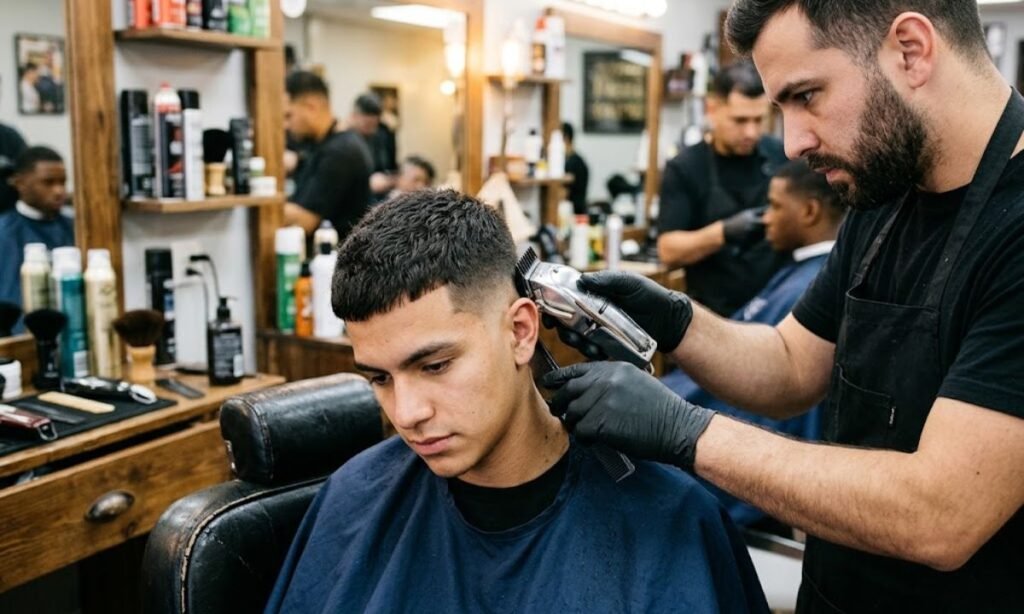
A good barber starts with a barber consultation, where you talk through length, finish, and the tapered or squared neckline.
Then they section your hair and mark the haircut reference points that guide the whole cut.
Next comes the clipper-over-comb blending step.
They adjust the clipper lever or swap clipper guard attachment sizes to build the gradual hair blending from nape to temple.
The last step is cleanup and checking haircut symmetry.
A good finish includes tapered sideburns, a neckline taper, and a final haircut finishing technique to tidy edges.
Common High Taper Fade Mistakes and How to Avoid Them
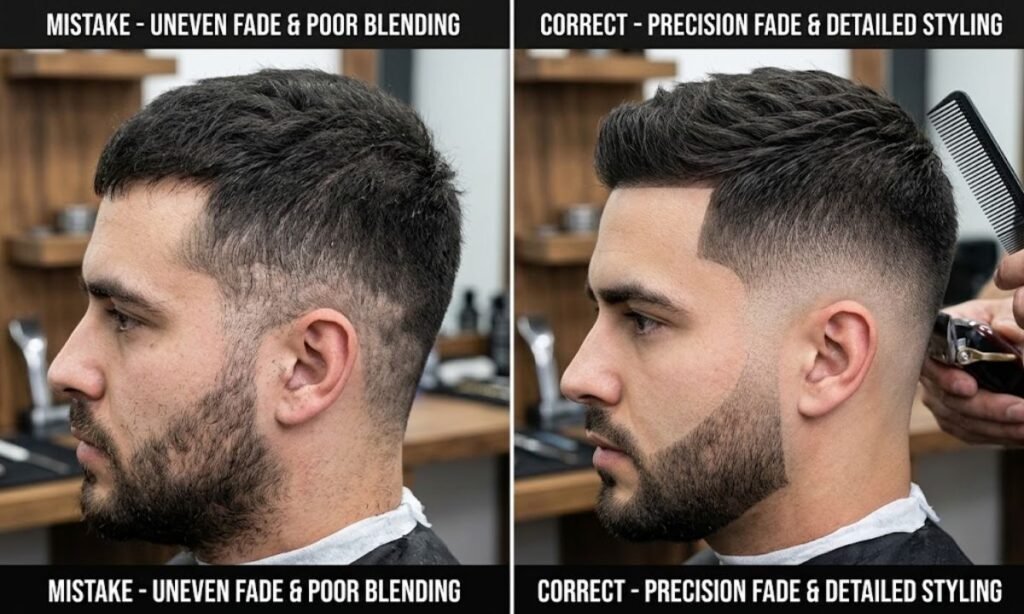
Even great barbers slip sometimes.
Knowing the common mishaps helps you spot and fix them early.
When the taper is cut too high for the desired look
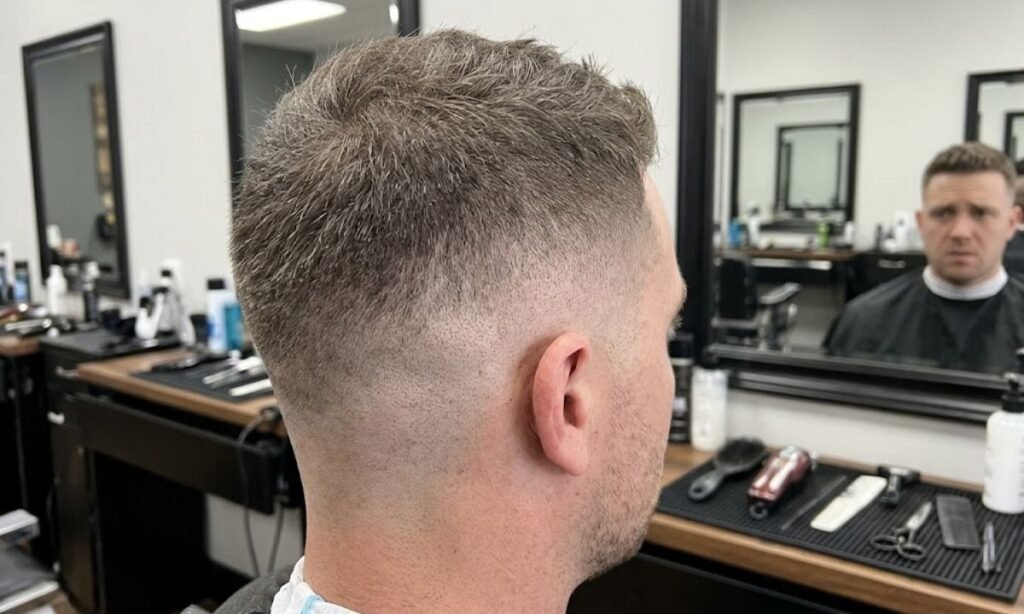
If the taper sits too high, the head can look boxy or small.
That’s the top mistake people report after a quick, rushed cut.
Prevent it by showing front, side, and back reference photos before the first pass.
Point to the exact spot where you want the taper to begin.
If it’s already done, wait two weeks and ask for a mid taper fade next time.
The regrowth will help balance it.
How to prevent harsh blend lines and uneven transitions
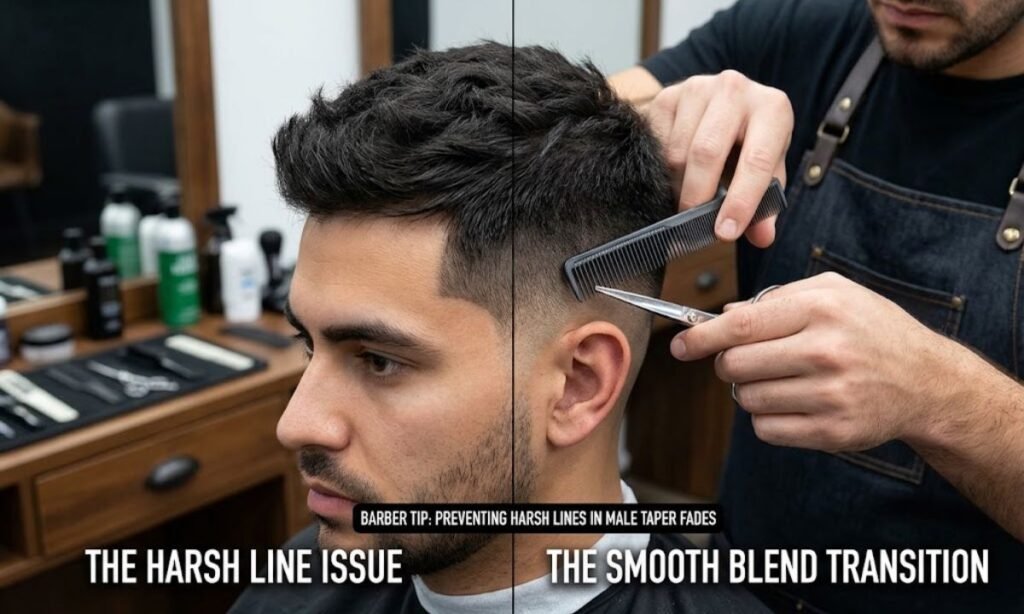
Harsh lines usually come from skipping a guard step.
The fix is simple: ask your barber to use graduated clipper guards and take time on the transition between hair lengths.
You can check this at home with a mirror.
Look for blotchy patches or sudden color changes in the fade.
If you see them, politely ask for a quick touch-up.
A good barber will happily fix it before you leave.
What to do if the barber removes too much length

It happens to everyone at least once.
Stay calm and don’t panic, because hair grows about half an inch each month.
Style the top with a matte styling product to hide the shortness.
A buzz cut with high taper can also be a fast, stylish reset.
Next time, say it out loud: “Please leave an extra half inch on top.”
Clear words prevent most disasters.
How to ask your barber for a high taper fade
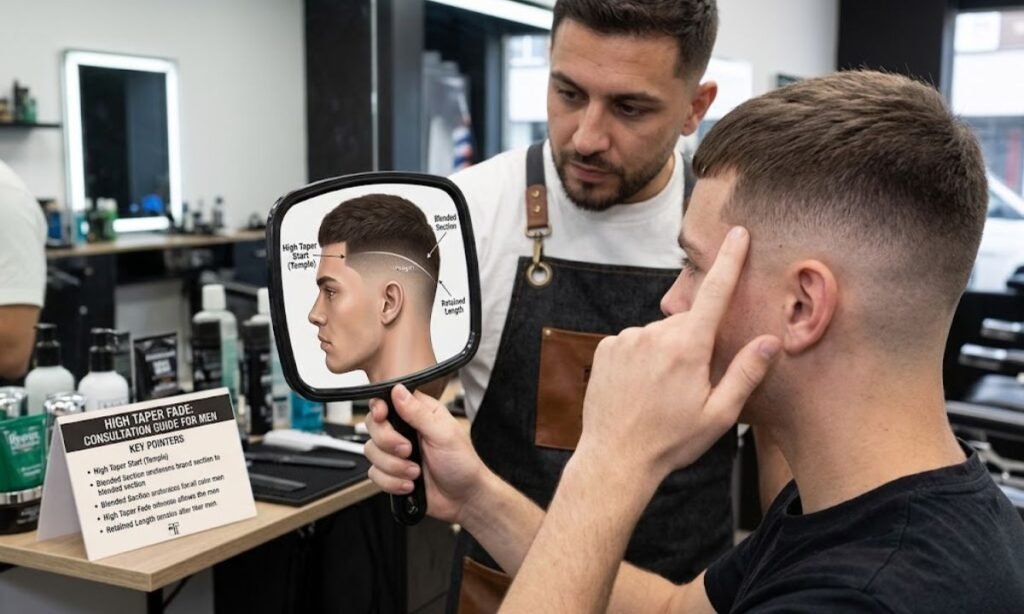
Walk in with a clear plan.
Say something like, “I’d like a high taper fade for short hair, starting at the temple, with a #2 clipper guard and a soft taper transition.”
Bring photos from three angles.
This simple step is the high taper fade barber instructions that cuts confusion in half.
You can even build your own barber brief generator by writing down the top length, guard numbers, neckline style, and whether you want a sharp line-up.
A short note on your phone does the job nicely.
What to check before you leave the chair
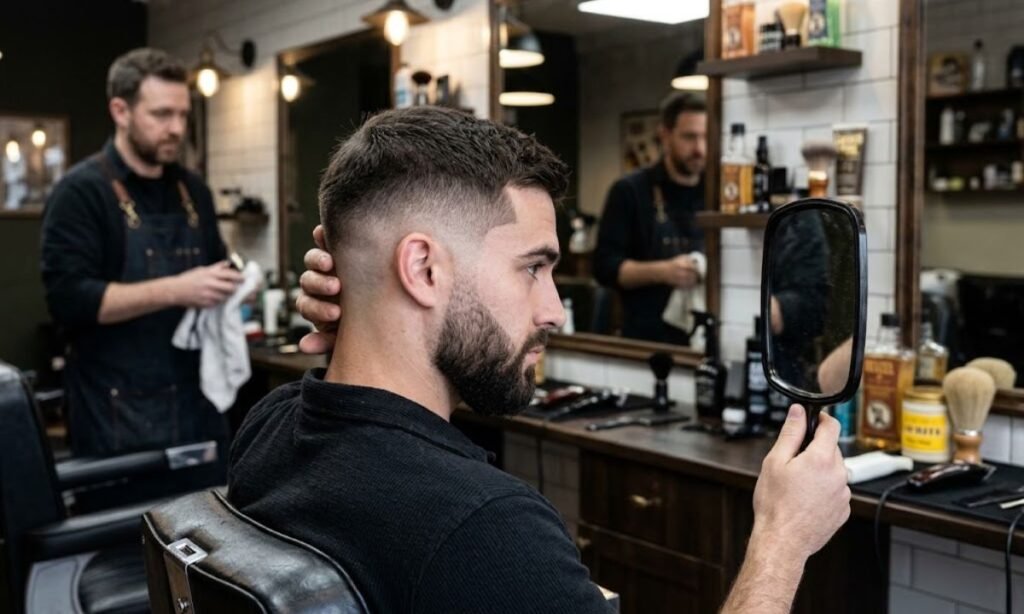
Do a finished haircut inspection before you pay.
Turn your head and look at the sides, the back, and the sideburns and neckline.
Use the haircut consultation checklist below:
- Both temple height points look the same.
- The natural hairline looks clean.
- No harsh lines in the blend.
- The beard-to-sideburn connection looks smooth if you wear a beard.
- The top matches the length you asked for.
Ask the barber to check from the back with a hand mirror.
Nothing beats a second look.
How to style a short top at home
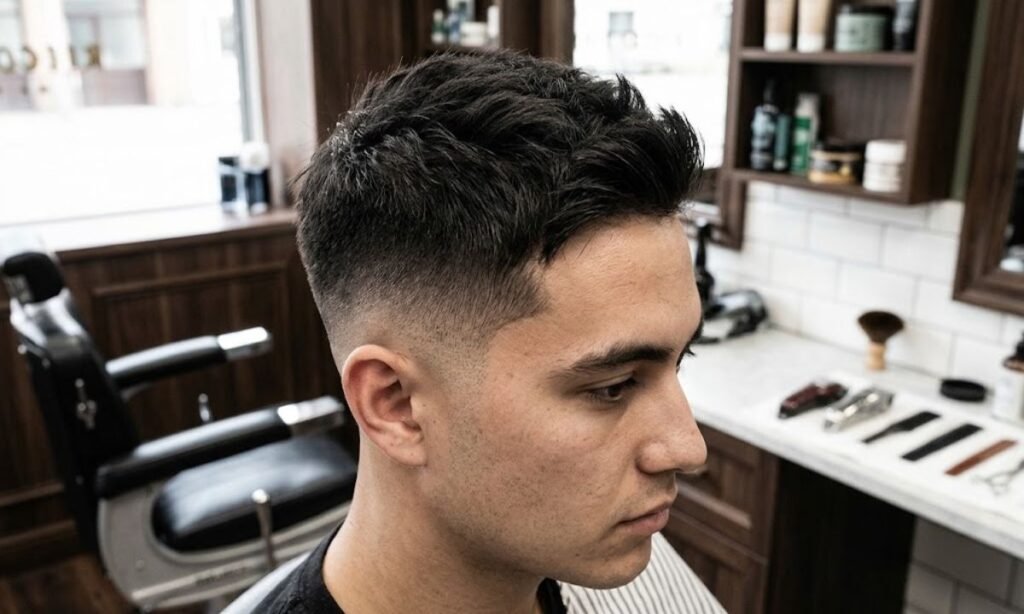
Start with towel-dried hair so the product spreads evenly.
A pea-size amount of matte hair product is enough for most short tops.
Warm it in your palms and work it through with your fingers.
Styling with fingers or a comb gives you a different feel, so try both.
If you have curls, use a light-hold curl enhancer and scrunch gently.
Avoid touching them until they dry, which cuts down on frizz control headaches.
How often does a high taper need maintenance?

A high taper looks best for the first week or two.
After that, hair regrowth visibility starts to show along the neckline and temples.
Most people stick to a two-to-three-week cleanup schedule.
That cleans the temple and neckline maintenance areas without needing a full haircut reshaping.
A skin-level finish needs more frequent visits than a shadow.
If your budget is tight, go with the shadow and stretch it to four weeks.
What if close clipping irritates your skin?
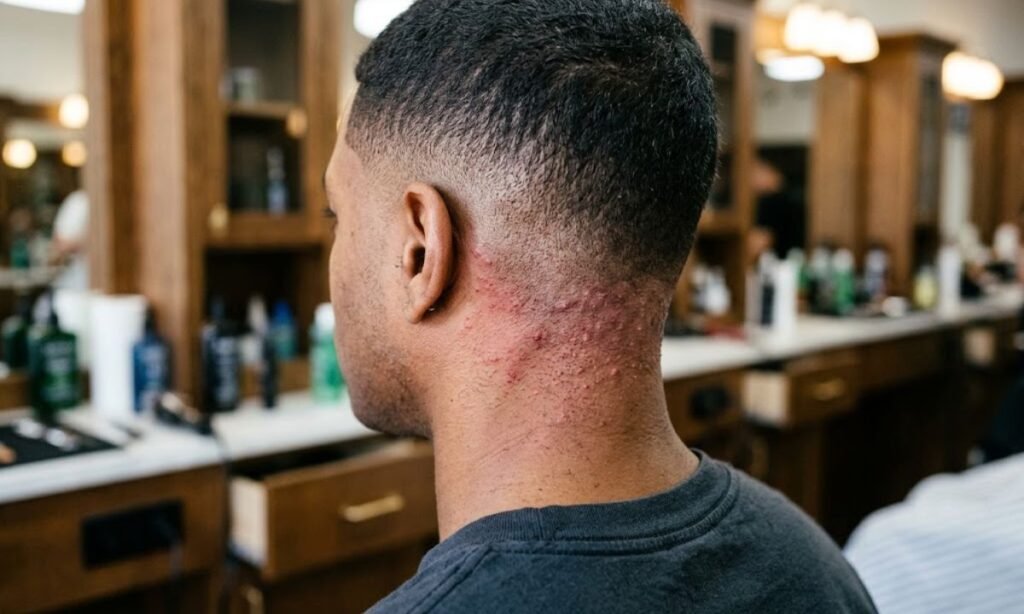
Close clipping can cause razor irritation and small bumps, especially on the neck.
These nape bumps and scalp irritation are common and usually settle quickly.
Try asking for a slightly longer finish, such as a #1 clipper guard instead of the bare blade.
Also avoid close shaving at the nape, where bumps like to form.
If bumps keep coming back or turn firm, it might be acne keloidalis nuchae (AKN).
See a dermatologist assessment before it gets worse. This guide isn’t medical advice.
High taper fade haircut cost
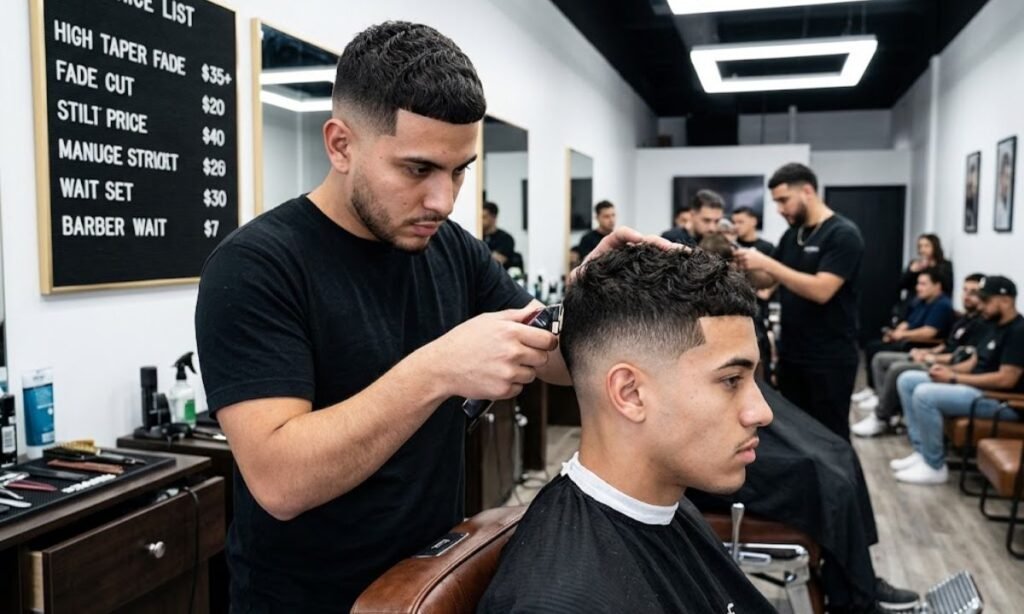
Prices vary a lot by city and shop.
In the US, many barbershops charge roughly $25 to $60, and high-end shops go beyond that.
A high taper fade haircut cost usually covers the cut, a line-up, and a quick style.
Beard work often costs extra.
Ask the price before you sit down.
It prevents awkward surprises at the register.
High taper vs high-top fade and switching styles
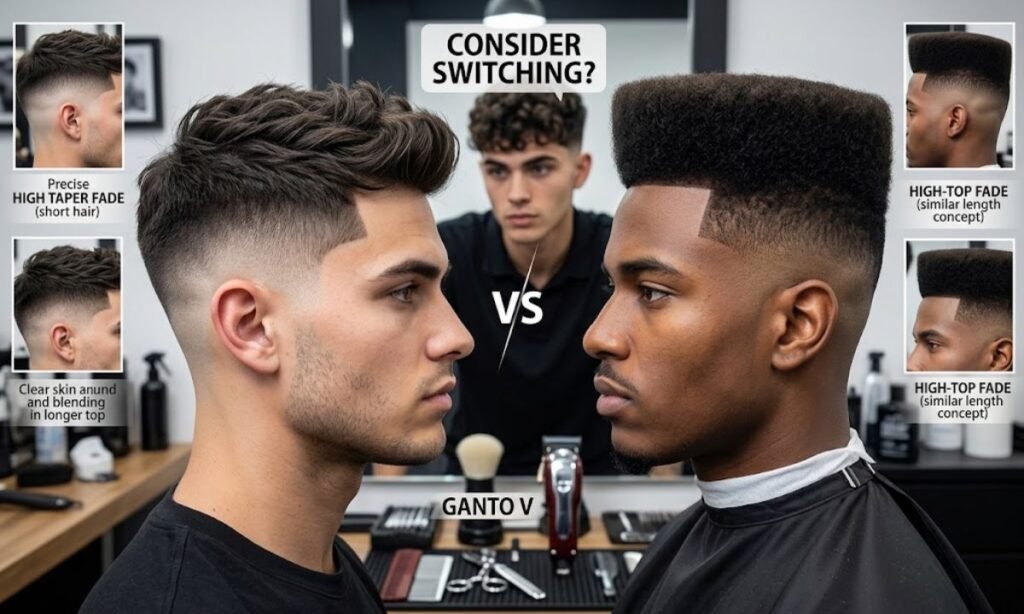
People often mix these two up.
A high taper versus high-top fade comparison is simple: the high-top is a tall, flat top with faded sides, while the taper is about subtle side blending.
If you’re switching from a high fade to a high taper, tell your barber you want more hair left at the sides.
The change feels softer and grows out more gently.
Going the other way, from taper to fade, works well too.
Just expect more upkeep.
High taper fade with a beard and for boys
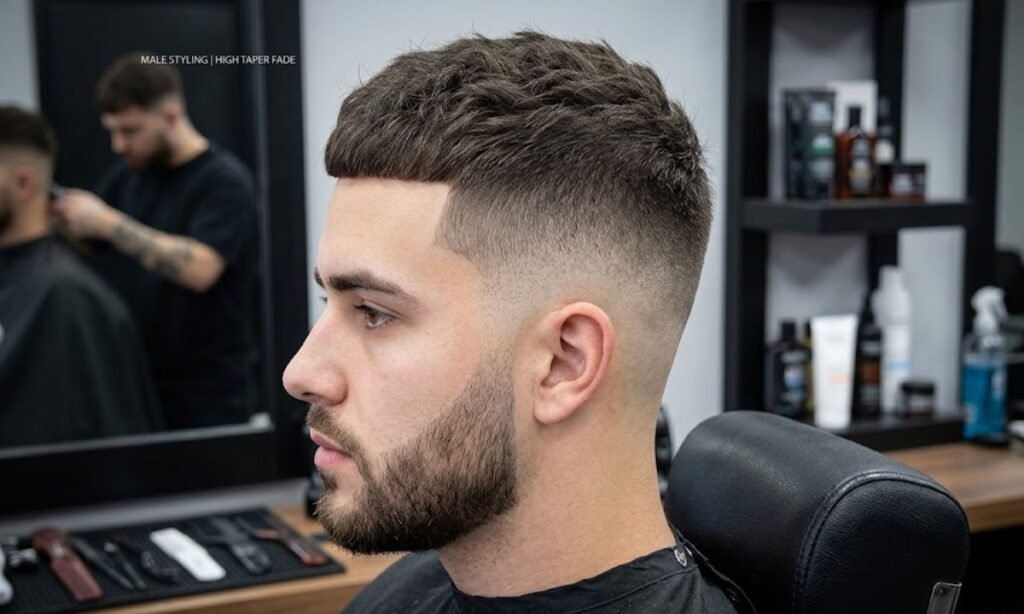
A high taper fade with beard looks sharp when the sideburns connect cleanly into the beard.
Ask your barber to blend the fade into the beard line for a smooth finish.
For kids, a high taper fade for boys works great on school days.
Keep the top a bit longer and the sides gentle so it stays neat.
A softer soft blend also avoids irritation on young skin.
It’s easy to style with a little water and a comb.
Can you cut a high taper at home?
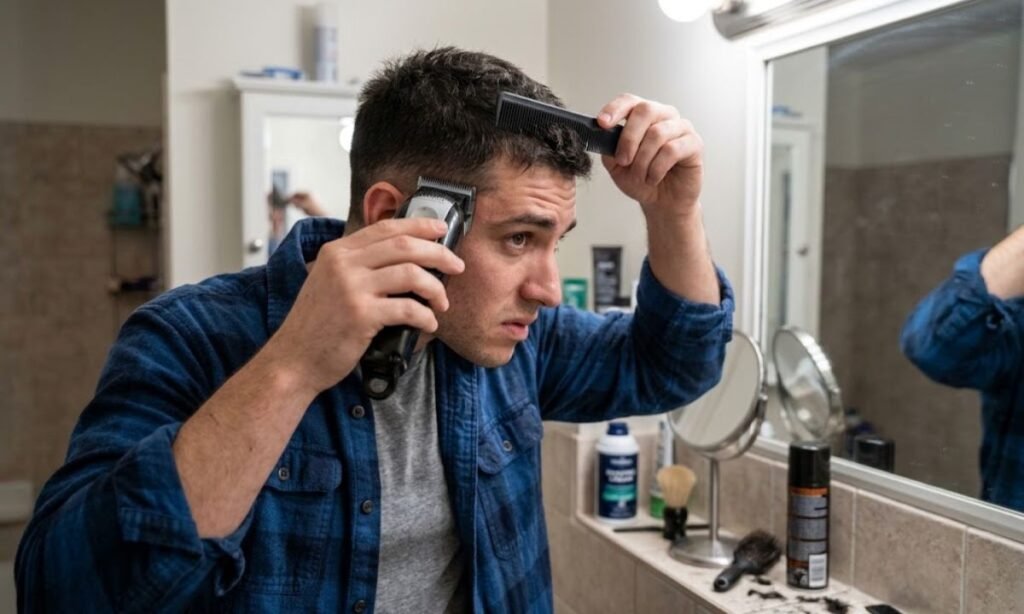
You can, but patience matters.
Cutting a high taper at home needs a good clipper set, graduated clipper guards, and a steady hand.
Start with a longer guard than you think you need.
You can always go shorter, but you can’t glue hair back on.
For your first try, ask a friend to check the back.
If it looks off, book a barber to fix it.
You can also checkout tis article as well High Taper Fade Textured Fringe: Who It Suits, What to Ask For, and How to Style It
Frequently asked questions

What’s the difference between a high taper and a high fade?
A taper keeps more hair and blends softly, while a fade goes closer to the skin.
What guard number is best for a high taper?
Most barbers start with a #2 or #3 and work down to a #1 or lower.
How long should my hair be on top?
Aim for around 1 to 2 inches for a clean, styled result.
Can I get a high taper with curly or coily hair?
Yes, it works great, and the contrast makes curls stand out.
How often should I get a cleanup?
Every two to three weeks keeps it sharp.
Can a high taper cause bumps?
Close clipping can irritate some skin, so choose a slightly longer finish if you’re prone.
Final Thoughts
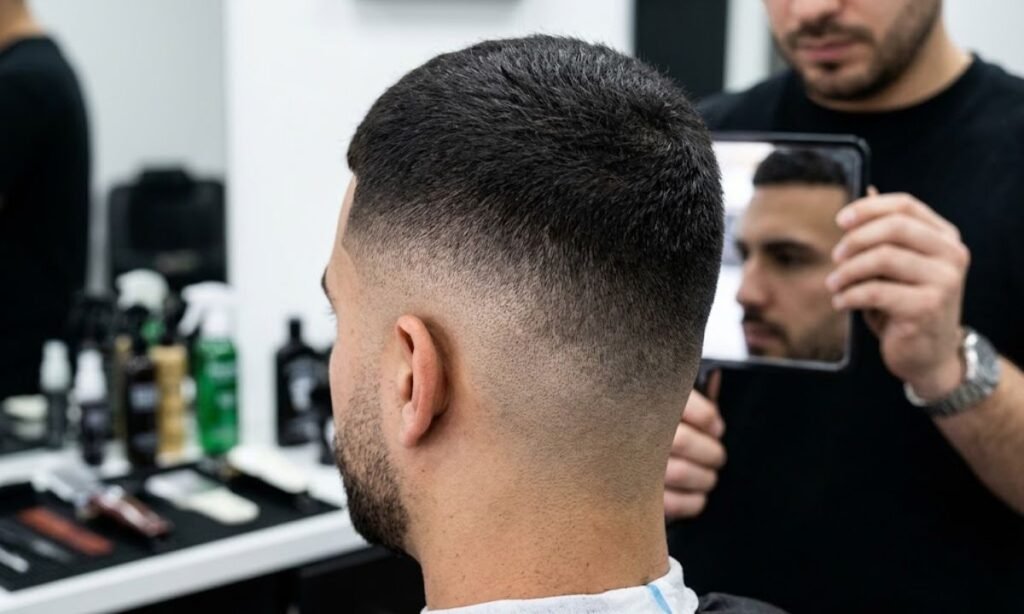
A high taper fade for short hair gives you a clean, modern look without much daily effort.
Pick your top length, your guard numbers, and your finish, and you’re set.
Bring reference photos, speak plainly, and check the cut before you leave.
That’s 90 percent of getting it right.
Have a question about your own hairline or hair type?
Drop it in the comments, and share this guide with a friend who’s due for a trim.

I’m Michael Charles, the creator of MegaCrazes—your source for fresh hairstyles, sharp haircuts, and simple hair-care inspiration. Find your style. Own your look.