
Last updated: November 2026
Quick Answer
You’re staring at your phone, scrolling through haircut photos, and wondering which one won’t go wrong. Will it suit your head shape? Will it grow out badly? Will your barber actually get it?
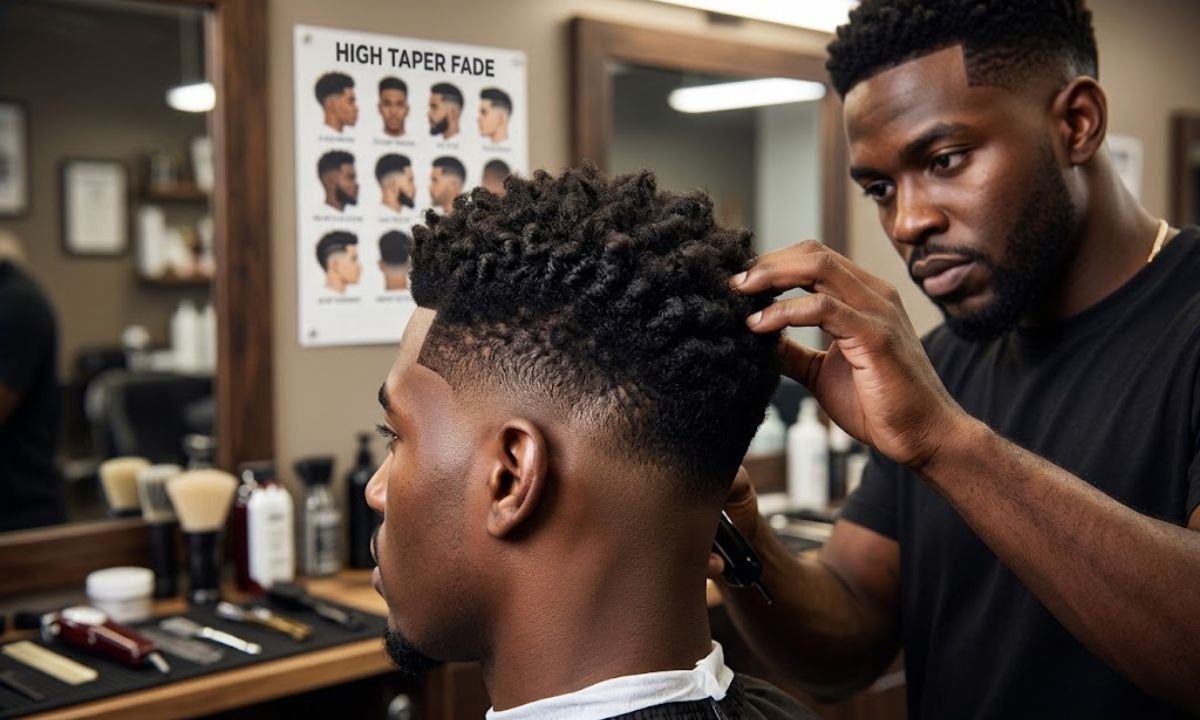
Here’s the short version. A high taper fade black male cut keeps the shortest hair near the temple and the neckline, then lets the hair gradually grow longer as it moves up the sides. It starts high, usually around the temple area, so the cut looks sharp and clean while the top length stays full. It works on waves, short coils, twists, locs, and a rounded afro.
It isn’t the right cut for everyone. If you like a soft, low-key shape, a lower taper may suit you better. Keep reading and you’ll find out which height fits your hair texture, your face, and your routine, plus 22 styles and a script you can hand your barber.
What is a high taper fade for Black men?
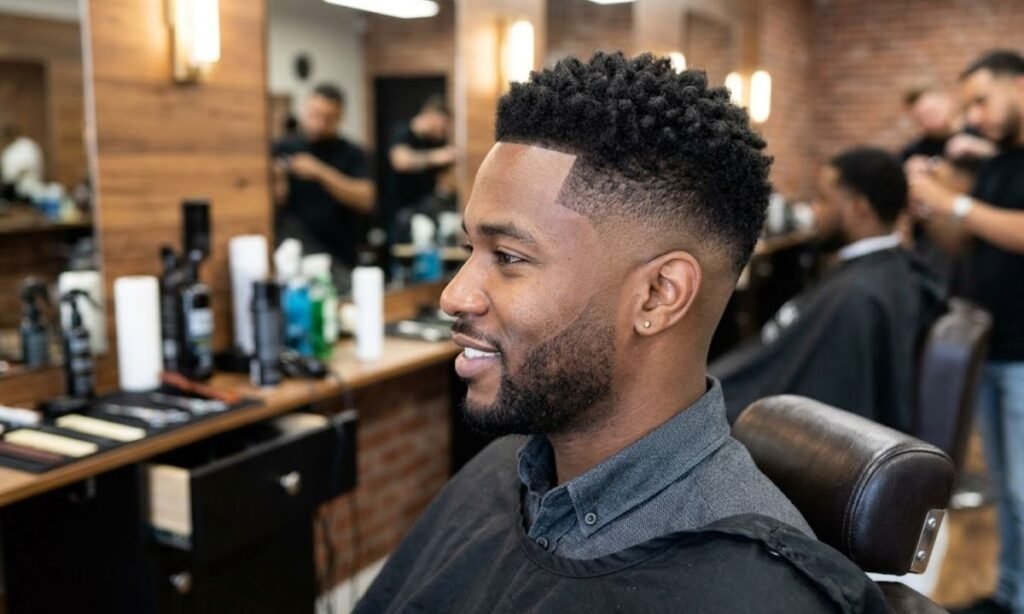
A high taper fade for Black men is a Black male haircut where the sides and back get shorter in a smooth gradient, and that gradient begins high on the head. Think of it like a dimmer switch. The hair doesn’t drop from long to short in one jump. It dims slowly, starting around the temple area and ending at the sideburn and nape.
People use the words taper and fade interchangeably, and barbers don’t always agree on the line between them. In most shops, a taper leaves some visible length at the edges, while a fade usually goes down to skin. A high taper haircut sits in the middle. You get contrast and cleanliness without losing every bit of hair around the ears and neck.
That’s why it’s popular among Black men hairstyles that need to look sharp at work and still look right on a weekend. It’s neat, but it isn’t aggressive. You can wear it with a buzz cut, a high-top, twists, or a full set of locs on top.
Where does a high taper start, and what hair stays longer?

The high taper starting point sits above the ear, close to the temple. Some barbers place it about where the hair on the side of your head begins to curve toward the top. That’s the spot where the side weight ends and the shorter hair begins.
The shortest hair length shows up at two places: short hair around temples and neckline. Everything above the taper line stays longer, and that includes the crown and the whole top. You’ll hear barbers call the heavier section the hair weight below the taper line when they’re talking about how much hair is left near the ears.
The taper placement above the ear matters more than most people think. Start it a half inch too high and your head can look narrow. Start it too low and you’ve got a mid taper by accident. Ask your barber to show you the line with a comb before the first pass.
What affects the final look of a high taper fade on Black hair?
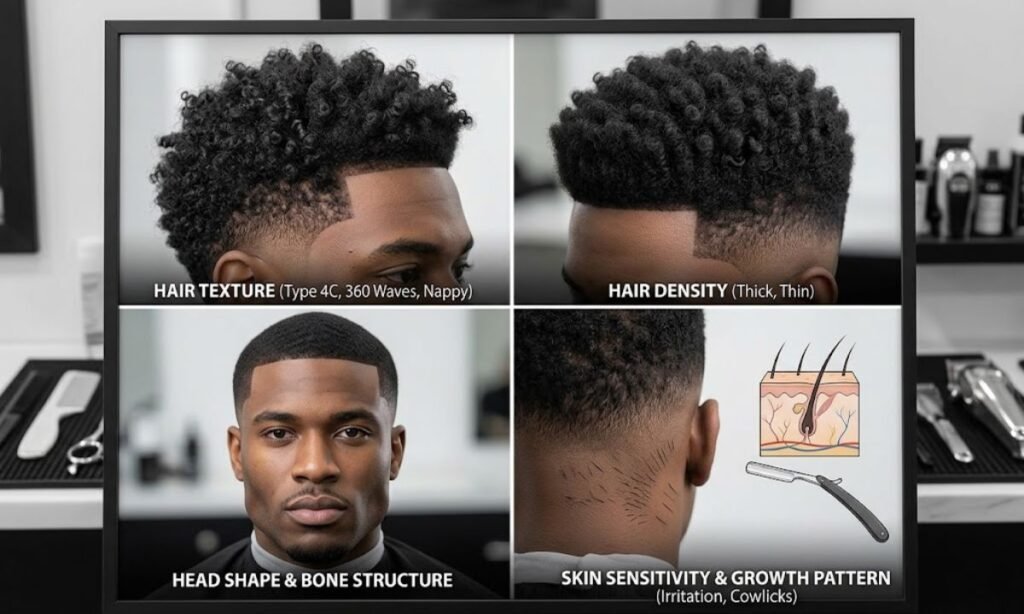
Two guys can sit in the same chair, ask for the same high taper fade on Black hair, and walk out looking different. That isn’t a barber mistake. It’s usually hair texture, growth pattern, and head shape doing their own thing.
So before you save a photo, think about what’s working in your favor. Is your hair tightly coiled or loosely curled? Does your hairline have a sharp corner or a soft curve? Are there cowlicks near the crown? Each answer changes how the cut finishes.
Barbers who cut a lot of natural hair know this. They don’t copy the picture line for line. They adjust the height, the guard, and the shape to fit your head. A good consultation takes two minutes and saves you two weeks of regret.
How do shrinkage and curl definition change the finished shape?

Natural hair texture on top shrinks. A lot. Coily hair that looks six inches long when stretched can sit at two inches once it dries. So the top you see in the mirror right after a cut isn’t always what you’ll see after a wash.
This is where curl definition comes in. Defined curls and short coils bounce back and look shorter and rounder. Waves lie flat and look longer and sleeker. Tell your barber which version you plan to wear, because the top length they leave should match.
Here’s a quick example. Picture a guy named Andre who wears a rounded afro with high taper and asks for a cut on stretched hair. It looks perfect in the chair. Two days later, shrinkage makes the top look smaller than he expected, and the taper looks too high. A cut on dry, natural hair would have shown him the real shape.
How does hairline symmetry affect the overall result?

Your hairline is the frame for the whole cut. If one temple sits higher than the other, the taper will make that obvious. A strong taper doesn’t hide uneven edges. It shows them.
Good barbers handle this by keeping the natural hairline intact while adjusting where the taper starts on each side. That’s hairline symmetry and natural edges working together. They’ll measure both sides, then shape a line-up that looks even without pushing the corners too far back.
You can check this yourself. Stand in front of a mirror with a hand mirror behind you. Look at both temple corners and both sideburn lengths. If they don’t match, mention it before the clippers come out.
How does a high taper compare with other tapers and fades?

The word fade covers a lot of ground, and the names overlap. A bit of vocabulary helps you ask for what you actually want. It also keeps you from getting a cut that’s lower, higher, or skinnier than you pictured.
It helps to separate two things. One is taper vs fade, which is about how short the hair goes. The other is fade height, which is about where the shortening begins. A high taper fade is all about height, and it can finish with a guarded, shadow, or skin finish.
Below, you’ll see the differences laid out in plain terms. Use the table as a cheat sheet, then read the details.
| Cut | Where it starts | How short it goes | Best for |
|---|---|---|---|
| High taper | Around the temple | Leaves some length at the edges | Clean look with fuller sides |
| Mid taper | Around the middle of the sides | Short, soft finish | A balance of sharp and subtle |
| Low taper | Just above the ear and neckline | Very light shortening | Conservative or office styles |
| High fade | High on the head | Often down to skin | Bold contrast |
| Skin fade | Varies | Goes to bare skin | Crisp, high-maintenance look |
| Drop fade | Curves down behind the ear | Varies | A shape that follows the skull |
| Burst fade | Curves around the ear | Varies | Mohawks, curly or textured tops |
High taper vs. low and mid taper
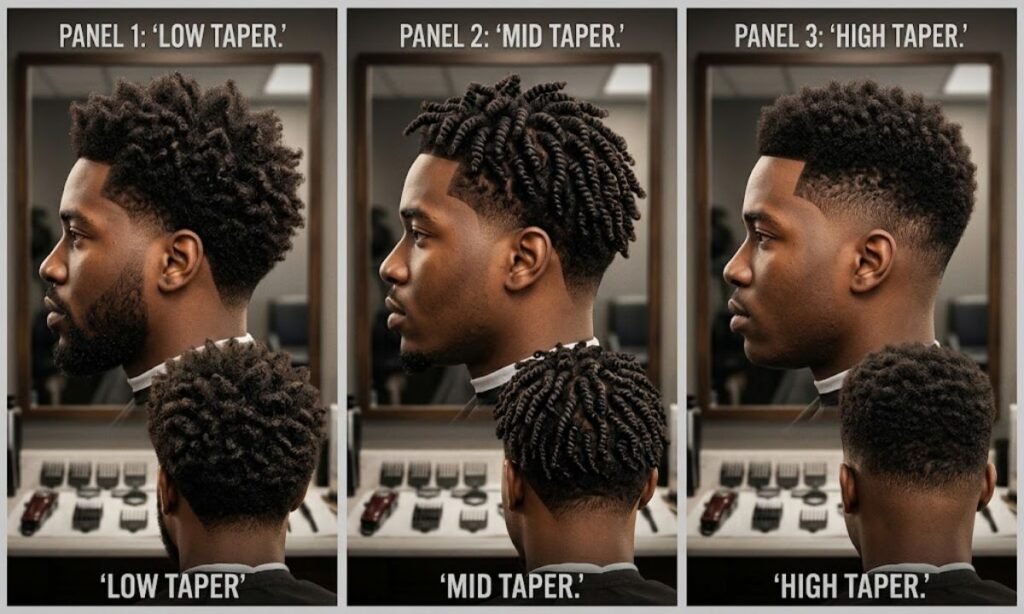
When people compare high taper versus low taper, they’re really asking how much of the side they want shorter. A low taper fade only trims around the ear and the nape. It’s the safest choice if you like soft edges or work in a conservative setting.
The high taper versus mid taper question is closer. A mid taper fade starts around the middle of the sides, so it feels like a bridge between low and high. A high taper pushes the line up, which makes the top look taller and the sides look cleaner.
If you’re not sure, start in the middle. You can always go higher next visit, but you can’t put hair back. That’s the easiest way to test your comfort zone.
High taper vs. high fade, skin fade, drop fade, and burst fade
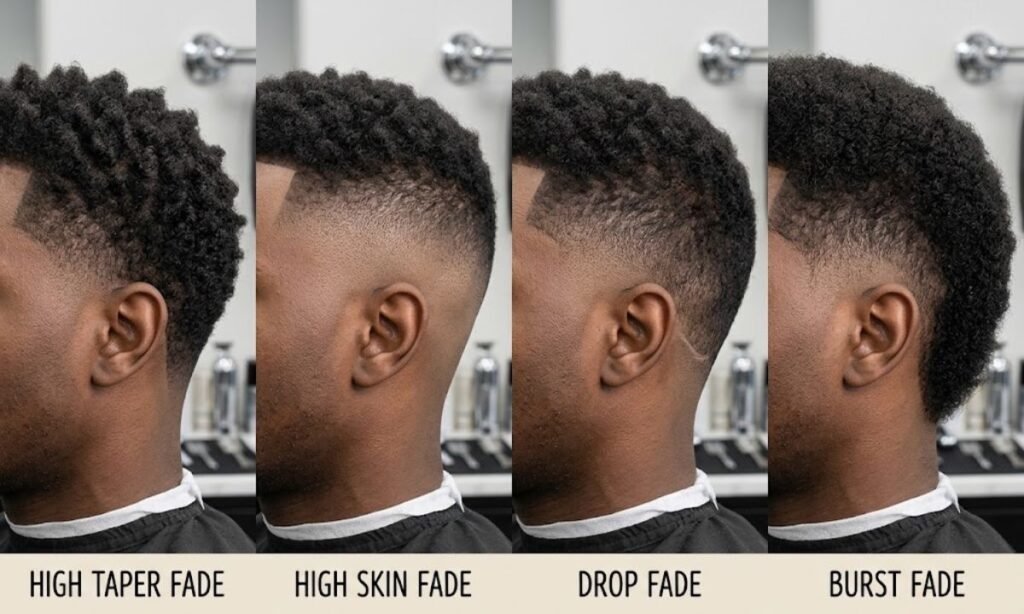
High taper versus high fade comes down to contrast. A high fade usually goes much shorter, often to the skin, and the line sits high on the head. A high taper keeps a little more hair at the edges, so the result looks smoother and less stark.
In the high taper versus skin fade debate, think about upkeep. A skin fade uses a razor or foil shaver to reach bare skin, which looks crisp but grows out fast and needs more visits. A skin finish can still be done on a taper, but you’ll feel the difference in how often you return.
Now for the shape-based cuts. High taper versus drop fade is about line direction. A drop fade curves down behind the ear, and a high drop fade does that from a higher starting point. High taper versus burst fade is similar, but a burst fade curves around the ear like a half circle, which pairs well with a high-top or a textured top.
Is a high taper right for your hair and routine?
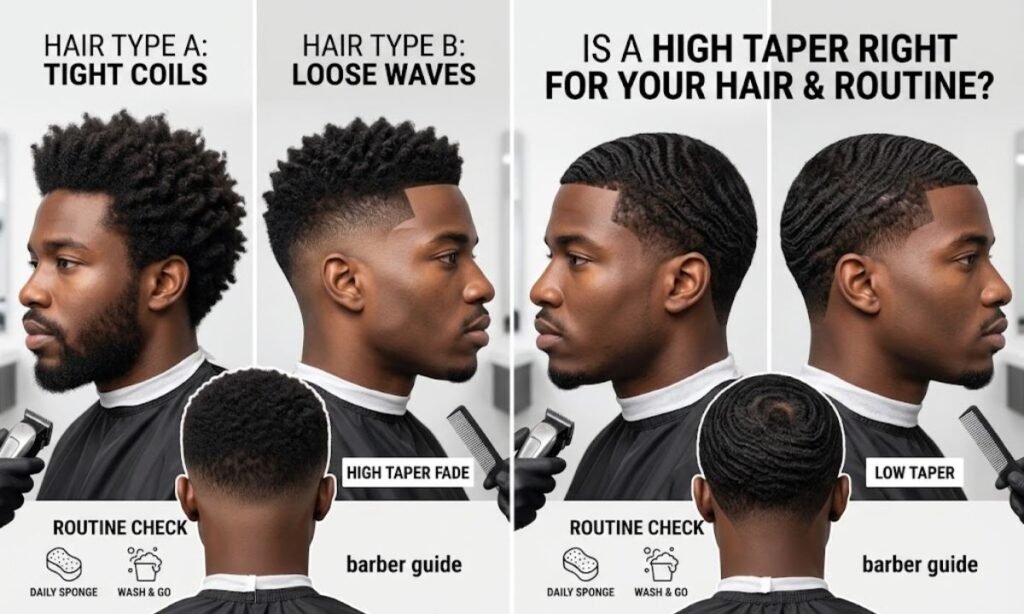
Before you commit, be honest about your habits. A high taper looks best when it’s fresh. Within two weeks, the fade grow-out starts to soften the line, and by week four it’s gone.
That isn’t a dealbreaker. Plenty of guys love the first two weeks and plan their calendar around it. The real question is whether you’re willing to book a regular chair time.
Take a quick look at your schedule, your budget, and how your skin reacts to close cuts. Those three things decide how happy you’ll be a month from now.
What should you decide before sitting in the barber’s chair?

Start with choosing the right taper height. High works if you want clean sides and you have a fuller top. Mid or low suits you better if you’re nervous about contrast. Pick one and tell your barber why.
Then decide on the finish. A guarded finish keeps a bit of length and is kinder to skin that bumps easily. A shadow fade sits between guard and skin. A skin finish looks sharpest but asks for more care.
Here’s a short list to run through before your next appointment:
- Time: Can you visit every two to three weeks?
- Skin: Do you get razor bumps after close cuts?
- Top: Do you want waves, short coils, twists, or an afro?
- Work or school: Does your setting care about hair length?
- Budget: Can you afford regular shape-ups?
Which high taper fade suits your face shape?

Face shape isn’t a strict rule, but it’s a useful guide. A taper changes how wide or narrow your head looks, and the top adds or removes height. Think of the sides as the frame and the top as the picture.
If you’re not sure of your shape, pull your hair back and take a straight-on photo. Look at the widest part of your face. Is it the cheekbones, the jaw, or about even from forehead to chin?
Once you know that, use the ideas below. They’re starting points, not laws.
Which taper proportions complement a round face?
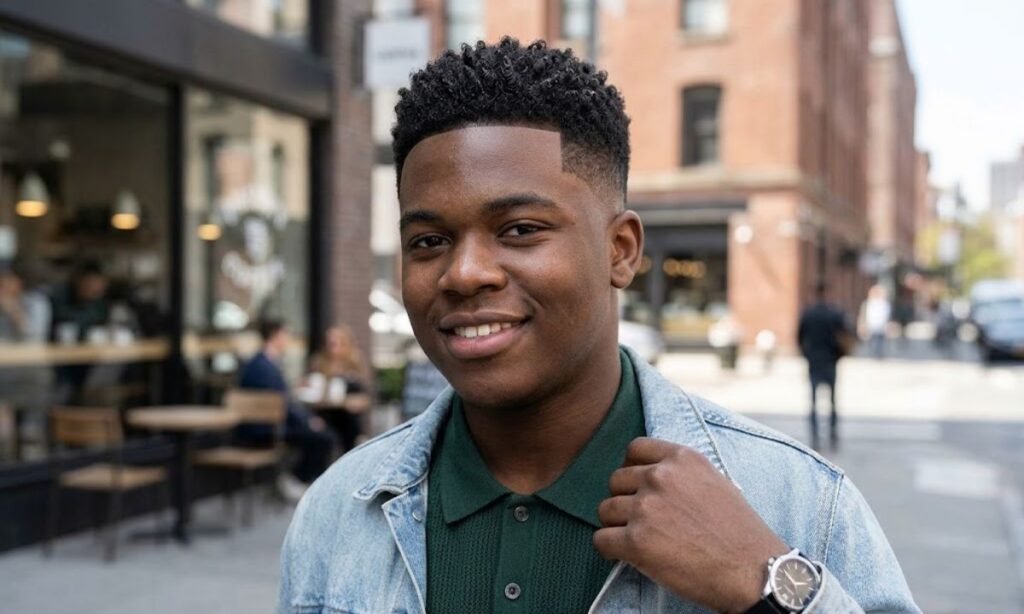
A round face looks sharper with a bit of vertical height. A high taper helps because it narrows the sides, and a taller top makes the shape feel longer. Aim for a hair shape that rises above the forehead rather than spreading out wide.
A high-top, a neat sponge twists top, or defined curls with a little lift all work. Keep the side weight tight so the width doesn’t compete with the height. A clean line-up at the front adds structure.
Skip a wide, flat top with a very short taper. That mix can emphasize roundness instead of balancing it.
How can the top’s height balance a longer face?

A longer face needs less height, not more. Keep the top length moderate and let the sides stay slightly fuller. A mid-high taper with a rounded short coils top can keep the proportions even.
You can also soften the shape with a beard blend. A beard adds width to the lower face and shortens the look of a long jaw. When the high taper with beard blend flows smoothly from the sideburn into the beard, the whole face looks balanced.
If your forehead is high, a bit of fringe or a textured top can help. Talk to your barber about a hair design only after the base shape feels right.
22 high taper fade styles for Black men

Here’s the fun part. Below you’ll find 22 high taper fade styles for Black men, grouped by how much work each one asks from you. Some take two minutes in the morning. Others need a comb, a pick, and a little patience.
Pick one that matches your hair texture first, then think about your routine. A style that needs daily twisting won’t last if you’re out the door by 6:30 a.m. Be honest with yourself and you’ll love the cut longer.
Save two or three photos from different angles. Barbers read pictures faster than descriptions, and you’ll cut down on guesswork.
Which short high taper styles keep styling simple?
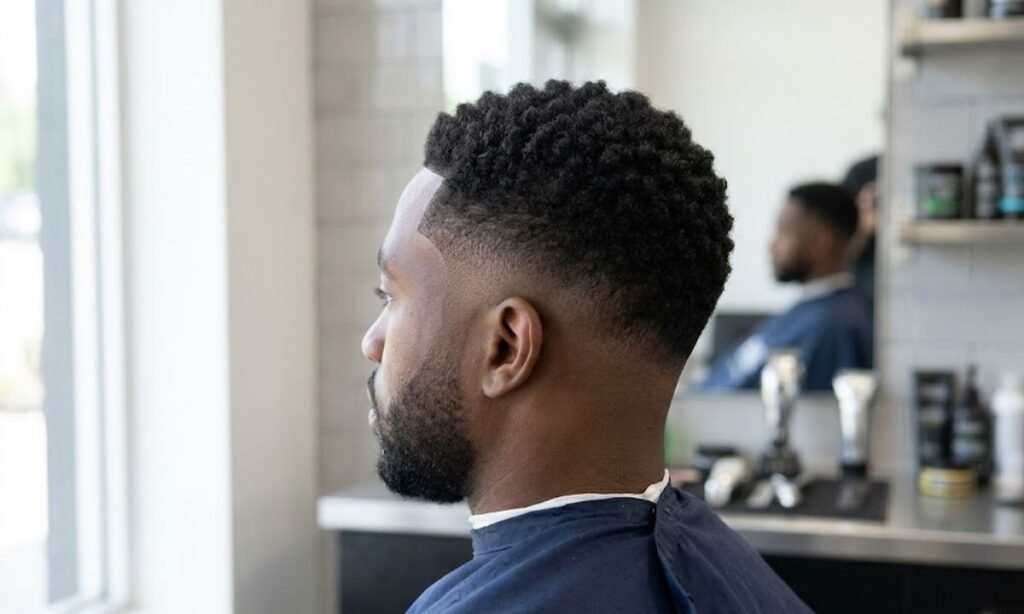
These six need almost no morning effort. They suit busy weeks, gym-heavy schedules, and guys who’d rather spend time on sleep than on hair.
- Buzz cut with high taper. The top gets clipped to one even length, and the sides taper high. It’s clean, fast, and hard to mess up.
- High taper with 360 waves. Short waves on top rolled around the whole head, with a tight taper at the sides. Daily brushing keeps the pattern clear.
- Short coils with high taper. Let your short coils sit at about an inch or two. A quick pat with a leave-in moisturizer keeps them soft.
- Caesar-style top with high taper. A short, even fringe falls forward over a clean forehead line. It’s a classic for a reason.
- Low-cut crop with high taper. The top stays trimmed close with a light line-up. It reads as neat in an interview and relaxed on a Saturday.
- Faux hawk with high taper. The center runs a bit longer and the sides stay tight. It gives you shape without needing a full set of products.
If you’re new to tapers, start here. You’ll learn how your hair behaves, and you can build up to bigger tops later.
Which textured tops create the most shape and height?

These six give you more volume and more personality. They ask for a little more care, but the payoff is a cut that gets noticed.
- Rounded afro with high taper. A full, even afro rises above sharp, short sides. A pick and a spritz of water keep the round hair shape neat.
- High-top with high taper. A flat or angled top sits tall above clean sides. It’s a statement cut, and the contrast is the whole point.
- Defined curls with high taper. Curl cream and a soft brush bring out curl definition on top. The tight sides frame the curls without crowding them.
- Sponge twists with high taper. A coil sponge makes small twists across the top. The tapered sides keep the look crisp instead of messy.
- Twist-out with high taper. Two-strand sets are unraveled for a fluffy, spiral texture. You get movement and volume with sides that stay sharp.
- Curly top with line-up and high taper. Loose curls on top, a sharp line-up at the front, and a clean taper. It’s neat and still has life in it.
Plan on a short product routine for these. A little moisture goes a long way, especially if your hair feels dry by midday.
How does a high taper work with twists, cornrows, and locs?
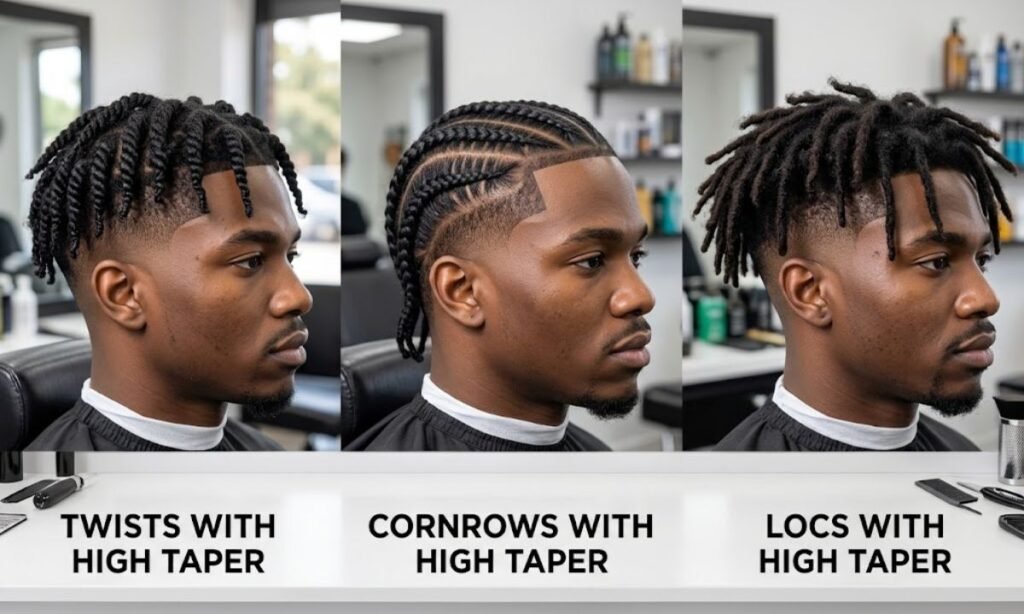
Protective and long-term styles pair well with a taper because the shaved sides give the top a sharp base. These five show how.
- Two-strand twists with high taper. Medium-length twists sit on top while the sides stay tapered. You get a neat frame around a longer style.
- Cornrows with high taper. Straight-back braids or a simple pattern look sharp against short sides. They’re easy to keep clean between appointments.
- Locs with high taper. Short or medium locs on top, with a tidy taper around the sideburn and neckline. It’s a polished way to wear dreads.
- Mohawk-style braids with high taper. The center braids run front to back, and the sides stay tight. The taper gives a bold shape a crisp edge.
- Starter locs with high taper. Short comb coils or twists in the early locking stage. The taper keeps the line-up neat while the locs grow in.
If you wear braids or locs, remember the scalp needs care too. Keep it clean and moisturized, and don’t let tension pull on the hairline.
How can you personalize the finish?
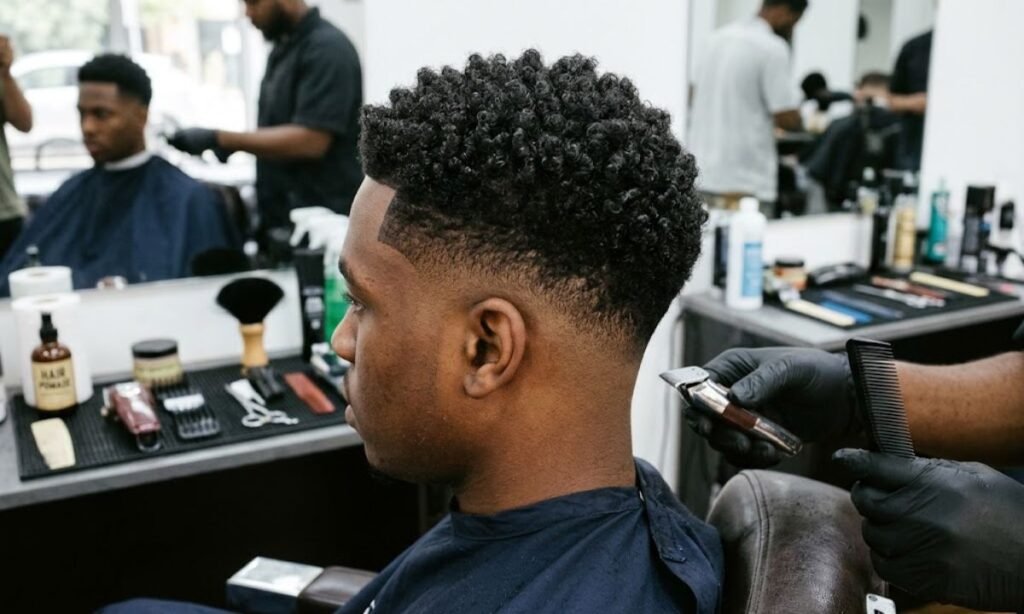
The base cut is only half the story. These five small tweaks change the look without changing the whole haircut.
- High taper with beard blend. The sideburn flows into the beard so there’s no harsh gap. It makes the lower face look fuller and balanced.
- High taper with hair design. A thin line, a part, or a small shape cut near the temple. Keep it simple at first, because small designs hold up longer.
- High taper with a shadow finish. A shadow fade keeps a faint trace of hair at the bottom. It’s a good middle ground if you want contrast without bare skin.
- High taper with a skin finish. The shortest section goes down to bare skin around the neckline and temple. It looks sharpest, though it needs more upkeep.
- High taper with a guarded finish. A guard stays on the clippers for the lowest section. It’s a gentle choice if you deal with clipper irritation.
You don’t need to try all 22. Pick one, wear it for a month, and note what you’d change. That’s the best way to learn what suits you.
How do you ask a barber for a high taper fade?

This is where many haircuts go sideways. Saying “give me a taper” can mean five different things. A high taper fade barber instructions note works best when it’s short, clear, and backed by pictures.
The goal is simple. You want your barber to see the same picture you do. A two-minute chat at the start saves you from a haircut you’d have to live with for three weeks.
Most barbers appreciate a client who knows what he wants. It tells them you care about the result, and it gives them something to work toward.
What should you tell and show the barber before the clippers start?
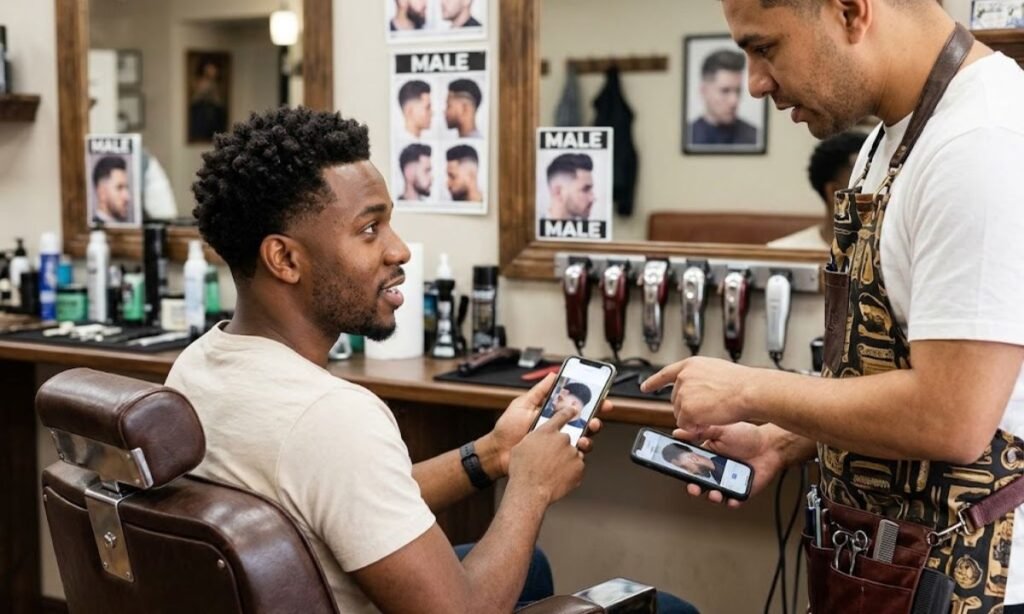
Start with front, side, and back reference photos. If you can, find pictures of someone with a similar hair texture and head shape. A photo of straight hair won’t tell your barber much about natural hair results.
Then explain your taper height and hair length in plain words. Say where you want the taper to start, how short the sides should end, and how long you want the top. Mention if you get razor bumps, because that changes the tools and the finish.
A quick checklist helps:
- Height: High, mid, or low, and where it should begin near the temple.
- Finish: Guarded, shadow, or skin finish.
- Top: Length and whether you wear waves, curls, twists, or an afro.
- Edges: Whether to keep your natural hairline or clean up the corners.
- Beard: Whether to blend the taper into your beard.
This is also the barber consultation before haircut time. Ask questions, and ask what your barber would adjust for your head shape. Good ones love that.
A fill-in-the-blank high taper barber script

Here’s a barber script you can copy and adjust. Read it out loud once so it feels natural. It’s easy to remember and covers the basics.
“Hey, I’d like a high taper. I want the taper to start about _____ above my ear, near the temple area. Keep the shortest hair at the neckline and the temples, with a ______ finish (guard, shadow, or skin). On top, I want ______ length for my ______ (waves, coils, twists, afro). Please keep my natural hairline and match the sideburn on both sides. I get razor bumps, so I’d like to avoid going over the same spot too many times.”
Hand over your reference photos at the end. If the barber suggests changes, listen. A tiny adjustment can make the cut look better than the picture.
If it’s your first time at a new shop, book a consultation or arrive a few minutes early. You’ll feel more relaxed, and the barber will have time to plan.
What mistakes should you avoid when getting a high taper fade?
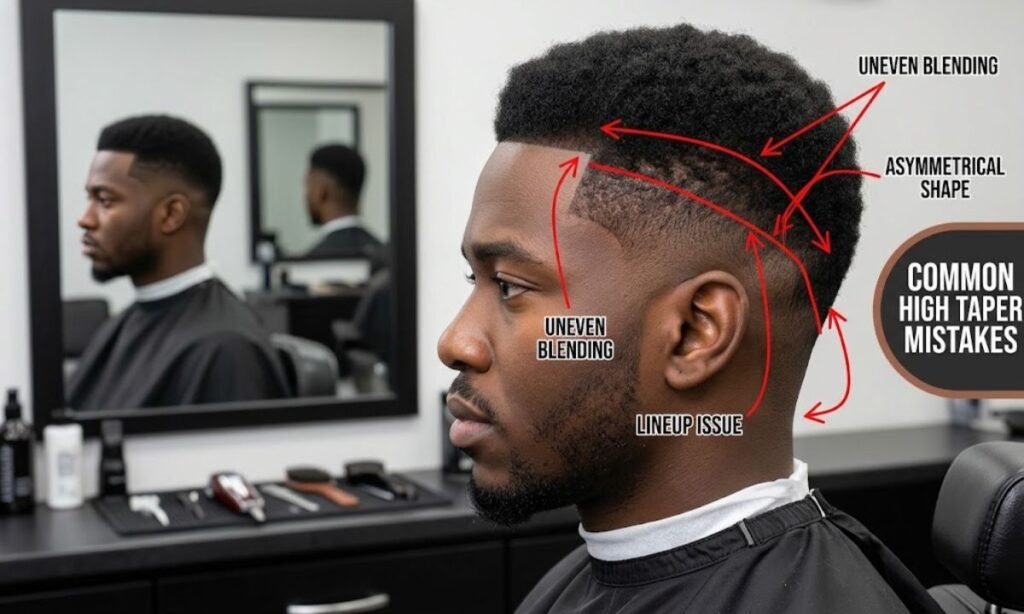
Most bad tapers come from small misunderstandings, not bad barbers. A taper that’s too high, a line-up that’s too aggressive, or a finish that doesn’t suit your skin can all ruin the look. The good news is that they’re easy to avoid.
Here’s what to watch for. Keep these in mind before you sit down and again while the clippers are running.
If something feels off during the cut, speak up early. It’s easier to adjust at the start than to fix at the end.
How can an overly high blend reduce the contrast with the top?

A blend that starts too high can eat into the side weight and make the top look smaller. The contrast between the sides and top is what gives a high taper its shape. Lose that and the whole head looks flat.
This happens a lot with guys who have a rounded afro or a high-top. If the taper climbs too far toward the crown, the top loses its frame. A barber can lower the taper placement above the ear by a half inch and fix the proportions.
Ask your barber to start slightly lower, then go higher if you want. It’s much easier to take hair away than to give it back.
Why should you avoid cutting the corners of the natural hairline too far back?

Pushing the hairline back can look sharp for a week, then awkward as it grows. Natural edges often have soft corners, and removing them makes the face look longer. It can also give you stubborn razor bumps along the forehead.
This is why keeping natural hairline intact matters. A light line-up cleans the edges without changing your shape. If your corners sit uneven, your barber can even them out without moving them far.
Other common mistakes include:
- Skipping the consultation. You assume your barber knows your plan.
- Picking a style that ignores your hair texture. Wavy photos on coily hair don’t match.
- Choosing a skin finish without thinking about upkeep. Bare skin shows regrowth fast.
- Forgetting the neckline. A bad nape shape ruins an otherwise good cut.
How do you style the top at home?

Styling natural Black hair at home isn’t hard once you’ve got a basic routine. You don’t need ten products. You need moisture, a gentle tool, and a few minutes.
Start with clean hair. Then add a leave-in moisturizer or a light curl cream while the hair is slightly damp. Work from roots to ends so the top looks even.
Here’s a simple routine that works for most textures:
- For waves: Brush in the direction of the pattern after you apply a light pomade. Do it daily brushing for 360 waves habit, and wear a satin cap at night.
- For short coils: Pat with a bit of water, apply a creamy product, and shape with your fingers or a pick.
- For defined curls: Use a curl cream, then finger-coil or rake through. Let it air dry or use a diffuser on low.
- For twists: Twist on damp hair, add a bit of hair styling products like a light butter, and let it set.
- For a high-top: Pick upward with a wide-tooth comb. Trim the edges as it grows to keep the box shape.
Good moisturizing curls and coils matters more than expensive products. Dry hair frizzes, snaps, and looks dull. A small amount of moisture every day keeps the top looking healthy next to the clean taper.
At night, tie a satin cap or sleep on a satin pillowcase. It cuts friction, protects your waves or twists, and keeps your edges tidy.
How often should you maintain a high taper?

A high taper looks best in the first week or two. After that, the sharp lines start to blur as hair grows. Most guys book a visit every two to three weeks, which is the two-to-three-week haircut cycle that barbers talk about.
It depends on how fast your hair grows and how crisp you like the lines. If you wear a skin finish, you might need a visit every two weeks. A guarded finish can last a bit longer, since the softer line hides regrowth.
Think about hair growth and fade maintenance as a rhythm. You can book your next appointment before you leave the chair. That keeps you from waiting until the cut looks tired.
Between visits, a few small habits help keeping a high taper fade sharp:
- Brush or comb the top daily to keep the shape.
- Moisturize so the hair on top doesn’t dry out and frizz.
- Skip DIY clippers near the taper. A bad home touch-up is hard to fix.
- Ask for a quick line-up between full cuts if your barber offers one.
The fade grow-out can also be part of the plan. If you’re letting the top grow for twists or locs, you can stretch visits a bit longer and just keep the neckline clean.
How can you reduce razor bumps and irritation?
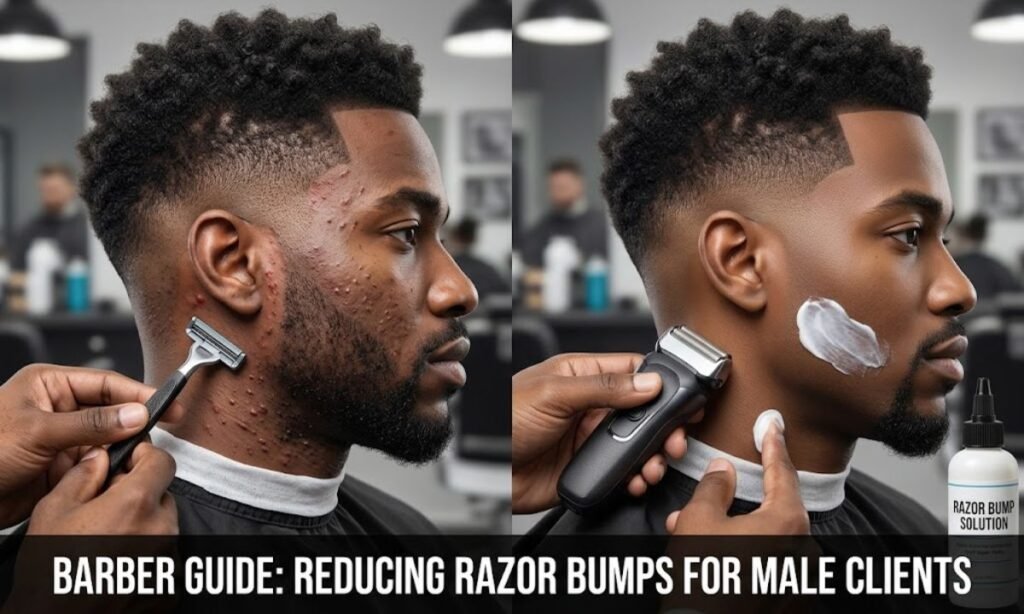
If you’ve ever left a barbershop with a red, bumpy neck, you know how annoying that is. Razor bumps around the neckline are common in curly and coily hair. The hair is curved, so it can curl back into the skin after a close cut and cause irritation.
The medical term for this is pseudofolliculitis barbae, and it isn’t a hygiene problem. It’s about hair shape and close cutting. A tweak to the way you get cut can make a real difference.
A few habits help reducing razor bumps and irritation:
- Avoid repeated clipper passes over the same area.
- Don’t stretch the skin tight when cutting or shaving.
- Ask for a guard or a shadow finish instead of bare skin.
- Use a warm towel before the cut to soften skin and hair.
- Apply a soothing, alcohol-free aftershave or balm afterward.
If you notice hard, itchy bumps on the back of the scalp, particularly at the nape, talk to a dermatologist. That can be acne keloidalis nuchae, which sometimes needs medical treatment. Don’t try to treat it by cutting closer, since that often makes it worse.
What should you request if close cutting usually causes bumps?

Tell your barber upfront. Say you get razor bumps and scalp irritation after close cuts, and ask for a guarded finish for sensitive skin. A taper with a #1 or #2 guard at the bottom keeps a trace of hair and lowers the risk.
Ask the barber to cut with the grain where possible and to skip going over the same spot repeatedly. Clippers with a clean, sharp blade also cause less pulling. A sanitized setup protects against clipper irritation too.
If you want a skin look anyway, go in with a plan. Wait a couple of days for the skin to calm, and keep it moisturized. For preventing ingrown hairs, gentle exfoliation a few times a week (not daily) can help, but check with a dermatologist if you’ve got ongoing trouble.
How do you blend a high taper with a beard?

A beard can make a haircut look finished, or it can make it look disconnected. The trick is the sideburn. When the taper flows into the beard without a gap, the whole face looks planned.
For connecting the taper with the beard, ask your barber to keep the shortest hair around the temple and let it merge into the beard near the ear. A tapered beard line along the cheek keeps things neat.
If you keep a full beard, trim it between visits. A line-up on the cheek and neck helps, but don’t push it too high. A natural beard line looks better than a razor-straight one on most faces.
What should you know about growing out a high taper?
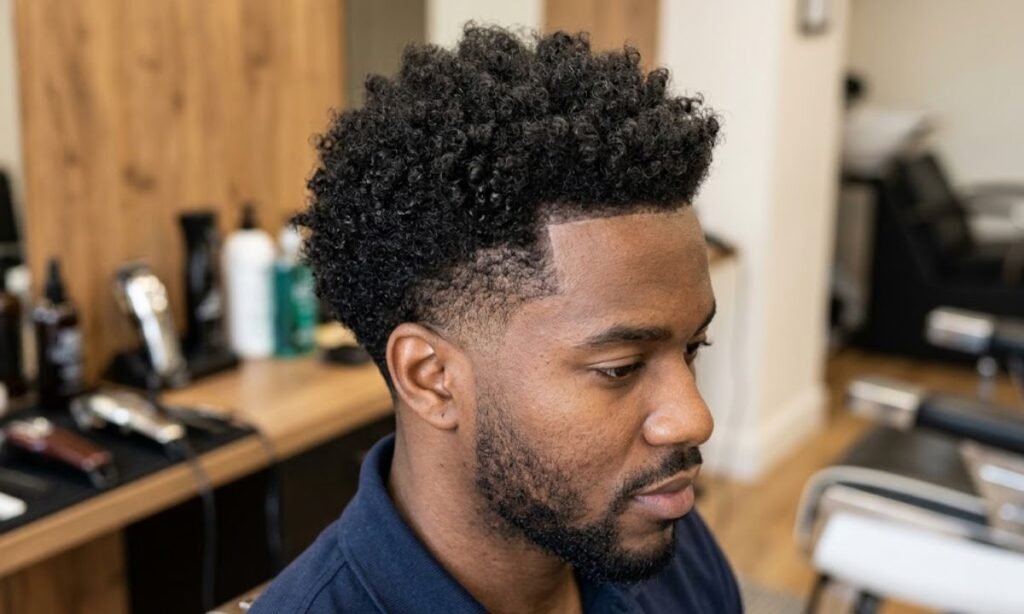
Every taper ends up in a fade grow-out phase. In the first week, you’ll have crisp lines. By week three, the sides start to fill in, and by week five, you’re back to a full head of hair.
If you’re planning to grow your hair for twists, locs, or a bigger afro, the taper can help you through the awkward stage. Keep the neckline trimmed and the sides tidy while the top grows. It makes the whole process look deliberate.
Be patient with it. Growth in curly and coily hair often looks slower because of shrinkage, but the hair is still moving. Photos once a month give you a better picture than checking every day.
What products and tools make a high taper easier to keep?

You don’t need a bathroom full of products. A short list covers it. Choose items for your hair texture, not for the label.
Here’s a simple kit:
- Leave-in moisturizer: For daily softness on top.
- Curl cream or light butter: For defined curls and twists.
- Soft boar bristle brush: For waves and short coils.
- Wide-tooth comb or pick: For afros and high-top shapes.
- Satin cap or pillowcase: For protecting your hair volume overnight.
- Alcohol-free balm: For soothing the neckline after a cut.
Start with one or two and add more if you need them. Too many products can build up and weigh the hair down. If you aren’t sure, ask your barber what they’d use on your hair.
You can also checkout this article as well: Mid Taper Fade vs High Taper Fade: Which One Should You Get?
Frequently asked questions about high taper fades for Black men

What’s the difference between a high taper and a high fade?
A high taper leaves some length at the edges and blends gradually. A high fade usually goes shorter, often to skin, so the contrast looks stronger. Many barbers use the words loosely, so show a photo.
Can a high taper work on all Black hair textures?
Yes. It works with waves, short coils, defined curls, twists, cornrows, and locs. The key is adjusting the top length and the finish to match your texture.
How often do I need a haircut?
Most guys go every two to three weeks. If you wear a skin finish, you may want to go closer to two. A guarded finish can stretch a bit longer.
Will a high taper make my head look smaller?
It can if the taper climbs too high or the top is very flat. Keep enough top length and ask your barber to check the proportions for your head shape.
How do I stop razor bumps after a fade?
Ask for a guarded finish, avoid repeated clipper passes, and keep the skin moisturized. If bumps stay or turn hard and scarred, see a dermatologist.
Can I get a high taper with a beard?
Sure. Ask for a beard blend so the sideburn flows into the beard. It looks smooth and keeps the face balanced.
Is a high taper good for work?
In most settings, yes. It looks neat and professional, especially with a guarded finish and a tidy top.
What should I do with my hair at night?
Wear a satin cap or use a satin pillowcase. It protects waves, twists, and edges while you sleep.
Final Thoughts
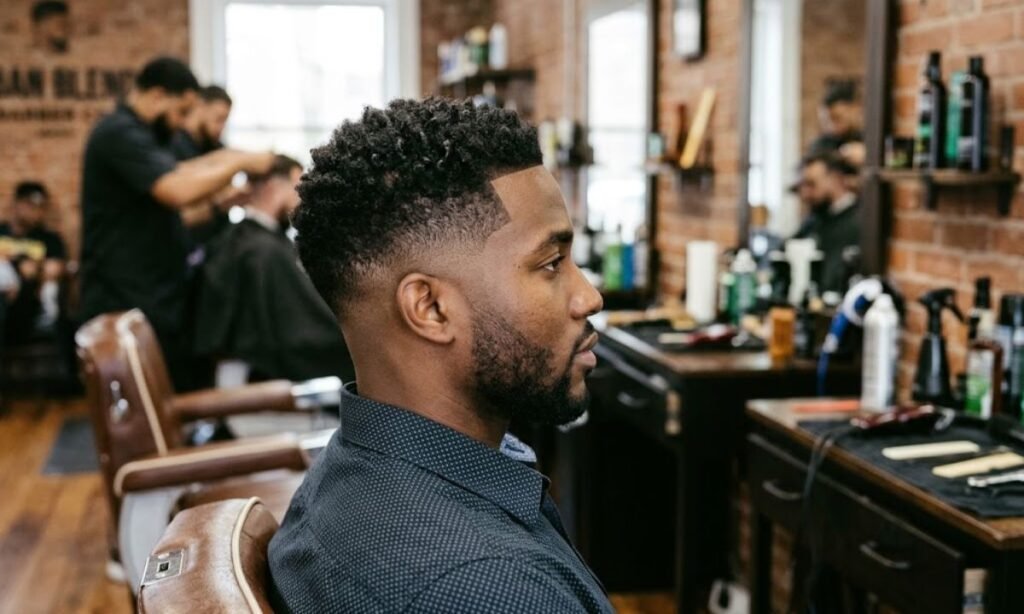
A high taper fade for Black men is one of the most flexible cuts out there. It gives you clean sides, a strong frame, and room to play with the top. Whether you wear waves, twists, locs, or an afro, there’s a version that works.
The best results come from a clear plan. Know your taper height, pick a finish, bring reference photos, and talk to your barber before the clippers start. Add a light home routine and a two-to-three-week schedule, and the cut stays sharp.
Now it’s your turn. Which of the 22 styles will you try first? Drop a comment, tell us what your barber said, and share this guide with a friend who’s still stuck on what to ask for. Your story might help the next guy walk into the shop with confidence.

I’m Michael Charles, the creator of MegaCrazes—your source for fresh hairstyles, sharp haircuts, and simple hair-care inspiration. Find your style. Own your look.