


Quick Answer
Ever shown a barber a photo and walked out with something totally different?
Or wondered why your fringe looks flat by lunchtime?
A burst fade textured fringe is a men’s haircut with a rounded fade around the ear and a choppy top that falls forward.
Ask for a low, mid or high burst, keep about 2 to 3 inches on top, and have the fringe point-cut for piecey movement.
Style it with matte clay and a quick forward blow-dry.
Book a fade-only touch-up every two to three weeks, and a full reshape every four to six.
What is a burst fade textured fringe?
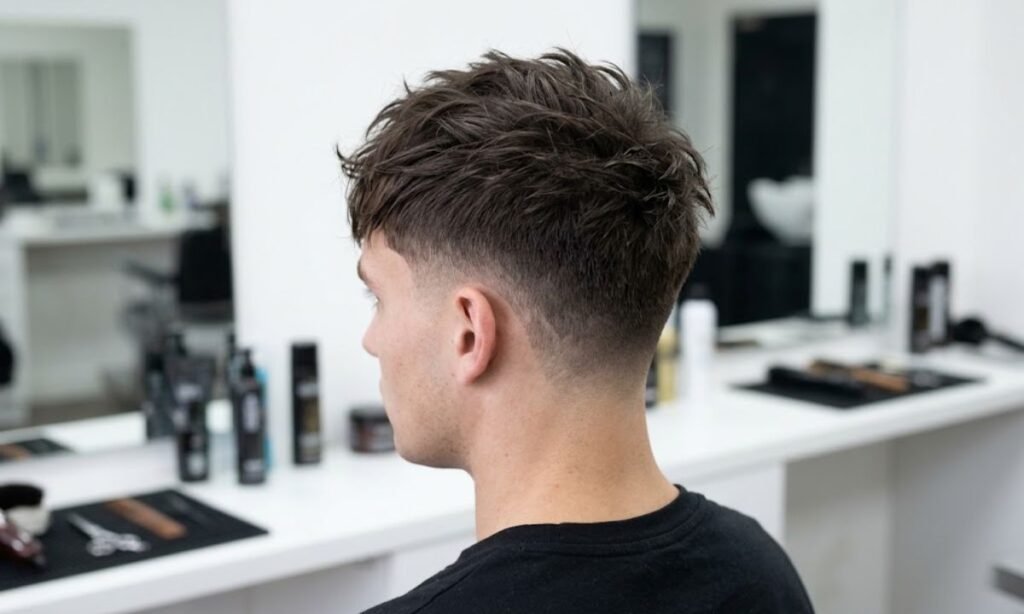
A burst fade curves around the ear in a semicircular arc.
Instead of running straight across the head, the fade seems to burst outward from the ear.
On top, the textured fringe sits forward over the forehead.
The hair is cut into piecey hair sections, so it looks messy on purpose.
Put them together and you get strong haircut contrast.
The sides stay tight and clean while the top stays loose and full of life.
The rounded fade around the ear

Think of the rounded fade like a spotlight around your ear.
The shortest point sits right at the ear, and hair grows longer as it moves away.
That’s what makes the burst fade different from a standard fade.
A regular fade wraps the whole head evenly, but a burst leaves the back and nape longer.
Here’s the quick breakdown:
- Ear-centered fade: the arc starts at the ear and fans out around it.
- Fade band: the zone where skin or short stubble meets longer hair.
- Retained back length: the hair behind the arc stays long, which gives you back weight.
The forward textured fringe

The forward textured fringe is the hair that sweeps toward your brow.
It’s cut shorter at the front than the textured crop of old, but with way more movement.
A barber builds that movement with point cutting and fringe texturizing.
The cuts remove internal hair bulk so strands can separate instead of clumping.
You’ll hear it called a choppy fringe, piecey fringe or short textured fringe.
They’re close cousins, and the names change from shop to shop.
Who does a burst fade textured fringe suit?
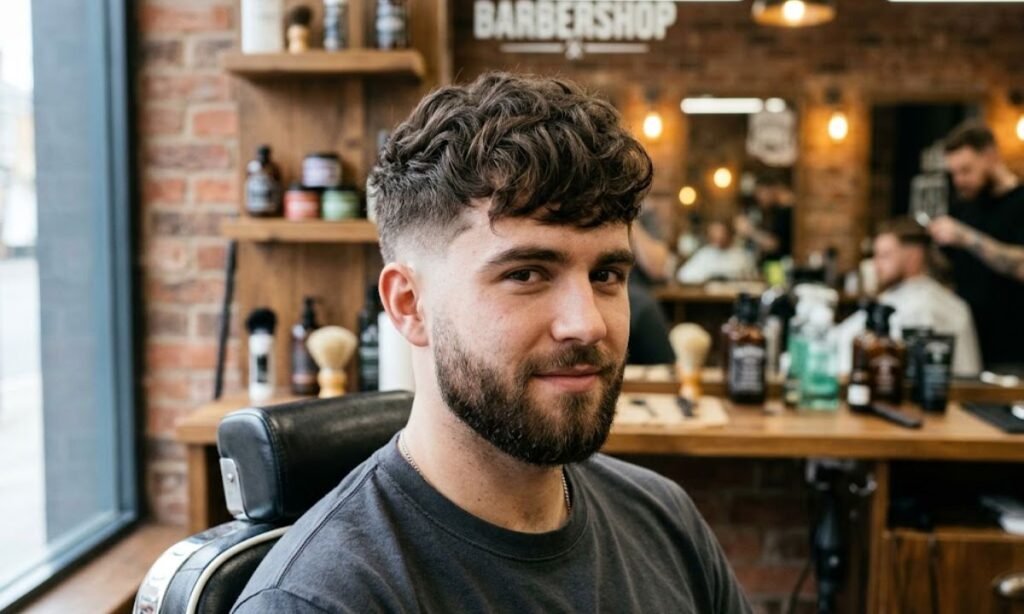
Short answer: most guys can wear it.
The real question is how much work you want to put in each morning.
The cut loves hair with some body, but clever cutting makes it work on nearly any hair type.
It also plays nicely with different face shapes, from oval to square.
Let’s get specific.
Your hair density, hairline and daily routine decide whether this cut fits.
Hair type and density

Straight hair holds a forward fringe easily.
It just needs texture powder or clay so it doesn’t lie flat like a curtain.
Wavy hair is the sweet spot.
The natural hair movement does half the styling for you.
Curly hair and coily hair work beautifully too.
The fringe turns into defined natural curl groups, and the burst keeps the sides sharp.
Density matters just as much as curl pattern:
- Thick hair: ask for internal bulk removal so the top doesn’t puff out.
- Medium-density hair: easiest to style, with almost no adjustments.
- Low-density hair: keep more length and use root lift to fake fullness.
Hairline, cowlicks and lifestyle fit

A cowlick at the front can push your fringe in the wrong direction.
A good barber works with your hair growth direction instead of fighting it.
Picture a guy named Dan with a stubborn crown swirl.
His barber leaves extra length there, and the swirl stops fighting back.
Check your lifestyle before you commit:
- A school grooming policy or workplace dress code may limit skin fades.
- A daily styling commitment of five minutes is plenty.
- If you hate barber visits, this isn’t a low-maintenance haircut.
Which burst fade textured fringe variation should you choose?
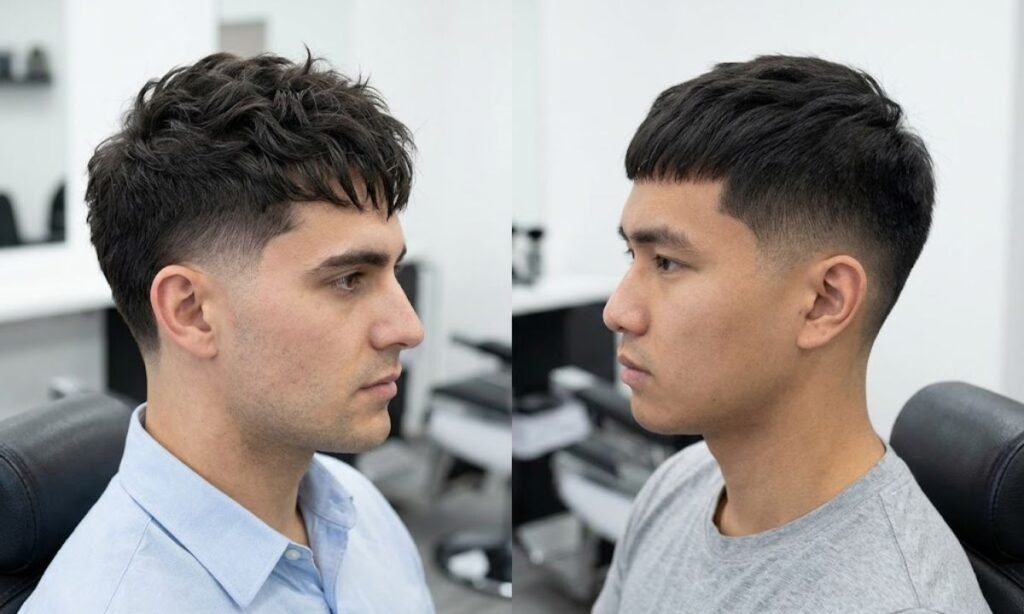
There’s no single best version.
The best burst fade variation is the one that matches your hair, face and patience.
You’ll choose along two lines.
First the fade itself, then how long the top and back run.
Don’t panic over the options.
A few simple decisions cover almost every case.
Fade placement and finish

Start with fade height.
A low burst sits close to the ear and feels subtle, while a mid burst adds noticeable contrast.
A high burst climbs toward the temple and looks bold.
It’s great for strong contrast but shows regrowth faster.
Then pick the fade finish:
| Finish | What you get | Best for |
|---|---|---|
| Skin burst or bald burst | Bare skin at the shortest point | Max haircut definition |
| Shadow fade | A soft darkness, no bare skin | Office-friendly looks |
| Guarded fade | Short stubble with a guard | Sensitive skin |
| Zero fade | Clippers with no guard | A clean middle ground |
If you want it softer, ask for a soft burst fade.
The transition blends gently, so there’s no hard edge.
Fringe length and back profile

A short fringe feels crisp and low effort.
A long fringe gives more drama but needs more styling.
The best fringe length usually stops at the middle of your forehead.
That gives you a sweep without hair poking your eyes.
Now think about the back.
A cropped back is tidy and clean, while a weighted back feels relaxed and modern.
Some guys go further with a burst fade mullet or soft mullet.
That’s a mullet-inspired haircut with extra length behind the fade.
Other spin-offs include the burst fade Edgar and the burst fade mohawk.
Both push the contrast harder, so they suit confident, bold dressers.
What does a burst fade textured fringe look like from every angle?
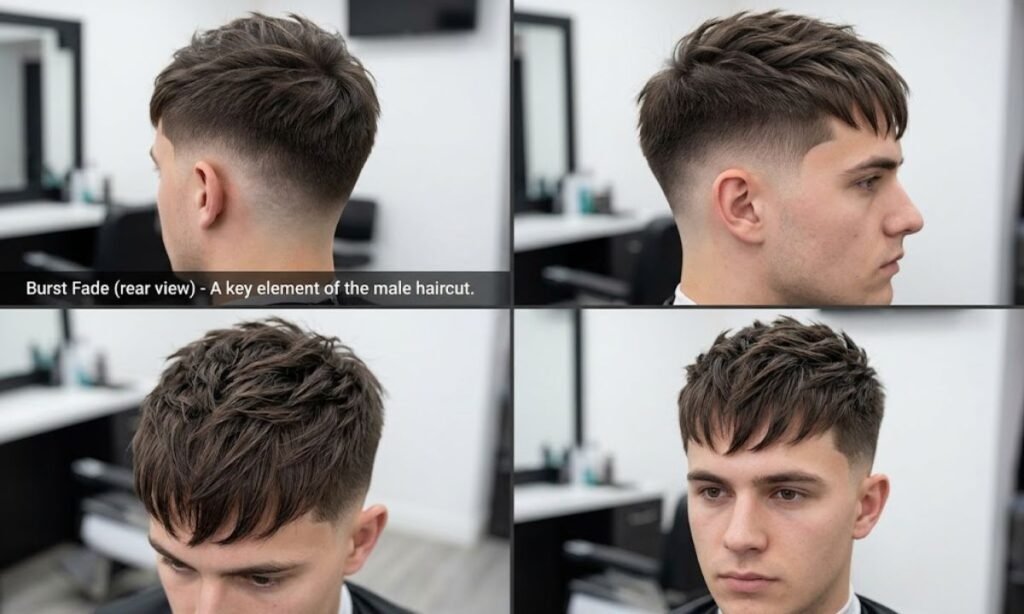
A haircut can look great from the front and fall apart from behind.
That’s why the angle check matters before you sit in the chair.
The cut has a clear haircut silhouette.
You should see a rounded top, a tight arc at each ear, and a longer back.
Peek at it from every direction.
That habit saves you from a bad surprise later.
Front, side and back views to check before choosing the cut

From the front, check fringe width and fringe direction.
The hair should sit evenly across the forehead, not bunch to one side.
From the side profile, look for the burst arc.
It should curve neatly around the ear and sideburns without sharp corners.
From the rear, check the neckline.
You want a natural neckline finish or a rounded neckline, depending on your taste.
Always grab all three reference haircut photographs:
- Front-view reference for fringe shape
- Side-view reference for the fade arc
- Rear-view reference for back profile and neckline
How the transition between the fade and textured top should look
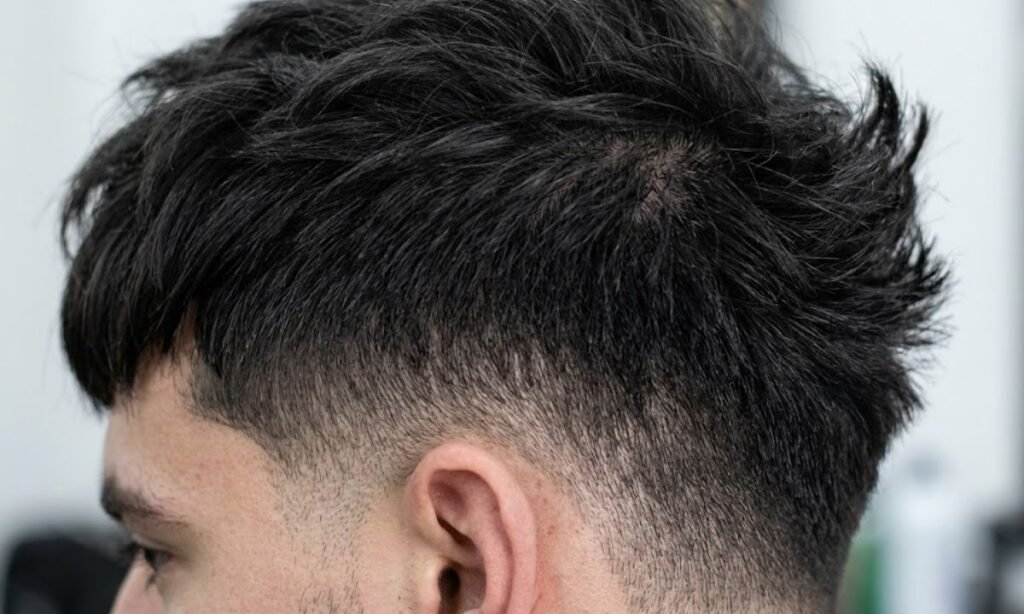
The fade transition should feel smooth.
No harsh stripe should separate the short sides from the longer top.
Look for a clean blend line where fade meets fringe.
If you see a visible step, the barber missed the hair blending.
Good top-to-side contrast is the goal.
The sides look tidy, and the top still has body and weight preservation.
What hair length do you need for a textured fringe with a burst fade?
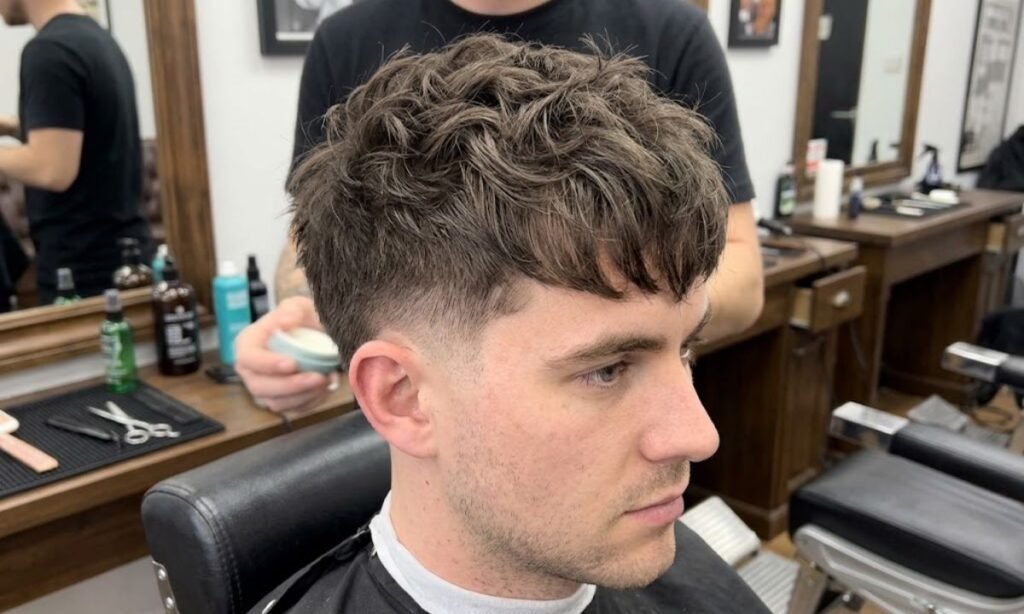
Length decides whether the fringe shows up or disappears.
Without enough hair, you’ll only get a short crop.
The good news? You don’t need a ton.
A few inches makes the cut possible for most people.
Bring a ruler to your mirror if you’re unsure.
A dry-length measurement beats guessing every time.
Minimum top length for a defined forward fringe

Aim for about 2 to 3 inches of top hair when dry.
That’s enough for a defined forward fringe with real texture.
Curly and coily hair needs a different mindset.
Hair shrinkage can swallow an inch or more, so measure stretched length too.
Remember: wet hair appearance lies.
Do a dry haircut assessment so you know what you’re really working with.
How much length to leave around the crown and temples

Keep a bit more length around the crown to cover swirls.
It also supports root lift at the back of the top.
The temple area is trickier.
Cut it too short and the face looks stretched, so ask for a softer approach.
Here’s a simple rule:
- Crown: leave extra length if you’ve got a cowlick.
- Temples: soften the arc if you have a high forehead.
- Nape: keep the back longer if you want a weighted back.
How does it compare with similar haircuts?

Half the confusion comes from names.
One barber’s drop fade is another’s low taper.
This section clears things up.
It also shows why regional haircut terminology can trip you up.
Get the vocabulary straight and you’ll ask for the right cut.
You’ll also spot when a photo doesn’t match your request.
Burst fade vs drop fade vs low taper and blowout taper

The burst fade circles the ear.
The drop fade curves down behind the ear, following the skull.
A low taper is the subtle cousin.
It hugs the hair perimeter and keeps most of the length.
The blowout taper leaves long, fluffy hair on top and a tidy taper below.
It looks lush where a burst looks sharp.
| Cut | Shape | Contrast level |
|---|---|---|
| Burst fade | Arc around the ear | High |
| Drop fade | Curves down behind the ear | Medium to high |
| Low taper | Follows the hairline | Low |
| Blowout taper | Gentle, with a voluminous top | Low to medium |
Textured fringe vs French crop vs Edgar vs Caesar

The textured fringe is the loose, messy one.
It sweeps forward with visible separation.
A French crop is shorter and neater.
It’s a blunt, forward-brushed top that suits easy styling.
The Edgar cut has a straight horizontal fringe and sharp edges.
It’s popular among curly and coily hair and uses a sharp line-up.
The Caesar cut is uniformly short, with a flat, straight fringe.
It’s the lowest effort of the four.
Can you get a burst fade textured fringe with thinning or receding hair?
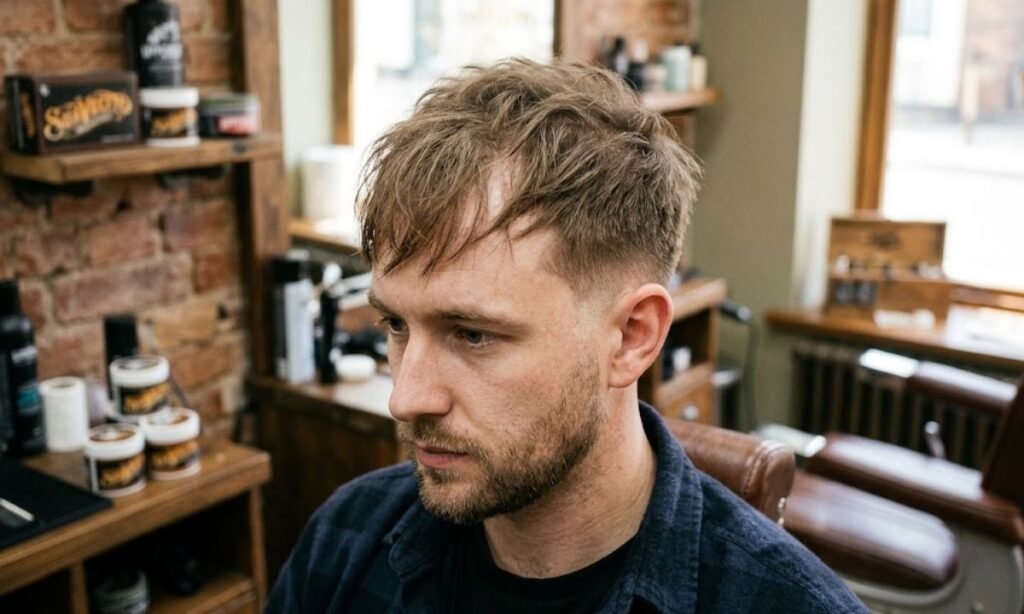
Yes, with some smart choices.
The fringe is actually a friend to a receding hairline because it can cover the forehead.
What you want to avoid is excessive scalp exposure.
A high skin burst can highlight sparse areas, so go gentler.
A haircut for thinning hair relies on strategy, not luck.
The next two points show you how.
Adjusting fringe coverage for a receding hairline

Keep the fringe a touch longer than usual.
That gives you forehead coverage without looking like a bowl cut.
Ask for an angled fringe or asymmetrical fringe.
The slant hides hairline recession at the corners naturally.
Choose a low burst or shadow fade.
Those keep scalp visibility under control while still looking sharp.
Using texture and volume to make fine hair appear fuller

Fine hair looks thicker when it has lift.
Use hair mousse at the roots and blow-dry it upward first.
Finish with texture powder.
It adds grit so strands stand apart and the top reads as fuller.
Avoid heavy creams.
They weigh strands down and expose the scalp, causing flat hair.
How to ask your barber for a burst fade textured fringe

Most bad haircuts start with a vague request.
“Just a fade, please” can mean ten different things.
A clear barber consultation fixes that.
A licensed barber can only deliver what you describe and show.
Spend two minutes planning and you’ll save weeks of regret.
Let’s walk through how.
Five decisions to make before the appointment

Make these calls before you sit down:
- Fade height: low, mid or high burst.
- Fade finish: skin, shadow, zero or guarded.
- Fringe length: short, medium or long, measured against your forehead.
- Back profile: cropped back, weighted back or a mullet-style back profile.
- Neckline: natural, rounded or sharp.
Write them down on your phone.
It takes a minute, and it makes you sound like you know your stuff.
Also mention your hair type, cowlick spots and daily styling time.
Those details shape the haircut brief more than any photo.
Reference photos, a sample brief and a final check

Bring front-view, side-view and rear-view photos.
Pick images with hair like yours, because a straight-haired photo won’t help curly hair.
Here’s a barber script you can steal:
I’d like a mid burst fade with a skin finish, a cropped back and a natural neckline. Keep about 3 inches on top, point-cut for a forward textured fringe, and remove some bulk so it sits flat.
Before you leave, do a final haircut check:
- Check the fade arc on both ears in the mirror.
- Look for patches, uneven fade risk and harsh lines.
- Ask how to style the fringe at home.
If something’s off, say so politely and right then.
A good barber will happily adjust.
How to style a burst fade textured fringe at home

The cut does the heavy lifting.
Your job is a quick routine that adds shape and hold.
You don’t need ten products or an hour.
Five minutes and a couple of items will do.
Think of it like seasoning a good steak.
A little goes a long way.
Five-step styling routine

- Start with damp hair. Towel-dry until it stops dripping, not until it’s bone dry.
- Add a pre-styler. Work hair mousse or sea-salt spray through the roots for body. Use a heat protectant if you’ll use heat.
- Blow-dry forward. Use low-heat drying and push the fringe toward your brow. Lift the roots with your fingers for root lift.
- Apply product. Rub a pea-sized amount of matte paste or pliable clay between your palms. Use finger styling to work it through, front to back.
- Separate and set. Pinch and twist a few strands at the fringe edge for hair separation. Finish with a little texture powder if you need grip.
For curls, swap the blow-dry for a hair diffuser.
Smooth in curl cream first for curl definition and frizz control.
Products by hair type and common mistakes

| Hair type | Best picks | Why |
|---|---|---|
| Fine or thin | Mousse, texture powder | Adds hair volume without weight |
| Thick | Matte clay | Controls bulk and keeps hold |
| Wavy | Sea-salt spray, matte paste | Boosts natural movement |
| Curly or coily | Curl cream, diffuser | Moisture retention and curl definition |
Watch out for these classic mistakes:
- Using too much product, which causes a greasy fringe or stiff spikes.
- Skipping the blow-dry, which leaves flat roots.
- Patchy product application from not spreading it evenly.
- Letting product buildup pile up, so wash it out with a clarifying shampoo now and then.
Try one change at a time.
It’s the quickest way to learn what your hair likes.
How to maintain a burst fade textured fringe

The fade is the high-maintenance part.
Skin and shadow finishes grow out fast, so the sharp look fades within days.
Plan a rhythm and stick with it.
It keeps the cut crisp without wasting money.
Most people overthink this.
Follow the simple schedule below.
Touch-up timing and grow-out

Book a burst fade touch-up every two to three weeks for the sharpest look.
A fade-only appointment is often quicker than a full cut.
Every four to six weeks, go for a full haircut reshape.
That resets fringe length, back profile and neckline.
| Timing | What to book | Goal |
|---|---|---|
| 2 to 3 weeks | Fade-only touch-up | Keep fade definition |
| 4 to 6 weeks | Full reshape | Reset the haircut shape |
| Weekly | Neckline cleanup (optional) | Tidy the nape |
If you’re growing it out, a soft grow-out works best.
Switch to a low burst or taper so the sides blend as they lengthen.
Fringe, scalp and skin problems

Bare skin and clippers can irritate sensitive skin.
You might notice razor bumps, ingrown hairs or barber bumps on the neck.
Coarse and curly hair is more prone to this.
If bumps keep returning, ask for a guarded finish or shadow finish instead of skin.
Watch for anything unusual.
Firm, raised bumps at the back of the neck, or pus-filled bumps, can signal acne keloidalis nuchae or an infection.
See a board-certified dermatologist if it persists.
The American Academy of Dermatology and the Cleveland Clinic both offer helpful skin-care guidance.
If your fringe feels greasy, wash it more often.
If your scalp itches, switch to a gentler shampoo.
Mistakes that ruin a burst fade textured fringe
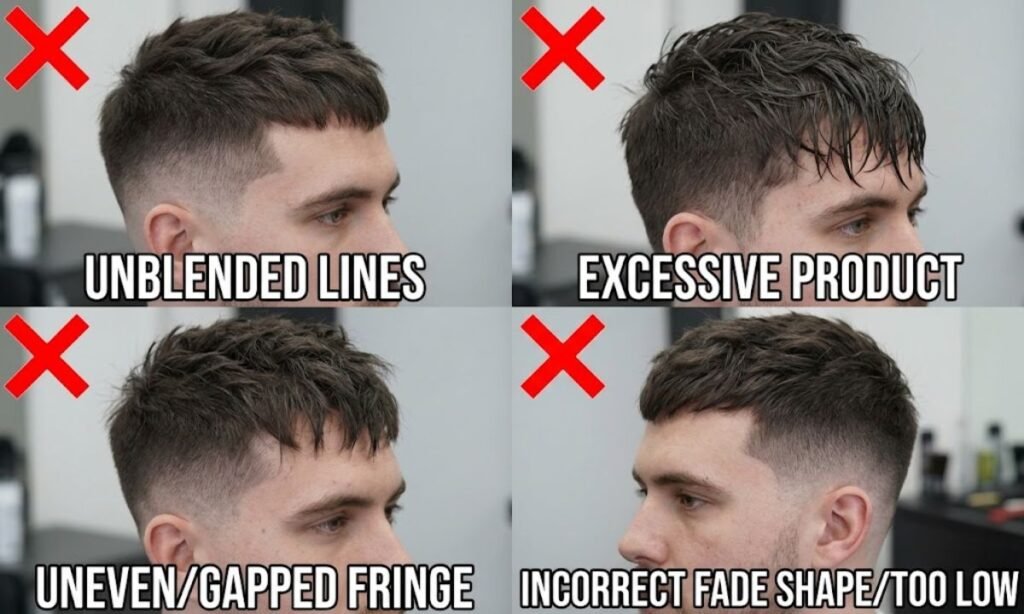
A few slip-ups cause most disappointment.
The good news is they’re easy to dodge.
- Skipping the reference photos. Words alone leave too much room for guesswork.
- Cutting when the hair is too short. You lose fringe length and can’t get it back.
- Ignoring your cowlick. It’ll fight you every morning.
- Going too high on a receding hairline. It exaggerates scalp visibility.
- Using heavy waxes. They weigh down the top hair and flatten the texture.
- Trying DIY fade fixes. At-home haircut maintenance is fine for the top, but leave the fade to a pro.
Pick one of these and fix it first.
You’ll notice the difference right away.
Should you get a burst fade textured fringe or an alternative?
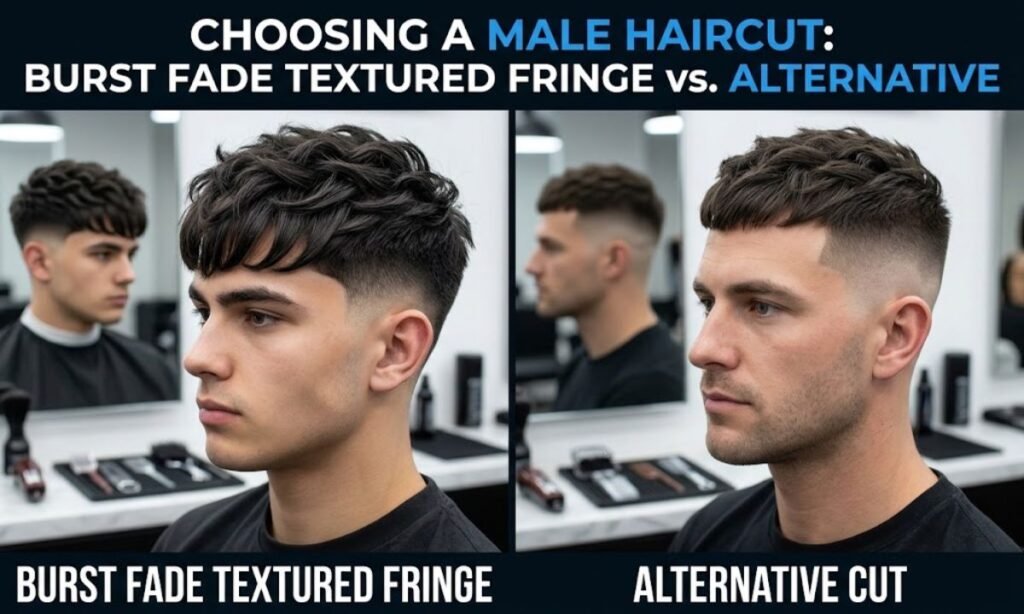
It’s a great cut, but it isn’t for everyone.
Be honest about your time, skin and style.
Use the checklist below.
If you tick most boxes, book it.
If not, there are plenty of options.
You’ll find them in the next section.
Decision checklist

Tick yes or no:
- You’ve got at least 2 to 3 inches on top.
- You can visit a barber every two to three weeks.
- Your skin handles close clipper work.
- You’re happy to spend five minutes styling.
- Your workplace or school allows high-contrast fades.
Four or five yeses? Go for it.
Two or fewer? Try an alternative below.
Alternatives by objection
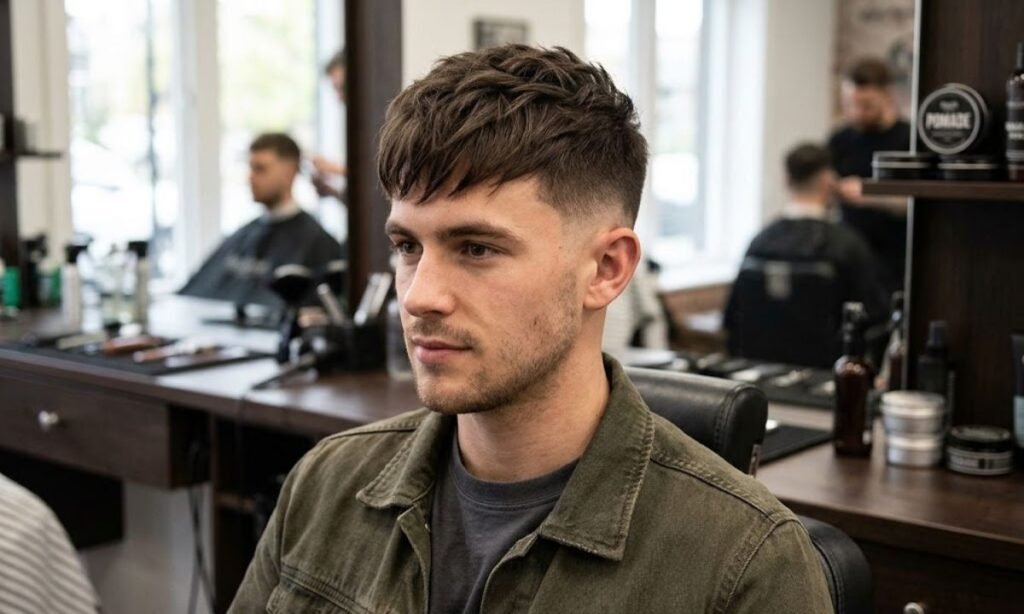
- “It needs too much upkeep.” Try a low taper or textured crop without a fade.
- “My skin gets bumps.” Ask for a shadow fade or guarded fade.
- “I hate styling.” Choose a French crop for easy styling.
- “I want something subtler.” Go with a low burst or low taper fade fringe.
- “I want more edge.” Consider a drop fade textured fringe or soft mullet haircut.
Switching doesn’t mean losing style.
It just means picking the cut that fits your life.
You can also checkout this article as well: Burst Fade for Straight Hair: 21 Styles and How to Ask Your Barber
Frequently asked questions

How often should I get a burst fade touched up?
Every two to three weeks keeps the fade crisp.
Stretch to four if you’re fine with a softer look.
Can I get a burst fade with curly hair?
Yes, it works great.
Use curl cream and a diffuser so the fringe keeps its curl definition.
What’s the difference between a burst fade and a drop fade?
A burst fade circles the ear.
A drop fade curves down behind it.
How long should my hair be for a textured fringe?
Aim for 2 to 3 inches when dry.
Curly hair needs more, because of shrinkage.
Is a burst fade good for a receding hairline?
It can be, with a longer, angled fringe and a low burst.
Avoid a high skin burst, which highlights recession.
What products work best for a textured fringe?
Matte clay, matte paste and texture powder are the go-tos.
Pair them with sea-salt spray or mousse for lift.
Can boys get a burst fade?
Yes, many parents choose it.
Check the school grooming policy first.
How do I stop my fringe going flat?
Blow-dry it forward for root lift.
Use a light pre-styler and avoid heavy products.
Final Thoughts
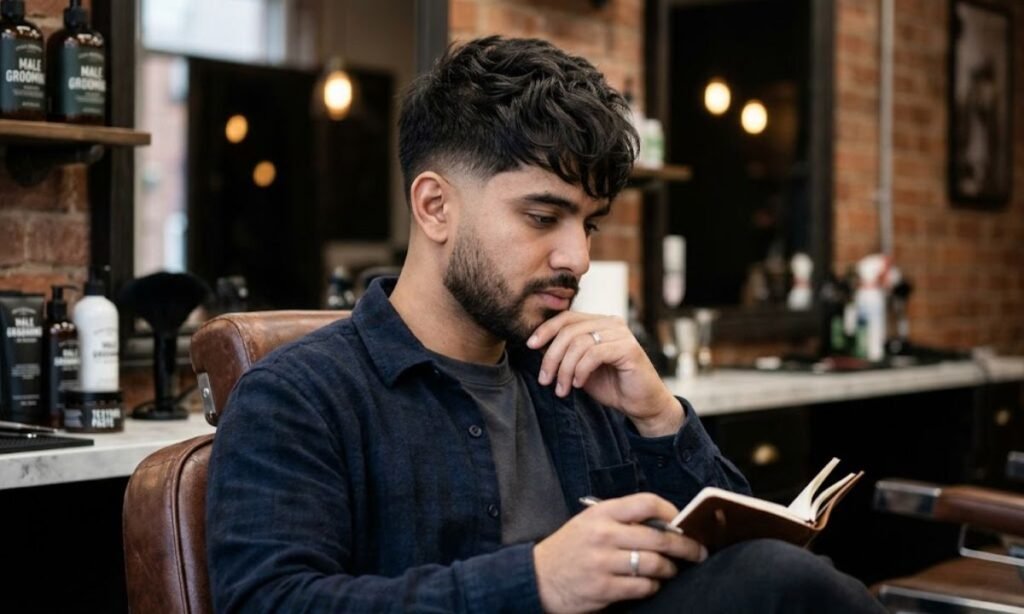
A burst fade textured fringe gives you a sharp, modern look with real personality.
The key is a clear ask, a simple routine, and regular upkeep.
Start with your hair type, then pick your fade height and fringe length.
Bring photos, use a script, and check the cut in the mirror.
Have a question or a story about your own burst fade?
Drop it in the comments, and share this guide with a friend who needs a fresh cut.
We’ll keep refreshing this page as trends and techniques change.
Check back whenever you’re planning your next appointment.

I’m Michael Charles, the creator of MegaCrazes—your source for fresh hairstyles, sharp haircuts, and simple hair-care inspiration. Find your style. Own your look.