

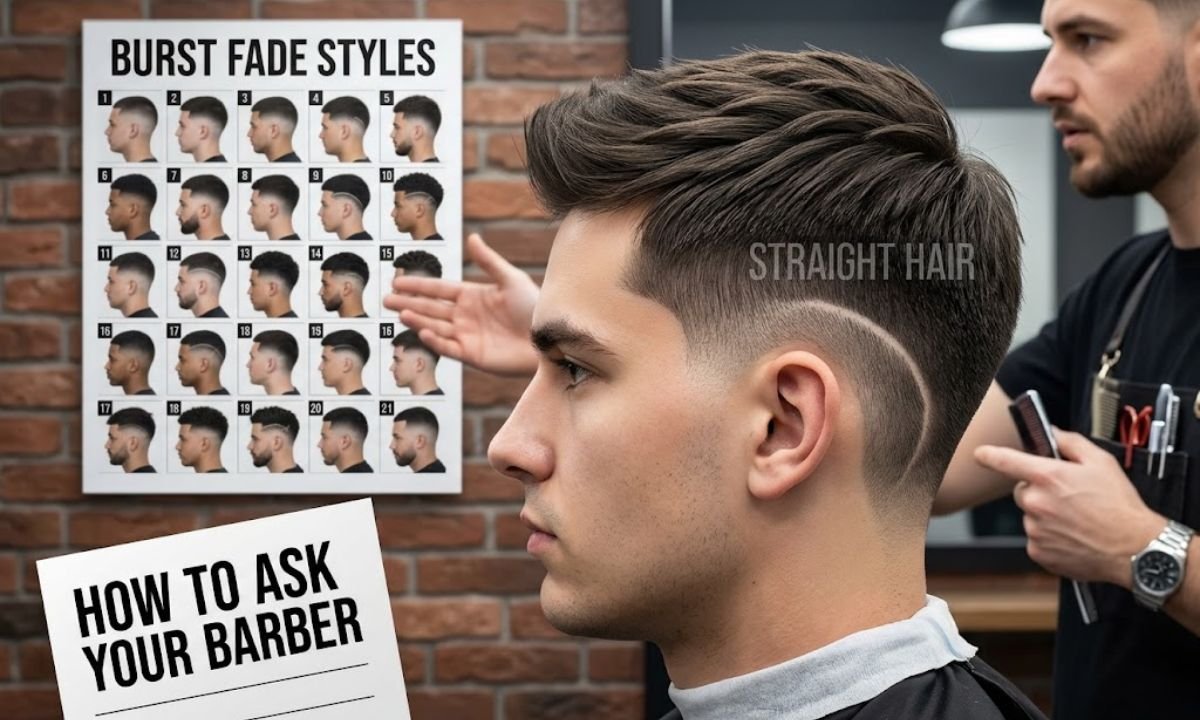
Yes, a burst fade works well on straight hair, and it’s one of the easier fades to wear.
You get short sides, a curved fade around the ear, and a longer back that keeps its weight.
Maybe you’re worried it’ll look flat, or your barber will cut it too high. You’re not alone.
This guide covers 21 styles, the exact words to say in the chair, and how to keep the cut sharp.
Quick answer
A burst fade curves around the ear in a semicircular arc. The hair behind that arc stays long, so your nape length and neckline keep their shape.
It suits most head shapes, and it’s a smart pick if you want short sides without losing the back.
On straight hair, the cut looks crisp because strands lie flat and show every line. That’s also why a messy fade blend is easy to spot.
If you ask for the right fade height and a clean fade transition, the result looks sharp.
Start with a low burst fade if you’re nervous. Go for a mid burst fade if you want more contrast.
Ask for a shadow finish if your scalp is sensitive, and bring reference photos to the barber consultation.
What is a burst fade?

Picture a fade that doesn’t run straight around your head. It bends around the ear contour, then fades down into the neck area.
Barbers call this shape a burst, because the hair seems to explode outward from the ear.
It started as a twist on the taper fade, and it has grown popular because it mixes short and long in one cut. You keep a longer back while the sides stay tidy.
That’s why it pairs so well with mullets, quiffs, and textured crops.
Where the curve sits

The curve starts near the sideburns and swings around the ear. It stops behind the ear, where the longer hair at the back begins.
The height of that arc is your fade height, and it changes the whole look.
A low curve hugs the ear and stays subtle. A high curve climbs toward the temple and looks bolder.
Your barber sets this line with the clipper guard and a steady hand, so point to the exact spot on a photo.
Why straight hair changes the result

Straight strands fall flat, so they don’t hide gaps. Any hard shelf or uneven spot shows up in the light.
Curly hair forgives small slips, but straight hair rarely does.
That sounds scary, but it works in your favor too. Clean lines look sharper, and the fade contrast reads clearly.
Your barber just needs to blend slowly, and you need to pick a length that suits your hair texture.
Is a burst fade good for straight hair?
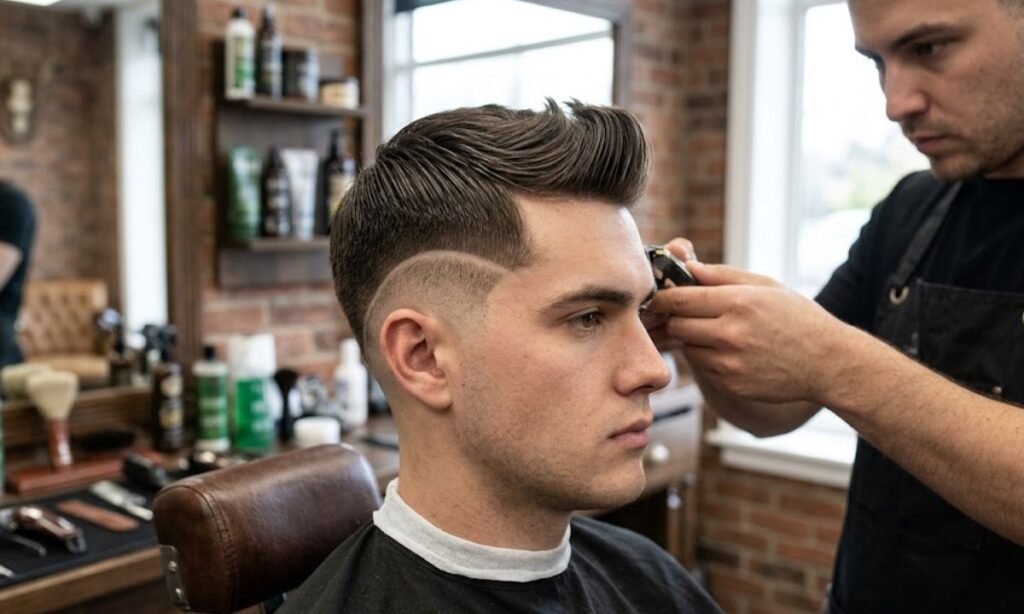
Mostly, yes. The cut gives straight hair structure, and that structure helps when strands lack natural hair volume.
The short sides create height, so your top looks fuller without extra product.
It isn’t perfect for every head though. Pin-straight hair that’s very fine can look sparse if you go too short.
A quick check of your hair density and scalp visibility tells you how far to go.
What to check before you book

Pull your hair back and look at the sides in a mirror. If you can see lots of scalp through the strands, you have low-density hair.
That means a skin finish will show more skin, so you’d want a longer guard.
Next, check your hair growth direction at the crown and front. Run a wet comb through and watch where it wants to flop.
Then look at your hairline shape, because a rounded or receding line changes how the arc sits.
Finally, think about styling effort. Ask yourself if you’ll spend five minutes each morning or two.
The answer decides whether you want a low-maintenance haircut or something with more shape.
When a softer burst or taper is the better call

Some heads suit a gentler look. If you have a strong crown cowlick or uneven hair density, a low taper fade for straight hair may blend better.
A softer fade transition hides patchy spots and grows out more kindly.
The same goes for office dress codes or conservative schools. A school-friendly haircut usually means a short guard finish rather than skin.
A low burst fade with a shadow finish keeps things polished and not too loud.
How Straight Hair Texture and Density Affect a Burst Fade

Hair texture and hair density are two different things, and people mix them up all the time. Texture is how each strand feels, while density is how many strands sit on your scalp.
Your barber needs both facts to plan the cut.
A person with coarse hair and low density will see different results than someone with fine hair and lots of it. Neither is wrong, but each needs different top length and fade height.
Let’s break this down.
Fine vs thick straight hair: how the sides and top behave
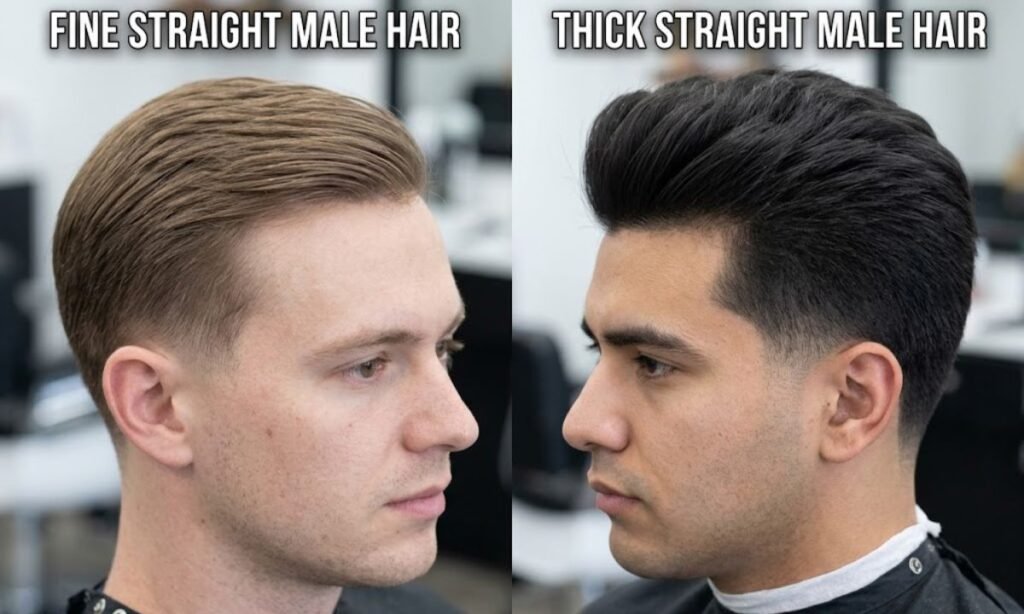
Fine hair has thin hair strand thickness, so it lies flat and shows the scalp quickly. A low burst fade for fine straight hair keeps the sides from looking see-through.
On top, keep texture with a point-cut fringe or a bit of layering.
Thick hair and dense hair stand out from the head, and the sides can puff up. A burst fade for thick straight hair controls that bulk well.
Your barber can go shorter at the sides, and the top gets weight from the extra strands.
Coarse straight hair adds hair stiffness, so it resists lying flat. Ask for a slightly longer top, then use a matte paste to calm it.
A burst fade for coarse straight hair looks best when the barber thins the bulk lightly.
Cowlicks, flat crowns, and stubborn growth patterns

A crown cowlick can ruin a short cut. The hair swirls the wrong way, and it sticks up like an antenna.
If you want to manage a cowlick with a burst fade, tell your barber exactly where it sits.
Leaving the crown a bit longer helps the weight lie down. Very short hair in that spot fights you all day.
A blended top that follows the hair growth direction works better than cutting against it.
A flat crown is the opposite issue. You’d want root lift, so ask for a little length and use texture powder or a blow-dryer.
It’s a quick fix, and it can add volume to flat straight hair within minutes.
How hairline shape affects the finished silhouette

Your front hairline and hairline shape frame the finished look. A straight line suits a blunt fringe, while a widow’s peak suits a side part or lifted front.
Get a sharp hairline with clean edges for the best finish.
A receding line needs more care. Keep the top a bit longer and avoid skin sides that expose the temples too much.
A burst fade for fine or thinning hair looks best with a soft shadow finish.
Your head shape matters too. Rounder heads gain from a taller top that adds length.
Longer heads look balanced with a flatter top and a mid burst fade that doesn’t add height.
What Top Length Works Best With a Burst Fade on Straight Hair?
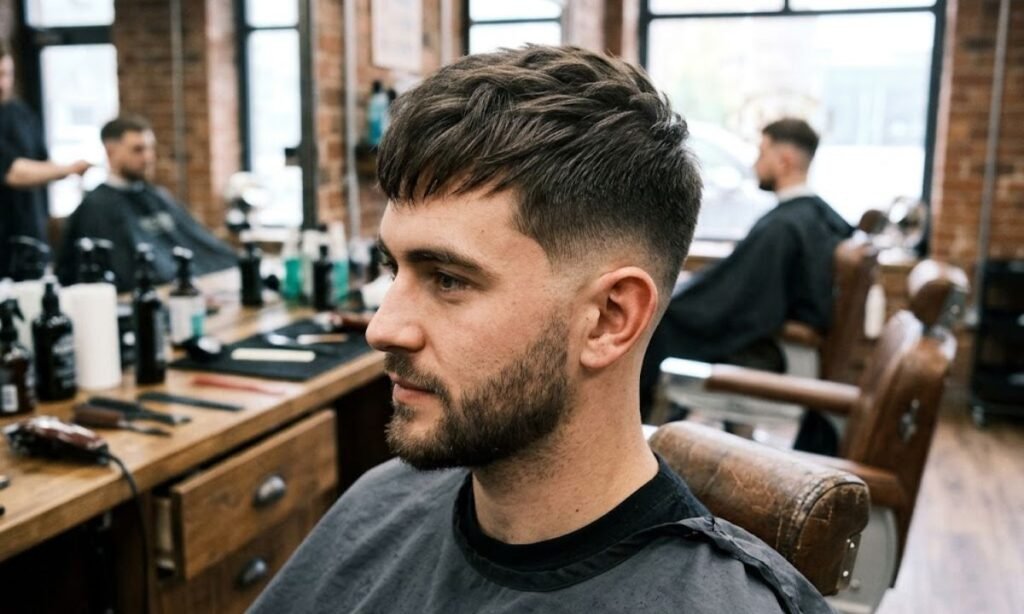
There’s no single perfect top length, since it depends on the look you want. Short tops look neat, medium tops give you options, and long tops need more care.
Most men land somewhere between two and five inches.
Wondering how long the top should be for a burst fade? Think about the style you want first, then work backward.
A French crop needs around two inches, while a quiff needs four or more.
Choosing a top length based on your preferred silhouette

Pick your silhouette first, because it sets everything else. A flat, tidy shape works with one to two inches, and a lifted, voluminous shape needs more.
For a textured top, three inches gives enough movement.
Does your hair stay flat no matter what? Leave it a touch longer than you’d guess. Extra length gives natural movement and lets you shape it.
Very short pin-straight hair just looks like a helmet.
If you prefer a disconnected top, ask for a clear gap between the top and the sides. The contrast makes a bold statement.
A blended top gives a softer, classic look instead.
How much length to leave around the crown and neckline
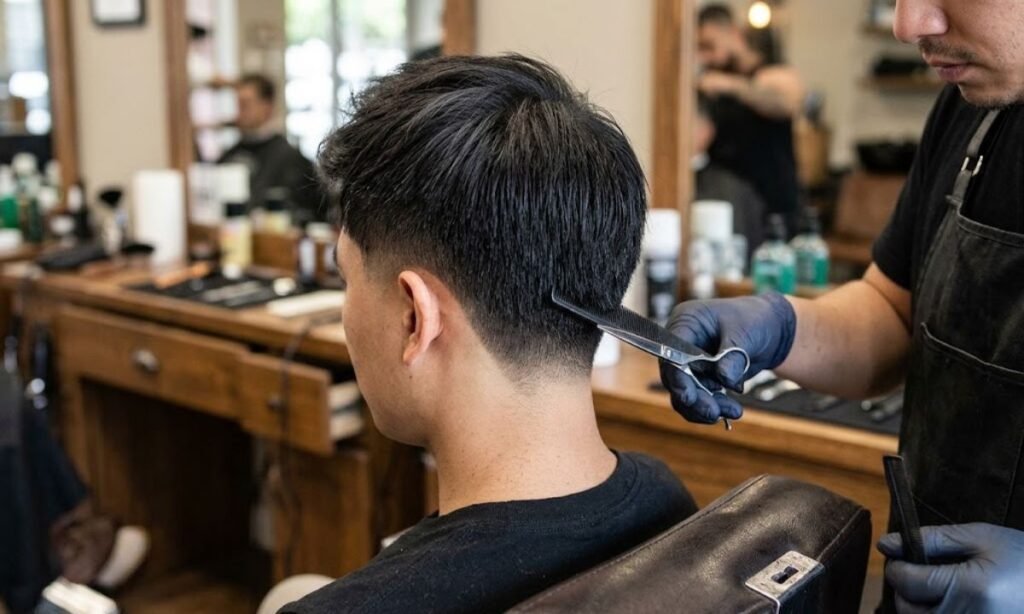
Leave the crown about half an inch longer than the front if it’s unruly. The extra weight settles the swirl.
That small detail keeps the crown connection neat.
For the neckline, decide between a blocked, rounded, or tapered shape. A natural, tapered neckline grows out the best and needs fewer touch-ups.
A hard square edge looks sharp for a week, then goes ragged fast.
If you want a longer back, say how long in inches or with your fingers. Barbers don’t read minds, and “a little longer” means different things to different people.
A blended neckline keeps the long part from looking tacked on.
How to choose the right burst fade height and finish

Two decisions shape the cut more than anything else: how high the fade goes and how short it ends. Get them right, and the style fits your face.
Get them wrong, and you’ll count days until it grows out.
Wondering about the best burst fade height for straight hair? It depends on contrast, work rules, and how bold you feel.
We’ll walk through each option.
Low vs mid vs high burst fade
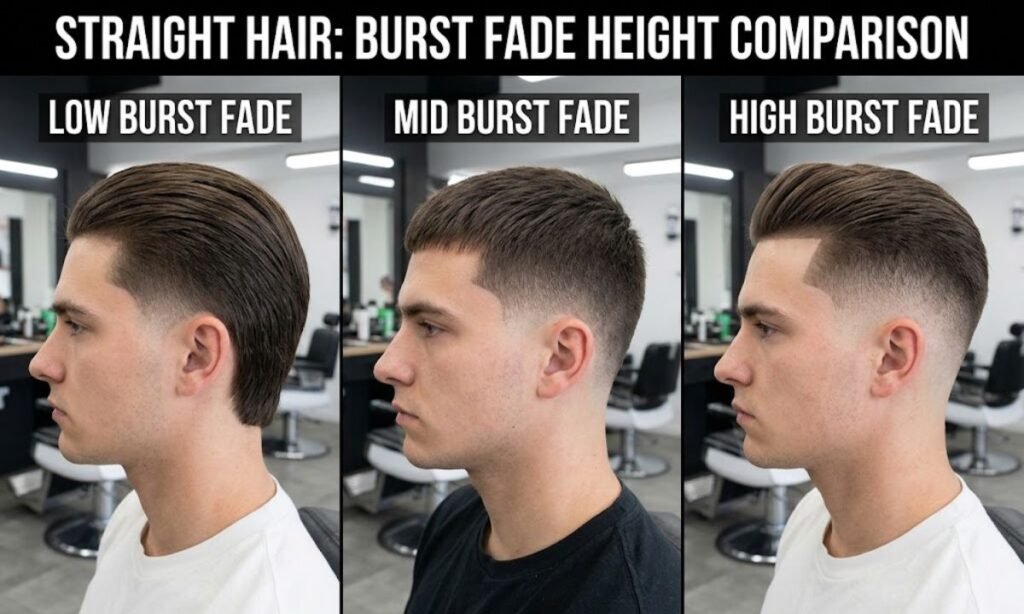
A low burst fade stays near the ear and the neckline. It looks neat, works in any office, and suits most straight hair burst fade fans.
It’s the safest first try.
A mid burst fade rises to about the middle of the side of your head. It adds more fade contrast, so the top pops more.
Most barbers consider this the sweet spot for medium top length.
A high burst fade climbs near the temple. It’s bold and modern, and it pairs well with mohawk fade looks and a faux hawk.
Expect to book touch-ups more often.
In a low vs mid burst fade for straight hair debate, go low if you want subtle and mid if you want shape. High is for people who love the look and don’t mind upkeep.
When in doubt, start low and go higher next visit.
Skin vs shadow vs guard-length finish
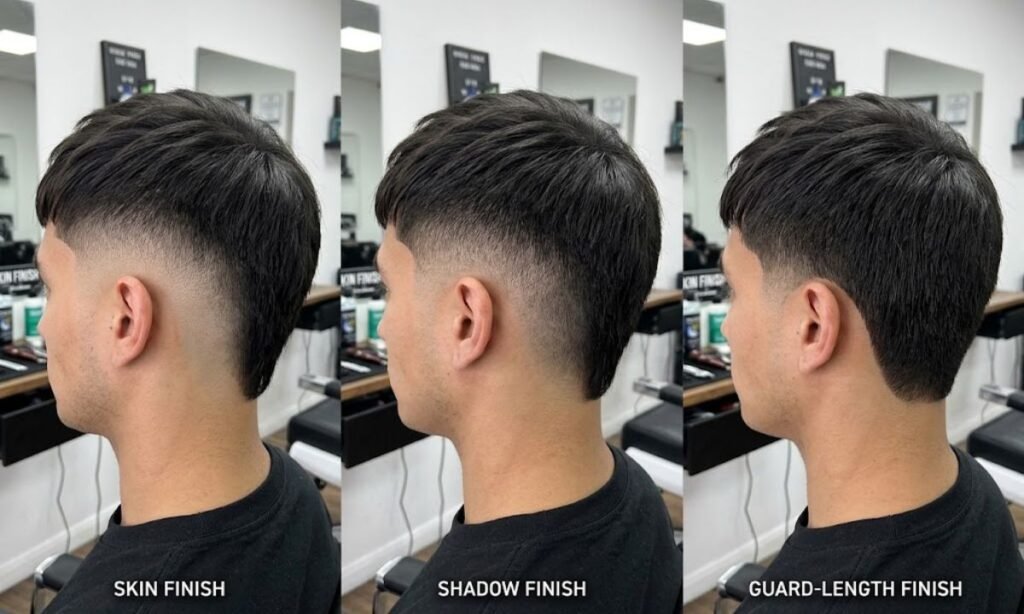
A skin finish, also called a bald fade, goes down to the bare skin. It gives the sharpest contrast, but it shows every bump and needs frequent refreshes.
People with a sensitive scalp may find it irritating.
A shadow finish leaves a faint trace of hair, usually using a #0 or a #1 guard. It looks softer and hides scalp issues.
It’s a popular middle ground, especially for straight hair.
A short guard finish uses a #1 or #2 guard number. It looks natural, grows out well, and suits professional haircut needs.
Compare skin burst fade vs shadow burst fade by asking what you’ll tolerate in two weeks.
Top, crown and nape connection

A good cut links three zones: the top, the crown, and the nape. When they connect, the hair flows from front to back.
When they don’t, you get an odd bump.
Tell your barber how much connection you want. A disconnected top has a visible break, while a blended one flows into the sides.
Both are fine, so choose based on your style.
Check the nape length at the end of the cut. Hold a mirror and look at the back.
The line should curve smoothly into the neckline.
21 burst fade styles for straight hair
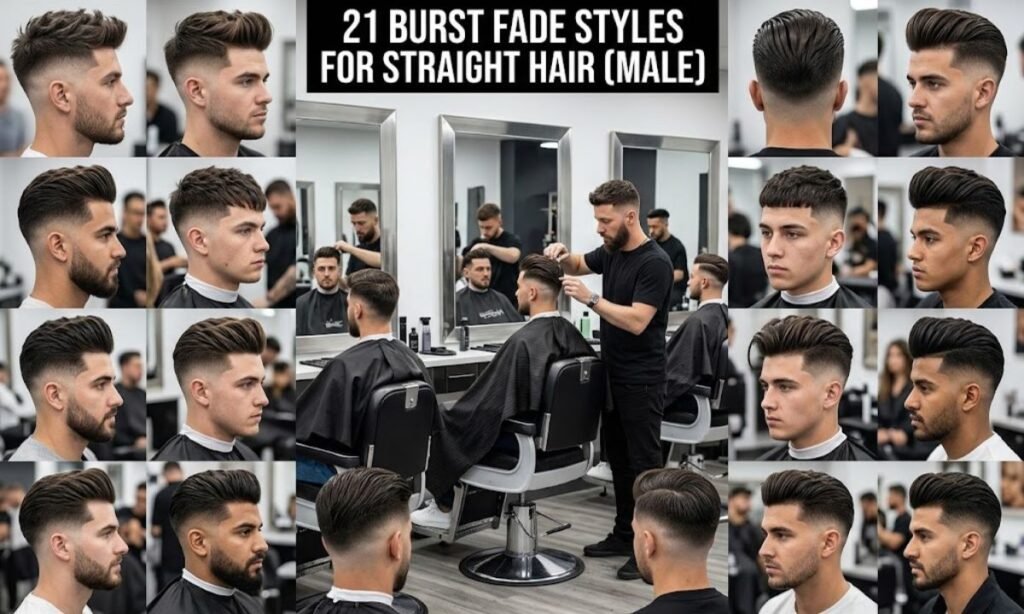
Here are 21 looks, grouped by length and effort. Each one works with straight hair, and each can shift based on fade height and finish.
Save the ones you like as reference photos for your barber.
These burst fade haircut ideas for men with straight hair cover everything from school to the weekend. Don’t feel bound by the label, since you can mix details.
Let’s start with the short, easy styles.
Short, low-maintenance styles

These cuts take two minutes in the morning. They suit busy people, students, and anyone who dislikes products.
They’re also easy to grow out.
1. Burst fade buzz cut
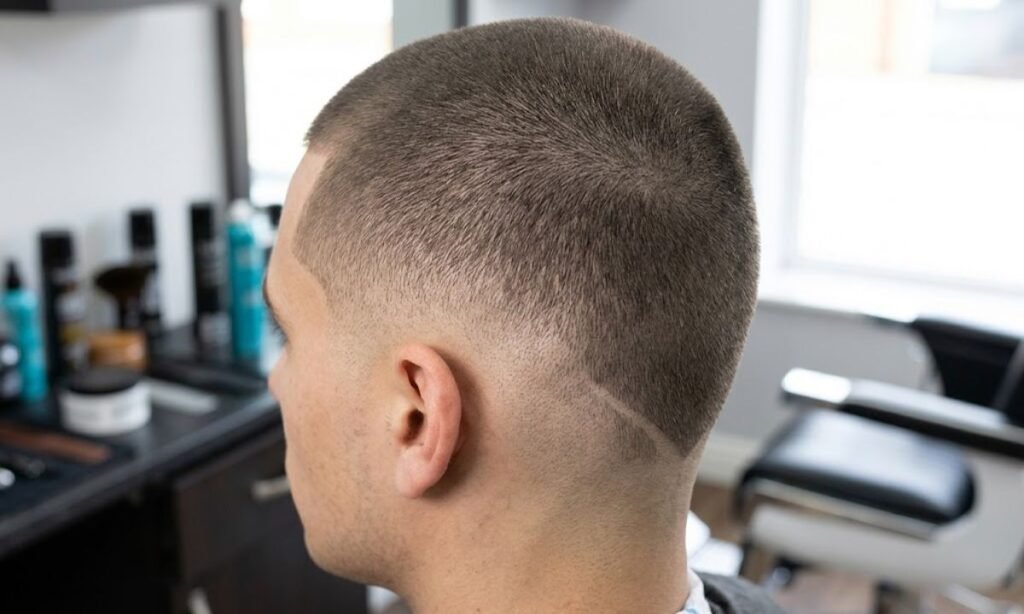
The burst fade buzz cut keeps the top at one guard length, and the sides curve down. It’s about as simple as a cut gets.
You can wash and go with no styling routine.
It works best if your head shape is even. Bumps and scars show on very short hair.
A low burst fade keeps it friendly, and a shadow finish softens the sides.
2. Burst fade French crop
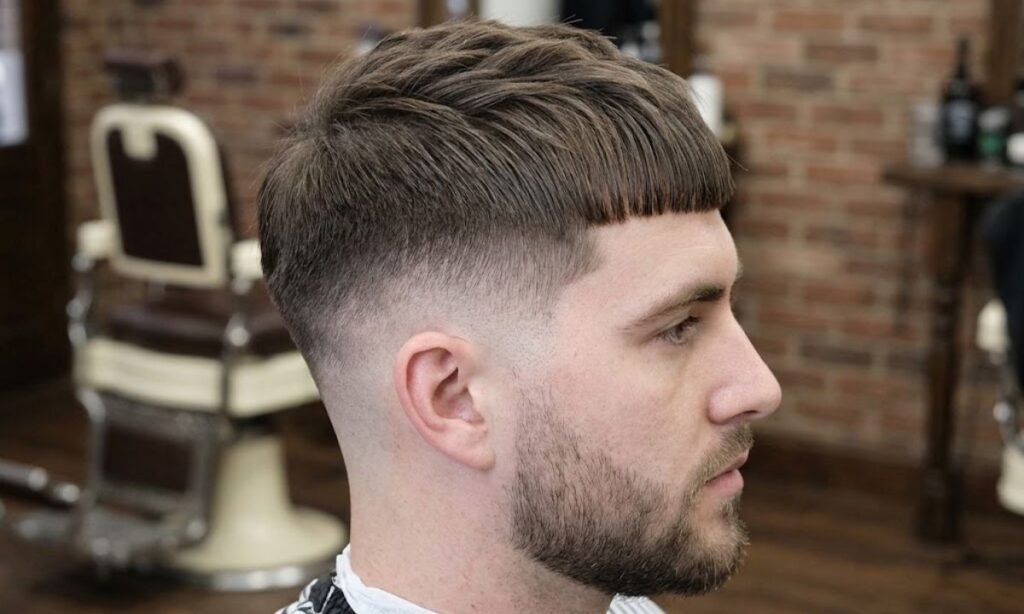
A burst fade with a French crop pairs a short, forward blunt fringe with sharp sides. It’s practical and stylish.
Straight hair suits it because the fringe lies flat by itself.
Leave about two inches on top and cut the fringe straight across. Add a pinch of matte paste for natural movement.
This style is great for fine hair that lacks height.
3. Burst fade with a textured fringe

Try a mid burst fade with a textured fringe if a straight line feels too stiff. The point-cut fringe breaks the edge into soft pieces.
You get movement without bulk.
Ask your barber to chip into the ends. A bit of texture spray helps the pieces stay apart.
It’s a strong option for thick hair, since the cutting removes weight.
4. Burst Fade Crew Cut
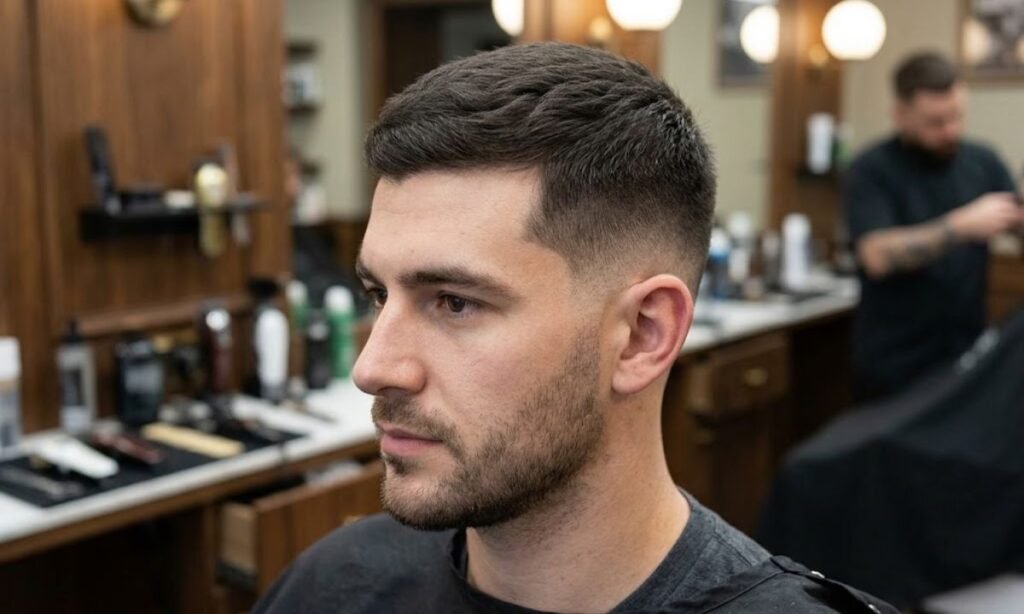
The crew cut has been a classic for decades. With a burst fade, it gets a modern curved edge around the ear.
The top is short, and the front stays slightly longer.
This cut suits a professional haircut setting, and it needs almost no care. A bit of finger styling lifts the front.
Good for guys who want clean and quick.
5. Burst Fade Ivy League

The Ivy League cut is a longer crew cut with a side part. Paired with a burst fade, it looks smart and a little vintage.
The top stays long enough to comb over.
Use a hairbrush and a bit of hair styling cream to shape the part. The curve at the ear keeps it from looking old fashioned.
It suits straight hair perfectly since it combs neatly.
6. Burst Fade Caesar Cut

A Caesar cut has a short, even top with a straight fringe. With a burst fade, the sides drop away in a clean curve.
It’s a strong match for fine hair and receding temples.
The fringe hides a higher front hairline. Keep it about an inch long and comb it forward.
This one needs almost zero hair volume control.
7. Burst Fade Side-Swept Hair

A short side-swept style gives you a neat, grown up look. The side part is crisp, and the top sweeps across.
A low burst fade keeps it work friendly.
Use a lightweight product so the hair doesn’t clump. Blow-dry the front up, then brush it across.
The result looks polished with only a few minutes of effort.
Medium-length everyday styles
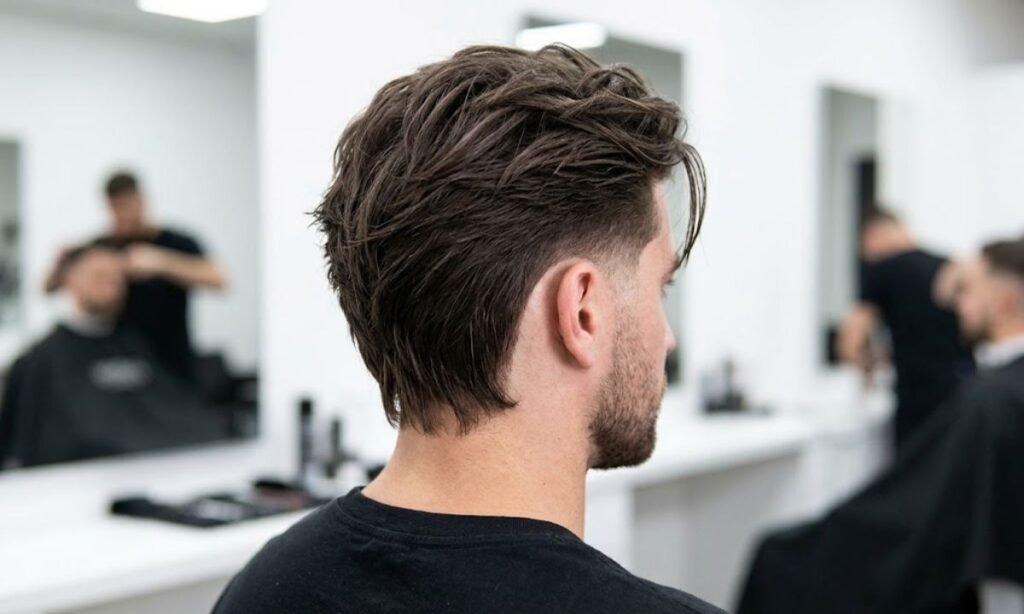
These give you more options, and they let you change your look from day to day. They need a little product and some practice.
Straight hair holds a shape well when you prep it right.
8. Side-swept burst fade
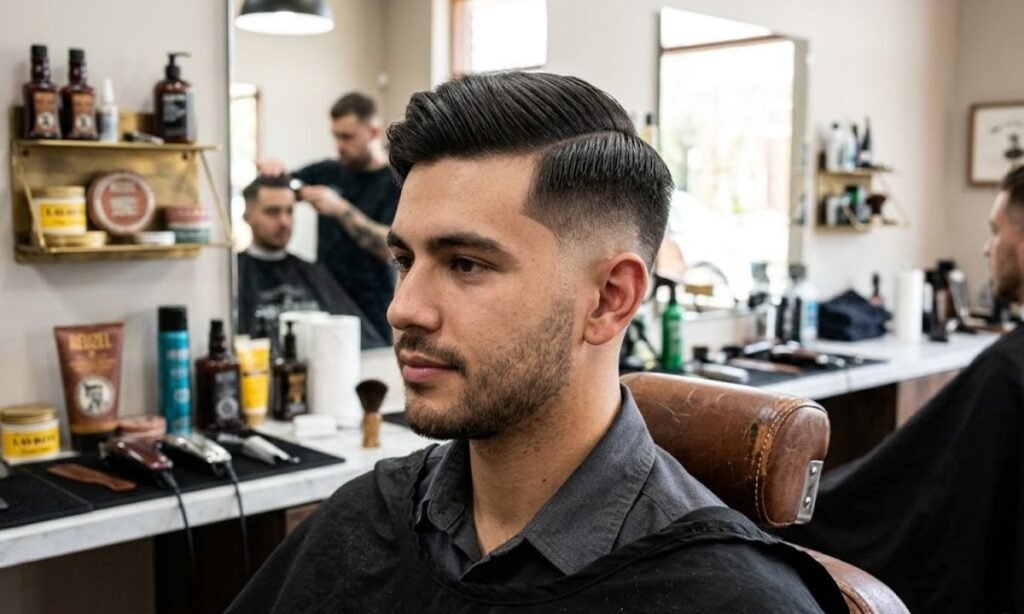
This is a popular pick because it works almost everywhere. The top is three to four inches, and you sweep it to one side.
The burst fade frames the sides neatly.
Start with towel-dried hair and add styling cream. Blow-dry in the direction you want it to lie.
A light spritz of texture spray keeps it in place.
9. Burst fade quiff
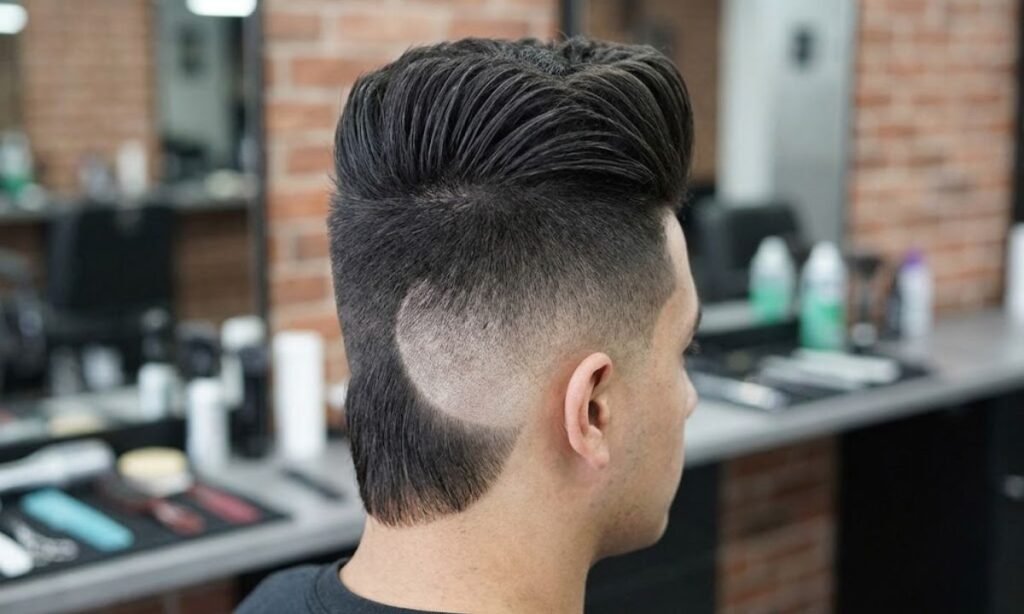
A burst fade with a quiff lifts the front into a soft wave. It’s the cut that gives straight hair real height.
Use a high burst fade for bold contrast, or a mid one for balance.
You’ll need a blow-dryer and hair clay. Lift the roots as you dry, then shape the front with your fingers.
Try a high burst fade with a quiff if you want a standout look.
10. Burst fade with a middle part

A burst fade with a middle part looks relaxed and a bit retro. The center part splits the hair evenly, and both sides fall down.
It suits oval and long face shapes.
Straight hair makes this easy, since it falls cleanly into place. Keep the sides slim with a mid burst fade.
Use matte paste to stop the part from flopping open.
11. Textured Burst Fade

A textured burst fade relies on choppy layers. The textured top looks lived in and a bit messy on purpose.
It hides a lack of natural movement in flat strands.
Ask for razor or point cutting on top. At home, work in texture powder and tousle it.
It’s great for fine hair that needs the look of more volume.
12. Natural Flow Burst Fade
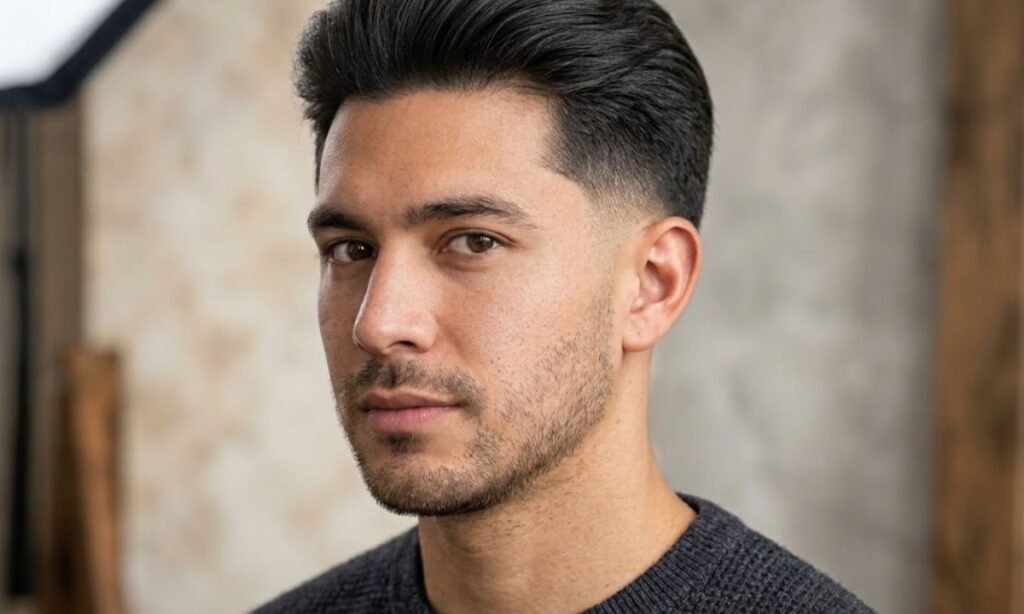
This style lets your hair fall the way it wants. The barber trims it for shape, and you don’t force any direction.
It works with your hair growth direction, not against it.
It’s perfect if you hate styling. A little lightweight product and a quick comb are enough.
The burst fade does the heavy lifting around the ears.
13. Messy Straight Hair Burst Fade
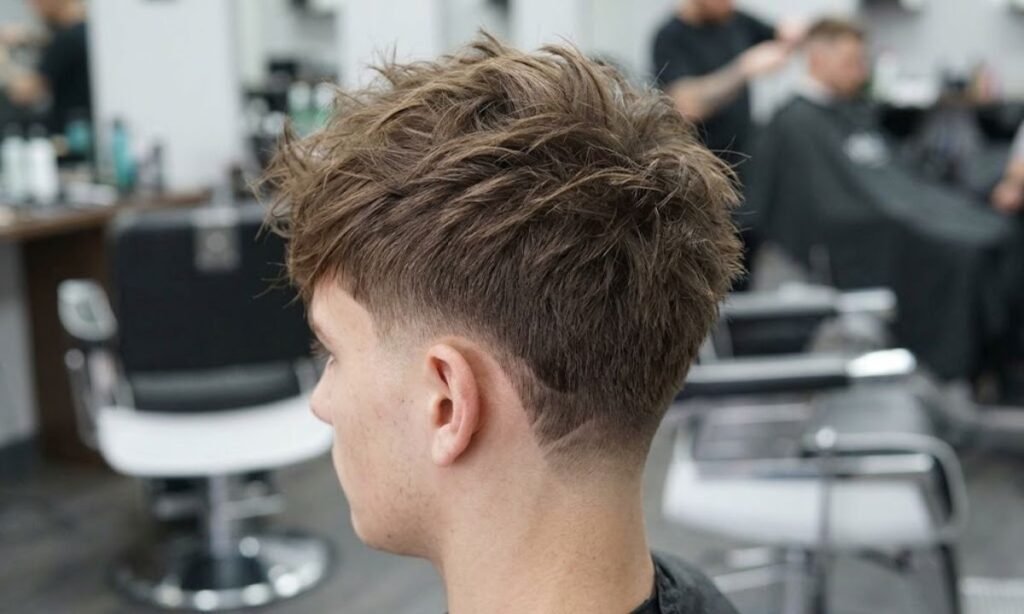
Sometimes a bit of chaos looks good. The messy version uses uneven layers and a loose finish.
It looks casual, and it’s very forgiving on bad hair days.
Use hair clay and rough it up with your fingers. Don’t overdo the product, or it looks greasy.
The burst fade keeps the sides neat so the mess looks intentional.
14. Easy Everyday Burst Fade

This is the cut for people who want zero drama. The top is medium, the sides are tidy, and the finish is soft.
It works for work, school, and weekends.
Expect a five-minute routine at most. A dab of styling cream and a quick comb do it.
It’s the best everyday hairstyle for a first burst fade.
Bold styles with length at the back

These cuts show off the main idea of the burst: short sides and a longer back. They take more attention, and they stand out.
They also need good communication with your barber.
15. Burst fade faux hawk

A burst fade faux hawk gathers the top into a ridge. The sides stay short, so the center looks tall.
A high burst fade makes the ridge pop.
Use strong hold clay and push the sides inward as you shape. Finish with a light texture spray.
It suits straight hair well, since strands cooperate when you style them.
16. Straight-hair burst fade mullet

The straight hair burst fade mullet is the headline act. Short sides, a textured top, and a longer back create the look.
Straight hair gives a sleek, almost silky tail.
Ask for a semicircular arc around each ear so the back stays long. Keep the nape length a few inches past the collar.
This modern mullet haircut has gone from joke to fashion statement.
17. Burst fade mohawk

A burst fade mohawk for straight hair keeps a strip of length in the middle. The curved sides frame it like a picture frame.
It’s loud, and many people love that.
Style it up with hair clay and a blow-dryer for root lift. A bald fade at the sides makes it sharper.
Expect more frequent fade refresh visits.
18. Burst Fade With Long Back Layers

Here the back has layers that give movement. The burst fade keeps the sides short, so the layers stand out.
It’s good for people who want a longer back with shape.
Tell your barber to layer the lower hair, not just chop it. This stops the back from looking heavy.
A bit of hair styling cream keeps the ends smooth.
19. Burst Fade With Straight Hair Flow

This style lets the length fall in smooth lines. The sides curve in a burst fade, and the back flows straight down.
It shows off healthy, silky straight hair.
Brush it smooth, then use a lightweight product to reduce frizz. Avoid heavy wax, since it weighs hair down.
It’s a calm, elegant take on a bold shape.
20. Burst Fade With Extended Back Length
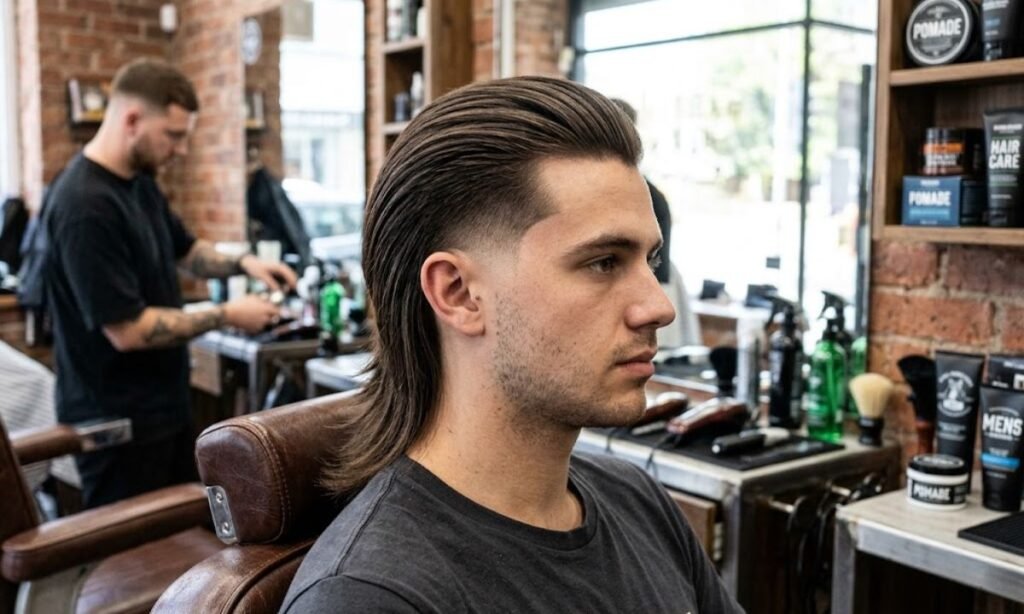
An extended nape haircut pushes the back past the shoulders or close to them. The curved fade stops where the long part begins.
It takes patience to grow, but the result is dramatic.
Don’t skip trims. Trim the ends every eight to ten weeks to avoid splits.
The contrast between short sides and long back is the whole point.
21. Burst Fade With a Sleek Back Tail
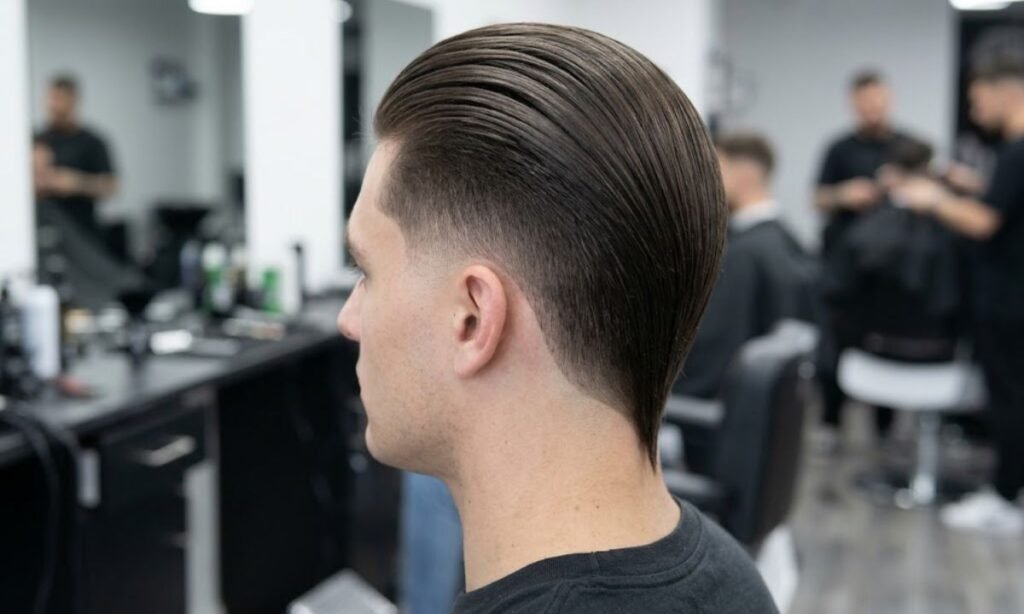
This one finishes the back in a narrow, tidy tail. The burst fade frames the ears, and the tail falls down the neck.
It looks sharp on glossy, straight hair.
Keep the tail slim and cut the edge cleanly. Use a drop of styling cream to smooth flyaways.
A blended neckline stops the tail from looking like an afterthought.
Burst Fade Cutting Techniques for Straight Hair
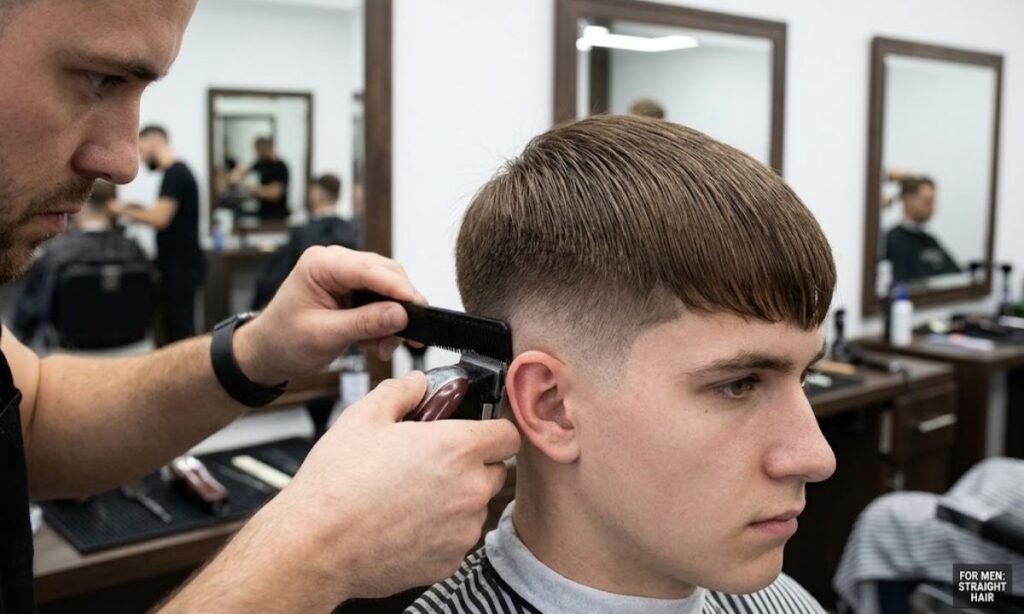
A great burst fade depends on how the barber blends, not just which guard they pick. The technique decides whether the cut grows out nicely or looks patchy by day ten.
Knowing the basics helps you spot a skilled barber.
You don’t need to cut it yourself. Still, understanding the steps lets you ask better questions and judge the result.
Here’s what happens behind the scenes.
How clipper blending prevents harsh weight lines

Barbers blend in layers, moving from a short guard number to a longer one. They flick the clipper out at the end of each stroke so the hair fades smoothly.
This stops a hard shelf from forming.
Straight hair needs extra patience, since lines show easily. Many barbers use a clipper over comb pass to soften the middle zone.
If you see a visible line, ask for more fade blend before you leave.
Why the transition around the ear needs careful detailing

The ear contour is where the burst lives or dies. The barber has to carve a smooth, curved edge around the ear without nicking it.
A good one works slowly here.
The curve should flow into the sideburns and then into the nape. If the arc looks lopsided, the whole cut feels off.
Check both sides in a mirror, and ask for a fix right away.
How to preserve a natural-looking outline on straight hair
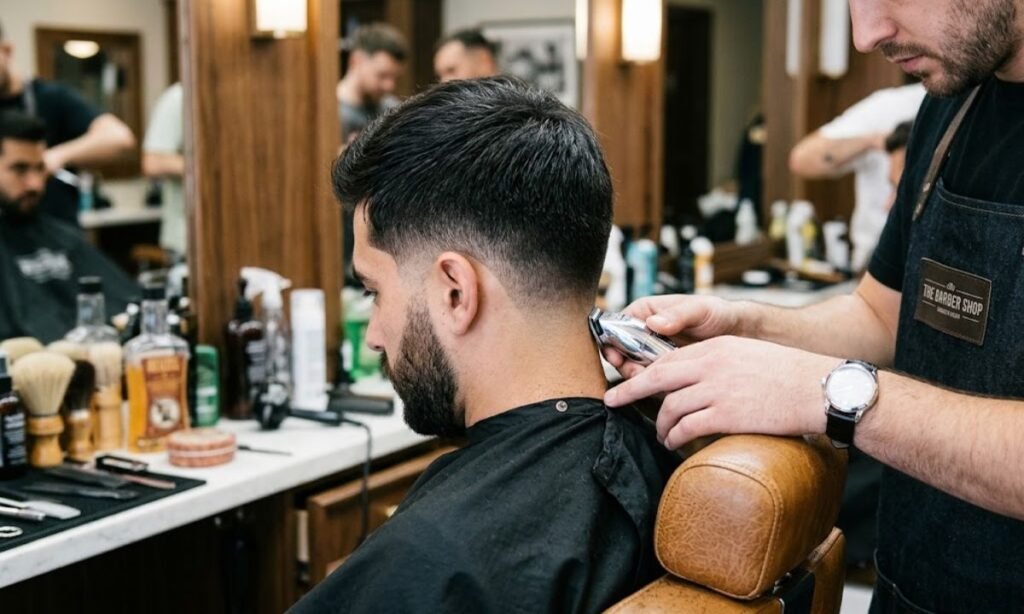
A sharp outline looks great on day one, but a very tight one grows out badly. Ask for clean edges that follow your natural hairline.
This keeps the cut neat for longer.
Avoid squared-off lines unless you love frequent visits. A slightly softer neckline cleanup gives you more days before a haircut touch-up.
It also looks more natural with a beard blending finish.
How to ask your barber for a burst fade on straight hair
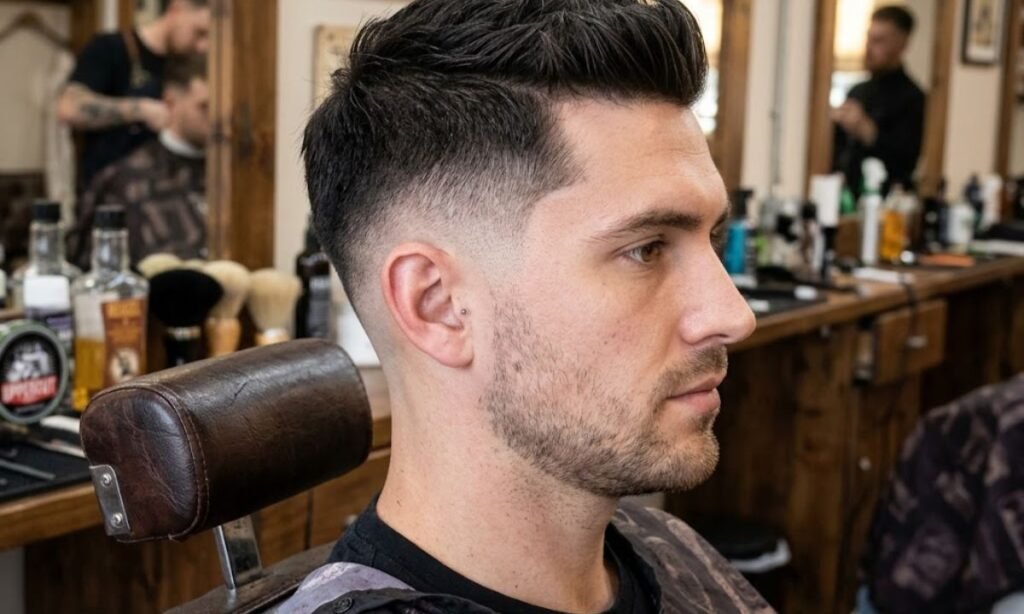
Most bad haircuts come from bad communication. You think “short on the sides,” and your barber hears “skin everywhere.”
A clear request fixes that.
Wondering how to ask a barber for a burst fade? Be specific, bring photos, and describe your hair honestly.
This section gives you the exact words.
The six things to specify
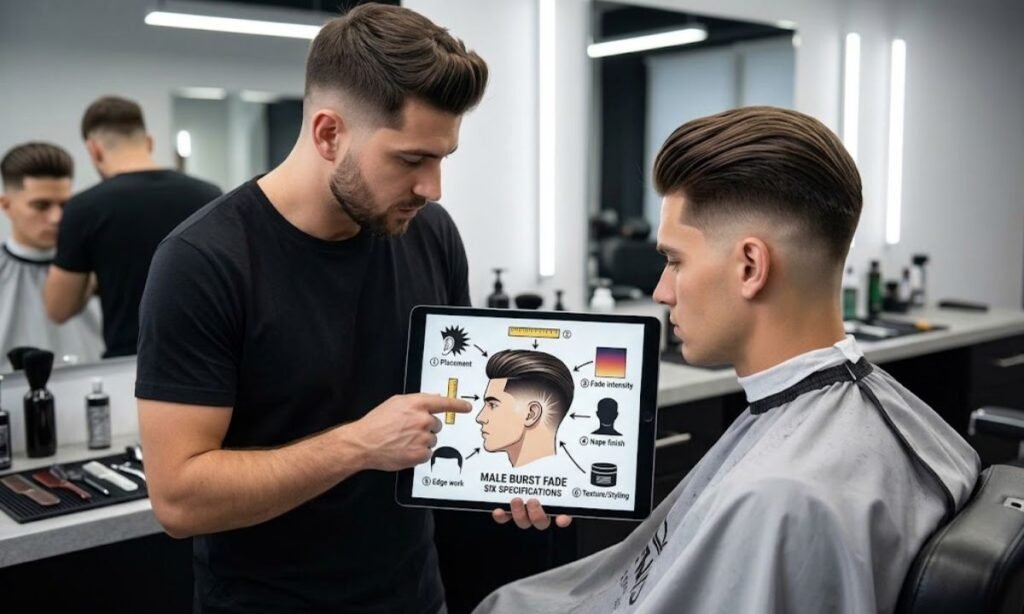
Here’s a quick checklist that keeps the barber instructions simple:
- Fade height: low, mid, or high.
- Finish: skin, shadow, or a #1 guard.
- Top length: give it in inches or show with your fingers.
- Back length: keep it long, trim it, or square it.
- Neckline: blocked, rounded, or tapered.
- Fringe and part: blunt, textured, side part, or center part.
Say these six, and you cover about 95 percent of what your barber needs.
Anything else is a bonus.
Reference photos and a script to use

Bring a side-profile photo and a back-view photo. A front photo alone hides the curve and the nape.
Try to find pictures of straight hair like yours.
Here’s a script that works: “I’d like a mid burst fade with a shadow finish. Keep three inches on top, and leave the back long.
Please blend the neckline so it grows out smoothly.”
If you’re unsure, ask for a trial run on the low burst fade first. You can always go shorter.
You can’t glue hair back on.
How to style a burst fade with straight hair

Styling is where a good cut becomes a great one. Straight hair responds fast to products, and a few small moves change everything.
You don’t need a shelf of bottles.
Wondering how to style a burst fade with straight hair? Start from the right base and use the right amount.
Here’s the quick version.
A five-minute styling routine

Start with towel-dried hair, not soaking wet. Blow-dry the front up and back with a blow-dryer to build root lift.
Then work in a pea-sized amount of product.
Use your fingers for shape, and grab a hairbrush for the part. Finish with a quick spritz of texture spray to lock it in.
That’s your daily styling done in five minutes.
If you skip the dryer, you’ll lose volume by lunch. Even thirty seconds helps.
Cool air at the end sets the shape.
Product type by hair behavior

Match your product to your hair texture. Here’s a simple guide:
| Hair behavior | Best product | Why it works |
|---|---|---|
| Fine, flat | Texture powder, lightweight product | Adds grip and lift without weight |
| Thick, bulky | Hair clay, strong hold | Controls bulk and shapes the top |
| Coarse, stiff | Matte paste | Calms texture, keeps a matte finish |
| Smooth, silky | Hair styling cream | Adds control and shine |
Start small, since you can always add more. Too much product makes straight hair look greasy and flat.
If it feels sticky, you used too much.
Burst fade vs drop fade vs taper vs temple fade

These four fades get mixed up constantly. They share a lot, but each has a different shape.
Knowing the difference helps you pick the right one.
You’ll often see people ask about burst fade vs drop fade for men or burst fade vs temple fade. The short answer is the curve and where it sits.
The table below clears it up.
At-a-glance comparison

| Fade | Shape | Best for | Upkeep |
|---|---|---|---|
| Burst fade | Curves around the ear, keeps the back long | Mullets, quiffs, longer backs | Medium |
| Drop fade | Dips lower behind the ear | Clean, curved looks | Medium |
| Taper fade | Gradual, subtle shortening at the edges | Office and professional haircut | Low |
| Temple fade | Short at the temples only | Subtle and compact looks | Low to medium |
The burst fade is the only one built around the ear arc and a longer back. That’s what makes it stand out.
A straight hair taper fade feels calmer, and a drop fade feels sleeker.
Which fade should you choose?
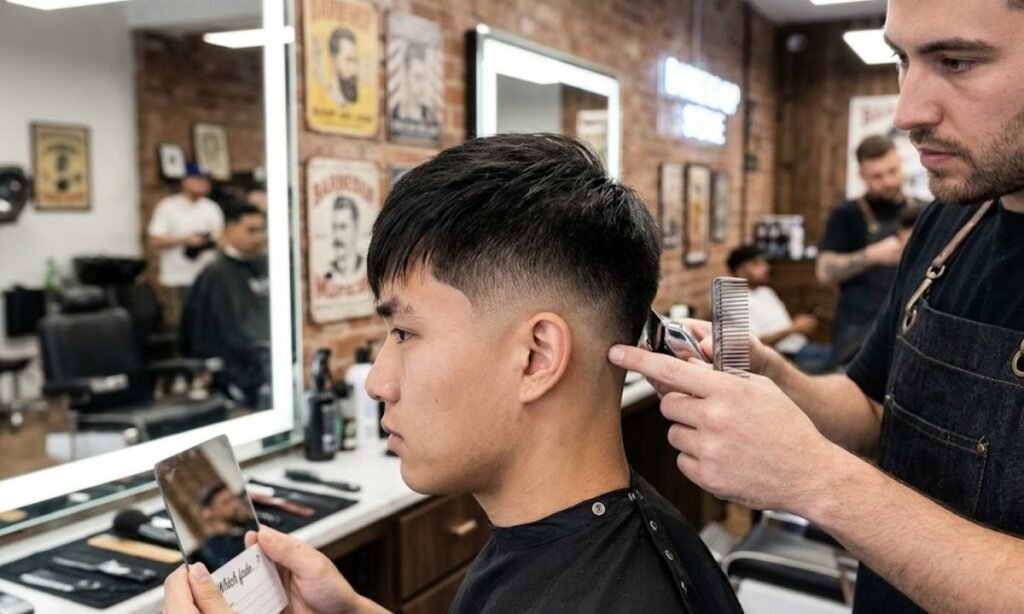
Pick the burst fade if you want a longer back or a mullet vibe. Pick a taper if you work in a conservative office.
Pick a drop fade if you like a clean curve with a flat back.
A temple fade suits guys who want tiny changes. A low taper fade for straight hair is a safe starting point.
If you’re curious, ask your barber to show you each option on a photo.
Burst fade with a beard

Many men ask whether a burst fade with a beard works. It does, and it looks sharp.
The trick is beard blending at the sideburns.
Tell your barber to connect the hair at the sideburns to the beard smoothly. A skin finish at the sides gives a dramatic contrast.
A shadow finish feels more natural, and it hides patchy beard edges.
Maintenance and grow-out

A burst fade doesn’t last forever. Short hair means the sharp lines blur quickly.
Plan for upkeep before you commit.
The average hair growth rate is about half an inch a month. That’s why a fade looks fresh for two weeks, then softens.
Here’s how to handle it.
Signs it’s time for a refresh
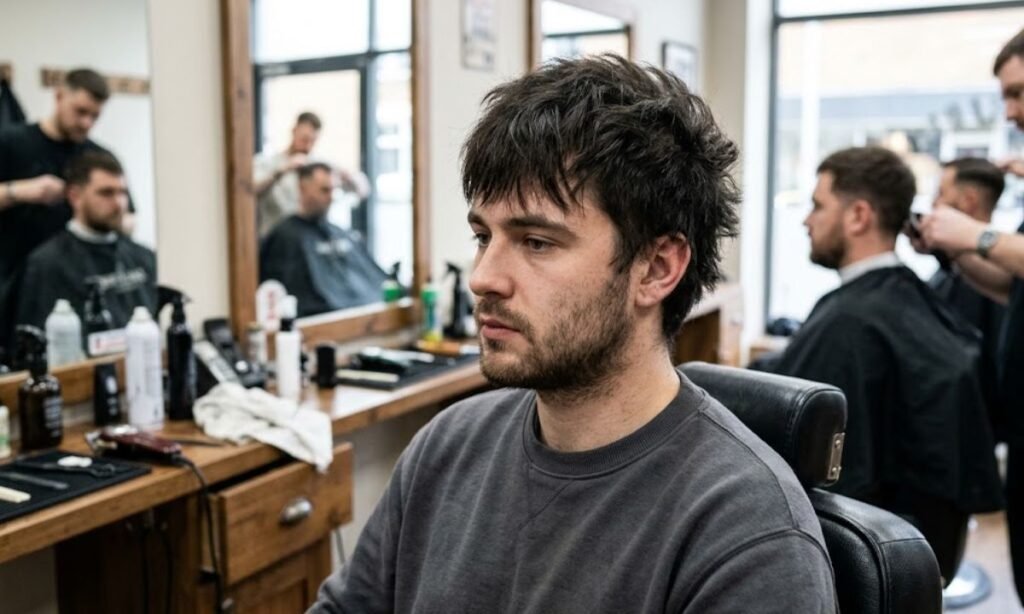
You’ll notice the fade transition looks fuzzy. The neckline starts to creep down, and the clean edges go soft.
That’s your cue to book a fade refresh.
Skin and bald fade finishes need a refresh every two weeks. A shadow finish or short guard finish stretches to three or four weeks.
Ask your barber for their honest timeline.
Wondering how often you should refresh a burst fade? Most people land between two and four weeks. It depends on how crisp you like the lines.
A quick haircut touch-up often costs less than a full cut.
Home care between visits

Wash your hair every other day with a mild shampoo. Rinse it well, since leftover product builds up on short sides.
A soft towel is gentler than rubbing hard.
Keep the neckline tidy with a small trimmer, but don’t touch the arc. Mistakes at the ear are hard to fix.
For how to maintain a burst fade haircut, think light touch and patience.
Can you grow out a burst fade? Absolutely. The haircut grow-out takes about three months, and a tapered cleanup mid-way keeps it neat.
The longer back is already ahead of the game.
Common mistakes and scalp considerations
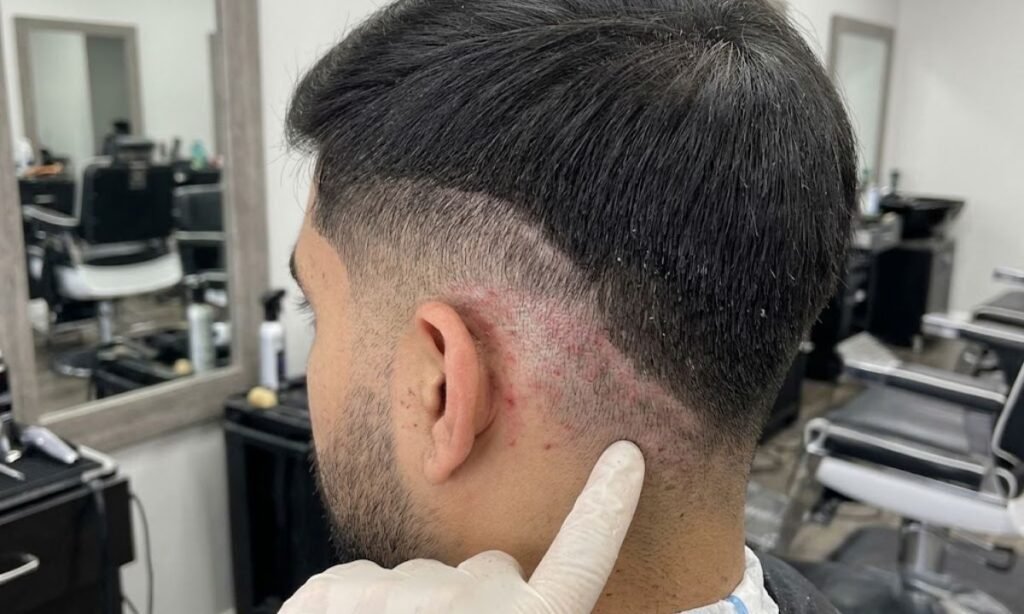
Even a great idea can go wrong. Most haircut mistakes come from rushing, vague requests, or picking the wrong cut.
Let’s go through the common ones.
Your scalp also matters. Short sides expose skin to razors, friction, and the sun.
A few smart steps keep everything calm.
Cut-selection and styling mistakes

- Going too short on top: it makes straight hair look flat and sparse.
- Skipping the blend: an abrupt fade transition leaves a hard shelf.
- Over-thinning: too much thinning leaves fine hair see-through.
- Ignoring the cowlick: cutting against it causes stubborn spikes.
- Using heavy product: thick wax makes flat hair look greasy.
- Skipping photos: words alone cause misunderstandings.
Most of these are easy to dodge. A short chat before the cut saves a long grow-out.
If you spot a mistake, speak up right away.
When to skip a skin-short finish

Skip the skin finish if you have a sensitive scalp. Close shaving can cause razor bumps, folliculitis, and general skin irritation.
A #1 guard or a shadow finish is kinder.
If you do get scalp irritation, apply a gentle, fragrance-free moisturizer. Avoid picking at bumps.
If redness lingers or spreads, see a doctor. It’s not worth guessing.
A burst fade haircut for sensitive scalp types works best with a soft finish. Ask the barber to use a clean blade, and skip harsh aftershave.
Your skin will thank you.
Is a burst fade suitable for professional settings?

It can be. A low burst fade with a short guard finish and a neat top looks polished. Most offices won’t blink.
A mid burst fade with a side part also works in many workplaces.
Bold versions, like a mohawk or a very high burst fade, may raise eyebrows in conservative jobs. Check your dress code first.
A school-friendly haircut follows the same rule: keep contrast mild.
You can also checkout this article as well Burst Fade Mullet: Styles, Hair Types, Barber Guide and Maintenance
Burst fade straight hair Frequently Asked Question
What is the best burst fade for straight hair?
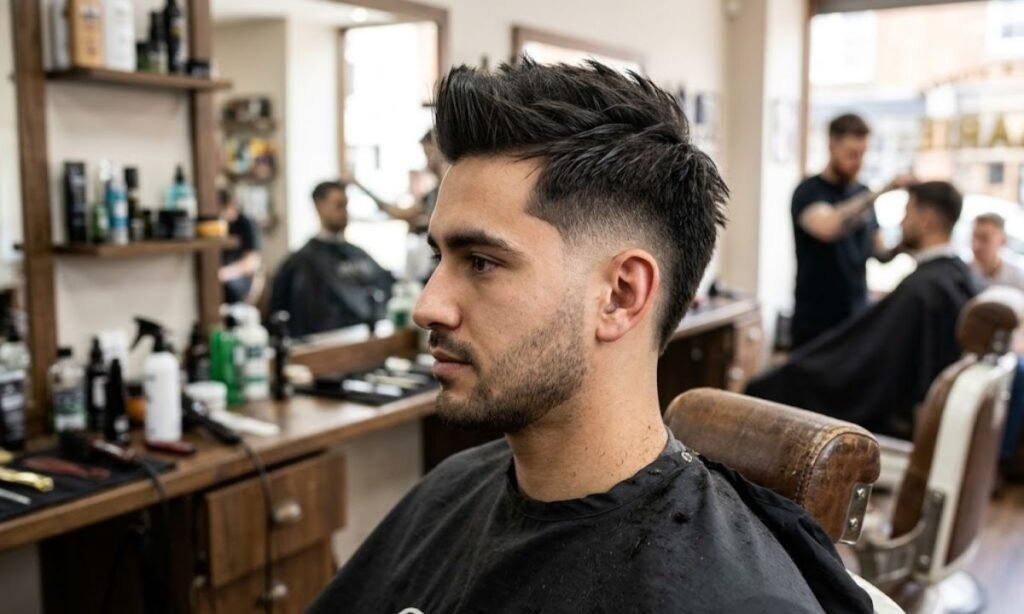
A low burst fade with a shadow finish is the safest pick. It suits most hair density types and works in any setting.
If you want more drama, step up to a mid burst fade.
How short should a burst fade be?
The sides can go from a #1 guard to skin, depending on your comfort. The top usually stays two to four inches.
The longer back stays however long you like.
Can fine straight hair pull off a burst fade?
Yes, but be careful. Go with a low burst fade for fine straight hair and keep the top a little longer.
A textured top helps hide thin spots.
How often should you refresh a burst fade?
Every two to four weeks works for most people. Skin finishes need more frequent visits.
A shadow finish gives you extra time.
What should you tell your barber before a burst fade?
Give the fade height, finish, top length, back length, neckline, and fringe style. Bring a side-profile photo and a back-view photo.
That covers what to tell your barber before a burst fade.
Is a burst fade suitable for sensitive skin?
It can be, if you avoid skin-short sides. A shadow finish or short guard finish reduces razor bumps and skin irritation.
Talk to your barber about your skin before they start.
Final Thoughts

A burst fade gives straight hair shape, contrast, and a modern edge. You pick the height, finish, and length, and your barber does the rest.
Start simple, then adjust as you learn what suits your head.
Bring photos, speak clearly, and plan for a fade refresh every few weeks. Treat your scalp kindly, and the cut will repay you.
Which of the 21 styles are you trying first? Drop a comment, share this with a friend who needs a new cut, and tell us how your barber visit went.
Last updated: October 2026. We’ll refresh this guide as new trends and techniques show up.

I’m Michael Charles, the creator of MegaCrazes—your source for fresh hairstyles, sharp haircuts, and simple hair-care inspiration. Find your style. Own your look.