

Updated November 2026
Will it suit my face? Will my barber get the curve right? Those two worries sit behind almost every search for this cut.
This guide answers both, then walks you through every detail you’ll want before you sit in the chair.
Quick Answer
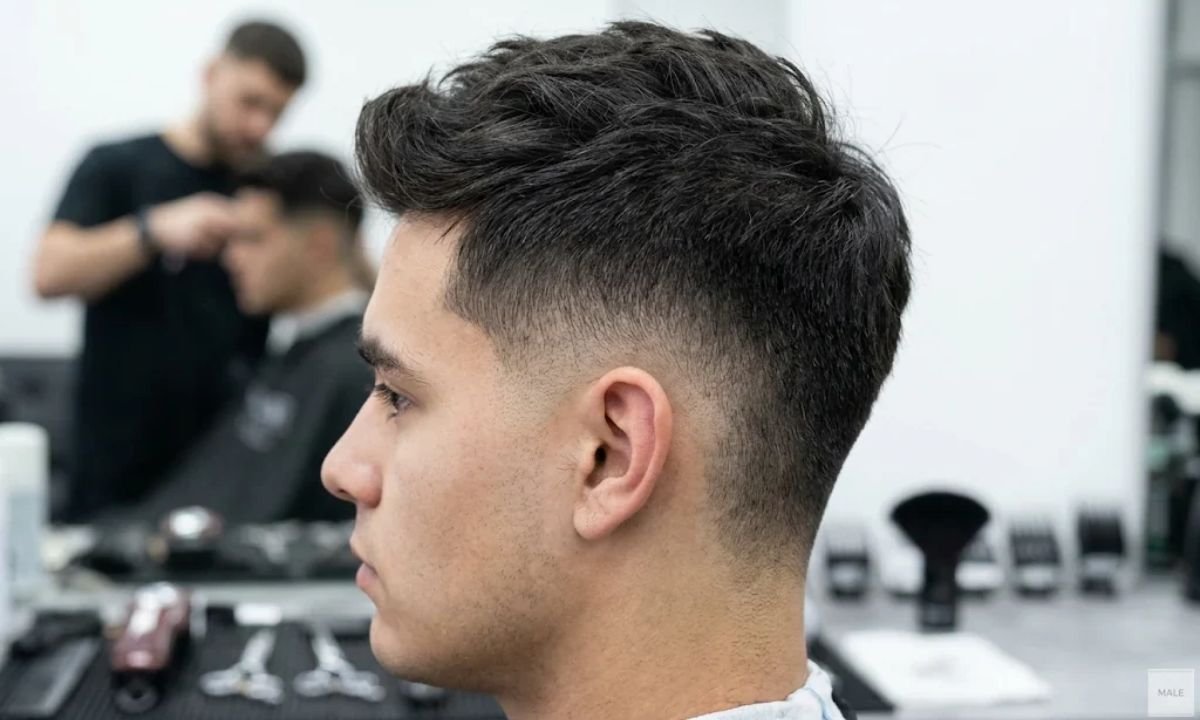
A taper low burst fade is a short haircut where the sides fade down gradually, and a curved burst fade wraps around the ear in a rounded shape. The fade starts low, near the ear and nape area, so the cut looks neat without looking harsh.
It works on most hair types, from straight hair to coily hair. You need about 2 to 4 inches on top, and a barber visit every two-to-four-week stretch keeps it sharp.
Tell your barber this: “Low taper at the back, burst fade curving around the ears, and leave the top long enough to style.” That one sentence covers 90 percent of what you want.
What a Taper Low Burst Fade Is
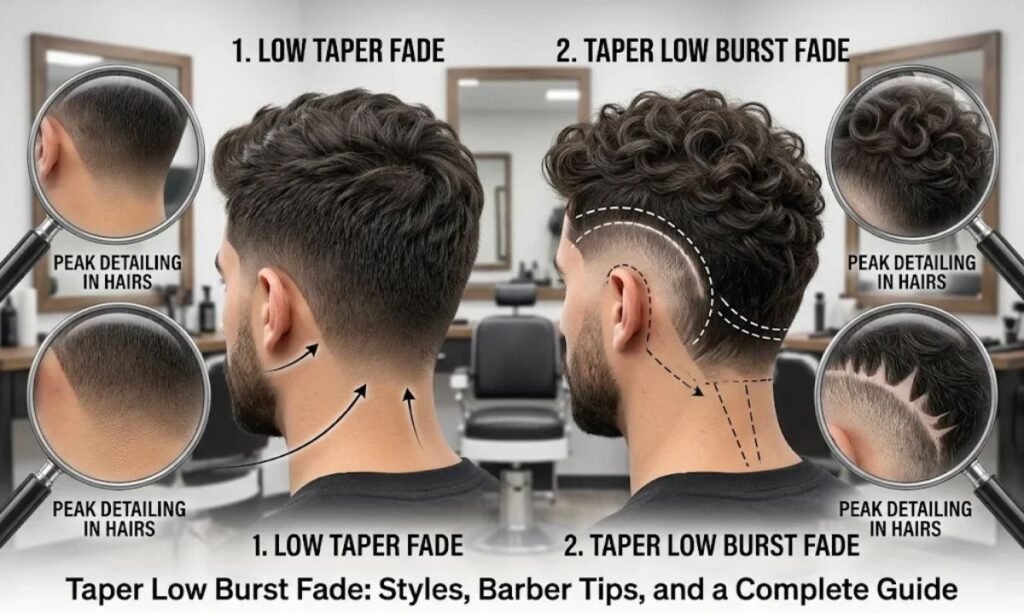
Think of it as three ideas stacked into one haircut. The taper trims the back and sides gradually. The low placement keeps the shortest hair near the bottom. The burst adds a half-circle around the ear.
The result looks like someone drew a soft arc behind your ear and faded the hair away from it. Hair on top stays full, and the sides melt into the skin or a tight clipper guard length.
You’ll also hear it called a low burst fade haircut or a low taper burst fade. Same idea, different words. Barbers use all of them, so don’t panic if your shop says it another way.
Taper vs Low Fade vs Burst Fade
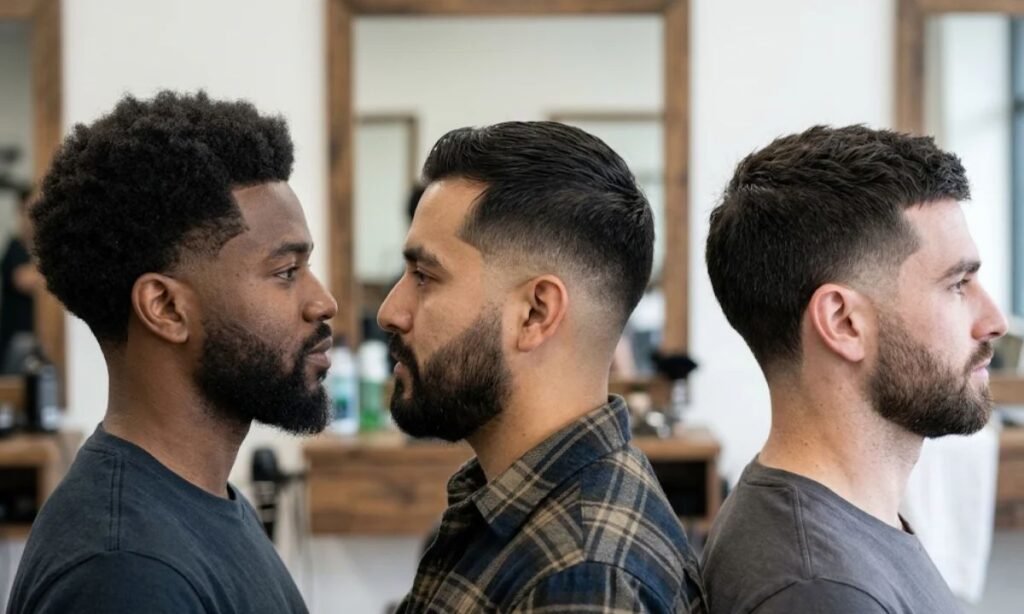
These three names get mixed up constantly. A guy walks in asking for a fade, walks out with a taper, and feels a little cheated. Let’s clear it up so you’re never that guy.
Each cut handles fade height and shape in a different way. Once you see how, the taper low burst fade makes more sense, because it borrows from all three.
Taper
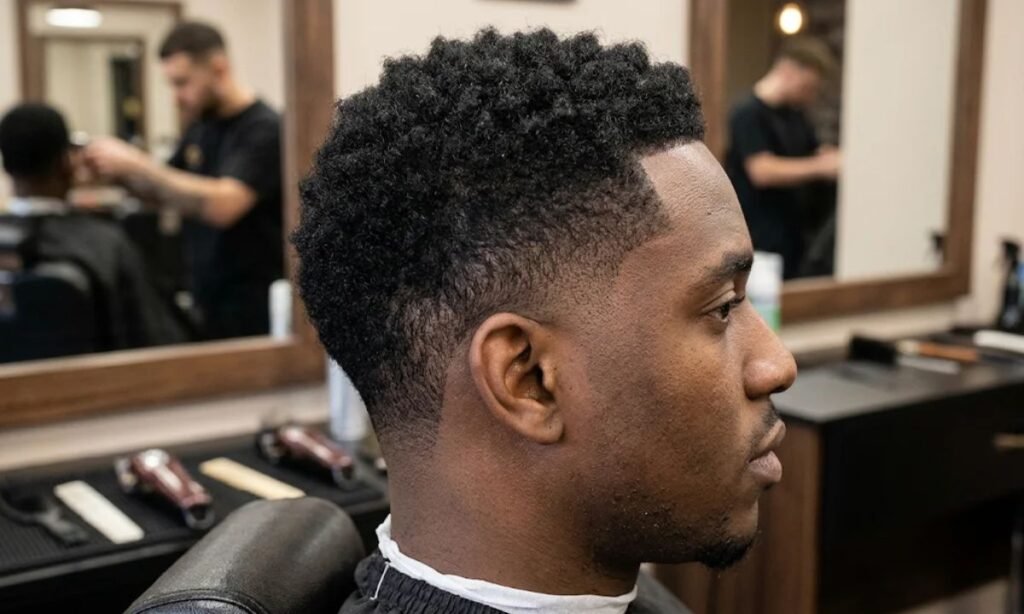
A taper keeps things subtle. The hair gets shorter toward the neckline and around the ears, but it rarely drops to bare skin. It’s the classic gentleman’s cut, the one that looks fine at a wedding and a Monday meeting alike.
If you want a low taper fade with almost no drama, this is your base. People often choose a taper fade haircut first, then add a burst once they trust their barber.
Low fade
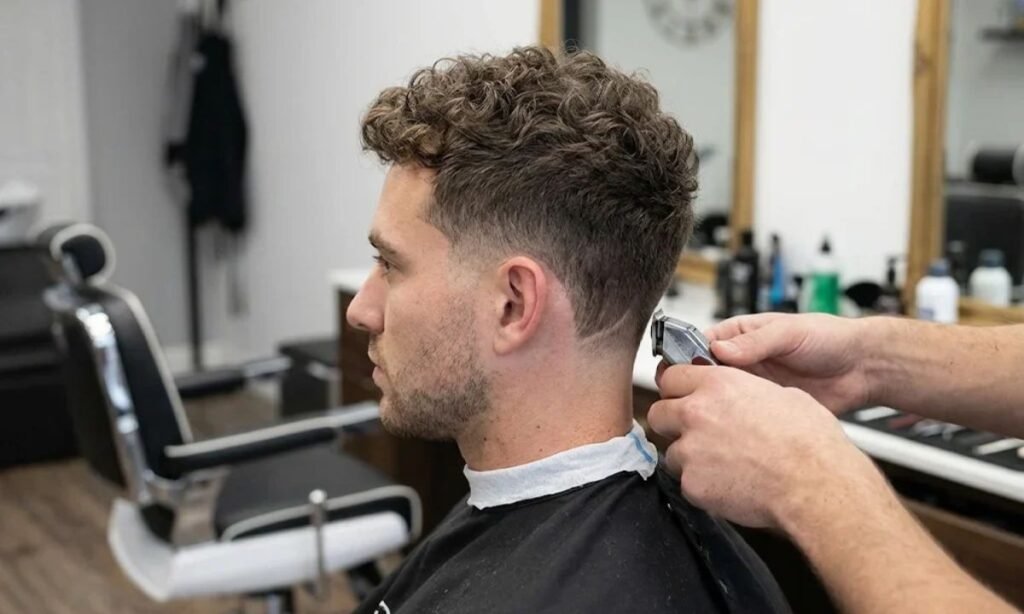
A low fade starts just above the ear and runs along the hairline at the back. The shortest section sits low on the head, so the cut stays clean and quiet. It’s a safe choice if your job is strict about looks.
The key difference from a taper: a low fade haircut can go down to skin. A taper often stops at a short guard. That’s the taper vs low fade question in one line.
Burst fade

A burst fade curves around the ear instead of running straight across. It leaves a rounded patch of longer hair behind the ear, then fades down and out. Picture a half-circle around the ear that bursts outward.
It’s the cut behind the burst fade mullet and the burst fade mohawk, where the back stays long. On a shorter style, it’s what gives the taper low burst fade its shape.
Who a Taper Low Burst Fade Suits
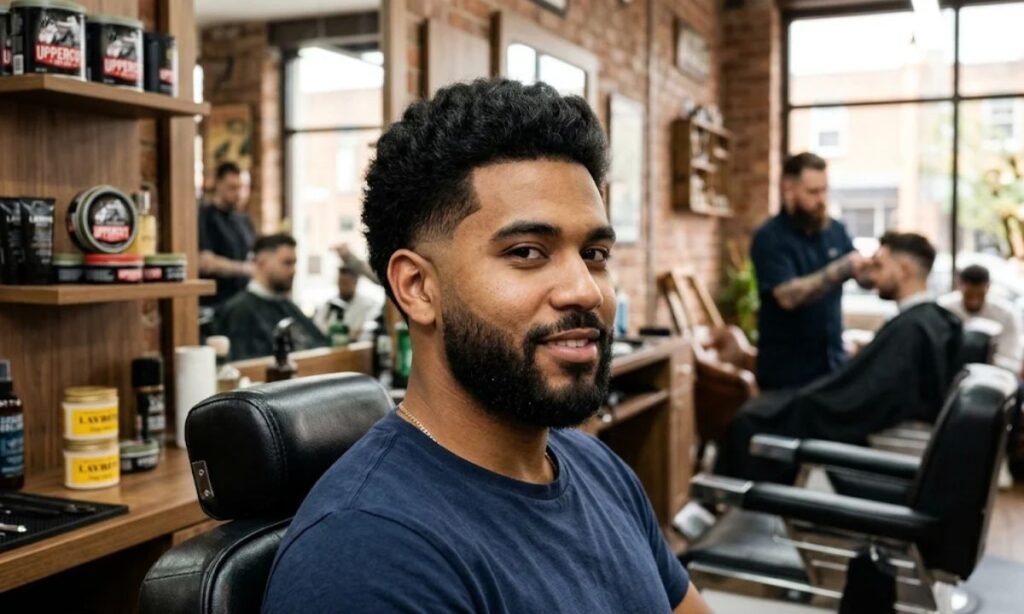
Good news first: this cut is forgiving. A low placement means you’re not exposing much scalp, so it flatters more people than a high burst fade ever could.
Still, face shape and hair density change how it looks. Let’s break those down so you can judge before you commit.
Face shapes
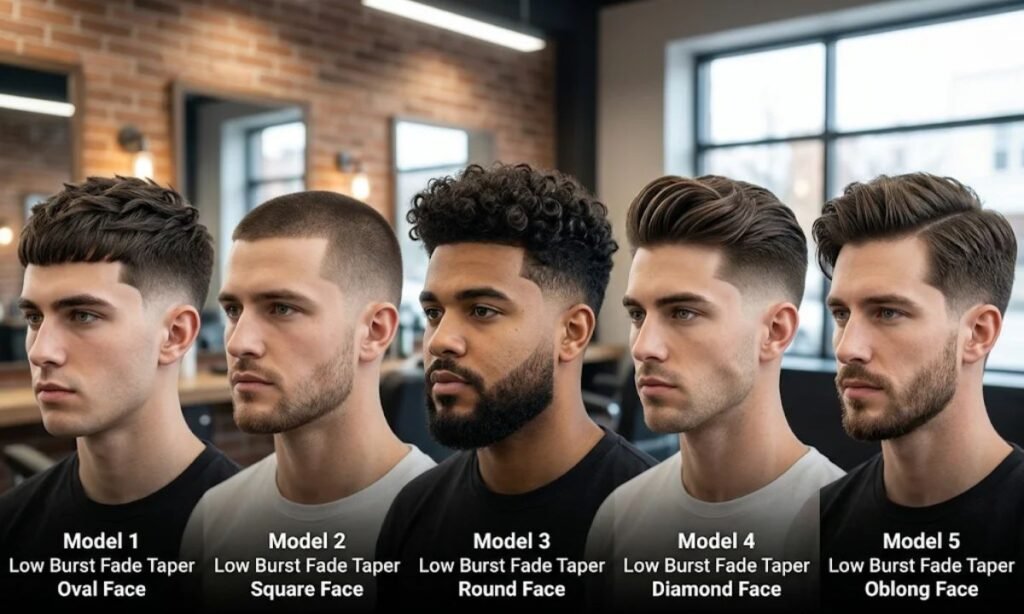
An oval face wears almost anything, so the burst looks great here. A square face gets softer edges from the curve, which balances a strong jaw. An oblong face does well if you keep the top shorter, so the head doesn’t look stretched.
A round face needs a bit of height on top to add length. The heart-shaped face pairs nicely with a textured fringe, which fills out the forehead area. Tell your barber your shape, and they’ll adjust the top.
Here’s a quick coffee-shop example. A friend with a round face asked for a mid burst fade and felt his head looked wider. Switching to a low burst with more crown length fixed it in one visit.
Hair types
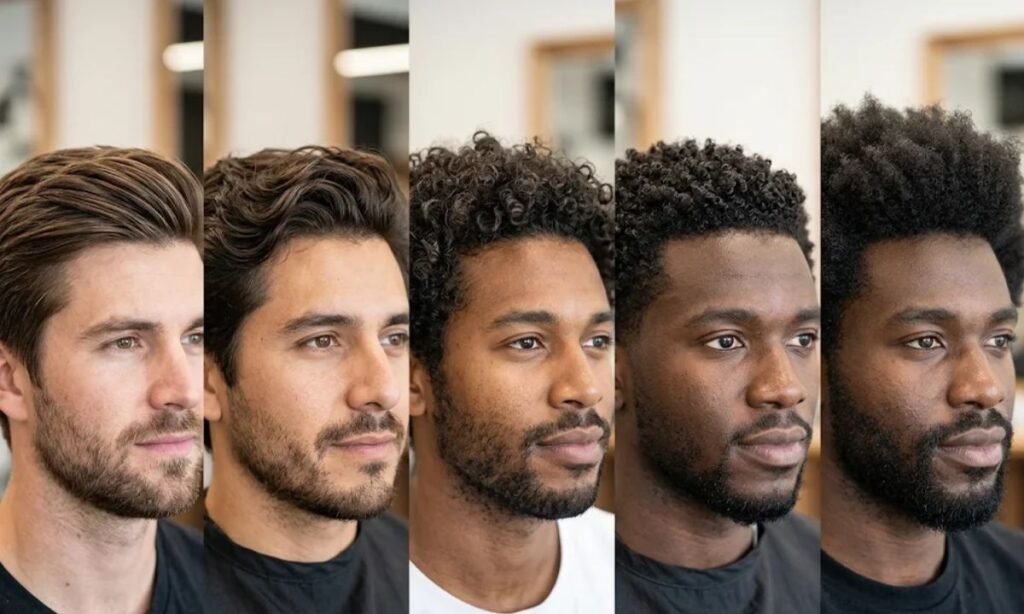
Straight hair shows every line, so blending matters most. Your barber needs a clean fade transition, or the curve looks choppy. A low taper fade for straight hair works best with a bit of texture powder on top.
Wavy hair and curly hair hide small mistakes and add natural hair volume. A low taper fade for curly hair or a curly burst fade gives you shape without much effort. For coily hair, the burst looks sharp and holds well, which is why a low taper fade for Black men is so popular.
Your natural curl pattern also decides how the top sits. Tight curls stand up, loose waves fall forward. A good barber reads this before cutting, so mention your natural hair texture when you sit down.
What Hair Length Do You Need for a Taper Low Burst Fade?
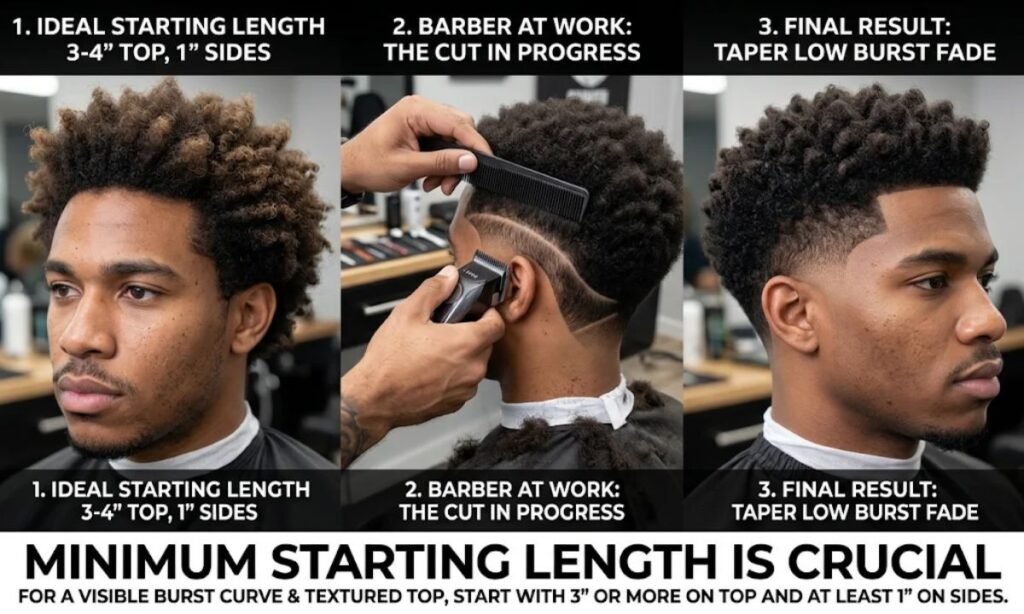
This is the question most guys skip, and it’s the reason many cuts fail. Hair length decides whether the burst shape shows up or disappears into a blob.
You don’t need a lot, but you need enough. Let’s look at the top, the sides, and what happens if you’re starting short.
How Long Should the Top Be to Show the Burst Shape?
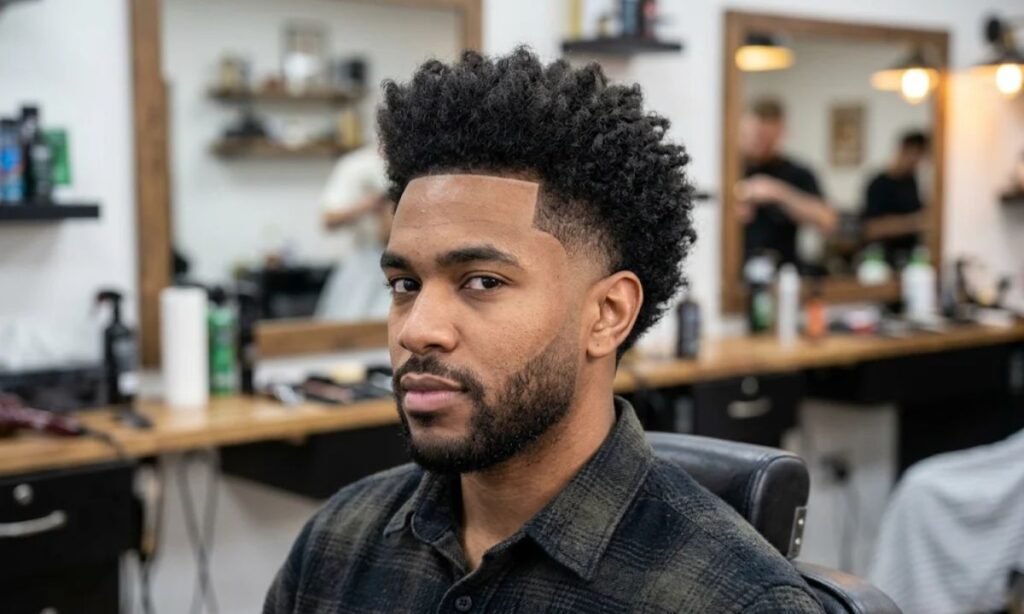
Aim for 2 to 4 inches on top. That gives your barber room to blend the curve into the longer hair and keeps the textured top looking full. Anything under 1.5 inches hides the contrast.
For a short top burst fade, 1.5 to 2 inches still works. You’ll just lose some styling options. If you want a forward fringe haircut or a textured fringe, go closer to 4 inches.
How Short Should the Hair Around the Ears Be?

Most barbers start the area around the ear with a #1 or #2 clipper guard, then blend upward. For a skin burst fade, they’ll go down to bare skin at the lowest point. That’s bolder, so think about your workplace first.
The length around the ears also sets how visible the curve is. Shorter means more contrast. Longer means a softer look. Pick based on how much attention you want.
Can You Get This Haircut With Very Short Hair?
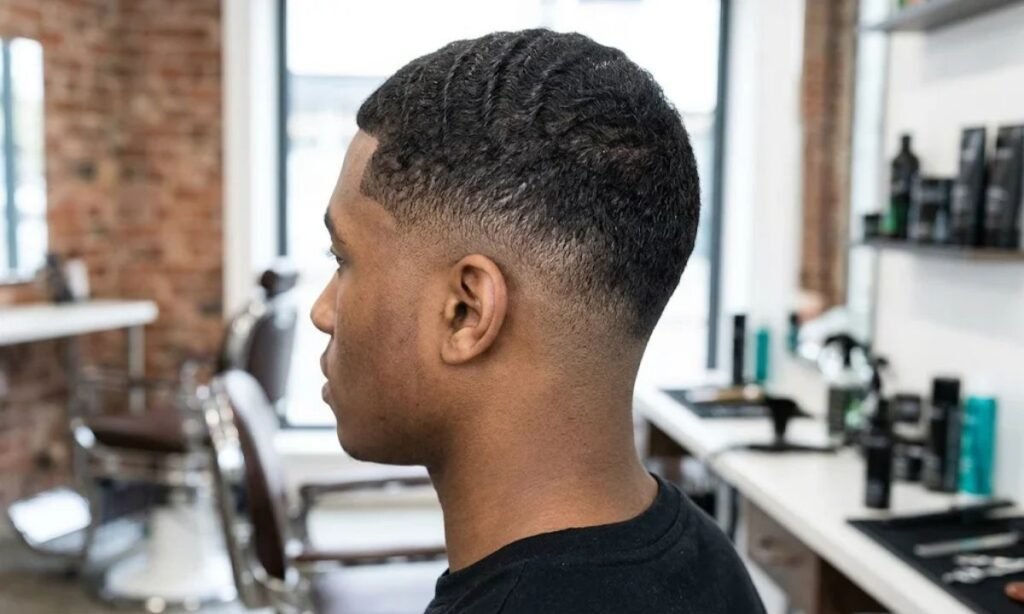
Yes, but it’ll look different. With a buzz-length top, the burst shows mostly as a shaded curve, not a shape with volume. It still looks clean, and it’s very low-maintenance styling.
If you’re growing out a buzz cut, wait until you hit around 1.5 inches. Ask for a low burst fade haircut then, and let the top catch up over time.
How Is a Taper Low Burst Fade Cut and Blended?

Here’s what your barber does behind the scenes. Knowing the steps helps you spot a good cut, and it helps you explain what you want. No tech talk, just the stuff that matters.
The whole cut comes down to four decisions: where the curve starts, how the ear gets rounded, how the back tapers, and how the top blends in.
Where Should the Burst Shape Start and End?
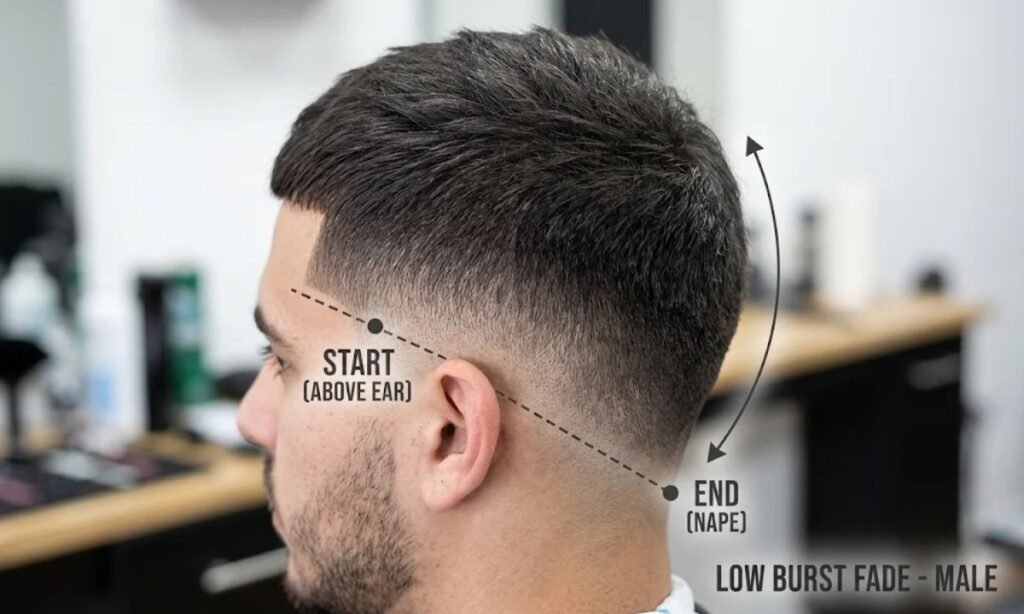
The curve usually begins just in front of the ear, near the sideburn. It arcs over the top of the ear and comes down behind it, ending near the nape area. The arc is the signature of the cut.
A good barber marks this line before cutting. If the curve starts too high, you’ll end up with a mid burst fade. Too low, and it vanishes. Placement is everything.
How Is the Hair Around the Ear Rounded?
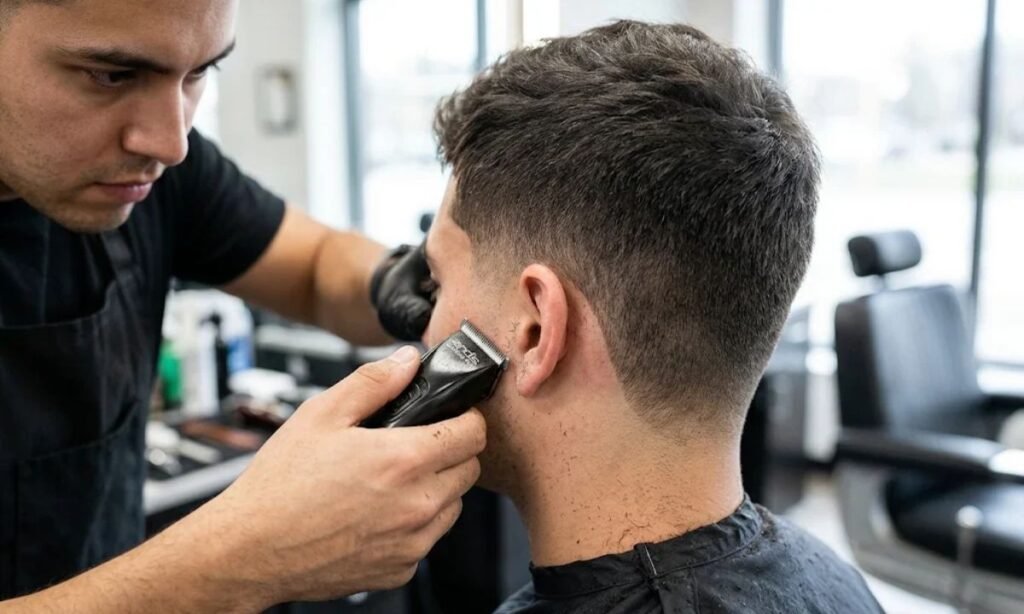
The barber uses clippers and sometimes clipper-over-comb work to carve the rounded shape. They follow the ear’s natural edge, then shade outward in thin passes. This is where blending around the ear gets its clean look.
Take your time here if you’re doing it at home. Don’t. Seriously. Leave this part to a pro, because one slip leaves a visible notch that takes weeks to hide.
How Does the Taper Connect to the Back of the Neck?
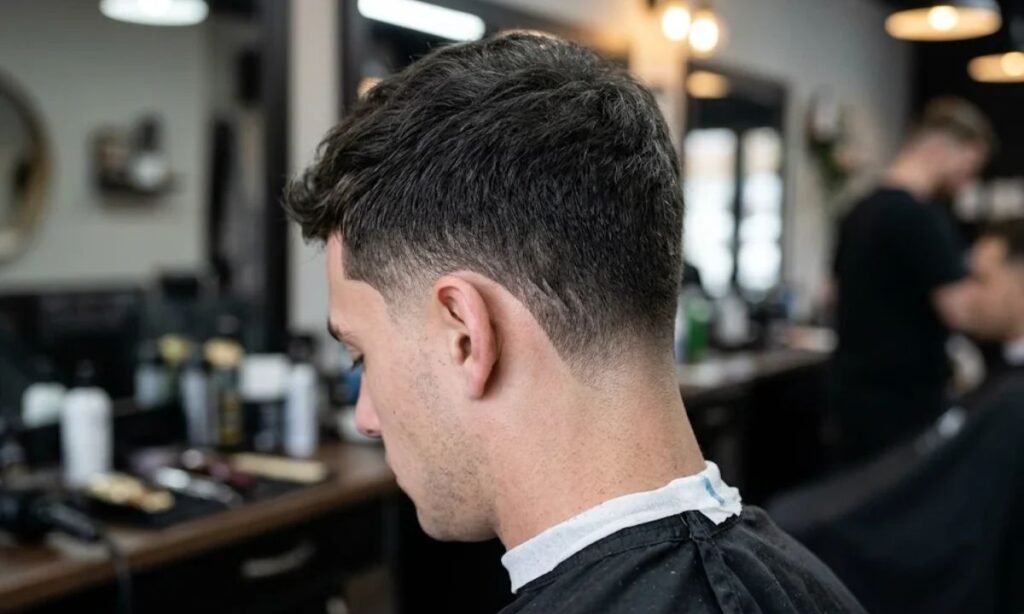
The taper drops from the burst down the back, finishing at a clean neckline. A neckline taper can be rounded, squared, or tapered to a point. Most guys pick tapered, since it grows out more gracefully.
This part also protects your look between visits. A soft neckline taper hides regrowth better than a blunt block, which is a small trick worth knowing.
How Is the Transition Between the Top and Sides Blended?
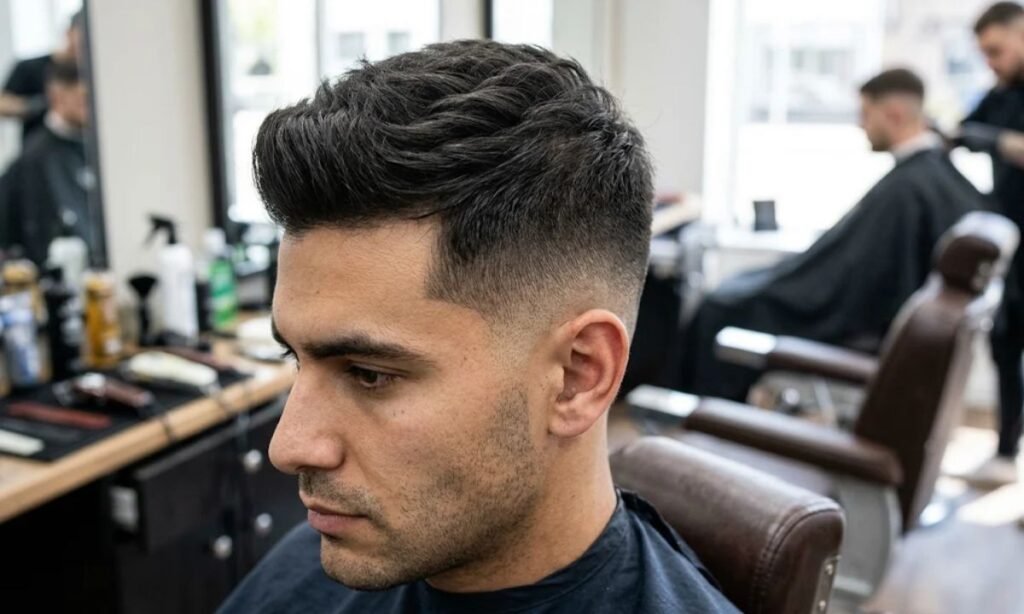
This is the gradual blending stage. The barber softens the line where short sides meet the longer top, using a fade transition from clippers to scissors. The goal is zero visible lines.
A rushed blend looks like a step. A good blend looks like smoke. If you can spot a hard line in the mirror before you leave, politely ask your barber to smooth it.
Best Styles to Ask for Taper Low Burst Fade
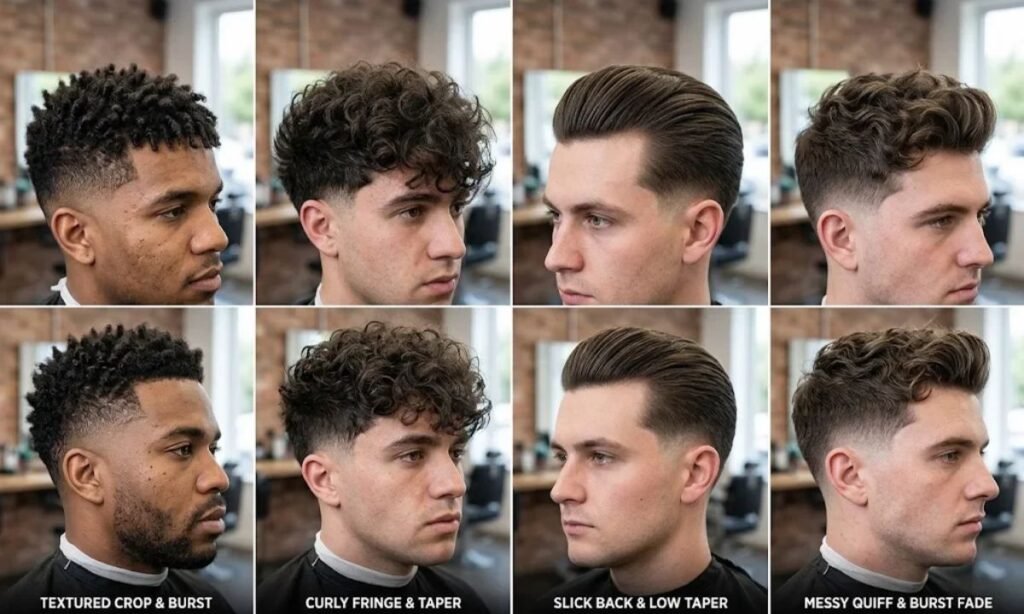
Some pairings just work. A textured crop haircut on top gives a modern, easy look. A taper fade with fringe adds a youthful edge, and a burst fade with beard ties the face together nicely.
If you like bold, try a burst fade textured fringe or the South of France haircut, which pairs a short fade with a longer, swept top. For a trend that’s still going strong, the blowout taper fade adds volume without effort.
Pick one style and stick with it for a few cuts. Your barber learns your head, and each visit gets better. Which one are you leaning toward? Drop it in the comments.
What Are the Different Taper Low Burst Fade Variations?
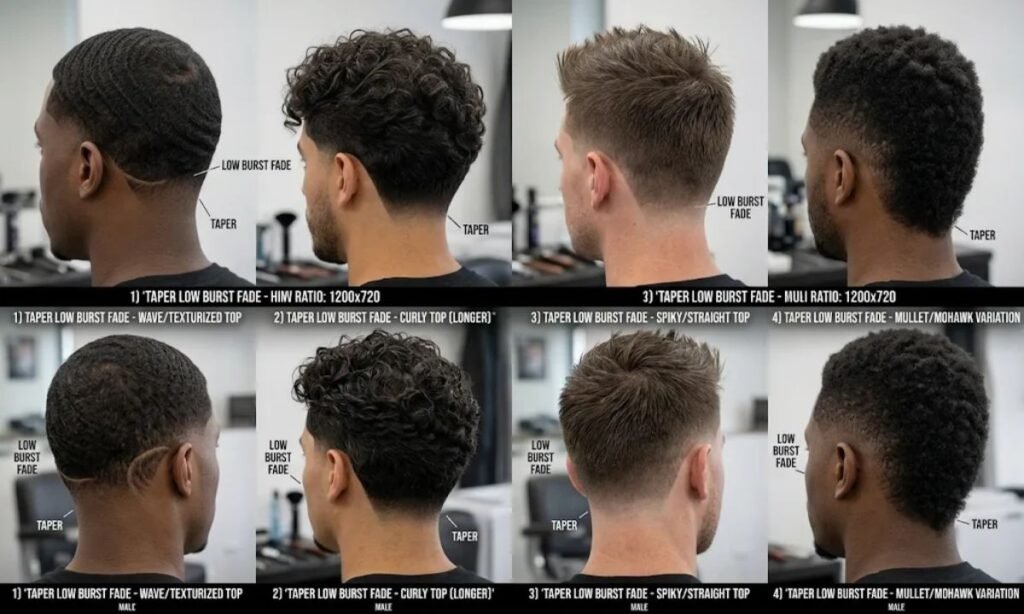
The base cut stays the same, but the top changes everything. That’s why haircut variations are so easy to explore. You can switch the top and keep the sides exactly as they are.
Here are five variations you can try, depending on your natural hair texture and how much time you want to spend each morning.
Taper Low Burst Fade With Curly Top
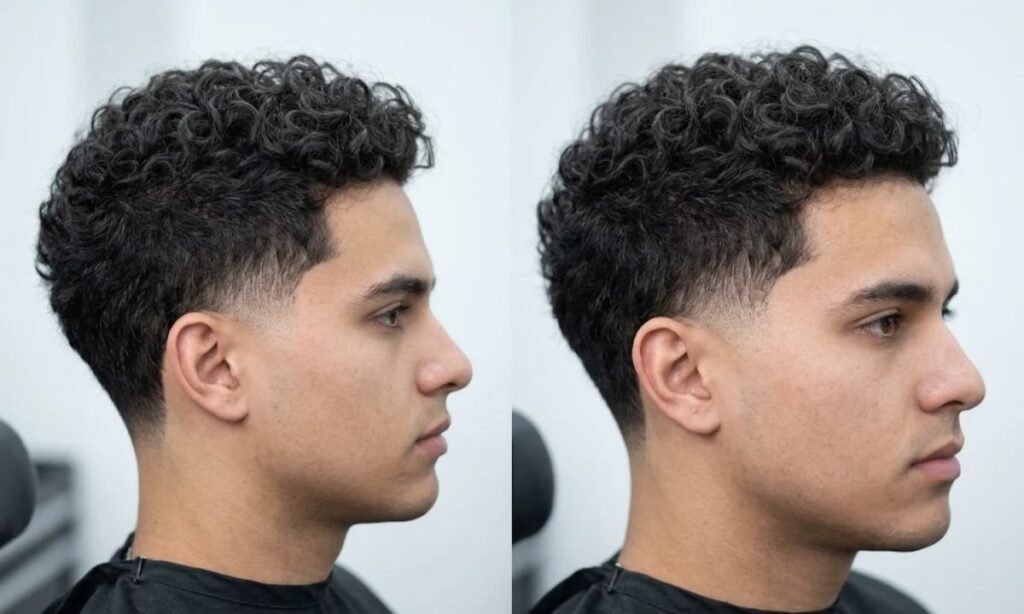
Curls and a burst are a great match. The sides stay tight, so the curly hair on top looks defined and intentional. Use a light curl cream, and let the natural curl pattern do its thing.
Ask your barber to keep the top at 3 to 4 inches. Any shorter and curls lose their bounce, so patience pays off here.
Taper Low Burst Fade With Textured Top

A textured top gives you that messy-on-purpose look. Your barber cuts in layers, then you add matte clay or texture powder and scrunch it up. It takes about two minutes.
This is the best all-rounder for guys with fine to medium hair density. It hides flat spots and adds body.
Taper Low Burst Fade With Straight Hair
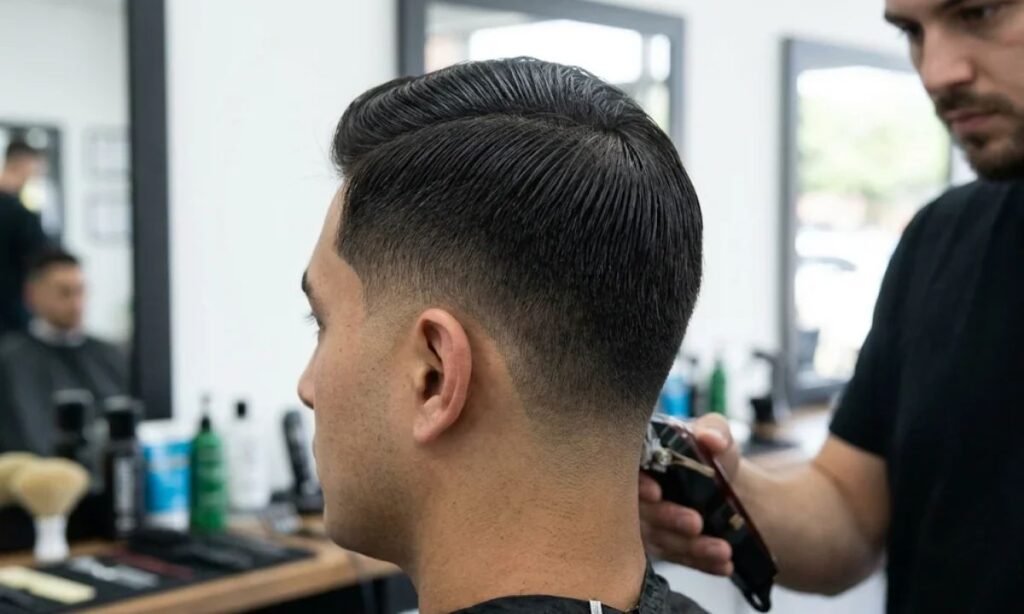
With straight hair, the cut looks clean and sharp. Go for a side part or a slight forward sweep. A light pomade gives control without weighing the hair down.
The low taper fade for straight hair is a good option for work, because it reads polished and tidy.
Taper Low Burst Fade With Waves

Wavy hair adds natural movement. A low taper fade for wavy hair looks relaxed but sharp. For guys chasing 360 waves haircut patterns, the burst gives a crisp frame around brushed waves.
Brush daily and use a wave cap at night. The sides stay short, so the waves on top stand out.
Taper Low Burst Fade With Long Hair
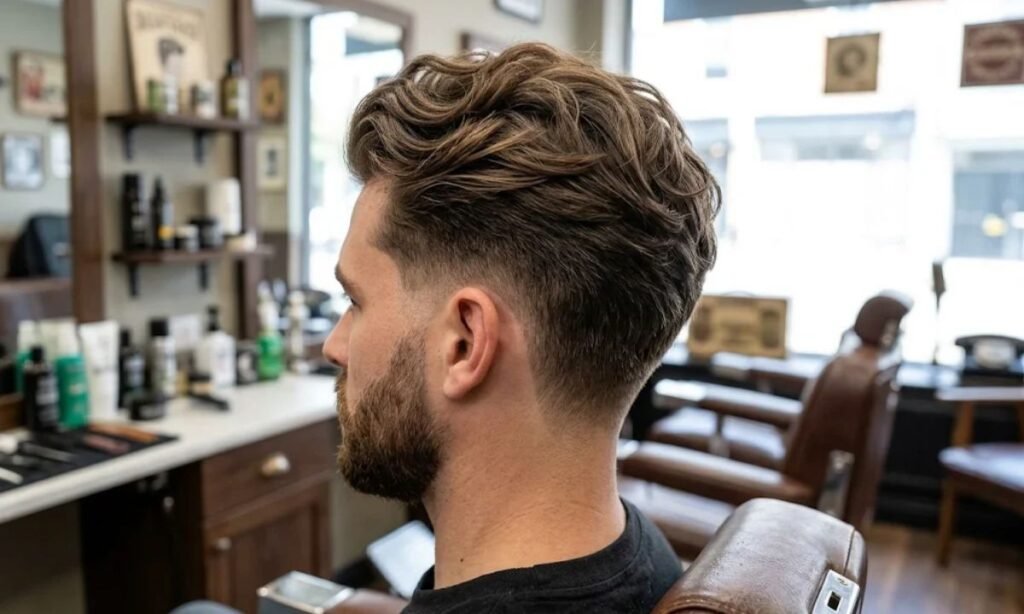
Want length? Keep the sides faded and let the top run long. A burst fade mullet or low taper fade mullet is the loud version. It’s longer at the back and bold at the sides.
The contrast is the point. Short and tidy on the sides, wild and free on top and back. It’s a statement cut, so own it.
How to Ask Your Barber for It

Half the battle is saying the right words. Barbers are busy, and a vague request like “just a fade” leaves a lot to chance. A clear ask saves you from a cut you’ll regret for three weeks.
You don’t need barber slang. You need a few specifics: fade placement, the curve, and the top. Give those three and you’re set.
A Script That Works
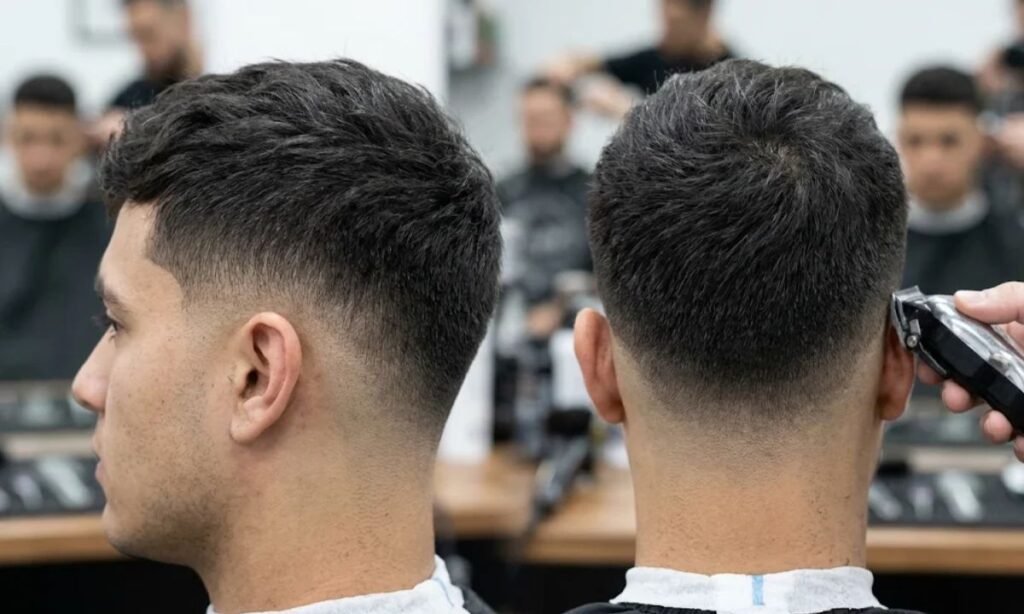
Try this: “Low taper at the back and sides. Burst fade curving around both ears. Keep about three inches on top, textured, and clean up the neckline.” It takes ten seconds and covers every base.
Add your guard preference if you have one. Say “#1 at the lowest point” or “take it to skin.” Those barber instructions remove guesswork, and good barbers appreciate them.
If you want a softer look, say “keep the fade subtle.” If you want it bold, say “make the curve obvious.” One extra phrase changes the whole result.
What to Show

A reference photo beats any description. Save two or three pictures on your phone, ideally from the front, side, and back. Pick photos where the hair type looks close to yours.
Here’s a small tip from the chair. If your hair is coily and the photo shows straight hair, the cut will look different. Point out what you like in the picture, such as the curve or the top, instead of asking for an exact copy.
Styling It at Home

A great cut dies fast without a decent hair styling routine. The good news is that this one takes about three minutes. You need a towel, a comb or fingers, and one product.
Start with damp hair, not soaking wet. Apply a pea-sized amount of product, warm it between your palms, and work it through from the roots to the tips.
Pick your product by the look you want. Matte clay gives a dry, textured finish. Light pomade gives control with a little shine. Texture powder adds grip for fine hair. For blow-dried volume, use a blow dryer on medium heat and lift the top with your fingers.
Curly guys can skip the dryer and use a diffuser. Straight-haired guys should try a quick blast of cool air to set the shape. Once it’s dry, check the sides in the mirror and flatten any stray hairs near the ears.
Keeping a Taper Low Burst Fade Sharp
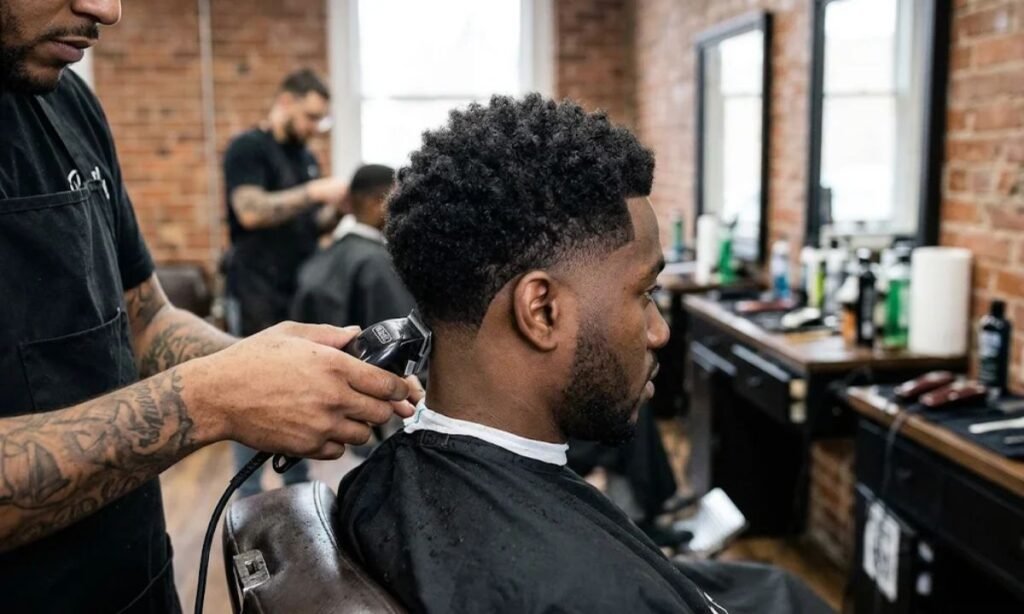
A fade looks its best in the first week, and every week after that it softens a little. That’s normal, not a barber mistake. Haircut maintenance is what separates a cut that looks fresh from one that looks tired.
You don’t need to live at the barbershop. You just need a plan, and a plan is simple once you know the rhythm.
Touch-Up Timeline
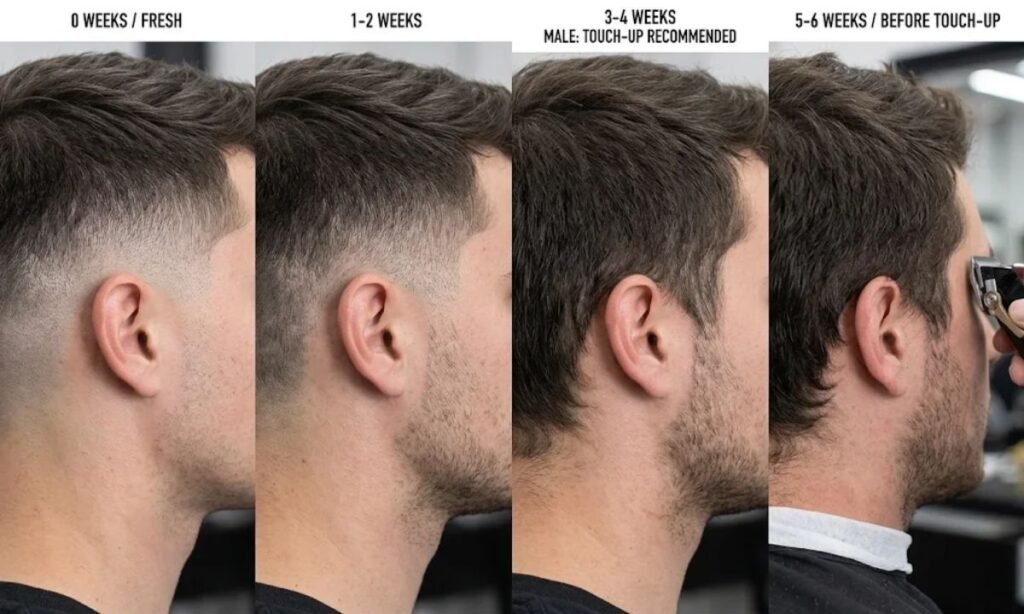
Most guys do best with a fade touch-up every two-to-four-week window. Two weeks keeps a skin burst fade crisp. Four weeks works for a longer taper with a bit of fuzz at the bottom.
Book your next barber appointment before you leave the chair. Many shops hold a regular slot for you, and that saves the last-minute scramble before a big event.
Some guys stretch it to five or six weeks. You can, but the sharp fade goes soft, and the burst curve loses its edge. Decide how sharp you want to look, then plan around it.
Neckline and Sideburn Cleanup
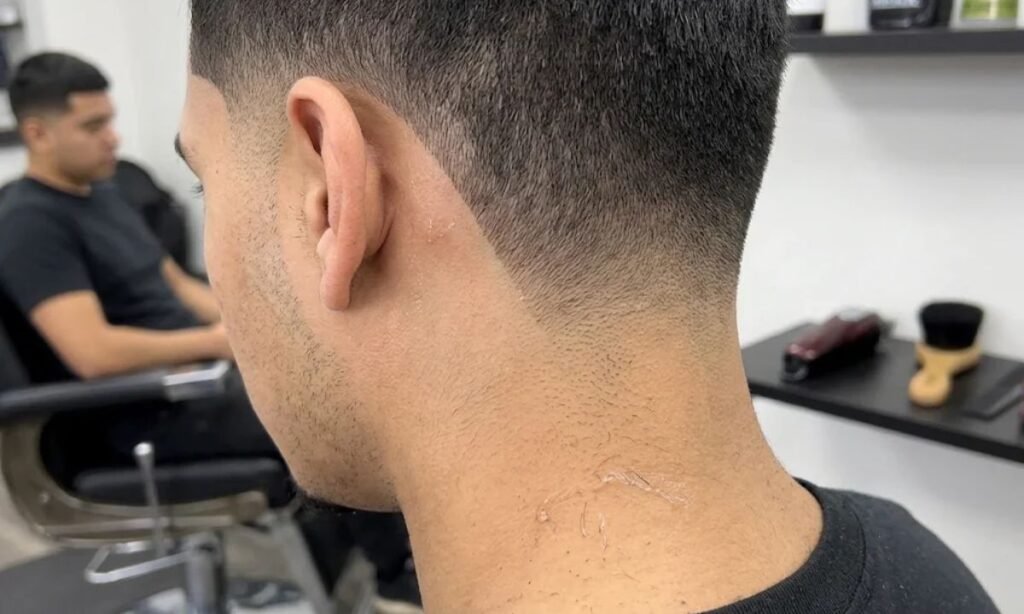
The neckline and sideburn cleanup are the first spots to look messy. Between visits, a quick trim with a small trimmer fixes stray hairs. Keep your hand steady, and only trim below the natural line.
Don’t try to redraw the line yourself. A clean neckline drawn too high looks odd for weeks. Tidy what’s there, and leave the shaping to your barber.
Many barbers offer a cheap “line-up only” visit between full cuts. It takes ten minutes and keeps the whole look fresh. Ask about it next time.
How Does Hair Growth Change the Shape of a Burst Fade?
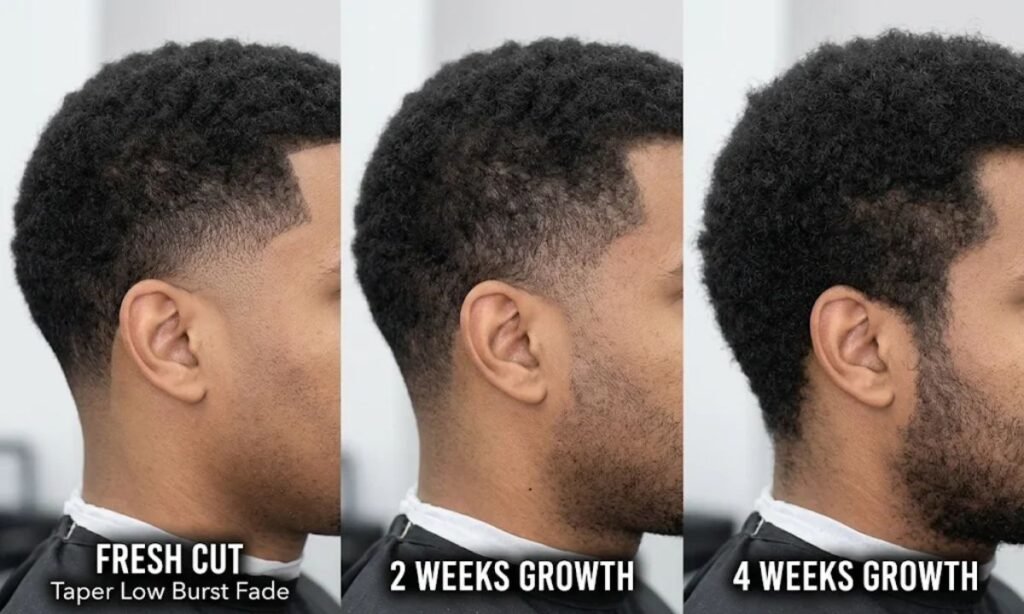
Hair grows about half an inch a month, and it doesn’t grow evenly. That means your burst changes shape as the weeks pass. Knowing what to expect keeps you calm when the curve starts to wobble.
The fade grow-out is gradual, and it can actually look good for a while. The key is knowing which areas change first.
Which Areas Grow Out First?

The nape area and the skin around the ears show regrowth fastest. These spots have shorter hair to start with, so fuzz appears quickly. You’ll notice it in about ten days.
The hairline around the forehead and sideburns comes next. The top changes last, since longer hair hides growth. By week three, the burst curve looks soft, and by week five the fade transition has lost its crisp edge.
How to Maintain the Rounded Shape Between Barber Visits
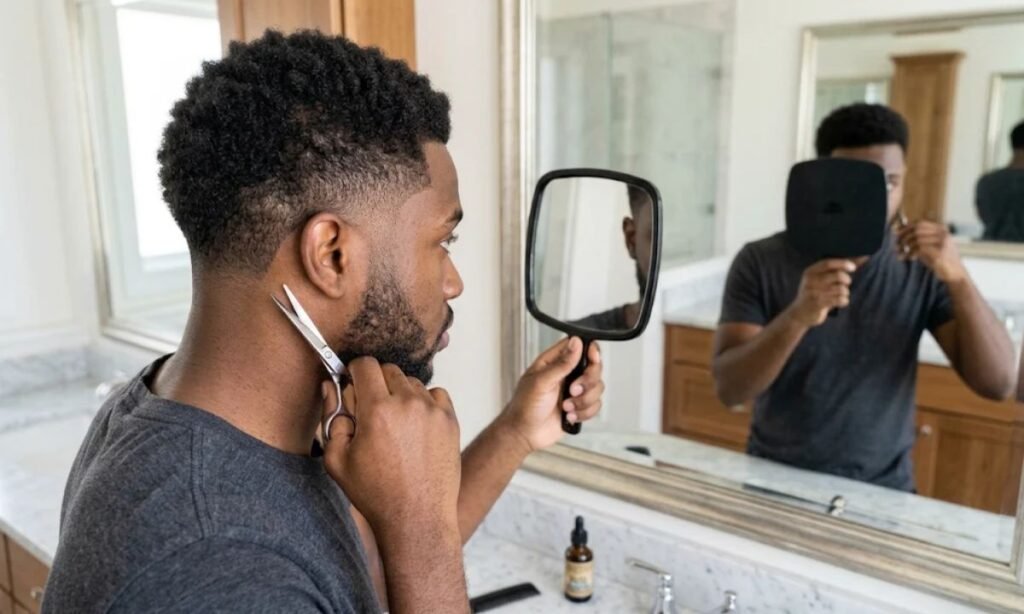
Use a small trimmer to clean only the loose hairs outside the curve. Leave the rounded shape itself alone. Brush the sides with a soft brush to keep the hair regrowth lying flat.
Here’s a simple trick. Take a photo of the fresh cut on day one. Compare it in the mirror each week. If you see the curve fading, you’ll know it’s time to book.
Also keep your scalp moisturized. Dry skin around the ears can look flaky against short hair, and a quick dab of light lotion fixes that.
Mistakes That Ruin the Cut
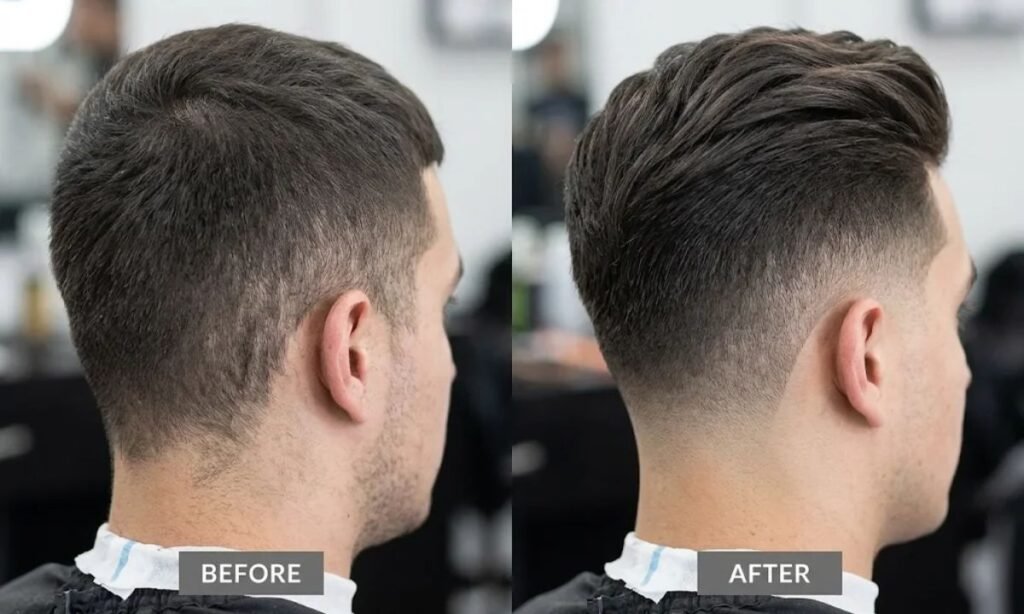
Even a good idea can go wrong in the chair. Most bad results come from the same few errors, and you can avoid every one of them with a bit of planning. Let’s walk through the usual suspects.
- Going too high. A high burst fade can make a round face look wider. Keep it low if you’re unsure.
- Skipping the reference photo. Words get lost. A picture doesn’t.
- Wrong top length. Under 1.5 inches, the burst shape disappears.
- Ignoring hair type. Curly and straight hair need different blends.
- Cutting it yourself. One slip near the ear leaves a notch that takes weeks to hide.
- Waiting too long between cuts. The sharp fade turns fuzzy fast.
If your cut goes wrong, don’t panic. Most fixes take one visit. Wait a few days, then go back and calmly explain what bothered you. A decent barber will fix it.
Taper Low Burst Fade vs Blowout Taper
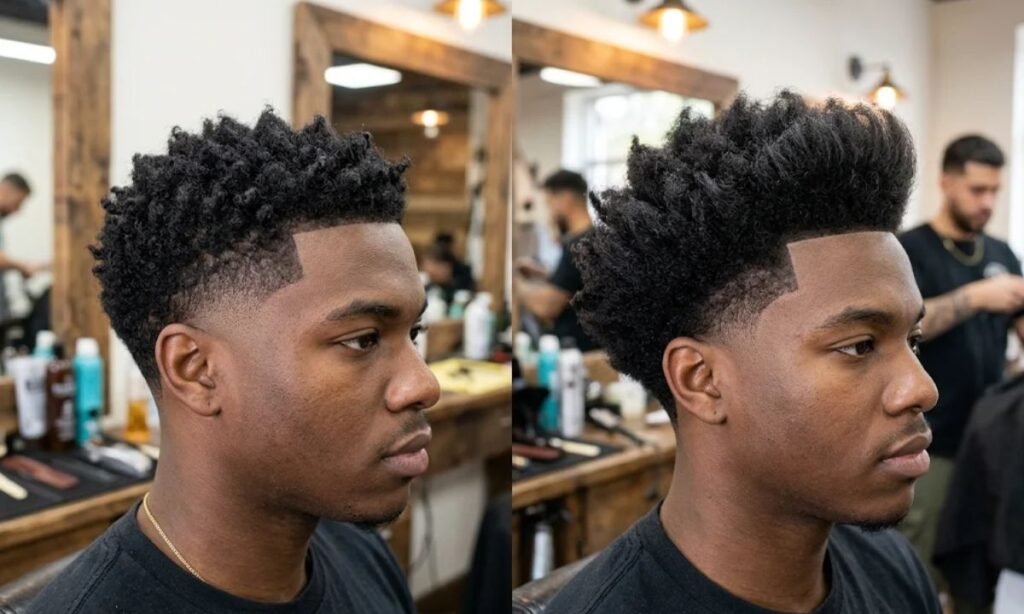
People often ask which one to pick. They look similar from the front, but they act very differently on your head. Let’s compare them so you can choose with confidence.
A blowout taper fade keeps the sides tapered and puts all the attention on voluminous top hair. The top is blow-dried up and back, giving a big, textured shape. The sides stay subtle.
The taper low burst fade puts attention on the curve around the ear. The top can be styled many ways, but the burst is the star. If you love shape and edges, pick the burst. If you love volume and movement, pick the blowout.
You can also combine them. Ask for a blowout taper fade with a burst curve at the ears. It’s a popular mix right now, and many barbers know how to handle it.
Drop Fade vs Burst Fade
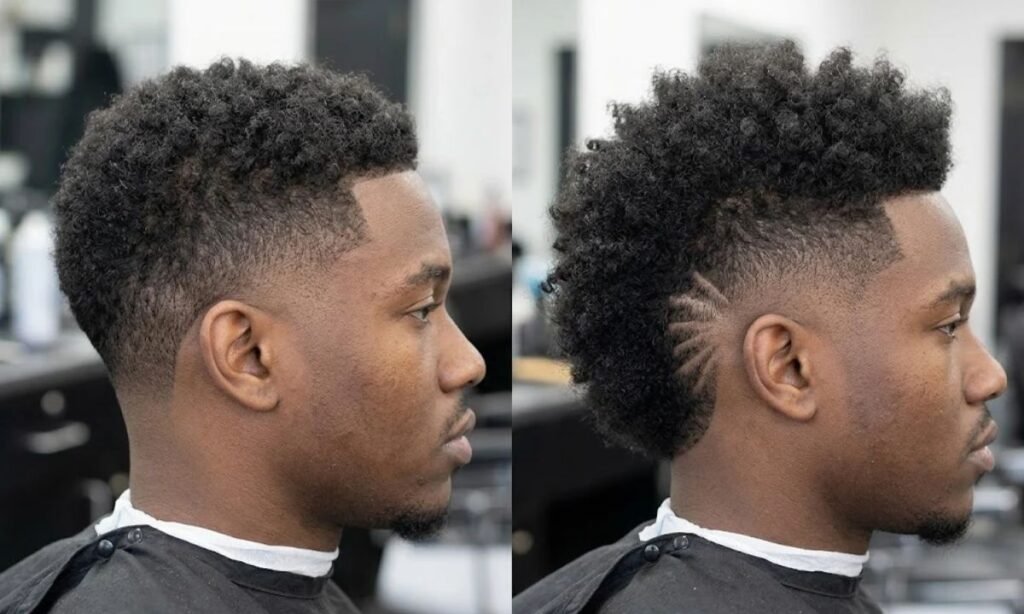
This one confuses a lot of people. A low taper drop fade curves down behind the ear, following the skull’s shape, and then sweeps lower at the back. It looks like a smooth slide.
A burst fade, by contrast, curves around the ear in a half-circle and leaves that longer patch at the back. It’s more of a pocket than a slide.
So in the drop fade vs burst fade debate, drop is smooth and flowing, and burst is bold and rounded. Pick drop if you want subtle, and pick burst if you want shape.
Low vs High Taper Fade
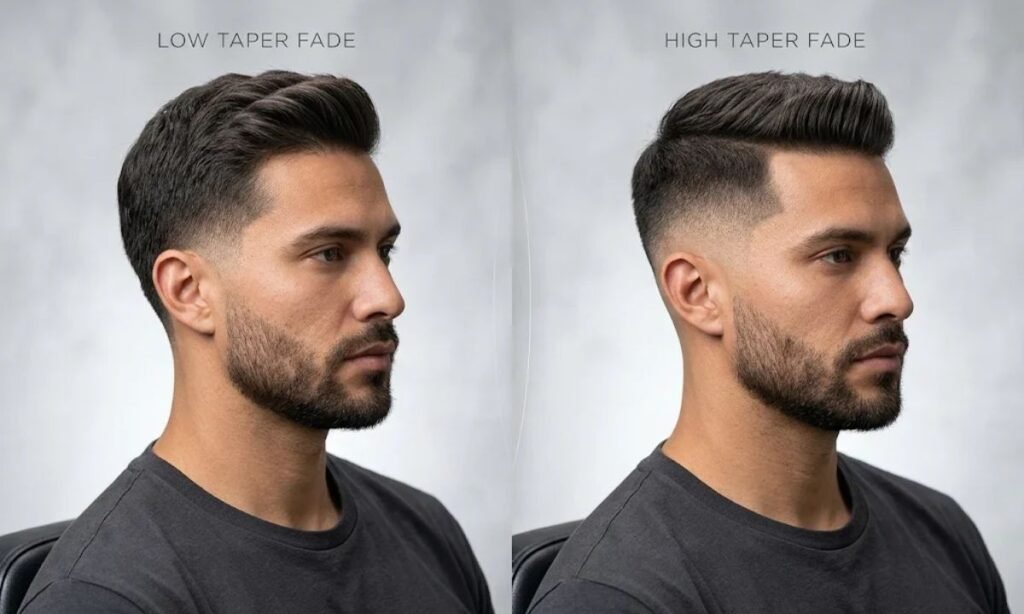
The low vs high taper fade question comes down to how much skin you want to show. A low taper starts near the ears and neck, so most of the side hair stays. It’s safe for work and school.
A high taper starts closer to the temples, so the sides look much shorter. It’s cleaner and bolder. It also needs more upkeep, since regrowth shows faster.
For most guys, low is the smarter first step. You can always go higher next time, but you can’t glue hair back on.
Burst Fade for Boys

Parents ask about this one a lot. A burst fade for boys looks sharp and stays practical. Keep the sides at a #2 or #3 guard, and leave the top long enough to comb or spike.
Kids move around, so ask the barber to go slowly near the ears. A good kids’ barber will chat, joke, and keep the mood easy. That makes the whole visit smoother.
Book a touch-up every three to four weeks. Boys grow fast, and school photos come around quickly.
Tools and Products Worth Having

You don’t need a bathroom shelf full of stuff. A few smart picks cover everything. A small trimmer handles the neckline, a soft brush smooths the sides, and one styling product runs the top.
For product, try matte clay for a natural look. Pick light pomade for a neater finish. Grab texture powder if your hair is thin and needs grip.
A wide-tooth comb works well for curly hair, and a fine comb suits straight hair. Wash your hair two or three times a week, and use a mild shampoo so the scalp stays happy.
Is It Okay for School, Work, or Formal Settings?
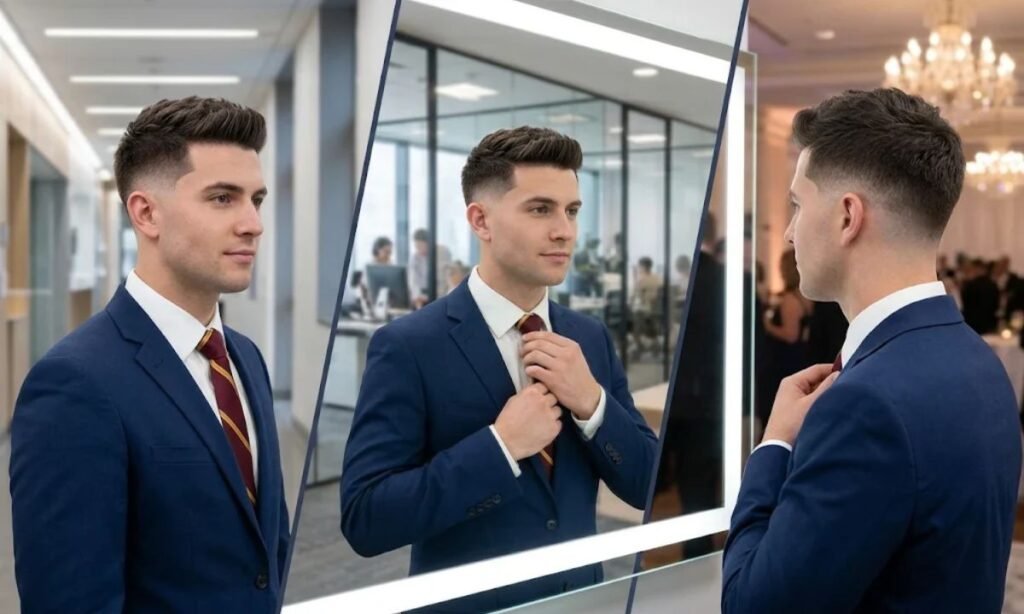
Short answer: yes, in most cases. A low burst fade haircut with a moderate taper looks tidy, so it’s a school-friendly haircut and a professional hairstyle in nearly any office. The low placement keeps it quiet.
For a formal haircut look, avoid the skin version. Choose a #1 or #2 guard at the lowest point, keep the top neat, and style it with light pomade. It looks sharp in a suit.
If your workplace is very strict, ask your barber for a softer burst. Check dress codes at school too, since some ban extreme fades. When in doubt, go lower and more subtle.
Frequently Asked Questions About Taper Low Burst Fade
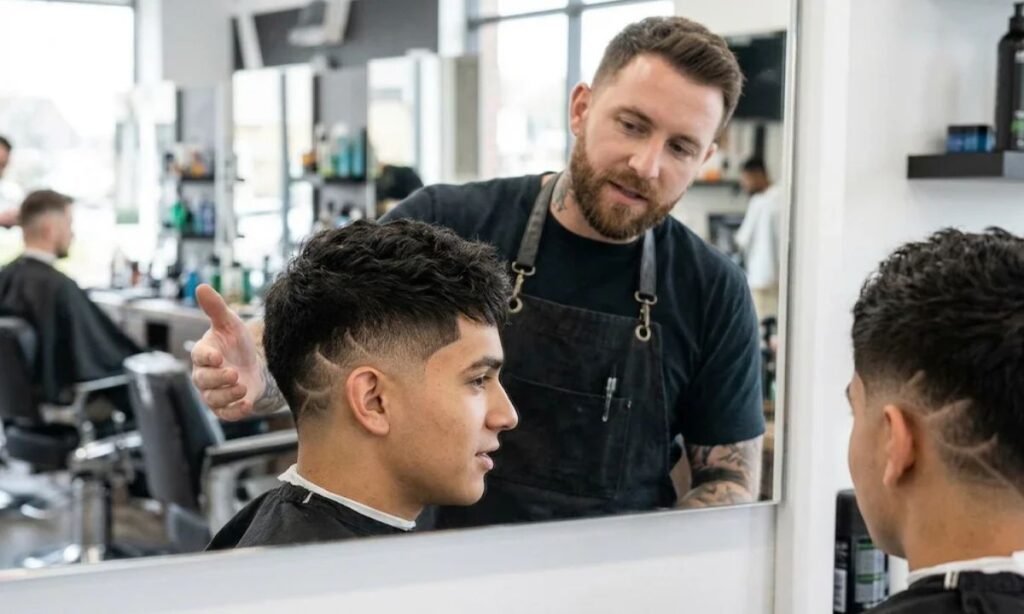
Is a taper low burst fade the same as a low burst fade?
Mostly, yes. A low burst fade focuses on the curve, while a taper low burst fade adds a gradual taper at the back and sides. Barbers use the names almost interchangeably.
How long does a taper low burst fade take?
Expect 30 to 45 minutes. A skin version with detailed blending can take a little longer.
Can I get one with a beard?
Yes. A burst fade with beard looks great when the beard fades into the sideburn. Ask your barber to blend both together.
Does it work on thin hair?
It can. Keep the top a bit longer and use texture powder for grip, since fine hair needs help holding shape.
How often should I trim it?
Every two to four weeks. Skin fades need the shorter window.
Is it hard to style at home?
Not really. One product and three minutes does the job.
You can also checkout this article as well: Two-Block Haircut: The Korean Cut Explained and How to Ask for It
Final Thoughts on Taper Low Burst Fade
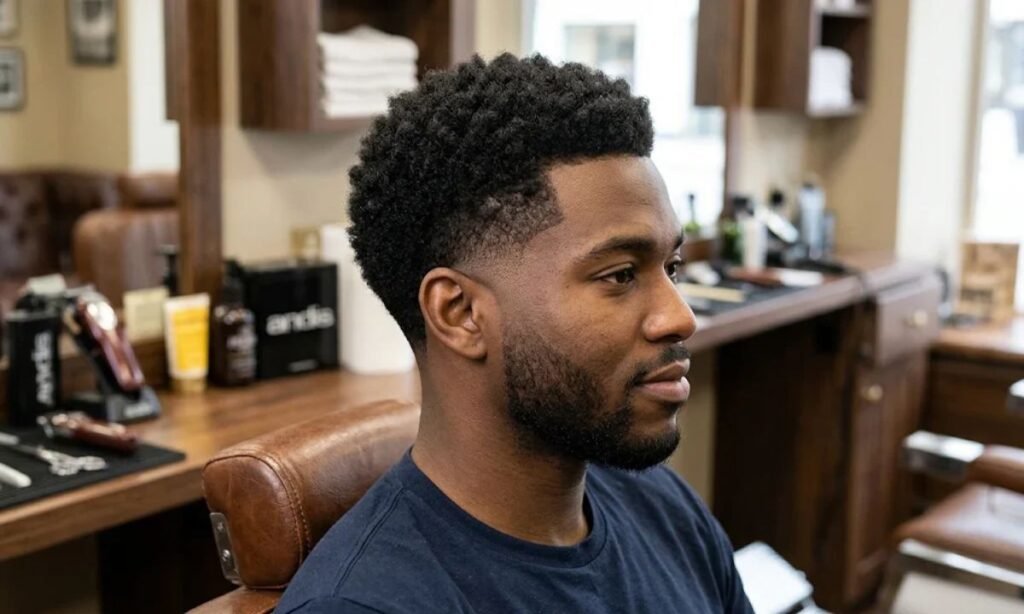
The taper low burst fade gives you a clean, modern cut that works for school, work, and weekends. The low placement keeps it safe, and the curve gives it personality. Pick the top that fits your hair, and you’re good.
Bring a photo, use a clear script, and book your next visit early. Small habits keep it sharp.
Which variation are you trying first? Share your pick in the comments, and pass this guide to a friend who’s still saying “just a fade.” We’ll refresh this guide as trends shift, so check back.

I’m Michael Charles, the creator of MegaCrazes—your source for fresh hairstyles, sharp haircuts, and simple hair-care inspiration. Find your style. Own your look.
1 thought on “Taper Low Burst Fade: Styles, Barber Tips, and a Complete Guide”