

Quick Answer
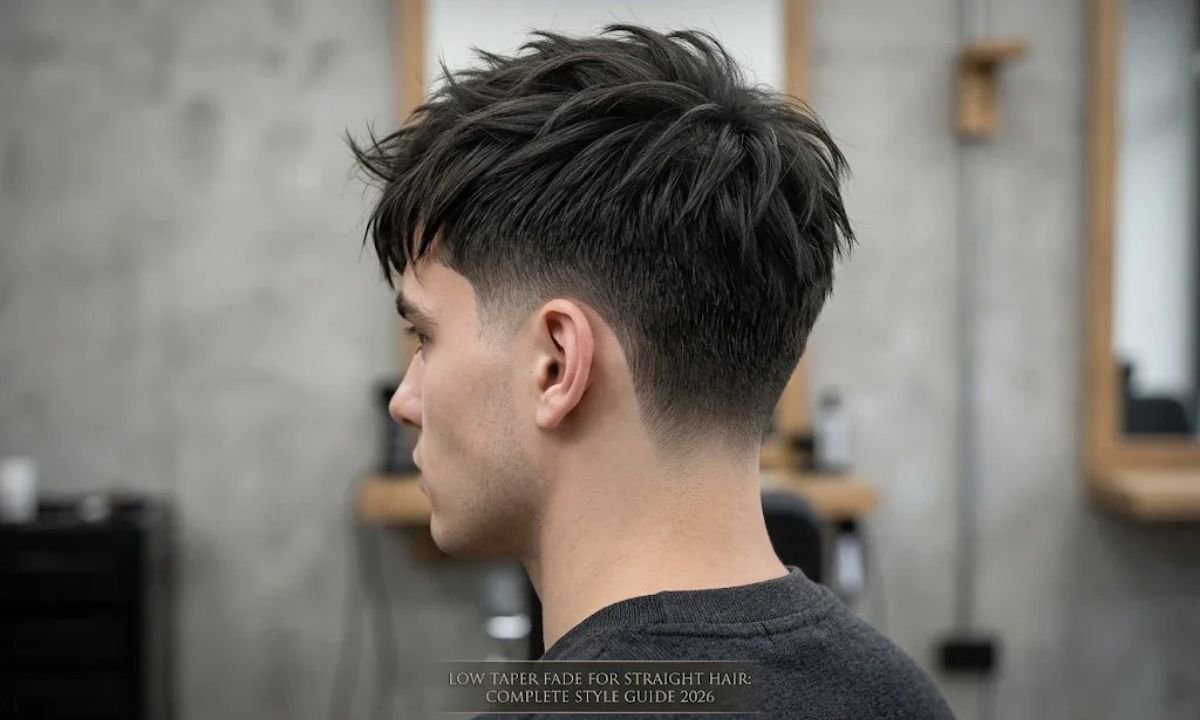
A low taper fade haircut for straight hair keeps the sides and back short but not skin tight. The length shrinks gradually around the ear line and neckline, while the top stays long enough to style. Ask for a #2 to #3 guard at the sides, a clean neckline, and 2 to 4 inches on top.
Will it suit you? Almost certainly, because straight hair strands hold a sharp outline better than any other texture. You’ll need a barber appointment every three to four weeks to keep it crisp.
You might be wondering what to say in the chair, how to style it, or whether it works with thin hair. This guide covers all of that. Grab a coffee and let’s go.
What Is a Low Taper Fade?

A low taper fade is a haircut where the hair gets shorter in a smooth line near the bottom of your head. The change starts just above the ears and curves around the back to the neckline. Nothing dramatic happens higher up.
Think of it as a soft fade with good manners. The fade gradient is subtle, and you can still see hair on the sides. That’s the main difference from the bold skin fades you see on athletes.
Barbers build it with clipper technique and gradual blending. They start with a longer guard near the top of the fade and step down toward the ear and nape. Done well, you can’t spot where one length ends and the next begins.
Why Straight Hair Suits This Cut

Straight hair lies flat and reflects light evenly. That makes every hair length transition easy to read, so a smooth taper looks polished. Curly hair hides the blend. Straight hair shows it off.
There’s a practical side too. Straight hair grows downward, so the low fade height follows your natural growth pattern. The result looks clean without much effort from you.
My friend Danish has dead straight, jet black hair. His old high fade looked harsh and grew out in a week. He switched to a low taper and now hears “nice haircut” every month.
Low Taper Fade vs Low Fade vs Taper
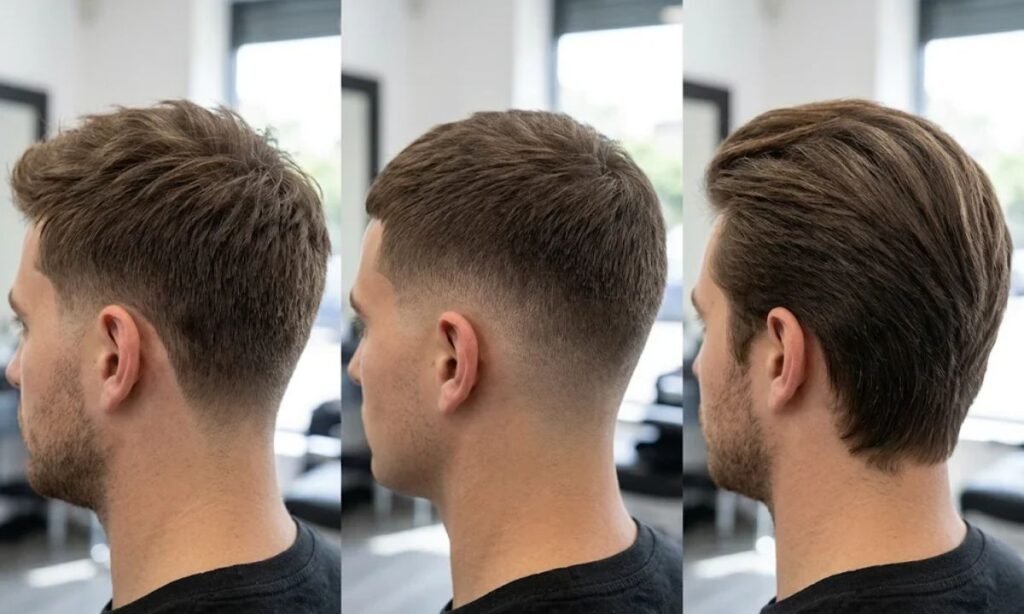
People mix these up constantly, and it costs them at the barbershop. A low fade wraps all the way around the head and can go down to skin. A regular classic taper only trims the sideburns and neckline. A low taper fade sits between the two.
Here’s a quick comparison:
| Cut | Where it starts | Contrast | Best for |
|---|---|---|---|
| Low taper fade | Just above the ear and nape | Soft | Office, everyday |
| Low fade | Low, but wraps around the head | Medium to strong | Sharp looks |
| Classic taper | Sideburns and neckline only | Very soft | Conservative styles |
So low taper fade vs low fade for straight hair comes down to boldness. Want people to notice the fade? Pick the low fade. Want people to notice you? Pick the taper.
Compared with a mid taper fade or high taper fade, the low version stays below the temple. It’s the safest choice if you’re nervous about going short. You can always go higher next time.
Best Top Styles for Straight Hair in 2026
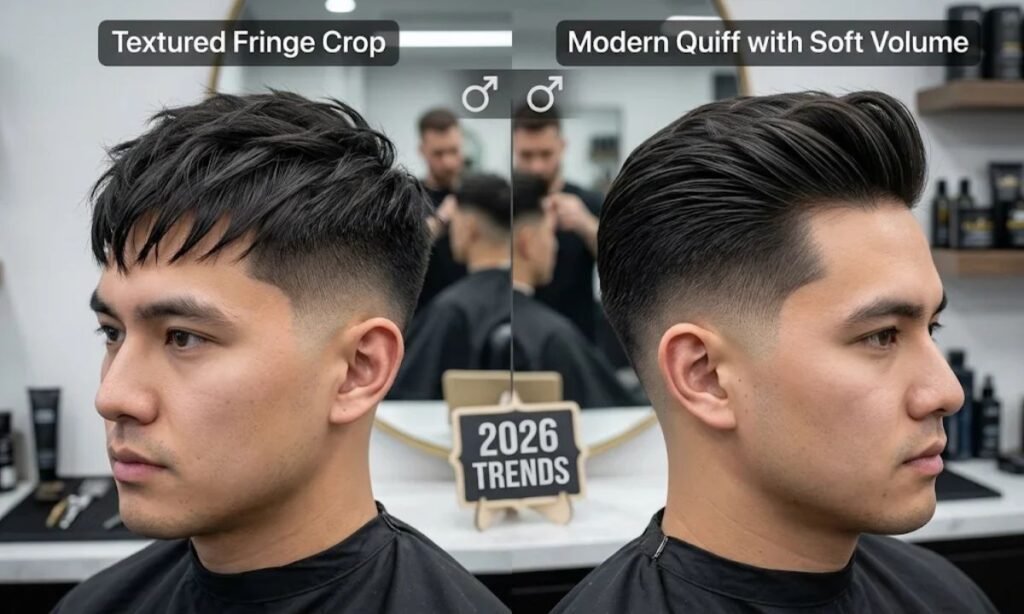
The top is where the personality shows up. In 2026, textured fringe and soft brush-up hairstyle looks lead the pack. Natural movement beats rigid, shiny styles right now.
Here are the combinations barbers request most:
- Low taper fade with textured fringe: Messy, forward, and forgiving. Great if your hairline is strong.
- Low taper fade with middle part: The curtain look. Needs 3 to 4 inches and a little root lift.
- Low taper fade with side part: Clean and classic. Works for work and weddings alike.
- Low taper fade with quiff: Volume at the front, tidy sides. Takes a blow dryer.
- Low taper fade with short crop: Barely any styling. A French crop version adds a blunt fringe.
If you’re hunting for the best low taper fade styles for straight hair, start with the part and the fringe. Those two decisions shape the whole look. Everything else is detail.
Low Taper Fade for Different Straight Hair Textures
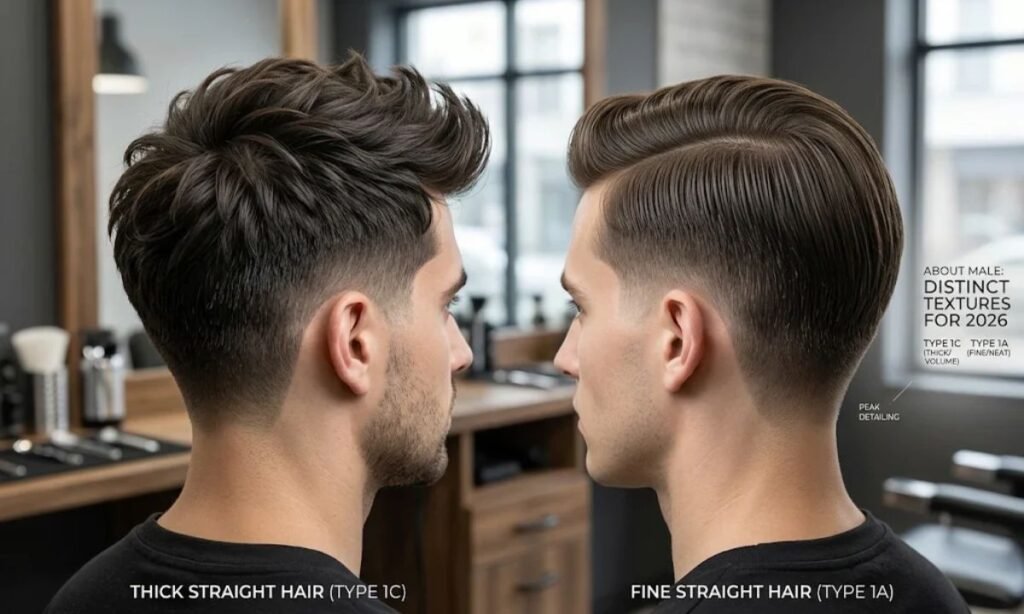
Not all straight hair behaves the same. Your hair texture and hair density change how the cut sits and how you should style it. Two straight heads can need very different approaches.
Let’s break it down by type. Find yours below and follow that advice.
Low Taper Fade for Fine and Thin Straight Hair
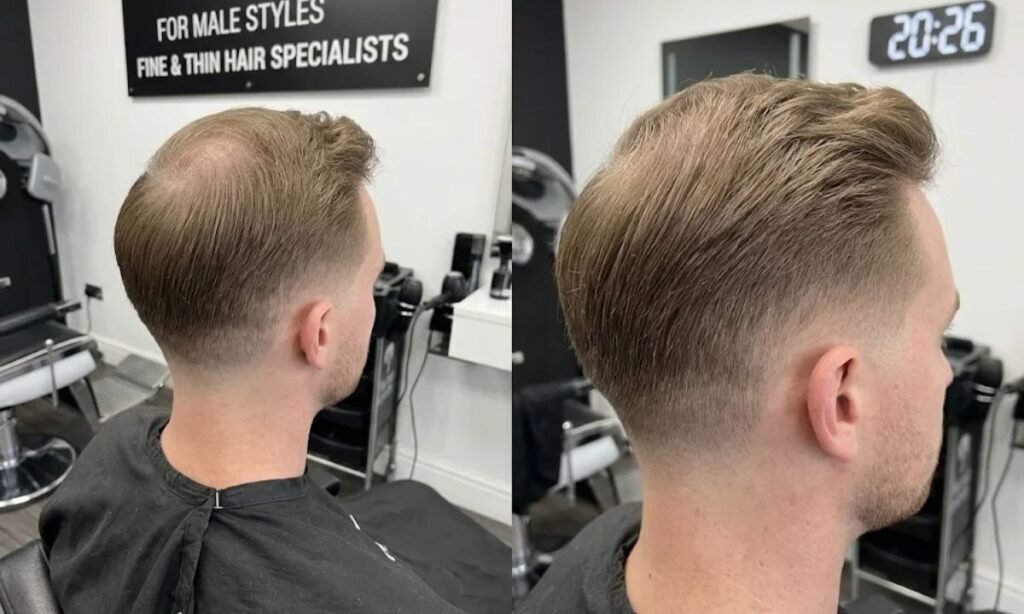
Fine straight hair lacks body, so the goal is faking thickness. Keep the top about 2 to 3 inches long and ask for point cutting to add movement. A slightly longer guard on the sides, like a #3, makes the top look fuller by comparison.
The low taper fade for thin straight hair also hides sparse spots well. The soft gradient draws the eye away from the crown. Skip heavy products, since they flatten everything.
Use a volumizing product and blow dry the roots upward. Spend two minutes on this and your hair gains real hair volume. It’s cheap magic.
Low Taper Fade for Thick and Dense Straight Hair
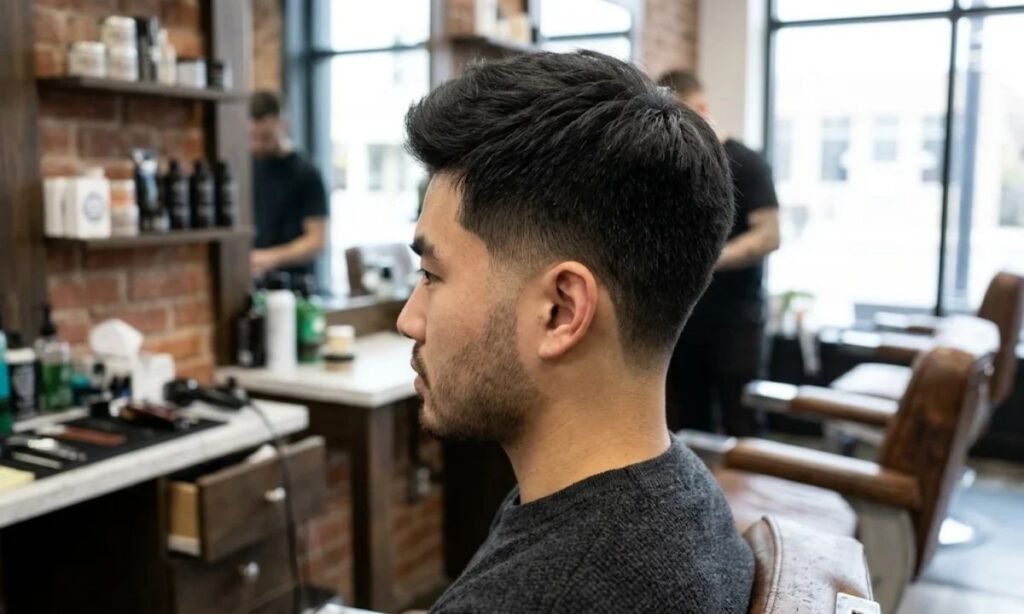
Thick straight hair can puff out like a helmet if nobody controls it. Ask your barber for internal texture to remove bulk from the inside. This helps the top lie flat instead of mushrooming.
With a low taper fade for thick straight hair, you can go a bit longer on top. Four inches works well for a quiff or a side part. The dense hair holds the shape all day.
Use a medium hold product and a fine-tooth comb for control. Thick hair fights back, so don’t skimp on the blow dry. A little patience pays off.
Low Taper Fade for Flat and Naturally Straight Hair
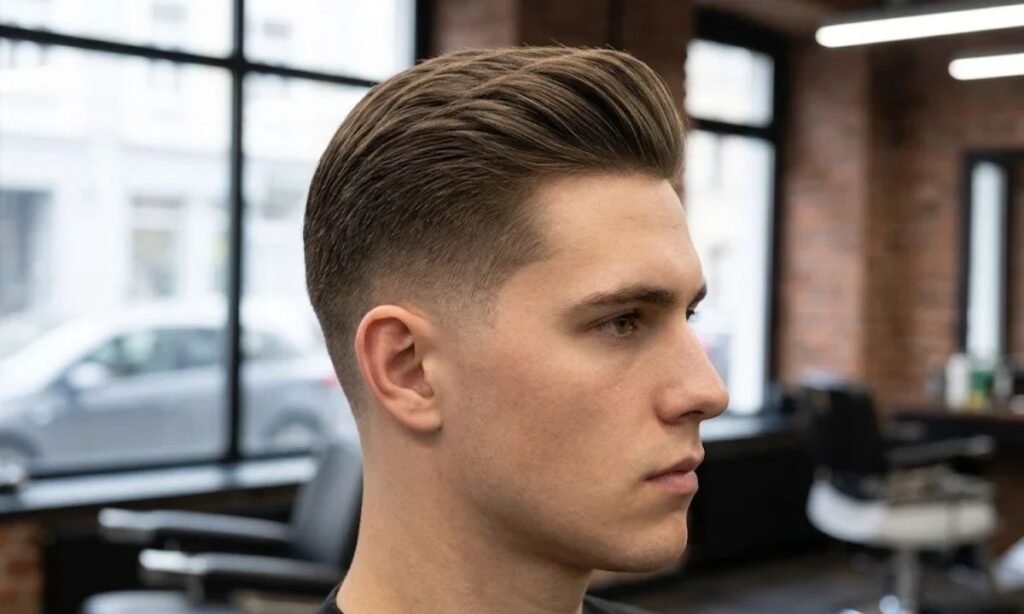
Some straight hair just lies there, no matter what you do. That’s flat hair, and it needs root lift more than anything. A styling brush and hairdryer will be your best friends.
Ask for light graduation on the top so the layers push each other up. This builds shape without needing a ton of product. Short layers do a lot of quiet work.
A texture powder at the roots gives grip. Spray it, rub it in, and the hair stands taller. Keep your expectations realistic, since the effect lasts a day.
Best Face Shapes and Hair Types
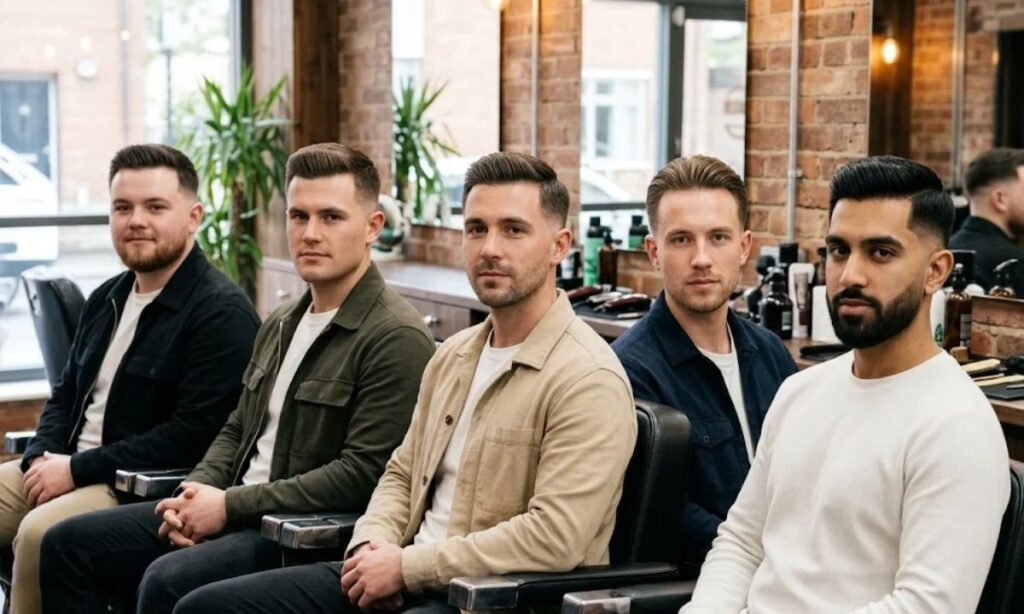
A good haircut balances your face. The taper itself suits most people, but the top should change with your face shape. Here’s how to match them:
- Oval face shape: Lucky you. Almost any top works, so try the middle part.
- Round face shape: Add height with a quiff or brush up. Avoid heavy fringes that widen the face.
- Square face shape: A textured fringe softens strong jawlines. A short crop also looks sharp.
- Long face shape: Keep the top shorter and use a fringe to shorten the forehead.
For hair types, straight hair of any thickness works. Fine hair needs volume tricks and thick hair needs thinning. Both end up looking great when styled with intent.
Wondering about men’s hairstyles for a particular ethnicity or color? The taper doesn’t care. It works on a low taper fade for Asian hair, a low taper fade blonde hair look, and a low taper fade for white guys with equal success. Asian hair is often thick and straight, so ask for texture removal. Blonde hair can show scalp more, so keep the sides a touch longer.
Can You Get a Low Taper Fade With a Receding Hairline?
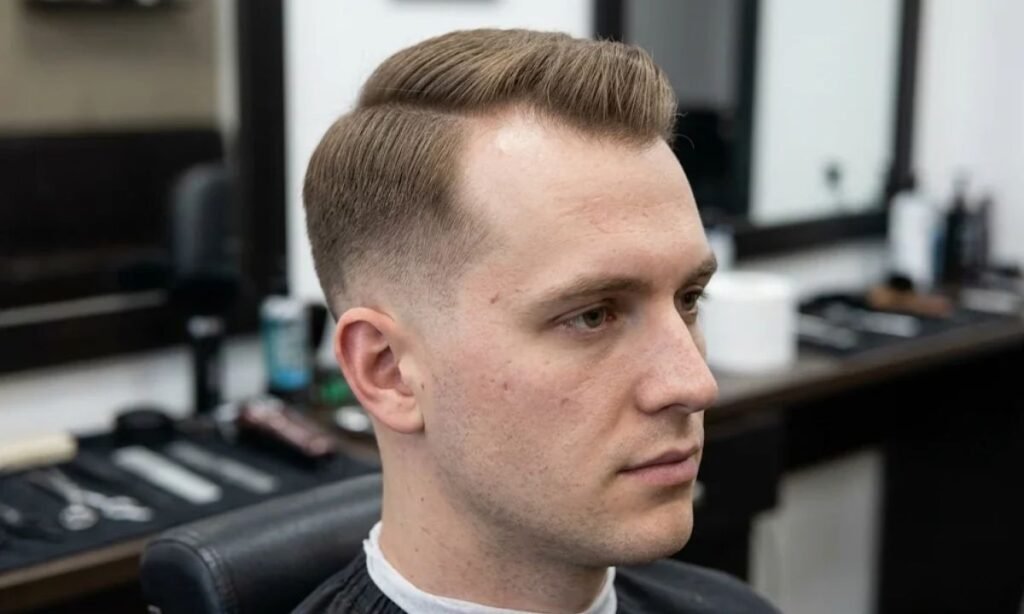
Yes, and it often looks better than a longer cut. A short, tidy taper shows you’re in control of your look. Hiding a receding hairline usually backfires, while a clean frame makes it look deliberate.
The trick is the top. Keep it textured and slightly forward so it covers the temples softly. A messy fringe works wonders here.
I once watched a barber save a friend’s confidence with this exact approach. He’d been wearing a cap for two years. The new cut got him out of it.
How to Keep the Temples Looking Natural
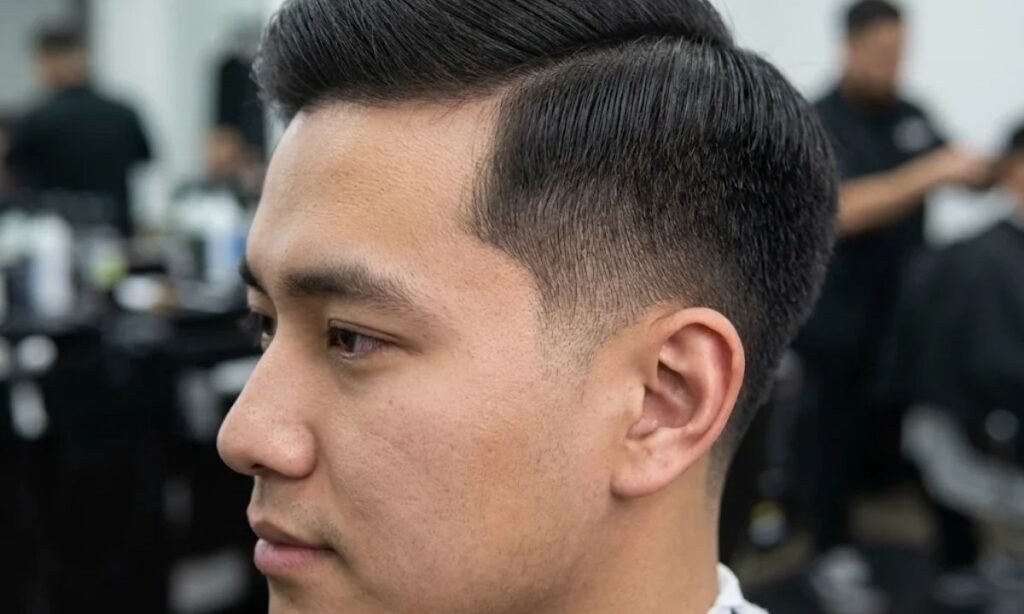
Don’t let your barber cut the temple too sharp. Ask for a natural, slightly soft outline instead of a razor line. Hard edges draw attention to any recession.
Keep the sides a little longer, like a #3 or #4. This blends the temple area into the hair around it. It looks relaxed and natural.
Use matte clay to push the front forward. A little bit of product goes a long way. Avoid slicking back if the temples are thin.
Does a Low Taper Make a Receding Hairline More Noticeable?
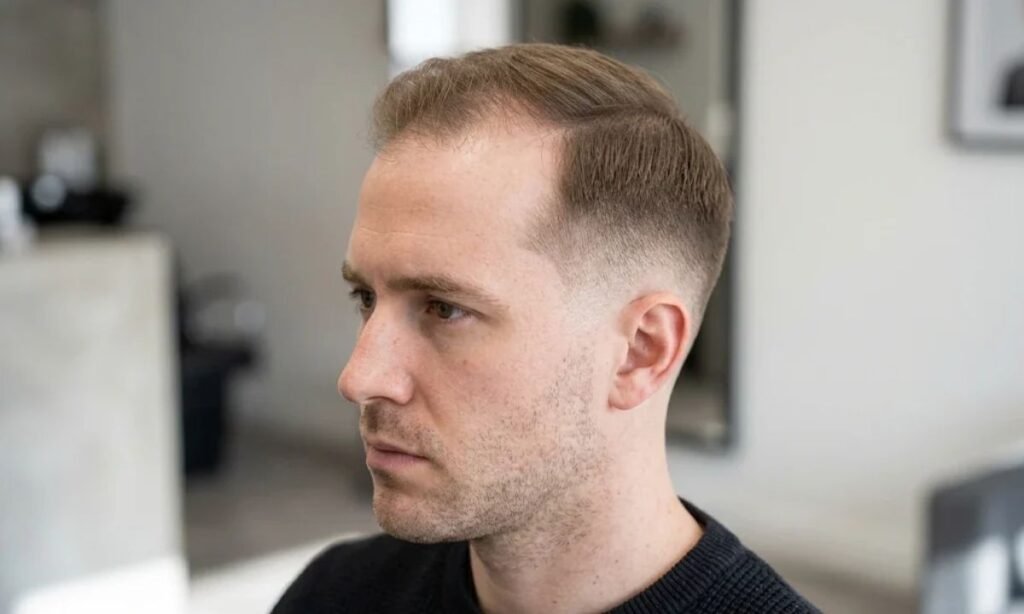
Usually not, and sometimes the opposite. A low taper leaves hair around the temples, so there’s less contrast. High fades pull the eye up and make recession stand out.
If you’re worried, ask for a gradual fade rather than a skin taper. The softer blend keeps the area from looking bare. Compare it with how a high skin fade would look and you’ll see the difference.
Show your barber your hairline before they start. They’ll know where to leave extra length. It takes ten seconds and saves a lot of worry.
Short, Medium, and Long Variations
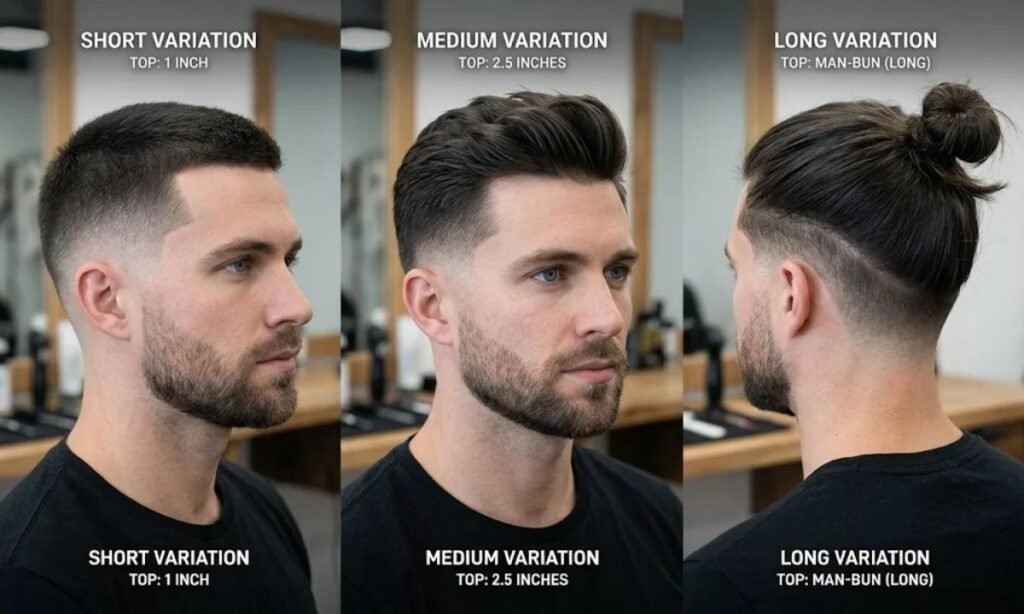
Straight hair gives you plenty of room to play. The taper stays the same while the top changes. That’s the beauty of this cut.
For short hair, think a short crop or low taper fade buzz cut. Keep the top at 1 to 2 inches. It’s almost zero effort and still looks sharp.
For medium hair length, 3 to 4 inches covers a quiff, side part, or textured fringe. This is the sweet spot for most guys. You get options without the work.
Low taper fade with long hair means 5 inches or more, like a low taper fade slick back or a middle part. It needs more products and more patience. The payoff is a bold, modern look.
How a Low Taper Fade Changes the Overall Haircut Shape
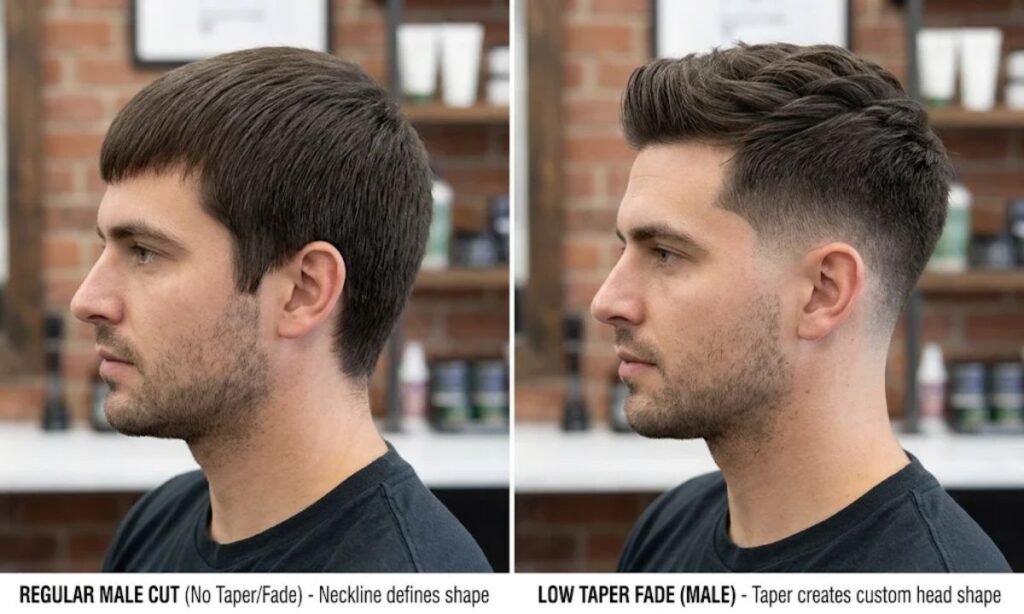
The taper reshapes your head, not just your hair. Short sides make the top look bigger and the face look slimmer. It’s a bit like a picture frame that makes the artwork pop.
Three parts of the cut matter most. Each one affects how the final result reads. Let’s look at them.
How the Hairline and Sideburns Are Tapered

The barber tapers the sideburns into the skin, creating clean sharp sides. A good taper follows the shape of your ear without cutting into it. Watch for a curved, natural line rather than a straight one.
The hairline around the ear should look soft, not boxed in. A hair trimmer helps with the detail. Ask your barber to taper the sideburns to match your cheekbones.
Sideburn length is personal. Mid ear is classic, while short ones feel modern. Tell your barber your preference.
How the Back Taper Blends Into the Neckline

At the back, the hair shortens as it goes down the neckline. A natural neckline follows your own growth pattern and blends softly. A clean neckline is squared or rounded off for a sharper finish.
For straight hair, a natural neckline taper usually grows out better. The squared look needs more frequent visits. Think about how much upkeep you want.
If you have a hair whorl at the nape, tell your barber. They’ll cut with the grain to avoid weird tufts. Small details matter here.
How Much Contrast Should There Be Between the Sides and Top?
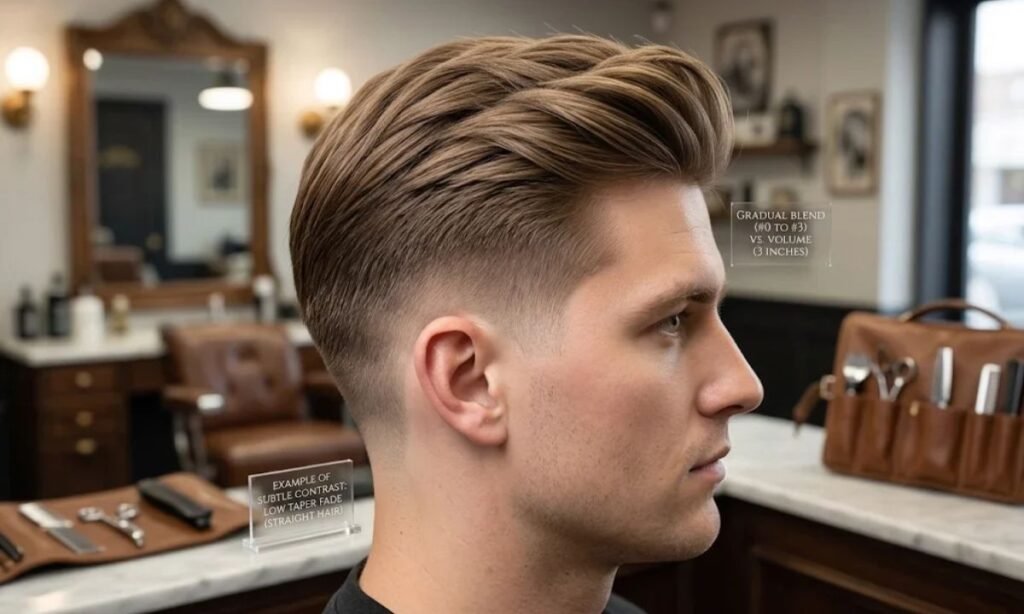
For a low taper, a moderate contrast works best. If the top is 3 inches and the sides are about half an inch, you’ll get a smooth transition. Too much contrast looks abrupt and dated.
Full hair on top with sides at a #2 or #3 is the sweet spot. The top should feel intentional, not like a mop. It looks balanced.
If you’re unsure, go softer. You can always shorten the sides later. Hair doesn’t grow back overnight.
How to Ask Your Barber for a Clean Low Taper Fade
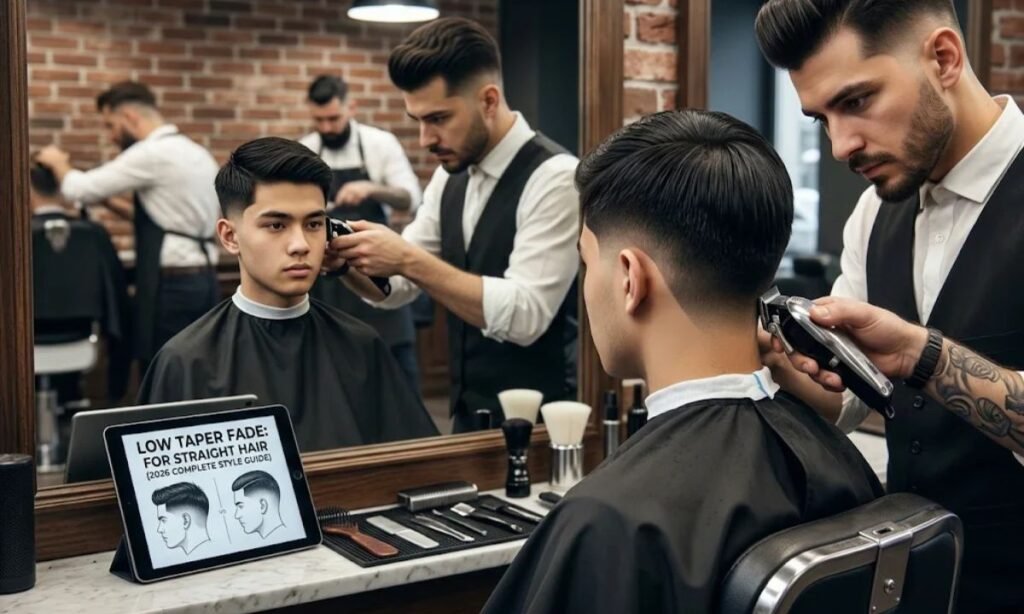
The best barber consultation starts with a reference photo. Words get lost, but pictures don’t. Save a haircut reference image on your phone before you go.
Then tell them three things: where you want the taper to start, which guard size you want, and how long you want the top. For example: “Low taper fade, #2 on the sides, blend into the neckline, leave 3 inches on top.” Clear barber instructions like these work every time.
Here’s a script to ask a barber for a low taper fade:
- Show your reference photo.
- Say “low taper, not a full fade.”
- Name your guard size and the top length.
- Mention if you want a natural or squared neckline.
- Ask them to check the blend before finishing.
What Guard Sizes and Clipper Lengths Are Used?
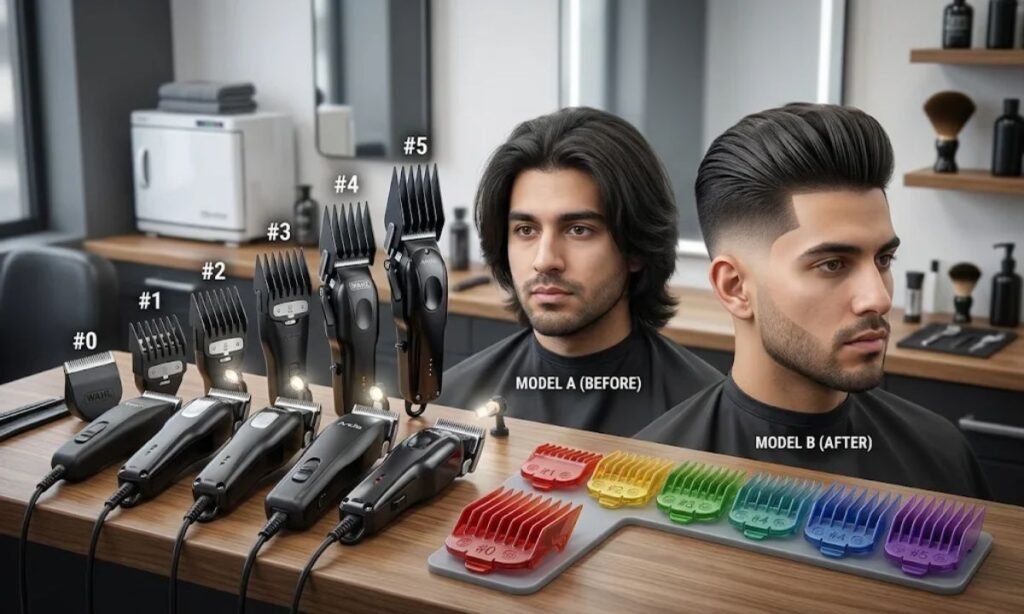
Most low tapers use guards between #1 and #4. Clipper guard sizes decide how short the hair ends up, and the numbers below are standard. A trimmer then finishes the edges.
| Guard | Length | Typical use |
|---|---|---|
| #0.5 | 1.5 mm | Bottom of a skin taper |
| #1 | 3 mm | Neckline and sideburns |
| #2 | 6 mm | Main sides for a soft look |
| #3 | 10 mm | Longer, softer sides |
| #4 | 13 mm | Top of the blend |
Your barber usually begins at the nape with a short guard, then moves up with longer ones. This creates the gradual blending you want. Clipper blending with a flick of the wrist makes it seamless.
Which Clipper Guard Creates the Cleanest Low Taper?
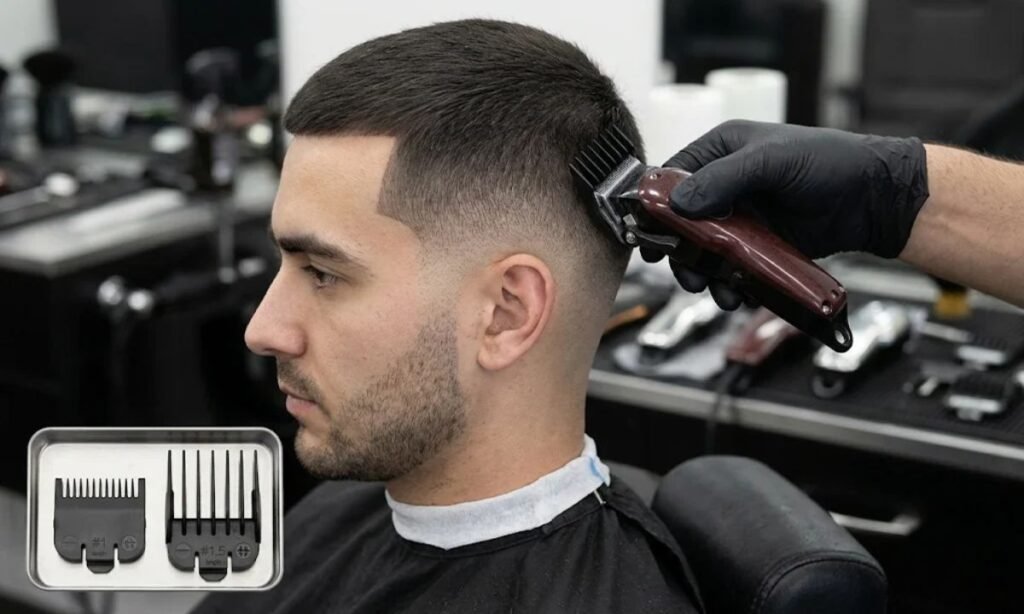
Most barbers agree a #2 on the sides gives the cleanest result. It’s short enough to look sharp but long enough to avoid a bald patch effect. A #1 at the very bottom adds definition.
For a softer look, try a #3 on the sides and a #1.5 at the neckline. It takes a bit more skill but looks more natural. Ask your barber what they prefer.
Remember, the guard is only half the story. The way they handle the clipper matters just as much. A good barber beats a perfect guard.
Should You Choose a Skin Taper or a Guarded Taper?

A skin taper goes all the way to bare skin at the neckline and sideburns. It looks very sharp but grows out quickly. A guarded taper stops at a #1 or #2 and lasts longer.
For straight hair, a guarded taper is easier to live with. A skin fade shows regrowth by day ten. If you hate frequent barber visits, skip the skin version.
Want that crisp, high contrast look? Go skin, but budget for visits every two to three weeks. It’s a trade between looks and time.
How Does the Starting Length Affect the Final Blend?

The starting length decides how smooth the blend looks. Hair that’s too short before you start leaves no room to blend. Aim for at least a few weeks of growth before you book.
If you’re already very short, the barber may only manage a basic taper. A longer start gives them room to create real hair length transition. Patience helps here.
Tell them your last cut date. They’ll adjust the plan to match. It’s a small detail that changes the outcome.
How to Style It
Styling takes about five minutes once you get the hang of it. Start with towel dried hair, never soaking wet. That’s your foundation for a good hair styling routine.
Here are the steps:
- Apply a volumizing product or sea salt spray to damp hair.
- Blow dry with a styling brush or round brush, lifting the roots.
- Rub a pea sized amount of clay or paste between your palms.
- Work it through from back to front.
- Finish with a fine-tooth comb for a side part, or your fingers for a textured fringe.
For a brush-up hairstyle, dry the hair upward and backward. For a middle part, push the hair apart with your fingers while drying. Practice makes this faster.
You can find how to style a low taper fade on straight hair tutorials all over the internet, but the core steps stay the same. Dry, lift, then add product. Everything else is personal taste.
Best Products for Straight Hair

Straight hair gets greasy and flat easily, so lighter products win. You want grip without the weight. These are the top picks for hair styling products:
- Matte clay: Strong control with a matte finish. Great for thick hair.
- Texture powder: Adds grip and volume for fine hair.
- Sea salt spray: Gives a beachy, lived in feel.
- Water-based pomade: Easy to wash out, with natural shine.
- Styling cream: Soft control for a natural look.
- Styling paste: Flexible, medium hold for most days.
The best products for straight hair with a low taper fade depend on your goal. Want volume? Powder and spray. Want control? Clay or pomade.
A common trap is using too much. Straight hair shows buildup fast, and it ends up looking oily. Start small and add more only if needed.
How to Maintain It at Home
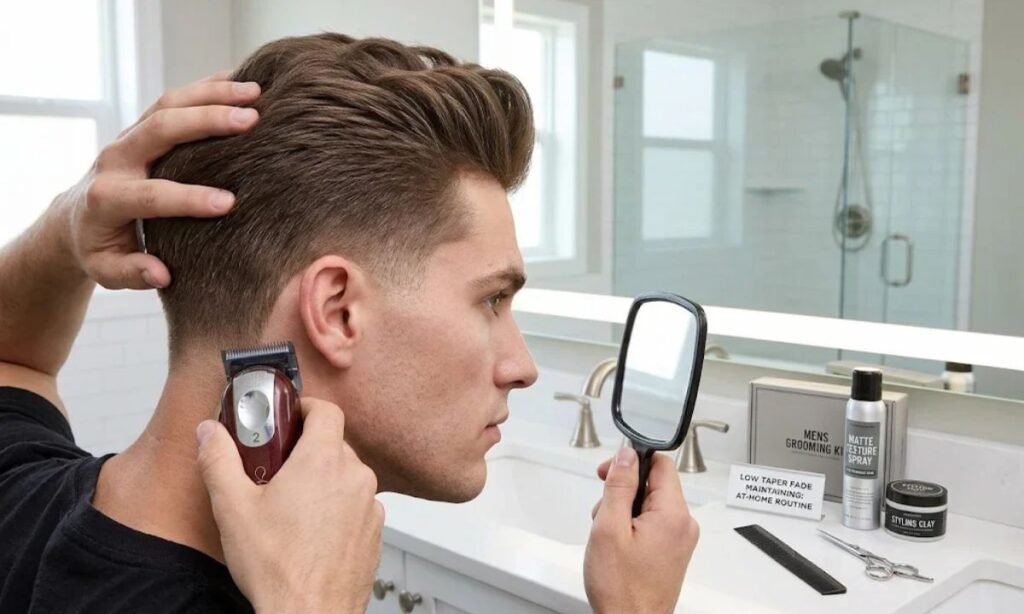
Good hair maintenance starts in the shower. Wash a few times per week, not daily. Over washing strips natural oil and can make your hair frizzy or limp.
Use a light conditioner on the ends only. Heavy conditioner flattens straight hair. A clarifying shampoo once every two weeks clears product buildup from clay and wax.
Between cuts, keep the neckline tidy with a small trimmer if you’re careful. Don’t touch the sideburns unless you know what you’re doing. A low-maintenance haircut still needs a bit of love, and good haircut upkeep means you won’t dread appointments.
How Long Does a Low Taper Fade Last Before It Grows Out?
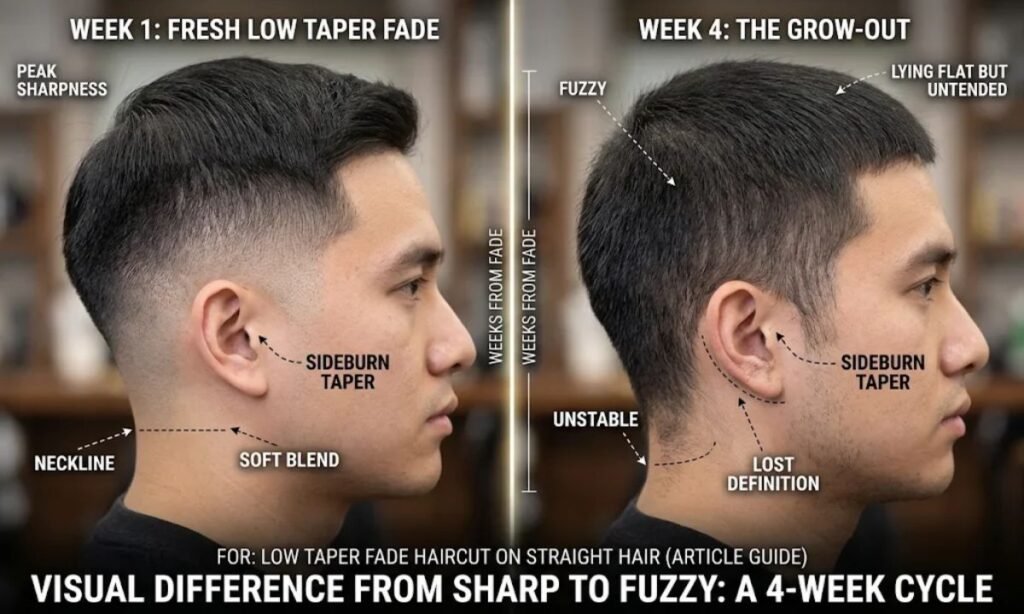
Most people get three to four weeks before the cut loses its shape. After that, the fade grow-out blurs the gradient and the neckline gets fuzzy. Fast growers should plan for three weeks.
Hair grows around half an inch a month. That’s why a short taper shows regrowth quickly. Thicker, darker hair shows it faster than lighter hair.
How often should you maintain a low taper fade? Every three to four weeks keeps it sharp. Every six weeks is possible if you’re relaxed about it.
When Does the Taper Start Losing Its Definition?
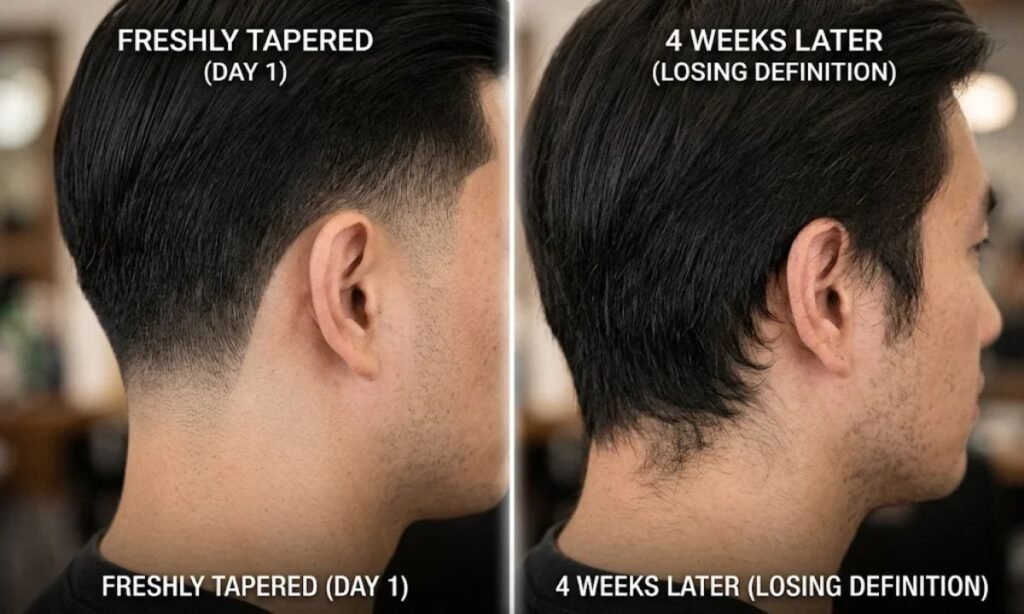
Usually around week two, the neckline starts to blur. By week three, the sideburns lose their edge. By week four, the gradual fade is almost gone.
You’ll notice it in photos before the mirror. Look at the back of your head with a second mirror. That’s where regrowth shows first.
If you’ve got an event, book your cut a few days before. That’s when it looks best. A fresh cut tends to look slightly harsh for the first day.
How to Keep the Neckline and Sideburns Looking Sharp Between Visits
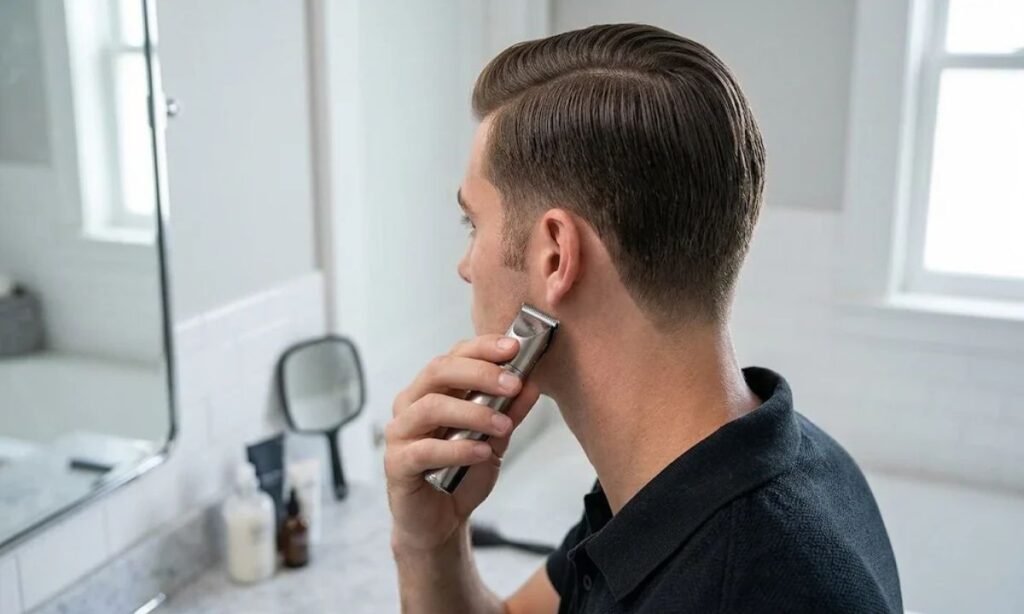
Keep a small trimmer at home for light touch ups. Clean only stray hairs below the line, never cut into the shape. Less is more here.
Ask your barber to show you where to stop. Most are happy to give tips. A quick lesson saves you trouble.
Moisturize the skin after trimming to avoid razor bumps. A calm neckline looks better than a sharp but red one. Small habits keep the cut fresh.
Common Mistakes to Avoid
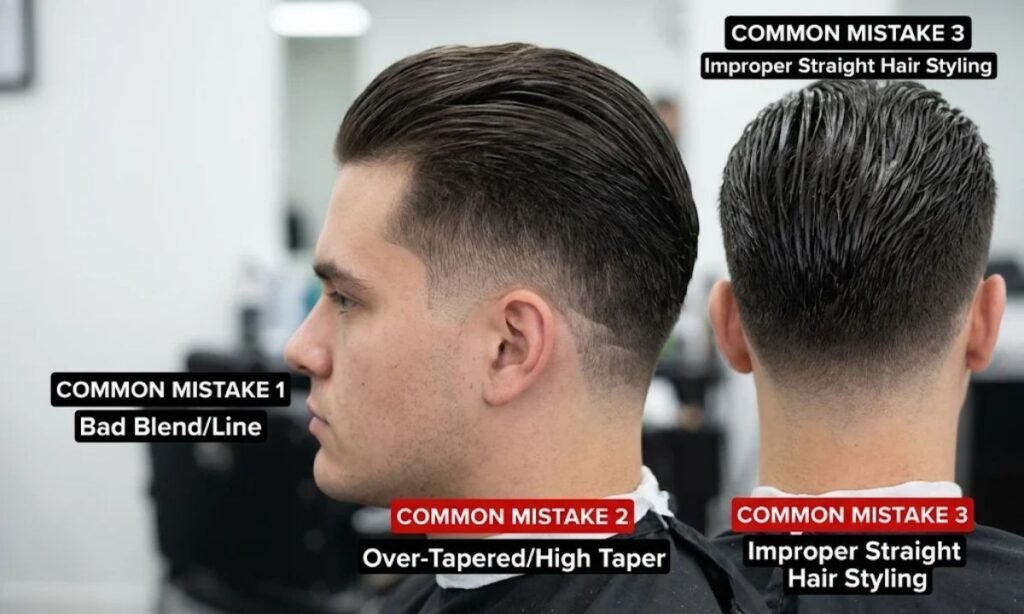
Even a great cut can go wrong. These are the errors barbers see most:
- Showing up without a reference photo
- Asking for “a fade” without saying low, mid, or high
- Using too much product on fine hair
- Skipping the blow dry
- Waiting six weeks between cuts
- Washing every day with heavy shampoo
- Ignoring your face shape when picking the top
Which one have you done? Be honest, we’ve all been there. Most of these fix themselves with a little planning.
The biggest mistake is saying “short on the sides” with no numbers. That phrase means something different to every barber. Always name the guard size.
You can also checkout this article as well: Taper Low Burst Fade: Styles, Barber Tips, and a Complete Guide
Frequently Asked Questions About Low Taper Fade for Straight Hair
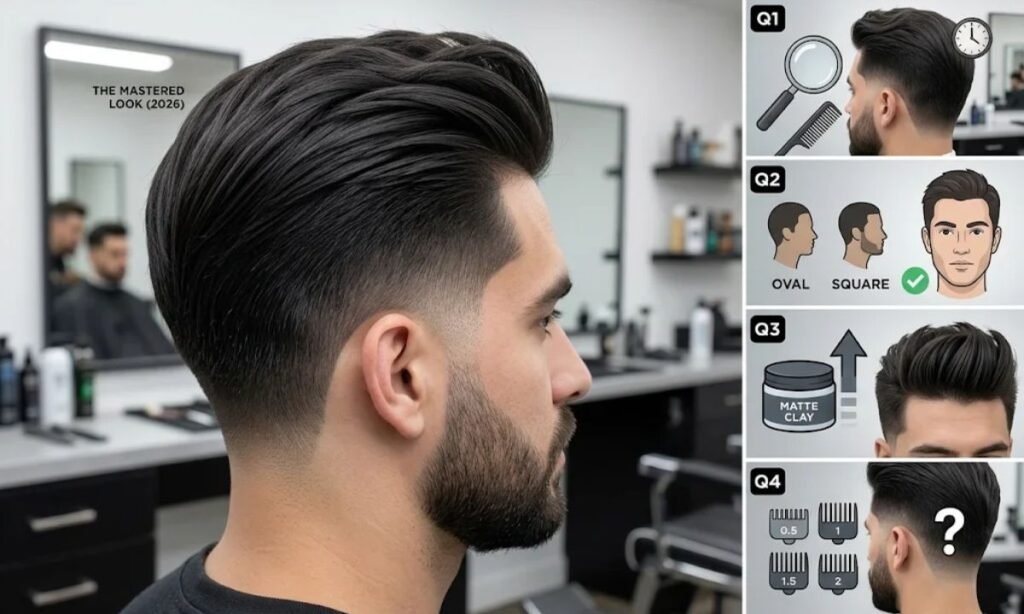
What is the best top length for a low taper fade?
Between 2 and 4 inches works for most styles. Go shorter for a crop and longer for a quiff.
Is a low taper fade good for thin hair?
Yes. The soft contrast makes the top look fuller. Use volumizing products and a short blow dry.
What’s the difference between a low taper fade and a low drop fade?
A low drop fade curves down behind the ear. A low taper stays closer to the ear line.
Can boys get this cut?
Yes. A low taper fade for boys is neat for school and easy to style. Ask for a #3 on the sides.
Does it work with a beard?
Absolutely. The sideburns can blend into the beard. Tell your barber before they start.
How much does it cost?
Prices vary by city and shop. Expect a regular haircut price, sometimes with a small extra charge for detail work.
Final Thoughts on Low Taper Fade for Straight Hair

A low taper fade is a sensible haircut that looks sharp and takes little effort. It suits straight hair, works across face shapes, and handles fine or thick strands. Bring a photo, name your guard size, and book every three to four weeks.
Start with a #2 at the sides, three inches on top, and a natural neckline. Then adjust based on how it feels. Your first try tells you everything you need for the second.
Have you tried a low taper fade? Drop your questions or favorite styles in the comments. Share this guide with a friend who keeps saying “just a trim, please.” We’ll update this article as 2026 trends change, so check back.

I’m Michael Charles, the creator of MegaCrazes—your source for fresh hairstyles, sharp haircuts, and simple hair-care inspiration. Find your style. Own your look.