
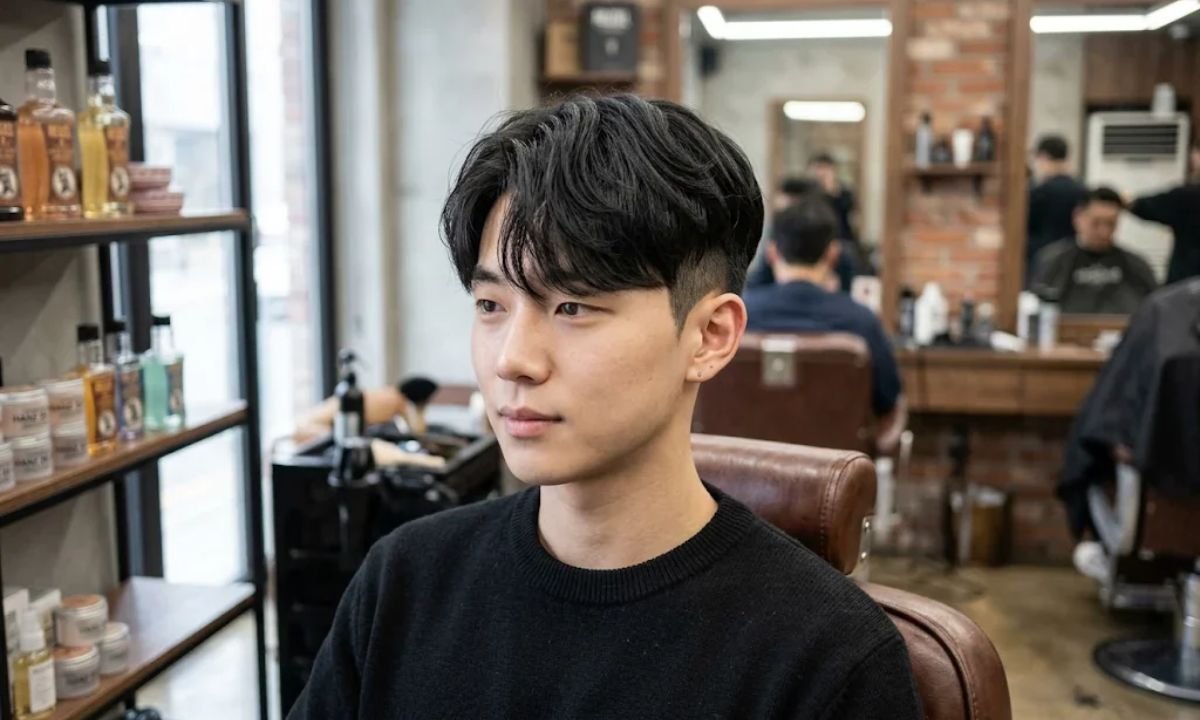
Ever scrolled past a Korean men’s hairstyle and wondered why the sides look so clean while the top looks so soft?
Or worried you’d walk out of the shop with a bowl cut you never asked for?
You’re not alone.
Most guys get stuck on the same three things: what to call it, what to say, and whether their hair can pull it off.
Quick Answer
A two-block haircut is a cut with short sides and back and long hair on top, with no blended fade in between.
The two sections stay separate, so the top sits over the sides like a canopy.
To ask for one, tell your barber: “Short underlayer with a clipper guard number 2 or 3, leave the top three to four inches, and keep it disconnected.”
Bring a photo and you’re set.
What is a Two-Block Haircut?
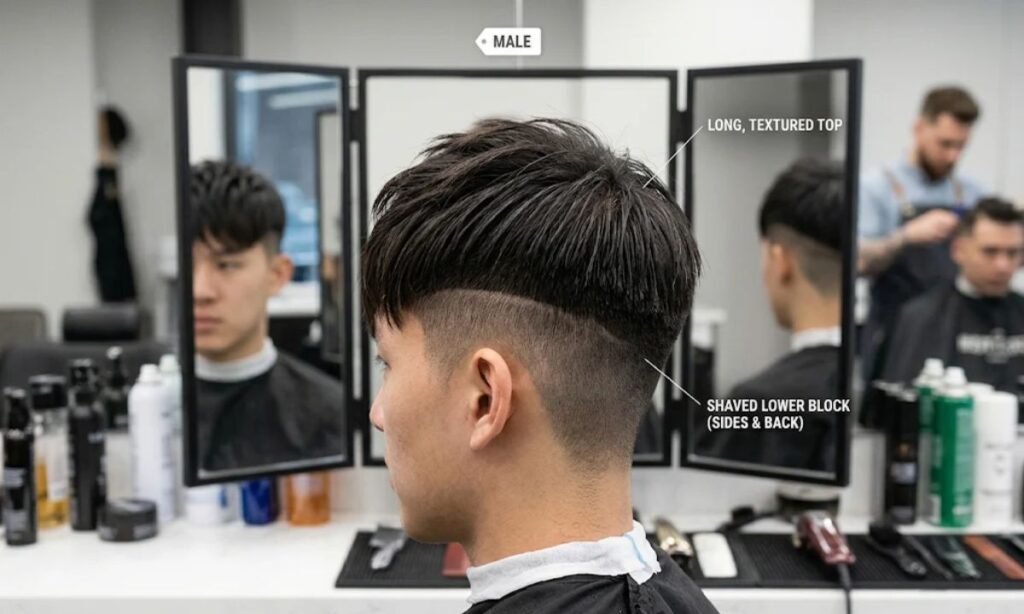
The Korean two-block haircut splits your head into two zones.
The lower zone gets cut short with clippers, while the upper zone keeps its length.
That’s the whole idea.
It’s a two-block hairstyle because you can literally see two blocks of hair.
The look took off through Korean pop culture and street style, which is why people also call it the Korean haircut.
It reads as neat, youthful, and easy to wear to school, work, or a night out.
The two blocks, and why there is no blend
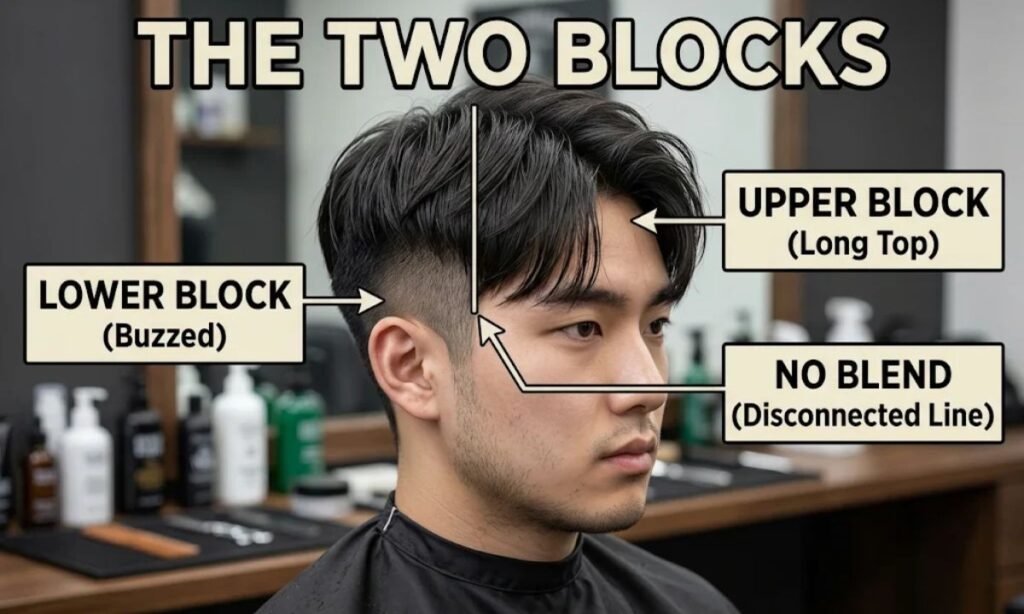
The bottom block covers the sides, the back, and sometimes a strip above the ears.
The top block covers the crown, the front, and the full fringe or soft fringe that falls on your forehead.
A normal fade melts one length into the next.
A two-block skips that melt, so you get no blended fade and a visible step between sections.
That step is the signature.
Barbers call these disconnected hair sections, and the line where they meet is the hair weight line.
If the line gets blurry, the cut loses its shape.
That’s why a good barber treats the clean shelf line as the most important part of the job.
Two-block vs undercut: what actually differs
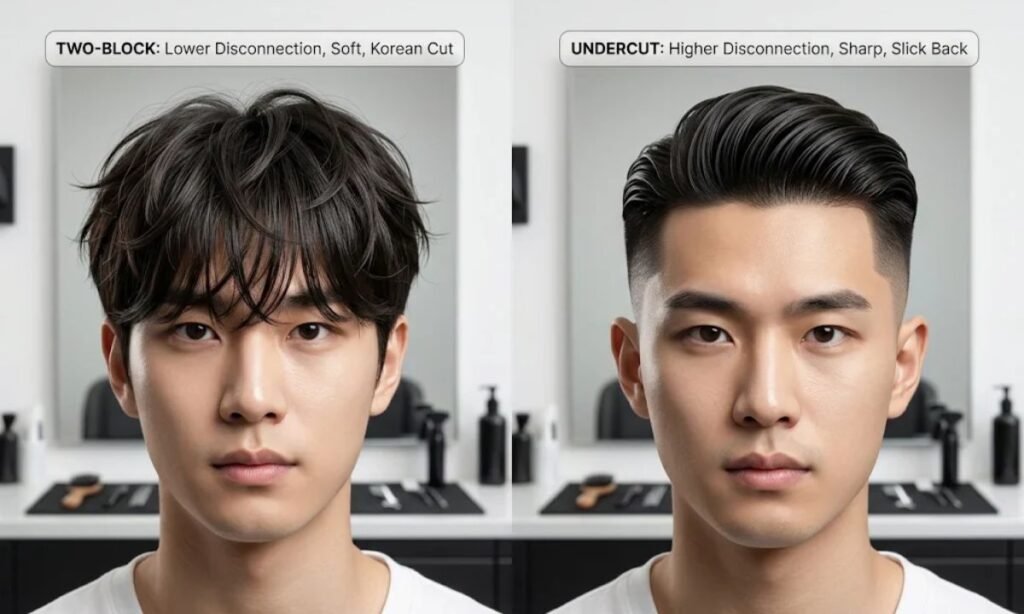
People mix up the two-block vs undercut question all the time, and honestly the two cuts are cousins.
Both are disconnected haircuts, so the sides and top don’t blend.
The undercut hairstyle usually goes very short or skin tight on the sides, then slicks the top back or over.
The two-block keeps the sides a bit longer and lets the top fall forward in a textured top with a fringe.
Here’s a quick way to tell them apart:
- Sides: undercut runs shorter and sharper, two-block runs softer.
- Top: undercut gets styled back, two-block hair falls naturally forward.
- Vibe: undercut feels bold, two-block feels relaxed.
If you want something that doesn’t shout, pick the two-block.
If you want contrast you can see from across the street, pick the undercut.
Which Two-Block Variations Offer Different Looks?
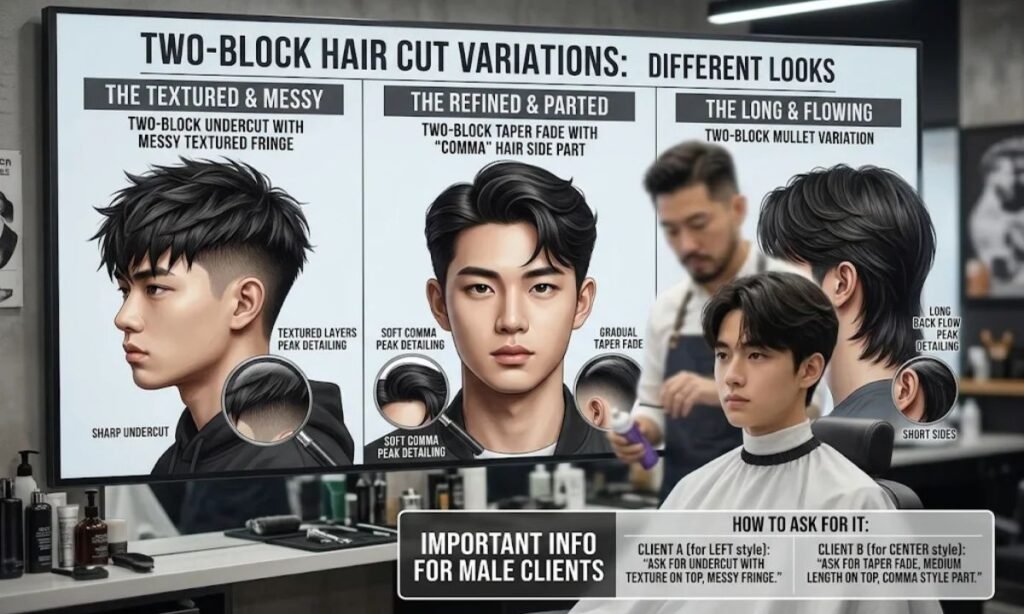
There isn’t just one two-block.
A few small changes in length, shape, and texture give you very different results.
Think of it like ordering coffee.
Same base, different finish.
Let’s walk through the three versions you’ll hear about most.
What Makes a Layered Two-Block Look Different?

A layered version adds internal texturising inside the top block.
The barber removes weight from within, so the hair moves instead of sitting like a helmet.
This suits people with dense hair texture who feel their top looks heavy.
You get a lighter, feathered finish that holds air at the roots.
It also grows out better.
The layers hide small length differences when you skip a visit.
How Does a Comma Hair Two-Block Change the Front Shape?
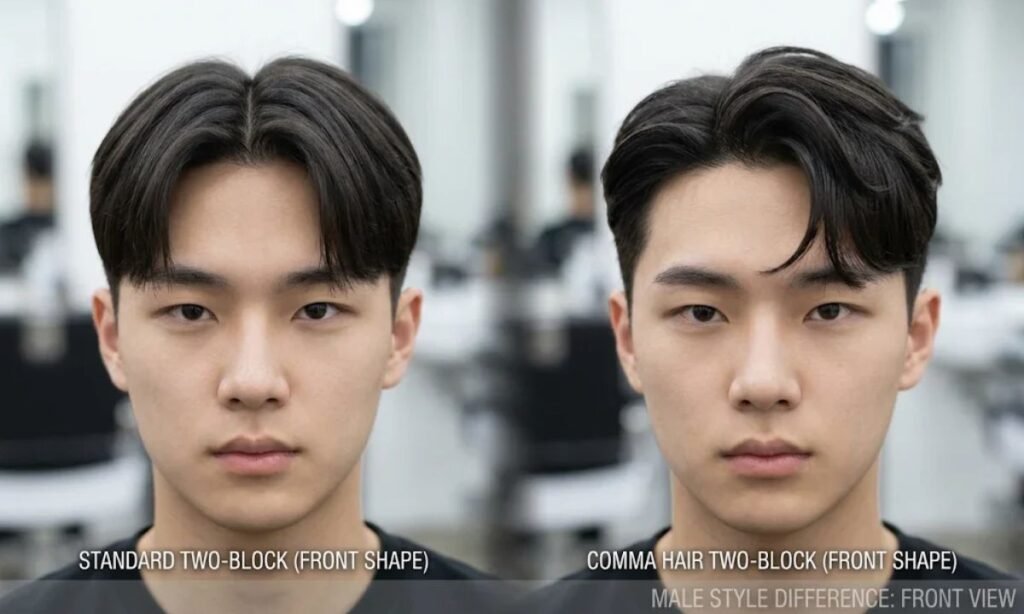
Comma hair is all about the fringe.
The front section curls under slightly and lands on your forehead in the shape of, you guessed it, a comma.
You create comma hair styling with a blow dryer and a round brush.
Warm air bends the ends, and a little light styling cream keeps the curve soft.
It’s a favorite for straight, fine to medium hair.
The shape frames your eyebrows and gives the face a youthful look.
What Separates a Classic Two-Block From a Modern Version?

The classic version keeps things simple.
Blunt top, square sides, and a fringe that sits across the forehead.
The modern take adds a side part, more scissor point cutting, and a slightly longer tapered neckline.
It looks less rigid and fits more face shapes.
If you’re new to the cut, start modern.
It forgives mistakes more easily than the classic.
Who suits a two-block, and who should skip it
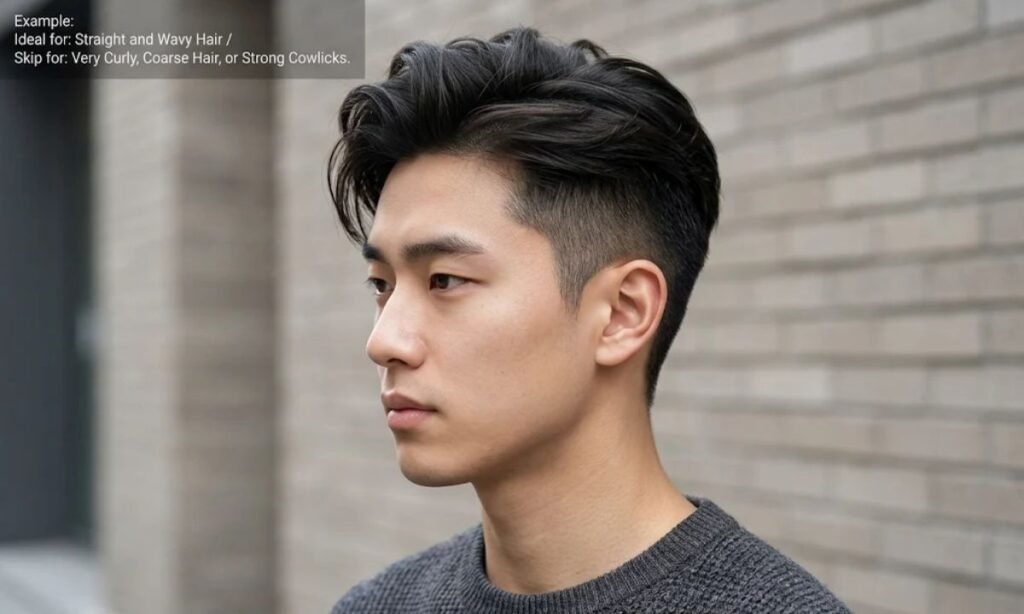
The two-block works well on oval, round, and long faces.
The volume on top adds height, which balances a round jaw and softens a long one.
It also suits anyone who wants a polished look without daily effort.
Five minutes with a dryer and some matte paste is plenty.
Who should think twice?
Guys with very tight curls who hate a puffy shape, and anyone whose hair thinning sits at the front or crown.
That said, most issues have a fix.
A shorter top or a different texture often solves the problem, so talk it through before you write the cut off.
How Does Hair Type Affect a Two-Block Haircut?
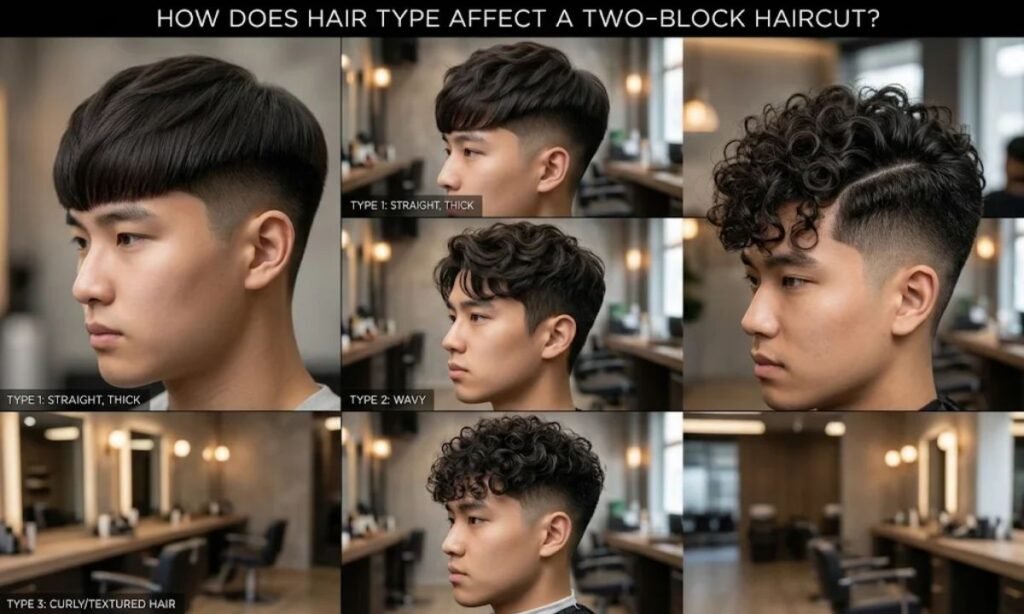
Hair type decides how the top behaves once it’s cut.
Two guys can ask for the same haircut and walk out with different results.
The good news is that every type can work.
You just adjust length, texture, and product.
Does a Two-Block Work Better With Thick or Thin Hair?
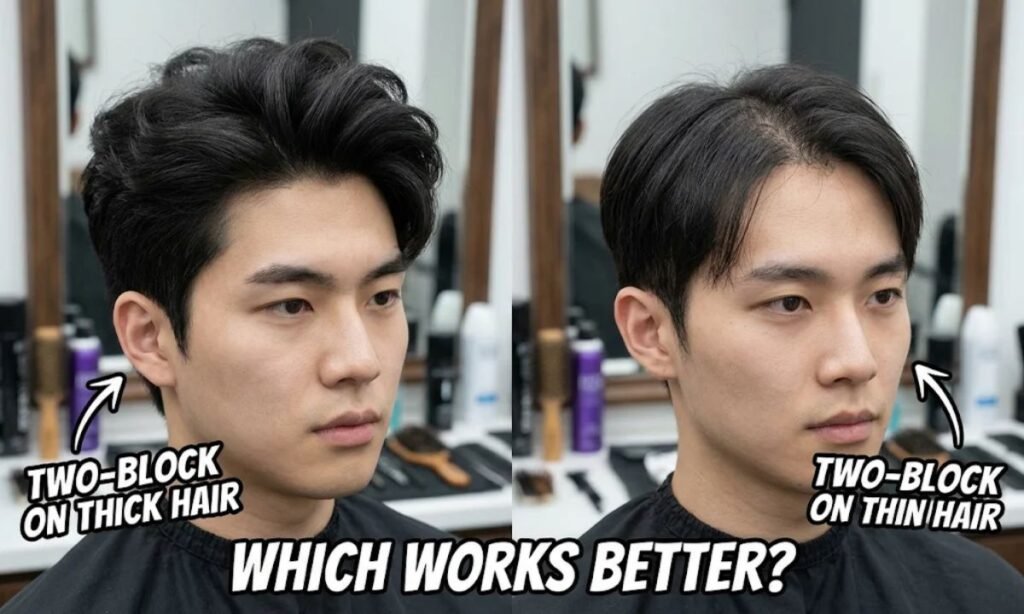
Straight and thick hair is the dream setup.
It holds the canopy shape, keeps the shelf line crisp, and stays put through the day.
Thick hair does need thinning work, though.
Without it, the top puffs out and the sides look tiny, so ask for internal texturising.
Thin hair works too.
Keep the top slightly shorter and skip heavy layers so it doesn’t look see through.
How Does Wavy Hair Change the Overall Shape?

Naturally wavy hair adds body for free.
The waves lift the top, so the cut looks fuller without any blow drying.
The tradeoff is spring.
Wavy hair shrinks as it dries, so your barber should leave it a touch longer than you’d expect.
For curly hair texture, the same rule applies.
Ask for a longer top, work with a vent brush when drying, and let the curl do the styling.
Can Fine Hair Achieve a Fuller Two-Block Appearance?
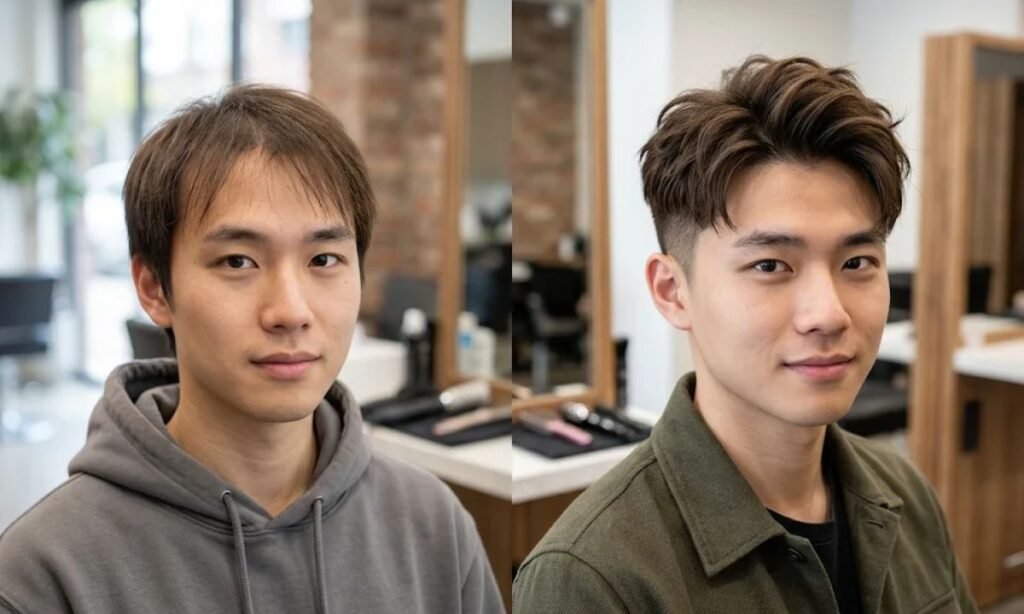
Yes, but you need a plan.
For fine or thinning hair, the goal is hair weight and volume near the roots, not length alone.
Blow dry the top upward first.
Then finish with a pinch of hair clay to hold the lift without weighing it down.
Also keep the sides tidy.
Short, clean sides make the top look thicker by contrast.
What Hair Length Do You Need Before Getting a Two-Block?
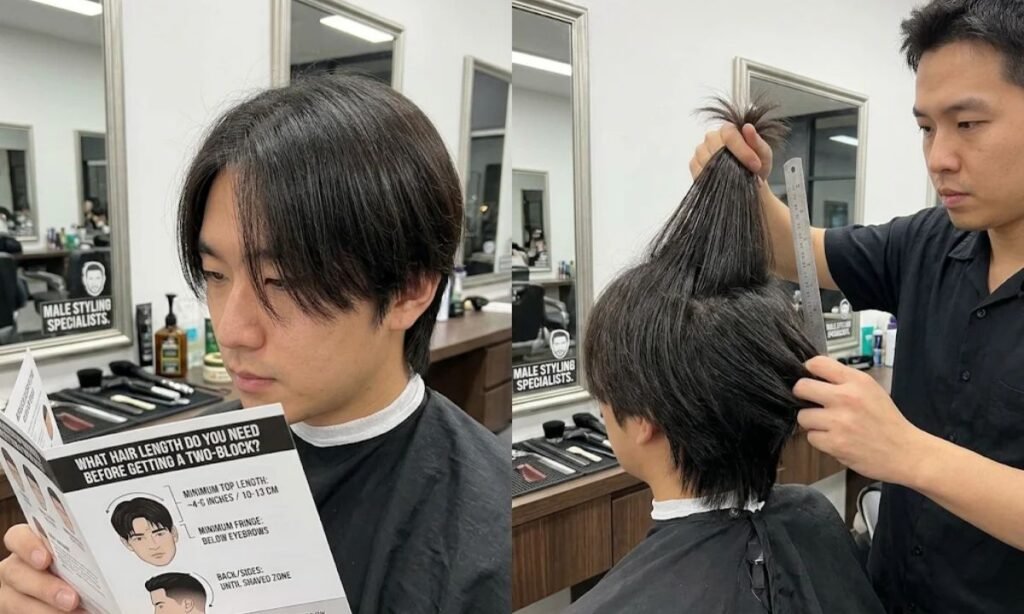
Length is where most first-timers slip up.
They book the cut when the top is two inches long and leave disappointed.
You need enough hair to build the canopy.
That usually means three to four inches on top, and a bit more if your hair curls.
As a rule, wait.
A few extra weeks of growth give your barber room to shape the cut instead of rescuing it.
How Long Should the Top Hair Be for a Two-Block?
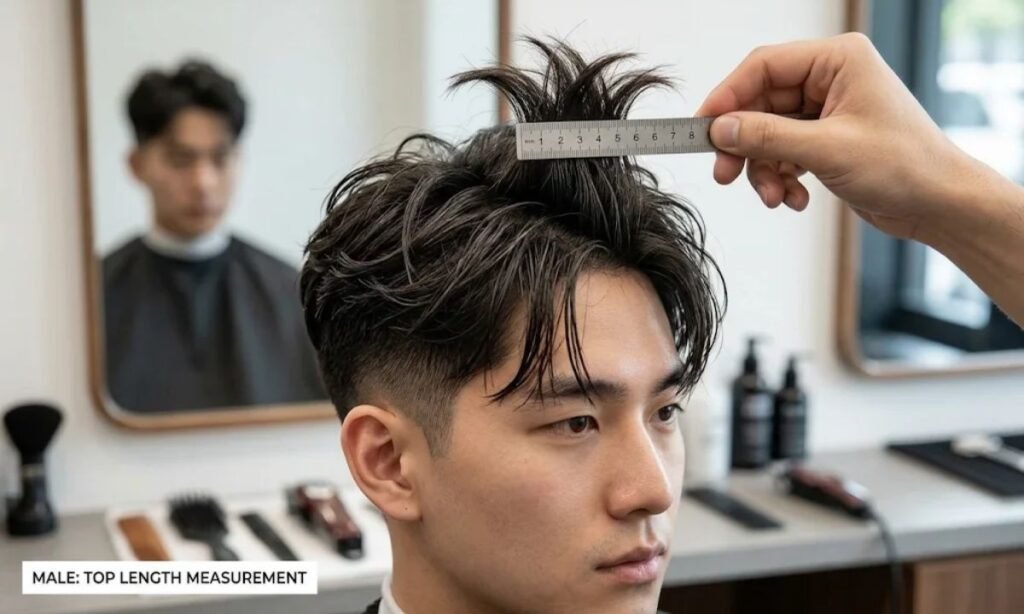
Aim for three to five inches over the crown.
That length lets the long hair on top cover the shelf line and fall past the parietal ridge.
The front should reach your eyebrows or lower.
If you want hair covering the ears on the upper sides, add another half inch.
Straight hair can go longer without trouble.
Wavy hair needs the extra length because it springs up when it dries.
How Short Can the Sides Be Without Losing the Shape?

Most barbers use a clipper guard number 2 or clipper guard number 3 for the lower block.
That leaves enough hair to look soft but short enough to stay neat.
Going shorter than a number 1 turns the cut into a hard undercut.
You lose the gentle Korean feel and the sides start to look stark.
If your head shape has bumps or flat spots, pick a number 3.
A little extra length hides them better.
Can You Get a Two-Block With Short Hair?
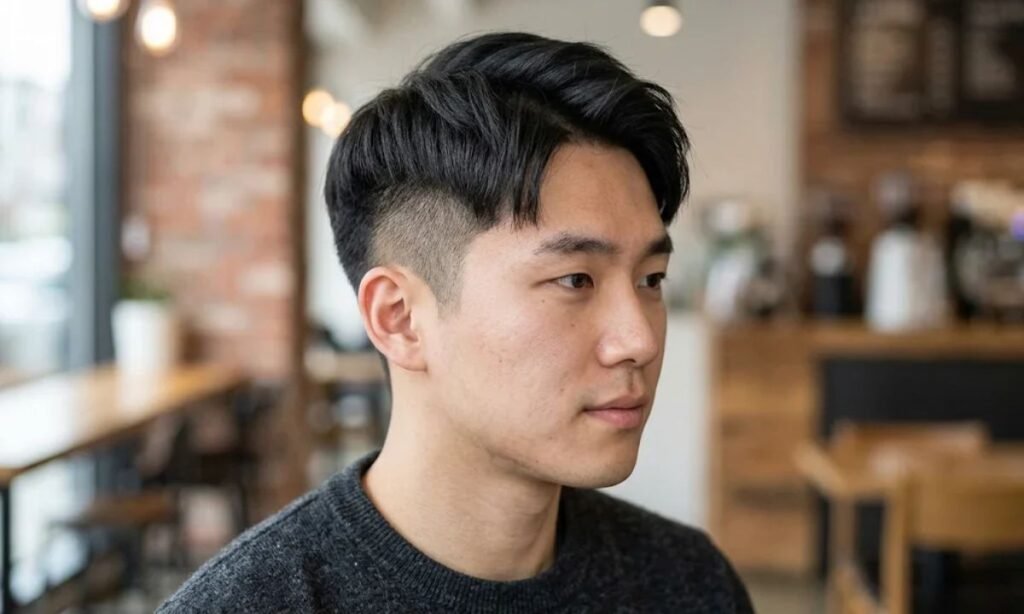
You can try a mini version.
With about two inches on top, the barber can build a short textured top with a light fringe.
It won’t have the full canopy.
But it will give you a preview of the style while the rest grows in.
Or think of it as a transition cut.
Grow it for six weeks, then come back and go all in.
How we cut the underlayer and the canopy
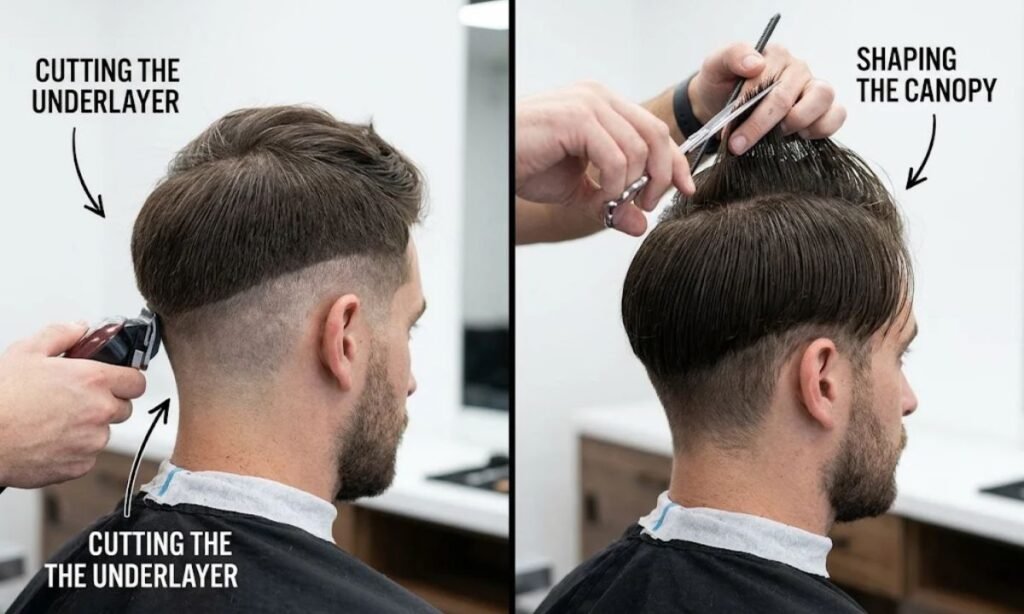
Here’s how a typical cut goes in the chair.
First, the barber does haircut sectioning, clipping the top hair up and out of the way.
Next comes the short underlayer.
The barber runs clippers with a number 2 or 3 guard from the neckline up to the parietal ridge line, then cleans the edge into a tapered neckline.
Then the canopy shape comes together.
With scissors, the barber uses scissor point cutting to soften the ends, adds internal texturising for movement, and checks that the hair weight line sits evenly all around.
A final check helps.
The barber lets the top fall naturally and looks for gaps, heavy spots, or a crooked fringe.
What Should You Confirm With Your Barber Before the Cut?
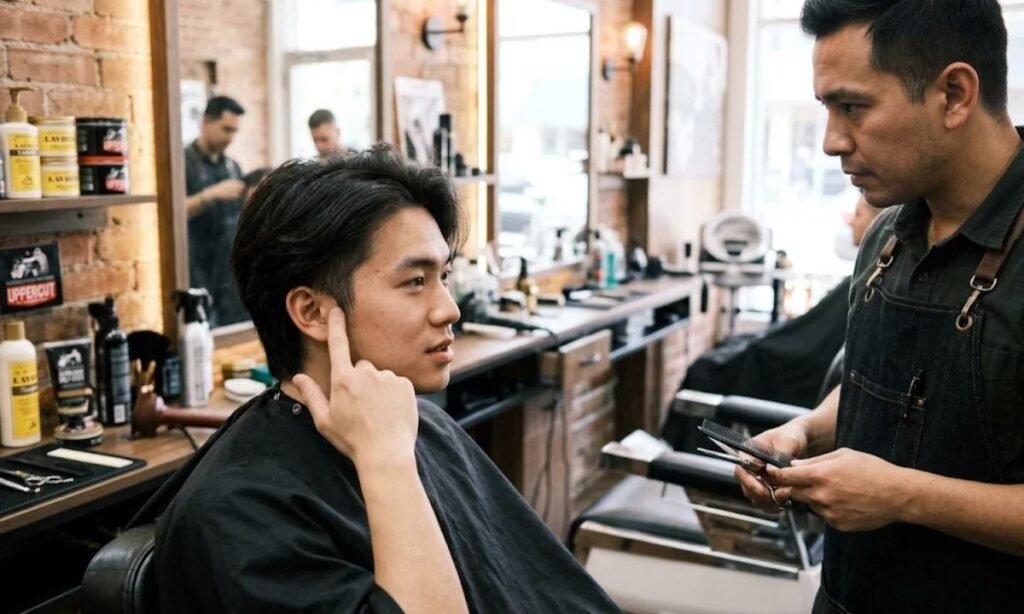
A good haircut consultation takes five minutes and saves five weeks of regret.
Barbers can’t read minds, so clear barber instructions make all the difference.
Speak up about your lifestyle.
If you hate styling, say so, and your barber will cut accordingly.
Here’s what to cover before the clippers come out.
Should You Bring Front, Side, and Back Reference Photos?
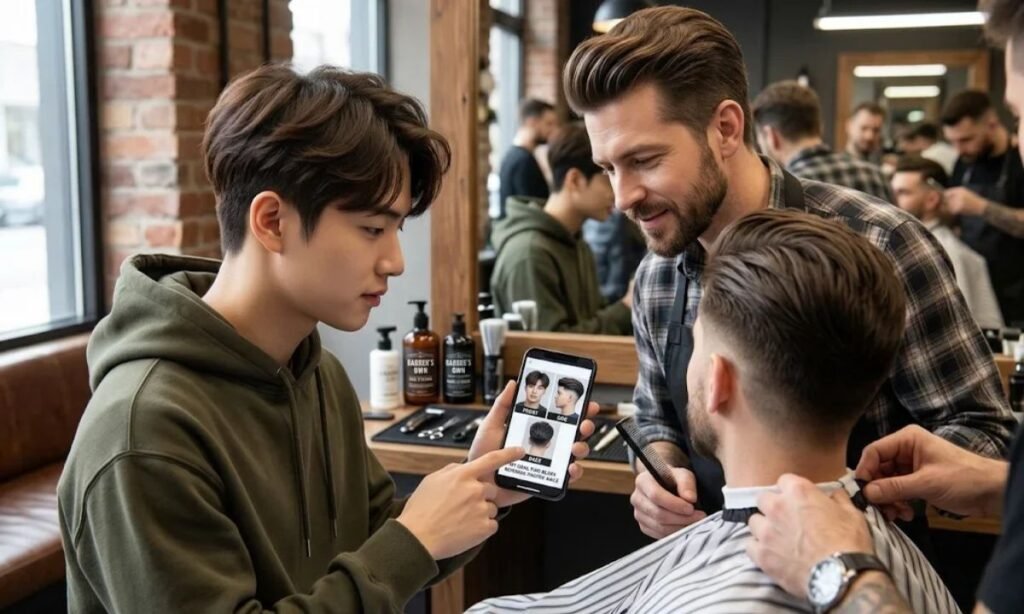
Absolutely.
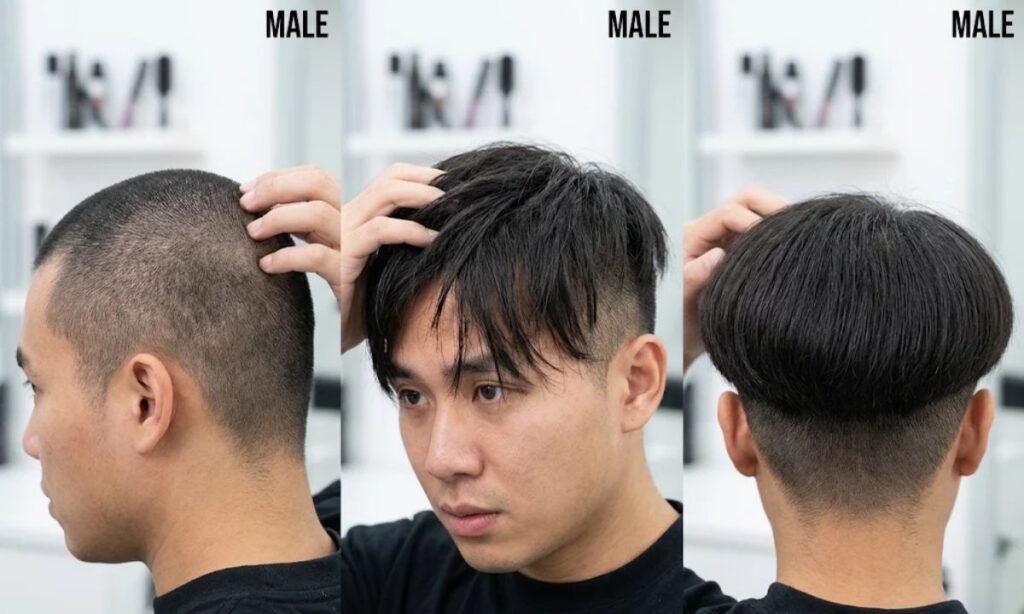
One photo from the front isn’t enough, because the back and side views show where the shelf line sits.
Bring three if you can.
Front, side, and back give your barber a full map of your Korean-inspired hairstyle.
Pick photos of people with similar hair.
A picture of thick, straight hair won’t help if yours is fine and wavy.
How Should You Specify the Length of the Top and Fringe?
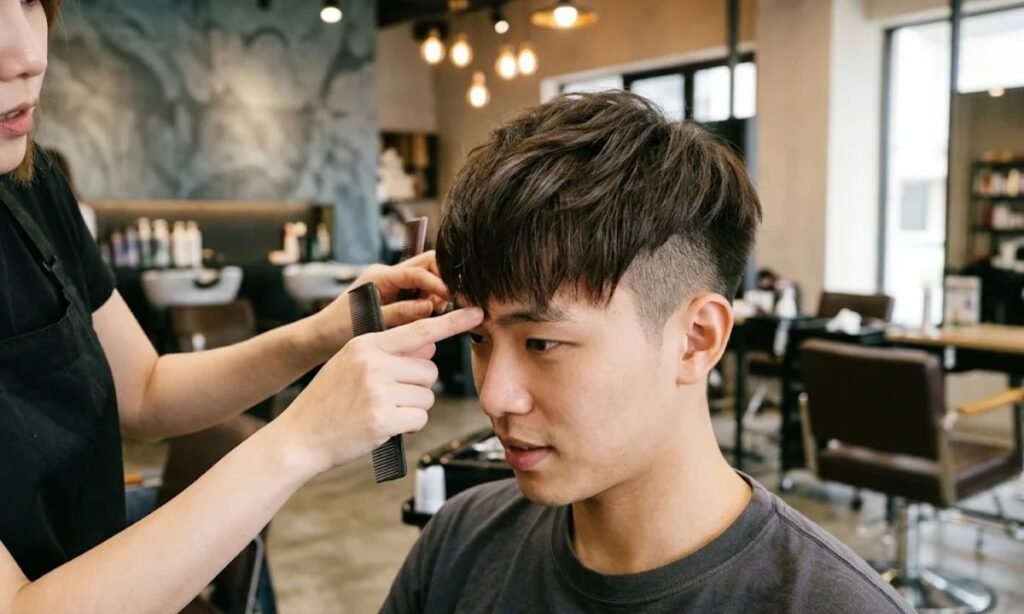
Use inches or fingers, not vague words.
“Not too long” means something different to everyone.
Try something like: “Three inches on top, full fringe to the eyebrows, with a side part.”
That sentence leaves little room for confusion.
Also say how you want it to move.
If you want hair that falls naturally, tell them you don’t plan to push it back.
How Can You Avoid Excessive Bulk Around the Upper Sides?
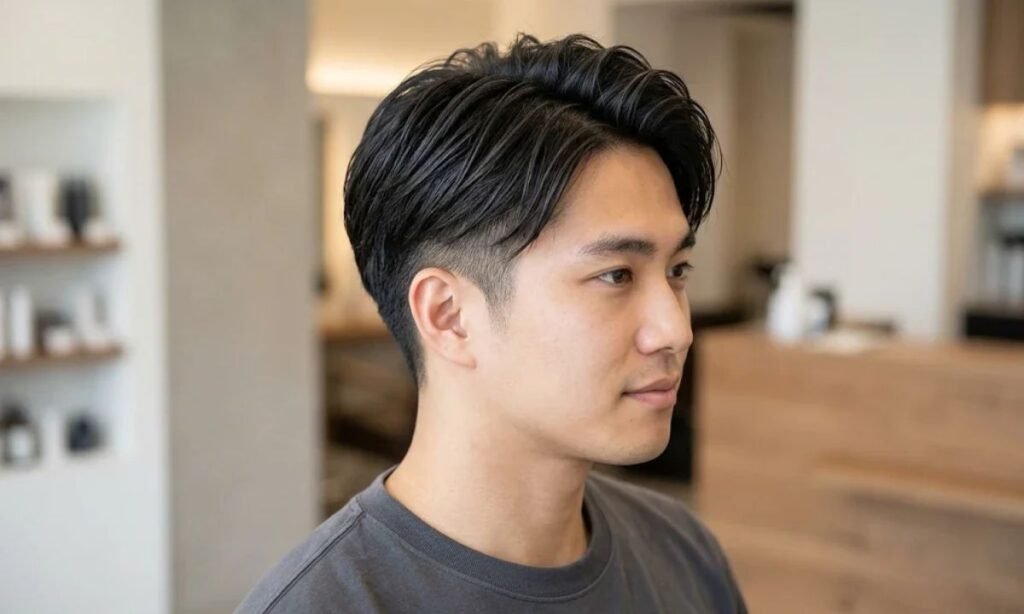
Bulk above the ears is the classic mistake.
It makes the head look wide and the cut look like a mushroom.
Ask your barber to blend the top section down just a little at the edges.
That doesn’t mean a fade, only a gentle slimming of the hair right above the shelf line.
Internal thinning helps too.
It keeps the sides from puffing out when the weather turns humid.
Styling it the Korean way at home
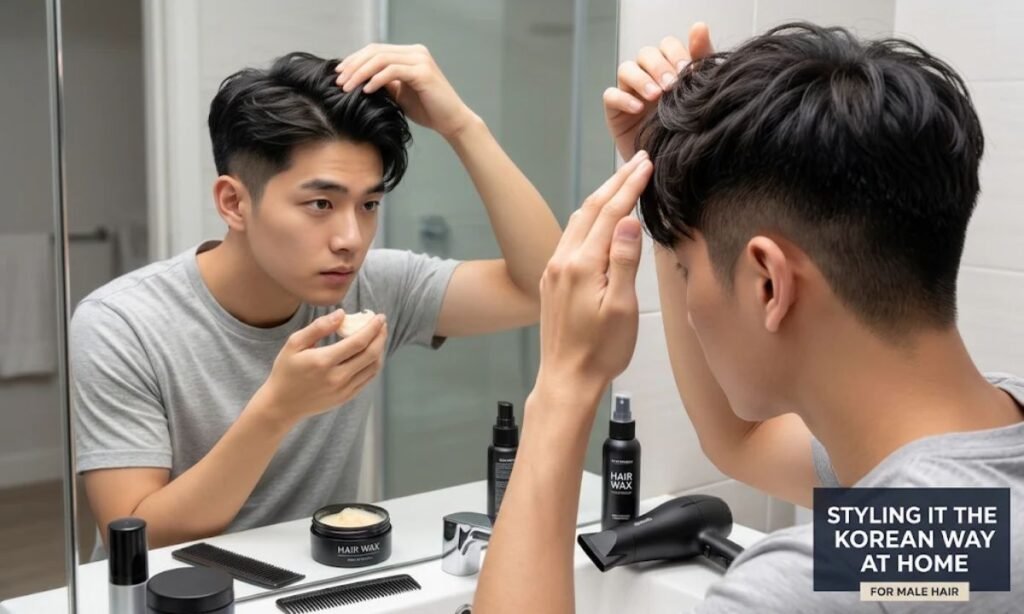
Styling starts in the shower.
Towel dry your hair until it’s damp, not dripping.
Grab your blow dryer and a round brush or vent brush.
Dry the fringe forward and slightly down, then lift the crown volume with the brush.
Finish with product.
A pea-sized amount of light styling cream gives a natural look, while matte styling paste or hair clay application adds hold and a matte finish.
Rub the product between your palms first.
Then work it through from underneath so the top stays light and the hair doesn’t lie flat.
Keep it simple.
Two minutes of dryer and one pinch of paste beats twenty minutes of fiddling.
How often a two-block needs a visit
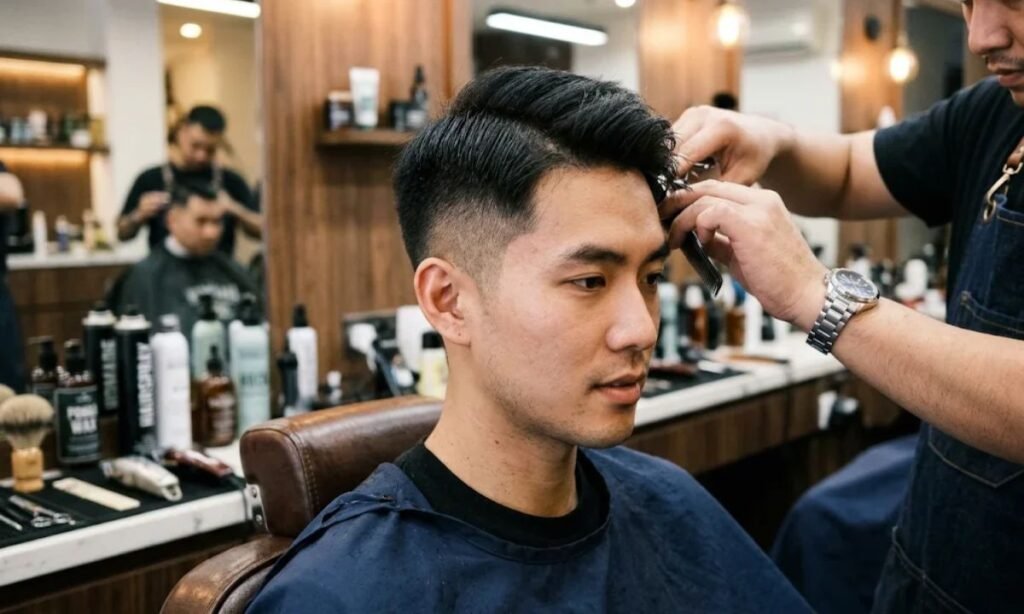
Plan on a trim every three to five weeks maintenance cycle.
The sides lose their sharpness first, because short hair shows growth faster.
The top can wait a little longer.
A full trim every eight weeks keeps the canopy shape and fringe in line.
If you’re on a tight budget, ask for a clipper only visit.
Many barbers will tidy the short sides and back at a lower price, and you can keep the top as is.
How Does a Two-Block Haircut Look as It Grows Out?

It grows out better than most short cuts.
A soft grow-out takes a few weeks to look messy, and even then it looks casual instead of sloppy.
The real issue is balance.
The sides grow in thicker, and the shelf line fades into the top.
That’s your cue.
Book a visit before the shape disappears.
Which Areas Become Uneven First During Hair Growth?
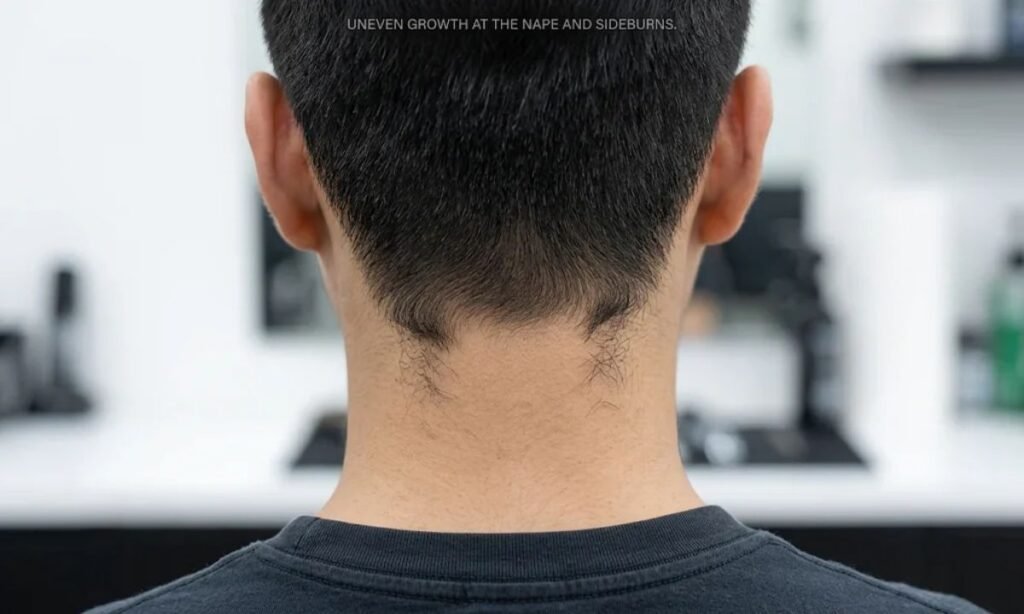
The neckline goes first.
Hair there grows fast, and a tapered neckline loses its edge within two weeks.
Next come the sides above the ears.
Underlayer regrowth starts pushing the top outward, which creates that mushroom shape.
The fringe stays the same for longest.
But it starts poking into your eyes once it passes the nose line.
How Can You Transition From a Two-Block to a Connected Hairstyle?

If you’re done with the two-block, plan the escape.
Ask your barber to leave the sides alone and trim only the top and neckline.
After about two months, the disconnected sides blend naturally.
At that point, a curtain hairstyle or a medium length taper becomes easy to do.
Have patience in the awkward phase.
A little hair clay and a side part keep things clean while it grows.
Common mistakes people make with the Korean cut
The first mistake is skipping the top length.
The second is walking in with only one photo.
People also over style.
Too much product turns a soft textured top into a stiff lump.
The third is ignoring hair thinning at the front.
Talk about it upfront, and your barber can adjust the fringe so it hides less and flatters more.
Products worth keeping in your bathroom

You don’t need a shelf full of bottles.
Three products cover almost every situation.
A light styling cream works for everyday softness.
Matte paste gives control for windy days, and hair clay gives a stronger, drier hold for thick hair.
Add a small round brush and you’re set.
Spend a little more on the dryer, because a good one saves your hair from heat damage.
Two-block haircut: common questions
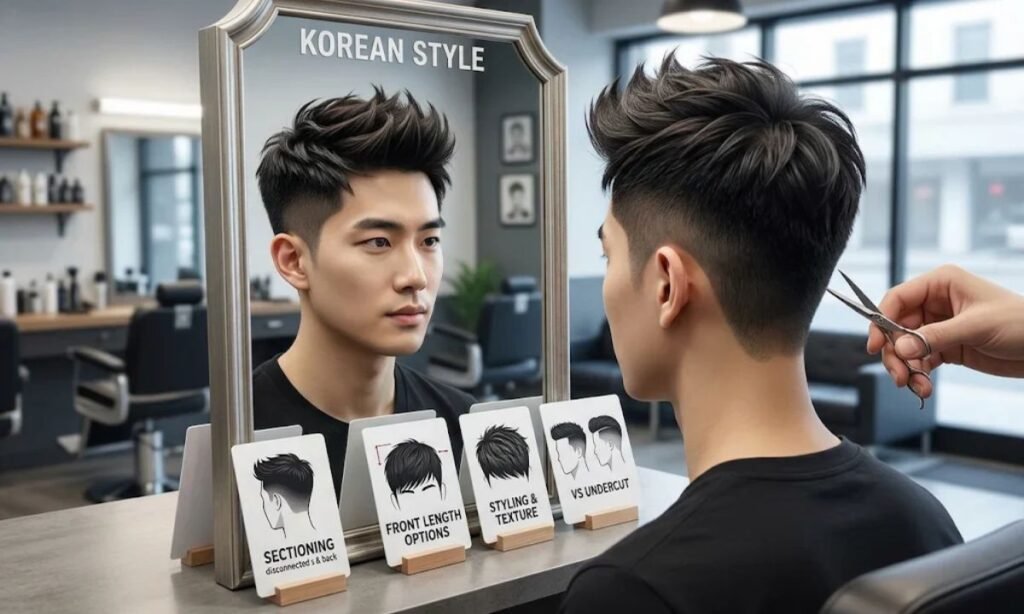
Is a two-block haircut the same as a Korean haircut?
Not exactly, but the Korean two-block haircut is the most popular version and the one most people mean.
Can I get a two-block with curly hair?
Yes. Keep the top longer, and ask for gentle thinning to control the bulk.
How much does it cost?
Prices vary by city and shop, so ask before you sit down.
Will it work on a receding hairline?
Often, yes. A fuller fringe or side part can cover it, and your barber can suggest a shape that suits you.
How long does it take to grow in?
Expect about eight to twelve weeks of growth if you start with a short cut.
Got a question that’s not on the list?
Drop it in the comments and I’ll answer it.
You can also checkout this article as well: 35+ Best Mid Taper Fade Black Male Styles (2026)
Final Thoughts on Two-block haircut

The two-block is simple at heart.
Short sides, long top, and a clean break between the two.
Bring photos, give measurements, and book a trim every three to five weeks.
Do that, and the cut will look sharp on day one and still decent on day thirty.
Tried it yourself?
Share how it went in the comments, and send this guide to a friend who’s still stuck on what to ask for.

I’m Michael Charles, the creator of MegaCrazes—your source for fresh hairstyles, sharp haircuts, and simple hair-care inspiration. Find your style. Own your look.