

By [Author Name] | Last updated: November 2026
You’re sitting in the barber chair and the question hits: mid or high? You don’t want sides that look too bald. You also don’t want a cut that grows out in a week.
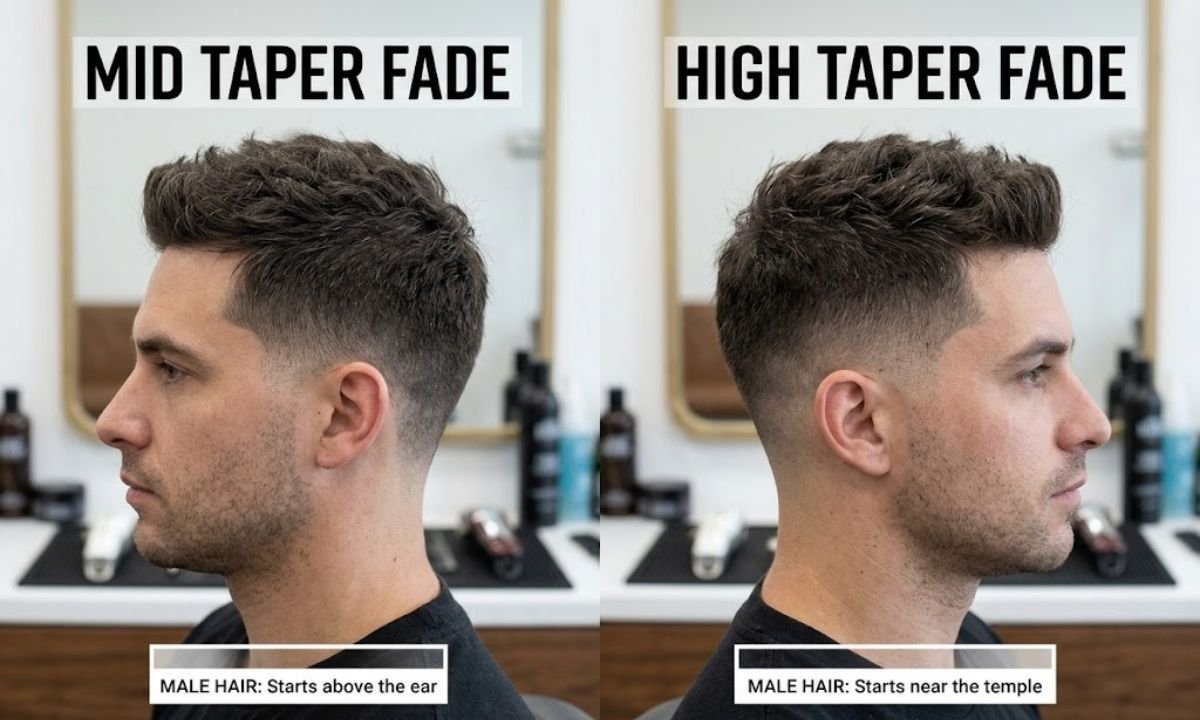
Here’s the short version of mid taper fade vs high taper fade. A mid taper starts the blend around the middle of the sides, near the temple. A high taper starts higher, so more of the sides get short and the cut looks sharper.
The rest of this guide shows you which one fits your hair, your face, and your routine. You’ll also get exact words to tell your barber. Stick around, because the small details decide how the cut looks.
Quick Answer
Pick a mid taper fade if you want a clean cut that still looks safe at work. It keeps more side weight and shows less scalp visibility. It suits most hair types, and it’s the easier one to live with.
Pick a high taper fade if you want strong contrast and a sharper look. It starts the blend higher, so the upper sides get short fast. It looks best with a fuller top and a confident attitude.
Still stuck? If you’ve never had a taper fade haircut, start with mid. You can always go higher next time, but you can’t glue hair back on.
Mid Taper Fade vs High Taper Fade: What’s the Difference?

The main difference is starting height. A mid taper begins its progressive shortening around the temple line. A high taper starts closer to the top of the head, near the crown of the sides.
That single choice changes everything else. It changes how much scalp exposure you get. It also changes how bold the haircut silhouette looks from across the room.
Here’s a quick side by side before we go deeper.
| Feature | Mid Taper | High Taper |
|---|---|---|
| Blend starts | Around the temple | Above the temple |
| Side weight | More stays | Less stays |
| Contrast | Medium | High |
| Maintenance | Easier | Faster to look messy |
| Style feel | Safe, polished | Bold, sharp |
A mid fade haircut and a high fade haircut can share the same top. The sides are what tell them apart. Think of it as the same shirt in two different fits.
What Is a Mid Taper Fade?

A mid taper fade is a balanced cut. The hair gets shorter in small steps from the upper sides down to the hairline and neckline. The fade height sits right around the middle of the sides.
Your barber usually works with clippers and a clipper guard. They move the clipper lever and use a guide comb to keep the taper transition smooth. The goal is a soft blend line with no harsh steps.
Why do so many guys ask for it? It looks clean without screaming for attention. You can wear it in a meeting, at a wedding, or at the gym.
What Is a High Taper Fade?

A high taper fade moves the blend placement up the head. The short part begins well above the temple, so the sides look tighter. The cut shows more skin and more shape.
Barbers like it because it creates a crisp frame. It makes a textured crop, a quiff, or a curly top pop. The contrast between short sides and longer top does the heavy lifting.
Another way to say it: it’s louder. A high taper haircut gets noticed. That’s great if you want it, and annoying if you don’t.
How Does the Fade Transition Change Between Mid and High Tapers?

The fade transition is the part of the haircut where long hair turns short. In a mid taper, that shift happens lower and feels gentle. In a high taper, it happens higher and feels sharper.
A good barber treats this zone like a gradient on a sunset. No stripes, no bumps, no sudden cliffs. A bad one leaves an uneven blend that you can see from three feet away.
Let’s break the transition into three practical questions.
Where Does the Blend Begin Around the Temples and Ears?

On a mid taper, the blend begins near the temple and wraps around the ear. The hair above that point stays longer. Your sideburns usually stay clean and lightly tapered.
On a high taper, the blend begins above the temple. It climbs toward the upper sides, so the ear area gets very short. The result looks cleaner, but it also looks less forgiving.
If you wear glasses, check this spot carefully. A high start can leave hair rubbing the frames. A mid start often feels more comfortable.
How Much Weight Remains Above the Taper Line?
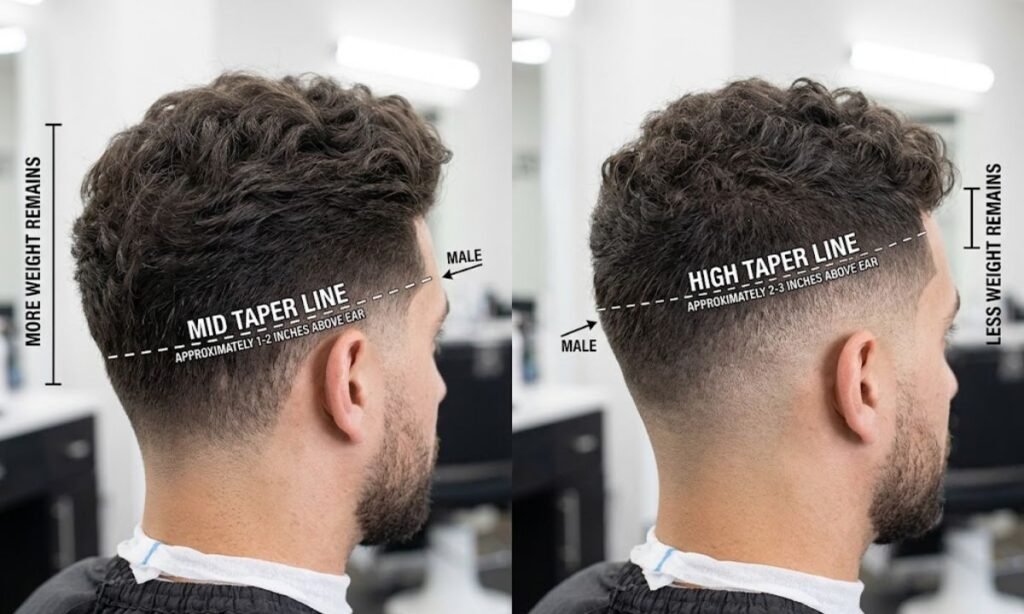
A mid taper leaves more side weight above the line. That extra hair softens the shape of the head. It also helps when your hair density is low.
A high taper removes much of that weight. What’s left looks lighter and more dramatic. Thick hair, in particular, gets a real break.
This is why upper-side bulk matters. If the sides puff out, a higher start can tidy them. If they’re thin already, it can leave you looking flat.
How Does the Transition Affect the Overall Haircut Silhouette?

Mid tapers create a rounder, softer haircut silhouette. The head looks proportioned and the top blends in naturally. It’s the classic gentleman’s outline.
High tapers create a taller, more angular shape. The top seems to float over the sides. That makes the haircut proportions feel more modern and more daring.
Try this quick test. Squint at a photo of each cut. The one that looks like a clear shape from far away is usually the high taper.
What Clipper Guard Sizes Are Used for Mid and High Taper Fades?
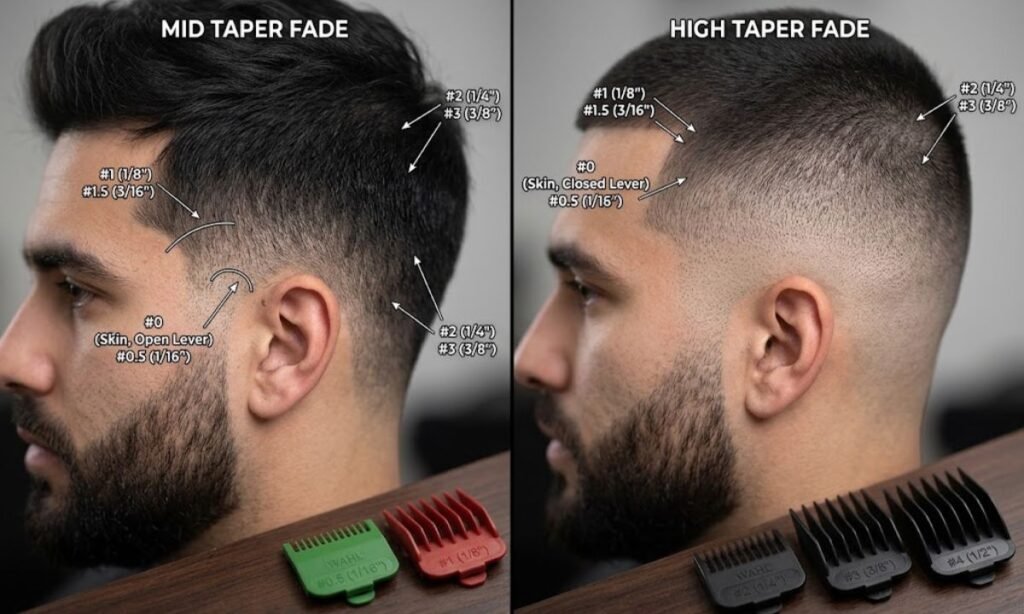
Exact numbers vary by barber, clipper brand, and region. Most shops work from short guards at the bottom and step up in small jumps. The guard length you see is only the starting point, since barbers also use the clipper lever and scissors.
So don’t walk in demanding a number three on the sides and nothing more. A fade is a technique, not a single guard. Let your barber choose the steps.
That said, knowing the general range helps you talk shop. Here are the common choices.
Which Guard Lengths Create a Softer Mid Taper?
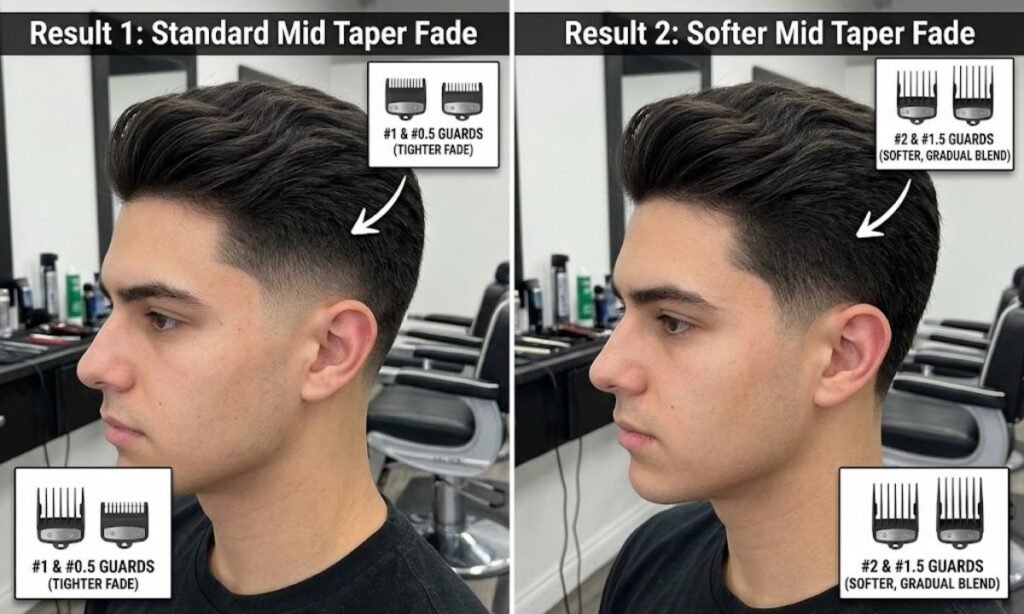
A softer mid taper often starts with a longer clipper guard near the top of the fade. Barbers then step down to shorter guards near the nape and sideburns. The jumps stay small, which keeps the taper transition gentle.
Many barbers use a #2 or #3 at the top of the taper. They then drop to a #1 or lower toward the neckline. Treat those as examples, not a rule.
Hair type changes the plan. Thick, coarse hair may need a slightly shorter guard to look tidy. Fine hair may need a longer one to avoid looking see through.
What Clipper Lengths Create a Sharper High Taper?

A sharper high taper starts shorter and starts higher. Barbers often begin with a #1 or #1.5 near the top of the fade zone. They then step down to a lower length around the ear and nape.
The guide comb matters here. It keeps the hair flat so the blend line doesn’t wobble. Without it, high tapers can look patchy.
Expect the barber to switch tools often. A trimmer or shears may finish the hairline lineup. That extra care is what makes the cut look expensive.
Can You Get Either Taper With a Zero or Skin Finish?

Yes, you can. A skin taper fade ends in a bare finish, where the nape and sideburn area get shaved down to skin. A shadow taper fade ends just before that, leaving a faint shade of hair.
Skin finishes look crisp, but they grow back quickly. You’ll see stubble in four or five days. That’s why many people choose a shadow finish for easier upkeep.
Skin finishes also bring one caution. If your neckline gets irritated, tell your barber. Bumps from shaving can be a sign of acne keloidalis nuchae, so ask a doctor if they keep coming back.
How Much Scalp Exposure Does Each Taper Create?
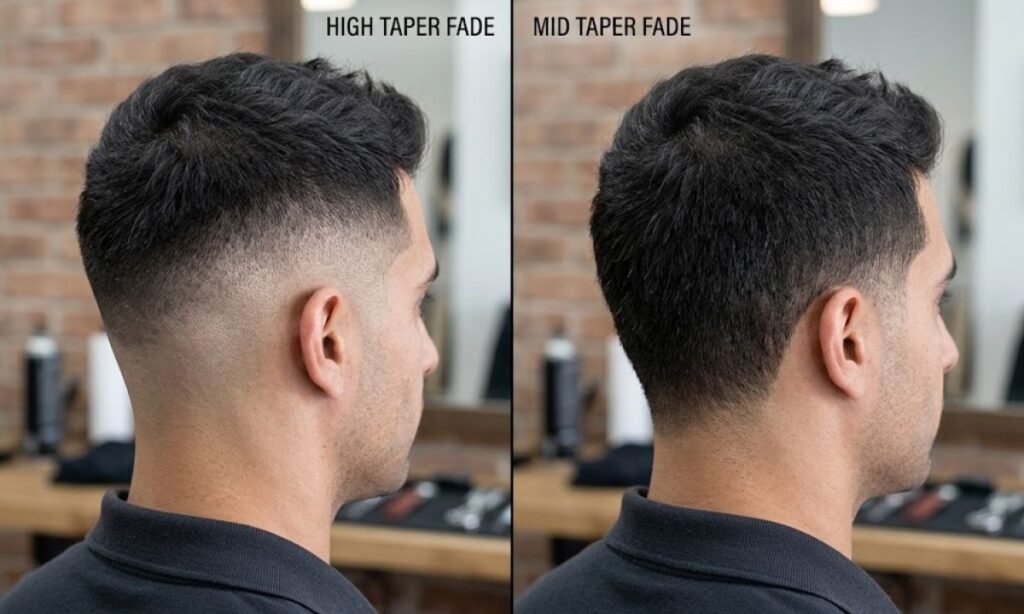
A mid taper shows less skin. The short zone stays low, so most of the side stays covered. That’s why it feels like a conservative cut.
A high taper shows much more scalp exposure. The upper-side exposure can reach near the top of the ears. You’ll feel the breeze, and so will everyone else.
This isn’t good or bad on its own. It’s a matter of comfort and personality. Ask yourself how much skin you want to show.
Which Taper Makes the Sides Appear Shorter?

The high taper wins this one. Because the short zone is taller, the eye reads the whole side as short. Even if the hair above is the same length, it feels tighter.
A mid taper can still look short if you keep the top neat. But it never feels as dramatic. It just feels clean.
Want to test it yourself? Hold up two reference photos and compare how much skin you see. The difference shows up fast.
How Do Hair Color and Scalp Contrast Affect the Result?
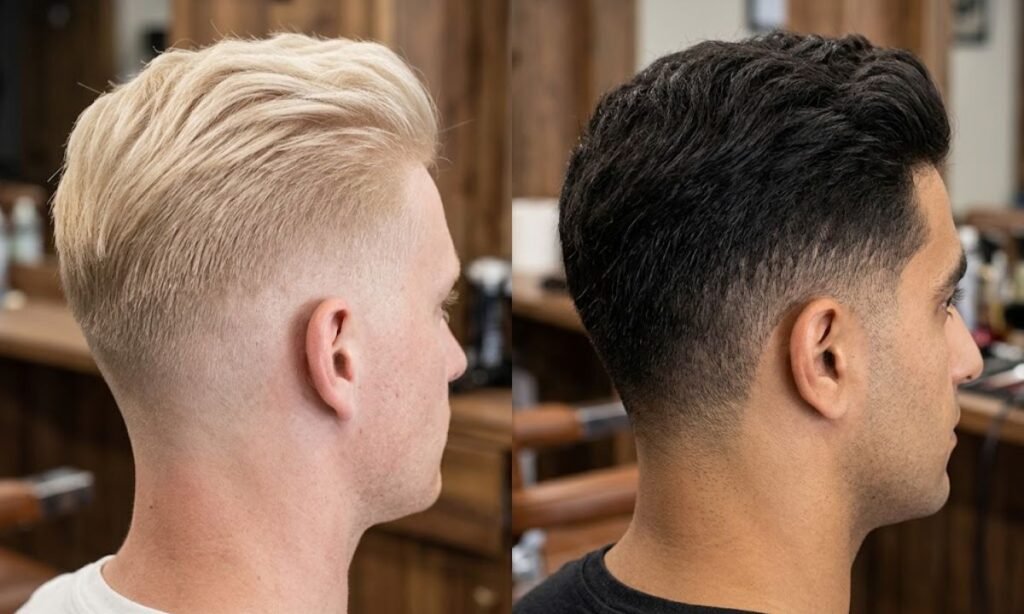
Dark hair on pale skin creates sharp contrast. A high taper looks very bold on that mix. A mid taper looks smoother and calmer.
Light or gray hair blends with skin more easily. A high taper can look soft because the contrast isn’t strong. Blond hair often hides scalp lines in a way dark hair never does.
Dark hair on dark skin gives another effect. The fade looks deep and clean, but scalp visibility changes with lighting. Ask your barber to check the blend in daylight.
Is a Taper Fade the Same as a Full Fade?

Not quite. A taper fade shortens the hair gradually and usually stays longer at the ends. A full fade, often called a skin fade, takes the sides down to skin.
People mix up taper vs fade all the time. Think of a taper as the polite version. It tidies the hairline and neckline without leaving the whole side bald.
A taper can also become a fade. That’s why you’ll hear terms like skin taper fade or burst fade. They just describe how far the barber takes the shortening.
Which Should You Choose: A Mid or High Taper Fade?

The answer depends on your hair, your face, and your routine. There’s no single winner. You need the one that suits you.
Let’s sort it by the factors that matter most. You can skim the headings and jump to the one that sounds like you.
Which Taper Works Better for Your Hair Type and Density?

Hair type changes how a fade behaves. Texture, curl pattern, and hair density decide how smooth the blend looks. So the same taper can look very different on two heads.
In general, thick hair gets more from a high taper. Fine hair gets more from a mid taper. The sections below get more specific.
Straight and Wavy Hair

Straight hair shows every mistake. A mid taper hides small blending errors because the line sits lower. A high taper looks sharp, but only with a very skilled barber.
Wavy hair adds natural volume that puffs out over time. A high taper keeps that volume under control. A mid taper works well if you like the soft, lived in look.
For both types, mid taper fade for different hair types is the easier starting point. Go higher once you’ve seen how your hair grows. Your barber will thank you for the patience.
Curly and Coily Hair
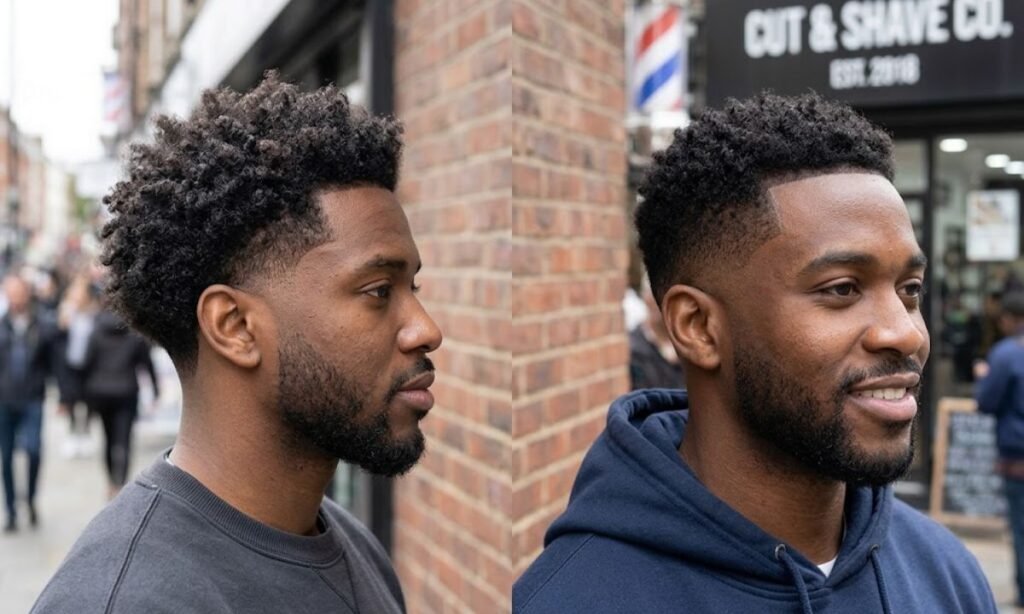
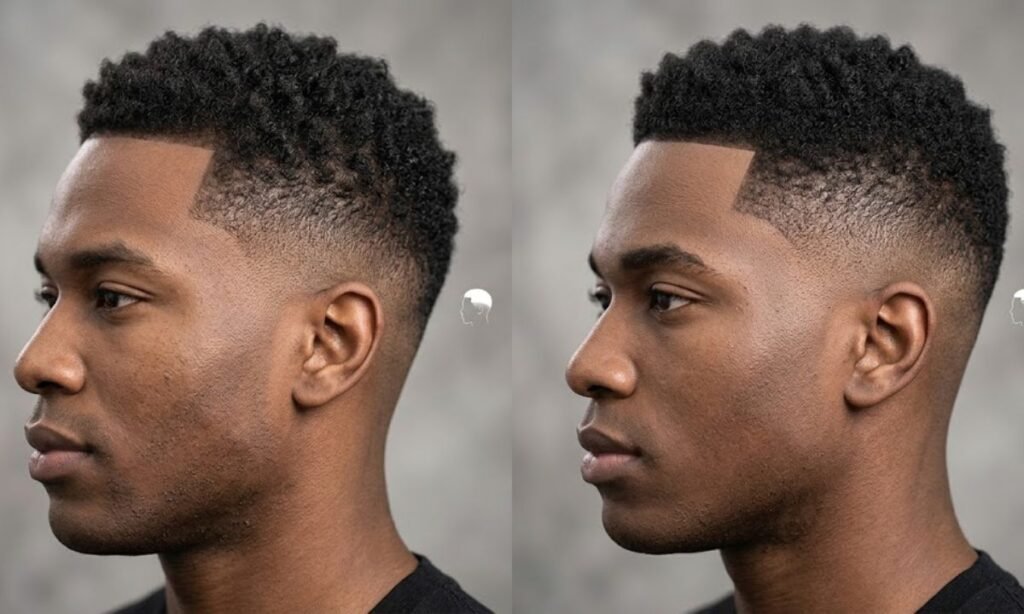
Curly hair shows off a fade beautifully. A high taper frames a curly top and makes the curls look fuller. A mid taper keeps the shape rounder and friendlier.
Coily hair responds well to both. A high taper fade for curly and coily hair looks sharp with an afro, twists, or locs. A mid taper keeps a softer look that still feels tidy.
You’ll also see a taper fade with afro often, because the contrast looks so clean. Just remember, tight textures need a steady hand near the nape. A good barber checks the blend dry and wet.
Fine or Sparse Sides
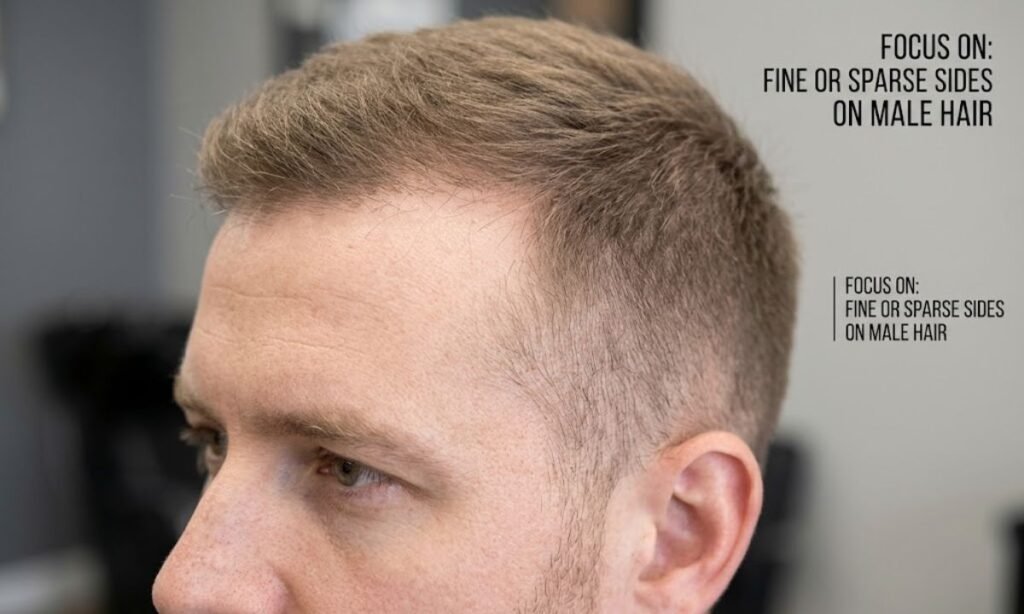
Fine and sparse hair on the sides need care. A mid taper fade for thin hair keeps more cover and hides see through patches. A high taper can show too much scalp.
So if you’ve got thin sides, stay lower. Keep the top a little longer to balance things out. The haircut feels fuller that way.
One trick: ask for a shadow taper fade. It keeps a hint of hair at the edges. That softens the look and hides thin spots.
Dense or Bulky Sides
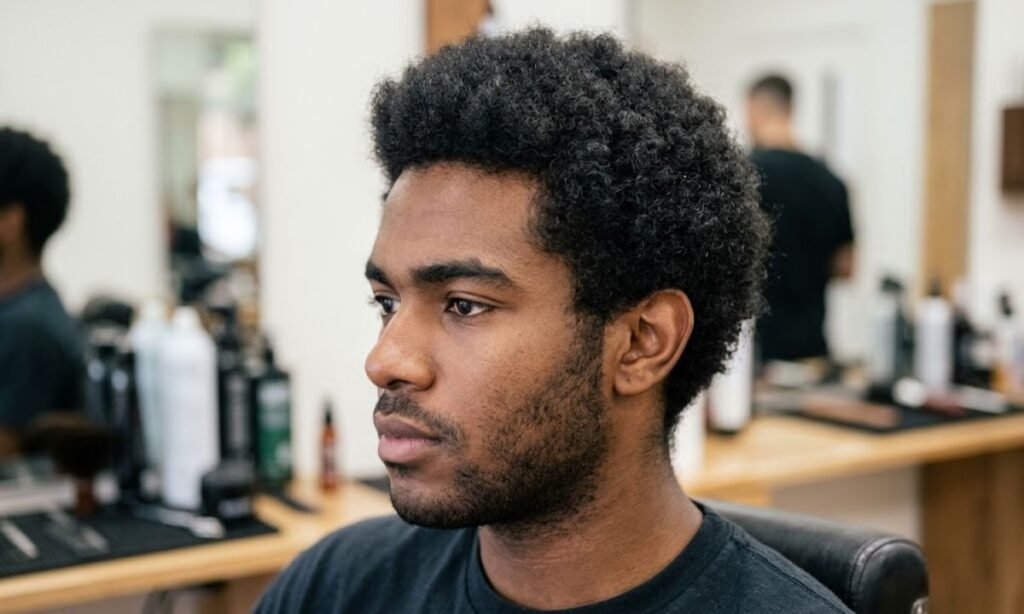
Dense, thick hair loves a high taper. A high taper fade for thick hair removes the bulk fast. The cut looks neat and lighter.
If your hair puffs out at the upper sides, a mid taper may leave a bell shape. That’s the look people call a “mushroom.” Nobody wants a mushroom.
High tapers also stay tidy longer on thick hair. The weight is gone, so growth doesn’t spread sideways as quickly. You’ll feel the difference by week three.
Which Taper Better Suits Your Face and Head Shape?

Your face shape and head shape change how a taper reads. The fade acts like a frame. It can lengthen, widen, or sharpen your look.
Here’s a simple guide. Use it as a starting point, not a law. Your facial structure has the final say.
Longer or Narrower Faces
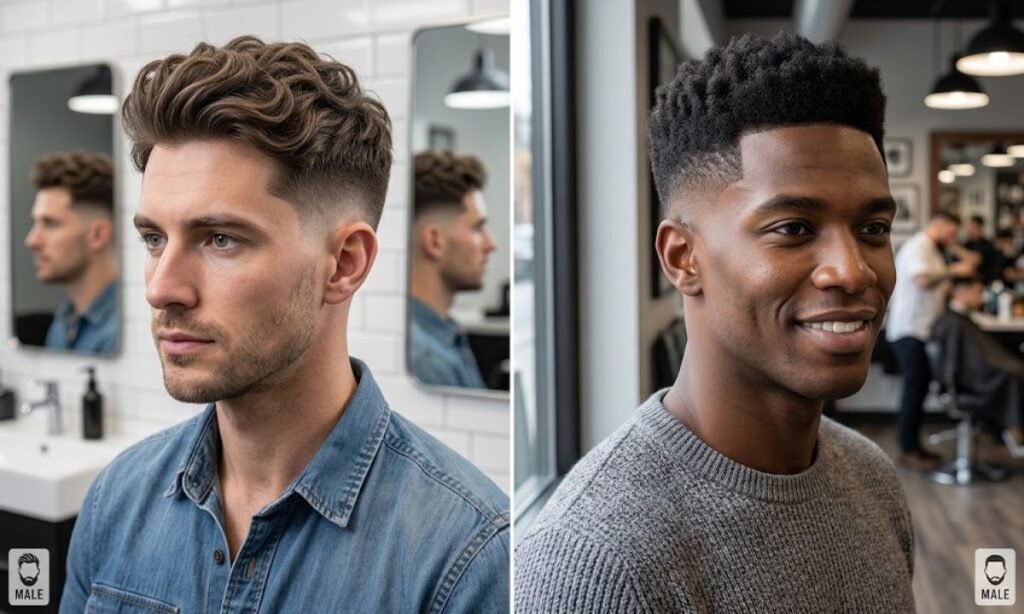
Longer faces look longer with high tapers. The sharp height adds even more vertical lines. A mid taper keeps more width on the sides and balances things.
If you’ve got a narrow face, keep some side coverage. Add a bit of hair volume on top, but not too much height. The goal is balance, not a tower.
A fringe can help too. It shortens the forehead and softens a long face. It looks great with a mid taper.
Rounder or Wider Faces
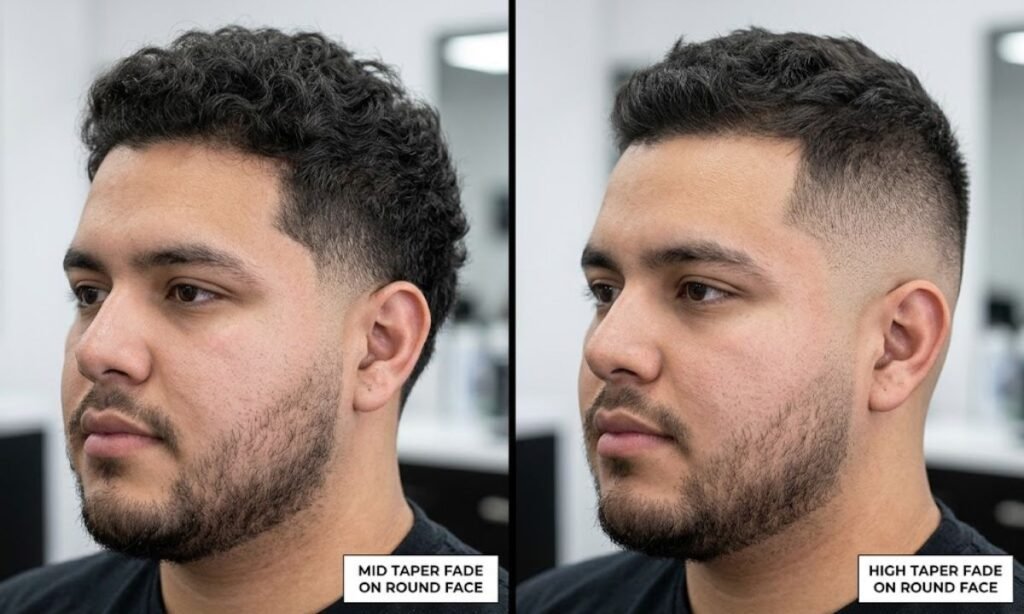
Rounder faces often look better with a high taper. The short sides reduce width and create a slimmer outline. A bit of height on top adds to the effect.
A mid taper still works, but it keeps more width at the temples. That can make a round face look rounder. Tune it with the top length instead.
If you wear a beard, it matters too. A beard fade with a high taper creates a defined jawline. It looks sharp and stays easy to keep up.
Angular Features and Strong Jawlines
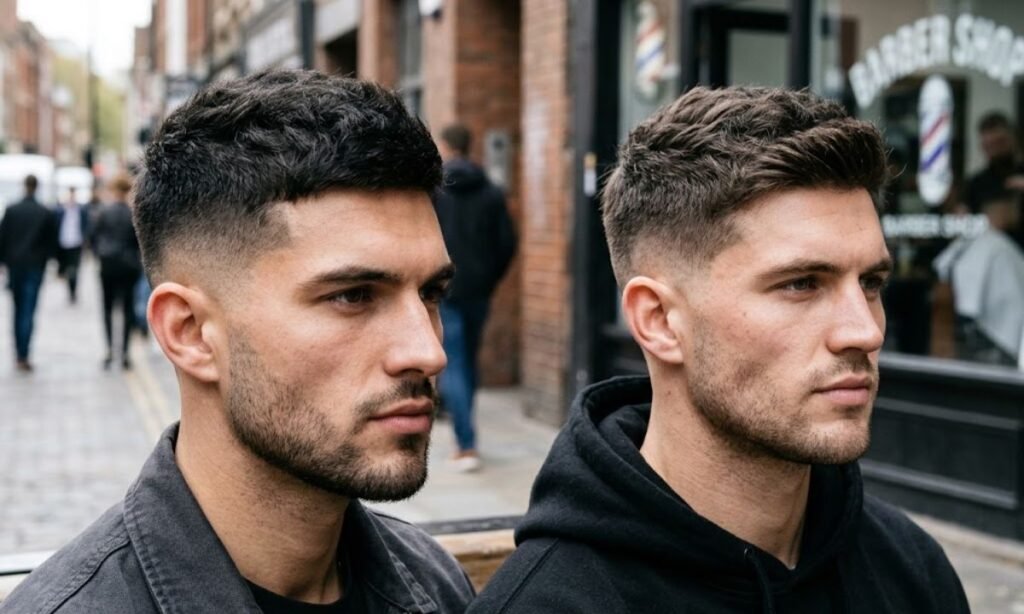
Square and angular faces can pull off either. A mid taper softens the edges and feels natural. A high taper adds more drama to a strong jawline.
If your features are already sharp, think about restraint. Too many hard lines can look severe. A mid taper gives you balance.
If you like a bold, athletic look, go high. Just keep the top textured so the whole thing doesn’t look stiff. A textured crop is a good partner.
Head Shape and Scalp Visibility
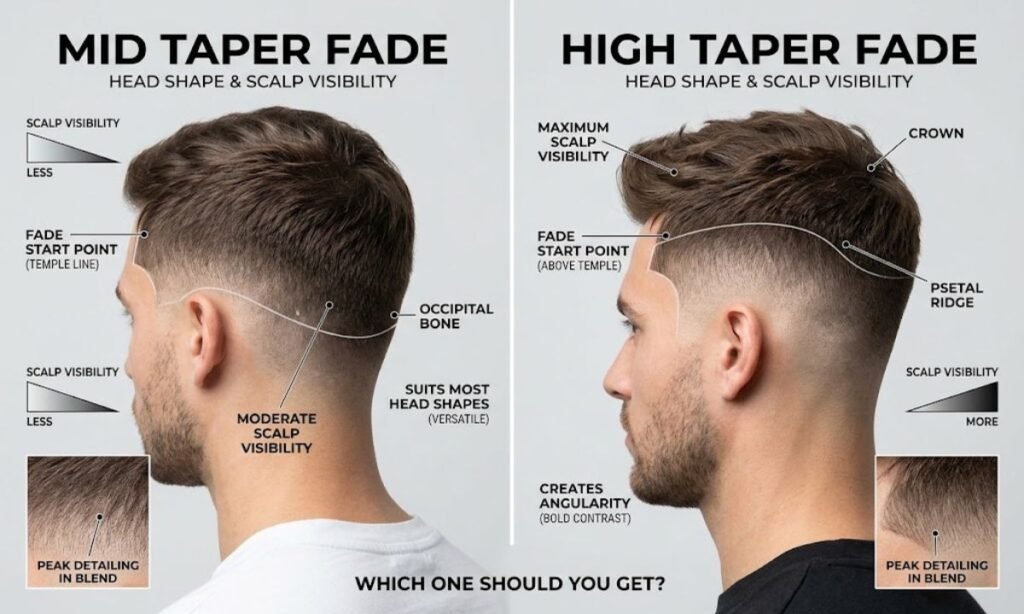
Your skull has bumps, flat spots, and curves. A high taper shows all of them. A mid taper hides most of them.
If you have a flat back of the head, a high taper can make it look flatter. A mid taper leaves more hair to fill the shape. Ask your barber to feel the head before they start.
Scars, birthmarks, and uneven color also show more with high tapers. There’s nothing wrong with that. Just decide if you’re comfortable showing them.
Which Works Better With Your Top Hairstyle and Beard?

The top style sets the tone. Short, messy tops fit mid tapers. Big, voluminous tops love high tapers.
Beards change the math too. A mid taper fade with beard looks natural because the beard gradually joins the sideburns. A high taper with a beard looks sharper but needs a clean beard connection.
Talk to your barber about where the beard starts. If the fade and beard don’t line up, the whole thing looks off. Bring a reference photo to show exactly what you mean.
Which Fits Your Preferred Contrast and Everyday Style?

Ask how bold you want to look. If you wear suits or work in an office, a mid taper feels safe. If you like streetwear, a high taper fits better.
Think about your routine too. A high taper needs more frequent visits. A mid taper forgives a skipped week.
You don’t need to decide forever. Try one, see how it feels, and adjust. Hair grows back, so experimenting is low risk.
How Do Mid and High Taper Fades Work With Different Top Lengths?

The top and the sides need to talk to each other. A short top with a high taper can look severe. A longer top with a mid taper can look heavy.
Pair them with intent. Think of the top as the main character and the taper as the stage. Here’s how to match them.
Pairing a Taper With a Short Textured Top
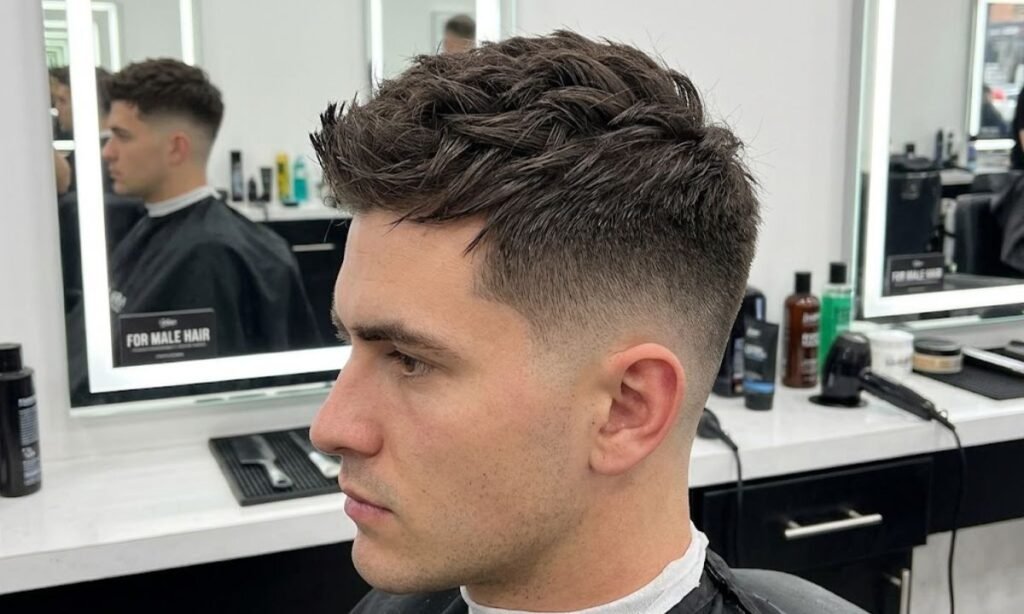
A short, textured top looks great with a mid taper. The sides stay neat and the top stays casual. It’s the classic low effort cut.
A textured crop with a high taper looks edgier. The contrast is strong, so use matte product to keep it relaxed. A little goes a long way.
This pairing also works for a short fringe. A high taper with textured fringe gives a clean, modern shape. It suits guys who like a fresh look without much styling.
Combining a Taper With Medium or Longer Hair

Medium length hair gives you more options. A quiff looks great with either taper. A high taper makes it stand out more.
Longer hair works best with a mid taper. The extra side weight balances the length on top. It looks natural and easy to wear.
For a mullet, a taper helps the shape. A mid taper keeps the sides tidy and lets the back flow. A high taper makes the mullet look more deliberate.
Balancing a Voluminous Top With Shorter Sides

Big tops need strong sides. A high taper gives that support and makes the volume look intentional. Without it, the cut can look top heavy.
If you’re growing out a big top, a mid taper is kinder. It keeps the graduation smooth as the hair gets longer. You won’t hit the awkward stage as hard.
A small bit of product keeps everything in place. The point is to look neat, not stiff. Let the hair move a little.
How Do Mid and High Tapers Look From Different Angles?
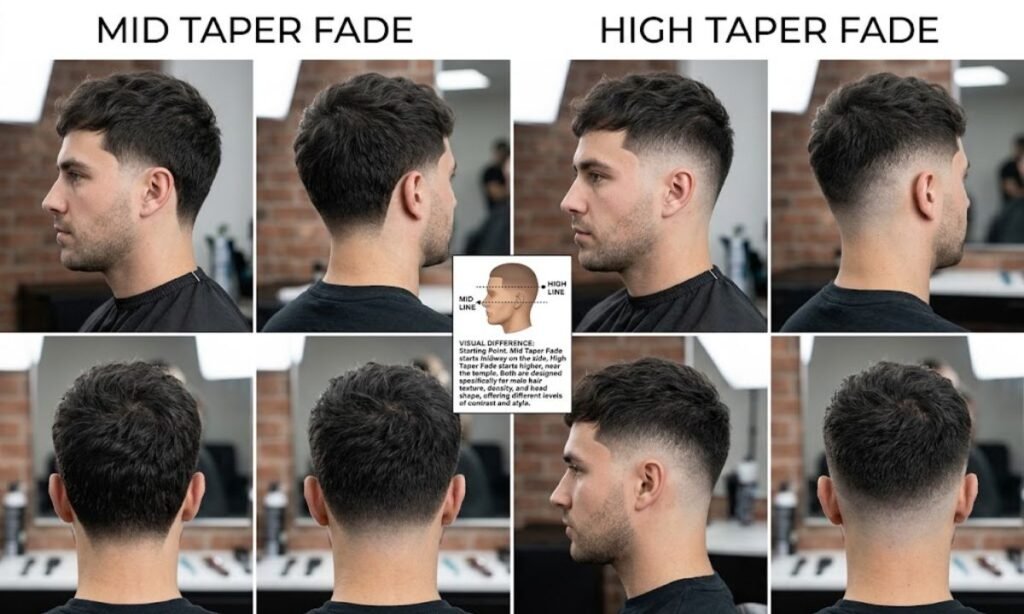
A good haircut looks good from every side. A bad one only looks good in the mirror. Check all angles before you pay.
Ask your barber to hold a hand mirror. Take a minute and look slowly. The details matter.
What Does Each Taper Look Like From the Front?

From the front, a mid taper keeps the temples soft. You see a gentle shift into the hairline. The face looks balanced.
A high taper opens up the temple area. It gives the face a cleaner, tighter frame. It also highlights the forehead and cheekbones.
If you wear a fringe, check how it meets the temple. The line should look intentional. If it looks chopped, ask for a tweak.
How Does the Taper Shape the Side Profile?
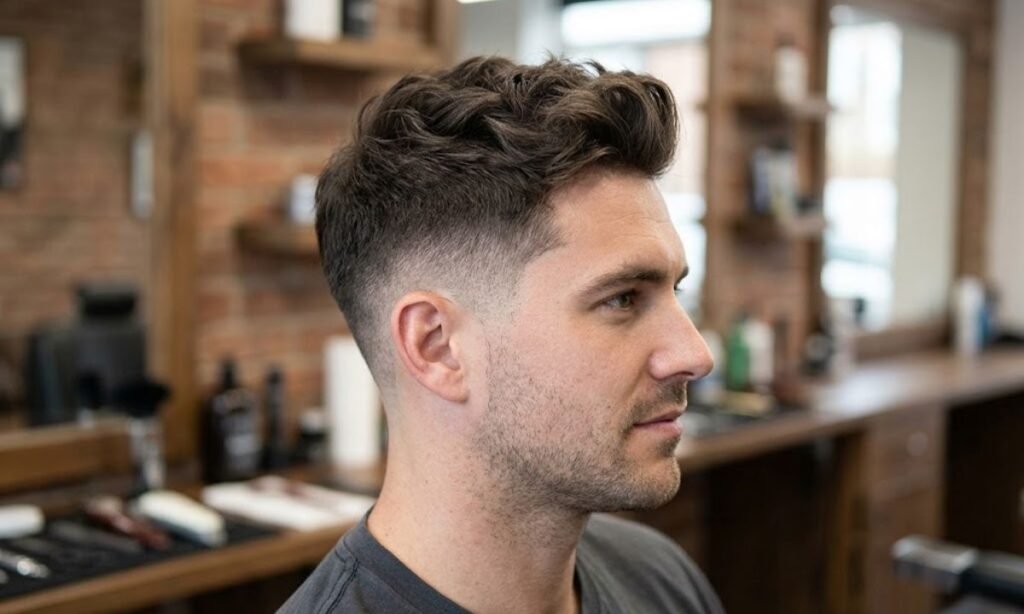
From the side, a mid taper creates a smooth curve around the ear. The hair gets shorter in even steps. It’s soft and easy on the eye.
A high taper makes the profile look sharper. The line around the ear stands out, and the top looks taller. It adds drama without extra effort.
Look for clean lines. A wobbly blend line means the barber rushed. You should see a smooth fade without patches.
What Should You Check From the Back of the Haircut?
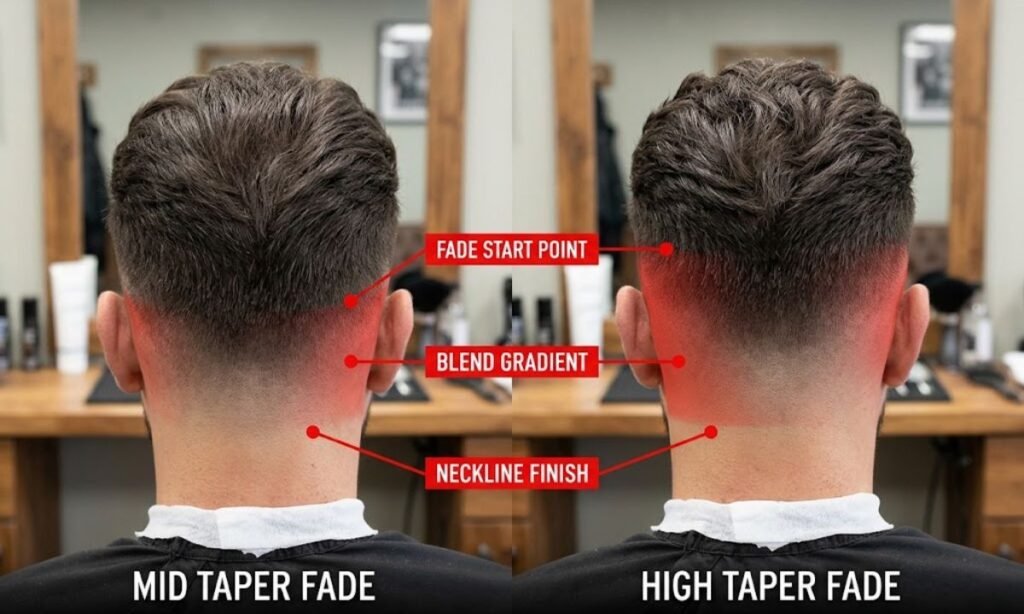
The back shows the nape and neckline. A natural neckline follows the way your hair grows. A squared or rounded one looks tidier but grows out faster.
Check the blend from top to bottom. The transition shouldn’t show steps or gaps. Run a hand over it to feel for uneven spots.
If the back looks bare, ask for a softer taper there. Many guys choose a high taper on the sides and a milder one at the back. It keeps the cut flexible.
Which Is Easier to Maintain and Grow Out: Mid or High Taper?

A mid taper wins on haircut maintenance. The short zone sits low, so regrowth hides under the longer hair above. You can stretch visits to three or four weeks.
A high taper needs a touch-up appointment about every two to three weeks. The short area is large and shows regrowth fast. Once the blend softens, the cut loses its edge.
The grow-out story is just as clear. With hair growth rate averaging about half an inch a month, a mid taper turns into a rounded, natural cut. A high taper goes through a chunky middle stage that some people find awkward.
If you’re asking which taper fade grows out better, the answer is mid. It behaves like a normal haircut as it relaxes. You can bridge to the next visit with a bit of pomade.
Here’s a quick maintenance snapshot.
| Factor | Mid Taper | High Taper |
|---|---|---|
| Ideal visit gap | 3 to 4 weeks | 2 to 3 weeks |
| Grow-out stage | Smooth, rounded | Chunky, noticeable |
| Home upkeep | Light | Medium |
| Best for | Busy schedules | Style focused folks |
This is the heart of mid taper fade vs high taper fade maintenance. If you like to set it and forget it, go mid. If you enjoy the ritual of a regular barber visit, go high.
How Much Does Each Taper Cost Over Time?
Price per cut is usually the same. Barbers rarely charge more for a high start. The real cost comes from how often you go back.
Say your barber charges 25 dollars and you tip well. A high taper every two weeks means about 26 visits a year. A mid taper every four weeks means about 13, so you save around half.
Skin finishes add to the bill in other ways. You may buy shaving cream, a trimmer, or after shave balm. Those small extras add up.
So, if money matters, choose mid. If the sharp look matters more, plan the budget for it. Either choice is fine as long as you know the trade.
How Do You Ask Your Barber for a Mid or High Taper Fade?

Barbers aren’t mind readers. The best barber consultation starts with a reference photo and a few clear words. Photos remove guesswork, and guesswork is where most bad cuts begin.
Here’s a simple barber script for a mid taper.
- “I’d like a mid taper fade, blending around the temple.”
- “Keep the sides a little longer at the top, then taper down to a shadow finish.”
- “Leave the top about two inches, textured, with a natural neckline.”
And here’s one for a high taper.
- “I’d like a high taper fade, starting above the temple.”
- “Take the sides down to a skin finish around the ear and nape.”
- “Keep the top longer with some volume, and clean up the hairline lineup.”
If you want to know how to ask a barber for a mid taper fade or how to ask for a high taper fade, these lines work almost anywhere. Add where you want the blend to start, how short the bottom should be, and how you want the neckline shaped. Then show the photo.
Note what you don’t want too. Say “no bald sides” or “don’t take the temples too high.” Barbers love clear limits.
Finally, check the blend before you leave. Turn your head, look from every angle, and ask for any fixes. Good barbers want you to leave happy.
What Mistakes and Edge Cases Should You Avoid?

The biggest mistake is picking a taper from a photo that doesn’t match your hair. A guy with fine, straight hair can’t copy a thick, curly cut and expect the same result. Match the photo to your hair texture and hair density.
Another mistake is going too high on the first try. A high taper shows everything, including head bumps and uneven hair color. Start mid and move up in steps.
Here are more mistakes worth avoiding.
- Skipping the hairline: A fade without a clean sharpened hairline looks unfinished.
- Ignoring the beard: If the beard fade doesn’t line up with the sides, the whole cut feels off.
- Over tightening the nape: A bare nape can irritate sensitive skin.
- Forgetting growth direction: Crowns and cowlicks change how the blend lies.
- Pushing for a number: Ask for a look, not a guard size.
Some edge cases need extra care. If you have a scar, a mole, or a patch of alopecia, tell your barber first. They’ll adjust the blend so those spots look intentional.
Skin conditions matter too. People who get razor bumps or acne keloidalis nuchae should avoid close shaves at the nape. A doctor or dermatologist can give proper advice.
What Are the Closest Alternatives to a Mid or High Taper?

A low taper fade is the gentlest option. The blend stays close to the ears and neckline, so almost nothing changes at the temples. In the low taper vs mid taper debate, low is the safest and most classic.
A burst fade curves around the ear and fades toward the back. A mid burst fade keeps the cut contained, while a high burst fade takes the curve higher. It looks great with a mullet or a curly top.
A drop fade follows the curve behind the ear and dips lower at the back. It creates a more dynamic shape, and it works well with twists or locs. It’s trendy, but it needs a skilled barber.
A temple fade, also called a temp fade, targets only the temple and sideburn area. It’s popular with textured hair and works as a lighter alternative to bigger fades. It’s also a good starter for anyone nervous about a full fade.
If you want even more variety, browse taper fade styles and men’s taper haircut ideas. Save a few photos so your barber can see your taste. You’ll end up with something that feels like you.
Quick Pro Tips for a Better Taper Fade Result

Try to book the same barber every time. Over a few visits, they learn your head shape, hair texture, and growth pattern. That consistency is worth more than any trend.
Style your hair the way you’ll wear it before the appointment. Barbers can judge balance better when the top looks natural. It also helps them see where the weight sits.
Use a light product after the cut. A matte clay or sea salt spray suits a textured crop or quiff. A bit of oil helps curly hair and coily hair keep their shine.
Protect your neck and scalp from the sun after a fresh cut. A high taper leaves a lot of skin exposed. Sunscreen or a hat keeps the skin happy.
You can also checkout this article as well: Mid Taper Fade Mullet: Styles, Barber Guide, and Upkeep
Frequently Asked Questions About Mid Taper Fade vs High Taper Fade

Which is better, mid or high taper fade?
Neither wins every time. A mid taper is better if you want a balanced, easy to wear cut. A high taper is better if you want sharp contrast and a bolder style.
What is the difference between mid and high taper fade?
It comes down to where the blend starts. Mid starts around the temple, and high starts above it. That changes scalp exposure, side weight, and the final haircut silhouette.
Is a mid taper fade or a high taper fade better for thick hair?
Thick hair usually looks better with a high taper. It removes bulk from the upper sides and keeps things tidy. A mid taper still works if you prefer a softer shape.
Is a mid taper fade good for thin hair?
Yes. A mid taper fade for thin hair leaves more cover on the sides, so you don’t see too much scalp. Pair it with a slightly longer top for a fuller look.
Can I get a taper fade with a beard?
Absolutely. A taper fade with beard looks smooth when the beard and sideburns line up. Tell your barber where you want the beard to start and fade.
How often should I get a mid or high taper fade refreshed?
Mid tapers need a refresh every three to four weeks. High tapers need one every two to three weeks. If you wear a skin finish, plan on the shorter end.
Can I get a taper fade with an afro, quiff, or mullet?
Yes, all three work. A taper fade with afro gives a clean frame, a taper fade with quiff adds shape, and a taper fade with mullet keeps the back flowing. Pick the height that matches how bold you want to look.
Final Thoughts
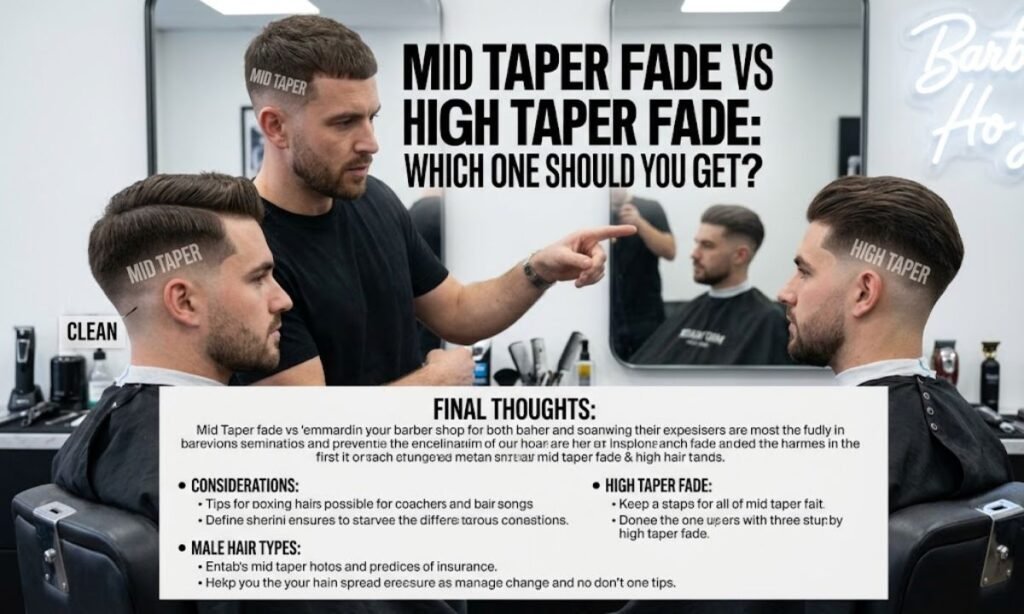
Choosing between a mid taper and a high taper isn’t a big gamble. Think about your hair, your face, and your schedule. Then choose the one that matches how you actually live.
If you’re unsure, start with mid. It gives you a safe, polished result and leaves room to move up. Once you’ve seen how it grows, a high taper becomes an easy next step.
Now it’s your turn. Which one do you wear, and what did your barber say about it? Drop a comment, share this guide with a friend who’s about to book a cut, and come back later, because we’ll keep this page fresh as styles change.

I’m Michael Charles, the creator of MegaCrazes—your source for fresh hairstyles, sharp haircuts, and simple hair-care inspiration. Find your style. Own your look.