


Ever shown your barber a photo and walked out with something totally different?
It happens a lot with a middle part haircut for men, and it stings.
You probably wonder about taper height, hair length, and whether your hair will even cooperate.
Those worries are fair, and this guide answers every one of them.
Here’s the short version.
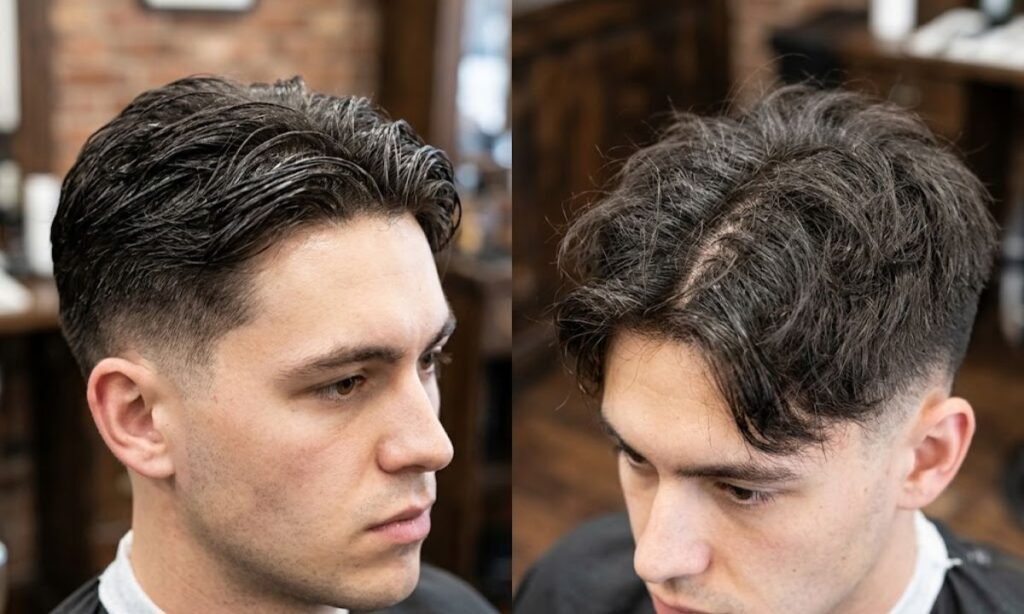
A mid taper fade middle part keeps length on top, splits it down the center, and blends the sides from around ear level.
Quick Answer
A mid taper fade middle part pairs a longer top with shorter sides that fade gradually from about the temple and ear line.
You part the top down the center and let it fall like curtains.
Tell your barber three things: mid-height taper, no hard skin line if you want it soft, and about four inches on top.
Bring one photo of the front and one of the side.
At home, you need a blow dryer, a comb, and a light styling product like matte clay or sea salt spray.
Dry the roots away from the part, then set the finish with your fingers.
What is a mid taper fade middle part?
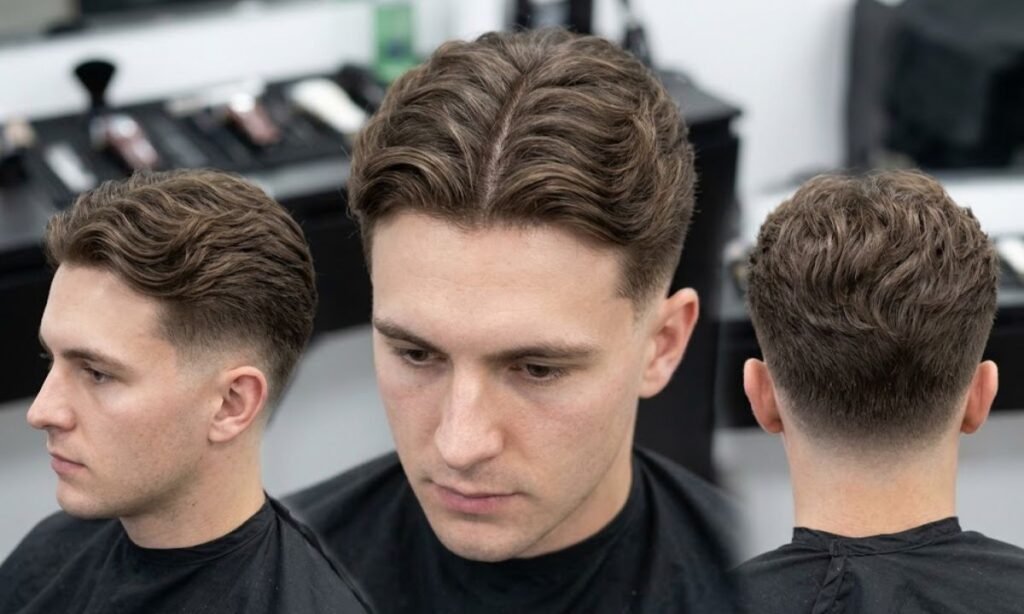
Think of it as two haircuts working together.
The sides and back get a taper, which means the hair graduation moves from short to longer in small steps.
The top stays long enough to split at the center line.
That gives you the curtain hairstyle look with a clean perimeter around it.
People also call it a mid taper haircut with center-parted hairstyle on top.
You’ll see it on guys with straight, wavy, or curly hair, and that range is why it keeps showing up.
Where does the “mid” taper sit?
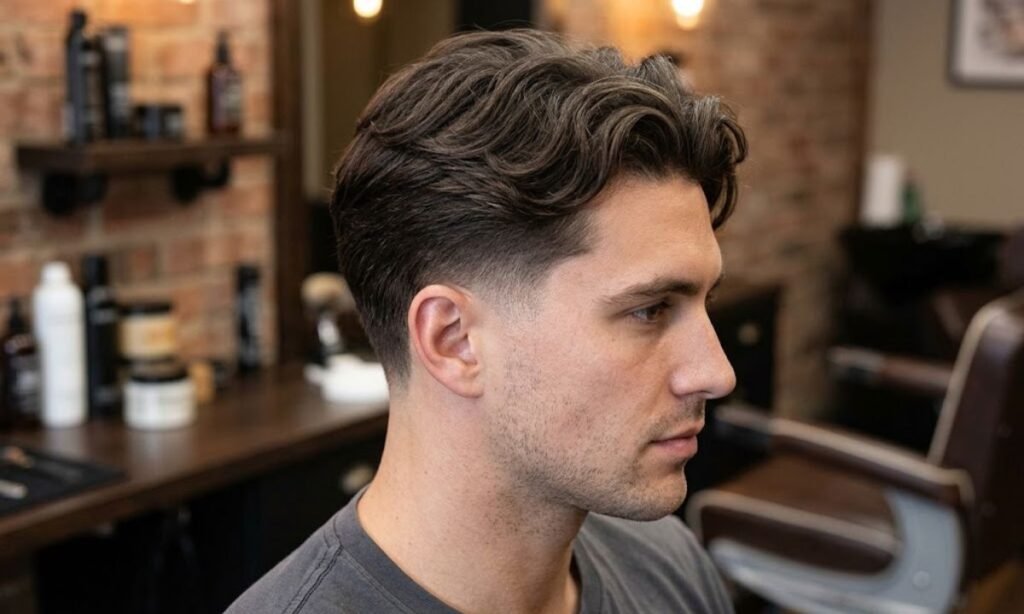
The “mid” refers to where the taper starts.
It begins around the temple and the top of the ear, roughly in the middle of the side of your head.
A low taper starts closer to the ear and the neckline.
A high taper climbs up toward the crown and shows far more scalp exposure.
The mid-height taper sits between those two.
It cleans up the ear and neck without turning your head into a fade showcase.
Will a mid taper fade middle part work for your hair?
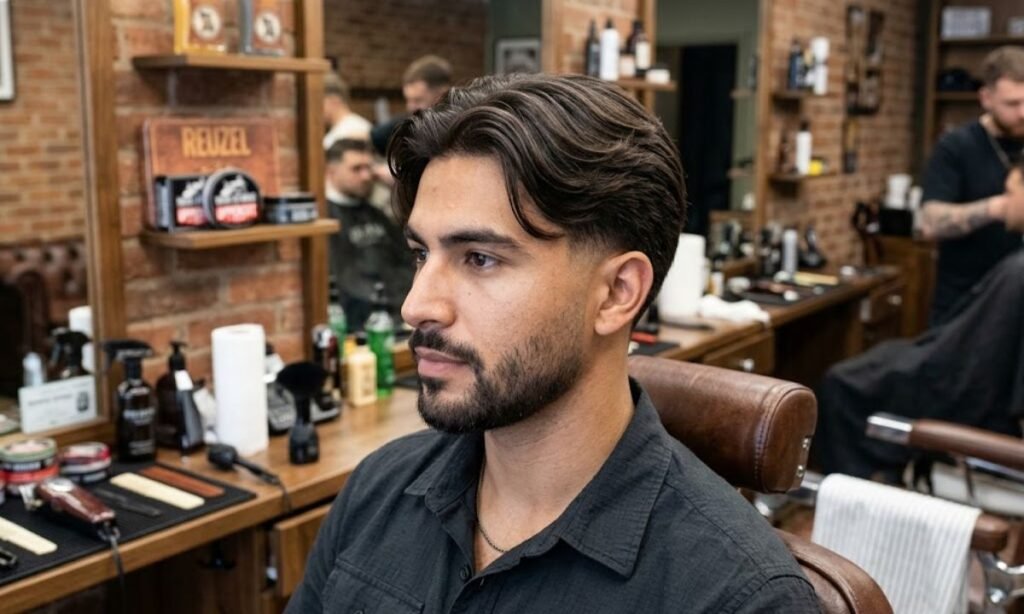
Most likely, yes, but your hair needs a few things.
You want at least three to four inches on top, a hair growth pattern that lets the part sit, and some patience.
Straight hair splits easily but can fall flat.
Wavy hair and curly hair give you natural hair movement and root lift, so the style looks full with less effort.
There’s a catch for strong cowlicks and a receding hairline.
They don’t rule you out, but you’ll need a smart part placement and a barber who reads your hair before cutting.
What Does a Mid Taper Fade Middle Part Look Like From Every Angle?
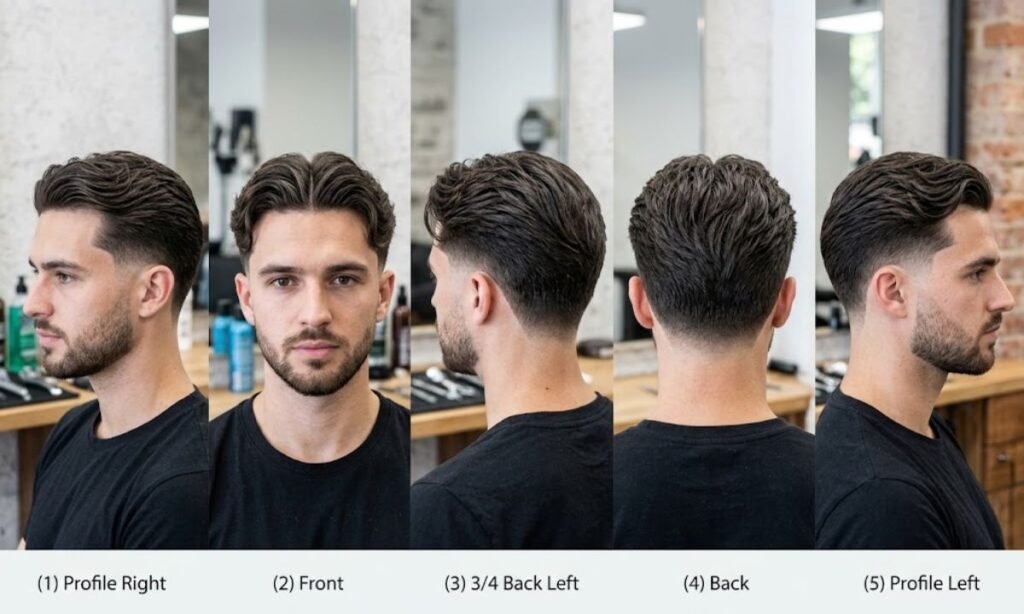
From the front, you see a symmetrical hairstyle with hair falling from the center toward both temples.
The face-framing hairstyle softens your forehead and draws attention to your eyes.
From the side, the tapered sides blend smoothly into the longer top.
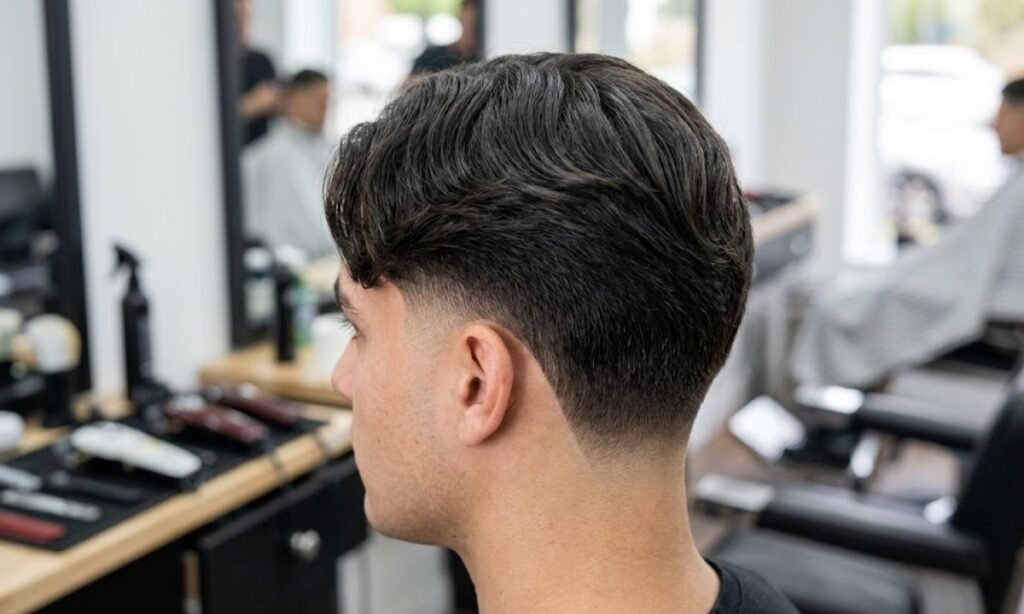
From the back, the tapered neckline finishes the shape so it looks tidy as hair grows.
Let’s break down each angle, because your barber will think in angles too.
What should the front, side, and back profiles look like?
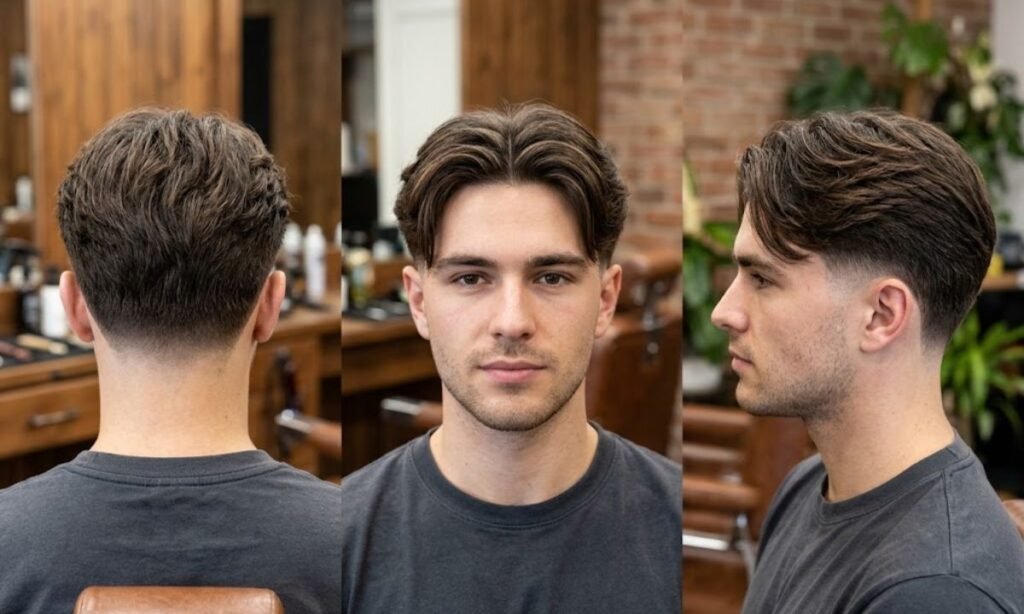
The front profile should show a straight part and even weight on both sides.
If one side looks heavier, the part will pull off center within an hour.
The side profile should show a smooth ramp from short to long.
You shouldn’t see a hard step where the clipper guard changes.
The back should match the sides.
A guarded neckline or a soft taper both work, as long as the line looks intentional.
How should the temples, sideburns, and neckline blend together?
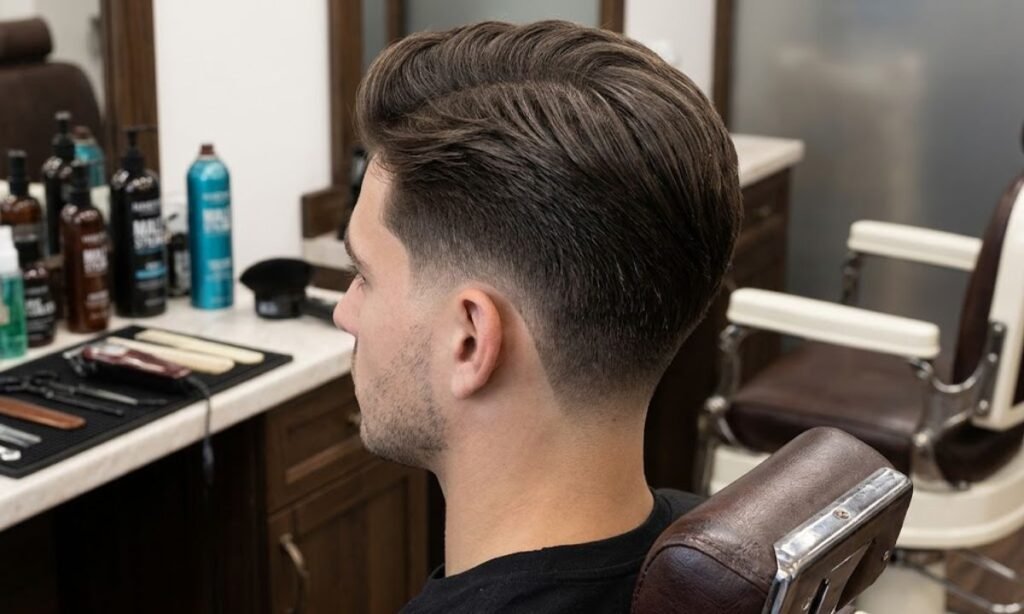
The temple blending matters most because it frames your face.
A clean temple taper keeps the curtains from sitting on a patchy edge.
Sideburn blending should flow into the taper, not stop abruptly.
If your sideburns look thick next to thin sides, the whole cut feels off.
The neckline finishes the cut.
A tapered neckline grows out softer, while a squared neckline looks sharp for two weeks and rough after that.
How long should your hair be for the middle part?
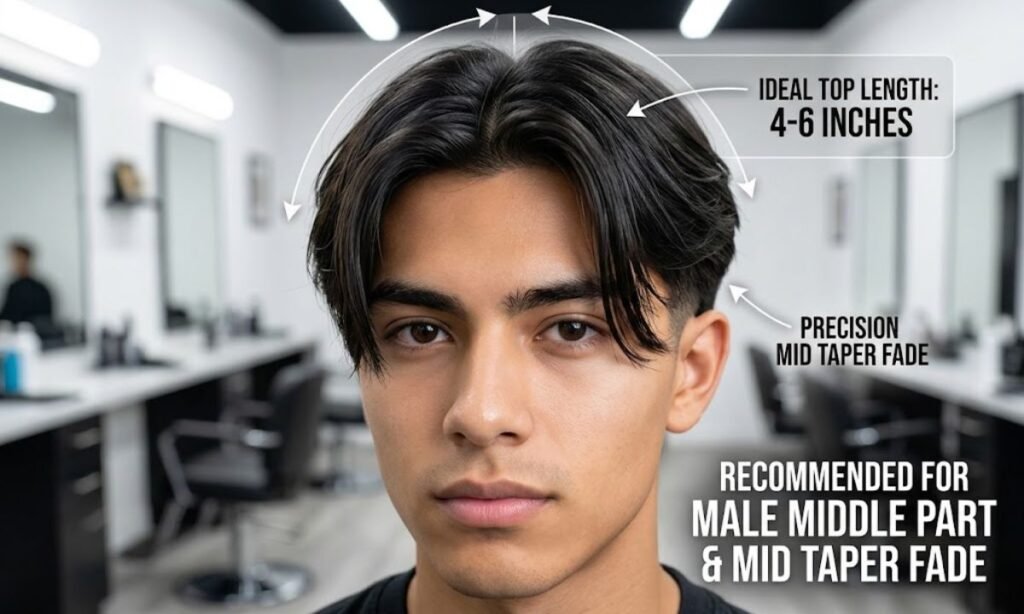
Aim for hair length for middle part styles between four and six inches on top.
That’s long enough to fall sideways instead of standing up.
Shorter hair, around two to three inches, can still part.
It just won’t drape, and you’ll see more piecey hair ends and less classic curtain flow.
Longer hair adds drama but needs side weight control.
Your barber may thin the top length a bit so the curtains don’t balloon.
Which hair textures and densities work best?
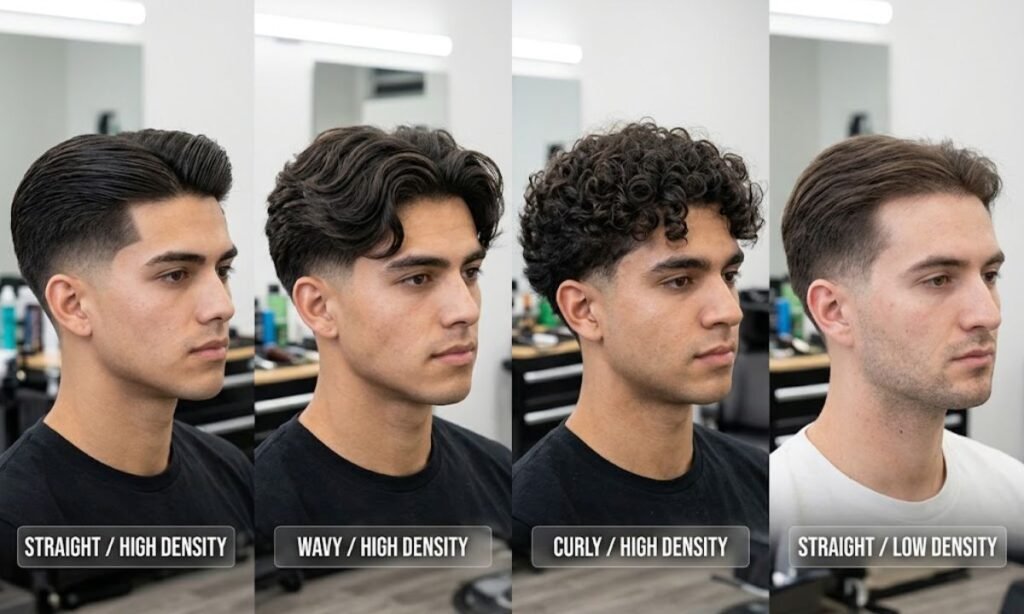
Wavy hair gives the easiest win.
It holds a part, adds hair volume, and looks good even on lazy mornings.
Fine hair works if you build root volume and keep products light.
Thick hair and dense hair work too, but you’ll want a barber to remove hair bulk so the sides don’t puff.
Curly hair and coily hair deserve a plan for hair shrinkage.
A curl that looks five inches wet may sit at three inches dry, so judge length on dry hair.
What about face shape, hairline, cowlicks, and head shape?
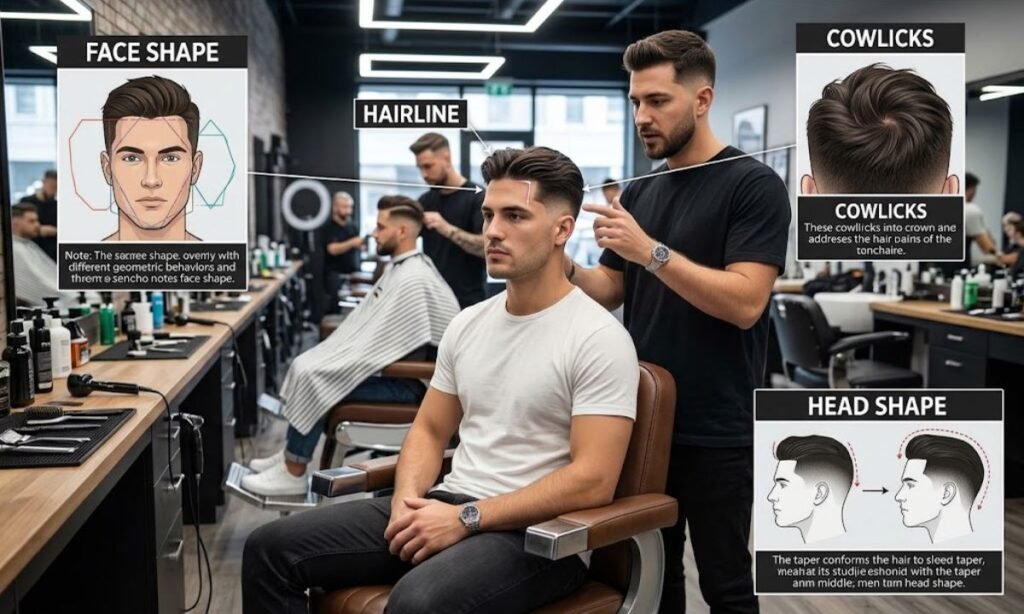
A round face looks great with slightly longer curtains that add vertical lines.
An oval face handles almost any version, while a square face looks sharper with softer, textured ends.
For receding hairline worries, keep the top a little longer and part with a softer edge.
The fringe covers the corners and the centered part pulls attention to the middle of your face.
A cowlick at the front hairline can split the part in odd directions.
In that case, try an off-center part first, then work your way to the center over a few weeks.
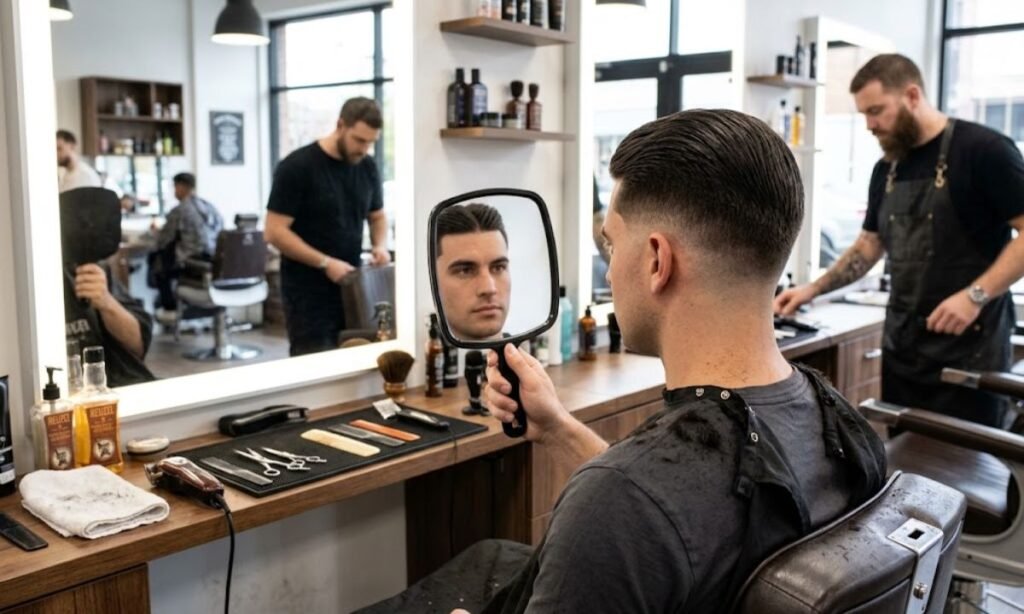
How do you ask your barber for a mid taper fade middle part?

Walk in with specifics, not just a photo.
Barbers read hair differently than you do, so words and pictures together work best.
Start with a quick sentence like, “I want a mid taper with longer hair on top, parted in the middle.”
Then add details about the finish, because that’s where most misses happen.
If you’re wondering what to tell your barber for a mid taper fade middle part, the next two sections give you the exact list.
What details should you specify before the first cut?

Name the taper height, which is mid.
Say whether you want skin fade exposure or a mid taper fade without showing skin.
Tell them your target top length in inches, not just “a bit off.”
Mention your neckline preference too, either tapered or blocked.
Share how you plan to style it.
If you air-dry, say so, because a cut for blow-drying isn’t the same as one for a lazy morning.
What should your barber script and reference photos include?
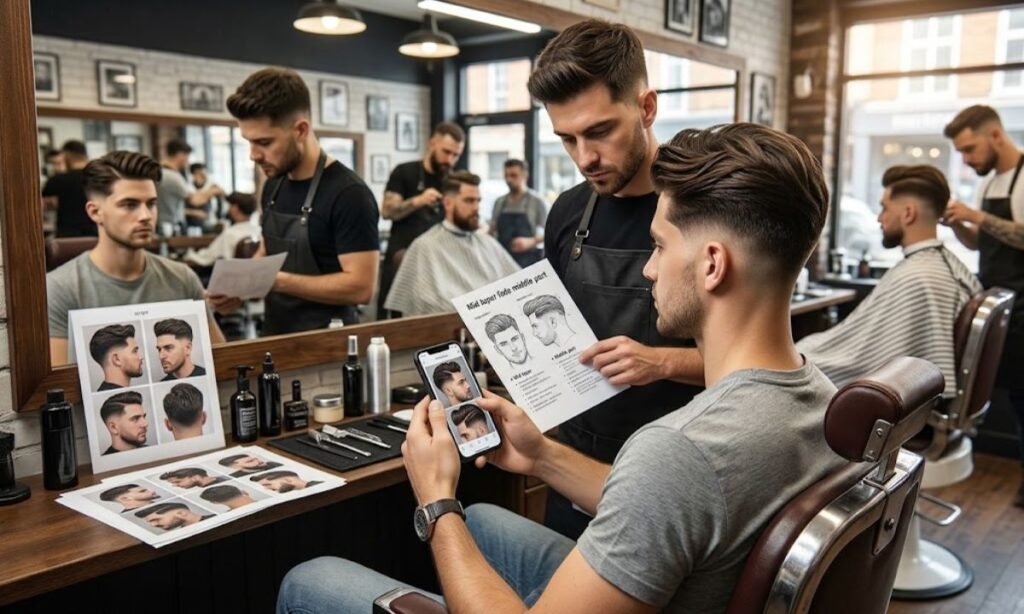
Here’s a script you can steal.
“Mid taper, about a number one at the shortest, blending up to my natural length, with four to five inches on top and a middle part.”
Pick two barber reference photos.
One should show the front and part placement, and the other should show the side and taper blend.
Add a note about what you don’t want.
Something like “no high contrast” or “don’t take the sides too short” saves you a lot of regret.
How do you style a mid taper fade middle part at home?
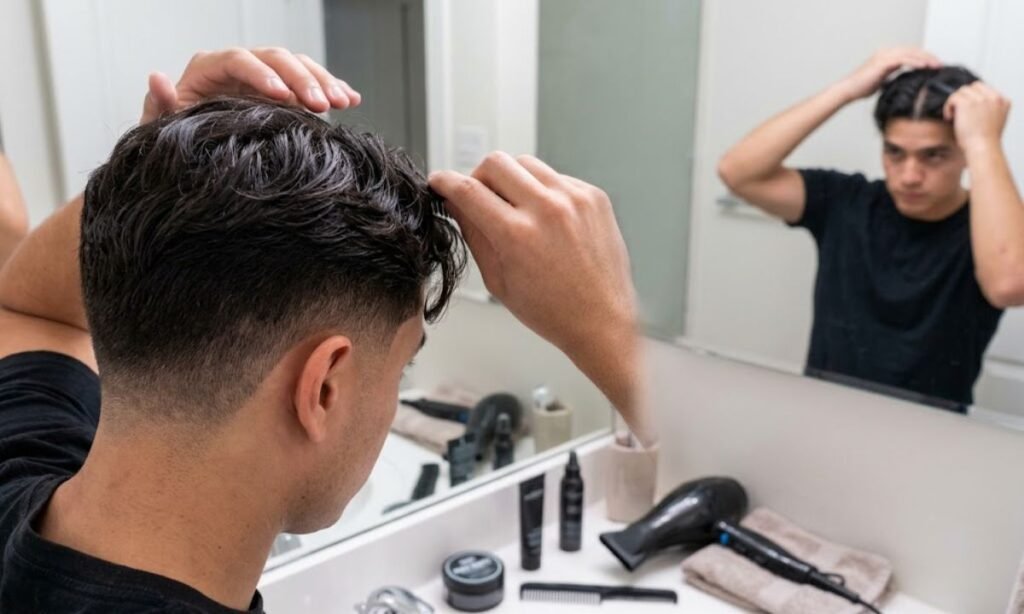
Good styling takes about five minutes once you know the pattern.
The goal is simple: lift the roots, direct the hair away from the part, and lock the finish.
Most guys over-product and under-dry.
A little time with the blow dryer beats a lot of gel.
Here’s the routine that works for most heads.
What is the 5-step daily styling routine?
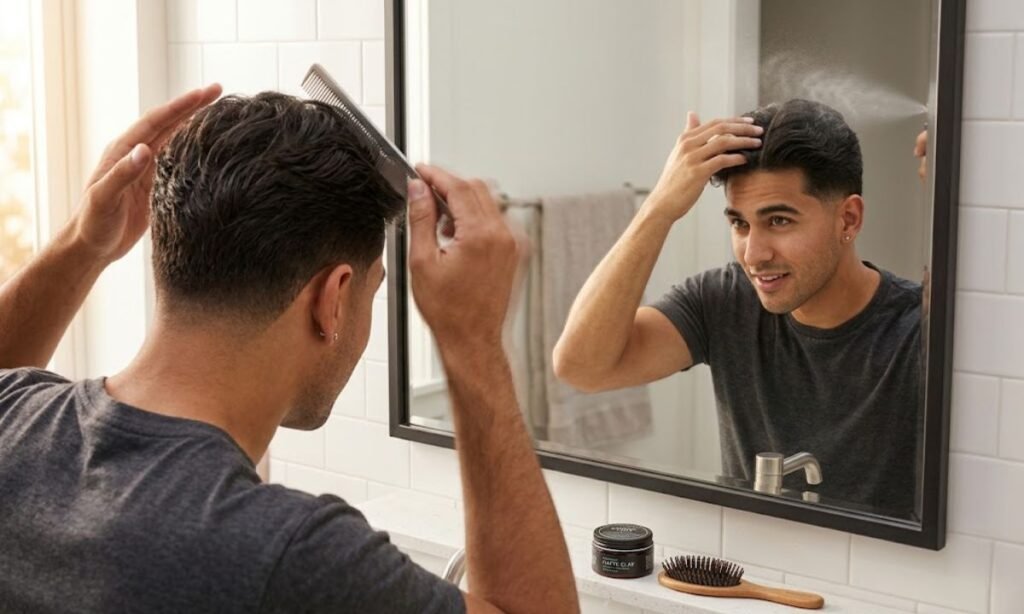
- Start with damp hair. Towel-dry until it stops dripping, because soaking hair fights the part.
- Set the line. Use a comb to draw the center line, then comb each side outward.
- Blow-dry for lift. Aim the dryer at the roots and push hair away from the part.
- Add product. Rub a pea-sized amount between your palms, then work it through the mids and ends.
- Finish with your fingers. Shape the curtains, check the sides, and leave it alone.
That’s it.
The more you fuss, the faster the part disappears.
If you want more root volume, use a round brush during step three.
Keep it moving so you don’t cook one spot.
Which products fit straight, wavy, curly, fine, or thick hair?
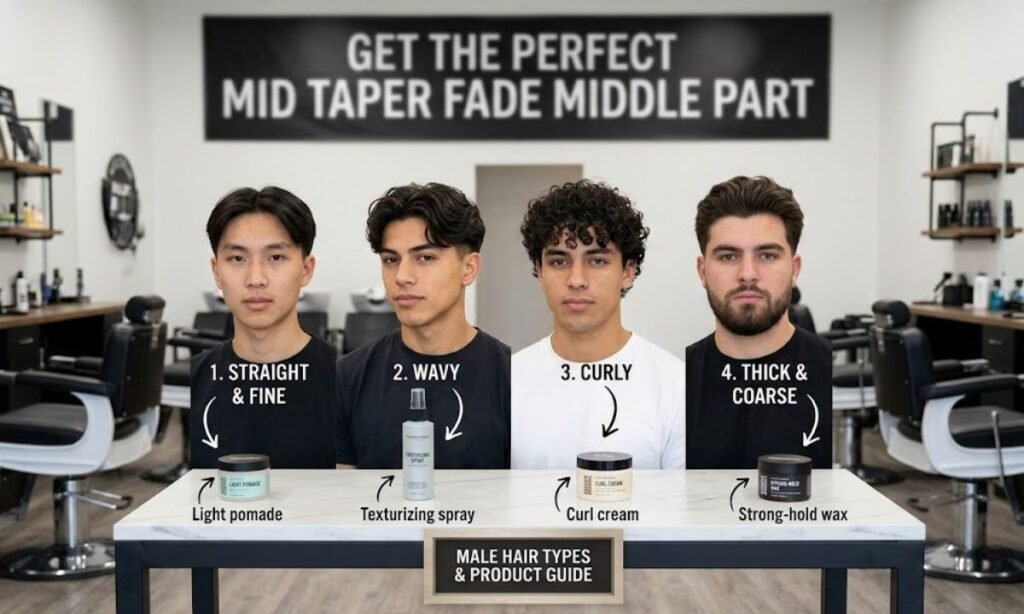
Straight hair likes a light styling paste or fiber product.
It gives grip without weighing the hair down.
Wavy hair responds to sea salt spray before drying and a bit of matte clay after.
Curly hair wants a curl-defining cream to keep curl pattern tidy and frizz down.
Fine hair needs light hold products, ideally a matte finish with low shine.
Thick hair can take high hold clay or paste, since it needs the extra control.
Which mid taper fade middle part variations are worth showing your barber?

There isn’t one version of this cut.
The best one for you depends on your hair, your job, and how much effort you’ll spend each morning.
Think about natural finish versus defined silhouette first.
Then choose the variation that matches that mood.
Here are six styles that cover almost every guy.
Which version matches your texture and preferred finish?

If you want soft silhouette and low effort, go for classic curtain flow or the wavy version.
If you want attitude, pick the textured or skin-close, higher-contrast finish.
Curly and coily hair fit the curly version or the fluffy one best.
Fine hair does well with the classic and textured versions, because they hide thin spots.
When in doubt, show your barber two options.
Let them point out which one your hair can actually pull off.
Classic curtain flow

This is the sleek curtain hairstyle, with a clean part and smooth sides.
Hair falls evenly over each temple and sits just above the ear.
It needs about five inches on top and a bit of cream for control.
You’ll get a polished look that works in an office or at a wedding.
The tradeoff is upkeep.
Smooth styles show every stray strand, so expect a quick brush each morning.
Textured or messy middle part

The textured middle part has movement, uneven ends, and a relaxed attitude.
Your barber uses scissors or texture removal to break up the weight.
The messy middle part hairstyle works best with matte clay or paste.
You rough it up with your fingers and skip the comb.
This version forgives bad hair days.
It also hides slight part drift, which is great if your hair likes to wander.
Wavy middle part
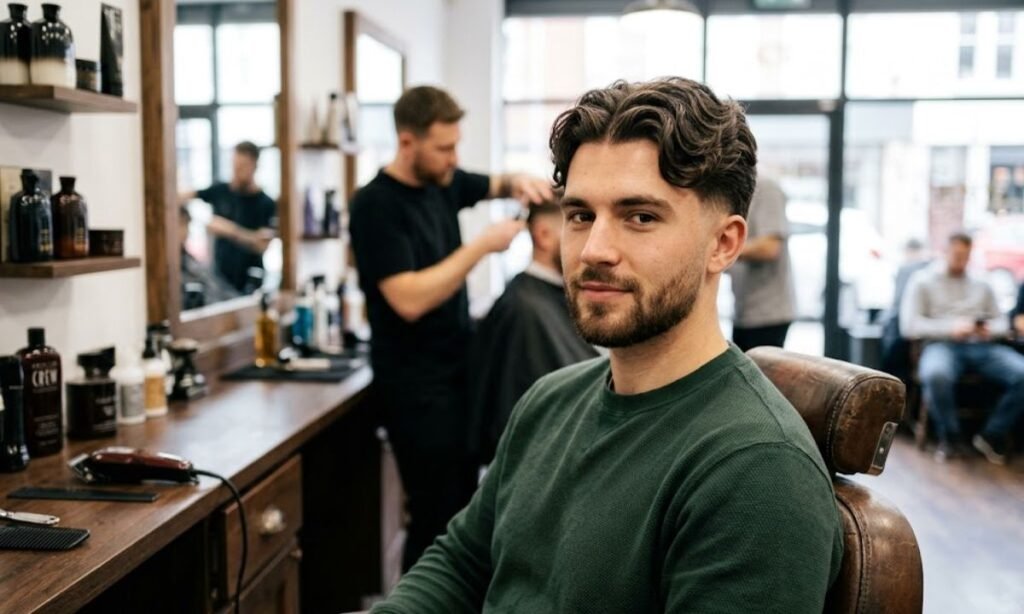
Wavy curtains are the easiest crowd-pleaser.
Waves give natural volume, so the style looks full without much work.
Spray in sea salt spray, scrunch, and air-dry or diffuse.
A light cream calms frizz at the ends.
Ask your barber to leave the top slightly longer.
Waves pull up as they dry, so extra length keeps the curtains from bouncing too short.
Curly or coily middle part
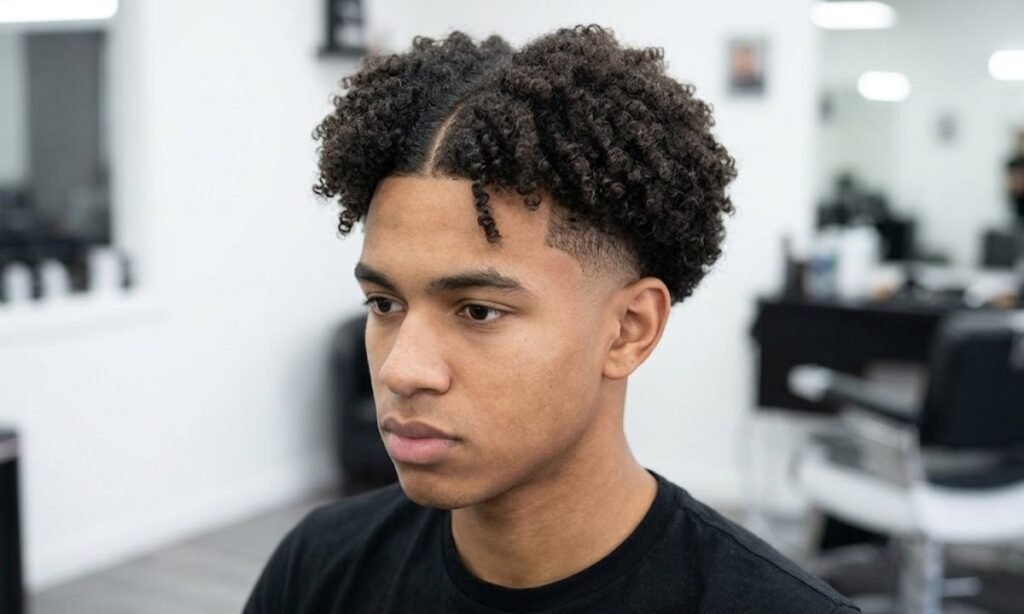
Curly curtains and coily versions lean on your natural curls.
The mid taper keeps the sides neat while the top shows off your curl pattern.
Apply curl-defining cream on damp hair and let it dry without touching it.
Once it’s fully dry, fluff it gently to open the curls.
Ask for a cut on dry hair if possible.
Your barber can see the true length after hair shrinkage, which saves surprises.
Fluffy or high-volume middle part

The fluffy hairstyle looks big, soft, and a little playful.
It works best on thick or wavy hair with strong hair elasticity.
Use a round brush and the blow dryer for lift.
A light sea salt spray adds grip so the volume lasts.
Watch the sides.
If they get bulky, ask for a slightly tighter taper to keep the balanced proportions.
Skin-close, higher-contrast finish
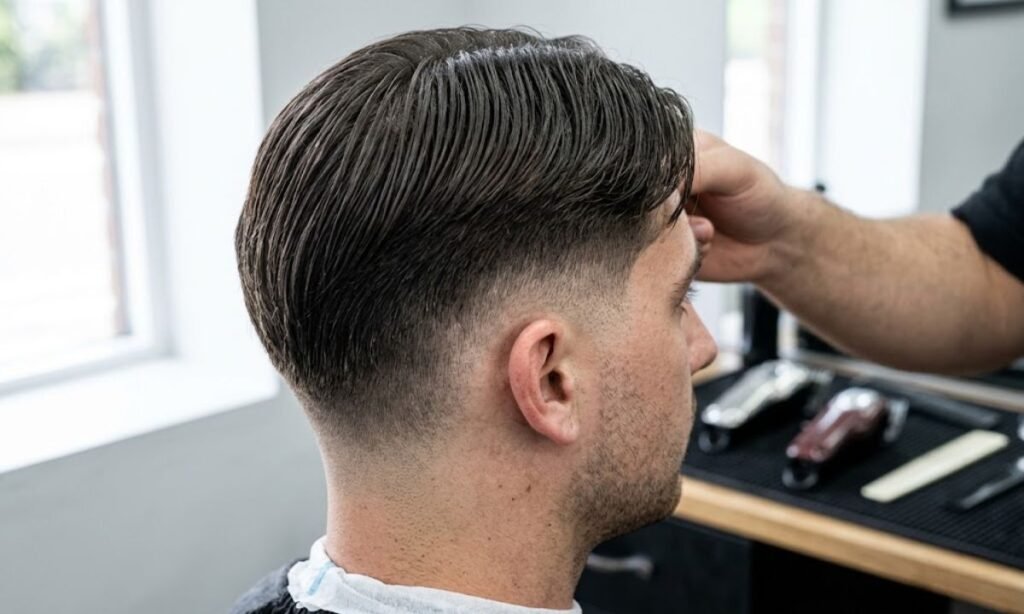
This version takes the taper close to skin and creates a high-contrast haircut.
The longer top really pops against the clean sides.
It looks sharp, but it grows out faster.
You’ll want a taper refresh every two to three weeks to keep it crisp.
If you’re nervous, start with a mid skin fade only around the ear and neckline.
You can always go tighter next visit.
How does a mid taper fade middle part compare with similar haircuts?
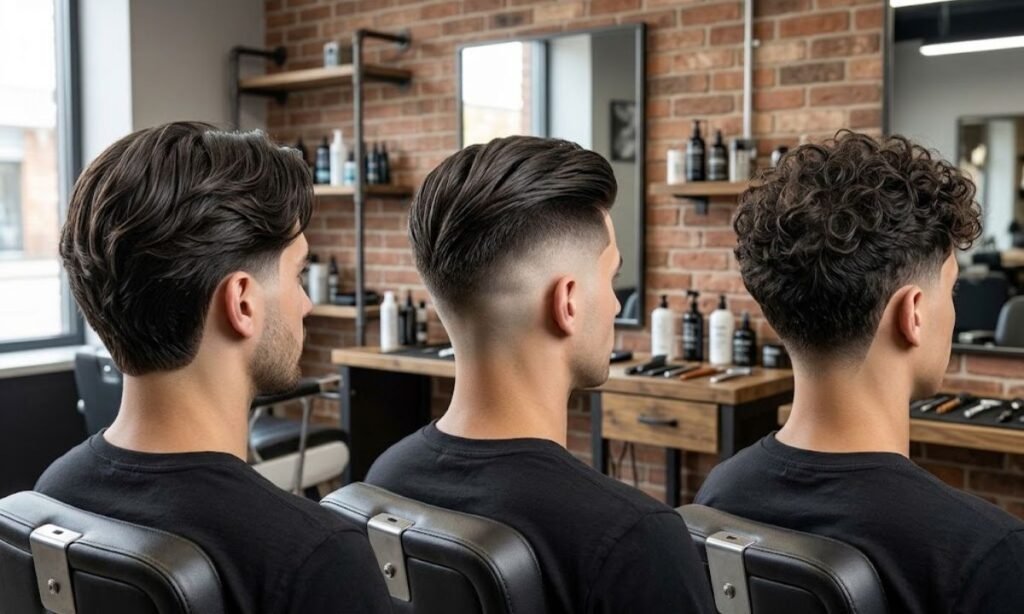
Most confusion comes from names that sound alike.
A barber might hear “mid fade” when you said “mid taper,” and you’ll leave with a very different head.
The difference comes down to contrast and where the cut starts.
Once you understand that, you can ask for exactly what you want.
Here’s how the closest cousins stack up.
Mid taper middle part vs low taper middle part
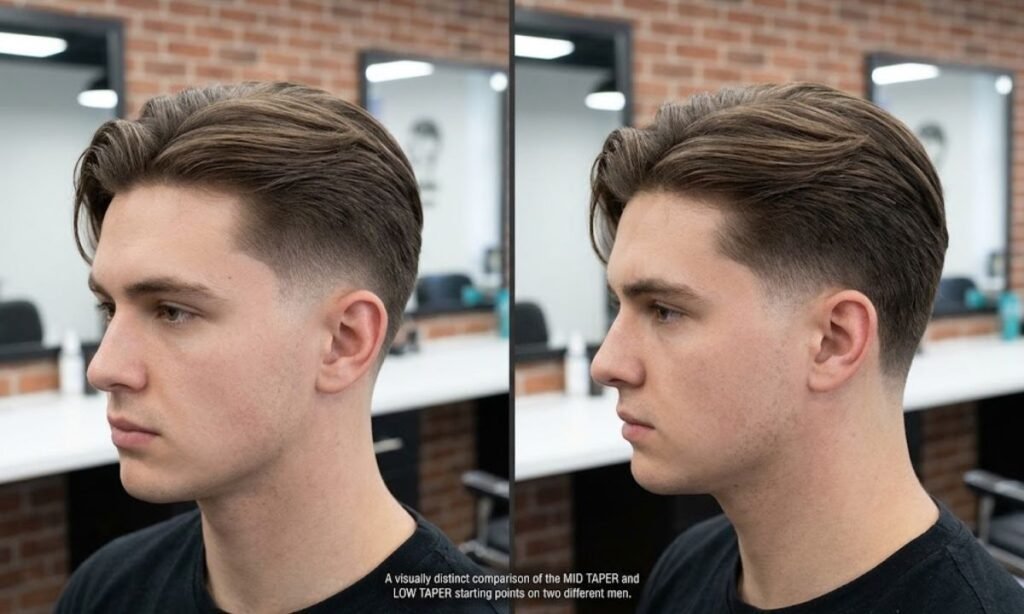
A low taper middle part starts the blend near the ear and the neckline.
It leaves more hair on the sides and looks softer and more classic.
The mid taper starts higher, around the temple.
You get more shape, a cleaner ear area, and a modern look.
Choose low if you want minimal change or work in a conservative setting.
Choose mid if you want visible shaping without going dramatic.
Mid taper fade middle part vs mid fade middle part

A mid fade usually takes the sides down to skin quickly.
You see more scalp exposure and a sharper contrast against the long top.
A mid taper fade keeps more hair at the bottom of the cut.
The transition looks softer, and you can ask for a mid taper fade without showing skin.
So if you want a quiet, natural finish, say taper.
If you want a bold, high-contrast haircut, say fade and mention skin.
Mid taper middle part vs scissor-cut curtains
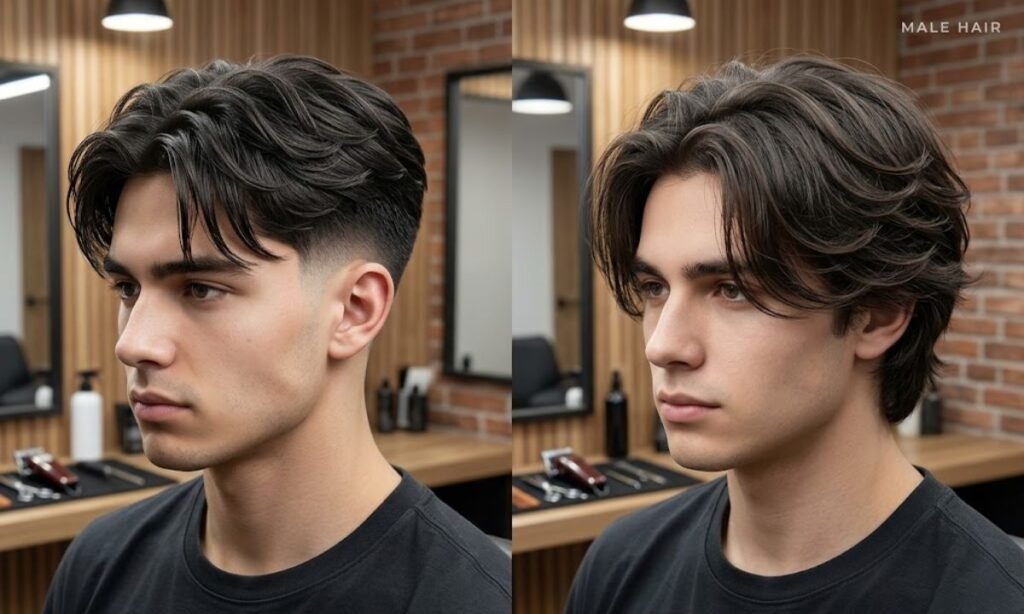
Scissor-cut curtains keep all the hair long and blend with scissors and a comb.
The sides stay full, so the look is relaxed and a bit vintage.
A mid taper middle part trims the sides tighter with a clipper guard.
Your curtains stand out more, and the head shape looks cleaner.
Go with scissors if you love length everywhere.
Pick the taper if you want less side bulk and easier daily styling.
Middle part vs side-part taper

A side-part taper gives you a classic, slightly formal shape.
The off-center part adds asymmetry, which hides uneven features.
The middle part is more open and symmetrical.
It frames your face evenly, so it shows off your face shape more.
If your face is quite angular, a middle part adds softness.
If you want to hide a forehead or a receding hairline, a side part may feel safer.
Mid taper fade vs high taper fade vs skin fade: which one should you choose?
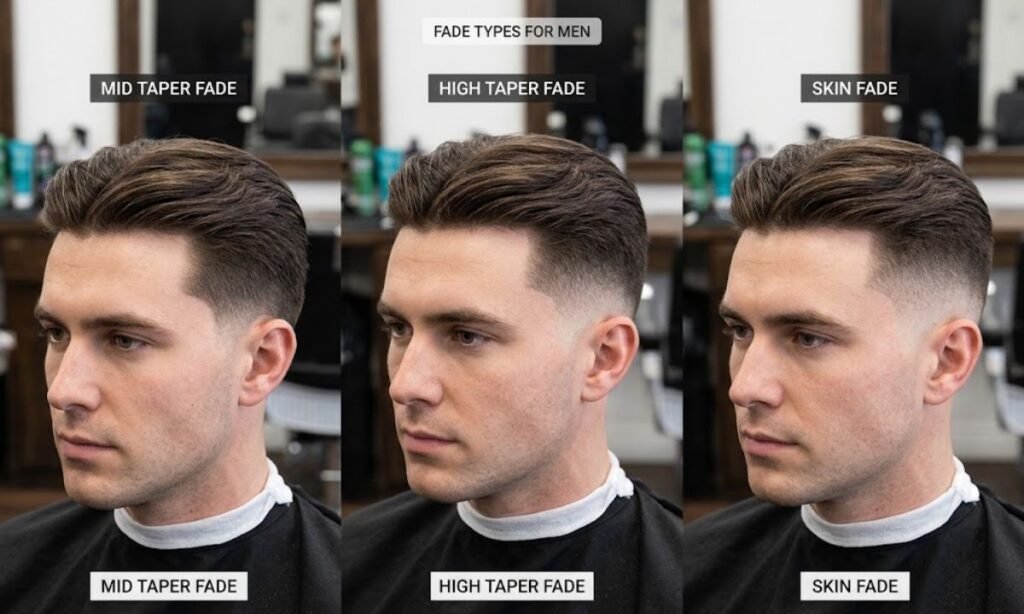
These three get mixed up all the time.
The high taper begins near the crown, so it’s the most dramatic.
A skin fade takes the sides to bare skin at the bottom.
It looks crisp on day one, but it needs more frequent visits.
The mid taper sits in the safe middle.
It works for office jobs, weekends, and everything in between.
How Do You Train Your Hair to Hold a Natural Middle Part?

Hair has a memory, and it doesn’t forget its old habits.
If you’ve parted it to the side for years, the center will fight back for a while.
Training it means repeating the same line daily.
You also need heat, direction, and a little patience.
Let’s start with the first step, which is finding where your hair wants to go.
How to find your natural parting line
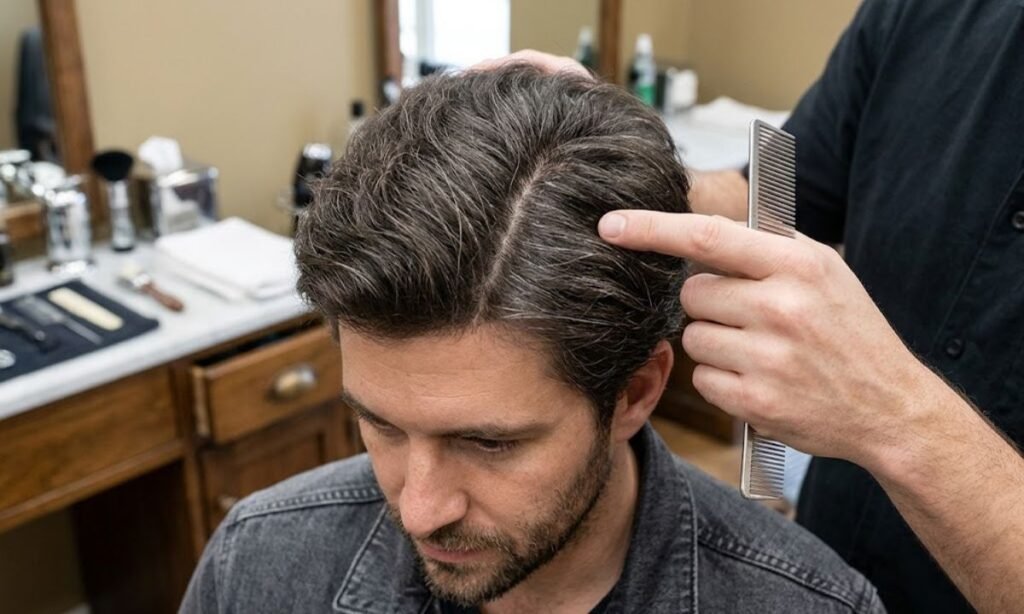
Wet your hair and comb it straight back.
Shake your head gently and watch where the hair falls on its own.
That split line is your natural part.
It may sit slightly left or right of dead center, and that’s normal.
Work with that line first.
You can nudge it toward the center a quarter inch at a time.
How to redirect stubborn hair without flattening the roots
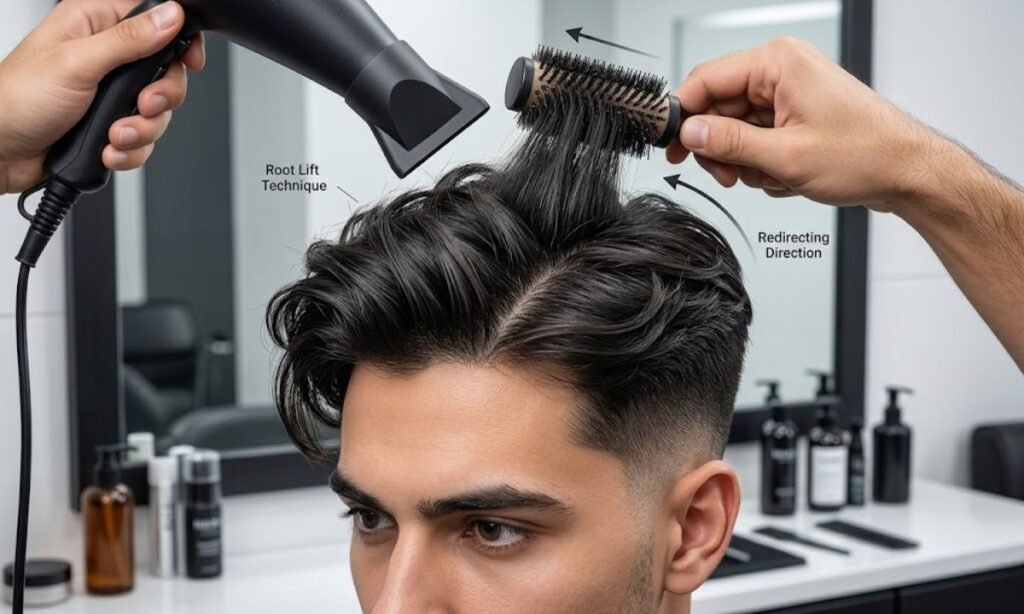
Stubborn hair resists because the roots grow in one direction.
So target the roots with the blow dryer, not just the ends.
Dry the hair away from where you want the part to be.
On the left side, blow the hair left, and on the right side, blow it right.
Finish with a cool blast to lock it in.
This keeps root lift alive and stops the part from collapsing.
How long does it take for a new middle part to settle?

Expect two to four weeks of daily effort.
Some hair takes six, especially with a strong cowlick.
You’ll notice the part holding longer each day.
The first week is the hardest, so don’t quit early.
Try parting while your hair is damp every morning.
Consistency beats any product on the shelf.
How do you maintain it, grow it out, and avoid common mistakes?
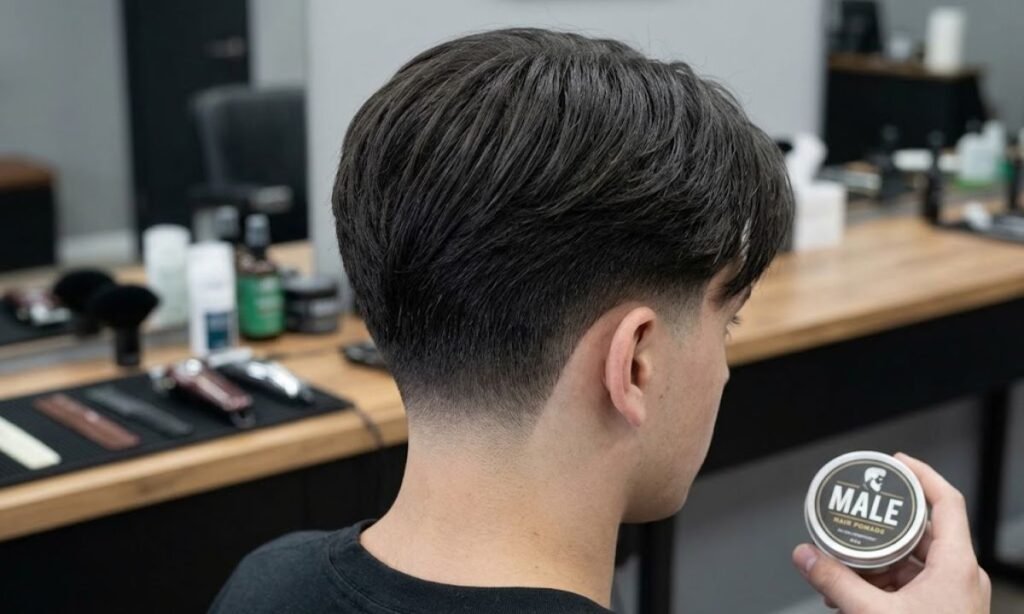
This haircut needs steady care.
The taper looks messy fast, while the top can wait a bit longer.
Think of it like a lawn.
You mow the edges often but trim the whole thing less often.
Here’s the schedule and the mistakes to watch for.
How often should you refresh the taper and reshape the top?
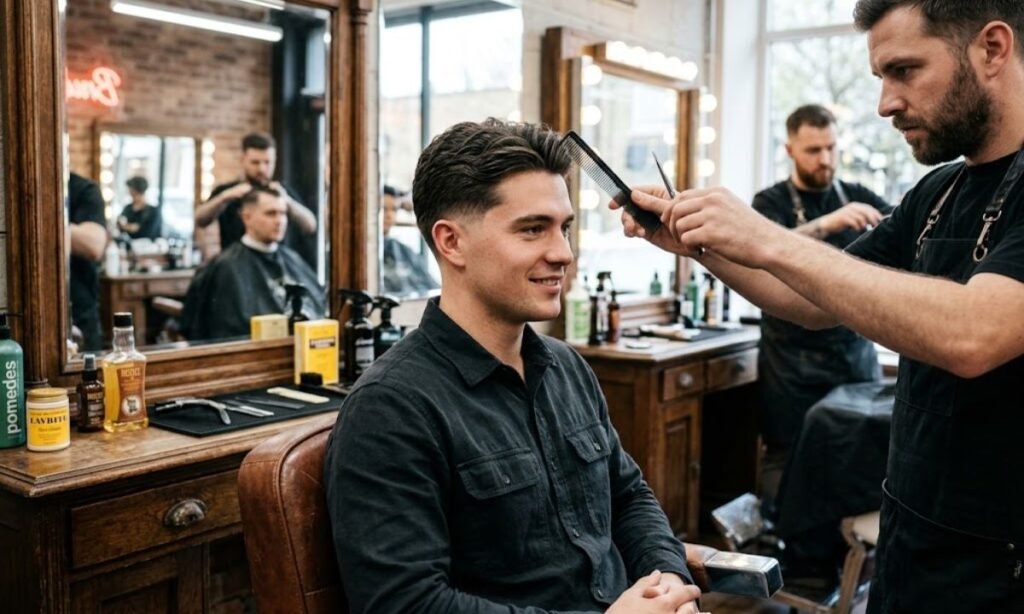
Book a taper refresh every three to four weeks.
That’s when the blurred taper line starts to show.
The top trim can happen every six to eight weeks.
Skin-close finishes may need a visit every two to three weeks.
A quick perimeter refresh between full cuts helps too.
Many barbers do it for a small fee, and it keeps the neckline crisp.
What makes the haircut look wrong, and how do you fix it?

The most common problem is uneven blending.
You’ll see a visible line where the guard changed, so ask your barber to soften it.
Another is flat roots, which happens when you skip the blow dryer.
Add a quick blast of heat and a little sea salt spray to bring lift back.
Bulky sides also ruin the shape.
A slightly tighter taper or texture removal on the sides fixes that fast.
Can heat styling or a very close finish cause problems?

Heat can cause heat damage if you overdo it.
Keep the dryer moving, use medium heat, and never hold it in one spot.
Very close finishes can irritate the neckline.
If your skin reacts, ask for a guarded neckline and skip aggressive shaving.
A light moisturizer or aftershave balm helps.
It calms neck irritation and keeps the taper looking clean.
Common mid taper fade styling mistakes
Using too much product tops the list.
Heavy paste weighs hair down, kills hair volume, and makes the part look greasy.
Combing hair when it’s fully dry is another trap.
Dry hair snaps back to its old direction, so always set the part while damp.
The last mistake is skipping the consultation.
Two minutes of talking with your barber saves you two months of regrets.
Quick checklist before you leave the chair
Run through this list before you pay.
- Check the taper height. It should start around the temple and ear.
- Look at the blend. No hard lines between guard lengths.
- Test the part. Ask your barber to show you where it falls.
- Confirm the neckline. Tapered or blocked, as you requested.
- Ask for a styling tip. Your barber knows your hair best.
These five checks take under a minute.
They also tell your barber you care about the result.
You can also checkout this article as well Mid Taper Fade for Asian Hair: 20 Styles, Barber Guide, and Maintenance
Frequently asked questions

Here are quick answers to the questions people ask the most.
If yours isn’t here, drop it in the comments.
Can you get a mid taper fade middle part with short hair?
Yes, but you’ll need to grow the top first.
About three inches is the bare minimum for a visible part.
Until then, ask for a short middle part haircut with texture on top.
It looks intentional and gives your hair time to catch up.
Does a mid taper fade middle part need daily blow-drying?
Not always, but it helps a lot.
A quick two-minute dry sets the part and keeps root volume strong.
If your hair is wavy or curly, you can air-dry with the right cream.
Straight and fine hair usually need the dryer.
Can you get this haircut if your hair naturally falls forward?
Yes, with a little retraining.
Use the blow-drying method above and direct hair away from the part every day.
Ask your barber to add some weight at the front hairline.
That gives the hair enough heft to fall sideways.
Is a mid taper fade middle part suitable for a receding hairline?
Often, yes.
The longer top and soft fringe cover the corners naturally.
Keep the part placement slightly off center if you’re worried.
A barber can also texture the front so the edges look fuller.
Can you achieve this style without using styling products?
Yes, if your hair has natural body.
Wavy and thick hair can hold a part with just a blow dryer and a comb.
Fine or straight hair usually needs a little help.
Even a drop of hair cream gives you control without a visible product feel.
What should you do if one side of your middle part sits higher than the other?
First, check your natural growth direction and crown position.
Most uneven parts come from hair growing stronger on one side.
Dry the heavier side first and push it in the opposite direction.
If the problem stays, ask your barber to rebalance the side weight.
Final Thoughts
The mid taper fade middle part works because it balances structure and softness.
You get a clean perimeter, a flexible top, and a style that suits many hair types.
Take your barber a clear script, two photos, and honest details about your routine.
Then give your hair a few weeks to learn the part.
What version are you planning to try first, classic curtains or the messy one?
Share your questions in the comments, and pass this guide along to a friend who’s stuck on his next cut.
We’ll keep refreshing this guide as barbers and trends change.
Come back anytime for new tips.

I’m Michael Charles, the creator of MegaCrazes—your source for fresh hairstyles, sharp haircuts, and simple hair-care inspiration. Find your style. Own your look.