
Last updated: October 2026
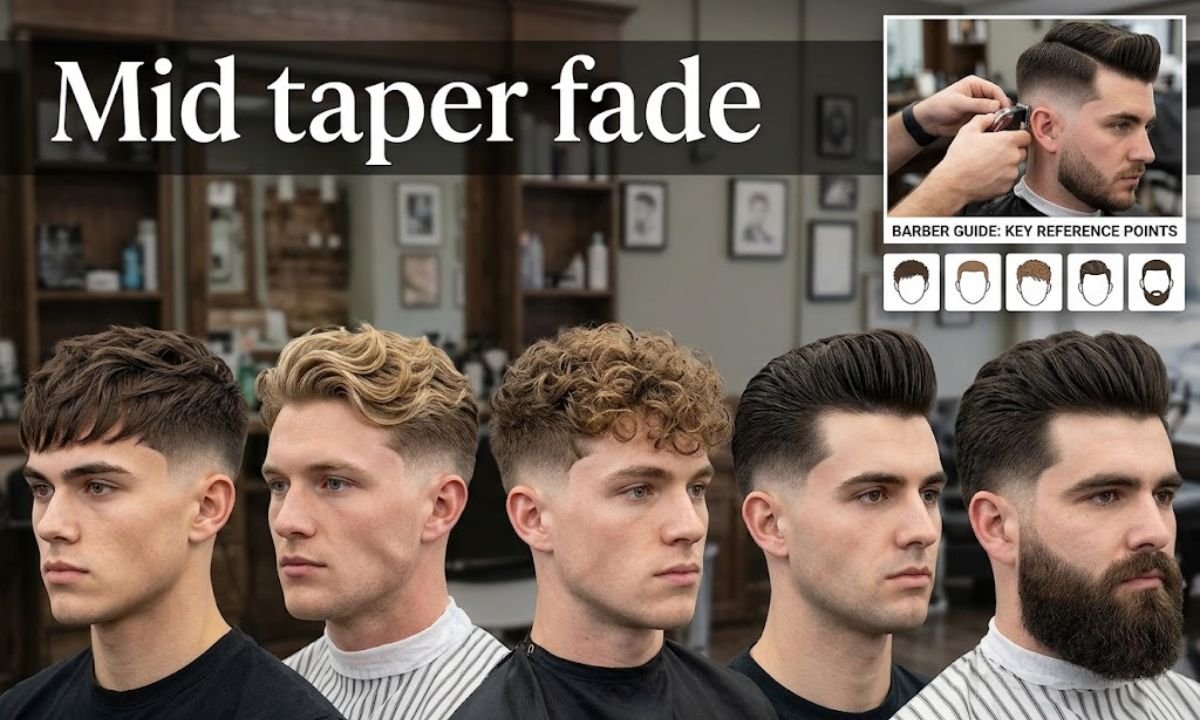
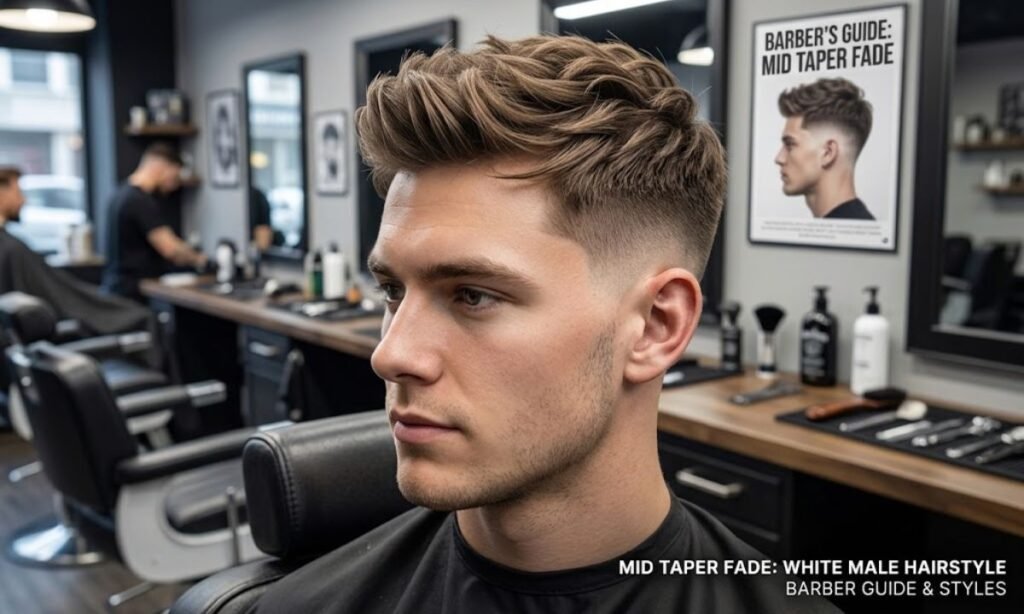
A mid taper fade keeps your sides short and gradually tighter as the hair moves toward your ears and neck. The blend starts around the temple area, so you get a clean tapered sides look without going bald-close. It works well for white guys, and your hair texture matters far more than your background.
Maybe you’ve sat in a barber chair and wondered if you’d end up with a fade that looks too sharp for your office. Maybe you worry about a receding hairline or a stubborn crown cowlick. This guide answers those worries in plain talk.
By the end, you’ll know which mid taper fade styles fit your hair type, what to say to your barber, and how to keep the cut fresh. Grab a coffee. Let’s get into it.
Quick Answer
A mid taper fade haircut starts the taper at temple-level, roughly halfway up the side of your head. The shortest hair length sits around the sideburn area and neckline, and the hair gets longer as it climbs toward the top. It’s the middle ground between a soft low taper and a bold high taper.
If you’ve got straight hair, fine hair, wavy hair, or curly hair, you can wear this cut. Pick your top length first, then choose how close the sides should go. Ask for a short-guard finish if you want less contrast, or a skin finish if you want a sharper look.
What is a mid taper fade?
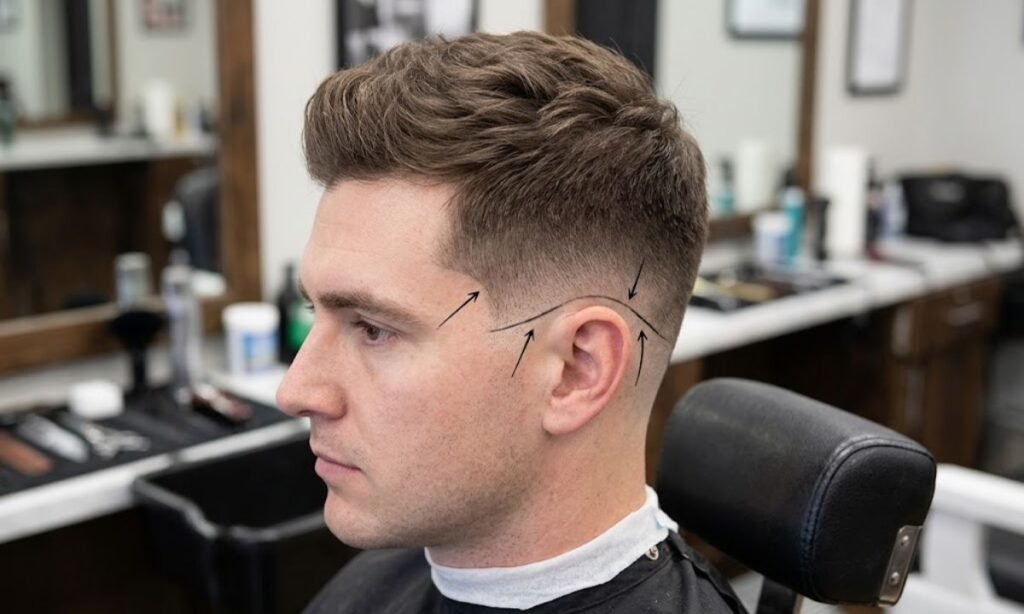
A mid taper fade is a modern men’s haircut where the side panel gradually shortens from the temple area down to the nape. The gradient is smooth, so you won’t see a harsh line where long hair meets short hair. Barbers use clipper guards and clipper work with a taper lever to create that smooth transition.
Think of it like a sunset sky. The color doesn’t jump from orange to dark blue in one step, it melts. Your hair transition works the same way, which is why a good mid taper looks clean on a Monday and still decent by Friday.
Mid taper vs mid fade

People swap these two terms all the time, but they aren’t identical. A taper usually leaves more length at the end and focuses on the hair perimeter, meaning the hairline, sideburns, and neckline. A mid fade usually goes much shorter, often down to skin, and creates higher contrast.
So mid taper fade vs mid fade comes down to how bold you want the side profile. A mid taper feels natural and soft. A mid fade feels sharp and bold, and it shows more skin exposure.
Where a mid taper sits on your head
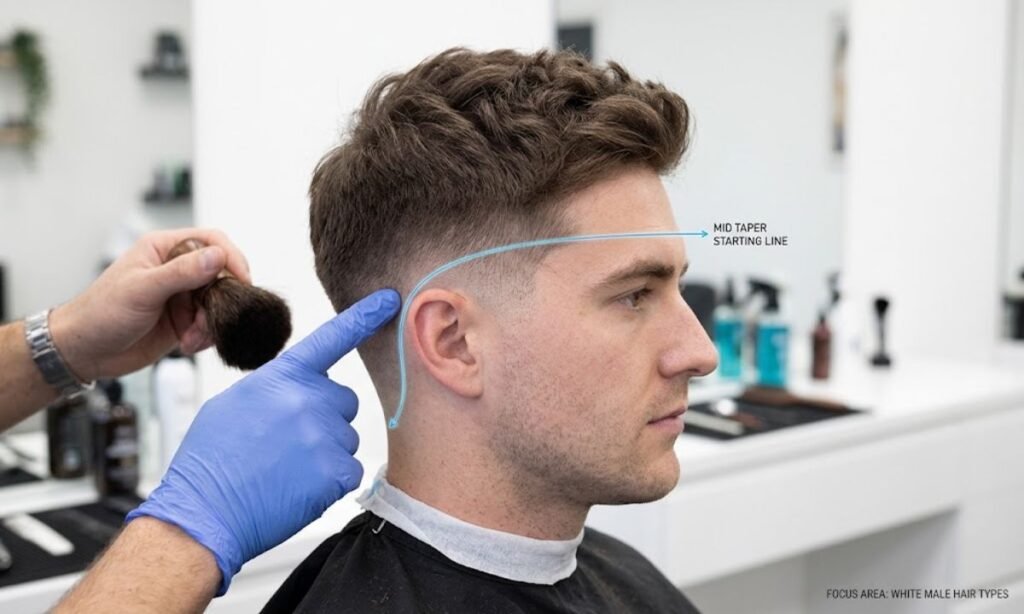
Picture a line wrapping around your head at the height of your temples, near the top of your ears. That’s your starting height for the mid-height taper. Above it, your side weight stays. Below it, the blend begins and the hair tightens.
Your barber can nudge the taper height up or down by a finger’s width depending on your head shape. A flatter back of the head often looks better with a slightly higher start. A rounder skull usually handles a mid taper without any tweaks.
Mid Taper Fade Examples by Face Shape
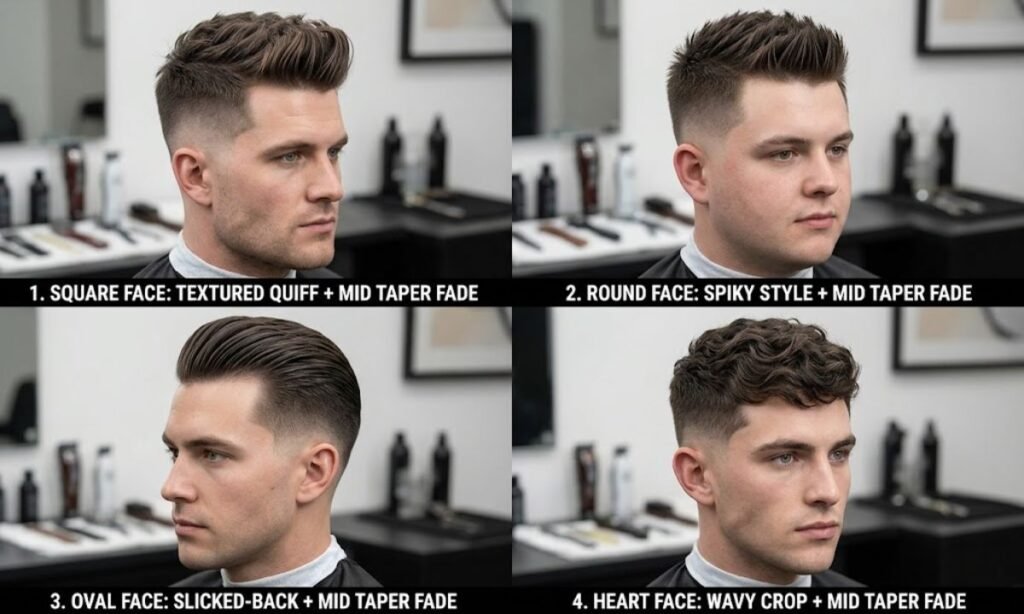
Your face shape decides where you want volume and where you want tidy sides. A mid taper fade gives you control over both. You can add height on top to lengthen a round face, or soften the sides to calm a very angular jaw.
Before you pick a style from a photo, look at your front profile in the mirror. Notice where your face is widest. That small habit saves you from a haircut that fights your features.
Mid taper fade for round faces
If your face runs round, you want to add vertical lines. Keep the top a bit longer, with root lift or a short quiff, and let the mid taper pull the sides in. That combo stretches your face visually and trims the side bulk that makes cheeks look wider.
Avoid a flat, heavy fringe that sits straight across your forehead. It cuts the face in half. A side-swept top or a lifted front works better.
Mid taper fade for oval and square faces
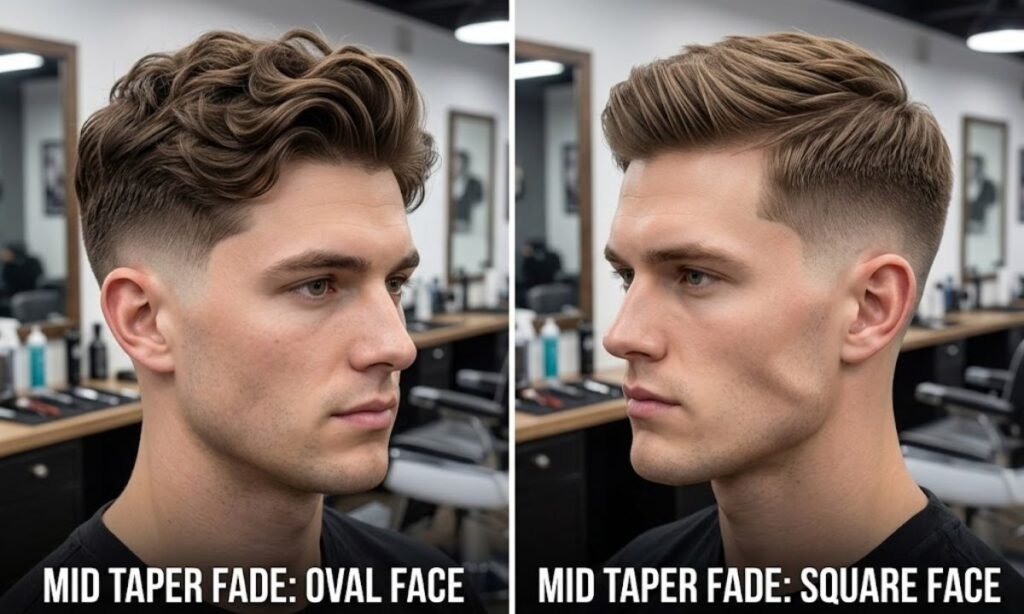
Oval faces handle almost anything, so you’ve got freedom. Try a textured fringe, a side part, or a French crop. A mid taper keeps the shape balanced without adding drama.
Square faces already have strong angles. A mid taper fade with a softer, natural finish keeps those angles from looking harsh. Pair it with a medium-length top and some hair movement, and you’ve got a polished look.
Does a mid taper fade work for white guys?
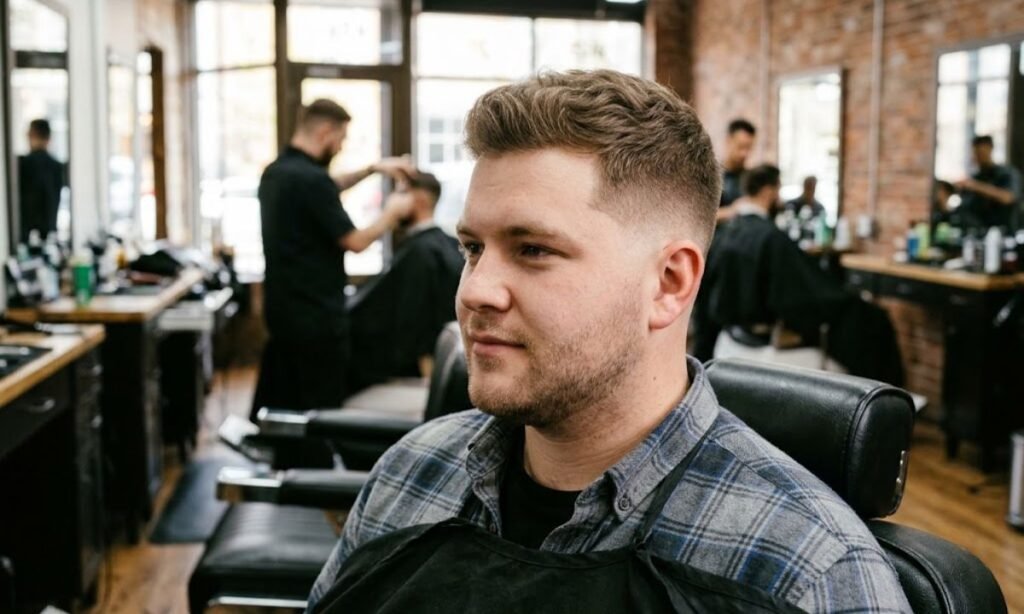
Yes, it does, and it’s one of the most requested cuts for a reason. White guys tend to have straight hair, wavy hair, or loose curls, and a mid taper suits all of them. The cut is about structure, not ethnicity.
The real question is what your hair growth direction, density, and strand thickness will do after the cut. Let’s talk about that, because it’s where most haircuts succeed or fail.
Why texture and thickness matter more than ethnicity
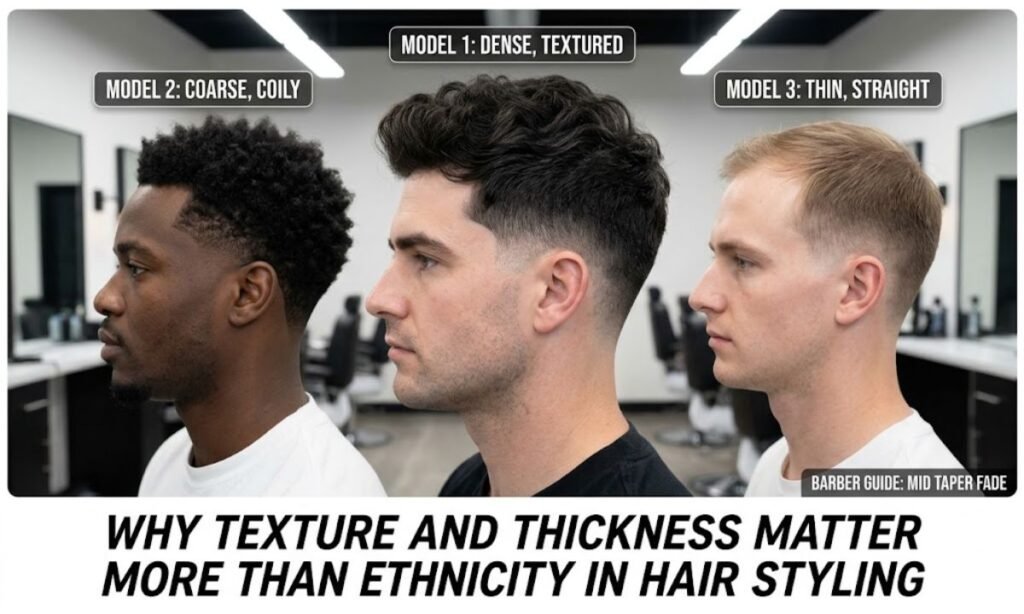
Two white guys can walk in with completely different heads of hair. One has fine strands and sparse hair near the crown. The other has thick strands, high hair density, and a cowlick. A mid taper fade behaves differently on each.
That’s why individual hair characteristics beat any label. Hair texture considerations like curl pattern, hair weight, and hair structure tell your barber how to cut. Ask about your own hair, not a stereotype.
Which hair types work best with a mid taper?
Medium-density hair with a bit of natural texture is the easiest to work with. It holds a gradient nicely and styles in minutes. Thick hair works too, and the mid taper removes the removed hair bulk that often makes it look puffy.
Fine hair can look great, but the barber needs to protect top length so you don’t expose too much scalp visibility. Curly hair shines with a curly top and a clean blend. Even thinning hair can work when you keep the taper soft.
Best mid taper fade styles for white guys
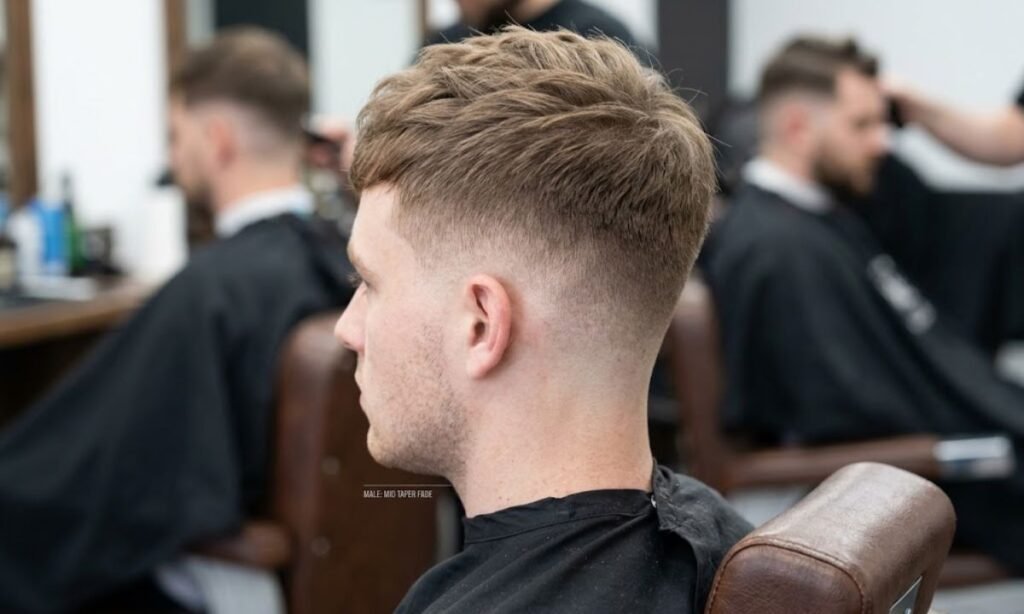
There’s no single best mid taper fade hairstyle. The best one is the one that matches your hair type, your job, and how much time you’ll spend in front of the mirror. Here are the top options, grouped by hair texture.
Treat these like a menu. Pick one, bring haircut reference photos, and tweak it with your barber. That’s how you get a cut that feels like yours.
Mid taper styles for straight or fine hair
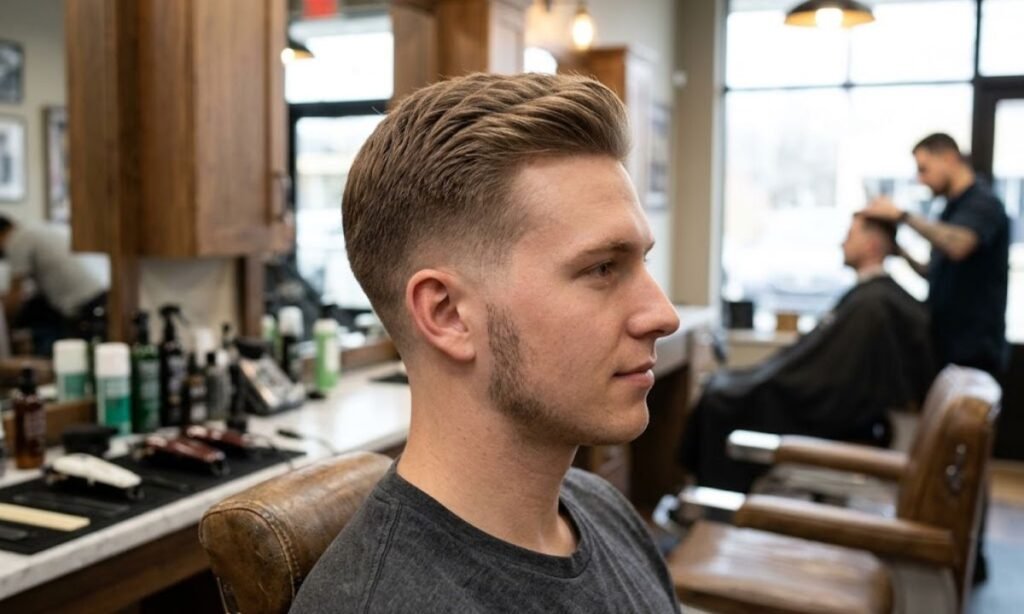
Straight hair and fine hair respond well to texture enhancement. A mid taper keeps the sides tidy while the top does the talking. Because fine strands lie flat, you need cuts that build hair volume and hair movement.
A lightweight cream or matte clay usually works better than heavy gel. Too much product weight flattens everything. A little goes a long way.
Mid taper with textured fringe

A textured fringe is a short fringe cut with point cutting so the ends look broken up and relaxed. The mid taper fade with textured fringe feels casual but sharp. It’s a great pick if you want a low-styling haircut that still looks put together.
Ask for a top length of about two to three inches, cut to sit just above your eyebrows. Style with a pinch of matte clay and push the hair forward. Done in 90 seconds.
Mid taper with side part
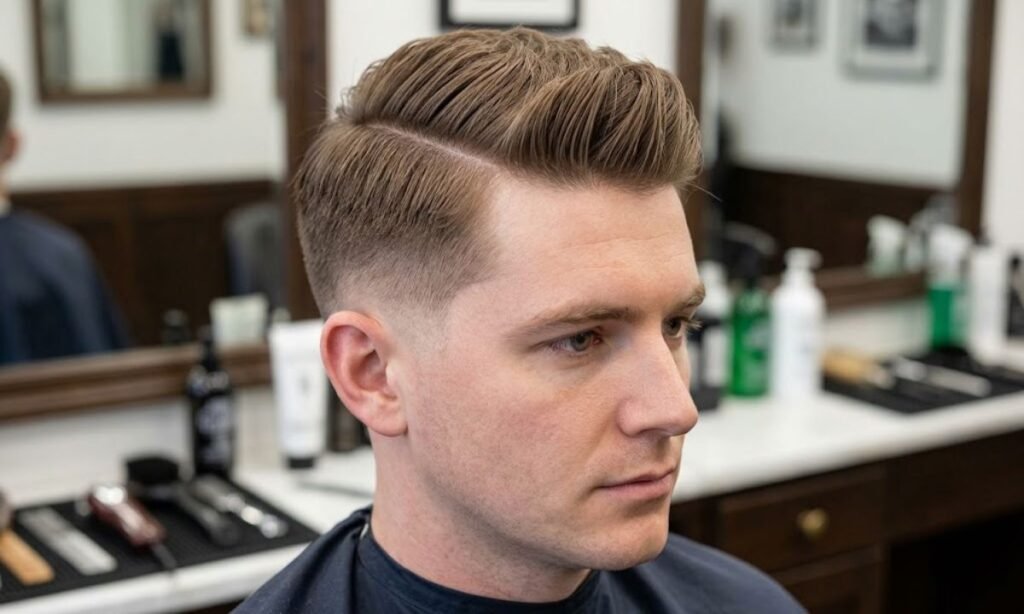
A side part gives you a clean, formal hairstyle vibe without feeling stiff. Your barber can cut a natural side part by following your hair growth pattern. The mid taper frames it neatly so the haircut outline looks intentional.
Use a comb styling method on damp hair with a medium-hold cream. Let the part fall where your hair wants to go. Fighting it only leads to a bad day.
Mid taper with short quiff
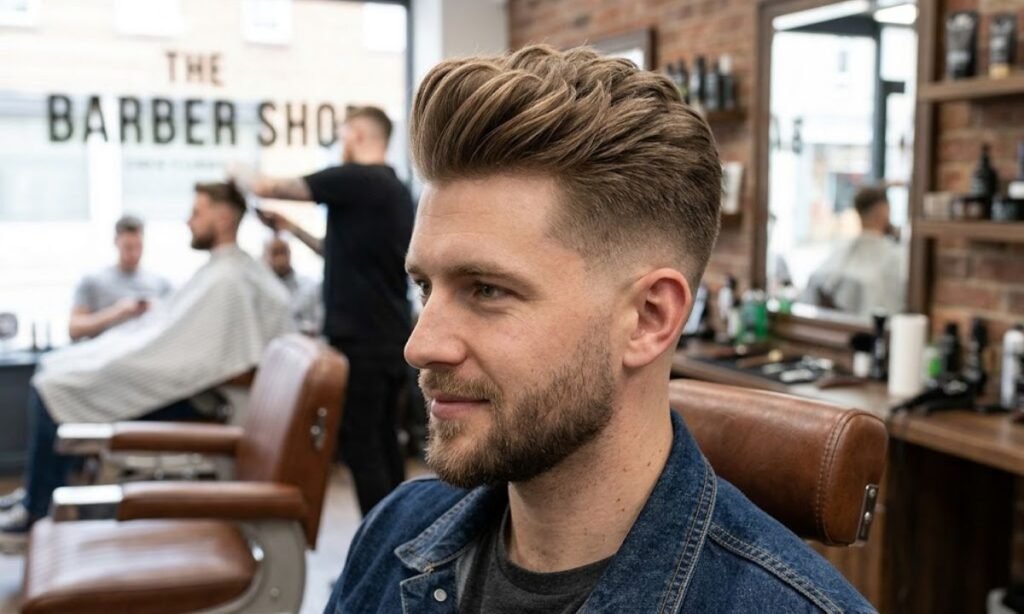
A short quiff lifts the front of your hair upward and back. It’s perfect for fine hair that lacks volume, since the root lift adds height. Combine it with a mid taper fade and you get a modern quiff that feels current.
Blow-dry the front up and back with low heat, then set it with lightweight mousse or styling paste. Keep the sides tight so the top silhouette stands out.
Mid taper styles for wavy or curly hair
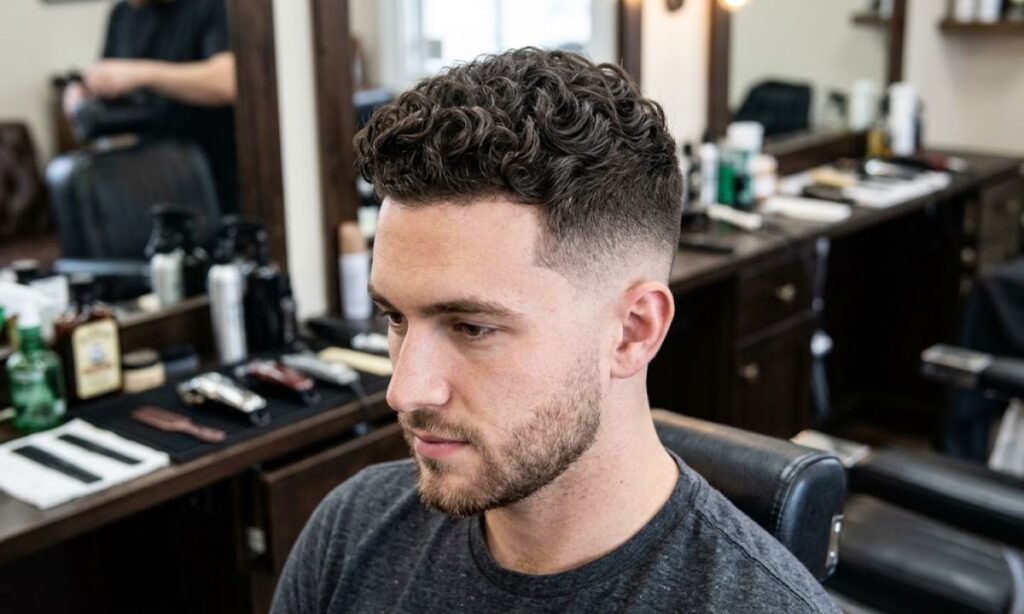
Wavy hair and curly hair bring built-in volume and movement. A mid taper fade keeps that natural texture on top while controlling the side weight. Without a taper, curls can expand sideways and make your head look wide.
Also remember hair shrinkage. Curly hair looks shorter when dry than it does wet. Tell your barber how long you want it to look, not just how long it measures.
Messy or textured fringe
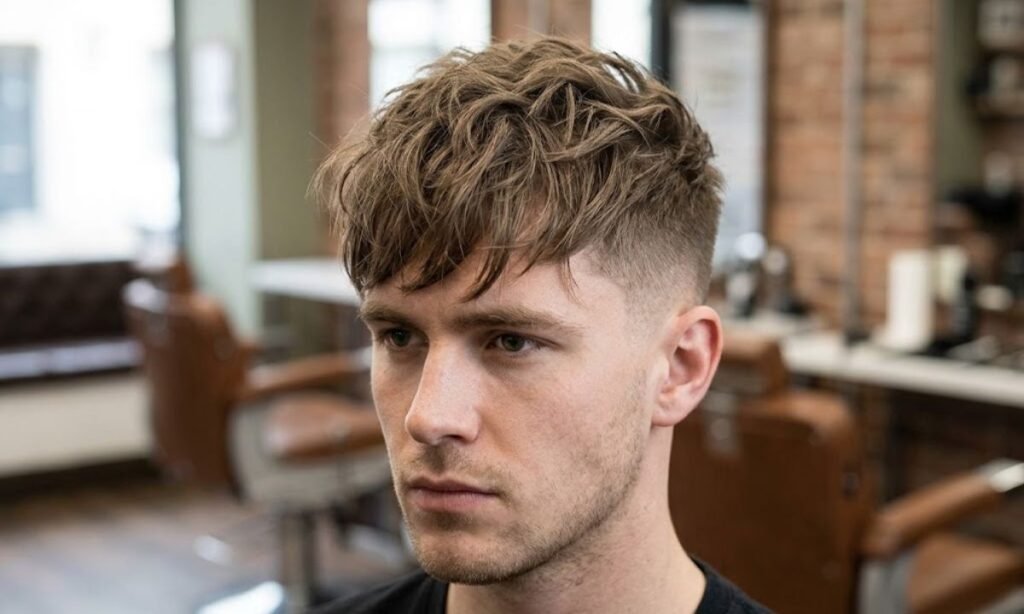
A messy fringe works wonders with natural waves. The mid taper keeps the sides clean, so the messy top looks styled rather than neglected. It’s the casual hairstyle you can wear to a barbecue or a Tuesday meeting.
Use finger styling with a bit of styling paste and let it dry naturally. Air-drying keeps the wave pattern intact. You’ll love how little effort it takes.
Blowout mid taper

A blowout adds rounded volume and a polished finish. You dry the hair with a brush and a blow-drying routine to lift the roots and smooth the shape. The mid taper fade with blowout looks sharp and a little retro.
This one needs a few more minutes, but it photographs beautifully. Use a medium-hold cream before drying, then finish with a flexible hold product for hair direction control.
Curly top mid taper

A curly top shows off your curl definition while the sides stay short. The mid taper makes the curls look deliberate and neat. It’s one of the most flattering mid taper fade for curly hair options.
Apply a curl-defining product to damp hair and scrunch gently. A diffuser on low heat helps with frizz control and keeps curl pattern consistent. Skip rough towel drying, which causes frizz.
Short, low-styling mid taper options

Not everyone wants a morning routine. If you want a low-maintenance hairstyle, keep the top short, around one to two inches, with a uniform top length. A mid taper plus a short top equals a minimal styling routine.
You can finish with a dab of matte clay or nothing at all. Many guys run their fingers through it and walk out the door. That’s the whole point of everyday styling.
Mid Taper Fade Haircuts by Hair Length

Hair length on top controls how formal or relaxed your cut feels. The mid taper fade is flexible, so you can run it with longer top, medium-length top, or short top styles. The sides stay consistent while the top changes the mood.
Think of the top as your outfit and the taper as your tailoring. The tailoring stays sharp no matter what you wear.
Mid taper fade with a long top

A mid taper fade with a longer top gives you room to style. You can slick it back, sweep it to the side, or let a longer fringe fall forward. The contrast between short sides and long hair looks bold but still wearable.
With long tops, hair weight matters. Ask your barber to use thinning shears if your hair is dense, so it doesn’t sit like a helmet. Keep a little side weight retention to avoid a mushroom shape.
Mid taper fade with a buzz cut or crew cut
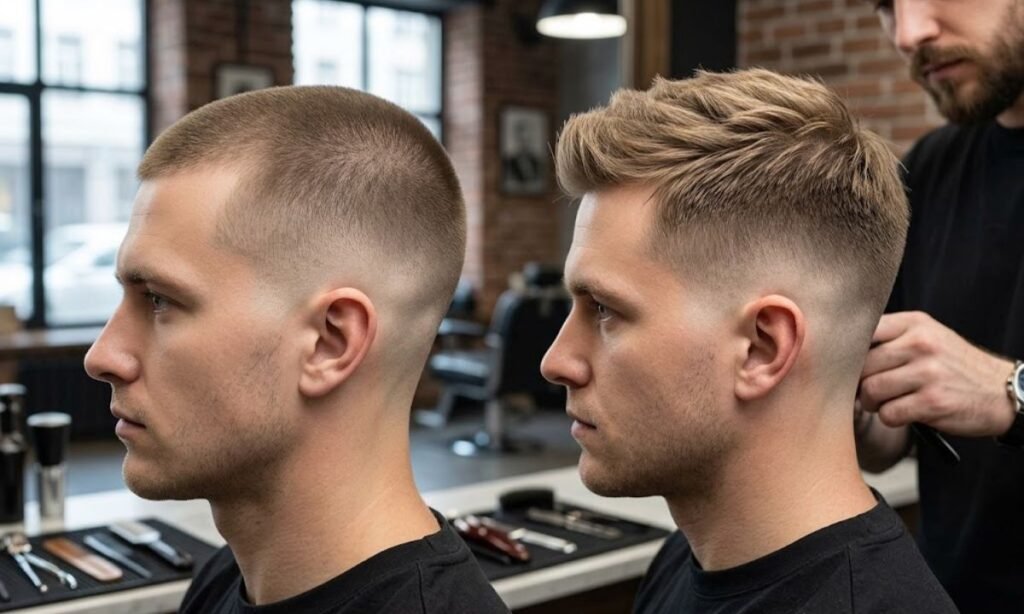
A buzz cut with a mid taper is the ultimate low-maintenance finish. The taper gives the cut shape so it doesn’t look like you simply clipped everything one length. A crew cut adds a bit more length in front for a lifted front.
This pair suits thick hair, coarse hair, and anyone who hates styling. Pick a short-guard length for the sides and one or two guards longer on top. You’ll skip the mirror time entirely.
Mid Taper Fade With Different Hairlines
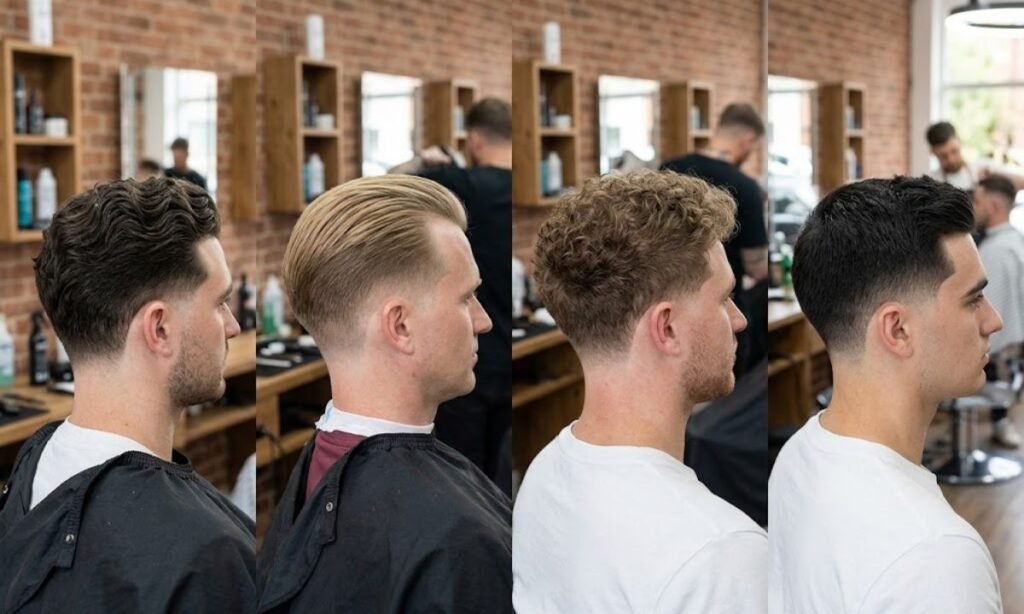
Your hairline shapes how the whole cut looks. A mid taper can hide, highlight, or soften what’s going on at your temples. The trick is matching taper placement to your natural hairline instead of forcing a template.
A good barber studies your front profile, side profile, and rear profile before touching the clippers. If yours doesn’t, politely ask them to.
Mid taper fade with a receding hairline
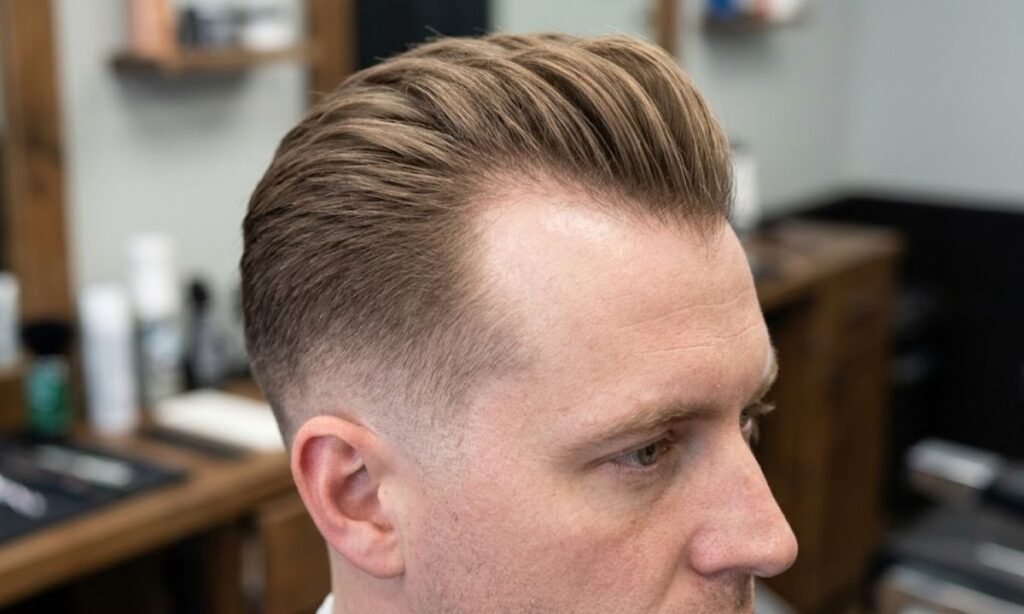
A receding hairline or temple recession is common, and a mid taper fade for receding hairline works nicely. Keep the top slightly longer and sweep it forward or sideways to soften the temple shape. Don’t go too skin-tight, since that spotlights the recession.
A shadow finish or short-guard finish is kinder than a skin finish here. The soft blend draws attention to the style, not the hairline recession. You’ll look confident, not self-conscious.
Mid taper fade with a widow’s peak
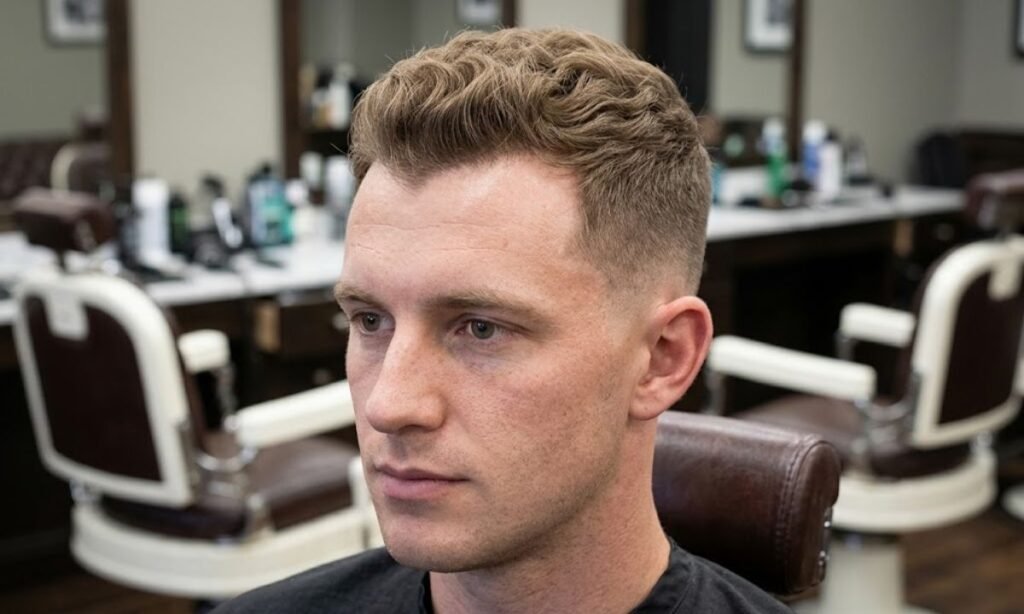
A widow’s peak gives you a natural V at the front. You can show it off with a side-swept top or textured fringe that frames it. A mid taper keeps the sides clean so the peak looks purposeful.
If you’d rather downplay it, ask for a longer fringe that falls across the front. Your barber can adjust the haircut outline to balance things. Small changes make a big difference.
Mid Taper Fade With Beard and Facial Hair

A mid taper fade and a beard are a classic pair. The taper can flow right into your sideburns and facial hair, which creates one connected look. Done well, it makes your whole face feel intentional.
On the flip side, a mismatch between your side panel and your beard looks choppy. Tell your barber about your facial hair before the cut starts.
Connecting a mid taper fade to a beard
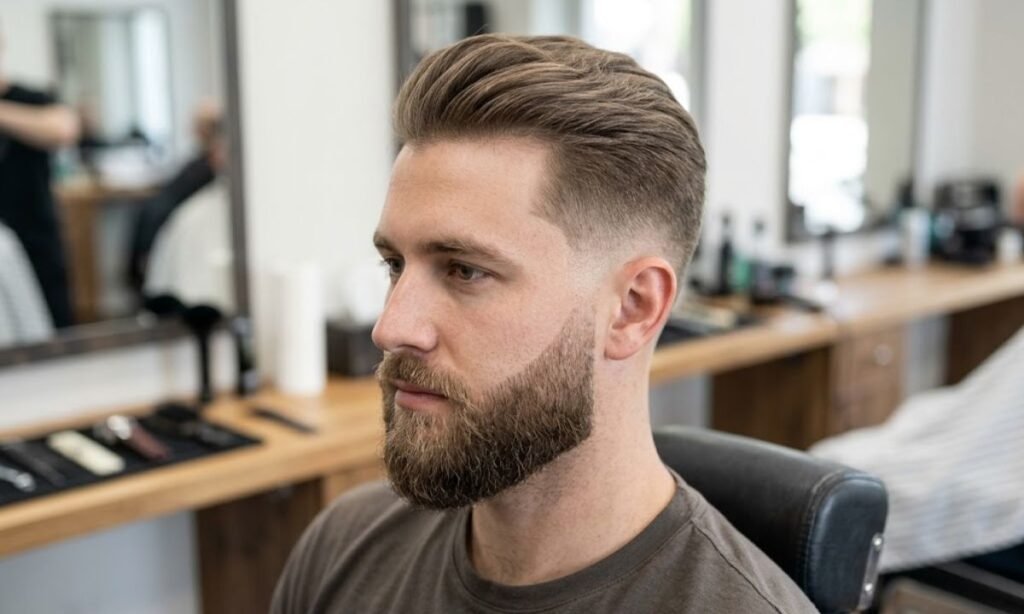
To connect the two, your barber blends the taper into the sideburn area, then continues the gradient into the beard. That keeps the transition smooth instead of abrupt. A taper around the sideburns is the key detail.
If your beard is full, a mid taper keeps the sides from looking too bulky. If it’s stubble, the visible stubble matches the shadow finish beautifully. Keep sideburn cleanup on your regular list.
Mid taper fade with a clean-shaven look
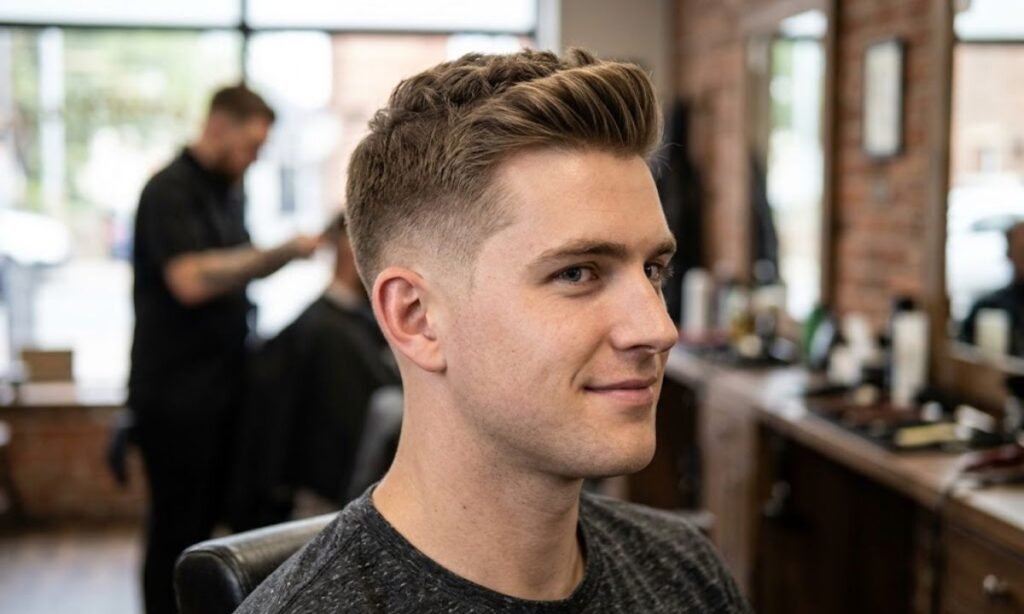
Clean-shaven plus a mid taper gives you a crisp, modern feel. Your face and neckline become the focus, so a clean neckline shape matters more. Square or rounded are both fine, just stay consistent.
Be mindful of shaving irritation if you shave daily and also get a close skin-close haircut. Too much close shaving on the same area can cause razor bumps. We’ll cover that later.
How do you choose the right mid taper?

Choosing the right mid taper comes down to two decisions: how short the sides go, and what you do with the top. Make those two calls and everything else falls into place. Don’t overthink it.
A useful rule is to match the cut to your lifestyle first. A guy in a formal workplace needs different haircut proportions than a freelancer. Ask yourself where you’ll wear it most.
Set the height and the shortest length
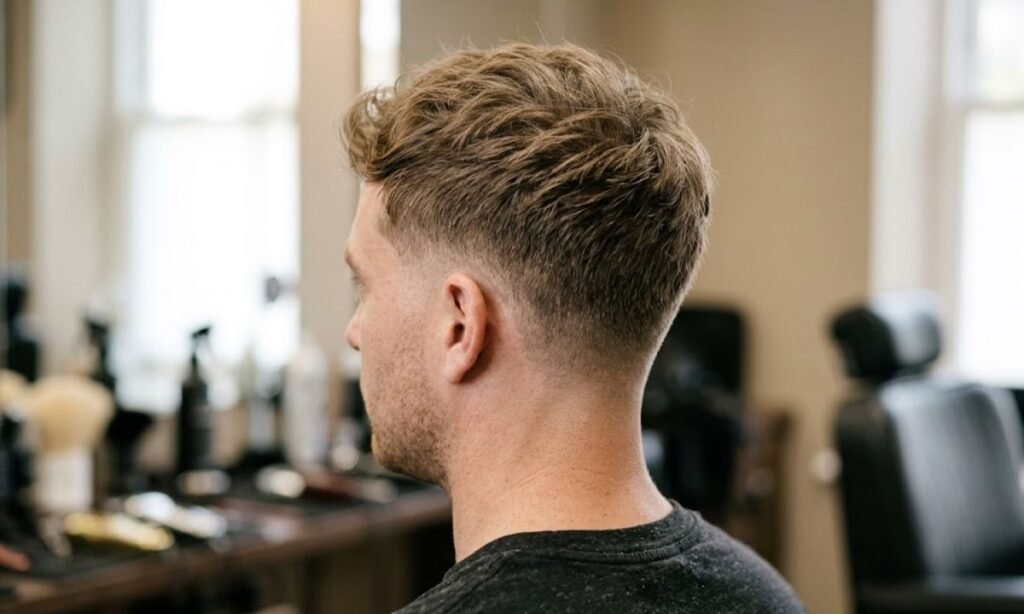
Pick your taper height first. A temple-level starting point is the standard mid taper, but a slightly lower start gives a gentler ear-level taper. Then choose your shortest hair length, from short-guard finish to shadow finish to skin finish.
If you’re not sure, start with a guard number around a number one or two at the bottom. You can always go shorter next time. You can’t glue hair back on.
Match the top to your hair, hairline, and routine

Now look at your top. Fine hair loves texture and lift, thick hair likes thinning and weight control, and curly hair wants curl definition. Think about your daily styling routine and be honest about how much time you’ll invest.
Factor in your hairline and growth pattern too. A cowlick at the crown works better with slightly longer hair, so it doesn’t stick up. That’s top-to-side balance in action.
How do you ask your barber for a mid taper fade?
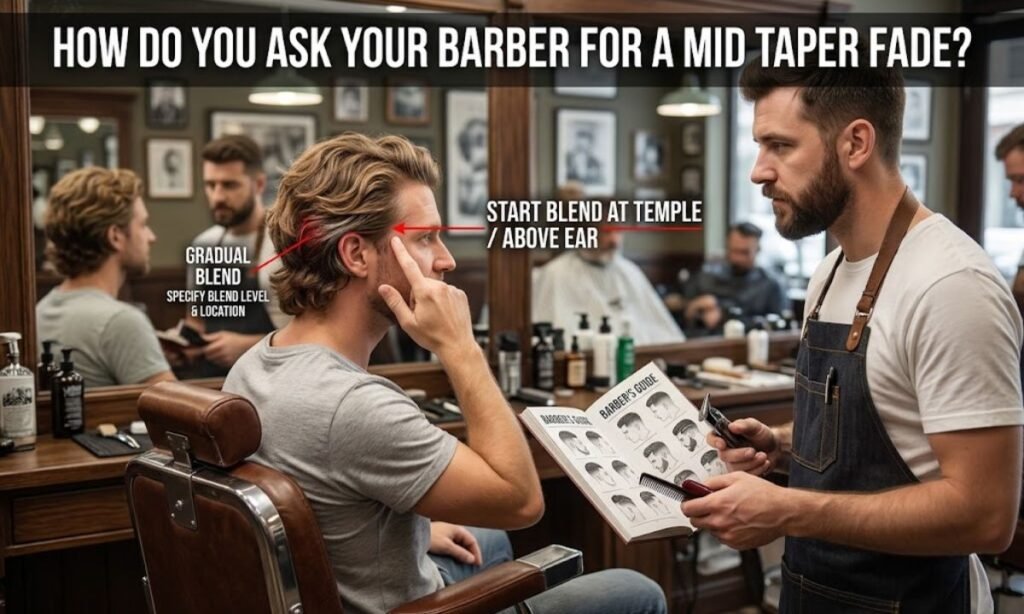
Good barber communication saves you from the dreaded “that’s not what I meant” moment. Bring reference photos from the front angle, side angle, and back angle. Photos beat words almost every time.
Also mention previous haircut problems, like “last time the sides went too short.” That tells your barber what to avoid. A short barber consultation before the cut is totally normal.
What to tell your barber
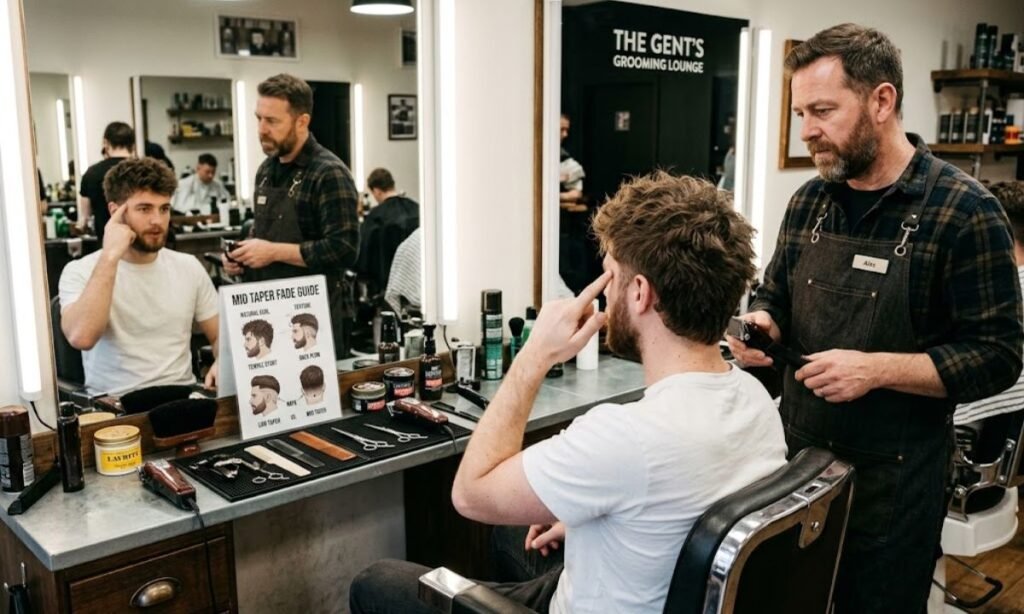
Use barber-ready haircut description language so there’s no guessing. Here’s a simple script you can adapt:
- Taper starting point: “Start the taper at my temples, mid height.”
- Desired shortest finish: “Go to a number one guard, not skin.”
- Top length: “Leave about two and a half inches on top.”
- Top styling preference: “I want a textured fringe, pushed forward.”
- Sideburn and neckline preference: “Keep sideburns natural and the neckline tapered, not squared.”
- Blend preference: “Soft blend, nothing too sharp.”
Add your grow-out concerns, like how often you can visit. A custom haircut instruction that includes your routine gives your barber the full picture. Share your haircut expectations upfront and you’ll leave happy.
How do you style a mid taper fade at home?
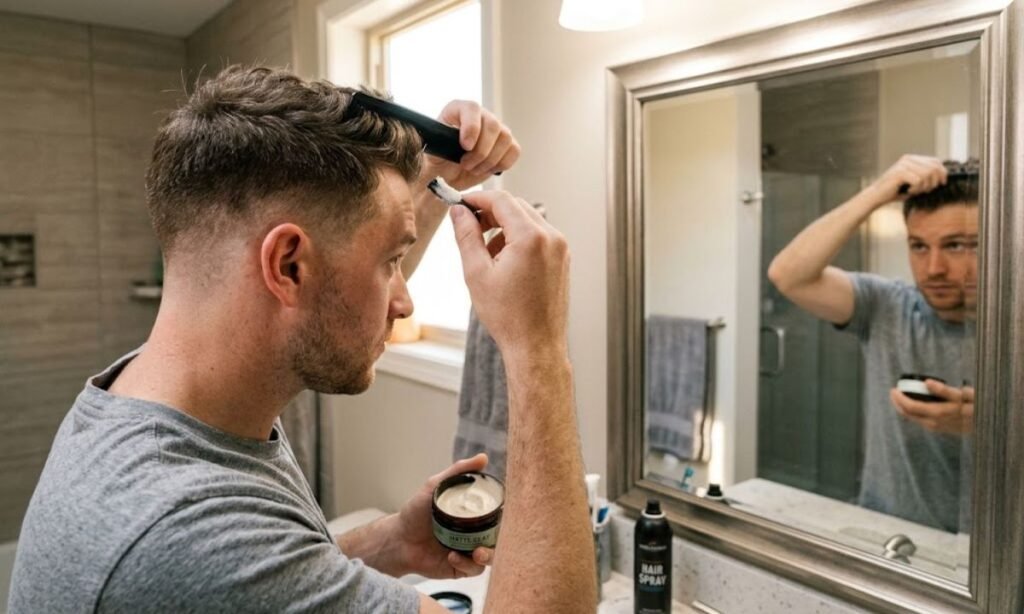
Styling at home doesn’t need a bathroom shelf full of products. You need a styling product that matches your hair density and a few minutes. The mid taper does half the work by keeping the sides neat.
Start with damp hair for most styles, since it’s easier to shape. Keep your product amount small, then add more if you need to. It’s far easier to add than remove.
Styling straight or fine hair
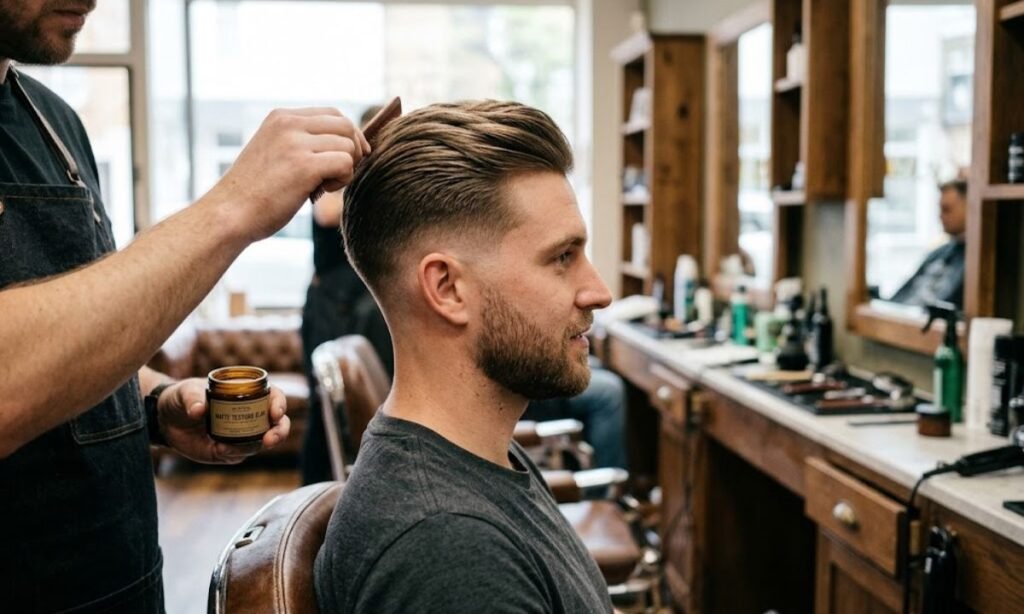
For straight hair and fine hair, use lightweight mousse or a lightweight cream on towel-dried hair. Blow-dry with low heat, lifting at the roots for root lift. Finish with a touch of matte clay for texture enhancement.
Avoid heavy gels and waxes, since product buildup weighs fine hair down. If your hair looks flat by lunch, you probably used too much. Try half next time.
Styling wavy or curly hair
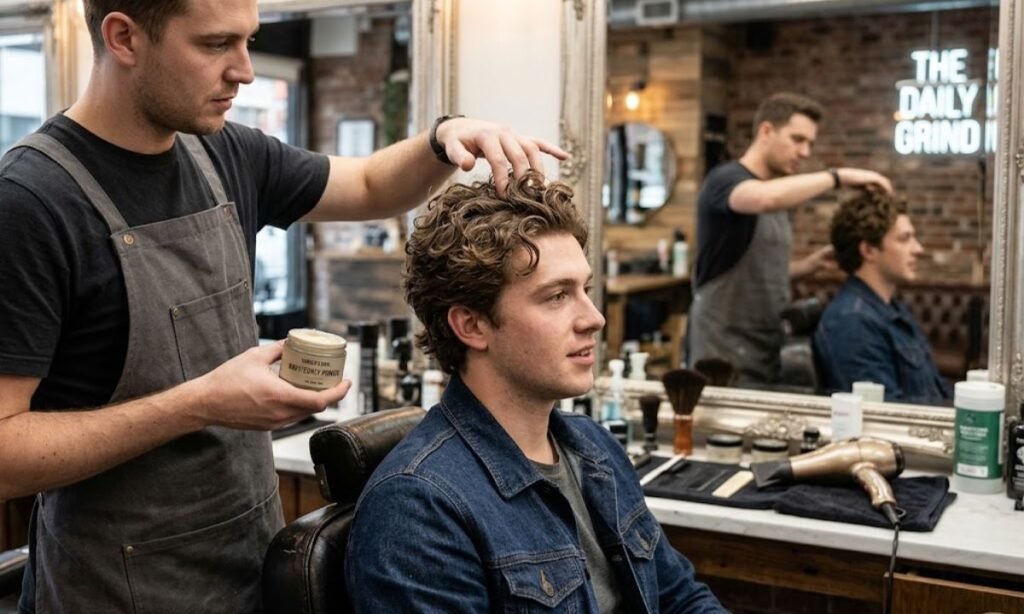
For wavy hair and curly hair, apply a curl-defining product or medium-hold cream while the hair is wet. Scrunch upward and let it air-dry or use a diffuser. Resist touching it while it dries, because that’s what creates frizz.
Once dry, break up any stiffness with your fingers. A little styling paste gives definition without crunch. That’s a natural styling routine you can repeat daily.
How do you maintain a mid taper fade?
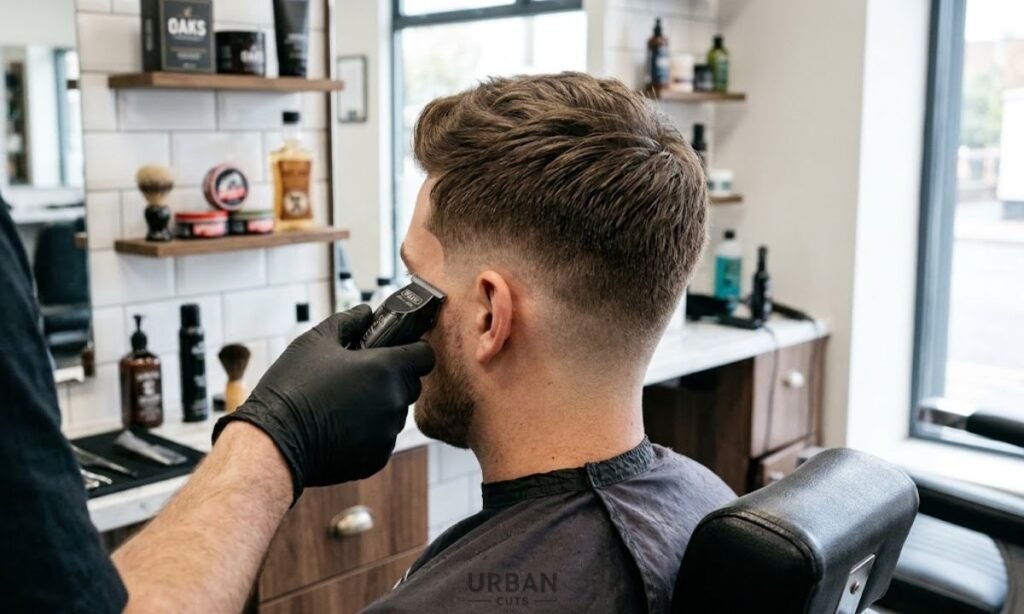
A mid taper fade looks its best fresh, then softens as the hair grows. Good maintenance means regular trims plus smart habits in between. You don’t need to live at the barbershop, but a maintenance schedule helps.
Between visits, keep your neckline and sideburns tidy if you’re comfortable doing so. Many guys leave the fade technique to the pro and only handle light between-visit upkeep. That’s a smart call.
How often should you refresh it?
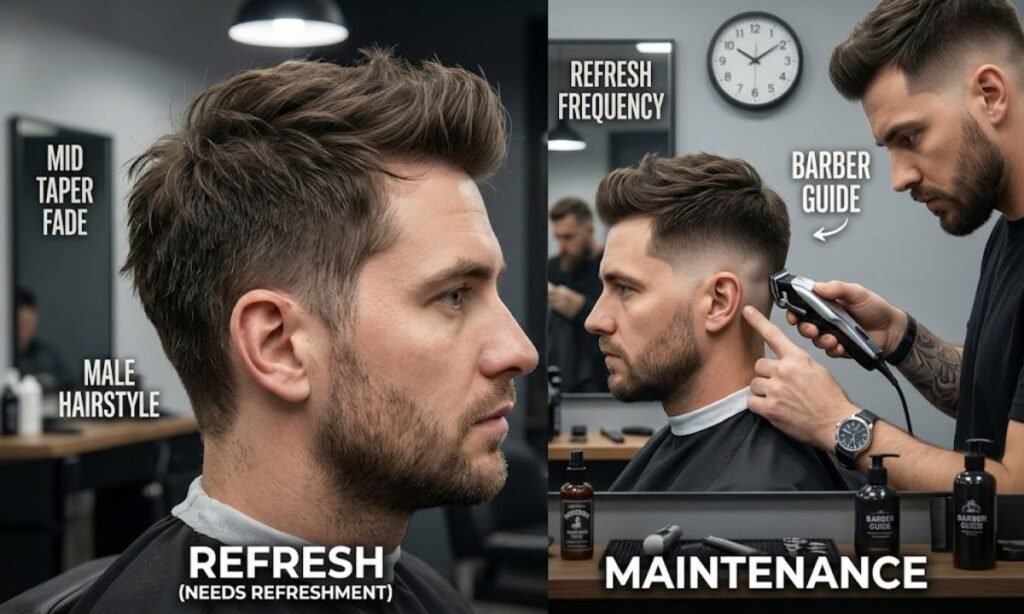
Most people refresh a mid taper fade every two to four weeks. Fast-growing hair and coarse hair growth often need a haircut refresh closer to two weeks, since the fade sharpness disappears quickly. Slower growers can stretch it to four.
Watch for signs like a blurred outline, a fuzzy neckline, or a visible fade line that’s lost its shape. That’s your cue. A soft grow-out stage is fine, but the gradual grow-out of a taper looks better than a high-contrast skin fade growing out.
Can a very close fade irritate the skin?
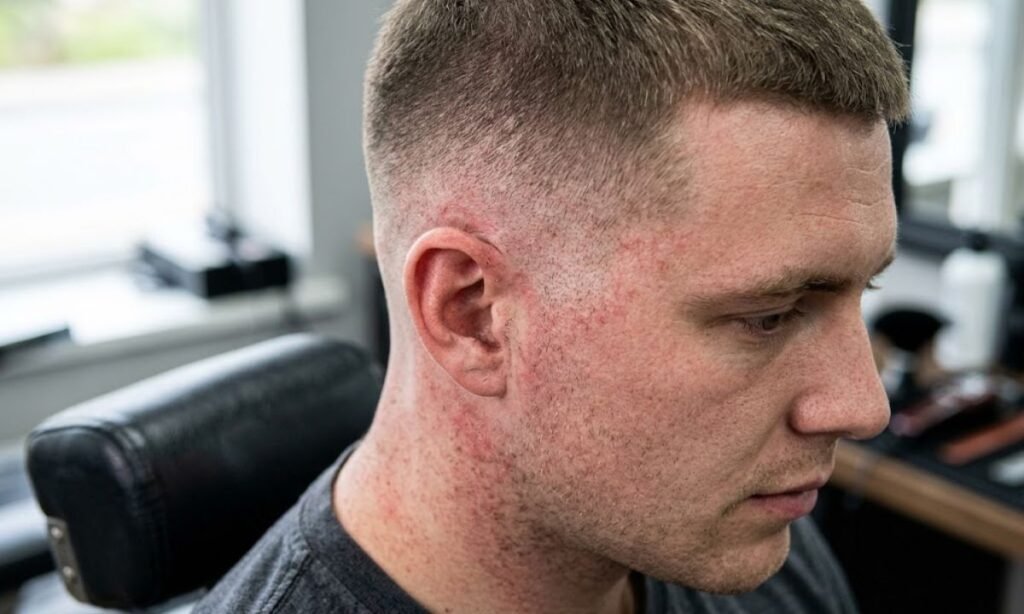
Yes, it can. A very close skin finish exposes the scalp and can lead to scalp irritation, razor bumps, and folliculitis, which is inflammation of the hair follicle. Guys with sensitive skin feel it most.
If you notice bumps, ingrown hairs, or burning after a cut, choose a shadow finish or short-guard finish next time, and don’t shave the same area every day. If irritation sticks around, talk to a board-certified dermatologist. The American Academy of Dermatology offers guidance on shaving-related skin problems, and a professional can rule out anything serious.
Mid taper fade mistakes to avoid
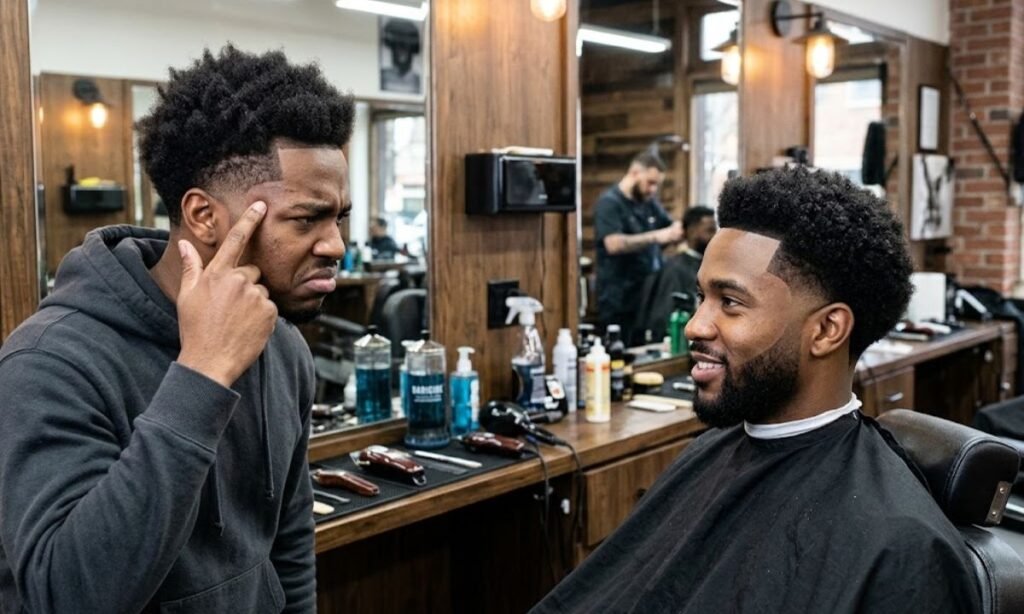
The most common slip is asking for a mid taper and getting a mid fade because nobody confirmed the shortest finish. Say “number one guard, not skin” if you want a natural appearance. Clear words stop expensive surprises.
Another mistake is ignoring your cowlick or uneven growth. A crown cowlick fights short tops and stands up at the worst moment. Keep the top a bit longer there and let the weight tame it.
Last, don’t copy a photo blindly. The model might have thick hair, while yours is fine hair. Bring the photo, then ask your barber what will realistically work on your hair density.
Mid taper vs low taper, mid fade, and high taper
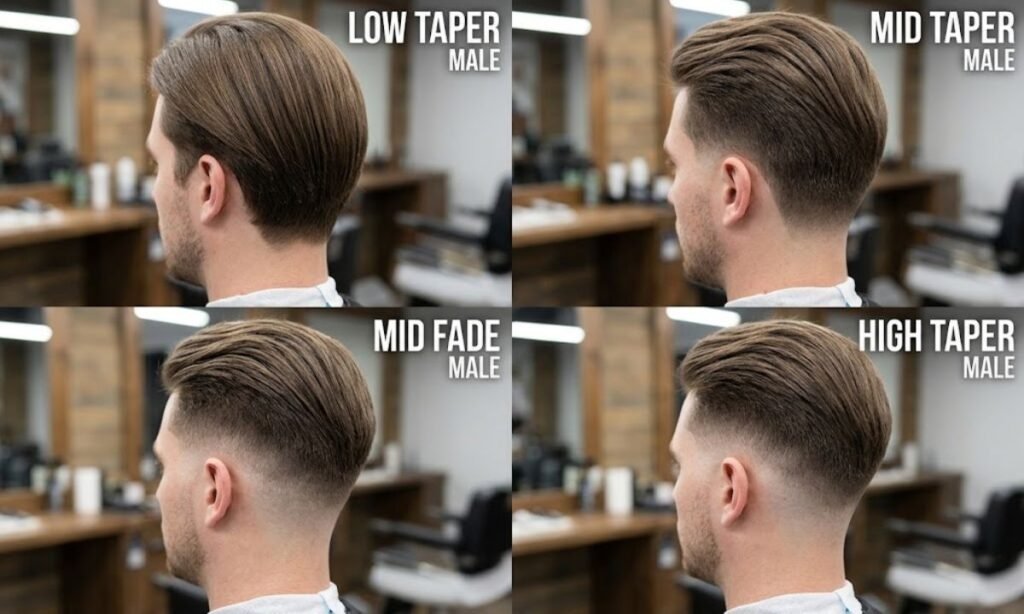
These cuts live on the same spectrum, and the main differences are starting height, contrast, and skin exposure. A low taper begins near the ear and neckline, so it looks soft. A high taper begins above the temples, so it looks bold and shows more skin.
The mid taper sits in the middle, which is why it’s so popular. It works at the office and at a Saturday game. Here’s a quick comparison:
| Cut | Starting height | Contrast | Best for |
|---|---|---|---|
| Low taper | Around the ears and nape | Low | Natural, subtle looks |
| Mid taper | Temple level | Medium | Most hair types and jobs |
| High taper | Above the temples | High | Sharp, bold looks |
| Mid fade | Temple level, shorter finish | High | Guys who want a skin finish |
A taper fade vs regular fade debate also pops up. A taper leaves length and focuses on the hairline, sideburns, and neckline. A regular fade blends deeper, often to skin. A drop fade curves behind the ear, so it’s a different shape altogether.
Which should you choose?
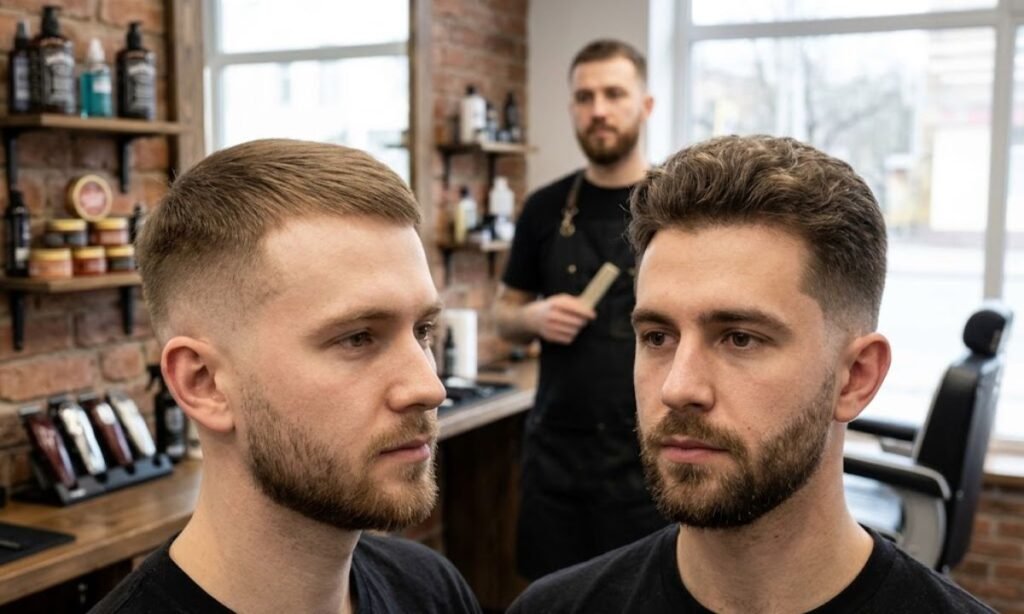
Pick a low taper if you want the gentlest grow-out and a soft appearance. Choose a mid taper if you want balance and a cut that suits nearly everyone. Go high taper or mid fade if you want sharp appearance and don’t mind more upkeep.
If you have sensitive skin, thinning hair, or a receding hairline, start with a mid taper and a shadow finish. You can always tighten it next visit. That’s a low-risk way to test your haircut suitability.
You can also checkout this article as well Mid Taper Edgar Cut: Styles, Photos & Barber Guide
Frequently asked questions

What is a mid taper fade?
It’s a haircut where the sides taper gradually, starting at temple level and getting shorter toward the neckline and sideburns.
Does a mid taper fade work for white guys?
Yes. Hair texture and density matter more than ethnicity, so it suits straight, wavy, and curly hair.
Which hair types suit a mid taper fade?
Medium-density hair is easiest, but thick, fine, and curly hair all work with the right top length.
Can you get a mid taper without going down to skin?
Absolutely. Ask for a short-guard finish or shadow finish for a natural, less contrasty look.
Does a mid taper work with fine hair?
Yes. Keep some top length, add root lift, and use a lightweight cream or mousse.
What if you have a cowlick?
Leave extra crown length so the hair lays flat, and let your barber follow your growth direction.
What if you have a receding hairline?
Go with a soft blend, a longer fringe, or a side-swept top to soften the temple shape.
How long should the top be for a textured fringe?
About two to three inches works well for most people, cut with point cutting for movement.
How often should you refresh a mid taper fade?
Every two to four weeks, depending on how quickly your hair grows.
Which finish is best for sensitive skin?
A shadow finish or short-guard finish reduces scalp irritation compared with a close skin finish.
Which mid taper fade requires less styling?
A short, uniform top length with a natural finish is the easiest to manage.
Final Takeaways
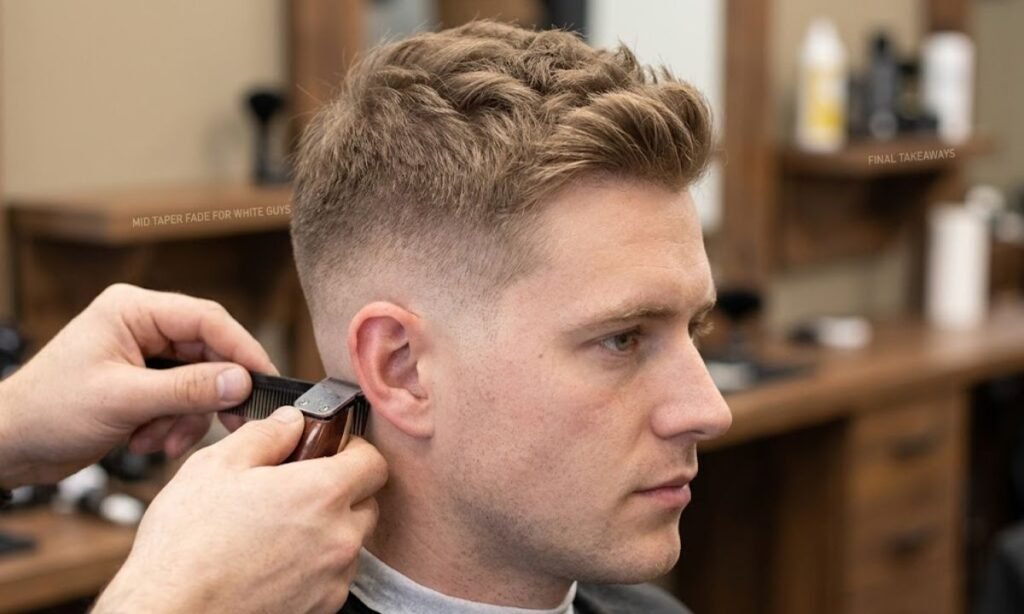
A mid taper fade is a smart, flexible haircut that suits most white guys. Match the taper height and shortest length to your comfort level, then choose a top that fits your hair type and routine. That’s really it.
Bring reference photos, speak up about your hairline and skin, and plan a refresh every few weeks. A little preparation makes the barber consultation painless.
So what’s your go-to cut right now? Drop a comment, tell us what your barber nailed or messed up, and share this with a friend who needs a new look. We’ll keep this guide fresh as styles and tips evolve.

I’m Michael Charles, the creator of MegaCrazes—your source for fresh hairstyles, sharp haircuts, and simple hair-care inspiration. Find your style. Own your look.