

Last updated: November 2026
You sit down in the barber’s chair and hear the dreaded question: “So, what are we doing today?” Your mind goes blank. You know you want a mid fade haircut, but is it the right height for you? Will it show your scalp? Will it look okay at work?
Maybe you saw one online and couldn’t tell if it was a skin fade, a taper, or something else. Maybe your last cut looked great for three days and then fell apart. Those worries are normal, and they’re easy to fix.
This guide gives you straight answers. You’ll learn what a mid fade is, how it compares with other fades, which mid fade styles suit your hair, and exactly what to say in the chair.
Quick Answer
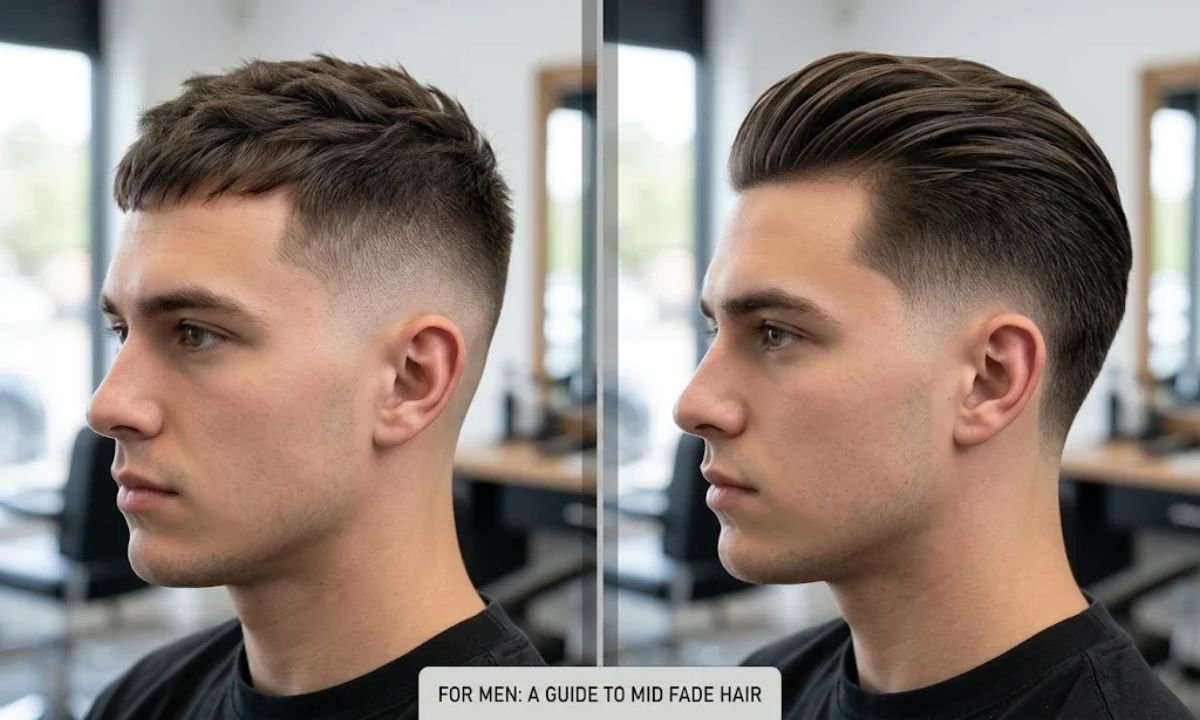
A mid fade haircut blends the sides and back from very short at the bottom to longer hair on top. The blend starts around the temple, roughly level with the top of your ear. There’s no hard line, just a smooth shift in length.
It sits between a low fade and a high fade, which makes it the safest pick for most people. It looks sharp without feeling extreme.
Here’s the one sentence you can read out to your barber: “Mid fade, number 1 on the bottom, blend up to a 3, leave the top long, natural neckline.” That covers height, guard size, and finish.
- Starting point: around the temple, just above the ear
- Bottom length: bare skin up to a number 2 guard
- Top: any length, from buzzed to a full pompadour
- Touch-up: every two to three weeks
What Is a Mid Fade Haircut?

A mid fade is a cut where hair gets gradually shorter as it moves down the sides and back of your head. The longest part sits on top. The shortest part sits near your ears and neck.
Think of a dimmer switch on a lamp. Instead of flipping from dark to bright, the fade blend moves in tiny steps. That smooth fade transition is the whole point of any fade.
The word “mid” tells you where the shift happens. It’s higher than a low fade and lower than a high fade. That balance is why mid fade hairstyles work on so many people.
Where Does a Mid Fade Start?
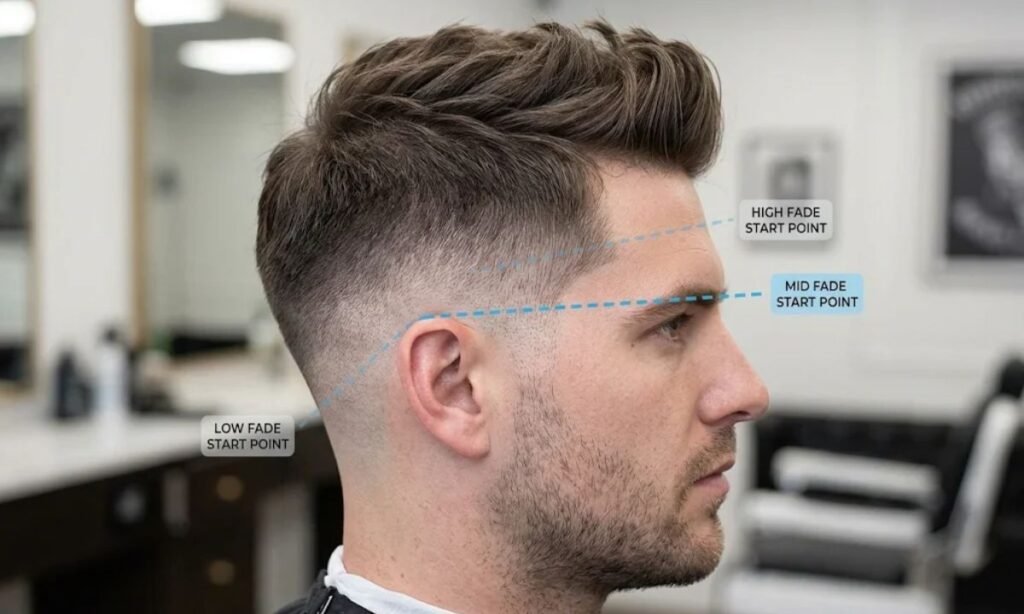
The mid fade starting point sits about an inch or two above your ear, right in the mid fade around the temple zone. Barbers often find it by picturing a line running straight back from the outer corner of your eye.
Below that line, the hair is clipped shortest. Above it, the blend begins and the length climbs toward the top. If the line sits too low, you’ve got a low fade. Too high, and you’ve drifted into high fade territory.
Ask your barber to show you the line in the mirror before the clippers come out. It takes ten seconds. It can save you three weeks of regret.
What Does a Standard Mid Fade Look Like From the Back?

From behind, a standard mid fade from the back looks like a clean horseshoe. The blend wraps around your head at the same height on both sides and meets in the middle. It should feel even, never lopsided.
Then comes the bottom edge. A natural neckline follows your hairline as it grows, so it looks softer and grows out gently. A tapered neckline fades down to nothing, which looks clean but needs more upkeep.
Grab a hand mirror and check the occipital bone, that bump at the base of your skull. The fade shouldn’t step or gap around it. If it does, tell your barber before you leave.
Is a Mid Fade the Same as a Skin Fade?
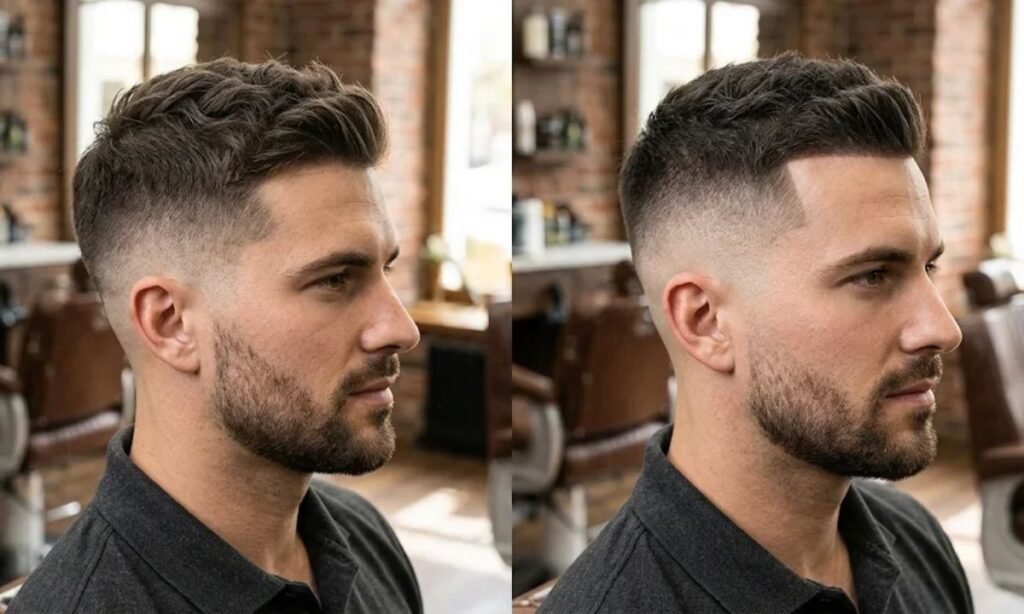
Not quite. “Mid” describes the height of the blend. “Skin” describes how low the bottom goes. A mid skin fade is a mid fade that drops to bare skin, but a mid fade can also stop at a number 1 or 2.
So every mid skin fade is a mid fade, but not every mid fade is a skin fade. It’s the same idea as squares and rectangles.
Can you get a mid fade without showing your scalp? Yes. Ask for a number 1 or 2 on the bottom instead of skin. You’ll still get the blend, just a softer one.
Mid Fade vs Low Fade vs High Fade
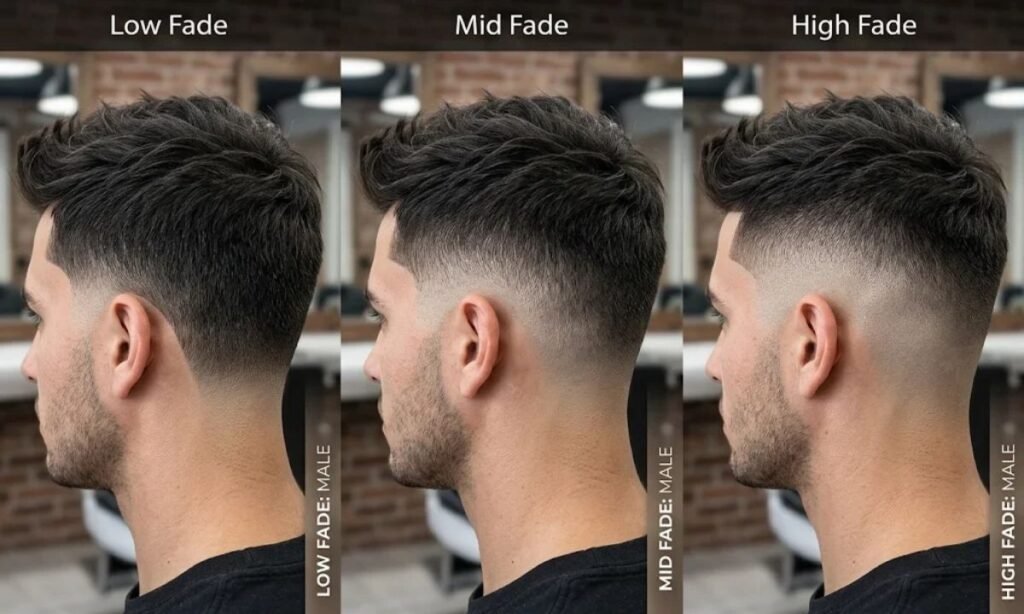
The difference between low, mid and high fade comes down to one thing: where the blend starts. A low fade starts near the ear. A mid fade starts around the temple. A high fade starts up near the top of the head.
Here’s a quick side by side so you can see it at a glance.
| Fade type | Where it starts | Overall feel | Best for |
|---|---|---|---|
| Low fade | Just above the ear | Subtle, conservative | First-timers, strict offices |
| Mid fade | Around the temple | Balanced, versatile | Most people, most hair types |
| High fade | Upper temple and higher | Bold, high contrast | Sharp styles, short tops |
That’s the whole mid fade vs low fade and mid fade vs high fade story in one table. The higher you go, the more dramatic the cut looks.
How Does Fade Height Change Your Overall Look?

How fade height changes your overall look is mostly about contrast. A high fade makes the top look taller and your head look narrower. A low fade keeps the outline rounder and softer.
A mid fade lands in the middle. You get definition without the military feel. As for how much side length a mid fade keeps, expect almost nothing below the line and about one to three inches where the blend meets the top.
Picture a guy with a round face and a full head of hair. A high fade stretches him upward but can feel harsh. A mid fade does a gentler version of the same trick, so it’s easier to wear every day.
Mid Fade vs Mid Taper: What Is the Difference?
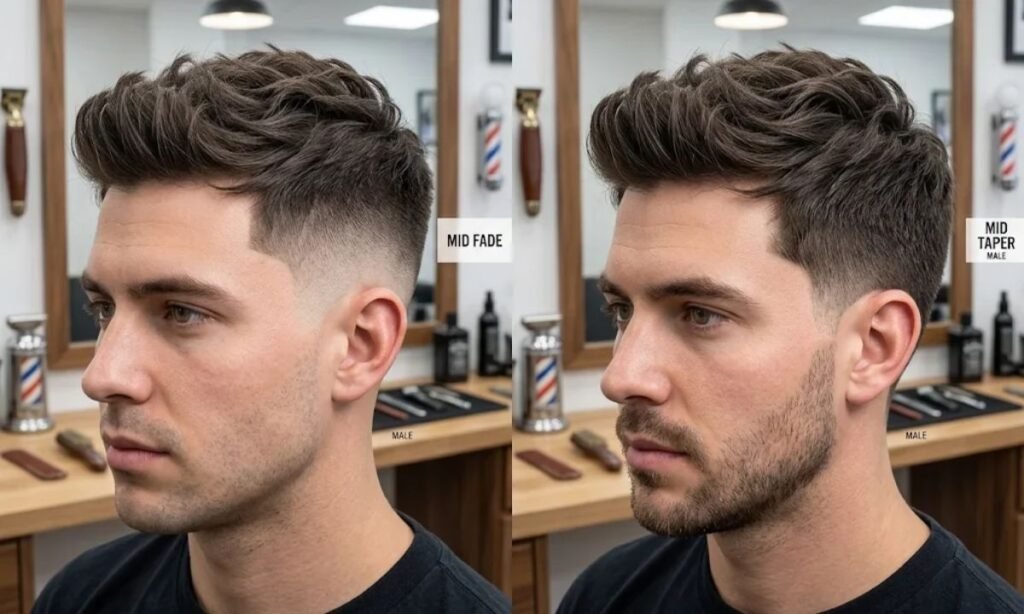
The mid fade vs mid taper difference is all about how short the hair gets. A fade goes very short, often to skin. A mid taper fade only trims slightly shorter and keeps some length at the bottom.
Tapers look neater and more traditional. Fades look sharper and more modern. Because a taper has less contrast, it also hides growth better, which helps with mid taper maintenance.
Want something quiet for the office? Go taper. Want the cut to get noticed? Go fade.
Which Fade Should You Choose?

Start with your daily life, not a photo. Which fade should you choose depends on your job, your hair, and how often you’ll visit the chair.
- Low fade: easiest to maintain, the most subtle look
- Mid fade: the best all-rounder for most faces and styles
- High fade: strong contrast, but it needs a refresh about every two weeks
Still unsure? Start with a mid. You can always go higher or lower next time, and your barber will see how your hair behaves.
Types of Mid Fade Haircuts

Types of mid fade haircuts change based on how low the bottom goes and how the blend curves around your head. The names sound technical, but each one is just a small tweak.
Mid Skin Fade vs Mid Shadow Fade

A mid skin fade goes all the way to bare skin, usually with a foil shaver or open blade. It’s the sharpest option and shows off the cleanest contrast.
A mid shadow fade stops a hair short of skin, often at a number 0 guard or 0.5. You see a soft shadow fade effect instead of a bare patch, which feels gentler.
The mid skin fade vs mid shadow fade choice is simple. Pick skin for maximum contrast. Pick shadow if you want sharp without the shine.
What Is a Mid Drop Fade?

A mid drop fade curves down behind the ear instead of running straight around the head. The line “drops” toward the nape and follows the shape of your skull.
It works well if you’ve got a rounded back of the head, because the curve adds shape that a straight drop fade can’t. It also looks great with longer tops.
What Is a Mid Burst Fade?
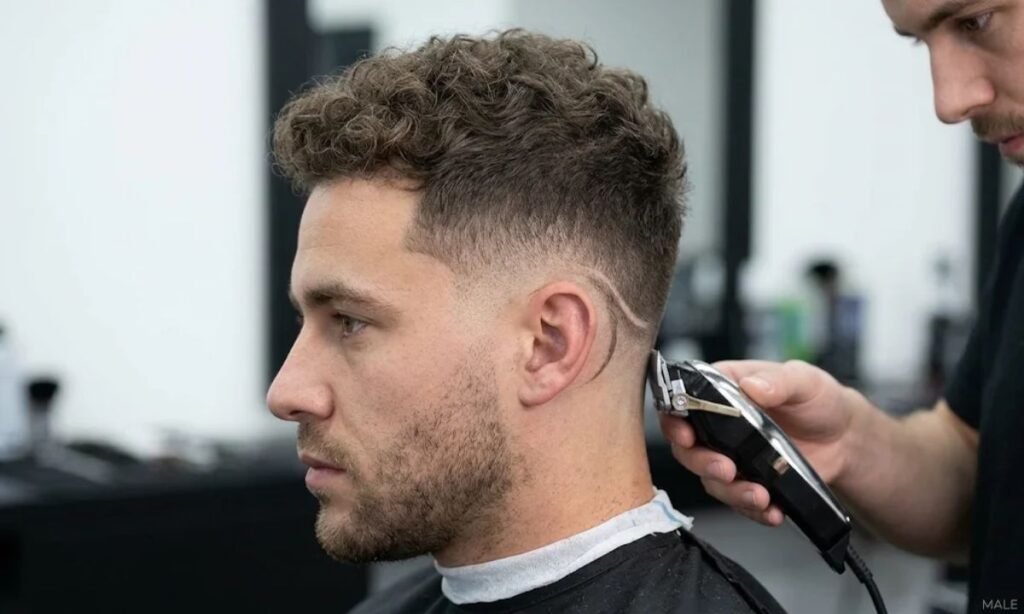
A mid burst fade fades in a half circle around the ear and leaves the hair at the back longer. The short hair appears to burst outward from the ear.
A burst fade pairs nicely with curls, short twists, and mohawk-style tops. If you want clean sides but some length at the neck, this is your cut.
Mid Temp Fade and Other Localized Variations
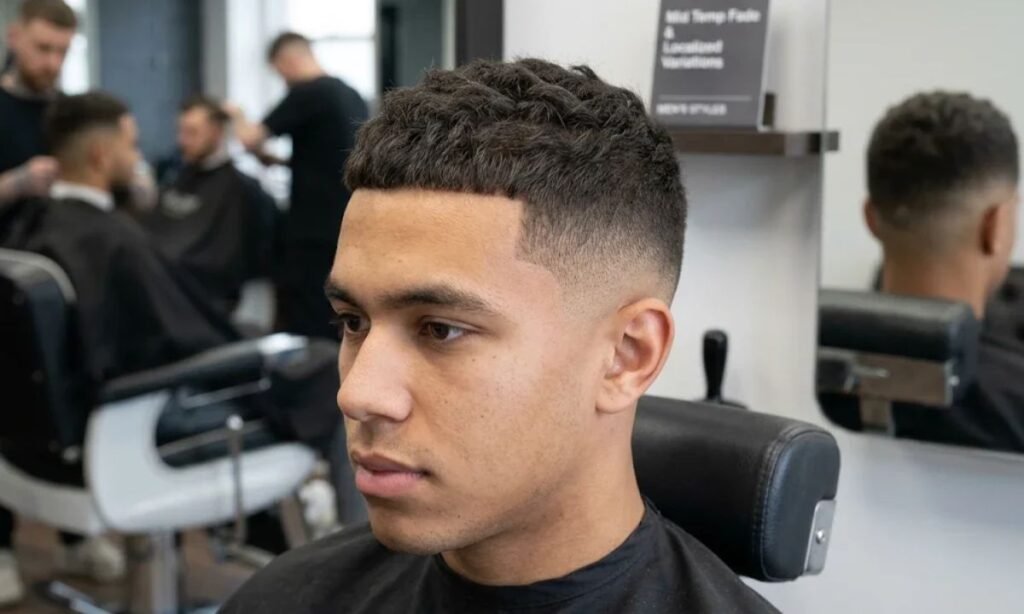
A mid temp fade only blends the temples and sideburns. The rest of the sides stay a little longer. Many people call it a temple fade.
These mid temp fade variations suit anyone who wants a cleaner frame without going shorter all over. Some barbers also fade just the nape or just the sideburns for a lighter touch.
Best Mid Fade Hairstyles and Top Combinations
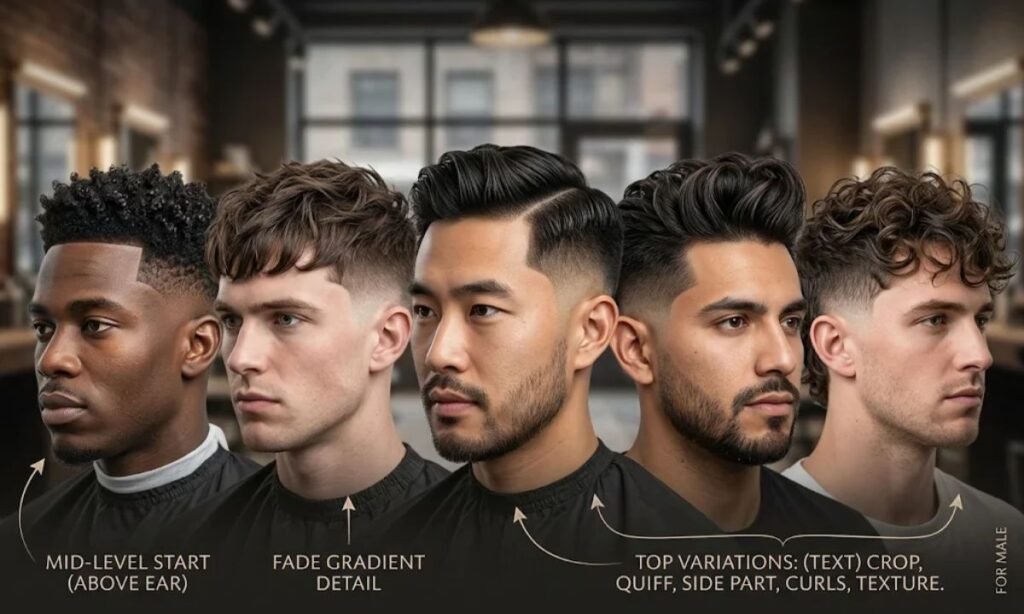
The fade is only half the haircut. The top gives it personality. Here are the best mid fade hairstyles and how they work with different hair.
Mid Fade With Textured Crop or French Crop
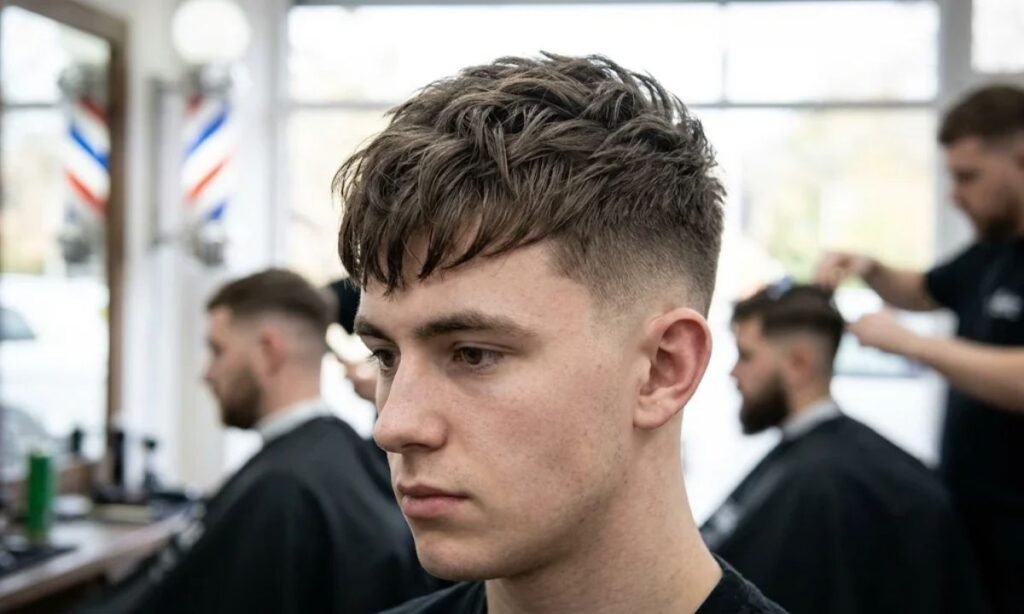
A textured crop keeps the top short and choppy, usually one to three inches, with a messy push forward. Mid fade with textured crop looks effortless and sharp, even when you’ve barely styled it.
The French crop is a close cousin with a shorter, blunt fringe haircut line. Mid fade with French crop suits straight or thick hair and needs almost no effort.
A pea-sized dab of matte clay and you’re out the door in two minutes.
Mid Fade With Curly Hair, Afro, Twists, or Waves
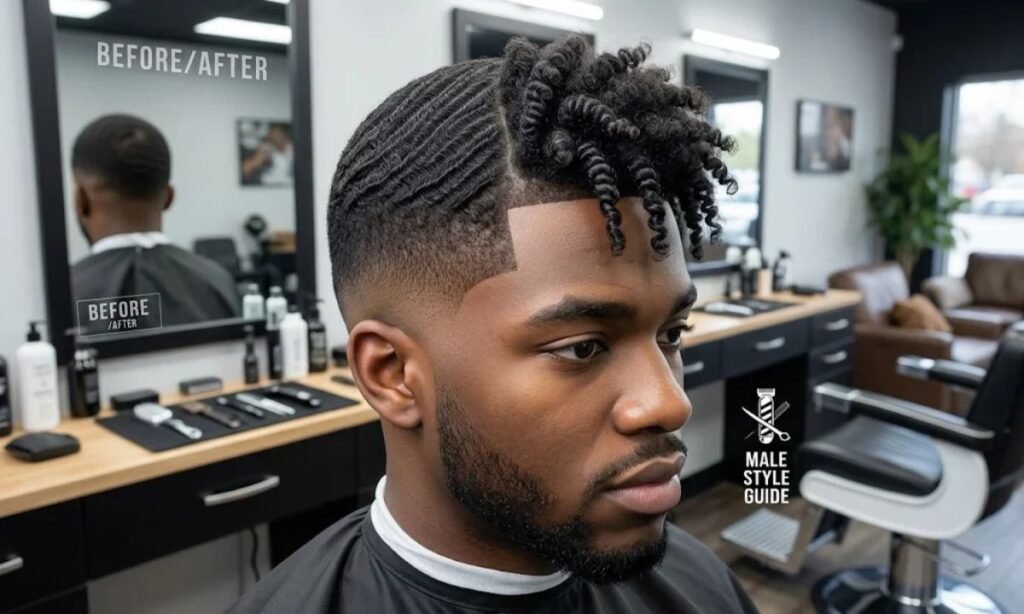
Mid fade with curly hair is a classic pairing. The tight sides let the curls on top show off. Keep the top at least two to three inches so the pattern has room to form.
For an Afro hairstyle, a mid fade keeps the shape clean and even. A high-top haircut with a mid fade gives you a bold retro outline. Mid fade with twists keeps the sides tidy so short twists look deliberate.
Mid fade with waves works beautifully too. Brushed waves stand out when the sides stay low and smooth, because nothing competes with the pattern on top.
Mid Fade With Quiff or Pompadour
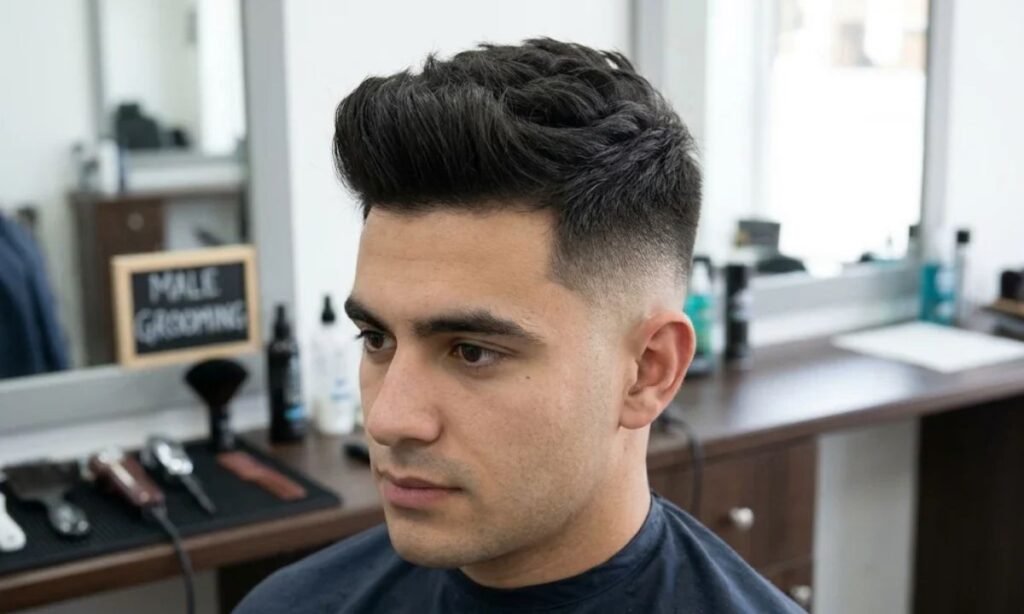
A quiff hairstyle lifts hair up and slightly back from the forehead. A mid fade keeps the sides tight so the volume looks taller. A little pomade and a round of blow-drying build the lift.
The pompadour is the bigger sibling with more height and sweep. You’ll want about four to six inches on top to pull it off.
Both need some morning effort. If you hate styling, skip these.
Mid Fade With Side Part or Comb-Over

A side part with a mid fade is the office-friendly choice. The sides stay clean, the part stays neat, and the whole thing works for weddings and weekdays alike.
A comb-over uses more length swept to one side. The fade gives it a modern edge, so it won’t read as old-fashioned. Ask your barber to define the part line with a trimmer if you want it crisp.
Mid Fade With Buzz Cut, Fringe, or Slick Back
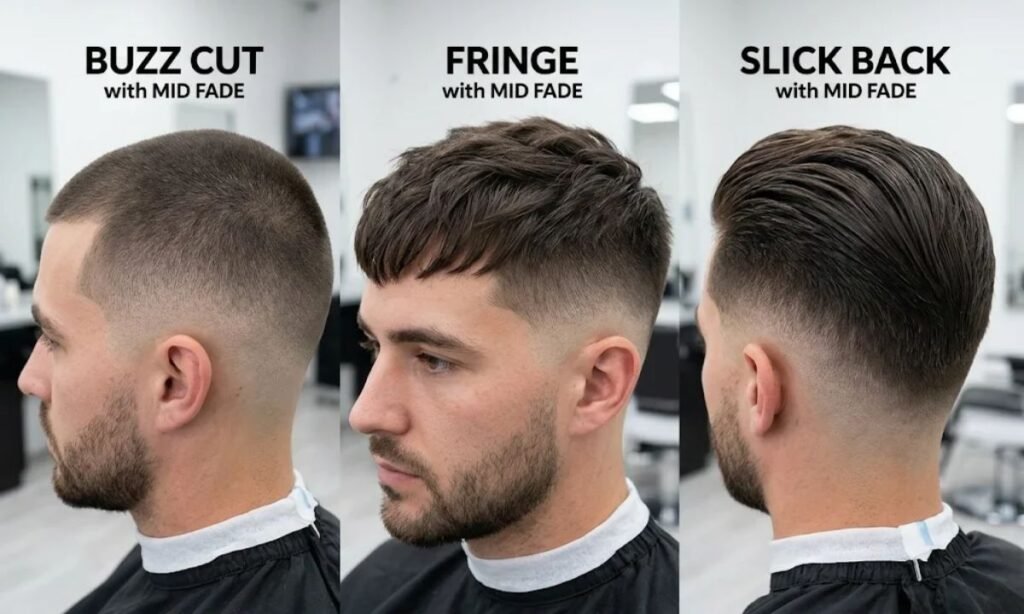
Mid fade with buzz cut means the top is clipped to one length, often a number 3 or 4, with the sides fading down. It’s the lowest maintenance combo on this list.
Mid fade with fringe suits straight hair, since the fringe sits over the forehead while the fade keeps everything else lean. Mid fade with slick back needs about three inches or more plus a bit of pomade.
Choose based on how many minutes you’ve got each morning.
Mid Fade With Different Beard Styles
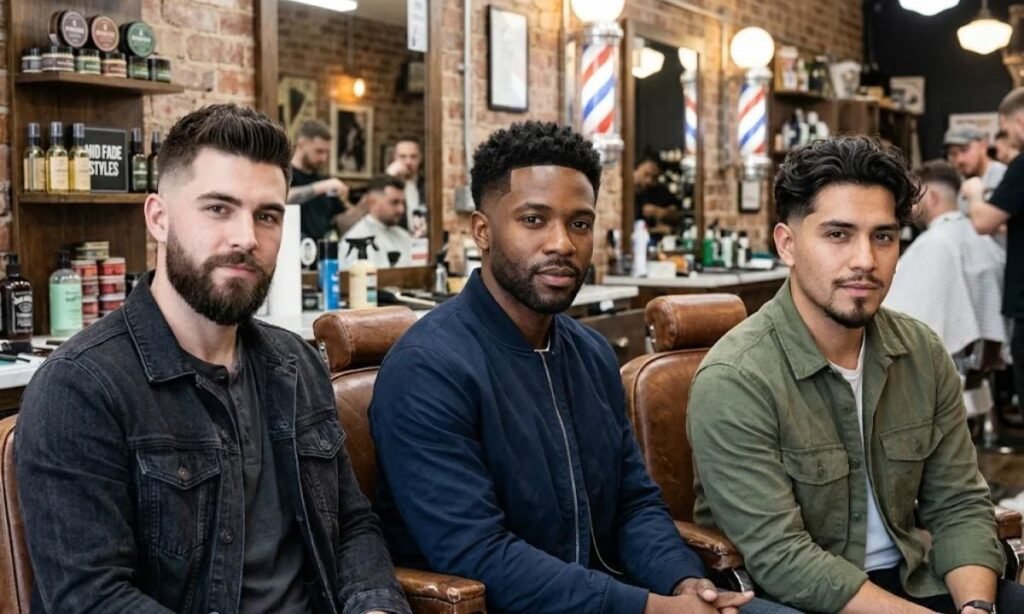
So, can you combine a mid fade with a beard? Absolutely. In fact, a good beard blend makes the whole cut look finished. The trick is connecting the hair fade and the beard so they flow as one.
Mid Fade With a Short Stubble Beard

Stubble and a mid fade is the easiest combination. Keep the stubble around one to three millimeters and let it melt into the sideburns. The fade and the stubble should look like one continuous gradient.
Ask your barber to blend the stubble up into the fade, not stop it at a hard edge. This is where most people get a “floating beard” look that feels off.
Mid Fade With a Full Beard and Clean Sideburn Transition

A full beard needs a clean handoff at the sideburn. The fade should flow into the beard line smoothly, without a visible gap or step.
The mid fade helps because it ends around the temple, which lines up nicely with where the beard starts climbing. Ask for the beard to be tapered up into the sideburns so the transition looks natural.
How to Match Beard Length With Mid Fade Height
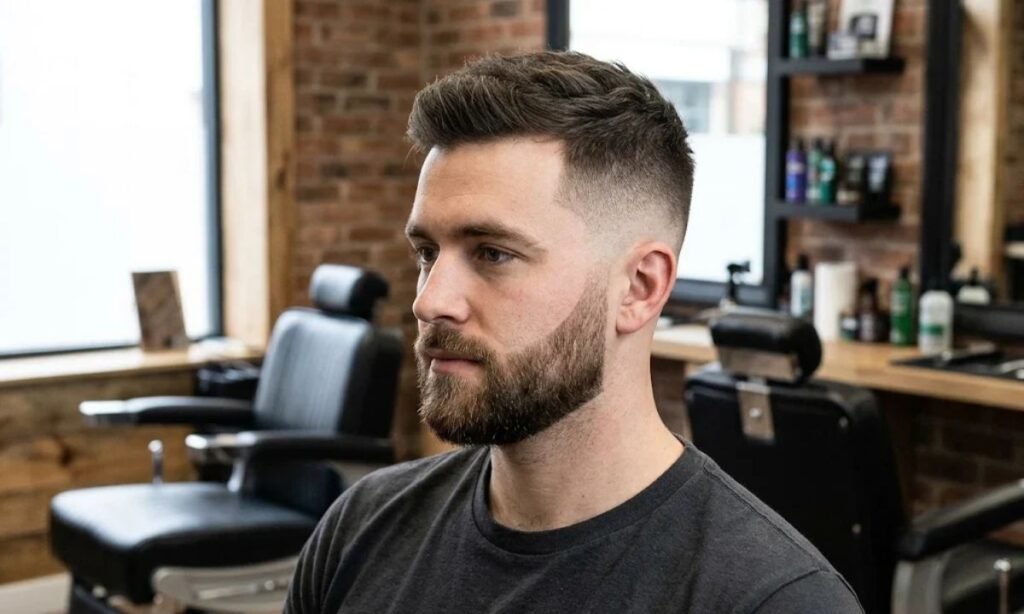
Here’s a simple rule. The longer your beard, the more your fade should keep some length too. A thick beard with a bare skin fade can look top-heavy and unbalanced.
Skin fade plus short stubble looks crisp. A mid taper fade plus a full beard looks classic. Tell your barber what you’re going for, and they’ll match the guard sizes.
Is a Mid Fade Right for Your Face Shape and Hair Type?
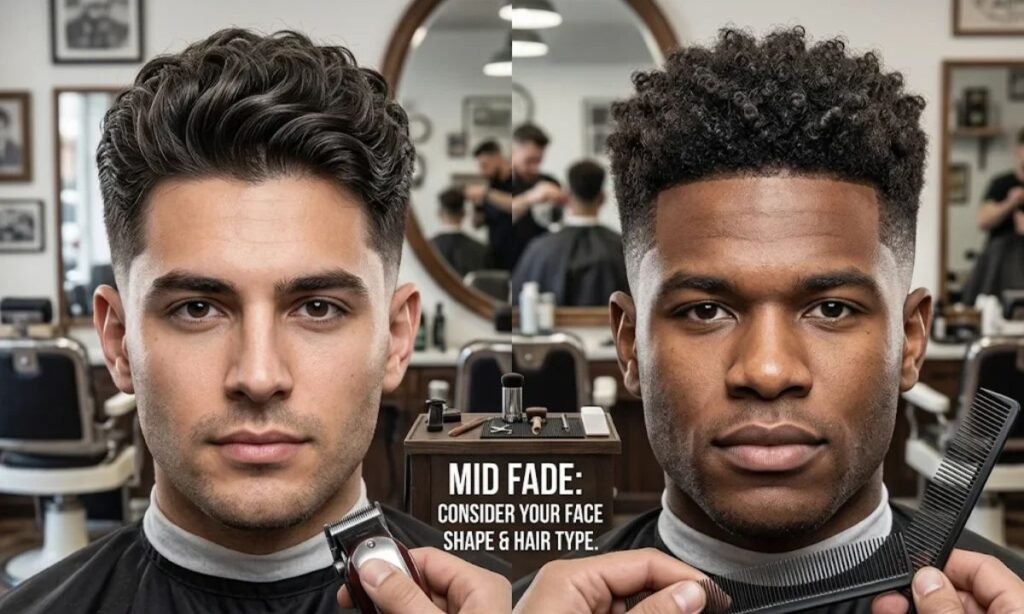
Most people can wear a mid fade. The real question is which version and which top. Your face shape, head shape, and hair type decide the details.
How to Choose a Mid Fade for Your Face Shape
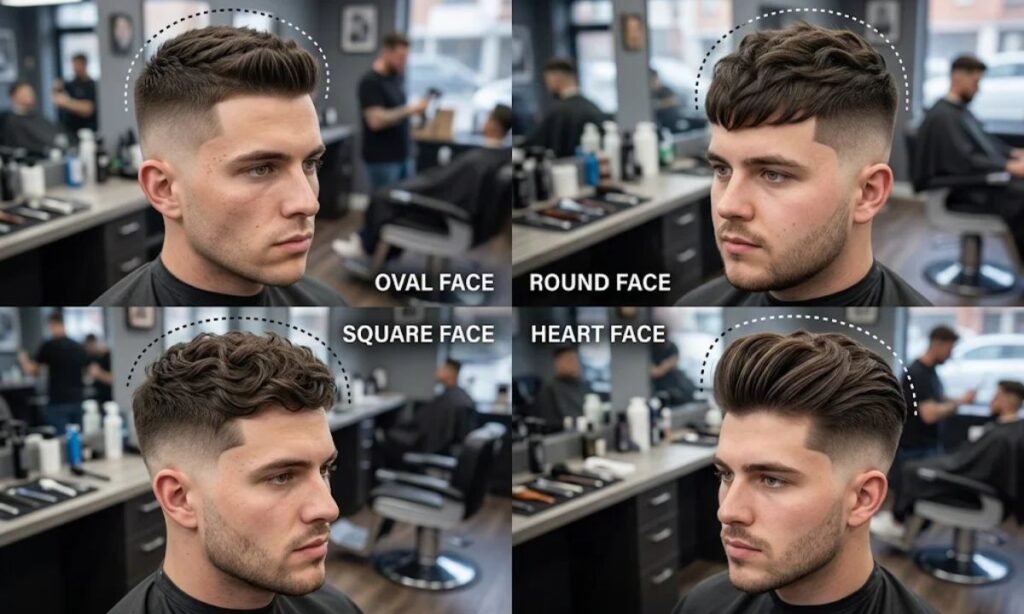
Start with this quick guide to is a mid fade suitable for your face shape.
- Best mid fade for round face: pair it with a tall, textured top to add height and length.
- Best mid fade for oval face: nearly everything works, so pick based on hair type.
- Best mid fade for square face: a skin fade with a textured crop highlights your jawline.
- Best mid fade for long face: keep the top short or add a fringe to avoid extra height.
- Best mid fade for diamond face: a side part or fringe balances wide cheekbones.
Your head shape matters too. If you’ve got flat spots, a slightly longer top hides them. Don’t stress, though. Any of these can be adjusted in the chair.
How Hair Texture, Density, and Growth Patterns Affect a Mid Fade
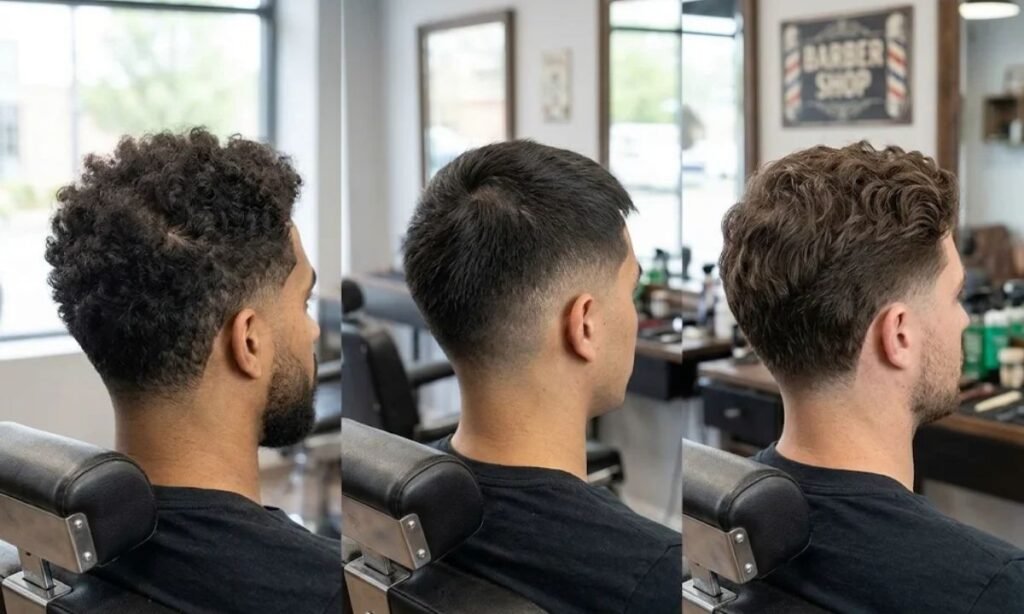
How hair texture affects a mid fade is bigger than most people expect. Hair texture and hair density change how the blend looks and how long it lasts. Let’s break it down.
Straight and Wavy Hair

Mid fade for straight and wavy hair is the easiest to blend because the strands lie flat. You’ll see the cleanest gradient with straight hair. Wavy hair adds a bit of body that gives the top natural movement.
Use a light styling paste or matte clay and you’re done.
Curly and Coily Hair

Mid fade for curly and coily hair looks great because the contrast between tight sides and bouncy top is dramatic. Curly hair and coily hair also hold a fade longer than straight hair, since the shape grows out fuller and softer.
Use a curl cream and a leave-in conditioner to keep the top defined and hydrated.
Thick, Fine, or Thinning Hair

Mid fade for thick hair helps remove bulk from the sides, which makes the top look neater. Mid fade for fine hair works best with a little more length on top to create fullness.
Mid fade for thinning hair can also be flattering since short sides make the top look denser. If you’ve got a receding hairline, a mid fade works well when paired with a textured crop or short fringe. It draws attention away from the hairline.
Growth Patterns and Head Shape
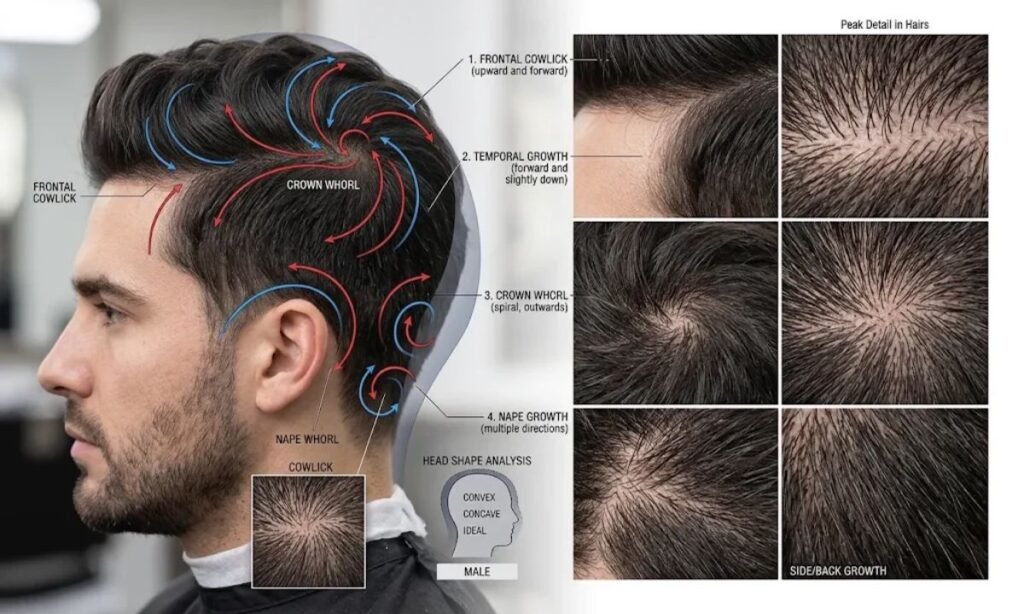
How growth patterns affect a mid fade matters at the crown and front. A cowlick pushes hair the wrong way, so leave a little more length there. A double crown needs a top that’s not too short, or it’ll spike up.
That’s why mid fade for cowlicks and double crowns works best with a barber who checks your hair growth patterns before clipping. Ask them to take a look first.
What Guard Sizes Are Used for a Mid Fade?

Guards sound technical, but they’re simple. They’re just plastic combs that slide over the clipper and control how much hair is left. Numbers go up as the hair gets longer.
Sizes can vary a little between clipper brands, so treat the numbers below as a guide, not a law.
Which Clipper Guard Number Creates a Classic Mid Fade?
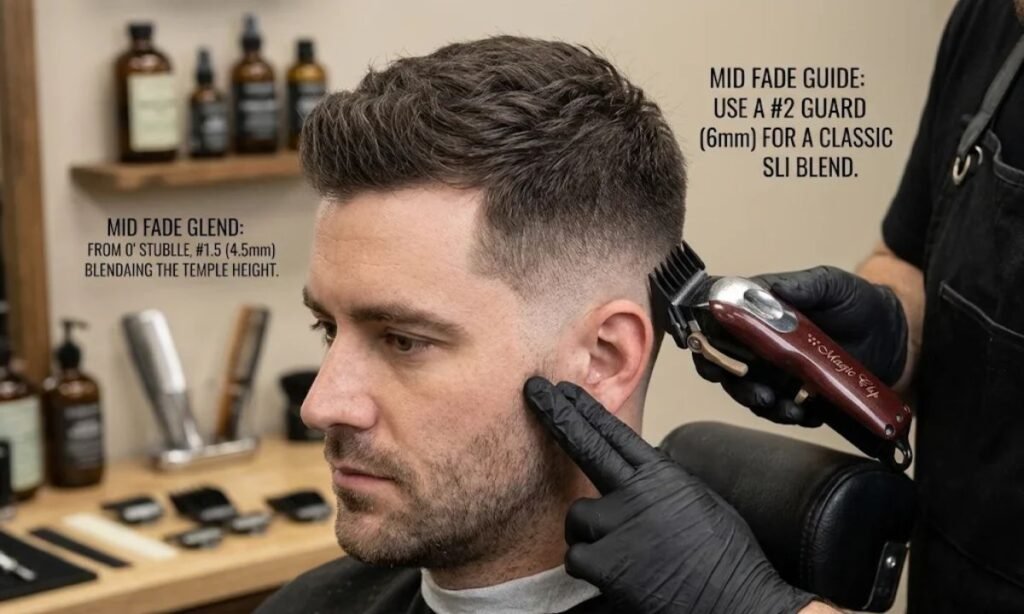
A classic mid fade usually starts at a number 0 or 1 on the bottom, then steps up through a 1.5, 2, and 3 before reaching the length on top. Barbers usually blend between those steps by hand.
So do you need clipper guard numbers before visiting a barber? Not really. A good barber chooses guards based on your hair. But knowing a how to choose a clipper guard number basics helps you describe what you want.
Mid Fade With a Number 0, 0.5, 1, or 2 Guard
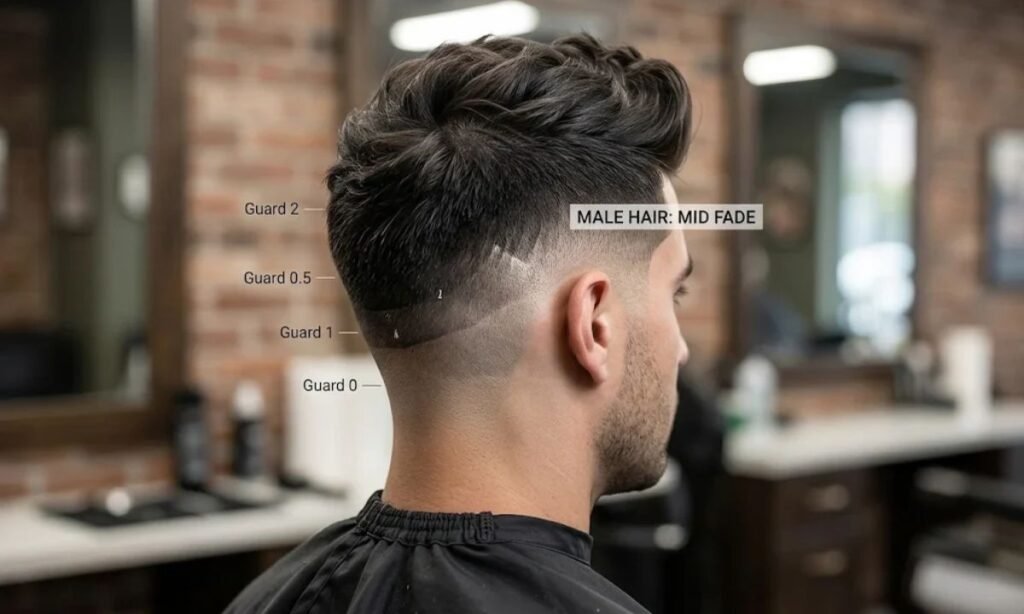
A number 0 guard leaves almost nothing, close to a skin finish. A number 0.5 guard leaves just a hint of stubble. A number 1 guard leaves about three millimeters, and a number 2 guard leaves about six.
Go with 0 or 0.5 for the sharpest look. Go with 1 or 2 if you want softer sides and less scalp showing. These haircut guard numbers are the main dial you get to turn.
How Does the Bottom Guard Number Affect Fade Contrast?

The bottom guard sets the fade contrast. A lower number against a longer top creates a sharp, dramatic gap. A higher number gives a softer, more natural look.
If you want something low drama, ask for a 2 on the bottom. If you want to see a clear line between short and long, ask for skin or a 0.
How Is a Mid Fade Blended and Finished?
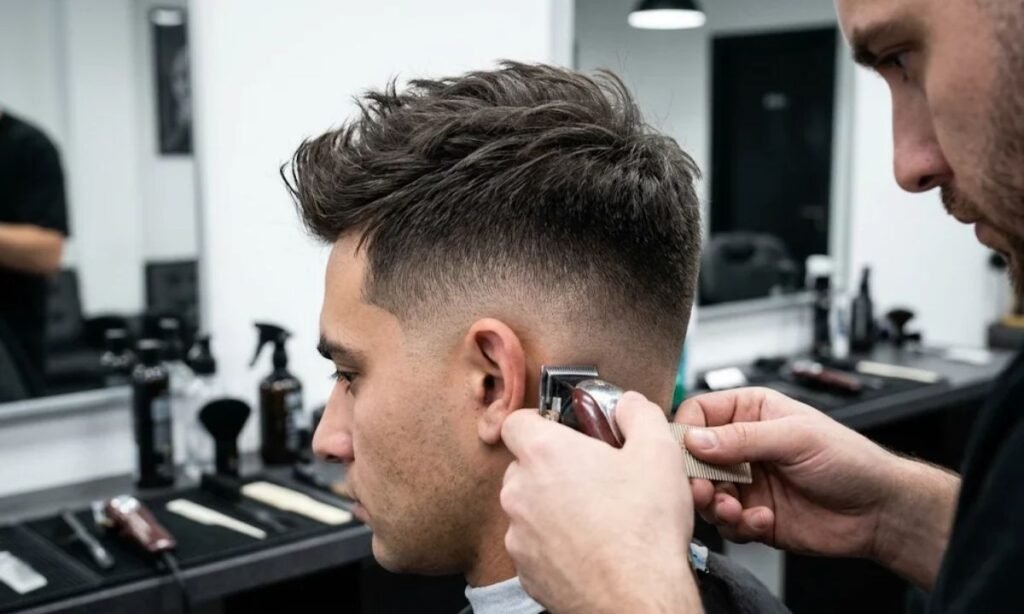
The blend is where a good barber earns their money. The sides don’t change length suddenly. They climb in tiny steps, and the finish makes the whole thing look polished.
What Creates a Smooth Transition Between the Sides and Top?

A smooth fade transition comes from using several guard sizes and moving the clipper in a flicking motion at the edge of each zone. That softens each boundary until the steps disappear.
Good barbers also use a comb to check as they go. If you can see a stripe in the mirror, the blend isn’t done yet.
How Do Barbers Remove Dark Spots and Visible Fade Lines?

Dark patches or lines usually show where two guard lengths meet without enough blending. Barbers fix this by going back over the area with a lighter guard and a lifting motion.
If you notice a line after your cut, politely say so. A skilled barber will fix it in a minute.
How Should the Temple Area and Sideburns Be Finished?
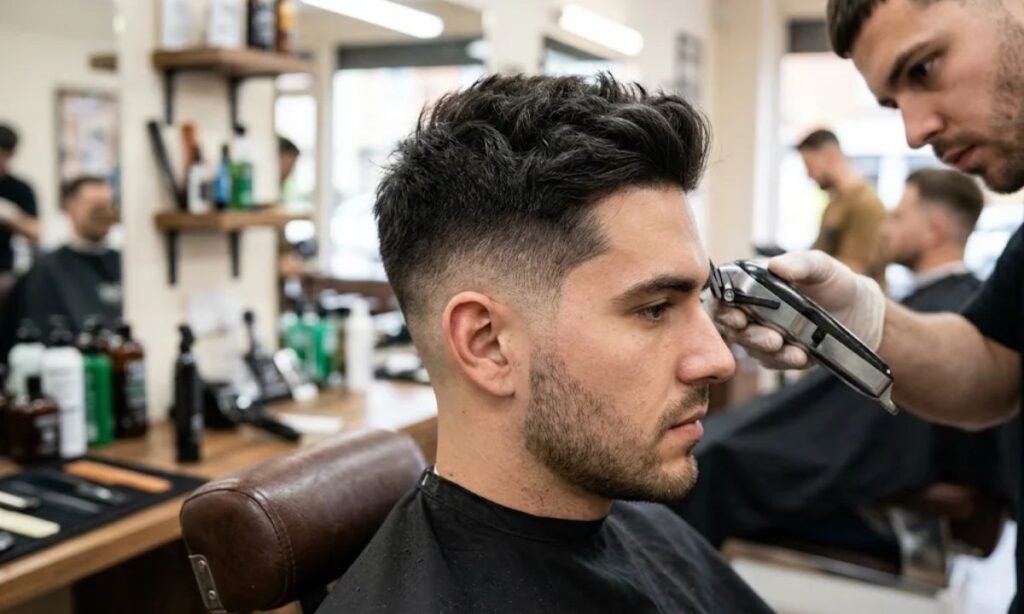
The temple and sideburns frame your face, so the finish matters. A clean edge with a trimmer makes the cut look sharp. A softer, natural edge looks more relaxed.
Decide whether you want a crisp line or a gentle one, and say so before the trimmer comes out.
How to Ask Your Barber for a Mid Fade
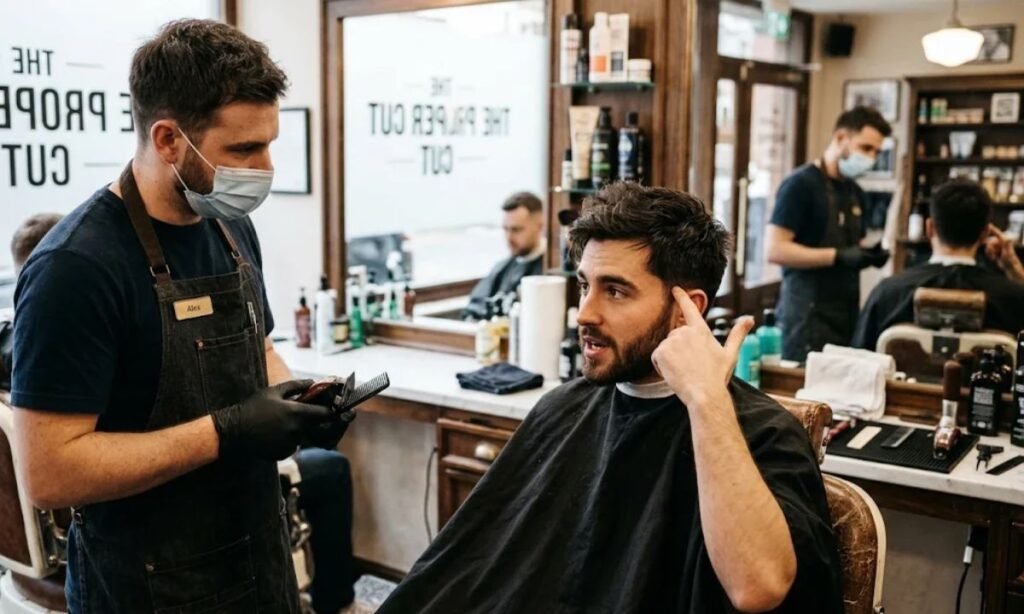
Knowing how to ask your barber for a mid fade is half the battle. Most bad fades come from vague requests, not bad barbers. A few clear details change everything.
You don’t need barber slang. You just need to describe what you see in your head in plain words.
What Details Should You Specify to Your Barber?
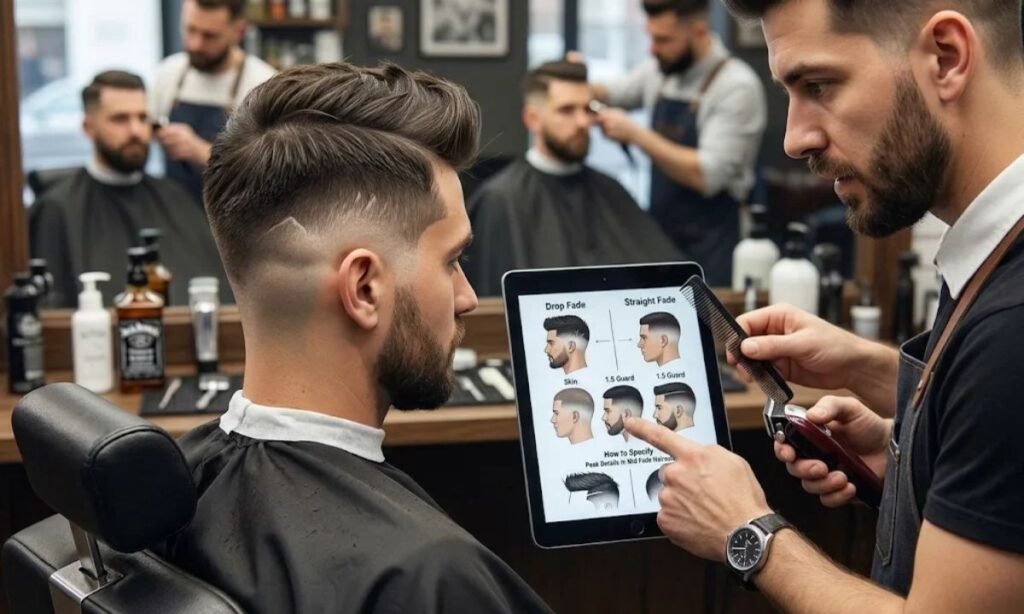
What details should you specify to your barber? Cover these four things and you’ll almost always get the cut you pictured. It’s a quick checklist for how to choose the right fade height and finish.
- Fade height: “mid fade, starting around the temple”
- Bottom length: “skin” or a number like 0, 0.5, 1, or 2
- Top length and style: “two inches, textured, pushed forward”
- Neckline and edges: “natural neckline, soft temple edges”
Add how you style your hair each morning. A barber who knows you spend two minutes with clay will cut differently from one who thinks you use a blow dryer.
What Should You Say When Requesting Different Mid Fade Styles?

Here’s how to explain a mid fade to your barber for each version. Keep it short and specific, and you’ll be fine.
- What to say when requesting a mid skin fade: “Mid skin fade, down to the skin, blend up to a number 2, leave about three inches on top.”
- What to say when requesting a mid drop fade: “Mid drop fade, curve it behind the ear, number 1 at the bottom.”
- For a mid taper: “Mid taper, keep some length at the bottom, natural neckline.”
If you’re not sure which version you want, say that out loud. A good barber will talk it through with you before they touch the clippers. This is called a barber consultation, and it’s free.
How to Use Reference Photos Effectively
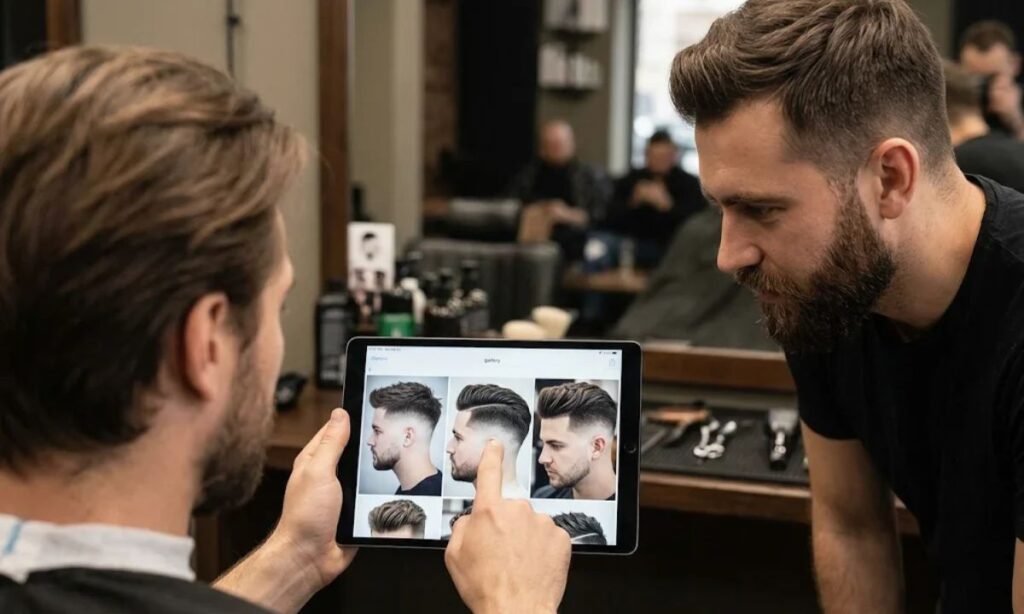
A barber reference photo is the fastest way to avoid confusion. Show two or three pictures from different angles, including the back and side. Front-only photos hide the part that matters most.
Pick photos of people with hair like yours. A fade on thick straight hair won’t look the same on fine curls. Then tell your barber what you like and what you’d change, such as “I like this fade but I want a bit more length on top.”
How to Style a Mid Fade at Home
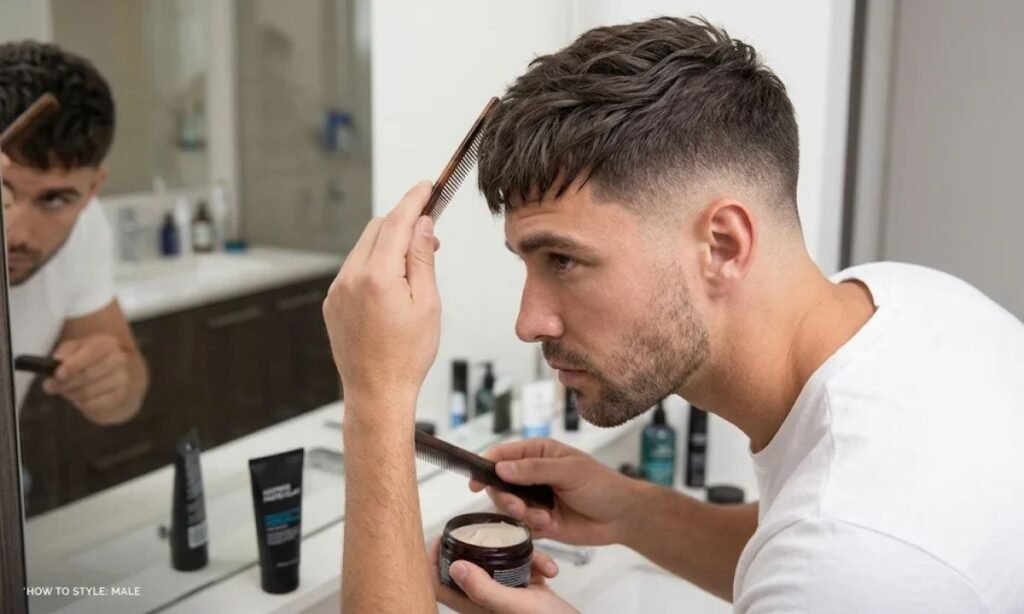
A great cut still needs a little help from you. The good news is that a mid fade doesn’t demand much. Five minutes and the right product will do it.
The key is matching your product to your hair, not to the hype on the bottle.
Which Styling Products Work Best With a Mid Fade?
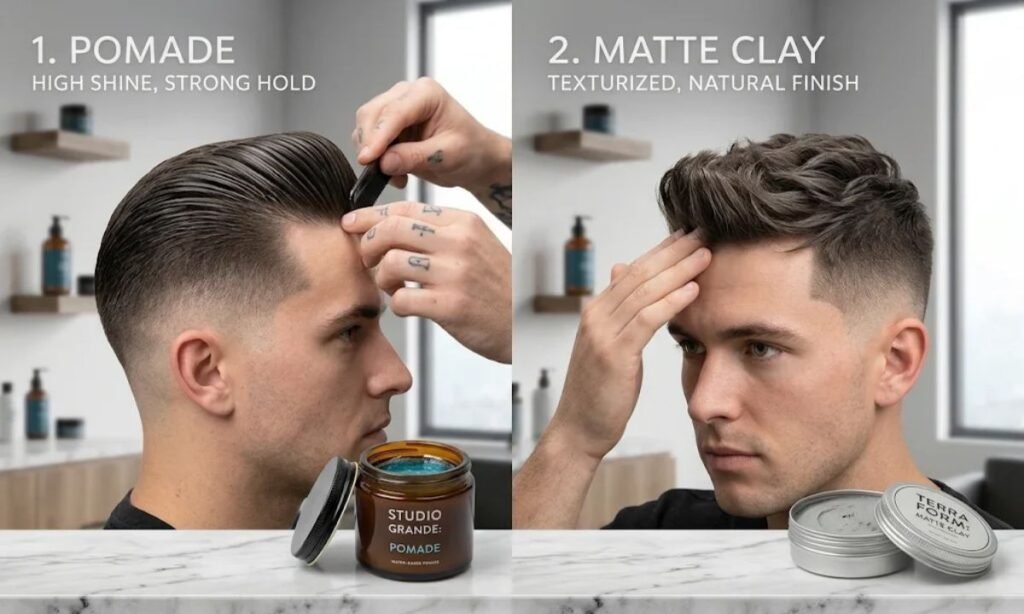
The best styling products for a mid fade depend on your top. Here’s a simple cheat sheet for hair styling products.
| Product | Best for | Finish |
|---|---|---|
| Matte clay | Textured crop, French crop, buzz tops | Dry, natural, strong hold |
| Styling paste | Short to medium straight hair | Light, flexible |
| Pomade | Quiff, pompadour, slick back, side part | Shine, strong hold |
| Curl cream | Curly, coily, wavy hair | Soft, defined curls |
| Sea salt spray | Fine hair, messy tops | Volume, beachy texture |
| Leave-in conditioner | Dry or curly hair | Moisture, less frizz |
Start with a pea-sized amount. You can always add more, but you can’t take it back out without washing your hair.
A Simple Daily Mid Fade Styling Routine
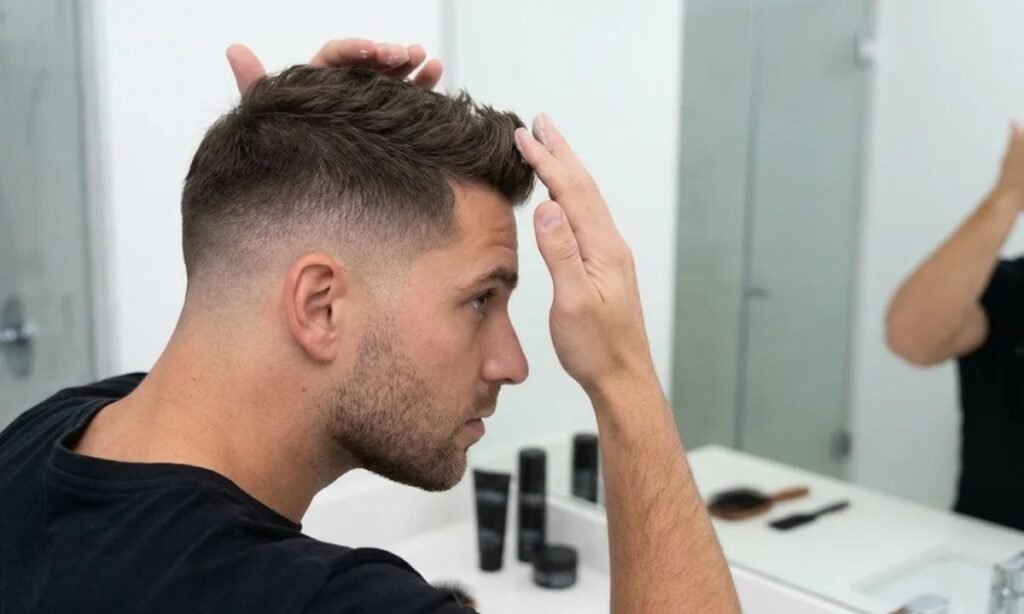
Here’s a quick daily mid fade styling routine that takes about five minutes.
- Dampen your hair. Towel dry so it’s slightly wet, not dripping.
- Add a base. Use sea salt spray for volume or leave-in conditioner for curls.
- Blow-dry. Dry the top in the direction you want it to sit, using your fingers or a brush. This is where blow-drying makes a quiff or pompadour stand up.
- Apply product. Rub a small amount between your palms and work it through from the back to the front.
- Shape it. Push the top forward, up, or back, depending on your style.
Don’t forget the sides. A tiny bit of moisturizer on a skin fade keeps the area from looking dry or shiny in the wrong way.
How Often to Get a Mid Fade and Maintain It

Fades are high-maintenance by nature. The short sides grow back quickly, and the contrast fades with them. Plan ahead and the cut stays sharp longer.
How Often Should You Get a Mid Fade Touch-Up?
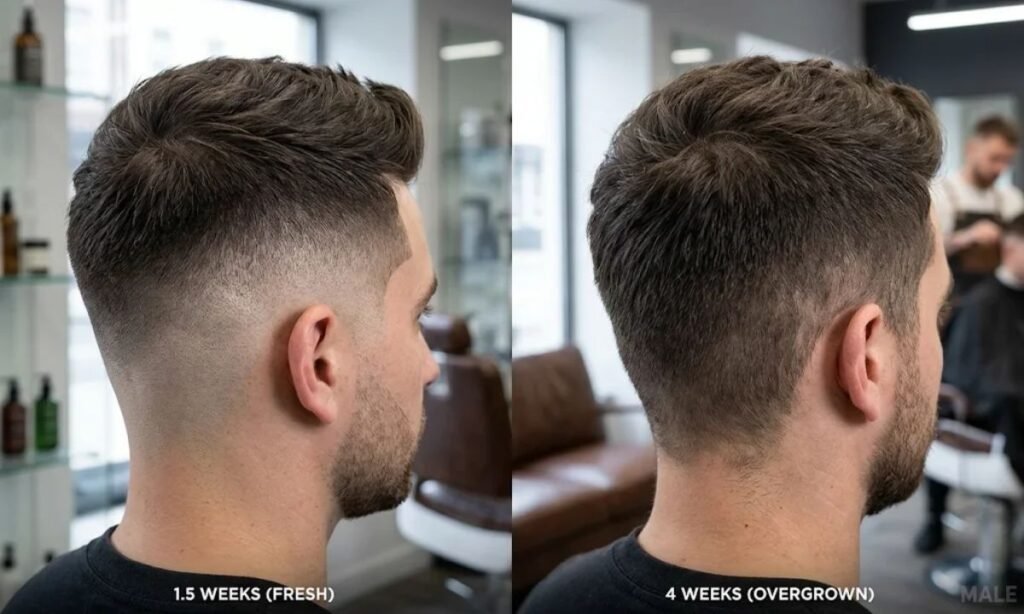
How often should you get a mid fade touch-up? For a mid skin fade, plan on every two weeks. For a softer fade with a number 1 or 2 on the bottom, three weeks is usually fine. That’s the typical haircut frequency for most people.
Mid skin fade maintenance is the most demanding because bare skin shows regrowth fast. Mid taper maintenance is easier since the contrast is lower. A fade touch-up is usually quick and cheaper than a full cut.
Ask your barber whether they offer a quick sides-and-neckline refresh between full cuts. Many do.
How to Maintain a Mid Fade Between Barber Visits

How to maintain a mid fade between barber visits is mostly about keeping the neckline tidy and the top styled. A few small habits make a big difference.
- Wash and condition regularly so the top looks healthy.
- Use a trimmer carefully on the neckline only, never on the fade itself.
- Keep your styling products consistent, so the top keeps the same shape.
- Book your next appointment before you leave the chair.
Resist the urge to “fix” the blend at home. One wrong pass with clippers can leave a visible patch that takes weeks to grow out.
What If Your Scalp Gets Irritated After a Skin Fade?

A close shave can leave your scalp red, itchy, or bumpy. That’s usually scalp irritation or razor bumps, and it’s common after a skin fade, especially on curly or coily hair.
Here’s how to prevent scalp irritation after a skin fade. Ask your barber to shave with the grain, use a clean blade, and finish with a soothing aftershave balm that’s alcohol free. At home, keep the area clean and moisturized.
If the irritation lasts more than a few days or looks infected, talk to a dermatologist. Switching to a number 0 or 0.5 instead of a bare finish is another easy fix.
How Does a Mid Fade Grow Out Over Time?

Every fade has a life cycle. It starts crisp and ends up looking like a regular haircut. Knowing the timeline helps you plan your visits.
Here’s how long a mid fade takes to grow out and what to expect along the way.
What Does a Mid Fade Look Like After One, Two, and Three Weeks?

Week one: The fade is still sharp. You may see a little fuzz around the ears and neckline, but the blend looks great.
Week two: The bottom has filled in. The contrast is softer, and the neckline looks slightly rough. This is when many people book a touch-up.
Week three: The fade looks more like a taper. The fade grow-out is obvious, and the shape starts to lose definition. By week four, the blend is mostly gone.
Does a Mid Fade Lose Its Shape as Hair Grows Back?

Yes, but how fast depends on your hair. Fast-growing, dense hair loses the shape sooner. Slow-growing or thinner hair holds it longer. Hair growth patterns play a part too.
The good news is that a mid fade grows out more gracefully than a high fade. The blend begins lower on the head, so the change is less dramatic from week to week.
When Should You Refresh the Fade Instead of Getting a Full Haircut?
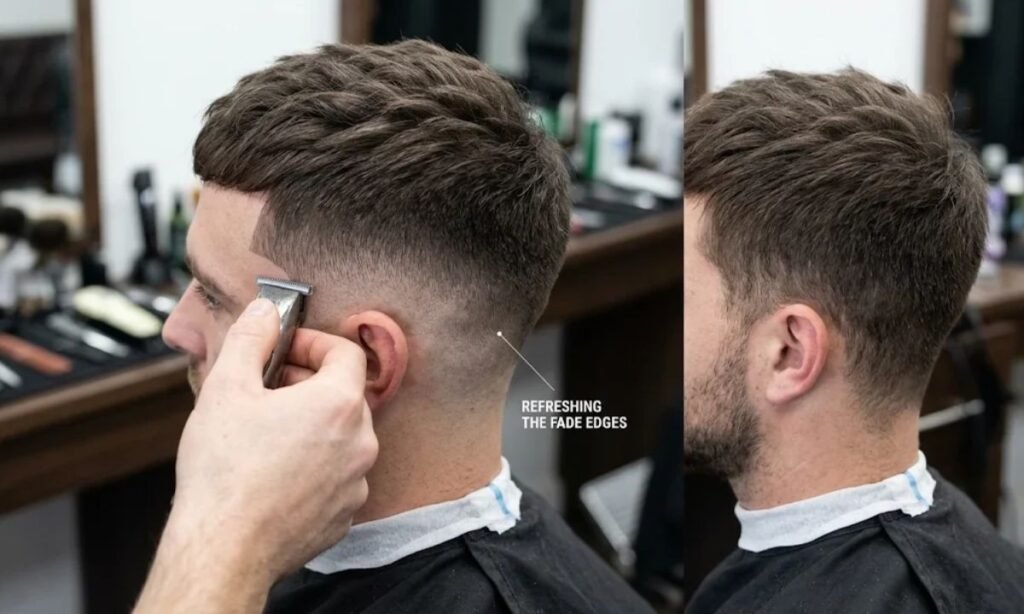
If the top still looks fine and only the sides and neckline have grown, a quick fade refresh is enough. It keeps the length on top and saves you time.
Get a full haircut when the top has lost its shape, or when you want to change your style. A good rule is one full cut for every two or three refreshes.
Common Mid Fade Haircut Mistakes to Avoid

Most common mid fade haircut mistakes are easy to avoid once you know what to look for. A few minutes of planning saves you weeks of annoyance.
Choosing the Wrong Height or Finish for Your Schedule

Choosing the wrong fade height is the top mistake. A high skin fade looks fantastic, but if you can’t visit a barber every two weeks, it looks messy fast. Match the cut to your calendar, not your Instagram feed.
Choosing the wrong fade finish is just as common. A bare skin finish looks sharp but needs regular upkeep. A number 1 or 2 finish is more forgiving. Be honest with yourself about how often you’ll go.
Ignoring the Back, Neckline, and Top Connection

Ignoring the neckline and back is where many fades fall apart. A great front can be ruined by a crooked or blocky back. Always check the back with a hand mirror before you pay.
Also, make sure the top connects smoothly with the fade. If there’s a hard step between the blend and the longer hair, ask your barber to “connect the top.” It’s an easy fix that makes the whole cut look professional.
You can also checkout this article as well: 30+ Oval Face Shape Haircuts for Men in 2026
Mid Fade Haircut Frequently Asked Questions
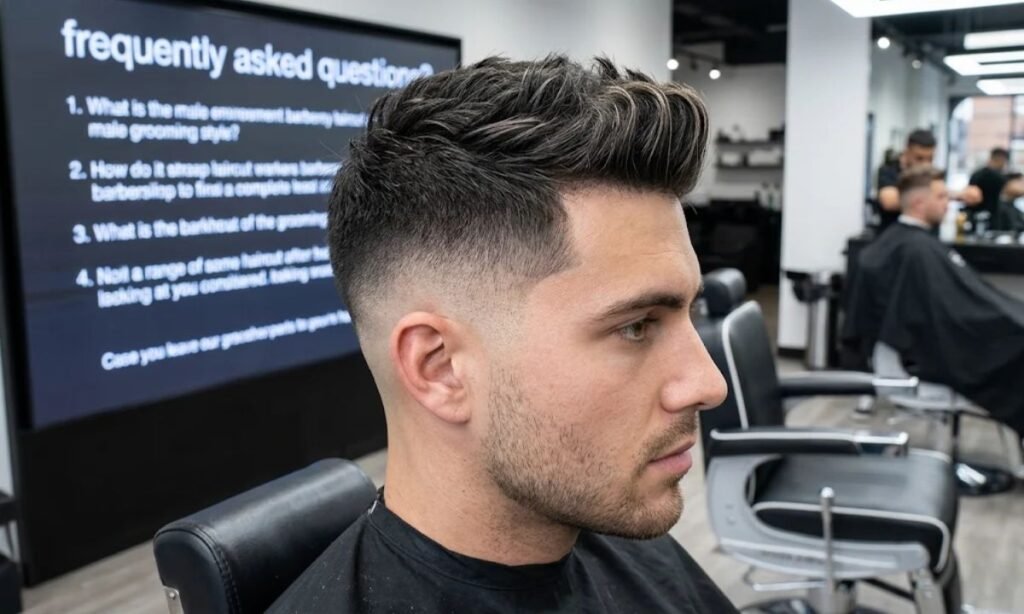
What is a mid fade haircut?
It’s a cut where the sides and back blend from short at the bottom to longer on top, starting around the temple. It sits between a low and a high fade.
Is a mid fade the same as a taper?
No. A fade goes shorter, often to skin, while a mid taper fade keeps more length and looks softer.
How often should I get a mid fade?
Every two to three weeks. Skin fades need more frequent visits than fades finishing at a number 1 or 2.
What guard numbers do barbers use for a mid fade?
Usually 0, 0.5, 1, and 2 on the bottom, stepping up to a 3 or 4 before the top. Your barber adjusts them to your hair.
Can I get a mid fade with a beard?
Yes. Ask your barber to blend the beard into the sideburns so the two look connected.
Does a mid fade suit curly or coily hair?
Very much. The contrast between tight sides and a textured top looks great, and curls hold the shape well.
How long does a mid fade take to grow out?
About three to four weeks before the blend is mostly gone. It starts to soften after the second week.
How do I stop razor bumps after a skin fade?
Ask for a shave with the grain, use a gentle alcohol free balm, and keep your scalp moisturized. Choose a number 0 finish if bumps keep coming back.
Final Thoughts on Mid Fade Haircut

A mid fade haircut works because it’s balanced. It’s sharp enough to look modern, soft enough to feel safe, and flexible enough to fit nearly any top. Whether you want a mid skin fade, a mid taper fade, or a mid drop fade, the same rules apply: know your height, know your bottom length, and tell your barber clearly.
Bring a few photos, check the back before you leave, and plan your touch-ups ahead of time. That alone puts you ahead of most people sitting in the chair.
Now it’s your turn. Which mid fade style are you thinking about trying? Drop a comment, share this guide with a friend who’s always unsure what to ask for, and tell us how your next cut turns out. We’ll keep this guide fresh with new tips as styles change.

I’m Michael Charles, the creator of MegaCrazes—your source for fresh hairstyles, sharp haircuts, and simple hair-care inspiration. Find your style. Own your look.