


Last updated: October 2026
You’re sitting in the barber’s chair and the question lands: “Taper or fade?” Your mind goes blank. You don’t want to look overdone, and you don’t want to walk out with a patch of bare scalp either.
That worry is normal. Most guys ask the same things. Will it look natural at work? Does it show more skin? How long will it last before I look shaggy? This guide answers all of it in plain words.
Quick answer
A low taper shortens the hair gradually around the sideburns and neckline, and it leaves most of the sides with visible length. A low fade drops much shorter, often down to skin, and starts just above the ear. Choose the taper for a soft blend and an easy grow out. Choose the fade for sharp contrast and a bold, clean look.
Still unsure? If you work in a conservative office or you hate frequent trims, start with the taper. If you love a crisp, modern shape and you don’t mind visiting the barber every two to three weeks, go with the fade.
The main difference

Here’s the simplest way to picture it. A taper is a gentle slope. A fade is a steep drop. Both move from longer hair on top to shorter hair at the bottom, but they differ in how short they go and how fast they get there.
A taper haircut usually stops at a #1 or #2 clipper guard, and it focuses on the sideburn taper and the natural neckline taper. The sides keep real hair, so the result looks soft. A fade haircut pushes lower, often to a skin fade or close to it, so the hair length gradient is much more dramatic.
That’s the whole story in two lines. Taper equals subtle. Fade equals visible. The rest of this article helps you decide which one suits your life.
What is a low taper?

A low taper haircut trims only the lower edges of your head. The barber shortens the hair around the ears, along the sideburns, and across the back of the neck. The sides above that stay at a normal, comfortable length.
Think of it like a tidy lawn edge. The grass in the middle stays full, and only the border gets neatened. That’s why a low taper fade (people use the terms loosely) looks so clean without shouting for attention.
Barbers often call this a classic men’s haircut because it has been around for decades. You’ll see it on office workers, teachers, and dads at school pickup. It’s the haircut people notice only when it’s missing.
What is a low fade?

A low fade haircut starts the blend just above the ear and curves around the back of the head. The hair gets shorter and shorter as it moves down, often reaching bare skin at the bottom. That’s the key trait: the contrast between the top and the sides.
A low skin fade goes all the way to zero. A shadow fade stops a hair short of skin, which leaves a faint dark shadow instead of a bald line. Both count as low fades, as long as the blend starts low.
People love this cut because it looks sharp in photos and in person. It frames the face and makes the top of your hair look thicker. The trade is that it needs more upkeep.
Low Taper Haircut Benefits

The biggest perk is subtlety. A low taper makes you look neat without looking like you just left the barber. That works well for professional men’s hairstyles and quiet workplaces.
It also forgives mistakes. Because the sides keep length, a slightly crooked line or a late trim doesn’t stand out much. You can stretch it to four or five weeks without feeling self-conscious.
Here’s what else you get:
- Softer look: no bare skin, so it feels gentle on the face.
- Easy grow out: the cut fades into longer hair without an awkward stage.
- Lower cost over time: fewer visits means fewer bills.
- Works with almost any top: from a comb over haircut to a textured crop haircut.
Low Fade Haircut Benefits

A low fade gives you definition. The line between hair and skin makes your head shape look intentional. If you want a sharp fade haircut that photographs well, this is it.
It also stays cooler in summer. Less hair on the sides means less heat around your ears and neck. That matters a lot in places like Karachi, Dubai, or Houston.
A few more reasons guys pick it:
- Bold contrast: your top hair stands out more.
- Modern vibe: it fits men’s modern hairstyles and current trends.
- Great for thick hair: it removes bulk where it puffs out.
- Flexible styling: it pairs with a quiff hairstyle, a curly top hairstyle, or a messy top hairstyle.
Low taper vs low fade at a glance

Sometimes a table says it faster than a paragraph. Use this one as a cheat sheet before your next appointment. Screenshot it if you like.
| Feature | Low taper | Low fade |
|---|---|---|
| Starting point | Sideburns and neckline | Just above the ear |
| Shortest length | #1 or #2 guard | Skin or #0 |
| Look | Soft, natural blend | Sharp, defined contrast |
| Skin showing | Little to none | More, especially a skin fade |
| Touch up every | 3 to 5 weeks | 2 to 3 weeks |
| Best for | Office, school, formal events | Style focused looks |
| Grow out | Easy and quiet | Needs a bridge stage |
This low taper vs low fade comparison covers most of what you need. The details below fill in the gaps.
Which one looks more natural, and where each works best

If you ask which haircut looks more natural, the taper wins. It keeps the sides close to your real hair length, so nobody can say exactly where the barber stopped. That natural blended haircut feel suits daily life.
If you ask which haircut looks sharper, the fade takes the trophy. The defined hairline and bare skin create crisp edges that pop. It works best when you want to stand out a little.
So where does each belong? Use a taper for interviews, client meetings, and family weddings. Use a fade for nights out, creative jobs, and anywhere you want a statement.
Does a low fade show more skin? Does a low taper expose the scalp?

Yes, a low fade shows more skin. A skin fade haircut goes to zero by design, so you’ll see skin near the ears and neckline. A shadow fade shows less, but it still reads as very short.
A low taper rarely exposes the scalp. The hair at the bottom is short, but it’s still hair, so the area looks darker rather than bare. If you’re worried about scalp color or scars, the taper is the safer pick.
Here’s a quick example. Say Dan has a pale scalp and dark hair. A skin fade will show a stark contrast on his sideburn area. A taper will blur that line, and he’ll feel more comfortable.
Choosing based on your face shape
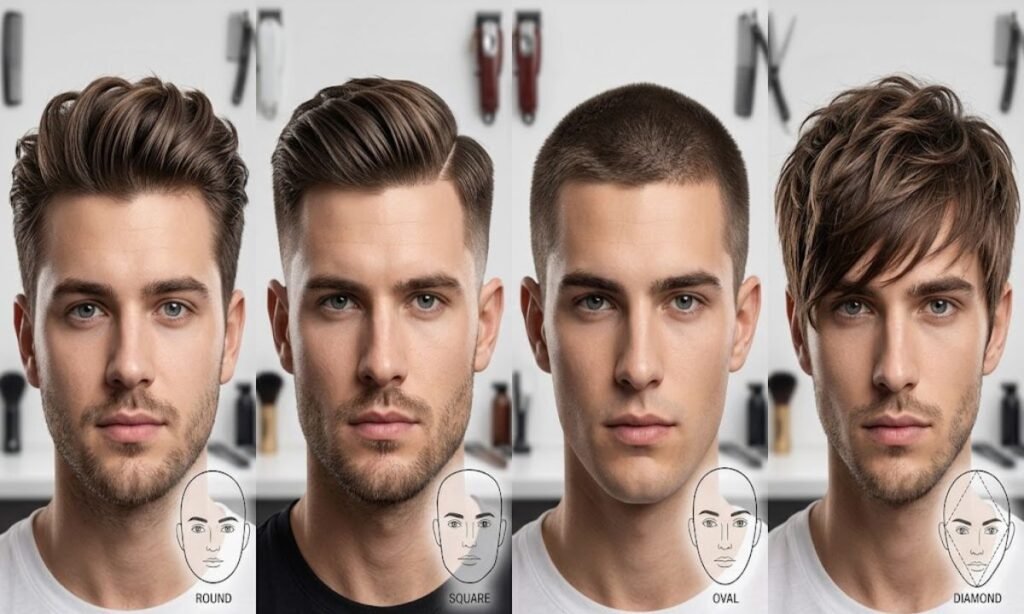
Face shape changes how a haircut sits. The side lengths either add width or take it away. So it helps to match the cut to your outline.
Here’s a simple guide:
- Round face: a low fade adds sharpness and makes the face look longer. It’s often the best haircut for round face shapes.
- Oval face: you can wear both. A taper keeps things balanced.
- Square face: a low taper softens a strong jaw, while a fade emphasizes it.
- Long face: pick a taper and keep some width on the sides.
- Heart-shaped face: a low taper with a fringe balances a narrow chin.
These are guidelines, not laws. Your barber can see your head from every angle, so ask for their take. A good one will tell you honestly.
Choosing based on your hair type
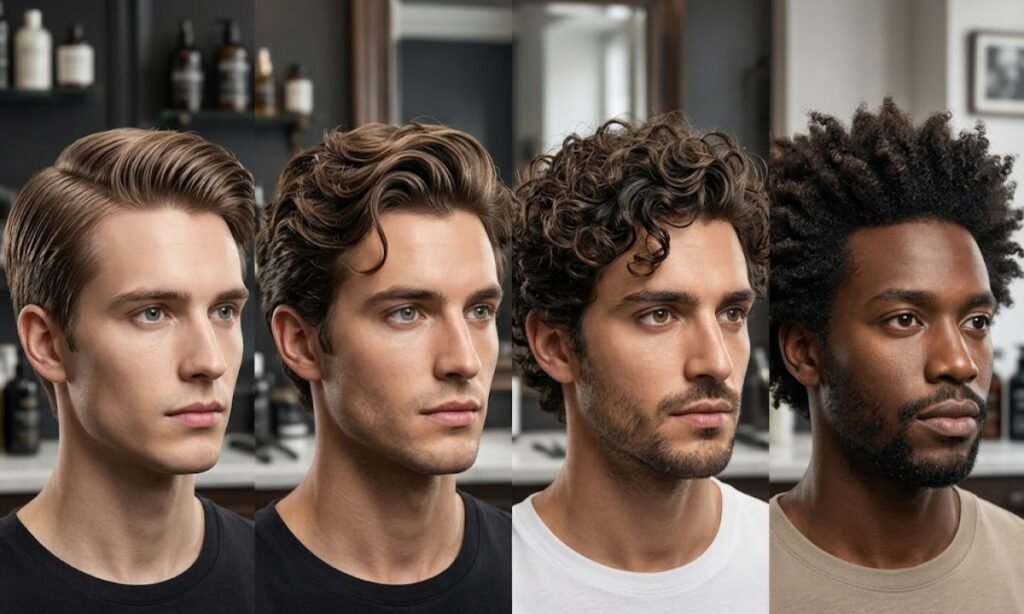
Hair type matters just as much as face shape. The same cut can look totally different on straight and coily hair. So let’s go through each type.
Straight hair: a straight hair fade looks neat and shows the blend clearly. But straight hair can show scalp more easily, so a taper is gentler.
Wavy hair: a wavy hair taper keeps the texture without puffing out at the sides. A low fade works too if you want more definition on top.
Curly hair: a low fade pairs beautifully with a curly top hairstyle. The contrast makes the curls look intentional, which is why many pick the best low fade haircut for curly hair.
Coily hair: a coily hair fade gives crisp lines against tight texture. A low taper fade afro keeps volume while neatening edges. A low taper fade dreads style does the same around the ears and nape.
Thick hair: a thick hair haircut gets heavy at the sides, so a fade removes bulk fast. Thin or fine hair: the best low taper haircut for fine hair keeps some length, so you don’t expose thin patches. A fine hair haircut with a fade can work when the top is kept longer and textured.
Maintenance and how long each lasts

Hair grows about half an inch a month. That sounds slow, but on a fade, it shows fast. Once the skin line fills in, the sharp look is gone.
A low fade usually looks its best for two to three weeks. A low taper can last four to five weeks before it feels shaggy. That’s the answer to “how often to get a low taper haircut” and “how long does a low fade last.”
Here’s how to stretch each:
- Tapers: tidy the neckline every few weeks with a trimmer.
- Fades: book a barber touch up frequency that matches your budget.
- Both: use a light product to keep the top shape tidy.
If you’re after a low maintenance haircut for men, the taper wins by a mile. It’s also the best men’s haircut for a busy lifestyle. You can skip a week and nobody will notice.
Pairing with popular styles on top
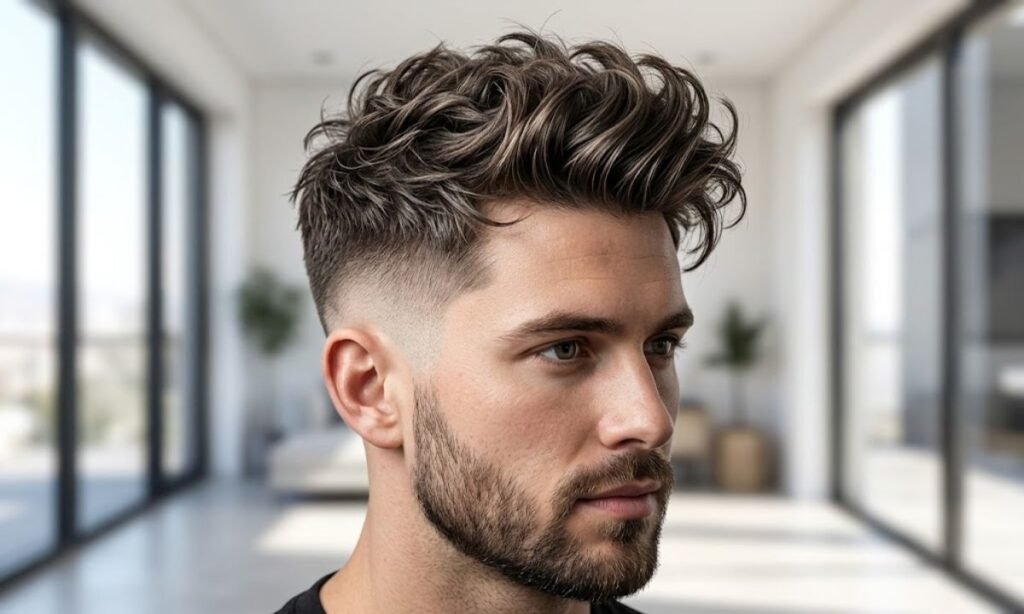
The sides are only half the haircut. What you do on top finishes the look. Here are combos that work well.
- Low taper with textured crop: easy to style, and it looks fresh with a textured fringe.
- Low fade with textured crop: crisper edges for a bolder shape.
- Low taper with slick back: a slick back hairstyle looks polished and classic.
- Low taper with middle part: a middle part low taper fade feels relaxed and current.
- Low fade with quiff: the contrast lifts the front.
- Low fade with curly top: curls get the spotlight.
- Low taper with comb over: neat and office friendly.
- Low fade with messy top: a playful, casual contrast.
A fringe haircut works with either one. Just remember that more contrast on the sides means more attention on the top. So style your top with care.
Growing Out Each Cut

Sooner or later you’ll want to let it grow. The taper makes that painless. Because the sides keep length, they just blend into the new hair, and the haircut grow-out looks natural.
A fade takes more patience. The skin area fills in first, and then you hit the “fuzzy middle” stage. That’s the awkward phase, and it usually lasts four to six weeks.
Here’s how to make a low taper grow out naturally:
- Skip the clippers for a month.
- Ask your barber for a scissor cleanup around the ears.
- Use a bit of paste to keep the top under control.
For a fade, ask for a taper bridge. That means the barber softens the line while it grows. It saves you from looking unfinished.
Barber Instructions Explained

Most bad haircuts come from unclear words. Barbers and clients often use different terms for the same thing. So it helps to be specific.
Here’s how to ask a barber for a low taper:
- “Low taper, starting at the sideburns and neckline.”
- “Leave the sides at a #2 and blend into the top.”
- “Keep the neckline natural, not squared.”
And how to ask a barber for a low fade:
- “Low skin fade, starting just above the ear.”
- “Go down to zero, and keep the top at about three inches.”
- “Blend it softly into the back.”
A quick barber consultation at the start saves headaches. Bring a photo, and say what you don’t want, too. It’s the easiest barber-ready haircut instructions trick there is.
Clipper guard sizes, in plain words
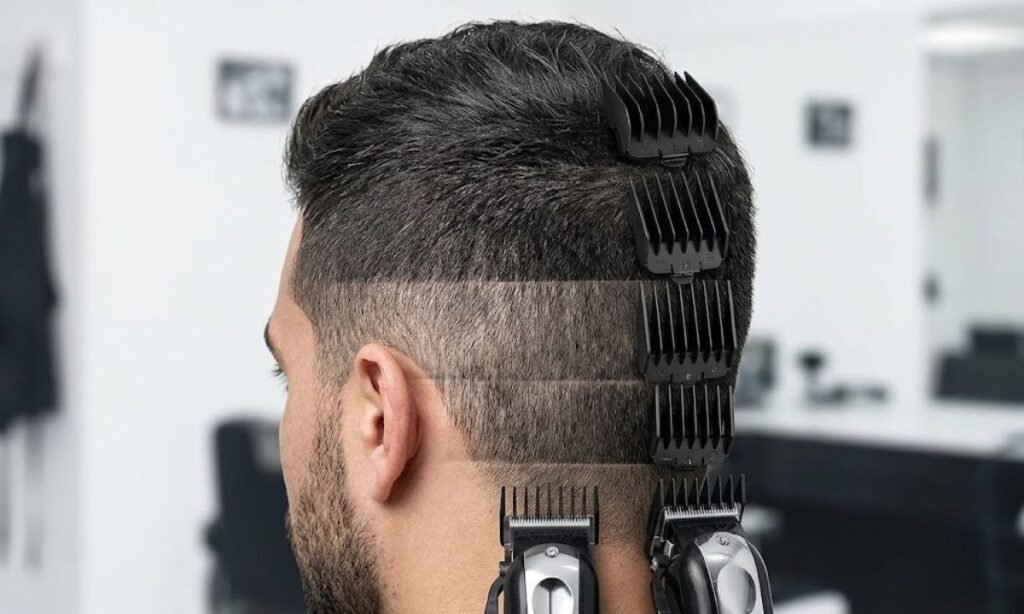
Guard numbers confuse everyone at first. A #1 leaves about an eighth of an inch. A #2 leaves a quarter inch. A #3 leaves about three eighths. Bare skin means the barber removed the guard and used the clippers or a foil shaver.
For a taper, you’ll usually hear #1 to #3 at the bottom. For a fade, the bottom often hits zero, while the upper blend might sit at a #1 or #2. Knowing this helps you speak the same language as your barber.
Clipper guard sizes also affect the haircut contrast. A bigger gap between the bottom and top means a sharper look. A smaller gap means a softer one.
Taper, skin fade, shadow fade, and drop fade explained
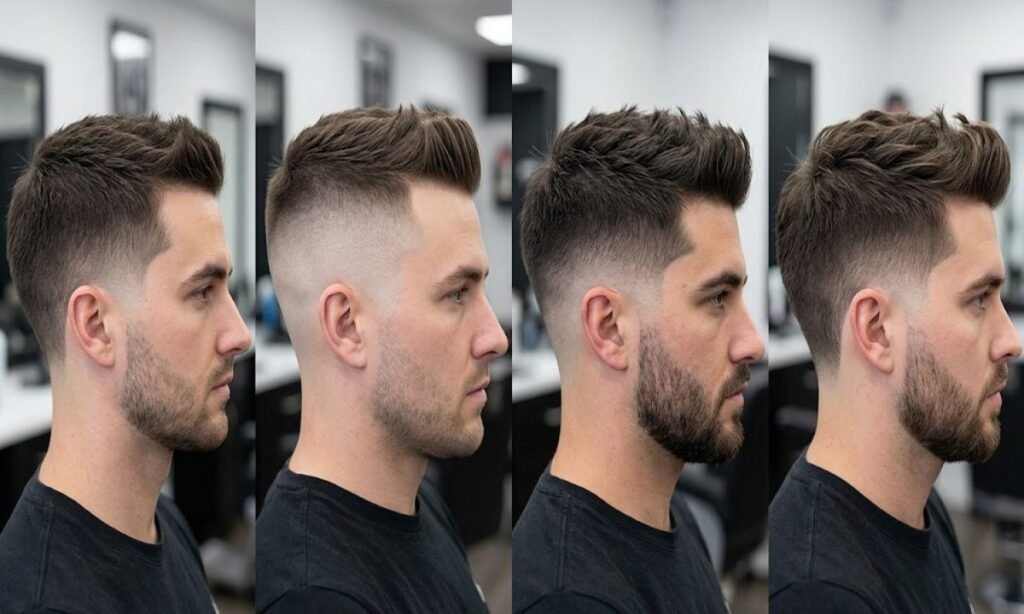
Terms get thrown around fast. So let’s sort them out. It’s one of the most searched questions around this topic.
The difference between taper and skin fade is the length at the bottom. A taper stays at a short guard length. A skin fade hits zero. The difference between shadow fade and skin fade is smaller, since a shadow fade stops just above skin.
A low drop fade curves down behind the ear, while a mid drop fade curves from a higher point. A burst fade wraps around the ear in a half circle. A temple fade focuses on the sides near the eyes. These are all variations on the same idea, so mix them with a low mid taper fade, mid taper fade, or high taper fade when you want a different height.
Low taper for a professional appearance, low fade for a modern one
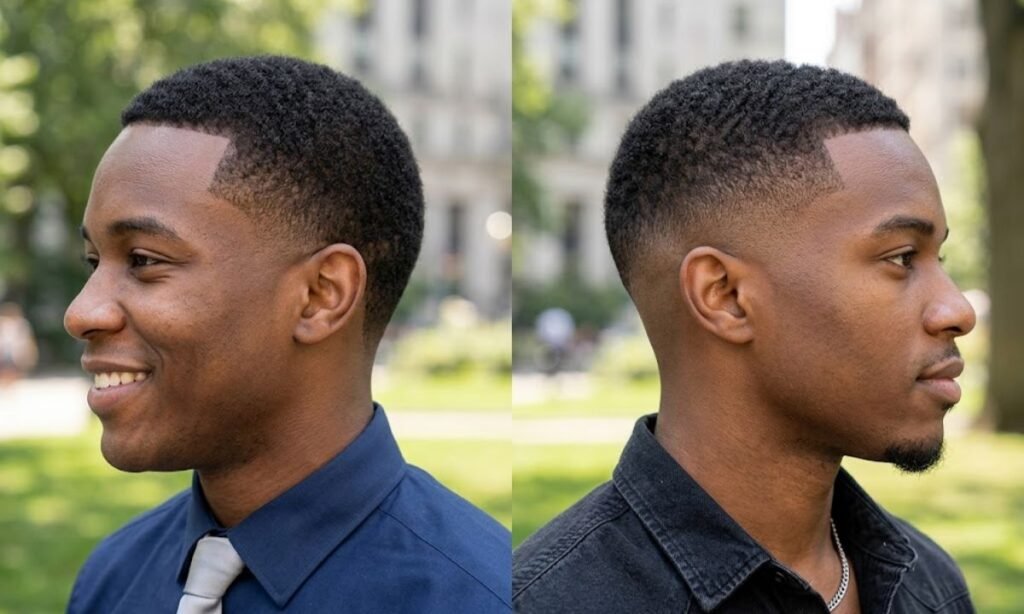
If you’re thinking about the best haircut for office and school, the taper is the safer play. It looks tidy, and nobody will question it. It’s also a solid choice for the best haircut for formal occasions.
A low fade works in offices too. A softer shadow fade reads as polished, not edgy. It all depends on your workplace culture.
So here’s a trick. Look at how your boss and teammates wear their hair, and match the energy. Also think about formal haircuts for men, because weddings and ceremonies usually call for something classic.
Common mistakes to avoid
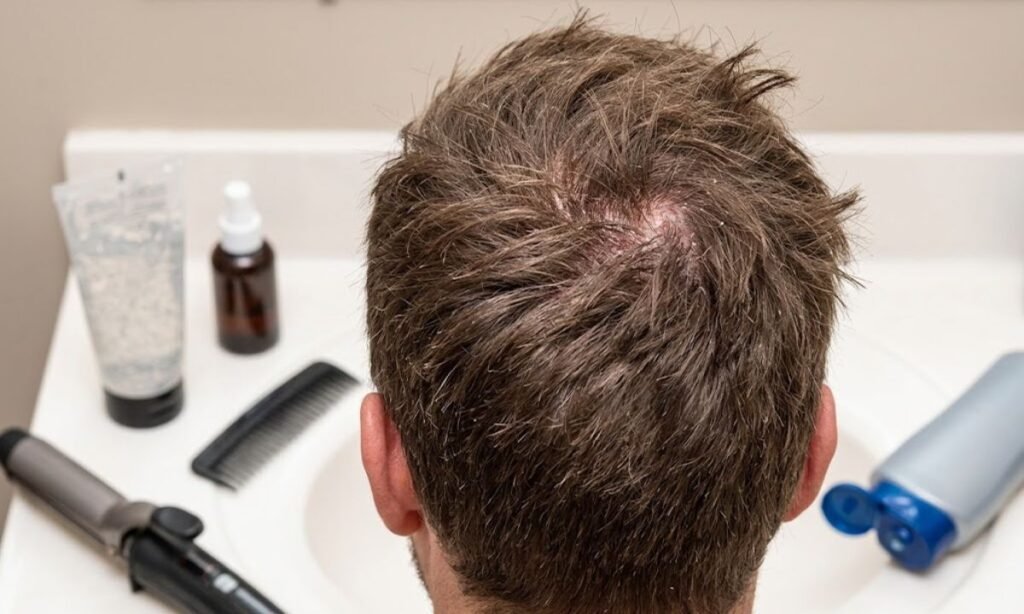
Some mistakes show up again and again. The good news is they’re easy to fix. Here are the big ones.
- Asking for “a fade” with no details: you could end up with a high fade you didn’t want.
- Skipping the photo: words don’t carry the full picture.
- Ignoring your hairline: a receding hairline looks different with a skin fade.
- Waiting too long: a fade grown out for six weeks looks messy.
- Over styling the top: it fights the clean sides.
A good rule is to start conservative. You can always go shorter next time. Hair doesn’t grow back overnight.
How to maintain a sharp fade at home

You can’t replace your barber, but you can help. A few small habits keep the look fresh between visits. It’s what many pros quietly recommend.
- Wash and dry the hair: a clean base shows the blend clearly.
- Use a trimmer for the neckline: go slow, and don’t chase the line upward.
- Moisturize the skin: dry skin makes the fade look patchy.
- Apply product to the top only: it keeps the sides crisp.
Plan on a weekly haircut maintenance check. A two-minute mirror scan catches stray hairs fast. You’ll feel more confident, too.
So, which should you choose?

Here’s the honest answer. If you want a quiet, natural taper versus defined fade compromise, pick the taper. If you want a soft blend versus sharp contrast and you’ll visit often, pick the fade.
Think about three things before you decide: your job, your hair type, and how much time you want to spend. Those three answer most of the question. The rest is personal taste.
So, which is better, low taper or low fade? Neither wins in every case. The better haircut is the one you’ll keep up and enjoy wearing.
Frequently Asked Questions

What is the difference between a low taper and a low fade?
A taper trims gradually and keeps visible length. A fade goes much shorter, often to skin, with higher contrast.
Which one is easier to maintain?
The taper. It stays neat for four or five weeks, while a fade looks best for two to three.
Is a low taper or a low fade better for men with thin hair?
A taper is usually kinder, since it doesn’t expose thin areas near the temples.
Can I get a low taper fade on curly or coily hair?
Yes. Both work well, and many people with textured hair prefer a fade for crisp lines.
Which one lasts longer?
The low taper lasts longer before it looks overgrown.
What’s the best choice for a busy lifestyle?
Pick the taper. It tolerates missed appointments better than a skin fade does.
You can also checkout this article as well Textured Fringe With Low Taper Fade: Complete Style Guide for Men
Let’s talk
Now it’s your turn. Which one are you leaning toward, the low taper or the low fade? Drop your question in the comments, and I’ll help you pick.
If this guide saved you a bad haircut, share it with a friend. He’ll thank you at the next barber visit. And check back soon, because we refresh this page as styles change.

I’m Michael Charles, the creator of MegaCrazes—your source for fresh hairstyles, sharp haircuts, and simple hair-care inspiration. Find your style. Own your look.
1 thought on “Low Taper vs Low Fade: What’s the Difference, and Which Should You Choose?”