


Last updated: October 2026
Will a high taper fade work on your hair? Most likely, yes. It suits white guys with straight, wavy, thick, fine, or curly hair, as long as the top is cut to match your hair texture and hair density.
You might worry it’ll look too sharp, too short, or too hard to keep up. Those are fair concerns. This guide answers them in plain talk and gives you the exact words to use in the barber chair.
Quick Answer
A high taper fade is a men’s haircut where the sides and back get shorter as they move up the head. The shortening starts high, near the temple, and the taper leaves the shortest point around the sideburn and nape. The top stays longer, so you keep real hair length to style.
It works for white men because the cut follows your hair growth pattern, not your ethnicity. Fine hair needs a softer finish. Thick or curly hair needs more side coverage and a bit more care at the blend line.
The short version:
- Best for: clean, sharp, modern looks with contrast between top and sides
- Works with: straight hair, wavy hair, thick hair, fine hair, and short curls
- Ask for: a high taper, a guard length on top, and a clear finish (natural, shadow fade, or skin fade)
- Upkeep: a fade touch-up every 2 to 4 weeks
What is a high taper fade?

Think of it as a men’s hairstyle built on contrast. The top keeps its length and weight, while the sides slim down in a smooth gradient. The fade transition is what makes it look polished instead of boxy.
People use the words taper and fade loosely, and that’s where confusion starts. A taper usually leaves hair on the sides and back, just shorter. A fade often goes down to the skin. A high taper fade blends both ideas, so you get a clean line without a harsh bald edge.
You’ll see it on office guys, gym regulars, and college students. It’s popular because it looks tidy on day one and still looks decent on day twenty. That’s rare for a men’s haircut.
Where does a high taper start, and what hair does it leave?

The taper placement sits high on the head, usually near the temple and the top of the ear. Your barber starts the blend line about an inch or more above the ear. From there, the hair shortens as it moves down toward the nape and neckline.
What’s left depends on the finish you pick. A guarded finish keeps a thin layer of hair, often a clipper guard like a #1 (about 3 mm) or #2 (about 6 mm). A skin finish takes the shortest point all the way to the scalp.
Most white guys do well with a softer finish at first. If you’ve got pale skin, a skin fade increases scalp exposure and can make the contrast feel stark. A shadow finish gives you the clean look with a lot less shock.
Does a high taper fade work for white guys?
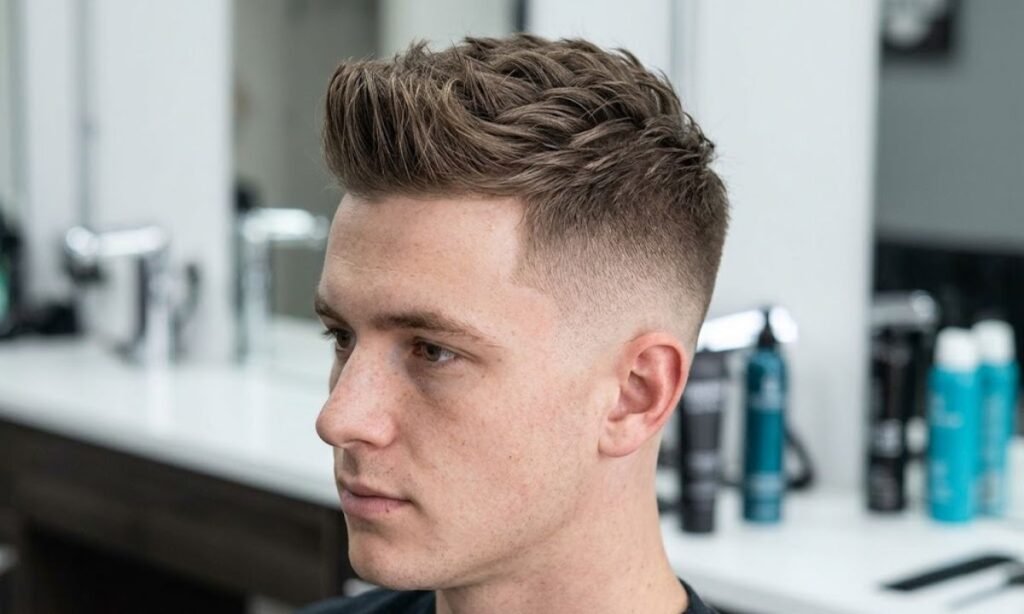
Yes, and it’s one of the most requested cuts in shops right now. Nothing about the style belongs to one group. What matters is how your hair grows, how thick it is, and how it behaves when it’s cut short.
Most bad results come from a mismatch, not from the cut itself. A barber who ignores your hair growth can leave patchy sides or a top that flops. A good one reads your head first, then picks the fade height.
So don’t ask, “Will this suit a white guy?” Ask, “Will this suit my hair?” That question gets you a better haircut.
Why do hair texture and density matter more than ethnicity?
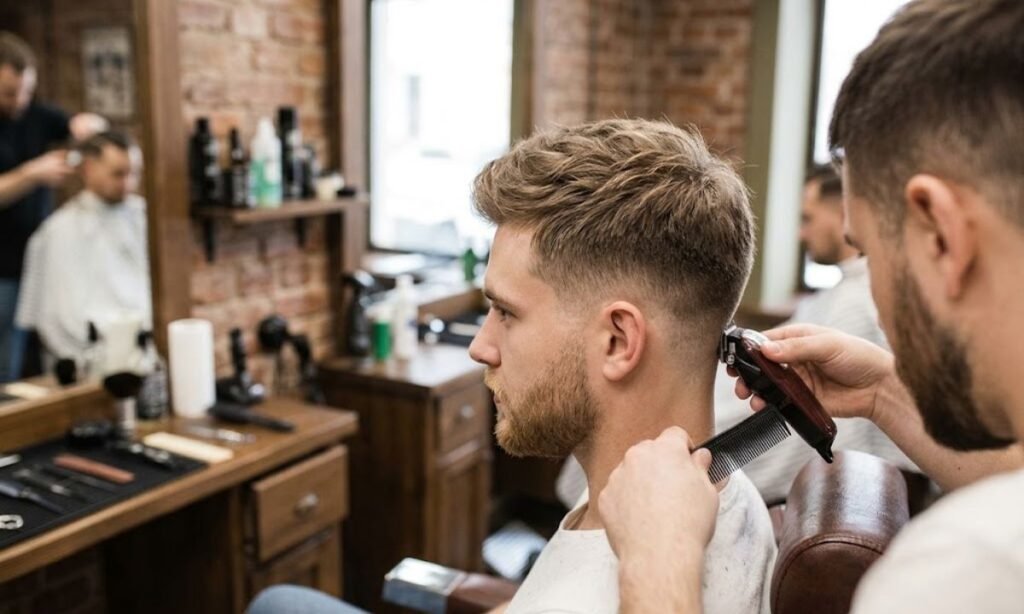
Hair texture tells you how your strands behave. Straight hair lies flat and shows every clipper line. Wavy hair and curly hair bounce back and hide small mistakes. That changes how long the fade blending needs to be.
Hair density means how many strands grow per square inch of scalp. Hair strand thickness is how wide each strand is. A guy with fine hair and low density can have more scalp exposure than he expects once the sides are cut short.
Here’s a simple example. Two guys sit down for the same cut. One has coarse hair with high density, and the sides look full even at a #2. The other has low-density hair, and the same #2 looks nearly bald. Same cut, very different result.
What about fine hair, blonde hair, cowlicks, or a receding hairline?
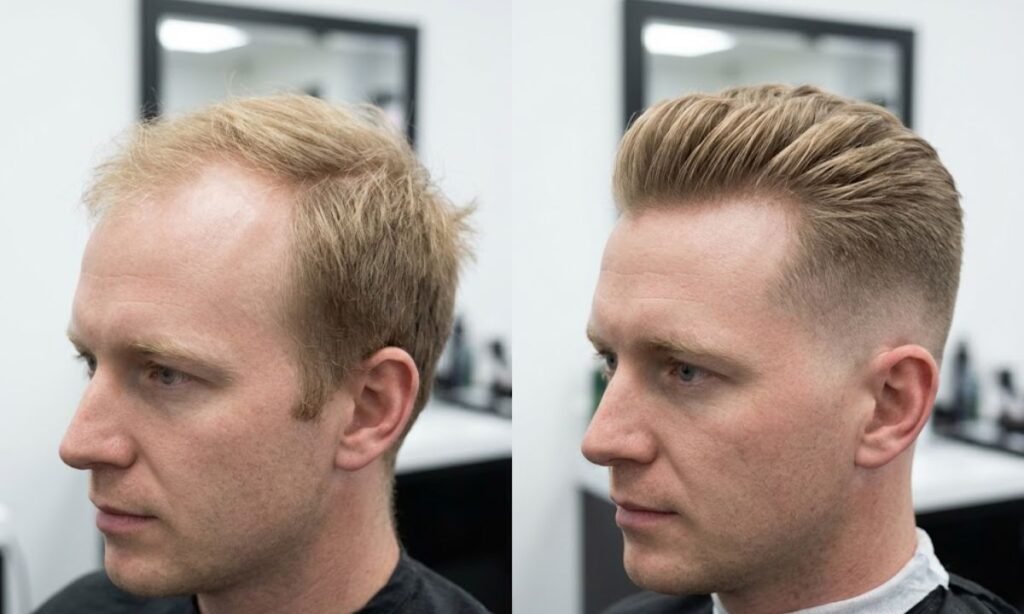
Fine hair and blonde hair need a gentler approach. Light hair can blend into the skin, which makes a skin fade look more extreme than it is. Ask for a guarded finish and keep some side weight so the sides don’t look see through.
A cowlick is a spot where hair grows against the grain. Your barber should cut with it, not against it, and leave a bit more top length so it sits flat. If the crown growth twists, a textured crop or messy top hides it well.
A receding hairline needs thought, not fear. Keep the temple fade soft, avoid cutting the temple height too aggressively, and use a textured fringe or a short forward sweep. This keeps attention on the shape instead of the hairline recession.
High taper fade vs high fade, mid taper, and low taper

These terms get tossed around like they’re interchangeable. They aren’t, and mixing them up is how people walk out with the wrong haircut. Knowing the difference takes about two minutes and saves you weeks of grow-out.
The main variables are fade height, how short the hair gets, and how visible the blend line is. Move one of those, and the whole look changes. Let’s break it down.
High taper fade vs high fade: what’s the difference?
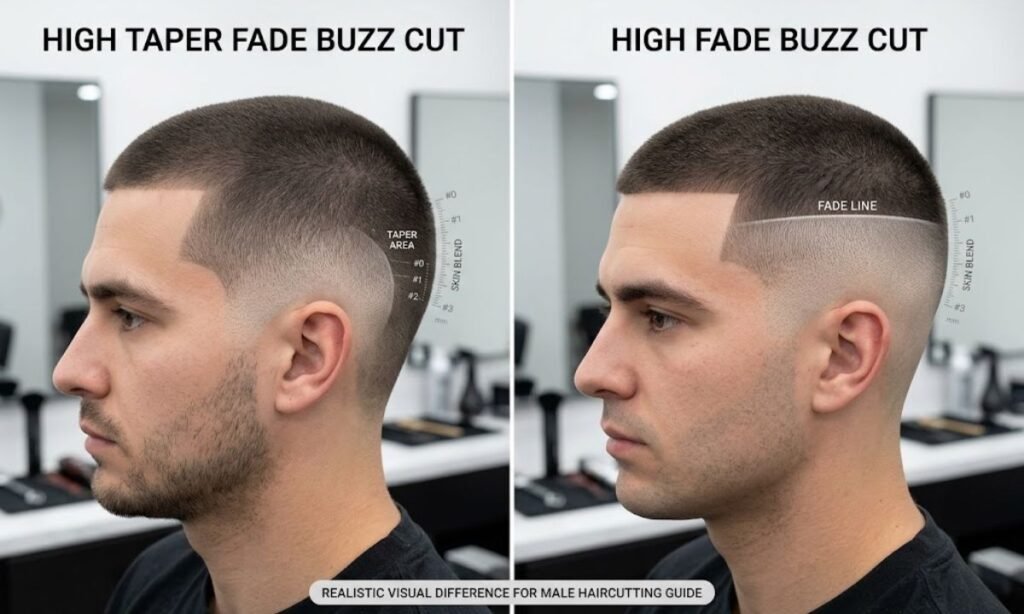
A high fade usually starts high on the head and drops to bare skin, so it has a bold, high contrast look. A high taper fade also starts high, but the finish is usually softer and more natural. You still see the shape without such a hard edge.
If you want a crisp, military style cut, ask for the high fade. If you want a cleaner look you can wear to a meeting, the high taper is easier. It also grows out with less awkwardness.
People also compare the high taper vs. high fade by how fast it ages. A bare fade looks sharp for about a week. A taper keeps its shape longer because there’s still hair on the sides.
Why “taper” and “fade” don’t mean the same thing in every shop

Barbers learn from different people, so the language shifts. In one shop, “taper” means a short clipper job around the ears and neck. In another, it means a full fade with a drop fade curve behind the ear.
This is why a reference photo beats any label. A word can mean three things, but a picture means one. Show the barber the finish and the height you want.
Also check the shortest point. Ask, “Where does it go down to, and what guard?” That single question clears up most confusion.
Should you choose a high, mid, or low taper?

A mid taper fade for white guys is the safe middle path. It starts around the middle of the sides, so it feels balanced and workable for most jobs. A low taper fade for white guys stays close to the ears and neckline, and it’s the most conservative option.
Pick a high taper if you want bold contrast, you’ve got a strong jawline, or your top has real volume. Pick a mid taper if you want something between formal and edgy. Pick a low taper if your workplace is strict or you’re nervous about going short.
Here’s a quick guide:
| Option | Where it starts | Best for | Risk level |
|---|---|---|---|
| High taper | Near the temple | Bold contrast, volume on top | Medium |
| Mid taper | Mid side panel | Balanced, versatile look | Low |
| Low taper | Above ear and nape | Conservative offices, first timers | Very low |
Best high taper fade styles for white guys

The fade is only half the haircut. The top decides the personality. So the smartest way to choose is by your hair texture first, then pick a style that works with it instead of fighting it.
Below, you’ll find options for straight hair, thick hair, wavy hair, and curly hair. Each one pairs naturally with a high taper fade haircut.
Which styles work best with straight or fine hair?
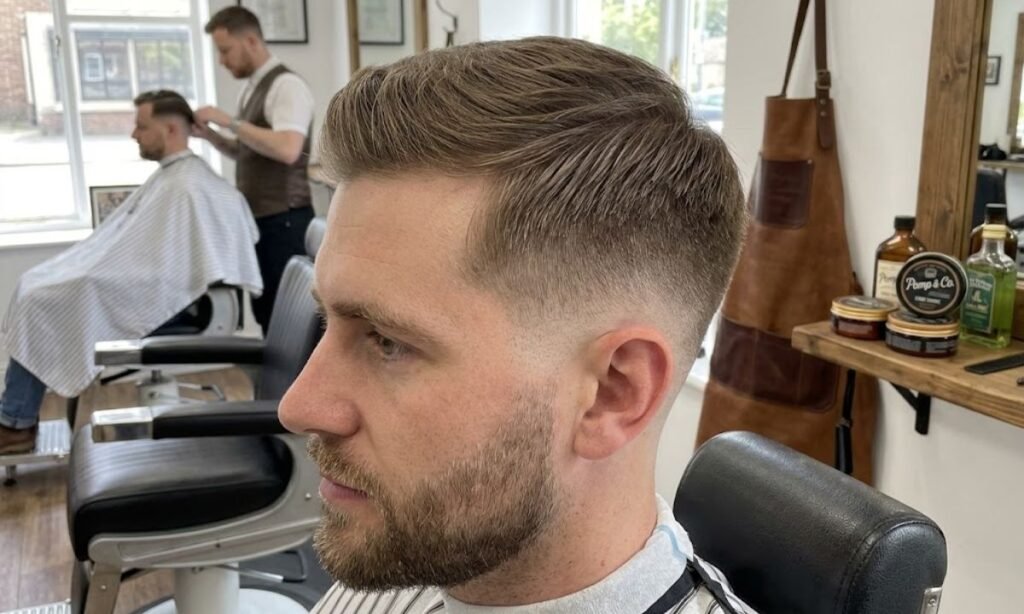
Straight fine hair loves a textured crop or a short side part. These styles add shape without needing much volume. A little matte clay gives the top some grip and separation.
Try an Ivy League cut if you like a neat, classic look. It keeps the top just long enough to comb over, and the taper keeps the sides tidy. It’s the kind of cut that looks good in a wedding photo and a Monday meeting.
Avoid a very tall pompadour if your hair is thin. It needs density to hold. Instead, pick a high taper fade with textured top at medium length and let hair movement do the work.
Which styles work best with thick or wavy hair?

Thick wavy hair has natural body, so you can keep more length on top. A quiff, a messy textured top, or a loose blowout all work. The fade keeps the weight from looking like a helmet.
The tricky part is side weight. If the sides stay full, thick hair puffs out. A high taper fade removes that bulk and shows off the shape of the top.
Use a lightweight cream or styling paste and avoid heavy gels. Thick hair already holds itself up. You just need to guide it and keep the hair separation clean.
Which high taper styles work with curly hair?

Natural curls look great over a high taper fade. The sharp sides make the curly top pop. A curly fringe with taper or a short curly hairstyle keeps things neat while showing off the natural curl pattern.
Remember hair shrinkage. Curls look shorter when dry, sometimes by half. Tell your barber how long you want the hair when it’s stretched, then they’ll leave enough length.
Use a curl cream on damp hair and let it air-dry or use a diffuser. Keep your hands out of it once it’s dry. Touching curls too much creates frizz.
High Taper Fade With Popular Men’s Haircuts

A high taper fade is a base, not a final haircut. Think of it like a frame. The top you put inside it changes the whole picture.
These are the combos barbers hear about most often. Each one has a different feel, so you can match it to your routine.
High taper fade with a crew cut

The crew cut with high taper is the easy one. The top stays short, usually around 1 to 2 inches at the front, and the sides blend in cleanly. It’s a perfect pick if you hate styling.
You can wear it with almost no styling product. A touch of pomade adds shine if you want it. Otherwise, just towel dry and go.
It works well on straight hair and thick hair. It’s less forgiving on fine hair, because thin areas show through when the top is this short.
High taper fade with a French crop or textured fringe
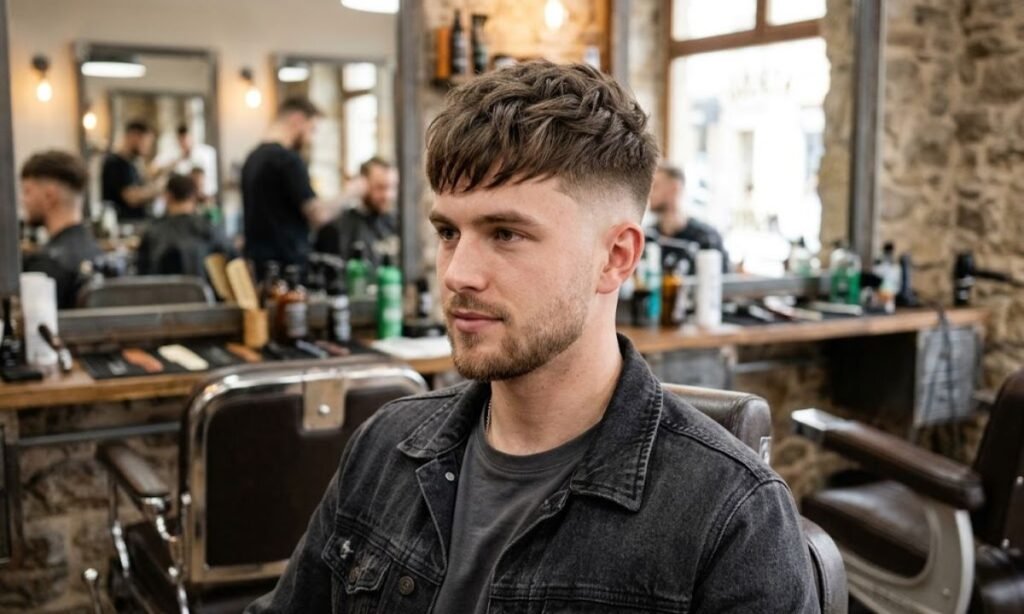
The French crop has a short, blunt fringe and a textured top. Paired with a high taper, it looks tidy and modern. The textured fringe with high taper hides a high forehead and a receding hairline nicely.
Cut the fringe slightly uneven for a natural look. Straight lines can look stiff. A bit of matte clay pushed forward does the job.
It’s a smart choice for straight hair and fine hair. You get structure without needing much hair volume.
High taper fade with a quiff or pompadour
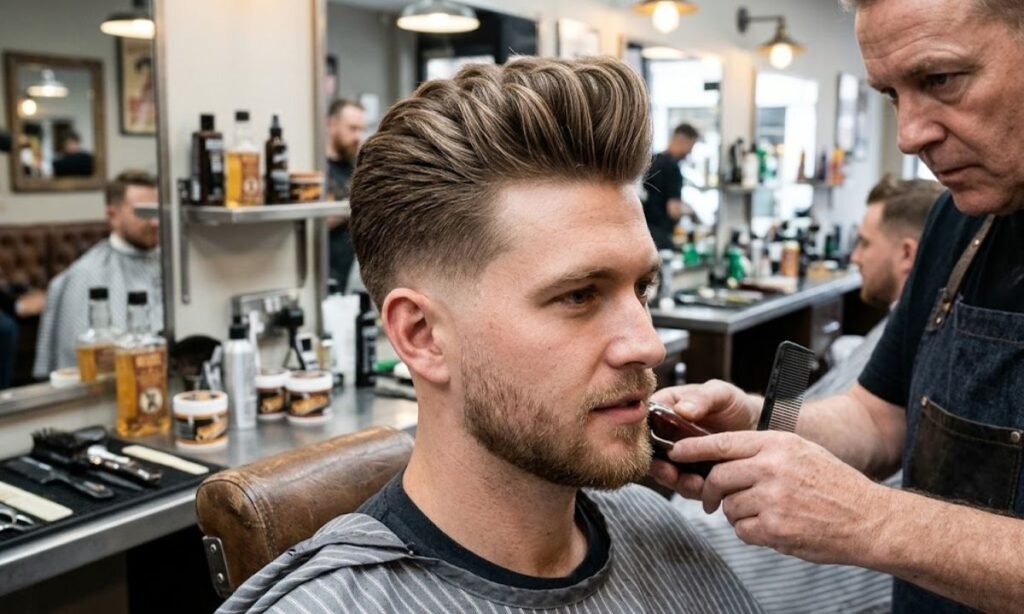
A quiff with high taper pushes the hair up and back with volume at the front. A pompadour with high taper goes taller and sleeker. Both need decent top length, usually 3 to 5 inches.
You’ll need a blow-dryer for this one. Dry the hair upward with a round brush, then lock it with a bit of pomade. It takes about five to ten minutes once you’ve practiced.
Be honest about your hair. These styles need hair density. If you have thin hair, ask for a smaller quiff and use a blowout for lift.
High taper fade with a modern mullet

The modern mullet is shorter at the front and longer at the back, but it’s cleaner than the old version. A high taper around the sides keeps it intentional. Without it, the cut can look unfinished.
Keep the back length controlled and blend into the nape with a soft taper transition. Too much length turns it costume like. A neat neckline cleanup helps it look current.
It works best on wavy hair and thick hair. The natural bend gives it that effortless look.
Choosing a High Taper Fade for Your Face Shape

Your head shape matters as much as your hair. A fade moves attention to different parts of your face. Choosing the right haircut proportions keeps everything balanced.
You don’t need to measure anything. Look in the mirror, check where your face is widest, and use that as a guide.
Which high taper styles suit round, oval, and square faces?

If you have a round face, a high taper fade with extra height on top works well. It stretches the face visually. A quiff or a short pompadour adds that lift.
An oval face can wear almost anything. That’s the lucky shape. A textured crop, side part, or slick-back all work.
A square face already has strong angles. A high taper with a softer top, like a textured fringe, balances the jaw. Keep the squared edges at the neckline minimal so you don’t add more sharpness.
How can top volume balance a long or narrow face?
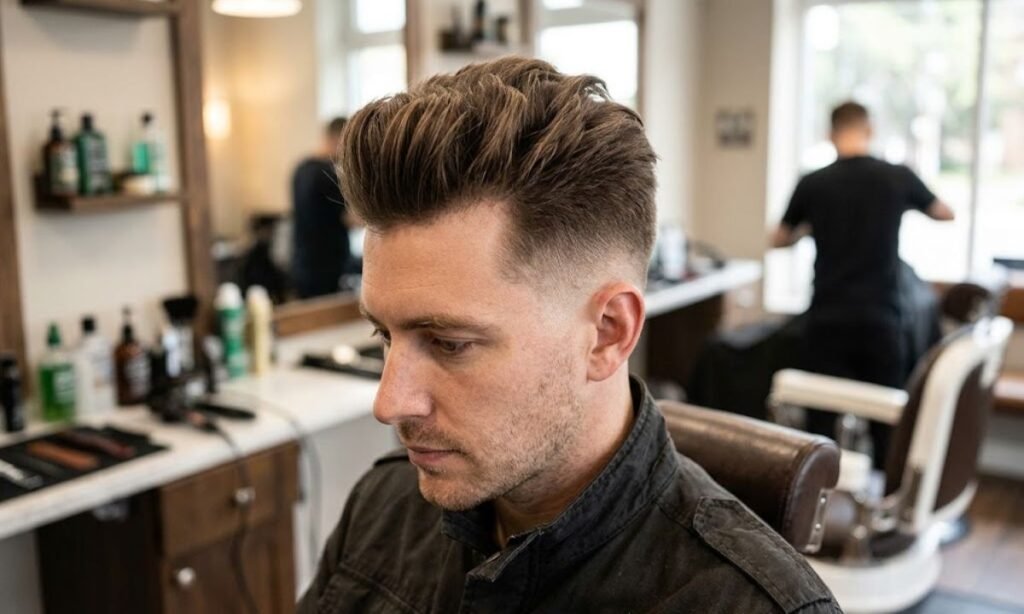
A long face can look longer with too much height. Instead, keep the top flatter and add width. A textured crop or a forward fringe helps shorten the look.
A mid taper might work better than a very high one here. It leaves more side coverage and keeps the face from looking stretched. Small changes in fade height really matter.
If you wear a beard, a fuller one adds width at the jaw. That can balance a narrow face on its own.
High Taper Fade Styles by Haircut Length

Length changes everything. The same high taper fade looks sporty with a short top and almost rock and roll with a long one. Pick your length based on how much time you’ll spend each morning.
Here’s how each one behaves day to day.
Short top high taper fade for a clean, low-maintenance look

A short top sits around 1 to 2 inches. It’s the easiest option, especially for busy mornings. You’ll need almost no daily styling routine.
This works as a low-maintenance hairstyle for men. The tradeoff is that the fade definition fades quickly, so plan on regular trims. Short hair shows grow-out fast.
It’s great for thick hair and coarse hair. Fine hair can look sparse at this length.
Medium-length high taper fade with natural movement

Medium length is around 2 to 4 inches. It gives you the most flexibility. You can push it up, comb it over, or leave it messy.
This length also shows off hair movement and wavy hair at its best. A bit of styling paste and some finger styling gets you there. It’s the sweet spot for most white guys.
A high taper fade with a natural finish works especially well here. The sides stay clean without looking severe.
Long top high taper fade with textured volume

A long top starts around 4 inches and goes up. The contrast with the short sides looks bold, and it’s a big part of why this style trends. It rewards patience.
You’ll want a blow-dryer and a decent brushing direction habit. A high taper fade with volume needs lift at the roots. Add a lightweight cream to keep it soft.
Expect more upkeep. Long tops can get heavy and need trimming every six to eight weeks.
High taper fade with a slicked-back top

A slick-back hairstyle with taper is smooth and polished. It works best on straight hair and thick hair. Comb the hair back with a little pomade on damp hair.
This style shows the hairline, so check your hairline proportions first. If you have a receding hairline, it can highlight it. A shorter version helps.
A disconnected beard pairs well here, giving you a clean, sharp frame.
High taper fade with a side part or comb-over
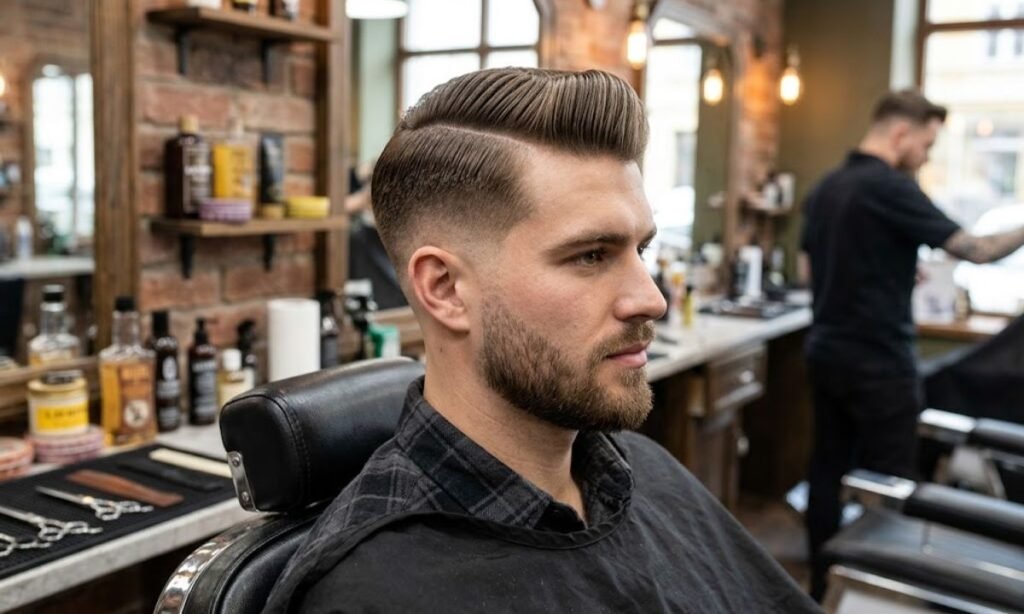
The side part gives a classic, neat look. With a high taper, it feels updated instead of old fashioned. A hard part line adds extra edge.
Use a comb styling method. Start with damp hair, add a bit of paste, and comb it into place. It takes a minute.
It works for almost every hair texture, and it’s the safest choice for work.
How do you ask your barber for a high taper fade?
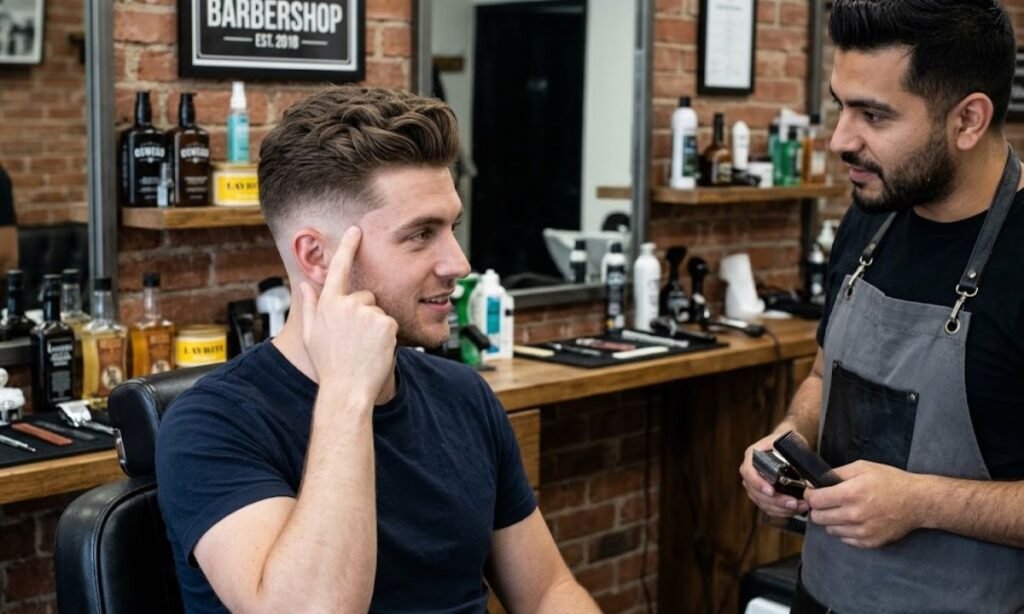
Walking in with a vague request is the fastest way to get a cut you didn’t want. “Just a high taper” can mean five different things. A little prep turns a gamble into a sure thing.
The good news is that a barber consultation only takes a minute or two. Barbers like clear haircut instructions, because it saves them from guessing. You’ll also leave happier, and that’s what brings you back.
What six details should you tell your barber?
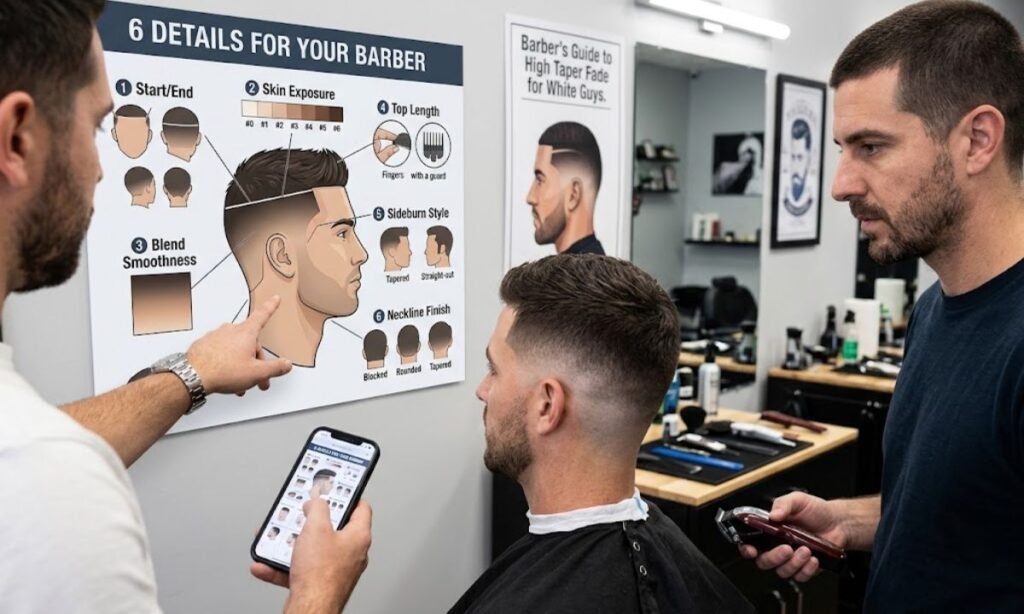
Cover these six points, and you’ll rarely get a surprise:
- Fade height: say “high taper” and point to where you want the blend line to start
- Shortest point: choose a guard length or ask for a skin finish, shadow finish, or natural finish
- Top length: give a number in inches or show it with your fingers
- Hairline shaping: ask for natural edges or squared edges at the front and neckline
- Beard plan: say whether you want a connected beard or a disconnected beard
- Styling goal: tell them how you’ll wear it, like a side part or a textured crop
If you’re unsure, ask for their barber recommendation. A pro who sees your hair texture and head shape can adjust the plan on the spot. Listen to that advice, because it’s free.
What kind of reference photo should you bring?

Pick a reference photo that shows the sides, the back, and the top. A photo from only one angle hides half the story. Two or three images work better than one.
Choose someone with similar hair density and hair texture. A photo of a guy with thick dark hair won’t help if you have fine hair and blonde strands. Your barber will translate it, but a close match makes it easier.
Add a note on what you like and what you don’t. Something like “I like the soft fade transition but not the bare sides” is gold. That’s a haircut reference your barber can actually use.
How do you style and maintain a high taper fade?
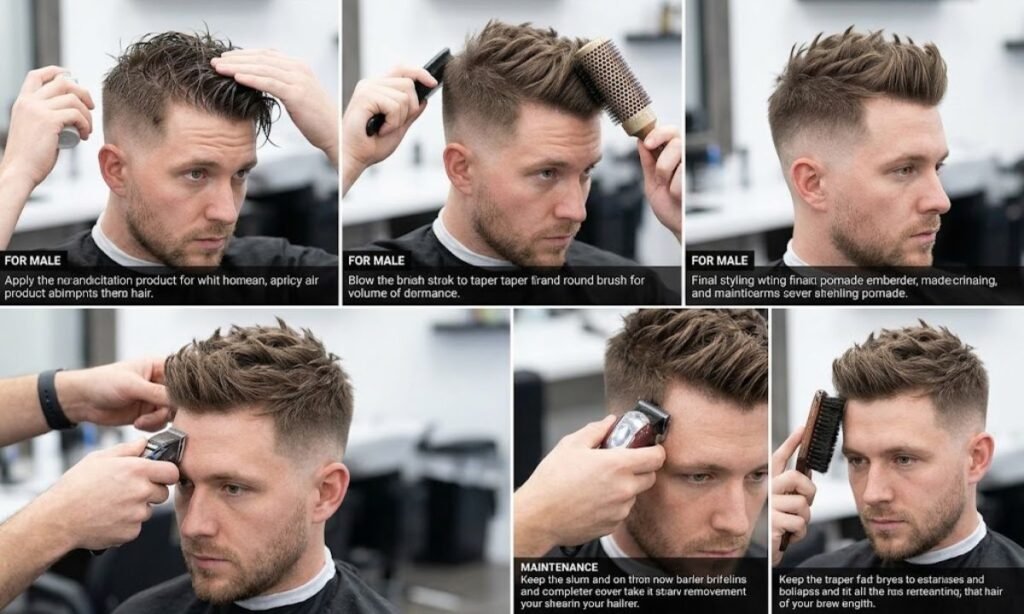
The cut does about sixty percent of the work. Your daily styling routine handles the rest, and it doesn’t need to be complicated. Most guys need under five minutes once they find a simple system.
Maintenance matters too. Haircut maintenance is what separates a sharp fade from a messy one. A little planning keeps the fade definition clean between visits.
What’s the simplest daily styling routine?

Start with damp hair, not soaking wet and not bone dry. Towel it down, then work a small amount of styling product through the top. Use your fingers first, then a comb if you need a tidy finish.
Match the product to the hair. Matte clay adds grip and a dry finish for textured hair. Styling paste gives flexible hold, a lightweight cream adds softness for fine hair, and pomade works for a polished slick-back.
Here’s a simple routine you can copy:
- Rinse or dampen the hair
- Rough dry with a blow-dryer on medium heat, using brushing direction to set the shape
- Warm a pea-sized amount of product between your palms
- Apply with finger styling from back to front
- Finish with a comb or a quick tweak
People skip the product application step and overload instead. More isn’t better. Start small, and add if needed.
How often should you refresh a high taper?

Hair grows roughly half an inch a month, which means the sides lose their shape quickly. For a crisp look, book a fade touch-up every two to three weeks. If you’re fine with a softer line, four weeks works.
A skin fade grows out fastest because the contrast fades first. A guarded finish lasts longer. Your hair growth rate also matters, so some guys need trims sooner.
Book your next appointment before you leave the shop. Haircut scheduling is easy to forget until the sides look fuzzy. A quick sideburn cleanup and neckline cleanup between full cuts can stretch the time.
What are the downsides and common mistakes?

A high taper fade isn’t perfect for everyone. It needs regular trims, and it shows mistakes quickly. Knowing the risks helps you avoid them.
Most issues come from a few repeated errors. Fix those, and the cut works for you instead of against you.
What happens if the taper is cut too high or too short?

If the taper placement is too high, the head can look rounder or smaller. Too short, and the scalp shows through, especially with low-density hair. That can feel exposed, and it’s hard to undo.
The fix isn’t quick, because hair regrowth takes weeks. Ask your barber to start longer and go shorter if you want more. It’s easy to take off hair and impossible to put it back.
Pale skin and light hair add another risk. A harsh skin fade can leave a visible line where the hair ends. A softer blend maintenance plan avoids that.
Why can copying someone else’s fade go wrong?

Your hair isn’t theirs. A cut that looks great on a guy with thick, straight hair can look flat on yours. Head shape, hairline proportions, and crown growth all change the result.
Copying a photo without adjusting also ignores uneven growth direction. A cowlick or double crown can ruin a style that depends on a smooth top. Take the idea, but let your barber tailor it.
Use the photo as a starting point, not a blueprint. That small shift prevents most disappointments.
What are the best alternatives to a high taper fade?
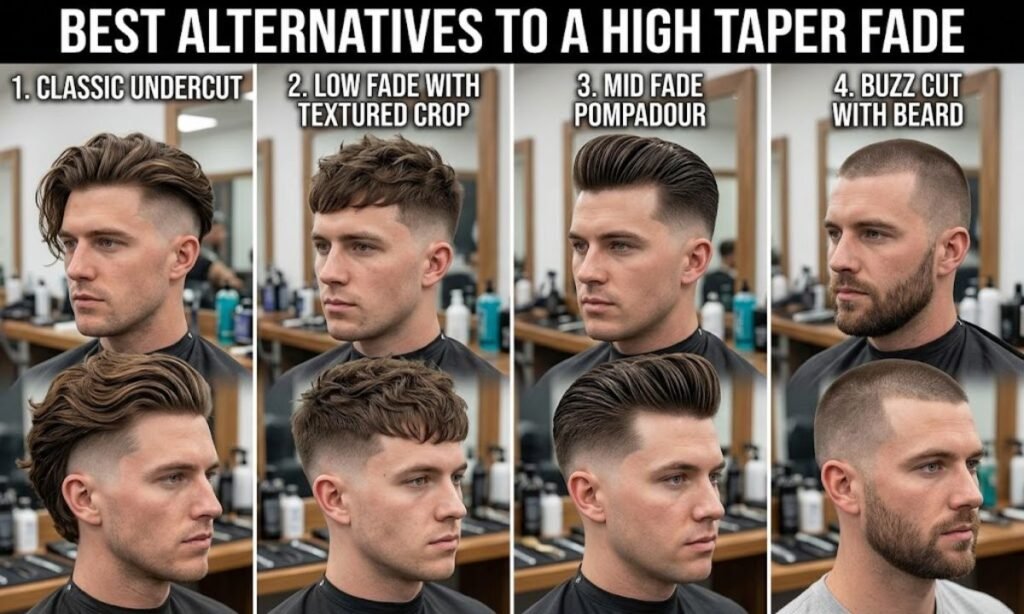
If a high fade feels like too much, you’ve got good options. A low taper fade for white guys keeps the edges tidy without much contrast. It’s the easiest first step.
A mid taper adds a bit more shape, and a classic scissor cut offers softness. An Ivy League or a longer textured crop with natural sides also works. These choices suit conservative offices and slow-growing hair.
Here’s a quick comparison:
| Alternative | Why choose it | Upkeep |
|---|---|---|
| Low taper | Subtle, safe, easy first fade | Every 3 to 4 weeks |
| Mid taper | Balanced contrast | Every 3 weeks |
| Scissor cut | Soft, natural, no clipper lines | Every 4 to 6 weeks |
| Ivy League | Neat, classic, office friendly | Every 3 to 4 weeks |
How does a high taper fade work with a beard?
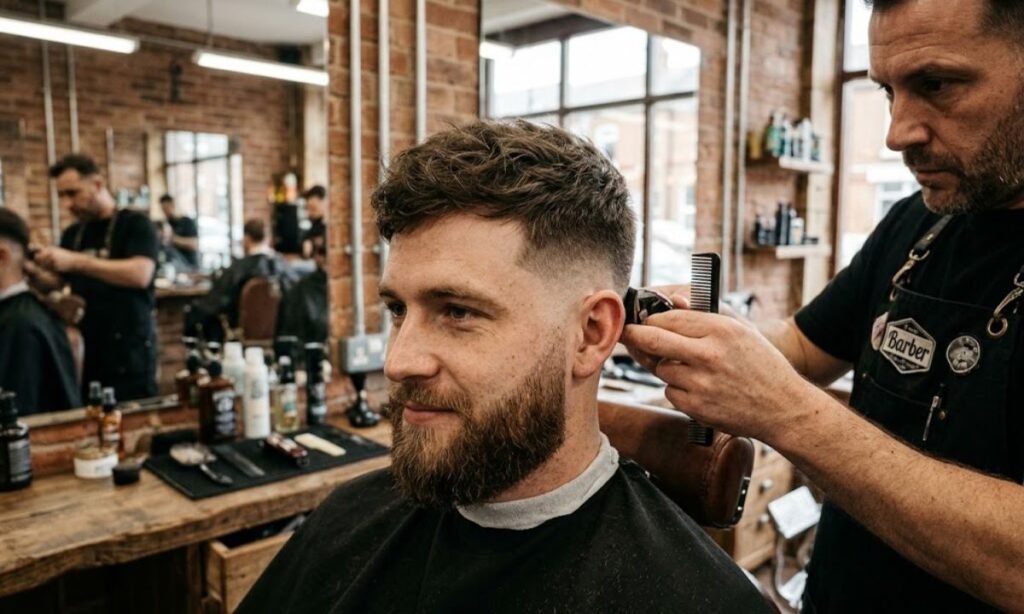
A beard and a high taper make a strong pair. The key is the sideburn transition. Your barber blends the tapered sideburns into the beard shape, so the sides look continuous.
For a connected beard, the hair flows from the sideburn down the jaw with no gap. For a disconnected beard, a clean break separates hair and beard for a sharper look. Pick based on how neat you want to appear.
For a high taper fade with a short beard, keep a tight beard trim and a clear beard line-up. For a high taper fade with a full beard, keep the natural beard edges soft and avoid a harsh cheek line. Beard separation at the neck keeps it clean.
What tools and products make this cut easier?
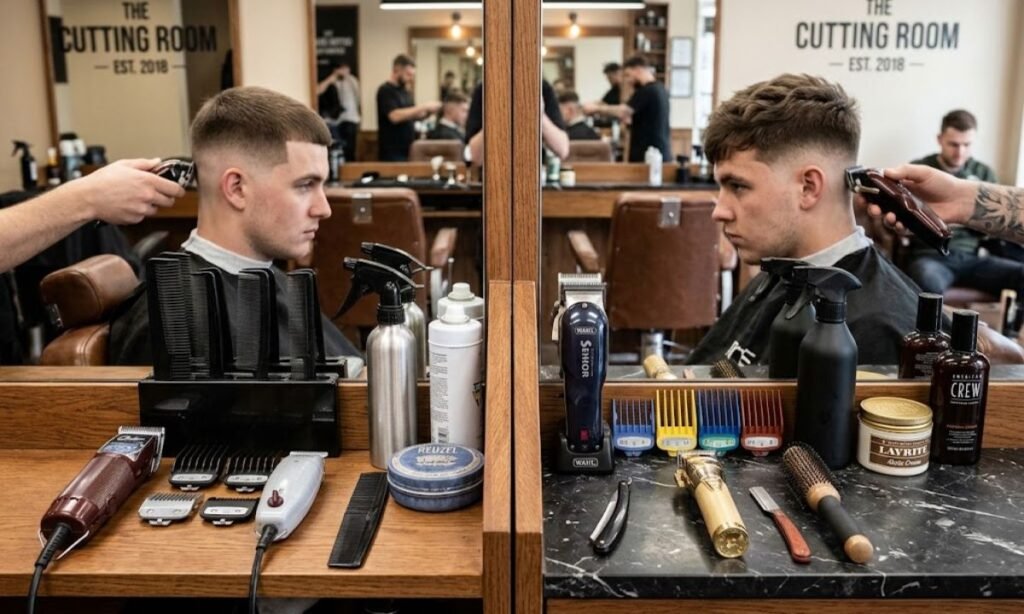
You don’t need a bathroom full of gear. A few smart picks cover almost every style. Start with a good comb, a blow-dryer, and one or two styling products.
If you trim at home, buy a quality clipper with proper clipper guard options. Don’t try a full fade yourself, though. Clipper technique and fade blending take practice, and mistakes show instantly.
A quick stash for most guys:
- Matte clay for texture and a natural finish
- Lightweight cream for softness and hair movement
- Curl cream and a diffuser for curly tops
- Pomade for a sleek slick-back
How do you grow out a high taper fade gracefully?

Every fade grows out, so plan for it. The haircut grow-out phase can look messy for a week or two. Most guys just push through the awkward middle.
A smart trick is to move from a high taper to a mid taper and then to a low taper as the hair grows. That keeps the shape tidy during the hair regrowth stage. Keep up regular trims around the neckline to avoid a shaggy look.
If you want to grow the sides long, give it about two to three months. Ask your barber to soften the blend line as you go. That keeps the haircut shape looking planned.
You can also checkout this article as well: High Taper Fade Afro: Styles, Barber Script, and Maintenance Guide
Frequently asked questions

Is a high taper fade good for thin hair?
Yes, with a few tweaks. Keep the top length medium, choose a guarded finish, and skip very tall styles. A textured crop adds the look of fullness.
How short should the sides be?
Most guys do well with a #1 or #2 guard at the shortest point. Go shorter only if you want a skin fade. Start longer if you’re unsure.
Can I get a high taper fade with a receding hairline?
Yes. Use a soft temple fade and a textured fringe to guide the eye. Avoid very short, sharp edges at the temple height.
What’s the difference between a taper and a fade?
A taper shortens hair gradually but usually keeps some length. A fade often goes down to the skin. Many barbers mix the terms, so a reference photo helps.
How much does a high taper fade cost?
Prices vary by city and shop, but most barbers charge a bit more than a basic trim. Ask before you sit down. Tipping is common, too.
Can curly hair get a high taper fade?
Absolutely. Leave enough length on top to account for hair shrinkage, and use curl cream to define the natural curl pattern. The contrast looks great.
Final Thoughts
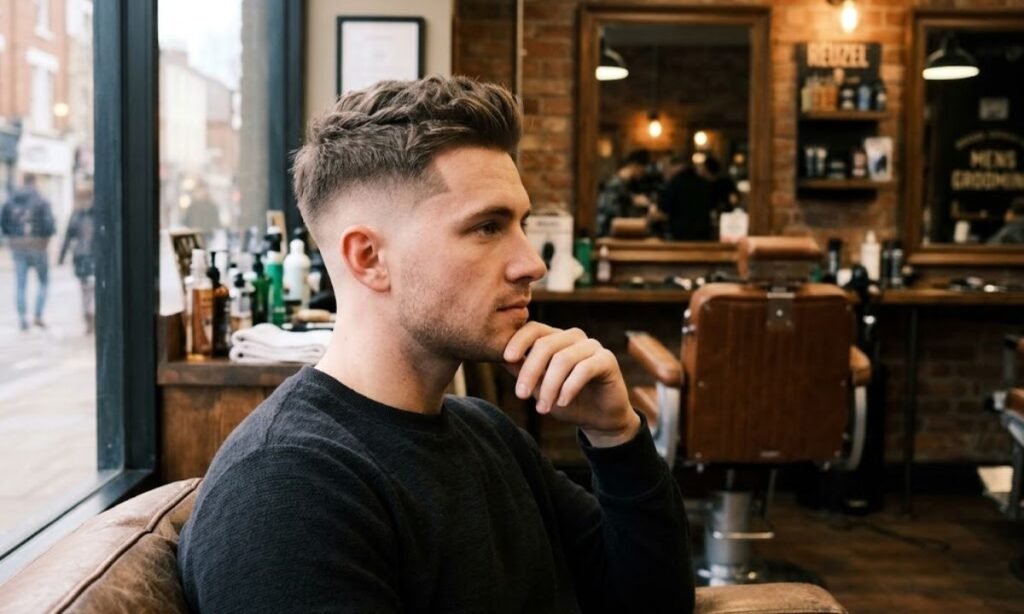
A high taper fade gives white guys a clean, modern look that adapts to almost any hair texture. The trick is to match fade height, finish, and top length to your own hair. Do that, and the cut works for you.
Bring a reference photo, use the six details, and book regular fade touch-ups. Start softer if you’re nervous, since you can always go shorter next time. Small choices make the biggest difference.
Got a question or a story from your last visit to the barber? Drop it in the comments, and share this guide with a friend who’s thinking about a fade. Your experience might help someone else walk out happy.

I’m Michael Charles, the creator of MegaCrazes—your source for fresh hairstyles, sharp haircuts, and simple hair-care inspiration. Find your style. Own your look.