

Quick Answer
A burst fade design is a clean haircut where the fade curves around the ear instead of running in a straight line down the neck. Barbers add a shaved pattern into that curved fade area, usually above the ear or behind the ear, to give the whole look extra edge.
If you want one, ask for a low burst, mid burst, or high burst blend first, then pick a simple line, zigzag pattern, or geometric shape to sit inside it. That’s the short version. Now let’s get into the details that actually matter when you sit in the chair.
What Is a Burst Fade Design
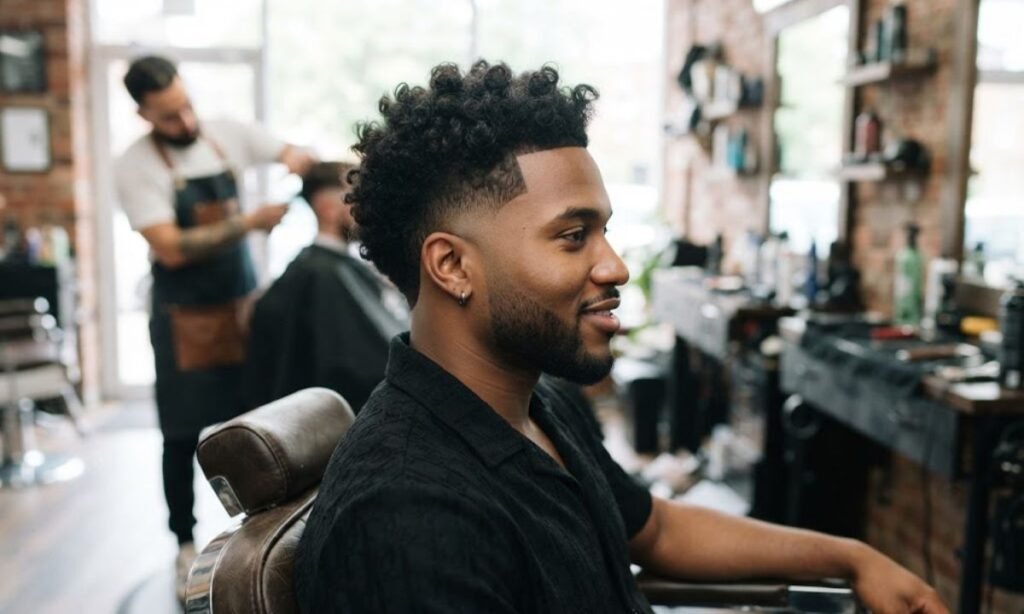
A regular burst fade already looks sharp on its own. It fades in a semicircle around the ear rather than in a straight horizontal band, which gives it a rounder, softer finish than a skin fade or shadow fade. A burst fade design takes that same shape and adds a shaved hair design somewhere inside the fade, turning a good clean blend into something with real personality.
The design usually sits around the ear, along the hairline, or near the nape. Barbers use clippers, a trimmer, and sometimes a razor for the fine detail work. The goal is always the same: a smooth blend on the outside and sharp outlines on the design itself.
What makes this style different from just adding a random pattern to any haircut is the design placement. Because the burst curves, patterns naturally follow that curve too, which is why zigzags, lightning bolts, and geometric shapes tend to look better here than on a straight fade.
Burst Fade Design Ideas
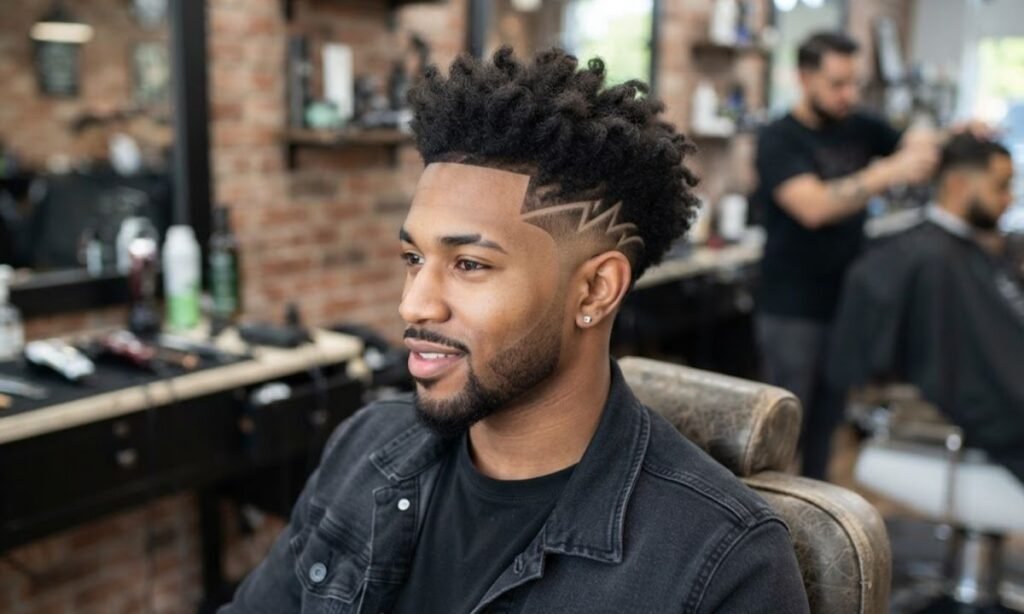
There’s no shortage of burst fade design ideas out there, but the best ones respect the natural curve of the fade instead of fighting it. Think of the fade area like a canvas that’s already curved for you. Simple crisp edges with one or two lines often look cleaner than something busy.
Guys with more hair on top have more room to play. You can pair a bold design near the ear with a textured crop or fringe up top, and the contrast makes both parts pop. Less hair on top usually calls for a smaller, quieter design so the whole cut doesn’t feel overloaded.
A good barber will look at your face shape before suggesting anything. A design that flatters a round face might not do the same for someone with a longer jawline, so this isn’t a one size fits all decision.
Sharp Burst Fade
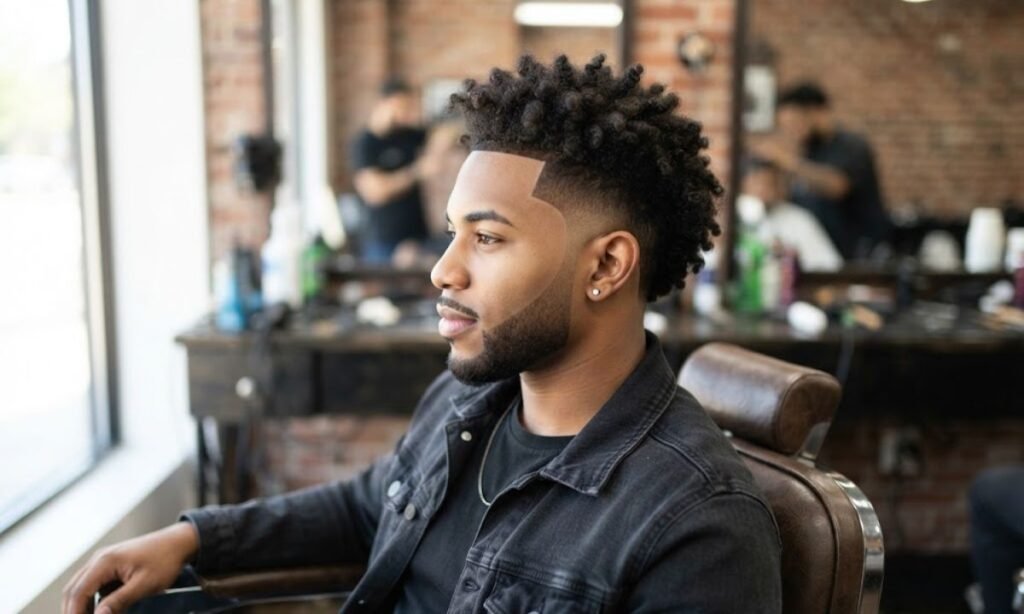
A sharp burst fade is all about contrast. The blend itself stays tight and controlled, and the design lines are cut with real precision, no fuzzy edges anywhere. This version photographs well because the lines hold their shape even under harsh light.
Barbers get this look by going slow with the trimmer and checking the fade area from multiple angles before finishing. It’s not a fast cut. If your barber rushes through it, the sharpness fades within a week.
This style suits guys who like a bold look and don’t mind more frequent touch up visits. Sharp lines grow out faster than soft, blended ones.
Burst Fade With Design vs Regular Burst Fade
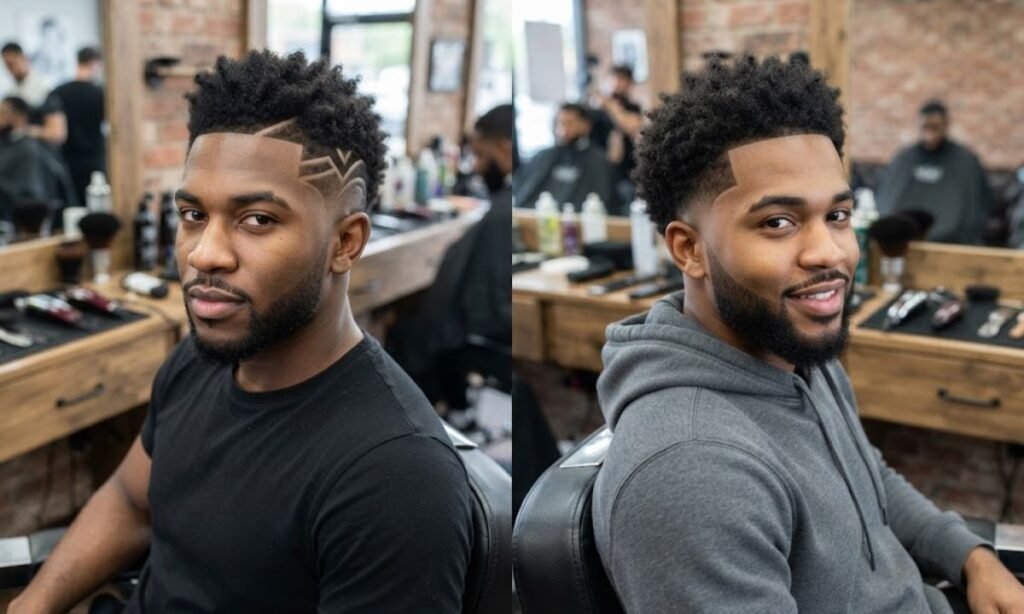
The difference between burst fade with design and a plain burst fade comes down to detail work. A regular burst fade is just the curved blend, nothing shaved into it. Add a haircut design pattern and suddenly the cut has a focal point.
Regular burst fades are lower maintenance. You can go three or four weeks without much upkeep. Once you add a design, you’re committing to more frequent visits because the pattern grows out faster than the surrounding fade.
Neither is better exactly. It depends on how much attention you want your hair to draw and how often you’re willing to sit in a barber’s chair.
Low Burst Fade Design
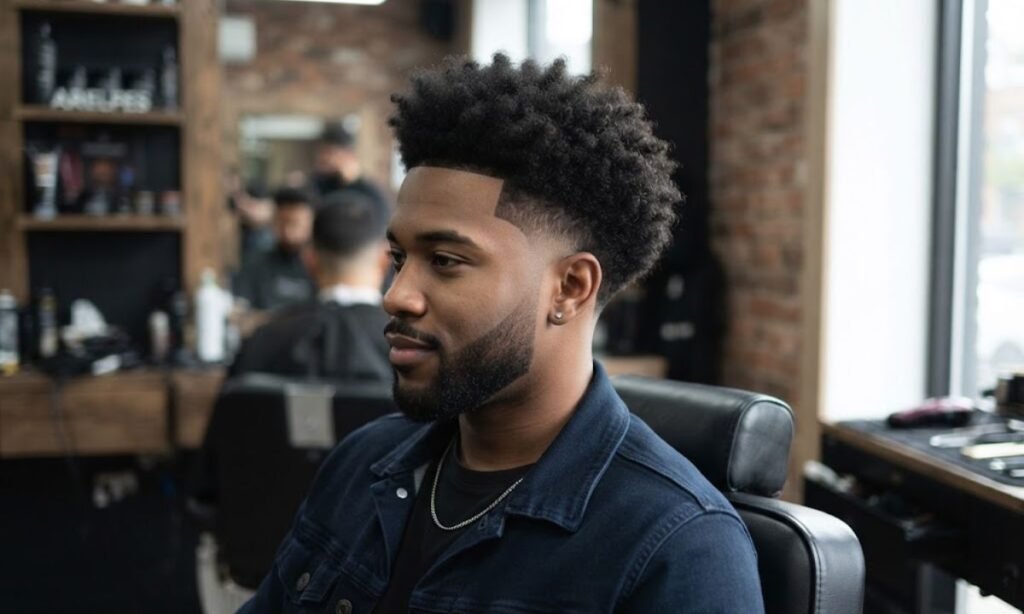
A low burst fade design keeps the fade close to the ear and doesn’t climb high up the head. This is the most subtle option of the three heights, which makes it a solid pick for work settings or anyone easing into the style for the first time.
Because the fade area is smaller here, there’s less room for a big design. Most barbers stick to a simple line or small shape rather than anything elaborate. It still looks sharp, just quieter.
If you’re not sure how bold you want to go, starting low is the safer bet. You can always go bigger next time.
Mid Burst Fade Design
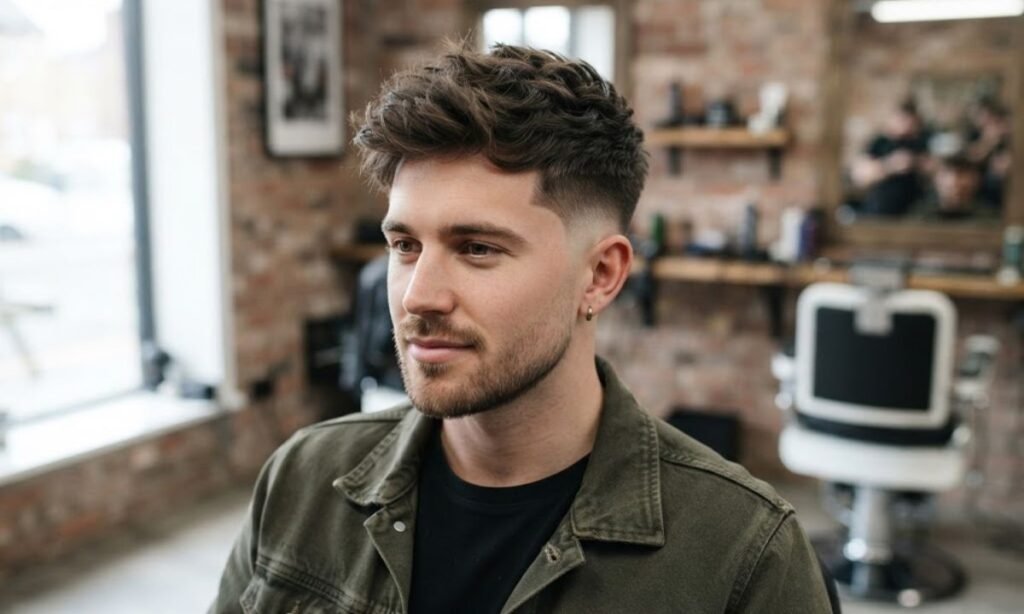
Mid burst fade design sits in the middle, literally and stylistically. The fade rises a bit higher than the low version, opening up more space for the shaved pattern to breathe.
This height gives barbers room for two lines, a small zigzag, or a modest geometric shape without it looking cramped. It’s probably the most requested version because it balances bold look and subtle look pretty evenly.
Most face shapes handle a mid burst well, which is another reason it’s such a popular middle ground.
High Burst Fade Design
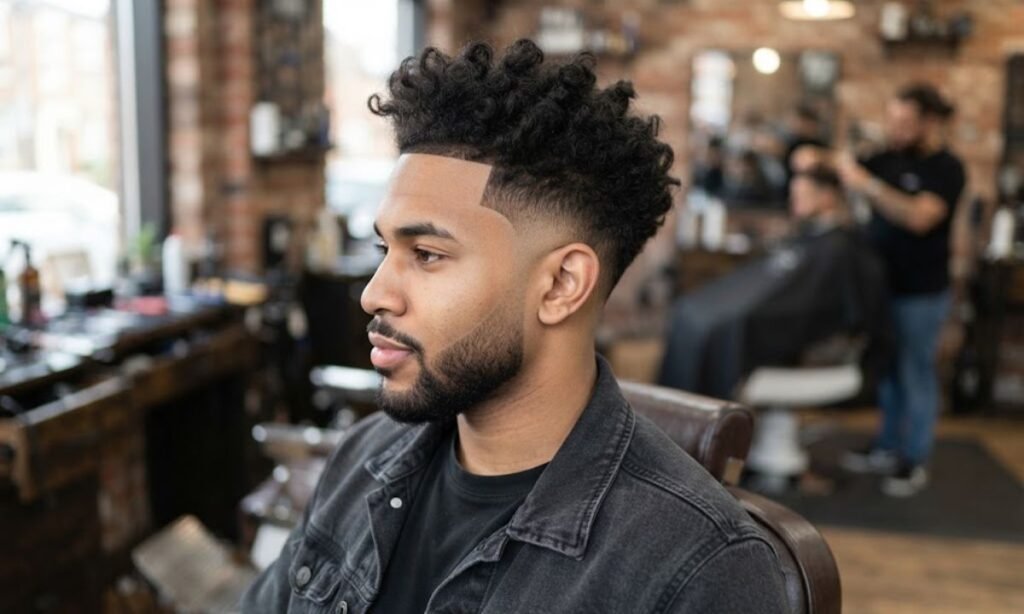
A high burst fade design pushes the fade well up the side of the head, sometimes close to the parietal ridge. That extra height means extra room, so this is where you see the most ambitious burst fade design ideas come to life.
Bigger designs, like a full geometric pattern or a piece that wraps from the ear toward the crown, need this kind of space to actually read clearly. Cramming a detailed design into a low burst just makes it look messy.
Keep in mind that high bursts show more scalp and need more frequent maintenance to stay sharp, especially once the design starts growing out.
Burst Fade Design on Straight Hair

Burst fade design on straight hair tends to show clean lines the best. Straight strands lie flat, so the transition between skin and hair reads sharp right away, and the design itself looks crisp without much extra work.
The tradeoff is that straight hair grows out visibly fast in terms of losing shape. A design that looked razor sharp on day one can look soft by day ten, simply because straight hair doesn’t hold a line the way textured hair does.
If you have straight hair, plan on shorter gaps between touch up appointments if you want the design to stay photo ready.
Burst Fade Design on Curly Hair
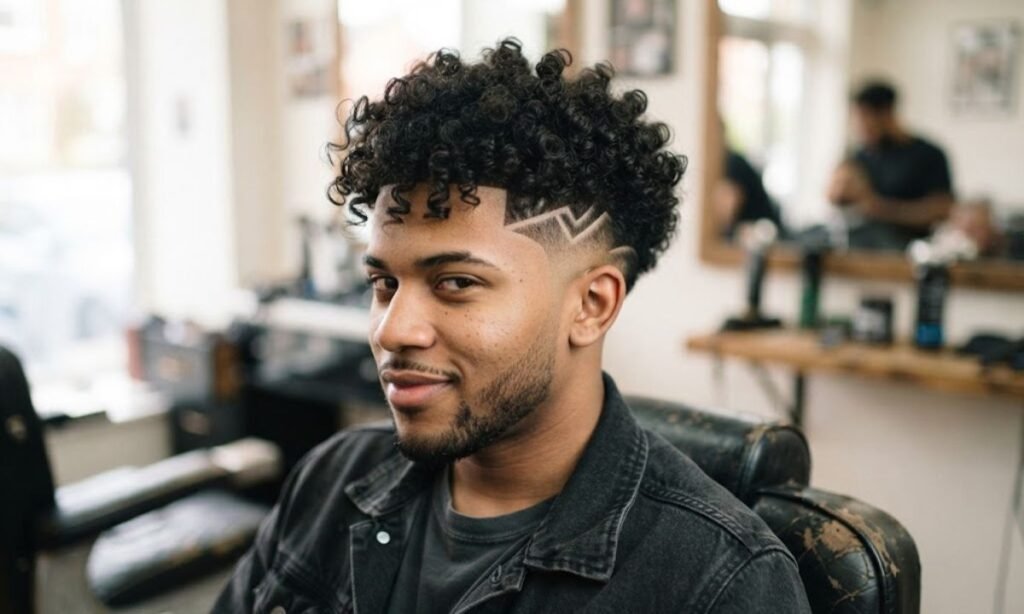
Burst fade design for curly hair works differently because curls add natural texture and volume up top, which contrasts nicely against the smooth, shaved sides. The curl volume almost frames the design like a border.
Curly hair also hides minor imperfections in the fade line better than straight hair does, since the curl pattern breaks up sharp visual edges. That’s not an excuse for sloppy work, but it does forgive small things.
One thing to watch for is product buildup. Curly hair often needs more moisture, and heavy products can clog the design area, making lines look dull instead of sharp.
Burst Fade Design for Thick Hair vs Thin Hair

Burst fade design for thick hair usually means more contrast between the shaved design and the hair on top, since thick hair holds height and shape well. This makes even a simple design look more dramatic.
Burst fade design for thin hair needs a lighter touch. Too much shaved detail against thin hair up top can look unbalanced, so barbers often keep the design smaller and pair it with a style on top that adds the illusion of density.
Neither hair type is limited here, it’s really about matching the size of the design to the amount of hair surrounding it.
Behind the Ear Burst Fade Design
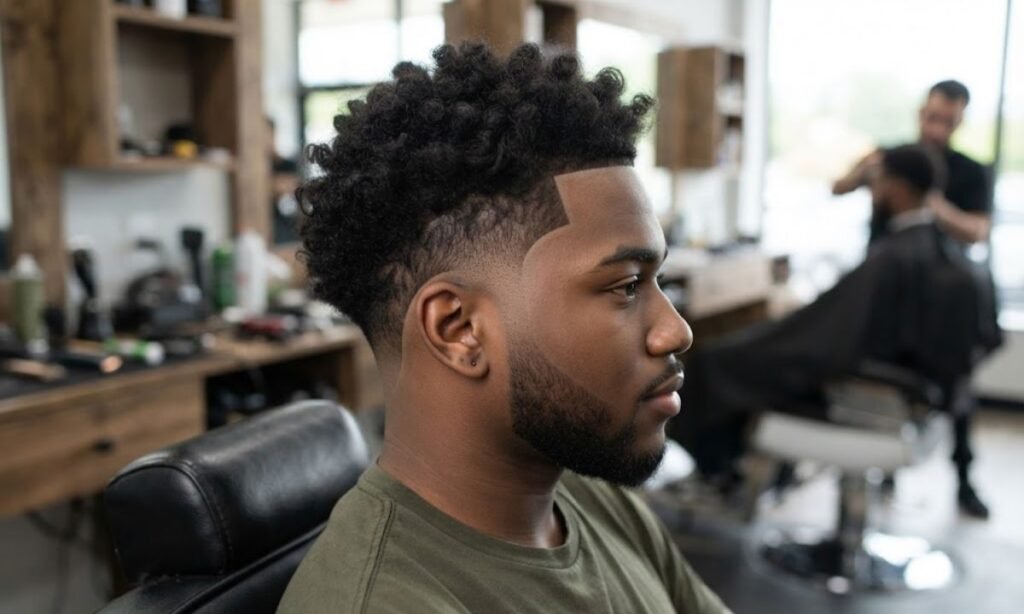
Burst fade around ear designs frequently extend to the area behind the ear, which is one of the most popular spots for a small, hidden detail. It’s visible when your hair is short but tucks away nicely if you grow the top out later.
This spot works well for smaller symbols, initials, or a short line design since there’s limited space to work with. Barbers need a steady hand here because the skin curves quickly behind the ear.
It’s also one of the lower maintenance placements, since it’s tucked away from constant friction and touch.
Nape and V Area Design

The nape and V cut neckline area is another favorite for design placement. A V design haircut at the neckline gives the whole cut a finished, tailored look, almost like a signature at the bottom of the fade.
This spot pairs naturally with a burst fade because both features rely on curved lines rather than straight ones. A clean V at the neckline ties the bottom of the haircut together the same way the burst ties together the sides.
Barbers usually save this detail for last, checking it in a mirror from multiple angles before you leave the chair.
Burst Fade Line Design
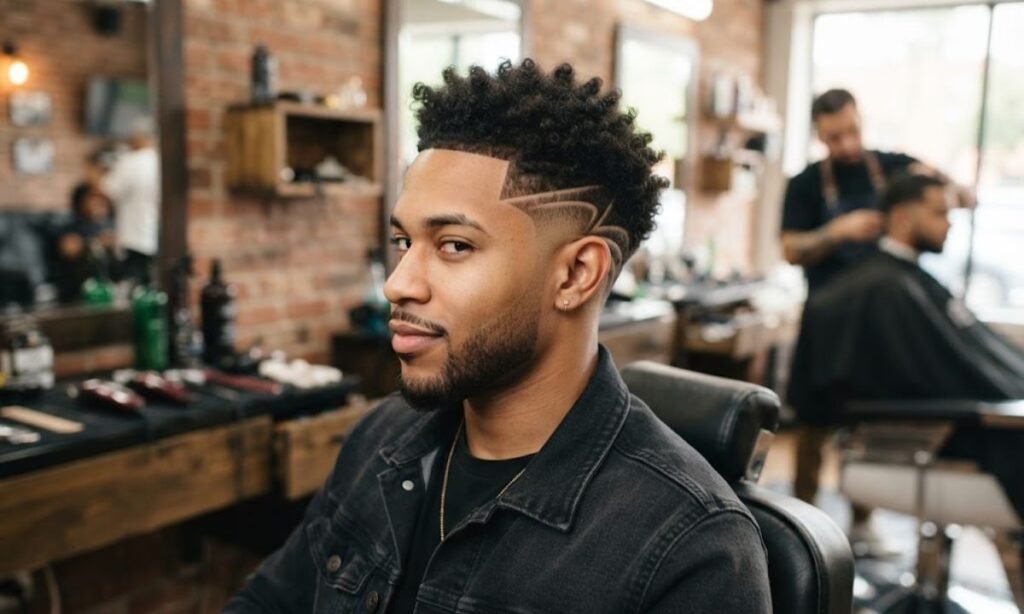
A burst fade line design is the simplest place to start if you’ve never had a shaved pattern before. One clean line, or maybe two lines running parallel, can transform a plain fade without going overboard.
Lines are also the easiest design to maintain. A quick touch up every couple weeks keeps them looking fresh, and there’s no complicated pattern to redo from scratch each time.
This is a great entry point for guys who work in more conservative environments but still want something extra.
Burst Fade Zigzag Design
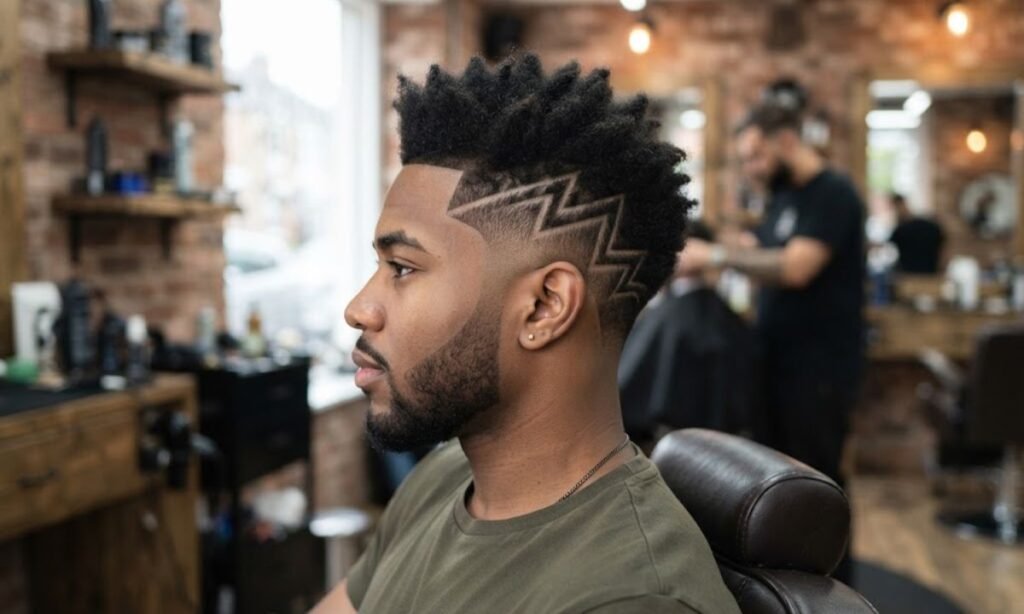
Burst fade zigzag design brings movement into the cut. Instead of a straight or curved line, the zigzag adds energy and works especially well when it follows the natural curve of the burst.
This pattern needs a steady, practiced hand. Uneven zigzag points are one of the more obvious mistakes you’ll see on a rushed job, so it’s worth choosing a barber who’s done this pattern before.
It looks great paired with three lines running alongside it for extra depth.
Burst Fade Lightning Bolt Design
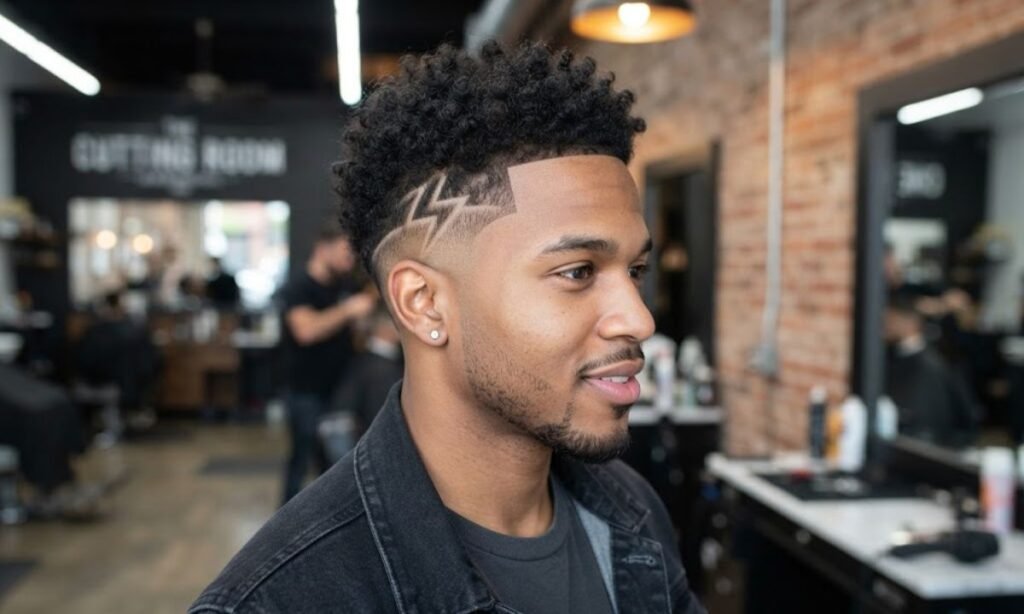
The burst fade lightning bolt design is bold, recognizable, and doesn’t need much explanation to anyone who sees it. It works best on a mid or high burst where there’s enough room for the jagged shape to read clearly.
Because it’s an angular design, it needs clean angles and precise sharp outlines to actually look like a lightning bolt instead of a random scribble. Sloppy execution here is very noticeable.
This is a design that draws attention, so it suits guys who genuinely want a bold look.
Burst Fade Heart Design
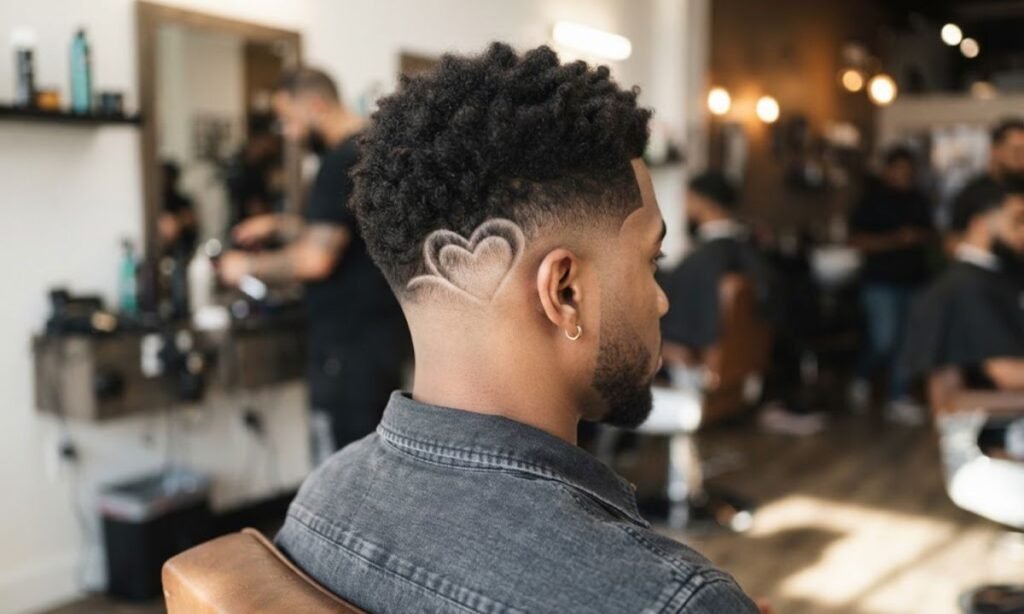
A burst fade heart design is more personal and often shows up around holidays or as a fun, temporary statement. The curved lines of a heart shape actually complement the curve of a burst fade nicely.
This design usually sits small and close to the ear rather than sprawling across the whole fade area. Keeping it compact makes it easier to keep the shape clean between visits.
It’s playful, it’s not permanent, and it’s an easy way to try a design without a long term commitment.
Burst Fade Star Design
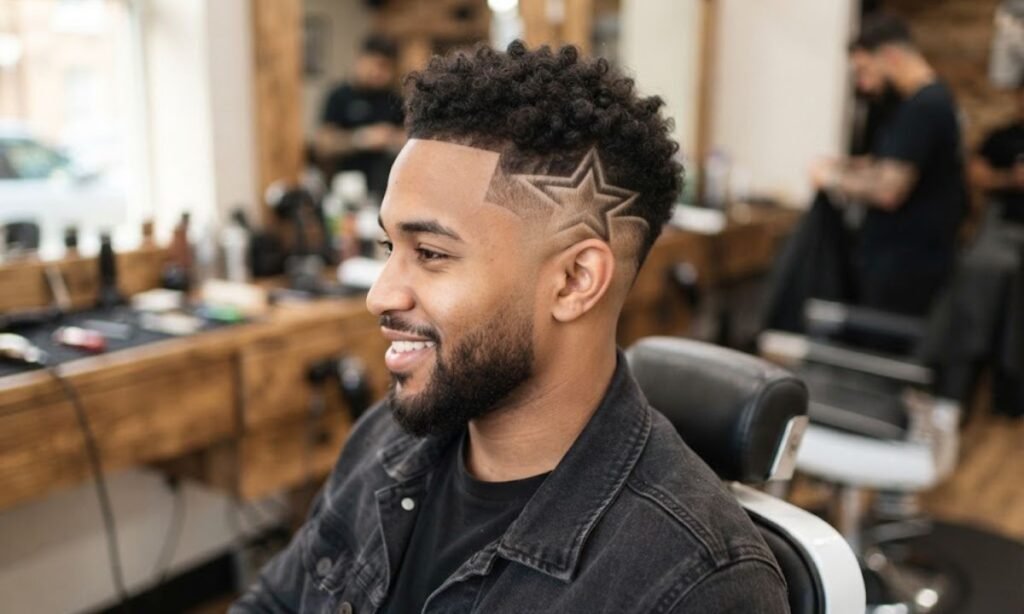
Burst fade star design works well as a single small accent or repeated in a cluster for a fuller look. A single star design near the temple is subtle, while a scattered cluster leans more toward a bold look.
Stars need clean points, so this design also depends heavily on the barber’s precision with a trimmer or razor. Rounded, blunted points usually mean the artist rushed the detail work.
This pattern tends to age well since small gaps from regrowth are less noticeable on star shapes than on long lines.
Burst Fade Geometric Design and Negative Space
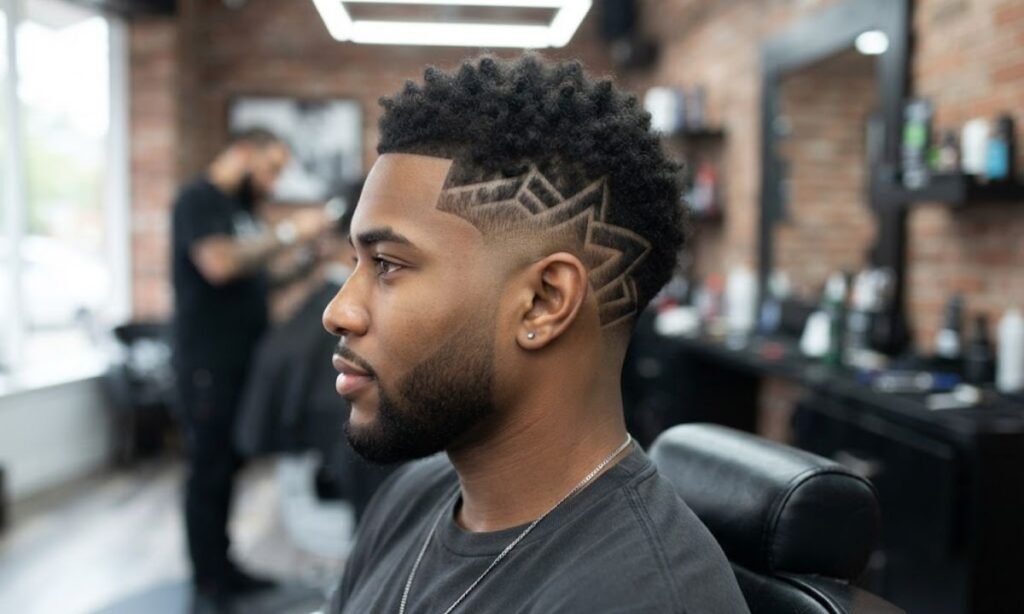
Burst fade geometric design uses shapes like triangles and squares cut directly into the fade, often relying on negative space hair design to make the pattern pop. Instead of shaving lines, the barber sometimes shaves around a shape, leaving hair behind to form it.
This technique takes real skill because there’s no room for correction once hair is removed. A confident, experienced barber will map out the design lightly before committing to any cuts.
Geometric patterns tend to look modern and clean, which is part of why they’ve become one of the most requested burst fade design ideas in recent years.
Burst Fade With V Design
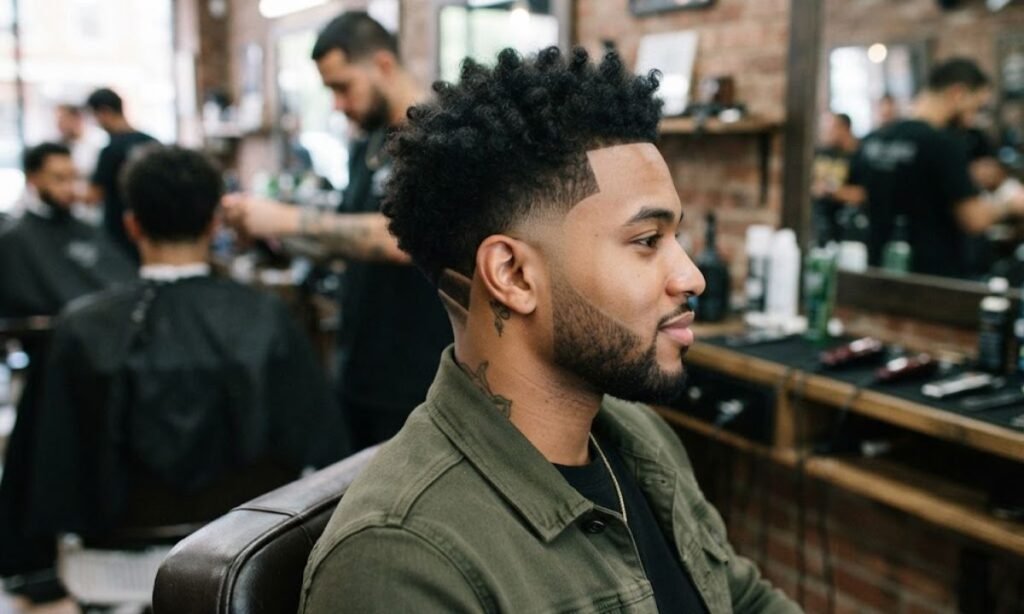
Burst fade with V design combines the curved burst shape with sharp V shaped cuts, usually near the nape or along the side. It’s a nice middle ground between soft curves and hard angles in one haircut.
This combination gives barbers a chance to show contrast, curved lines on one part of the head and crisp clean angles elsewhere. Done well, it looks intentional rather than cluttered.
It’s a slightly more advanced request, so it helps to bring a reference photo when you ask for it.
Creative Fade Patterns

Beyond the classics, plenty of creative fade patterns mix multiple elements, a line here, a small geometric shape there, maybe a subtle curve connecting both. These custom combinations are where a skilled barber really gets to show off.
The key with any custom pattern is keeping enough negative space so the design doesn’t turn into a blur of shaved lines. Busy doesn’t always mean better.
If you’re going custom, talk it through with your barber before they pick up the clippers so you’re both picturing the same thing.
Burst Fade Linework

Burst fade linework refers to any design built mainly from straight or curved lines rather than shapes or symbols. It’s a broad category, everything from a single subtle line to an elaborate woven pattern falls under linework.
Good linework depends on spacing. Lines that are too close together tend to blur into each other as hair grows, while properly spaced lines stay legible for longer between touch ups.
This is often the most requested style because it’s flexible enough to suit almost any hair type or face shape.
Bold Fade Designs

Bold fade designs go big, more shaved area, thicker lines, larger shapes. These aren’t for guys who want something quiet. They’re for people who want their haircut to be a conversation starter.
Because more hair gets removed for a bold design, there’s also more upkeep involved. Expect to be back in the chair sooner than someone with a smaller, simpler pattern.
Bold doesn’t mean messy though. Even the biggest design still needs sharp outlines to actually look good rather than just look big.
Curved Burst Details
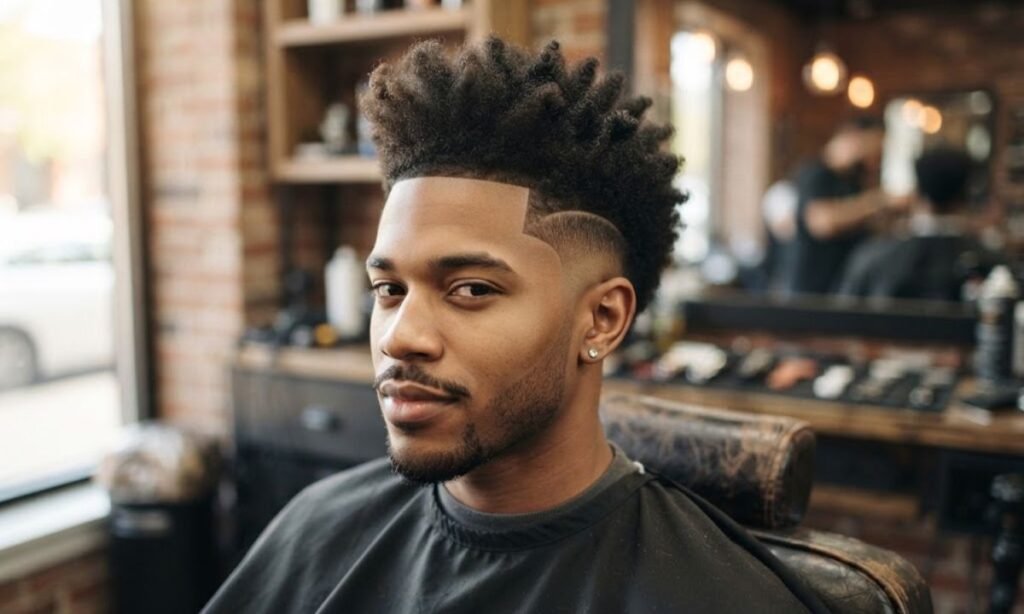
Curved burst details lean into the natural shape of the burst fade instead of cutting against it with straight lines. Arcs, swirls, and rounded shapes tend to flow more naturally with this fade type than sharp angles do.
This approach usually looks more subtle even when the design itself is fairly large, since curves feel softer to the eye than straight edges. It’s a good option if you want detail without a harsh, aggressive look.
Barbers who specialize in curved work often free hand these designs rather than using stencils, so ask around if this style interests you.
Burst Fade Art
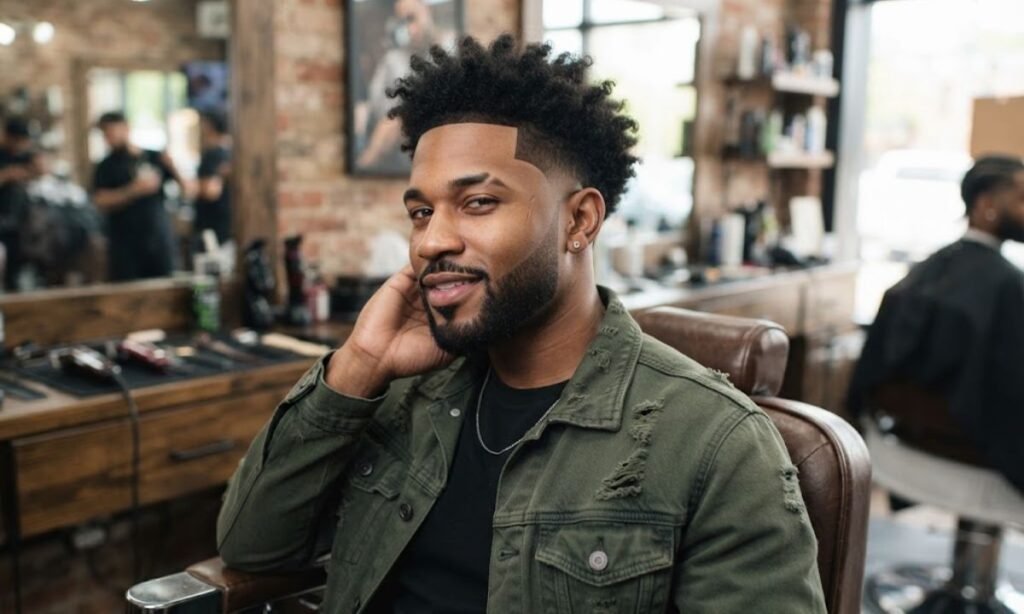
Some guys treat their haircut like actual burst fade art, working with their barber on a design that means something personal, initials, a small symbol, or a pattern inspired by something they love. This is where a haircut becomes a real form of self expression.
These designs take longer in the chair and usually cost more, since they require more planning and steadier hands. It’s worth asking your barber upfront how long a custom piece will take.
The result, when done right, is a haircut that’s genuinely one of a kind.
Unique Fade Shapes
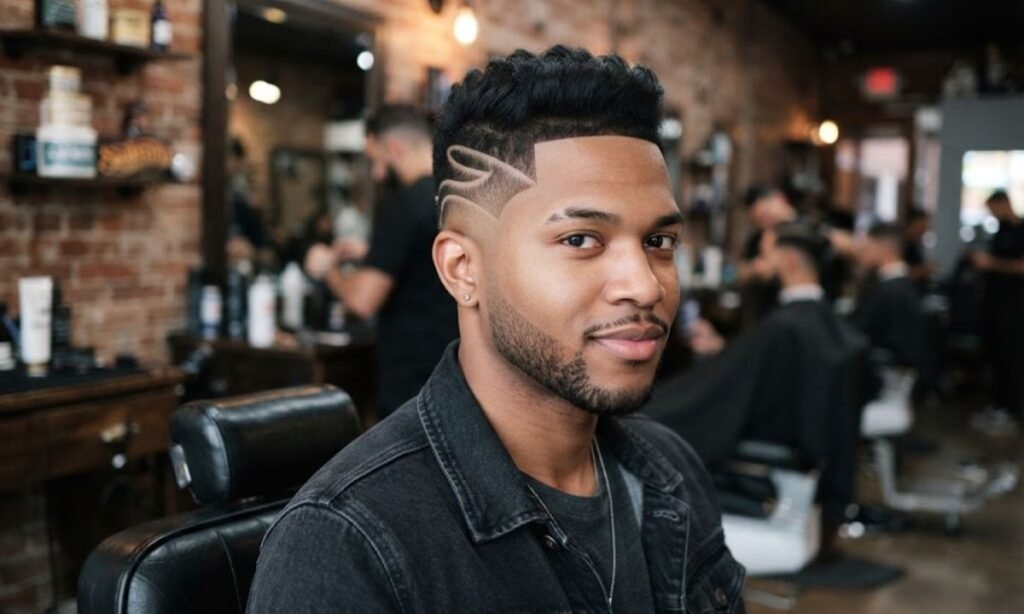
Unique fade shapes step outside the usual lines, zigzags, and stars into more original territory, think abstract shapes or asymmetrical patterns that don’t fit a standard category. These require a barber who’s comfortable improvising.
Because these shapes are unusual, they’re harder to describe over a quick conversation. Bring photos, even if they’re not exact matches, to help your barber understand the general direction you’re after.
Unique shapes also mean unique maintenance needs, so ask specifically how to care for yours once it’s done.
Modern Burst Designs
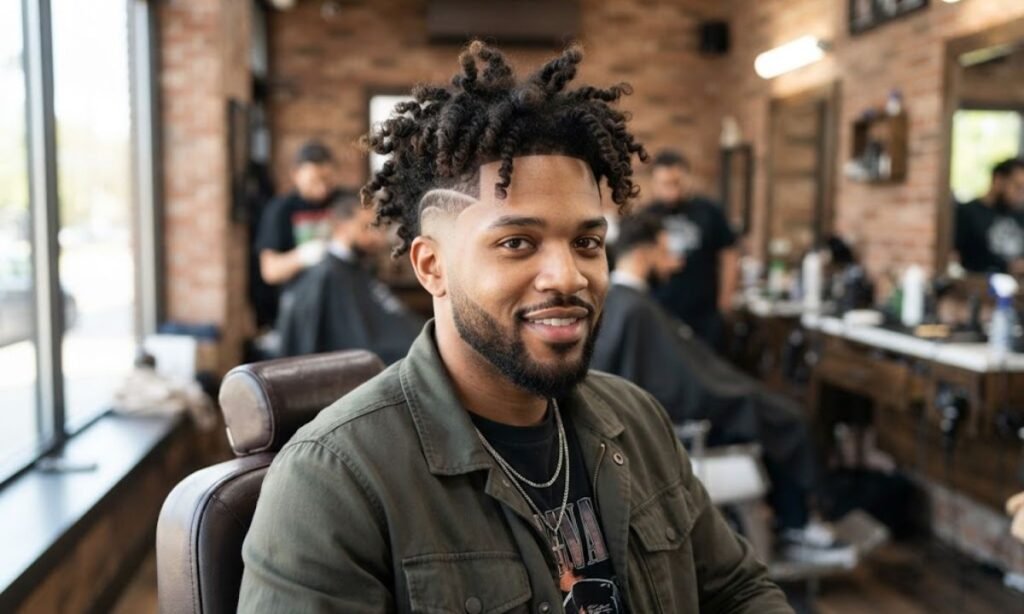
Modern burst designs tend to favor clean, minimal patterns over busy, maximalist ones. Think one confident line or a small geometric accent rather than a dozen competing shapes crammed into one fade.
This shift toward simplicity mirrors a lot of current menswear and grooming trends generally, less clutter, more precision. It’s also just easier to maintain, which matters if you don’t want to be in the barber chair every single week.
If you want something that’ll still look sharp a year from now instead of dated, minimal usually wins out over maximal.
What to Tell Your Barber

Walking in with the right words saves everyone time. Start with the fade height, low burst, mid burst, or high burst, since that decision shapes everything else about the design. Then describe the design itself, or better yet, show a photo.
Mention your hair texture too. Whether you’ve got straight hair, curly hair, thick hair, or thin hair changes how the design should be sized and placed, and a good barber will actually ask if you don’t bring it up first.
Don’t be afraid to ask questions back. How long will the appointment take? How often will you need a touch up? A barber who answers clearly is usually one who knows exactly what they’re doing.
Simple Guard and Blend Notes

For the blend itself, it helps to know rough clipper guard numbers, though your barber will adjust based on your hair growth pattern and head shape anyway. A common approach is a shorter guard near the hairline blending up toward a longer length on top.
Ask specifically for a smooth blend with no visible lines between guard changes, that’s the difference between a cut that looks professional and one that looks rushed. If you want the design to stand out more, request slightly more contrast between the shaved area and the hair around it.
Bringing a couple of reference photos, even rough ones, genuinely speeds up this whole conversation.
Burst Fade Design Maintenance

A burst fade design doesn’t stay sharp on its own. As hair grows, the shaved lines soften first, since that’s the shortest hair on your head. This usually happens faster than people expect, sometimes within a week or two depending on how fast your hair grows.
Regular burst fade maintenance isn’t just about looks either. Keeping the design cleaned up prevents it from turning into an awkward, half grown out mess that looks worse than no design at all. A little upkeep goes a long way here.
Talk to your barber about a realistic maintenance plan based on your specific hair growth rate rather than a generic schedule everyone gets told.
How Often to Redo the Design

Most guys need a burst fade touch up every one to two weeks to keep the design crisp. Faster hair growth means shorter gaps, slower growth buys you a bit more time between visits.
Simple designs like a single line hold their shape longer than intricate geometric patterns, so factor that into how often you’re realistically willing to sit in the chair. If frequent visits aren’t practical, lean toward simpler burst fade haircut patterns from the start.
Some barbers offer discounted quick touch ups for design maintenance alone, so it’s worth asking if that’s an option near you.
Aftercare Tips

Keep the design area clean and avoid heavy product directly on the shaved lines, since product buildup dulls the contrast between skin and hair fast. A light moisturizer on the scalp helps prevent dryness without clogging the fine detail.
Avoid picking at or scratching the design area too, especially in the first couple days after a fresh cut, since irritated skin can affect how clean the lines look. Gentle washing is usually enough.
If you’re active or sweat a lot, rinse the area more often. Salt and sweat buildup can make sharp lines look fuzzy faster than normal wear.
Who This Style Suits Best
Face shape plays a bigger role here than most guys expect. Round faces often benefit from higher, more angular burst placement to add visual length, while longer faces sometimes look more balanced with a lower, wider burst.
Square jawlines can usually handle bolder, more geometric designs since strong features balance out strong lines. Softer, rounder features often look better with curved details instead of sharp angles fighting against the face’s natural shape.
None of this is a hard rule though. A skilled barber can adapt almost any burst fade design idea to suit your particular face shape and hair texture with a few small adjustments.
Tools and Products Barbers Use

Behind every clean design is a short list of tools used with real precision. Clippers handle the main fade and blending work, a trimmer takes care of finer detail lines, and a razor sometimes finishes the sharpest edges for that extra crisp look.
On the product side, a light pomade or clay helps style the top without weighing it down, while a gentle scalp moisturizer keeps the skin around the design healthy between visits. Heavy waxes are usually avoided near the design itself since they cause product buildup quickly.
Ask your barber what they use if you liked the finish of a particular cut. Small product choices make a bigger difference than people realize.
Cost and Time to Expect
A standard burst fade without a design typically takes twenty to thirty minutes in most shops. Add a design, and you’re looking at anywhere from an extra fifteen minutes for something simple to well over an hour for a detailed custom piece.
Pricing follows a similar pattern. Simple line designs might only add a small fee on top of a regular haircut, while intricate geometric or custom artwork can cost significantly more given the extra skill and time involved.
It’s reasonable to ask for a price estimate before the barber starts, especially for anything elaborate.
Burst Fade Design Mistakes to Avoid

The most common mistake is going too big too fast. A first timer requesting a huge, detailed design across a high burst often ends up with something that looks cluttered rather than clean. Start smaller and build up over time if you’re not sure.
Skipping regular touch up visits is another frequent issue. A design that isn’t maintained doesn’t just fade quietly, it grows out unevenly and starts looking more like a mistake than a style choice.
Picking a barber without design experience is probably the biggest risk of all. Not every barber who’s great at a clean blend has the steady hand needed for detailed shaved pattern work. Ask to see photos of their previous design work before committing to anything ambitious.
Frequently Asked Questions
Does a burst fade design work on any hair length? Mostly yes, though the top length changes the overall effect. Shorter tops put more focus directly on the fade and its design, while longer tops on a mohawk or mullet style create more contrast between the shaved detail and the volume up top.
Can you add a design to a burst fade mohawk or mullet? Definitely. A burst fade mohawk design or burst fade mullet design actually gives the pattern more visual room to work with, since both styles already create strong shape contrast on their own.
Will a burst fade design suit thinning hair? It can, as long as the design stays proportional to the amount of hair remaining. A smaller, cleaner burst fade line design usually works better here than a large geometric pattern.
You can also checkout this article as well Low Fade Crew Cut Hairstyles: Clean, Modern, Easy
Conclusion
A burst fade design gives you a way to take an already sharp haircut and make it genuinely yours. Whether you go with a simple burst fade line design or a full custom piece, the details, hair texture, face shape, and design placement, all matter more than people expect walking in.
Start small if you’re new to this, communicate clearly with your barber, and stay on top of maintenance once you’ve got a design you love. Do that, and you’ll walk out with a cut that actually holds up week after week, not just on the day you leave the chair.

I’m Michael Charles, the creator of MegaCrazes—your source for fresh hairstyles, sharp haircuts, and simple hair-care inspiration. Find your style. Own your look.
1 thought on “Burst Fade Design: Best Hair Design Ideas, Placement, and Barber Tips (2026)”