

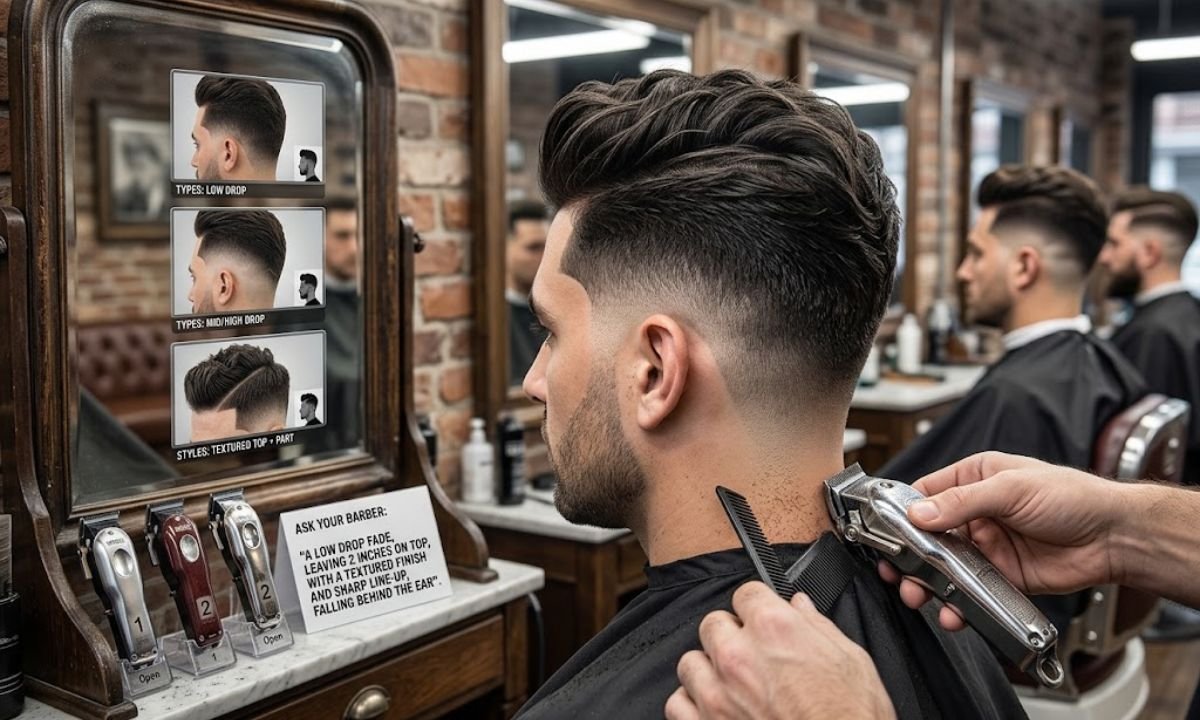
Last updated: November 2026
You sit down in the chair, and your barber asks, “So, what are we doing today?” Your mind goes blank.
You saw a sharp haircut online last night. You just can’t name it. Is it a low fade? A taper? Something with a curve behind the ear?
Here’s the short version. It’s probably a drop fade, and this guide shows you how to ask for it. You’ll learn how the heights differ, which clipper guard gives which finish, and what to say in the chair.
We’ll also cover hair texture, head shape, beards, and fade maintenance. Grab a coffee and let’s dig in.
Quick Answer
A drop fade haircut is a fade whose line curves downward behind the ear. It follows the shape of your skull instead of running straight across. That downward arc gives the cut a rounded, tidy fade silhouette from every angle.
Barbers like it because it frames the head naturally. Clients like it because it looks sharp without looking harsh. You can get it low, mid, high, or as a skin fade, and you can pair it with almost any top.
Here’s what to remember before you book:
- Shape: the fade dips behind the ear and sinks toward the nape area.
- Height: low keeps it subtle, mid is balanced, and high is bold.
- Finish: a #0.5 or #1 guard looks soft, while a skin fade looks bare.
- Upkeep: most people refresh it every two to four weeks.
- Best ask: bring side-view and rear-view photos, then name the height and finish.
What Is a Drop Fade?

Picture a fade as a staircase of hair lengths. Short hair sits at the bottom, and longer hair sits at the top. In a drop fade, that staircase bends downward at the back instead of staying level.
Most people spot it from the side first. The line starts near the temple area, travels above the ear, and then dips. From the rear, you see that curve hug the back of the head.
The result feels more custom than a flat cut. It suits the way real heads are shaped, with a rounded head shape at the back and a curve near the occipital bone. That’s why so many barbers treat it as a go-to for clients who want something clean but not boring.
What Does the “Drop” in Drop Fade Mean?

The word “drop” describes how the line behaves. Behind the ear, the graduation line falls toward the lower neckline instead of continuing straight. Think of a ribbon that droops at the back of a hat.
Imagine a guy named Sam. His barber cuts a low fade, and the line runs level all the way around. It looks fine from the front. From behind, though, the edge feels stiff against his rounded skull.
Switch Sam to a drop fade, and the line eases down behind the ear. The back now looks softer and more finished. Same hair, same guard numbers, different fade placement. That single change is the whole idea.
How Is a Drop Fade Different From a Regular Fade?
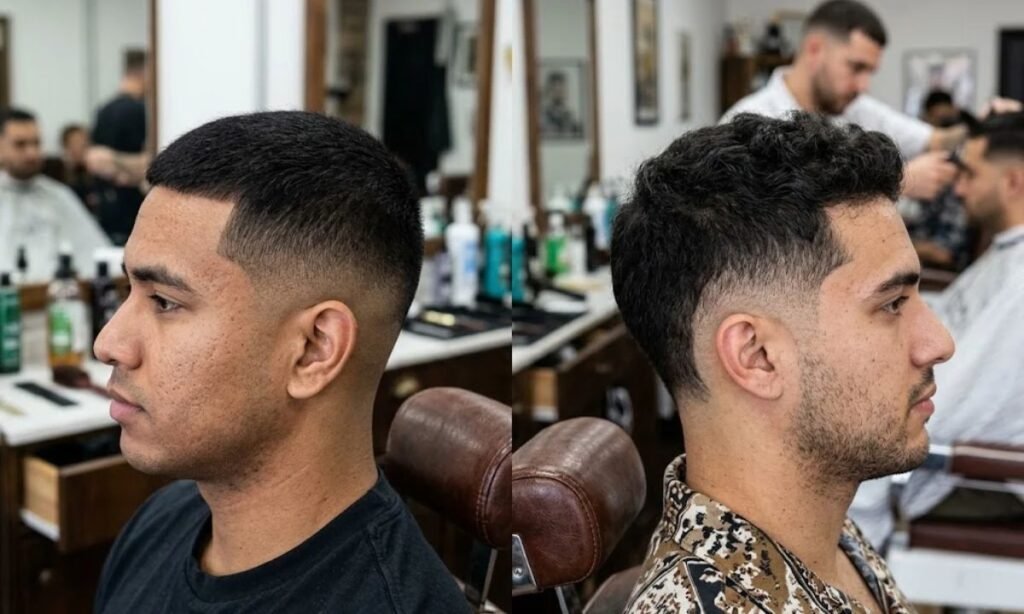
A regular fade usually keeps its line level, or tapers up and down in a fairly straight band. A drop fade bends that band downward behind the ear. It’s a difference of fade geometry, not of how short the hair gets.
The fade transition often looks cleaner too. Because the curve follows the head, the fade blending appears smoother at the side of the head and the back. You get less of that “hard shelf” effect where hair length changes too suddenly.
One more point. Many people say “drop fade” when they actually mean a low or mid fade with a curve. That’s why we’ll break down height and finish below, so you can describe exactly what you want.
How Does Drop Fade Placement Affect the Haircut’s Overall Silhouette?

Fade placement decides how the whole haircut reads from across a room. Put the fade high, and the head looks narrower and more dramatic. Put it low, and the haircut proportions stay calm and natural.
Think about side width here. A fade that starts too high can make the top look heavy, like a hat sitting on thin sides. A fade that starts lower keeps the hair weight closer to the head and looks more balanced.
So before you pick a height, ask yourself one thing. Do you want the cut to whisper or to shout? The answer points you toward low, mid, or high.
How Does the Fade Curve Follow the Natural Shape of the Skull?

Your skull isn’t a perfect ball. It has a gentle bulge at the back and a slope toward the neck. A good drop fade respects that back head contour instead of fighting it.
The curve usually starts above the temple and travels over the upper sides. It then arcs down behind the ear toward the occipital bone and the nape. This path keeps the fade depth even, so the shading looks smooth from every angle.
Here’s a quick test you can try. Ask a friend to take a rear-view photo of your head. If your head has a flat crown or a pronounced curve, show your barber, because that changes where the arc should sit.
How Should the Back Neckline Transition Into the Faded Sides?
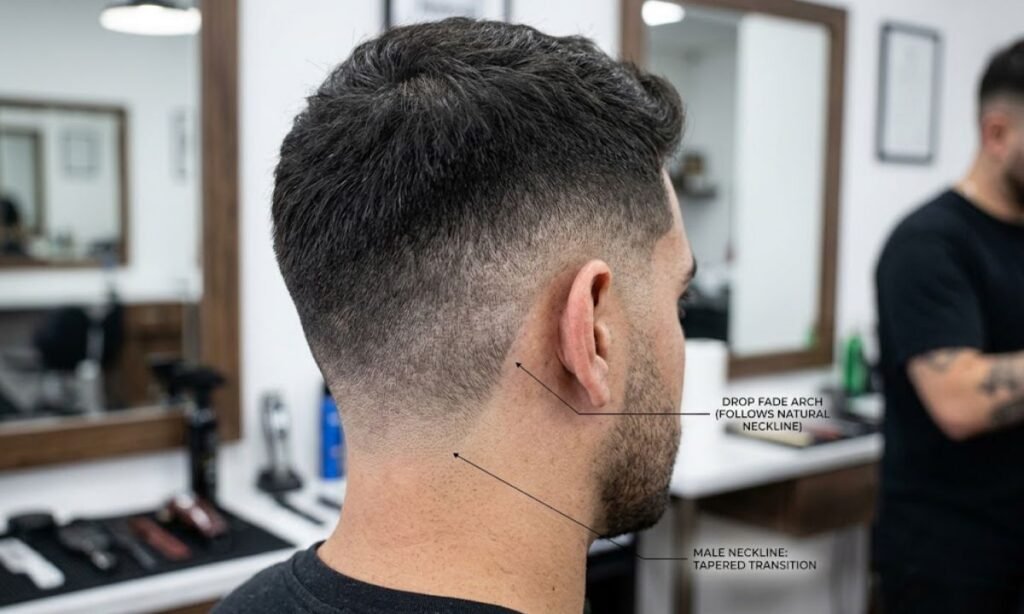
The haircut neckline is where many fades succeed or fail. You can have a perfect blend on the sides, but a messy back ruins it. The goal is a clean handoff from the fade into the neckline cleanup.
You’ve got three common options:
- Natural neckline: follows your real hairline and grows out softly.
- Rounded neckline: a gentle curve that looks tidy and forgiving.
- Squared neckline: a sharp, blocky edge that looks crisp but shows grow-out fast.
For most drop fades, a natural neckline or a rounded neckline works best. The faded sides flow into the nape without a harsh stop. If you love a squared edge, expect more frequent visits, since the line loses its shape quickly.
Low, Mid, High and Skin Drop Fades: What Changes?
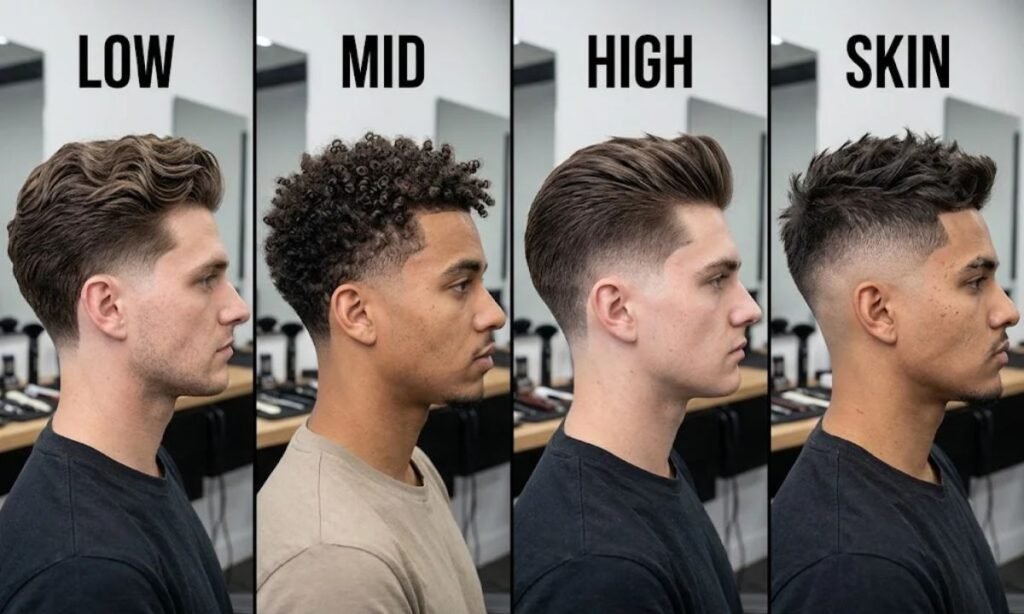
Height is the biggest choice you’ll make. It controls how much scalp exposure you get and how bold the haircut feels. The good news is that every height works with the same drop-down curve.
Here’s the simple rule. The higher the fade starts, the more skin visibility you get on the sides. The lower it starts, the more hair stays and the softer the cut looks.
Below, we’ll walk through each one. Use it like a menu, then pick the one that matches your lifestyle and your workplace.
Low Drop Fade

A low drop fade starts near the lower quarter of the head, just above the ear. It’s the safest and most flexible option. You still see the curve, but the cut looks quiet and professional.
This height suits office settings and first-timers. It also works well when you’ve got a hairline recession and don’t want to draw attention to the temples. Because less of the head is faded, the haircut also grows out gracefully.
Want a quick image? Think of a clean collar on a good shirt. People notice it’s neat, but they don’t stare. That’s the energy of a low fade haircut with a drop.
Mid Drop Fade

A mid drop fade sits around the lower half of the head. It starts roughly at the temple level and drops behind the ear. It’s the Goldilocks pick: noticeable but not loud.
This height gives the fade contrast that many people want. The top looks fuller against shorter sides, so the haircut feels structured. It also works for most face balance needs, since it doesn’t over-slim or over-widen the head.
If you’re unsure, start here. A mid fade haircut with a drop gives you room to go higher or lower next time. One visit usually tells you which direction feels right.
High Drop Fade

A high drop fade begins up near the upper sides and temples. The skin or shortest length shows high on the head. It makes a bold statement, so expect people to notice.
The upside is strong fade contrast. Textured tops, curls, and a pompadour hairstyle all pop against it. The trade-off is upkeep, because the sharp edge shows regrowth faster.
Be honest about your routine before you choose this one. If you can’t visit every two weeks, a high fade may look messy by week three. A high fade haircut rewards people who like a precise look.
Skin Drop Fade vs #0.5 or #1 Finish
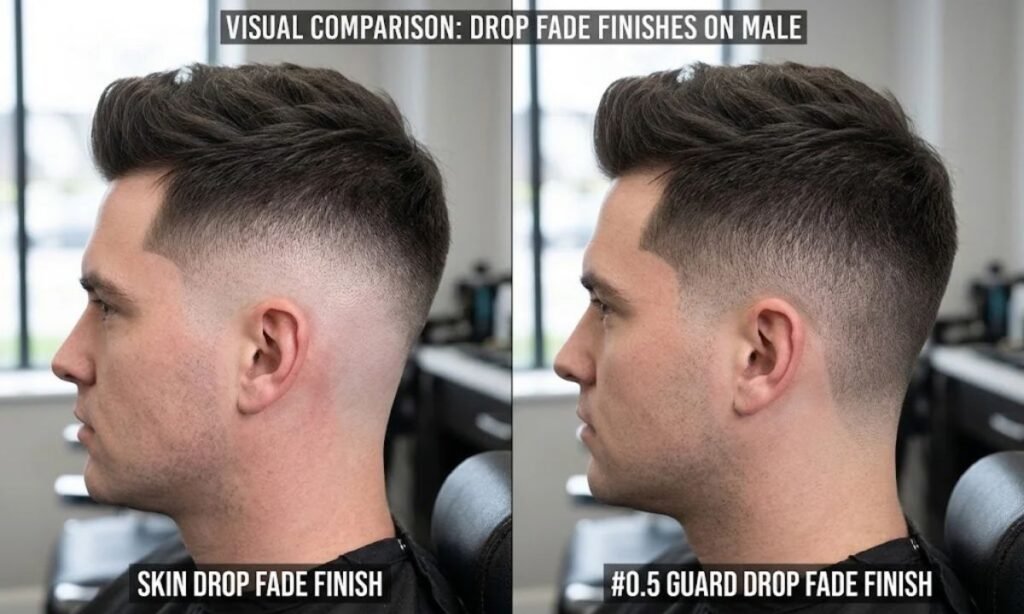
The finish is the shortest point of your fade. A skin drop fade, also called a bald drop fade, goes down to bare-looking skin. It’s the sharpest and most dramatic version.
A #0.5 or #1 finish keeps a trace of hair. That leaves visible stubble instead of bare scalp, so the look feels softer and hides small shaving marks. It also tends to irritate sensitive skin less.
Here’s a quick comparison:
| Finish | Look | Best for |
|---|---|---|
| Skin (bald) | Bare, sharp, high contrast | Bold looks, strong fade contrast |
| #0.5 guard | Faint shadow of hair | Soft look with a clean edge |
| #1 guard | Short visible stubble | Everyday wear, sensitive skin |
If you’re new, try a #1 or #0.5 first. You can always go shorter on the next visit.
What Clipper Guard Sizes Create Different Drop Fade Finishes?

Barbers talk in numbers because barber clippers use plastic or metal guards. Each guard sets a hair length, and the sequence builds the blend. Knowing a few numbers helps you speak the same language.
Wahl’s guard chart is a popular reference. In general, #0.5 leaves about 1.5 mm, #1 leaves about 3 mm, and #2 leaves about 6 mm. A #3 leaves roughly 9.5 mm, and a #4 leaves around 13 mm.
Sizes vary slightly between brands, so treat these as a guide. Ask your barber what they use, and always bring a photo. A photo beats any number.
Which Guard Numbers Create a Soft Drop Fade Transition?
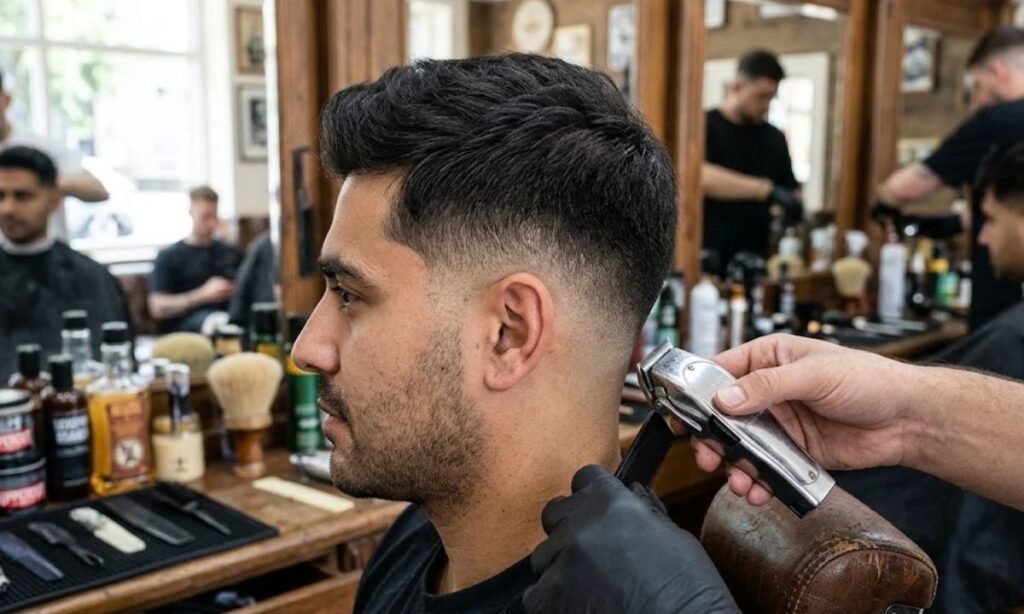
For a gentle look, the sequence usually moves in small steps. Think #0.5 or #1, then #1.5, #2, and #3 as the fade climbs. Small jumps create a softer fade gradient with less visible banding.
The shortest cutting length at the bottom sets the mood. A #1 finish reads soft and wearable. A #0.5 finish adds a little more bite without going fully bare.
When the top is longer, barbers often finish with scissors over comb or a detail trimmer to polish the edges. That’s normal, and it’s a good sign. It means they’re blending by eye, not only by guard.
How Does a Zero-Gap Blend Differ From a Longer Guard Blend?
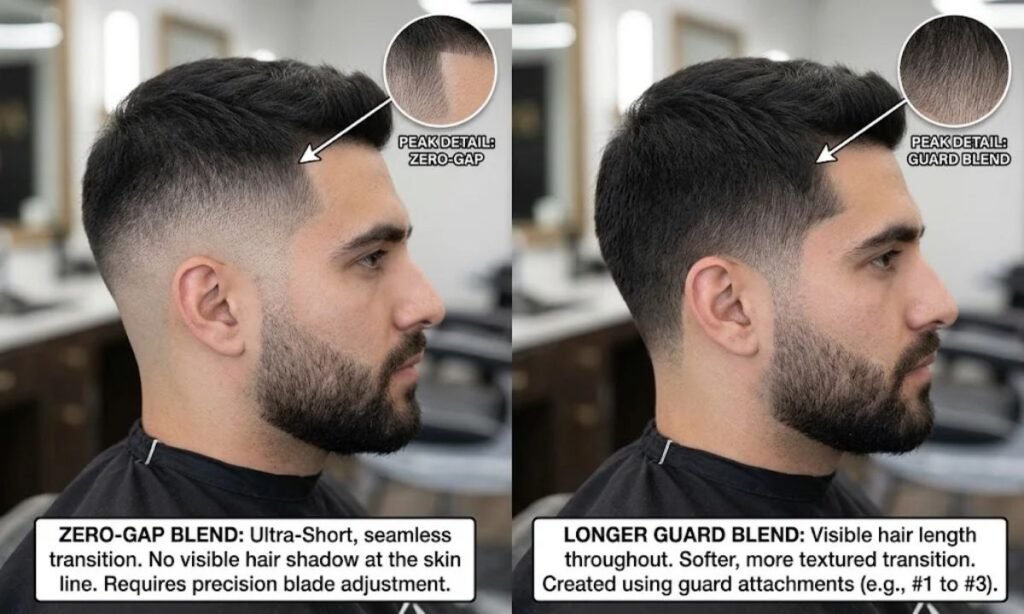
A zero-gap blend means the clipper blades are set tight, so the shortest area looks almost bald. Barbers use it for skin fade work. It creates a crisp, high-contrast look.
A longer guard blend leaves more length at the bottom. The finish looks softer, and the fade transition feels gradual. It’s easier to live with, especially if you don’t like the “fresh out of the chair” shine.
So which one should you choose? If you want drama, ask for a zero guard finish. If you want comfort and low maintenance, ask for a guarded finish with a #1 or #0.5.
Which Drop Fade Suits Your Hair and Head Shape?

No single drop fade fits everyone. Your hair type, head shape, and hairline all change what looks best. The trick is matching the haircut to what you already have.
This is where most online advice goes wrong. It shows one photo and says, “Get this.” Your barber, though, needs to see how the fade will sit on your real head.
Let’s go through three checks. Do them in order, and you’ll walk into the shop with a clear plan.
By Hair Texture and Density

Start with hair texture. Straight hair texture shows every line, so a smooth blend matters most. Wavy hair texture adds natural movement, which hides small imperfections.
Curly hair texture and coily hair texture behave differently. Natural curls spring up, so a drop fade for curly hair gives a clear edge between curls and faded sides. With tightly coiled hair, remember hair shrinkage, since the top looks shorter when it dries.
Now think about hair density. Thick hair holds a fade well but can look bulky, so your barber may thin the hair bulk on top. Fine hair and thin hair look best with a lower or mid fade, because a high fade can make the top look sparse.
By Head and Face Proportions

Face shape matters less than people claim, but proportion still counts. A rounded head shape often looks great with a mid or high drop that adds a bit of height. A longer face usually does better with a low or mid fade, which keeps the sides from looking too narrow.
Check the back, too. A flat crown can look even flatter if the fade is too high. A lower drop and a bit more hair volume on top can balance things out.
If you wonder whether a drop fade suits every face shape, the honest answer is mostly yes. The curve adapts, and the barber adjusts the height. Good face balance comes from tweaking, not from a rule.
Hairline, Crown and Beard Considerations
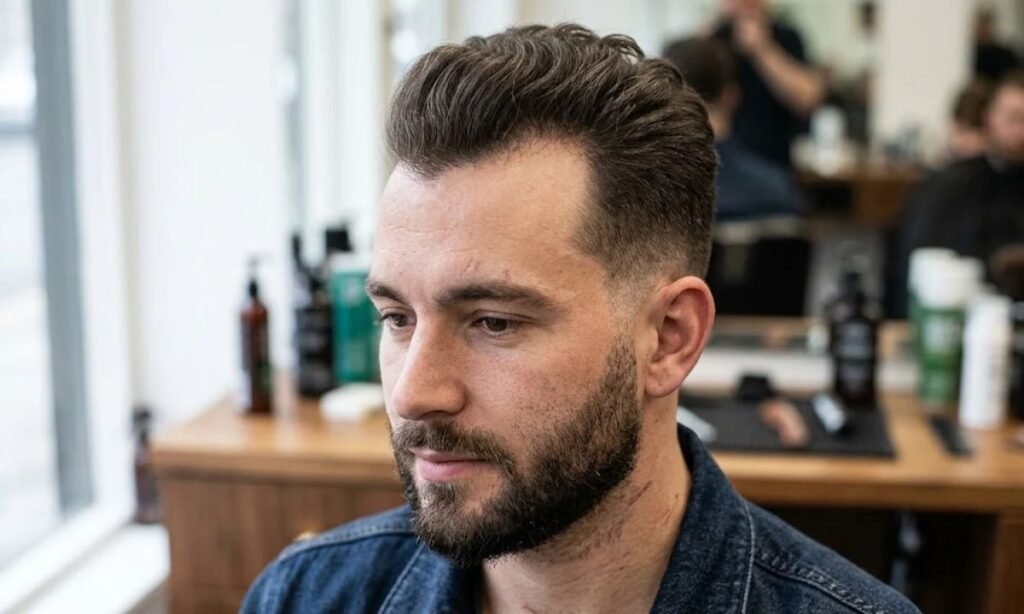
Your natural hairline guides the whole cut. If the temple area is receding, a low fade keeps the edges soft and avoids highlighting it. A strong, even hairline can carry a higher fade without trouble.
Watch for a crown cowlick, too. It can make the top stand up or split, so tell your barber before they start. They might leave extra length there so it lies flat.
Beards add another layer. Beard density affects how well a fade connects, and thin patches show a rough edge. A natural beard connection blends the fade into the sideburns and cheek line, so the face looks continuous.
What Top Hair Lengths Work Best With a Drop Fade?

The sides get the attention, but the top finishes the job. Top styling decides whether the haircut looks sporty, classic, or edgy. Luckily, a drop fade works with almost every length.
Start by asking what you want to do each morning. If you hate styling, go short. If you enjoy product and a mirror, go longer.
Then match the length to the contrast you want. That’s what the next two sections cover.
How Much Top Length Is Needed for a Noticeable Contrast?

You don’t need a lot. About 2 to 3 inches (5 to 8 cm) shows clear fade contrast on most hair types. With textured hair, you can go a bit shorter and still see it.
Very short tops, like a short buzz cut, still work. The fade shows as a smooth shift from a #3 or #4 on top down to the sides. The contrast is gentle, and the look is easy to maintain.
If you want real drama, go for 3 inches or more. Longer hair length above a skin fade makes the shape stand out. Just remember it needs shaping now and then.
How Does Top-to-Side Contrast Change the Finished Haircut?

High contrast looks bold and modern. Low contrast looks soft and classic. Both are good; they just send different signals.
An example helps. A long top with a skin fade gives a pompadour hairstyle feel, full of attitude. The same top with a #2 finish looks calm and office-friendly.
So decide your mood first, then pick the length. That keeps the fade, the top, and your daily style working together. It also makes the barber’s job easier.
Drop Fade Styles to Show Your Barber

Now comes the fun part. The fade is only half the story, so let’s pair it with a top. Below are the most popular drop fade styles, grouped by hair type and length.
Treat these as starting points. Your barber will tweak the details for your hair density and curl pattern. Save a few photos that look close to what you want.
You’ll also see a few extra names like drop fade mullet and drop fade frohawk. They’re just ways of mixing the same curved fade with a different top. That flexibility is why this cut keeps showing up everywhere.
Short, Textured and Buzzed Tops

Short tops are easy and sharp. A short buzz cut with a drop fade gives you a clean, low-effort drop fade buzz cut. It’s great for gym days, hot weather, and busy mornings.
Want a bit more texture? Try a textured fringe, a point-cut top, or a razor-cut top. These add choppy movement without much length. A French crop is another favorite, with a short fringe that sits forward over the forehead.
A Caesar haircut works too. It keeps a short, even top with a light fringe, and the fade sharpens the sides. Add a bit of matte clay or salt spray, and you’re done in a minute.
Curly, Coily and High-Volume Tops

Curls and coils love a drop fade. The faded sides frame the natural curls and give the shape a crisp edge. A drop fade with curls looks tidy even when the top is full.
For Afro-textured hair, you’ve got plenty of options. Think drop fade Afro, drop fade frohawk, drop fade with waves, or a rounded top with a clean line-up. This is also a popular choice for drop fade for Black men, since the curved edge suits many head shapes and hair patterns.
Talk to your barber about hair volume and hair shrinkage. Curls look shorter when dry, so say how much length you want to keep. A flat top is another strong pick, since the fade creates a sharp, geometric shape.
Medium and Longer Tops
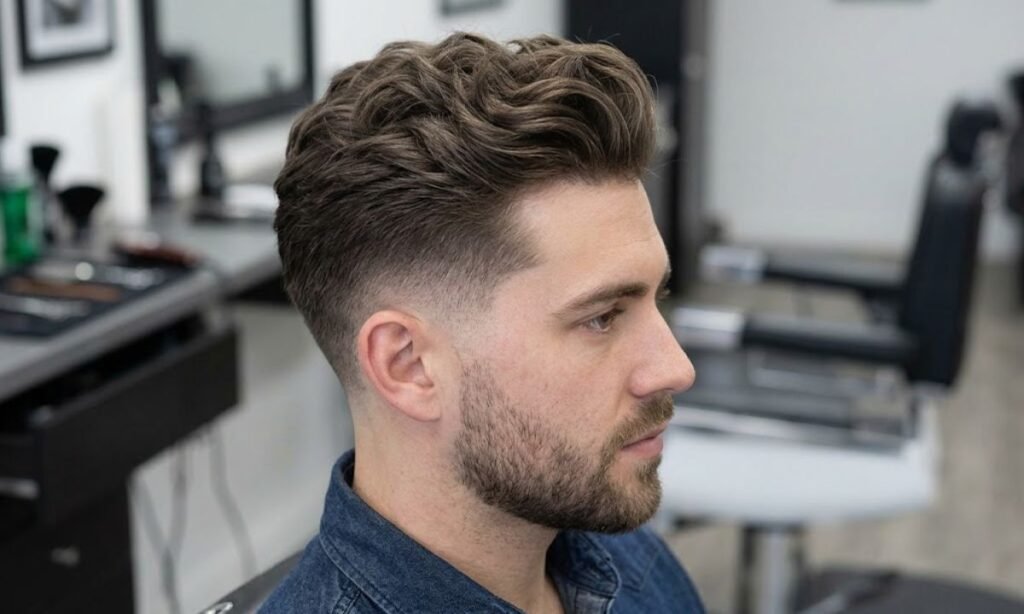
Longer tops bring more styling options. A quiff hairstyle lifts the front and sweeps back, while the fade keeps the sides tight. A pompadour hairstyle goes bigger, with height and volume at the front.
Prefer something sleek? Slicked-back hair and a side-part hairstyle look polished with a drop fade. Use a light pomade and a comb, then finish with a quick blow-dry styling if you want more lift.
You can even try a drop fade mullet if you like a playful edge. The sides stay short, and the back keeps its length. It’s bold, so bring a photo and agree on how long the back should stay.
Drop Fade With a Beard or Line-Up
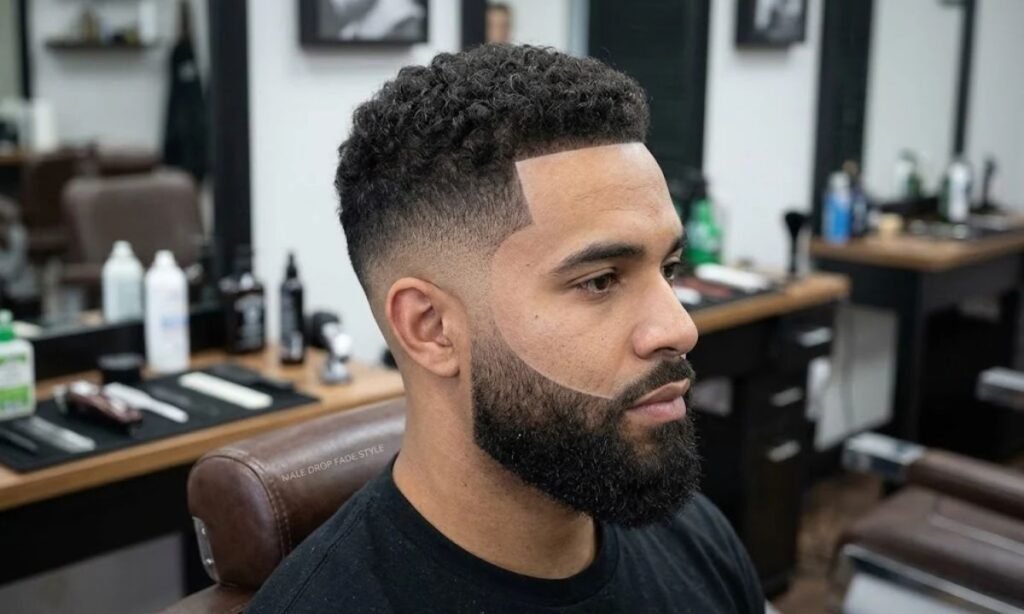
A beard can turn a drop fade into a full look. The key is a smooth link between the faded sides and the beard. Barbers call this a beard fade or beard graduation.
If your beard is thick, a natural beard connection works well. The hair blends from the sideburns into the cheek without a break. If it’s patchy, a disconnected sideburn might look cleaner, since it avoids highlighting gaps.
A crisp line-up adds the finishing touch. The barber uses a detail trimmer to sharpen the forehead and temple edges. It looks great fresh, but it needs frequent upkeep, so plan for it.
Drop Fade vs Low Fade, Taper Fade and Burst Fade
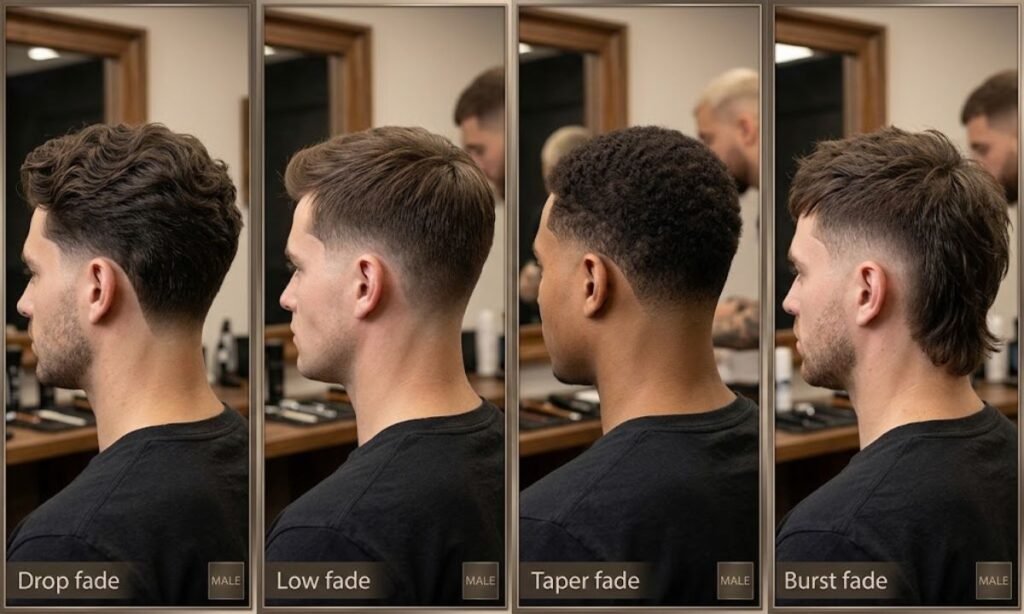
Fade names confuse everyone. Barbers use them differently, and photos online don’t always match the label. So let’s compare the four most common ones.
The shortcut is simple. Ask yourself where the line sits, how it moves, and how short the bottom gets. Those three details tell you which fade you’re looking at.
Keep in mind that a drop fade can be low, mid, or high. That means it overlaps with other fades, and the shape is the difference.
Drop Fade vs Low Fade

A low fade describes height. It starts low on the head and stays close to the ear and neckline. A drop fade describes shape, with the line curving down behind the ear.
So you can have a low drop fade. It’s a low fade with a downward arc. That’s why the two terms get mixed up.
If you want the safest version, ask for a low drop fade. If you want something flatter and more traditional, ask for a plain low fade. A quick photo clears up any doubt.
Drop Fade vs Taper Fade

A taper fade is subtler. It shortens the hair gradually around the ears and neckline, usually without going down to skin. A low taper fade leaves more length and looks classic.
A drop fade, on the other hand, builds a clearer contrast and often reaches shorter lengths. The curve behind the ear is what makes it stand out. Still, a taper and a drop can sit side by side, such as a taper at the nape with a drop curve above it.
Choose a taper if you want a neat, conservative finish. Choose a drop fade if you want a visible shape with more edge. Either way, tell your barber how short you’re comfortable going.
Drop Fade vs Burst Fade

A burst fade curves around the ear in a semicircle. It leaves length at the back, so the hair around the neck stays longer. It’s common with mohawks, curls, and mullets.
A drop fade keeps the sides faded and drops toward the neckline instead of circling the ear. The whole back of the head usually looks shorter. That gives it a cleaner, more compact shape.
Think of a burst fade as a halo around the ear. A drop fade is more like a wave that rolls down the head. Show your barber a rear-view photo, because that angle separates them fast.
What Should You Ask Your Barber for a Drop Fade?

Most bad haircuts come from unclear requests, not bad barbers. Saying “just a fade” leaves too much room for guessing. A clear brief turns your barber into your partner.
You don’t need fancy words. You need five details and a good photo. That takes about thirty seconds in the chair.
Here’s the approach that works. Say it calmly and confidently, and your barber will thank you.
Use This Five-Part Barber Brief

Use this simple script for your barber instructions:
- Fade type: “I’d like a drop fade.”
- Height: “Low, mid, or high.”
- Finish: “Skin, #0.5, or #1 at the bottom.”
- Top length: “Leave about three inches on top.”
- Neckline and edges: “Natural neckline, and a soft line-up.”
That’s your full set of haircut specifications. Add anything else that matters, like a crown cowlick or a recession at the temples. If you’re unsure, ask your barber what they recommend. A good barber consultation is part of the service.
Barber academies such as CADMEN Barber Academy train students to treat a fade as a gradual graduation, not a single cut. So the more detail you give, the easier it is to match your goal. Clear words, plus a photo, win every time.
What Kind of Reference Photo Should You Bring?

Bring reference haircut images from more than one angle. A front photo alone hides the curve behind the ear. A side-view photo and a rear-view photo show the real shape.
Try to find a picture of someone with similar hair. A drop fade for curly hair looks different from the same cut on straight hair. If you can’t find a match, show two photos and explain what you like in each.
Also, photos can be edited or filtered. Ask your barber what’s realistic for your hairline shape and hair texture. A good barber will tell you honestly, and that saves a bad day.
Common Drop Fade Request Mistakes

A few errors come up again and again. Avoid them, and you’ll sit in the chair with far less stress.
- Using only a name: “Drop fade” means different things to different barbers.
- Skipping height: Low, mid, and high change the whole look.
- Forgetting the top: The fade can be perfect, but a wrong top length ruins it.
- Ignoring the neckline: A harsh back edge grows out badly.
- Not mentioning skin: Say if you have sensitive skin or past razor bumps.
Also, speak up during the cut if something feels off. Most barbers prefer a quick “can we go a bit longer here?” to a surprise at the mirror. It’s your head, after all.
How Do You Maintain a Drop Fade?
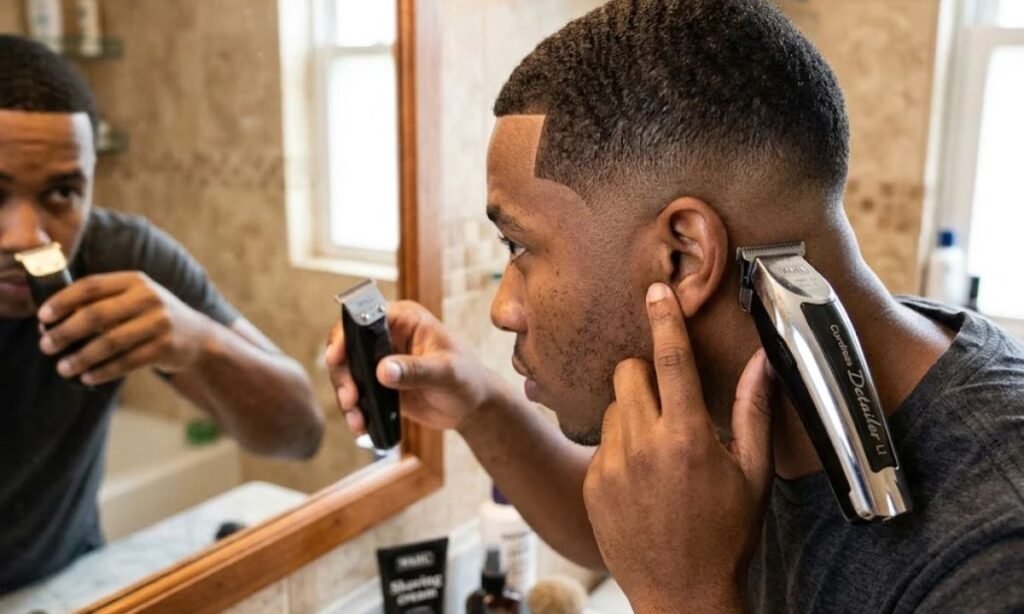
A fade looks best on day two and starts to blur after a couple of weeks. That’s normal, since the hair growth cycle keeps pushing new length through. The good news is that fade maintenance is easy once you know the rhythm.
Your routine depends on how short you go. A skin fade shows hair regrowth quickly, while a #1 finish hides it for longer. The higher the fade, the faster it fades out of shape.
Let’s look at timing, daily styling, and what to do if your scalp complains.
How Often Should You Refresh a Drop Fade?
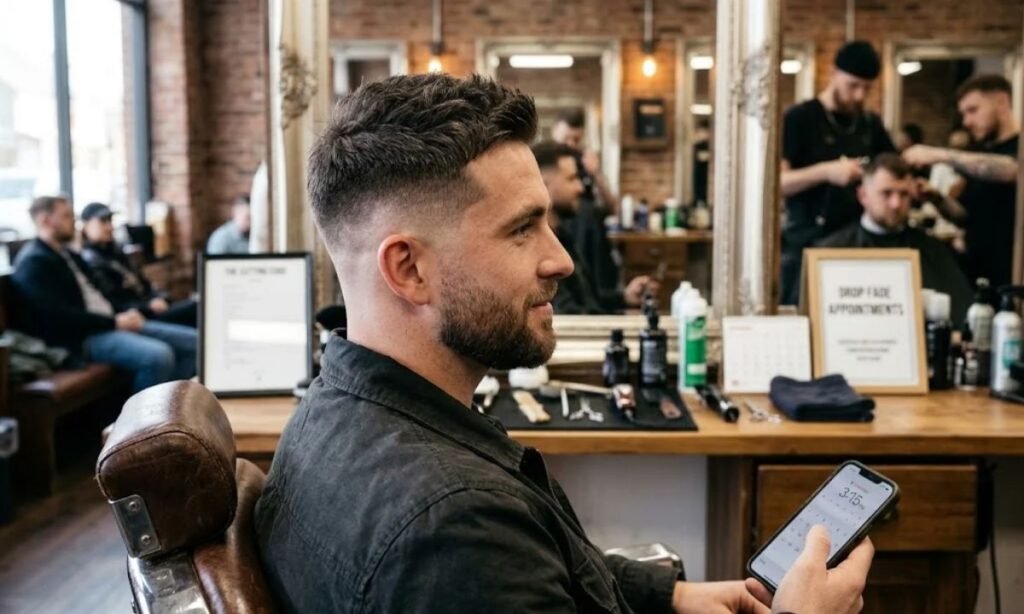
For a skin or high drop fade, plan on every two weeks. For a low fade with a #1 or #0.5 finish, three to four weeks is usually fine. That’s how long a drop fade lasts before it starts to look soft.
A fade refresh can be quick. Many barbers will clean up the sides, the neckline, and the line-up without a full cut. Ask about it, because it’s often cheaper and faster than a full haircut appointment.
If you notice the edge turning fuzzy, book early. A small touch-up prevents a big reset. Think of it like oil changes for your hair.
Styling and Grow-Out Between Barber Visits
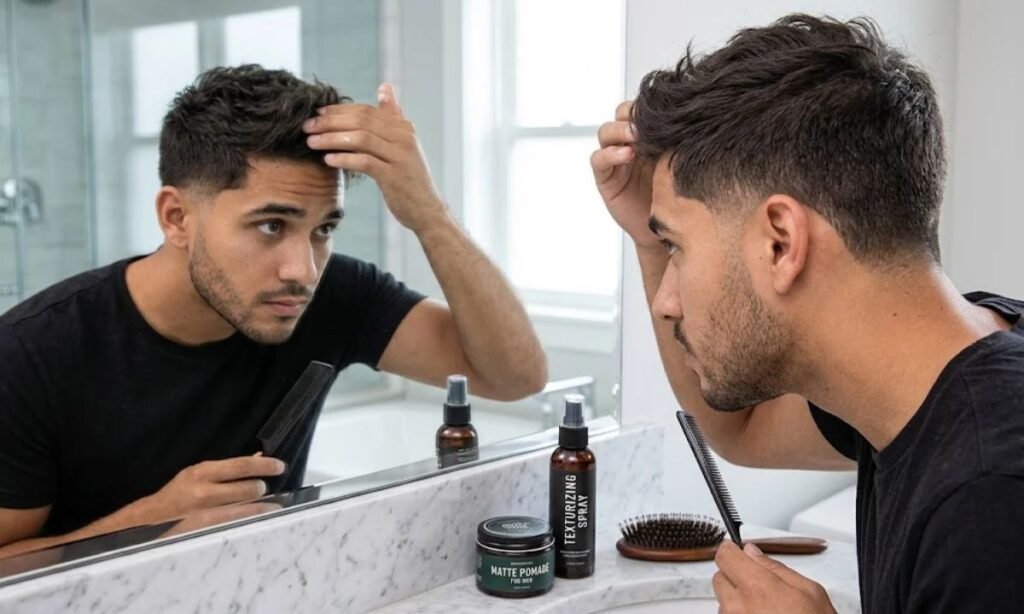
Keep the daily routine simple. Dry the top, then add a little matte clay, pomade, or salt spray, depending on the look you want. A quick blow-dry styling pass gives lift to a quiff or pompadour.
Avoid trimming the sides yourself. A small slip at the curve is easy to make and hard to hide. If you must tidy up, only clean stray hairs around the neckline with a detail trimmer.
During fade grow-out, the line softens and the curve blurs. Let it grow for a few days, then see if you like the shape. Some people love the softer look and stretch the visit to five weeks.
What If a Skin Fade Irritates Your Scalp?

Close cuts can cause scalp irritation, razor bumps, and ingrown hairs. This is common after close shaving or a very tight blade. Curly and coily hair types are more prone to it, since curls can re-enter the skin.
If this happens, step back to a #0.5 or #1 finish. Keep the area clean, avoid scratching, and skip harsh products for a few days. The American Academy of Dermatology (AAD) generally recommends gentle shaving habits and avoiding very close shaves if you get razor bumps.
If redness, pain, or bumps don’t improve, see a dermatologist. It’s better to check than to guess. Your haircut should never be a source of daily discomfort.
Drop Fade Myths Worth Ignoring

A lot of advice online is half true. Let’s clear up the biggest myths so you can choose with confidence. You’ll save time and a few awkward haircuts.
Myth one says a drop fade only suits young guys. That’s not true, because the height and finish change how formal it looks. A low drop fade with a #2 finish works in almost any office.
Myth two says a drop fade needs a long top. Not so, since a short buzz or a French crop looks great too. Another myth says a skin fade is the only real fade. Plenty of barbers love a guarded finish for its softness.
Your Pre-Appointment Checklist

A little prep goes a long way. Spend five minutes before you leave home, and your visit will feel smooth. Here’s a quick checklist:
- Save side-view photos and rear-view photos of the exact look.
- Decide height: low, mid, or high.
- Pick the finish: skin, #0.5, or #1.
- Know your top length in inches or centimeters.
- Wash your hair so the barber can see its real texture.
Tell your barber about any skin issues or past bad experiences. That one sentence changes how they handle the blade. If you like the result, say so, and book your next slot before you leave.
You can also checkout this article as well Mid burst fade: what it is, who it suits and how to ask your barber
Drop Fade Frequently Asked Questions

What is a drop fade haircut?
It’s a fade whose line curves down behind the ear toward the nape. The curve follows your head shape and gives the cut a smooth silhouette. It can be low, mid, high, or skin.
How does a drop fade work?
The barber blends hair from a short length at the bottom to a longer length higher up. The line dips behind the ear instead of running straight. That creates a graduated look from the temple to the neckline.
What guard size is best for a drop fade?
For a soft finish, try a #1 or #0.5. For a bare finish, ask for skin or a zero guard. Your barber will step up through #1.5, #2, and #3 to blend.
Does a drop fade suit every face shape?
Mostly yes. The barber adjusts the height and curve to balance your proportions. Low or mid heights tend to work best for longer faces, while mid or high heights suit rounder heads.
Which drop fade suits curly hair?
A mid or low drop fade with a guarded finish works well. It frames natural curls and avoids harsh contrast. High and skin versions look great too if your scalp tolerates them.
How long does a drop fade last?
Usually two to four weeks, depending on height and finish. Skin and high fades blur faster than low and guarded ones. Book a quick fade refresh when the edges start to fuzz.
How do I maintain a drop fade between visits?
Style the top with light product and leave the sides alone. Only clean up stray neckline hairs if you must. If you have irritation, switch to a longer finish.
How do I explain a drop fade to my barber?
Give five details: fade type, height, finish, top length, and neckline. Then show side-view and rear-view photos. That combination leaves very little room for confusion.
Final Thoughts
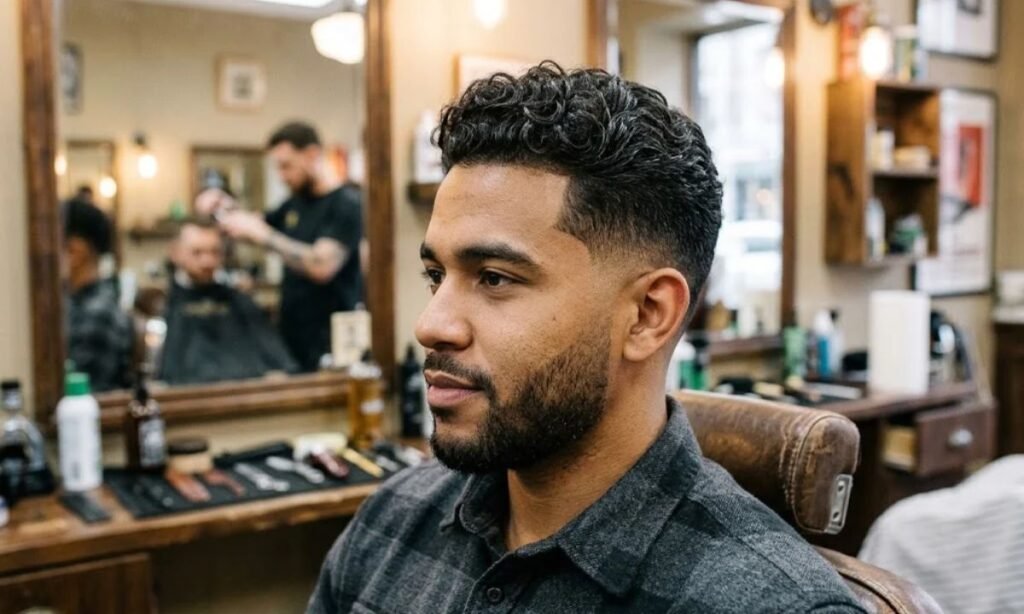
A drop fade isn’t complicated once you break it down. It’s a fade with a curve, and the curve is the part that makes it look custom. Pick a height, choose a finish, match the top, and bring photos.
Start safe if you’re nervous. A low or mid drop fade with a #1 finish is hard to get wrong, and you can go bolder next time. Treat each visit as a small experiment that teaches you more about your hair.
Now it’s your turn. Which height are you trying first, and what does your barber say about it? Drop your thoughts in the comments, share this guide with a friend who’s stuck on “just a fade,” and come back when you need a refresher.

I’m Michael Charles, the creator of MegaCrazes—your source for fresh hairstyles, sharp haircuts, and simple hair-care inspiration. Find your style. Own your look.