


Last updated: October 21, 2026
You sit down in the chair. The barber asks, “What are we doing today?” Your mind goes blank.
Mid, low, high, taper, fade. Which word do you pick, and what happens if you pick the wrong one?
This guide clears that up. You’ll learn what a mid taper fade really is, which mid taper fade styles suit your hair, how to explain the cut to your barber, and how to keep it sharp for weeks.
Quick Answer
A mid taper fade haircut shortens the sides and back in gradual steps. The change starts around mid-temple and finishes at the neckline. You keep more hair than you would with a full fade, so the look stays soft and clean.
To order one, tell your barber three things: where the taper starts, how short it ends, and how much length stays on top. Plan a touch-up every two to five weeks.
- Placement: around mid-temple, above the ear
- Shortest length: a shadow, a skin finish, or a guard number like a #1 or #2
- Top: any length, from a buzz to a full quiff
- Upkeep: a quick tidy every two to five weeks
What is a mid taper fade?
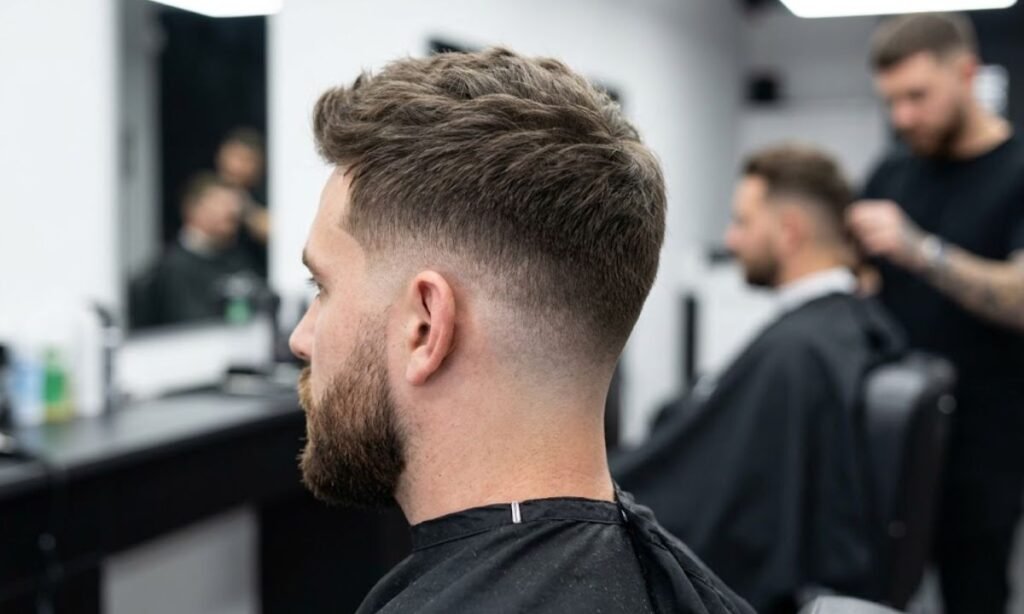
A mid taper fade is a short back and sides cut where the length shrinks a little at a time. The shift begins around the middle of the side of your head and runs down past the ear toward the neck.
Think of a dimmer switch, not a light switch. The hair doesn’t fall off a cliff. It eases from your top length into a shorter, cleaner edge.
That’s why so many people search what is a mid taper fade before booking. The name sounds technical, but the look is simple: tidy sides, a defined edge, and plenty of room for your top to do the talking.
Where does the taper begin, and what hair is removed?
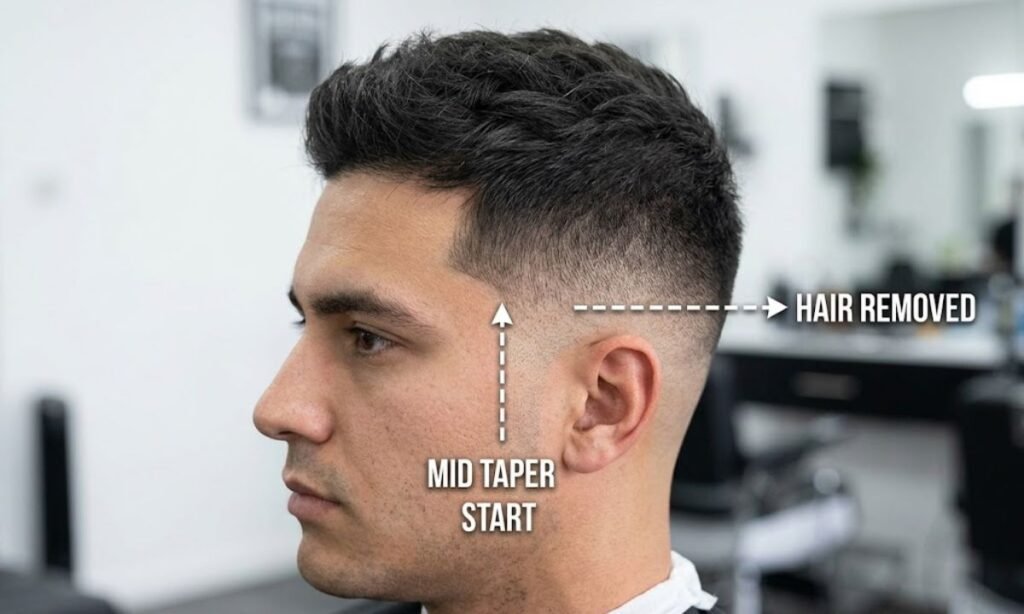
So where does a mid taper fade start? Picture the spot halfway between your eyebrow and the top of your ear, then trace it back. That’s the rough zone for mid taper fade starting around mid-temple, and it sets the fade line above the ear.
From there, the barber works the ear perimeter, the sideburns, and the neckline. This is localized taper blending, and it creates hair graduation around the temple without a harsh step. Everything above that zone stays long, so you keep retained bulk through the sides.
How much hair comes off depends on the shortest length for a taper fade. A shadow finish leaves a faint trace of hair. A skin finish goes down to bare skin. Neither one touches your top.
Why can “mid taper fade” mean different things?
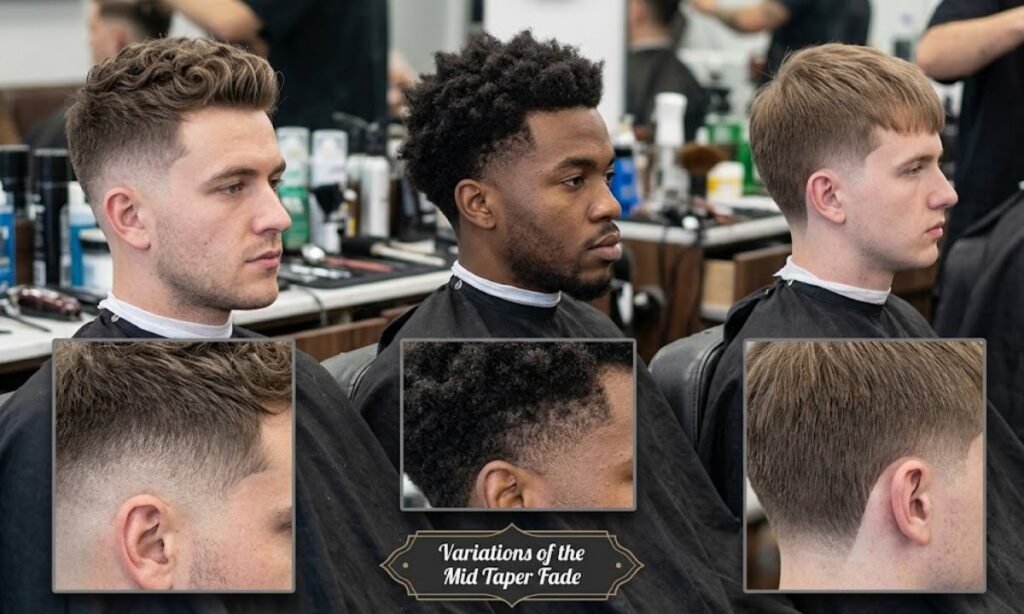
Ask three barbers and you might get three haircuts. Some treat “taper” and “fade” as the same word. Others call a soft cut a mid taper and a bold one a mid fade.
Barber haircut terminology isn’t standardized. Habits change by city, by shop, and even by chair. A mid taper fade in one place can look like a mid fade in another.
The fix is easy. Skip the label and describe placement, shortest length, and finish. You’ll find a ready-made script in the barber section below.
Mid Taper Fade Styles for a Sharp, Modern and Versatile Look
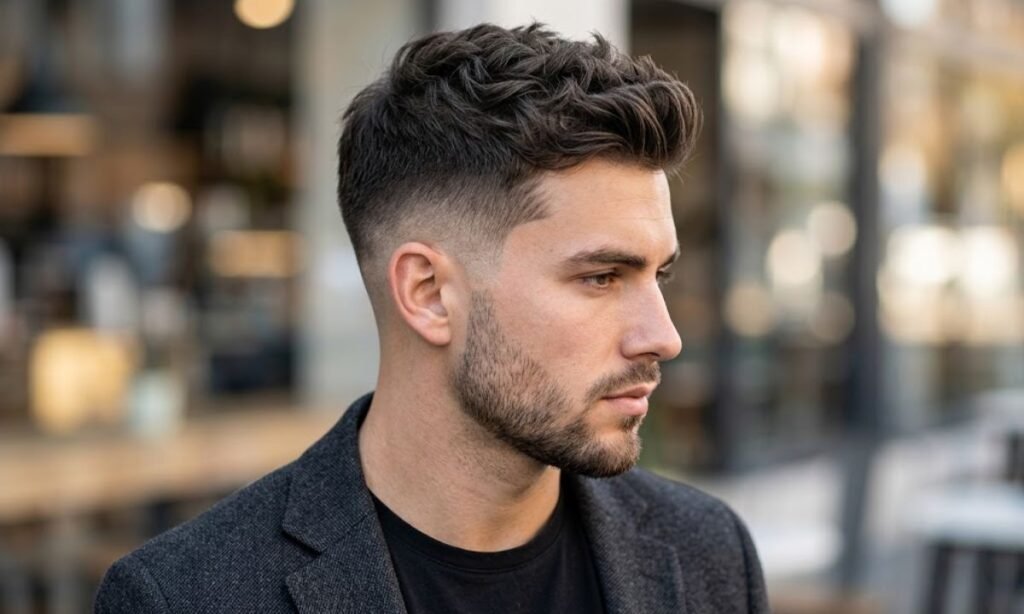
The mid taper fade works because the sides stay quiet. Your top gets the attention, and the edges stay neat. That balance is why you’ll spot it on modern men’s haircuts at offices, gyms, and weddings alike.
Here are the taper fade haircut styles barbers hear about most:
- Buzz cut with mid taper fade: the lowest effort option
- Crew cut with mid taper fade: short, classic, and comb-ready
- Ivy League with mid taper fade: a neat cut with a side part
- Textured crop with mid taper fade: choppy top, clean sides
- French crop with mid taper fade: short fringe, easy to style
- Quiff with mid taper fade: height up front
- Pompadour with mid taper fade: volume swept back
- Blowout with mid taper fade: airy, full, and modern
- Side part with mid taper fade: tidy and professional
- Slick back with mid taper fade: polished and sleek
- Middle part with mid taper fade: relaxed with a 90s feel
- Curtain hairstyle with mid taper fade: soft, face-framing length
- Mullet with mid taper fade: short sides, longer back
- Curly top with mid taper fade: defined curls on top
- Short Afro with mid taper fade: rounded shape, sharp edges
Pick the one that matches your routine. A pompadour looks great but needs a blow dryer and ten minutes. A crew cut needs a comb and ten seconds.
Mid taper fade vs similar haircuts
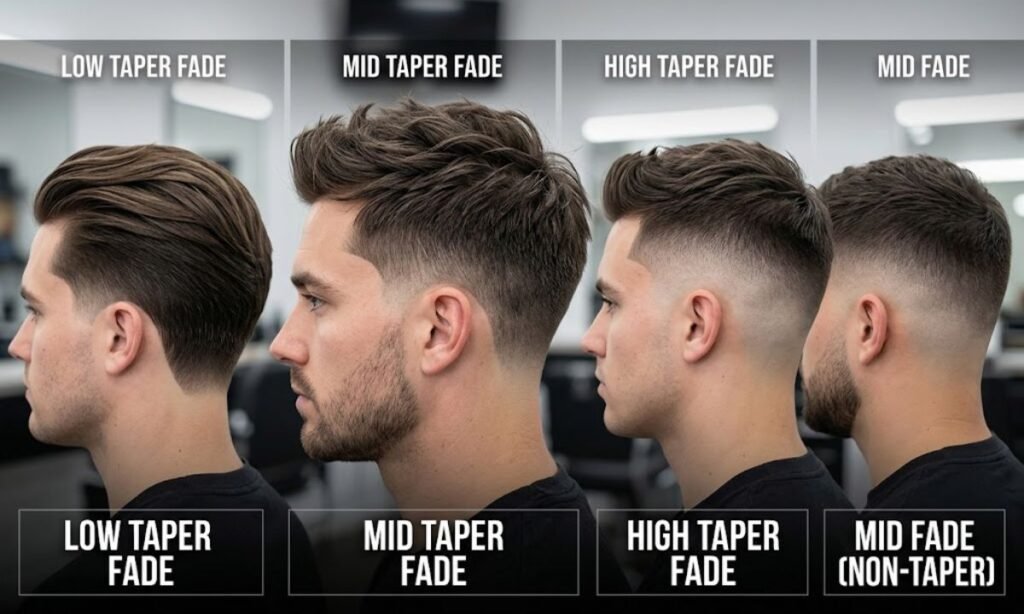
Barbershop menus can feel like alphabet soup. Mid fade, low taper, temple fade, burst fade. They overlap, but each one changes how the sides look.
The quickest way to sort them out is to compare where the cut starts and how much contrast it creates. Let’s go one pair at a time.
Mid taper fade vs mid fade

A mid fade shortens the sides much faster, often down to skin. That creates sharper contrast. A mid taper fade changes length slowly and keeps more hair, which gives a softer transition. That’s the difference between taper and fade in plain words: taper is gentle, fade is bold.
Mid taper fade versus full mid fade also differs in coverage. A fade usually wraps a continuous gradient around the head. A taper often focuses on the sideburns, ear, and neckline, so more bulk stays on the sides.
Want people to notice the cut? Choose the fade. Want a clean look that doesn’t shout? Choose the taper.
Mid taper vs low taper vs high taper

Height is the whole story here. A low taper fade starts just above the ear and nape. A high taper fade starts near the upper temple, close to the crown line. The mid taper fade sits between them.
Mid taper fade compared with low taper feels more noticeable but still safe. Mid taper fade compared with high taper feels calmer, because more hair stays on the sides.
| Cut | Where it starts | Contrast | Best for |
|---|---|---|---|
| Low taper | Just above the ear and nape | Subtle | Conservative settings, longer tops |
| Mid taper | Around mid-temple | Medium | Most hair types and face shapes |
| High taper | Upper temple, near the crown line | Strong | Bold looks, very short sides |
Mid taper fade vs temple fade and classic taper

A temple fade, also called a temp fade haircut, focuses on the temples and sideburns. The back and sides can stay longer. A mid taper fade wraps further around, so the whole outline looks finished.
A classic taper haircut is the old-school option. It trims the sides and neck gradually, usually with scissors or a clipper over comb, and rarely reaches skin. It’s softer than a mid taper fade and fits traditional looks like an Ivy League haircut.
In short, the mid taper fade versus temple fade comes down to coverage, and mid taper fade versus classic taper comes down to how close the sides get.
Is a mid taper fade right for you?
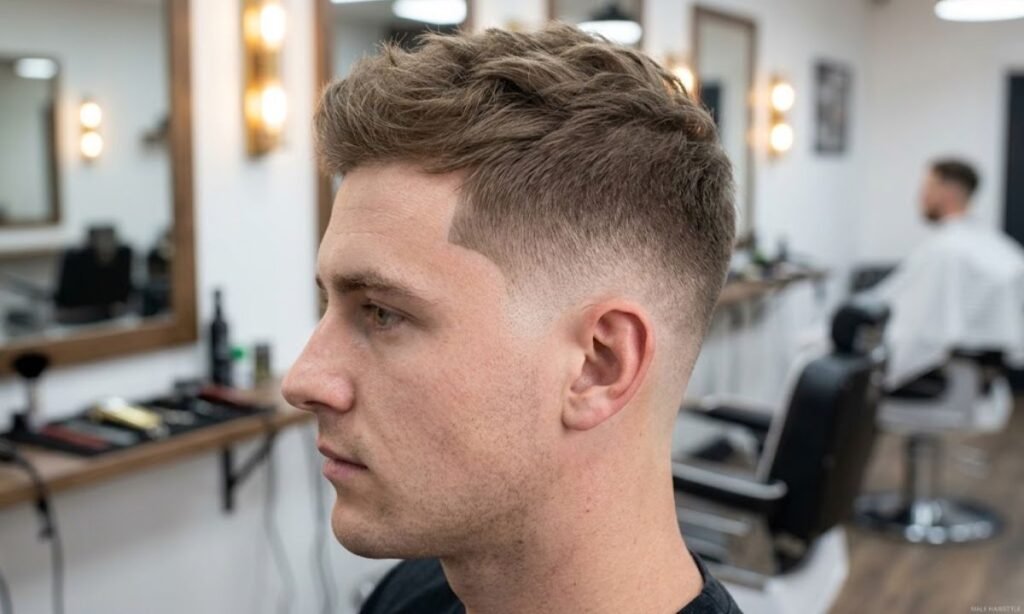
The mid taper fade for men is popular, but popular doesn’t mean perfect for every head. Your hair, your face, and your schedule all matter.
Use the three checks below before you book. They take two minutes and can save you a month of regret. This is how to choose a mid taper fade that fits you, not just a photo.
Hair type, density, and growth pattern

Can a mid taper fade work with all hair types? Yes, with small tweaks. Mid taper fade for straight hair shows every clipper line, so ask for a smooth blend. Mid taper fade for wavy hair keeps its shape well. Mid taper fade for curly hair and coily hair look great because the contrast makes curls pop.
Mid taper fade for fine hair works best with a slightly longer top for body. Mid taper fade for thick hair helps remove weight from the sides. With thinning hair, a gentle taper hides more than a skin fade does, because hair density and scalp visibility go hand in hand.
Check your hair growth patterns and taper placement too. A strong cowlick near the temple or nape can push hair the wrong way. A good barber adjusts blend width for hair texture, so tell them where your hair fights back.
Face and head shape and the desired silhouette
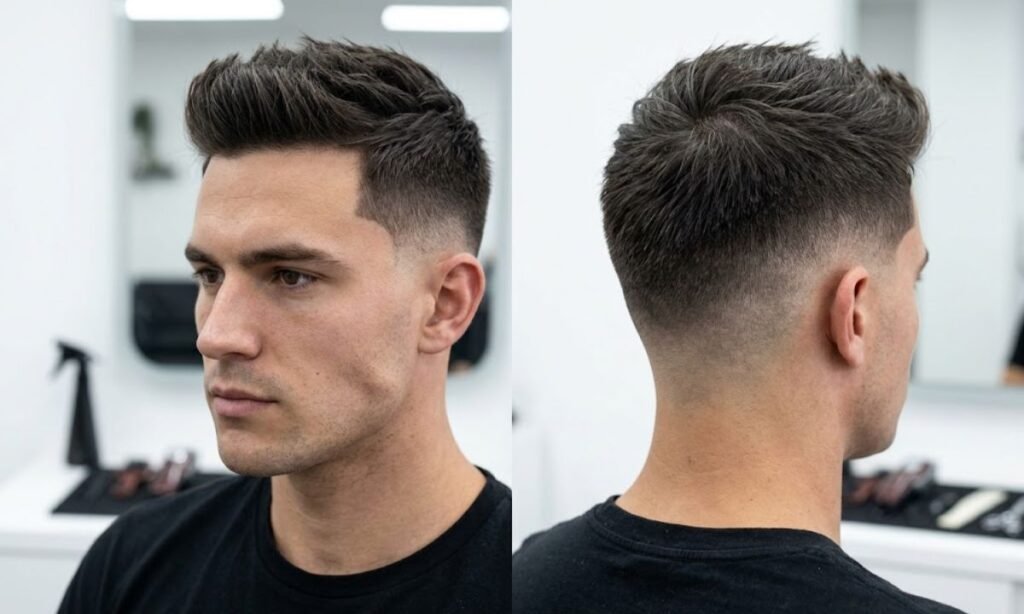
The sides of your head shape the silhouette more than most people think. Here’s how to choose a taper fade for different face shapes:
- Round face: go slightly higher and add height on top to lengthen the look
- Oval face: most versions work, so choose what you like
- Square face: keep the blend soft and add texture on top to ease the jaw
- Diamond face: leave some weight at the sides to balance the cheekbones
- Heart-shaped face: avoid going too high, and keep a little side bulk
- Long face: keep the taper low to mid and skip excess height on top
The goal is a clean and balanced haircut silhouette. If the cut makes your head look narrower or taller than you want, adjust the height by half an inch next time.
Lifestyle, dress code, and upkeep tolerance

Is a mid taper fade suitable for school? Usually yes. Most dress codes accept it, and the soft blend looks tidy. For boys, ask for a shadow finish and a natural neckline so it reads neat, not extreme. Check your school’s rules about shaved lines first.
Is a mid taper fade suitable for professional settings? Also yes. Mid taper fade for professional settings works best with a side part, a crew cut, or a short quiff. Skip the skin finish if your workplace is very conservative.
Then be honest about upkeep. If you hate barber visits, pick a shadow finish and a natural hairline. If you love a crisp edge, a skin finish and a sharp line-up will keep you in the chair more often.
Best mid taper fade styles by top shape and texture
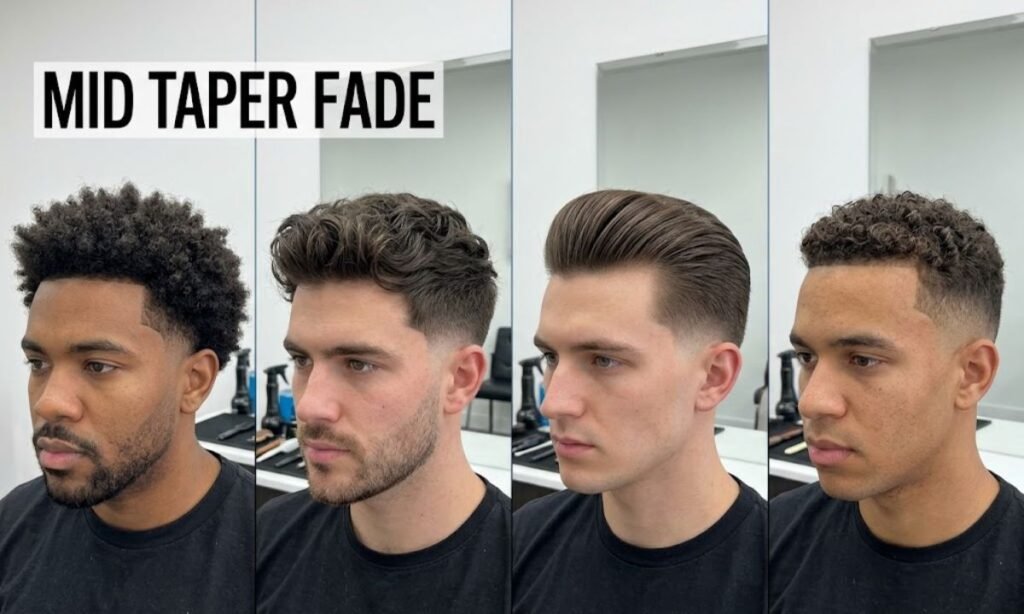
The sides are only half the haircut. Your top decides how the whole thing feels. These pairings give you a starting point when you’re deciding how much length to leave on top.
Remember, you can keep the top length while tapering the edges. That’s the beauty of the cut.
Short and textured tops
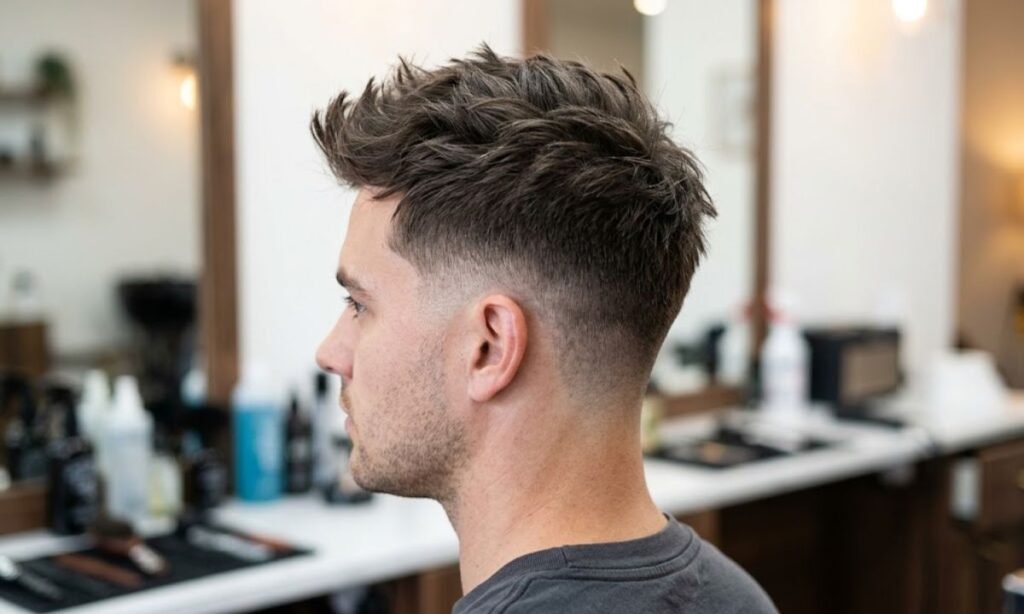
A textured crop with a mid taper fade is a safe bet. Ask for choppy layers on top and a short fringe. A French crop is similar but cut straighter across the front, which suits thin hair.
A crew cut keeps the top short and neat, usually around an inch at the front. A buzz cut with mid taper uses a guard like a #3 or #4 on top, so the taper only shows as a subtle shift.
These cuts dry fast and need almost no product. A pea-sized amount of matte hair cream finishes the job.
Medium and longer tops

Longer tops give you more options. A quiff lifts the front, a pompadour sweeps it back, and a slick back lays everything flat. A side part or middle part frames the face, while a curtain hairstyle parts and falls to the sides.
A blowout adds volume with a dryer and a bit of product. If you like the 80s and 90s, the mullet with mid taper fade keeps the sides short and lets the back grow. Some guys pair it with a drop fade mullet shape, which curves behind the ear.
Here the taper keeps the shape from looking heavy. The sides stay neat, so the length reads as a choice and not as neglect.
Curly, coily, and protective-style combinations
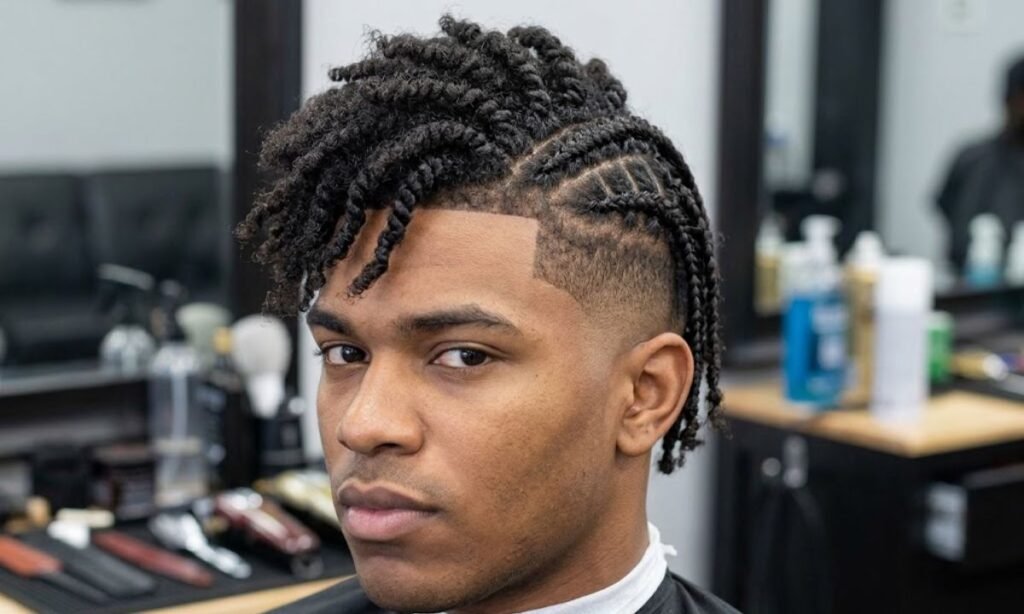
Curls and tapers get along. A curly top with a mid taper fade keeps the curls defined while the sides stay clean. For natural curls with tapered sides, ask your barber not to thin the top too much, or the curls lose shape.
A short Afro with mid taper fade gives a rounded outline with crisp edges. For twists with tapered edges, braids with tapered edges, or locs with tapered edges, the taper tidies the perimeter without touching the length.
How to protect the loc bases when tapering? Ask the barber to use a lighter hand near the roots and avoid clipping the start of any loc. How to keep curls defined with tapered sides? Apply curl cream on damp hair and let it air dry or diffuse.
Finish options that change the look
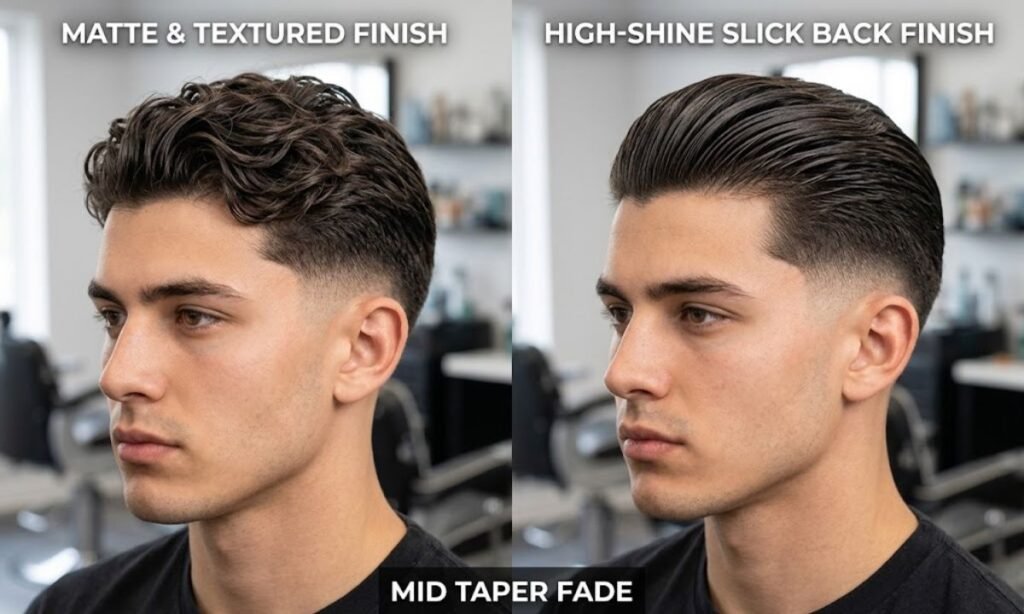
The finish changes the mood of the same cut. A shadow finish feels soft and professional. A skin finish looks bold and clean. You can also choose a natural hairline for a relaxed edge or a sharp line-up for a crisp one.
Your barber can add a beard blend, where the taper melts into your beard with no visible gap. Some guys keep a standalone sideburn instead, which gives the face a defined frame. If you wear a beard, ask for coordination, so coordinating a haircut with a beard trim happens in one visit.
Finally, the neckline. A natural neckline grows out gracefully. A squared neckline looks sharp for a few days. A rounded neckline blends better with a beard and ages gently as it grows.
Mid Taper Fade with Textured Hair for Extra Volume and Definition
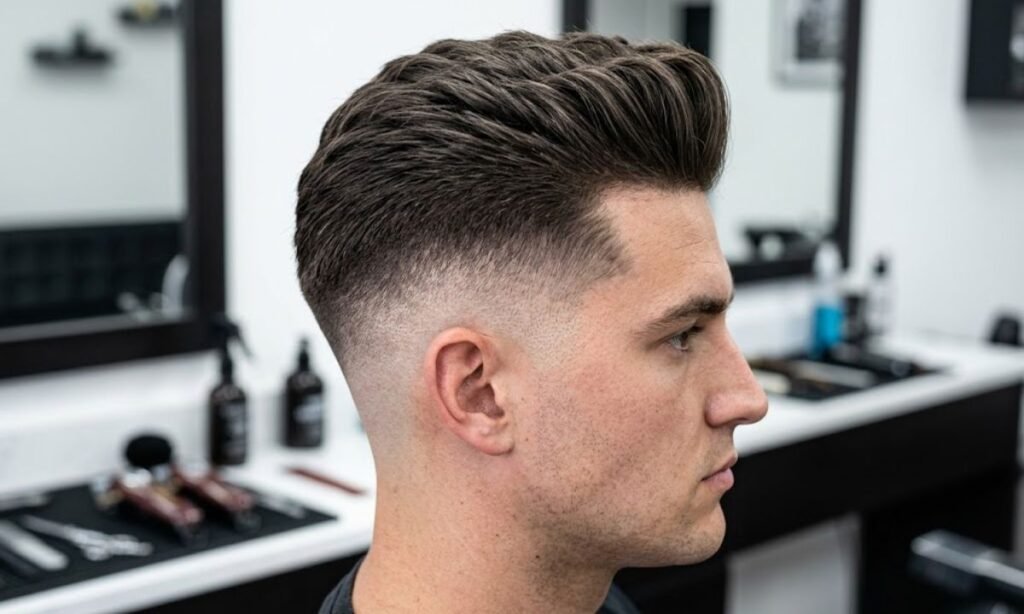
Textured hair loves contrast. When the sides sit close and the top stays full, curls, waves, and coils look bigger and cleaner. This is where a mid taper fade with textured hair earns its popularity.
It also makes styling a mid taper fade with natural texture easier. You don’t fight the sides, so you only manage the top.
- Mid taper fade for Black men: a favorite for short Afros, twists, and waves, with a clean edge that holds well
- Mid taper fade for 360 waves: works as a base for brushing and wave patterns
- Mid taper fade Afro: keeps the round shape while neatening the sides
- Mid taper fade dreads: tidies the edges while the locs stay long
- Mid taper fade for Asian hair: handles straight, thick strands, with enough top length to avoid a helmet look
- Mid taper fade for white guys: pairs well with a textured fringe or fluffy hair for a loose, modern shape
- Mid taper fade Edgar: a blunt fringe over a short, clean side
A leave-in conditioner keeps curls soft before you add product. Use a light hair clay or matte hair cream on drier, looser textures. Use curl cream on tight curls and coils.
Here’s a quick example. Say you’ve got thick, wavy hair that puffs out at the sides by noon. A mid taper removes that weight above the ear, and the top finally sits where you put it.
How do you ask a barber for a mid taper fade?

Most bad haircuts start with a vague request. “Mid taper, please” leaves too much to guesswork. A clear brief takes thirty seconds and saves you weeks of grow-out.
This section shows how to ask a barber for a mid taper fade in plain language. It also covers how to communicate haircut preferences without sounding like you studied barbering.
Set the placement, shortest length, and amount of bulk
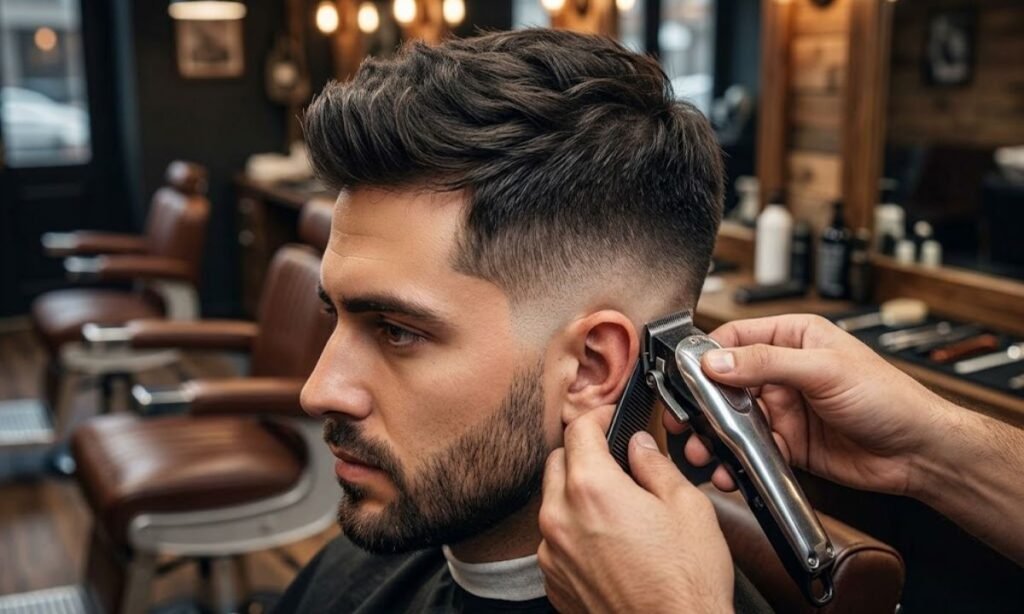
Start with placement. Say, “I want the taper to begin around mid-temple.” That’s the easiest way on how to explain taper placement to a barber. You can also point to the spot with a finger.
Next, name the shortest length for a taper fade. Use a guard number, or say “shadow” or “skin.” Then explain the bulk: ask to keep the sides fuller, or tell them you want less contrast on the sides to prevent excessive contrast.
This is also the moment to mention your hair growth patterns. If your hair swirls at the temple or nape, say so before the clippers come out.
Specify the top length, texture, and transition

Top length is where many guys get stuck. Hold your fingers apart to show it, or give a number like “about two inches at the front.” Then say how you want it to look: textured, smooth, or swept back.
For the transition, ask for a soft blend or a tight blend. Mention how the taper curves through the sideburn and how the neckline is finished. A natural neckline, squared neckline, or rounded neckline all change the outline.
If you wear a beard, say so early. That helps the barber plan how to blend a beard into a mid taper fade instead of cutting two separate shapes.
Bring useful reference photos and confirm all three angles

A photo does more than a paragraph. Still, one front shot can mislead. Ask for front, side, and back haircut references so you and the barber see the same cut. This is how to use reference photos during a barber consultation well.
Bring photos of people with similar hair type. A straight-haired model won’t help if your hair is curly. Also show the finish: shadow, skin, or natural line.
Before the clippers start, repeat the plan back in one sentence. If the barber agrees, you’re set. If they suggest a tweak, ask why. Good barbers will explain.
Use a concise barber-request script
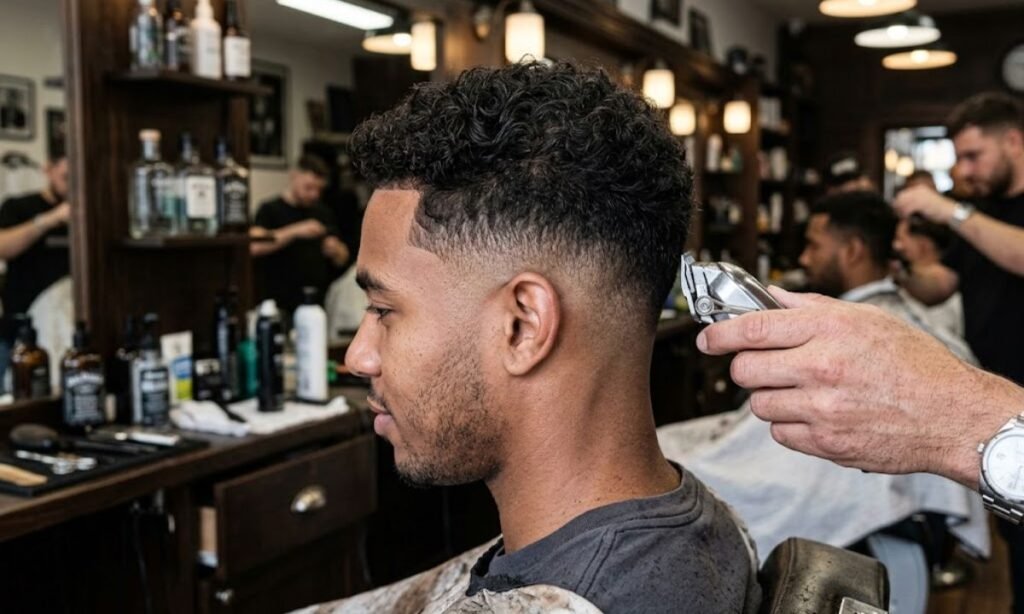
Here’s a mid taper fade barber request script you can copy and adjust:
“I’d like a mid taper fade. Start the taper around mid-temple and blend through the sideburns and neckline. Take the shortest part down to a shadow, not skin. Keep the sides fairly full. Leave about two inches on top, textured, with a side part. Natural hairline, rounded neckline.”
That script covers placement, shortest length, bulk, top, and finish. It works for most people, and it answers the question what clipper guard should you ask for by giving a range instead of a guess.
Clipper guard size chart: choosing the right number

Guard numbers vary a little by brand, but these are the common sizes. This clipper guard size chart helps when you wonder how to select the right clipper guard number:
| Guard | Approx. length | What it looks like |
|---|---|---|
| Bare blade | Under 1 mm | Skin-level, very smooth |
| #0.5 | 1.5 mm | Shadow, very faint stubble |
| #1 | 3 mm (1/8 in) | Close, short stubble |
| #2 | 6 mm (1/4 in) | Short but clearly visible |
| #3 | 10 mm (3/8 in) | Buzz-style length |
| #4 | 13 mm (1/2 in) | Longer buzz, good for tops |
For fade guard sizes at the shortest point, #0.5 or #1 gives a soft shadow, while a bare blade gives a skin fade. Tell your barber the taper height and shortest length you want. If you’re unsure, start longer. You can always go shorter next visit.
How do you style and maintain a mid taper fade?

The nice thing about a mid taper fade is that the sides take care of themselves for a while. Your effort goes into the top and into booking on time. That’s the real answer to how to maintain a mid taper fade.
A little routine goes a long way. Use the sections below to match your styling to your hair and your schedule.
Daily styling by hair type and finish
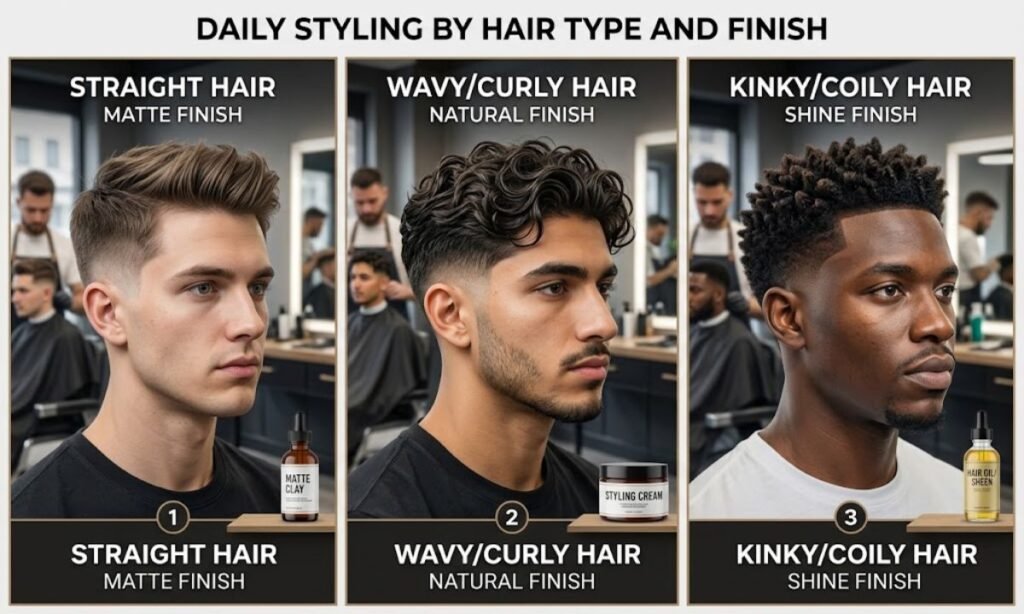
The best styling products for a taper fade depend on your hair. For straight hair, use matte cream and light clay. Work a small amount through dry hair and shape it with your fingers. For fine hair, use less product so it doesn’t weigh down.
For curly and coily hair, apply curl cream to damp hair and let it dry. A leave-in conditioner helps first. Blow-drying for volume and height works well for a quiff or pompadour. Dry the roots upward and finish with a cool blast.
If you wear a slick back, use pomade for a slicked-back hairstyle. Warm it in your palms, comb it through, and the cut will look polished all day. If you’re not sure how much to use, start with a pea-sized amount and add more only if you need it.
- Straight or wavy hair: matte cream or light clay for texture
- Curly or coily hair: curl cream plus a leave-in conditioner
- Slick back: pomade with a fine comb
- Short crops: a tiny amount of matte hair cream
When to book a touch-up

So, how often to get a mid taper fade touched up? Most people land on mid taper fade maintenance every two to five weeks. Shorter finishes like a skin finish need more frequent visits, since bare skin shows new growth fast. How often a skin finish needs touch-ups is usually every two to three weeks.
A shadow finish or natural hairline lasts longer. How long a mid taper fade stays sharp depends on your hair speed. Fast growers see fuzz at the neckline after about ten days. Slow growers can stretch to five weeks.
Watch for the signs it’s time: the sideburns look fuzzy, the neckline loses shape, and the fade line looks soft. Those three spots tell you when to refresh the sideburns and neckline.
Safe at-home cleanup between appointments
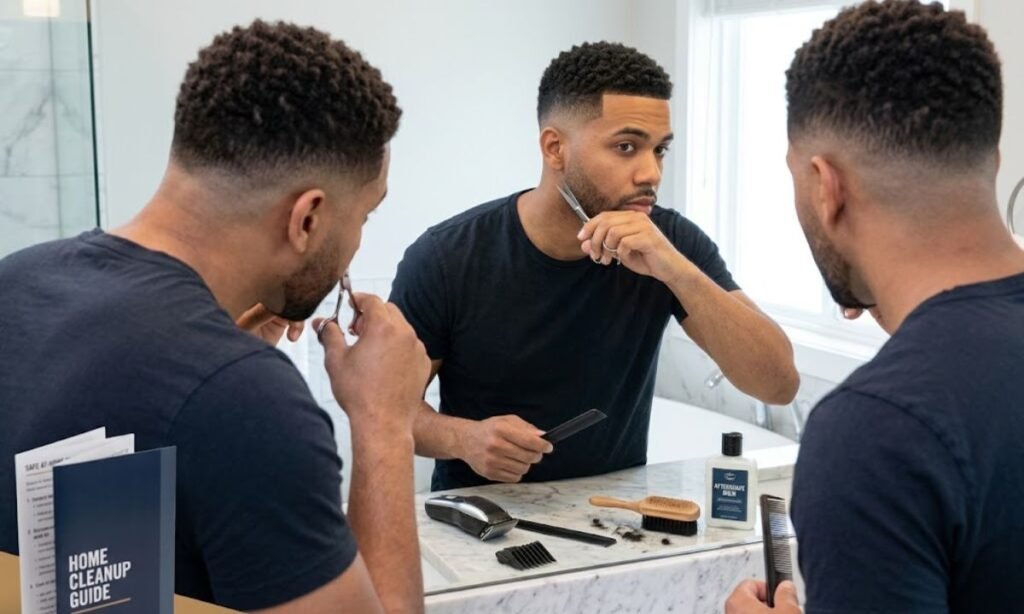
If you want to keep a taper fade looking sharp between visits, a small cleanup helps. Use a trimmer with a guard to tidy loose hairs. How to clean up the neckline at home? Stand in front of a mirror with a handheld mirror behind you, and trim only the stray hairs below the line.
Don’t try to redraw the fade line yourself. That’s how you end up with uneven fade lines and visible clipper banding. Leave the blend work to your barber.
Also, don’t shave the neck against the grain, since that invites irritation. A trimmer on a short guard is safer than a razor, especially if you get bumps.
What problems or edge cases should you consider?

No haircut is perfect for everybody. A few things can make a mid taper fade harder to wear, and it’s better to know before you book. None of these rule the cut out. They just change how you ask for it.
Let’s look at skin issues first, then hair patterns.
Razor bumps, neck irritation, and scalp sensitivity
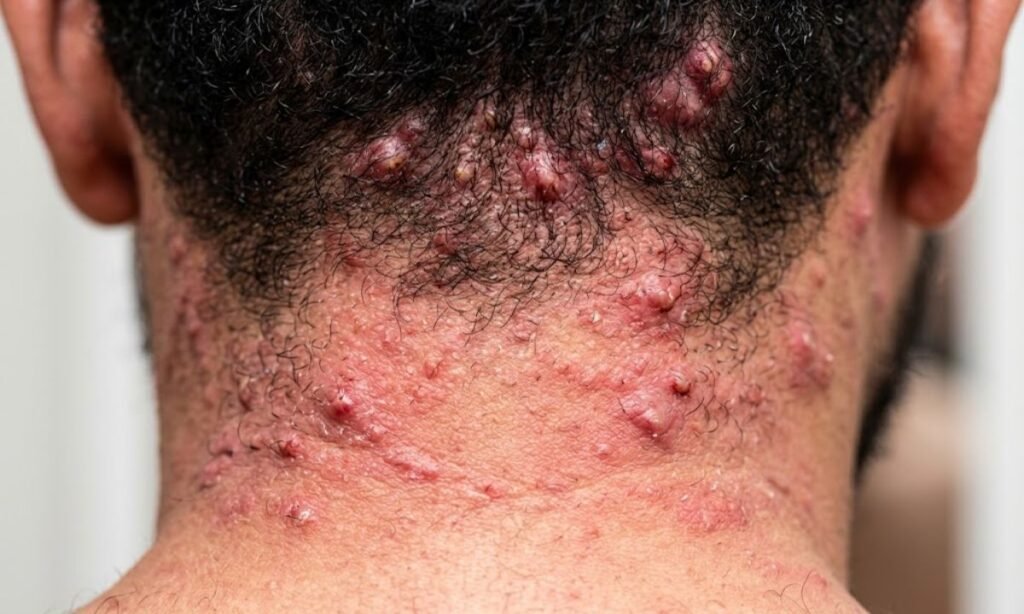
Razor bumps after a taper fade are common, especially at the nape. They happen when short hairs curl back into the skin. This is also called ingrown hairs around the neckline. A very close cut, or a shave against the grain, raises the risk.
To prevent irritation after a close haircut, ask for a shadow finish instead of skin, and ask the barber to avoid close shaving on sensitive areas. After the cut, rinse with cool water and apply a fragrance-free moisturizer. Neck irritation after a haircut often fades in a day or two.
If you see firm bumps that return, keep growing, or leave scars at the back of the head, it could be acne keloidalis nuchae. That’s a skin condition that needs a dermatologist, not a better clipper. Scalp sensitivity can also flare with harsh products, so check the label.
Receding hairlines, thinning areas, cowlicks, and uneven growth

Receding temples and taper placement deserve attention. A high or skin-tight taper can make a recession look bigger. A mid taper fade with a natural outline for a receding hairline softens the edges and keeps the look balanced.
With a thinning crown, haircut choice matters too. Keep the top a bit longer to cover thin spots, and avoid a very short skin fade. To preserve bulk around thinning areas, ask the barber to leave a little more length on the sides.
Cowlicks around the nape push hair in odd directions. A barber can work with them by leaving the neckline natural, or by cutting slightly longer in that spot. Uneven growth works the same way: tell the barber and they’ll adjust the blend.
Which alternatives should you choose instead?

Sometimes the mid taper fade isn’t the best pick. What haircut to choose if a mid taper fade is unsuitable? The answer depends on what bothers you, so here are the main mid taper fade alternatives.
- When to choose a low taper instead: you want a very subtle edge, or your workplace is conservative
- When to choose a high taper instead: you want stronger contrast with a very short side
- When to choose a mid fade instead: you want a bolder, skin-level blend
- When to choose a drop fade: you want a curved line that dips behind the ear, as in a mid drop fade or low drop fade
- When to choose a classic taper: you prefer a soft, traditional look with scissor work
- Burst fade: you want a rounded fade around the ear, often paired with a mohawk or longer back, like a mid burst fade or low burst fade
Mid taper fade versus drop fade is mostly about line shape. The drop curves down behind the ear, while the mid taper stays level. Mid taper fade versus burst fade differs in how the fade circles the ear, and drop fade vs burst fade comes down to the same idea: one dips, one rounds.
Differences in upkeep between taper and fade haircuts matter too. Tapers need less frequent visits. Fades, especially skin fades, need more.
Quick checklist before your appointment
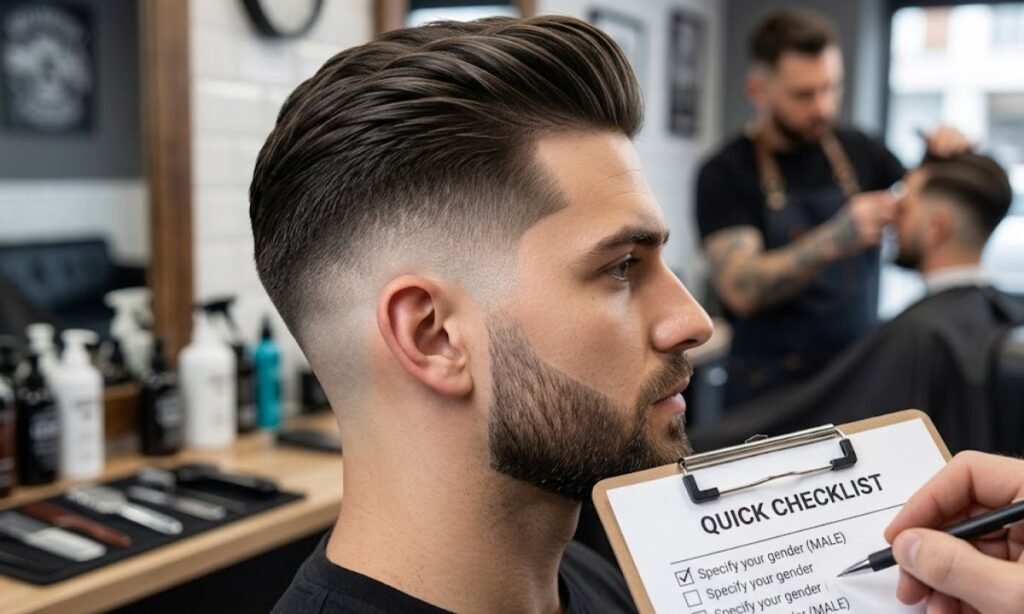
Use this taper fade haircut before appointment checklist so nothing gets lost in translation:
- Save front, side, and back reference photos
- Decide your shortest length: shadow or skin
- Know your top length in inches or fingers
- Pick a neckline: natural, squared, or rounded
- Mention your beard, cowlicks, or sensitive skin
- Ask the barber to confirm the plan before starting
Grow-out: what happens after the cut?
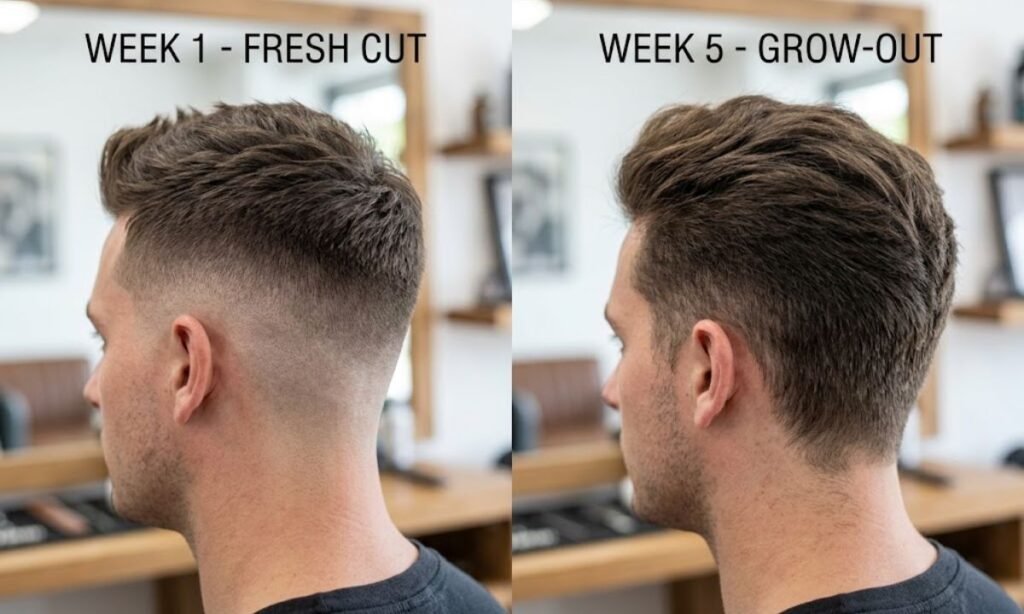
The mid taper fade grow-out period is one of its best features. Because the taper is gradual, it grows out softly. Within three to four weeks you’ll see a fuller side, but the shape holds.
After about six weeks, it will look like a classic taper. At that point, you can book another taper, move to a low taper, or let the sides grow into a longer cut. Either way, you won’t hit that awkward in-between stage as hard as you would with a full fade.
Frequently asked questions about the mid taper fade
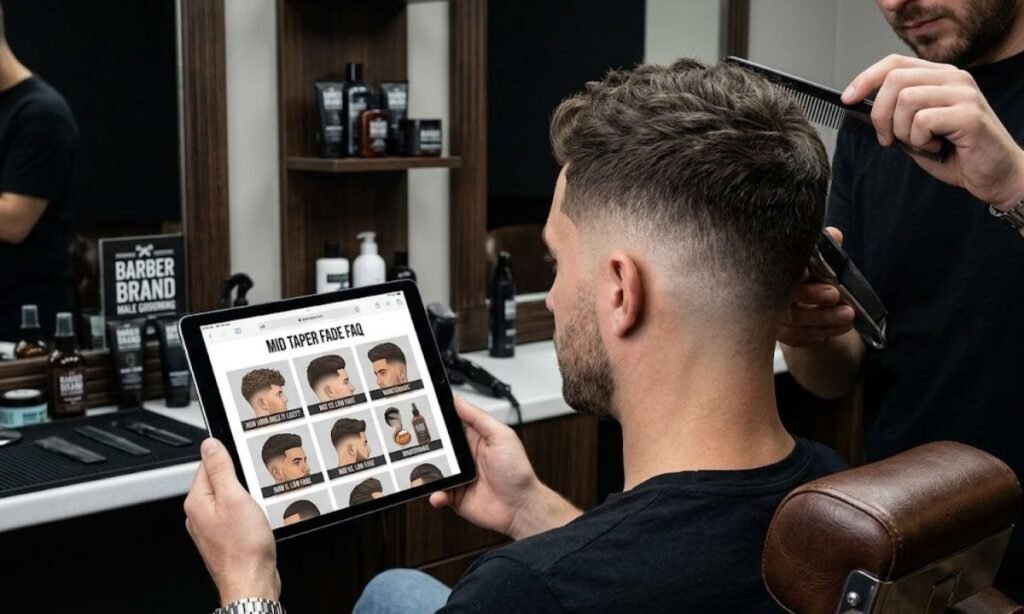
What is a mid taper fade?
It’s a haircut where the sides and back get shorter in gradual steps, starting around mid-temple and ending at the neckline.
What’s the difference between a mid taper and a mid fade?
A mid taper keeps more hair and has a softer transition. A mid fade goes shorter, often to skin, with sharper contrast.
Can a mid taper fade work with all hair types?
Yes. Straight, wavy, curly, and coily hair all suit it. Fine hair needs a longer top, and thick hair benefits from the weight removal.
Can a mid taper fade blend into a beard?
Yes. Ask for a beard blend so the sideburn taper melts into the facial hair without a visible gap.
How often should I get a mid taper fade touched up?
Every two to five weeks. Skin finishes need touch-ups sooner than shadow finishes.
What clipper guard should I ask for?
A #1 or #2 at the shortest point gives a soft look. A bare blade gives a skin finish. Ask your barber to adjust for your hair texture.
Is a mid taper fade suitable for school and professional settings?
Usually yes. Choose a shadow finish and a natural neckline for the neatest result.
What if I get razor bumps?
Ask for a shadow finish, avoid shaving against the grain, and see a dermatologist if bumps persist.
You can also checkout this article as well Low Taper Fade Mohawk: Styles, Barber Guide, and Maintenance
Final thoughts: your next haircut, sorted
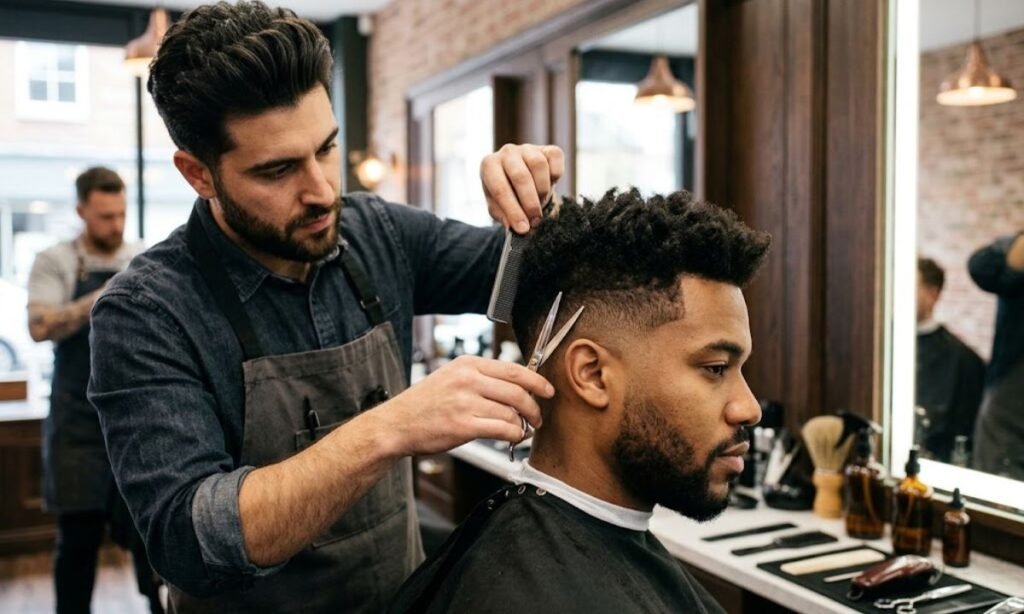
A mid taper fade is flexible, tidy, and easy to explain once you know the three details: placement, shortest length, and top. Pick a finish that suits your skin and schedule, then book on a steady rhythm.
From here, you’ve got the language to maintain a mid taper fade, spot problems early, and compare it with other men’s grooming choices. It’s a men’s grooming guide you can use before every visit.
Now it’s your turn. Which mid taper fade style are you trying next? Drop a comment, share this with a friend who keeps saying “just a trim,” and tell us what your barber thinks. We’ll keep this guide updated as styles and techniques change.

I’m Michael Charles, the creator of MegaCrazes—your source for fresh hairstyles, sharp haircuts, and simple hair-care inspiration. Find your style. Own your look.