


Will this cut suit your face? Will it look messy by Wednesday? Can you style it in five minutes before work?
Those are the worries most guys bring to the chair. This guide answers them, starting with the short version.
Quick Answer
A low taper fade with textured fringe keeps the sides short and clean near the ears and neckline. The top stays longer, layered, and pushed forward. You get a sharp outline with a relaxed front.
It works on most face shapes and hair types. You need a trim every three to four weeks, plus about five minutes of styling. A little matte clay does most of the work.
What Is a Low Taper Fade Textured Fringe?

Picture two haircuts joined at the temples. The bottom half is a low taper that fades from short to shorter. The top half is a choppy layered fringe that falls over your forehead.
The taper begins low, right around the low taper starting near the ears mark. It follows the natural curve of your head. Nothing gets cut high or harsh.
The fringe is where the personality lives. Your barber cuts layers into the hair on top so it breaks up instead of lying flat. That’s what gives you movement and depth.
Why This Style Became So Popular

Scroll through Instagram or TikTok for ten minutes and you’ll spot it everywhere. Footballers wear it. Students wear it. Your accountant probably wears it too.
The reason is simple. It looks like you tried, but not too hard. That modern versatile look fits a gym, an office, and a wedding.
It also forgives a lot. A piecey lived-in finish hides a bad hair day. That’s a big reason it stayed on the list of hairstyle trends 2026.
Here’s a quick story. My friend Danyal used to book a skin fade every two weeks. He hated the upkeep and the cost.
He switched to a low taper with texture on top. He now visits monthly and still gets compliments. That’s the low maintenance haircut promise in real life.
Variations of the Low Taper Fade with Textured Fringe
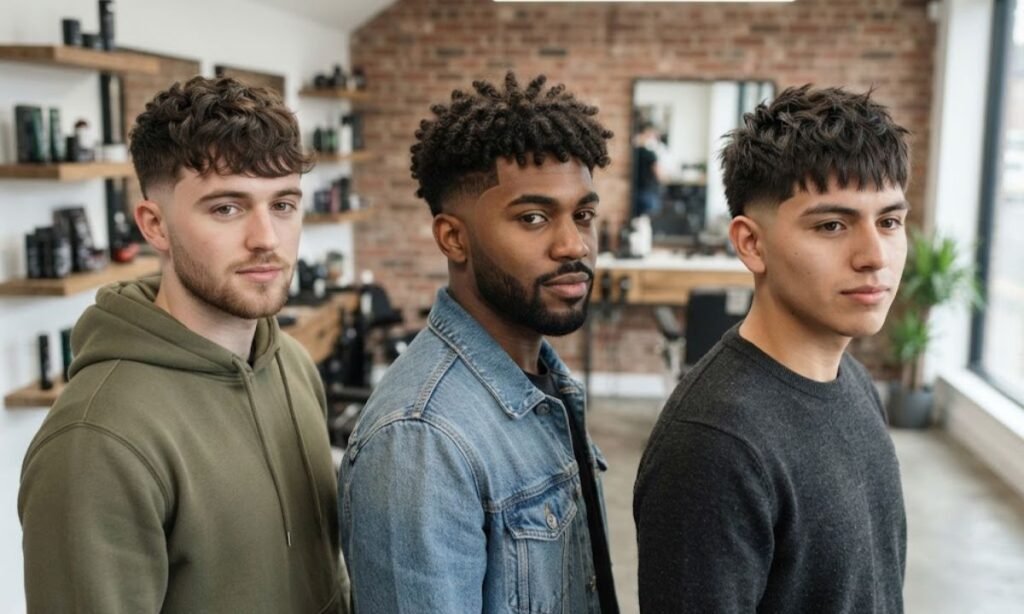
Not every version looks the same. Fringe length, curl pattern, and layering all change the result. Below you’ll find the main options and what each one needs.
Read through them with your own hair in mind. Then pick two or three to show your barber.
Short Textured Fringe
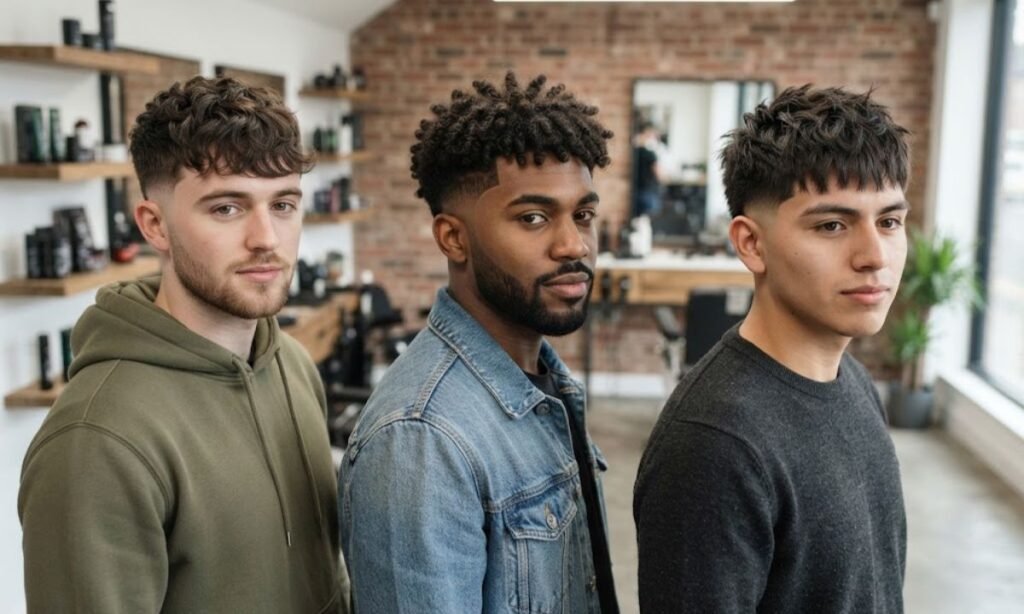
A short textured fringe sits about an inch long at the front. It’s the easiest version to manage. You can style it with your fingers and walk out the door.
It suits fine hair best because short layers add lift. Thick hair works too if your barber thins it. Expect a sharper, cleaner look overall.
Wavy Fringe with Low Taper

If you have a natural wave pattern, this is your cut. The wavy fringe rolls forward and gives the top a soft, loose shape. The taper keeps the sides tidy so the waves don’t look wild.
Skip heavy gel here. It flattens the wave. A little sea salt spray on damp hair keeps the shape without stiffness.
Curly Fringe Low Taper

The curly fringe with a low taper looks great when you respect the curl. Your barber should cut it dry or nearly dry. That way, they see how the curls really sit.
Use a curl cream after washing. Let the curls dry with a diffuser attachment or in the air. Handle them less and they’ll frizz less.
Layered Fringe with Low Taper
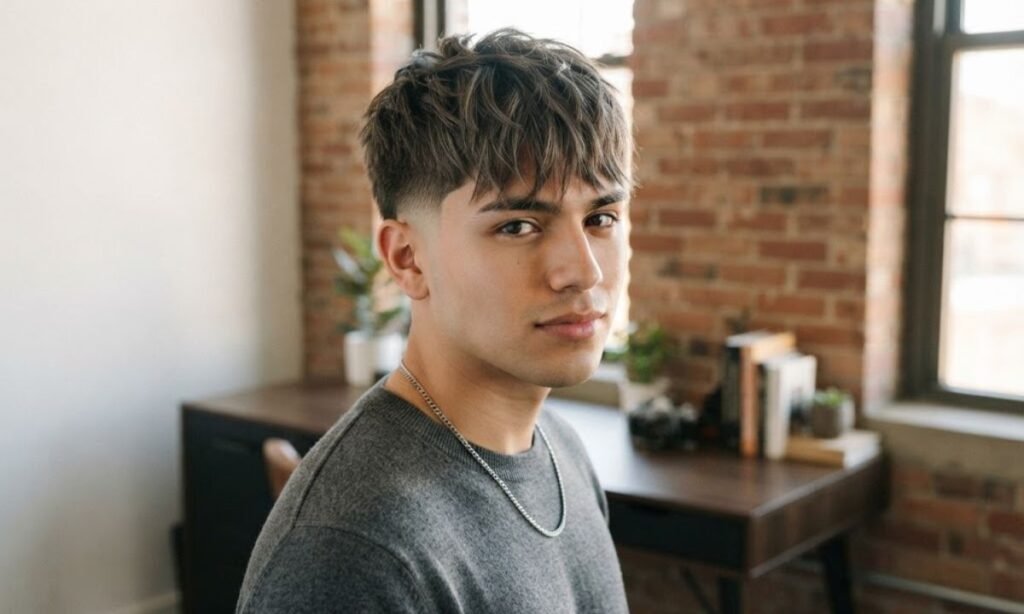
Here the top gets several hair layers that stack from front to crown. Each layer adds weight in a different spot. The result is a fuller, more dimensional shape.
It’s a smart pick if your hair feels flat. The layers create hair volume without any product tricks. Ask for soft layers, not steep ones.
Messy Textured Fringe

The messy textured fringe is deliberately rough. Ends look uneven, and the front breaks apart in small chunks. It’s the cut that says you just rolled out of bed, but looked great doing it.
Your barber creates this with point cutting and a bit of razor work. You finish it with texture powder and a quick scrunch. Don’t comb it flat.
Textured Fringe Style

The general textured fringe style covers any front that has been broken up on purpose. It can be short, medium, or long. What matters is the choppy edge and the internal movement.
Think of it like frayed rope rather than a straight ribbon. Each strand ends at a different point. That’s what catches light and adds interest.
Low Taper Shape
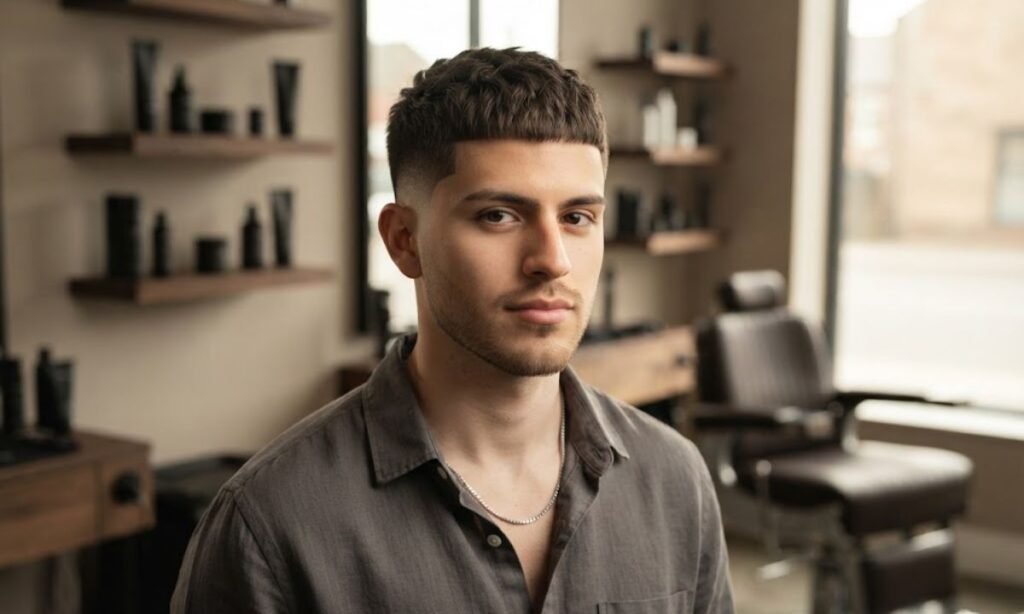
The low taper shape follows your hairline around the ears and down the back of your neck. It stays tight at the edges and blends upward. It never climbs above the temple.
That lower placement keeps things subtle. You get a clean outline without a dramatic contrast. It’s ideal for professional settings.
Low Taper Variations
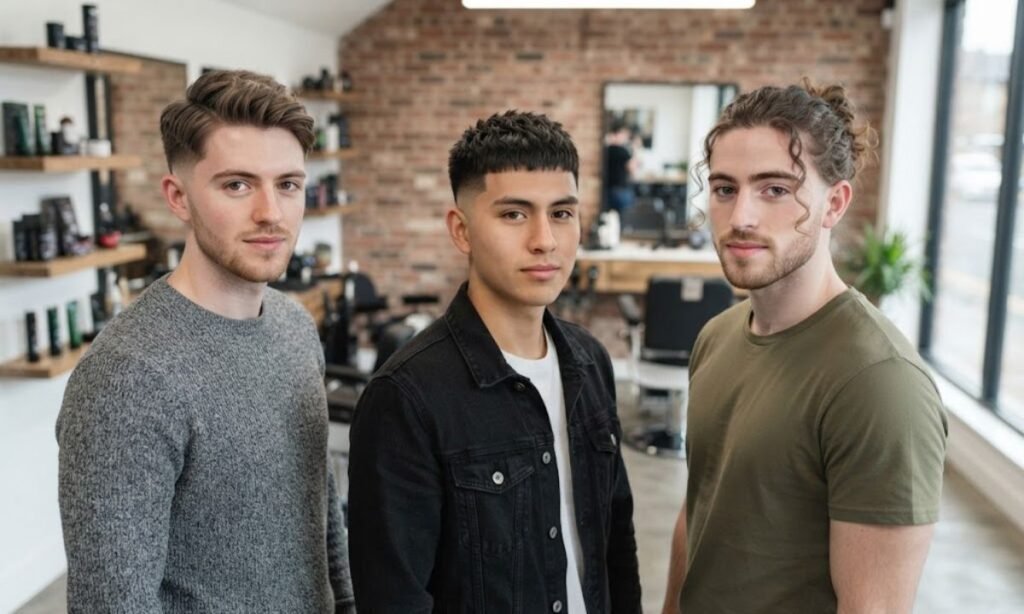
A low taper can end in a rounded neckline, a squared neckline, or a tapered V. Each one gives the back of your head a different feel. Ask your barber which one fits your neck.
You can also change how short the taper goes. Some guys stop at a number 2 clipper guard. Others go to skin. Both still count as a low taper.
Modern Taper Look

The modern taper look is softer than old-school barbershop tapers. There’s no hard line or shiny scalp. The seamless blend runs from shorter to longer with no visible steps.
It reads as neat but natural. That’s why it pairs so well with a relaxed fringe. Both halves speak the same quiet language.
Sharp Taper Edges
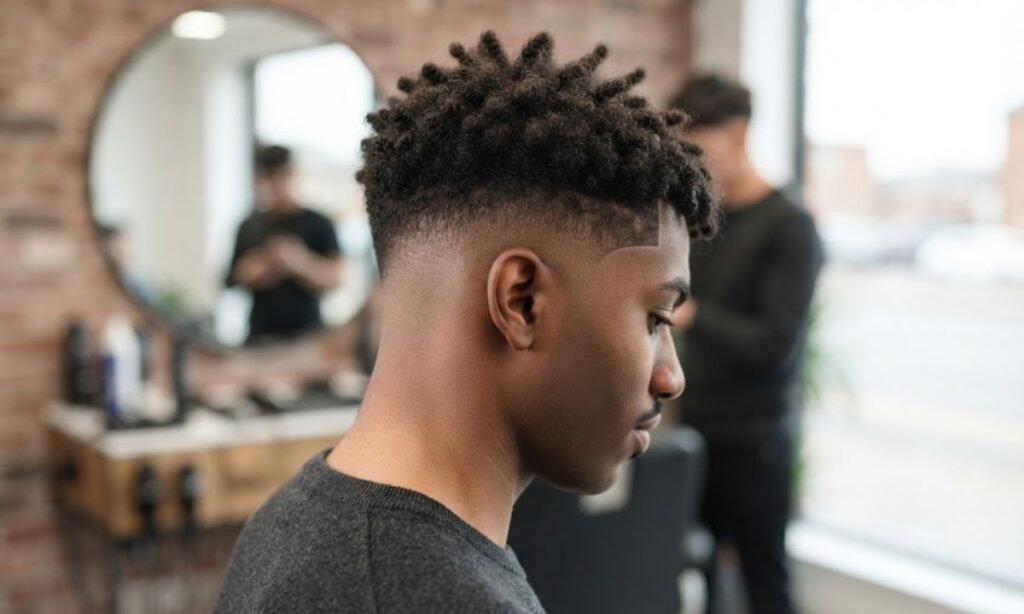
If you like crisp lines, ask for sharp taper edges. Your barber uses a trimmer to define the hairline and a line-up around the forehead and temples. It sharpens the whole face.
The trade-off is upkeep. Crisp edges soften within ten days. You’ll need more frequent visits to keep them looking fresh.
Fringe Length Guide
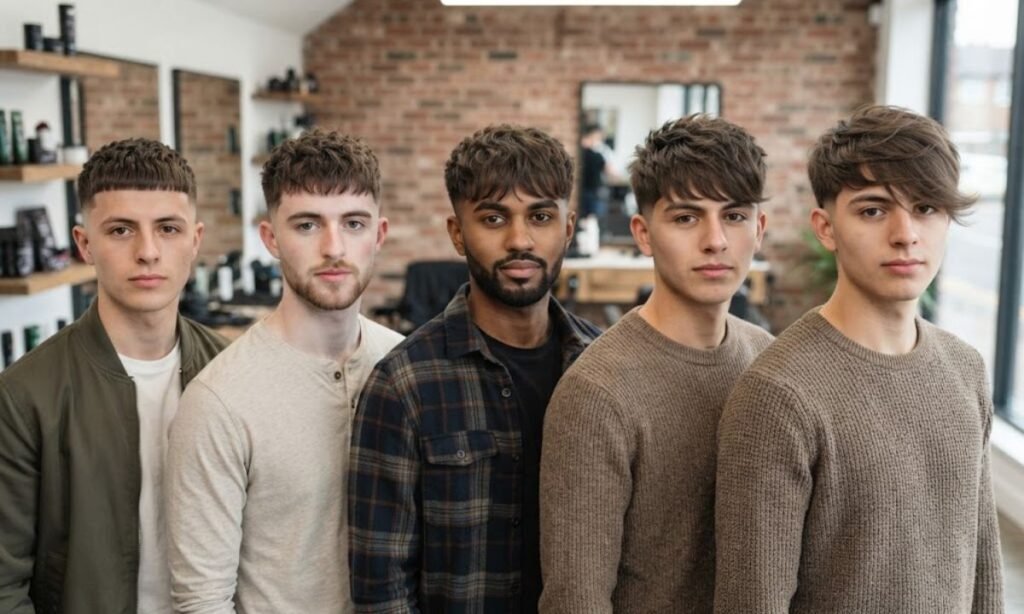
A fringe above eyebrows feels casual and playful. A medium-length fringe brushes your brows and gives you more styling options. Longer versions drop past the eyes and need constant pushing back.
Most guys land in the middle. It’s long enough to style and short enough to see. When unsure, start shorter and grow it out.
Fringe Texture Tips
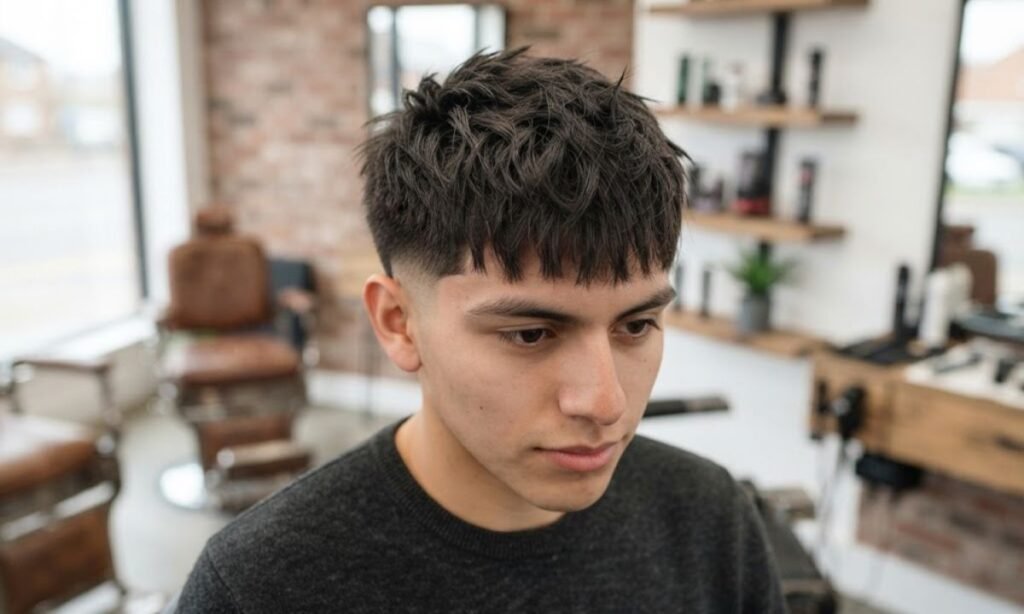
Texture starts in the cut, not the bottle. Ask for point cutting at the ends and some slide cutting through the middle. Those two techniques create the broken, choppy layered fringe you want.
Product comes second. A pea-sized amount of styling paste goes a long way. More product won’t fix a cut that lacks layers.
Styling Textured Fringe
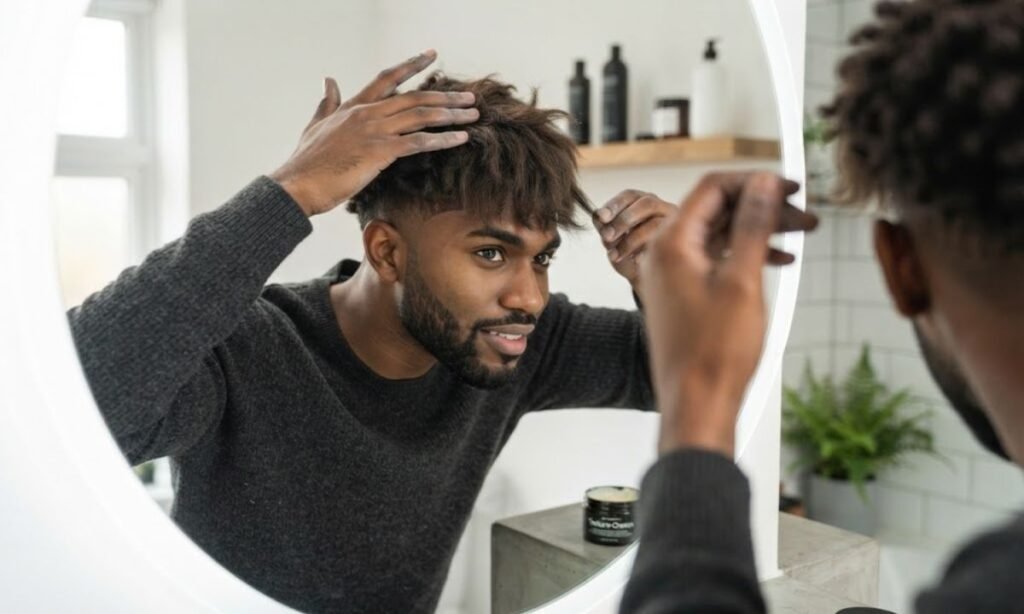
When styling textured fringe, less is more. Rub a small amount of product between your palms and work it through the ends. Then leave it alone.
Overworking hair makes it look greasy and flat. Think of it like seasoning soup. Add a little, taste, then decide if you need more.
Messy Fringe Finish

The messy fringe finish relies on a matte-finish products routine. Shiny products make texture look wet and heavy. Matte ones keep the tips separated and dry.
Try matte clay for thick hair and texture powder for fine hair. Both give grip without shine. Your fringe will look touched, not glued.
What to Say to Your Barber
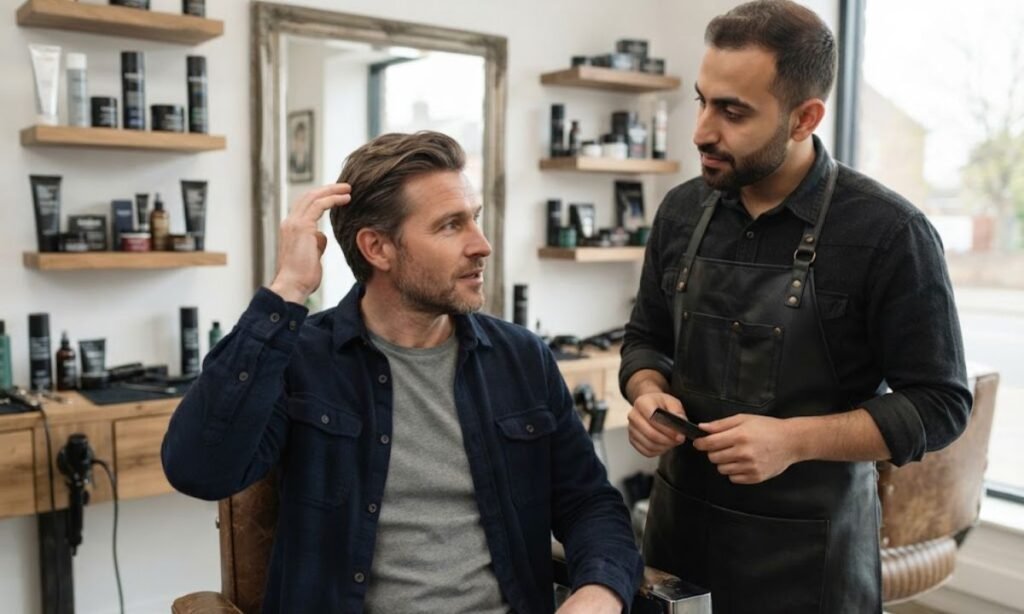
Walk in with a reference photo. Then use plain words. Say “low taper with a textured fringe, longer on top, blended at the sides.”
Mention how long you want the front and how short you want the neckline fade. Add whether you want a beard trim too. Clear barber instructions save you from a haircut you didn’t ask for.
How Your Barber Creates This Haircut

Your barber starts with a barber consultation. They check your hair density, crown, and hairline. Then comes sectioning and fringe cut, where they divide the top so they can cut it cleanly.
Next, they build the low taper fade with clippers and short guards. They finish with layering the top, detail work, and a dry check to catch uneven spots. The whole thing takes about 30 to 45 minutes.
How to Style a Low Taper Fade Textured Fringe at Home
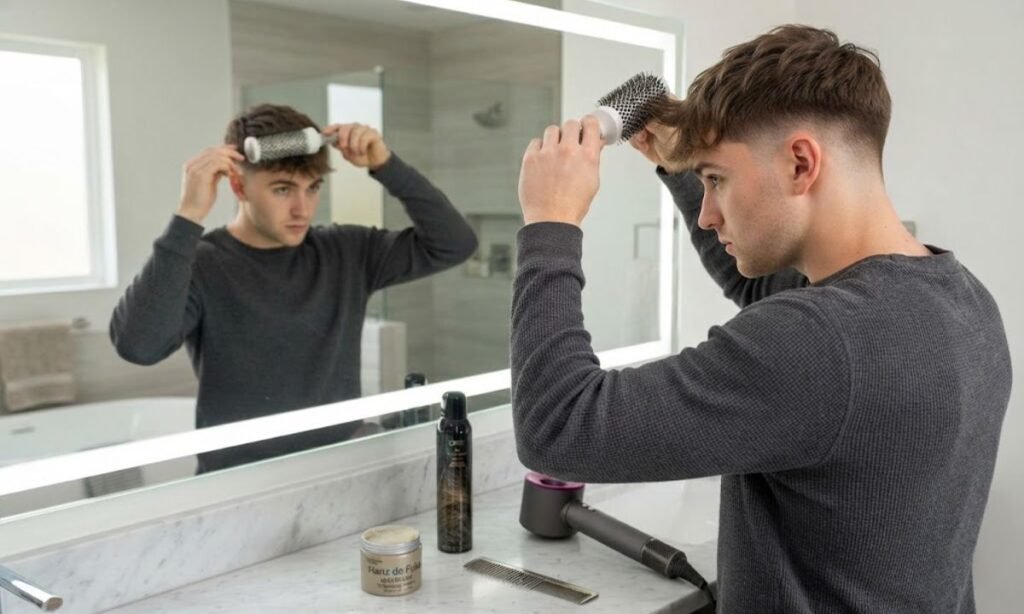
You don’t need a complicated routine. You need five steps and a little patience. Here’s the flow that works for most hair types.
- Start with towel-dried hair. Damp hair takes product evenly. Soaking wet hair dilutes it.
- Apply a base product. Use sea salt spray or a thickening spray for grip and body.
- Blow-dry with your fingers. Use a blow-dryer on medium heat and lift the roots. Point the airflow forward.
- Add your finishing product. Warm a pea-sized amount of matte clay in your palms. Let the product absorption happen for a few seconds.
- Push the fringe forward. Use finger styling so the fringe falls forward naturally. Then separate and define the ends.
Curly and wavy guys can swap the blow-dryer for a diffuser attachment. Scrunch gently and don’t touch the hair until it’s dry. That protects curl definition.
If the front looks too flat, dab a bit more texture powder at the roots. If it looks too stiff, mist a little water and finger-comb it once. Small fixes beat starting over.
Maintenance and Hair Care

A good cut only looks good if you look after it. The taper grows out fast, and the fringe loses shape over time. A simple routine keeps both in check.
The upkeep splits into two parts. One happens in the barber’s chair and the other in your bathroom.
Barber Visits
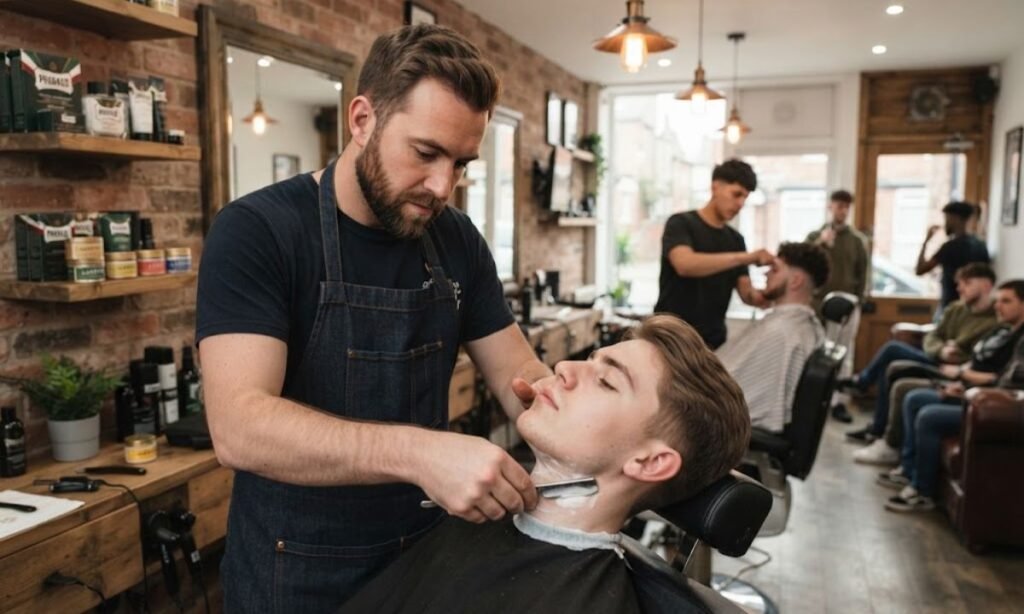
Book regular barber visits every three to four weeks. That timing keeps the clean neckline tight and the taper crisp. Push it to six weeks and the blend starts to look fuzzy.
Some guys only need a quick trim the fringe and neckline cleanup between full cuts. Ask your barber if they offer that. It costs less and keeps you sharp.
At-Home Care

Wash your hair two or three times a week. Daily washing strips natural oils and can dry out curls. Use a gentle shampoo and a light conditioner.
For humid days, try an anti-humidity spray before styling. It calms frizz and holds the textured finish. Also remember that hair shrinkage is real, so curly fringes look shorter once they dry.
Who This Haircut Suits Best

Good news: nearly everyone can pull this off. The trick is adjusting fringe length and layering to fit your features. A barber who understands your head shape makes all the difference.
Two things matter most. Your face shape and your hair types decide how the cut should sit.
Face Shapes
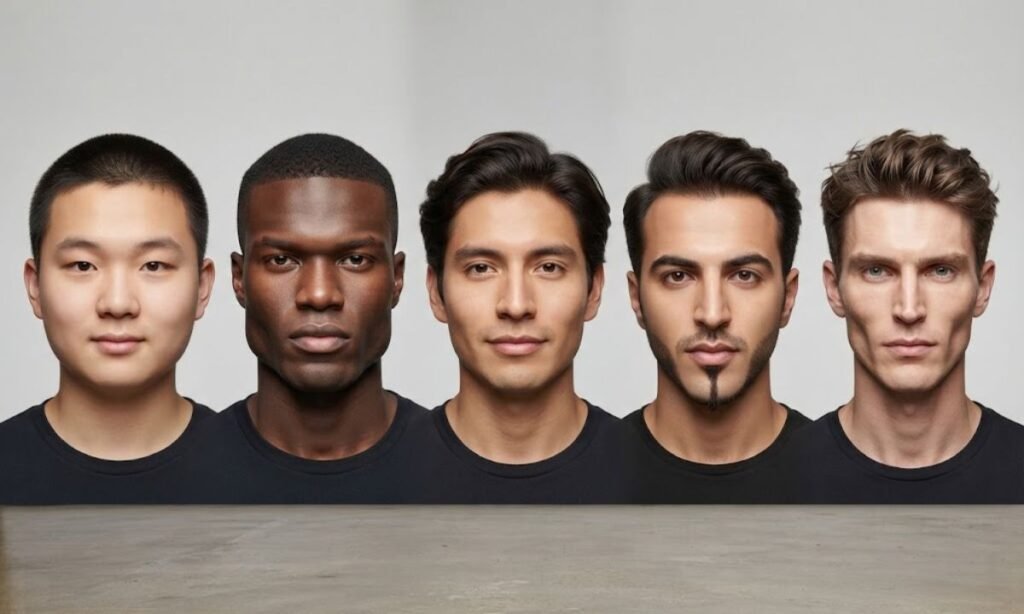
A round face looks longer with a bit of height and a shorter fringe. A square face looks softer with a slightly longer, wispy front. An oval face handles almost anything.
A long face and rectangular face do better with a fuller fringe that shortens the forehead. A heart face likes a side-swept front to balance a narrow chin. A diamond face benefits from fringe that widens the forehead area.
Face-framing fringe also helps. A slight sweep across one side draws attention to your eyes and cheekbones. Ask your barber to test the direction before cutting.
Hair Types

Thick or coarse hair needs thinning and weight removal. Ask for extra hair layers so the top doesn’t puff outward. Use matte clay to control it.
Fine or flat hair needs the opposite. Ask for shorter layers and a thickening spray for body. Straight hair looks best with strong point cutting, while wavy hair and natural curls need less product and more shape.
The Style’s Journey and What’s Ahead

Tapers have been around for decades. Barbers used them long before social media existed. The textured fringe, though, gained traction more recently thanks to crop cuts and messy styles.
Over the past few years, the two merged. Guys wanted clean sides without the harshness of a high fade. That created the low taper fade with textured fringe we see now.
What’s next? Expect softer layering and a bit more length on top. Curtain bangs on men have started appearing, and subtle highlights or even men’s perms are creeping in. These add depth without changing the base cut.
Still, the core idea should stick around. Clean sides plus natural movement on top is a formula that ages well. Fashion may shift, but this shape will adapt.
Best Products for a Textured Fringe

Your product choice can make or break the finish. Each one does a different job. Pick based on hair type, not on packaging.
Matte clay gives strong hold and no shine. Texture powder adds lift to fine hair. Styling paste suits medium hair that needs a soft, flexible hold.
Sea salt spray builds grit for waves. Curl cream hydrates curls and defines them. Thickening spray adds body before you blow-dry.
Start with one or two products. Owning six will only confuse your routine. Test each for two weeks before adding another.
Common Mistakes to Avoid
The first mistake is using too much product. It weighs the fringe down and kills the piecey lived-in finish. Start with a pea-sized amount.
The second is skipping the dry check. A haircut that looks fine wet can look uneven dry. Ask your barber to check it before you leave.
The third is choosing the wrong taper height. A taper that sits too high changes the whole look. Stick to the low taper starting near the ears, and confirm it with your barber before the clippers start.
Another mistake is ignoring scalp exposure. If your hair is thinning, a very short taper can reveal more scalp. Ask for a slightly longer guard to keep things balanced.
Where This Cut Works: School, Work, and Weekends

Worried it’s too trendy for your setting? It isn’t. The low taper fade with textured fringe adapts to nearly every room.
For professional settings, keep the fringe shorter and use less product. It reads as a formal hairstyle when you comb it slightly to the side. It’s also a safe school-appropriate haircut since the taper stays subtle.
For a casual hairstyle, push the front forward and let it fall messy. For a creative hairstyle, add subtle highlights or leave it longer and wavier. Same base cut, four different personalities.
Growing It Out Without the Awkward Stage

Every haircut has an awkward middle stage. The grow-out is no different. The sides fill in first, and the fringe suddenly touches your eyes.
Keep the neckline fade trimmed during this phase. A clean back makes the rest look intentional. Then ask for small trim the fringe appointments every six weeks.
Use a thickening spray and push the front sideways. That hides the growth and adds shape. In three to four months, you’ll have room for a longer style like curtain bangs.
Low Taper Fade Textured Fringe: Asked Questions
How often should I get this haircut redone?
Every three to four weeks keeps it sharp. If you like crisp edges and a line-up, aim for the shorter end. If you prefer a softer taper, five weeks works.
Does a low taper fade work with thin or receding hair?
Yes, with adjustments. Ask for a slightly longer guard and shorter fringe layers. That keeps the hair volume balanced and reduces scalp exposure.
What’s the difference between a low taper and a low fade?
A low taper gently shortens hair around the ears and neckline. A low fade goes shorter, sometimes down to skin, and shows more contrast. Both start low, but the taper looks softer.
Can I get this cut with a beard?
Absolutely. Ask your barber to blend the sideburns into your beard trim. A tidy beard and a clean low taper fade look great together.
What products work best for a textured fringe?
Matte clay, texture powder, and styling paste cover most needs. Curly guys should add curl cream. Wavy guys will love sea salt spray.
Is this style still trendy in 2026?
It is. Among men’s hairstyles 2026, it remains one of the most requested. It’s flexible, low effort, and works across ages.
You can also checkout this article as well Boys Mullet Haircut Guide 2026: Styles, Fades, and Care
Conclusion
The low taper fade with textured fringe wins because it’s simple. You get clean faded sides and a top with plenty of character. It looks sharp without demanding your whole morning.
Bring a reference photo, describe the length you want, and trust a barber who listens. Stay consistent with trims and use the right product. That’s the entire recipe.
Have you tried this cut yet? Drop your questions or your barber tips in the comments. If this guide helped, share it with a friend who’s stuck on his next haircut. I’ll refresh this guide as new trends appear, so check back.

I’m Michael Charles, the creator of MegaCrazes—your source for fresh hairstyles, sharp haircuts, and simple hair-care inspiration. Find your style. Own your look.
1 thought on “Low Taper Fade with Textured Fringe: Complete Guide for 2026”