

Not sure what to ask for when the barber says “so, what are we doing today?” You’re not alone. Most guys freeze, mumble “a fade,” and hope for the best.
Here’s the short version. A mid fade haircut is the safest, most flexible fade you can pick. This guide covers 59 versions, who they suit, and the exact words to use in the chair.
Quick Answer
A mid fade starts at temple level and sits around the middle of the ear. The hair blends shorter toward the neckline, so the sides look clean without going extreme.
It’s the middle ground between a subtle low fade and a bold high fade. You get contrast without going bold. It also works on every face shape and works on every hair type, with small tweaks for each.
Need it in one line for your barber? Ask for a mid fade, tell them your guard number, and say how much you want on top. That’s 90% of the job.
What Are the Best 59 Mid Fade Haircut Styles?
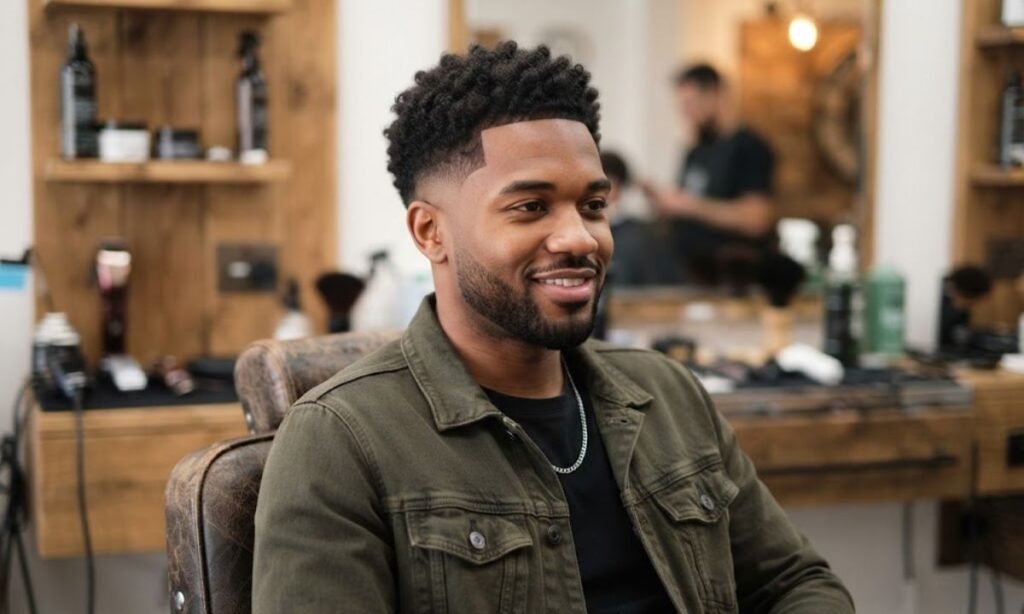
Some of these 59 are genuinely different cuts. Others are the same cut with a different name, and I’ll flag those. That way you won’t show a barber two photos of the same haircut.
Pick the top and the fade type separately. Think of it like ordering a burger: bun first, then toppings.
1. Classic Mid Fade
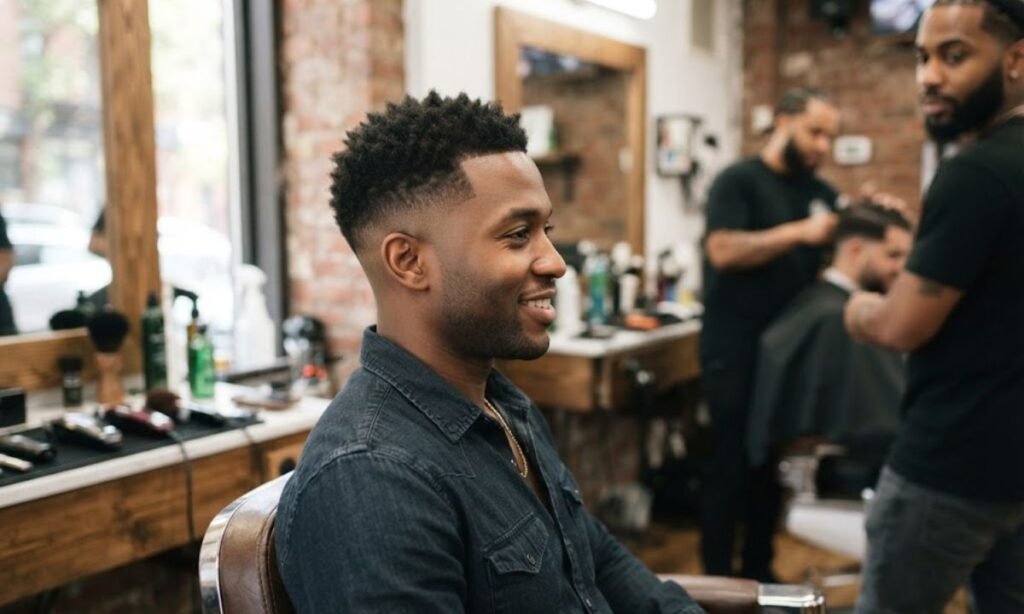
The classic mid fade is the cut everyone pictures. Short sides, a clean fade starting at temple level, and medium length on top.
It’s a great first fade. If you’ve never tried one, start here.
2. Mid Taper Fade
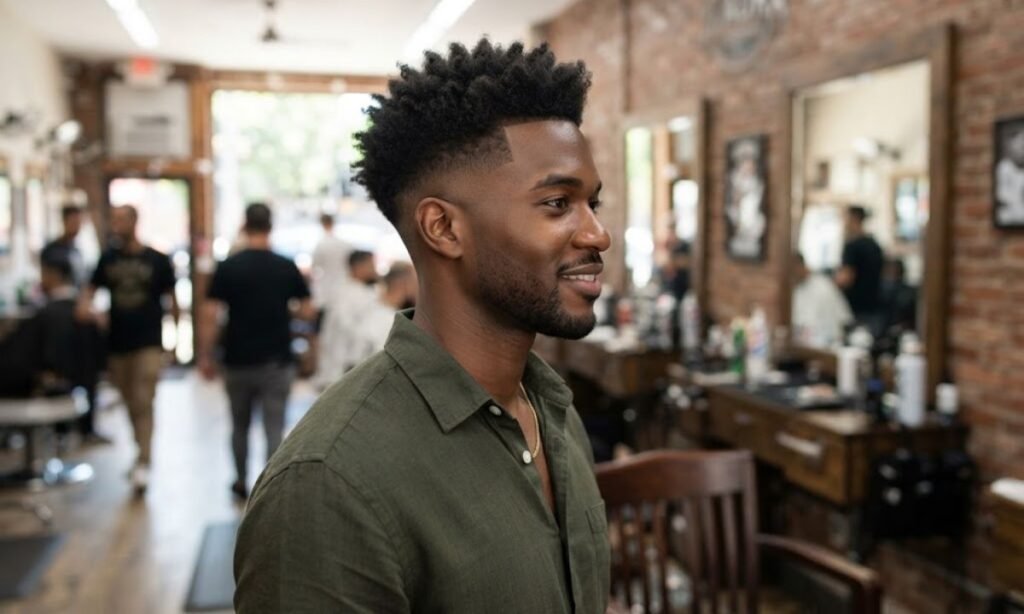
A mid taper fade leaves some length at the base. The hair never reaches skin, so it looks softer and more office friendly.
Choose this if you want a clean edge without a bald look. Guys with receding hairlines often like it.
3. Mid Skin Fade

The mid skin fade goes down to bare skin at the base. Barbers usually start with a #0 guard or a foil shaver.
It looks sharp and a little dramatic. Expect to rebook sooner, because skin shows regrowth fast.
4. Mid Drop Fade
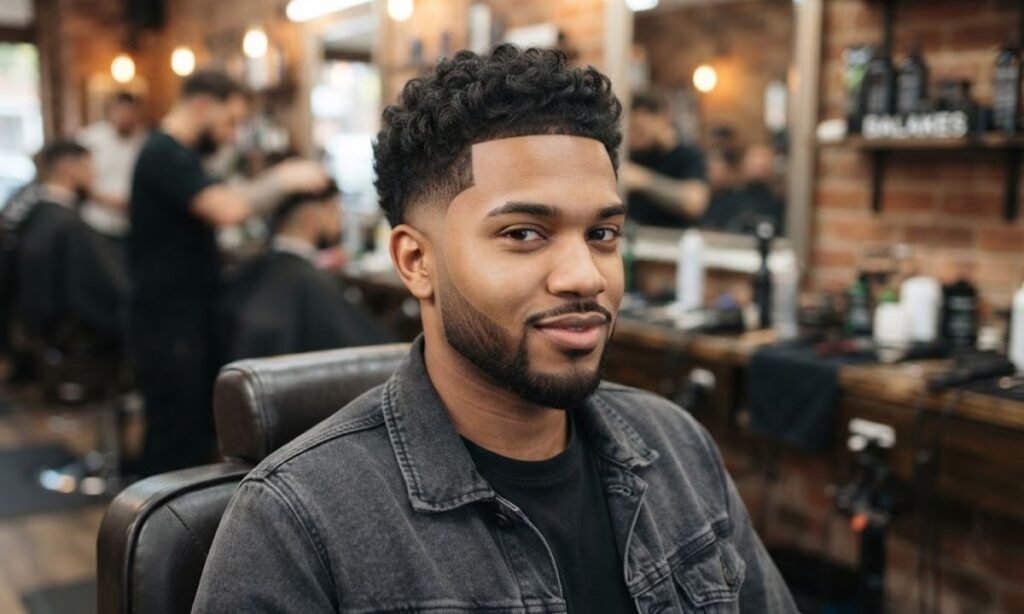
In a mid drop fade, the fade line curves downward. It curves down behind the ear and sits lower at the back.
This shape follows your skull, so it flatters rounder heads. It’s a nice upgrade when a straight fade feels boring.
5. Mid Burst Fade
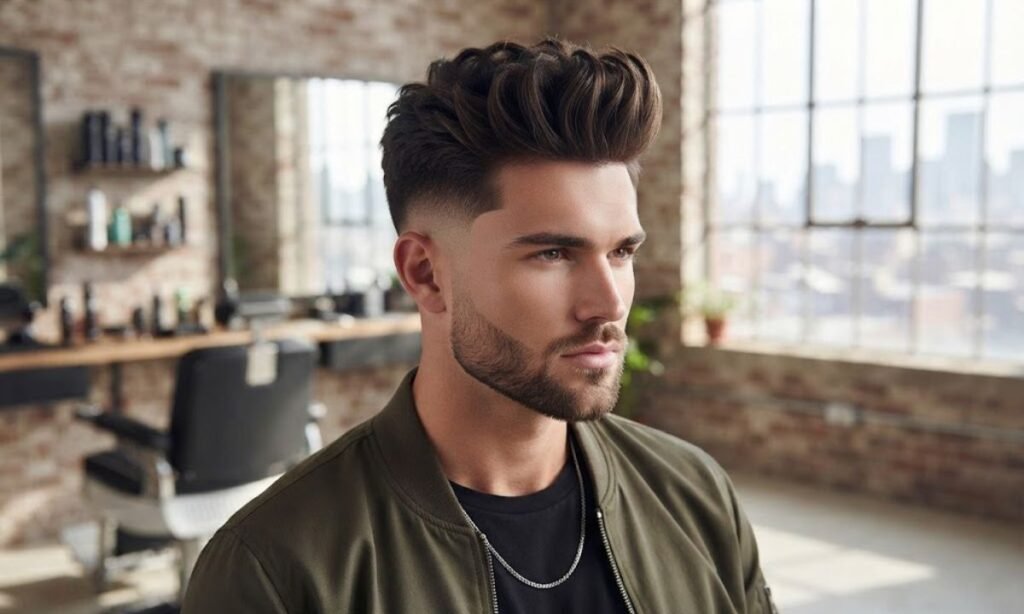
The mid burst fade uses a semi-circular pattern around the ear. The hair stays longer at the back, which gives the cut a mullet-adjacent feel.
It works well with curls and textured tops. Ask for it by name, since not every barber assumes it.
6. Mid Temp Fade
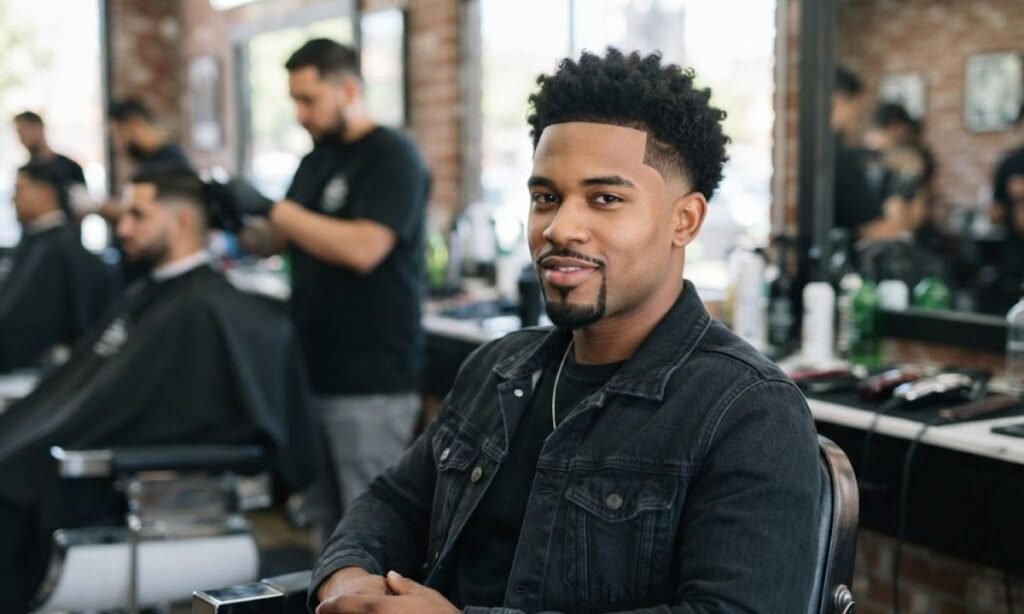
The mid temp fade is a short fade focused on the temples. It stays sharp around the temples and hairline without a full blend around the head.
Picture a fade that keeps its attention up front. It’s quick, tidy, and easy to grow out.
7. Mid Fade Taper
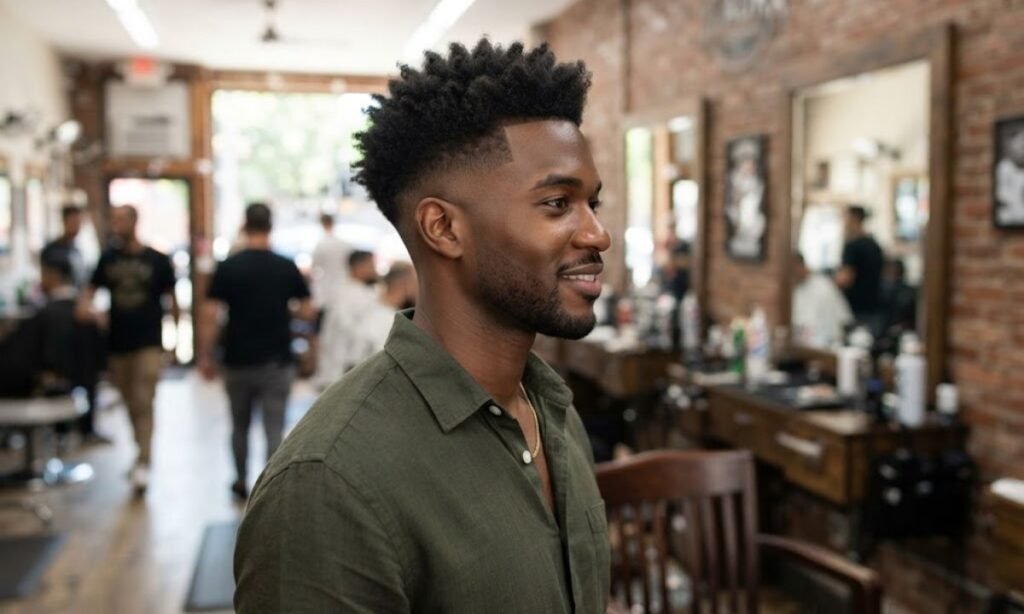
This is the same cut, different term as number 2, flipped around. Plenty of barbers say “mid fade taper” and mean a mid taper fade.
Don’t stress over the word order. Bring a photo, and you’ll get what you want.
8. Mid Fade Undercut
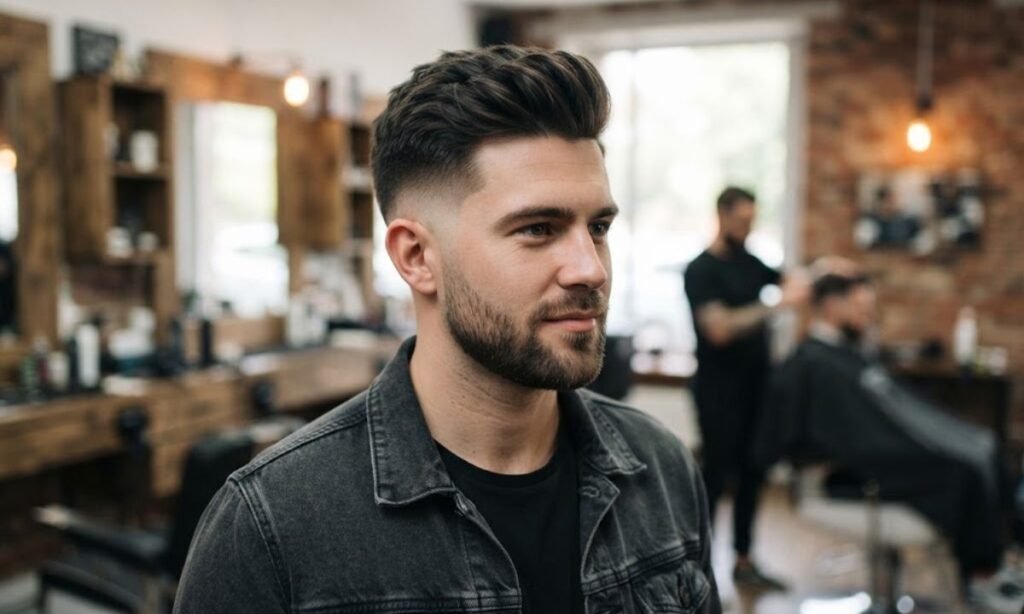
An undercut adds a visual separation between top and sides. The sides stay very short, and the top keeps real length.
It looks bold but stays wearable. Slick it back or push it to the side.
9. Mid Fade Lineup
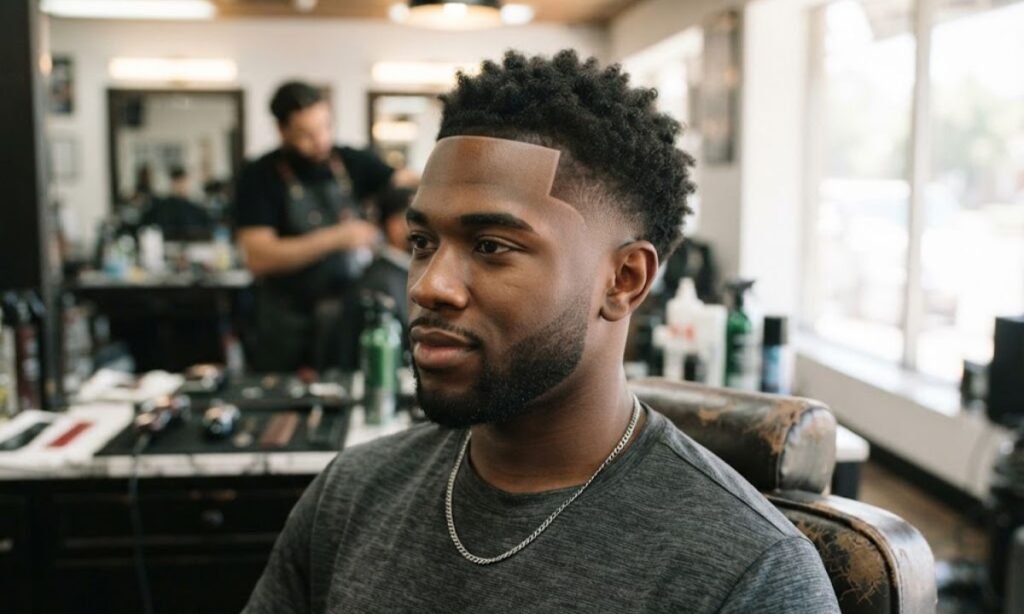
A lineup is the crisp razor line along the forehead and temples. Pair it with a mid fade and your hairline looks drawn on.
It fades fast, though. Plan on a touch up every week or two.
10. Mid Fade Design

A design is a shaved pattern in the side or back. Think stripes, a part line, or a small shape.
Keep it simple if you work in an office. Barbers who do designs well usually show a portfolio, so ask.
11. Mid Fade with Beard

A mid fade with beard works when the hair on your head flows into your face. Ask the barber to blend into the beard, so there’s no hard gap.
It frames your jaw nicely. Guys with thinner cheeks often get the biggest glow up.
12. Mid Fade Beard
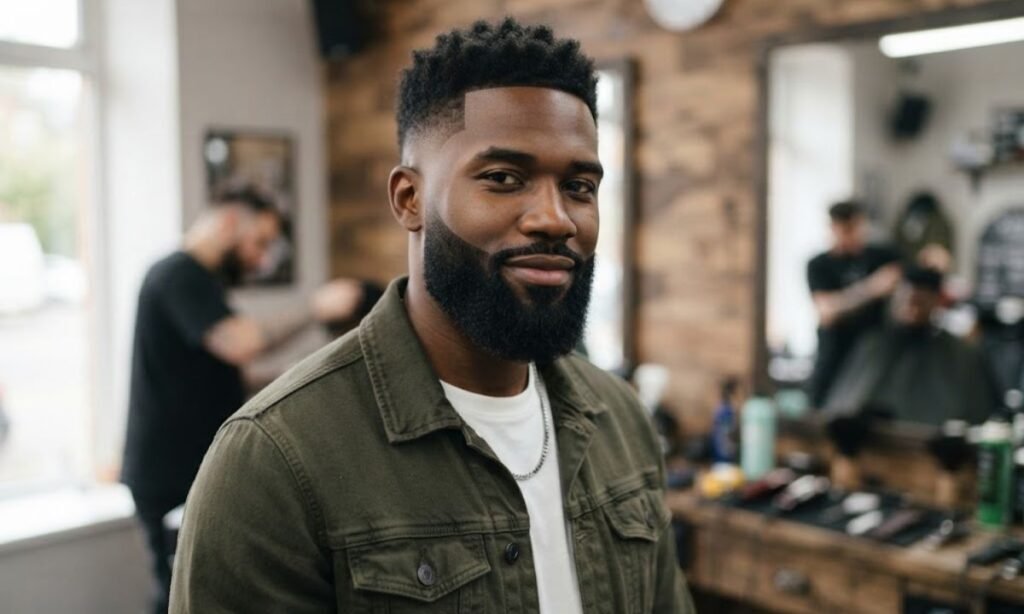
This one shifts the focus to the facial hair itself. You fade down into the beard, so the sideburn melts into the cheek line.
A short boxed beard looks tidy here. A full beard needs a barber who’s patient with the transition.
13. Mid Fade with Curly Hair
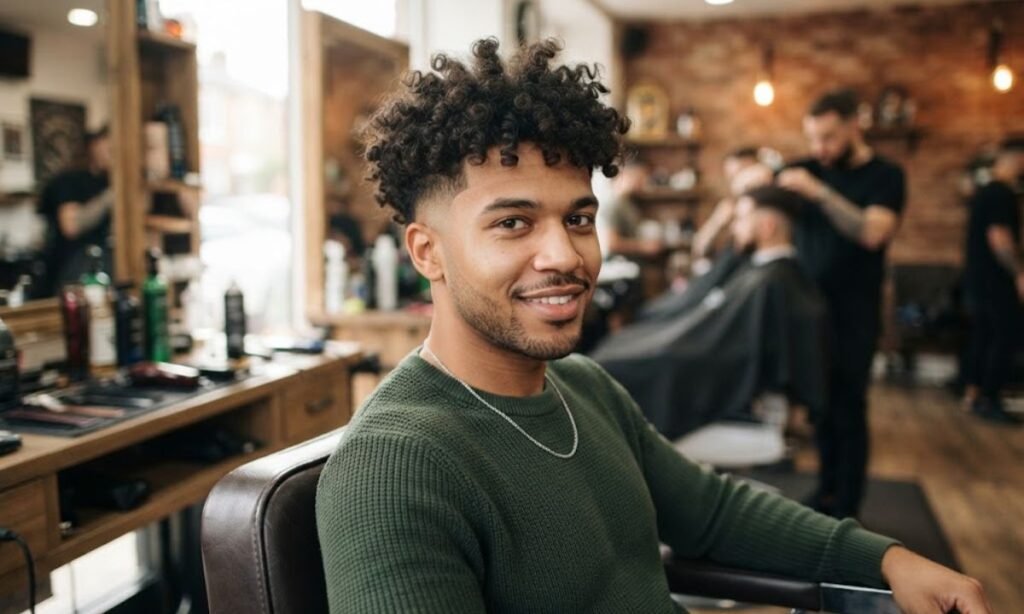
A mid fade with curly hair pairs short sides with bouncy tops. Natural curly styles look intentional, rather than messy, against a clean fade.
Ask the barber to cut based on dry hair. Curls shrink when dry, so a wet trim can leave you with less than you expected.
14. Curly Mid Fade

Here the curls are the main event. Leave enough length for definition, then let the fade do the framing.
A good curl-to-fade transition has no sudden cliff. Ask the barber to check it from the side.
15. Mid Fade Curls
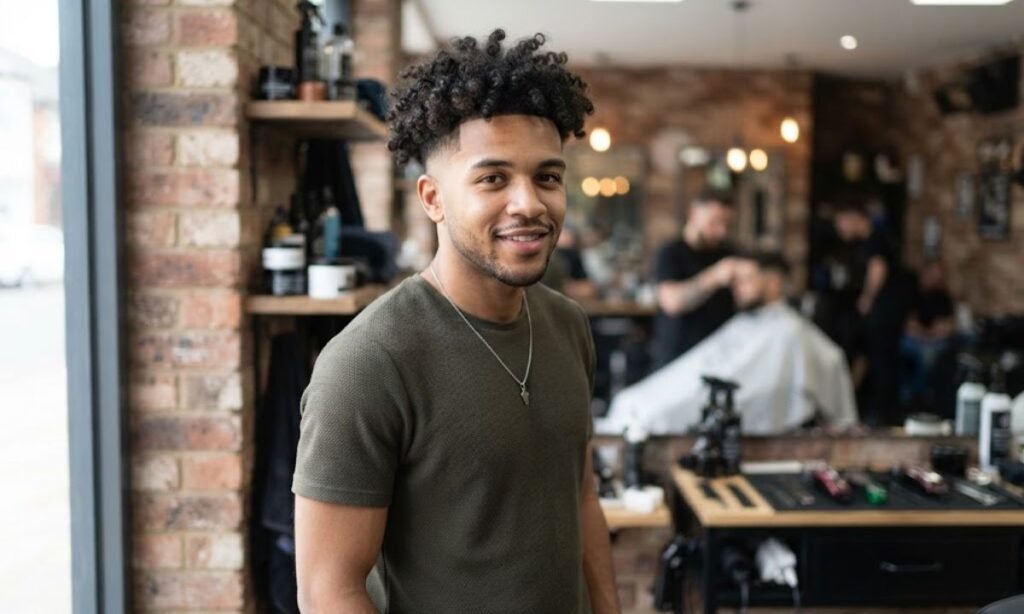
This version suits loose, springy curls and ringlets. Keep the top a bit longer and add a light cream.
Skip heavy gel. It flattens the shape and turns curls crunchy.
16. Mid Fade with Wavy Hair
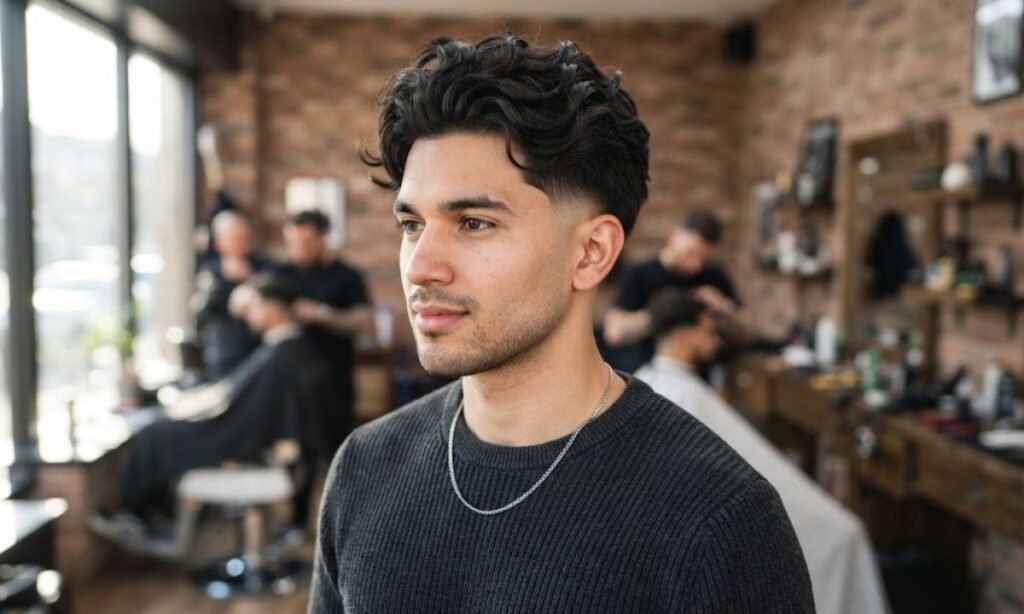
Wavy hair loves a mid fade. Ask the barber to follow your natural wave direction and use scissor-over-comb work on top.
You’ll get movement without frizz. It’s an easy style that looks good in the morning with a pat of sea salt spray.
17. Mid Fade Waves
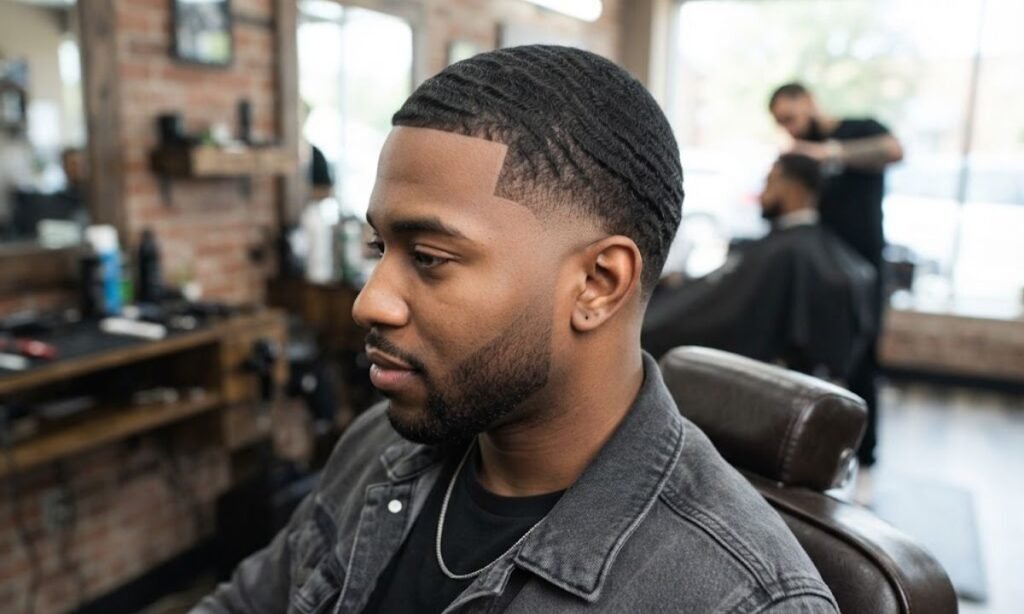
This leans into deeper waves, often with 360 style brushing. It takes patience and a firm brush.
Guys with coarse hair get the best pattern. Brush it every night if you want to keep the ripple.
18. Mid Fade with Straight Hair

Straight hair shows every clipper mark. That means you’ll want a barber who blends carefully.
Leave 2.5 to 3 inches on top, then add texture with a matte paste. Flat straight hair needs a little help to stand up.
19. Mid Fade Afro

A textured afro on top with a mid fade on the sides looks bold and balanced. It shows off your coily hair and tight curl pattern.
Shape the top into a soft round. Pick it out gently for volume.
20. Mid Fade Dreads
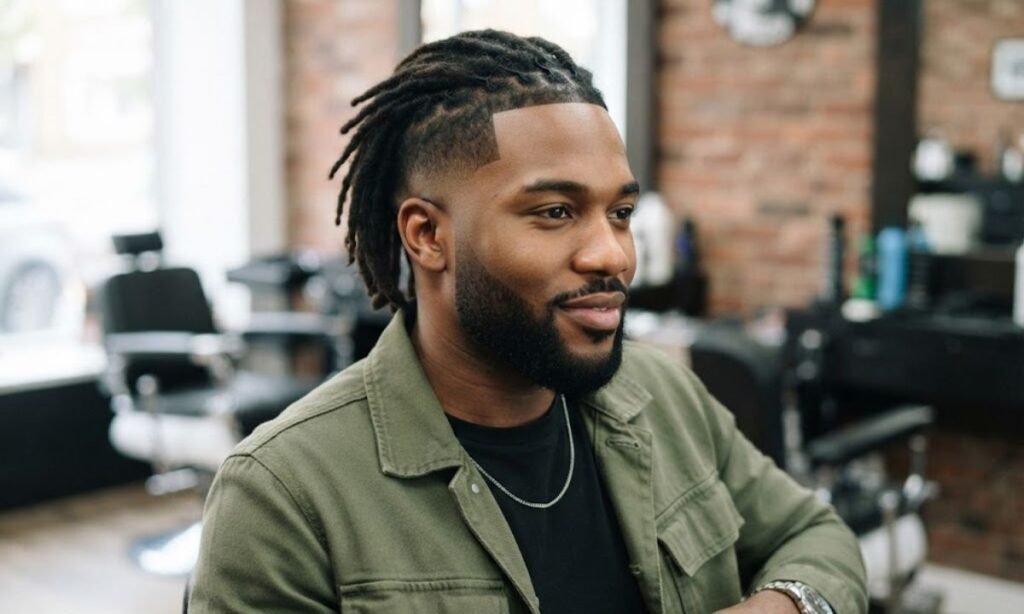
Short dreads or twists on top, fade on the sides. It’s neat, and it makes the locs pop.
Retwist on schedule so the fade doesn’t look overgrown next to fresh roots.
21. Mid Fade Locs

Fully formed locs get the same treatment with a longer top. Many guys tie the locs up and show off the sharpest mid fade lines underneath.
Talk to a barber who knows locs. Not everyone does.
22. Mid Fade Broccoli
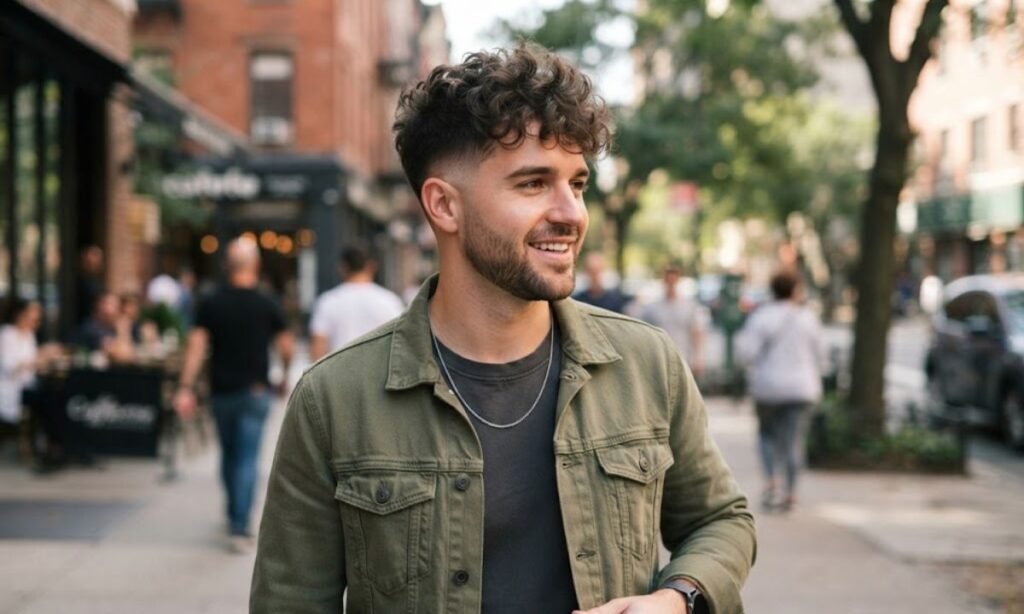
The broccoli cut uses twisted or curled top hair, usually on 4C hair or tight coils. The top looks like a little cloud against the faded sides.
It’s playful and low effort. Twist with a sponge and you’re done.
23. Mid Fade Textured Crop

A textured crop is short, choppy, and easy. Point cut the top so it looks piecey and broken up.
It’s a favorite for guys who hate styling. Rub in a little clay and walk out.
24. Textured Mid Fade

This is a looser take on the crop. Add choppy layers on top and keep the fringe a bit longer.
Fine hair benefits a lot here. The layers fake extra thickness.
25. Mid Fade Crop

The crop leans shorter and tighter. It works if you want a fade that grows out without looking wild.
Pair it with a light pomade. A glossy finish isn’t the goal here.
26. Mid Fade Texture
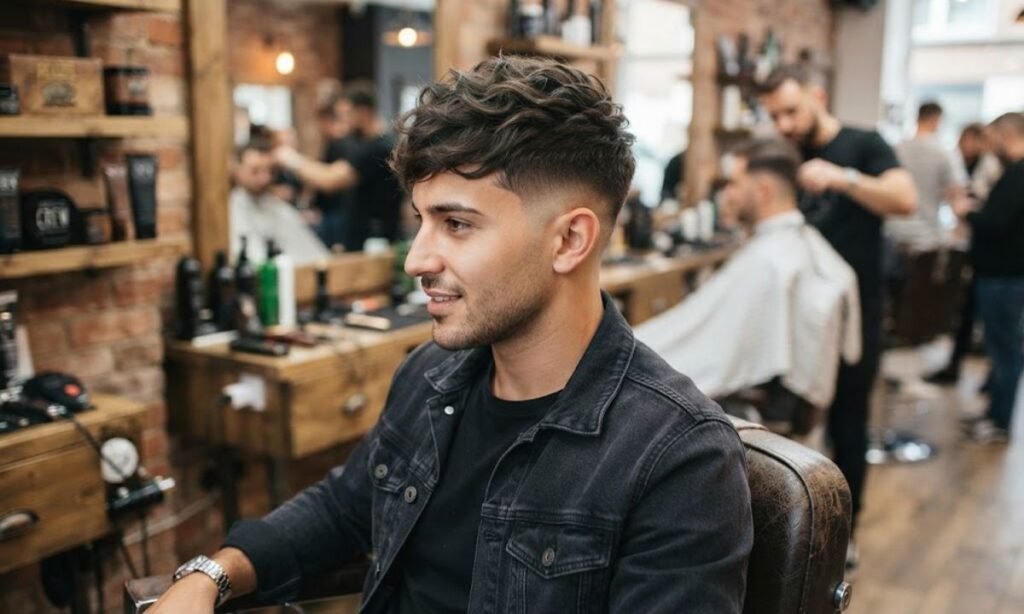
Here the word is the point. A textured top means contrast in length, so strands separate instead of clumping.
Ask for texturizing shears or razor work. Your hair will sit differently from day one.
27. Mid Fade French Crop

A French crop has a short, blunt fringe and a mid fade. The fringe above the eyebrows gives it a clean, boyish look.
It suits thick hair well. Receding hairlines hide nicely behind that fringe.
28. Mid Fade Caesar

The Caesar is a short horizontal fringe, almost straight across. Pair it with a mid fade and you’ve got an easy, Roman style look.
It needs minimal styling. A dab of paste keeps the fringe flat.
29. Mid Fade Edgar

The Edgar is a thick, blunt fringe with a sharp lineup. It has roots in Latino barbering, and it’s popular across the U.S. and Europe.
Take a photo to your barber. Details matter a lot here.
30. Mid Fade Fringe

A fringe pushed forward softens the whole face. Guys with high foreheads often love the balance.
Use a little sea salt spray for texture. Heavy products make the front look greasy.
31. Mid Fade Side Swept Fringe

A side swept fringe brushes the front across the forehead at an angle. It adds movement without tons of length.
Blow dry it from the roots. Then set it with a light cream.
32. Mid Fade Side Part

The side part is a real classic with a modern edge. Use your natural hair parting, so the part stays put all day.
It’s a staple for professional settings. You can wear it to a wedding or a Wednesday meeting.
33. Mid Fade Sidepart

Same cut, one word instead of two. Both terms point to the same haircut.
You can add a shaved hard part if you want extra definition.
34. Mid Fade Comb Over

The mid fade comb over is a tidy, grown up favorite. The top is brushed over to one side, and the sides are clean.
Leave 3 to 4 inches on top for a real comb over. Anything shorter looks flat.
35. Mid Fade Comb

Think of this as a casual comb over. Less shine, more natural texture.
Use a wide tooth comb and a bit of paste. It takes a minute in the morning.
36. Mid Fade Slick Back
Hair is combed straight back, with a high-shine finish or a softer sheen. It looks polished at a dinner or a job interview.
Thick hair holds this shape well. Fine hair needs a stronger product.
37. Mid Fade Slickback

Same style, written as one word. Search engines treat them alike, and so do barbers.
If your hair’s thinning at the front, try a matte product. It hides the scalp better than shine.
38. Mid Fade Brush Back

Brush back is looser than slick back. The hair sweeps back with some movement, and the volume swept back gives the front a lift.
It’s a good compromise if gel feels too stiff. A blow-dried back finish makes it easier.
39. Mid Fade Hard Part

A shaved hard part is a razor line cut into the side. It gives the haircut a sharp edge and makes comb lines pop.
It looks great on a slick back or comb over. It does need weekly care.
40. Mid Fade Hardpart
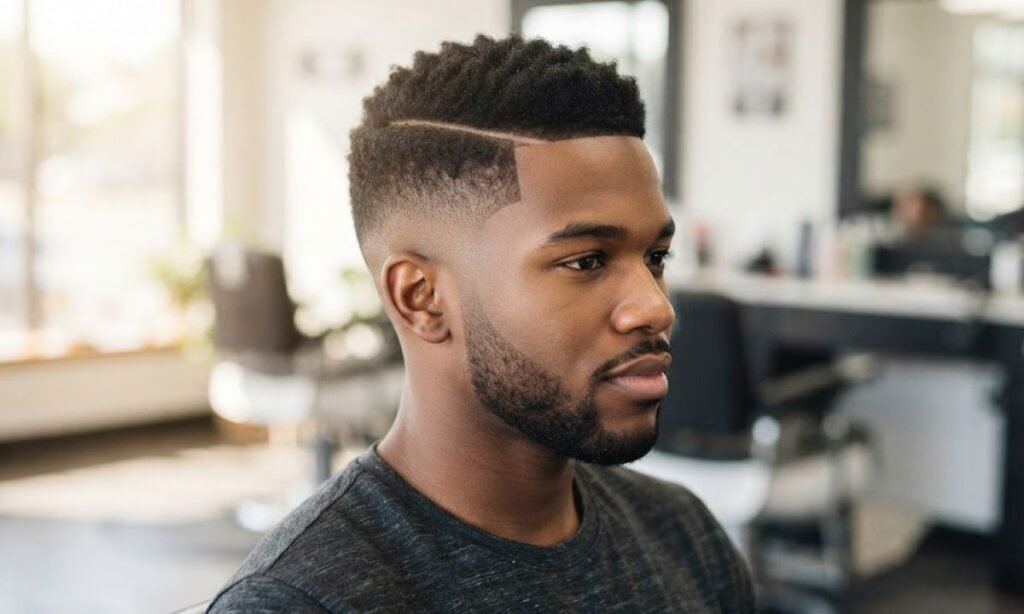
Same idea, different spelling. Show a photo so the part lands in the right spot.
Keep it clean with a small trimmer between visits.
41. Mid Fade Quiff
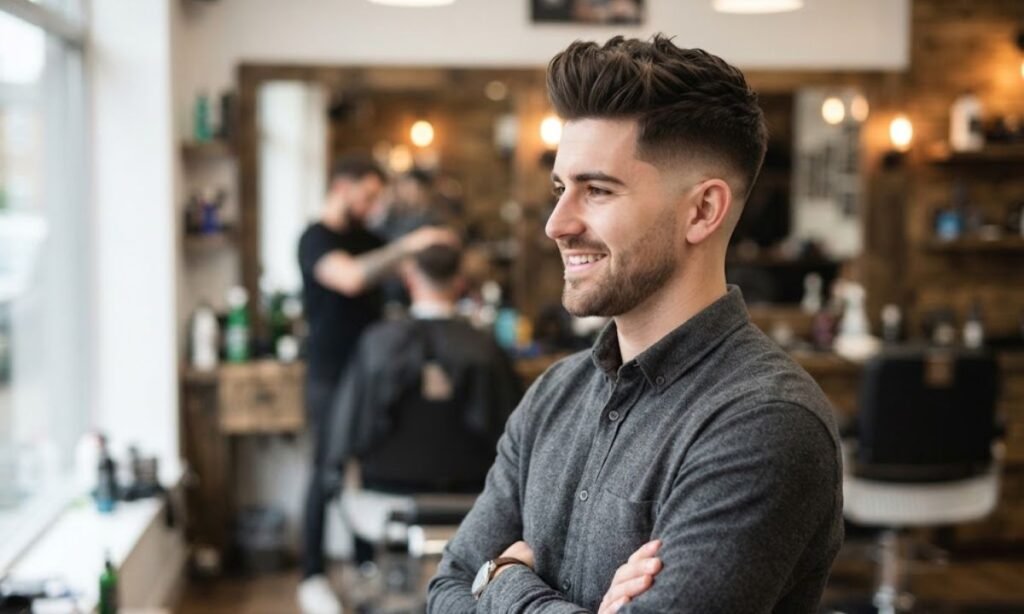
The quiff pushes the front volume forward and up. It’s a bit retro and very confident.
Blow dry upward, then lock it in. Leave 3 to 4 inches on top, or it won’t stand.
42. Mid Fade Quiff Style
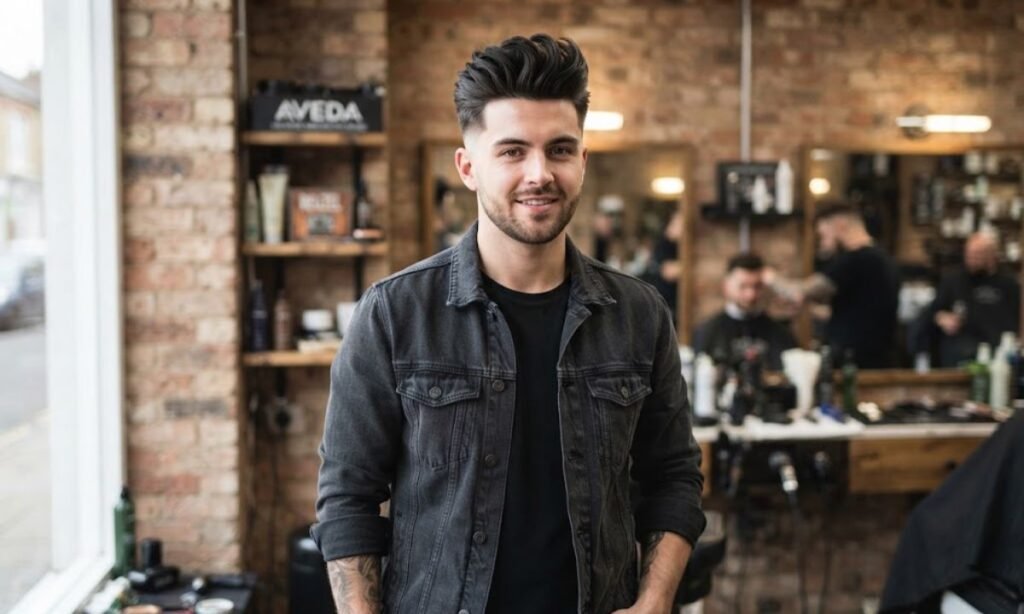
This version leans softer. The quiff sits lower, with a matte finish and more texture.
It’s better for everyday wear. You can skip the hairspray.
43. Mid Fade Pompadour

A pompadour has height and drama. The sides are sharply faded, and the top sweeps up and back.
It suits thick dense hair and oval or square faces. Bring a round brush and a hair dryer.
44. Mid Fade Pompadour Style

A modern pompadour is shorter and less greasy. Think messy lift, with some tapering at the sides.
Use a light clay. Nobody needs shine that bright anymore.
45. Mid Fade Executive Cut

The executive cut keeps the top short, even, and tidy. It’s clean and polished and ideal for conservative environments.
It needs almost no daily work. Comb it and go.
46. Mid Fade Crew Cut
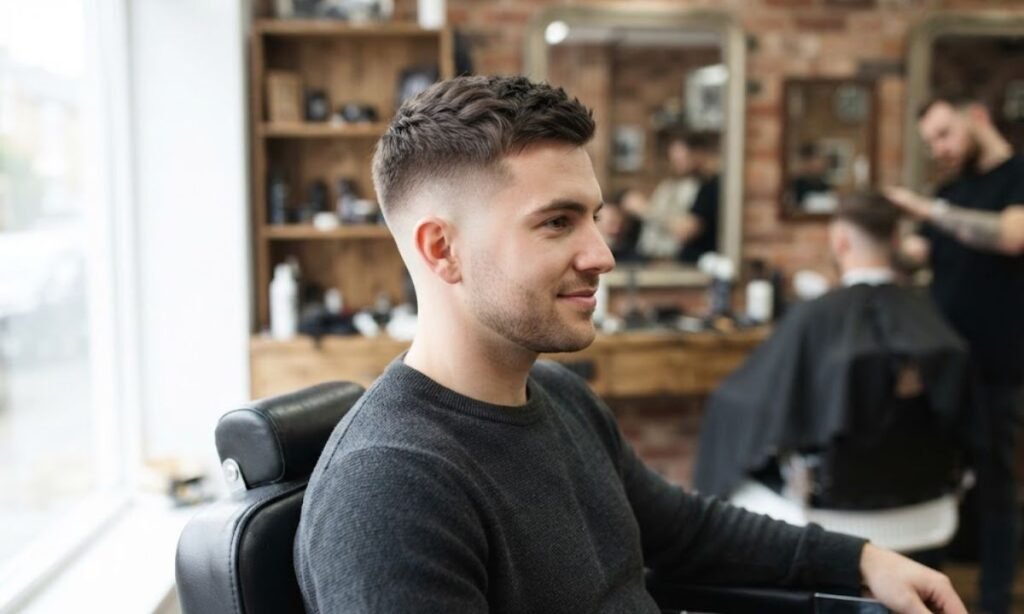
A crew cut with a mid fade is short on top and tapered toward the crown. It’s athletic, practical, and quick.
It’s good for summer. You won’t need much product at all.
47. Mid Fade Buzz Cut

With a buzz cut, the top is a short even top, maybe a #2 guard. The mid fade underneath adds shape.
It’s the lowest maintenance option on this list. It also shows your head shape, so check yours first.
48. Mid Fade Buzz

Same family, usually shorter. Barbers may use a #1.5 guard or a number two or three on top.
Check your scalp for scars or bumps first. Short cuts show everything.
49. Mid Fade Spikes

Spikes bring back a throwback energy. Short, textured, and up, with a clean fade underneath.
Use a firm wax. Keep the spikes loose so they look current.
50. Mid Fade Blowout
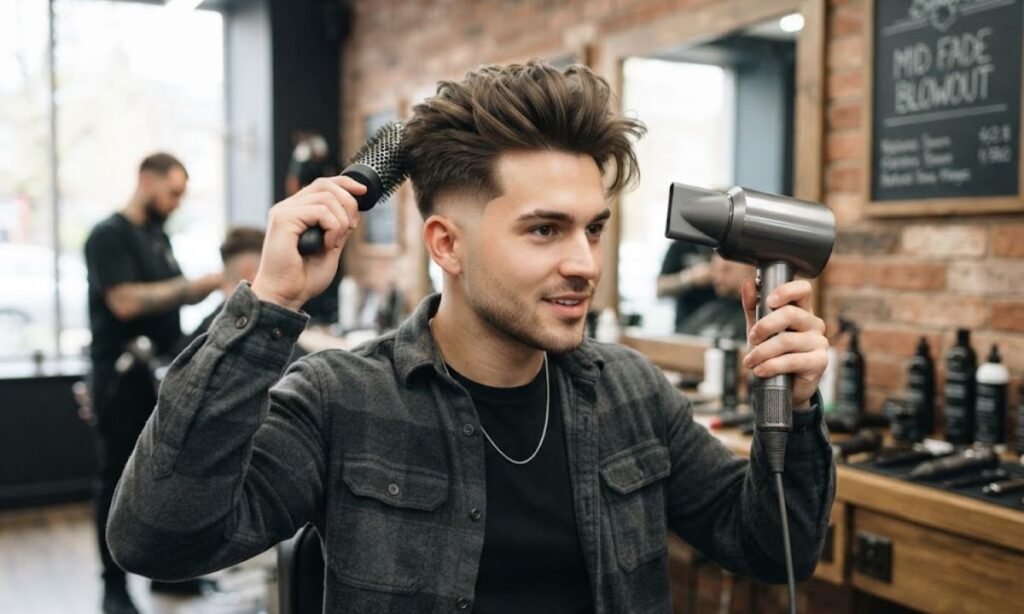
A blowout adds hair volume and fluff. The fade keeps the sides tight, and the top looks full.
This one suits fine or medium hair that needs lift. Dry it with a vent brush.
51. Mid Fade Faux Hawk

A faux hawk pushes the middle strip upward. Sides stay faded, so the shape stands out.
It’s a great bridge to a mohawk. You can still wear it flat when you need to.
52. Mid Fade Fohawk

This is just another spelling. The look is identical to number 51.
Keep sides short and the top about 2 inches longer.
53. Mid Fade Mohawk
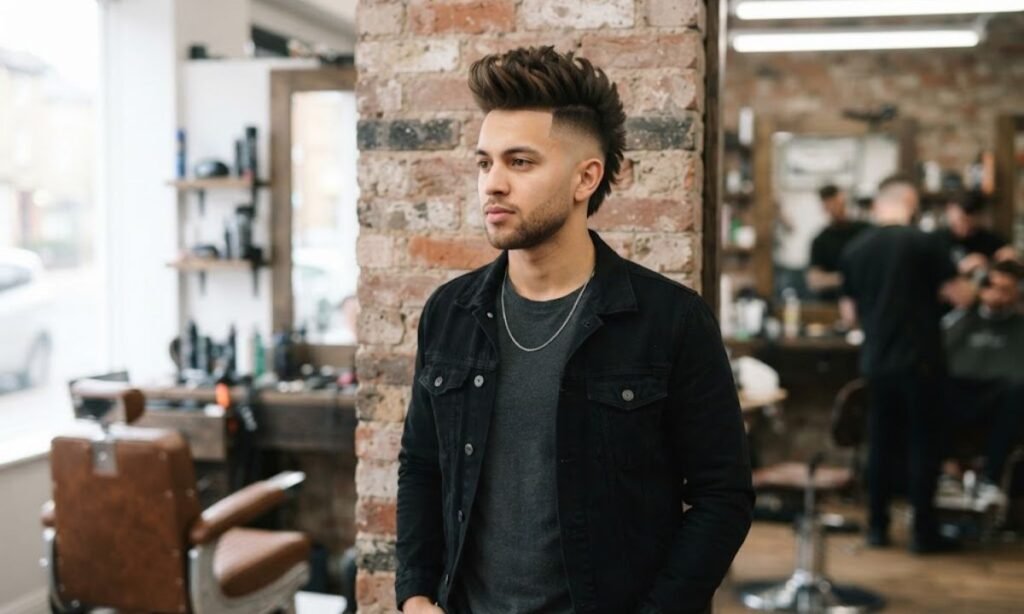
A real mohawk uses a strip down the center with shorter sides. The mid fade clears the sides in a smooth blend.
It’s loud, and that’s fine. Skip it if you wear a suit daily.
54. Mid Fade Modern Mullet

The modern mullet is short on top and longer at the back. Fade the sides, keep length at the back, and add texture.
It’s popular with younger guys. Curly hair looks especially good here.
55. Mid Fade Mullet

Think of this as the casual cousin. The neckline is softer and the length is less extreme.
Ask for tapered ends. It keeps the back from looking heavy.
56. Mid Fade Shag

The shag has layers and a messy vibe. A mid fade keeps the sides controlled so it doesn’t look like bed head gone wrong.
It suits wavy and curly hair. Straight hair can work, but needs more styling.
57. Mid Fade Styling
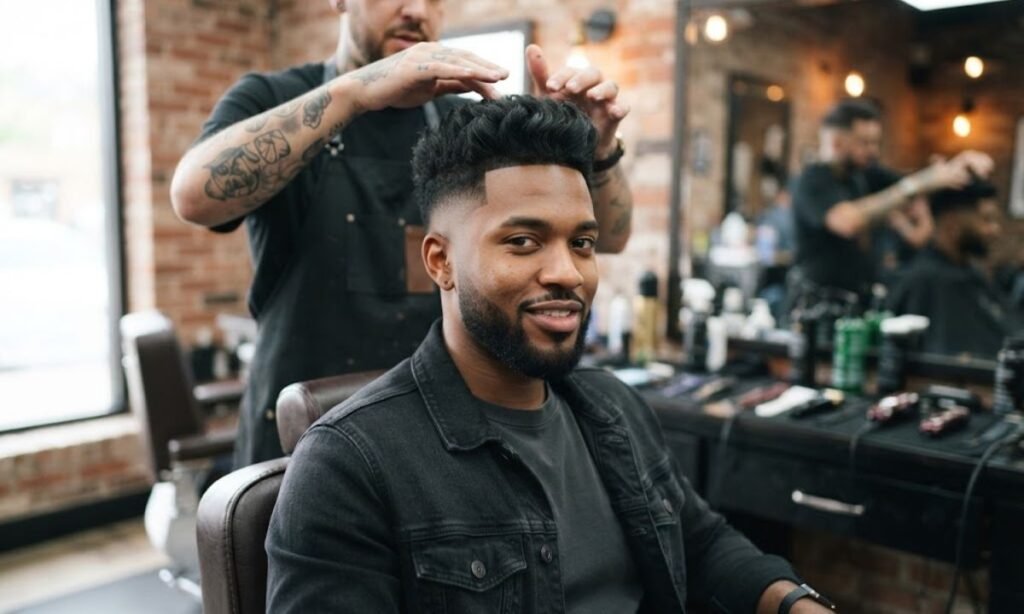
Styling is where a good cut becomes a great one. Use the right product and your fade looks fresh for days.
Start with a small amount. You can always add more.
58. Mid Fade Hair Texture
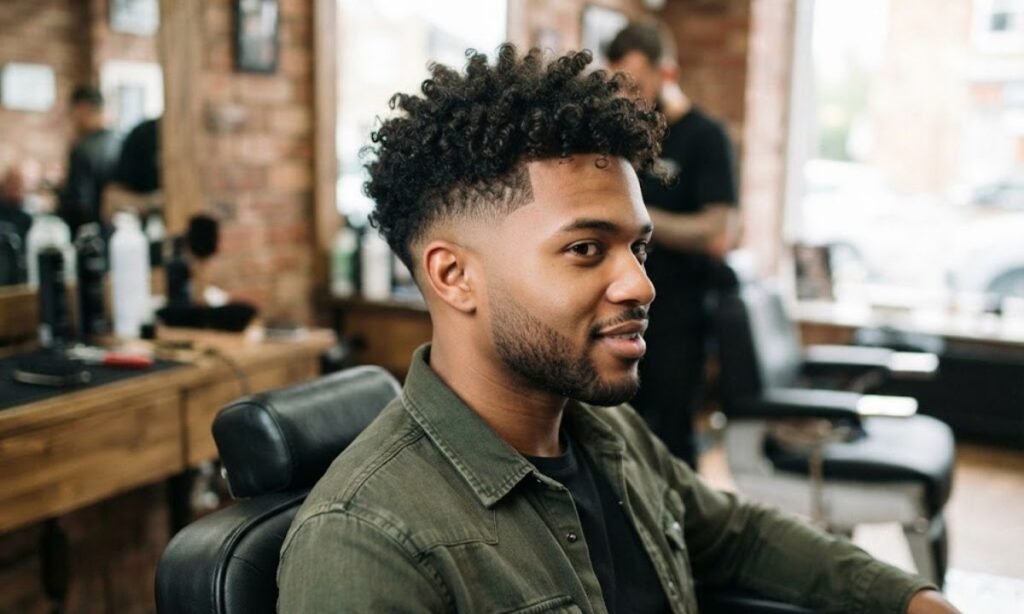
Your hair texture decides how a fade behaves. Coily hair holds shape, fine hair can look flat, and wavy hair shifts with humidity.
Tell your barber your hair type up front. They’ll adjust the guards.
59. Mid Fade Styling Tips
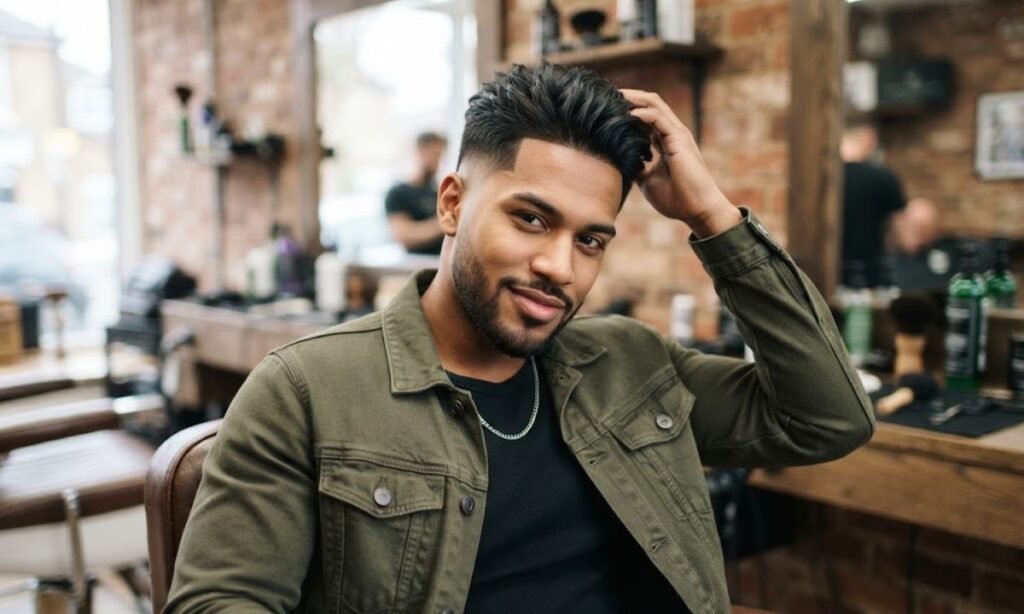
Use minimal daily styling if you can. Wash with a gentle shampoo, towel dry, then style with a pea sized dab.
Matte products look natural. Shine works best for dressy nights.
Who Does a Mid Fade Suit?
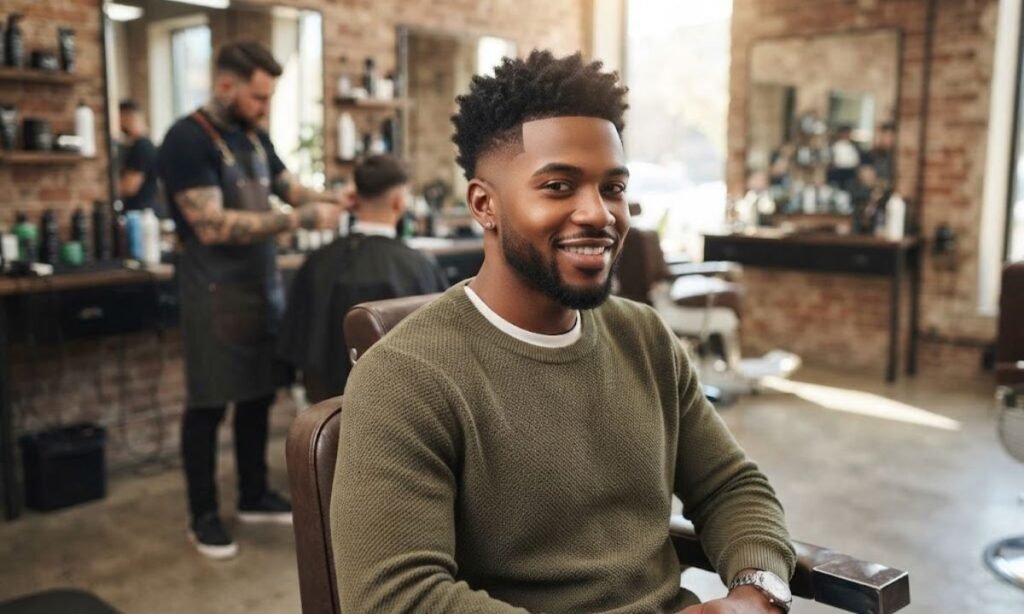
Short answer: nearly everyone. A mid fade fits all face shapes, and it works across thick dense hair and fine or thin hair too.
The trick is picking the right top. A fade on its own doesn’t carry the cut.
Here’s a quick guide:
- Oval face: Almost anything works. Try a pompadour or a quiff.
- Round face: Go for height on top and a drop fade at the back.
- Square face: A textured crop softens the jaw.
- Oblong face: Keep the top shorter, and add a fringe.
- Diamond face: A side swept fringe balances the cheekbones.
- Rectangular face: Avoid too much height. Try a French crop.
- Heart shaped face: A side part adds balance at the jaw.
Hair type matters too. Thin hair looks fuller with texture. Coily hair and tight coils keep a crisp shape. Straight hair needs a good barber for a smooth blend.
Do you work in an office and casual settings? A mid fade crosses both. It’s a rare cut that looks fine in a professional setting and at a Saturday barbecue.
How Do You Choose the Right Mid Fade?
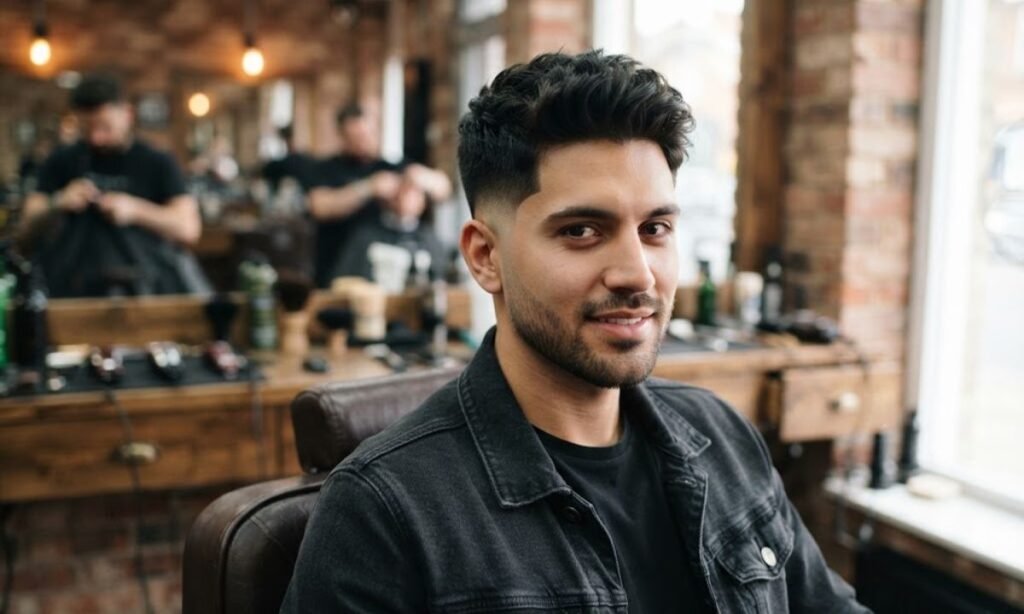
Start with four things: hair density, face shape, fade height, and fade closeness. Add fade shape if you want something curvier.
Think of it like picking a pair of jeans. Fit, cut, and wash all matter.
Pick your closeness. A skin fade shows skin at the base. A taper keeps some hair at the base. Not sure? Start with a taper. You can go tighter next time.
Pick your top. A longer top needs more styling. A shorter one needs more barber visits. Choose the one that suits your routine.
Consider your lifestyle. A construction worker and a lawyer want different haircuts. Your cut should match your day, not just your Pinterest board.
One more tip. Try the step up gradually approach. If you’ve never had a fade, start with a lower starting height and see how it feels. You can always go higher.
What Should You Tell Your Barber?
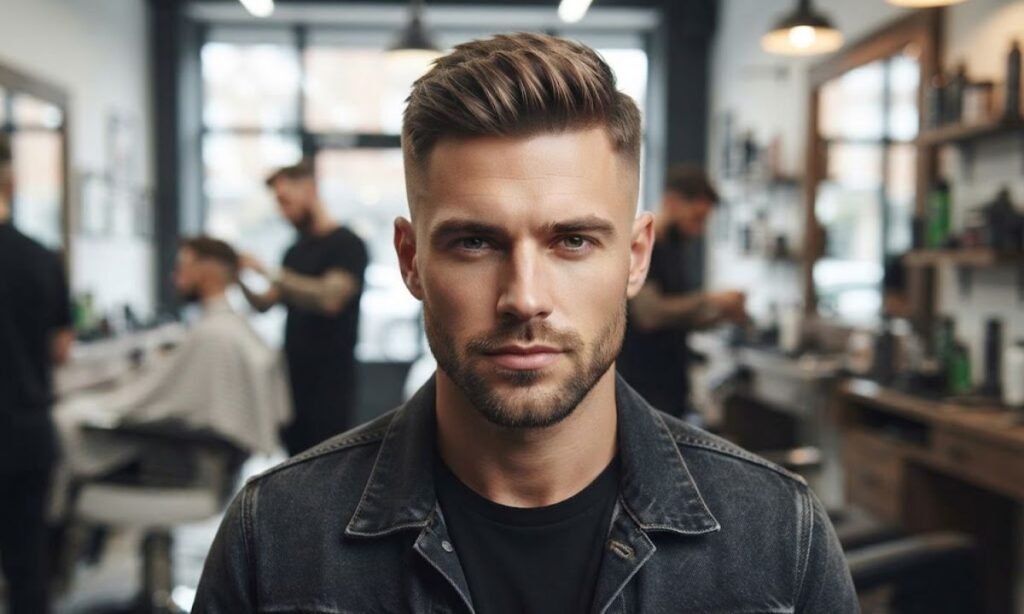
Barbers love clear instructions. Vague ones lead to surprises.
Here’s a script that works: “Mid fade, #1 guard at the bottom, progressively longer guards as you go up, and a number two or three on top.” That’s specific, and most barbers will nod.
Cover these points:
- Starting height: Say “start at temple level” or point above the ear.
- Closeness: Skin, #0 guard, #1 guard, or #1.5 guard.
- Top length: Give inches, or hold up your fingers.
- Neckline: Round, square, or tapered.
- Finish: Straight razor finish or clipper only.
Bring a photo. A picture saves a ton of words.
Say “I want a medium fade” if that’s your phrase. Most barbers treat it as the same thing. It’s a same cut, different term situation.
Want to avoid a fade line higher than intended? Say it out loud: “Not higher than the temple.” Barbers will respect that.
Ask them to cut dry hair, not wet. It matters most for curls. Wet hair stretches, and you won’t see the final length.
How Often Should You Get a Mid Fade?

Plan on a visit every 2 to 3 weeks. That’s the sweet spot for most guys.
Skin fades grow out faster. You’ll notice shadow in about a week. A taper lasts longer, often 3 weeks.
Here’s a simple schedule:
| Style | Typical visit gap |
|---|---|
| Mid skin fade | Every 1 to 2 weeks |
| Mid taper fade | Every 2 to 3 weeks |
| Mid drop fade | Every 2 to 3 weeks |
| Long top styles | Every 3 weeks |
Can you stretch it? Yes, but the fade contrast blurs. A sharp cut becomes a soft one.
You can trim the neckline at home between visits. Use a small trimmer, a mirror, and a steady hand. Don’t touch the fade itself.
Think of it like mowing a lawn. Edges tidy up fast, but the full cut needs a pro.
What Is the Biggest Mistake Men Make with a Mid Fade?

The biggest one? Not saying what you want. Many guys sit down, say “fade,” and get surprised.
A fade can mean low, mid, high, taper, skin, or burst. That’s a lot of room for error.
Other common slip ups:
- Choosing the wrong height. A fade that starts too high can make your head look bigger or boxy.
- Skipping a consultation. A one minute chat saves a month of regret.
- Overusing product. Too much clay or pomade can ruin the shape.
- Ignoring hair type. A cut for straight hair won’t work on tight curls.
- Waiting too long between cuts. The blend disappears.
Here’s a quick story. A friend once asked for a “short fade” and got a high skin fade. He wanted a soft taper. He wore a cap for three weeks.
Don’t be him. Be specific, and ask questions.
Mid Fade vs Low Fade vs High Fade
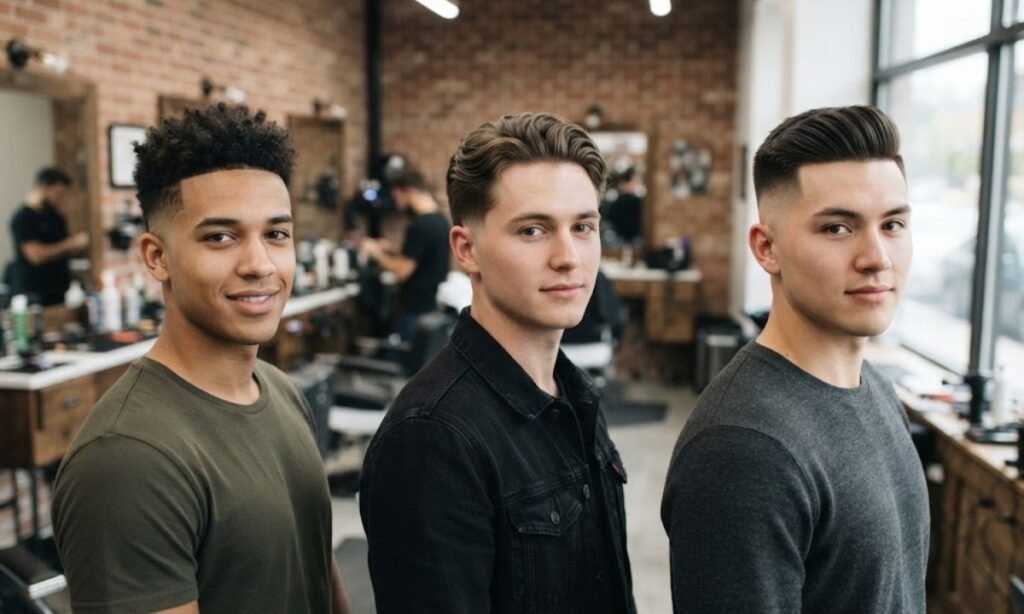
A low fade starts just above the ear. It’s subtle and conservative. A high fade starts near the temple or above and gives a bold look.
The mid fade sits in the middle. That’s the whole appeal.
Here’s how they compare:
| Fade type | Starting height | Best for |
|---|---|---|
| Low fade | Just above the ear | Office, subtle looks |
| Mid fade | Temple level | Almost everyone |
| High fade | Above the temple | Bold, modern styles |
If you want something between low and mid, ask for a “low mid.” Barbers know what that means.
How to Style and Care for Your Mid Fade at Home
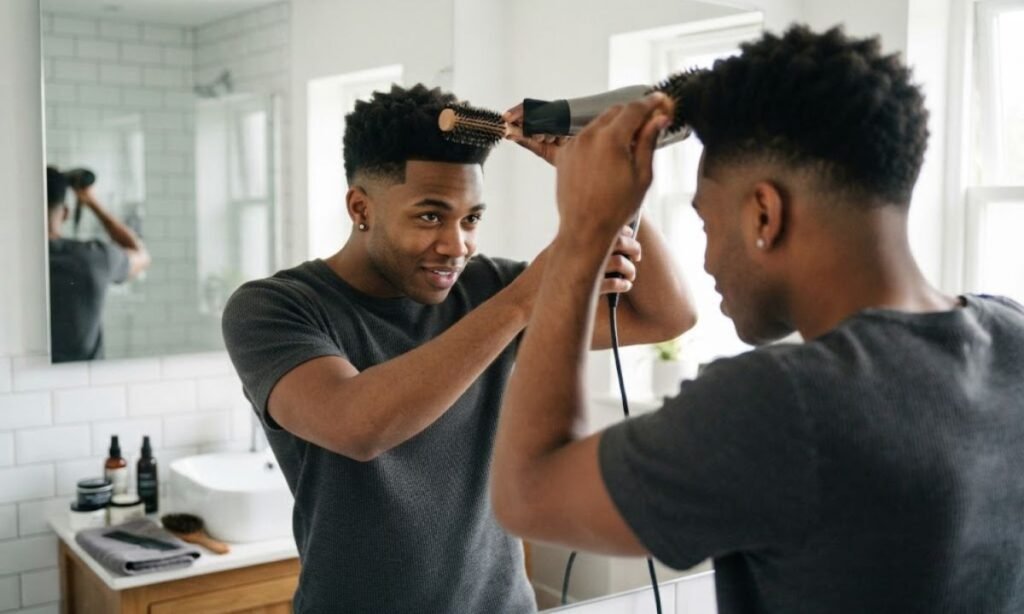
Good hair care keeps your cut sharp longer. It doesn’t need to be complicated.
Wash two or three times a week. Over washing dries your scalp and hair. Use conditioner if you have curls.
Pick your product by finish:
- Matte finish: Clay or paste. Natural and flat.
- High shine: Pomade. Polished and classic.
- Light hold: Cream or sea salt spray. Soft and loose.
Apply to damp or dry hair, depending on the product. Use a pea sized amount first.
Sleep matters too. A silk pillowcase helps curly or coily hair keep shape.
Want longer lasting results? Book your next appointment before you leave the shop. It’s a small habit that pays off.
Frequently Asked Questions About Mid Fade Haircuts
Is a mid fade good for thinning hair?
Yes. The short sides draw attention away from the crown. Add texture on top for a fuller look.
Can I get a mid fade with long hair?
You can. A modern mullet or a pompadour keeps length on top and trims the sides.
What’s the difference between a taper and a fade?
A taper leaves hair at the base. A fade goes shorter, often to skin.
Does a mid fade work for curly hair?
Yes. Ask for the cut on dry hair, and keep the top long enough for definition.
How much does a mid fade cost?
Prices vary widely by city and shop. Call your barbershop and ask before you book.
You can also checkout this article as well 57 Best Burst Fade Haircuts For Men
Final Thoughts
The mid fade earns its spot as the go to cut for men in 2026. It’s neat, flexible, and easy to adjust.
Pick a style from the list, bring a photo, and speak up in the chair. That’s all you need.
Which of the 59 styles are you trying first? Drop a comment below and tell us. Know a friend stuck on what to ask for? Share this guide with him.
We update this list as trends shift, so check back for fresh ideas.

I’m Michael Charles, the creator of MegaCrazes—your source for fresh hairstyles, sharp haircuts, and simple hair-care inspiration. Find your style. Own your look.